
Market Overview
| Study Period | 2021 - 2031 |
|---|---|
| Market Size (2026) | USD 0.97 Billion |
| Market Size (2031) | USD 1.41 Billion |
| Growth Rate (2026 - 2031) | 7.77 % |
| Fastest Growing Market | Asia-Pacific |
| Largest Market | North America |
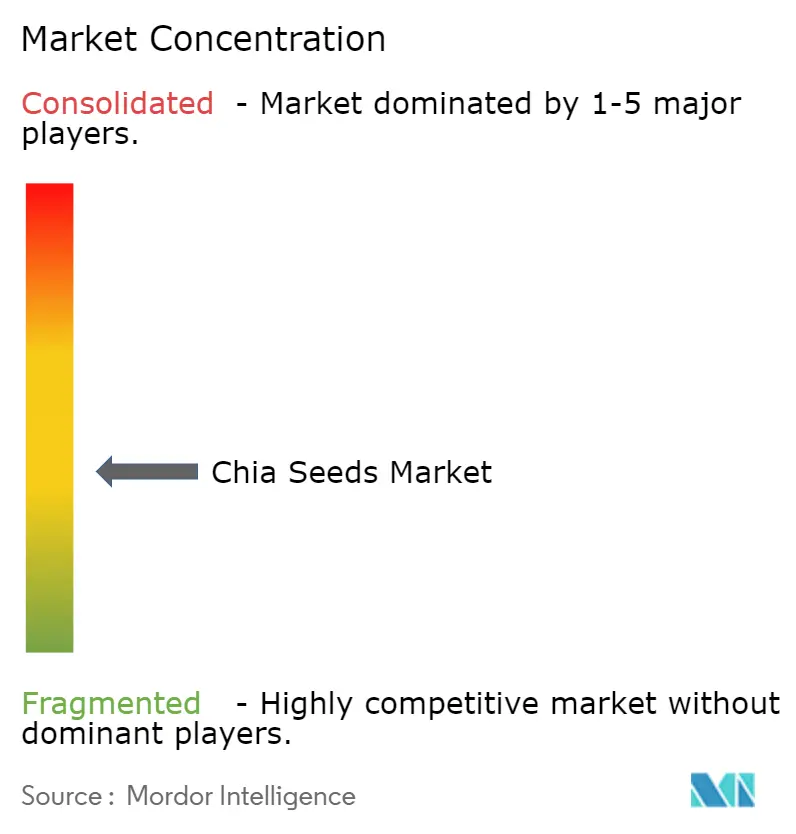
| Market Concentration | Medium |
Major Players
*Disclaimer: Major Players sorted in no particular order Image © Mordor Intelligence. Reuse requires attribution under CC BY 4.0. |
|
Chia Seeds Market Analysis by Mordor Intelligence
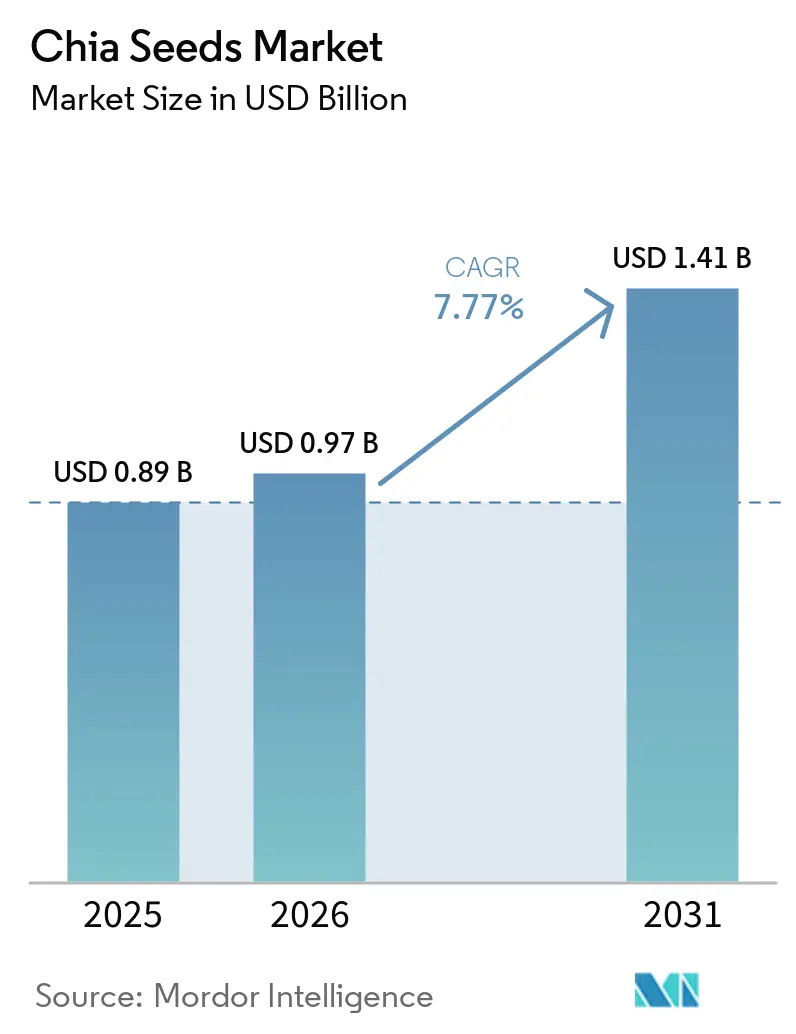
The chia seeds market size was valued at USD 0.89 billion in 2025 and is forecast to grow from USD 0.97 billion in 2026 to USD 1.41 billion by 2031 at an 7.77% CAGR from 2026 to 2031. The market is benefiting from consumer demand for plant-based foods with recognizable ingredients and nutritional value. Chia seeds provide alpha-linolenic acid, dietary fiber, and water-binding properties that support their use in foods, beverages, and supplements. The market is also moving beyond whole seeds, as suppliers develop protein concentrates, fiber ingredients, and chia oil for specialized formulations. Supply conditions remain important, as production is concentrated in South America and weather disruptions can affect availability and prices. Companies are responding by diversifying sourcing origins, developing technical ingredients, and strengthening distributor relationships.
Key Report Takeaways
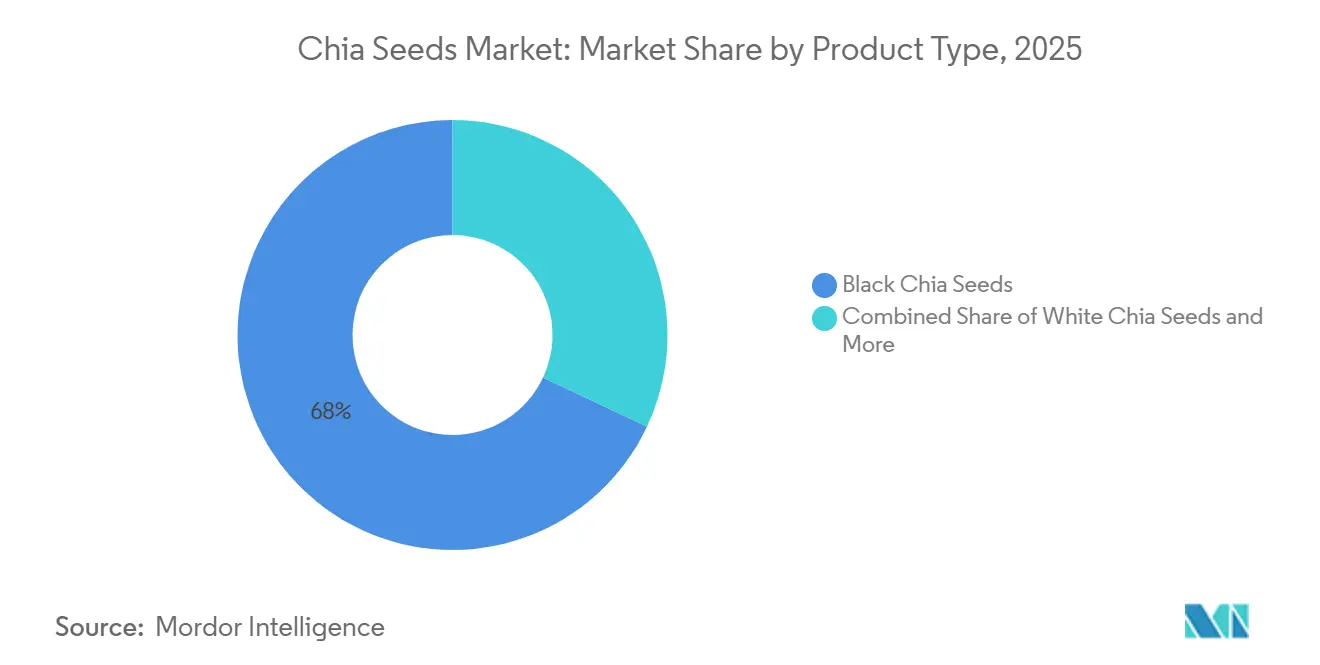
- By product type, black chia seeds accounted for the largest chia seeds market share, at 68.0%, in 2025, while white chia seeds are forecast to grow at an 8.5% CAGR from 2026 to 2031.
- By application, food and beverages accounted for the largest share, at 37.0%, of the Chia Seeds Market in 2025, while nutritional and dietary supplements are forecast to grow at a 9.2% CAGR from 2026 to 2031.
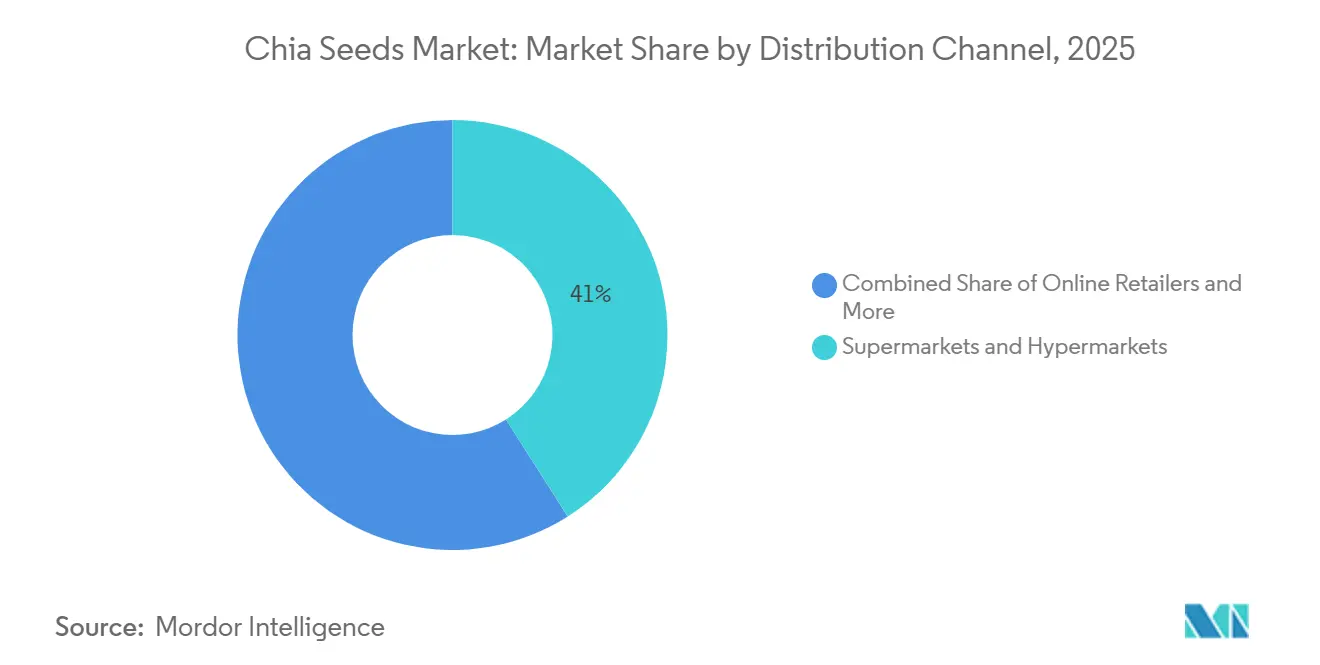
- By distribution channel, supermarkets and hypermarkets accounted for the largest share, at 41.0%, of the Chia Seeds Market size in 2025, while online retailers are forecast to grow at an 11.0% CAGR from 2026 to 2031.
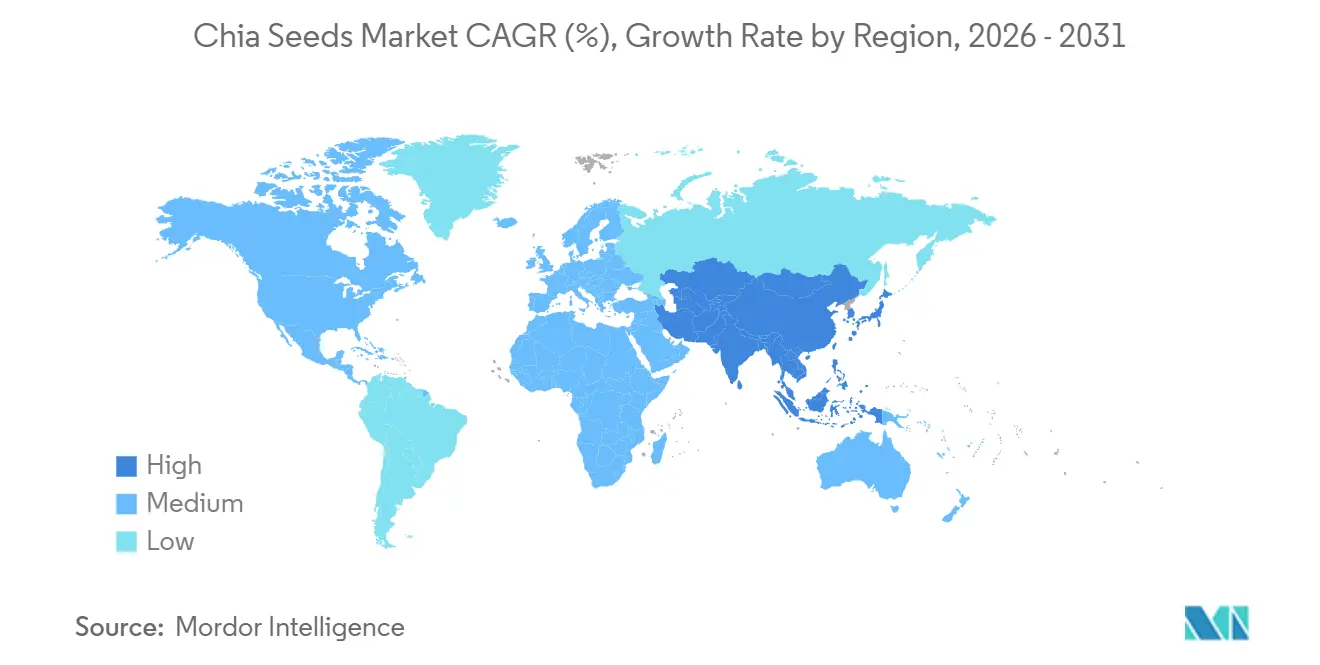
- By geography, North America accounted for the largest share, at 34.0%, of the Chia Seeds Market in 2025, while Asia-Pacific is forecast to grow at a 7.8% CAGR from 2026 to 2031.
Note: Market size and forecast figures in this report are generated using Mordor Intelligence’s proprietary estimation framework, updated with the latest available data and insights as of January 2026.
Market Trends and Insights
Drivers Impact Analysis of Chia Seeds Market*
| Driver | (~) % Impact on CAGR Forecast | Geographic Relevance | Impact Timeline |
|---|---|---|---|
| Rising Demand for Plant-Based Omega-3 Nutrition | 1.8% | Global, with stronger gains in North America and the European Union | Medium term (2-4 years) |
| Expansion of Functional Food and Beverage Formulation | 1.5% | Global | Medium term (2-4 years) |
| Growth of Clean-Label and Organic Superfood Products | 1.2% | North America and the European Union, with spillover to Asia-Pacific | Medium term (2-4 years) |
| Chia-Based Ingredient Innovation in Protein and Fiber Applications | 1.0% | North America, the European Union, and Asia-Pacific | Medium term (2-4 years) |
| E-Commerce Access to Premium Chia Products | 0.8% | Asia-Pacific, with spillover to the Middle East and Africa | Short term (≤ 2 years) |
| Climate-Resilient Cultivar and Farm-Practice Improvements | 0.4% | South America, Australia, and East Africa | Long term (≥ 4 years) |
| Source: Mordor Intelligence | |||
Rising Demand for Plant-Based Omega-3 Nutrition
The chia seeds market is benefiting from rising demand for plant-based and health-oriented nutrition, particularly in beverages incorporating nutrient-dense ingredients. According to the United States Department of Agriculture Foreign Agricultural Service (USDA FAS), 2025, China's functional beverage market achieved a 26.0% CAGR, while chia seeds have gained significant traction as ingredients in healthy beverages[1]Source: United States Department of Agriculture Foreign Agricultural Service (USDA FAS), "Unlocking Opportunities in China’s 170 Billion Dollar Beverage Market," apps.fas.usda.gov.. This expansion in functional beverages creates opportunities for chia seeds, as they provide plant-based omega-3 fatty acids and can be incorporated into convenient, health-oriented products. The growing adoption of functional beverages, therefore, supports demand for chia seeds and contributes to market growth.
Expansion of Functional Food and Beverage Formulation
The chia seeds market is benefiting from the growing use of functional and clean-label ingredients in food and beverage formulations. A 2025 study published in MDPI, based on research conducted at Assiut University, found that chia seed gel powder enhanced the functional properties of probiotic low-fat yogurt, with the highest inclusion level achieving 35.1% DPPH radical-scavenging activity. These findings support the use of chia seed ingredients in functional foods, as they enhance antioxidant activity while improving texture, stability, and probiotic viability. Such multifunctional properties expand formulation opportunities for chia seeds and support continued market growth.
Growth of Clean-Label and Organic Superfood Products
The chia seeds market is supported by rising demand for organic and clean-label food products, creating opportunities for certified chia seeds in European food markets. According to the Center for the Promotion of Imports from Developing Countries (CBI), approximately 65.0% of chia seeds imported into Germany in 2024 were organic[2]Source: Center for the Promotion of Imports from developing countries (CBI), "The European Market Potential for Chia Seeds," cbi.eu.. This high proportion of organic chia imports reflects established demand for certified chia within a major European market and supports the positioning of chia seeds in organic and health-oriented food products. Continued consumer interest in organic foods supports demand for chia seeds and contributes to market growth.
Chia-Based Ingredient Innovation in Protein and Fiber Applications
The chia seeds market is benefiting from the development of value-added ingredients such as chia mucilage, protein, and fiber for functional food and supplement formulations. According to the Multidisciplinary Digital Publishing Institute (MDPI), 2025, chia seed mucilage and alginate hydrogels achieved an encapsulation efficiency of 99.0 ± 0.01% for Lactobacillus reuteri[3]Source: Multidisciplinary Digital Publishing Institute (MDPI), "Encapsulation of Lactobacillus reuteri in Chia–Alginate Hydrogels for Whey-Based Functional Powders," mdpi.com.. This performance demonstrates the potential of chia mucilage as a functional delivery material that can protect probiotics during food processing. Such ingredient functionality broadens chia-based formulation opportunities and supports greater commercial utilization of chia-derived ingredients, contributing to market growth.
Restraints Impact Analysis of Chia Seeds Market*
| Restraint | (~) % Impact on CAGR Forecast | Geographic Relevance | Impact Timeline |
|---|---|---|---|
| Concentrated Production and Weather-Linked Supply Risk | -1.2% | Global, with supply risk concentrated in South America | Short term (≤ 2 years) |
| Raw-Seed Price Volatility and Procurement Uncertainty | -0.9% | Global, with greater exposure in European Union and North American import markets | Short term (≤ 2 years) |
| Microbial and Contaminant-Control Requirements | -0.6% | North America, the European Union, and Asia-Pacific | Medium term (2-4 years) |
| Organic Certification and Segregated-Logistics Cost Burden | -0.4% | South American origins, with demand-side pressure in the European Union and North America | Long term (≥ 4 years) |
| Source: Mordor Intelligence | |||
Concentrated Production and Weather-Linked Supply Risk
The chia seeds market faces supply risk due to the concentration of production in Paraguay, where weather disruptions can affect global availability. According to the Ministry of Industry and Commerce of Paraguay (MIC), 2025, frost affected the country's chia production during the 2025 season, prompting producers to adopt staggered planting and consider more frost-tolerant varieties. As Paraguay supplies more than half of global chia demand, weather-related production disruptions in this major producing country can tighten international availability and increase supply uncertainty. This concentration of production and exposure to adverse weather conditions restrains the stability and growth of the chia seeds market.
Raw-Seed Price Volatility and Procurement Uncertainty
The chia seeds market faces procurement uncertainty, as weather-related supply disruptions can reduce raw seed availability and increase prices for buyers. According to the Center for the Promotion of Imports from Developing Countries (CBI), conventional chia prices in Europe reached €3,000 per metric ton (USD 3,390 per metric ton) in 2025, following frost-related production disruptions in Paraguay and Bolivia. Higher raw seed prices increase input costs for food, beverage, and supplement manufacturers and complicate procurement planning. Consequently, weather-driven price increases can raise sourcing costs and limit the pace of chia-based product expansion, restraining market growth.
*Our forecasts treat driver/restraint impacts as directional, not additive. The impact forecasts reflect baseline growth, mix effects, and variable interactions.
Chia Seeds Market Segment Analysis
By Product Type:
Black Chia Seeds Anchor the Market While White Chia Seeds Drive Premium InnovationBlack chia seeds accounted for the largest chia seeds market share, at 68.0%, in 2025. The chia seeds market size was supported by the established use of black chia seeds across food and beverage products, nutritional formulations, and other applications. Their broad availability and established consumer acceptance continue to support their leading position. Meanwhile, white chia seeds are forecast to expand at an 8.5% CAGR from 2026 to 2031, supported by their use in premium food products and applications where a lighter visual appearance is preferred.
White chia seeds are forecast to grow at the fastest CAGR of 8.5% from 2026 to 2031. Their lighter appearance and mild sensory profile support applications where manufacturers seek visual consistency. White seeds can be incorporated into beverages, bakery products, cereals, snack bars, and other health-oriented formulations without materially altering appearance. Product differentiation can support premium positioning where consumers value specialized seed varieties. Black and brown chia seeds remain relevant across established applications, while white chia seeds provide additional formulation flexibility. These characteristics support continued product innovation and broader commercial opportunities for suppliers.


By Application:
Food and Beverages Maintains the Foundation While Nutritional and Dietary Supplements AccelerateFood and beverages accounted for the largest share, at 37.0%, of the chia seeds market share in 2025. Chia seeds are incorporated into smoothies, yogurt, cereals, bakery products, snack bars, and plant-based beverages, offering manufacturers multiple avenues for everyday use. Their ability to form a gel upon hydration supports applications that require texture and water management. This versatility allows chia to function as both a nutritional ingredient and a formulation component. Nutritional and dietary supplements, personal care and cosmetics, and animal feed and pet food provide additional end-use pathways for producers and suppliers across product categories.
Nutritional and dietary supplements are forecast to grow at a 9.2% CAGR from 2026 to 2031, making them the fastest-growing application. Chia seeds provide plant-based protein, dietary fiber, and omega-3 fatty acids, supporting their use in powders, capsules, nutrition blends, and functional formulations. Chia-derived fiber and mucilage also offer functional properties in digestive health and satiety products. These characteristics enable suppliers to develop ingredients beyond whole-seed formats and to address specialized nutritional needs. Food and beverages remain an established end use, while personal care, cosmetics, animal feed, and pet food provide additional avenues for chia ingredients.
By Distribution Channel:
Supermarkets and Hypermarkets Lead While Online Retailers Accelerate FastestSupermarkets and hypermarkets accounted for the largest share at 41.0% in 2025. These outlets provide broad consumer access to packaged chia seeds and related products through established grocery networks. Chia products can be positioned alongside cereals, baking ingredients, snacks, health foods, and other plant-based products to support routine consumer discovery. Physical retail also allows packaged products to communicate nutritional information, organic certification details, and preparation guidance at the point of purchase. Convenience stores and other channels serve additional purchasing occasions, while online retailers broaden geographic reach and provide access to specialized ranges and smaller brands.
Online retailers are forecast to grow at an 11.0% CAGR from 2026 to 2031, making them the fastest-growing distribution channel. Digital channels allow chia suppliers to offer broader product assortments without depending on physical shelf space. Consumers can compare package sizes, product formats, certifications, and nutritional information from home. Online distribution also supports specialized products such as organic seeds, chia powders, beverages, and functional ingredients that have limited local availability. Supermarkets and hypermarkets remain important for routine grocery purchases, while convenience stores and other channels address additional purchasing needs. Together, these channels broaden access across different purchasing occasions.
Geography Analysis
North America accounted for the largest share at 34.0% in 2025. The region benefits from established health and wellness retail channels and consumer familiarity with nutrient-dense seeds. Packaged chia is available through supermarkets, natural food retailers, online platforms, and foodservice channels, meeting household and commercial demand. Manufacturers use chia in cereals, beverages, bakery products, snack bars, and nutritional formulations. Branded and ingredient-focused suppliers support product variety and formulation development. These factors provide a broad commercial base for chia products across the region and reinforce North America's dominant market position.
Asia-Pacific is projected to grow at the fastest CAGR of 7.8% from 2026 to 2031. Growth in the region is supported by rising interest in functional foods, plant-based beverages, nutritional products, and health-oriented ingredients. China, India, Japan, and Australia contribute through different combinations of consumption, processing, cultivation, and trade activity. Chia is increasingly incorporated into beverages, breakfast foods, snacks, and nutrition formulations. Local cultivation initiatives are broadening regional supply options. India has growing domestic cultivation and export activity, while China provides a large functional beverage market. These developments support continued expansion across Asia-Pacific.
Europe represents an established market for chia seeds, supported by demand for organic, plant-based, and functional food ingredients. The region imports chia for use in packaged foods, bakery products, cereals, beverages, and nutritional products. According to the Center for the Promotion of Imports from Developing Countries, Europe imported approximately 25,100 metric tons of chia seeds in 2024. Germany, the Netherlands, the United Kingdom, France, and Spain contribute to regional demand through diverse retail and processing channels. Organic certification creates additional opportunities for suppliers serving consumers seeking traceable products, thereby supporting regional commercialization.

Regulatory Landscape
Chia seeds and derived ingredients sold into major import markets are governed by a mix of food-ingredient rules, organic standards, and border phytosanitary controls. In the European Union, chia seeds and certain processed forms (including partially defatted powders) fall under the Novel Food framework via the Union list (Regulation (EU) 2017/2470), which ties market access to defined conditions of use and labeling requirements. For organic trade into the EU, operators must comply with the organic regulation framework (Regulation (EU) 2018/848, consolidated as of March 2025), which reinforces documentation and segregation practices across certified flows.
In the United States, food-ingredient use routes through the Food and Drug Administration (FDA) framework, with GRAS pathways used to substantiate safety for intended uses, while importers also manage preventive controls and contamination risk (including microbiological hazards). China market entry places emphasis on General Administration of Customs of China (GACC) requirements, including registration of relevant processing enterprises and compliance with phytosanitary protocols and pesticide restrictions at the border. Import condition systems such as the Australian Government MICoR illustrate the operational bar for pest, soil, and extraneous-matter controls that exporters increasingly align to across destinations.
Value Chain Analysis
The chia seeds value chain begins with input sourcing and cultivation, which remains concentrated in South America (notably Paraguay, Bolivia, and Argentina), followed by aggregation through local collectors and cooperatives, primary processing (cleaning, sorting, gravity separation, and de-stoning), and then secondary processing where applicable (milling into powder, fiber/protein fractionation, and oil extraction). Exporters ship in bulk or consumer-ready packs to international importers and distributors, who supply food and beverage manufacturers, nutraceutical brands, and retail channels. Packaging and storage management (moisture and oxidation control) is critical because quality downgrades can cascade into rejected lots, relabeling, or lower-value use cases.
Key friction points sit between harvest windows and export execution, where climate-driven yield variability, port congestion, and inland logistics constraints can tighten available supply and amplify price swings. Compliance and quality assurance are embedded across the chain through pesticide-residue management, microbiological controls, and traceability. Buyers frequently ask for recognized food-safety systems alongside country-specific import and organic documentation. As demand grows for value-added formats (powders, fiber, protein, and oil), the margin center shifts toward processors with validated separation, extraction, and lot-release capabilities. Origin diversification, including emerging hubs such as India, Kenya, and Uganda, functions as a practical hedge when South American corridors face disruptions.
Competitive Landscape
The chia seeds market is moderately fragmented in 2025. Key players include Benexia, Glanbia plc, Navitas LLC (Laird Superfood, Inc.), Mamma Chia, LLC, and Bioriginal Food & Science Corp. (Cooke Inc.). Companies differentiate through sourcing, organic certification, traceability, processing capabilities, ingredient functionality, packaging, and innovation. Ingredient specialists supply whole seeds, powders, oils, protein concentrates, and fiber fractions, while consumer brands focus on convenient formats such as beverages, snack products, and packaged seeds. Vertically integrated businesses coordinate cultivation, processing, quality control, and distribution. This combination of business models supports competition across bulk ingredients, retail products, and specialized products, creating multiple routes to market.
Competition also centers on product development and regional customer access. Ingredient-focused suppliers are expanding their offerings of chia-derived proteins, fibers, mucilage, and oils for food, beverage, and supplement formulations. Consumer-facing companies continue to develop ready-to-consume beverages, snack formats, powders, and packaged seeds that broaden chia applications. Partnerships with distributors strengthen access to European and other specialty markets by providing local commercial support and technical assistance. Companies with traceable sourcing and formulation expertise serve manufacturers seeking consistent ingredient performance. These activities drive differentiation through product functionality, application support, sourcing capabilities, and distribution reach.
Product innovation is an important competitive activity as suppliers seek to extend chia beyond conventional whole-seed formats. In 2025, Benexia launched Seeds of Wellness Chia Milk through select Costco locations and Amazon, introducing a chia-based plant beverage to consumers in the United States. This development illustrates how branded suppliers can create consumption occasions within plant-based beverages. Other participants emphasize chia powders, oils, fibers, and protein ingredients for use in formulations. Such innovation broadens product formats, strengthens brand differentiation, and creates additional routes for suppliers to capture demand across food, beverage, and nutrition applications.
Chia Seeds Industry Leaders
-
Benexia
-
Glanbia plc
-
Navitas LLC (Laird Superfood, Inc.)
-
Mamma Chia, LLC
-
Bioriginal Food & Science Corp. (Cooke Inc.)
- *Disclaimer: Major Players sorted in no particular order
Chia Seeds Market Companies Covered in this Report
- Fancy Plants Australia Pty Ltd
- Benexia
- Glanbia plc
- Navitas LLC (Laird Superfood, Inc.)
- Mamma Chia, LLC
- Bioriginal Food & Science Corp. (Cooke Inc.)
- Bob's Red Mill Natural Foods, Inc.
- Garden of Life, LLC (Atrium Biotech Holdco, LLC)
- Nutiva, Inc.
- Salba Smart Natural Products, LLC
- Naturkost de México, S. de R.L. de C.V.
- P Mirchandani Pty Ltd
- NOW Health Group, Inc.
- The Hain Celestial Group, Inc.
- Hodmedod Ltd

Market Opportunities and Future Outlook
A clear opportunity is expanding supply beyond the South American core, where origin concentration contributes to procurement volatility and batch segregation costs for exporters serving multiple residue-limit regimes. Evidence of cultivation spread is visible in India, where the Agricultural Technology Management Agency (ATMA), Nagpur, reported that chia cultivation had expanded to around 500 acres across 12 talukas during the rabi season (reported in April 2026). This supports a pathway for supplemental sourcing closer to fast-growing Asia-Pacific demand centers. For buyers and processors, it also creates room for contract farming arrangements, seed supply partnerships, and localized cleaning and sorting capacity to meet export-grade specifications.
Product-side opportunity continues to shift from bulk seeds toward higher-margin, specification-led ingredients used in functional foods and nutraceuticals, including fiber and protein fractions and edible chia oil formats. Distribution-focused scaling is also active: Benexia has broadened downstream commercialization through partnerships and expanded formats for chia oil, while European ingredient channels have been used to place chia fiber and protein into multiple countries through distributor agreements. In parallel, agronomy research on nutrient management and precision irrigation, including silicon supplementation trials and drip fertigation work in South Asia, plus moisture-regime studies, supports practical yield-improvement programs for newer origins. The objective is consistent quality and oil-content outcomes for premium applications.
Recent Industry Developments in Chia Seeds Market
- February 2026: Benexia introduced a new 500 mL bottle format for its Chia Oil, positioning chia oil as an everyday omega-3 option rather than a niche ingredient. The change supports wider retail and foodservice placement and strengthens downstream branding in a market where value is shifting toward processed chia derivatives.
- March 2025: Benexia launched a chia milk line targeting lactose-intolerant consumers in Chile and Argentina, extending its footprint from bulk and ingredient supply into finished dairy-alternative products. The launch reflects how vertical integration and proprietary extraction know-how are being used to compete with established plant-based milk bases.
- August 2024: Benexia and Golden Omega entered into a strategic partnership to supply Benexia chia seed oil to the North American market through Golden Omega's distribution network. The agreement improves route-to-market access for chia oil in a region with high uptake of functional foods and supports the scale-up of value-added chia formats relative to the bulk seed trade.


Chia Seeds Market Report Scope and Research Methodology
Market Definition and Coverage
This market covers the sale of chia seeds for food, beverage, and related nutrition uses, measured in value terms and supported by matching volume signals where reliable trade and production data exists.
The model excludes chia oil and other extracted derivatives, since those are tracked separately from seed trade flows in most customs and agriculture datasets.
Segments Covered in This Report
-
By Product Type
- Black Chia Seeds
- Brown Chia Seeds
- White Chia Seeds
-
By Application
- Food and Beverages
- Nutritional and Dietary Supplements
- Personal Care and Cosmetics
- Animal Feed and Pet Food
-
By Distribution Channel
- Supermarkets and Hypermarkets
- Convenience Stores
- Online Retailers
- Other Distribution Channels
-
By Geography
-
North America
- United States
- Canada
- Mexico
- Rest of North America
-
South America
- Brazil
- Paraguay
- Rest of South America
-
Europe
- Germany
- United Kingdom
- Russia
- France
- Rest of Europe
-
Asia-Pacific
- China
- India
- Japan
- Australia
- Rest of Asia-Pacific
-
Middle East
- Saudi Arabia
- United Arab Emirates
- Rest of Middle East
-
Africa
- South Africa
- Kenya
- Rest of Africa
-
North America
Data Sources, Market Sizing, and Validation
Desk Research
Desk research sets the base for supply, trade, and price reality checks, since chia is a traded commodity and volumes move alongside value. We relied on public agriculture and trade statistics, including FAOSTAT, UN Comtrade, national customs portals, and USDA market updates, then cross-checked conversions directionally using central bank FX series and inflation releases.
To keep the model grounded in what the market can supply and absorb, we also reviewed importer and exporter association notes and food-labeling guidance from regulators such as the US FDA and the EU food safety framework. Peer-reviewed nutrition and food science literature was used to confirm use patterns across food, beverage, and nutrition mixes. Company annual reports, investor decks, and reputable press helped validate channel shifts and product launches. Where private visibility was limited, we used a paid subscription for company financials and a shipment-level trade database selectively to fill gaps and sanity-check flows. These desk sources are illustrative, and we also used other public references for validation and clarification.
Primary Interviews and Surveys
Primary work was used to pressure-test assumptions that are hard to see in public tables, especially pricing splits, cleaning and packing yield, and the share moving through retail versus ingredient channels. We spoke with stakeholders across the chain, including growers, processors, traders, ingredient distributors, and brand-side buyers, and we covered major consuming and supplying regions. When desk signals and field responses did not align, we re-contacted relevant parties to reconcile the difference.
Distribution of primary research fieldwork respondents
| Company type | Respondent position | Region |
|---|---|---|
| Top tier: 33% | CXOs: 13% | APAC: 38% |
| Mid tier: 53% | Functional/Unit leaders: 36% | EMEA: 37% |
| Smaller Players: 14% | Managers: 51% | Americas: 25% |
Market-Sizing & Forecasting
Sizing started with a top-down build where production and trade data reconstruct the available seed pool by region. We then adjust for local consumption and re-exports before deriving value. Selective bottom-up approximations were used to corroborate totals, mainly through sampled price per kilogram by channel multiplied by estimated volumes, then cross-checked against supplier and importer revenue disclosures where available.
Inputs that mattered most included import and export volumes by HS codes used for chia, regional wholesale price trend lines, planted area and yield signals in key origin countries, currency timing for trade values, and the pace of demand expansion in bakery, beverages, and nutrition mixes. Where reporting gaps appeared, for example in smaller importing countries, we used proxy ratios based on similar markets and then validated them with trader and distributor feedback.
Forecasts were built using scenario analysis anchored to expected acreage and yield movement, trade policy and freight direction, and price normalization patterns. We tightened scenarios using primary-view consensus on near-term contracting behavior and channel mix. Final forecasts were checked so growth rates stayed consistent with feasible supply constraints and realistic price progression, rather than relying only on trend extrapolation.
Data Validation & Update Cycle
Validation was done through multiple passes that compare value outputs against independent signals such as trade value trends, price per ton ranges, and regional consumption direction from interviews. When a region showed a sharp step change, the inputs were revisited, and follow-up calls were triggered to confirm whether it came from price spikes, shipment timing, or a real demand shift.
Before sign-off, another analyst reviews key assumptions, unit conversions, and the arithmetic behind the model. Any large variance versus earlier editions is documented and reconciled. The report is refreshed annually, with interim updates when material events occur, for example major crop shocks or policy changes, and a final pre-delivery pass is completed so clients receive the latest view.
Mordor Intelligence's Chia Seeds Market Size Compared With Other Published Estimates
Published market sizes for chia seeds often do not match because the counted product basket and the pricing basis differ, and the base year can shift between studies. Some estimates are also more narrative-driven around application growth, while others tie the value curve more directly to trade and production reality.
Chia oil is included in some published totals, but it sits outside Mordor Intelligence's scope. This keeps the size aligned to seed trade flows and wholesale price formation rather than derivative revenue uplifts.
Benchmark comparison
| Source | Market Size | Gaps in Research Methodology |
|---|---|---|
| Mordor Intelligence | USD 0.97 B (2026) | |
| Industry Publisher A | USD 1.17 B (2025) | Uses a different base year and applies a higher growth profile that is heavily driven by application expansion, with limited visibility on how trade volumes and wholesale price series are used to anchor the value curve. |
| Research Publisher B | USD 1.01 B (2024) | Counts a wider form set that can include derivative forms such as oil, and its value build appears more revenue-led than trade-led, which can lift totals when value-added products grow faster than seed volumes. |
Across the three figures, most of the spread can be traced to what is counted as part of the market and how the value is converted from volume and price. By keeping the scope focused on seeds and then checking value against trade, price per ton, and interview feedback, the final number stays traceable to inputs that can be reviewed and replicated.


Key Questions Answered in the Report
What is the forecast for the chia seeds market through 2031?
The category is projected to grow from USD 0.97 billion in 2026 to USD 1.41 billion by 2031 at a 7.77% CAGR from 2026 to 2031.
Which chia seed type has the largest sales base?
Black chia seeds accounted for the largest share, at 68.0%, in 2025.
Which application is growing fastest for chia ingredients?
Nutritional and dietary supplements are forecast to grow at a 9.2% CAGR from 2026 to 2031.
Which sales channel is growing fastest?
Online retailers are forecast to grow at an 11.0% CAGR from 2026 to 2031.
Page last updated on:


 Your data is secure and never sold or shared.


