
Chemiluminescence Immunoassay (CLIA) Market Size and Share
Market Overview
| Study Period | 2020 - 2031 |
|---|---|
| Market Size (2026) | USD 10.93 Billion |
| Market Size (2031) | USD 14.99 Billion |
| Growth Rate (2026 - 2031) | 6.52 % |
| Fastest Growing Market | Asia Pacific |
| Largest Market | North America |
| Market Concentration | Medium |
Major Players *Disclaimer: Major Players sorted in no particular order Image © Mordor Intelligence. Reuse requires attribution under CC BY 4.0. | |
Chemiluminescence Immunoassay (CLIA) Market Analysis by Mordor Intelligence
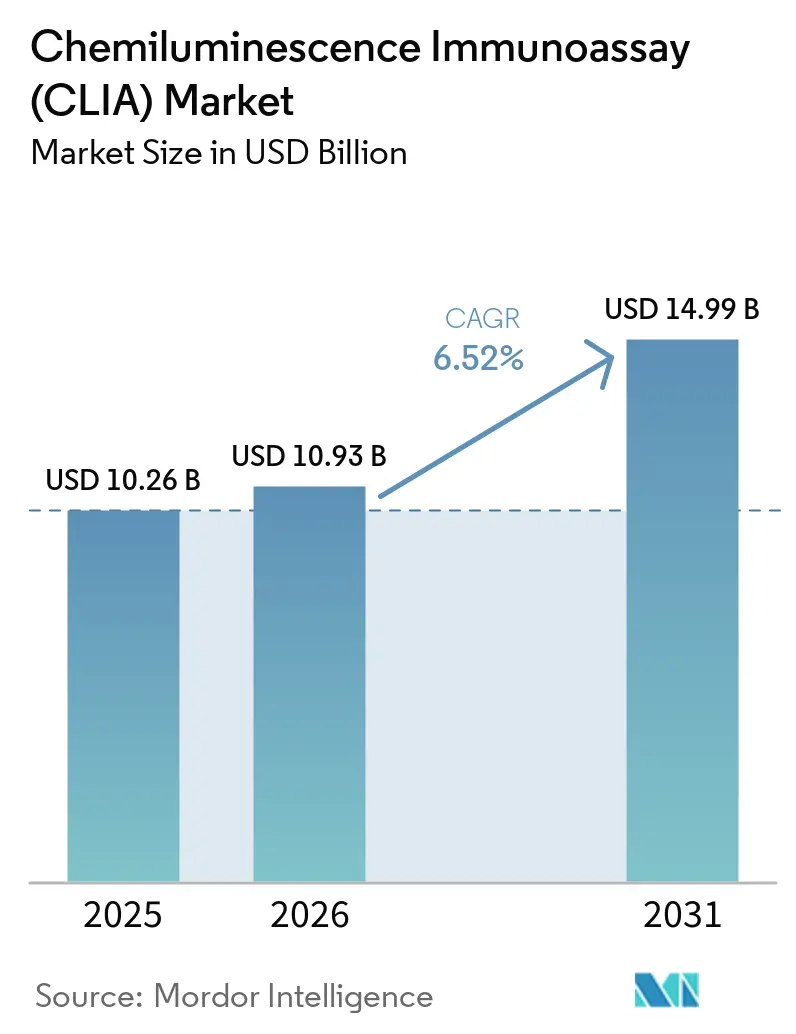
The Chemiluminescence Immunoassay Market size was valued at USD 10.26 billion in 2025 and estimated to grow from USD 10.93 billion in 2026 to reach USD 14.99 billion by 2031, at a CAGR of 6.52% during the forecast period (2026-2031).
This growth reflects rising adoption of precision diagnostics, rapid laboratory automation, and expanding reimbursement for high-sensitivity testing. Vendor strategies now center on multiparametric menu expansion, magnetic-particle innovation, and end-to-end system integration to consolidate testing workflows. Supply-chain concentration for acridinium esters and magnetic particles, together with evolving IVDR and FDA rules, remains the primary operational risk. Simultaneously, the shift toward decentralized testing sites is opening fresh opportunities for compact, high-throughput analyzers tailored to resource-constrained settings.
Key Report Takeaways
- By product type, reagents led with 53.60% revenue share in 2025; analyzers are advancing at a 6.98% CAGR to 2031.
- By technology, magnetic-particle systems accounted for 45.70% of the chemiluminescence immunoassay market share in 2025, while flash/enhanced CLIA is expanding at an 8.26% CAGR through 2031.
- By application, infectious disease testing held 28.70% share of the chemiluminescence immunoassay market size in 2025 and oncology applications are growing at a 9.04% CAGR between 2026-2031.
- By sample type, blood dominated with an 81.40% share in 2025; saliva sampling is climbing at a 10.32% CAGR through 2031.
- By end user, hospital and clinical laboratories captured 62.30% of revenue in 2025, while reference laboratories record the fastest 8.68% CAGR through 2031.
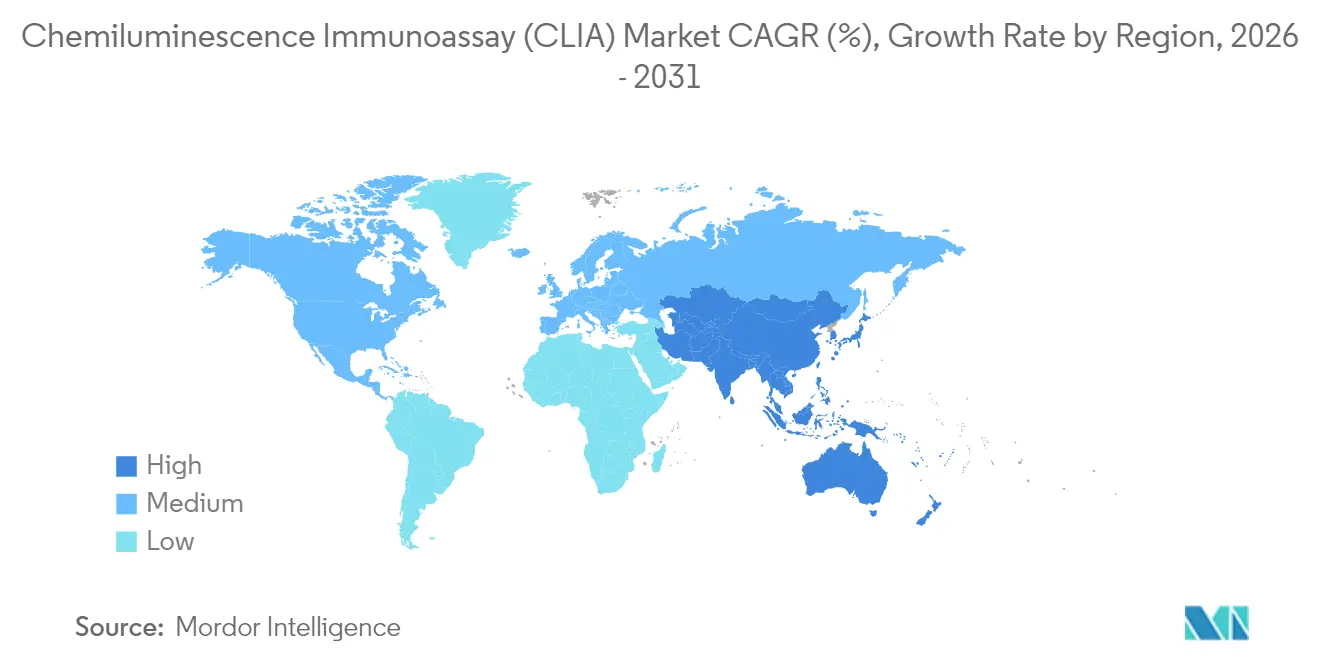
- By geography, North America retained 35.70% market share in 2025; Asia-Pacific is progressing at a 9.61% CAGR through 2031.
Note: Market size and forecast figures in this report are generated using Mordor Intelligence’s proprietary estimation framework, updated with the latest available data and insights as of 2026.
Market Trends and Insights
Drivers Impact Analysis of Chemiluminescence Immunoassay (CLIA) Market*
| Driver | (~) % Impact on CAGR Forecast | Geographic Relevance | Impact Timeline |
|---|---|---|---|
| Expansion of centralized & decentralized diagnostic infrastructure | +1.8% | Asia-Pacific, Middle East & Africa, South America | Medium term (2-4 years) |
| Rising prevalence of chronic & infectious diseases | +1.5% | Global | Long term (≥4 years) |
| Convergence of CLIA analyzers with total-lab automation & LIS | +1.2% | North America, Europe, advanced Asia-Pacific | Medium term (2-4 years) |
| Continuous menu expansion of multiparametric panels | +0.9% | Global | Medium term (2-4 years) |
| Favorable reimbursement & public-health screening programs | +0.8% | North America, Europe, China | Short term (≤2 years) |
| Source: Mordor Intelligence | |||
Expanding Diagnostic Infrastructure in Emerging Economies
Rapid investment in hospital modernization, national screening programs, and public–private laboratory networks is driving unprecedented demand for high-throughput CLIA instruments. Large provincial centers in China now install fully automated lines capable of 3,000 tests per hour to serve surrounding county hospitals. India’s tier-2 cities follow similar trajectories, pairing compact analyzers with cloud-based LIS to overcome personnel shortages. Multilateral financing for tuberculosis and hepatitis screening further embeds CLIA capacity in Africa and Latin America. Vendors respond with modular platforms that tolerate unstable power and limited HVAC, safeguarding assay performance across variable climates. Reagent pouch innovations extend shelf life, lowering cold-chain dependence and total cost of ownership.
Rising Prevalence of Chronic & Infectious Diseases
Global incidence of diabetes, cardiovascular disorders, and cancer climbs each year, creating a steady volume of biomarker testing episodes. Simultaneously, recurrent outbreaks of dengue, Zika, and novel respiratory viruses elevate demand for rapid pathogen detection. CLIA platforms deliver attomole-level sensitivity, enabling clinicians to detect disease earlier and tailor interventions more precisely. Single-molecule assays now quantify cardiac troponin within minutes, guiding emergency triage. Oncology labs leverage ultra-low pM detection of PSA, AFP, and pTau217 to monitor therapy response and recurrence risk. These clinical imperatives reinforce recurrent reagent consumption and stimulate continuous menu development.
Technological Convergence with Lab Automation
Total-lab automation architectures link pre-analytical sorting, CLIA modules, and post-analytical archiving without human touchpoints. Barcode and RFID tagging guarantees positive sample identification, eliminating clerical errors. Middleware consolidates quality-control data and transmits verified results to hospital EHRs in near real-time. These dark-lab configurations maintain 24 × 7 operation, boosting throughput and reducing per-test labor cost. Artificial intelligence layers interpret flagging rules, suggest reflex tests, and predict instrument maintenance needs, minimizing downtime. Integration standards such as CLSI AUTO16 now ease connectivity between multi-vendor analyzers and enterprise LIS platforms.
Multiparametric Panel Expansion Driving Lab Consolidation
Assay menus exceeding 200 parameters allow laboratories to consolidate viral panels, hormonal profiles, and tumor markers onto a single CLIA backbone. This breadth supports business models in which regional reference centers process specimens from satellite clinics, capturing economies of scale. Autoimmune panels covering ANA, ENA, and dsDNA cut turnaround times for rheumatologists. Manufacturers invest in novel enzyme-substrate chemistries that preserve analytical sensitivity across multiplex reactions, reducing sample volume requirements. Consolidation accelerates reagent pull-through, entrenching vendor–lab relationships and raising switching costs.
Restraints Impact Analysis of Chemiluminescence Immunoassay (CLIA) Market*
| Restraint | (~) % Impact on CAGR Forecast | Geographic Relevance | Impact Timeline |
|---|---|---|---|
| Lengthy regulatory approval & compliance cycles | −1.4% | Europe, North America | Medium term (2-4 years) |
| Supply-chain concentration for key materials | −0.8% | Global | Short term (≤2 years) |
| Limited cross-platform standardization | −0.4% | Global | Long term (≥4 years) |
| Source: Mordor Intelligence | |||
Lengthy Regulatory Approval Cycles
The EU IVDR mandates centralized performance evaluation for every new immunoassay, including extensive post-market surveillance. Many small manufacturers lack resources to compile the required clinical data, delaying European launches by 18–24 months. In the United States, phased LDT oversight compels hospital labs to submit pre-market notifications for in-house assays, redirecting budgets toward FDA-cleared kits. Compliance teams must update quality-management systems, traceability files, and cyber-security documentation to align with tightened requirements[1]. These layers of review extend time-to-market and may narrow the diversity of available tests.
Supply-Chain Concentration Risks
Fewer than ten firms globally synthesize high-purity acridinium esters and magnetic microbeads at production scale. Any disruption—whether geopolitical tension, natural disaster, or quality lapse—could curtail reagent output for multiple instrument brands simultaneously. Lead times for new GMP-certified capacity exceed 24 months due to specialized reactor needs and regulatory validation. To hedge risk, manufacturers dual-source critical inputs and increase safety inventories, but rising demand still strains supplies. Novel spiro-strained-dioxetane substrates demonstrate superior chemiexcitation but remain dependent on single-site synthesis expertise[2].
*Our forecasts treat driver/restraint impacts as directional, not additive. The impact forecasts reflect baseline growth, mix effects, and variable interactions.
Chemiluminescence Immunoassay (CLIA) Market Segment Analysis
By Product Type:
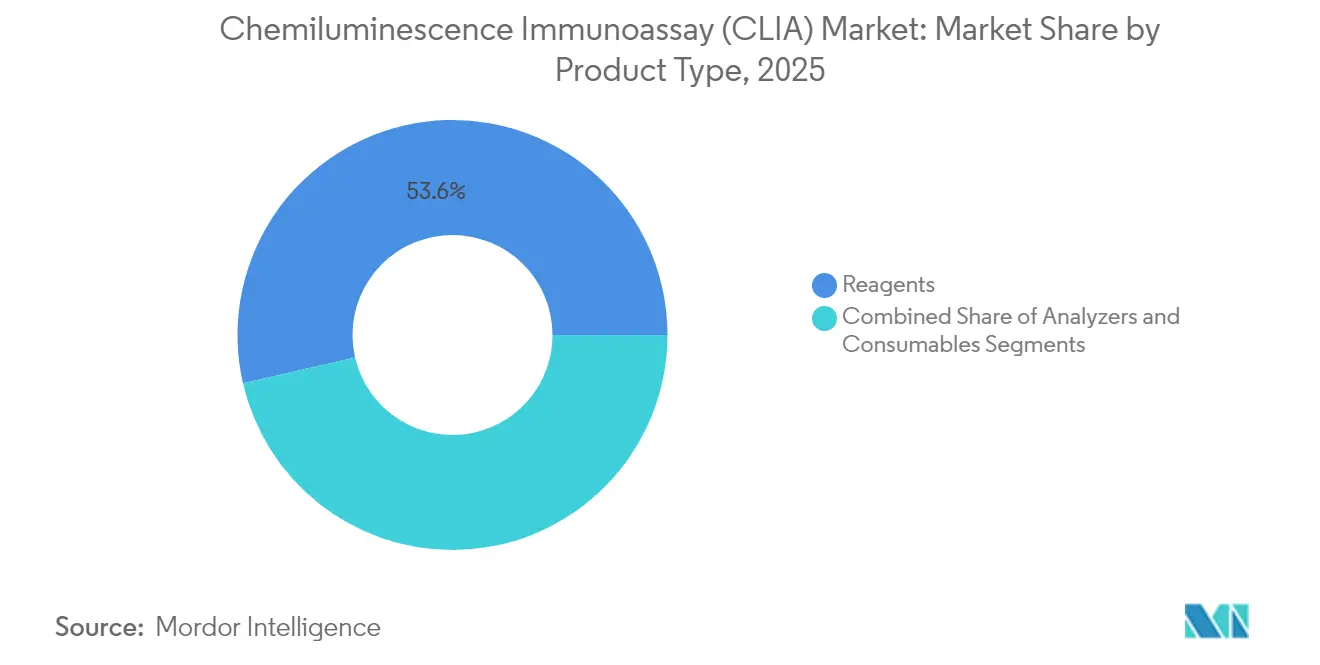
Reagents Maintain Revenue Leadership While Analyzers AccelerateReagents generated 53.60% of 2025 revenue, benefiting from repeat purchase cycles that underpin the chemiluminescence immunoassay market. Proprietary luminophore formulations command premium pricing and foster razor-and-blade economics. The chemiluminescence immunoassay market size tied to reagents is projected to grow at 6.11% CAGR as menu breadth expands across autoimmune and oncology parameters. Manufacturers enhance stability with enzyme-protected pouches, supporting distribution in high-temperature geographies.
Analyzers, though smaller in current value, advance at 6.98% CAGR on the back of laboratory modernization and network consolidation. Compact benchtop systems target physician-office labs, while high-throughput floor models process up to 3,600 tests per hour for reference centers. Forward-compatible modular designs allow capacity upgrades without footprint expansion. Consumables—calibrators, controls, and microfluidic plates—round out the ecosystem, ensuring traceable results and regulatory compliance.

By Technology Platform:
Magnetic-Particle Systems Dominate AdoptionMagnetic-particle architectures captured 45.70% chemiluminescence immunoassay market share in 2025, owing to rapid separation kinetics and low background signal. The chemiluminescence immunoassay market size for magnetic-particle systems is forecast to reach USD 6.73 billion by 2031 at 6.18% CAGR. Sea-urchin-like microbeads increase effective surface area, amplifying enzyme binding and assay sensitivity.
Flash/enhanced CLIA records the fastest 8.26% growth, propelled by sterically hindered dioxetane substrates that generate intense, short-lived photon bursts. This technology slashes incubation times to under five minutes, enabling higher daily throughput. Microplate CLIA retains traction where legacy equipment dominates, whereas CMIA addresses specialized niches requiring femtomolar detection limits such as cardiac troponin in emergency departments.
By Application:
Infectious Disease Testing Commands Volume, Oncology Leads GrowthInfectious disease assays comprised 28.70% of 2025 revenue as healthcare systems embed routine viral-load monitoring and antimicrobial stewardship protocols. Multiplex respiratory panels integrate influenza, RSV, and SARS-CoV-2 targets into a single run, optimizing clinician turnaround.
Oncology applications show the highest 9.04% CAGR, reflecting expanded tumor marker usage in screening and treatment monitoring. The chemiluminescence immunoassay market size for oncology is projected to add USD 1.24 billion by 2031. High-sensitivity pTau217 blood tests aid early Alzheimer’s disease differentiation, illustrating CLIA’s reach beyond traditional oncology into neuro-degenerative diagnostics. Autoimmune, cardiovascular, and endocrine disorder testing collectively sustain steady growth through chronic-disease prevalence.
By Sample Type:
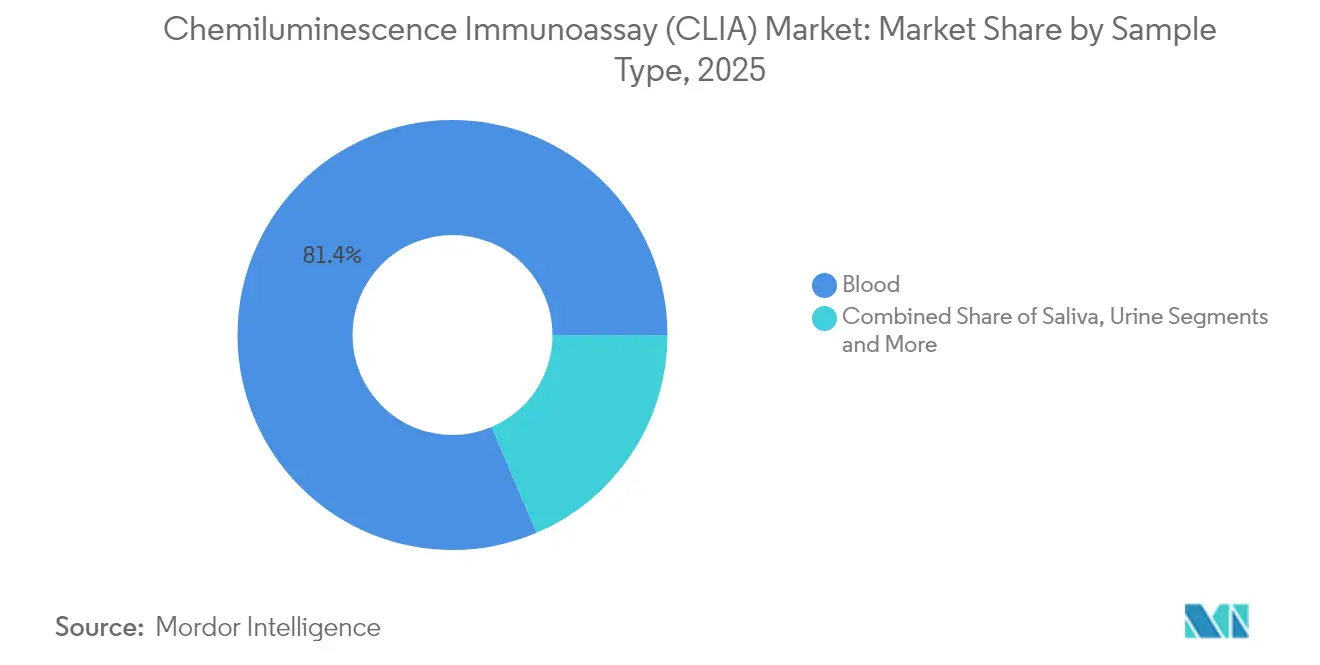
Blood Remains Dominant as Saliva Gains AcceptanceBlood represented 81.40% of tests in 2025, supported by established phlebotomy infrastructure and rigorous validation datasets. SpinChip’s microfluidic architecture now delivers quantitative results from whole blood within 10 minutes, illustrating efficiency gains.
Saliva assays climb at 10.32% CAGR as non-invasive sampling suits pediatric, geriatric, and home-collection scenarios. Improved pre-analytical buffers mitigate protease degradation, elevating signal consistency. Urine and cerebrospinal fluid maintain niche relevance for hormone and infectious disease panels, with emerging micro-volume cartridges lowering minimum specimen requirements.
By End User:
Hospital Laboratories Anchor Demand, Reference Labs Scale FastestHospital and clinical laboratories held 62.30% of 2025 revenue, leveraging integrated automation lines to meet acute-care turnaround targets. Continuous operation models reduce per-test labor cost and enhance equipment utilization.
Reference laboratories post an 8.68% CAGR as healthcare providers outsource complex panels to centralized hubs. High-volume analyzers coupled with AI-driven quality dashboards underpin this expansion. Pharmaceutical firms rely on CLIA for pharmacokinetic profiling in clinical trials, while academic centers deploy open-channel systems for biomarker discovery, underscoring the technology’s versatility across research and service environments.
Geography Analysis
North America Chemiluminescence Immunoassay (CLIA) Market
North America generated 35.70% of global revenue in 2025, supported by extensive reimbursement, robust laboratory consolidation, and strong R&D pipelines. U.S. laboratories rapidly adopt companion-diagnostic assays cleared under the FDA’s latest precision-oncology framework, reinforcing menu growth. Canada and Mexico increase spending on chronic-disease programs, further enlarging the chemiluminescence immunoassay market.
APAC Chemiluminescence Immunoassay (CLIA) Market
Asia-Pacific advances at a 9.61% CAGR, propelled by large-scale public investment in diagnostic infrastructure. China’s tier-one hospitals adopt automated CLIA lines that interface with regional reference labs, while domestic vendors accelerate export ambitions. Japan’s aging demographic sustains high test volumes for cardiac and endocrine markers, and India’s expanding private-hospital networks drive purchasing of mid-throughput analyzers.
EMEA and South America Chemiluminescence Immunoassay (CLIA) Market
Europe maintains solid demand amid IVDR transition. Germany, France, and the United Kingdom standardize oncology and infectious disease screening pathways, anchoring reagent consumption. However, extended conformity assessments temporarily delay new assay launches. Eastern European nations employ EU cohesion funds to upgrade laboratory automation, closing the capacity gap with Western peers. Middle East & Africa and South America exhibit double-digit volume growth from a lower base as governments strengthen disease-surveillance programs and private diagnostics chains expand.
Regulatory Landscape
Regulatory requirements for chemiluminescence immunoassays are tightening across major markets, affecting assay-menu expansion and time-to-market. In the United States, clinical laboratories operating CLIA-based testing fall under the Clinical Laboratory Improvement Amendments (CLIA) framework administered by CMS with CDC support, while IVD manufacturers must meet FDA device requirements; the FDA Final Rule published May 6, 2024 reclassified laboratory developed tests (LDTs) as medical devices and initiated a four-year phaseout of broad enforcement discretion. This raises compliance stakes for in-house immunoassay services and increases reliance on cleared kits for specialty testing.
In Europe, Regulation (EU) 2017/746 (IVDR) continues to increase documentation and clinical evidence burdens for immunoassays (including CLIA/LIA, ECLIA, and CMIA), with stronger emphasis on performance evaluation and post-market surveillance. For higher-risk categories, additional scrutiny can include expert-panel consultation when common specifications are not available. The transition reinforces early engagement with notified bodies and more robust technical files, while 2026 EU-level implementation activity around MDR/IVDR conformity assessment and notified-body requirements adds further process standardization that manufacturers must incorporate into launch planning.
Competitive Landscape
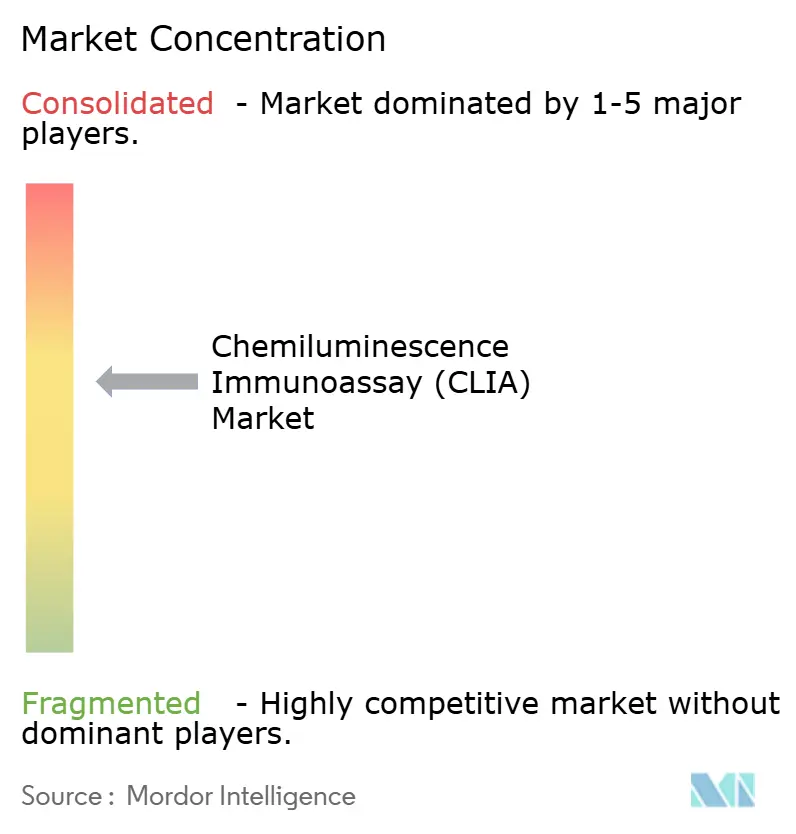
The top suppliers—Roche, Siemens Healthineers, Danaher, and DiaSorin—collectively control significant revenue, signaling moderate concentration. Barriers include high R&D outlays, global service networks, and demanding regulatory pathways. New entrants from China, notably Mindray and SNIBE, penetrate price-sensitive segments by bundling analyzers and starter reagent kits at discounted rates.
Strategic acquisitions focus on niche technologies that extend menu breadth or enable decentralized testing. bioMérieux’s acquisition of SpinChip adds a cartridge-based platform capable of delivering quantitative results from finger-prick blood, enhancing point-of-care reach. Vendors also invest in advanced materials, adopting sea-urchin microbeads and spiro-strained substrates to push sensitivity boundaries.
Product roadmaps increasingly incorporate AI modules for reflex testing suggestions and predictive maintenance. Cloud connectivity facilitates remote calibration updates and real-time performance monitoring, supporting managed-service contracts that lower up-front capital barriers for laboratories. Intellectual-property portfolios around substrate chemistry and magnetic bead design conti nue to differentiate premium platforms from value-tier offerings.
Chemiluminescence Immunoassay (CLIA) Industry Leaders
-
DiaSorin S.p.A.
-
Siemens Healthineers AG
-
Shenzhen Mindray Bio-Medical Electronics Co., Ltd.
-
Danaher Corporation (Beckman Coulter Inc.)
-
F. Hoffmann-La Roche AG
- *Disclaimer: Major Players sorted in no particular order
Chemiluminescence Immunoassay (CLIA) Market Companies Covered in this Report
- Roche
- Abbott Laboratories
- Siemens Healthineers
- Danaher
- DiaSorin
- Sysmex
- Mindray
- Shenzhen New Industries Biomedical Engineering Co., Ltd. (SNIBE)
- QuidelOrtho
- Thermo Fisher Scientific
- bioMérieux
- Randox Laboratories
- Tosoh
- HyTest Ltd.
- Beckton Dickinson
- Getinge
- Merck
- Tecan Group
- Werfen S.A.
- Autobio Diagnostics Co., Ltd.
Read Analysis of Chemiluminescence Immunoassay (CLIA) Companies
Market Opportunities and Future Outlook
Decentralized and near-patient settings create a clear opportunity for compact, automated chemiluminescence immunoassay workflows that maintain laboratory-grade sensitivity. DiaSorin’s LIAISON NES moves in this direction, pairing a CLIA-waived respiratory panel clearance with U.S. channel expansion through distribution agreements, which supports vendor growth outside traditional hospital core labs while keeping standardized menus and QC. For laboratories, integrated endocrine and specialty panels on random-access systems also offer a route to consolidate send-out testing and reduce dependence on complex reference methods for routine, high-volume hormones and related markers.
Automation-led consolidation in core laboratories continues to support demand for higher-throughput, integrated systems that combine immunoassay with adjacent disciplines and connect cleanly to LIS and total-lab automation. Beckman Coulter’s FDA-cleared DxC 500i, which integrates clinical chemistry and immunoassay into a single analyzer, reflects a purchasing preference for platforms that reduce instrument sprawl and staffing burden while supporting expanding menus. On assay innovation, emerging chemiluminescence and electrochemiluminescence signal-amplification concepts, including peroxide-independent approaches reported in 2026 academic work, point toward future assay designs targeting ultra-low-abundance analytes, enabling differentiated panels (for example, cytokines) where sensitivity and turnaround time drive clinical value.
Recent Industry Developments in Chemiluminescence Immunoassay (CLIA) Market
- March 2026: DiaSorin announced a strategic distribution agreement with McKesson Medical-Surgical to commercialize the LIAISON NES molecular point-of-care solution across U.S. non-acute settings such as physician offices and urgent care centers. The agreement expands access to decentralized testing sites that are increasingly important for rapid infectious-disease triage and supports broader installed-base pull-through for associated assay menus.
- December 2025: DiaSorin received FDA 510(k) clearance and a CLIA waiver for its FLU A/B, RSV and COVID-19 Panel for the LIAISON NES platform. The combination of clearance and waiver enables broader deployment in waived testing environments and strengthens competitive positioning in respiratory panel testing where turnaround time and ease of use influence site-of-care adoption.
- March 2025: Beckman Coulter announced FDA 510(k) clearance for the DxC 500i Clinical Analyzer, integrating clinical chemistry and immunoassay testing on a single system. This supports labs seeking to consolidate workflows and increase throughput with fewer analyzers, aligning with automation and efficiency priorities in hospital and reference laboratory environments.
Chemiluminescence Immunoassay (CLIA) Market Report Scope and Research Methodology
Market Definition and Coverage
This market covers revenues generated from chemiluminescence immunoassay (CLIA) testing solutions used to detect and quantify biological markers, where a chemiluminescent signal is used for readout. It includes sales of analyzers and recurring run-rate items needed to perform tests.
Scope exclusions: We exclude non-chemiluminescence immunoassay methods and general lab automation platforms that are not primarily used to run CLIA tests.
Segments Covered in This Report
- By Product Type
- Analyzers
- Automated
- Semi-Automated
- Reagents
- Luminophore-Based
- Enzyme-Enhanced
- Consumables
- Analyzers
- By Technology Platform
- Microplate CLIA
- Magnetic-Particle CLIA
- Flash/Enhanced CLIA
- Chemifluorescent Microparticle Immunoassay (CMIA)
- By Application
- Oncology
- Autoimmune Disorders
- Infectious Diseases
- Cardiovascular Diseases
- Endocrine Disorders
- Others
- By Sample Type
- Blood
- Urine
- Saliva
- Other Body Fluids
- By End User
- Hospital & Clinical Laboratories
- Pharmaceutical & Biotechnology Companies
- Reference & Central Labs
- Academic & Research Institutes
- Geography
- North America
- United States
- Canada
- Mexico
- Europe
- Germany
- United Kingdom
- France
- Italy
- Spain
- Rest of Europe
- Asia-Pacific
- China
- Japan
- India
- South Korea
- Australia
- Rest of Asia-Pacific
- Middle East and Africa
- GCC
- South Africa
- Rest of Middle East and Africa
- South America
- Brazil
- Argentina
- Rest of South America
- North America
Data Sources, Market Sizing, and Validation
Desk Research
Desk research starts with grounding the demand environment for immunoassays, clinical testing volumes, and lab infrastructure, before translating that into a CLIA-specific demand pool. Public sources such as the World Health Organization, the US Centers for Disease Control and Prevention, the US Food and Drug Administration databases (approvals, recalls, safety notices), and European Commission and national health ministry publications help anchor disease screening priorities and testing practices.
We also reviewed sources such as OECD health statistics, peer-reviewed journals on immunoassay utilization and assay performance, and association publications covering clinical laboratory standards and quality systems. On the supply side, we used company annual reports, investor presentations, and reputable press releases to map installed base signals, menu expansions, and manufacturing footprint changes. Where useful, paid subscriptions for company financials and intelligence, patent databases, and shipment-level import and export data were used to sanity-check scale and timing. These sources are illustrative and not exhaustive, since many other references were consulted to collect, validate, and clarify inputs.
Primary Interviews and Surveys
Primary work was used to pressure-test the model and close practical gaps that desk sources usually leave open, such as typical reagent pull-through per analyzer, utilization by setting, and near-term procurement behavior. We spoke with a mix of assay and instrument stakeholders, lab operations roles, and distribution side experts across APAC, EMEA, and the Americas, so assumptions reflect different reimbursement environments and testing pathways.
Distribution of primary research fieldwork respondents
| Company type | Respondent position | Region |
|---|---|---|
| Top tier: 34% | CXOs: 18% | APAC: 40% |
| Mid tier: 48% | Functional/Unit leaders: 30% | EMEA: 34% |
| Smaller Players: 18% | Managers: 52% | Americas: 26% |
Market-Sizing & Forecasting
Sizing is built using a top-down and bottom-up blend. The main build starts from the immunoassay diagnostics pool by region and is then reconstructed into CLIA using adoption and product-mix shares for chemiluminescence platforms. Once that demand pool is formed, we apply market-relevant split factors that reflect how analyzers and consumables scale together, then check the outcome through sampled supplier roll-ups and channel conversations to correct any drift.
Key inputs used in the model include installed base direction for CLIA analyzers, average utilization patterns (tests per day and uptime assumptions), the consumables to instrument revenue balance, changes in test menu breadth for high-volume areas like infectious disease and endocrine panels, and regulatory events that can shift platform preference. For forecasting, we run scenario analysis so near-term growth is not forced into a straight line, and the scenario weights are refined using what primary respondents expect for replacement cycles, lab staffing constraints, and capital budgets. Where bottom-up checks had gaps, for example limited disclosure for smaller suppliers, we applied scaling factors using region-level import signals and observed price bands for common assay types, and then reviewed again against demand pool totals.
Data Validation & Update Cycle
Outputs are validated through cross-checks against independent signals such as platform adoption commentary, reported diagnostic segment direction in public filings, and region-level shifts in testing priorities. When an outlier appears, we trace it back to one of the core assumptions, then re-review the relevant interview notes and desk sources before adjusting the model.
A multi-step analyst review is followed so definition, arithmetic, and logic issues are caught before sign-off. Reports are refreshed annually, and interim updates are triggered when material events occur, such as major regulatory changes, sharp currency moves, or large installed base expansions. Before delivery, we perform a final pass to ensure the latest public releases and macro indicators are reflected in the current-year estimate.
Mordor Intelligence's Chemiluminescence Immunoassay Clia Market Size Measured Against Other Published Estimates
Published market values for CLIA can look different even when the topic name is the same, because each publisher draws the line differently on what counts as CLIA revenue and which year is treated as the anchor. The spread also shows up when firms choose different time windows, handle currency differently, or lean more on reported revenues versus implied testing activity.
In practice, the biggest gap drivers are usually scope boundaries (analyzers only versus analyzers plus reagents and consumables), how recurring consumable pull-through is estimated, and whether non-clinical use cases are included. The base year can also shift the number meaningfully when exchange rates and post-pandemic testing normalization are treated differently, and when growth is reported as a conservative case versus a more optimistic case without the same validation checks.
Benchmark comparison
| Source | Market Size | Gaps in Research Methodology |
|---|---|---|
| Mordor Intelligence | USD 10.93 B (2026) | |
| Global Consultancy A | USD 12.59 B (2025) | Uses a different anchor year and can embed a broader consumables interpretation, where items like stains and adjacent immunoassay consumables may be counted more liberally, which lifts the stated total versus a tighter CLIA run-rate view. |
| Industry Publisher B | USD 12.14 B (2024) | Earlier base-year sizing can amplify the effect of post-2023 testing patterns and currency timing, and the product bucket labels can combine instruments and broader consumables without a consistent split between CLIA-specific pull-through and adjacent immunoassay spend. |
The table shows a clear spread that is largely explained by year selection and how far consumables are extended beyond core CLIA test execution. In Mordor Intelligence's model, the totals are tied back to analyzers plus CLIA-specific reagents and consumables that track test utilization by application and end user. By keeping assumptions traceable to installed base signals, utilization expectations, and region-level adoption checks, the result stays repeatable and easier to reconcile when new data points appear in the next update cycle.
Key Questions Answered in the Report
What is the current value of the chemiluminescence immunoassay market?
The market is valued at USD 10.93 billion in 2026 and is forecast to reach USD 14.99 billion by 2031.
Which segment generates the highest revenue?
Reagents generate 53.60% of 2025 revenue because of their recurring consumption pattern.
Which technology platform is growing the fastest?
Flash/enhanced CLIA is expanding at an 8.26% CAGR due to superior signal-to-noise ratios and rapid reaction kinetics.
Why is Asia-Pacific considered a high-growth region?
Robust healthcare investment, expanding laboratory infrastructure, and rising disease-screening programs are driving a 9.61% CAGR in Asia-Pacific.
How are regulatory changes affecting market growth?
The EU IVDR and FDA LDT rule lengthen approval timelines, raising compliance costs and slowing new assay launches.
What competitive strategies are market leaders pursuing?
Leaders focus on menu expansion, AI-enabled automation, and acquisitions that add rapid or decentralized testing capabilities.