
Cervical Cancer Diagnostics And Therapeutics Market Size and Share
Market Overview
| Study Period | 2020 - 2031 |
|---|---|
| Forecast Data Period | 2026 - 2031 |
| Historical Data Period | 2020 - 2024 |
| Growth Rate | 5.37 % |
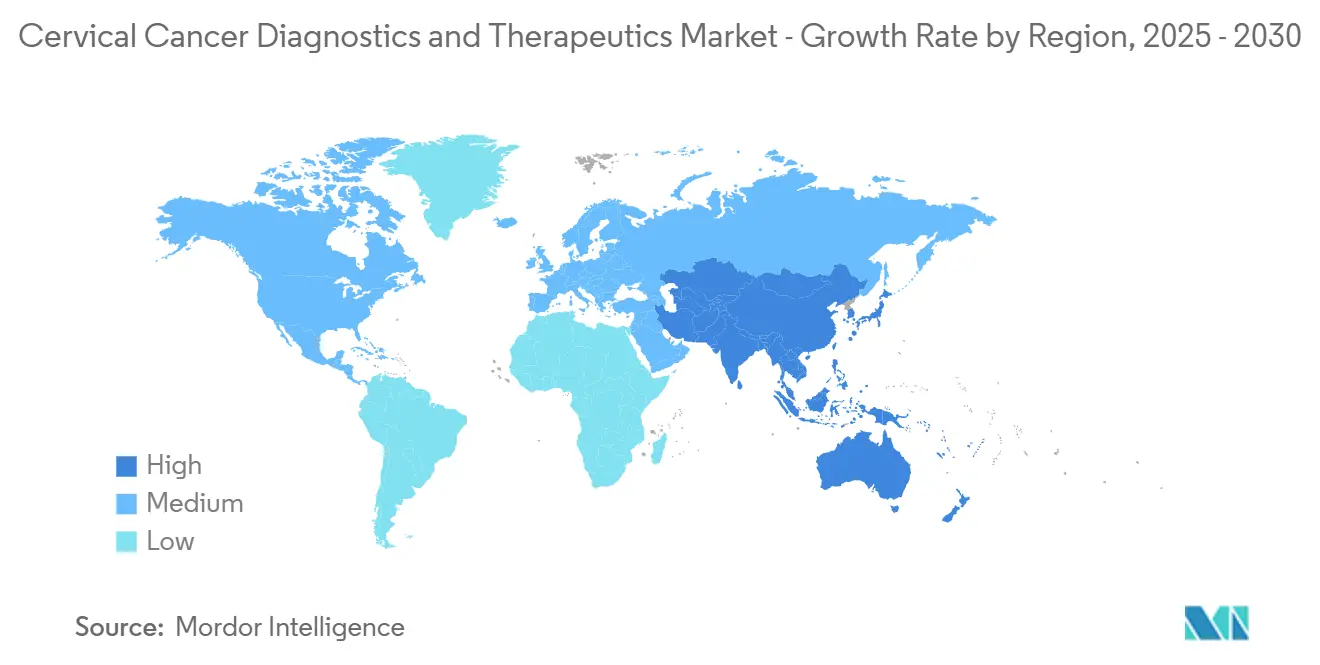
| Fastest Growing Market | Asia-Pacific |
| Largest Market | North America |
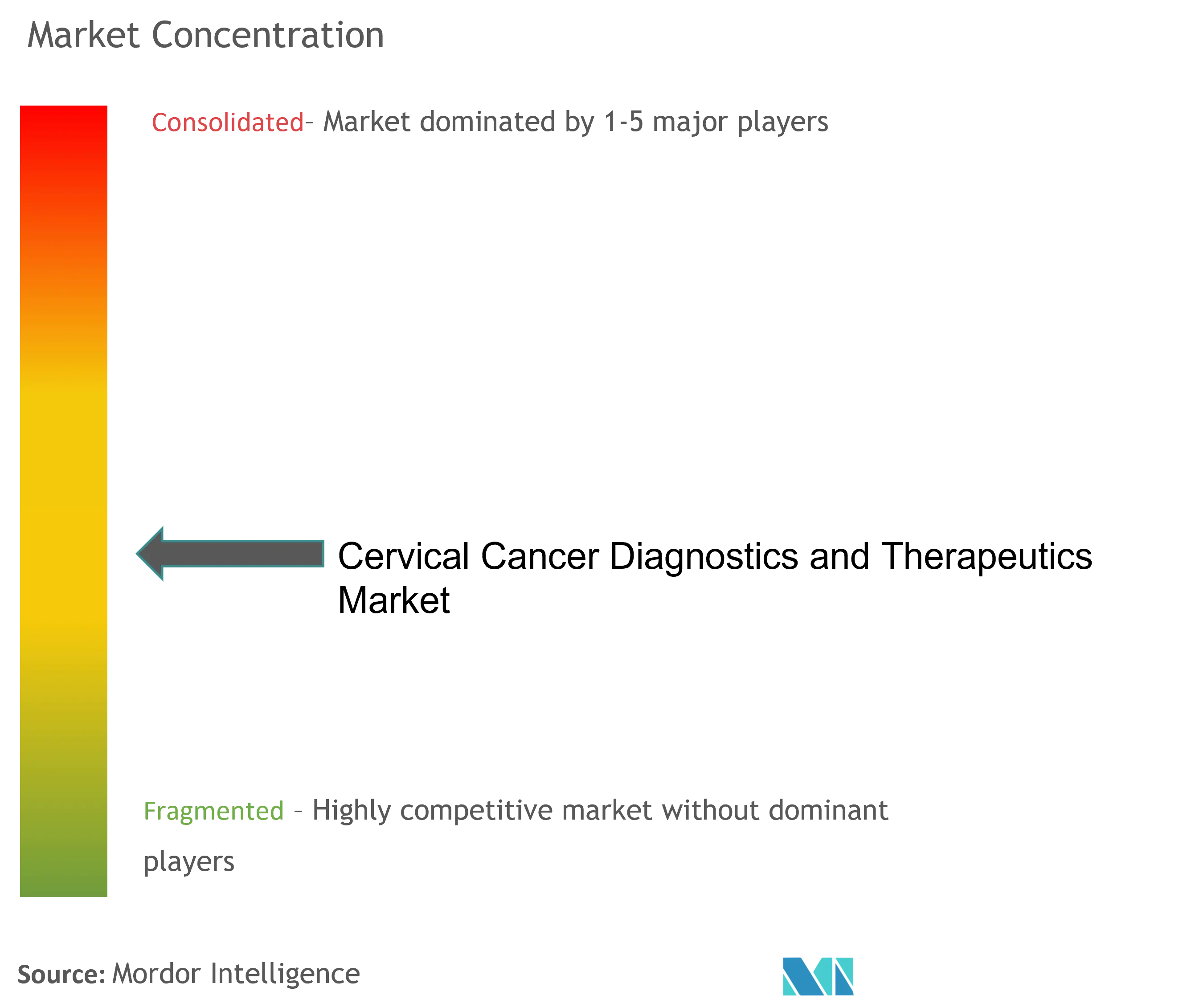
| Market Concentration | Medium |
Major Players *Disclaimer: Major Players sorted in no particular order Image © Mordor Intelligence. Reuse requires attribution under CC BY 4.0. | |
Cervical Cancer Diagnostics And Therapeutics Market Analysis by Mordor Intelligence
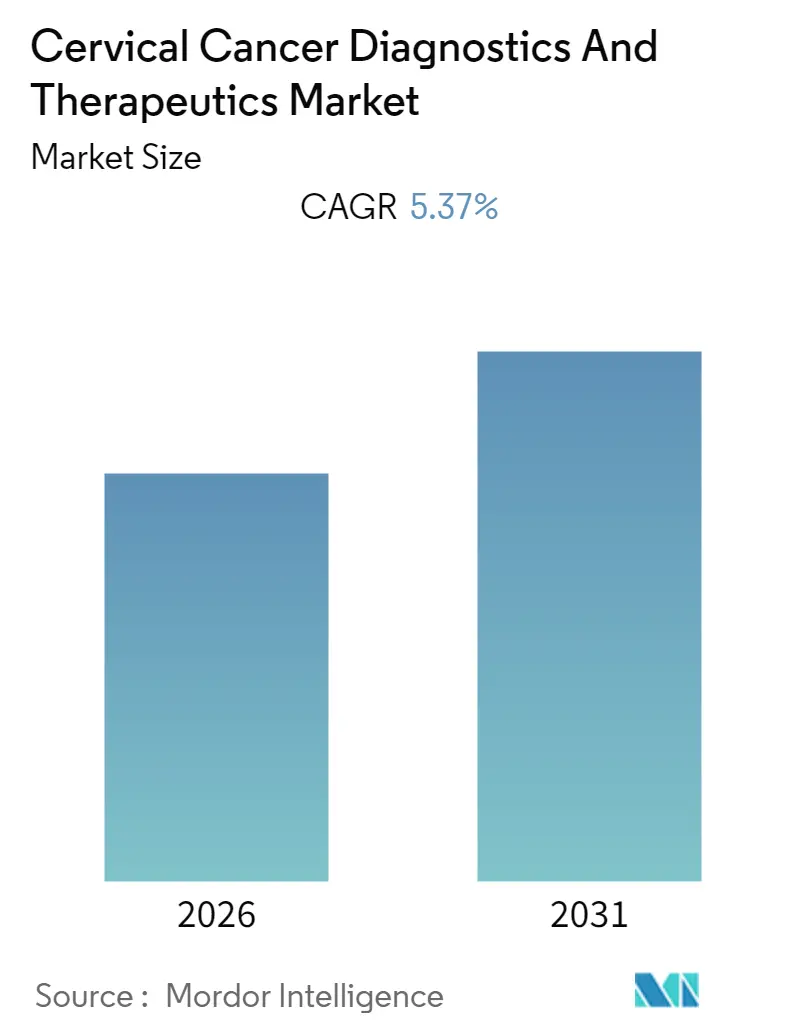
The Cervical Cancer Diagnostics And Therapeutics Market size is expected to register a CAGR of 5.37% during the forecast period (2026-2031).
Favorable government initiatives, such as funding for cervical cancer prevention programs and vaccination drives, a rising prevalence of cervical cancer due to factors like HPV infection, heightened awareness of early diagnosis through public health campaigns, and robust R&D efforts by key players in developing advanced diagnostic tools and effective drugs, are driving the growth of the cervical cancer diagnostics and therapeutics market.
The increasing awareness of cervical cancer and its treatment is expected to increase the adoption of cervical cancer drugs and diagnostics devices, thereby boosting the market's growth. For instance, in May 2022, the National Health Mission (NHM) and the Clinton Health Access Initiative collaborated to introduce a training program in Uttar Pradesh, India. The initiative aims to equip gynecologists and nurses with the skills to identify cervical cancer cases in their nascent stages. Such governmental initiatives aid in the early diagnosis and treatment of cervical cancer and bolster the market's growth.
The market has experienced significant growth, driven by the rising global incidence of cervical cancer among women. As per BGI Genomics Releases 2023 Global Report on Cervical Cancer Awareness, cervical cancer ranks as the fourth most prevalent cancer in women worldwide, with approximately 604,000 new cases reported in 2023. Thus, increasing adoption of cervical cancer diagnostic tests for early disease detection is poised to propel the market's growth during the forecast period.
Moreover, the introduction of enhanced combination drugs and diagnostic tests is poised to drive growth in the cervical cancer diagnostics and therapeutics market. For instance, in September 2022, the Drugs Controller General of India (DCGI) granted market authorization to the Serum Institute of India (SII) to manufacture an indigenously developed vaccine against cervical cancer. Similarly, in June 2022, Karkinos Healthcare, an oncology-focused health-tech platform, launched CerviRaksha, a first-of-its-kind clinically validated HPV test that is prequalified by the World Health Organization and approved by the Food and Drug Administration in partnership with the Karkinos network hospital doctors and nurses. Such drug approval increases access to this treatment, propelling the market's growth during the forecast period.
Therefore, growing awareness initiatives, the high prevalence of cervical cancer, and drug launches are expected to contribute to the market growth over the projected period. However, in many countries, irregular testing due to financial constraints and the exorbitant costs of cancer treatments hampers market expansion.
Note: Market size and forecast figures in this report are generated using Mordor Intelligence’s proprietary estimation framework, updated with the latest available data and insights as of 2026.
Global Cervical Cancer Diagnostics And Therapeutics Market Trends and Insights
The HPV Test Segment is Expected to Hold a Major Market Share During the Forecast Period
The Papanicolaou test is a cervical screening method that detects precancerous and cancerous processes in the cervix and colon. Abnormal findings are frequently followed by more sensitive diagnostic procedures and, if necessary, interventions aimed at preventing cervical cancer progression. An HPV test is recommended for women over 30 to detect the virus. The screening aids in detecting precancerous lesions caused by HPV, which can then be removed to prevent the development of invasive cancers.
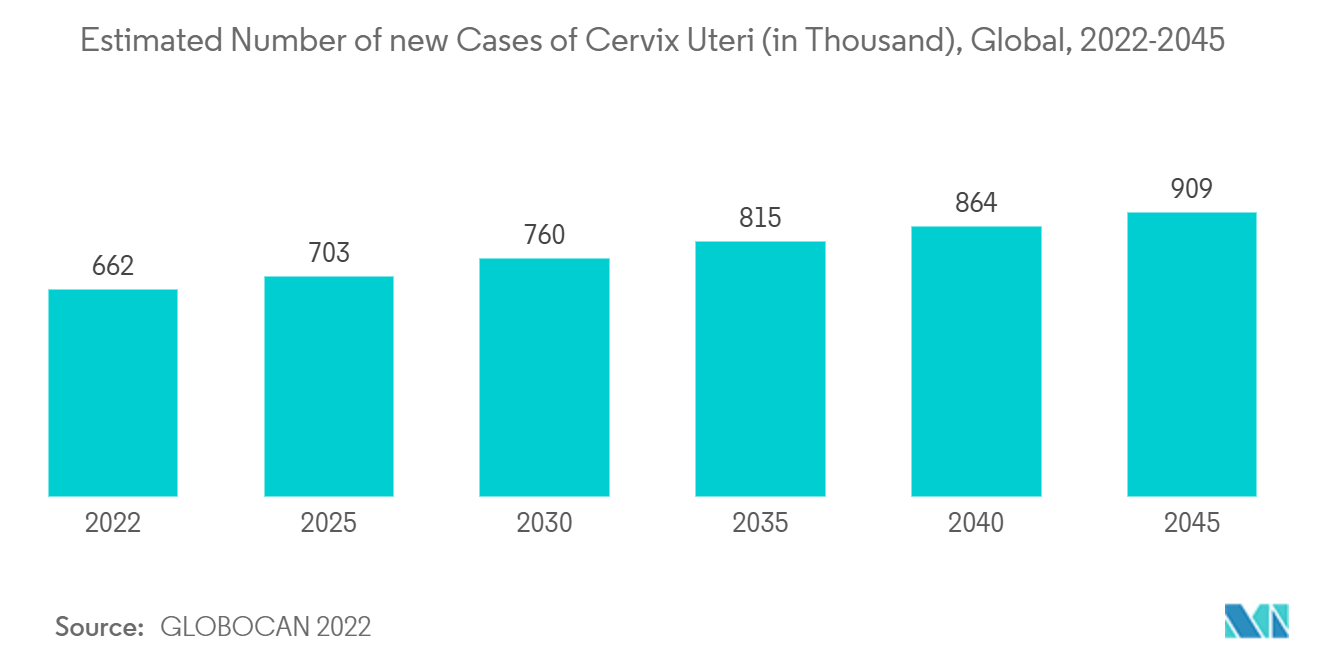
The major factor driving the segment's growth includes the rising burden of cervical cancer across the world. The disease is more commonly found in females. According to the Globocan 2022, there were 662 thousand cases of cervical cancer reported across the world in 2022, and this number is projected to increase by 909 thousand by 2024. Therefore, the incidence of cervical cancer is found to increase every year. In most cases, cervical cancer can be prevented through early detection and treatment of abnormal cell changes in the cervix years before the cancer develops. Therefore, with the increasing adoption of early diagnosis, the market is expected to grow positively during the forecast period.
Moreover, increasing product launches in the country boosts the market. For instance, in May 2024, Roche secured FDA approval for its human papillomavirus (HPV) self-collection solution, marking a pioneering entry into the US market. HPV screening plays a crucial role in pinpointing women vulnerable to cervical cancer, enabling early detection and intervention, thereby mitigating the risk of cervical cancer development.
Thus, all the aforementioned factors, such as the growing burden of cervical cancer and the launches of HPV tests, are anticipated to drive the segment's growth during the forecast period.
North America is Expected to Hold a Significant Share in the Market During the Forecast Period
North America is one of the largest cervical cancer diagnostics and therapeutics markets. The large market share is attributed to the high awareness of disease prevention among women in the region and to the many initiatives launched to prevent cervical cancer that have increased the reach of insurance coverage for cervical screening tests, especially for low-income women.
Cervical cancer is one of the leading causes of death among women in the United States. According to the American Cancer Society, based on data updated in January 2024 and the estimates for cervical cancer in the United States for 2022, about 13,820 new cases of invasive cervical cancer will be diagnosed. Since there are more cases of cervical cancer in the United States, the market is likely to grow quickly over the next few years.
Additionally, favorable government policies in the United States are expected to drive the market during the forecast period. Updates from the Centers for Disease Control and Prevention in February 2022 reported that the National Breast and Cervical Cancer Early Detection Program (NBCCEDP) for screening for breast and cervical cancer has helped the market grow in the United States. Additionally, the month of January has been designated "Cervical Health Awareness Month" by the US Congress. The National Cervical Cancer Coalition (NCCC) and its many local chapters across the country raise awareness about cervical cancer, HPV disease, and the importance of early detection during January. While NCCC chapters host events throughout the year, Cervical Health Awareness Month is observed in January, and chapters work to raise awareness in their communities.
Moreover, growing product launches by the key market players support the market's growth. For instance, in July 2023, Merck revealed that in the Phase 3 KEYNOTE-A18 trial (ENGOT-cx11/GOG-3047), KEYTRUDA, its anti-PD-1 therapy, combined with external beam radiotherapy (EBRT) and concurrent chemotherapy, succeeded in meeting a primary endpoint: progression-free survival (PFS). This treatment was administered to newly diagnosed patients grappling with high-risk locally advanced cervical cancer.
Thus, all aforementioned factors, such as the growing burden of cervical cancer and product launches, are expected to grow in the coming years in North America.
Competitive Landscape
The cervical cancer diagnostics and therapeutics market is semi-consolidated and consists of several major players. In terms of market share, a few of the major players are currently dominating the market. Companies are currently focusing on developing advanced techniques for diagnosis, such as liquid-based cytology. Some of the major companies in the market are Abbott Laboratories, Bristol-Myers Squibb Company, GlaxoSmithKline PLC, Merck & Co. Inc., Pfizer Inc., Qiagen NV, Advaxis Inc., Becton, Dickinson and Company, and F. Hoffmann-La Roche Ltd.
Cervical Cancer Diagnostics And Therapeutics Industry Leaders
-
Novartis AG
-
Becton, Dickinson and Company
-
Abbott Laboratories
-
F. Hoffman-La Roche Ltd
-
GlaxoSmithKline Plc
- *Disclaimer: Major Players sorted in no particular order
Market Opportunities and Future Outlook
Program-led expansion of screening and earlier intervention is creating whitespace for decentralized HPV testing, including self-collection workflows that reduce reliance on clinic-based pelvic exams. A key signal is the FDA clearances and approvals for self-collected samples for HPV testing in the United States, including Roche's HPV self-collection solution for use with the cobas HPV test (May 2024) and BD's pathway for self-collection and at-home use of the Onclarity platform (FDA actions referenced in 2024-2026 updates). As these pathways mature, laboratories and diagnostic centers can scale high-throughput HPV testing while reaching under-screened populations.
On the therapeutics side, the opportunity set is widening beyond conventional chemoradiation and surgery into targeted and biologic modalities, supported by regulatory progress for antibody-drug conjugates and organ-sparing approaches. In June 2026, China NMPA approved TIVDAK (tisotumab vedotin) for recurrent or metastatic cervical cancer via Zai Lab, expanding access to ADC-based treatment in a major market. In precancer, Asieris reported the NMPA approval of CEVIRA for CIN2 and the EMA acceptance of a marketing authorization application for APL-1702/CEVIRA in early 2026, pointing to a shift toward non-invasive drug-device combination options for high-grade lesions and expanding addressable patients in settings that prefer alternatives to surgical excision.
Recent Industry Developments
- June 2026: Zai Lab announced that China NMPA approved TIVDAK (tisotumab vedotin) for adult patients with recurrent or metastatic cervical cancer. The approval extends availability of an antibody-drug conjugate option in a large treatment market and supports broader adoption of advanced biologic therapeutics alongside established chemotherapy backbones.
- November 2025: BD announced World Health Organization prequalification for the BD Onclarity HPV Assay for BD COR and BD Viper LT Systems. WHO prequalification strengthens procurement eligibility in public-sector and donor-supported programs, reinforcing scale-up of HPV screening capacity in resource-constrained settings.
- May 2024: Roche announced FDA approval of its HPV self-collection solution in the United States for use with the cobas HPV test. Enabling self-collection expands access for people who face barriers to clinician-collected screening and supports higher testing volumes through centralized lab workflows.
Research Methodology Framework and Report Scope
Market Definition and Coverage
This market covers the revenues generated from clinical tests used to detect or confirm cervical cancer and the drug and vaccine therapies used to treat or prevent it across major care settings.
Scope exclusions: We exclude broad women's health screening programs and general lab services that are not specific to cervical cancer testing or treatment.
Segmentation Overview
- By Diagnostic Test
- Pap Smear Test
- HPV Test
- Colposcopy
- Biopsy and Endocervical Curettage
- Other Diagnostic Tests
- By Therapeutics
- Avastin (Bevacizumab)
- Blenoxane (Bleomycin)
- Hycamtin (Topotecan Hydrochloride)
- Gemcitabine-Cisplatin
- Vaccines
- Gardasil
- Cevarix
- Other Therapeutics
- By End User
- Hospitals
- Specialty Clinics
- Cancer and Radiation Therapy Centers
- Diagnostic Centers
- Geography
- North America
- United States
- Canada
- Mexico
- Europe
- Germany
- United Kingdom
- France
- Italy
- Spain
- Rest of Europe
- Asia-Pacific
- China
- Japan
- India
- Australia
- South Korea
- Rest of Asia-Pacific
- Middle East and Africa
- GCC
- South Africa
- Rest of Middle East and Africa
- South America
- Brazil
- Argentina
- Rest of South America
- North America
Data Sources, Market Sizing, and Validation
Desk Research
Desk research was used to build the basic demand and care pathway view before any modeling was finalized. We referenced public health and epidemiology sources such as the WHO, IARC (GLOBOCAN), and CDC, which help anchor incidence, screening coverage, HPV prevalence, and treatment access differences by region.
To keep assumptions realistic, additional checks were taken from sources such as national health ministries, peer reviewed clinical guidelines and journals, and customs or trade statistics where relevant for test kits and reagents. We also reviewed company filings, investor presentations, reputable press, and patent databases to understand technology shifts (like HPV DNA testing adoption) and how product mixes can move pricing. Some parts of pricing and company intelligence were supported using paid subscriptions for company financials and shipment-level trade views. The sources listed here are illustrative only, and many other references were used for data collection, validation, and clarification.
Primary Interviews and Surveys
Primary work focused on validating real world testing volumes, therapy use patterns, and price movement that do not show up cleanly in public data. We spoke with a mix of diagnostics labs, oncology care teams, procurement functions, and distribution side experts across the Americas, EMEA, and APAC so assumptions on uptake, regimen choice, and channel mix could be corrected where needed.
Distribution of primary research fieldwork respondents
| Company type | Respondent position | Region |
|---|---|---|
| Top tier: 38% | CXOs: 14% | APAC: 38% |
| Mid tier: 47% | Functional/Unit leaders: 27% | EMEA: 36% |
| Smaller Players: 15% | Managers: 59% | Americas: 26% |
Market-Sizing & Forecasting
Sizing started with a top-down build that reconstructs the addressable pool using disease burden and care delivery signals, which is then translated into test and therapy consumption. In practice, we linked cervical cancer incidence, screening participation, the split between Pap smear and HPV testing, diagnostic follow-up rates (colposcopy and biopsy), and treated patient shares by stage and care setting.
Those demand blocks were priced using average selling price logic that reflects test type mix, reimbursement levels, and expected pricing pressure or premiumization as newer testing methods scale. Results were corroborated with selective bottom-up approximations such as sampled ASP times estimated procedure or kit volumes, supplier and channel checks, and hospital and lab purchasing patterns, which helped close gaps when published utilization data was uneven across countries.
For forecasting, scenario analysis was used and then filtered through expected changes in vaccination coverage, screening policy rollouts, and treatment access expansion. Assumptions were reviewed with experts so the model reflects realistic adoption timing rather than smooth straight-line growth.
Data Validation & Update Cycle
Outputs were validated through multiple checks so the final totals stay consistent with independent signals such as screening volumes, biopsy confirmation pathways, and oncology treatment mix shifts. When outliers appeared, we revisited the input drivers, re-checked currency conversions, and re-contacted selected respondents to confirm whether the variance was driven by pricing, utilization, or scope.
A multi-step review is followed before sign-off, and the model is refreshed annually with interim updates when material events occur, such as guideline changes, reimbursement updates, or major product launches. Before delivery, an analyst performs a fresh pass on key inputs and calculations so clients receive the most current view available.
Mordor Intelligence's Cervical Cancer Diagnostics and Therapeutics Market Size Compared With Other Published Estimates
Published market sizes for cervical cancer diagnostics and therapeutics can vary even when the topic name looks similar, because each publisher sets its own boundaries and timing for pricing and currency. Differences also show up when one study mixes screening program economics into the core market, or when preventive vaccines are treated as part of therapy revenues.
In our work, the largest gap drivers were the handling of screening versus disease-specific diagnostic procedures, the mix assumed between Pap and HPV testing, and how treatment pathways are converted into revenue using ASP progression. The refresh cadence and the currency timing used for converting regional revenues into USD can also move the reported value in a noticeable way, especially when inflation and FX volatility are high across large patient pools. These choices explain why the same market can look smaller or larger across publications.
Benchmark comparison
| Source | Market Size | Gaps in Research Methodology |
|---|---|---|
| Mordor Intelligence | USD 4.62 B (2025) | |
| Global Consultancy A | USD 4.50 B (2025) | Uses a similar global scope, but the treatment of prevention versus therapy is broader and the pricing build appears more blended across test types, which can compress the 2025 value. |
| Research Firm B | USD 8.83 B (2025) | Expands scope to include screening programs and pre-cancerous lesion treatment economics, which increases the demand pool beyond cervical cancer specific diagnostics and therapeutics counted in this study. |
The table shows that most of the spread comes from scope boundaries and how pricing is refreshed over time, rather than from a disagreement on disease burden. By rechecking ASP assumptions close to publication and using consistent FX timing and pathway validation interviews, Mordor Intelligence keeps the 2025 total tied to cervical cancer specific testing and therapy revenues that can be traced back to clear utilization drivers.
Key Questions Answered in the Report
What is the current Global Cervical Cancer Diagnostics And Therapeutics Market size?
The Global Cervical Cancer Diagnostics And Therapeutics Market is projected to register a CAGR of 5.37% during the forecast period (2026-2031)
Who are the key players in Global Cervical Cancer Diagnostics And Therapeutics Market?
Novartis AG, Becton, Dickinson and Company, Abbott Laboratories, F. Hoffman-La Roche Ltd and GlaxoSmithKline Plc are the major companies operating in the Global Cervical Cancer Diagnostics And Therapeutics Market.
Which is the fastest growing region in Global Cervical Cancer Diagnostics And Therapeutics Market?
Asia-Pacific is estimated to grow at the highest CAGR over the forecast period (2026-2031).
Which region has the biggest share in Global Cervical Cancer Diagnostics And Therapeutics Market?
In 2025, the North America accounts for the largest market share in Global Cervical Cancer Diagnostics And Therapeutics Market.
What years does this Global Cervical Cancer Diagnostics And Therapeutics Market cover?
The report covers the Global Cervical Cancer Diagnostics And Therapeutics Market historical market size for years: 2019, 2020, 2021, 2022, 2023, 2024 and 2025. The report also forecasts the Global Cervical Cancer Diagnostics And Therapeutics Market size for years: 2026, 2027, 2028, 2029, 2030 and 2031.