
Ceramic Textile Market Size and Share
Market Overview
| Study Period | 2020 - 2031 |
|---|---|
| Market Size (2026) | USD 193.27 Million |
| Market Size (2031) | USD 250.14 Million |
| Growth Rate (2026 - 2031) | 5.29 % |
| Fastest Growing Market | Asia Pacific |
| Largest Market | Asia Pacific |
| Market Concentration | Medium |
Major Players *Disclaimer: Major Players sorted in no particular order Image © Mordor Intelligence. Reuse requires attribution under CC BY 4.0. | |
Ceramic Textile Market Analysis by Mordor Intelligence
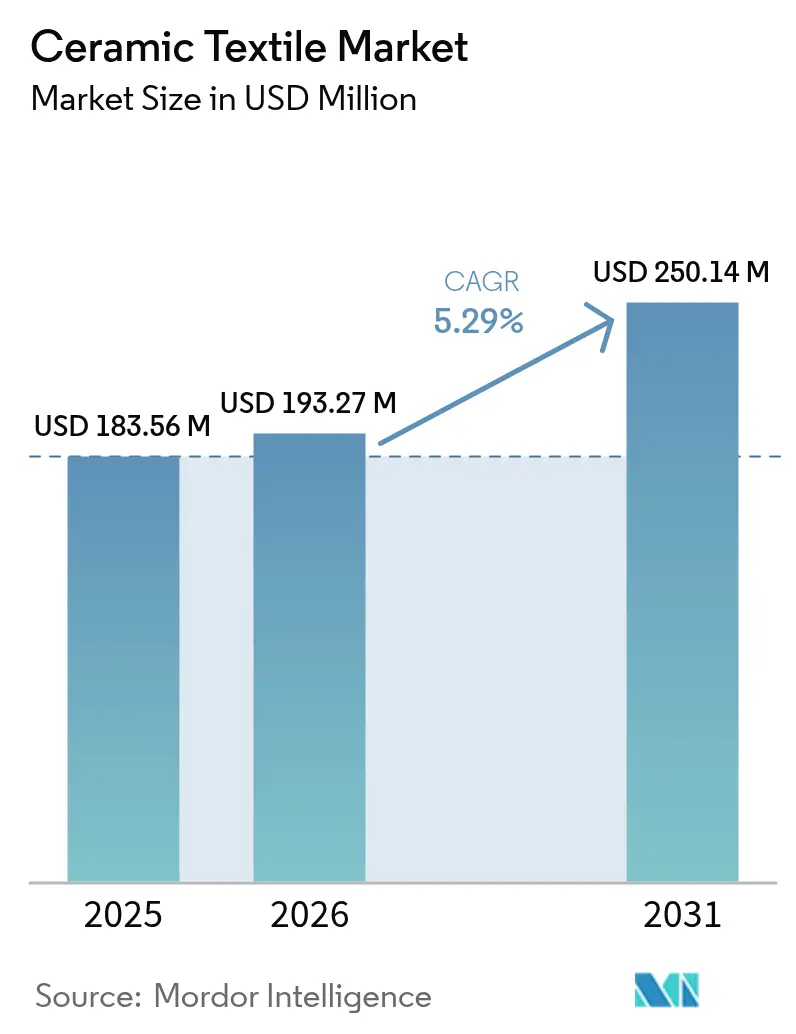
The ceramic textile market size in 2026 is estimated at USD 193.27 million, growing from 2025 value of USD 183.56 million with 2031 projections showing USD 250.14 million, growing at 5.29% CAGR over 2026-2031. Steady gains stem from the growing need for high-temperature insulation in steel, petrochemical and battery manufacturing environments where conventional materials fail. Favourable energy-efficiency mandates, advances in bio-persistent fibre chemistry and rising electric-vehicle production also widen the ceramic textile market opportunity. Competitive pressure is mounting as leading producers scale capacity, while regulatory scrutiny on worker safety accelerates the shift toward low bio-persistent grades. Together these factors signal a maturing ceramic textile market that is moving from niche adoption to broader industrial mainstream acceptance.
Key Report Takeaways
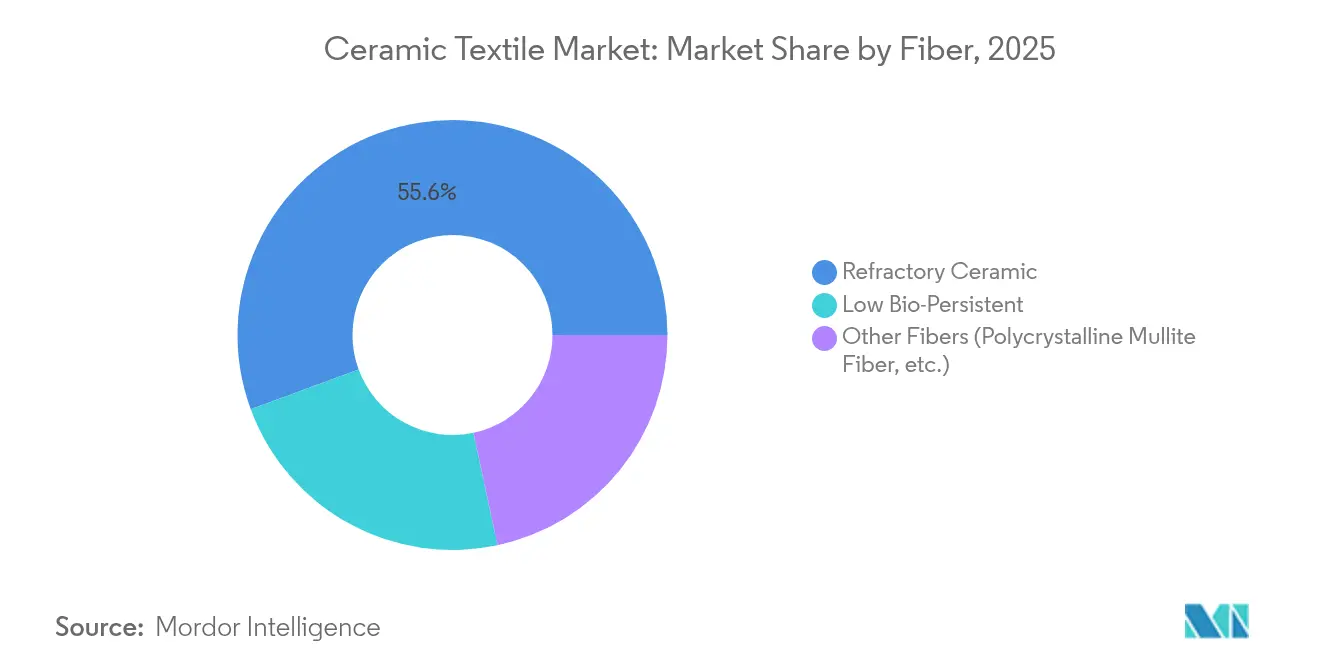
- By fiber, refractory ceramic fiber led with 55.62% ceramic textile market share in 2025; low bio-persistent fibre is projected to advance at a 6.25% CAGR through 2031.
- By type, cloth contributed 37.55% of the ceramic textile market size in 2025, whereas sleeving and braided sleeves are expected to grow at a 6.73% CAGR to 2031.
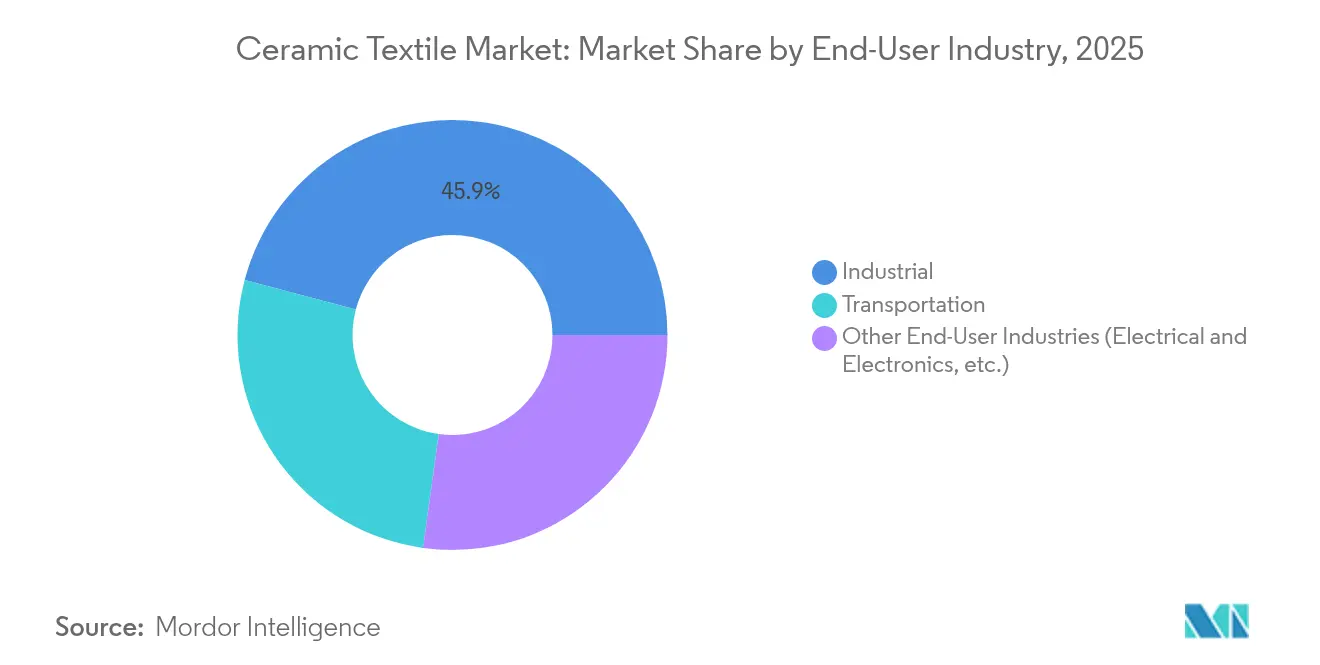
- By end-user industry, industrial processing accounted for 45.88% of the ceramic textile market size in 2025, while electrical and electronics is the fastest mover with a 7.11% CAGR to 2031.
- By geography, Asia-Pacific dominated with a 41.84% ceramic textile market share in 2025 and is set to expand at a 6.04% CAGR through 2031.
Note: Market size and forecast figures in this report are generated using Mordor Intelligence’s proprietary estimation framework, updated with the latest available data and insights as of 2026.
Market Trends and Insights
Drivers Impact Analysis of Ceramic Textile Market*
| Driver | (~) % Impact on CAGR Forecast | Geographic Relevance | Impact Timeline |
|---|---|---|---|
| Growing demand for high-temperature industrial insulation | +1.2% | Global, with concentration in Asia-Pacific and North America | Medium term (2-4 years) |
| Energy-efficiency regulations in process industries | +0.8% | North America & EU, expanding to Asia-Pacific | Long term (≥ 4 years) |
| Superior weight-to-performance characteristics | +1.1% | Global, particularly aerospace and automotive sectors | Short term (≤ 2 years) |
| Adoption in battery-gigafactory thermal management | +0.9% | Asia-Pacific core, spill-over to North America | Medium term (2-4 years) |
| Fire-resistant materials requirements for urban air mobility | +0.6% | North America & EU, early adoption markets | Long term (≥ 4 years) |
| Source: Mordor Intelligence | |||
Growing Demand for High-Temperature Industrial Insulation
Continuous-run steel, glass and petrochemical kilns now reach operating temperatures above 1,200 °C, creating structural and energy losses that conventional mineral wool cannot handle. Ceramic textiles cut heat loss by as much as 30% compared with legacy refractory bricks, delivering measurable fuel savings while extending maintenance cycles. Higher throughput targets in Asian plants intensify this push, so the ceramic textile market is becoming a critical enabler of furnace upgrades worldwide.
Energy-Efficiency Regulations in Process Industries
Revised greenhouse-gas disclosure rules compel industrial sites to document thermal efficiency improvements, making ceramic fabrics an easy pathway to regulatory compliance without large process overhauls[1]U.S. Environmental Protection Agency, “Greenhouse Gas Reporting Rule: Addition of Ceramics Manufacturing,” epa.gov. North American refineries and European ceramics lines already rely on ceramic insulation modules to stay within reporting thresholds, and similar legislation is appearing in China and India. These trends reinforce long-run demand and give the ceramic textile market a policy tail-wind.
Superior Weight-to-Performance Characteristics
Aerospace turbine shrouds, automotive battery shields and next-generation exhaust systems all benefit from ceramic fibre strength above 2,000 MPa while remaining lighter than metallic alternatives. Weight savings translate into greater fuel economy or extended electric-vehicle range, so design engineers increasingly specify ceramic cloth, tape and rope for heat shields. This enhances the ceramic textile market narrative around performance rather than cost.
Adoption in Battery-Gigafactory Thermal Management
Rapid gigafactory construction across China, Japan and the United States boosts demand for insulation that tolerates thousands of heat cycles without micro-cracking. Panasonic Energy and other cell makers integrate ceramic blankets into oven walls and pack assemblies to meet tight safety margins[2]Panasonic Energy Co., Ltd., “Panasonic Expands North American Lithium-Ion Battery Production,” panasonic.com . As global electric-vehicle output climbs, battery plants represent one of the most reliable volume pipelines for the ceramic textile market.
Restraints Impact Analysis of Ceramic Textile Market*
| Restraint | (~) % Impact on CAGR Forecast | Geographic Relevance | Impact Timeline |
|---|---|---|---|
| Carcinogenic classification of refractory ceramic fiber | -0.7% | Global, with stricter enforcement in EU and North America | Short term (≤ 2 years) |
| High production costs vs. conventional insulators | -0.4% | Global, particularly price-sensitive emerging markets | Medium term (2-4 years) |
| Supply crunch of high-purity aluminosilicate feedstock | -0.3% | Global, with concentration in specialized mining regions | Long term (≥ 4 years) |
| Source: Mordor Intelligence | |||
Carcinogenic Classification of Refractory Ceramic Fibre
Occupational-exposure limits of 0.2 fibres/cm³ increase monitoring, personal-protective-equipment and disposal costs across plants that handle legacy refractory grades[3]Occupational Safety and Health Administration, “Permissible Exposure Limits for Refractory Ceramic Fiber,” osha.gov. Europe already mandates substitution assessments, accelerating the pivot to low bio-persistent fibres. This safety-driven switch trims short-term demand yet also stimulates innovation that ultimately widens the ceramic textile market.
High Production Costs versus Conventional Insulators
Sol-gel fibre drawing and sintering require tight temperature control and high-purity feedstocks, leading to prices that can be triple those of glass wool. Where thermal risks are lower than 800 °C, buyers often keep cheaper materials. Producers therefore invest in scale efficiencies and automated looms to narrow the cost gap, safeguarding future ceramic textile market competitiveness.
*Our forecasts treat driver/restraint impacts as directional, not additive. The impact forecasts reflect baseline growth, mix effects, and variable interactions.
Ceramic Textile Market Segment Analysis
By Fiber:
Bio-Persistent Alternatives Gain MomentumRefractory ceramic fiber retained 55.62% of the ceramic textile market in 2025, valued near USD 102.08 million, yet its growth rate trails emerging low bio-persistent grades that post a 6.25% CAGR. Regulators and plant managers prefer fibres that dissolve in body fluids within 30 days, easing exposure compliance. The ceramic textile market size attributed to bio-persistent products could reach USD 67.4 million by 2031, confirming that health issues are no longer a niche concern.
Low-toxicity alumino-silicate fibers, polycrystalline mullite and engineered alkaline-earth silicate variants now match refractories on thermal shock resistance. Pilot lines in Japan and Germany already run fully on bio-persistent feedstock, while Chinese producers expand output for export. Strategic R&D partnerships with universities accelerate property improvements, ensuring the ceramic textile market remains technologically dynamic even as safer chemistries take hold.


By Type:
Specialised Forms Drive InnovationCloth accounted for 37.55% of the ceramic textile market in 2025, translating to around USD 68.89 million. Demand here remains stable because cloth is versatile, easy to cut, and integrates well into furnace linings. Yet growth is shifting to sleeving, braided sleeves, tapes and ropes that together expand at 6.73% CAGR, raising their ceramic textile market share each year.
Automotive wire harnesses adopt braided sleeves for battery-fire containment, while turbine builders specify thick-wall sleeving for hot-gas duct protection. These tailored geometries open space for hybrid products that combine ceramic yarn with stainless-steel reinforcement, improving handling without sacrificing temperature limits. Advanced looms, precise braid angles and nanoparticle coatings create intellectual-property moats that protect margins inside the ceramic textile market.
By End-User Industry:
Electronics Applications AccelerateIndustrial processing still represents 45.88% of the ceramic textile market size in 2025, driven by continuous kilns, reformers and glass forehearths. The segment enjoys predictable spending because any unscheduled shutdown quickly offsets material costs. However, electrical and electronics lines post a 7.11% CAGR thanks to denser semiconductor fabs, laser processing chambers and growing demand for chip packaging ovens.
As device geometries shrink, process windows tighten, so even minor thermal fluctuations can ruin yields. Ceramic tapes with low thermal mass stabilise temperature ramps, and woven gaskets resist plasma attack during wafer etching. This new volume eases reliance on cyclical steel output, cushioning the ceramic textile market whenever heavy industries slow.
Geography Analysis
APAC Ceramic Textile Market
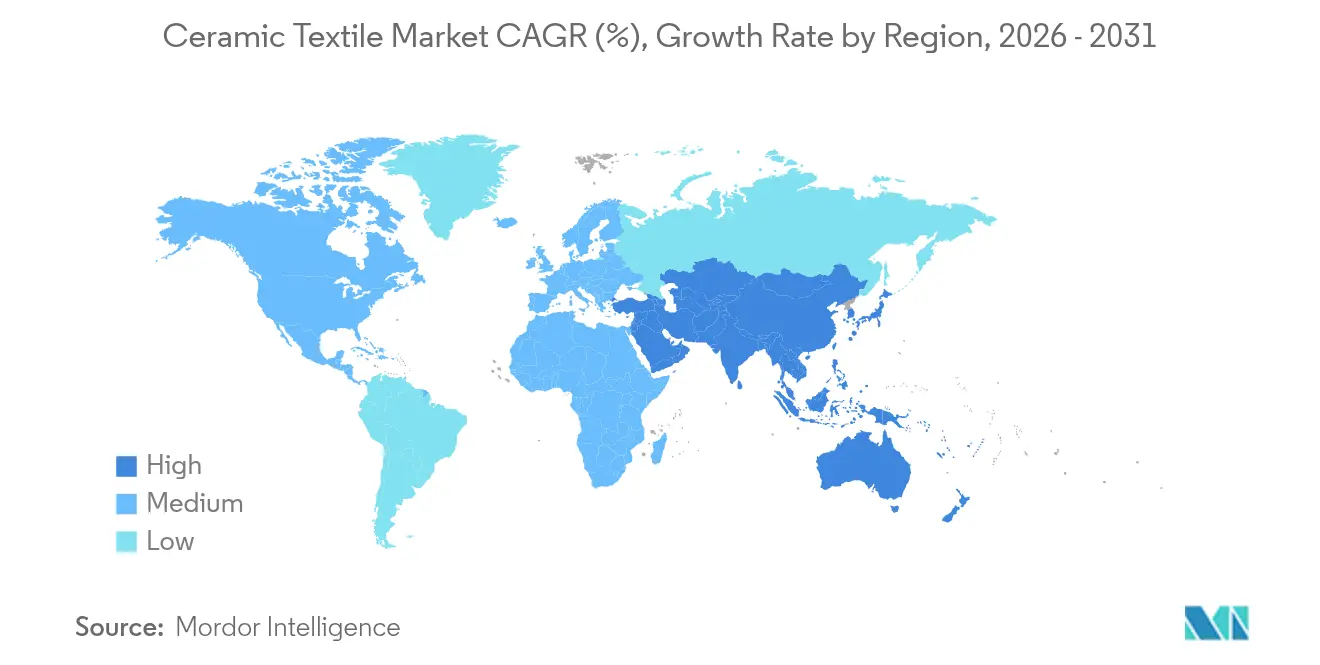
Asia-Pacific held a 41.84% share of the ceramic textile market in 2025 and is on pace for a 6.04% regional CAGR. China leads kiln refurbishment projects, Japan focuses on fibre chemistry patents, and South Korea drives electronics-grade consumption. Access to aluminosilicate mines in Shandong and Guangxi further stabilises local supply chains, giving Asian producers a freight advantage into neighbouring refineries and battery plants.
North America Ceramic Textile Market
North America remains strong in aerospace and is the fastest adopter of urban air mobility prototypes. Federal efficiency credit programmes reward facility upgrades, so US refineries replace old brick linings with folding ceramic modules despite higher upfront costs. Canadian nickel-cobalt projects, essential for EV supply chains, also deploy ceramic blankets in rotary calciners, broadening the ceramic textile market’s base in the region.
Europe Ceramic Textile Market
Europe balances high labour costs with world-class materials research. Germany’s composites clusters refine ceramic matrix processes, France leverages its civil-aviation footprint, and Scandinavian steelmakers retrofit blast-furnace tapholes with ceramic rope seals to curb CO₂ intensity. Tighter worker-safety directives accelerate migration to bio-persistent fibres, so European demand tilts towards premium grades that lift the regional average selling price. Together these factors make the ceramic textile market outlook resilient across all three major economic blocs.

Regulatory Landscape
Worker health and chemical classification rules materially shape product selection in ceramic textiles, particularly for refractory ceramic fiber (RCF). In the European Union, RCF is classified as a Category 1B carcinogen under the CLP Regulation (EC) No 1272/2008, and downstream users must manage communication duties under REACH (including Article 33 notifications for articles containing more than 0.1% w/w of a listed substance). Occupational exposure control remains a key compliance anchor, with the EU binding occupational exposure limit for RCF under the Carcinogens and Mutagens framework in force since January 2020, reinforcing substitution assessments and tightened handling practices across industrial users.
In the United States, compliance is driven more by workplace hazard communication and state-level exposure limits than by a single federal RCF-specific OSHA PEL. OSHA requirements such as the Hazard Communication Standard (29 CFR 1910.1200) and broader dust exposure standards underpin labeling, SDS documentation, and workplace controls, while California maintains a specific RCF permissible exposure limit of 0.2 f/cc (8-hour TWA). These differing regimes support the market shift toward low bio-persistent grades, and in some cases toward fiber constructions positioned outside common respirable-fiber definitions (for example, larger-diameter ceramic fibers used in certain engineered textile systems).
Value Chain Analysis
The ceramic textile value chain starts with high-purity alumina (Al2O3) and silica (SiO2) inputs, with optional reinforcements such as alloy wire or alkali-free glass fiber to improve yarn strength and abrasion resistance. Core manufacturing steps typically include batching and melting in high-temperature furnaces, fiberizing (spinning or blowing), web formation and consolidation (including needle punching for blankets), and textile conversion via spinning, weaving, knitting, or braiding into cloth, tape, rope, and sleeving formats. Finishing operations such as heat treatment help remove processing aids and stabilize performance for high-temperature service.
Downstream distribution often splits between direct supply to large OEMs and industrial end users (industrial processing, transportation, and electronics applications), and specialized distributors serving maintenance, repair, and overhaul demand. The chain is sensitive to energy intensity in melting operations and to availability of consistent, high-purity aluminosilicate feedstocks, while product compliance documentation (SDS, labeling, and traceability) has become a practical gating factor for cross-border sales. On the demand side, customization (geometry, reinforcement, coatings) and application engineering services increasingly differentiate suppliers as users retrofit kilns, furnaces, and other high-heat process equipment to improve thermal efficiency and safety performance.
Competitive Landscape
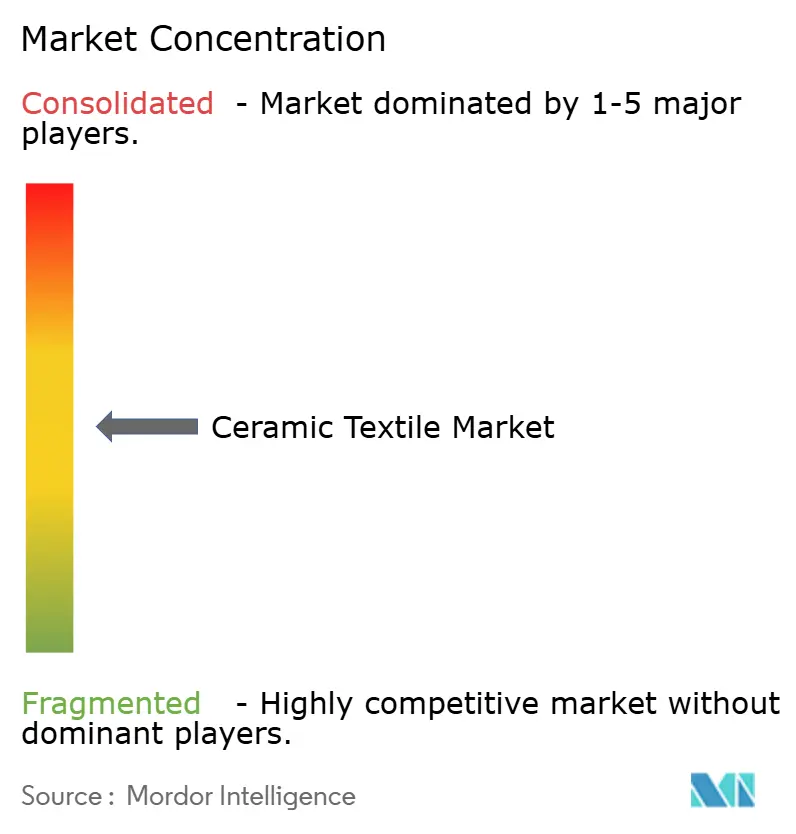
The ceramic textile market is moderately fragmented, with global players competing alongside regional manufacturers. Companies like 3M leverage materials science expertise and distribution networks to maintain premium positions, while firms such as IBIDEN and Luyang Energy-saving Materials focus on niche applications or regional markets. Larger players are increasing investments in production capacity and R&D to address emerging applications like battery thermal management and urban air mobility. Vertical integration and application-specific product development are key strategies, as seen with Morgan Advanced Materials targeting high-value sectors like semiconductors and clean energy. Emerging opportunities in eVTOL aircraft thermal protection and next-generation battery systems favor companies with advanced technical capabilities. The market emphasizes advanced fiber chemistry, automated manufacturing, and tailored product development to meet sophisticated end-user demands.
Ceramic Textile Industry Leaders
3M
Mineral Seal Corporation
Alkegen
IBIDEN
Isolite Insulating Products Co., Ltd.
- *Disclaimer: Major Players sorted in no particular order
Ceramic Textile Market Companies Covered in this Report
- 3M
- 3 Tex Fabrics
- Alkegen
- CeraMaterials
- Double Egret Thermal Insulation Co., Ltd.
- EAS
- FibreCast Inc.
- Great Lakes Textiles
- IBIDEN
- Isolite Insulating Products Co., Ltd.
- JA Harrison & Company Limited
- Luyang Energy-saving Materials Co., Ltd.
- Mineral Seal Corporation
- NUTEC Incorporated
- Rath-Group

Market Opportunities and Future Outlook
An opportunity exists in accelerating substitution away from legacy RCF textiles into low bio-persistent fiber portfolios as exposure management tightens across regions and as customers standardize safer materials in purchasing specifications. This creates whitespace for suppliers that can match thermal shock resistance and cycling durability while simplifying compliance workflows (labeling, SDS consistency, and material traceability) for multi-site industrial customers. It also supports premiumization in Europe and other markets where substitution assessments and worker-safety requirements are explicit buying criteria.
Outside insulation-only applications, product innovation is widening the addressable space into hybrid and structural uses where ceramics contribute heat and corrosion resistance alongside other performance attributes. For example, in May 2026 Denvelops and La Paloma Ceramica reported a first real-world installation of a Hybrid Ceramic TexTILES architectural cladding system in Seville, demonstrating adoption of ceramic-textile-based structures beyond traditional furnace and process-industry linings. In parallel, June 2025 saw Alkegen enter full commercial production of fiber-enhanced aerogel insulation for EV battery thermal runaway protection, reinforcing pull-through for ceramic-based thermal protection solutions tied to electrification supply chains and safety-driven design changes.
Recent Industry Developments in Ceramic Textile Market
- June 2026: Alkegen introduced an earthquake-resistant ceramic filter candle for high-temperature industrial filtration applications, positioned for operation up to 1,000 degrees Celsius and validated during a major earthquake event in Japan. The product extends ceramic-based portfolios beyond insulation into safety-critical filtration hardware, broadening end-use exposure while leveraging similar high-temperature materials capabilities.
- June 2025: Alkegen entered full-scale commercial production of its fiber-enhanced aerogel insulation (AlkeGel) aimed at EV battery thermal runaway protection. Scaling this production supports higher-volume supply into battery manufacturing and pack safety applications, where heat shielding and flame-resistance requirements are increasingly designed into platforms.
- November 2024: NUTEC Group expanded its Huntersville, North Carolina headquarters by doubling floorspace to enhance production capacity for ceramic-fiber modules and blankets. The added footprint supports shorter lead times and higher throughput for industrial maintenance and retrofit demand, which is sensitive to outage windows and turnaround schedules.


Ceramic Textile Market Report Scope and Research Methodology
Market Definition and Coverage
For this study, the ceramic textile market covers high temperature textile products made from ceramic fibers that are used for thermal insulation, fire protection, and heat shielding in industrial settings.
Scope exclusions: We exclude conventional glass fiber and mineral wool insulation that is not manufactured and sold as ceramic textile products.
Segments Covered in This Report
- By Fiber
- Refractory Ceramic
- Low Bio-Persistent
- Other Fibers (Polycrystalline Mullite Fiber, etc.)
- By Type
- Cloth
- Tape
- Rope
- Yarn
- Other Types (Sleeving / Braided Sleeve, etc.)
- By End-User Industry
- Industrial
- Transportation
- Other End-User Industries (Electrical and Electronics, etc.)
- By Geography
- Asia-Pacific
- China
- India
- Japan
- South Korea
- Rest of Asia-Pacific
- North America
- United States
- Canada
- Mexico
- Europe
- Germany
- United Kingdom
- Italy
- France
- Rest of Europe
- South America
- Brazil
- Argentina
- Rest of South America
- Middle East and Africa
- Saudi Arabia
- South Africa
- Rest of Middle East and Africa
- Asia-Pacific
Data Sources, Market Sizing, and Validation
Desk Research
Desk work starts with the material and end use context, because ceramic textiles are closely linked to high temperature processing and safety norms. We review public sources such as the USGS for minerals and alumina related reference series, the US International Trade Commission and UN Comtrade for trade codes that proxy ceramic fiber and textile flows, and the US Bureau of Labor Statistics for producer price and inflation signals used for value normalization.
To keep end market demand realistic, we also scan sources such as the World Steel Association for steel output trends, the International Energy Agency for energy and industrial activity indicators, and National Institute of Standards and Technology references for high temperature material performance context. This is then supported by company annual reports, investor presentations, association websites, and trusted press coverage for capacity additions and plant level activity. Where available, we also use paid subscriptions for company financials and patent databases to cross-check product positioning and track new high temperature insulation filings. The specific list above is not exhaustive, and many other public and paid sources were also used for data collection, validation, and clarification.
Primary Interviews and Surveys
Primary work was used to test what we saw in public data, especially on typical pricing ranges, demand shifts by end use, and where ceramic textiles are being substituted by other insulation solutions. We spoke with manufacturers, distributors, and industrial buyers across major regions so assumptions on adoption, replacement cycles, and application intensity could be confirmed and corrected before finalizing totals.
Distribution of primary research fieldwork respondents
| Company type | Respondent position | Region |
|---|---|---|
| Top tier: 33% | CXOs: 14% | APAC: 47% |
| Mid tier: 52% | Functional/Unit leaders: 36% | EMEA: 34% |
| Smaller Players: 15% | Managers: 50% | Americas: 19% |
Market-Sizing & Forecasting
Sizing is built using a top-down approach that reconstructs the addressable demand pool from industrial heat-use intensity, production activity in key end uses, and the typical insulation spend share that is allocated to ceramic textiles. Once the demand pool is shaped, it is split by major use areas and geographies using observed manufacturing footprints and trade signals, and then converted into value using blended price points gathered from channel discussions.
To keep totals grounded, selective bottom-up checks are run using a short list of supplier revenue exposure, sampled price per kilogram or per meter for common forms, and approximate consumption per application (such as furnace door seals, expansion joints, and thermal wraps) to adjust for gaps in public reporting. The variables we use include industrial output trends in steel and non-ferrous metals, refinery and petrochemical operating activity, heat containment regulations and safety retrofits, the mix shift between fiber grades, and price movement tied to energy and alumina inputs. For forecasting, scenario analysis is used, because end market cycles and energy cost swings can change replacement rates quickly, and the scenarios are then aligned with expert expectations on plant additions and maintenance spending.
Data Validation & Update Cycle
Outputs are checked against independent signals such as import and export movement, published production indicators for high temperature industries, and the implied spend per facility for insulation maintenance. If any region or end use shows an unrealistic jump, the assumptions are reopened, and follow-up calls are triggered to understand whether pricing, mix, or demand has shifted.
Before sign-off, the model goes through a multi-step analyst review where calculations, unit conversions, and currency timing are rechecked, followed by consistency checks across years so growth does not violate known capacity or industry cycle limits. Reports are refreshed annually, and interim updates are made when material events occur, such as major capacity expansions, sharp input price changes, or regulatory shifts. Right before delivery, a fresh pass is completed so clients receive the latest updated view.
Mordor Intelligence's Ceramic Textile Market Size Measured Against Other Published Estimates
Published values for ceramic textiles can look far apart, even when they are describing the same general product family. The differences usually come from what gets counted as ceramic textile, how pricing is converted to USD, and whether the time window is anchored to a recent year or a forward base year.
Trade movement checks and end-use production indicators are the evidence used to keep the estimate tied to real consumption, and this is why Mordor Intelligence reports USD 193.27 M (2026) after filtering out adjacent insulation categories and applying application-level adoption rates that were rechecked in interviews.
Benchmark comparison
| Source | Market Size | Gaps in Research Methodology |
|---|---|---|
| Mordor Intelligence | USD 193.27 M (2026) | |
| Trade Journal A | USD 179.10 M (2024) | Uses an earlier base year and often reports a broader product basket under ceramic textiles, with limited visibility on the price normalization approach used for USD conversion. |
| Industry Blog B | USD 294.00 M (2030) | Anchors the value at a later forecast year and can reflect a higher growth case, since adoption and replacement assumptions are not clearly tied back to plant activity and maintenance cycles. |
The table shows that year selection and category boundaries explain most of the spread, and then growth assumptions amplify it over time. By tying the value build to observable industrial activity signals and interview-checked pricing logic, the final number stays traceable to inputs that can be reviewed and repeated.


Key Questions Answered in the Report
What is the current Ceramic Textile Market size?
The ceramic textile market is valued at USD 193.27 million in 2026 and is forecast to reach USD 250.14 million by 2031, reflecting a 5.29% CAGR.
Which region holds the largest share and is expanding the quickest?
Asia-Pacific commands 41.84% of global revenue in 2025 and is advancing at a 6.04% CAGR, the fastest among all regions.
How do ceramic textiles help improve industrial energy efficiency?
Ceramic fiber linings can cut furnace heat loss by up to 30%, allowing plants to meet energy-efficiency mandates without major process redesign.
What key restraints limit wider ceramic textile adoption?
Carcinogenic classification of some fibers, elevated production costs versus mineral wool, and occasional feedstock shortages all temper market expansion.
Page last updated on:


 Your data is secure and never sold or shared.


