
Central Nervous System Stimulant Drugs Market Size and Share
Market Overview
| Study Period | 2020 - 2031 |
|---|---|
| Market Size (2026) | USD 12.45 Billion |
| Market Size (2031) | USD 16.92 Billion |
| Growth Rate (2026 - 2031) | 6.31 % |
| Fastest Growing Market | Asia-Pacific |
| Largest Market | North America |
| Market Concentration | Medium |
Major Players *Disclaimer: Major Players sorted in no particular order Image © Mordor Intelligence. Reuse requires attribution under CC BY 4.0. | |
Central Nervous System Stimulant Drugs Market Analysis by Mordor Intelligence
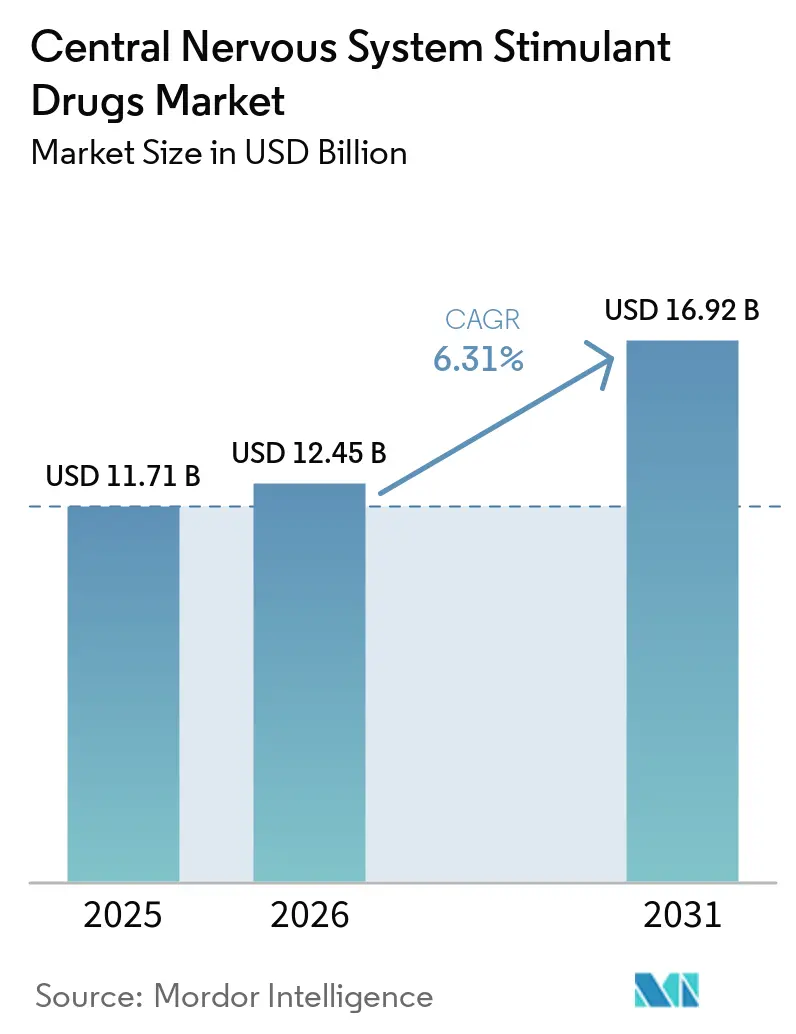
The Central Nervous System Stimulant Drugs Market size was valued at USD 11.71 billion in 2025 and estimated to grow from USD 12.45 billion in 2026 to reach USD 16.92 billion by 2031, at a CAGR of 6.31% during the forecast period (2026-2031).
- The significant factor attributing to this market's growth is CNS disorders such as sleep apnea, narcolepsy, and attention deficit hyperactivity disorder, which have witnessed a substantial rise in recent years. According to a study published in the American Thoracic Society in 2022, obstructive sleep apnea (OSA) has a global prevalence of over 22.6%. The expanding senior population significantly impacts the Central Nervous System Stimulant Drugs Market. The aged individual has a high risk of developing central nervous system issues such as sleeping disorders and ADHD, which require CNS stimulant drugs for their effective management. Over 20% of the elderly population have a state of sleep apnea and daytime sleepiness.
- For instance, according to Sleep Care Online, the shape of sleep apnea in elderly patients aggravates the pre-existing medical conditions common in older patients, including hypertension, cardiovascular issues, and diabetes. For instance, according to the data published by the World Health Organization in October 2022, it is estimated that by 2030, 1 in 6 people worldwide will be aged 60 years or over. The share of the population aged 60 years and over will increase to 1.4 billion in 2030; by 2050, the number of people aged 60 years and older will double to 2.1 billion. It was also estimated that the number of persons aged 80 years or older is expected to triple by 2050 to reach 426 million.
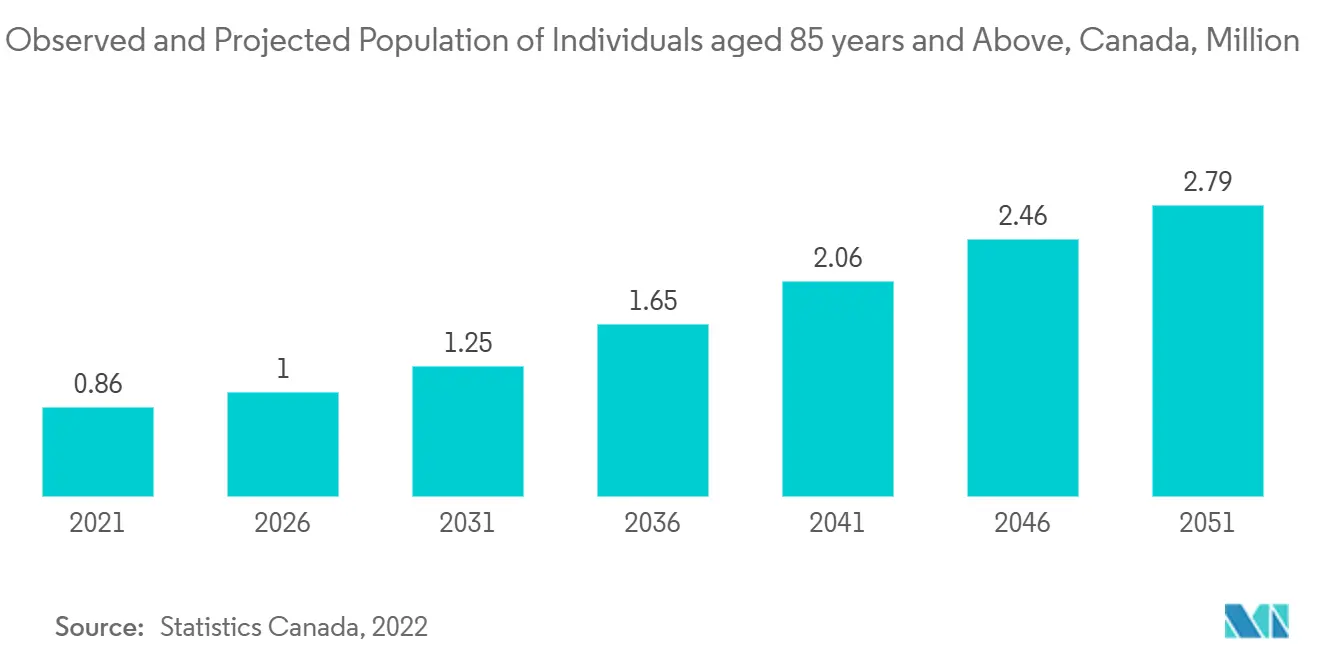
- According to the January 2023 World Social Report, the number of adults aged 65 and older is expected to more than quadruple between 2021 and 2050, increasing from 761 million to 1.6 billion. The number of people aged 80 years or older is growing even faster. Thus, the expanding geriatric population is anticipated to boost the demand for CNS stimulant drugs, which will boost the growth of the central nervous system stimulant drugs market in the coming years.
- The strategic activities taken by the market players, such as product launches, mergers, and acquisitions, are expected to contribute to market growth during the forecast period. For instance, in August 2022, Tris Pharma Inc. launched its Dyanavel XR, which is an amphetamine extended-release tablet intended for oral use for the treatment of attention deficit hyperactivity disorder.
- Therefore, owing to the factors above, the market is anticipated to grow during the forecast period. However, numerous side effects of drugs are expected to hinder the central nervous system stimulant drugs market's growth during the forecast period.
Note: Market size and forecast figures in this report are generated using Mordor Intelligence’s proprietary estimation framework, updated with the latest available data and insights as of 2026.
Global Central Nervous System Stimulant Drugs Market Trends and Insights
The Attention Deficit Hyperactivity Disorder Segment is Expected to Witness Significant Growth During the Forecast Period
- The attention deficit hyperactivity disorder segment is expected to hold a significant market share in the central nervous system (CNS) stimulant drugs market during the forecast period. Factors such as the rising prevalence of attention deficit hyperactivity disorder among children and adolescents and the easy availability of treatment drugs such as CNS stimulants will likely propel the segment growth during the forecast period.
- For instance, per the data published by the National Health Insurance Corporation of South Korea in March 2023, the number of individuals diagnosed with attention deficit hyperactivity disorder (ADHD) increased in the past few years, reaching 102,322 in 2022. Further, as per the Centers for Disease Control and Prevention (CDC), in 2022, the approximate number of children detected with attention deficit hyperactivity disorder was 6.1 million, with a prevalence rate of 9.4%.
- Additionally, the increasing prescription rate for ADHD treatment using CNS stimulants is expected to contribute to the market growth during the forecast period. For instance, according to the National Health Institute, in July 2023, the prescription of CNS stimulants and ADHD medications rose by 32% among adults aged 18 and above and 12% in children under 17 during 2022-2023. This increase highlights a growing trend in the treatment of ADHD and other related conditions in both age groups. Thus, increasing the prescription rate for ADHD treatment will contribute to the segment growth during the forecast period.
- Therefore, the attention deficit hyperactivity disorder segment is expected to witness significant growth during the forecast period due to the factors, including the rising prevalence of attention deficit hyperactivity disorder.
North America is Expected to Witness Significant Growth During the Forecast Period
- During the forecast period, North America is expected to experience significant growth in the central nervous system stimulant drugs market.
- The development of the central nervous system stimulant drugs market is driven by the high healthcare expenditure, high prevalence of central nervous system diseases, expanding geriatric population, and presence of leading market players in the region. For instance, as per the data published by the Centre for ADHD Awareness Canada (CADDAC) in 2023, ADHD is one of Canada's most common neurodevelopmental disorders, affecting over 1.8 million Canadians. Several clinical trials are ongoing in North America, especially in the United States. More than half of the total neurological disease clinical studies conducted worldwide are in the United States.
- Also, according to a research study published in the British Medical Journal in 2022, approximately 4.1 million United States adults reported prescriptions for CNS stimulant drugs. The same source reported that the growth rate of the total number of prescriptions dispensed was about 96%, and significant percentage increases occurred in adults aged 25 years and older.
- Therefore, owing to the factors above, the growth of the market is anticipated in North America.
Competitive Landscape
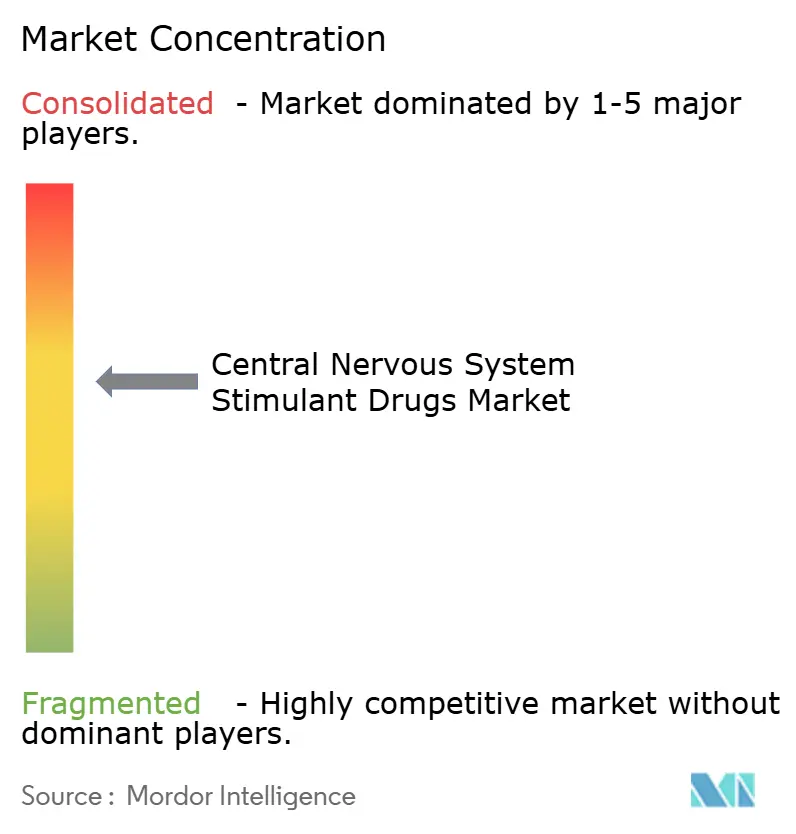
The central nervous system stimulant drugs market is moderately competitive due to the presence of several companies operating globally and regionally. The competitive landscape includes an analysis of some international and local companies that hold market shares and are well known, including Ironshore Pharmaceuticals Inc., Novartis AG, Takeda Pharmaceutical Co. Ltd, Azurity Pharmaceuticals Inc., Noven Therapeutics LLC, Independence Pharmaceuticals, Janssen Pharmaceuticals Inc., Elite Pharmaceuticals Inc., Kempharm Inc., and Adlon Therapeutics LP.
Central Nervous System Stimulant Drugs Industry Leaders
-
Ironshore Pharmaceuticals Inc.
-
Novartis AG
-
Takeda Pharmaceutical Co. Ltd
-
Azurity Pharmaceuticals, Inc.
-
Noven Therapeutics, LLC.
- *Disclaimer: Major Players sorted in no particular order
Market Opportunities and Future Outlook
Opportunities in central nervous system stimulant drugs continue to hinge on differentiated formulations and access models in high-volume indications such as ADHD and sleep-wake disorders. Extended-release approaches used in marketed ADHD stimulants, including LiquiXR-based platforms reflected in products such as Dyanavel XR and Quillivant XR, create room for longer duration control, smoother exposure profiles, and more patient-friendly formats that can affect adherence and peak-trough exposure in both pediatric and adult use.
On the supply and access side, controlled-substance governance remains a defining constraint and an opportunity area for manufacturers that can support continuity of care. In the United States, Schedule II stimulant availability is tied to DEA-managed annual aggregate production quotas, while labeling and safety communication updates from FDA add compliance requirements that can shift product positioning and prescriber education. Differences in regulatory pathways and market access for amphetamine-based products between the United States and Europe also create openings for companies to tailor portfolios, lifecycle strategies, and commercialization footprints by geography rather than relying on uniform global rollouts.
Recent Industry Developments
- June 2026: Takeda reported additional pivotal Phase 3 data for oveporexton (TAK-861) at the SLEEP 2026 congress for narcolepsy type 1, including improvements in daily functioning and cognitive symptoms. The readout reinforces momentum behind orexin-focused approaches in sleep-wake disorders and links to demand for CNS stimulants and stimulant alternatives in clinical practice.
- August 2025: Novartis entered an option, collaboration, and license agreement with BioArctic to develop treatments that combine BrainTransporter technology with neurodegeneration targets. The deal points to continued investment in CNS delivery and targeting technologies that can influence competitive dynamics across CNS drug development.
- September 2024: Collegium Pharmaceutical completed its acquisition of Ironshore Therapeutics, the company behind the ADHD stimulant Jornay PM, for USD 525 million in cash. The transaction consolidated ownership of an evening-dosed methylphenidate franchise and expanded Collegium's neurology-focused portfolio footprint.
Research Methodology Framework and Report Scope
Market Definition and Coverage
This market covers prescription central nervous system stimulant drugs used to improve attention, wakefulness, and alertness across recognized medical indications, measured in value terms at the manufacturer level and tracked across major regions.
Scope exclusions: We exclude illicit stimulants, non-prescription supplements, and inpatient procedure or diagnostic revenues that sit outside drug therapy spend.
Segmentation Overview
- By Product Type
- Lisdexamfetamine
- Dextroamphetamine
- Methylphenidate HCl
- Other Product Types
- By Application
- Attention Deficit Hyperactivity Disorder (ADHD)
- Sleeping Disorder
- Other Applications
- Geography
- North America
- United States
- Canada
- Mexico
- Europe
- Germany
- United Kingdom
- France
- Italy
- Spain
- Rest of Europe
- Asia-Pacific
- China
- Japan
- India
- Australia
- South Korea
- Rest of Asia-Pacific
- Middle East and Africa
- GCC
- South Africa
- Rest of Middle East and Africa
- South America
- Brazil
- Argentina
- Rest of South America
- North America
Data Sources, Market Sizing, and Validation
Desk Research
Desk research starts by mapping what is approved, prescribed, and reimbursed for stimulant therapy, and then translating those signals into a value model. We referenced public sources such as the US FDA drug databases and labels, CDC and NIH epidemiology publications, WHO and OECD health indicators, and national prescription datasets that are available openly (for example, NHSBSA prescribing open data for England).
To ground the commercial side, we also reviewed company annual reports, investor decks, earnings call transcripts, and major regulatory or safety communications that affect utilization and pricing. Where helpful, paid subscriptions for company financials and intelligence, news and financials, patent databases, and global tenders were used to cross-check timelines, generic entry, and supply continuity signals. The desk sources noted here are illustrative, and many other public references were used for data collection, validation, and clarification during the analysis.
Primary Interviews and Surveys
Primary work was used to validate demand drivers and price realities that are hard to infer from published documents alone, especially around formulary access, switching between molecules, and supply disruption impacts. We spoke with a balanced mix of manufacturers, distributors, pharmacists, clinicians, and payer or reimbursement stakeholders across key geographies, and then used those inputs to confirm the assumptions applied in the model.
Distribution of primary research fieldwork respondents
| Company type | Respondent position | Region |
|---|---|---|
| Top tier: 26% | CXOs: 18% | APAC: 50% |
| Mid tier: 54% | Functional/Unit leaders: 24% | EMEA: 30% |
| Smaller Players: 20% | Managers: 58% | Americas: 20% |
Market-Sizing & Forecasting
Our sizing uses a top-down build that reconstructs demand from treated-patient pools and prescription intensity, which are then converted into value using typical therapy mix and pricing by molecule. The totals are corroborated with selective bottom-up checks, such as sampling branded and generic price ranges, cross-checking supplier revenue disclosures, and validating channel markups to adjust for any overstatements.
Inputs that matter for this market include diagnosed and treated ADHD prevalence, adult diagnosis growth, narcolepsy and sleep-related prescribing trends, generic penetration by molecule, and average price progression that reflects rebates and mix shifts (extended-release versus immediate-release). We also treated supply continuity as a market signal, because shortages can move volume between molecules and temporarily distort price per unit.
For forecasting, we lean on scenario analysis supported by a simple multivariate view of the key drivers, where treatment rates and price mix are stressed under conservative and higher-access cases. When bottom-up signals are missing for smaller countries, we fill gaps using proxy indicators like per-capita prescription intensity and income-adjusted therapy affordability, and then re-check the outputs with expert feedback before finalizing.
Data Validation & Update Cycle
Validation is handled through several passes where model outputs are compared against independent signals, including prescription trend datasets, regulatory approvals or safety changes, and major reimbursement shifts that should show up in utilization. Outliers are investigated at the assumption level, and if the variance cannot be explained cleanly, we re-contact relevant interviewees for clarification.
Before sign-off, the estimates are reviewed by another analyst to confirm math consistency, currency treatment, and that growth rates align with the underlying drivers rather than being forced to a target. Reports are refreshed annually, and interim updates are made when material events occur, such as policy shifts, major label changes, or prolonged supply shortages. Right before delivery, a fresh review pass is done so clients receive the latest updated view.
Mordor Intelligence's Central Nervous System Stimulant Drugs Market Size Measured Against Other Published Estimates
Published market values for CNS stimulant drugs can look quite different across sources, even when they appear to refer to the same therapy area. Differences usually come from what is counted as a stimulant drug, which indications are included, and how pricing is converted into a consistent USD value across regions.
In this market, the biggest gaps typically show up in whether adjacent CNS drug classes are blended in, whether hospital channel add-ons are counted on top of ex-manufacturer sales, and how generic pricing erosion is modeled after loss of exclusivity. Another common driver is refresh timing, because shortage periods and policy responses can change quarterly volumes quickly, and older assumptions can stay embedded in a published figure.
Benchmark comparison
| Source | Market Size | Gaps in Research Methodology |
|---|---|---|
| Mordor Intelligence | USD 11.71 B (2025) | |
| Trade Journal A | USD 10.20 B (2024) | Uses an earlier base year and typically reflects list-price style valuation, which can understate the impact of recent volume growth and channel mix changes in 2025 onward. |
| Regional Consultancy B | USD 7.51 B (2024) | Often applies a narrower molecule set and limited geographic capture, and it may not fully scale for reimbursement-driven utilization differences across major regions. |
The table shows a noticeable spread around the 2024 to 2025 level, and in Mordor Intelligence's model the totals are tied to prescription-led demand by indication and then translated into value using molecule mix and price assumptions that are re-checked with primary inputs. Once scope is kept consistent and the pricing logic is made explicit, the resulting market size becomes easier to trace back to real utilization signals and to update when the market shifts.
Key Questions Answered in the Report
How big is the Central Nervous System Stimulant Drugs Market?
The Central Nervous System Stimulant Drugs Market size is expected to reach USD 12.45 billion in 2026 and grow at a CAGR of 6.31% to reach USD 16.92 billion by 2031.
What is the current Central Nervous System Stimulant Drugs Market size?
In 2026, the Central Nervous System Stimulant Drugs Market size is expected to reach USD 12.45 billion.
Who are the key players in Central Nervous System Stimulant Drugs Market?
Ironshore Pharmaceuticals Inc., Novartis AG, Takeda Pharmaceutical Co. Ltd, Azurity Pharmaceuticals, Inc. and Noven Therapeutics, LLC. are the major companies operating in the Central Nervous System Stimulant Drugs Market.
Which is the fastest growing region in Central Nervous System Stimulant Drugs Market?
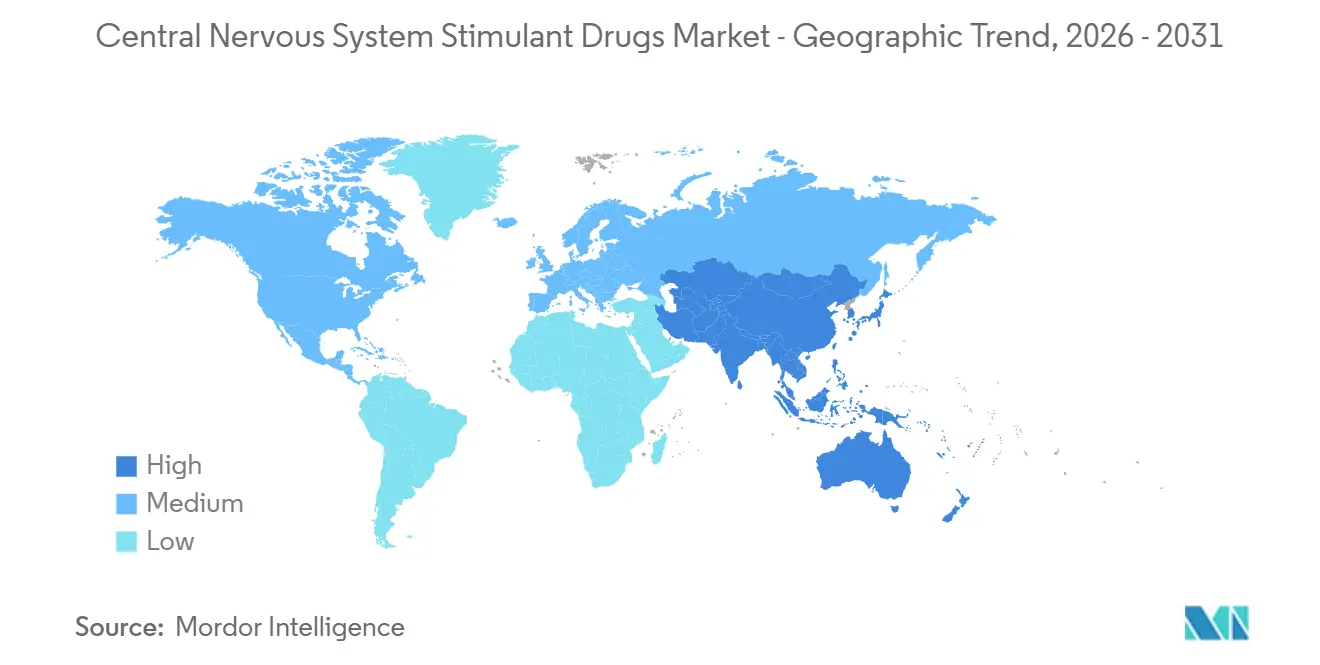
Asia-Pacific is estimated to grow at the highest CAGR over the forecast period (2026-2031).
Which region has the biggest share in Central Nervous System Stimulant Drugs Market?
In 2025, the North America accounts for the largest market share in Central Nervous System Stimulant Drugs Market.