
Carglumic Acid Market Size and Share
Market Overview
| Study Period | 2020 - 2031 |
|---|---|
| Market Size (2026) | USD 204.19 Million |
| Market Size (2031) | USD 277.58 Million |
| Growth Rate (2026 - 2031) | 6.32 % |
| Fastest Growing Market | Asia-Pacific |
| Largest Market | North America |
| Market Concentration | Medium |
Major Players *Disclaimer: Major Players sorted in no particular order Image © Mordor Intelligence. Reuse requires attribution under CC BY 4.0. | |
Carglumic Acid Market Analysis by Mordor Intelligence
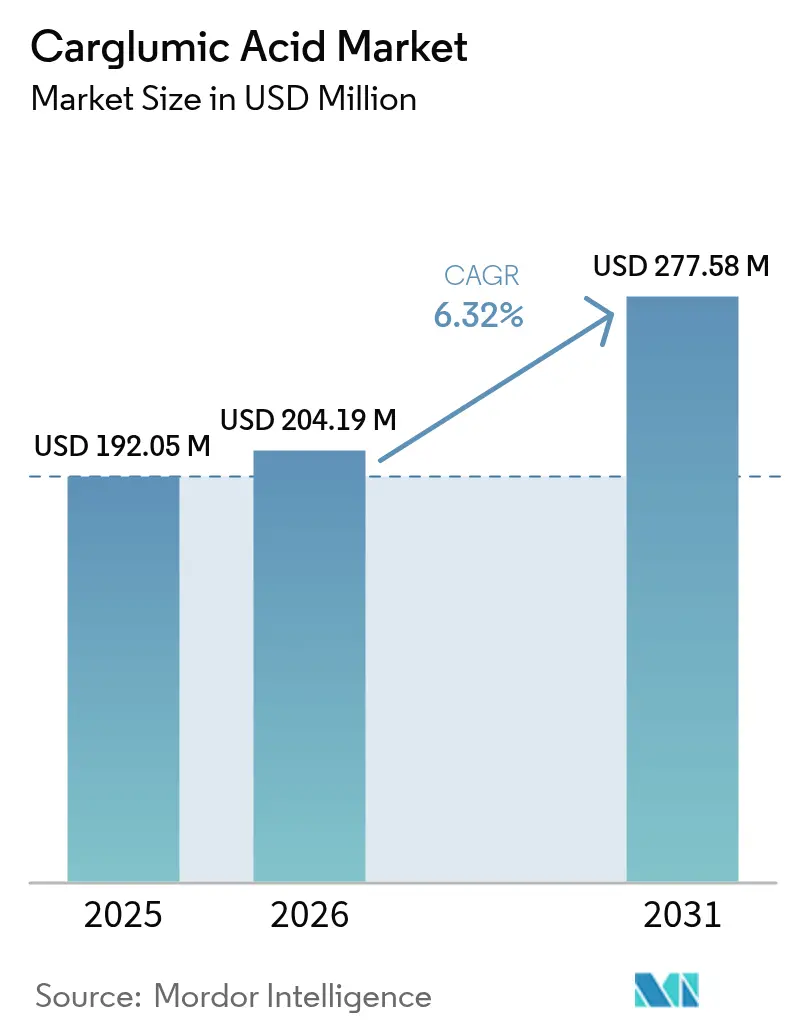
The carglumic acid market size was valued at USD 192.05 million in 2025 and estimated to grow from USD 204.19 million in 2026 to reach USD 277.58 million by 2031, at a CAGR of 6.32% during the forecast period (2026-2031). Robust growth stems from earlier diagnosis of N-acetylglutamate synthase (NAGS) deficiency and organic acidurias, faster orphan-drug reviews, and wider newborn screening that feeds a predictable treatment pipeline. Single-source active pharmaceutical ingredient (API) dependence keeps supply chains tight but also supports premium pricing. Orally disintegrating tablets (ODTs) lead adoption, aided by taste-masking innovations that simplify pediatric administration. Hospital pharmacies dominate distribution, mirroring the acute-care setting of hyperammonemic crises, while e-commerce channels register the fastest growth on the back of telehealth uptake. Regionally, North America benefits from mature orphan-drug incentives, whereas Asia-Pacific (APAC) exhibits the quickest expansion thanks to newborn screening roll-outs and evolving rare-disease policies.
Key Report Takeaways
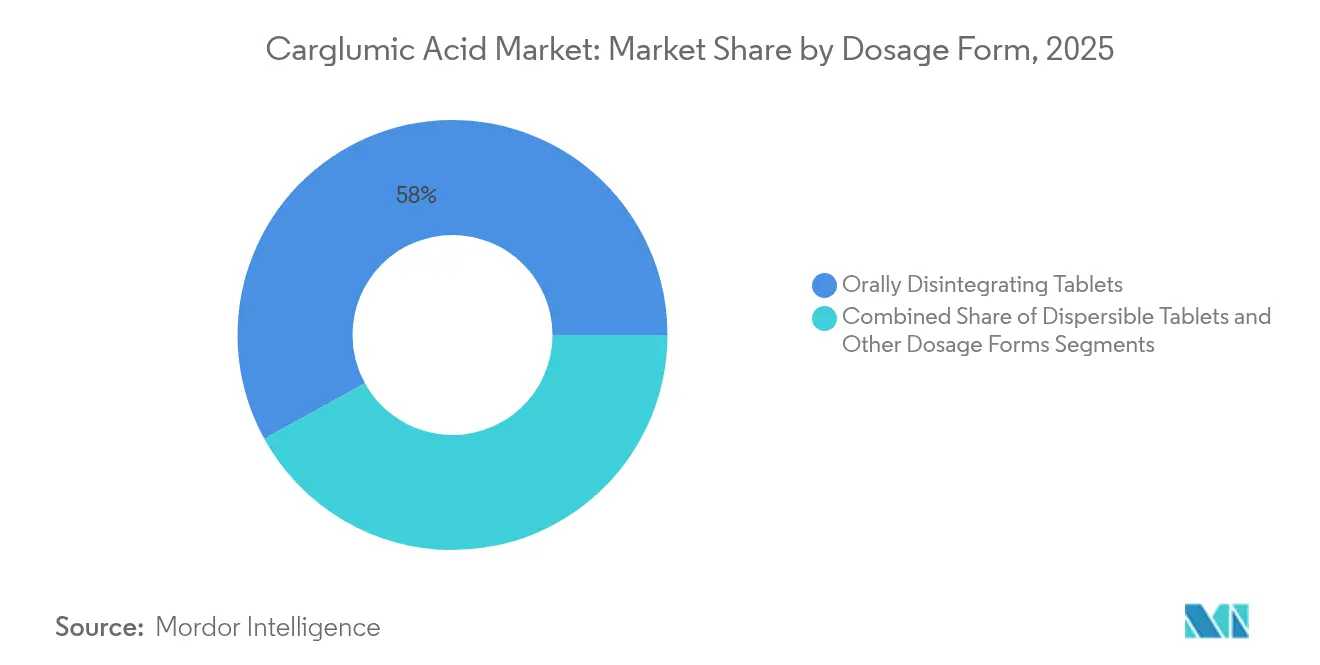
- By dosage form, ODTs commanded 58.02% of carglumic acid market share in 2025 and are tracking a 6.95% CAGR through 2031.
- By route of administration, oral products held 90.85% share of the carglumic acid market size in 2025 and are projected to rise at a 6.62% CAGR to 2031.
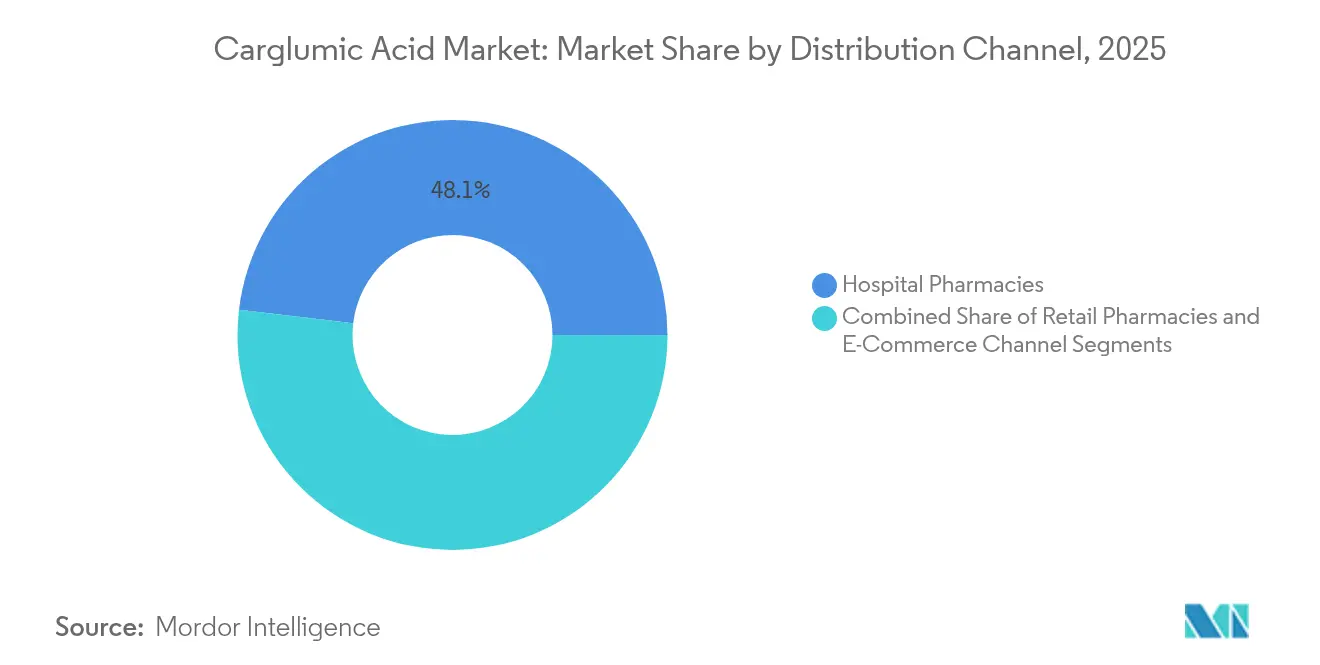
- By distribution channel, hospital pharmacies accounted for 48.12% of the carglumic acid market in 2025, while e-commerce is poised for a 7.55% CAGR through 2031.
- By geography, North America led with 39.12% revenue share in 2025; APAC is expected to expand at a 7.42% CAGR between 2026-2031.
Note: Market size and forecast figures in this report are generated using Mordor Intelligence’s proprietary estimation framework, updated with the latest available data and insights as of 2026.
Global Carglumic Acid Market Trends and Insights
Drivers Impact Analysis*
| Driver | % Impact on CAGR Forecast | Geographic Relevance | Impact Timeline |
|---|---|---|---|
| Rising Prevalence of NAGS Deficiency & Organic Acidurias | +1.2% | Global, with concentration in consanguineous populations | Medium term (2-4 years) |
| Accelerated Orphan-drug Approval Pathways | +0.8% | North America & EU, expanding to APAC | Short term (≤ 2 years) |
| Broader Neonatal Hyper-ammonemia Screening Programs | +1.1% | APAC core, spill-over to MEA | Long term (≥ 4 years) |
| Reimbursement Expansion for Rare-disease Therapies | +0.9% | Global, with regional variations | Medium term (2-4 years) |
| Patient-tailored Micro-dosing & Compounding Innovations | +0.6% | North America & EU | Short term (≤ 2 years) |
| Strategic Stockpiling for Metabolic Crisis Management | +0.4% | Global | Short term (≤ 2 years) |
| Source: Mordor Intelligence | |||
Rising Prevalence of NAGS Deficiency & Organic Acidurias
Growing diagnostic capacity is uncovering more inborn errors of metabolism, particularly in regions with high consanguinity. A Saudi newborn-screening study using tandem mass spectrometry found fresh cases that standard panels would have missed, illustrating how better analytics directly swell patient numbers. Hainan’s rare-disease cost burden climbed from CNY 34.26 million in 2019 to CNY 64.74 million in 2023 as detection improved, underscoring the economic ripple effect. Specialized metabolic centers are now embedded in tertiary hospitals, ensuring rapid confirmation and swift carglumic acid initiation. These hubs create a consistent feed of treated patients, underpinning sustained carglumic acid market growth. In parallel, advocacy groups advance registries that further refine prevalence data, shaping forecast accuracy for stakeholders.
Accelerated Orphan-Drug Approval Pathways
Regulators continue to shrink development timelines. The US FDA’s Rare Pediatric Disease Priority Review Voucher program recently granted a USD 150 million voucher alongside a fast-track label, trimming review cycles by up to 12 months and speeding revenue capture. The European Medicines Agency offers 10-year market exclusivity for designated orphan products, cushioning investment risk. China’s National Medical Products Administration has launched patient-focused rare-disease frameworks that open the world’s second-largest pharmaceutical arena to carglumic acid applicants. Collectively, these policies lower hurdles for innovators and stimulate portfolio investment, reinforcing a bullish carglumic acid market outlook.
Broader Neonatal Hyper-ammonemia Screening Programs
Universal screening is widening fast. Thailand’s nationwide review found that only 46.80% of recommended rare-disease medicines are registered, flagging the scale of future demand as screening widens. Tandem mass spectrometry now detects multiple organic acidurias in one run, cutting per-test costs and boosting detection efficiency. Positive results trigger direct referral to metabolic specialists, ensuring carglumic acid is prescribed before irreversible neurologic injury occurs. The result is a pipeline of early-stage patients whose lifetime therapy needs fuel the carglumic acid market size. Government grants for equipment procurement further institutionalize screening, ensuring long-term stability of demand.
Reimbursement Expansion for Rare-Disease Therapies
Payers are trialing subscription and outcome-based models that ease budget shocks linked to high-cost orphan drugs. European health technology assessments now accept surrogate endpoints and smaller sample sizes, smoothing reimbursement decisions for ultra-rare conditions. In Japan, a fixed-co-payment ceiling for chronic disorders curbs out-of-pocket expenses, preserving adherence to carglumic acid regimens. These innovations reduce financial friction for prescribers and patients, opening fresh therapy starts and underpinning carglumic acid market expansion. Manufacturers reciprocate with risk-sharing agreements that align pricing with real-world outcomes, reinforcing payer confidence.
Restraints Impact Analysis*
| Restraint | (~) % Impact on CAGR Forecast | Geographic Relevance | Impact Timeline |
|---|---|---|---|
| Orphan-drug pricing keeps therapy cost prohibitive | -1.1% | Global; acute in emerging markets | Medium term (2-4 years) |
| Severe gastrointestinal & infection-related adverse events | -0.7% | Global | Short term (≤ 2 years) |
| Single-source API & Intermediate Supply-chain Fragility | -0.5% | Global | Medium term (2-4 years) |
| Pipeline Gene-therapy & Ammonia-scavenger Competition | -0.4% | Developed and Emerging Markets | Long Term (>4 Years) |
| Source: Mordor Intelligence | |||
Severe Gastrointestinal & Infection-Related Adverse Events
Carglumic acid is generally well tolerated, yet vomiting, diarrhea, and abdominal pain can limit adherence, especially among infants and neonates already compromised by metabolic stress. Clinicians often resort to antiemetics or dose titration, complicating care pathways and inflating costs. Infection-related events add further risk because metabolic patients have reduced physiological reserves. Heightened pharmacovigilance requirements can delay adoption in newer markets, moderating near-term carglumic acid market uptake. Research into taste-masked, lower-dose ODTs aims to mitigate gastrointestinal effects, but clinical evidence is still emerging.
Orphan-Drug Pricing Keeps Therapy Cost Prohibitive
Global list prices remain steep, with many orphan drugs exceeding USD 100,000 per annum. Emerging economies face acute affordability issues, restricting formulary listings for carglumic acid. Evidence gaps in cost-effectiveness analyses compound payer hesitation, as traditional quality-adjusted life-year thresholds struggle to capture rare-disease value. While innovative payment models are gaining traction, immediate access in low-resource settings lags, restraining the carglumic acid market size in those geographies. Tiered pricing and patient-assistance programs partly offset the burden but fall short of universal coverage.
*Our forecasts treat driver/restraint impacts as directional, not additive. The impact forecasts reflect baseline growth, mix effects, and variable interactions.
Segment Analysis
By Dosage Form: ODT Innovation Drives Market Leadership
The carglumic acid market size for orally disintegrating tablets was USD 111.43 million in 2025, equivalent to 58.02% revenue share. Rapid dissolution allows dosing during metabolic crises without water or nasogastric preparation, lowering aspiration risk in neonates. The segment is set for a 6.95% CAGR as taste-masking polymers and micro-encapsulation heighten palatability, boosting adherence. Manufacturers invest in continuous manufacturing that cuts batch costs and supports flexible global supply. Dispersible tablets, while trailing ODTs, retain value where feeding tubes enable precise titration, notably in intensive-care units. Compounded preparations fill small but critical gaps for dose extremes that commercial SKUs cannot accommodate.
Patient feedback highlights flavor novelty as a driver of sustained adherence, prompting R&D into berry and citrus profiles that mask carglumic acid’s natural acidity. Regulatory agencies permit accelerated stability testing for ODTs, shortening time to market for reformulations. These dynamics cement ODTs as the lodestar of dosage-form innovation, ensuring the segment remains central to the broader carglumic acid market through 2031.


By Route of Administration: Oral Dominance Reflects Treatment Protocols
Oral formulations held 90.85% of the carglumic acid market share in 2025, equating to USD 174.47 million. Clinical guidelines specify oral carglumic acid for first-line, chronic management of NAGS deficiency, underpinning a 6.62% CAGR to 2031. Injectable options, though niche, address acute scenarios where gastrointestinal absorption is compromised or where coma precludes swallowing. Pipeline research explores sub-lingual films that could offer even faster onset than current ODTs, yet commercial timelines remain tentative.
Outpatient care models value the convenience of oral therapy, enabling home-based metabolic control and reducing hospital bed-days. Bulk dispensing programs in Europe provide three-month supplies, lowering pharmacy visits and trimming system costs. Gene-therapy alternatives under clinical review may later compete for hyperammonemia care, but current uncertainty keeps the carglumic acid market rooted in oral pharmacotherapy for the forecast window.
By Distribution Channel: E-Commerce Disrupts Traditional Pharmacy Models
Hospital pharmacies captured USD 92.42 million in 2025, translating to a 48.12% share. Their privileged position reflects the need for immediate availability during hyperammonemic emergencies. However, e-commerce platforms grew 16% year-over-year and are on track for a 7.55% CAGR through 2031 as telemedicine removes geographic barriers. Caregivers value home delivery during long-term management, especially when monthly dose adjustments occur.
Digital pharmacies leverage automated refill reminders and adherence analytics, integrating with electronic health records and metabolic clinic dashboards. Retail pharmacies, although contending with lower margins, remain essential for in-person counseling, bridging discharge and community care. Policy frameworks in the EU now mandate temperature-controlled last-mile logistics, enhancing confidence in direct-to-patient distribution. This structural shift diversifies supply, bolstering overall resilience in the carglumic acid market.
Geography Analysis
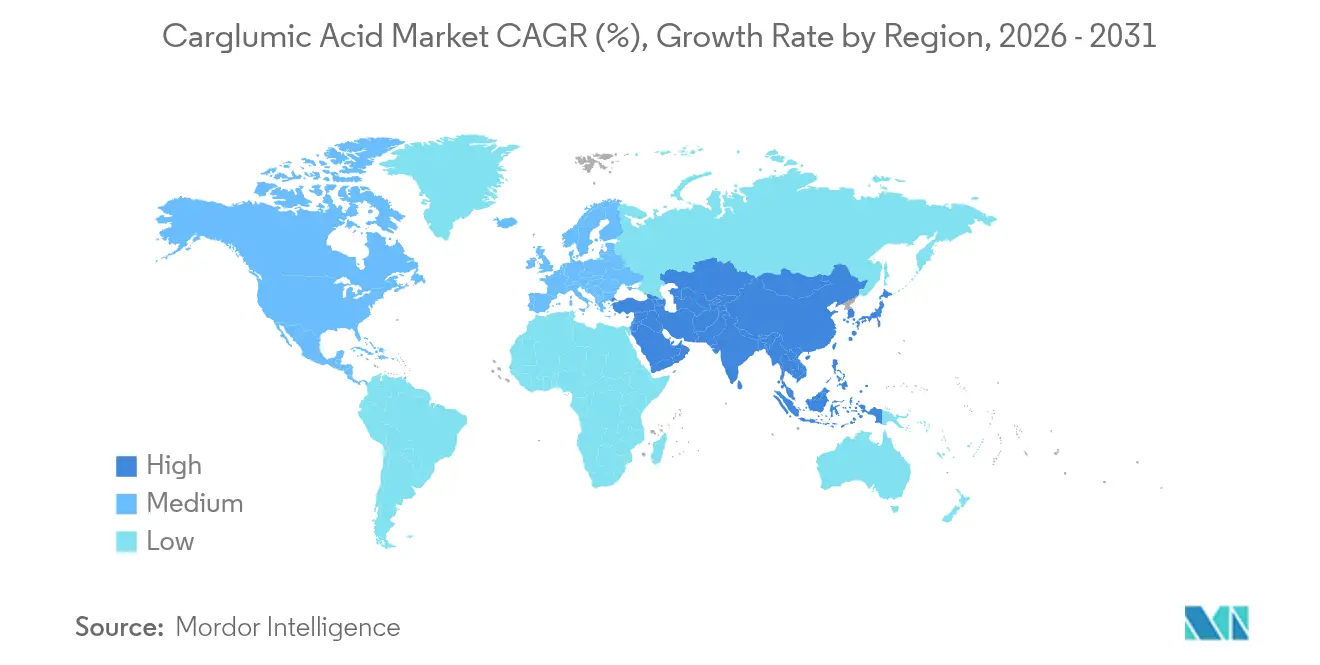
North America’s carglumic acid market size reached USD 75.1 million in 2025, backed by established orphan-drug tax credits, newborn screening in all 50 states, and centralized metabolic networks. Reimbursement is generally comprehensive, with most private payers covering carglumic acid under specialty tiers. The region’s modest 5.18% CAGR reflects near-saturation in diagnosis and access, yet pipeline additions such as urease inhibitors are reinforcing clinical interest.
Europe retained a USD 63.3 million valuation in 2025, aided by contiguous rare-disease reference networks that standardize care. EMA’s 10-year exclusivity remains a magnet for manufacturers, while national health systems negotiate volume-based rebates that temper budget impact. The EHDS-driven data-sharing initiative promises richer real-world evidence, improving payer confidence and potentially speeding formularies for follow-on formulations.
Asia-Pacific generated USD 38.1 million in 2025 but exhibits the fastest trajectory, with a 7.42% CAGR to 2031 as India, China, and South-East Asian states expand newborn panels and align regulatory pathways. China’s Anti-Espionage Law briefly delayed foreign plant inspections, exposing single-source API risks; in response, domestic firms upgraded facilities to meet PIC/S standards, diversifying supply. In Latin America, Brazil spearheads policy harmonization via CONITEC evaluations, yet reimbursement lags remain. The Middle East and Africa see incremental progress as Gulf Cooperation Council states include carglumic acid in national formularies, whereas many sub-Saharan countries still rely on donor programs.

Regulatory Landscape
Carglumic acid sits within established orphan and ultra-rare disease regulatory pathways across major markets. In the United States, carglumic acid (Carbaglu) was approved by the FDA under NDA 022562 (first approval in 2010), and FDA-approved generic versions are marketed under ANDA pathways, supporting a dual branded-generic environment for hospital and specialty pharmacy procurement. In the European Union, the European Commission granted marketing authorization for Carbaglu on 24 January 2003 (valid indefinitely). Ucedane received authorization on 23 June 2017 and was renewed on 28 March 2022, leaving multiple authorized references active across the region.
Post-approval obligations and labeling controls remain central to access and continuity of supply. EMA pharmacovigilance requirements under Directive 2001/83/EC, including an active Risk Management Plan and periodic safety update submissions, shape ongoing lifecycle compliance for marketed products. Product labeling also sets strict handling requirements, including refrigerated storage for unopened bottles (2C to 8C) and defined in-use storage limits after opening, which can influence specialty distribution, hospital inventory practices, and last-mile logistics quality systems.
Value Chain Analysis
The carglumic acid value chain starts with highly regulated API synthesis and quality-controlled intermediates, then moves to finished-dose formulation (notably tablets and orally disintegrating formats), packaging, and release testing to meet stringent stability and labeling requirements. The market includes branded supply anchored by Recordati Rare Diseases (Carbaglu) and a growing set of generic and alternate suppliers across regions. Manufacturing and supply participation includes entities such as Novitium Pharma LLC (ANI Pharmaceuticals), Eton Pharmaceuticals, and other specialty and regional marketers. A limited pool of GMP-qualified API sources keeps the upstream segment strategically important, with supplier qualification, tech transfer readiness, and inspection access acting as recurring bottlenecks.
Downstream, distribution is concentrated in specialty and hospital pharmacy channels, reflecting the acute-care nature of hyperammonemic crises and the need for rapid availability and controlled handling. Retail and e-commerce channels support maintenance therapy where national pharmacy rules permit. In Europe, regulatory lifecycle updates can shift the competitive and channel mix. For example, the EMA updated the Carbaglu EPAR in November 2025 and noted the product is no longer classified as an orphan medicine, which can affect contracting, tender dynamics, and follow-on product positioning across EU health systems.
Competitive Landscape
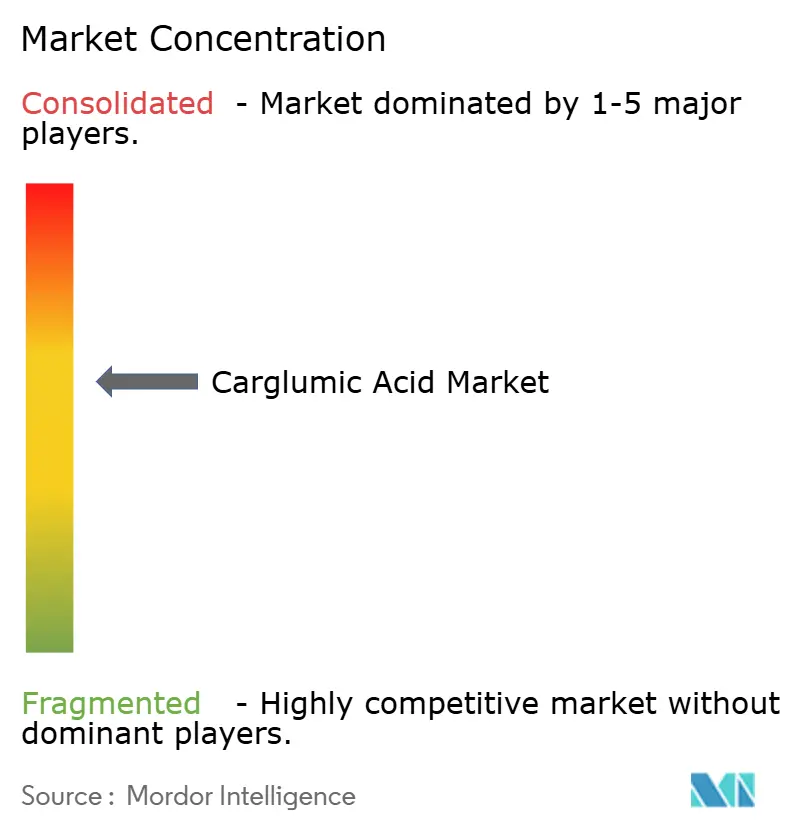
The carglumic acid market hosts a handful of specialized producers, yielding a moderate concentration. Recordati Rare Diseases anchors leadership with its Carbaglu brand, supported by multi-centric trial data and a footprint spanning more than 60 countries[1]Recordati Rare Diseases, “Q1 2025 Financial Results,” recordati.com . The firm posted 11.9% revenue growth in Q1 2025, underscoring enduring demand for ultra-rare metabolic drugs. Ultragenyx strengthens the field with LEMS portfolio synergies and reported USD 139 million Q1 2025 revenue, signaling commercial vitality[2]Ultragenyx Pharmaceutical, “First-Quarter 2025 Results,” ultragenyx.com.
Strategic imperatives include API security; the US Department of Health and Human Services recently earmarked USD 105 million to relaunch domestic synthesis lines, lessening reliance on foreign inspection regimes[3]U.S. Department of Health and Human Services, “Strengthening Domestic API Manufacturing,” hhs.gov. Indian contract manufacturers are courting multinational partners, building dedicated cGMP suites to capture supply contracts and hedge geopolitical exposure. Competitive differentiation increasingly revolves around formulation advances—taste-masked micro-granules, abuse-deterrent coatings, and micro-dosing sachets—rather than pure price. Gene-editing entrants are monitoring the hyperammonemia space, yet regulatory and long-term safety hurdles postpone direct competitive pressure until after 2030.
Companies deploy digital patient-support programs that bundle adherence apps with nurse helplines, translating into persistency rates above 80%. Collaborative registries capture longitudinal outcome data, feeding post-marketing commitments and reinforcing brand-equity barriers. The interplay of exclusivity cliffs and biosimilar policies will shape the next decade, but manufacturing complexity and small patient pools temper the immediacy of price-based rivalry in the carglumic acid market.
Carglumic Acid Industry Leaders
Recordati Rare Diseases Inc
Dipharma Francis S.r.l
Biophore India Pharmaceuticals Pvt Ltd
Torrent Pharmaceuticals Ltd
Zydus Lifesciences Ltd
- *Disclaimer: Major Players sorted in no particular order

Market Opportunities and Future Outlook
A clear opportunity for carglumic acid is expanding use beyond N-acetylglutamate synthase (NAGS) deficiency into broader organic acidemias where hyperammonemia drives acute morbidity and hospital utilization. In the United States, labeling includes acute hyperammonemia associated with propionic acidemia (PA) and methylmalonic acidemia (MMA), widening the addressable treated population within the same acute-care prescribing pathways that already favor rapid-dissolving oral formats in pediatrics. Clinical evidence generation also supports standardization in these cohorts, including the ongoing European multicenter longitudinal observational PROTECT study (NCT04176523), which reported an interim 41% median reduction in acute metabolic decompensation events with hyperammonemia in PA or MMA patients on long-term carglumic acid therapy. This supports payer and guideline discussions around maintenance strategies.
On the supply and access side, opportunities focus on resilience and service models rather than new molecules. Multi-entity API manufacturing capabilities (including WHO-GMP and ISO-certified operations cited by industry sources) and US generic commercialization provide a pathway to diversify sourcing and reduce single-supplier exposure, particularly for hospital systems that stock for metabolic crisis management. Formulation and logistics upgrades that ease storage and administration, such as fast-dissolving and room-temperature stable presentations in parts of Europe, create room for differentiation in tenders and specialty channel contracts while improving pediatric adherence and dispensing practicality in metabolic centers.
Recent Industry Developments
- January 2026: Oregon Health Authority implemented a high-cost drug carve-out program for fee-for-service and coordinated care organization enrolled patients that includes Carbaglu (carglumic acid). The policy design separates selected high-cost therapies from standard capitation, reshaping reimbursement administration and utilization management for orphan metabolic drugs in the state. For manufacturers and specialty distributors, carve-outs can change contracting mechanics and influence channel ordering patterns tied to hospital and specialty pharmacies.
- December 2025: Oregon Health Authority completed a clinical review of Carbaglu (carglumic acid) tablets for oral suspension as part of its drug evaluation process. The published assessment supports payer decision workflows and can influence prior authorization criteria and preferred product placement within state programs. Such reviews also raise the importance of real-world outcomes documentation and product-handling requirements in downstream access discussions.
- April 2024: Interim findings from the European PROTECT observational study on long-term carglumic acid use in propionic acidemia and methylmalonic acidemia were reported, including a 41% median reduction in acute metabolic decompensation events with hyperammonemia. The dataset strengthens the clinical case for maintenance strategies in organic acidemias and provides evidence that can be used in guideline updates and payer reviews. It also reinforces demand for patient-friendly oral formats that support chronic adherence outside acute hospital settings.


Research Methodology Framework and Report Scope
Market Definition and Coverage
For this study, the market covers revenues generated from prescription carglumic acid used to manage hyperammonemia in confirmed N-acetylglutamate synthase (NAGS) deficiency, including ongoing maintenance therapy supplied through standard pharmacy channels.
Scope exclusions: Compounded preparations, research-grade reagents, and investigational pipeline molecules are excluded from the sizing.
Segmentation Overview
- By Dosage Form
- Orally Disintegrating Tablets
- Dispersible Tablets
- Other Dosage Forms
- By Route of Administration
- Oral
- Injectable
- By Distribution Channel
- Hospital Pharmacies
- Retail Pharmacies
- E-Commerce Channel
- Geography
- North America
- United States
- Canada
- Mexico
- Europe
- Germany
- United Kingdom
- France
- Italy
- Spain
- Rest of Europe
- Asia-Pacific
- China
- Japan
- India
- Australia
- South Korea
- Rest of Asia-Pacific
- Middle East and Africa
- GCC
- South Africa
- Rest of Middle East and Africa
- South America
- Brazil
- Argentina
- Rest of South America
- North America
Data Sources, Market Sizing, and Validation
Desk Research
Desk work started with building a clean picture of the disease and treatment pathway, since demand is shaped by diagnosis rates and long term dosing patterns for NAGS deficiency. We referenced public sources such as the US FDA drug labeling and approval databases, the NIH Genetic and Rare Diseases Information Center, Orphanet, and peer reviewed clinical literature indexed on PubMed to pin down use cases and dosing windows.
We then layered in supply side signals and market context using sources such as national health statistics portals, customs and trade publications where relevant, and company filings and investor presentations to understand manufacturing footprint and commercial availability for carglumic acid. A paid subscription database was used selectively for company financials and news screening, and another was used for patent checks to track formulation and API related filings. These sources are illustrative, and many other public materials were also referred to for data collection, validation, and clarification.
Primary Interviews and Surveys
Primary work focused on validating how patients move through diagnosis to treatment for hyperammonemia, and how dosing and refill behavior looks in real practice across major regions. We spoke with a mix of manufacturers and distributors, hospital pharmacy stakeholders, and clinicians who manage hyperammonemia cases, and then we used follow up checks to close gaps around pricing bands, tender exposure, and channel mix by geography.
Distribution of primary research fieldwork respondents
| Company type | Respondent position | Region |
|---|---|---|
| Top tier: 34% | CXOs: 20% | APAC: 43% |
| Mid tier: 46% | Functional/Unit leaders: 24% | EMEA: 36% |
| Smaller Players: 20% | Managers: 56% | Americas: 21% |
Market-Sizing & Forecasting
Sizing is built using a top down demand pool, where diagnosed prevalence and treated patient counts are reconstructed by region, and then converted into annual therapy volumes using typical loading and maintenance dosing patterns for prescription carglumic acid. Those volumes are priced using an average selling price range that is shaped by pack size, channel markup, and the share of branded versus generic supply, and the values are then converted into USD using consistent exchange rate timing.
To make sure the totals are realistic, we corroborated the result with selective bottom up approximations such as sampled supplier and channel checks, shipment visibility where available, and sanity checks using hospital pharmacy throughput in key countries.
A few inputs that matter most in this market include diagnosis and screening momentum in rare disease centers, treatment duration assumptions, refill adherence patterns, distribution channel split, and price progression over time as access improves. For forecasting, scenario analysis was used because small changes in diagnosed pool and access can move the total market meaningfully. Growth drivers and constraints were stress tested with experts, and where bottom up evidence was patchy, conservative ranges were applied and revisited during validation.
Data Validation & Update Cycle
Model outputs are checked against independent signals like rare disease treatment uptake commentary, regulatory and labeling changes, and visible pricing moves in major markets for carglumic acid. Variances are reviewed in steps, starting with unit checks on patient counts and dosing math, and then moving to price and currency assumptions before final sign off.
If a large gap shows up, we re contact relevant respondents to confirm what changed, such as tender outcomes, supply constraints, or a shift in channel mix. Reports are refreshed annually, with interim updates when material events occur, and a final review pass is completed right before delivery so clients get the latest updated view.
Mordor Intelligence's Carglumic Acid Market Sizing Compared With Other Published Estimates
Published numbers for carglumic acid do not always match because the market is small, pricing differs by channel and country, and some studies apply different therapy duration or patient pool assumptions. Currency conversion timing and how ASP is trended forward also create visible gaps, even when the same years are being discussed.
In this study, the refresh cycle keeps pricing bands, FX timing, and the treated patient pool aligned to the latest validation calls, which is why Mordor Intelligence shows a different 2026 level than figures anchored on older base years or less explicit dosing logic.
Benchmark comparison
| Source | Market Size | Gaps in Research Methodology |
|---|---|---|
| Mordor Intelligence | USD 204.19 M (2026) | |
| Global Research Firm A | USD 137.20 M (2023) | Uses an earlier base year and presents a broad global figure without clarifying whether maintenance therapy duration and channel level pricing are fully captured, which can compress the value total. |
| Strategic Consulting Group B | USD 145.20 M (2024) | Appears to blend indications more broadly and may rely on a single year price point with limited visibility on FX timing and refill adherence, which shifts the ASP and volume build used in the model. |
Taken together, the spread is mainly explained by base year choice, how long therapy volume is assumed to run, and whether ASP is updated by channel and currency timing. By keeping the steps transparent and tied to patient pool, dosing, and price inputs, our estimate stays easier to reproduce and simpler to validate during updates.


Key Questions Answered in the Report
What is the current global carglumic acid market size?
The carglumic acid market size is USD 204.19 million in 2026.
How fast is the carglumic acid market expected to grow?
The market is projected to post a 6.32% CAGR, reaching USD 277.58 million by 2031.
Which dosage form holds the highest share in the carglumic acid market?
Orally disintegrating tablets lead with 58.02% market share thanks to ease of pediatric use.
Why is Asia-Pacific the fastest-growing region?
Expanding newborn screening programs and newly formalized rare-disease reimbursement frameworks push APAC to a 7.42% CAGR.
What are the main restraints on carglumic acid uptake?
High orphan-drug pricing and gastrointestinal side effects limit adoption, particularly in cost-sensitive markets.
Who is the leading company in the carglumic acid market?
Recordati Rare Diseases, with its Carbaglu brand, currently holds the largest revenue share globally.
Page last updated on:


 Your data is secure and never sold or shared.


