
Cardiovascular and Soft Tissue Repair Patches Market Size and Share
Market Overview
| Study Period | 2020 - 2031 |
|---|---|
| Market Size (2026) | USD 5.55 Billion |
| Market Size (2031) | USD 8.23 Billion |
| Growth Rate (2026 - 2031) | 8.18 % |
| Fastest Growing Market | Asia Pacific |
| Largest Market | North America |
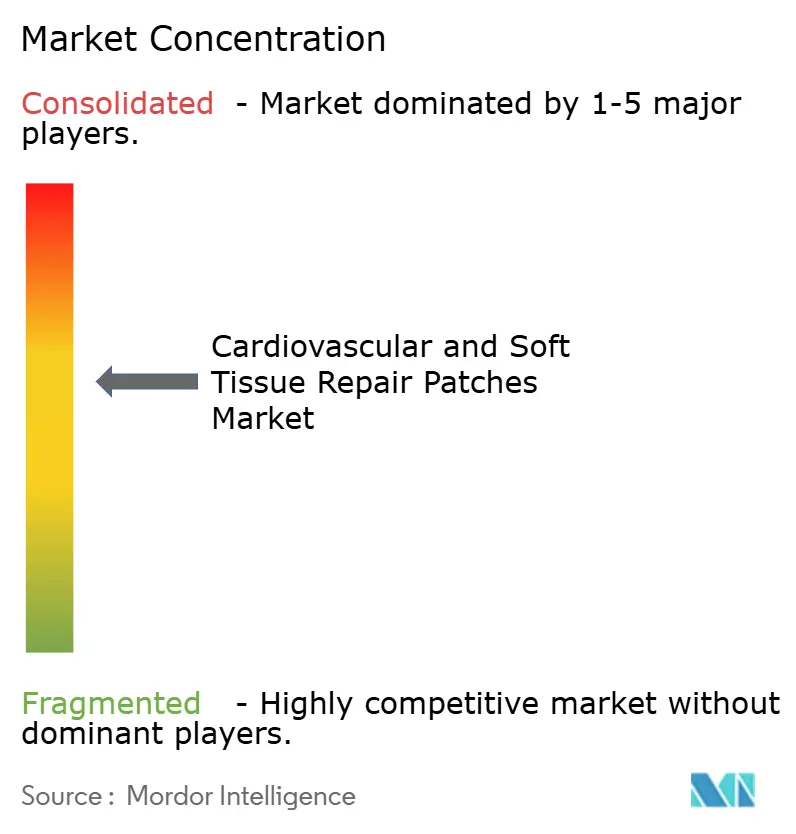
| Market Concentration | Medium |
Major Players *Disclaimer: Major Players sorted in no particular order Image © Mordor Intelligence. Reuse requires attribution under CC BY 4.0. | |
Cardiovascular and Soft Tissue Repair Patches Market Analysis by Mordor Intelligence
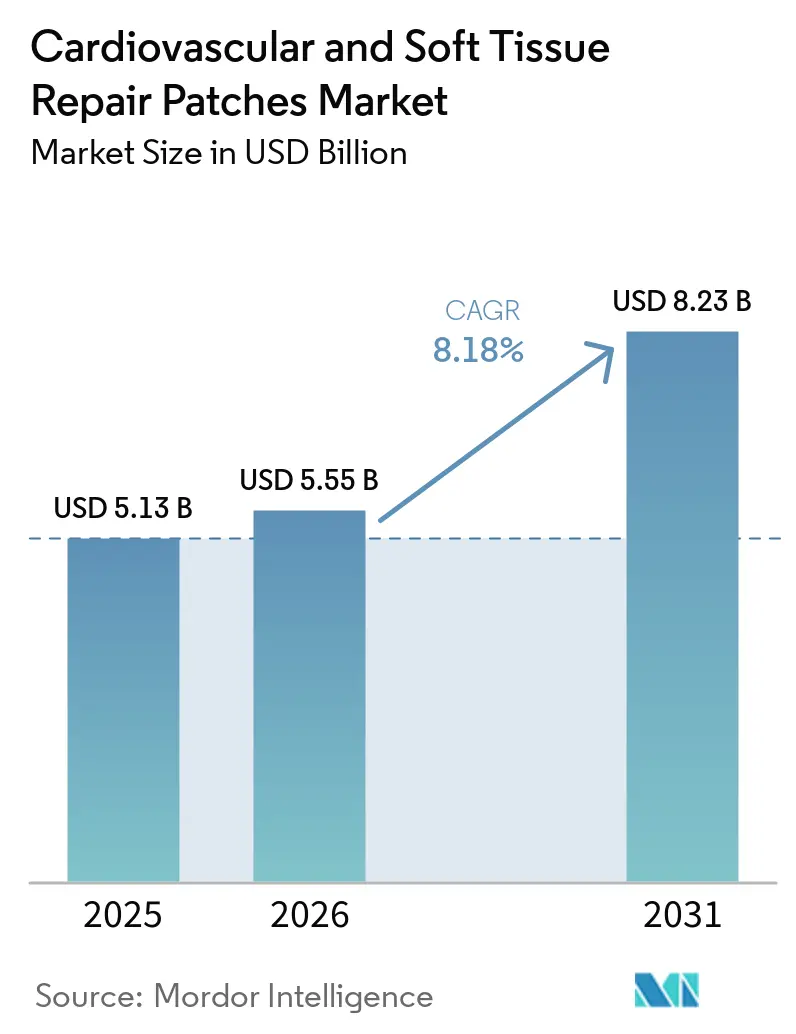
The cardiovascular and soft tissue repair patches market size is expected to grow from USD 5.13 billion in 2025 to USD 5.55 billion in 2026 and is forecast to reach USD 8.23 billion by 2031 at 8.18% CAGR over 2026-2031. The cardiovascular and soft tissue repair patches market is shifting away from conventional sutures toward bio-engineered scaffolds that integrate more naturally with host tissue and reduce repeat procedures. Rising procedure volumes tied to aging populations, rapid progress in 3D-printed extracellular-matrix platforms, and clear clinical evidence that biologic options lower re-intervention rates anchor demand. Manufacturers are broadening synthetic portfolios to address raw-material shortages in bovine and porcine pericardium, while defense-funded regenerative projects accelerate product clearances. Hospitals still represent the largest customer pool, yet specialty cardiovascular clinics and ambulatory centers are adopting minimally invasive techniques that rely on thinner, self-adhering patches, creating new revenue streams across the cardiovascular and soft tissue repair patches market.[1]
Key Report Takeaways
- By material type, synthetic patches led with 54.20% of the cardiovascular and soft tissue repair patches market share in 2025, whereas biologic options are on track for the fastest 8.52% CAGR through 2031.
- By application, soft-tissue repair captured 39.95% revenue in 2025, while cardiac repair is projected to advance at an 8.46% CAGR to 2031.
- By end user, hospitals held 45.62% of the cardiovascular and soft tissue repair patches market size in 2025; specialty cardiovascular clinics will grow the quickest at an 8.62% CAGR.
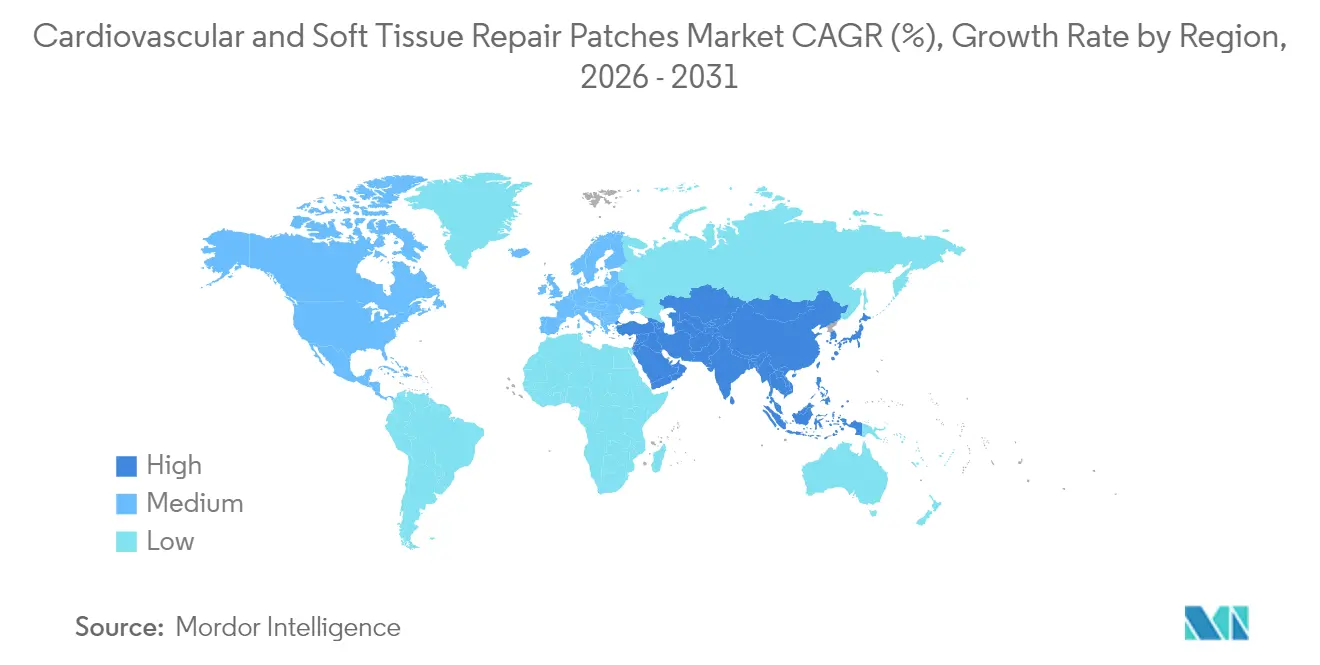
- By geography, North America accounted for 39.98% of sales in 2025; Asia-Pacific is positioned for an 8.67% CAGR through 2031.
Note: Market size and forecast figures in this report are generated using Mordor Intelligence’s proprietary estimation framework, updated with the latest available data and insights as of 2026.
Market Trends and Insights
Drivers Impact Analysis of Cardiovascular and Soft Tissue Repair Patches Market*
| Driver | ( ~ ) % Impact on CAGR Forecast | Geographic Relevance | Impact Timeline |
|---|---|---|---|
| Biologic patch superiority lowering re-intervention rates | +1.8% | Global | Medium term (2-4 years) |
| Rapid adoption of minimally invasive cardiac defect closures | +1.5% | North America, EU; rising in Asia-Pacific | Short term (≤ 2 years) |
| Aging population boosting valve and septal repair volumes | +1.2% | Global, concentrated in developed markets | Long term (≥ 4 years) |
| Reimbursement expansion for congenital heart repair in emerging markets | +0.9% | Asia-Pacific core | Medium term (2-4 years) |
| Bio-printed ECM scaffolds entering clinical pipelines | +0.7% | North America & EU, with selective APAC adoption | Long term (≥ 4 years) |
| Defense-funded regenerative medicine programs accelerating approvals | +0.4% | North America, with technology transfer to allies | Medium term (2-4 years) |
| Source: Mordor Intelligence | |||
Biologic Patch Superiority Lowering Re-intervention Rates
Clinical follow-up shows biologic matrices cut repeat operations by 25-40%, steering surgeons toward bovine and porcine pericardial options that integrate with living tissue. In the pericardial patches market, Systematic reviews cite lower cerebrospinal fluid leak rates when bovine pericardium is used for infratentorial repairs, accelerating cross-specialty demand. Early-stage stem-cell patches registered marked gains in left-ventricular ejection fraction in multicenter trials. New keratin-based scaffolds add biodegradability and stimulate cell proliferation, broadening choices for pediatric and high-risk populations. Cost savings accrue when fewer revisions are needed, which strengthens hospital purchasing arguments. Collectively these gains push biologic adoption across the cardiovascular and soft tissue repair patches market at an accelerated clip.
Rapid Adoption of Minimally Invasive Cardiac Defect Closures
Smaller incisions paired with robot-assisted delivery let surgeons seat patches precisely, cut operating time, and shorten recovery. FDA clearance of multipoint pacing and self-adhering collagen fleece materials signals regulatory support for less-invasive hardware. Hospitals advertise faster discharge times to attract referrals, and specialty clinics deploy dedicated cath-lab suites for atrial-septal repairs. This momentum feeds growth in high-margin cardiac-use patches, strengthening future revenue visibility for the cardiovascular and soft tissue repair patches market.
Aging Population Boosting Valve & Septal Repair Volumes
Populations over age 65 are climbing sharply, pushing caseloads higher for degenerative valve and septal pathology. Valve-sparing patch procedures offer less trauma than full replacement, a point that resonates with older patients who present multiple comorbidities. Asia-Pacific shows the fastest elderly growth, which underpins its 8.89% CAGR outlook. Health authorities expand reimbursement to mitigate the fiscal burden of untreated cardiovascular disease, thereby widening the addressable base across the cardiovascular and soft tissue repair patches market.
Reimbursement Expansion for Congenital Heart Repair in Emerging Markets
India, China, and Brazil widen coverage for pediatric defect repairs, turning previously unmet needs into funded procedures. Government cardiac centers receive technology-transfer support from global NGOs, enabling implantation of advanced biologic matrices. Private insurers in urban regions underwrite premium materials for middle-income families. As coverage broadens, cardiac repair becomes the most dynamic application segment within the cardiovascular and soft tissue repair patches market.
Restraints Impact Analysis of Cardiovascular and Soft Tissue Repair Patches Market*
| Restraint | ( ~ ) % Impact on CAGR Forecast | Geographic Relevance | Impact Timeline |
|---|---|---|---|
| High comparative cost versus suturing and graft substitutes | -1.3% | Global | Short term (≤ 2 years) |
| Limited long-term durability data for bio-engineered tissue | -0.8% | North America, EU | Medium term (2-4 years) |
| Supply Shortage of Medical-grade Bovine & Porcine Pericardium | -0.5% | Medium term (2-4 years) | |
| Stricter EU MDR Evidence Requirements Delaying Launches | -0.4% | Medium term (2-4 years) | |
| Source: Mordor Intelligence | |||
High Comparative Cost Versus Suturing and Graft Substitutes
Premium biologic patches can retail for five to ten times the cost of a simple suture set, impeding adoption where capital budgets are strained. Administrators weigh immediate outlays more heavily than downstream savings from fewer revisions. Payers have been slow to realign reimbursement schedules, although value-based contracts are gaining traction in larger systems. Until upfront pricing narrows, price-sensitive facilities may favor traditional materials, dampening near-term install rates in the cardiovascular and soft tissue repair patches market.
Limited Long-term Durability Data for Bio-engineered Tissue
Regulators mandate decade-long data for pediatric implants, lengthening approval cycles for next-generation biomaterials. Conservative surgeons await proven safety before switching away from tried-and-true PTFE. The FDA’s rolling updates for AI-enabled devices reflect a broad caution around novel technologies, and similar rigor now applies to tissue substitutes. This uncertainty tempers the commercial ramp for bio-printed scaffolds within the cardiovascular and soft tissue repair patches market.
*Our forecasts treat driver/restraint impacts as directional, not additive. The impact forecasts reflect baseline growth, mix effects, and variable interactions.
Cardiovascular and Soft Tissue Repair Patches Market Segment Analysis
By Material Type:
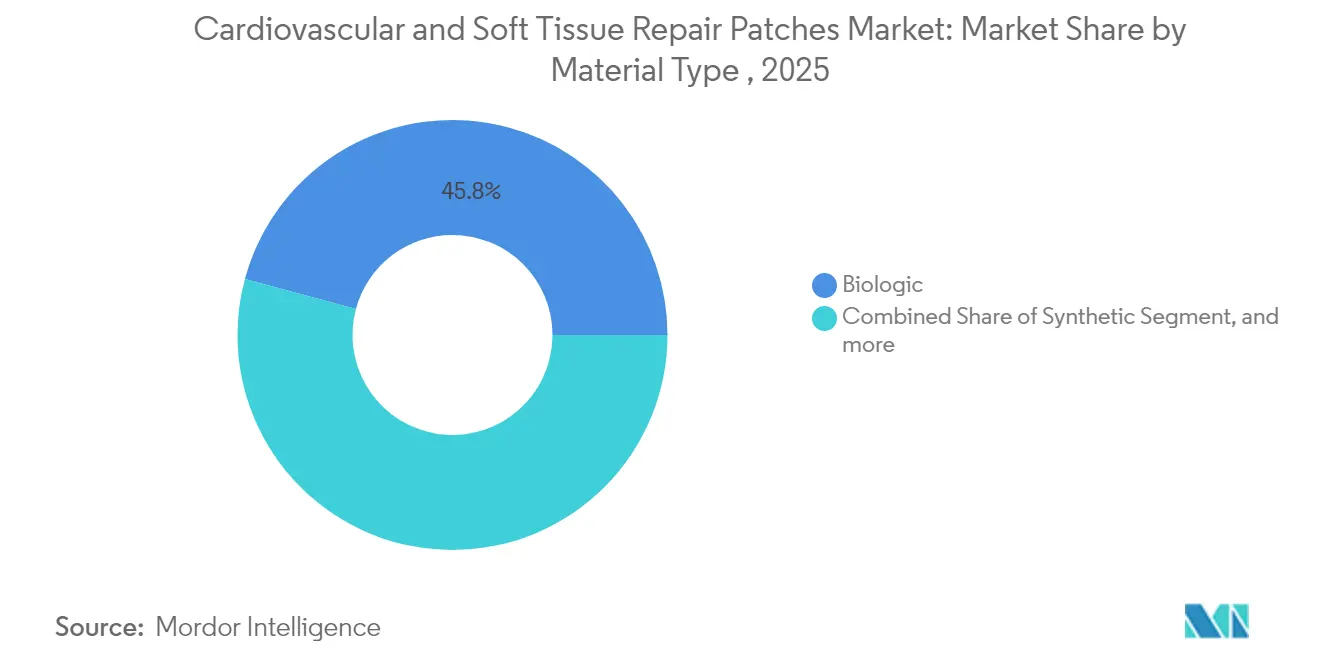
Synthetic Strength Confronts Biologic MomentumSynthetic products retained a 54.20% share of the cardiovascular and soft tissue repair patches market in 2025. PTFE’s mechanical strength and predictable supply chains keep it popular in high-volume centers. However, biologic matrices are growing at an 8.52% CAGR, reflecting demand for superior integration and lower calcification risk. Hybrid designs marry synthetic reinforcement with biologic coatings, a route that promises the durability clinicians expect while improving biocompatibility. Supply shortages of bovine pericardium spur R&D into keratin and algae-derived polymers, ensuring material diversity. Composite and 3D-printed options, though small in absolute terms, receive disproportionate venture funding, signaling investor belief in long-run disruption of the cardiovascular and soft tissue repair patches market.
Biologic growth is further fueled by pediatric needs where patches must expand with patient anatomy. Studies show growth-accommodating bovine patches cut secondary interventions by up to 30%. Manufacturers respond with decellularized tissues that leave natural collagen intact, boosting host-cell migration. FDA pathway reforms encourage cell-seeded constructs that may one day render inert synthetics obsolete. As data accumulate, biologics are expected to erode synthetic dominance, reshaping competitive stakes across the cardiovascular and soft tissue repair patches market.

By Application:
Cardiac Surge Gains Challenge Soft-Tissue LeadSoft-tissue repairs captured 39.95% of 2025 revenue due to the sheer volume of hernia, breast, and trauma cases. Yet cardiac repair is the top gainer at an 8.46% CAGR, energizing suppliers to refine materials for dynamic, high-pressure environments. Ventricular-septal defect closures now rely on thin flexible composites that tolerate constant motion. Valve annuloplasty rings integrated with collagen fleece limit leakage, pushing biologics deeper into OR routines. Vascular reconstruction benefits from similar advances, as endovascular surgeons request patches compliant enough to avoid kinking yet firm enough to resist dilation.
In soft-tissue settings, absorbable collagen sponges shorten wound-closure time, lowering infection risk. Orthopedic surgeons adopt keratin gels to bridge tendon tears. Trauma centers employ algae-derived hemostats that seal bleeding in under one minute. These cross-disciplinary wins keep soft-tissue's headline share intact even as cardiac volumes scale. The tug-of-war between segments enriches innovation pipelines throughout the cardiovascular and soft tissue repair patches market.
By End User:
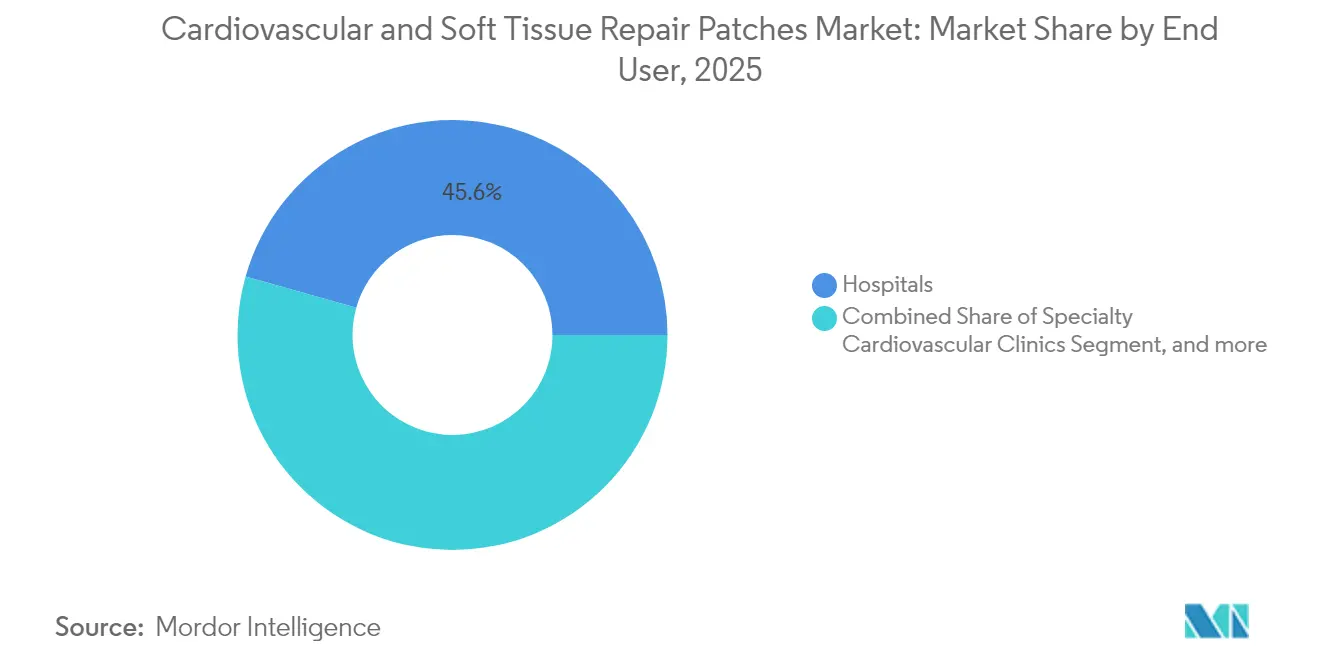
Specialty Clinics Narrow the Gap With HospitalsHospitals accounted for 45.62% of the cardiovascular and soft tissue repair patches market size in 2025, bolstered by comprehensive emergency services and broad insurance contracts. Large systems negotiate bundled deals that squeeze supplier margins on synthetics while carving premium tiers for complex biologics. Specialty cardiovascular clinics clock the highest growth at an 8.62% CAGR, capitalizing on reputation for high success rates. Their focused teams perform large case volumes, making them attractive early adopters of cutting-edge materials.
Ambulatory surgery centers escalate purchases for outpatient hernia and breast reconstructions where same-day discharge counts. These sites prefer self-adhering patches to minimize OR time and anesthesia exposure. Emergency medical services incorporate rapid-acting gels that stabilize trauma patients en route to definitive care, creating a niche yet expanding slice of demand. Across all channels, procurement decisions increasingly hinge on clinical outcome data, aligning purchasing logic with the emerging value ethos that permeates the cardiovascular and soft tissue repair patches market.
Geography Analysis
North America Cardiovascular and Soft Tissue Repair Patches Market
North America’s 39.98% share rests on sophisticated cardiac programs, extensive insurance coverage, and a pipeline of defense-funded regenerative initiatives that speed clearances. The United States surpasses 600,000 cardiac surgeries annually, giving suppliers an unmatched volume base. Canada’s single-payer model rewards lower total-care costs, nudging hospitals toward biologics that reduce readmission risk. Mexico adds outpatient demand via medical tourism corridors. Regulators maintain brisk review timelines, with more than 1,000 AI-enabled devices green-lit by March 2025. Pricing pressures persist under value-based rules, challenging suppliers to demonstrate real-world savings, yet the region remains the launchpad for next-wave technologies, cementing its influence on the cardiovascular and soft tissue repair patches market.
APAC Cardiovascular and Soft Tissue Repair Patches Market
Asia-Pacific leads growth at an 8.67% CAGR. Japan and South Korea face pronounced aging curves, boosting valve-repair volumes. China scales tertiary hospitals in tier-two cities, adding capacity that funnels bulk orders for synthetic PTFE. India’s state insurance covers pediatric heart surgery for low-income families, unlocking biologic adoption. Governments back domestic manufacturing to cut import bills, and local startups tap 3D-printing know-how to supply custom scaffolds. Medical-tourism hubs in Thailand and Singapore market minimally invasive options to international patients, reinforcing premium sales. These converging forces position Asia-Pacific as the prime accelerator within the cardiovascular and soft tissue repair patches market.
Europe Cardiovascular and Soft Tissue Repair Patches Market
Europe stays competitive through quality-focused procurement and rigorous evidence demands under the Medical Device Regulation. Germany anchors regional output with established PTFE capacity, while the United Kingdom powers transplantation research. France champions public–private consortia exploring decellularized matrices. National health funds reimburse products that show clear quality-adjusted life-year benefits, favoring biologics with durable data. Stricter launch requirements slow entry for newcomers yet raise overall safety standards. Cross-border care agreements deploy high-performance patches across the continent, keeping European clinicians current and patients mobile. These structural hallmarks sustain steady expansion and innovation engagement across the cardiovascular and soft tissue repair patches market.
Regulatory Landscape
In the United States, many intracardiac repair patches and pledgets are regulated by the FDA under 21 CFR 870.3470 (Product Code PSQ) as Class II medical devices, typically using the 510(k) pathway and predicate-based substantial equivalence. For vascular indications and related implantables, FDA expectations around performance testing and labeling are reinforced by device-specific guidance, for example for vascular prostheses submitted via 510(k). That guidance increases the evidence bar for bench results and biocompatibility as materials shift from conventional PTFE toward biologic and composite scaffolds.
In Europe, implantable repair patches typically fall under the EU Medical Device Regulation (MDR) 2017/745, often following Annex VIII classification logic for implantables (commonly Class IIb), which increases the clinical evidence and conformity assessment burden. Biocompatibility and implantation safety evidence is anchored internationally by the ISO 10993 series, and the 2026 edition of ISO 10993-6 (local effects after implantation) is directly relevant for both absorbable and non-absorbable patch materials. For device-drug combination patch constructs, US compliance with 21 CFR Part 4 (cGMP requirements for combination products) adds quality-system complexity compared with stand-alone devices.
Value Chain Analysis
The value chain begins with specialized raw materials and tissue sourcing, then proceeds through manufacturing, sterilization, packaging, and distribution into hospitals, specialty cardiovascular clinics, and ambulatory surgery centers. On the biologic side, supply relies on medical-grade animal tissue sourcing and processing, including decellularization and validation for safety, with OEM suppliers such as FOC Medical S.A. contributing biological-origin inputs such as bovine and porcine pericardium and related cardiac tissues. Synthetic patch inputs, including woven polyester and PTFE-based materials, draw from broader polymer and textile ecosystems where scale manufacturing and conversion can be concentrated in large petrochemical and medical-textile hubs.
Downstream, manufacturers depend on distributors, GPO/IDN contracting in mature markets, and established channel partnerships to reach clinical buyers. Quality and compliance requirements shape manufacturing operations for both conventional patches and combination products, and vascular device-drug combination products are guided by ISO 12417-1:2024, covering design, materials, manufacturing, sterilization, and packaging. Supply-chain stress around bovine and porcine pericardium has driven procurement toward multi-source arrangements and increased interest in alternative substrates and hybrid designs that reduce single-material dependency; Glycar SA, for example, has cited a long-running global distribution partnership with Abbott Laboratories (formerly St. Jude Medical) for pericardial patches since 2001.
Competitive Landscape
The cardiovascular and soft tissue repair patches market shows moderate concentration. Edwards Lifesciences, Medtronic, and Abbott leverage decades of brand equity, extensive field sales, and complementary valve and stent portfolios to secure preferred-vendor status. Their R&D budgets fuel incremental refinements—thinner PTFE layers, antimicrobial coatings—that extend product life cycles. Patent cliffs invite fast-followers from Asia, tightening price points on commoditized synthetics while prompting incumbents to bundle solutions with monitoring software to lock in accounts.
Disruptors pursue breakthrough biology. Capricor Therapeutics advances deramiocel, an allogeneic cell-therapy patch that won FDA priority review in 2025[3]. Smaller firms deploy 3D bioprinters to fabricate patient-specific scaffolds from keratin or algae polymers, targeting rare congenital defects. Venture investors channel capital into platforms that combine growth factors with resorbable meshes to accelerate healing. To hedge against obsolescence, multinationals acquire or partner with these innovators, as observed in recent tie-ups between med-tech giants and university spin-outs specializing in extracellular-matrix design.
Pricing power is shifting. Hospitals exploit group-purchasing contracts to dictate synthetic patch discounts. Meanwhile, specialty clinics pay premiums for biologics that enhance outcomes and prestige. Raw-material shortages in bovine pericardium tighten supply, creating windfalls for synthetic-only producers in the short run but reinforcing long-term demand for alternative biologic sources. Intellectual-property skirmishes over printing recipes and decellularization protocols foreshadow the next competitive battleground across the cardiovascular and soft tissue repair patches market.
Cardiovascular and Soft Tissue Repair Patches Industry Leaders
-
LeMaitre Vascular Inc
-
Baxter
-
Cryolife, Inc.
-
CorMatrix, Inc
-
Anteris
- *Disclaimer: Major Players sorted in no particular order
Cardiovascular and Soft Tissue Repair Patches Market Companies Covered in this Report
- Baxter
- LeMaitre Vascular
- Terumo
- W. L. Gore & Associates
- CryoLife (Artivion)
- Abbott (St. Jude Medical)
- B. Braun
- Medtronic
- Edward Lifesciences
- Boston Scientific
- Cook Group
- Integra LifeSciences
- Anteris Technologies
- CorMatrix
- Getinge
- Labcor Laboratórios
- Lifescitex
- Glycar SA
- Admedus
- Suprabio
- Biogeneric Pharma
- Edwards Biomaterials (service arm)
Read Analysis of Cardiovascular and Soft Tissue Repair Patches Companies
Market Opportunities and Future Outlook
A near-term commercialization whitespace is emerging around outpatient-friendly patch formats as cardiovascular procedures migrate into lower-acuity settings. The 2026 CMS final rule added 86 cardiovascular procedure codes to the Ambulatory Surgery Center approved list, supporting more cardiac and vascular interventions in ASCs and increasing demand for patches that fit outpatient workflows, including simpler preparation, consistent handling, and compatibility with minimally invasive delivery. As a result, purchasing dynamics shift toward inventory efficiency and predictable shelf life, alongside performance.
A second opportunity is centered on regenerative and bioactive patch platforms moving from research into human evaluation. In May 2026, University Medical Center Goettingen (UMG) and University Hospital of Schleswig-Holstein (UKSH) reported interim clinical trial results (BioVAT-HF-DZHK20) for a laboratory-grown heart muscle patch in severe heart failure, and a 2026 pilot clinical study reported progress on a soft cardiac patch for myocardial infarction treatment. These clinical signals reinforce continued development in bioengineered scaffolds and cell-enabled constructs, while tighter evidence expectations under frameworks such as EU MDR and the ISO 10993 implantation testing regime favor developers that can assemble robust preclinical and clinical packages for next-generation materials.
Recent Industry Developments in Cardiovascular and Soft Tissue Repair Patches Market
- June 2026: Artivion announced US FDA PMA clearance for its AMDS Hybrid Prosthesis for acute DeBakey Type I aortic dissections. The approval moves the device beyond HDE pathways and reduces administrative friction for hospitals by removing the need for IRB approval tied to HDE use, which can accelerate adoption in major aortic centers. It also raises competitive pressure across advanced cardiovascular repair portfolios that include patches and adjunct implantables used in complex reconstructions.
- February 2026: LeMaitre Vascular reported receiving regulatory approval in China for cardiac indications for its XenoSure biologic patch. The approval expands access to a large hospital base where cardiac repair volumes are rising and creates a new lever for geographic mix in biologic patch sales. It also reinforces the importance of country-specific regulatory clearances for pericardial-derived materials in high-growth Asia-Pacific markets.
- April 2024: The European Union's Medical Device Regulation MDR implementation continues to shape approvals for implantable patches, prompting manufacturers to accelerate clinical data generation and post-market surveillance programs. Regulators and industry bodies are emphasizing biocompatibility and long-term safety data, with ISO 10993 testing and Annex VIII conformity assessment becoming increasingly pivotal. Several developers are reportedly scaling up biocompatibility studies to meet EU MDR timelines.
Cardiovascular and Soft Tissue Repair Patches Market Report Scope and Research Methodology
Market Definition and Coverage
For this methodology, the market covers implanted patch products used to close, reconstruct, or reinforce cardiovascular and soft tissue defects during surgical or minimally invasive procedures, and it is measured as the value of patch sales in USD.
Scope exclusions: It excludes disposable wearable ECG patches and hemostatic dressings that act like surface wound-care materials.
Segments Covered in This Report
- By Material Type
- Biologic
- Synthetic
- Next-gen Bio-printed/Composite
- By Application
- Cardiac Repair
- Atrial & Ventricular Septal Defect Closure
- Valve Reconstruction & Annuloplasty
- Soft-Tissue Repair
- Vascular Repair & Reconstruction
- Others
- Cardiac Repair
- By End User
- Hospitals
- Specialty Cardiovascular Clinics
- Ambulatory Surgery Centers
- By Geography
- North America
- United States
- Canada
- Mexico
- Europe
- Germany
- United Kingdom
- France
- Italy
- Spain
- Rest of Europe
- Asia-Pacific
- China
- Japan
- India
- Australia
- South Korea
- Rest of Asia-Pacific
- Middle East & Africa
- GCC
- South Africa
- Rest of Middle East and Africa
- South America
- Brazil
- Argentina
- Rest of South America
- North America
Data Sources, Market Sizing, and Validation
Desk Research
Desk research was used to build the starting structure of the market, define the product boundary, and set initial assumptions around procedure flow and material adoption. We relied on non-paywalled sources such as the US FDA device databases for approvals and safety signals, the US CDC and OECD health statistics for cardiac and surgical procedure context, and peer-reviewed journals for clinical usage patterns and material performance (for example, ePTFE and biologic pericardial patch outcomes).
To ground the revenue model, public company filings and investor presentations were reviewed for product mix commentary, regional exposure, and pricing narratives. These inputs were then cross-checked with reputable medical society publications and hospital procurement references where available. In a few steps, paid subscriptions supporting company financial intelligence and patent databases were used to confirm corporate structure changes, product pipeline direction, and the timing of new material introductions that can shift ASPs. This desk research list is not exhaustive, and other public sources were also consulted to collect data, validate numbers, and clarify unclear points.
Primary Interviews and Surveys
Primary work was used to pressure-test the desk assumptions and to fill gaps on patch usage by procedure type, setting of care, and typical price bands across regions. We spoke with manufacturers, distributors, surgeons, and hospital procurement roles, so the final model reflects what gets purchased and used in real procedures, not just what is technically available.
Distribution of primary research fieldwork respondents
| Company type | Respondent position | Region |
|---|---|---|
| Top tier: 31% | CXOs: 14% | APAC: 45% |
| Mid tier: 55% | Functional/Unit leaders: 26% | EMEA: 34% |
| Smaller Players: 14% | Managers: 60% | Americas: 21% |
Market-Sizing & Forecasting
The core sizing logic starts from a top-down build where procedure volumes and treated defect pools are reconstructed by geography, and then translated into patch demand using adoption rates and typical patches-per-procedure assumptions. Once that total is formed, it is corroborated through selective bottom-up approximations, including supplier revenue reasonability checks, sampled average selling price (ASP) by material type, and channel checks on hospital purchasing patterns. These checks are then used to adjust any overstated or understated totals.
Key inputs that moved the model in practical ways included cardiac repair and vascular reconstruction procedure volumes, hernia and trauma-related soft tissue repair volumes, mix shifts between biologic and synthetic patches, typical patch sizes and wastage allowances in the operating room, and ASP progression tied to material upgrades and tender pricing. For forecasting, scenario analysis was used around procedure growth and material substitution, with scenarios anchored using expert expectations on adoption pace in high-growth hospital systems and specialty centers. Where bottom-up views were incomplete in smaller countries, gaps were handled by applying regionally validated penetration and price bands, followed by a second pass check against healthcare spending and device import signals.
Data Validation & Update Cycle
Model outputs are validated through several checks so that unusual changes do not pass through unnoticed. We compare results against independent signals such as procedure trend lines, known reimbursement or guideline changes that affect surgery volumes, and major regulatory events that can pause or restart usage for certain materials.
Before sign-off, anomalies are reviewed in steps, including peer review of assumptions, variance checks versus prior editions, and targeted re-contact with interviewees when a metric moves beyond a reasonable range. Reports are refreshed annually, and interim updates are done when material events occur, such as a major product withdrawal, a large acquisition, or a sharp pricing shift. Right before delivery, an analyst performs a fresh pass to ensure the newest public information is reflected in the final numbers.
Mordor Intelligence's Cardiovascular and Soft Tissue Repair Patches Market Estimate Compared With Other Published Estimates
Published market sizes for this space can look far apart, even when the topic wording sounds similar, because the counted product set and the time anchors are not always aligned. Differences also come from whether an estimate leans more on broad soft tissue device totals, or instead stays limited to implanted patch products used in specific surgical repairs.
Some sources appear to include adjacent items that sit near the surgical patch workflow, like hemostatic products or other soft tissue repair device categories, which can lift the value quickly. In the split-contrast treatment applied here, wider scopes are separated out first, and then Mordor Intelligence counts only pre-sterilized biologic or synthetic implanted repair patches, excluding wearable ECG patches and hemostatic dressings. This keeps the demand pool tied to patch usage per procedure and to realistic ASPs.
Benchmark comparison
| Source | Market Size | Gaps in Research Methodology |
|---|---|---|
| Mordor Intelligence | USD 5.55 B (2026) | |
| Global Consultancy A | USD 5.92 B (2025) | Uses a different base year and forecast frame, and its scope framing suggests broader inclusion around cardiovascular and soft tissue repair uses, which can lift the total when adjacent repair categories are grouped with patches. |
| Industry Publisher B | USD 4.80 B (2024) | Anchors the market one to two years earlier, and limited public detail on exclusions can lead to conservative coverage for newer biologic patch uptake and ASP progression that is more visible in recent procurement cycles. |
The table shows that most of the spread is explained by year selection and what gets grouped into the market label, rather than by a true disagreement on procedure-driven demand. By keeping the model traceable to procedure volumes, adoption rates, and price bands that can be checked and repeated, the final market value stays balanced and easier to reconcile across regions and materials.
Key Questions Answered in the Report
What is the current size of the cardiovascular and soft tissue repair patches market?
The cardiovascular and soft tissue repair patches market size reached USD 5.55 billion in 2026.
How fast is the market expected to grow?
The market is projected to register an 8.18% CAGR, pushing revenue to USD 8.23 billion by 2031.
Which material segment is expanding the quickest?
Biologic patches are forecast to grow at an 8.52% CAGR, outpacing synthetic alternatives.
Why are specialty cardiovascular clinics gaining share?
Their high procedure volumes, minimally invasive focus, and superior outcome metrics support an 8.62% CAGR, the strongest among end users.
Which region will contribute the highest incremental revenue?
Asia-Pacific, driven by aging demographics and expanded insurance coverage, is anticipated to show an 8.67% CAGR through 2031.
What remains the biggest barrier to wider biologic adoption?
Upfront cost differentials versus suturing and limited long-term durability data continue to slow uptake in price-sensitive systems.