
Global Cardiac Arrest Treatment Market Size and Share
Market Overview
| Study Period | 2020 - 2031 |
|---|---|
| Market Size (2026) | USD 5.5 Billion |
| Market Size (2031) | USD 6.84 Billion |
| Growth Rate (2026 - 2031) | 4.47 % |
| Fastest Growing Market | Asia Pacific |
| Largest Market | North America |
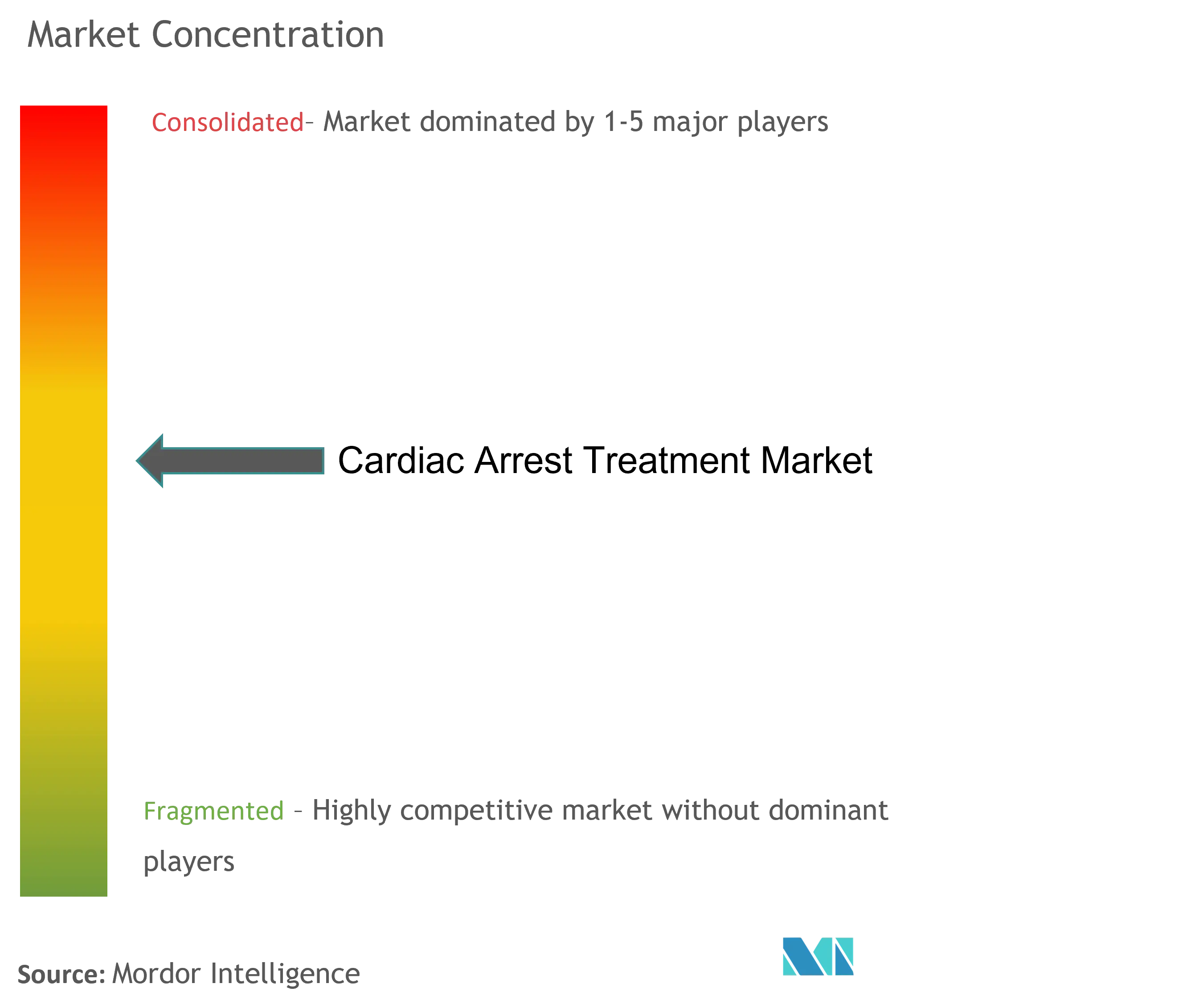
| Market Concentration | Low |
Major Players *Disclaimer: Major Players sorted in no particular order Image © Mordor Intelligence. Reuse requires attribution under CC BY 4.0. | |
Global Cardiac Arrest Treatment Market Analysis by Mordor Intelligence
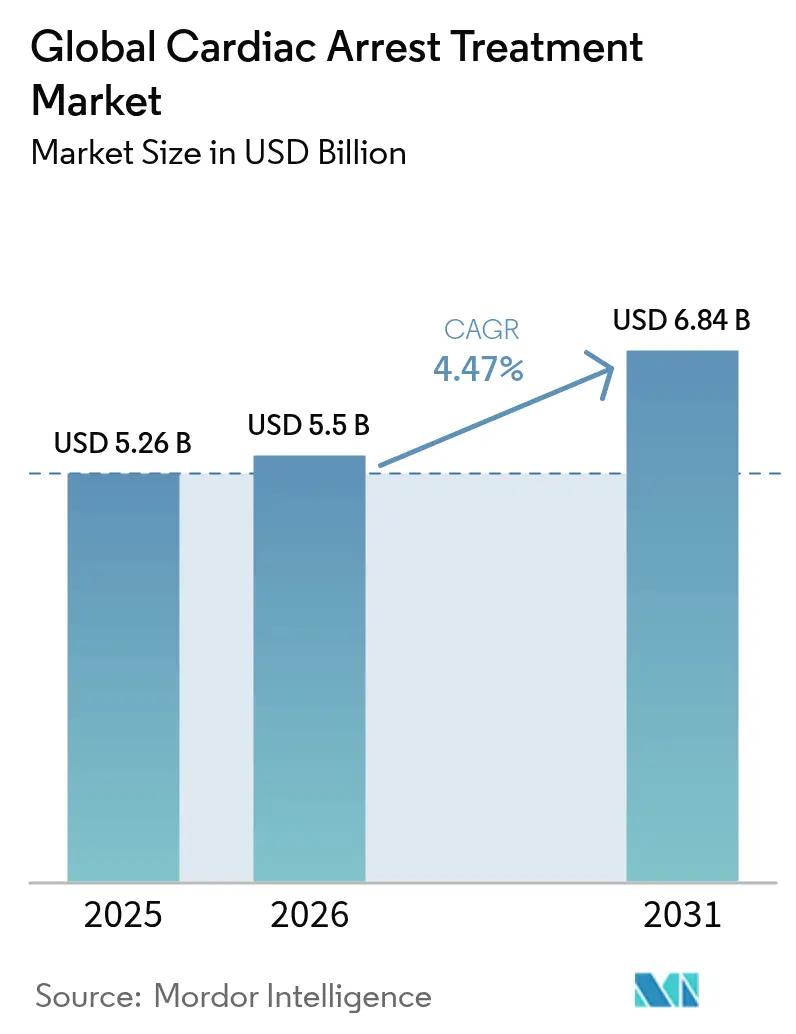
The global cardiac arrest treatment market size in 2026 is estimated at USD 5.5 billion, growing from 2025 value of USD 5.26 billion with 2031 projections showing USD 6.84 billion, growing at 4.47% CAGR over 2026-2031. Consistent demand from ageing populations, wider public-access defibrillator programs, and rapid advances in miniaturised extracorporeal systems support this upward trajectory. Vendors also benefit from AI-enabled rhythm-prediction tools that integrate into emergency medical service (EMS) dispatch software, allowing faster, data-driven triage. Parallel innovations—such as drone-delivered automated external defibrillators (AEDs), mRNA-based anti-arrhythmic pipelines, and field-deployable therapeutic hypothermia packs—signal a clear shift from reactive to predictive care models. At the same time, heightened post-recall vigilance by regulators and continued supply-chain diversification strategies increase compliance costs but help restore clinician confidence. Overall, competitive pressure ropes leading firms into continuous R&D cycles that keep the cardiac arrest treatment market responsive to evolving clinical guidelines and public-health mandates.
Key Report Takeaways
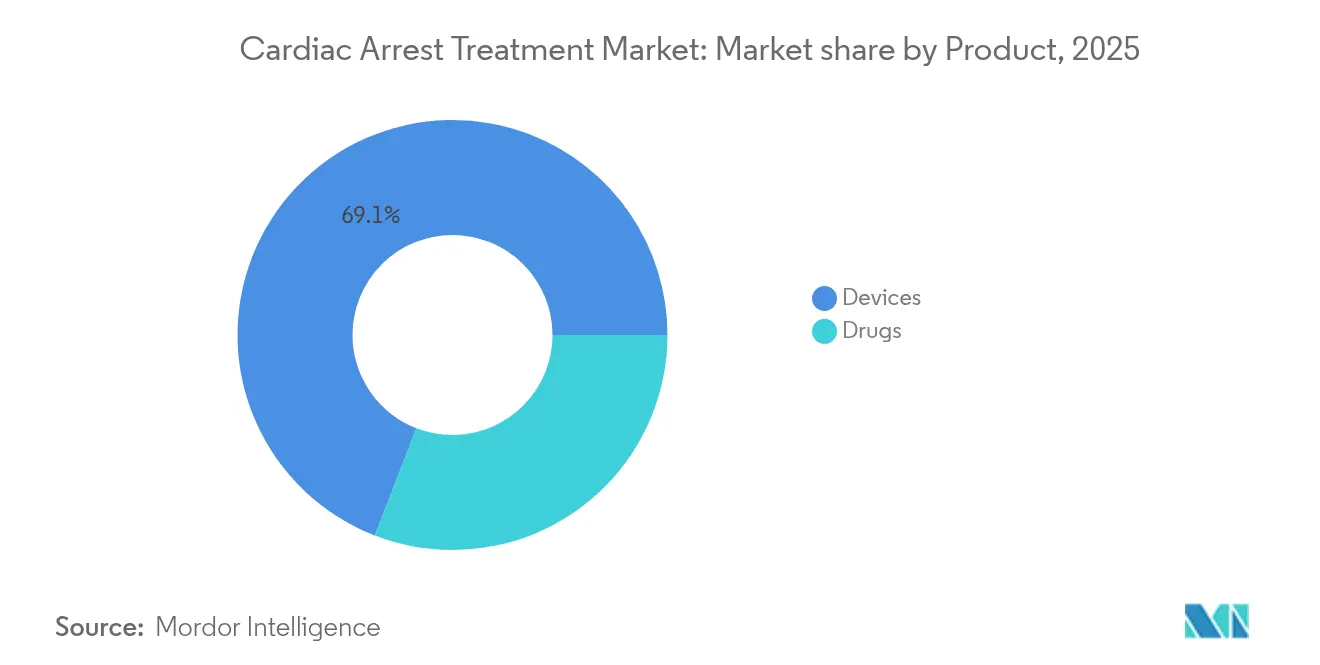
- By product category, devices led with 69.12% revenue share in 2025, while the same segment is forecast to grow at a 6.33% CAGR through 2031.
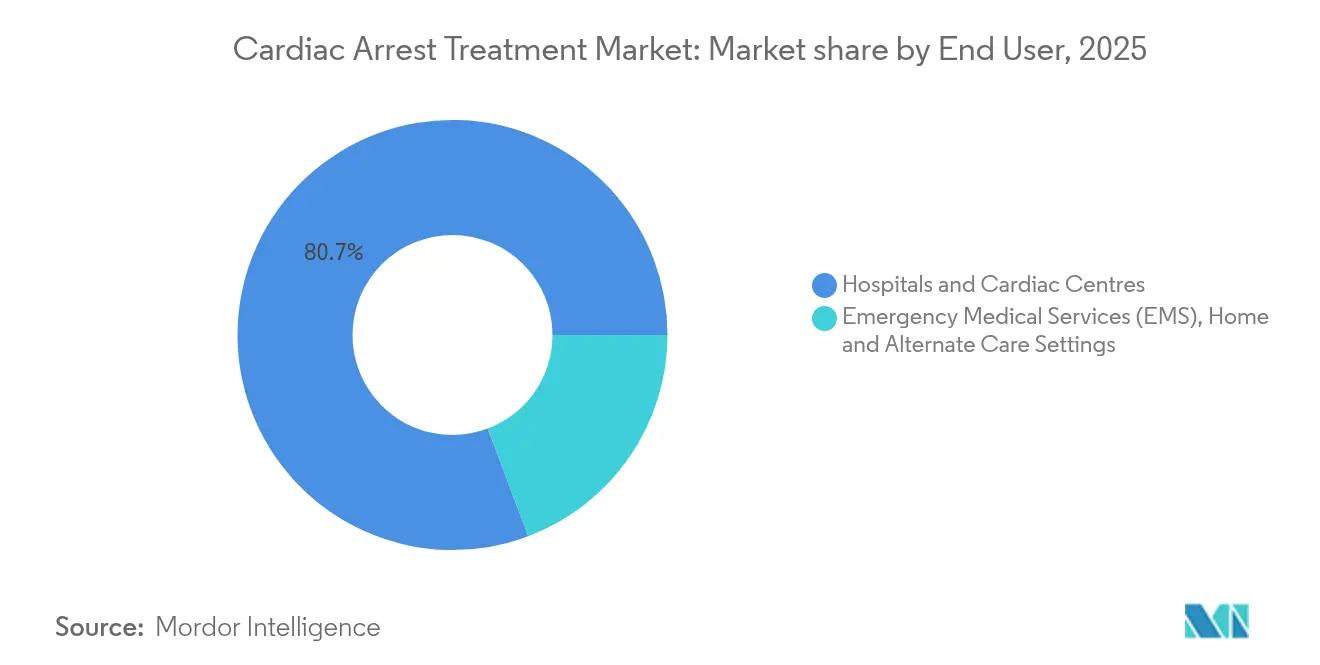
- By end user, hospitals and cardiac centres held 80.73% of the cardiac arrest treatment market share in 2025, whereas home and alternate care settings record the highest projected CAGR at 5.72% through 2031.
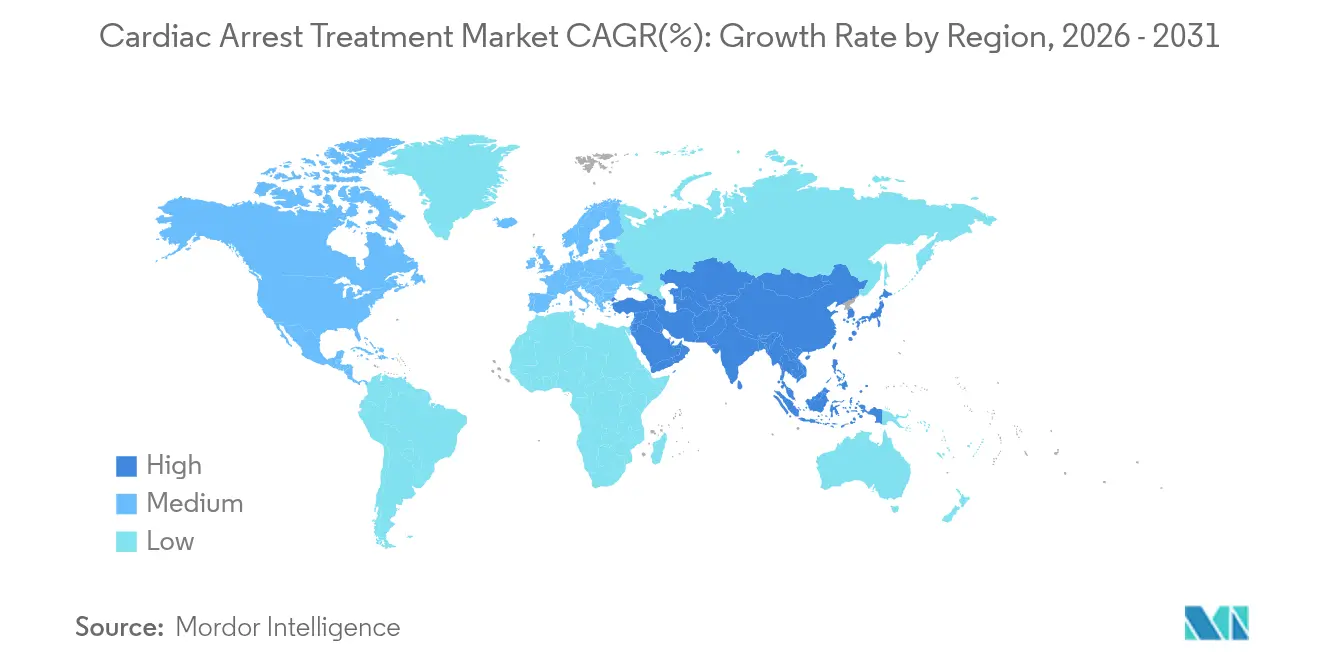
- By region, North America accounted for 41.83% of 2025 revenue, while Asia-Pacific is advancing at a 7.55% CAGR to 2031.
Note: Market size and forecast figures in this report are generated using Mordor Intelligence’s proprietary estimation framework, updated with the latest available data and insights as of 2026.
Market Trends and Insights
Drivers Impact Analysis of Global Cardiac Arrest Treatment Market*
| Driver | (~) % Impact on CAGR Forecast | Geographic Relevance | Impact Timeline |
|---|---|---|---|
| Growing burden of Sudden Cardiac Arrest & ageing Populations | +1.20% | Global, with concentrated impact in North America & Europe | Long term (≥ 4 years) |
| Public-access defibrillator programmes and Legislation | +0.80% | North America & EU leading, APAC emerging | Medium term (2-4 years) |
| Advances in implantable & wearable Defibrillator Technology | +1.10% | Global, with early adoption in developed markets | Medium term (2-4 years) |
| Miniaturised ECMO for refractory cardiac arrest | +0.60% | North America & EU core, spill-over to APAC | Long term (≥ 4 years) |
| AI-powered rhythm-prediction integrated into EMS workflows | +0.50% | North America leading, EU following | Short term (≤ 2 years) |
| mRNA-based anti-arrhythmic therapeutics in pipeline | +0.30% | Global, pending regulatory approvals | Long term (≥ 4 years) |
| Source: Mordor Intelligence | |||
Growing Burden of Sudden Cardiac Arrest & Ageing Populations
Population ageing increases sudden cardiac death incidence, especially among adults over 65. The American Heart Association notes that 356,000 Americans experience out-of-hospital cardiac arrest each year, with survival remaining at 8-10%. Its 2030 Impact Goals target more than 50% bystander CPR and 20% AED use before EMS arrival to offset the 10% survival decline that occurs for every untreated minute. These goals push health systems to procure integrated device ecosystems rather than one-off equipment. Growing recognition of COVID-19-related myocardial micro-scarring in younger age groups further broadens the addressable patient pool. Consequently, the cardiac arrest treatment market continues to prioritize scalable platforms that combine monitoring, predictive software, and therapy delivery in a single continuum of care.
Public-Access Defibrillator Programmes and Legislation
State-mandated AED deployment in schools, sports arenas, and transit hubs expands device density and improves lay-rescuer readiness. South Carolina’s Smart Heart Act and Ohio’s House Bill 47 require both AED placement and cardiac emergency response plans, lowering legal barriers that once deterred facility managers. The Centers for Disease Control and Prevention offers a 13-point implementation toolkit that standardises procurement and maintenance, while federal proposals to reauthorise the Cardiac Arrest Survival Act strengthen liability protections. Connected AED platforms that feed status data into 911 dispatch networks therefore enjoy higher adoption, especially when bundled with subscription-based training modules.
Advances in Implantable & Wearable Defibrillator Technology
Device miniaturisation reduces implant risk and opens therapy to moderately at-risk cohorts. Medtronic’s 4.7 French OmniaSecure lead achieved a 97.5% defibrillation success rate during pivotal trials[1]. Boston Scientific’s modular mCRM system links a subcutaneous ICD with a leadless pacemaker, posting a 98.8% inter-device communication success metric. Meanwhile, AI-enabled wearable defibrillators such as Element Science’s Jewel Patch extend protection past hospital discharge, bolstering the cardiac arrest treatment market by lowering rehospitalisation costs. Predictive algorithms embedded in cloud dashboards also alert clinicians before malignant arrhythmias manifest, shifting resource allocation from crisis response to prevention.
Miniaturised ECMO for Refractory Cardiac Arrest
Extracorporeal cardiopulmonary resuscitation (ECPR) yields 29.4% survival for refractory cases versus 2.4% with conventional CPR, per a multicentre propensity study. Medtronic’s portable VitalFlow ECMO system brings circuit priming and monitoring to the ambulance bay, letting teams initiate support within minutes of collapse. Registry data from the Extracorporeal Life Support Organization now list more than 100,000 survivors, validating field use when paired with rigorous training. Advances in biocompatible coatings and heparin-sparing circuits further counter previous bleeding risks, encouraging policy makers to reimburse ECPR in specialised EMS units.
Restraints Impact Analysis of Global Cardiac Arrest Treatment Market*
| Restraint | (~) % Impact on CAGR Forecast | Geographic Relevance | Impact Timeline |
|---|---|---|---|
| Product recalls & device-related adverse events | -0.90% | Global, with concentrated impact in regulated markets | Short term (≤ 2 years) |
| High capital cost & reimbursement gaps in emerging markets | -1.10% | APAC emerging markets, Latin America, MEA | Medium term (2-4 years) |
| API shortages for key vasopressors | -0.30% | Global, with supply chain concentration in Asia | Short term (≤ 2 years) |
| Ethical & regulatory hurdles for field-deployed hypothermia drones | -0.20% | North America & EU leading regulatory frameworks | Long term (≥ 4 years) |
| Source: Mordor Intelligence | |||
Product Recalls & Device-Related Adverse Events
Quality lapses remain a central concern. Boston Scientific issued a Class I recall for certain Accolade pacemakers after 832 injuries and 2 deaths were linked to devices entering Safety Mode[2]. Abbott simultaneously recalled HeartMate pump accessories due to power unit failures, triggering the FDA’s pilot programme that accelerates public safety alerts for cardiovascular implants. These incidents reduce clinician confidence, delay new-product clearances, and push companies to allocate larger budgets to post-market surveillance, thereby slowing the overall cardiac arrest treatment market.
High Capital Cost & Reimbursement Gaps in Emerging Markets
Advanced defibrillators and ECMO circuits command premium price tags, yet reimbursement pathways in many emerging economies cover only basic resuscitation supplies. India’s device market still depends on 70% imports, creating affordability barriers for public hospitals. Variable evidence requirements across regulators also lengthen approval timelines, adding financing pressure on smaller exporters. Although private insurers in urban centres partly offset these gaps, rural populations often rely on out-of-pocket spending, limiting broader penetration of next-generation therapies.
*Our forecasts treat driver/restraint impacts as directional, not additive. The impact forecasts reflect baseline growth, mix effects, and variable interactions.
Global Cardiac Arrest Treatment Market Segment Analysis
By Product:
Devices Drive Innovation While Drugs Face Pipeline ConstraintsDevices contributed USD 3.64 billion in 2025, equal to 69.12% of total revenue. Technological leaps like AI-driven arrhythmia prediction and miniaturised ECMO propel this category toward a 6.33% CAGR, keeping the cardiac arrest treatment market size for devices ahead of pharmacologic alternatives. Defibrillators dominate hospital code carts, while drone-mounted AEDs extend reach to remote communities. Portable ECMO platforms win guideline endorsements for refractory cases, and mechanical circulatory support systems such as Impella add incremental hemodynamic stability. FDA approval of the VARIPULSE pulsed-field ablation system confirms regulators’ willingness to fast-track high-impact devices, reinforcing vendor confidence in sustained R&D.
The drug segment accounts for the remaining revenue and grows at a slower pace as formulary constraints and generic competition bite. Class III agents like amiodarone remain standard for ventricular arrhythmias, yet shortages of vasopressors such as epinephrine sporadically disrupt critical-care supply chains nih.gov. Investigational mRNA therapies, including AZD8601, mark the first significant mechanistic shift since dronedarone’s 2009 launch, but large-scale efficacy data are pending. RNAi approaches that silence arrhythmogenic pathways show promise in preclinical settings, although commercial timelines extend beyond the current forecast window.

By End User:
Hospital Dominance Challenged by Home Care EmergenceHospitals and specialist cardiac centres captured 80.73% of 2025 revenue, underpinned by 24/7 catheterisation labs, ECMO suites, and intensive telemetry. Adoption of extracorporeal CPR protocols further solidifies this lead, with survival rates for in-centre ECPR reaching 29.4% compared with 2.4% for conventional approaches. Consolidation among health-system networks streamlines bulk purchases of connected defibrillators, elevating enterprise-wide uptime and maintenance compliance across multiple campuses.
The home and alternate care segment records a 5.72% CAGR and is forecast to gain incremental cardiac arrest treatment market size through 2031, driven by AI-enabled wearables that safeguard high-risk patients during the vulnerable post-discharge period. ZOLL Medical’s ResQCPR system reports a 49% one-year survival improvement when used with impedance threshold devices, encouraging payers to reimburse home-based solutions. Telemedicine legislation passed during the pandemic now supports remote programming of implantable devices, enlarging the data pipeline that clinicians use to anticipate deterioration. This decentralised model lowers rehospitalisation costs and aligns with value-based-care incentives, thereby accelerating adoption in both mature and emerging healthcare systems.
Geography Analysis
North America Cardiac Arrest Treatment Market
North America holds 41.83% of 2025 revenue, benefiting from established EMS protocols, widespread AED saturation, and an FDA ecosystem that offers breakthrough device designations for life-saving tools. Federal liability shields under the Cardiac Arrest Survival Act nurture community responders, and the American Heart Association’s targets push states to intensify public-access programmes. Integrated delivery networks negotiate fleet-wide service contracts for defibrillators and monitoring platforms, which sustains predictable replacement cycles. In parallel, large-scale field trials of drone-delivered AEDs in rural regions demonstrate response-time cuts of 4-6 minutes, materially improving neurological outcomes nih.gov.
APAC Cardiac Arrest Treatment Market
Asia-Pacific is the fastest-growing territory at 7.55% CAGR, chiefly due to rising cardiovascular mortality and expanded emergency-care funding in urban provinces. Domestic manufacturers from China and Japan increase exports of cost-effective AEDs, challenging Western incumbents on price while meeting International Electrotechnical Commission (IEC) standards. Nevertheless, fragmented reimbursement landscapes still slow uptake of high-ticket ECMO and conduction-system pacing devices, keeping the cardiac arrest treatment market share for expensive capital equipment modest. Multilateral regulatory harmonisation projects, including the Asian Harmonisation Working Party, aim to trim approval times by synchronising dossier requirements—a factor that gradually reduces entry hurdles for global brands.
Europe Cardiac Arrest Treatment Market
Europe delivers steady but cautious growth under unified medical-device regulations that emphasise clinical-evidence depth. The region champions clinical quality registries that feed outcome data into guideline updates, guiding hospitals toward evidence-backed purchases. Pilot drone networks in the Netherlands achieved sub-5-minute AED delivery to cardiac arrest scenes, prompting the European Union to fund cross-border replication studies nhs.uk. Budget pressures keep purchasing decisions under health-technology assessment review, yet outcome-based procurement models reward platforms that present clear reductions in out-of-hospital mortality. EU MDR transition costs remain a factor, but established suppliers with robust post-market surveillance capabilities maintain favourable status on tender lists
Regulatory Landscape
Regulatory oversight is centered on high-risk device pathways and guideline-led standardization of resuscitation practice. In the United States, the FDA remains the key authority for implantable and other high-risk systems. In March 2026, Medtronic received FDA approval for an OmniaSecure defibrillation lead indication supporting conduction system pacing, and in May 2026 the FDA accepted HeartHero's PMA for review for the Elliot connected automated external defibrillator, reflecting ongoing scrutiny for Class III connected defibrillation platforms. FDA CDRH priorities for fiscal year 2026 also add compliance pressure through the agency's guidance development agenda for medical devices.
In Europe, access depends on conformity assessment under CE marking, alongside greater emphasis on evidence generation and post-market surveillance. Element Science obtained CE Mark and UKCA marking for its Jewel Patch wearable cardioverter defibrillator in January 2024, followed by FDA PMA in May 2025, which illustrates how companies pursue parallel regulatory tracks for wearable defibrillation. Neurescue's CE Mark for the NEURESCUE device in September 2025 also points to regulator openness to purpose-built tools for non-shockable cardiac arrest. At the same time, updates from professional bodies such as the American Heart Association's 2025 CPR and ECC Guidelines and ILCOR consensus outputs continue to shape hospital and EMS protocol adoption and purchasing specifications for ECMO/ECPR, defibrillation, and targeted temperature management.
Competitive Landscape
The cardiac arrest treatment industry features moderate consolidation. Top device makers—Medtronic, Boston Scientific, and Abbott—control broad portfolios ranging from implantable cardioverter-defibrillators to catheter-based ablation tools. In 2025, Medtronic secured FDA clearance for its OmniaSecure lead, reinforcing its leadership in transvenous systems. Boston Scientific acquired Bolt Medical for USD 664 million to add intravascular lithotripsy capabilities that enhance its structural-heart toolbox. Abbott launched the ASCEND CSP trial, underscoring its bet on conduction-system pacing that merges pacing and defibrillation within a single modular ecosystem .
Investment flows exceed USD 60 billion across rhythm management, mechanical support, and coronary intervention subfields, signalling confidence in long-run demand for integrated solutions. Patent filings centre on algorithmic risk scoring, fault-tolerant battery chemistries, and low-profile vascular access routes. Post-recall scrutiny drives firms to elevate supplier-quality audits and diversify component sourcing, with several relocating capacitor production from single-site Asian foundries to dual-source models in North America and Europe. Mid-tier players such as ZOLL and Stryker compete aggressively in public-access AED tenders by bundling cloud-based maintenance dashboards and certified training platforms, enhancing stickiness among municipal buyers.
Start-ups focus on wearable, patch-based defibrillators that pair always-on ECG analytics with autonomous shock delivery, positioning themselves as adjuncts rather than full replacements for implantable systems. Strategic alliances between software vendors and EMS providers create end-to-end data ecosystems that feed machine-learning engines, continuously refining rhythm-prediction accuracy. Larger incumbents respond by opening API gateways to harmonise data flows, thus protecting installed bases while facilitating interoperability demanded by hospital IT departments.
Global Cardiac Arrest Treatment Industry Leaders
-
Koninklijke Philips N.V
-
Abbott Laboratories
-
Medtronic plc
-
Boston Scientific Corporation
-
Novartis AG
- *Disclaimer: Major Players sorted in no particular order
Global Cardiac Arrest Treatment Market Companies Covered in this Report
- Medtronic PLc
- Boston Scientific
- Koninklijke Vjke
- ZOLL Corporation
- Abbott Laboratories
- Stryker
- Nihon Corporation
- BIOTRONIK
- GE Technologies
- Shenzhen Electronic
- MicroPort Corporation
- LivaNova
- Abiomed
- Getinge
- Edwards Corporation
- Masimo Corpoporation
- Amphastar Inc
- Adamis Pharmaceuticals
- Zoll Medical
- Bristol-Myers Squibb
- Teleflex
Market Opportunities and Future Outlook
White-space is emerging around connected, workflow-integrated resuscitation ecosystems that connect public-access defibrillation, EMS dispatch, and hospital post-arrest pathways. The FDA's May 2026 review acceptance of HeartHero's PMA for a connected automated external defibrillator (Elliot) supports vendor investment into AED platforms that incorporate device readiness and event data into response systems. In parallel, the American Heart Association's 2025 Adult Advanced Life Support guidance and the 2025 ILCOR CoSTR updates reinforce demand for protocol consistency, including dispatcher-assisted CPR, defibrillation sequences, mechanical CPR considerations, and post-cardiac arrest temperature targets. This combination favors suppliers that bundle devices with analytics, connectivity, and training-enabled service models.
A second opportunity area is post-cardiac arrest neuroprotection and precision temperature management, with clinical evidence moving beyond one-size-fits-all hypothermia. Pilot results from PRINCESS2 (reported in 2026) evaluate portable trans-nasal selective brain cooling initiated on-scene. Comparative evidence cited in recent literature also indicates that intravascular cooling devices can deliver tighter temperature control than surface-cooling approaches in post-arrest care. Separately, 2026 evidence on AI-enabled multimodal emergency care system implementation (for sudden cardiac death rescue workflows) highlights value creation for vendors that integrate predictive decision support with monitoring and therapy delivery across EMS and hospital settings.
Recent Industry Developments in Global Cardiac Arrest Treatment Market
- April 2026: Koninklijke Philips N.V. launched the Bridge Plus Occlusion Balloon in the United States to help manage rare but life-threatening superior vena cava tears during lead extraction procedures. The addition strengthens Philips' interventional toolset around complex rhythm-device management, where procedural safety can influence adoption of extraction and replacement workflows that sit adjacent to defibrillation and pacing care pathways.
- March 2026: Medtronic received FDA approval for its OmniaSecure defibrillation lead for conduction system pacing, extending the lead's use into left bundle branch area applications. The expanded indication helps Medtronic broaden its addressable implant base while aligning product positioning with the clinical shift toward physiologic pacing approaches within cardiac rhythm management.
- December 2025: Abbott received FDA approval for the Volt Pulsed Field Ablation (PFA) System to treat atrial fibrillation. The clearance advances Abbott's electrophysiology portfolio and supports integrated arrhythmia management strategies that can reduce progression to malignant rhythms and downstream cardiac arrest risk in high-burden patient cohorts.
Global Cardiac Arrest Treatment Market Report Scope and Research Methodology
Market Definition and Coverage
This market captures the value of products used to treat sudden cardiac arrest in emergency and acute care, including key devices that restore or support circulation and the drugs used during resuscitation and immediate stabilization.
Scope exclusions: Post-resuscitation rehabilitation, diagnostic-only tools, and stand-alone CPR training services are excluded from the market value.
Segments Covered in This Report
- By Product (Value)
- Devices
- Defibrillators
- Extracorporeal Membrane Oxygenation (ECMO)
- Intra-aortic Balloon Pump (IABP)
- Percutaneous VAD (Impella)
- Other Devices
- Drugs
- Anti-arrhythmic Drugs
- Class I – Sodium-channel Blockers
- Class II – Beta-blockers
- Class III – Potassium-channel Blockers
- Class IV – Calcium-channel Blockers|||
- Others (Digoxin, Adenosine)
- Vasopressors & Inotropes
- Anti-arrhythmic Drugs
- Devices
- By End User (Value)
- Hospitals & Cardiac Centres
- Emergency Medical Services (EMS)
- Home & Alternate Care Settings
- By Region
- North America
- United States
- Canada
- Mexico
- Europe
- Germany
- United Kingdom
- France
- Italy
- Spain
- Russia
- Rest of Europe
- Asia-Pacific
- China
- Japan
- India
- South Korea
- Australia
- Rest of Asia-Pacific
- Middle East & Africa
- GCC
- South Africa
- Rest of Middle East & Africa
- North America
Data Sources, Market Sizing, and Validation
Desk Research
Desk research was used to set the fact base for cardiac arrest incidence, care pathways, and the adoption of resuscitation tools across regions. We relied on public source types such as the World Health Organization, the US Centers for Disease Control and Prevention, and the American Heart Association (including guideline updates), plus selected government health statistics portals in Europe and Asia.
To keep assumptions grounded, we also reviewed sources such as clinical trial registries, peer reviewed cardiology and emergency medicine journals, and regulator and procurement disclosures where they are publicly available. Company annual reports, investor decks, and credible press coverage were used to interpret pricing movement and product refresh cycles. In addition, a paid subscription covering company financials and patent landscapes was used to cross-check revenue pools and innovation activity. These examples are illustrative, and many additional sources were used for data collection, validation, and clarification during analysis.
Primary Interviews and Surveys
Primary interviews and structured surveys were run with device and drug stakeholders, as well as hospital, EMS, and clinical experts who see real usage and budgeting. Respondent input was used to validate treatment patterns (in-hospital versus out-of-hospital), typical stocking and replacement behavior for equipment, and the practical pace of guideline adoption across APAC, EMEA, and the Americas.
Distribution of primary research fieldwork respondents
| Company type | Respondent position | Region |
|---|---|---|
| Top tier: 33% | CXOs: 17% | APAC: 48% |
| Mid tier: 46% | Functional/Unit leaders: 38% | EMEA: 31% |
| Smaller Players: 21% | Managers: 45% | Americas: 21% |
Market-Sizing & Forecasting
Sizing starts with a top-down build where published epidemiology and emergency care utilization are translated into a demand pool, then filtered through treatment rates and product usage intensity. When the care pathway differs by setting, the model separates out-of-hospital response from in-hospital events so unit use and replacement cycles are not mixed.
To keep totals realistic, the outputs are corroborated with selective bottom-up checks, such as sampling average selling price ranges for defibrillation and circulatory support equipment, then multiplying by estimated unit volumes and replacement timing. Where direct volume signals are limited, we fill gaps using proxy indicators, including EMS fleet expansion, public access defibrillator program rollouts, and hospital procurement cycles. These proxies are then reviewed against expert feedback.
Forecasting is handled mainly through scenario analysis supported by trend lines in a few practical variables, including cardiac arrest incidence trends, guideline driven adoption of newer protocols, installed base replacement cadence for key devices, and regional health spending direction. Final projections are reviewed so price progression, currency timing, and adoption speed remain consistent with what respondents describe as achievable in their markets.
Data Validation & Update Cycle
We validate the model through triangulation across independent signals, then inspect variances before numbers are finalized. Checks include aligning implied volumes with known installed base ranges, confirming pricing assumptions against public tenders or disclosed pricing bands, and testing whether regional splits match care delivery realities described by clinicians and procurement teams.
A multi-step internal review is used so calculation logic, year alignment, and currency conversion steps are consistently applied. If an output looks off versus independent indicators, follow-up outreach is triggered to re-check assumptions, and the model is adjusted with clear audit notes. Reports are refreshed annually, and interim updates are made when major regulatory, pricing, or demand shifts materially change the outlook, followed by a final pre-delivery review so clients receive the latest view.
Mordor Intelligence's Cardiac Arrest Treatment Market Sizing Compared With Other Published Estimates
Published market sizes for cardiac arrest treatment can look different even when the topic label is the same, because the included products and the year choices are not consistent. Differences also show up when some studies rely more on a single headline indicator, while others rebuild demand from treatment flow and usage intensity.
Post-resuscitation rehabilitation and diagnostic-only tools sit outside Mordor Intelligence's scope, which reduces the chance of unrelated revenue being counted inside the treatment market when comparing to broader emergency cardiac care bundles. The spread is also explained by base-year selection, how device replacement cycles are treated, and whether drug use is modeled from treated events or from pharmacy channel totals that may include non-cardiac-arrest indications.
Benchmark comparison
| Source | Market Size | Gaps in Research Methodology |
|---|---|---|
| Mordor Intelligence | USD 5.50 B (2026) | |
| Global Consultancy A | USD 5.00 B (2024) | Uses an earlier base year and appears to anchor sizing more heavily on broad category totals, which can understate device replacement timing and delay the impact of guideline-driven adoption into later years. |
| Industry Publisher B | USD 4.52 B (2024) | Leans on channel-based splits focused on retail and hospital pharmacy views, which can miss device-heavy revenue pools or treat them as a secondary add-on rather than tying demand to treated cardiac arrest events. |
The table shows that most of the gap is explained by year alignment and what each source treats as a treatment revenue item. By keeping inputs tied to treated events, setting-specific usage, and realistic replacement cadence, our estimate stays traceable to clear steps that can be reviewed and repeated.
Key Questions Answered in the Report
What is the current size of the cardiac arrest treatment market?
The market stands at USD 5.5 billion in 2026, with a forecast value of USD 6.84 billion by 2031.
Which product category holds the largest share?
Devices account for 69.12% of 2025 revenue, driven by defibrillators and portable ECMO systems.
Which region is growing the fastest?
Asia-Pacific leads growth with a 7.55% CAGR through 2031 as governments scale emergency-care capacity.
How are recalls affecting market growth?
Recent Class I recalls reduce short-term CAGR by an estimated 0.9%, prompting stricter quality controls among manufacturers.
Why are public-access defibrillator programs important?
Legislation mandating AED placement in schools and public venues improves device density and boosts survival rates by enabling earlier shocks.