
Calprotectin Testing Market Size and Share
Market Overview
| Study Period | 2020 - 2031 |
|---|---|
| Market Size (2026) | USD 0.64 Billion |
| Market Size (2031) | USD 1.23 Billion |
| Growth Rate (2026 - 2031) | 13.72 % |
| Fastest Growing Market | Asia-Pacific |
| Largest Market | North America |
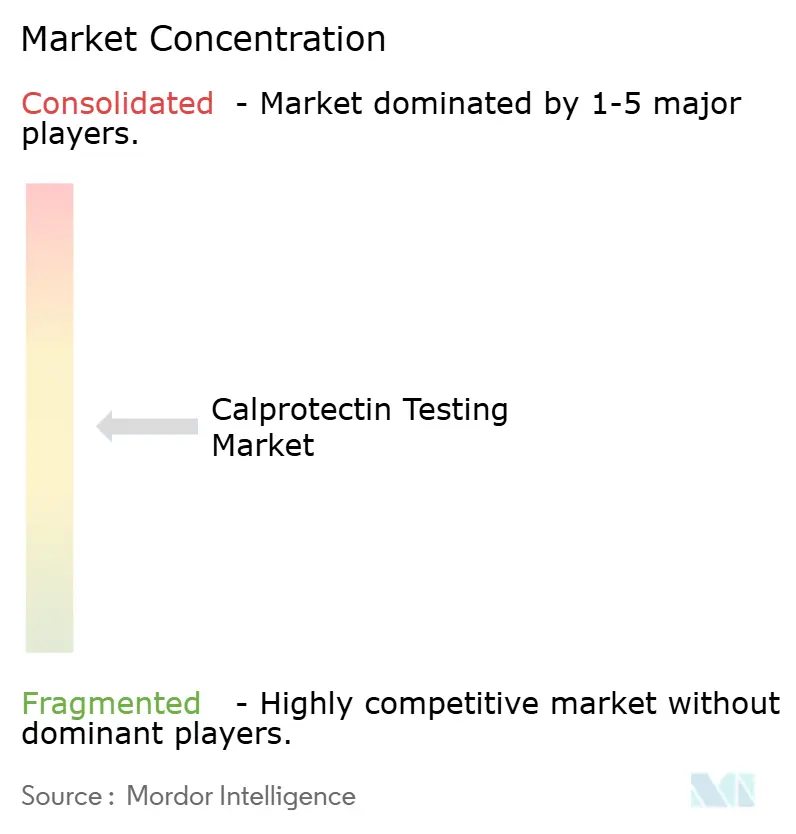
| Market Concentration | Medium |
Major Players *Disclaimer: Major Players sorted in no particular order Image © Mordor Intelligence. Reuse requires attribution under CC BY 4.0. | |
Calprotectin Testing Market Analysis by Mordor Intelligence
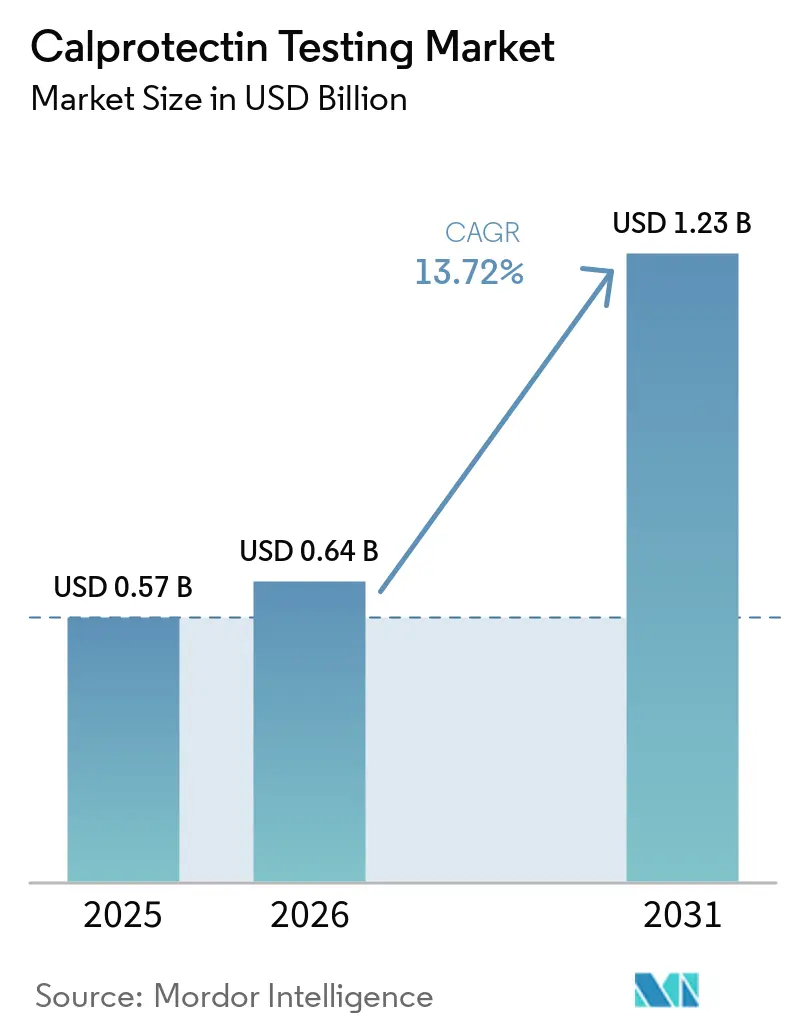
The Calprotectin Testing Market size was valued at USD 0.57 billion in 2025 and is estimated to grow from USD 0.64 billion in 2026 to reach USD 1.23 billion by 2031, at a CAGR of 13.72% during the forecast period (2026-2031).
The rising prevalence of inflammatory bowel disease is increasing demand for noninvasive testing before endoscopy. Clinical guidance is placing fecal calprotectin earlier in the assessment of lower gastrointestinal symptoms and in ongoing disease management. The Calprotectin testing market is also moving from single diagnostic tests toward repeat measurements linked to biologic treatment reviews. Automated analyzers and digital home testing can widen access by fitting testing into existing laboratory and patient workflows. However, inconsistent assay results and uneven reimbursement continue to limit adoption, particularly for repeat monitoring
Key Report Takeaways
By assay type, ELISA held 43.3% of the Calprotectin testing market share in 2025, while CLIA and other automated assays are forecast to grow at a 13.9% CAGR through 2031.
By application, IBD diagnosis accounted for 38.4% of the Calprotectin testing market size in 2025, while IBD monitoring is forecast to expand at a 14.1% CAGR through 2031.
By product, kits and reagents accounted for 68.2% of the Calprotectin testing market share in 2025, while instruments are projected to grow at a 14.1% CAGR through 2031.
By end user, diagnostic laboratories held 48.6% of revenue in 2025, while specialty centers are forecast to expand at a 14.3% CAGR through 2031.
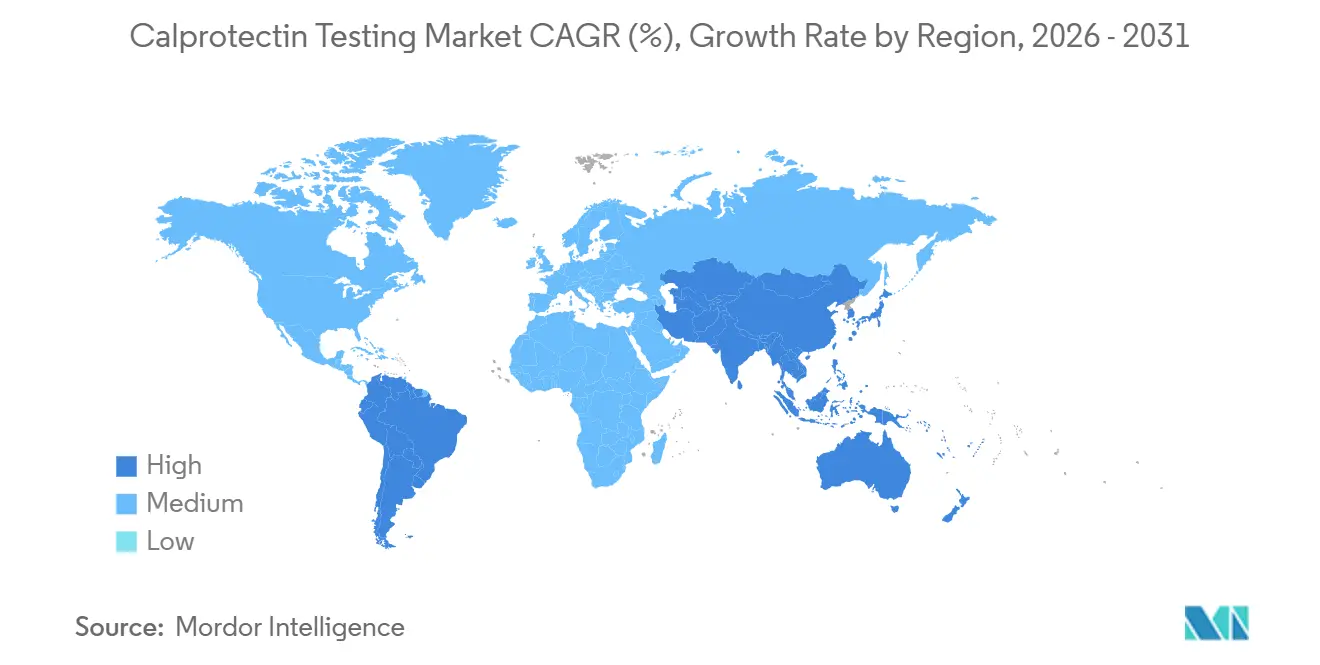
By geography, North America held 40.3% of revenue in 2025, while Asia Pacific is projected to grow at a 14.5% CAGR through 2031.
Note: Market size and forecast figures in this report are generated using Mordor Intelligence’s proprietary estimation framework, updated with the latest available data and insights as of January 2026.
Market Trends and Insights
Drivers Impact Analysis of Calprotectin Testing Market*
| Driver | (~) % Impact on CAGR Forecast | Geographic Relevance | Impact Timeline |
|---|---|---|---|
| Rising Inflammatory Bowel Disease Prevalence | +3.8% | Global, concentrated in North America, Europe, and rapidly urbanizing APAC | Long term (≥ 4 years) |
| Guideline-Based IBD and IBS Differentiation | +2.2% | North America and Europe, with early spillover to APAC and South America | Medium term (2-4 years) |
| Demand for Non-Invasive Disease Monitoring | +2.5% | Global, with strongest demand in Europe and North America | Long term (≥ 4 years) |
| Expansion of Automated High-Throughput Testing | +1.8% | North America, Europe, and APAC core markets | Medium term (2-4 years) |
| Point-of-Care and Home-Based Monitoring Adoption | +1.3% | Europe, North America, and early-adoption APAC markets | Medium term (2-4 years) |
| Interoperable Longitudinal Monitoring Through Digital Connectivity | +0.9% | National systems, with early gains in UK NHS trusts and major U.S. health systems | Long term (≥ 4 years) |
| Source: Mordor Intelligence | |||
Rising Inflammatory Bowel Disease Prevalence
IBD prevalence is the main long-term demand base for the Calprotectin testing market and guides long-range laboratory capacity planning. A 2024 study estimated 375,140 global incident IBD cases in 2021, which was 88.3% higher than in 1990. The same study identified the strongest growth in people aged 50-54 years, a group with high healthcare use and a greater need for repeated assessment. A 2025 Nature analysis found that India, Brazil, and much of Southeast Asia showed stage-2 incidence patterns, where incidence is still rising before reaching a plateau. This pattern makes emerging-country demand more durable than a short awareness-led increase. Older IBD cohorts also need more relapse surveillance, which increases tests per patient as prevalence matures.
Guideline-Based IBD and IBS Differentiation
Guidelines are making calprotectin a routine decision point rather than an optional laboratory add-on in the Calprotectin testing market. The 2025 BSG[1] guideline placed testing in the primary care pathway for lower gastrointestinal symptoms. The 2025 ACG Crohn’s disease guideline supported a fecal calprotectin cutoff above 50-100 mg/g to distinguish inflammatory from noninflammatory disease. NICE guidance HTG320 remains a procurement reference for NHS laboratory tenders. These documents give laboratories, payers, and clinicians a common basis for incorporating tests into care pathways. The 2026 EOMIFNE consensus also addressed diagnostic, monitoring, and pediatric use in Southern Europe. The Calprotectin testing market benefits when guidance reduces uncertainty around when and how to test.
Demand for Non-Invasive Disease Monitoring
Noninvasive monitoring is reshaping how the Calprotectin testing market serves patients receiving long-term IBD care and repeat testing. The BSG guideline recommends measurement before biologic therapy and at later review points. This creates a sequence of baseline, post-induction, and maintenance tests for patients using biologic treatments. A Southampton NHS pilot described 12 continuous months of patient-led home monitoring with real-time transfer of results to clinical teams. The report stated that lateral-flow accuracy was comparable with laboratory ELISA in that model. Repeat monitoring is therefore less dependent on new diagnoses than a test used only for initial triage. It also offers a practical alternative where routine colonoscopy access is limited.
Automated and Digitally Connected Testing
Automation is expanding the Calprotectin testing market beyond specialist laboratories and lowering the barrier to menu adoption. In March 2025, Gentian Diagnostics launched the GCAL Calprotectin Immunoassay through Beckman Coulter Diagnostics for use on clinical chemistry platforms. The assay measures circulating calprotectin in plasma and serum, creating monitoring uses in rheumatology and acute care as well as gastrointestinal disease. Automated systems reduce manual dilution and allow laboratories to add testing to established workflows. Home and point-of-care models can complement those systems when rapid or remote follow-up is needed. Digital transmission of patient results can also support longitudinal monitoring when it connects patients with care teams. These models can increase test frequency without requiring every measurement to occur in a hospital laboratory.
Restraints Impact Analysis of Calprotectin Testing Market*
| Restraint | (~) % Impact on CAGR Forecast | Geographic Relevance | Impact Timeline |
|---|---|---|---|
| Limited Cross-Assay Standardization | -0.8% | Global, most acute in multisite health systems in Europe and North America | Long term (≥ 4 years) |
| Variable Reimbursement and Testing Accessibility | -0.9% | North America and emerging APAC reimbursement systems | Medium term (2-4 years) |
| Stool Collection and Patient Compliance Friction | -0.5% | Global, with higher noncompliance in primary care | Short term (≤ 2 years) |
| Endoscopy-Centered Hospital Economics Delaying Biomarker-First Pathways | -0.6% | North America and select European markets | Medium term (2-4 years) |
| Source: Mordor Intelligence | |||
Assay Standardization and Patient Collection Friction
Cross-assay variation remains a significant clinical constraint for the Calprotectin testing market and prevents simple result comparisons. German proficiency testing data[2] showed Deming regression slopes from 0.37 to 1.91 across 8 calprotectin manufacturers. Results from the same stool sample could therefore differ by nearly a factor of 5 depending on the platform. Thresholds such as 50 µg/g, 100 µg/g, and 250 µg/g were developed on particular methods, so their use on unvalidated platforms may raise false-negative risk. This makes longitudinal comparisons difficult when patients move between ELISA, CLIA, and turbidimetric systems. Stool collection also adds a practical barrier, especially in primary care, where patient compliance is weaker than in specialist settings.
Reimbursement and Endoscopy-Centered Care Pathways
Reimbursement uncertainty limits repeat-testing access in the Calprotectin testing market, especially for chronic monitoring. UnitedHealthcare listed its fecal calprotectin policy among policies scheduled for 2026 revision in a November 2025 bulletin. The change reflected ongoing uncertainty around coverage for monitoring, even though initial IBD and IBS differentiation is commonly covered. CMS also delayed private-payer rate data collection under the PAMA framework in its 2025 Clinical Laboratory Fee Schedule update. In APAC, many public insurance systems do not have a dedicated fecal calprotectin reimbursement code. Hospitals with significant endoscopy revenue may also move more slowly toward biomarker-first pathways. These factors concentrate revenue in higher-income geographies and private laboratory channels.
*Our forecasts treat driver/restraint impacts as directional, not additive. The impact forecasts reflect baseline growth, mix effects, and variable interactions.
Calprotectin Testing Market Segment Analysis
By Assay Type:
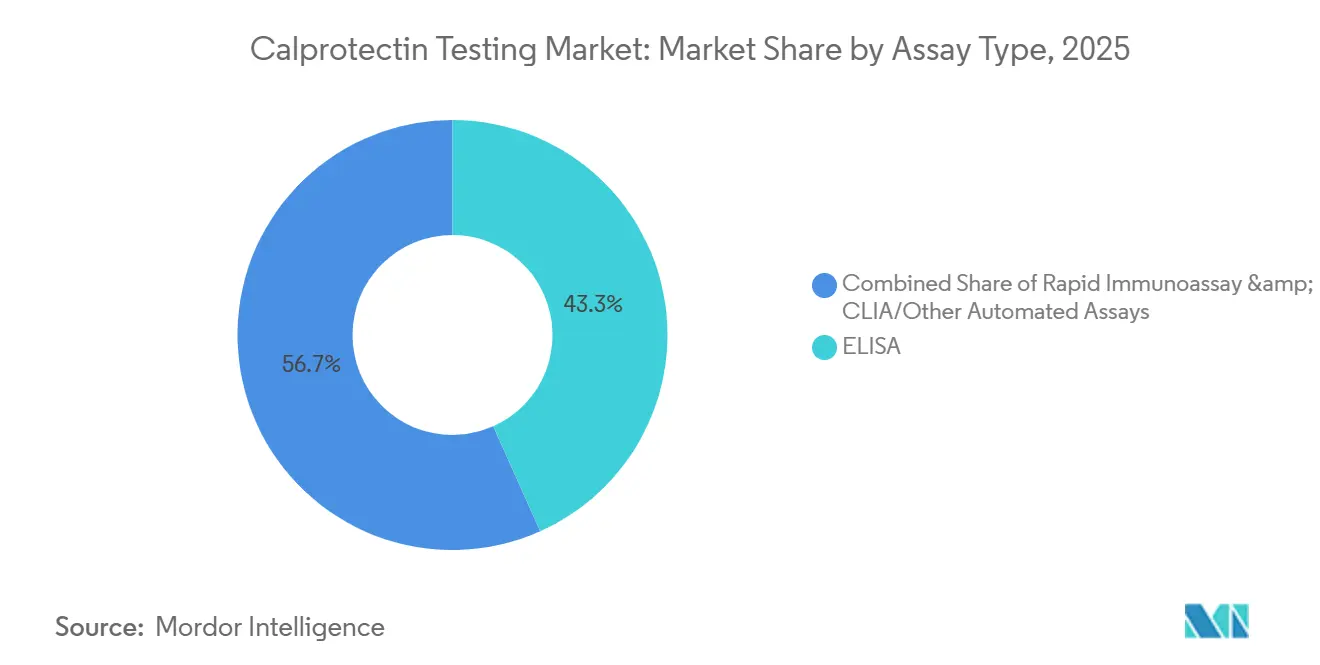
ELISA Retains a Large Base While Automation Gains GroundELISA held 43.3% of assay-type revenue in 2025, while CLIA and other automated assays are expected to grow at a 13.9% CAGR through 2031 in the Calprotectin testing market. ELISA retained its position because it has extensive clinical validation and remains the reference comparator in many published studies. Its established sensitivity and specificity evidence supports use in diagnosis and monitoring. Automated formats are gaining ground in high-volume reference laboratories that seek analyzer-integrated workflows. DiaSorin’s LIAISON[3] Calprotectin assay uses the LIAISON XL Analyzer and Q.S.E.T. Device Plus for automated stool extraction . This process reduces manual dilution and can deliver results within a laboratory shift.
Rapid immunoassays serve settings that lack CLIA-category laboratory infrastructure. Their semi-quantitative lateral-flow design provides actionable results in gastroenterology offices, outpatient clinics, and remote settings. ELISA is likely to remain important in batch-oriented laboratories. Automated assays are more suited to integrated health systems pursuing broader laboratory automation. The Calprotectin testing industry therefore has distinct roles for reference methods, automated platforms, and decentralized testing. This division allows rapid formats to expand access without fully replacing laboratory-based testing.

By Application:
IBD Monitoring Builds Repeat Testing VolumeIBD diagnosis represented 38.4% of application revenue in 2025, while IBD monitoring is forecast to grow at a 14.1% CAGR through 2031 in the Calprotectin testing market. Diagnosis remains the clinical entry point because fecal calprotectin can rule out inflammatory disease at the 50 µg/g threshold. A 2024 primary care review described its role in reducing unnecessary gastroenterology referrals when results support an IBS pathway. Monitoring grows faster because biologic treatment requires assessment at baseline, after induction, and during maintenance. The 2025 ACG guideline supported the use of calprotectin cutoffs to distinguish active from quiescent disease. Each review point increases the number of tests per treated patient.
IBS differentiation remains a related use, particularly when a result below 50 µg/g guides care without endoscopy. A 2026 pediatric study at Fudan University[4] found a positive correlation between fecal calprotectin and endoscopic disease activity in 118 pediatric IBD patients. The reported Spearman correlation was 0.572 with p < 0.05. The evidence extends monitoring support to pediatric populations and non-Western clinical settings. Other gastrointestinal disorders, including colorectal cancer screening and postoperative bowel surveillance, remain early-stage applications. The Calprotectin testing market can grow in these areas as the clinical evidence base matures.
By Product:
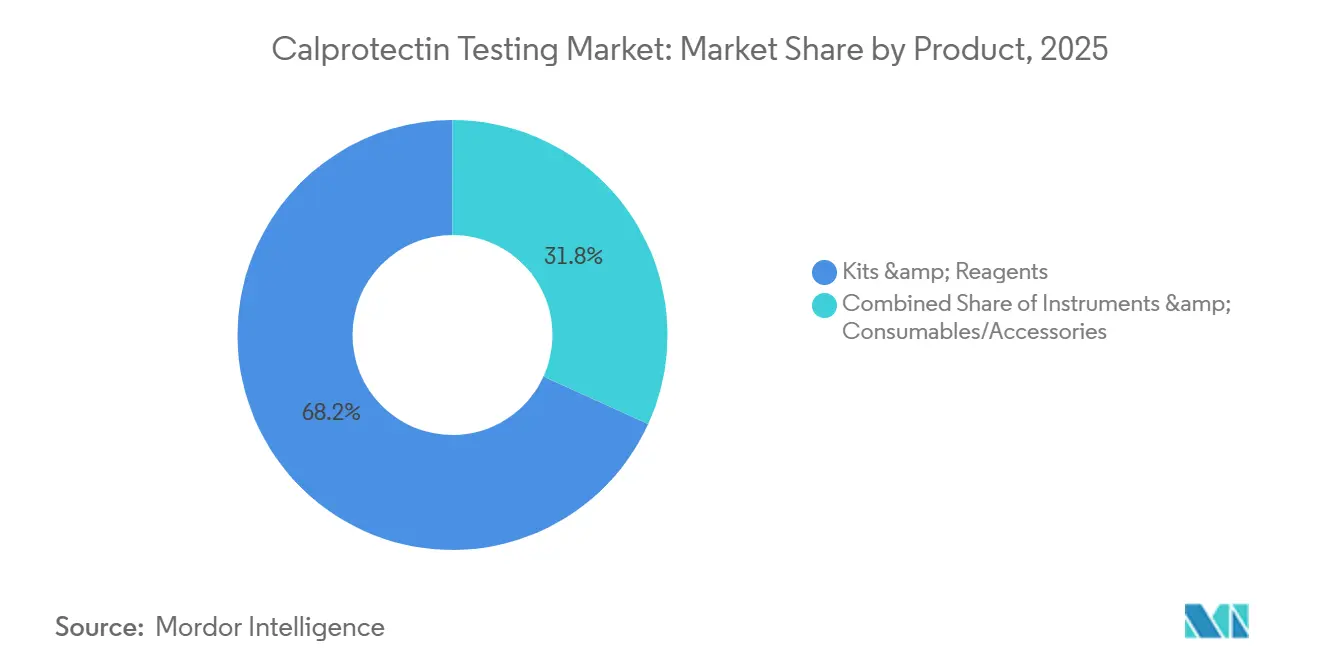
Reagents Support Recurring Revenue and Instruments Expand CapacityKits and reagents accounted for 68.2% of product revenue in 2025, while instruments are expected to grow at a 14.1% CAGR through 2031 in the Calprotectin testing market. Each instrument placement creates recurring demand for assay reagents over the operating life of the system. This consumable pull-through supports revenue after the initial capital purchase. Instruments grow as tertiary hospitals and regional reference laboratories add calprotectin-capable analyzers. The BÜHLMANN CALEX Cap 4.0 update extended extraction stability to 2 days at room temperature and 15 days under refrigeration. The company stated that the device has FDA 510(k) clearance and supports total laboratory automation.
Consumables and accessories remain necessary for each assay run. Extraction devices, preparation tubes, and quality-control materials add recurring demand alongside core kits. High-volume placements can make reagent relationships more defensible because customers face revalidation, staff training, and audit considerations when changing platforms. This favors suppliers with broad installed bases and validated workflows. The Calprotectin testing industry combines short-term consumable revenue with longer-term gains from instrument footprint expansion. This balance explains why reagent producers retain near-term revenue strength while analyzer placement remains important for share gains.
By End User:
Specialty Centers Increase Biomarker-Led CareDiagnostic laboratories held 48.6% of end-user revenue in 2025, while specialty centers are forecast to grow at a 14.3% CAGR through 2031 in the Calprotectin testing market. Laboratories benefit from centralized batch testing and existing analyzer infrastructure. Their volumes can increase as calprotectin is added to broader inflammatory testing menus. Specialty centers are growing faster because IBD-focused gastroenterology units use biomarker-guided monitoring protocols. A December 2025 study from Juntendo University Hospital evaluated 1,105 stool samples from 88 pediatric-onset IBD patients. It found that fecal calprotectin and lactoferrin correlated strongly with endoscopic findings across ulcerative colitis and Crohn’s disease.
Hospitals and clinics form a stable demand base because calprotectin is used alongside CRP and ESR in inpatient gastroenterology services. BSG guidance also supports testing before the start of biologic therapy. Research institutes are the smallest end-user group but shape future product development. DiaSorin registered the COMBI study, NCT07471490, to evaluate its LIAISON Calprotectin HD biomarker combination against colonoscopy findings in pediatric and adult populations. The study is intended to support FDA and CE-IVDR submissions for expanded indications. These users can influence how the Calprotectin testing market develops through evidence generation and protocol adoption.
Geography Analysis
North America Calprotectin Testing Market
North America held 40.3% of revenue in 2025, supported by high IBD prevalence, established billing infrastructure, and broad analyzer deployment. The United States led regional demand through repeat testing for diagnosis and monitoring. CPT code 83993 and guidance from the ACG and AGA support use at several points in IBD care. Canada’s IBD prevalence was 0.83% in 2025 and is projected to exceed 1.05% by 2043. This patient base supports steady specialty-center demand. Mexico is an emerging opportunity as private diagnostic chains add access in major urban centers before broad public inclusion.
Europe Calprotectin Testing Market
Europe is the second-largest regional market in the Calprotectin testing market and has a strong external quality assessment culture. The 2025 BSG guideline embedded calprotectin into lower gastrointestinal symptom pathways in the United Kingdom. An NHS service reported a digitally integrated home-testing case study in 2025, using smartphone transmission of lateral-flow results to clinical teams. Germany, France, Italy, and the Netherlands use centralized laboratory networks that favor high-throughput ELISA and turbidimetric formats. Poland’s rising IBD incidence aligns with the stage-2 pattern identified in the 2025 Nature analysis. Spain and Italy also have growing association activity around monitoring protocol standardization.
APAC, MEA and South America Calprotectin Testing Market
Asia Pacific is forecast to record a 14.5% CAGR through 2031, the fastest regional growth rate in the Calprotectin testing market. China is extending advanced diagnostic testing to tier-2 and tier-3 hospitals, while local suppliers develop lower-cost point-of-care formats and mid-tier analyzers. India is supported by expanding private laboratory chains and a larger gastroenterologist base serving historically underdiagnosed patients. Japan and South Korea show strong academic adoption. Japanese pediatric evidence linking fecal markers with endoscopic activity can support reimbursement submissions. GCC countries and South Africa are early entry points in the Middle East and Africa, while Brazil and Argentina lead early South American demand through private laboratories and academic gastroenterology networks.
Competitive Landscape
The Calprotectin testing market is moderately consolidated around BÜHLMANN Laboratories AG, DiaSorin, Thermo Fisher Scientific, Roche, and Abbott in centralized laboratory testing. Gentian Diagnostics, Calpro AS, Svar Life Science AB, BIOHIT Oyj, and Boditech Med are active in automated, point-of-care, and home-monitoring formats. Leading suppliers increasingly use platform partnerships instead of relying only on standalone analyzer launches. This approach places validated assays on systems already used by laboratories and can reduce commercial rollout time. Gentian’s March 2025 agreement with Beckman Colter extended GCAL access through an established global clinical chemistry network. The arrangement also broadened the assay’s use to plasma and serum.
BÜHLMANN has focused on reducing automation barriers through its CALEX Cap 4.0 extraction-device update. Longer extraction stability can improve compatibility with total laboratory automation and reduce the need for revalidation at existing customer sites. DiaSorin is pursuing a broader biomarker differentiation strategy through the COMBI study for LIAISON Calprotectin HD. The trial evaluates a multibiomarker combination against colonoscopy findings in the United States and Europe. Its planned FDA and CE-IVDR submissions could expand the test’s clinical indications. These moves show competition based on workflow access, clinical evidence, and expanded use cases.
Regulatory requirements are also becoming a barrier for smaller suppliers. FDA 510(k) clearance and CE-IVDR certification require clinical evidence and ongoing post-market support. Digital integration remains an open area because few platforms connect home or point-of-care results directly with electronic health records. The Southampton NHS model showed that real-time transfer of home-testing results to care teams is operationally feasible. Companies that combine validated assays with convenient data flow may be better placed in repeat monitoring. The supplier structure includes major centralized-laboratory vendors and active specialists in automated, point-of-care, and home-monitoring formats.
Calprotectin Testing Industry Leaders
-
DiaSorin S.p.A.
-
F. Hoffmann-La Roche Ltd
-
Abbott Laboratories
-
Bio-Rad Laboratories, Inc.
-
Thermo Fisher Scientific Inc.
- *Disclaimer: Major Players sorted in no particular order
Calprotectin Testing Market Companies Covered in this Report
- B�HLMANN Laboratories AG
- Eurospital S.p.A.
- Thermo Fisher Scientific
- DiaSorin
- Roche
- Abbott Laboratories
- Bio-Rad Laboratories
- R-Biopharm
- Svar Life Science AB
- Calpro AS
- ALPCO Diagnostics
- Sentinel Diagnostics S.p.A.
- Gentian AS
- Sysmex
- Boditech Med
- BIOHIT Oyj
- Biomerica
- Euroimmun Medizinische Labordiagnostika AG
- Immundiagnostik
- Diesse Diagnostica Senese S.p.A.
- Epitope Diagnostics
- DIAsource ImmunoAssays S.A.
- CerTest Biotec S.L.
- Beckton Dickinson
Recent Industry Developments in Calprotectin Testing Market
- July 2025: Gentian Diagnostics announced the commercial launch of its GCAL Calprotectin Immunoassay through Beckman Coulter Diagnostics on Beckman Coulter's clinical chemistry platforms globally. The particle-enhanced turbidimetric assay measures circulating calprotectin in plasma and serum, extending calprotectin monitoring beyond fecal matrices into rheumatology, acute care, and systemic inflammation applications
- December 2025: Prometheus Laboratories launched IBD Precis, a next-generation serologic IBD test that incorporates two novel UC-associated antibodies, anti-αvβ6 and PR3, alongside established proprietary serologies to distinguish Crohn's disease from ulcerative colitis and assess colonic involvement
- March 2026: DiaSorin registered the COMBI study, NCT07471490, on ClinicalTrials.gov, a prospective multicenter evaluation of the LIAISON Calprotectin HD multi-biomarker combination test in pediatric and adult IBD patients across the United States and Europe
- August 2026: Gentian Diagnostics confirmed participation at ADLM 2026 to showcase the GCAL Calprotectin Immunoassay for circulating calprotectin applications across inflammatory and rheumatic diseases
Global Calprotectin Testing Market Report Scope
| ELISA |
| Rapid Immunoassay |
| CLIA & Other Automated Assays |
| IBD Diagnosis |
| IBD Monitoring |
| IBS Differentiation |
| Other GI Disorders |
| Kits & Reagents |
| Instruments |
| Consumables & Accessories |
| Hospitals & Clinics |
| Diagnostic Laboratories |
| Specialty Centers |
| Research Institutes |
| North America | United States |
| Canada | |
| Mexico | |
| Europe | Germany |
| United Kingdom | |
| France | |
| Italy | |
| Spain | |
| Rest of Europe | |
| APAC | China |
| Japan | |
| India | |
| South Korea | |
| Australia | |
| Rest of Asia-Pacific | |
| Middle East and Africa | GCC |
| South Africa | |
| Rest of Middle East Africa | |
| South America | Brazil |
| Argentina | |
| Rest of South America |
| By Assay Type | ELISA | |
| Rapid Immunoassay | ||
| CLIA & Other Automated Assays | ||
| By Application | IBD Diagnosis | |
| IBD Monitoring | ||
| IBS Differentiation | ||
| Other GI Disorders | ||
| By Product | Kits & Reagents | |
| Instruments | ||
| Consumables & Accessories | ||
| By End User | Hospitals & Clinics | |
| Diagnostic Laboratories | ||
| Specialty Centers | ||
| Research Institutes | ||
| By Geography | North America | United States |
| Canada | ||
| Mexico | ||
| Europe | Germany | |
| United Kingdom | ||
| France | ||
| Italy | ||
| Spain | ||
| Rest of Europe | ||
| APAC | China | |
| Japan | ||
| India | ||
| South Korea | ||
| Australia | ||
| Rest of Asia-Pacific | ||
| Middle East and Africa | GCC | |
| South Africa | ||
| Rest of Middle East Africa | ||
| South America | Brazil | |
| Argentina | ||
| Rest of South America | ||
Key Questions Answered in the Report
What is driving demand for calprotectin testing?
Rising IBD prevalence, guideline-led triage, and repeat monitoring for biologic therapy are increasing testing demand.
What is the forecast growth rate for calprotectin testing through 2031?
The sector is projected to grow at a 13.7% CAGR from 2026 to 2031, reaching USD 1,233.3 million.
Which assay format is growing fastest?
CLIA and other automated assays are projected to grow at a 13.9% CAGR through 2031.
Why is fecal calprotectin used in IBD care?
It helps distinguish inflammatory from noninflammatory disease and supports monitoring without routine endoscopy.
Which region is growing fastest for calprotectin testing?
Asia Pacific is projected to grow at a 14.5% CAGR through 2031.
What limits wider adoption of calprotectin testing?
Cross-assay variation, uneven reimbursement, stool collection friction, and endoscopy-centered care models remain constraints.