
Brucellosis Vaccines Market Size and Share
Market Overview
| Study Period | 2020 - 2031 |
|---|---|
| Market Size (2026) | USD 290.06 Million |
| Market Size (2031) | USD 390.62 Million |
| Growth Rate (2026 - 2031) | 6.13 % |
| Fastest Growing Market | Asia-Pacific |
| Largest Market | North America |
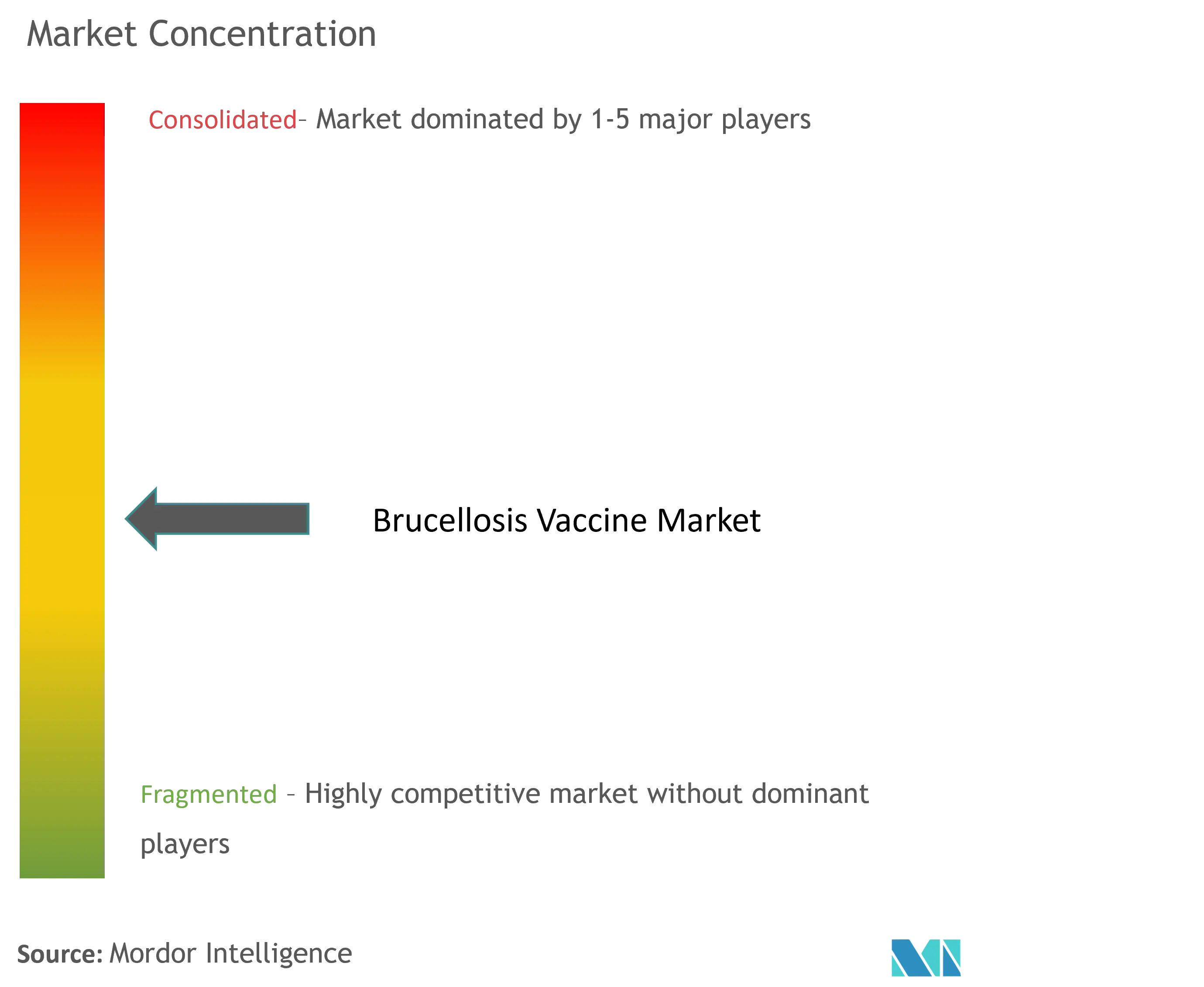
| Market Concentration | Medium |
Major Players *Disclaimer: Major Players sorted in no particular order Image © Mordor Intelligence. Reuse requires attribution under CC BY 4.0. | |
Brucellosis Vaccines Market Analysis by Mordor Intelligence
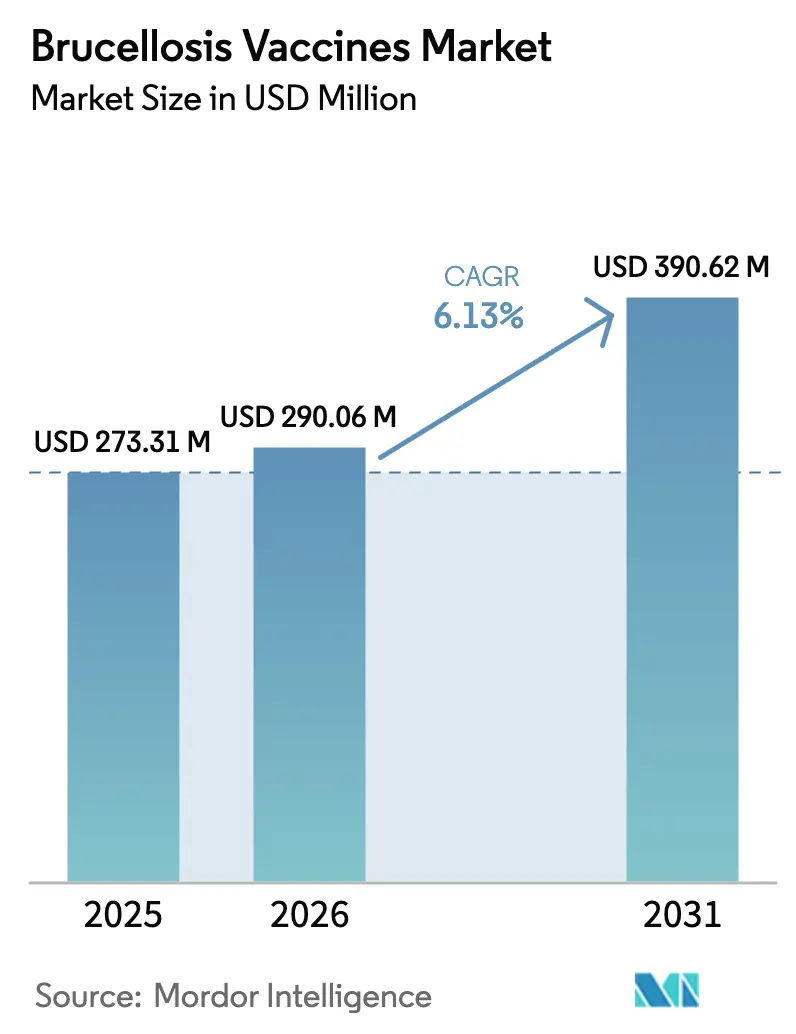
The brucellosis vaccines market size was valued at USD 273.31 million in 2025 and estimated to grow from USD 290.06 million in 2026 to reach USD 390.62 million by 2031, at a CAGR of 6.13% during the forecast period (2026-2031). Momentum comes from the growing recognition of brucellosis as a high-impact zoonosis that depresses livestock productivity and generates avoidable human illness costs. Policy-backed immunization programs, such as USDA’s Cooperative State-Federal effort and Canada’s province-level schemes, keep demand in developed economies resilient, while multilateral funds are widening access across lower-income regions. Intensifying livestock headcounts in South and Southeast Asia, rising consumer focus on milk and meat safety, and accelerated R&D in DNA and vector platforms collectively reinforce the long-run expansion of the brucellosis vaccines market. Strategic plant upgrades—illustrated by Merck Animal Health’s USD 895 million Kansas investment—are easing supply constraints and positioning leading producers to capture share when next-generation products clear regulators.
Key Report Takeaways
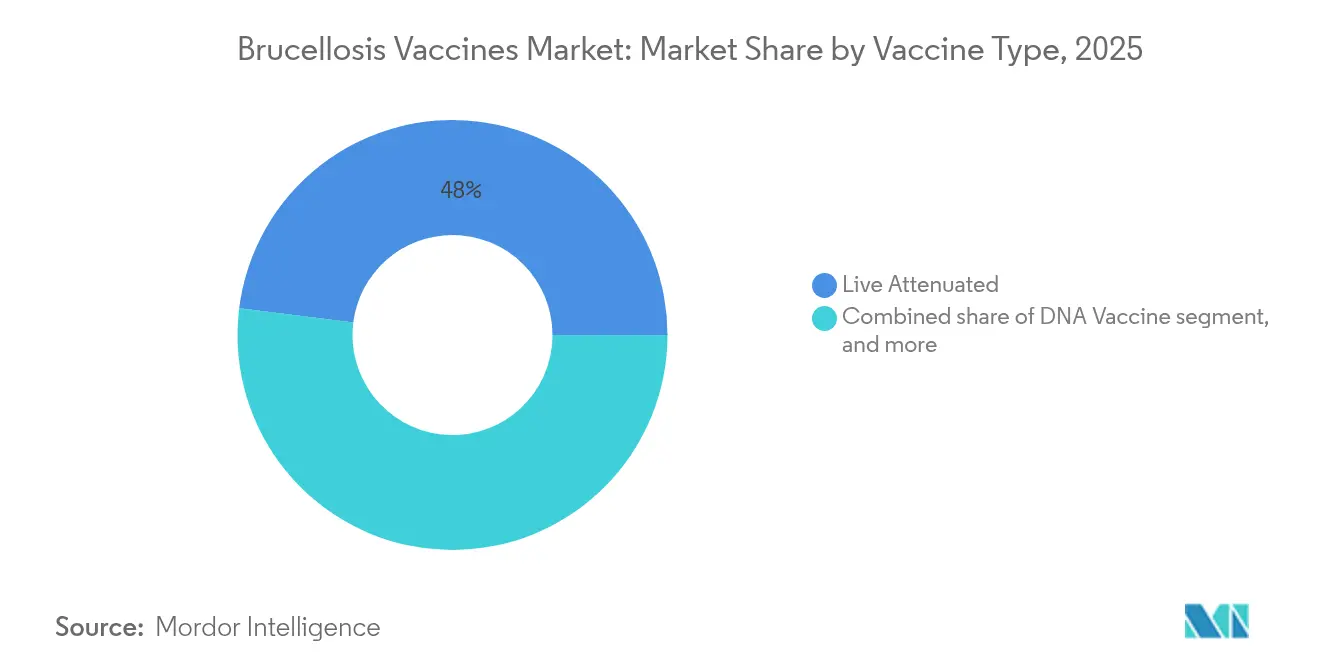
- By vaccine type, live attenuated products led with 48.02% of brucellosis vaccines market share in 2025, whereas DNA vaccines are on track for the fastest 8.21% CAGR to 2031.
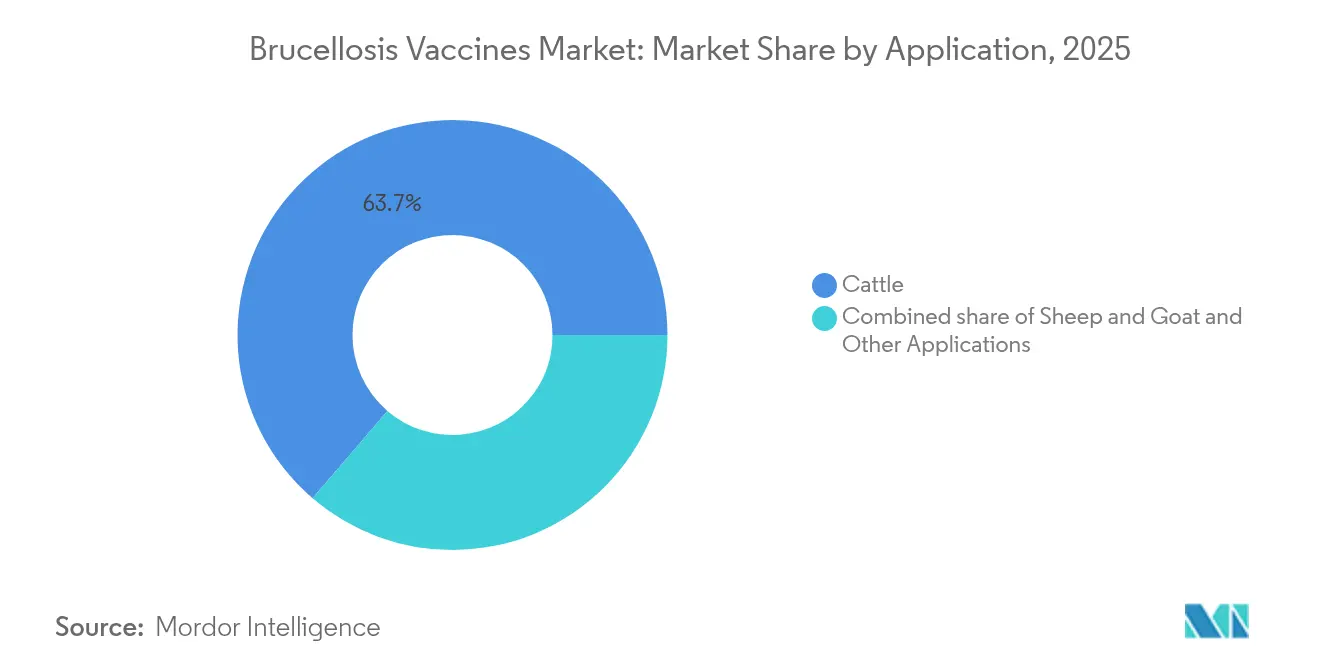
- By application, cattle commanded 63.72% share of the brucellosis vaccines market size in 2025; the sheep and goat segment is projected to expand at 9.32% CAGR through 2031.
- By end user, veterinary hospitals and clinics held 41.02% revenue share in 2025, while government and NGO campaigns record the highest 9.06% CAGR outlook.
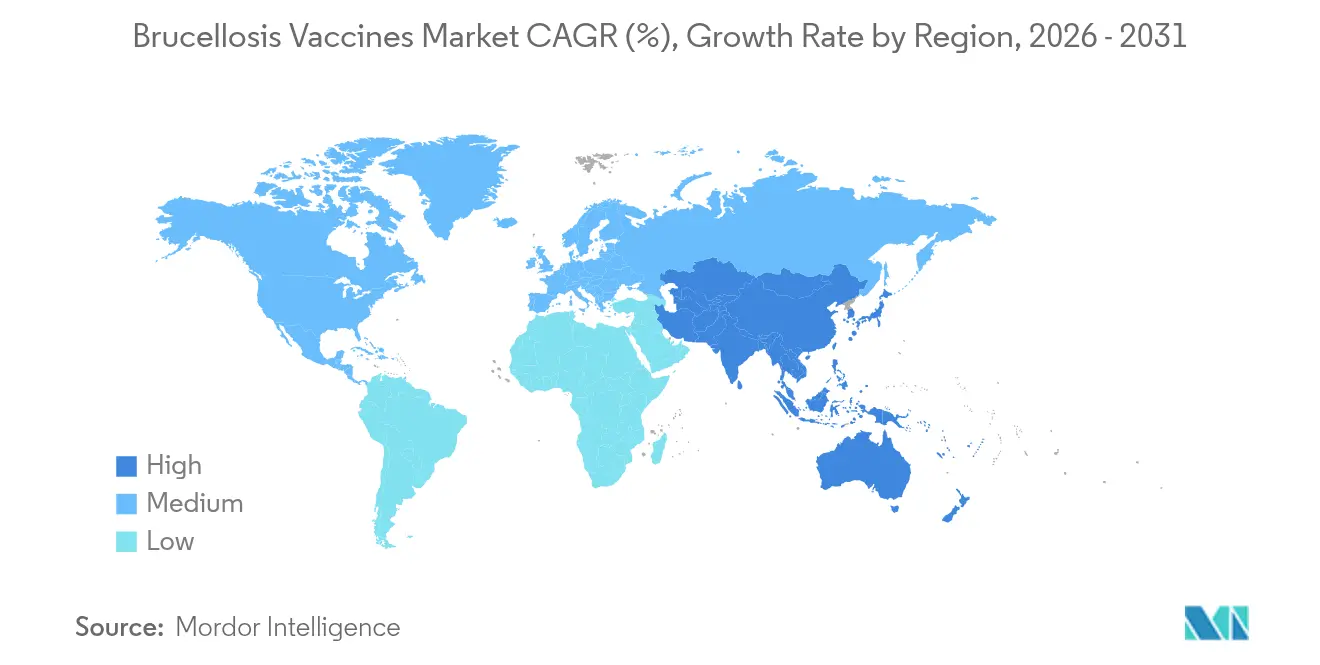
- By geography, North America accounted for 39.88% of the brucellosis vaccines market in 2025, whereas Asia-Pacific is advancing at a 7.42% CAGR through 2031.
Note: Market size and forecast figures in this report are generated using Mordor Intelligence’s proprietary estimation framework, updated with the latest available data and insights as of 2026.
Market Trends and Insights
Drivers Impact Analysis of Brucellosis Vaccines Market*
| Driver | % Impact on CAGR Forecast | Geographic Relevance | Impact Timeline |
|---|---|---|---|
| Increasing Incidence Of Brucellosis | +1.2% | Global, with highest impact in Asia-Pacific and Africa | Medium term (2-4 years) |
| Government Supported Livestock Vaccination Programs | +1.8% | North America, Europe, emerging markets in Asia-Pacific | Long term (≥ 4 years) |
| Rising Awareness Of Zoonotic Disease Risks | +0.9% | Global, particularly in developing countries | Medium term (2-4 years) |
| Growth In Global Livestock Population | +1.1% | Asia-Pacific, Latin America, Sub-Saharan Africa | Long term (≥ 4 years) |
| Technological Advancements In Vaccine Platforms | +0.7% | North America, Europe, with spillover to emerging markets | Long term (≥ 4 years) |
| Availability Of Funding And Incentive Initiatives | +0.5% | Global, with focus on low and middle-income countries | Short term (≤ 2 years) |
| Source: Mordor Intelligence | |||
Government-Supported Livestock Vaccination Programs
Public funding is reshaping market economics by underwriting large-scale immunization drives and stipulating vaccine quality standards. In the United States, the cooperative federal program has cut infected herds from 124,000 in 1956 to single-digit counts while sustaining 3.5 million calf doses each year. Gavi’s 2026-2030 blueprint replicates this template for lower-income regions, pairing grant finance with the African Vaccine Manufacturing Accelerator[1]. Cost-benefit analyses in India show vaccination benefit-cost ratios above 10 for cattle and above 20 for buffalo, creating powerful fiscal justification for budget allocations. Partnerships tested in West and Central Africa blend public oversight with private logistics, trimming wastage and improving farmer compliance.
Rising Awareness of Zoonotic Disease Risks
The pandemic experience sensitized policymakers and producers to cross-species threats, lifting demand for validated animal vaccines. Surveys in Ethiopia revealed 100% lack of brucellosis knowledge among smallholders despite measurable seroprevalence, prompting national education campaigns. Indian One Health studies documented dangerous Brucella abortus loads in raw milk, steering authorities toward combined vaccination-plus-consumer outreach models. Tajikistan’s 2023 response, which vaccinated 5,000 animals after coordinated messaging, highlights how awareness directly affects uptake. Malaysia quantified RM 200.6 million (USD 62.9 million) losses from brucellosis, reinforcing the public health case for prevention.
Growth in Global Livestock Population
Expanding herds in dairy-dominated South Asia and mixed crop-livestock zones of Southeast Asia intensify disease pressure and enlarge the brucellosis vaccines market. Smallholders in the Mekong corridor have lifted large-ruminant holdings during the past decade, yet bio-security remains inconsistent, sustaining vaccine demand. In Mexico’s Bajío, economic modeling shows goat vaccination generating USD 3.8 per head net present value over five years, but only when integrated with test-and-slaughter protocols. Comparable analyses across Latin America and East Africa confirm similar investment returns, motivating producers to cooperate with veterinary services.
Technological Advancements in Vaccine Platforms
Next-generation platforms are upgrading safety and regulatory compliance. The European Medicines Agency (EMA) issued final DNA vaccine guidelines in January 2025, clarifying data requirements for genome-integration risk and potency assays[2]. IgG-FC fused multiepitope constructs have demonstrated robust protection in murine models without live organism hazards. Bovine adenoviral vectors enable intranasal dosing that triggers mucosal and systemic immunity, addressing handling concerns in high-traffic cattle settings. Diagnostic convergence matters too: time-resolved fluorescence lateral-flow tests now reach sensitivities 12,800 times superior to rose Bengal, supporting DIVA compliance in the field.
Restraints Impact Analysis of Brucellosis Vaccines Market*
| Restraints Impact Analysis | (~) % Impact on CAGR Forecast | Geographic Relevance | Impact Timeline |
|---|---|---|---|
| Stringent Regulatory And DIVA Compliance Requirements | -0.8% | Global, with highest impact in North America and Europe | Long term (≥ 4 years) |
| Cold Chain And Distribution Constraints | -1.2% | Developing countries, rural areas globally | Medium term (2-4 years) |
| Safety Concerns Over Live Attenuated Vaccines | -0.6% | Global, particularly in regions with high human exposure risk | Medium term (2-4 years) |
| Limited Veterinary Infrastructure In Emerging Regions | -0.9% | Sub-Saharan Africa, rural Asia-Pacific, Latin America | Long term (≥ 4 years) |
| Source: Mordor Intelligence | |||
Cold Chain and Distribution Constraints
Temperature lapses destroy more than half of livestock vaccines shipped to remote areas, eroding program credibility and magnifying disease risk. Field work in India shows that newer solar refrigerators keep storage within range but cannot freeze ice packs for portable carriers, restricting last-mile reach. Economic reviews argue that reinforcing transport nodes may yield higher returns than solely chasing higher thermostability, because cold chain contributes a minor share to total vaccine delivery costs. Thailand’s Q-Mark standard for temperature-controlled transport sets a replicable benchmark for other tropical markets where supply integrity falters.
Stringent Regulatory and DIVA Compliance Requirements
Advanced platforms face multilayered approvals from agencies such as USDA’s Center for Veterinary Biologics, which enforces exhaustive purity, potency, and safety dossiers and vets every advertising claim. EMA’s DNA guidance adds demands for biodistribution and genome-integration studies, lengthening timelines and raising R&D budgets beyond reach for smaller innovators. DIVA protocols require paired diagnostics that distinguish infected from vaccinated animals; meeting these standards can force manufacturers to redesign antigen constructs or co-develop assay kits, adding years and millions to launch schedules. Global harmonization through VICH has reduced duplicate testing in major markets, yet gaps remain in Latin America and parts of Africa, complicating simultaneous registrations.
*Our forecasts treat driver/restraint impacts as directional, not additive. The impact forecasts reflect baseline growth, mix effects, and variable interactions.
Brucellosis Vaccines Market Segment Analysis
By Vaccine Type:
Innovation Fuels Gradual Shift from Live Attenuated DominanceLive attenuated formulations such as RB51 and Rev-1 supplied 48.02% of brucellosis vaccines market share in 2025 thanks to field-proven 70–80% protection and lower cost of goods. These attributes will sustain baseline demand, particularly where eradication campaigns still rely on existing infrastructure. DNA candidates, however, are climbing at an 8.21% CAGR and are expected to carve measurable chunks of the brucellosis vaccines market by 2031 because they meet DIVA requirements and eliminate human infection fears associated with accidental self-inoculation. The EMA guidance released in 2025 removes much of the regulatory ambiguity that once deterred investment, encouraging firms with plasmid or multiepitope constructs to scale up pilot runs.
Sub-unit and recombinant protein lines continue serving niche users who prioritize biosafety, although their market expansion is tempered by adjuvant dependencies and cold-chain sensitivity. Vector-based platforms using bovine adenoviruses are advancing through late-stage pre-clinical milestones and could achieve field approval within the next planning cycle, especially for intranasal cattle dosing that sidesteps needle use and simplifies mass administration. Collectively, these technology streams ensure that the brucellosis vaccines market retains a diverse product mix that can respond to differing regulatory climates and herd management realities.

By Application:
Small Ruminants Become the Standout Growth FrontierCattle immunization underpinned 63.72% of the brucellosis vaccines market size in 2025 on the back of decades-old eradication frameworks in North America and Europe and rising dairy herd upgrades in South Asia. Producers favor well-rehearsed schedules overseen by accredited veterinarians, and evidence from the United States shows roughly 3.5 million calves safeguarded annually with standardized tags and electronic record uploads. Yet small ruminant vaccination is accelerating at 9.32% CAGR, reflecting heightened concern over Brucella melitensis, which causes more severe human disease. Incentive contests such as the USD 30 million AgResults Brucellosis Vaccine Challenge channel funds toward safer Rev-1 replacements suitable for goat and sheep production in West Africa and Central Asi.
Economic modeling from Mexico’s small-scale goat systems confirms positive payback within five years, and similar analyses in North Africa suggest even faster returns where seroprevalence exceeds 8%. Wildlife vaccination remains a nascent field, but escalates in territories like the Greater Yellowstone Area, where elk and bison sustain sporadic spillover, reminding policymakers that full eradication demands cross-species vigilance.
By End User:
Public-Private Mechanics Diversify Delivery ChannelsVeterinary hospitals and clinics held 41.02% of total revenue in 2025, reflecting their gatekeeper position for prescription-only biologics, cold-chain custody, and official tagging. Their role will stay central as live vaccines still dominate—and professional oversight is compulsory to mitigate accidental exposure. Meanwhile, government and NGO campaigns log a 9.06% CAGR, mobilized by evidence that comprehensive coverage cuts human incidence and raises rural incomes. Tajikistan’s 2023 outbreak response is illustrative: a coordinated taskforce delivered more than 5,000 doses within weeks, arresting spread and boosting producer trust.
Animal breeding centers, though a smaller slice of the brucellosis vaccines market, are evolving into advanced bio-security hubs; large dairy collectives in India and China now bundle routine Brucella immunization with genomic selection programs, thereby enhancing both herd health and genetic merit in a single intervention cycle. These dynamics underscore how differentiated end-user strategies will underpin revenue diversification across the brucellosis vaccines industry.
Geography Analysis
North America Brucellosis Vaccines Market
North America controlled 39.88% of the brucellosis vaccines market in 2025, an outcome linked to long-running eradication programs, mandatory RFID tagging, and generous federal cost-sharing arrangements. While domestic cattle incidence has been squeezed to isolated wildlife-related flare-ups in the Greater Yellowstone Area, the region’s proactive surveillance keeps annual prophylactic demand steady. The United States retains a deep ecosystem of biologic manufacturers, contract research organizations, and university extension networks that collectively sustain innovation and high coverage.
APAC Brucellosis Vaccines Market
Asia-Pacific is the performance leader with a 7.42% CAGR outlook to 2031. India alone logs estimated brucellosis-linked economic losses of USD 3.4 billion per year, and recent cost-benefit assessments show vaccination can yield ratios above 20:1 for buffalo, prompting state governments to scale procurement. China’s concentration on protein security drives substantial investment in provincial Animal Husbandry Stations that bundle Brucella vaccination with TB and FMD programs, while Indonesia and Vietnam channel donor funds toward cold-chain reinforcement and farmer extension. The pace of herd expansion across ASEAN, particularly in small ruminants, guarantees a sizeable addition to the global brucellosis vaccines market.
EMEA and South America Brucellosis Vaccines Market
Europe, backed by EMA’s stringent biologics code and harmonized disease notification laws, serves as a center of excellence for advanced platform trials, though endemic prevalence is already low in EU dairy herds. Middle East and Africa exhibit heterogeneous adoption; however, donor-driven pilots such as AgResults and IDRC’s Livestock Vaccine Innovation Fund are catalyzing uptake among smallholders in Kenya, Nigeria, and Ethiopia. South America’s picture ranges from sophisticated control in Uruguay’s beef sector to higher prevalence pockets in the Andean highlands, supporting a mixed demand trajectory yet preserving upside for manufacturers willing to tailor pack sizes and formulations.
Regulatory Landscape
Brucellosis vaccines are regulated as veterinary biologicals by national competent authorities, with licensure tied to demonstrated purity, safety, potency, and efficacy and with labeling and advertising claims subject to review in stringent markets. In the United States, USDA APHIS Center for Veterinary Biologics regulates brucellosis products under 9 CFR, including prescriptive serial testing requirements for Brucella abortus vaccines (for example, 9 CFR 113.65) and official-use controls for RB51 in cattle within the Cooperative State-Federal Brucellosis Eradication Program.
Internationally, WOAH Terrestrial Manual standards for brucellosis diagnostics and vaccines provide the reference framework that many national programs align to, including recognized reference vaccines such as B. abortus S19 and RB51 and B. melitensis Rev.1. Regulatory pressure is increasingly shaped by DIVA compatibility and assay standardization, since eradication pathways depend on distinguishing infected from vaccinated animals, while a March 2026 Federal Register notice to revise and extend the information collection for the US Cooperative State-Federal program underscores ongoing compliance, traceability, and reporting requirements that influence procurement and field use.
Competitive Landscape
The brucellosis vaccines market shows moderate consolidation. Zoetis posted USD 9.3 billion total revenue in 2024, with livestock vaccines accounting for roughly one-third; its divestment of 37 medicated feed lines to Phibro refocuses capital on biologics R&D and manufacturing. Merck Animal Health’s USD 895 million Kansas facility expansion secures bulk antigen capacity and advanced fill-finish suites, helping buffer the sector against the Bangs vaccine shortage experienced in late 2024. Boehringer Ingelheim’s purchase of Saiba Animal Health adds virus-like particle technology that could spawn thermostable brucellosis candidates suitable for high ambient regions.
Second-tier players include Indian-based Indian Immunologicals and China’s Qingdao Vland, which concentrate on regional bulk supply contracts and increasingly co-license technology from multinationals to accelerate regulatory clearance. Collaborative ventures between Western IP holders and Asian manufacturers lower cost curves while spreading risk. At the same time, non-profit accelerators such as IDRC’s CAD 57 million Livestock Vaccine Innovation Fund are supplying grant capital to smaller biotech firms, offsetting the elevated proof-of-concept expenses associated with DIVA-enabled constructs.
Competitive advantages are shifting toward firms that combine versatile platform technologies with validated cold-chain service packages. Field data analytics—delivered via cloud dashboards and farm-level mobile apps—are gaining traction as differentiators, because they let manufacturers prove real-world efficacy and fine-tune batch planning. Regulatory agility also counts: companies with dedicated liaison units reduce dossier-to-license cycles by exploiting the mutual recognition channels now emerging among ASEAN members, Mercosur, and the Tripartite Alliance in Africa.
Brucellosis Vaccines Industry Leaders
-
Ceva Santé Animale
-
Zoetis Inc.
-
Merck Animal Health
-
Boehringer Ingelheim Animal Health
-
Indian Immunologicals Ltd
- *Disclaimer: Major Players sorted in no particular order
Brucellosis Vaccines Market Companies Covered in this Report
- Ceva
- Zoetis
- Merck
- Boehringer Ingelheim
- Indian Immunologicals
- Colorado Serum Company
- CZ Vaccines (Zendal)
- Jordan Bio-Industries Center (JOVAC)
- Laboratories Tornel
- Hester Biosciences
- Biogénesis Bagó
- Vaxxinova
- Elanco
- Phibro Animal Health
- Chengdu Tecon Biologic
- China Animal Husbandry Group (CAHG)
- Shenyang Weiyuan Biopharmaceutical
- Anigen (Korea)
Market Opportunities and Future Outlook
The main white-space centers on safer, DIVA-aligned products and companion diagnostics that reduce the operational trade-offs of live attenuated vaccination in cattle and small ruminants. EMA finalizing guidance on plasmid DNA vaccines in veterinary use in January 2025 supports a clearer development and registration path for DNA and other next-generation constructs, while WOAH standards continue to anchor country control programs that require validated vaccine and test performance to support surveillance-to-elimination transitions.
In endemic geographies, program execution and capability building create a near-term opportunity for suppliers that can combine vaccine supply with surveillance, cold-chain, and training packages. FAO commenced a brucellosis control capacity-strengthening project in Kazakhstan in March 2026 (running through March 2027) and hosted a January 2026 technical webinar on translating surveillance and vaccination evidence into practice, indicating active demand for standardized vaccination plus monitoring approaches. On the innovation side, preclinical work published in 2026, including a markerless deletion mutant vaccine candidate reported in npj Vaccines (A19Δbpe275), supports a pipeline aimed at improved safety profiles and reduced diagnostic interference, which can strengthen longer-term differentiation beyond legacy S19, Rev.1, and RB51 reference benchmarks.
Recent Industry Developments in Brucellosis Vaccines Market
- April 2026: Zoetis highlighted a portfolio shift toward genomics and vaccines for emerging diseases, after previously exiting foot-and-mouth disease vaccine production in 2021. The repositioning indicates capital and R&D prioritization toward faster-cycle biologics and enabling tools that can translate into adjacent livestock vaccine innovation and partnering activity.
- February 2025: Elanco signed an agreement with Medgene to commercialize a highly pathogenic avian influenza vaccine for dairy cattle, pending USDA conditional approval. The agreement reflects broader acceleration in large-animal vaccine commercialization pathways and regulatory engagement, with potential spillover into procurement and manufacturing prioritization across livestock biologics.
- November 2024: Ceva Animal Health announced an investment in a new 7,000 square meter vaccine manufacturing plant in Monor, Hungary, with operations planned to begin at the end of 2026. Additional European capacity supports supply resilience for animal vaccines and strengthens the regional manufacturing base that can serve both routine and outbreak-driven immunization demand.
Brucellosis Vaccines Market Report Scope and Research Methodology
Market Definition and Coverage
The brucellosis vaccine market is defined as revenues earned from vaccines used to prevent brucellosis across relevant animal species, counted at the point of sale to veterinary end users and public vaccination programs, and tracked across major regions.
Scope exclusions: We exclude human therapeutics, diagnostic tests, and broader livestock health products that are not vaccines for brucellosis.
Segments Covered in This Report
- By Vaccine Type
- Live Attenuated
- DNA Vaccine
- Sub-unit / Recombinant Protein
- Vector-Based / Viral-Vectored
- By Application
- Cattle
- Sheep & Goat
- Other Applications
- By End User
- Veterinary Hospitals & Clinics
- Animal Care / Breeding Centres
- Government & NGO Vaccination Campaigns
- Geography
- North America
- United States
- Canada
- Mexico
- Europe
- Germany
- United Kingdom
- France
- Italy
- Spain
- Rest of Europe
- Asia-Pacific
- China
- Japan
- India
- Australia
- South Korea
- Rest of Asia-Pacific
- Middle East & Africa
- GCC
- South Africa
- Rest of Middle East & Africa
- South America
- Brazil
- Argentina
- Rest of South America
- North America
Data Sources, Market Sizing, and Validation
Desk Research
Desk research started with the disease and livestock context, since vaccination demand follows animal population risk and control policy. We reviewed public sources such as the World Organisation for Animal Health (WOAH) for disease notifications, FAO livestock statistics for herd and flock baselines, and WHO pages for zoonosis context and control approaches.
To convert that context into a workable sizing model, we also used sources such as USDA and other agriculture ministry publications for program signals, national veterinary service updates, and procurement notes. Peer reviewed veterinary journal papers were used to understand vaccine types in use, dosing practices, and adoption constraints. Company filings, investor presentations, and reputable press were screened for manufacturing additions and distribution changes, and we also referenced paid databases for company financials, patent signals, and import-export shipment level checks where applicable. The desk sources listed here are illustrative, and other public references were used for data collection, validation, and clarification.
Primary Interviews and Surveys
Primary work focused on validating what is actually purchased and used, and why volumes shift across years. We spoke with vaccine manufacturers, distributors, veterinary hospital and clinic networks, government and NGO program stakeholders, and field veterinarians across key livestock regions, so assumptions on coverage, dosing schedules, and pricing could be corrected and then rechecked.
Distribution of primary research fieldwork respondents
| Company type | Respondent position | Region |
|---|---|---|
| Top tier: 25% | CXOs: 19% | APAC: 45% |
| Mid tier: 56% | Functional/Unit leaders: 26% | EMEA: 36% |
| Smaller Players: 19% | Managers: 55% | Americas: 19% |
Market-Sizing & Forecasting
Sizing was built using a top-down demand pool approach, where livestock populations, disease control intensity, and vaccination coverage targets are translated into addressable doses and then into value using realistic pricing bands. The model was then stress tested with selective bottom-up checks, such as supplier and channel reviews on annual volumes, and sampled ASP checks by vaccine type and geography.
Key inputs included livestock populations for cattle and small ruminants, the mix of vaccine types used (including the shift between live attenuated and newer platforms), dosing and revaccination practices, public program share versus private clinic demand, and regional policy signals that influence campaign timing. Where direct volume visibility was weak, gaps were handled using proxy indicators like historical campaign cadence, tender activity signals, and distributor feedback on stock movement. These proxies were then normalized to avoid double counting.
For forecasting, scenario analysis was used because demand can step up or pause based on outbreak pressure and campaign funding, and then a light multivariate regression was applied to link growth to livestock base trends and expected coverage progression. Assumptions on ASP movement were kept conservative and were revised only when primary feedback confirmed persistent price changes, for example, related to raw material constraints or product upgrades.
Data Validation & Update Cycle
Outputs were cross checked against independent signals, including regional vaccination program visibility, company level revenue direction, and internal consistency with the share splits implied by end user and species adoption. Any large variance triggered a second pass on units, currency conversions, and timing alignment, followed by a focused re-contact with interviewees to confirm what changed and what remained stable.
Before sign off, the model and assumptions go through multi step analyst reviews so formula errors and unrealistic growth jumps get caught early. The report is refreshed annually, and interim updates are made when material events occur such as major regulatory actions, plant expansions, or sudden disease pattern changes. Right before delivery, a final update pass is completed so clients receive the latest available view.
Mordor Intelligence's Brucellosis Vaccine Market Estimate Compared With Other Published Estimates
Published market values for brucellosis vaccines often look different because the underlying count can change depending on what is included, how vaccination coverage is assumed, and which year is treated as the starting point. Differences also show up when one source uses list prices and another uses realized prices, and when exchange rates are taken from different months.
In this market, the biggest gaps usually come from scope decisions, especially whether adjacent animal vaccines are bundled in, whether only live vaccines are counted, and whether government and NGO campaigns are measured as actual doses administered or as planned program targets. Another common driver is the forecasting stance, where some estimates assume uninterrupted campaign expansion, while others bake in funding pauses and uneven compliance across cattle, sheep, and goats, which can change the value outcome.
Benchmark comparison
| Source | Market Size | Gaps in Research Methodology |
|---|---|---|
| Mordor Intelligence | USD 273.31 M (2025) | |
| Trade Journal A | USD 224.64 M (2022) | This figure reflects an earlier base year and is commonly repeated from press coverage, so it may not capture later shifts in campaign cadence, regional mix changes, or product mix movement toward higher priced newer platforms. |
| Industry Publisher B | USD 199.00 M (2024) | This estimate is limited to live brucellosis vaccines, which pulls the total down by excluding non-live platforms and by applying a narrower product scope than an all vaccine type market view. |
The table shows that timing and scope explain most of the spread, since older-year values and live-only definitions tend to understate today's demand environment. By keeping cattle and small ruminant dose assumptions tied to program reality and separating live, DNA, and other vaccine types with consistent ASP logic, the approach stays traceable to clear inputs, which is the practical difference applied by Mordor Intelligence.
Key Questions Answered in the Report
What is the current size of the brucellosis vaccines market?
The brucellosis vaccines market size is USD 290.06 million in 2026 and is projected to grow to USD 390.62 million by 2031.
Which region is expanding the fastest?
Asia-Pacific is the fastest-growing region, registering a 7.42% CAGR through 2031 on the back of rising livestock numbers and greater disease-control funding.
Which vaccine type is gaining quickest adoption?
DNA vaccines post the highest 8.21% CAGR forecast because they meet DIVA standards and eliminate live-organism safety concerns.
How concentrated is the supplier landscape?
The market is moderately concentrated; the top five companies hold about 60% of sales, yielding a concentration score of 6.
What are the main barriers to wider vaccine use in developing countries?
Cold-chain gaps and limited veterinary infrastructure cause over 50% vaccine wastage in low-income settings, restricting effective coverage.
Why are small ruminants seen as a high-growth segment?
Sheep and goats now receive greater policy focus because Brucella melitensis is a serious human pathogen, and vaccination delivers strong economic returns for smallholders.