
Market Overview
| Study Period | 2021 - 2031 |
|---|---|
| Forecast Data Period | 2026 - 2031 |
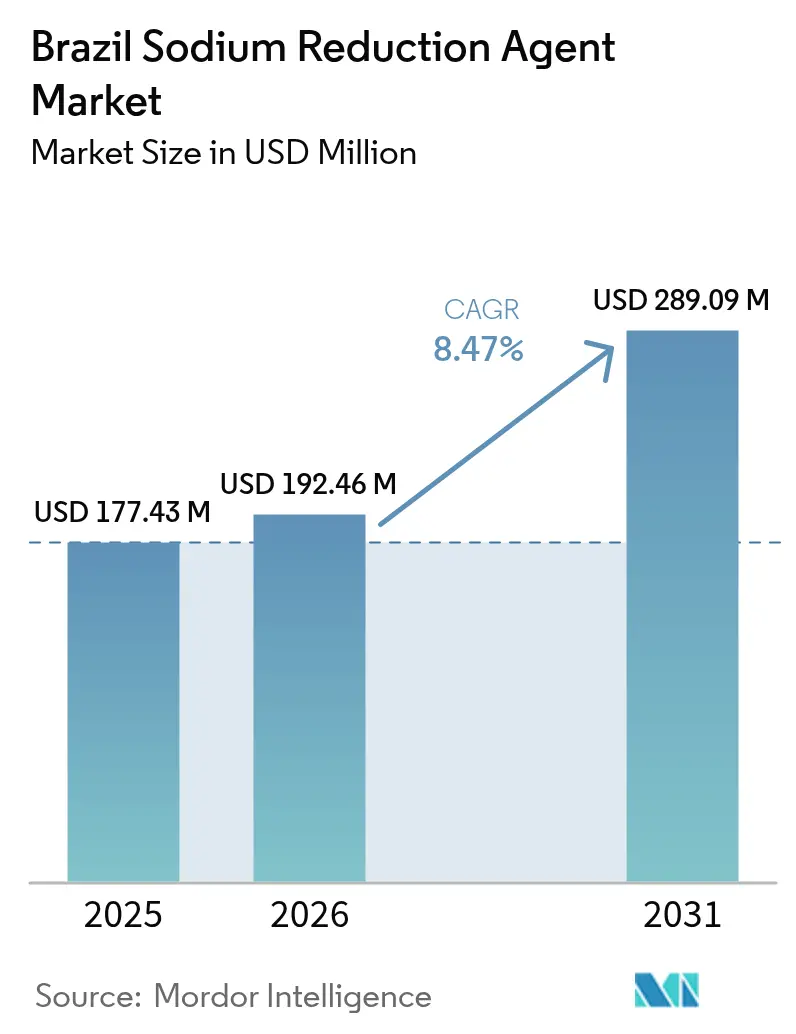
| Base Year Market Size (2025) | USD 177.43 Million |
| Market Size (2026) | USD 192.46 Million |
| Market Size (2031) | USD 289.09 Million |
| Growth Rate (2026 - 2031) | 8.47 % |
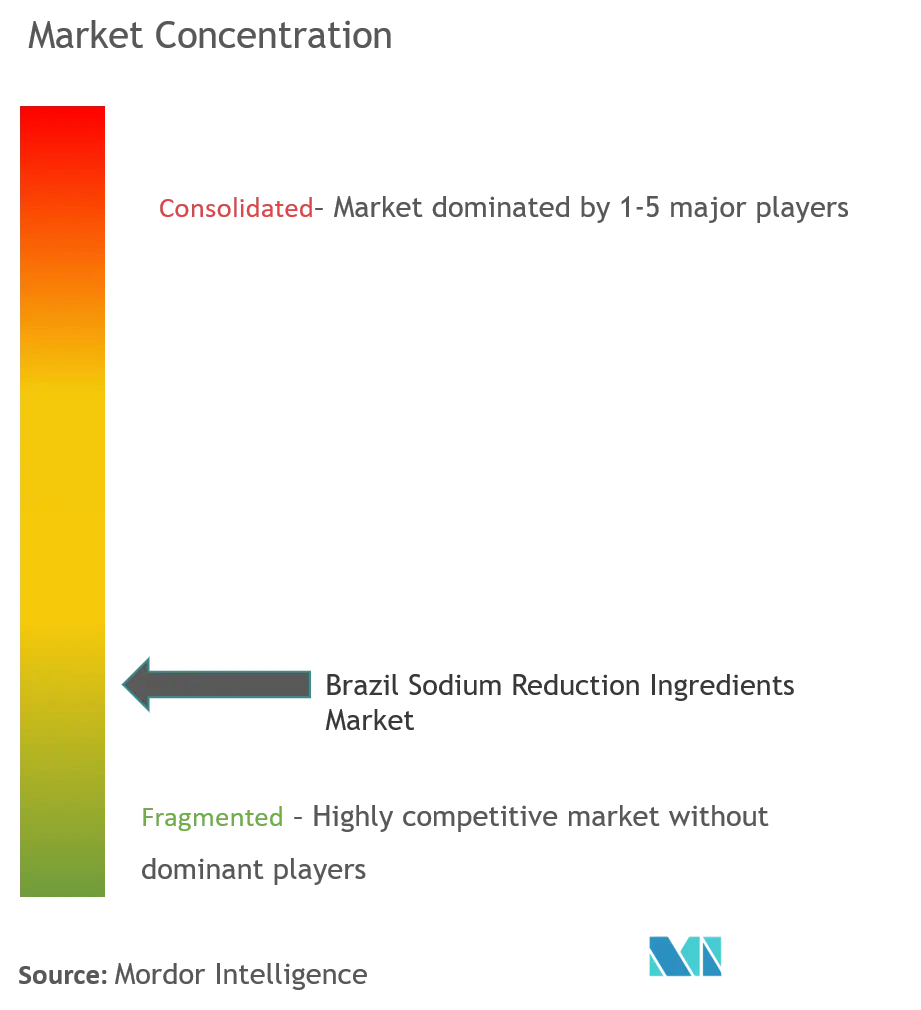
| Market Concentration | Medium |
Major Players *Disclaimer: Major Players sorted in no particular order Image © Mordor Intelligence. Reuse requires attribution under CC BY 4.0. | |
Brazil Sodium Reduction Agent Market Analysis by Mordor Intelligence
The Brazil sodium reduction agents market size was valued at USD 177.43 million in 2025 and estimated to grow from USD 192.46 million in 2026 to reach USD 289.09 million by 2031, at a CAGR of 8.47% during the forecast period (2026-2031). This growth is driven by stringent regulatory measures, a significant national burden of hypertension, and ongoing reformulation efforts within Brazil's food-processing industry. The implementation of front-of-pack warning labels by the National Health Surveillance Agency (ANVISA), along with voluntary sodium-reduction targets, has accelerated reformulation timelines, particularly for high-sodium processed meats and convenience foods. Ingredient suppliers are enhancing application-laboratory support to help food processors address challenges related to sensory attributes, texture, and shelf life when replacing sodium chloride with alternatives such as mineral salts, yeast extracts, and fermentation-derived compounds. Collaborations between multinational ingredient companies and local producers are expanding access to technical expertise. Additionally, functional-food positioning allows processors to offset higher ingredient costs through premium pricing. These factors collectively support the growth of the Brazil sodium reduction agents market in the medium term.
Key Report Takeaways
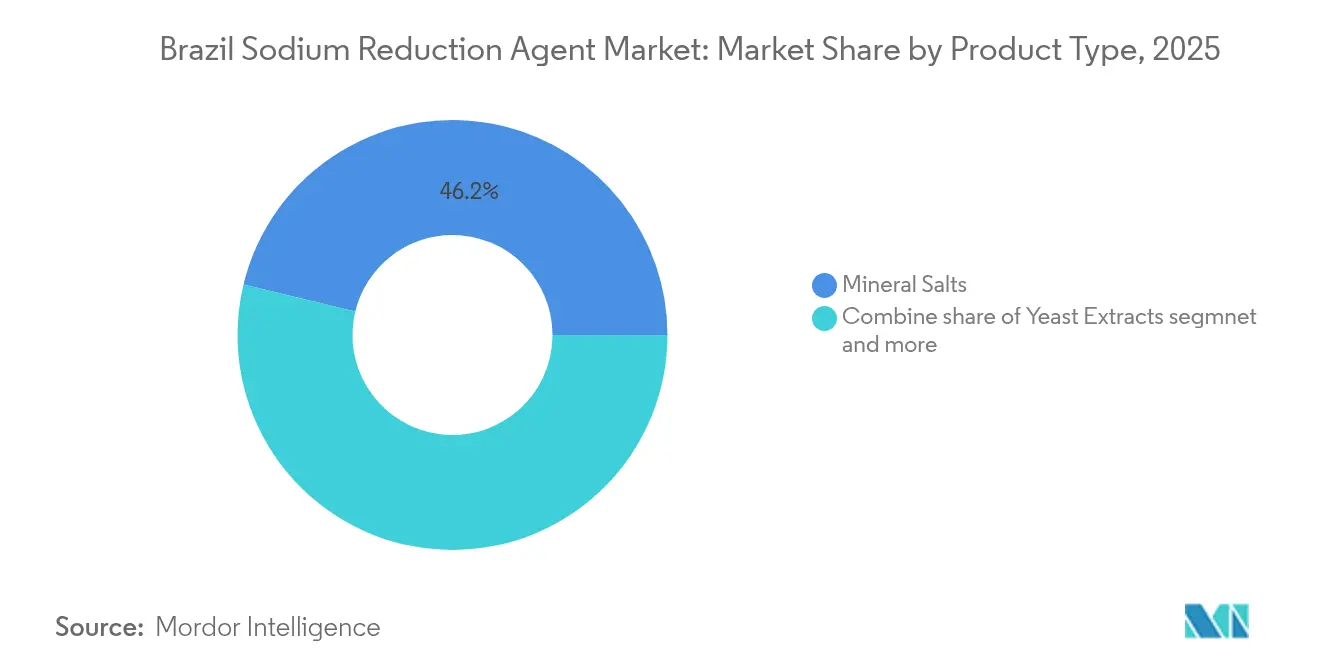
- By product type, mineral salts led with 46.22% of the Brazil sodium reduction agents market share in 2025, while yeast extracts are forecast to post the fastest 9.58% CAGR through 2031.
- By form, powders and granules accounted for 66.10% of the Brazil sodium reduction agents market size in 2025; liquid concentrates are projected to expand at a 9.62% CAGR between 2026-2031.
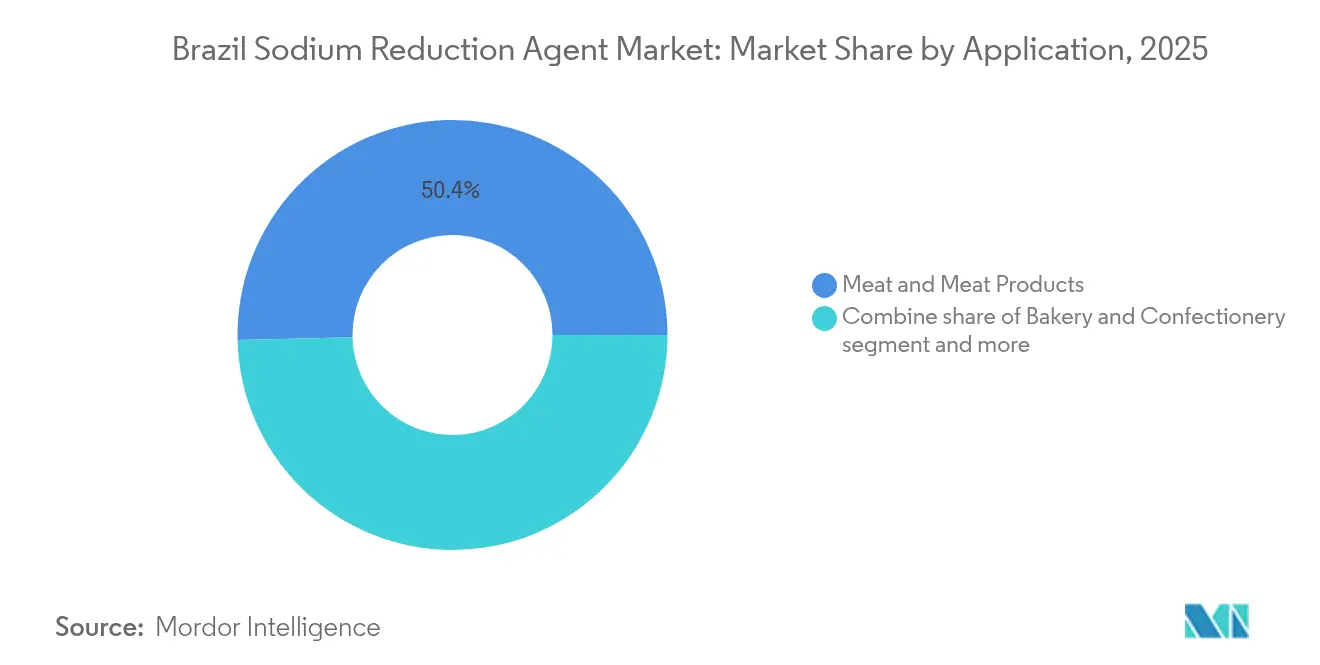
- By application, meat and meat products held 50.37% of the Brazil sodium reduction agents market share in 2025 and are advancing at a 9.74% CAGR through 2031.
Note: Market size and forecast figures in this report are generated using Mordor Intelligence’s proprietary estimation framework, updated with the latest available data and insights as of 2026.
Brazil Sodium Reduction Agent Market Trends and Insights
Drivers Impact Analysis*
| Driver | (~)% Impact on CAGR Forecast | Geographic Relevance | Impact Timeline |
|---|---|---|---|
| Rising prevalence of hypertension and cardiovascular diseases | +1.8% | National, with higher burden in urban centers (São Paulo, Rio de Janeiro, Belo Horizonte) | Medium term (2-4 years) |
| Growing consumer awareness about sodium-related health risks | +1.5% | National, accelerated by front-of-pack labeling in retail channels | Short term (≤ 2 years) |
| Expansion of ultra-processed food consumption | +1.3% | Urban and peri-urban areas, youth and middle-income segments | Medium term (2-4 years) |
| Natural and clean-label ingredient preferences | +1.6% | National, strongest in premium and organic retail segments | Long term (≥ 4 years) |
| Partnerships and collaborations between manufacturers and ingredient suppliers | +1.2% | National, concentrated in São Paulo industrial corridor | Medium term (2-4 years) |
| Development of functional foods and fortified products | +1.1% | National, with early adoption in sports nutrition and wellness categories | Long term (≥ 4 years) |
| Source: Mordor Intelligence | |||
Rising prevalence of hypertension and cardiovascular diseases
Hypertension affects nearly one-third of Brazilian adults and is the leading cause of disability-adjusted life years lost, surpassing the impact of tobacco use and elevated fasting plasma glucose levels. The average daily sodium intake in Brazil is approximately nine grams, nearly double the limit recommended by the World Health Organization (WHO). Studies reveal that about 15% of cardiovascular-related deaths in the country are linked to excessive salt consumption. Urban areas such as São Paulo, Rio de Janeiro, and Belo Horizonte report higher hypertension rates, primarily due to increased reliance on processed foods. This trend presents a significant market opportunity for sodium-reduction agents in retail and food-service channels. The Brazilian Ministry of Health introduced voluntary sodium-reduction targets in 2011, which were updated in 2024. However, compliance has been limited, leading the National Health Surveillance Agency (ANVISA) to adopt mandatory front-of-pack labeling as a more effective regulatory measure[1]. This shift is accelerating reformulation efforts, with food processors that had previously delayed investments now exploring alternatives such as potassium chloride blends and yeast extracts to avoid high-sodium warnings on packaging. The link between hypertension prevalence and ingredient demand is evident: each percentage-point reduction in sodium content necessitates substitution with mineral salts, amino acids, or flavor enhancers, transforming a public health challenge into a driver of market demand.
Growing consumer awareness about sodium-related health risks
Front-of-pack warning labels became mandatory in October 2023. A March 2024 Bain survey revealed that 56% of shoppers noticed the high-sodium magnifying-glass icon, and 46% adjusted their purchasing behavior. The strongest response was observed among women aged 25-44 and households with children. This heightened awareness is shortening the reformulation timeline for brands. Companies that fail to remove the warning risk losing shelf space to private-label and premium competitors that have already reformulated their products. For instance, Knorr's introduction of a zero-salt bouillon cube in Brazil demonstrates proactive adaptation, utilizing yeast extracts and vegetable powders to achieve umami flavor without exceeding the 600 milligrams per 100 grams sodium threshold. Social media is amplifying the impact of these labels as consumers share images of high-sodium products, creating reputational risks that extend beyond the point of sale. This increased awareness is also segmenting the market. Premium segments are adopting clean-label solutions, such as yeast extracts and fermented ingredients, while value-tier products are relying on lower-cost potassium chloride blends, often combined with masking agents to reduce metallic off-notes. This dual approach is driving volume growth in both mineral-salt and yeast-extract categories, as manufacturers align their formulations with specific price points and brand strategies.
Expansion of ultra-processed food consumption
Ultra-processed foods contribute significantly to the total energy intake in Brazil, with higher consumption levels observed among urban populations and younger age groups. These food categories, including packaged snacks, ready meals, condiments, and processed meats, contain the highest sodium levels, making reformulation efforts a key focus. A paradox arises as the growing consumption of ultra-processed foods simultaneously increases hypertension rates and the demand for sodium-reduction agents. While sodium content per serving may decrease, the overall volume of sodium requiring substitution rises due to increased consumption. Brazil's food-processing industry has witnessed substantial growth, driven by strong demand for convenience-focused products aligned with dual-income households and urbanization trends [2]. Food processors are prioritizing sodium reduction during the development of new products rather than reformulating existing stock-keeping units (SKUs). This strategy is shaped by front-of-pack labeling requirements at product launch, as reformulating products after launch entails costly re-registration with the National Health Surveillance Agency (ANVISA). By incorporating sodium-reduction agents into research and development processes, food processors are ensuring consistent demand. New products, such as snack bars, instant noodle variants, and frozen entrées, are designed to meet sodium thresholds from the outset.
Natural and clean-label ingredient preferences
Clean-label demand is influencing ingredient selection, with yeast extracts emerging as a preferred alternative to monosodium glutamate in premium meat, sauce, and snack formulations. Yeast extracts, containing 5% free glutamic acid, can reduce sodium content by up to 50% when used at rates of 0.5-2%. Brazilian consumers are increasingly attentive to ingredient lists, particularly avoiding synthetic additives, a trend driven by social media influencers and wellness-oriented retail chains like Mundo Verde and Hortifruti. Yeast extracts meet both sodium-reduction and clean-label requirements as they are derived from Saccharomyces cerevisiae fermentation and lack an E-number designation, enabling "natural flavor" claims on product packaging. This dual functionality is a key factor behind the projected 10.10% compound annual growth rate (CAGR) of yeast extracts through 2030, surpassing mineral salts despite a smaller base in 2024. ProVerde's planned May 2024 launch of a fermented-bean protein concentrate, which combines umami flavor with plant-based protein fortification, highlights the growing demand for multifunctional ingredients [3]. These ingredients address multiple consumer priorities, including sodium reduction, protein enrichment, and sustainability, within a single product declaration. Additionally, processors targeting export markets, particularly in the European Union where clean-label standards are more stringent, are increasingly adopting yeast extracts and fermented peptides. This trend is creating a premium quality tier that supports margin growth for ingredient suppliers.
Restraints Impact Analysis*
| Restraint | (~)% Impact on CAGR Forecast | Geographic Relevance | Impact Timeline |
|---|---|---|---|
| High cost of reformulation and research and development investment | -1.4% | National, most acute for small and mid-sized processors outside São Paulo | Short term (≤ 2 years) |
| Regulatory complexity and evolving standards across product categories | -0.9% | National, with category-specific thresholds creating compliance fragmentation | Medium term (2-4 years) |
| Supply chain constraints and ingredient availability | -0.7% | Regional, concentrated outside São Paulo and Rio de Janeiro distribution hubs | Short term (≤ 2 years) |
| Competing flavor enhancement alternatives | -0.6% | National, with premium segments adopting fermentation-derived peptides and taste modulators | Long term (≥ 4 years) |
| Source: Mordor Intelligence | |||
High cost of reformulation and research and development investment
Reformulation cycles for sodium reduction involve sensory panels, shelf-life testing, and pilot production runs, with costs ranging from USD 50,000 to USD 200,000 per stock-keeping unit. These costs pose a significant challenge for small and mid-sized processors, which often operate on narrow margins and have limited access to affordable capital. Potassium chloride is two to three times more expensive per kilogram than sodium chloride, while yeast extracts are priced even higher, at USD 8 to USD 12 per kilogram compared to USD 0.30 for table salt. These cost differences reduce gross margins unless processors can pass the additional expenses on to retail or food-service buyers. As a result, many smaller manufacturers are postponing reformulation efforts, waiting for competitors to initiate a market-wide shift. This creates a prisoner's dilemma, slowing the overall adoption rates. Geographical disparities further intensify the challenge. Processors in São Paulo and Rio de Janeiro benefit from proximity to ingredient suppliers' application laboratories and pilot facilities, which helps reduce logistics costs. On the other hand, processors in the Northeast and Central-West regions face higher freight expenses and longer lead times, increasing the reformulation gap between urban and regional producers. This cost imbalance is consolidating market share among larger, well-capitalized companies that can manage the upfront investment and distribute it across high-volume stock-keeping units.
Regulatory complexity and evolving standards across product categories
ANVISA's (Agência Nacional de Vigilância Sanitária) front-of-pack labeling regulation establishes varying sodium thresholds based on product categories, such as 600 mg per 100 g for solids and 300 mg per 100 ml for liquids. Additionally, processors must adhere to category-specific standards for products like meat, dairy, and bakery goods, each governed by distinct technical regulations. This fragmented approach increases compliance costs. For example, a processor with stock-keeping units (SKUs) across snacks, sauces, and frozen meals must reformulate to meet three separate targets, often requiring different sodium-reduction agents and dosing protocols for each category. The regulatory environment is also subject to change, as ANVISA periodically revises thresholds based on population sodium-intake surveys. This creates uncertainty, discouraging long-term investments in reformulation. In the first year following the October 2023 mandate, only 12.9% of products displayed compliant labels, highlighting the gap between regulatory objectives and industry readiness. Processors are advocating for harmonized thresholds and extended phase-in periods. However, until such changes are implemented, the complexity of compliance will continue to hinder adoption rates, particularly for smaller firms lacking expertise in regulatory affairs.
*Our forecasts treat driver/restraint impacts as directional, not additive. The impact forecasts reflect baseline growth, mix effects, and variable interactions.
Segment Analysis
By Product Type: Yeast Extracts Lead Innovation Despite Mineral Salts Dominance
Mineral salts accounted for 46.22% of the projected 2025 revenue, driven by the cost-effectiveness and established use of potassium chloride in meat processing, bakery, and dairy applications. Potassium chloride can directly substitute sodium chloride at ratios of 1:1 to 2:1, depending on formulation tolerance. Blends of potassium chloride with masking agents such as potassium lactate or calcium chloride are widely used by processors targeting 30-40% sodium reduction without causing consumer rejection due to metallic or bitter off-notes. Yeast extracts, although representing a smaller market share, are expected to grow at the fastest rate, with a compound annual growth rate (CAGR) of 9.58% through 2031. This growth is driven by their clean-label positioning, umami flavor enhancement, and the absence of E-number designations, which appeal to premium and export-oriented segments.
Yeast extracts contain approximately 5% free glutamic acid and can reduce sodium content by up to 50% when used at levels of 0.5-2%. They are particularly effective in high-umami applications such as sauces, seasonings, and meat marinades. Amino acids and glutamates occupy a niche role, primarily used in industrial seasoning blends where cost considerations favor monosodium glutamate over yeast extracts. However, regulatory scrutiny and the growing demand for clean-label products are gradually impacting this segment. The "Others" category includes emerging solutions such as fermented peptides, mushroom extracts, and seaweed-derived compounds. These alternatives offer both sodium reduction and functional benefits, but their commercial adoption remains limited due to high costs and supply chain challenges.

By Form: Liquid Concentrates Gain Ground in High-Throughput Lines
Powder and granule forms accounted for 66.10% of 2025 revenue, attributed to their ease of handling, extended shelf life, and suitability for dry-blending operations in seasoning, bakery, and snack production. Powder formats are particularly preferred by smaller processors that do not have inline liquid-dosing infrastructure, as they rely on batch mixing. Free-flowing granules simplify inventory management and minimize waste in such operations.
However, liquid concentrates are expected to grow at a faster rate, with a compound annual growth rate (CAGR) of 9.62% through 2031. This growth is driven by operational efficiencies in high-throughput meat and sauce production lines, where inline injection systems enable precise dosing and reduce labor costs. Liquid yeast extracts and mineral-salt brines can be directly metered into tumblers, mixers, or emulsifiers, eliminating the dust and dissolution steps required for powders and enhancing batch-to-batch consistency. Large meat processors, such as those in Brazil, the world's leading beef exporter, are retrofitting injection systems to incorporate liquid sodium-reduction agents. This is particularly relevant for products like embutidos, including mortadella and salsicha, which require uniform sodium distribution to comply with the National Health Surveillance Agency (ANVISA) thresholds.
By Application: Meat Products Anchor Demand Amid Bakery and Snack Reformulation
Meat and meat products accounted for 50.37% of 2025 revenue and are projected to experience the highest application growth, with a Compound Annual Growth Rate (CAGR) of 9.74% through 2031. This growth is supported by Brazil's position as the world's largest beef exporter and increasing domestic consumption of processed meats, which have historically contained sodium levels exceeding 1,200 milligrams (mg) per 100 grams (g). Embutidos, including sausages, ham, mortadella, and salsicha, are the primary focus for reformulation due to their tendency to trigger the Brazilian Health Regulatory Agency (ANVISA) front-of-pack warning for sodium levels above 600 mg per 100 g. To address this, processors are utilizing potassium chloride blends and yeast extracts to achieve sodium reductions of 30-50% while maintaining water-holding capacity and shelf life. However, this presents a significant technical challenge, as sodium chloride is essential for protein solubilization, emulsion stability, and microbial control. Direct substitution with potassium chloride often results in texture degradation and off-flavors unless masking agents are incorporated.
In bakery and confectionery applications, reformulation efforts are focused on products such as sandwich breads and crackers, where sodium functions as a dough conditioner and flavor enhancer. These categories typically have a lower sodium baseline of 400-500 mg per 100 g, resulting in fewer Stock Keeping Units (SKUs) triggering the warning label. Meanwhile, condiments, seasonings, and sauces represent a high-intensity use case. Products like soy sauce, ketchup, and bouillon cubes can contain sodium levels exceeding 3,000 mg per 100 g. Reformulation in this segment requires the use of yeast extracts or amino acids to maintain umami flavor while achieving sodium reductions of 40-60%.
Geography Analysis
Brazil's domestic market accounts for the majority of sodium-reduction agent demand, driven by factors such as mandatory front-of-pack labeling, the high prevalence of hypertension, and the significant scale of the country's food-processing sector, which is growing at an annual rate of 9.9%. São Paulo and Rio de Janeiro lead in demand due to their concentration of large food manufacturers, ingredient distributors, and application laboratories that support product reformulation. In contrast, the Northeast and Central-West regions face challenges such as higher logistics costs and limited access to specialty ingredients like yeast extracts and proprietary mineral-salt blends.
The geographic concentration of demand is also reflected in company operations. For instance, Caldic's acquisition of Bring Solutions in March 2024 expanded its distribution network across Brazil. However, the acquired firm's warehouses and technical staff remain concentrated in the Southeast, highlighting the infrastructure limitations that restrict ingredient availability in secondary markets.
Export-oriented processors, particularly those supplying the European Union where sodium-reduction regulations have been in place for over a decade, are increasingly utilizing clean-label yeast extracts and fermented ingredients. This approach allows them to meet both Brazilian and European Union standards with a single formulation, thereby reducing stock-keeping unit (SKU) complexity and inventory costs. Additionally, Brazil's meat-export sector, which serves over 150 countries, is incorporating sodium reduction into production protocols to avoid the need for market-specific reformulations. This proactive strategy is driving sustained demand for premium sodium-reduction agents, even for SKUs that do not yet require Brazil's front-of-pack warning labels.
Regulatory Landscape
Brazil's sodium-reduction agent demand is closely tied to ANVISA's nutrition labeling framework, including the mandatory front-of-pack magnifying-glass warning for products exceeding sodium thresholds (commonly referenced at 600 mg/100 g for solids and 300 mg/100 ml for liquids). This regime has shifted industry focus from earlier voluntary reduction commitments under the Ministry of Health-led sodium reduction plan (launched in 2011 and updated in 2024) toward faster reformulation to avoid high-sodium pack warnings across processed meats, condiments, and convenience foods.
On the ingredient side, compliance depends on permitted additive and processing-aid lists and their technical specifications. ANVISA has been updating additive authorizations through Mercosul-aligned instruments, including Instrução Normativa ANVISA No. 395 (published August 2025, incorporating Resolução GMC/MERCOSUL No. 14/2025), along with additional 2026 rulemaking activity such as Consulta Publica No. 1.394 (opened April 2026), which proposes updates to Instrução Normativa No. 211/2023 for food additives and processing aids. These periodic updates influence which salt substitutes, flavor enhancers, and processing aids food manufacturers and ingredient suppliers can deploy in Brazil.
Value Chain Analysis
The value chain starts with upstream sourcing and production of sodium-reduction inputs, primarily potassium chloride and other mineral salts, yeast extracts and yeast derivatives, and amino acid-based umami enhancers. Supply comes through a mix of local production for certain yeast-derived ingredients and import channels supported by multinational ingredient companies and distributors. Formulation choices are shaped by ANVISA requirements, including front-of-pack labeling under RDC 429/2020 and category-specific compositional standards that define how far sodium can be reduced without compromising safety and product identity.
In the midstream, ingredient companies provide blending, application-lab validation, and technical service to food processors, where performance is tested through sensory panels and pilot runs to maintain taste, texture, and shelf life, especially in meat products and savory systems. Downstream demand is concentrated among large Brazilian food manufacturers and processors that reformulate to manage labeling exposure and internal nutrition targets. Distribution and technical support density is highest in the Southeast industrial corridor, while processors outside Sao Paulo and Rio de Janeiro face longer lead times and higher logistics costs for specialty yeast extracts and proprietary mineral-salt blends. Regulatory monitoring by ANVISA and the Ministry of Health, including retail sampling and lab analysis to track sodium levels in industrialized foods, reinforces the feedback loop between compliance outcomes and reformulation activity.
Competitive Landscape
The Brazil sodium reduction agents market is moderately consolidated, featuring both multinational ingredient companies and regional specialists. Key multinational players include Ajinomoto, Cargill, Kerry Group, DSM-Firmenich, Givaudan, and International Flavors & Fragrances (IFF). These companies leverage global research and development (R&D) networks and application laboratories to deliver comprehensive reformulation solutions, integrating sodium-reduction agents with taste modulators, texture enhancers, and shelf-life extenders. Regional specialists, such as Biospringer, Lesaffre, and Saltwell, focus on yeast extracts or mineral-salt blends. These regional players primarily compete on pricing and localized technical support, often embedding staff at customer sites to accelerate trial-and-error processes.
A clear strategic divide exists between suppliers of mineral salts and yeast extracts. Mineral-salt suppliers focus on cost efficiency and logistics, as potassium chloride is a low-margin commodity. Yeast-extract suppliers, on the other hand, differentiate through flavor complexity, clean-label attributes, and multifunctional benefits such as umami enhancement and B-vitamin fortification. An example of a distribution-led growth strategy is Caldic's planned acquisition of Bring Solutions in March 2024. This move aims to expand geographic reach and improve customer engagement in a market where technical service and fast delivery are as critical as product performance.
Emerging opportunities are evident in fermentation-derived peptides and plant-based umami compounds. Startups like ProVerde are leveraging academic partnerships, such as the São Paulo Research Foundation's (FAPESP) funding of ProVerde's fermented-bean protein concentrate, to develop multifunctional ingredients that address sodium reduction, protein enhancement, and sustainability within a single product declaration.
Brazil Sodium Reduction Agent Industry Leaders
-
Ajinomoto Co., Inc.
-
Angel Yeast Co., Ltd.
-
Biorigin
-
Armor Protéines
-
Cargill, Incorporated
- *Disclaimer: Major Players sorted in no particular order
Market Opportunities and Future Outlook
Opportunities are concentrated where reformulation complexity is highest and where warning-label avoidance directly affects shelf outcomes, especially processed meats, condiments, seasonings, and sauces. The front-of-pack magnifying-glass regime anchored in RDC 429/2020 has turned sodium thresholds into a packaging and brand issue, which has expanded demand for solutions that replace sodium while restoring taste and mouthfeel, including potassium-chloride systems paired with masking, and yeast extracts positioned for clean-label savory impact.
There is also whitespace in cost-effective reformulation support for small and mid-sized processors, where higher R&D and trial costs and weaker access to application laboratories outside the Southeast constrain experimentation. Industry moves that expand local capability and supply of yeast-derived savory ingredients strengthen this pathway, including Lesaffre's completed joint venture with Zilor around Biorigin and its Quata, Sao Paulo plant (June 2025), which supports local manufacturing and technical service for savory and yeast-derivative ingredients used in sodium-reduction strategies. On the policy and evidence side, continued public-health attention to population salt intake and policy design, including peer-reviewed work published in April 2026 evaluating health and economic effects of salt-reduction policies in Brazil, supports the pipeline of reformulation programs that ingredient suppliers can support with application-led portfolios.
Recent Industry Developments
- April 2026: ANVISA opened a regulatory public consultation proposing updates to Instrução Normativa No. 211/2023 for food additives and processing aids, signaling intensified reformulation guidance for sodium-reduction strategies. The consultation highlights Brazil's ongoing alignment with Mercosul standardization and downstream labeling expectations, potentially affecting sodium-reduction ingredient approvals.
- June 2025: Lesaffre finalized its joint venture with Zilor for Biorigin, centered on the Quata, Sao Paulo production plant for savory ingredients and yeast derivatives. The deal strengthens local supply and technical capability for yeast-extract style solutions used to recover taste in reduced-sodium formulations, improving service levels for Brazilian processors.
- May 2024: Ajinomoto do Brasil launched an additional flavor in its VONO Proteina line, positioned with a 36% sodium reduction. The launch reflects branded, consumer-facing reformulation activity and reinforces demand for sodium-reduction ingredient systems that preserve palatability while meeting labeling and health-driven purchasing cues.
Research Methodology Framework and Report Scope
Market Definition and Coverage
This market is defined as the revenue generated in Brazil from ingredients that help food makers lower sodium while keeping taste and functionality acceptable in packaged and processed foods.
Scope exclusions: This sizing excludes retail table salt, consumer seasoning blends sold as finished foods, and broader health and wellness claims that are not linked to sodium reduction agents.
Segmentation Overview
- By Product Type
- Amino Acids and Glutamates
- Mineral Salts
- Yeast Extracts
- Others
- By Form
- Powder/Granules
- Liquid
- By Application
- Bakery and Confectionery
- Condiments, Seasonings and Sauces
- Dairy and Frozen Foods
- Meat and Meat Products
- Snacks
- Others
Data Sources, Market Sizing, and Validation
Desk Research
Desk research started with public health and food regulation context in Brazil, since sodium targets and labeling changes often affect reformulation activity. We reviewed sources such as Brazil Ministry of Health publications, ANVISA guidance and consultations, FAOSTAT food balance series, UN Comtrade trade flows for relevant ingredient groups, and peer reviewed food science journals for typical usage and substitution behavior.
To convert this context into sizing inputs, company filings and investor presentations were checked for ingredient portfolio emphasis, capacity moves, and pricing commentary. Reputed press coverage and association websites were used to cross-check demand drivers by food category. We also referenced an internal paid subscription for company financials and another for patent and innovation tracking to sense momentum in sodium reduction formulations. These desk research sources are illustrative, and additional public references were used for data collection, validation, and clarification.
Primary Interviews and Surveys
Primary work focused on food ingredient suppliers, distributors, and food processors using sodium reduction solutions across major application categories in Brazil. We used interviews and short surveys to confirm realistic inclusion boundaries, typical dosing ranges, and pricing movement by form, then to pressure test the assumptions built from desk research before finalizing the model.
Distribution of primary research fieldwork respondents
| Company type | Respondent position |
|---|---|
| Top tier: 34% | CXOs: 13% |
| Mid tier: 44% | Functional/Unit leaders: 27% |
| Smaller Players: 22% | Managers: 60% |
Market-Sizing & Forecasting
Our sizing logic starts with a top-down build where food production and category-level consumption indicators are used to reconstruct the addressable reformulation pool in Brazil, and then adoption factors are applied for sodium reduction solutions. To keep the output grounded, the totals were corroborated with selective bottom-up approximations like sampled supplier revenue cues, channel checks on ingredient volumes, and ASP times volume sanity checks by form.
Key inputs that shaped the model included Brazil processed food output trends, reformulation intensity by application (such as bakery, sauces, snacks, dairy, and meat products), typical dosage ranges by ingredient type, import dependence for specific mineral salts or yeast derivatives, and price progression for powder or granules versus liquid formats. Where direct volume cues were weak for smaller applications, gaps were handled through conservative proxy ratios anchored to better tracked categories, and then reviewed with industry respondents.
For forecasting, scenario analysis was used, since adoption is influenced by regulation follow-through, product reformulation cycles, and pricing elasticity in mass market foods. The scenarios were calibrated using expert views on how quickly sodium targets are translated into formulations, then blended into a single base case for the final forecast series.
Data Validation & Update Cycle
Model outputs were checked against independent signals, including Brazil food processing growth, ingredient trade direction, and observed reformulation activity in key categories, and then variances were investigated before sign-off. Where an estimate sat outside expected ranges, we revisited the inclusion logic, rechecked unit conversions, and re-contacted selected respondents to confirm whether the shift was real or assumption-driven.
A multi-step analyst review is followed, where calculations, growth drivers, and pricing logic are reviewed separately to reduce avoidable errors. Reports are refreshed annually, and interim updates are made when material events occur, such as major labeling changes, sharp currency moves affecting imported inputs, or notable shifts in food producer reformulation timelines. Before delivery, a fresh pass is completed so clients receive the latest updated view.
Mordor Intelligence's Brazil Sodium Reduction Agents Market Market Estimate Compared With Other Published Estimates
Published market sizes for sodium reduction agents in Brazil can look far apart, even when they sound like they cover the same topic. The differences usually come from what is counted as an agent, the year used as the starting point, and how pricing and adoption are treated across food categories.
The table shows a spread between 2024 to 2026 values, and in Mordor Intelligence's model the count is limited to sodium reduction agents sold as ingredients for industrial food formulation (tracked across product type, form, and application), instead of folding in broader salt substitute retail products or adjacent taste enhancers that are not positioned for sodium reduction use.
Benchmark comparison
| Source | Market Size | Gaps in Research Methodology |
|---|---|---|
| Mordor Intelligence | USD 192.46 M (2026) | |
| Industry Publisher A | USD 125.40 M (2025) | This estimate uses a lower 2025 starting value and a longer horizon, and it appears more conservative on adoption speed by application and on ASP progression, which can pull down the near-term market total. |
| Research Firm B | USD 95.64 M (2024) | This figure is anchored to an earlier base year and likely reflects narrower captured revenue in practice (for example, treating some mineral salt solutions and yeast extracts differently across applications), which can reduce the counted addressable pool. |
Seen together, the comparison points to two practical drivers of variation, which are timing and what product buckets get counted. By tying assumptions to observable food category activity and then checking them with supplier and processor feedback, the final number stays traceable to repeatable steps rather than a single headline growth rate.
Key Questions Answered in the Report
What is the current value of the Brazil sodium reduction agents market?
The market stands at USD 192.46 million in 2026.
How fast is the market growing?
It is projected to expand at an 8.47% CAGR, reaching USD 289.09 million by 2031.
Which product type is expanding fastest?
Yeast extracts will grow at a 9.58% CAGR through 2031.
Why are meat processors key customers?
Processed meats exceed sodium thresholds, so they rely on potassium-salt blends and yeast extracts to avoid mandatory high-sodium warnings.