
Market Overview
| Study Period | 2021 - 2031 |
|---|---|
| Forecast Data Period | 2026 - 2031 |
| Historical Data Period | 2021 - 2024 |
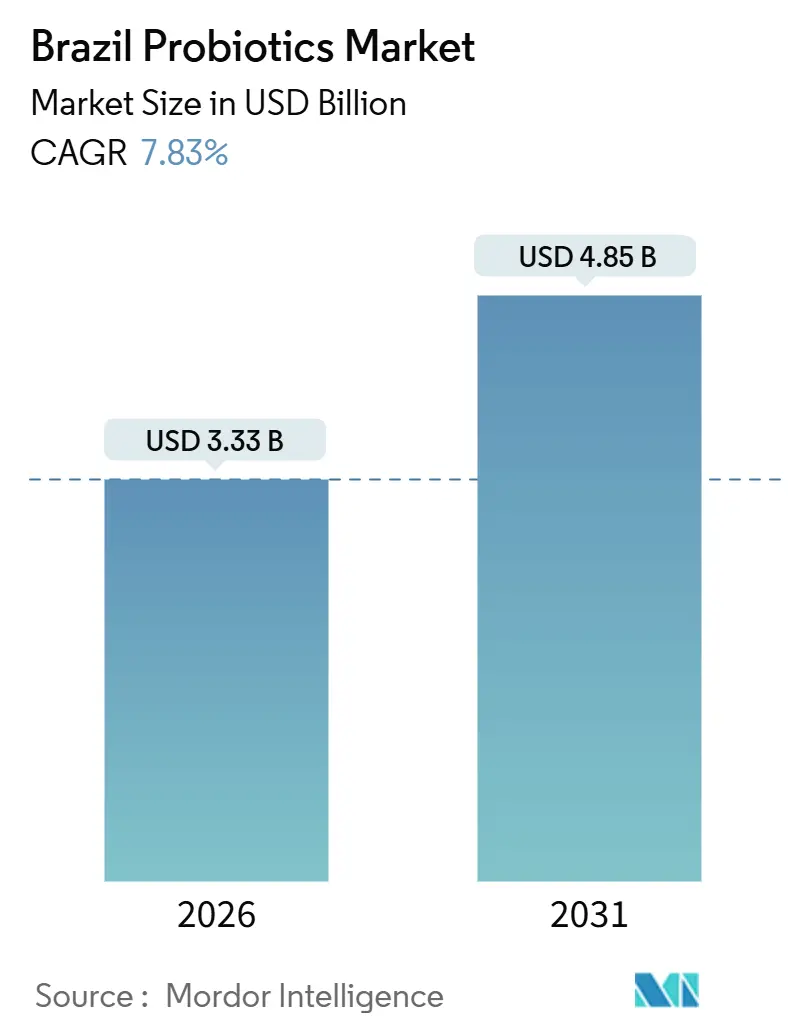
| Market Size (2026) | USD 3.33 Billion |
| Market Size (2031) | USD 4.85 Billion |
| Growth Rate (2026 - 2031) | 7.83 % |
| Market Concentration | Medium |
Major Players
*Disclaimer: Major Players sorted in no particular order Image © Mordor Intelligence. Reuse requires attribution under CC BY 4.0. |
|
Brazil Probiotics Market Analysis by Mordor Intelligence
In 2026, the probiotics market in Brazil is valued at USD 3.33 billion, and it is expected to grow to USD 4.85 billion by 2031, with a steady CAGR of 7.83%. This growth is driven by increasing health awareness, changing dairy consumption patterns, and modernization in the livestock sector. Consumers are drawn to probiotics for their benefits, such as improving digestion, boosting immunity, and enhancing feed efficiency. Stricter regulations are encouraging companies to focus on clinical validation and high-quality standards. Multinational dairy companies benefit from strong consumer trust and extensive cold-chain networks, while local supplement and feed additive companies are gaining traction by offering products tailored to regional diets and livestock needs. The growing use of e-commerce and buy-now-pay-later options is making premium products more accessible, especially those not commonly found in smaller stores. Additionally, new labeling rules from ANVISA are driving clean-label innovations and better packaging designs to ensure probiotics remain effective throughout the distribution process.
Key Report Takeaways
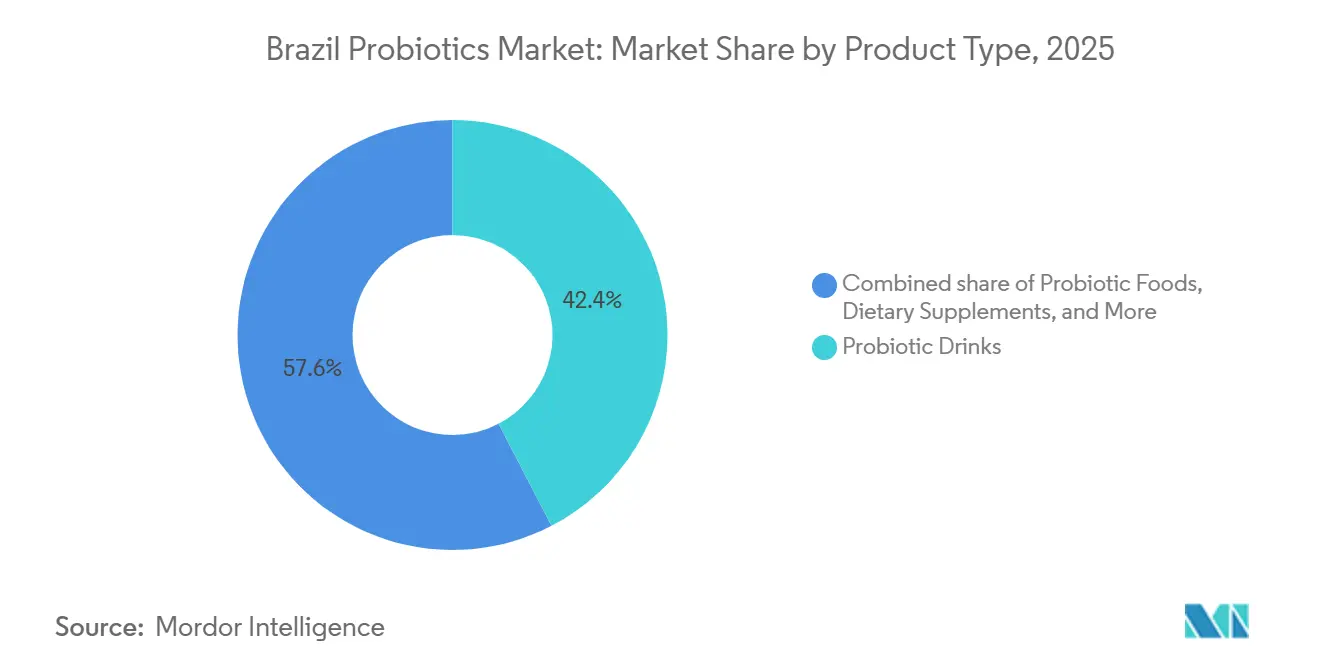
- By Product Type, Probiotic Drinks led with 42.38% of the Brazil probiotics market share in 2025, and Animal Feed and Nutrition is projected to post the fastest CAGR of 8.01% in the Brazil probiotics market size through 2031.
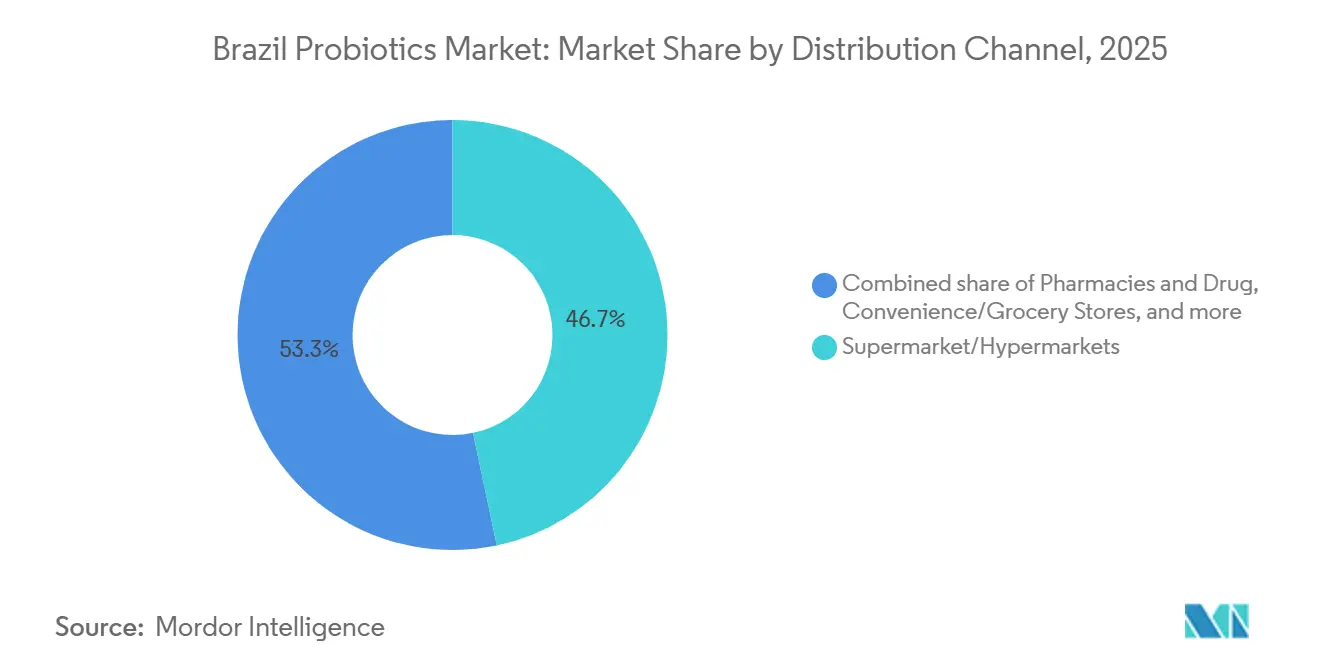
- By Distribution Channel, Supermarkets and Hypermarkets captured 46.71% of revenue in 2025, while online stores are set to grow at a 9.04% CAGR through 2031 within the Brazil probiotics market size.
Note: Market size and forecast figures in this report are generated using Mordor Intelligence’s proprietary estimation framework, updated with the latest available data and insights as of January 2026.
Brazil Probiotics Market Trends and Insights
Drivers Impact Analysis*
| Drivers | (~) % Impact on CAGR Forecast | Geographic Relevance | Impact Timeline |
|---|---|---|---|
| Healthcare professionals' recommendations boost probiotic adoption for gastrointestinal issues | +1.2% | National, with concentration in São Paulo, Rio de Janeiro, and southern states | Medium term (2-4 years) |
| Demand for non-dairy options like fermented soy drives plant-based probiotic growth | +0.9% | Urban centers (São Paulo, Curitiba, Porto Alegre) with early spillover to Brasília | Long term (≥ 4 years) |
| Functional foods with probiotics beyond yogurt attract health-conscious consumers | +1.4% | National, led by metropolitan areas and upper-middle-income households | Medium term (2-4 years) |
| E-commerce and retail growth improve probiotic accessibility nationwide | +1.6% | National, with highest penetration in Southeast and South regions | Short term (≤ 2 years) |
| Post-pandemic focus on immunity sustains probiotic consumption | +1.1% | National, with sustained demand in urban areas | Short term (≤ 2 years) |
| Rising demand for probiotics in animal feed supports livestock health and nutrition applications | +1.7% | National, concentrated in poultry-producing states (Paraná, Santa Catarina, Rio Grande do Sul) | Long term (≥ 4 years) |
| Source: Mordor Intelligence | |||
Healthcare Professionals' Recommendations Boost Probiotic Adoption for Gastrointestinal Issues
Doctors are increasingly recommending probiotics, transforming them from general wellness supplements into a category closer to pharmaceuticals. This shift is especially noticeable in treating functional gastrointestinal disorders, where standard therapies often fail. In 2023, the World Gastroenterology Organisation released updated guidelines with specific recommendations for probiotic strains to address conditions like irritable bowel syndrome, antibiotic-associated diarrhea, and Helicobacter pylori eradication. These guidelines provide Brazilian gastroenterologists with clear, evidence-based protocols to support their recommendations[1]. Additionally, the Brazilian Federation of Gastroenterology recognizes probiotics as a supportive therapy for small intestinal bacterial overgrowth (SIBO), a condition that causes chronic bloating and affects about 10-15% of adults. This recognition has significantly boosted the sales of high-CFU probiotic supplements in pharmacies. ANVISA regulations, such as RDC 243/2018 and IN 28/2018, simplify the approval process for food supplements by requiring only notification instead of full registration. This makes it easier for pharmacy-exclusive brands to enter the market, allowing doctors to recommend them without needing prescriptions. Furthermore, the Brazilian Pharmacopeia's Biological Products and Biotechnology committee is developing monographs for probiotic quality control, which will further validate these products for clinical use.
Demand for Non-Dairy Options Like Fermented Soy Drives Plant-Based Probiotic Growth
In 2025, the plant-based dairy market experienced significant growth, creating opportunities for probiotic strains that work well in non-dairy products and appeal to lactose-intolerant and flexitarian consumers. Researchers from the Federal University of Santa Catarina (UFSC) developed fermented plant-based beverages using uvaia pulp, a native Brazilian fruit, combined with Lactobacillus rhamnosus GG. Their research showed that native fruits can support probiotic growth while adding unique flavors, helping products stand out in a competitive market. According to the Good Food Institute, Brazilian institutions have bioreactors larger than 25 liters, which are suitable for precision fermentation of probiotics in plant-based substrates. This indicates that Brazil's technical capacity in this area is growing. As the world's largest soybean producer, with an annual output of 169 million metric tonnes, Brazil has abundant raw materials for making fermented soy drinks. However, consumer acceptance of soy-based probiotics remains lower compared to traditional dairy products. Reflecting this trend, Danone reformulated its Danoninho in August 2025, reducing sugar content while maintaining probiotic levels. This change highlights how health-conscious parents are paying closer attention to ingredient lists, a trend that is also influencing plant-based product development.
Functional Foods with Probiotics Beyond Yogurt Attract Health-Conscious Consumers
Probiotics are moving beyond the dairy aisle into snacks, confectionery, and infant formulas, opening up new opportunities where traditional yogurt falls short. Nestlé's Ninho Fases 1+ is a powdered milk product fortified with probiotics, aimed at parents seeking premium options to support their child's immune system during early development. Kerry Group's GanedenBC30, a strain of Bacillus coagulans, has received approval from ANVISA for use in foods and beverages for children aged three and older. This approval enables manufacturers to include probiotics in shelf-stable products like granola bars and baked goods without refrigeration, offering benefits for gastrointestinal health. Researchers at the University of Campinas are developing encapsulation techniques using pequi oil to protect Lactobacillus reuteri from heat and light, addressing a key challenge that has limited the inclusion of probiotics in ambient-stable foods. In Brazil, probiotic ice creams, chocolates, and fortified juices are being introduced, but these products remain niche due to high production costs and consumer skepticism about their effectiveness in non-dairy formats.
E-Commerce and Retail Growth Improve Probiotic Accessibility Nationwide
Digital commerce is expanding access to probiotics, especially premium supplements and specialty strains not found in local pharmacies or small stores. In Brazil, direct sales are more prominent due to the fragmented retail landscape, allowing brands to connect directly with consumers. Platforms like Mercado Livre and Amazon.com.br support this direct-to-consumer model. Pharmacy chains such as Raia Drogasil, Pague Menos, and Panvel are enhancing their e-commerce platforms and offering subscriptions for probiotics, making monthly purchases easier and improving adherence. Many Brazilian online shoppers use buy-now-pay-later options, reducing upfront costs for multi-month bundles. While inflation affects spending in some areas, consumers continue to prioritize quality in beauty, personal care, and wellness. Purchases often peak at the end of the month due to salary cycles, and e-commerce platforms manage these surges effectively, especially for temperature-sensitive probiotics, by optimizing inventory and ensuring freshness.
Restraints Impact Analysis*
| Restraint | (~) % Impact on CAGR Forecast | Geographic Relevance | Impact Timeline |
|---|---|---|---|
| Limited cold chain affects probiotic stability | -0.8% | National, most acute in North and Northeast regions | Medium term (2-4 years) |
| Low awareness limits rural adoption | -0.6% | Rural areas and municipalities with <50,000 population | Long term (≥ 4 years) |
| Imported strains risk supply issues | -0.5% | National, affecting manufacturers dependent on European or North American suppliers | Short term (≤ 2 years) |
| Sensitivity to heat and light complicates distribution | -0.7% | National, particularly in tropical and subtropical zones | Medium term (2-4 years) |
| Source: Mordor Intelligence | |||
Limited Cold Chain Affects Probiotic Stability
Brazil's vast geography and fragmented retail structure create major challenges for maintaining probiotic viability, especially for products needing constant refrigeration. Regional differences in inventory times and high warehousing costs highlight inefficiencies in food distribution, with temperature-controlled logistics being particularly expensive. Low retail concentration forces probiotic brands to rely on small, independent stores, many of which lack proper refrigeration, increasing the risk of temperature fluctuations. Complex state-level tax systems further complicate distribution, as companies prioritize fiscal benefits over cold-chain efficiency, leaving products exposed during interstate transport. Demand spikes tied to salary cycles add pressure on cold storage, leading to stockouts or rushed deliveries that may skip proper temperature controls. To address these issues, researchers in Brazil are developing advanced encapsulation methods to protect probiotics from environmental stress. While promising, these methods are costly and not yet commercially scalable, limiting their immediate impact on distribution challenges.
Low Awareness Limits Rural Adoption
In Brazil, probiotics are mainly popular among urban and higher-income groups, while rural and lower-income populations have limited awareness and often see supplements as unnecessary. Public food programs focus on fresh, locally-sourced foods, which makes it hard for probiotic-fortified products to meet their requirements or fit within budget limits. National dietary guidelines recommend plain yogurt but discourage sweetened or flavored options, creating confusion about whether probiotic yogurts align with these guidelines. Even in cities, probiotics have not gained widespread acceptance due to general skepticism about dietary supplements and limited knowledge of the category. Healthcare professionals play a key role in promoting probiotics, but access to specialists like gastroenterologists and nutritionists is limited outside major cities. In rural areas, primary care doctors often lack knowledge about specific probiotic strains, which slows acceptance. In 2024, the Biocodex Microbiota Observatory conducted a survey in Brazil to evaluate consumer awareness of gut health. However, since detailed findings were not shared publicly, it indicates that awareness gaps remain a challenge for the industry.
*Our forecasts treat driver/restraint impacts as directional, not additive. The impact forecasts reflect baseline growth, mix effects, and variable interactions.
Segment Analysis
By Product Type: Beverages Lead, Animal Nutrition Accelerates
In 2025, probiotic drinks held 42.38% of the market value, driven by decades of efforts from Yakult, Danone, and Nestlé to make fermented dairy beverages a daily habit. In 2024, Yakult expanded into Brazil's Northeast region, targeting areas with low brand recognition but rising incomes. Danone reformulated Activia to lower sugar content while maintaining probiotic benefits, addressing ANVISA's updated labeling rules and consumer demand for cleaner ingredients. The segment benefits from shelf-stable formats like Yakult, which uses Lactobacillus casei Shirota to extend shelf life without refrigeration, cutting logistics costs and increasing retail reach. While dairy-based drinks dominate, non-dairy options using soy, coconut, or almond are growing due to lactose intolerance and flexitarian trends. Research from UFSC shows Brazilian native fruits like uvaia can support probiotics and offer unique flavors.
The Animal Feed and Nutrition sector is projected to grow at 8.01% CAGR through 2031, the fastest among product types. Brazil's poultry and livestock industries are adopting probiotics to improve feed efficiency, reduce antibiotic use, and meet export biosecurity standards. In 2024, Brazil produced 96.4 million tonnes of animal feed, with poultry feed at 45.6 million tonnes (up 2.7%) and layer feed at 7.7 million tonnes (up 2.4%)[2]. With feed costs making up two-thirds of poultry production expenses, probiotics that enhance nutrient absorption are cost-effective. The Brazilian government allocated USD 40 million in 2024 for biosecurity, including programs to reduce antibiotics through probiotics. Although highly pathogenic avian influenza (HPAI) was found in 166 wild birds, commercial farms were unaffected, highlighting the focus on disease control and gut health. At the 2024 FeSBE conference, researchers presented probiotic strains like Lactococcus lactis and Bacillus velezensis tailored for poultry. As the world's largest corn and soybean producer, Brazil ensures ample feedstock for probiotic fermentation.

By Distribution Channel: Supermarkets Anchor, Online Surges
In 2025, Supermarkets and Hypermarkets accounted for 46.71% of probiotic product distribution, making them the main purchase points for probiotic yogurts, fermented drinks, and shelf-stable supplements. Carrefour, Pão de Açúcar, and Walmart Brasil lead this retail segment but control only 17% of food and beverage revenue, far less than in North America or Europe. This forces probiotic brands to work with numerous regional chains and independent grocers. Lactalis acquired DPA Brasil in December 2023 for BRL 700 million (around USD 140 million) to strengthen its yogurt market, increasing promotions and shelf-space competition. Monthly sales spikes, with 40% occurring at month-end due to paycheck cycles, require supermarkets to plan inventory carefully. However, this pattern complicates cold-chain logistics for short-shelf-life probiotic products. Additionally, complex state tax systems often prioritize cost-saving over cold-chain efficiency, raising the risk of temperature issues that harm probiotic quality.
Online Stores are expected to grow at a 9.04% CAGR through 2031, the fastest among all channels. Growth is driven by improved digital payments, more direct-to-consumer brands, and expanded e-commerce by pharmacy chains. Pharmacies like Raia Drogasil, Pague Menos, and Panvel offer subscription models for probiotics, simplifying monthly purchases and improving adherence. Buy-now-pay-later options, popular among Brazilian shoppers, reduce upfront costs for multi-month probiotic bundles, which offer better value but typically have higher total ticket sizes. Inflation continues to influence buying habits, with many consumers opting for cheaper alternatives in some categories. Probiotica Laboratórios, a leader in Brazilian sports nutrition with over 280 products and 6,000 sales points, exports to 32 countries. The company uses e-commerce to target niche markets like athletes and fitness enthusiasts who prefer high-CFU, multi-strain probiotics.
Geography Analysis
Brazil's probiotics market varies significantly across regions due to differences in income levels, cold-chain infrastructure, and cultural preferences for fermented foods and supplements. The Southeast region, including São Paulo and Rio de Janeiro, leads in consumption. This is because of higher income levels, a dense network of supermarkets and pharmacies, and strong healthcare professional recommendations. In June 2025, Nestlé announced a USD 1.3 billion investment plan running through 2028. This plan focuses on expanding production capacity for probiotic-fortified infant nutrition products like Ninho Fases 1+, launched in 2024. Most of these investments are concentrated in São Paulo state, where Nestlé operates several manufacturing facilities.
The South region, which includes Paraná, Santa Catarina, and Rio Grande do Sul, is growing the fastest in Animal Feed and Nutrition applications. This growth is driven by the region's large poultry and swine production. In 2025, Brazil produced about 15.1 million tonnes of livestock, with the South region contributing the most, making it a key area for probiotic use in animals. In 2024, the Brazilian government allocated BRL 200 million for biosecurity and disease prevention programs. These funds aim to reduce antibiotic use by promoting alternatives like probiotics and are mainly directed to the South, where most commercial poultry operations are located. Although highly pathogenic avian influenza (HPAI) was found in 166 wild birds in 2024, no commercial farms were affected. This highlights the industry's focus on disease prevention and the importance of gut health in improving immune resilience[3].
The North and Northeast regions face significant challenges with cold-chain logistics. Inventory storage times range from 10 to 141 days depending on the location, with temperature-controlled logistics requiring longer durations. In 2024, Yakult expanded its distribution in the Northeast, targeting areas with growing incomes but lower brand awareness. The company's shelf-stable products provide an advantage in regions with unreliable refrigeration. The National School Feeding Program (PNAE), which serves 41 million children across Brazil, requires 30% of its purchases to come from family farmers. This creates an opportunity for probiotic-fortified dairy products if manufacturers can meet procurement rules and price limits. However, adoption remains low in rural areas where awareness of probiotics is still limited.
Regulatory Landscape
In Brazil, probiotics used in food supplements are regulated by ANVISA. The supplements framework is anchored by RDC 243/2018, while the specific probiotic pathway and evidentiary requirements for safety and health benefits are defined under RDC 241/2018. Product formulation and labeling guardrails, including permitted constituents and limits, are operationalized via IN 28/2018, and functional or health-claim substantiation follows ANVISA evaluation criteria under RES 18/1999.
From September 1, 2024, RDC 843/2024 and IN 281/2024 moved the category toward mandatory notification for food supplements, including probiotic-containing products. This shifts market entry toward a notification-based process and raises the importance of post-market compliance. In practice, commercialization depends on accurate strain identification and dossiers that support proposed claims and use conditions, aligning labeling, composition lists, and technical-scientific substantiation with ANVISA requirements.
Competitive Landscape
The Brazil probiotics market is moderately consolidated, with a limited number of multinational food, dairy, and pharmaceutical companies holding a significant share alongside several regional and local players. Large companies benefit from strong brand recognition, established regulatory capabilities, and extensive distribution networks across supermarkets, pharmacies, and health stores. Key players in the market include Lallemand Inc., Yakult Honsha Co. Ltd, Nestlé SA, Danone SA, and Novonesis. Their scale enables consistent product quality, wider portfolio coverage across functional foods, beverages, and dietary supplements, and effective consumer education, reinforcing their competitive position in the market.
At the same time, regional manufacturers and specialized supplement brands contribute to market fragmentation by targeting specific health claims such as digestive health, immunity, and women’s wellness. These players often focus on capsule, sachet, and powdered formats, leveraging localized formulations and competitive pricing to appeal to middle-income consumers. Innovation in strain selection, dosage formats, and sugar-free or clean-label positioning allows smaller companies to compete despite limited marketing budgets and narrower geographic reach.
Competition in the Brazilian probiotics market is increasingly shaped by product differentiation, scientific validation, and channel expansion rather than price competition alone. Leading players are investing in clinically supported strains, synbiotic formulations, and partnerships with healthcare professionals to strengthen credibility and consumer trust. As demand continues to rise across food, beverage, and supplement applications, selective acquisitions and portfolio expansions are expected, supporting gradual consolidation while maintaining the market’s moderately consolidated structure.
Brazil Probiotics Industry Leaders
-
Lallemand Inc.
-
Yakult Honsha Co. Ltd
-
Nestlé SA
-
Danone SA
-
Novonesis
- *Disclaimer: Major Players sorted in no particular order

Market Opportunities and Future Outlook
ANVISA's framework for probiotics in supplements (RDC 241/2018 and RDC 243/2018, supported by normative instructions such as IN 28/2018) favors brands that can document strain identity, stability, and substantiated benefits. This creates room for clinically supported, strain-specific portfolios and claim-compliant innovation. As access expands through large pharmacy chains and online platforms, the opportunity is strongest for premium, pharmacy-led offerings, including higher-CFU and multi-strain products that are not always common outside major urban centers.
Recent commercialization activity also points to opportunities in specialized formulations and partnerships that strengthen distribution. In February 2026, EMS assumed management of the Culturelle probiotic brand in Brazil through an exclusive partnership with i-Health (a dsm-firmenich division), highlighting a route for international brands and ingredient players to scale using local pharmaceutical commercialization capabilities. Product development focus areas visible in-market include synbiotics and condition-led positioning, including pediatric and dermatological wellness, along with formats designed to reduce cold-chain dependence, which supports wider reach into North and Northeast regions where refrigerated logistics remain a constraint.
Recent Industry Developments
- March 2026: Yakult do Brasil launched a reformulated Yakult 40 fermented milk featuring 40 billion Lactobacillus casei Shirota (LcS) and added vitamin D. The update pairs higher CFU positioning with micronutrient fortification and an ANVISA-approved claim, strengthening differentiation in mainstream retail and pharmacy-adjacent channels.
- December 2025: Novonesis expanded its nu-trish probiotic line into Brazilian dairy manufacturers' product portfolios, spotlighting strains such as Lactobacillus rhamnosus GG and Bifidobacterium animalis subsp. lactis BB-12 with ANVISA-aligned claims. This supported premium functional positioning beyond basic yogurt across multiple dairy formats.
- September 2024: Yakult do Brasil launched Yakult Pessego (peach flavor), extending its fermented milk portfolio with a fruit variant containing 16 billion Lactobacillus casei Shirota per unit. The launch broadened flavor-led recruitment into the category and helped the brand defend shelf space as competitors expand cleaner-label and functional beverage options.
Research Methodology Framework and Report Scope
Market Definition and Coverage
This market covers the value of probiotic products sold in Brazil, across food and beverages, supplements, and animal nutrition formats where live beneficial microorganisms are positioned for gut or wellness support.
Scope exclusions: We exclude prebiotics, synbiotics that are not sold as probiotic-led products, and general fermented foods that do not make a probiotic claim.
Segmentation Overview
-
Product Type
-
Probiotic Foods
- Yogurt
- Bakery and Breakfast Cereals
- Infant Formula and Baby Foods
- Snacks and Confectionery
-
Probiotic Drinks
- Dairy-based
- Non-dairy
- Dietary Supplements
- Animal Feed and Nutrition
-
Probiotic Foods
-
Distribution Channels
- Supermarket/Hypermarkets
- Pharmacies and Drug
- Convenience/Grocery Stores
- Online Stores
- Others
Data Sources, Market Sizing, and Validation
Desk Research
Desk research sets the base structure of the model and helps us keep assumptions realistic for Brazil. We reviewed public sources such as IBGE for macro and consumer indicators, the Ministry of Agriculture and Livestock (MAPA) for animal feed and livestock context, ANVISA for supplement and food rulemaking signals, and UN Comtrade trade statistics for relevant inputs and finished product flows. We also used peer reviewed nutrition and microbiology journals to understand how strains are used in commercial products and how stability constraints affect pack formats.
Along with these, we screened company filings and investor presentations, product labels and brand websites, and business press to map product formats, channel presence, and pricing ladders. Where needed, we used paid subscription sources for company financials and intelligence, shipment-level import/export databases, and patent databases to cross-check launches, sourcing intensity, and supplier activity. The sources listed here are illustrative only, and we also relied on other public and paid references during data collection, validation, and clarification.
Primary Interviews and Surveys
Primary work focused on validating what actually sells in Brazil and how pricing moves by channel. We spoke with participants across packaged food, supplements, and animal nutrition so gaps from desk research could be closed, and the demand and supply views could be aligned. To keep the model grounded, responses were balanced across major regions in Brazil and across roles that influence pricing, volume planning, and go-to-market execution.
Distribution of primary research fieldwork respondents
| Company type | Respondent position |
|---|---|
| Top tier: 30% | CXOs: 12% |
| Mid tier: 52% | Functional/Unit leaders: 40% |
| Smaller Players: 18% | Managers: 48% |
Market-Sizing & Forecasting
Sizing started with a top-down approach where we rebuilt Brazil consumption pools from category sales signals, penetration of probiotic claims within each format, and channel mix, then converted into value using observed price bands. In parallel, we used selective bottom-up checks, such as sampling brand-level price points and combining them with implied volumes from channel checks, followed by supplier and importer activity sense-checks when relevant.
A few inputs drove the model most: the split of probiotics sold as functional foods and drinks versus supplements, pharmacy and drug store share versus modern retail share, label claim intensity and dosage formats (capsules, powders, shots, and cultured dairy), and the relative demand pull from digestive health positioning. For animal nutrition, livestock and poultry production trends and feed inclusion logic were treated as key indicators. Forecasts were built using scenario analysis, where drivers such as real income trends, health and wellness adoption, and channel expansion were varied, and then aligned with expert expectations gathered through interviews. Where bottom-up visibility was weak for smaller brands, we used conservative price and volume ranges, and then adjusted totals after reconciling with channel-level benchmarks.
Data Validation & Update Cycle
Validation was done by comparing model outputs with independent signals, including category growth rates, trade flows for relevant inputs, and observed shelf pricing across major channels, which helps flag unusual jumps early. Any large variance triggered a second pass on assumptions, followed by outreach to clarify whether the gap came from a channel shift, a price reset, or a category reclassification.
Before sign-off, the model is reviewed in multiple steps, including peer checks on math, unit consistency, and whether drivers align with known Brazil market developments. The report is refreshed annually, with interim updates when material developments occur in regulation, pricing, or major channel dynamics. Right before delivery, an analyst runs a fresh review so clients receive the latest updated view.
Mordor Intelligence's Brazil Probiotics Market Market Size Versus Other Published Estimates
It is normal to see different market values for Brazil probiotics because publishers do not always count the same products, years, and price points, even when the topic name appears similar. Differences also come from whether animal nutrition is included, how online retail is treated, and how quickly assumptions are refreshed when pricing changes.
Synbiotics that are positioned mainly as fiber blends are kept outside Mordor Intelligence's scope unless the probiotic component is the main marketed value and can be tied to a clear selling format, which reduces overlap with broader digestive health ingredients. Gaps also appear when one estimate relies on more aggressive scenario growth, or when currency conversion timing and inflation pass-through are handled differently across channels.
Benchmark comparison
| Source | Market Size | Gaps in Research Methodology |
|---|---|---|
| Mordor Intelligence | USD 3.33 B (2026) | |
| Industry Publisher A | USD 3.59 B (2024) | Uses a different base year and a longer horizon, and its application buckets can blend probiotics with adjacent wellness ingredients, which can lift the total when mapped into value. |
| Industry Publisher B | USD 2.10 B (2025) | Starts from a lower stated base and applies faster growth, and the total can shift depending on whether animal feed is sized with the same channel pricing logic as consumer formats. |
The comparison mainly shows that year selection, inclusion of adjacent digestive health items, and channel pricing treatment create most of the spread. By keeping inputs tied to observable formats, channel mix, and realistic price bands, the final number stays traceable to clear steps that can be repeated when new data arrives.
Key Questions Answered in the Report
What is the projected value of the Brazil probiotics market by 2031?
The market is forecast to reach USD 4.85 billion in 2031.
Which product type commands the largest share in Brazil?
Probiotic drinks led the category with 42.38% share in 2025.
Which segment is growing the fastest?
Animal feed and nutrition is expanding at an 8.01% CAGR through 2031.
Which sales channel shows the quickest growth?
Online stores are rising at a 9.04% CAGR through 2031 as digital payments and direct-to-consumer models scale.