
Market Overview
| Study Period | 2021 - 2032 |
|---|---|
| Forecast Data Period | 2027 - 2032 |
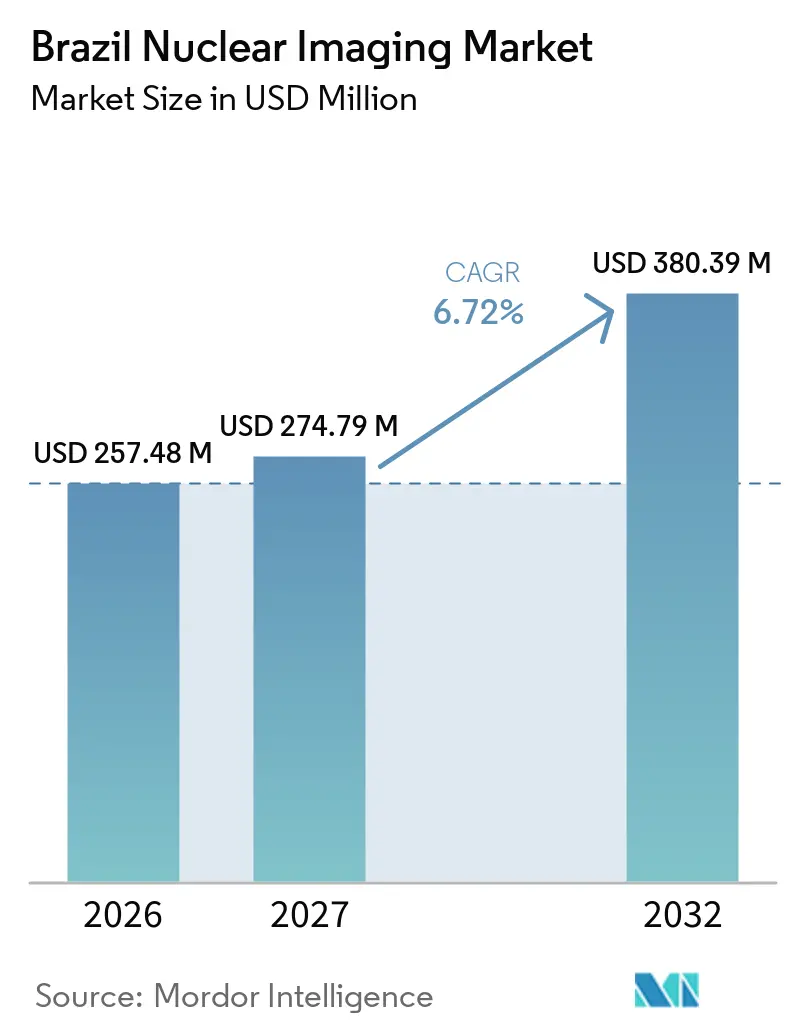
| Base Year Market Size (2026) | USD 257.48 Million |
| Market Size (2027) | USD 274.79 Million |
| Market Size (2032) | USD 380.39 Million |
| Growth Rate (2027 - 2032) | 6.72 % |
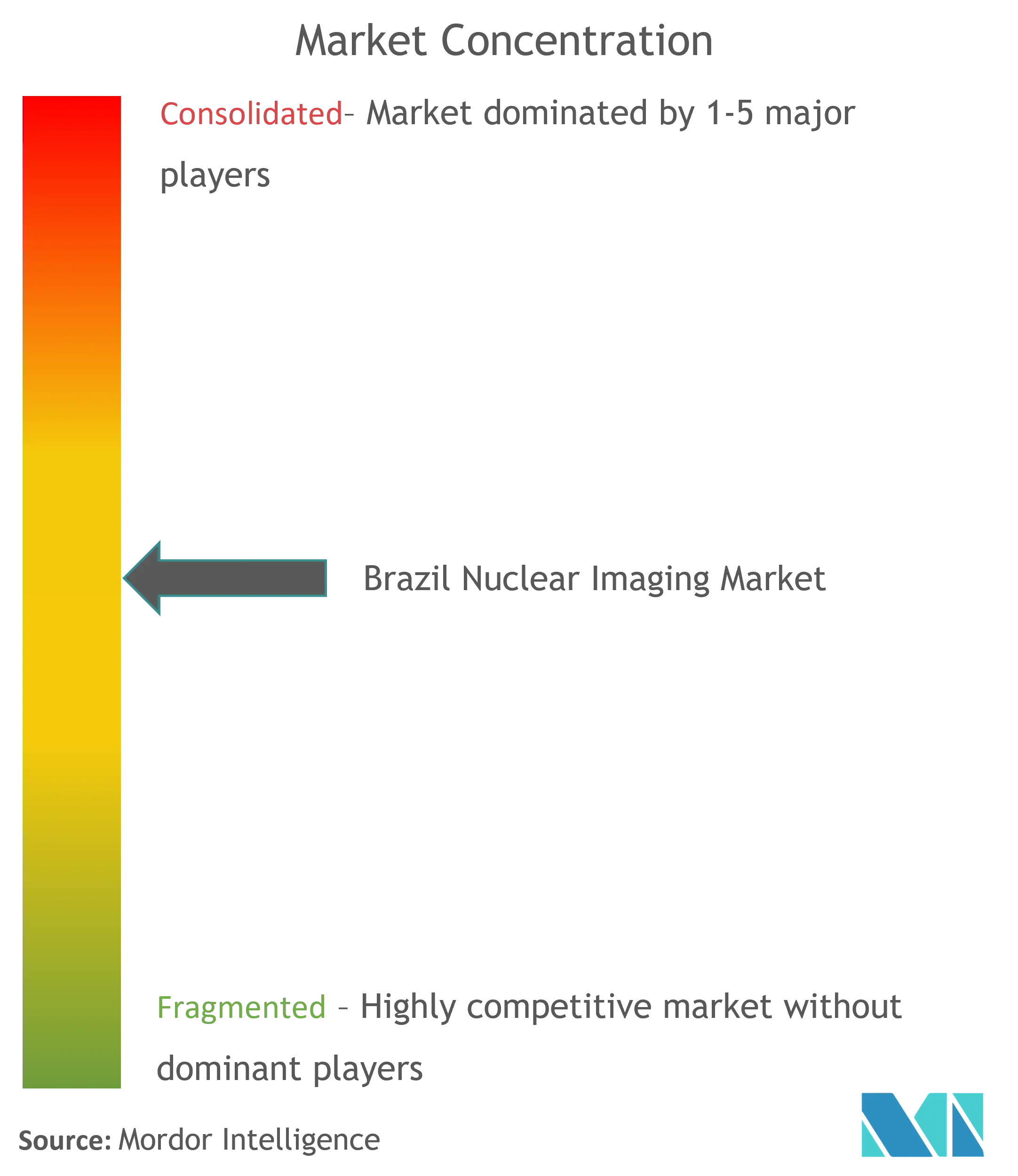
| Market Concentration | Medium |
Major Players *Disclaimer: Major Players sorted in no particular order Image © Mordor Intelligence. Reuse requires attribution under CC BY 4.0. | |
Brazil Nuclear Imaging Market Analysis by Mordor Intelligence
The Brazil Nuclear Imaging Market size is projected to be USD 257.48 million in 2026, USD 274.79 million in 2027, and reach USD 380.39 million by 2032, growing at a CAGR of 6.72% from 2027 to 2032.
Accelerated demand for precision diagnostics in oncology and cardiology, rapid uptake of digital PET/CT and full-ring CZT SPECT platforms, and federal investment in domestic molybdenum-99 production collectively underpin this trajectory. Private insurers continue to broaden coverage for high-complexity tests, while the Brazilian Multipurpose Reactor (RMB) in Iperó promises a resilient isotope supply chain. Competitive rivalry intensifies as hospital networks consolidate and outpatient imaging centers gain share, yet a shortage of nuclear-medicine specialists and high acquisition costs temper near-term growth momentum. Infrastructure modernization programs, public-private cyclotron partnerships, and e-labeling reforms by ANVISA are opening streamlined pathways for technology deployment.
Key Report Takeaways
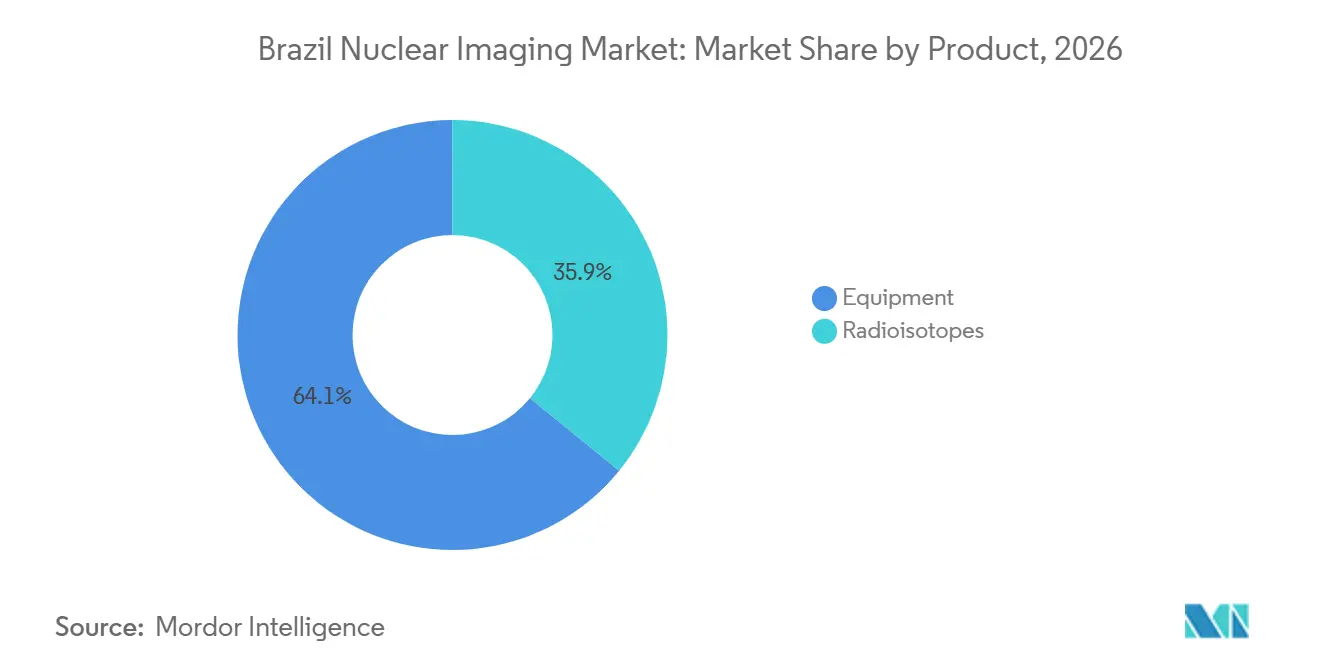
- By product, equipment led with 64.12% revenue share of the Brazil nuclear imaging market in 2026, Radioisotopes are projected to post the fastest 6.91% CAGR through 2032.
- By application, cardiology accounted for 63.21% of the Brazil nuclear imaging market share in 2026, Neurology imaging is forecast to grow at a 7.04% CAGR to 2032.
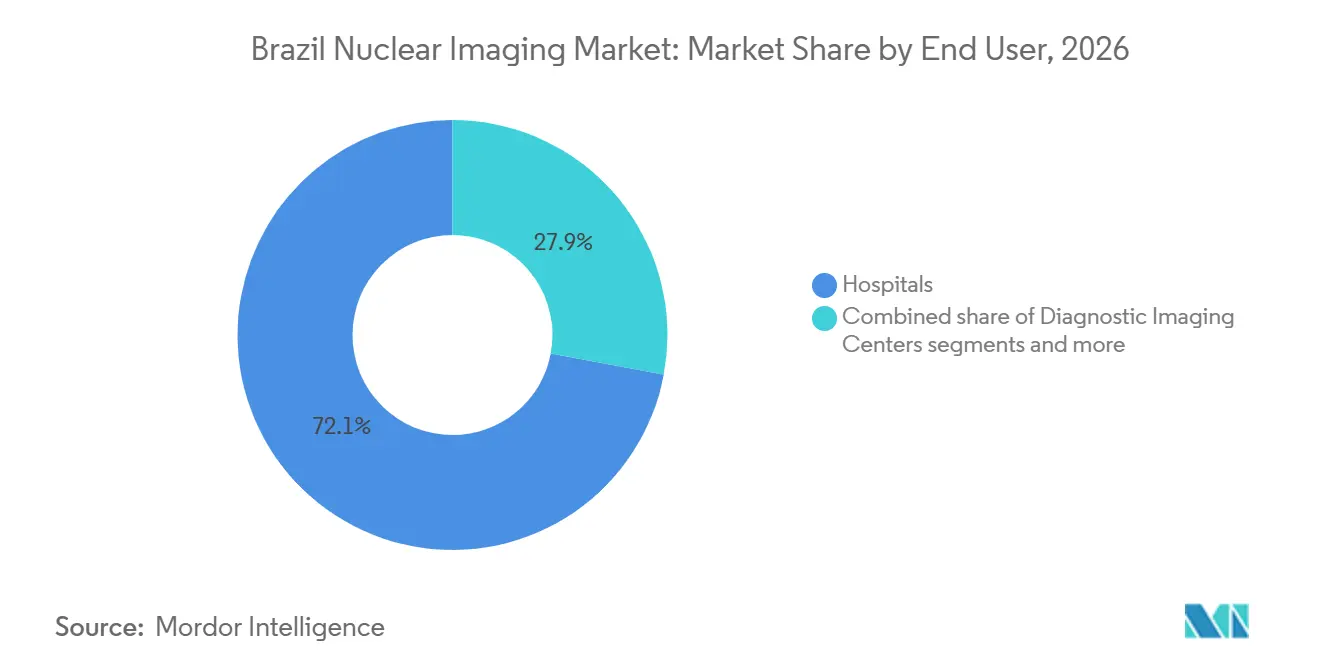
- By end user, hospitals held 72.05% of the Brazil nuclear imaging market size in 2026, Diagnostic imaging centers are expected to advance at a 6.86% CAGR through 2032.
Note: Market numbers in this report are based on Mordor Intelligence's proprietary estimation framework, which combines nine months of actuals with Q4 projections for base year 2026.
Brazil Nuclear Imaging Market Trends and Insights
Drivers Impact Analysis*
| Driver | (~) % Impact on CAGR Forecast | Geographic Relevance | Impact Timeline |
|---|---|---|---|
| Escalating cancer & CVD incidence | +1.8% | National, concentrated in São Paulo, Rio de Janeiro, Minas Gerais | Medium term (2-4 years) |
| Expansion of private health-insurance coverage | +1.2% | National, with early gains in São Paulo, Rio de Janeiro, Brasília | Short term (≤ 2 years) |
| Federal investments in domestically produced Mo-99 | +0.9% | National, centered on Iperó production facility | Long term (≥ 4 years) |
| Rapid adoption of digital & hybrid PET/CT platforms | +1.1% | National, led by major urban centers | Medium term (2-4 years) |
| New multipurpose research reactor (RMB) enabling isotope security | +0.7% | National, with distribution from Iperó hub | Long term (≥ 4 years) |
| Public-private cyclotron partnerships in underserved regions | +0.5% | Regional, targeting North and Northeast regions | Long term (≥ 4 years) |
| Source: Mordor Intelligence | |||
Escalating Cancer & CVD Incidence
Cardiovascular diseases remain Brazil’s primary mortality cause, driving sustained uptake of technetium-99m myocardial perfusion imaging and accelerating deployment of cadmium-zinc-telluride cardiac-dedicated gamma cameras that cut scan times to 7 minutes. Rising prostate, breast, and thyroid cancer prevalence also fuels demand for PSMA-targeted and 18F-fluorodeoxyglucose PET/CT studies. PET/CT-guided biopsies are delivering higher diagnostic yields than CT-guided protocols, while Brazilian investigators present outcome data on neuroendocrine tumor therapies at international congresses, underscoring domestic clinical expertise.
Expansion of Private Health-Insurance Coverage
Private providers conduct 82% of nuclear procedures, reflecting insurer willingness to reimburse high-complexity exams. Sector revenue of BRL 1 trillion (USD 190.1 billion) in 2025, with private spending at 55%, supports fresh capital deployment into imaging suites. Fleury’s BRL 69.8 million acquisition of São Lucas Centro de Diagnósticos typifies regional roll-outs, and a BRL 250 million health-finance fund now advances up to 75% of procedure costs immediately after service delivery, easing facility cash-flow constraints.
Federal Investments in Domestically Produced Mo-99
The RMB reactor targets full national radioisotope self-sufficiency and will generate up to 3,500 antineutrinos daily alongside isotope output, ending reliance on imported molybdenum-99. IPEN’s IEA-R1 upgrade from 2 MW to 5 MW, combined with 84.4%-yield fission 99Mo purification routes, underlines technical capacity . CNEN’s designation of IPEN as an IAEA Collaborating Centre enhances quality assurance for isotope processing and nuclear security.
Rapid Adoption of Digital & Hybrid PET/CT Platforms
Studies comparing full-ring solid-state SPECT detectors to conventional Anger cameras show normal perfusion classification rising to 64.3% from 28.6%, validating technology leapfrogging. GE HealthCare’s MINItrace Magni and Omni Legend 21 cm PET/CT packages bring on-site tracer production to mid-sized hospitals, cutting radiopharmaceutical transit time and broadening theranostic access. PET/MRI adoption gains traction for neuro-oncology and cardiology indications, offering superior soft-tissue contrast with lower radiation doses.
Restraints Impact Analysis*
| Restraint | (~) % Impact on CAGR Forecast | Geographic Relevance | Impact Timeline |
|---|---|---|---|
| High acquisition & upkeep cost of imaging systems | -1.4% | National, most pronounced in smaller municipalities | Short term (≤ 2 years) |
| Complex CNEN / ANVISA licensing procedures | -0.8% | National, affecting all nuclear medicine facilities | Medium term (2-4 years) |
| Workforce shortage of certified nuclear-medicine specialists | -1.1% | National, severe in North and Northeast regions | Long term (≥ 4 years) |
| Periodic supply disruptions of I-131 & Tc-99m isotopes | -0.6% | National, with regional distribution challenges | Short term (≤ 2 years) |
| Source: Mordor Intelligence | |||
High Acquisition & Upkeep Cost of Imaging Systems
A PET/CT procedure currently costs USD 1,612.23 under academic wage scales and USD 1,023.47 at full 10-scan daily throughput, limiting small-facility economics. Fleury’s pivot toward joint ventures over outright purchases echoes industrywide capital-cost sensitivity. Maintenance of detectors and generator systems demands scarce technical expertise outside major cities, magnifying ownership burdens for interior clinics.
Workforce Shortage of Certified Nuclear-Medicine Specialists
Only 499 specialists serve a population of 203 million, with density ranging from 10.26 doctors per 1,000 residents in the South to 0.75 in the North. While 225 new medical courses opened in the past decade, specialty-training uptake is 8%, leaving the pipeline thin. IPEN’s continuing-education programs and tele-mentoring initiatives offer partial relief but do not offset steep geographic imbalances.
*Our forecasts treat driver/restraint impacts as directional, not additive. The impact forecasts reflect baseline growth, mix effects, and variable interactions.
Segment Analysis
By Product: Equipment Dominance Drives Infrastructure Expansion
Brazil nuclear imaging market size for equipment reached USD 154.7 billion in 2026, representing 64.12% of total value. Hybrid PET/CT and SPECT/CT platforms account for the bulk of purchases as hospitals retire aging Anger cameras. Full-ring CZT SPECT systems improve coronary artery visualization and trim scan times, supporting higher patient throughput. The Brazil nuclear imaging market size for radioisotopes is forecast to rise at a 6.91% CAGR, propelled by RMB-enabled molybdenum-99 output and cyclotron expansion in underserved states. SPECT isotopes such as technetium-99m still represent 80% of procedure volume, yet PET tracers like 18F and 68Ga gain momentum in oncology and cardiology.
Financial hurdles persist. Capital cost per digital PET/CT exceeds USD 2 million, and rural clinics rely on leasing or volume-based vendor arrangements. GE HealthCare’s MINItrace Magni lowers tracer logistics costs, positioning mid-tier hospitals to upgrade. RMB production is slated to reduce 99Mo import costs by 40% once fully operational, enhancing isotope affordability. Long-term demand for PET/MRI remains niche due to USD 7 million price tags and high service requirements, yet early adopters cite diagnostic differentiation in neuro-oncology and congenital heart disease imaging.
By Application: Cardiology Leadership Faces Neurological Growth
Cardiology commanded a 63.21% share of the Brazil nuclear imaging market in 2026. Myocardial perfusion scintigraphy remains the clinical workhorse, supported by Brazilian Society of Cardiology guidelines affirming cost-effectiveness relative to invasive angiography . CZT detectors have cut scan times by 70%, allowing urban centers to clear backlogs and boost throughput. Neurology contributes the smallest revenue today but posts the highest 7.04% CAGR, lifted by Alzheimer’s and Parkinson’s disease prevalence and expanded access to amyloid-PET probes.
Oncology also accelerates on regulatory clearances of PSMA agents and alpha-emitter therapeutics. Thyroid applications remain stable, with 93.3% cure rates for Graves’ disease using radioiodine confirming therapeutic utility. The Brazil nuclear imaging market share for neurology is projected to double by 2032 as PET/MRI capacity broadens. Cardiac centers in São Paulo now integrate reserve-flow quantification, while regional hospitals in the Northeast focus on essential gated-SPECT protocols due to budget constraints.
By End User: Hospital Dominance Shifts Toward Specialized Centers
Hospitals represented 72.05% of Brazil nuclear imaging market size in 2026, reflecting their infrastructure advantage and critical-care alignment. Private hospital groups such as DASA and Rede D’Or are enlarging bed counts and investing in hybrid scanners to support cardiology and oncology service lines. Diagnostic imaging centers, however, register the quickest 6.86% CAGR as outpatient demand for shorter wait times rises. These stand-alone facilities increasingly sign reagent-supply contracts with isotope producers and adopt point-of-care PET radiopharmacy units.
Academic institutes and research hospitals collaborate with IPEN to trial theranostic protocols and train fellows, supplying a modest but strategic demand segment. Hospital-network consolidation continues: DASA’s proposed merger with Amil would create a 4,500-bed platform capable of bulk-buying scanners and negotiating favorable service contracts. Outpatient chains counter by emphasizing flexible scheduling, AI-assisted workflow, and Same-Day results, all of which strengthen their value proposition.

Geography Analysis
The Brazil nuclear imaging market shows strong regional concentration. São Paulo and Rio de Janeiro account for more than 55% of installed scanners and host the RMB and IPEN complexes, anchoring isotope logistics. Physician density in the South reaches 10.26 per 1,000 inhabitants, enabling higher per-capita procedure rates. Conversely, the North and parts of the Northeast face scant infrastructure and specialist shortages, limiting exam availability. The IAEA-donated SPECT camera in Niterói illustrates targeted interventions to bridge capability gaps.
New cyclotron ventures aim to supply short-lived PET tracers locally, cutting transport losses and stimulating regional demand. Government initiatives such as Programa Mais Médicos bolster general physician presence but stop short of nuclear specialization. State fiscal capacity shapes purchasing cycles: wealthier states upgrade to digital PET/CT on five-year timelines, while interior clinics depend on refurbished systems. Tele-nuclear medicine pilots link remote sites to metropolitan readers, partially offsetting specialist scarcity.
Urban networks leverage AI and cloud-PACS to centralize image interpretation, widening service radius without duplicating staff. Yet isotope supply remains vulnerable to logistics disruptions in Amazonian regions, where river transport causes delivery delays. RMB’s ramp-up, complemented by INB’s uranium exports, is expected to stabilize nationwide isotope availability by 2028. The Ministry of Health’s 800-bed digital hospital in São Paulo underscores public-sector commitment to smart healthcare infrastructure and may serve as a blueprint for other state capitals.
Regulatory Landscape
Brazilian nuclear imaging is governed by a dual-licensing regime: CNEN handles radiation-safety licensing for nuclear medicine services and facilities, while local health authorities oversee sanitary compliance under RDC 038/2008. Imaging equipment falls under ANVISA medical-device controls through RDC 751/2022, which assigns regulatory steps by risk class, and ionizing-radiation equipment must meet performance and patient-safety standards under RDC 848/2024.
Value Chain Analysis
Brazil nuclear imaging value chain is heavily import-dependent for complete gamma camera, SPECT, and PET systems, as domestic manufacturing of full systems and core detectors is limited. Local value-chain activity centers on peripheral components, collimators, and serviceable accessories produced by smaller contract manufacturers, while CNEN licensing and ANVISA product rules shape every step from installation to ongoing maintenance.
Competitive Landscape
The Brazil nuclear imaging market is moderately consolidated. Top equipment vendors—GE HealthCare, Siemens Healthineers, Philips, Canon Medical, and United Imaging—compete on detector innovation and workflow automation, while national service giants DASA and Fleury scale through acquisitions and joint ventures. DASA recorded record EBITDA in 2025 and seeks platform growth via merger with Amil, potentially expanding bargaining power over scanner procurement. Fleury favors partnerships to mitigate capital costs and taps regional niches.
Cyclotron operators such as Cyclobrás and RPH pursue vertical integration from isotope production to tracer distribution. The RMB project introduces state-controlled isotope capacity, shifting buyer leverage from importers to domestic suppliers. Regulatory reforms on e-labeling and software oversight require robust compliance, giving larger operators an administrative edge. Niche entrants target outpatient cardiac PET and neurological PET/MRI, differentiating on subspecialty reporting and quicker turnaround. Market entry barriers persist in rural zones due to physician scarcity and licensing complexity, yet public-private collaborations could unlock white-space opportunities in the North and Northeast.
Brazil Nuclear Imaging Industry Leaders
-
GE Healthcare
-
Grupo RPH
-
Siemens Healthineers AG
-
Canon Inc. (Canon Medical Systems Corporation)
-
Koninklijke Philips N.V.
- *Disclaimer: Major Players sorted in no particular order
Market Opportunities and Future Outlook
ICMS Agreement 131/2021 provides tax exemptions for radioactive medicines used in SUS, supporting broader affordability for nuclear-imaging workflows. The Southeast remains the regional demand center, with São Paulo, Rio de Janeiro, and Belo Horizonte driving roughly 55 to 60 percent of placements, underscoring the need for regional access programs and networked cyclotron capabilities to service demand.
Recent Industry Developments
- June 2026: Canon Medical Systems do Brasil. The remarks reflect Canon's ongoing commitment to Brazil's diagnostic imaging innovation. The statements reinforce Canon's footprint and local demand stimulation in Brazil's imaging market.
- June 2026: Canon Medical Systems do Brasil - CEO Toshio Takiguchi highlighted the strategic importance of the Brazilian market and commitment to diagnostic imaging innovation at the Jornada Paulista de Radiologia (JPR) 2026. Canon Medical Systems do Brasil reinforces Canon's local presence and signals ongoing demand stimulation in the Brazilian imaging sector.
- March 2026: PUCRS Brain Institute / GE HealthCare. The acquisition expands research hospital capabilities with an Omni Legend PET/CT scanner. The deployment validates GE HealthCare's platform in Brazil's academic sector and boosts local imaging capacity.
Research Methodology Framework and Report Scope
Market Definition and Coverage
For this study, the Brazil nuclear imaging market covers revenues generated from nuclear medicine imaging systems and related radioisotopes used to create diagnostic images in clinical settings. The market reflects spending tied to PET and SPECT based imaging procedures and the enabling products required to deliver them.
Scope exclusions: This sizing excludes non-nuclear modalities (such as CT-only and MRI-only imaging) and radiation therapy equipment because they are not part of nuclear imaging diagnosis.
Segmentation Overview
- By Product (Value)
- Equipment
- PET/CT Scanners
- SPECT/CT Scanners
- PET/MRI Scanners
- Radioisotopes
- SPECT Radioisotopes
- Technetium-99m (Tc-99m)
- Thallium-201 (Tl-201)
- Gallium-67 (Ga-67)
- Iodine-123 (I-123)
- Other SPECT Isotopes
- PET Radioisotopes
- Fluorine-18 (F-18)
- Rubidium-82 (Rb-82)
- Other PET Isotopes
- SPECT Radioisotopes
- Equipment
- By Application (Value)
- Cardiology
- Neurology
- Thyroid
- Oncology
- Other PET Applications
- By End User (Value)
- Hospitals
- Diagnostic Imaging Centres
- Academic & Research Institutes
Data Sources, Market Sizing, and Validation
Desk Research
Desk research was used to set the boundaries of nuclear imaging in Brazil and to anchor the model to real health system signals. We reviewed public sources such as Brazil Ministry of Health (DATASUS) for procedure activity, ANVISA for product and radiopharmaceutical registrations, and CNEN for nuclear medicine and isotope handling context.
To better understand demand drivers, we also used sources such as IAEA publications on isotope availability, OECD health statistics for broader diagnostic intensity benchmarks, and peer reviewed nuclear medicine journals for tracer adoption patterns (for example oncology versus cardiology use). Financial filings, investor presentations, association websites, and reputed press were referenced to validate directionally how spending and installed base could be moving. Then, a paid company financials and intelligence subscription was used selectively to fill gaps where public company reporting was limited. These examples are illustrative only, and many other public sources were also consulted for data collection, validation, and clarification.
Primary Interviews and Surveys
Primary work was used to pressure test assumptions that are hard to read from public data alone, especially around utilization, radiotracer mix, and replacement timing for PET and SPECT systems. We spoke with a spread of stakeholders, including hospital imaging heads, nuclear medicine physicians, radiopharmacy operators, procurement teams, and service partners, across key Brazilian states, so the model reflects both public and private care delivery realities.
Distribution of primary research fieldwork respondents
| Company type | Respondent position |
|---|---|
| Top tier: 32% | CXOs: 22% |
| Mid tier: 46% | Functional/Unit leaders: 19% |
| Smaller Players: 22% | Managers: 59% |
Market-Sizing & Forecasting
Sizing starts with a top-down build where procedure demand and installed capacity signals are reconstructed into market value, then mapped to the products required to deliver those scans. In practical terms, we use indicators such as PET versus SPECT procedure mix, scanner installed base and replacement cycle, radiotracer usage per scan, and average selling price ranges for systems and isotopes to translate activity into annual spend.
After that view is formed, results are corroborated with selective bottom-up approximations so totals do not drift away from what suppliers and buyers describe on the ground. These checks include sampled volume multiplied by ASP for key isotopes, channel checks on service and maintenance intensity, and a partial roll up of revenues reported by relevant participants, where data is available. Where bottom-up detail was missing (for example for smaller facilities), gaps were handled by applying utilization and spend-per-system assumptions that were validated through interviews.
For forecasting, scenario analysis was used because the market is sensitive to real world constraints, such as isotope supply stability, public reimbursement momentum, and equipment procurement cycles. Growth paths were then aligned to expected shifts in oncology imaging demand, PET/CT and SPECT/CT adoption, and price movement assumptions that respondents considered realistic for Brazil.
Data Validation & Update Cycle
Model outputs were cross-checked against independent signals like procedure activity trends, installed base plausibility, and the implied spending per scan, then the largest variances were investigated before sign-off. If an assumption created abnormal jumps, we revisited inputs, rechecked calculations, and, when needed, re-contacted experts to confirm whether a change was real or just a data artifact.
Each report is refreshed annually, and interim updates are made when material events occur, such as policy shifts, supply disruptions, or major procurement announcements. Before delivery, an analyst completes a final review so clients receive the latest updated view, still traceable to clear, repeatable steps.
Mordor Intelligence's Brazil Nuclear Imaging Market Sizing Compared With Other Published Estimates
Published market sizes for Brazil nuclear imaging can differ even when they appear to cover the same topic, because the scope lines and pricing assumptions are not always defined consistently. Differences usually show up around what is counted as nuclear imaging revenue, which year is treated as the base, and how procedure growth is converted into dollars.
In this study, the biggest gap driver is whether the estimate includes radioisotopes alongside system revenues, and whether hybrid platforms are treated as fully nuclear imaging or split across modalities. These choices were then validated against Brazil procedure activity and tracer mix, in line with the approach used by Mordor Intelligence.
Benchmark comparison
| Source | Market Size | Gaps in Research Methodology |
|---|---|---|
| Mordor Intelligence | USD 241.27 M (2025) | |
| Industry Association A | USD 225.00 M (2025) | This figure appears to emphasize equipment purchasing cycles and excludes a fuller accounting of isotope and radiotracer spending, which can understate total market value when procedure volumes are stable. |
| Global Consultancy B | USD 290.00 M (2025) | This estimate likely applies higher average price and utilization assumptions for PET driven oncology demand, and may count hybrid systems more broadly without aligning totals to local reimbursement and procedure throughput constraints. |
Across the three numbers, the spread is explained mostly by scope choices and how scan activity is translated into annual spend. Our approach stays traceable because each revenue component is tied back to observable demand signals and then rechecked through buyer and operator feedback before the final total is locked.
Key Questions Answered in the Report
How large is the Brazil nuclear imaging market in 2026?
The Brazil nuclear imaging market size is USD 257.48 million in 2026 and is projected to climb to USD 380.39 million by 2032.
Which product category leads sales?
Equipment including PET/CT, SPECT/CT, and the first PET/MRI units accounts for 64.12% of 2026 revenue.
What application generates most demand?
Cardiology holds 63.21% of 2026 value because myocardial perfusion imaging is widely adopted for coronary artery disease assessment.
Where are most scanners located?
São Paulo and Rio de Janeiro concentrate over half of the nation's PET and SPECT installations, reflecting higher physician density and private investment.
Who are the key service providers?
DASA, Fleury, and Rede D'Or top the list, with DASA planning a 4,500-bed network that will deepen its imaging footprint.
What limits faster growth?
High equipment costs and a shortage of just 499 certified nuclear-medicine specialists nationwide constrain service expansion, especially in the North and Northeast.