
Market Overview
| Study Period | 2021 - 2032 |
|---|---|
| Forecast Data Period | 2027 - 2032 |
| Base Year Market Size (2026) | USD 0.96 Billion |
| Market Size (2027) | USD 0.97 Billion |
| Market Size (2032) | USD 1.02 Billion |
| Growth Rate (2027 - 2032) | 1.10 % |
| Market Concentration | Medium |
Major Players *Disclaimer: Major Players sorted in no particular order Image © Mordor Intelligence. Reuse requires attribution under CC BY 4.0. | |
Brazil Insulin Drugs & Delivery Devices Market Analysis by Mordor Intelligence
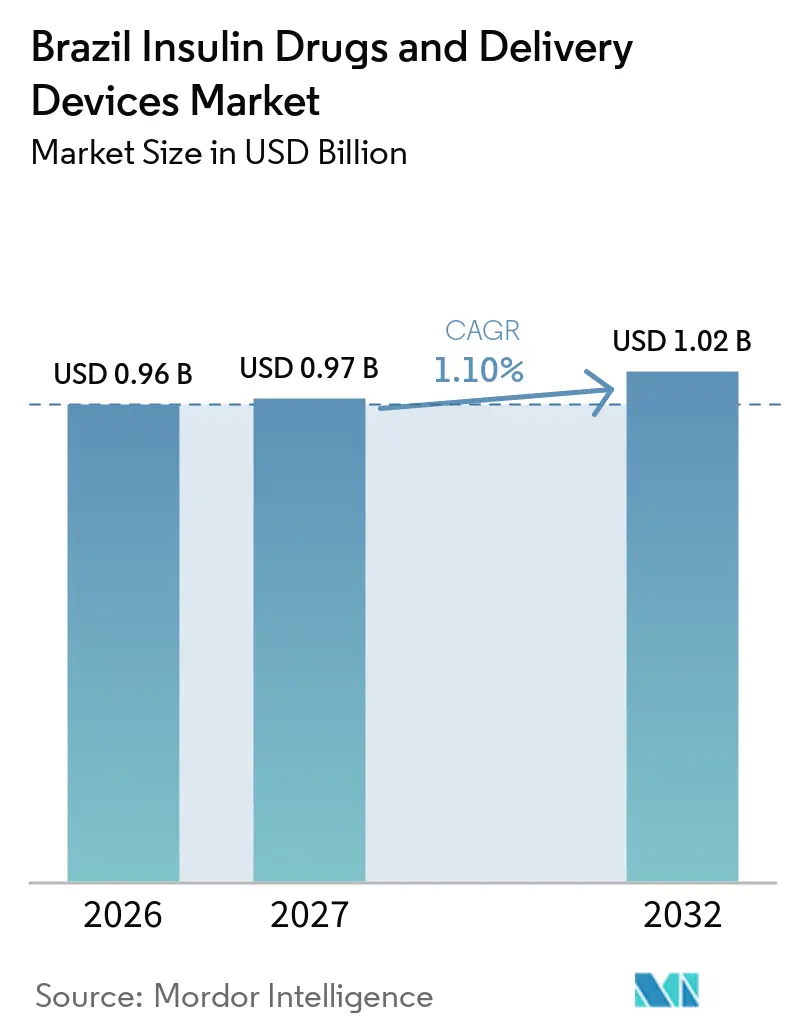
The Brazil Insulin Drugs & Delivery Devices Market size is expected to increase from USD 0.96 billion in 2026 to USD 0.97 billion in 2027 and reach USD 1.02 billion by 2032, growing at a CAGR of 1.10% over 2027-2032.
The COVID-19 pandemic exposed challenges in maintaining routine diabetes care across Brazil, particularly during periods of mobility restrictions and healthcare system strain. As hospitals prioritized COVID-19 patients, diabetes management increasingly shifted toward home-based care, leading patients to rely more heavily on insulin therapies and self-administration devices to manage their condition outside traditional clinical settings.
The outbreak also accelerated the adoption of telemedicine and remote healthcare services in Brazil, enabling healthcare professionals to continue supporting diabetic patients despite disruptions to in-person consultations. At the same time, efforts to ensure the availability of essential medicines and diabetes supplies highlighted the importance of reliable insulin distribution networks, supporting continued demand for insulin drugs and delivery devices throughout the pandemic.
Brazil has implemented a set of reforms over the past few years to improve the distribution of doctors, develop new forms of service organization, introduce new financing models, and implement a range of quality improvement initiatives and policy frameworks to overcome risk factors such as obesity and emerging pandemic threats. The pandemic also highlighted opportunities for continuing and expanding innovations in the delivery of diabetes care, through virtual consultations between healthcare providers and people with diabetes, and the use of diabetes technology. Thus, the COVID-19 outbreak increased the insulin market's growth.
Note: Market numbers in this report are based on Mordor Intelligence's proprietary estimation framework, which combines nine months of actuals with Q4 projections for base year 2026.
Brazil Insulin Drugs & Delivery Devices Market Trends and Insights
Rising diabetes prevalence
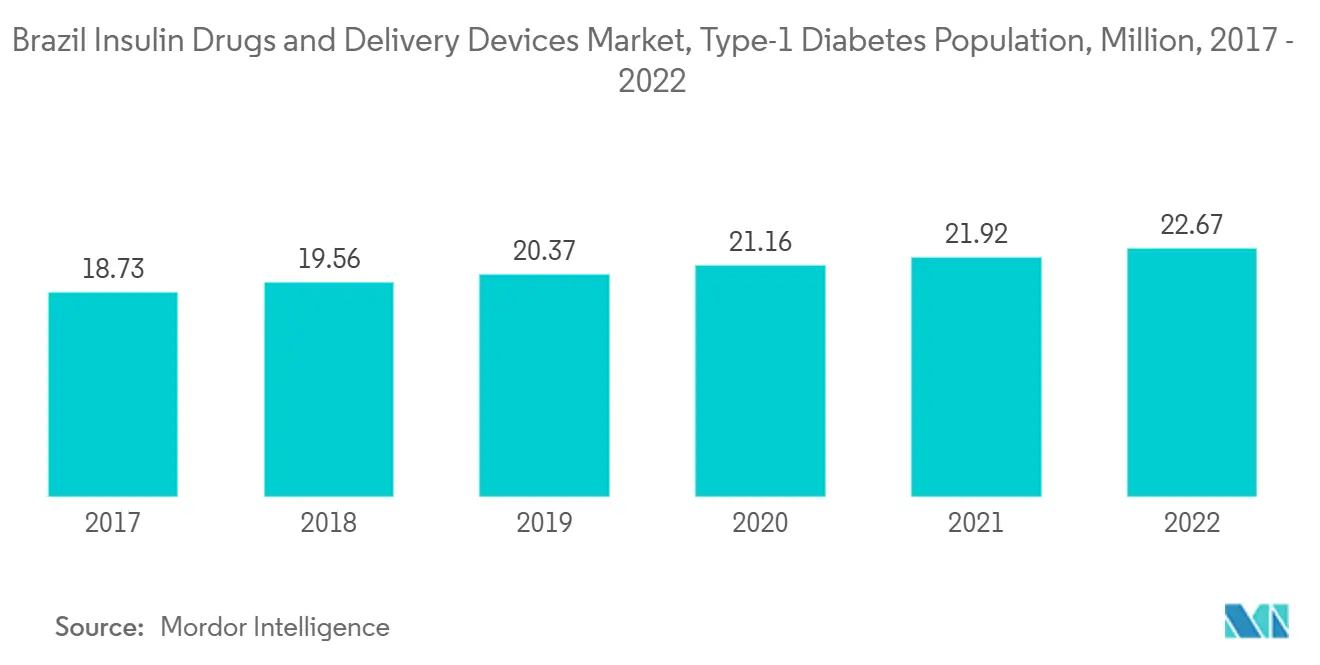
According to IDF Diabetes Atlas 2021, 15.7 million adults, about 10.5%, had diabetes in Brazil. The cost of diabetes-related health expenditure in Brazil is the third highest in the world. In addition, 18 million adults, around 11.9%, includes Impaired Glucose Tolerance, which places them at high risk of developing type 2 diabetes. 32% of people living with diabetes in Brazil are undiagnosed. Additional data on glycemic control in Brazil show that only 25% met the therapeutic goal of glycated haemoglobin (HbA1c) < 7% before the pandemic, as recommended by the Brazilian Diabetes Society (SBD).
In Brazil, the public health system (Sistema Único de Saúde; SUS) progressively increased the assistance available for individuals with diabetes. The Ministry of Health established a list of medications and supplies the Brazilian Health System (SUS) provided to patients suffering from diabetes. However, their supply is usually insufficient or recommended for optimal patient management across cities. The high prevalence of diabetes is associated with a significant economic burden.
When diabetes is undetected or inadequately treated, people with diabetes are at risk of serious and life-threatening complications, such as heart attack, stroke, kidney failure, blindness, and lower-limb amputation. These result in reduced quality of life and higher healthcare costs, leading to a greater need for access to care. Various evidence suggests that diabetes can be successfully managed, especially when detected early. Multifactorial intervention, including control of blood glucose, blood pressure, and lipids, can reduce the range of diabetes-related microvascular and macrovascular complications and premature mortality.
Therefore, owing to the increasing diabetes prevalence, the studied market is anticipated to grow over the analysis period.
Insulin disposable pens hold the highest market share in the insulin delivery devices segment in the current year
Insulin Disposable Pens occupied the highest market share of about 58% in the insulin delivery devices segment in the current year.
A disposable insulin pen contains a prefilled amount of insulin. When the pen is empty, it is thrown away. Insulin pens are much smaller, more portable than syringes, and contain the medicine preloaded into the delivery mechanism. The needles are easy to use and can be disposed of by twisting or snapping. The pens are usually colour-coded, making it easier to know which type of insulin and how much it will be received from them. The disposable insulin pens are considered more consumer-friendly, as they are smaller and less noticeable than the classic vial-and-syringe. These devices are also more portable for consumers. Some pens are smart insulin pens that easily connect to an app on the phone to monitor blood sugar levels and remind when to take the next insulin dose.
The high prevalence of diabetes is associated with a significant economic burden. The costs of diabetes are increased in patients with co-morbidities such as hypertension and hyperlipidemia and who develop complications. Costs increase with an increasing number of complications. The Federal Government of Brazil partnered with numerous private companies to primarily utilize their supply chain (manufacturing, distribution, and retailers) to ensure low device prices. Such factors helped the increased adoption of these products in the Brazilian market.
Competitive Landscape
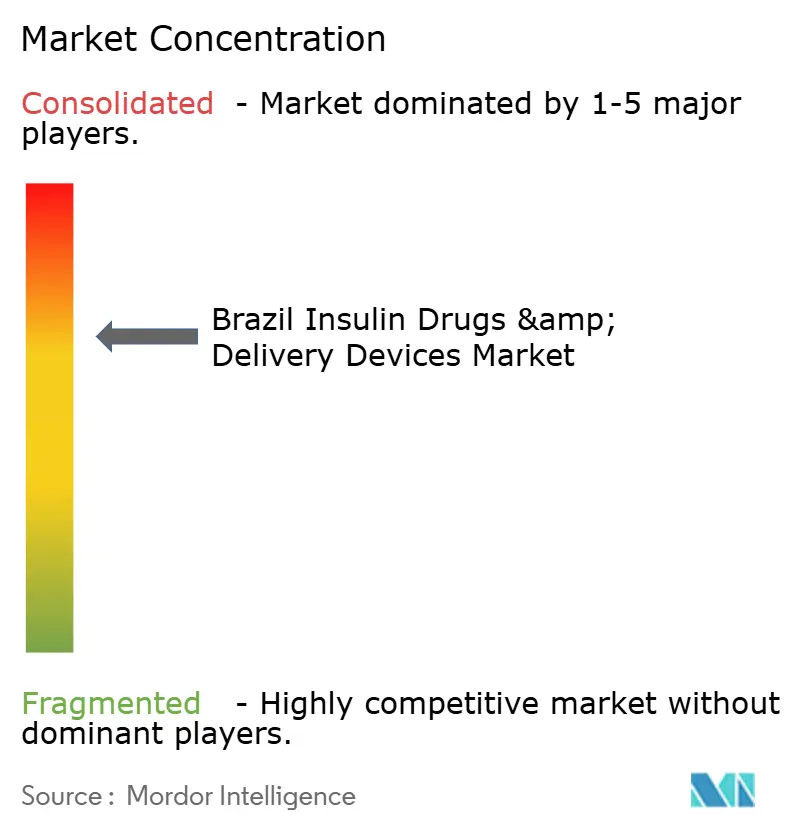
The Brazil Insulin Drugs and Delivery Devices Market is moderately consolidated, with few significant and generic players. Mergers and acquisitions between the players recently helped the companies strengthen their market presence. Eli Lilly and Boehringer Ingelheim allied in developing and commercializing Basaglar (Insulin Glargine). Additionally, the players in the recent past helped the companies strengthen their market presence. For example, Novo Nordisk collaborated with Ypsomed to provide better insulin therapy solutions.
Brazil Insulin Drugs & Delivery Devices Industry Leaders
-
Novo Nordisk
-
Eli Lilly
-
Sanofi
-
Medtronic
-
Becton Dickinson
- *Disclaimer: Major Players sorted in no particular order
Recent Industry Developments
- January 2023: Lannett Company provided an update on the clinical advancement and development of its biosimilar insulin aspart and biosimilar insulin glargine products. Lannett is developing both products with its strategic alliance partner, the HEC Group of Companies (HEC).
- March 2022: Oramed announced ORMD-0801 (a new molecule) is being evaluated in two pivotal Phase 3 trials and can be the first oral insulin capsule with the most convenient and safest way to deliver insulin therapy. This drug is expected to be a game-changer in the insulin and oral anti-diabetes drugs markets.
Brazil Insulin Drugs & Delivery Devices Market Report Scope
Insulin is mainly used to treat type 1 diabetes but can be used in people with type 2 diabetes if insulin levels remain low despite using other medications. There are different ways to inject insulin into a patient's body, using syringes, pens, pumps, and jet injectors, giving them various options for insulin delivery. The Brazil Insulin Drugs and Delivery Devices Market is segmented into Drugs (Basal or Long-acting insulins, Bolus or Fast-acting insulins, traditional human insulins, combination insulins, and biosimilar insulins) and devices (insulin pens, insulin pumps, insulin syringes, and jet injectors). The report offers the value (in USD million) and volume (in a million mL) for insulin drugs and (in unit million) for the devices for the above segments.
Drug
| Basal or Long-acting Insulins | Lantus (Insulin Glargine) |
| Levemir (Insulin Detemir) | |
| Toujeo (Insulin Glargine) | |
| Tresiba (Insulin Degludec) | |
| Basaglar (Insulin Glargine) | |
| Bolus or Fast-acting Insulins | NovoRapid/Novolog (Insulin aspart) |
| Humalog (Insulin lispro) | |
| Apidra (Insulin glulisine) | |
| FIASP (Insulin aspart) | |
| Admelog (Insulin lispro Sanofi) | |
| Traditional Human Insulins | Novolin/Mixtard/Actrapid/Insulatard |
| Humulin | |
| Insuman | |
| Combination Insulins | NovoMix (Biphasic Insulin aspart) |
| Ryzodeg (Insulin degludec and Insulin aspart) | |
| Xultophy (Insulin degludec and Liraglutide) | |
| Soliqua/Suliqua (Insulin glargine and Lixisenatide) | |
| Biosimilar Insulins | Insulin Glargine Biosimilars |
| Human Insulin Biosimilars |
Device
| Insulin Pens | Cartridges in reusable pens |
| Disposable insulin pens | |
| Insulin Pumps | Insulin Pump Devices |
| Insulin Pump Reservoirs | |
| Insulin Infusion sets | |
| Insulin Syringes | |
| Insulin Jet Injectors |
| Drug | Basal or Long-acting Insulins | Lantus (Insulin Glargine) |
| Levemir (Insulin Detemir) | ||
| Toujeo (Insulin Glargine) | ||
| Tresiba (Insulin Degludec) | ||
| Basaglar (Insulin Glargine) | ||
| Bolus or Fast-acting Insulins | NovoRapid/Novolog (Insulin aspart) | |
| Humalog (Insulin lispro) | ||
| Apidra (Insulin glulisine) | ||
| FIASP (Insulin aspart) | ||
| Admelog (Insulin lispro Sanofi) | ||
| Traditional Human Insulins | Novolin/Mixtard/Actrapid/Insulatard | |
| Humulin | ||
| Insuman | ||
| Combination Insulins | NovoMix (Biphasic Insulin aspart) | |
| Ryzodeg (Insulin degludec and Insulin aspart) | ||
| Xultophy (Insulin degludec and Liraglutide) | ||
| Soliqua/Suliqua (Insulin glargine and Lixisenatide) | ||
| Biosimilar Insulins | Insulin Glargine Biosimilars | |
| Human Insulin Biosimilars | ||
| Device | Insulin Pens | Cartridges in reusable pens |
| Disposable insulin pens | ||
| Insulin Pumps | Insulin Pump Devices | |
| Insulin Pump Reservoirs | ||
| Insulin Infusion sets | ||
| Insulin Syringes | ||
| Insulin Jet Injectors | ||
Key Questions Answered in the Report
How big is the Brazil Insulin Drugs & Delivery Devices Market?
The Brazil Insulin Drugs & Delivery Devices Market size is expected to reach USD 0.96 billion in 2026 and grow at a CAGR of 1.10% to reach USD 1.02 billion by 2032.
What is the Brazil Insulin Drugs & Delivery Devices Market size in 2027?
In 2027, the Brazil Insulin Drugs & Delivery Devices Market size is expected to reach USD 0.97 billion.
Who are the key players in Brazil Insulin Drugs & Delivery Devices Market?
Novo Nordisk, Eli Lilly, Sanofi, Medtronic and Becton Dickinson are the major companies operating in the Brazil Insulin Drugs & Delivery Devices Market.
What years does this Brazil Insulin Drugs & Delivery Devices Market cover, and what was the market size in 2025?
In 2025, the Brazil Insulin Drugs & Delivery Devices Market size was estimated at USD 0.95 billion. The report covers the Brazil Insulin Drugs & Delivery Devices Market historical market size for years: 2021, 2022, 2023, 2024, and 2025. The report also forecasts the Brazil Insulin Drugs & Delivery Devices Market size for years: 2027, 2028, 2029, 2030, 2031, and 2032.