
Biodegradable Scaffold Market Size and Share
Market Overview
| Study Period | 2020 - 2031 |
|---|---|
| Market Size (2026) | USD 0.68 Billion |
| Market Size (2031) | USD 1.16 Billion |
| Growth Rate (2026 - 2031) | 11.28 % |
| Fastest Growing Market | Asia-Pacific |
| Largest Market | North America |
| Market Concentration | Medium |
Major Players *Disclaimer: Major Players sorted in no particular order Image © Mordor Intelligence. Reuse requires attribution under CC BY 4.0. | |
Biodegradable Scaffold Market Analysis by Mordor Intelligence
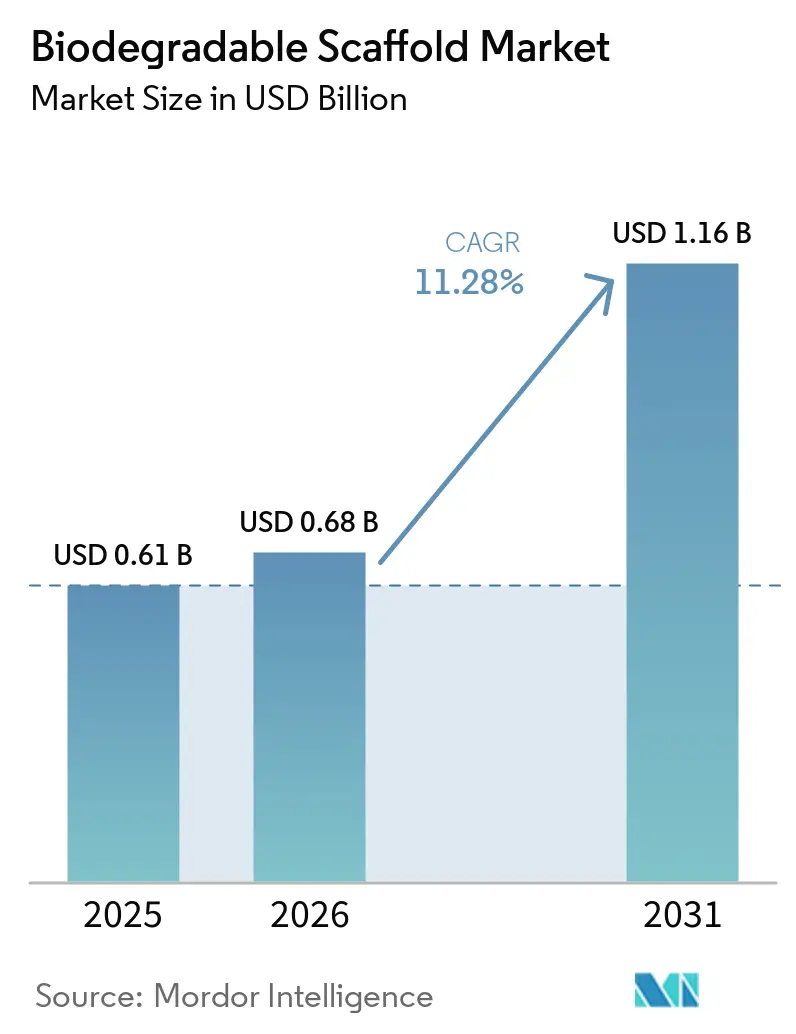
The Biodegradable Scaffold Market was valued at USD 0.61 billion in 2025 and is estimated to reach USD 0.68 billion in 2026. The market is further projected to grow to USD 1.16 billion by 2031, registering a CAGR of 11.28% during the forecast period from 2026 to 2031.
Demand is supported by the need for temporary structures in orthopedic repair, wound treatment, and cardiac procedures. Resorbable products can address a clinical need and then degrade after their intended function is complete. More production is moving from academic settings to qualified contract manufacturing facilities. This shift can lower unit costs and improve access for hospitals that have tighter procurement budgets. It also creates opportunities for suppliers that combine material design, clinical evidence, and reliable manufacturing.
Key Report Takeaways
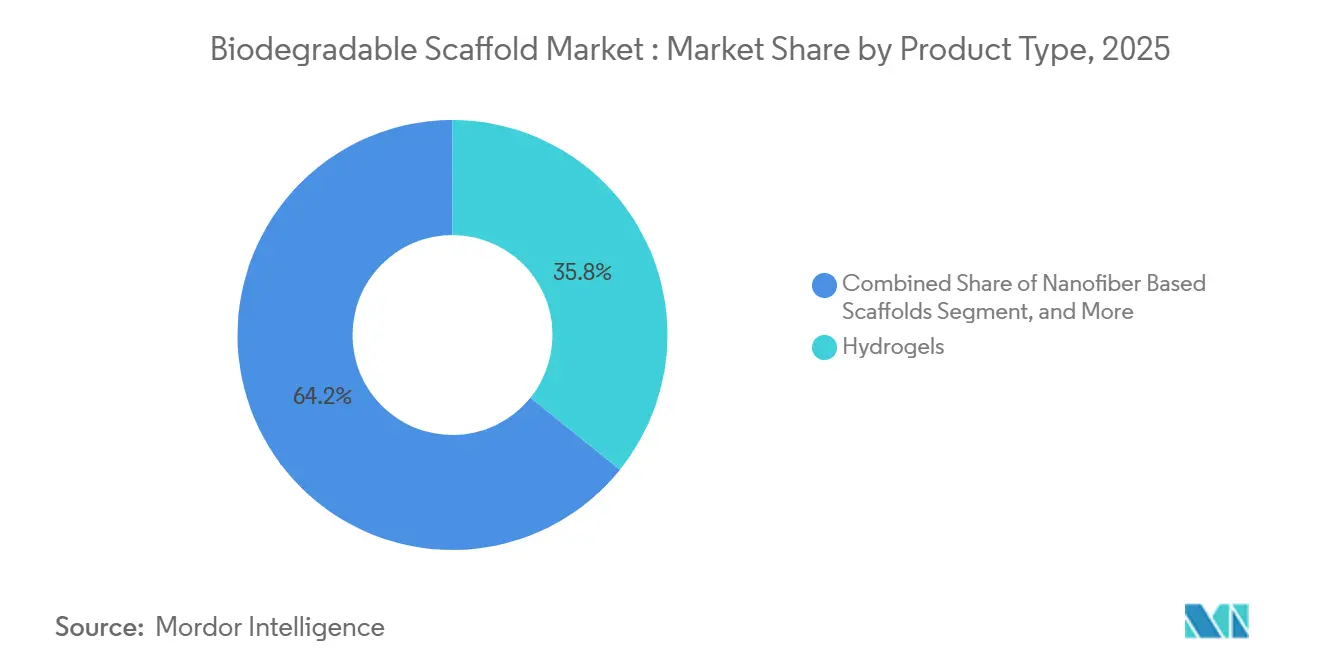
- By product type, hydrogels held 35.78% of product revenue in 2025, while nanofiber-based scaffolds are forecast to grow at 11.59% CAGR through 2031 in the biodegradable scaffold market.
- By technology, 3D printing accounted for 39.52% of technology revenue in 2025, while decellularized technology is expected to expand at 12.36% CAGR through 2031.
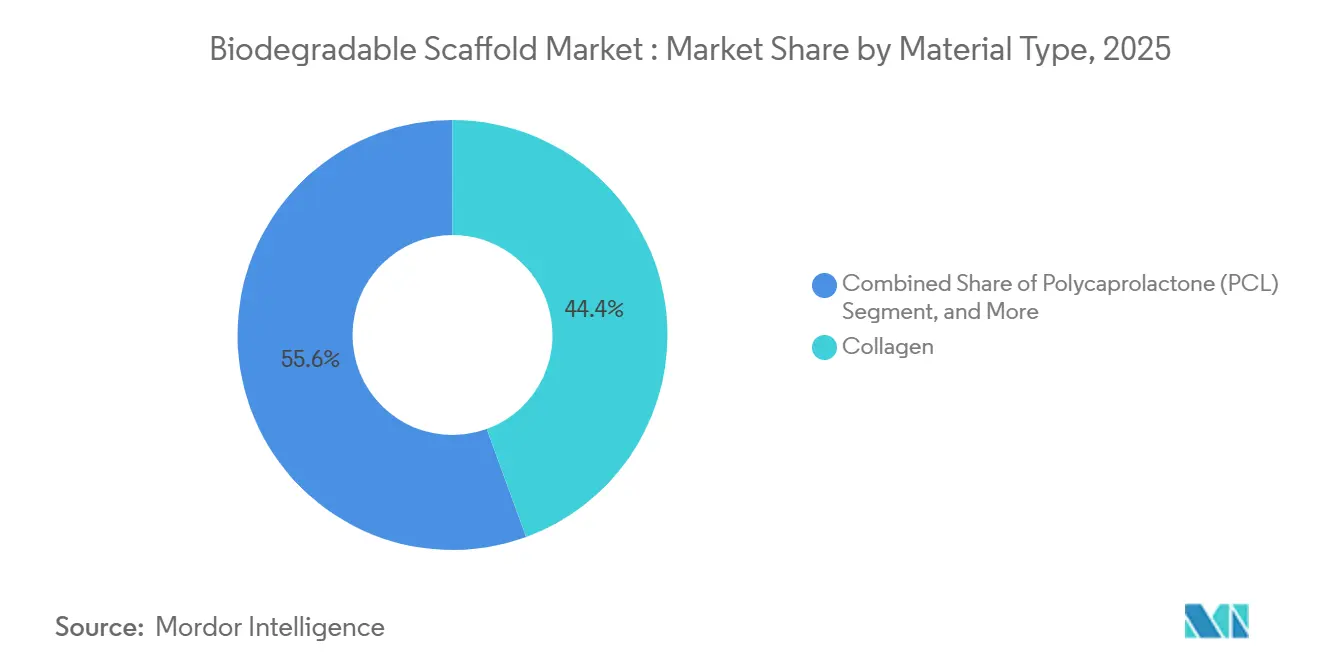
- By material type, collagen represented 44.43% of material revenue in 2025, while PCL is projected to advance at 12.89% CAGR through 2031 in the biodegradable scaffold market.
- By application, orthopedics, musculoskeletal, and spine held 26.96% of application revenue in 2025, while cardiology and vascular are projected to grow at 13.59% CAGR through 2031.
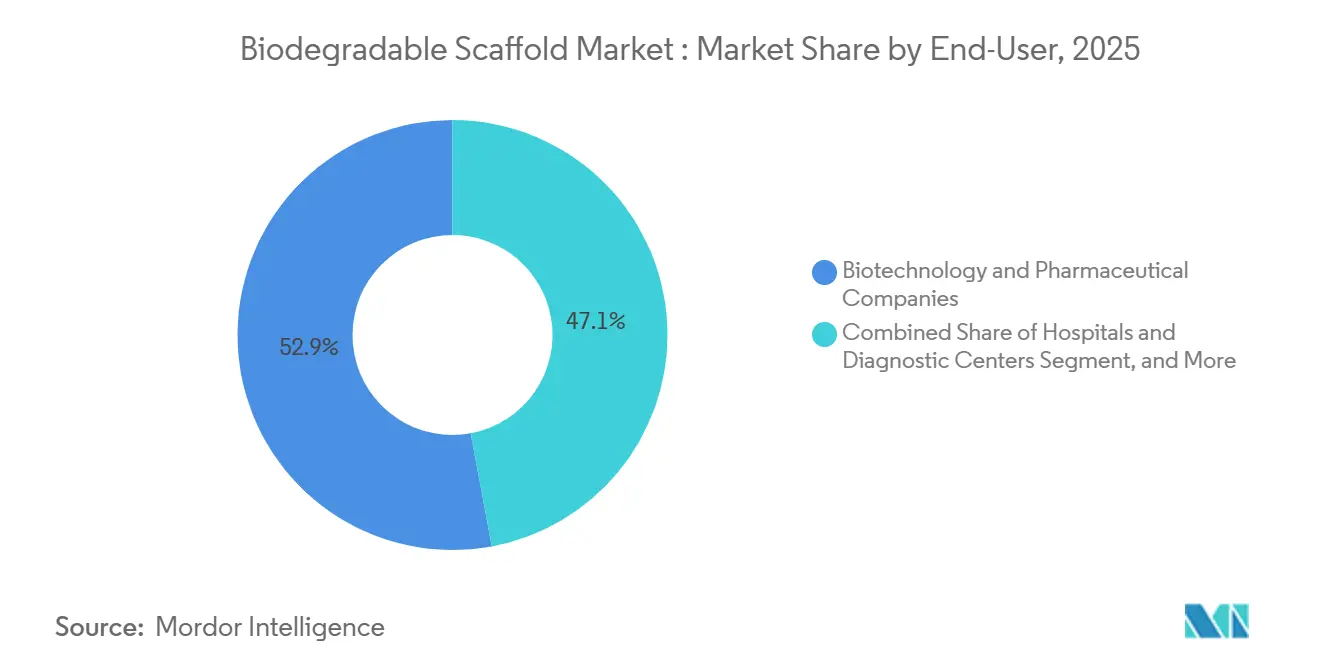
- By end user, biotechnology and pharmaceutical companies represented 52.92% of end-user demand in 2025, while hospitals and diagnostic centers are projected to record a 14.17% CAGR through 2031 in the biodegradable scaffold market.
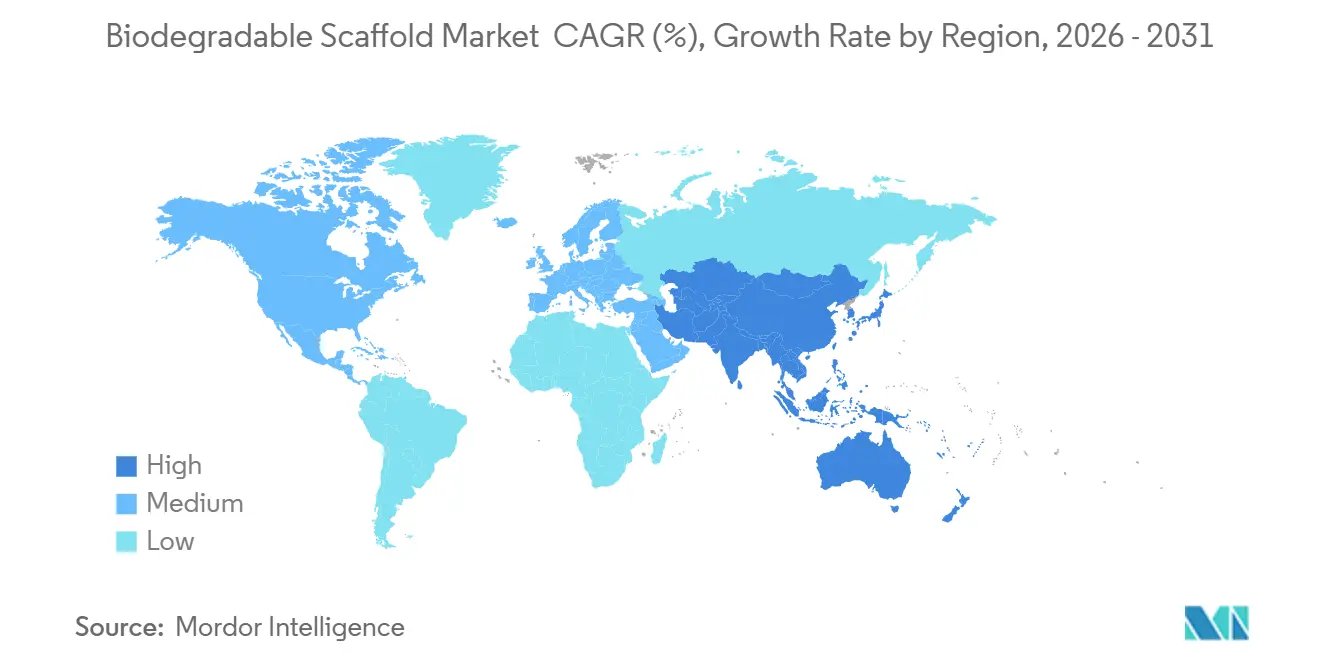
- By geography, North America commanded 39.55% of the biodegradable scaffold market in 2025; Asia-Pacific is forecast to register a 14.83% CAGR through 2031.
Note: Market size and forecast figures in this report are generated using Mordor Intelligence’s proprietary estimation framework, updated with the latest available data and insights as of January 2026.
Market Trends and Insights
Drivers Impact Analysis of Biodegradable Scaffold Market *
| Driver | (~) % Impact on CAGR Forecast | Geographic Relevance | Impact Timeline |
|---|---|---|---|
| Increasing Adoption of Regenerative Medicine and Tissue Engineering | +2.8% | Global, concentrated in North America and Europe | Long term (≥ 4 years) |
| Rising Orthopedic, Spine, Trauma, and Chronic-Wound Burden | +2.3% | Global, with APAC and North America leading procedural volumes | Medium term (2-4 years) |
| 3D Printing and Patient-Specific Scaffold Manufacturing | +2.1% | North America and Europe, with early APAC gains in Japan and South Korea | Medium term (2-4 years) |
| Translation of Scaffold-Based Cell, Drug-Delivery, and Organ-Repair Platforms | +1.4% | North America, Europe, and Japan | Long term (≥ 4 years) |
| GMP Outsourcing and CDMO Capacity Expansion for Clinical-Grade Scaffolds | +0.9% | North America and Europe, with spillover to India and South Korea | Medium term (2-4 years) |
| Hospital Procurement Preference for Temporary, Resorbable Implants | +0.8% | Global, with early gains in GCC and Southeast Asia | Short term (≤ 2 years) |
| Source: Mordor Intelligence | |||
Increasing Adoption of Regenerative Medicine and Tissue Engineering
Regenerative medicine has moved beyond experimental settings in several major markets. In September 2025, the FDA had received nearly 370 RMAT designation requests and had approved 184 requests. It had cleared 13 RMAT-designated products for marketing by June 2025. The FDA issued draft guidance on expedited programs for regenerative medicine in September 2025. The guidance supports shorter development pathways for qualifying therapies. Scaffold and matrix carriers can benefit as cell therapy programs progress through development. The Biodegradable scaffold market can therefore draw demand from a broader regenerative medicine pipeline.
Rising Orthopedic, Spine, Trauma, Chronic-Wound Burden, and Hospital Adoption
Orthopedic repair, spine procedures, trauma treatment, and chronic wounds create recurring requirements for biodegradable supports. Organogenesis stated that knee osteoarthritis affected 31 million Americans and could exceed 34 million by 2027. In April 2026, its 170-patient trial of PuraPly AM met the primary endpoint for diabetic foot ulcer closure at 12 weeks. The BEAR Implant provides a resorbable collagen scaffold for bridging torn ACL ends. It fully resorbs within 8 weeks. Hospitals can favor temporary implants when they fit established surgical workflows. This supports steadier procurement across wound, musculoskeletal, and spinal care.
3D Printing, Patient-Specific Manufacturing, and GMP Outsourcing
Additive manufacturing enables controlled porosity and site-specific mechanical design in PCL, PLA, PLGA, collagen, and composite systems.[1] A 2026 study reported that a 3D-printed gelatin and alginate scaffold supported cell colonization, extracellular matrix formation, and angiogenesis in vivo.[2] A gyroid PLDLLA and beta-TCP scaffold achieved mechanical properties aligned with trabecular mandibular bone in complex craniofacial use.[3] These capabilities support patient-specific devices and more defined performance specifications. Contract manufacturers can provide qualified production capacity without requiring each developer to build internal facilities. The Biodegradable scaffold market may benefit as clinical teams combine imaging, design, fabrication, and validation in more connected workflows.
Translation of Scaffold-Based Cell, Drug-Delivery, and Organ-Repair Platforms
Scaffolds are increasingly designed as cell carriers and drug-delivery systems rather than only structural supports. Anika Therapeutics filed the final PMA module for Hyalofast on October 31, 2025. The company reported that Hyalofast had treated more than 35,000 patients in over 35 countries. A 2026 study reported decellularized lung scaffolds with collagen and elastin preservation within 1 percentage point of fresh tissue.[4] Bioactive scaffold systems can command stronger pricing than standard materials when they demonstrate clinical value. This can support research spending and the expansion of clinical indications.
Restraints Impact Analysis of Biodegradable Scaffold Market *
| Restraint | (~) % Impact on CAGR Forecast | Geographic Relevance | Impact Timeline |
|---|---|---|---|
| Long Clinical Validation and Regulatory Classification Cycles | -1.4% | Global, acute in Europe after the MDR transition | Long term (≥ 4 years) |
| High Cost of GMP Manufacturing, Sterility Assurance, and Reimbursement Evidence | -1.1% | Global, most pronounced in emerging-market hospital segments | Medium term (2-4 years) |
| Trade-Offs Between Mechanical Strength, Degradation Rate, and Biocompatibility | -0.7% | Global, with specific effects in load-bearing orthopedic uses | Long term (≥ 4 years) |
| Lot-Release Variability from Biomaterial and Sterilization Sensitivity | -0.5% | Global, with higher exposure in collagen and dECM categories | Medium term (2-4 years) |
| Source: Mordor Intelligence | |||
Long Clinical Validation, Regulatory Classification, and Reimbursement Evidence
Regulatory classification uncertainty remains a material constraint for biodegradable scaffold developers. Biological components can place products under both medical device and advanced therapy pathways in Europe. This can extend development timelines by 3 to 5 years compared with predicate-based U.S. routes. Hyalofast had more than 15 years of clinical use in over 35 countries before its U.S. PMA filing process. Its Phase III study faced COVID-related disruptions and changes to the microfracture control arm. The need for clinical evidence, sterility validation, and payer support can raise development costs. These requirements can slow adoption in hospital systems with limited reimbursement headroom.
Manufacturing Cost, Material Performance, and Lot-Release Variability
Clinical-grade production requires controlled raw material sourcing, cleanroom operations, validated sterilization, and consistent release testing. Decellularized scaffolds require donor tissue procurement and extensive bioburden testing. They also require batch-to-batch extracellular matrix standardization. Developers must balance mechanical strength, degradation rate, and biocompatibility in load-bearing uses. Collagen and dECM products can face added sensitivity to material variability and sterilization. External manufacturing can reduce a developer’s internal capital requirement, but it does not remove system-wide cost or reimbursement pressure.
*Our forecasts treat driver/restraint impacts as directional, not additive. The impact forecasts reflect baseline growth, mix effects, and variable interactions.
Biodegradable Scaffold Market Segment Analysis
By Product Type:
Hydrogels Lead Revenue While Nanofibers Expand FasterHydrogels accounted for 35.78% of product revenue in 2025. Their high water content and adjustable mechanical properties support cell encapsulation and drug delivery. Injectable formats can reduce the need for more invasive surgery. This can appeal to hospital committees that assess clinical workflow and resource use. Polymeric scaffolds serve orthopedic and spinal procedures that need defined structural performance. Bioactive glass-reinforced and composite products sit within the other product category. Isto Biologics acquired NovaBone Products in August 2026. NovaBone technology has been used in more than 2 million procedures across over 40 countries.
Nanofiber scaffolds are forecast to grow at 11.59% CAGR through 2031. This is the fastest product growth rate in the global category outlook. Commercial-scale electrospinning and additional regulatory clearances support this development. Atreon Orthopedics received FDA 510(k) clearance for BioCharge in February 2025. BioCharge is an electrospun PGA and PLCL nanofiber scaffold for rotator cuff repair. The company reported no adverse events at 5 months after implantation. Nanofiber structures can support cell attachment and controlled degradation. These attributes are relevant to tendon, nerve, and vascular repair. This product pathway strengthens the role of specialized fabrication in the biodegradable scaffold market.

By Technology:
3D Printing Leads While Decellularization Gains Momentum3D printing held 39.52% of technology revenue in 2025. It leads the biodegradable scaffold market through a design process that connects imaging, optimization, fabrication, and validation. This can shorten development cycles relative to conventional fabrication. Synthetic fabrication serves cost-sensitive and high-volume orthopedic procedures. Electrospinning serves fibrous tissue applications that need extracellular matrix-like structures. Each technology addresses a distinct combination of cost, structure, and clinical use. The Biodegradable scaffold industry benefits when these platforms remain complementary rather than interchangeable. This allows suppliers to choose a process that fits a product’s required architecture.
Decellularized technology is forecast to grow at 12.36% CAGR through 2031. It is the fastest-growing technology in the biodegradable scaffold market. A 2026 study reported more than 99.8% nuclei removal from lung scaffolds. The same work preserved collagen and elastin within 1 percentage point of native tissue. A 2025 review described the importance of combined physical and chemical methods for biosafe scaffolds with controlled immunogenicity. Greater protocol consistency can support GMP release and wider clinical use. Manufacturing scalability remains necessary for the technology to move beyond specialized applications.
By Material Type:
Collagen Dominates While PCL Gains GroundCollagen held 44.43% of material revenue in 2025. It has broad biological recognition and a substantial clinical evidence base. It is used in wound care, orthopedics, and spinal surgery. PLA and PGA support resorbable fixation-related uses. Chitosan is used in wound dressings and antimicrobial scaffold coatings. These materials give the biodegradable scaffold market a range of degradation and performance options. Royal Biologics and Jellagen formed a partnership in February 2026. The partnership introduced jellyfish-derived Collagen Type Zero for North American regenerative medicine uses.
PCL is projected to grow at 12.89% CAGR through 2031. It is the fastest-growing material type in the overall outlook. Its degradation profile is 12 to 18 months. This supports 3D-printed patient-specific implants and electrospun nanofiber systems. A 2026 study evaluated a PCL and bioglass composite scaffold for phalanx reconstruction. The study used AI-assisted modeling to predict bone regeneration over 3 years after implantation. PCL is processable across several fabrication methods. Composite designs can narrow the historical trade-off between biological activity and mechanical performance.
By Application:
Orthopedic Demand Leads While Cardiology and Vascular Grow FasterOrthopedics, musculoskeletal, and spine accounted for 26.96% of application revenue in 2025. This segment held the largest biodegradable scaffold market share among applications. ACL repairs, rotator cuff procedures, spinal fusion, and fracture fixation create regular product demand. These procedures require materials with appropriate structural and degradation characteristics. Dental and cranio-maxillofacial care also uses precision 3D-printed gyroid scaffolds. A 2026 study examined PLDLLA and beta-TCP scaffolds for craniofacial reconstruction. Cancer and disease modeling is another demand area. Pharmaceutical companies are moving from 2D models toward scaffold-based 3D formats for drug screening.
Cardiology and vascular applications are projected to grow at 13.59% CAGR through 2031. This is the fastest application trajectory in the biodegradable scaffold market. LEPU Medical reported the first Russian implantation of its MemoSorb biodegradable occluder in June 2026. The procedure addressed atrial septal defect and patent foramen ovale closure. A 2026 review described the value of decellularized extracellular matrix scaffolds in cardiac reconstruction. Tubular dECM constructs can preserve structural cues relevant to cardiovascular tissue engineering. These developments support a wider use case for bioresorbable cardiac devices.
By End User:
Pharma and Biotech Lead While Hospitals Grow FastestBiotechnology and pharmaceutical companies represented 52.92% of end-user demand in 2025. They held the largest end-user revenue share. Drug discovery, preclinical toxicology, and organ-on-chip programs require repeated scaffold purchases. These research uses can consume larger volumes than individual clinical procedures. Procurement decisions are usually driven by specification and reproducible performance. Academic institutes and research laboratories often adopt new materials before clinical customers. Their activity can indicate categories that may later achieve clinical volume. Research funding cycles remain important to the purchasing pattern of these buyers.
Hospitals and diagnostic centers are forecast to grow at 14.17% CAGR through 2031. This is the fastest end-user growth rate in the biodegradable scaffold market. The growth reflects wider integration into wound care, orthopedic repair, and reconstructive surgery. Integra LifeSciences commercially launched the meshed PriMatrix Dermal Scaffold in June and July 2026. The company stated that the format provides 2x expanded coverage per case and is graftable within 2 weeks. StimLabs received FDA 510(k) clearance for DermaForm in February 2026. The collagen scaffold particulate device was developed with Geistlich.
Geography Analysis
North America and Europe Biodegradable Scaffold Market
North America held 39.55% of global revenue in 2025. It was the largest regional revenue contributor. The U.S. system can adopt premium scaffold products when clinical evidence and reimbursement pathways are established. FDA 510(k) and PMA routes have created a regular flow of cleared scaffold products. This supports confidence in hospital procurement decisions. Europe was the second-largest regional market. Germany, the United Kingdom, and France were its principal volume centers. The MDR transition raised the evidence requirement for Class III scaffold products. This reduced the number of competing products and favored suppliers with strong clinical data packages.
APAC Biodegradable Scaffold Market
Asia-Pacific is projected to grow at 14.83% CAGR through 2031. It is the fastest-growing regional part of the biodegradable scaffold market size. Japan’s METI has tracked regenerative medicine supply chains as a strategic area. Satake MultiMix is building large-scale single-use bioreactor capacity in Saitama for completion in 2026. Japan’s Sakigake designation can support the commercialization of innovative technologies. China is expanding domestic production through biotechnology initiatives. Its suppliers compete with imported products in commodity collagen and synthetic polymer categories. South Korea’s engineering base and India’s growing CDMO capacity add to the regional opportunity.
MEA and South America Biodegradable Scaffold Market
The Middle East and Africa and South America remain smaller regional opportunities. Saudi Arabia and the UAE are investing in healthcare infrastructure for orthobiologics and regenerative medicine. These investments can create early hospital demand that is currently served by imports. South Africa has the most developed regulatory environment for advanced medical products in the region. Brazil leads South America through its patient base, private hospital sector, and biomedical research activity. Argentina’s evolving advanced-therapy regulations can open localized procurement opportunities. Pricing constraints remain an important barrier in both regions.
Competitive Landscape
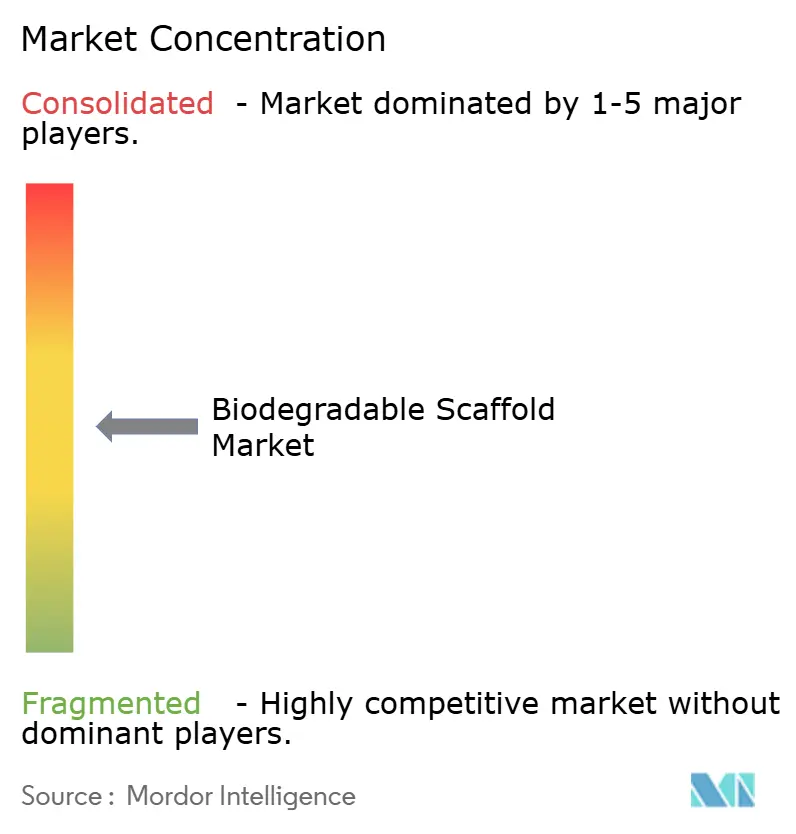
The biodegradable scaffold market is moderately fragmented. Integra LifeSciences, Stryker, Zimmer Biomet, Smith+Nephew, Medtronic, and Organogenesis form the established group of larger suppliers. Their portfolios benefit from hospital relationships, broad indications, and reimbursement coverage. Osteopore, BellaSeno, 3DBioFibR, Vericel, and Atreon Orthopedics compete through material innovation and specialized applications. Their approaches also emphasize digital fabrication and targeted manufacturing partnerships. The biodegradable scaffold industry remains open to specialists because clinical use is diverse. Suppliers must match materials and delivery formats to specific procedures. This reduces the likelihood that one portfolio will meet every clinical requirement.
Isto Biologics acquired NovaBone Products in August 2026. The transaction added a bioactive glass materials platform to its bone-graft portfolio. Apheon entered exclusive negotiations in 2025 to acquire a majority stake in Teknimed. The move sought to build a transatlantic orthopedic biomaterials platform. These actions reflect interest in acquiring material platforms with established clinical evidence. Smaller companies continue to differentiate through proprietary fabrication systems. Scaffold-based cancer and disease modeling remains a less developed opportunity because many available products were designed primarily for clinical use.
Jellagen and Royal Biologics partnered in February 2026 around jellyfish-derived Collagen Type Zero. The material offers a non-mammalian option for wound matrices, scaffolds, and implantable products. Corbion and Evonik supply feedstocks that affect mechanical performance and degradation behavior. Integra LifeSciences plans a controlled Q4 2026 SurgiMend relaunch from its Braintree facility. Supply reliability has become a key competitive issue for hospital customers. Delivery disruptions can undermine product adoption even when a product has differentiated clinical characteristics. These considerations affect supplier selection across the biodegradable scaffold market.
Biodegradable Scaffold Industry Leaders
-
Medtronic
-
Merck KGaA
-
Smith+Nephew plc
-
Stryker Corporation
-
Zimmer Biomet Holdings, Inc.
- *Disclaimer: Major Players sorted in no particular order
Biodegradable Scaffold Market Companies Covered in this Report
- 3D Biotek LLC
- 3DBioFibR Inc.
- Akron Biotech
- Atreon Orthopedics
- BellaSeno GmbH
- Corbion N.V.
- Evonik Industries
- Integra LifeSciences
- Medtronic
- Merck
- Molecular Matrix, Inc.
- NuVasive
- Onkos Surgical
- Organogenesis
- Orthofix
- Osteopore Limited
- Poly-Med, Inc.
- REVA Medical, Inc.
- Smith+Nephew plc
- Stryker
- Thermo Fisher Scientific
- Vericel
- Zimmer Biomet
Recent Industry Developments in Biodegradable Scaffold Market
- August 2026: Isto Biologics acquired NovaBone Products LLC from Halma plc, adding bioactive glass-based bone graft products that had been used in more than 2 million clinical applications across over 40 countries. The acquisition expanded Isto's synthetic scaffold portfolio across the spine, orthopedics, trauma, and dental segments while strengthening its presence in Europe and the Asia-Pacific region.
- July 2026: Organogenesis received FDA acceptance of the Biologics License Application (BLA) for ReNu (azimplacel) for the treatment of symptomatic knee osteoarthritis. The FDA assigned a PDUFA target action date of April 24, 2027. ReNu had been evaluated in three large randomized controlled trials involving more than 1,300 patients, addressing a condition that affects approximately 31 million Americans.
- July 2026: Integra LifeSciences launched the meshed PriMatrix Dermal Scaffold, which provided two times greater surface coverage per case and could be grafted within two weeks. At the same time, the company increased production capacity at its Braintree facility to support the planned Q4 2026 relaunch of SurgiMend for hernia repair and breast reconstruction applications.
Global Biodegradable Scaffold Market Report Scope
As per the scope of the report, a biodegradable scaffold is a temporary three-dimensional structure made from biodegradable materials that supports the growth, attachment, and regeneration of cells and tissues. It gradually degrades within the body as new tissue forms, eliminating the need for surgical removal. These scaffolds are widely used in tissue engineering and regenerative medicine for repairing or regenerating bones, cartilage, skin, blood vessels, and other tissues.
The biodegradable scaffold market is segmented by product type, technology, material type, application, and end-user. By product type, the market is segmented into hydrogels, polymeric scaffolds, nanofiber-based scaffolds, and others. By technology, the market is segmented into 3D printing, decellularized technology, synthetic scaffold fabrication, electrospinning, and others. By material type, the market is segmented into polylactic acid (PLA), polyglycolic acid (PGA), polycaprolactone (PCL), collagen, chitosan, and others. By application, the market is segmented into orthopedics, musculoskeletal, and spine, neurology, dental and cranio-maxillofacial, cardiology and vascular, cancer and disease modeling, and others. By end-user, the market is segmented into hospitals and diagnostic centers, biotechnology and pharmaceutical companies, academic institutes and research laboratories, and others. The geography segment is further divided into North America, Europe, Asia-Pacific, the Middle East and Africa, and South America. The report also covers the estimated market sizes and trends for 17 countries across major regions globally. The report offers the market size and forecasts in value (USD) for the above segments.
| Hydrogels |
| Polymeric Scaffolds |
| Nanofiber Based Scaffolds |
| Others |
| 3D Printing |
| Decellularized Technology |
| Synthetic Scaffold Fabrication |
| Electrospinning |
| Others |
| Polylactic Acid (PLA) |
| Polyglycolic Acid (PGA) |
| Polycaprolactone (PCL) |
| Collagen |
| Chitosan |
| Others |
| Orthopedics, Musculoskeletal, and Spine |
| Neurology |
| Dental and Cranio-Maxillofacial |
| Cardiology and Vascular |
| Cancer and Disease Modeling |
| Others |
| Hospitals and Diagnostic Centers |
| Biotechnology and Pharmaceutical Companies |
| Academic Institutes and Research Laboratories |
| Others |
| North America | United States |
| Canada | |
| Mexico | |
| Europe | Germany |
| United Kingdom | |
| France | |
| Italy | |
| Spain | |
| Rest of Europe | |
| Asia-Pacific | China |
| India | |
| Japan | |
| Australia | |
| South Korea | |
| Rest of Asia-Pacific | |
| Middle East and Africa | GCC |
| South Africa | |
| Rest of Middle East and Africa | |
| South America | Brazil |
| Argentina | |
| Rest of South America |
| By Product Type | Hydrogels | |
| Polymeric Scaffolds | ||
| Nanofiber Based Scaffolds | ||
| Others | ||
| By Technology | 3D Printing | |
| Decellularized Technology | ||
| Synthetic Scaffold Fabrication | ||
| Electrospinning | ||
| Others | ||
| By Material Type | Polylactic Acid (PLA) | |
| Polyglycolic Acid (PGA) | ||
| Polycaprolactone (PCL) | ||
| Collagen | ||
| Chitosan | ||
| Others | ||
| By Application | Orthopedics, Musculoskeletal, and Spine | |
| Neurology | ||
| Dental and Cranio-Maxillofacial | ||
| Cardiology and Vascular | ||
| Cancer and Disease Modeling | ||
| Others | ||
| By End-User | Hospitals and Diagnostic Centers | |
| Biotechnology and Pharmaceutical Companies | ||
| Academic Institutes and Research Laboratories | ||
| Others | ||
| By Geography | North America | United States |
| Canada | ||
| Mexico | ||
| Europe | Germany | |
| United Kingdom | ||
| France | ||
| Italy | ||
| Spain | ||
| Rest of Europe | ||
| Asia-Pacific | China | |
| India | ||
| Japan | ||
| Australia | ||
| South Korea | ||
| Rest of Asia-Pacific | ||
| Middle East and Africa | GCC | |
| South Africa | ||
| Rest of Middle East and Africa | ||
| South America | Brazil | |
| Argentina | ||
| Rest of South America | ||
Key Questions Answered in the Report
What is the projected value of biodegradable scaffolds by 2031?
The biodegradable scaffold market is forecast to reach USD 1.16 billion by 2031, growing at an 11.28% CAGR from 2026.
Which product category leads revenue?
Hydrogels led product revenue with a 35.78% share in 2025 because they support cell encapsulation, drug delivery, and injectable use.
Which scaffold technology is growing fastest?
Decellularized technology is projected to grow at 12.36% CAGR through 2031, supported by advances in standardized tissue processing.
Which material has the fastest growth outlook?
PCL is projected to expand at 12.89% CAGR through 2031, supported by its processability and 12 to 18 month degradation profile.
Which application is expanding fastest?
Cardiology and vascular applications are expected to grow at 13.59% CAGR through 2031.
Which region has the highest growth rate?
Asia-Pacific is forecast to grow at 14.83% CAGR through 2031, supported by regional regenerative medicine capacity and domestic production.