
Beta-Carotene Market Size and Share
Market Overview
| Study Period | 2021 - 2031 |
|---|---|
| Market Size (2026) | USD 457.91 Million |
| Market Size (2031) | USD 601.68 Million |
| Growth Rate (2026 - 2031) | 5.62 % |
| Fastest Growing Market | Asia Pacific |
| Largest Market | Europe |
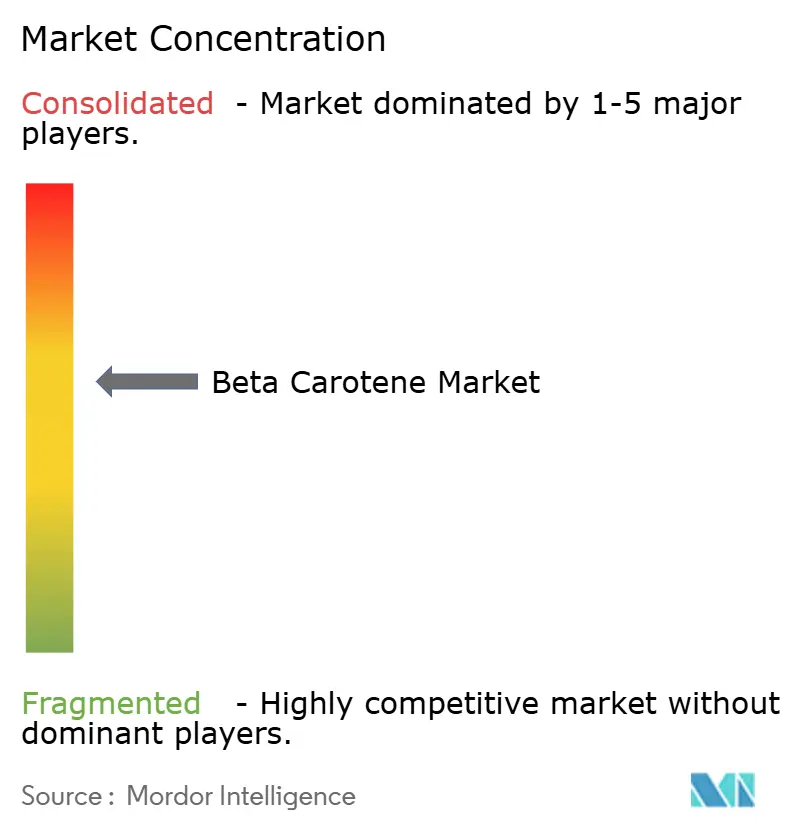
| Market Concentration | Medium |
Major Players *Disclaimer: Major Players sorted in no particular order Image © Mordor Intelligence. Reuse requires attribution under CC BY 4.0. | |
Beta-Carotene Market Analysis by Mordor Intelligence
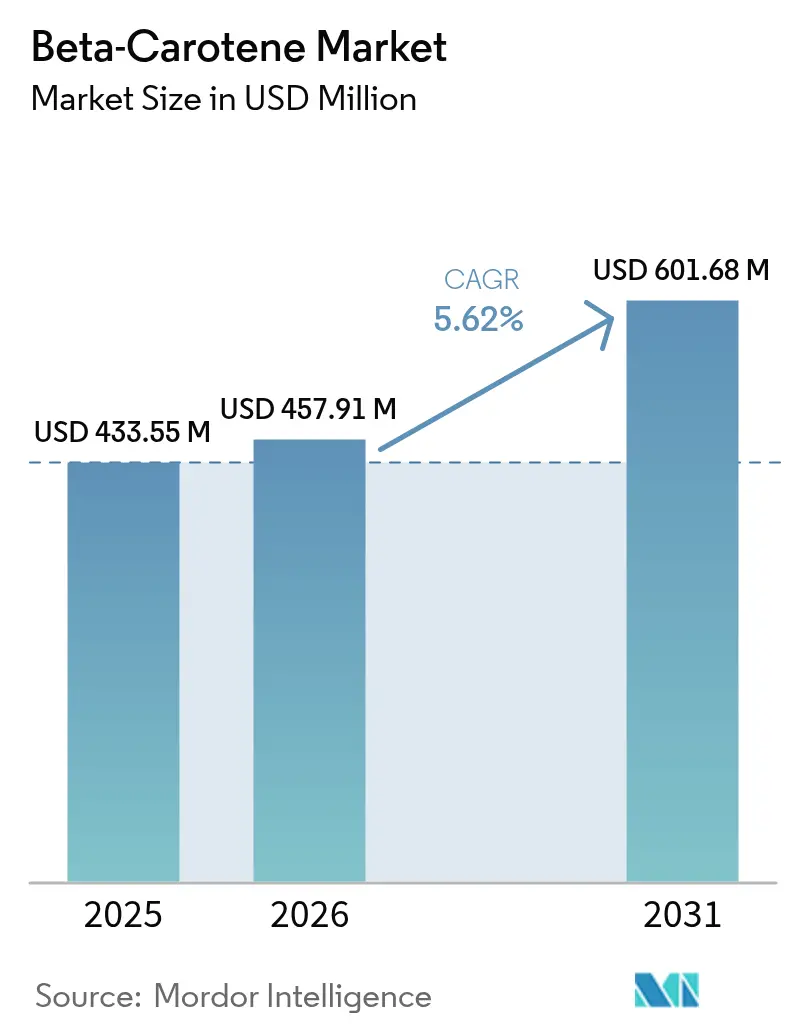
The global beta-carotene market size in 2026 is estimated at USD 457.91 million, growing from 2025 value of USD 433.55 million with 2031 projections showing USD 601.68 million, growing at 5.62% CAGR over 2026-2031. This growth is driven by government fortification programs in developing countries and regulations supporting natural food ingredients in developed markets. The increasing consumer preference for natural ingredients and rising health consciousness contribute to market expansion. The FDA's permanent classification of beta-carotene as a certified color additive and EFSA's updated safety protocols reinforce market stability through natural sourcing and quality standards. Additionally, the growing application of beta-carotene in dietary supplements, food and beverages, and animal feed sectors further supports market development. The rising awareness of vitamin A deficiency and the subsequent need for fortification programs in emerging economies create substantial opportunities for market growth.
Key Report Takeaways
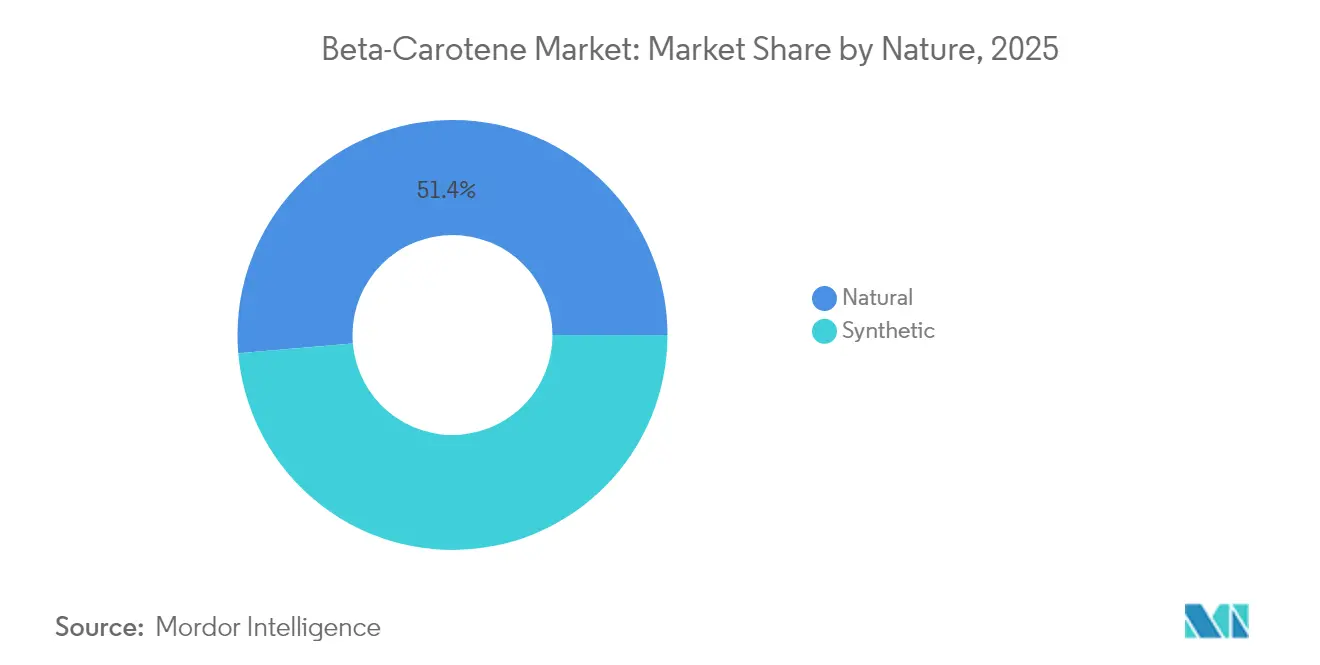
- By nature, the synthetic segment held a 48.65% share of the beta-carotene market in 2025, whereas the natural segment is projected to expand at a 7.24% CAGR through 2031.
- By form, powder products accounted for 72.14% share of the beta-carotene market in 2025; liquid variants are expected to grow at a 6.78% CAGR between 2026-2031.
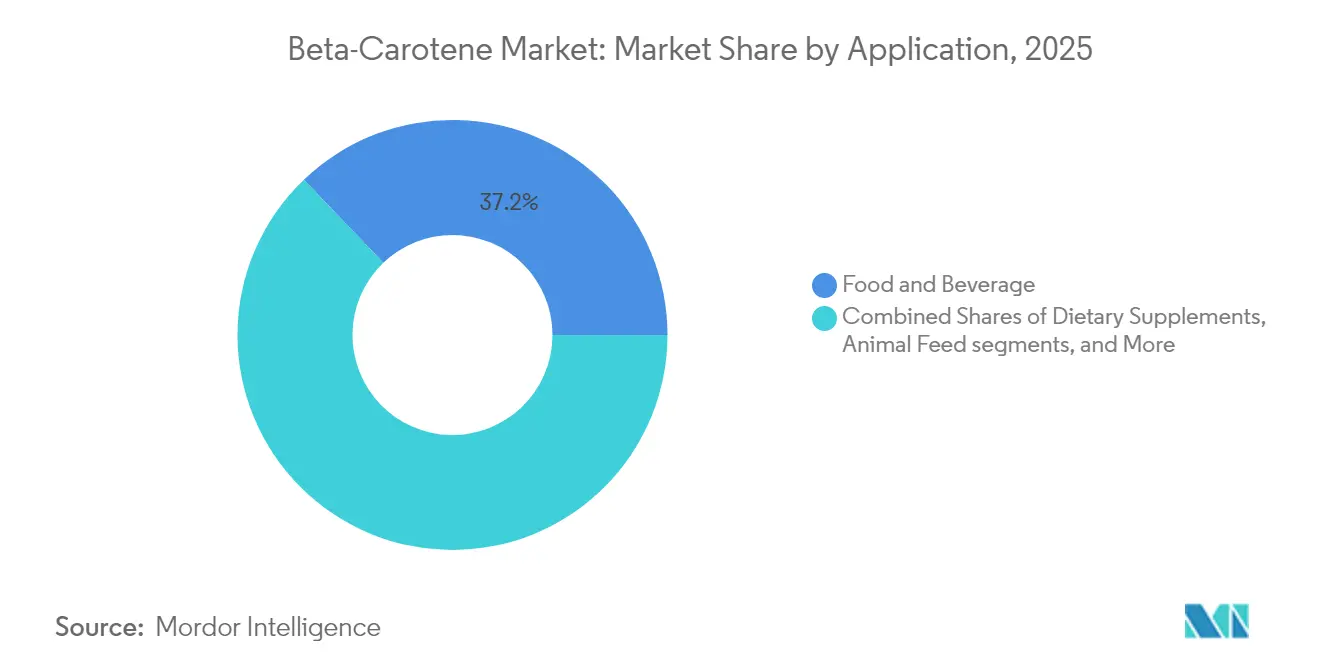
- By application, food and beverage led with a 37.15% contribution to the beta-carotene market in 2025, while dietary supplements are set to post the fastest 6.68% CAGR to 2031.
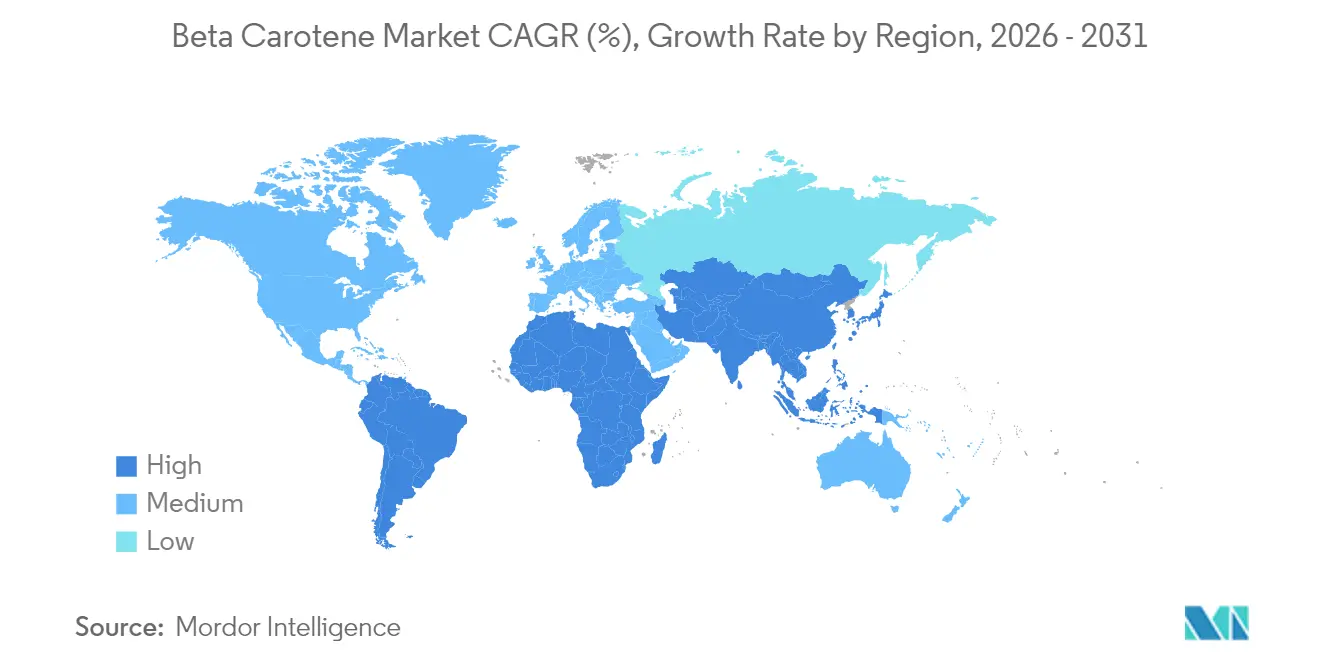
- By geography, Europe commanded a 30.75% share of the global market in 2025; Asia-Pacific is forecast to expand the beta-carotene market at a 7.35% CAGR over the same horizon.
Note: Market size and forecast figures in this report are generated using Mordor Intelligence’s proprietary estimation framework, updated with the latest available data and insights as of 2026.
Market Trends and Insights
Drivers Impact Analysis of Beta-Carotene Market*
| Driver | (~) % Impact on CAGR Forecast | Geographic Relevance | Impact Timeline |
|---|---|---|---|
| Surging Demand for Natural Food Colorants in Functional Food and Beverage | +1.1% | Global, with strongest impact in North America and Europe | Medium term (2-4 years) |
| Increasing Consumer Inclination Towards Plant Based Beta Carotene Supplements | +0.8% | APAC core, spill-over to North America | Long term (≥ 4 years) |
| Fortification Initiatives by Governments Encouraging Use in Staple Foods | +1.0% | APAC and Middle East, emerging gains in Sub-Saharan Africa | Medium term (2-4 years) |
| Strategic Partnership Among Supplier and Food and Beverage Giants Enhancing Market Reach | +0.5% | Global | Short term (≤ 2 years) |
| Surge in Demand For Algae-Derived Beta-Carotene as Sustainable Ingredient | +0.6% | Europe and North America, expanding to APAC | Long term (≥ 4 years) |
| Rising Utilisation of Beta-Carotene in Ethnic and Herbal Beauty Products | +0.3% | APAC, with early gains in India, China, South Korea | Medium term (2-4 years) |
| Source: Mordor Intelligence | |||
Surging Demand for Natural Food Colorants in Functional Food and Beverage
Government regulatory frameworks are accelerating the transition from synthetic to natural food colorants, with the FDA's comprehensive color additive regulations requiring extensive safety documentation for synthetic alternatives while providing streamlined pathways for natural variants. The European Union's formal definition of 'coloring foods' that retain their natural identity has created regulatory clarity that favors beta-carotene derived from natural sources over synthetic alternatives. USDA[1]organic standards specifically prohibit synthetic colorants in certified organic products, creating a protected market segment where natural beta-carotene commands premium pricing and guaranteed demand. The WHO/FAO Joint Expert Committee on Food Additives has established Acceptable Daily Intake guidelines that favor natural carotenoids, providing scientific backing for regulatory preferences toward natural alternatives. Government-sponsored research through the National Institutes of Health continues to validate the safety and efficacy of natural beta-carotene, strengthening the scientific foundation for regulatory approvals and consumer acceptance.
Increasing Consumer Inclination Towards Plant-Based Beta Carotene Supplements
The FDA'sDietary Supplement Health and Education Act framework provides regulatory clarity for plant-based beta-carotene supplements, with the agency maintaining a database of over 60,000 supplement products that demonstrates the scale of market opportunity. Government health agencies worldwide are promoting plant-based nutrition as a strategy for addressing chronic disease prevention, with the USDA's Dietary Guidelines for Americans emphasizing the importance of carotenoid-rich foods for optimal health outcomes. The CDC's National Health and Nutrition Examination Survey data consistently shows suboptimal vitamin A intake across population groups, creating government-backed rationale for beta-carotene supplementation programs. EFSA's[2]recent scientific opinion, maintaining that beta-carotene intake from dietary sources is not associated with adverse health effects, provides regulatory support for plant-based supplement formulations. Government research funding through agencies like the National Science Foundation continues to support innovation in plant-based extraction technologies, reducing production costs and improving product quality for supplement applications.
Fortification Initiatives by Governments Encouraging Use in Staple Foods
Government-mandated fortification programs are the primary driver of beta-carotene demand. The International Vitamin A Consultative Group recommends that fortified foods provide a minimum of 15% of the recommended daily intake for target populations. This recommendation has influenced policy decisions worldwide and led to increased adoption of fortification programs across developing nations. The World Bank has demonstrated its commitment by allocating USD 50 million for orange-fleshed sweet potato cultivation in Uganda, as part of its biofortified crop programs to address vitamin A deficiency in 2025[3]. This initiative aims to improve nutrition security and reduce vitamin A deficiency among vulnerable populations, particularly children and pregnant women. The program also includes training for farmers and the development of local supply chains to ensure sustainable production. In India, the National Food Security Act establishes nutritional standards for public distribution systems, generating significant demand for beta-carotene-fortified grains and oils. The Act requires mandatory fortification of staple foods distributed through government channels, impacting millions of beneficiaries. This policy has created a substantial market for beta-carotene manufacturers and has encouraged private sector participation in food fortification initiatives.
Strategic Partnership Among Supplier and Food and Beverage Giants Enhancing Market Reach
Government trade policies and international cooperation frameworks facilitate the cross-border expansion of the beta-carotene market through strategic partnerships. The USDA's Foreign Agricultural Service supports international food technology transfer, enabling beta-carotene production technologies to reach developing markets. The European Union's Horizon Europe program provides funding for public-private partnerships in food ingredient development, fostering beta-carotene innovation. Government export agencies offer financial incentives and regulatory assistance for companies forming international partnerships, especially in emerging markets with growing fortification programs. The World Trade Organization's Agreement on Technical Barriers to Trade establishes harmonized standards for beta-carotene products, simplifying regulatory requirements and market entry. USAID's Feed the Future initiative supports partnerships that enhance food nutritional content, generating government-supported demand for beta-carotene fortification technologies.
Restraints Impact Analysis of Beta-Carotene Market*
| Restraint | (~) % Impact on CAGR Forecast | Geographic Relevance | Impact Timeline |
|---|---|---|---|
| Price Volatility of Natural Raw Material Like Carrot and Algae Affecting Profit Margin | -0.7% | Global, with acute impact in regions dependent on agricultural inputs | Short term (≤ 2 years) |
| Complex and Cost-Intensive Extraction Process | -0.5% | Global, particularly affecting smaller producers | Medium term (2-4 years) |
| Stringent Labeling and Purity Regulations | -0.4% | Europe and North America, expanding to APAC | Medium term (2-4 years) |
| Limited Consumer Awareness in Emerging Markets | -0.3% | Sub-Saharan Africa, parts of Latin America, rural Asia | Long term (≥ 4 years) |
| Source: Mordor Intelligence | |||
Price Volatility of Natural Raw Material Like Carrot and Algae Affecting Profit Margin
Government agricultural policies and climate change impacts are causing significant volatility in raw material prices for natural beta-carotene production. USDA crop reports indicate a 16% decrease in carrot production in 2024 due to weather-related yield variations. The Department of Agriculture's National Agricultural Statistics Service data from 2023 shows rising production costs for specialty crops used in beta-carotene extraction, primarily due to labor shortages and input cost inflation. Government biofuel mandates compete with beta-carotene production for algae biomass, as renewable energy policies prioritize fuel applications over food ingredients. The Federal Reserve's monetary policies and international trade tensions influence commodity pricing, while government tariffs and trade restrictions affect the cost structure of imported raw materials. NOAA climate data from 2024 shows an increased frequency of extreme weather events disrupting agricultural supply chains, requiring beta-carotene producers to maintain higher inventory levels and accept greater price volatility. Government crop insurance programs offer limited coverage for specialty crops used in beta-carotene production, exposing producers to substantial financial risks from weather-related losses.
Complex and Cost-Intensive Extraction Process
Regulatory compliance requirements imposed by government agencies significantly increase the complexity and cost of beta-carotene extraction processes, with FDA Good Manufacturing Practice standards requiring extensive documentation and quality control systems. The EPA's environmental regulations for solvent use and waste disposal add substantial compliance costs to traditional extraction methods, forcing producers to invest in expensive green technologies or face regulatory penalties. OSHA workplace safety requirements for chemical handling and processing equipment necessitate significant capital investments in safety systems and employee training programs. The USDA's organic certification standards impose additional processing requirements that increase extraction complexity and costs for organic beta-carotene products. Government energy efficiency standards and carbon emission regulations require investments in advanced processing equipment that meets environmental performance criteria while maintaining product quality. International regulatory harmonization efforts, while beneficial long term, create short-term compliance costs as producers must adapt processes to meet multiple jurisdictional requirements simultaneously.
*Our forecasts treat driver/restraint impacts as directional, not additive. The impact forecasts reflect baseline growth, mix effects, and variable interactions.
Beta-Carotene Market Segment Analysis
By Nature:
Regulatory Frameworks Shape Production PreferencesSynthetic beta-carotene holds a dominant market share of 48.65% in 2025, driven by FDA and EFSA safety approvals and cost advantages in government fortification programs. The FDA's Generally Recognized as Safe (GRAS) designation provides clear regulatory pathways for food and supplement applications. Government procurement programs prefer synthetic variants due to standardized specifications and competitive pricing, particularly in developing countries' fortification initiatives. The USDA's animal feed regulations support synthetic beta-carotene use in livestock applications, ensuring steady demand in agricultural markets.
Natural beta-carotene shows a growth rate of 7.24% CAGR during 2026-2031, supported by government organic standards and regulations favoring natural ingredients. The USDA's National Organic Program requires natural sources for organic certification, creating a distinct market segment. The EU's Green Deal policies create institutional demand through government procurement preferences, while Asia-Pacific regulatory developments, including China's health food regulations, expand market opportunities while maintaining quality requirements.

By Form:
Processing Regulations Influence Format SelectionPowder formulations hold a dominant 72.14% market share in 2025, driven by established FDA manufacturing standards and alignment with government-mandated fortification requirements across food categories. The powder segment benefits from simplified stability testing protocols and standardized analytical methods for potency verification. Food safety regulations favor powder formulations due to their lower microbial contamination risk and longer shelf life, which is essential for international aid programs and emergency food supplies. The USDA's school nutrition programs specifically require powder forms to ensure consistency in institutional food preparation, creating reliable demand channels.
Liquid beta-carotene formulations are projected to grow at 6.78% CAGR during 2026-2031, supported by FDA approvals for beverage applications and documented bioavailability improvements. National Institutes of Health research confirms higher absorption rates for liquid formulations, providing scientific support for premium market positioning. The EPA's green chemistry initiatives support liquid processing methods that minimize solvent usage and environmental impact. FDA guidance on color additives for topical use has expanded opportunities in cosmetics applications. Government nutrition programs increasingly favor liquid forms due to their bioavailability benefits, especially for infants and elderly populations. International regulatory alignment is reducing trade barriers for liquid formulations, as government agencies develop uniform testing standards for stability and potency verification.
By Application:
Government Programs Drive Segment GrowthFood and beverage applications maintain dominance with a 37.15% share in 2025, driven by FDA regulations for food colorants and USDA guidelines for nutritional enhancement. Government school nutrition programs generate significant demand for beta-carotene-fortified foods through federal procurement standards that specify nutritional requirements. The FDA's Generally Recognized as Safe status for food applications provides regulatory assurance that supports sustained investment in food-grade production capacity.
Dietary supplements show the highest growth rate at 6.68% CAGR during 2026-2031. Government health agencies' emphasis on preventive nutrition strengthens market growth, with CDC data indicating the need for increased vitamin A consumption across demographics. The Department of Veterans Affairs demonstrates government support through the inclusion of beta-carotene supplements in formulary guidelines. Medicare and Medicaid policies now include preventive nutrition supplements, creating reimbursement pathways for beta-carotene products. Animal feed applications grow under specific USDA and FDA regulations for livestock nutrition, while personal care applications expand through FDA cosmetic guidelines. Pharmaceutical applications continue to develop through established drug master file documentation for therapeutic formulations.
Geography Analysis
Europe Beta-Carotene Market
Europe holds 30.75% market share in 2025, driven by EU regulations that favor natural ingredients and established government fortification programs across member states. The European Food Safety Authority's safety assessments enhance consumer confidence while establishing regulatory entry requirements. EU-wide organic farming subsidies support natural beta-carotene production, complemented by agricultural policies that encourage sustainable ingredient sourcing. The EU's Novel Food Regulation enables the introduction of innovative beta-carotene sources while upholding safety standards.
APAC Beta-Carotene Market
Asia-Pacific is the fastest-growing market, with a projected CAGR of 7.35% during 2026-2031, supported by government nutrition policies and developing regulatory frameworks. China's National Health Commission's inclusion of beta-carotene in approved nutrient lists enables product development and market access. India's Food Safety and Standards Authority has implemented standards for beta-carotene in fortified foods, supporting nutrition programs. Japan's Ministry of Health, Labour and Welfare regulations support functional foods containing beta-carotene, addressing population health needs. Agricultural policies across Southeast Asia promote biofortified crops, increasing demand for beta-carotene enhancement technologies.
The Americas and MEA Beta-Carotene Market
North America exhibits consistent growth through the FDA and Health Canada regulatory frameworks, providing guidelines for beta-carotene use in food, supplements, and cosmetics. The USDA's organic standards create premium market opportunities, while government research funding advances sustainable production methods. Mexico's COFEPRIS alignment with international standards enhances North American market integration. The USMCA provisions support regional supply chain development and facilitate beta-carotene trade. Other regions, such as South America, the Middle East, and Africa, and others are also applying regulatory strategies to incorporate beta carotene as an additive in food processing industries. For example, the National Health Surveillance Agency (ANVISA) regulates beta-carotene usage as a food additive and supplement in Brazil. ANVISA ensures food safety and quality by following standards established by Mercosur (the Southern Common Market) and adhering to recommendations from the World Health Organization (WHO) and the Food and Agriculture Organization (FAO).
Regulatory Landscape
Beta-carotene is regulated across food, dietary supplement, cosmetics, and animal nutrition end uses, with requirements varying by function (color additive versus nutrient/fortificant versus feed additive). In the United States, beta-carotene is listed as a color additive exempt from certification under 21 CFR 73.95 for food, drug, and cosmetic uses, subject to applicable Good Manufacturing Practice controls. It is also affirmed for use as a nutrient supplement in specific food categories under 21 CFR 184.1245, supporting formulation continuity for food and supplement manufacturers using beta-carotene for provitamin A positioning.
In the European Union, beta-carotene is commonly handled under the E-number framework (E 160a) for food uses, with separate legislation governing vitamin and mineral additions and labeling in fortified products. For animal nutrition, Commission Implementing Regulation (EU) 2026/1148 (adopted 28 May 2026) renewed authorization of beta-carotene as a feed additive for all animal species, with provisions allowing existing stocks labeled under previous rules to remain on the market until exhausted. This renewal cycle raises the importance of dossier maintenance and compliance planning for suppliers serving feed, premix, and integrated livestock markets alongside food and beverage demand.
Value Chain Analysis
The beta-carotene value chain begins with upstream inputs that vary by production route, including petrochemical or fine-chemical precursors for synthetic beta-carotene, agricultural biomass such as carrots for extraction-based products, and biological feedstocks for biotechnology routes, including algae cultivation and fermentation using organisms such as Blakeslea trispora. Midstream production then focuses on specialized synthesis, extraction, and fermentation facilities, followed by formulation steps such as stabilization, emulsification, and encapsulation to meet application needs in powders and liquids for customers in food and beverage, dietary supplements, personal care, pharmaceuticals, and animal feed.
Downstream, ingredient manufacturers sell directly to large multinational food, beverage, supplement, and premix producers, as well as through distributors and specialty ingredient channels that support regional market access and technical service. Key participants active across production and application include BASF SE, dsm-firmenich, Zhejiang Medicine Co., Divi's Nutraceuticals, and Allied Biotech Corporation. Differentiation often links to format performance, such as beverage stability and dispersibility, and to compliance documentation aligned with FDA frameworks (21 CFR 73.95 and 21 CFR 184.1245) and EU requirements, including E 160a and feed additive renewals. Bottlenecks center on natural raw material variability (carrot and algae) and on the complexity and cost of compliant extraction and solvent management, which tends to favor vertical integration and strong quality systems.
Competitive Landscape
The beta-carotene market demonstrates moderate concentration in the market. The competitive landscape features established multinational corporations alongside specialized biotechnology companies and emerging sustainable producers. Market leaders BASF, DSM-Firmenich, and Adama Ltd (LycoRed Ltd.) maintain strong positions through integrated supply chains, extensive R&D capabilities, and diversified product portfolios of synthetic and natural variants.
These companies utilize economies of scale and established customer relationships to maintain market share while investing in new production technologies. The market's moderate concentration level creates entry opportunities for innovative companies, particularly those focusing on sustainable production methods like microalgae cultivation and fermentation technologies.
The industry demonstrates a clear shift toward sustainability and vertical integration, with companies investing in alternative production methods to reduce reliance on traditional agricultural inputs and synthetic processes. Market opportunities exist in emerging applications such as personalized nutrition, where genetic testing may enable customized beta-carotene supplementation, and in developing markets with expanding fortification programs. The increasing number of patent filings in microbial production and extraction optimization reflects growing competition in innovation, as companies establish intellectual property rights in advanced production technologies.
Beta-Carotene Industry Leaders
-
BASF SE
-
Zhejiang Medicine
-
Divi's Neutraceuticals
-
Adama Ltd (LycoRed Ltd.)
-
DSM-Firmenich
- *Disclaimer: Major Players sorted in no particular order
Beta-Carotene Market Companies Covered in this Report
- BASF SE
- DSM-Firmenich
- Adama Ltd (LycoRed Ltd.)
- Givaudan SA
- Allied Biotech Corporation
- Sensient Technologies Corporation
- Zhejiang Medicine Co., Ltd.
- Divi's Nutraceuticals
- Dohler Group
- BioExtract Ltd.
- Guangzhou Leader Bio-Technology Co., Ltd.
- Synthite Industries
- Vidya Herbs
- Foodchem International
- Plant Ex Ingredients LTD
- Vinayak Corporation
- Central Drug House (P) Ltd
- AVANSCHEM
- Cosroma
- Novonesis
Market Opportunities and Future Outlook
Fermentation-based natural beta-carotene has emerged as a practical area of focus for suppliers working around clean-label constraints while reducing dependence on weather-linked agricultural inputs. In June 2026, GRA Nutra introduced AuraBC, a natural beta-carotene food color made via non-GMO fermentation, which reflects continued commercialization of biotechnology routes for color applications in foods and beverages. This approach aligns with customer preference for stable, easy-to-use formats, particularly in beverages, and it supports opportunities for suppliers that can provide application-ready systems, such as dispersible or emulsified formats, together with regulatory documentation that clarifies use as a colorant versus a nutrient.
Capacity and localization investments in consuming regions also support near-term opportunity for cost-competitive, scalable supply into supplements and functional foods. In February 2026, Bio-gen Extracts reported a USD 10 million investment in its Bangalore facility to add new lines and substantially expand output, aligning with growing regional demand for health and nutrition ingredients and strengthening Asia-linked supply options. More broadly, supply reliability remains a commercial lever after industry disruptions, and BASF’s communicated scheduled restart for carotenoids production in early July 2025 at Ludwigshafen underscores the value of diversified sourcing and continuity planning for manufacturers that rely on beta-carotene for fortification and coloration across multi-country portfolios.
Recent Industry Developments in Beta-Carotene Market
- June 2026: GRA Nutra introduced AuraBC, a natural beta-carotene colorant produced by non-GMO fermentation, expanding the availability of fermentation-derived carotenoids for beverage and fortified food formulations. The launch reflects ongoing commercialization of biotechnology routes for color applications in foods and beverages and supports broader formulation options for color and stability.
- May 2026: EU Regulation 2026/1148 adopted on 28 May 2026 renews beta-carotene as a feed additive for all animal species, signaling continued market access and the need for dossier maintenance by suppliers serving feed and premix channels. Regulatory continuity supports longer-term product planning for manufacturers across animal nutrition and premix channels.
- February 2026: Bio-gen Extracts announced a USD 10 million investment to expand its Bangalore facility, adding new production lines to meet rising regional demand for beta-carotene and related carotenoids. The investment strengthens Asia-linked supply options and positions capacity expansion as a competitive differentiator.
Beta-Carotene Market Report Scope and Research Methodology
Market Definition and Coverage
For this study, the beta carotene market is measured as the value of beta carotene ingredients sold for use as a colorant and provitamin A source across key end-use industries. Revenues are counted at the ingredient level, across major producing and consuming regions, using consistent currency treatment.
Scope exclusions: We exclude finished consumer products where beta carotene is only one minor input, and we also exclude other carotenoids and vitamin A products that are not beta carotene.
Segments Covered in This Report
- By Nature
- Natural
- Synthetic
- By Form
- Powder
- Liquid
- By Application
- Food and Beverage
- Dietary Supplement
- Animal Feed
- Personal Care and Cosmetics
- Pharmaceuticals
- By Geography
- North America
- United States
- Canada
- Mexico
- Rest of North America
- Europe
- United Kingdom
- Germany
- Spain
- France
- Italy
- Russia
- Rest of Europe
- Asia-Pacific
- China
- India
- Japan
- Australia
- Rest of Asia-Pacific
- South America
- Brazil
- Argentina
- Rest of South America
- Middle East and Africa
- Saudi Arabia
- South Africa
- Rest of Middle East and Africa
- North America
Data Sources, Market Sizing, and Validation
Desk Research
Desk work starts by pinning down how beta carotene is produced, regulated, and traded, since these set the realistic demand pool and pricing bands. We referenced public sources such as the US FDA and the European Commission for permitted-use rules in food and supplements, then used FAOSTAT and UN Comtrade style trade statistics to sanity check regional movement of relevant inputs and ingredient categories.
To keep the assumptions practical, we also reviewed company annual reports, investor presentations, and product literature to understand typical application areas and form factors sold into customers. For supportive signals, we used peer-reviewed food science and nutrition journals and patent databases to track formulation trends and stabilization technologies that can affect adoption and effective pricing. Where needed, paid subscription access for company financials and news was used to cross-check corporate exposure and major capacity or portfolio changes. The examples listed here are not exhaustive, and we used many other public sources for data collection, validation, and clarification during the work.
Primary Interviews and Surveys
Primary work focused on validating what is actually purchased, and how prices move by form and purity, because desk sources rarely show those details in one place. We spoke with ingredient manufacturers, distributors, and downstream buyers in food, supplement, feed, cosmetics, and pharma supply chains across major regions, then used those inputs to fill gaps and confirm the reasonableness of modeled volumes and average selling prices.
Distribution of primary research fieldwork respondents
| Company type | Respondent position | Region |
|---|---|---|
| Top tier: 37% | CXOs: 14% | APAC: 46% |
| Mid tier: 46% | Functional/Unit leaders: 40% | EMEA: 33% |
| Smaller Players: 17% | Managers: 46% | Americas: 21% |
Market-Sizing & Forecasting
The sizing model begins with a top-down build where application demand pools are reconstructed from end-use output indicators and penetration assumptions, which are then converted into ingredient consumption using typical dosage ranges and form mix. Once those demand blocks are built, we apply region-specific pricing logic so the output reflects realistic average selling prices, rather than list prices.
Key inputs used (illustrative) include: the share of natural versus synthetic material used in each end use, powder versus liquid adoption by region, average inclusion rates in common formulations, regional regulatory acceptance that affects addressable demand, and observed price movement tied to input availability and energy costs. To keep the totals grounded, the results were cross-checked with selective bottom-up approximations, including sampled supplier revenue ranges, distributor channel checks, and volume times ASP calculations for a few high-visibility application pockets. Where bottom-up coverage was incomplete (for example, private companies or opaque channels), the gaps were adjusted using the validated penetration and pricing bands from interviews.
For forecasting, scenario analysis was used so near-term growth reflects practical adoption constraints, followed by longer-term demand expansion tied to end-use growth and gradual natural-ingredient substitution. The forward view was stress-tested with interview feedback on pricing expectations, likely formulation shifts, and capacity additions before finalizing the time series.
Data Validation & Update Cycle
Validation is done in steps so the final numbers are not driven by any single assumption. We compare model outputs against independent signals such as end-use production trends, trade flow directionality, and reported ingredient price movements, then review large variances region by region to identify the cause.
Before sign-off, another analyst reviews the worksheet for math integrity, unit consistency, and whether assumptions align with the stated market definition. If a key variable changes materially (for example, a regulatory update, a capacity event, or a sharp price swing), the relevant assumptions are rechecked and select sources are re-contacted. The report is refreshed annually, with interim updates when major events require it, and a final pre-delivery pass is completed so clients receive the most current view.
Mordor Intelligence's Beta Carotene Market Estimate Compared With Other Published Estimates
Published market numbers for beta carotene often do not match, even when the topic name is the same, because the scope and counting rules vary quietly in the background. Differences in what is considered in-scope revenue, what year is treated as the current estimate, and how price per kilogram is built up usually explain most of the spread.
The table shows a tight cluster around the mid-USD hundreds of millions, and in Mordor Intelligence's model the value is limited to beta carotene ingredient sales across defined end-use applications, rather than counting finished consumer products that contain beta carotene or adjacent carotenoids.
Benchmark comparison
| Source | Market Size | Gaps in Research Methodology |
|---|---|---|
| Mordor Intelligence | USD 457.91 M (2026) | |
| Global Consultancy A | USD 512.30 M (2025) | Uses an earlier current-year point and a broader application and form taxonomy, which can pull more revenue into the counted market when coverage is extended across additional channels. |
| Industry Publisher B | USD 684.50 M (2025) | Appears to apply wider inclusion rules across sources, forms, and routes to market, and may blend ingredient revenue with downstream value capture, which lifts the reported total versus an ingredient-only view. |
Taken together, the comparison mainly reflects scope and year choices, not a disagreement on underlying demand direction. By keeping the inputs traceable to penetration, form mix, and region-specific pricing checks, our estimate stays repeatable and easier to reconcile with real purchasing behavior.
Key Questions Answered in the Report
What is the current size of the beta-carotene market?
The beta-carotene market stands at USD 457.91 million in 2026 and is forecast to reach USD 601.68 million by 2031.
Which segment leads the beta-carotene market by form?
Powder formulations dominate with 72.14% share in 2025 due to stable handling and compatibility with fortification protocols.
What CAGR is expected for natural beta-carotene?
Natural variants are projected to grow at 7.24% between 2026-2031, outpacing synthetic counterparts on regulatory and clean-label drivers.
Which region will grow fastest?
Asia-Pacific is anticipated to advance at a 7.35% CAGR as government nutrition mandates and middle-class demand converge.