
Bacterial Disease Diagnostics Market Size and Share
Market Overview
| Study Period | 2020 - 2031 |
|---|---|
| Market Size (2026) | USD 4.06 Billion |
| Market Size (2031) | USD 5.88 Billion |
| Growth Rate (2026 - 2031) | 7.70 % |
| Fastest Growing Market | Asia-Pacific |
| Largest Market | North America |
| Market Concentration | Medium |
Major Players *Disclaimer: Major Players sorted in no particular order Image © Mordor Intelligence. Reuse requires attribution under CC BY 4.0. | |
Bacterial Disease Diagnostics Market Analysis by Mordor Intelligence
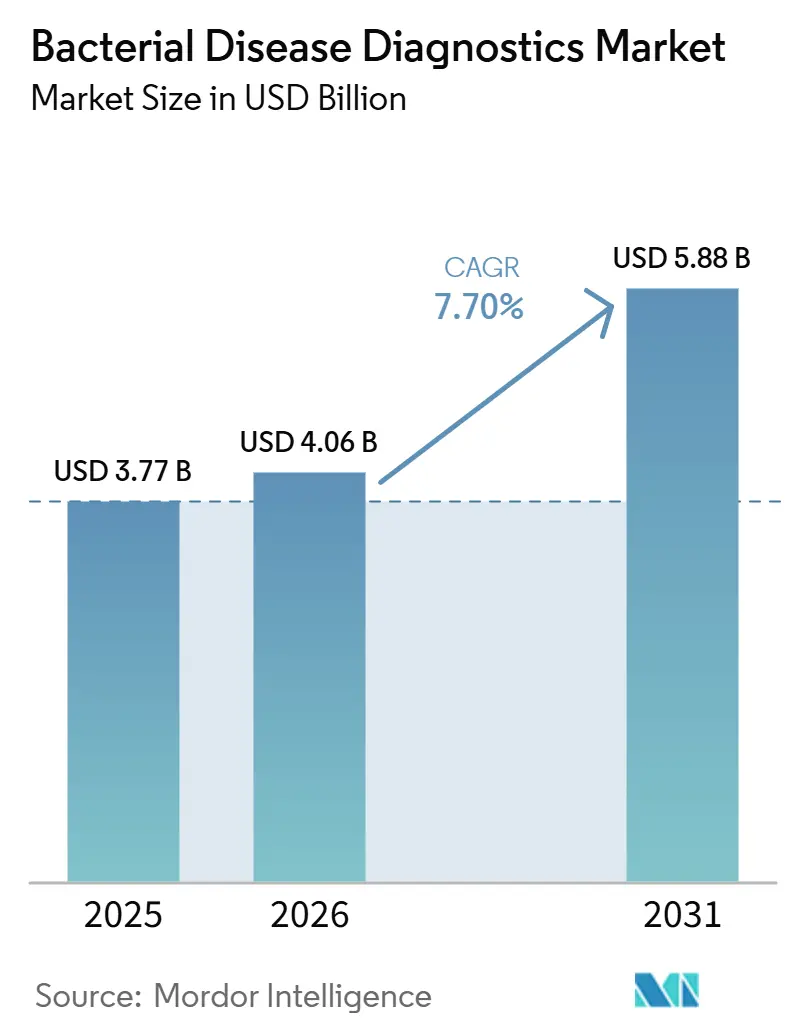
The Bacterial Disease Diagnostics Market size is projected to be USD 3.77 billion in 2025, USD 4.06 billion in 2026, and reach USD 5.88 billion by 2031, growing at a CAGR of 7.70% from 2026 to 2031.
Antimicrobial resistance is increasing demand for faster pathogen identification and targeted treatment decisions across hospital laboratories. The World Health Organization reported persistently high resistance rates in bloodstream, urinary tract, and gastrointestinal infections, based on data covering more than 23 million bacteriologically confirmed cases from 110 countries. This trend is reducing the reliability of empirical antibiotic use in serious infections and prompting hospitals to modernize diagnostic workflows. The bacterial disease diagnostics market is benefiting from broader reagent menus, automated workflows, software-enabled result interpretation, multiplex testing, sepsis screening programs, and point-of-care platforms.
Key Report Takeaways
- By product type, instruments held 52.56% of the bacterial disease diagnostics market share in 2025, while reagents, kits, and consumables are projected to grow at a 9.15% CAGR through 2031.
- By technology, PCR and real-time PCR accounted for 37.56% of the bacterial disease diagnostics market share in 2025, while rapid point-of-care technology is projected to expand at an 8.80% CAGR through 2031.
- By sample type, blood, serum, and plasma held 38.66% of the bacterial disease diagnostics market share in 2025, while sputum and other respiratory samples are expected to grow at a 10.45% CAGR through 2031.
- By disease and clinical application, respiratory bacterial diseases accounted for 32.88% of the bacterial disease diagnostics market share in 2025, while bloodstream infections and sepsis are projected to advance at a 9.56% CAGR through 2031.
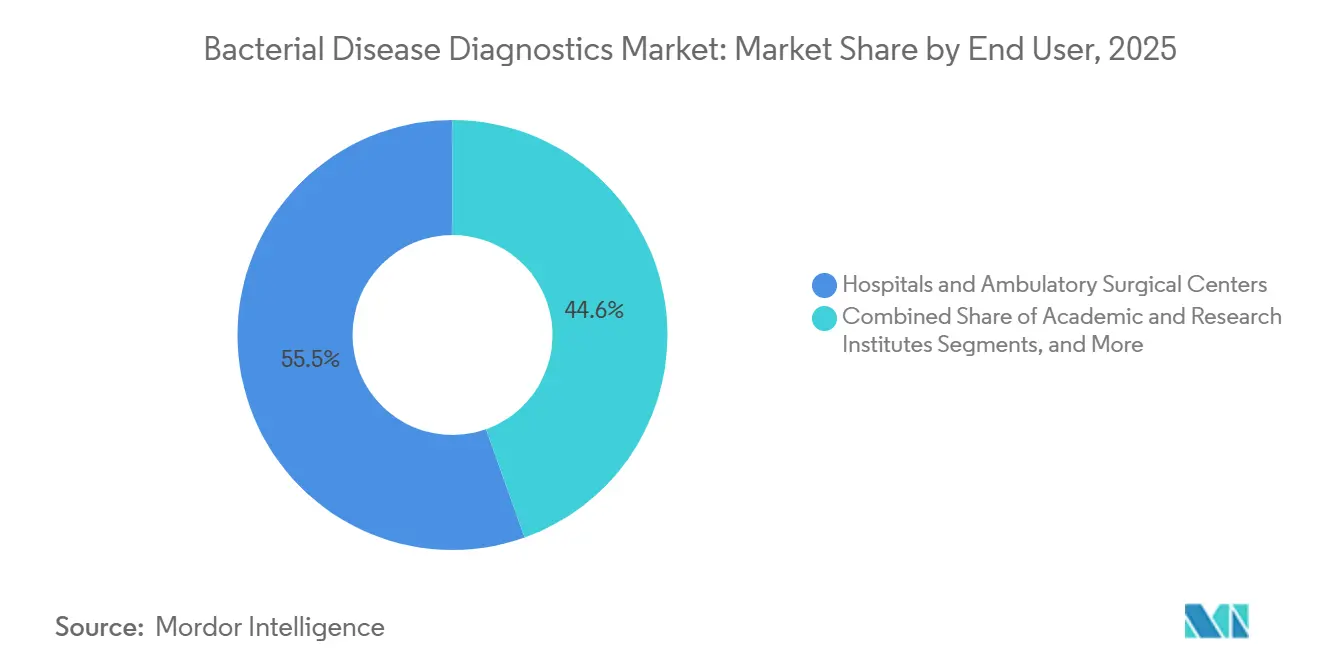
- By end user, hospitals and ambulatory surgical centers accounted for 55.45% of the bacterial disease diagnostics market share in 2025, while diagnostic and reference laboratories are projected to grow at a 9.95% CAGR through 2031.
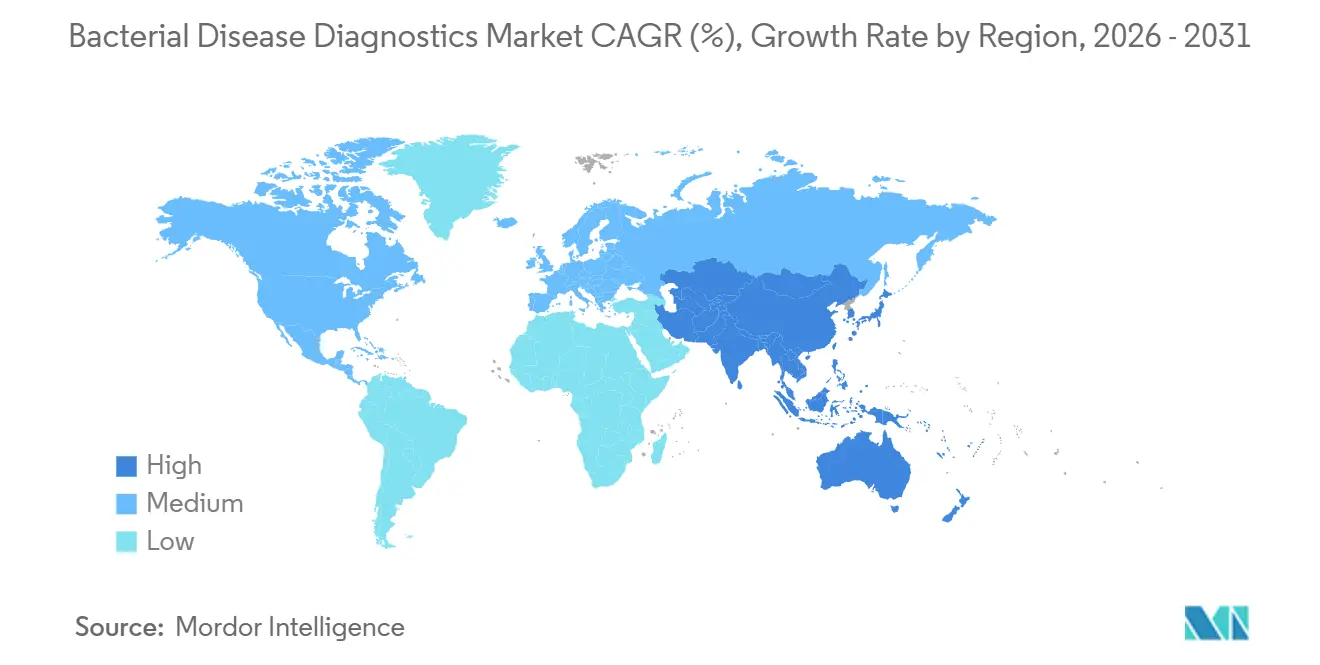
- By geography, North America held 42.44% of the bacterial disease diagnostics market share in 2025, while Asia-Pacific is projected to grow at a 10.88% CAGR through 2031.
Note: Market size and forecast figures in this report are generated using Mordor Intelligence’s proprietary estimation framework, updated with the latest available data and insights as of January 2026.
Market Trends and Insights
Drivers Impact Analysis of Bacterial Disease Diagnostics Market*
| DRIVER | (~) % IMPACT ON CAGR FORECAST | GEOGRAPHIC RELEVANCE | IMPACT TIMELINE |
|---|---|---|---|
| Rising antimicrobial resistance and targeted therapy needs | +1.8% | Global, with higher intensity in South Asia, Sub-Saharan Africa, and Southern Europe | Long term (≥ 4 years) |
| Faster sepsis and bloodstream infection decisions | +1.5% | Global, with North America and Europe leading adoption and Asia-Pacific scaling rapidly | Medium term (2-4 years) |
| Multiplex molecular and syndromic testing expansion | +1.3% | North America and Europe, with growing adoption in Asia-Pacific and the Middle East and Africa | Medium term (2-4 years) |
| Public investment in bacteriology and AMR surveillance | +0.8% | Global, with concentration in low- and middle-income countries and G7-backed programs | Long term (≥ 4 years) |
| Testing decentralization to near-patient settings | +1.0% | North America, Western Europe, India, and Southeast Asia | Short term (≤ 2 years) |
| Digital, automated, and ai-assisted microbiology workflows | +0.8% | North America and Europe, with increasing domestic integration in China | Medium term (2-4 years) |
| Source: Mordor Intelligence | |||
Rising Antimicrobial Resistance and Need for Targeted Therapy
Antimicrobial resistance has made bacterial diagnostics a critical part of clinical decision-making. The World Health Organization’s GLASS report covered more than 23 million bacteriologically confirmed cases from 110 countries and showed high resistance rates among key bloodstream infection pathogens. High resistance to third-generation cephalosporins in Klebsiella pneumoniae and Escherichia coli limits the reliability of empirical treatment in many serious infections. As a result, hospitals are placing greater value on testing that identifies pathogens and resistance patterns before clinicians finalize therapy.
The World Health Organization has also identified ongoing gaps in point-of-care antimicrobial susceptibility testing and multiplex resistance detection for priority bacterial pathogens. These gaps create demand for diagnostic tools that support treatment decisions in critical care, infectious disease, and antimicrobial stewardship programs. The bacterial disease diagnostics market is shaped by the need to reduce unnecessary or ineffective antibiotic use. Hospitals increasingly require results that guide therapy, rather than simply confirming an infection after treatment has begun.
Demand for Faster Sepsis and Bloodstream Infection Decisions
Sepsis remains one of the most urgent areas of bacterial diagnostics because treatment delays can worsen outcomes. The World Health Organization estimated that sepsis affects around 49 million people annually and causes 11 million deaths globally. Conventional blood culture workflows can take 48 to 72 hours before they fully support targeted therapy. Rapid molecular panels are reducing this interval by identifying pathogens and resistance markers from positive blood cultures.
Molecular methods are becoming more valuable as laboratories work to distinguish among several likely organisms in clinically unstable patients. The bacterial disease diagnostics market is therefore seeing sustained demand for systems that improve time to identification and susceptibility-related results. Host-response assays are also becoming relevant alongside direct pathogen testing. These tests can help distinguish bacterial infections from viral infections when clinical symptoms alone do not provide enough information to guide treatment.
Expansion of Multiplex Molecular and Syndromic Testing
Multiplex molecular testing is changing laboratory practice by allowing laboratories to assess several pathogens from one specimen. A study reported that multiplex PCR could provide pathogen and resistance information within 3 to 4 hours, compared with 48 to 72 hours for conventional culture methods. This time advantage is important in respiratory, gastrointestinal, bloodstream, and sexually transmitted infection testing. A single multiplex test can replace several mono-analyte assays and reduce repetitive handling steps for laboratory staff.
The bacterial disease diagnostics market benefits because broader panels may increase the diagnostic value delivered per specimen. These platforms can also create ongoing demand for assay cartridges, panels, and other consumables after instrument installation. European regulatory changes are also influencing the direction of test development. The In Vitro Diagnostic Regulation requires stronger clinical evidence for many products previously sold under older CE-IVD rules.
Decentralization of Testing to Near-Patient Settings
Near-patient testing is expanding beyond a limited emergency-use role in bacterial diagnostics. Emergency departments, intensive care units, and ambulatory settings increasingly need results while the patient encounter is still active. A review identified rapid PCR, isothermal nucleic acid amplification, CRISPR-based detection, biosensors, and microfluidic platforms as key technologies supporting point-of-care deployment. Several of these approaches are designed to deliver results in less than 30 minutes in optimized formats.
This shift is changing how the bacterial disease diagnostics market serves clinical teams that cannot wait for central laboratory turnaround times. It also creates demand for compact systems that are simple to operate and suitable for decentralized clinical environments. Testing decentralization can shift purchasing decisions closer to the care setting. Laboratory procurement teams remain important, but emergency, intensive care, and surgical departments may gain more influence over test selection.
Restraints Impact Analysis of Bacterial Disease Diagnostics Market*
| RESTRAINT | (~) % IMPACT ON CAGR FORECAST | GEOGRAPHIC RELEVANCE | IMPACT TIMELINE |
|---|---|---|---|
| Reimbursement and laboratory budget pressure | -0.6% | North America and Europe | Short term (≤ 2 years) |
| Resistance gene and phenotypic susceptibility discordance | -0.4% | Global, with stronger effects in Asia-Pacific and low- and middle-income countries | Long term (≥ 4 years) |
| Pre-analytical variability and low pathogen loads | -0.3% | Global | Medium term (2-4 years) |
| Fragmented regulation and breakpoint updates | -0.3% | Asia-Pacific, Latin America, and the Middle East and Africa | Long term (≥ 4 years) |
| Source: Mordor Intelligence | |||
Reimbursement and Laboratory Budget Pressure
Reimbursement remains a constraint for complex molecular panels, particularly when coverage policies do not keep pace with new diagnostic formats. High-complexity multiplex tests may cost more than conventional culture workflows, even when they deliver faster and broader results. Hospitals must assess whether reductions in length of stay, antibiotic use, and repeat testing justify the added cost. Public health procurement programs may have greater flexibility when testing supports antimicrobial resistance surveillance. Routine laboratories operating under fixed reimbursement models can face greater pressure when adopting premium molecular panels. This pressure may slow adoption among mid-tier hospitals with growing testing needs but limited capital and operating budgets. The restraint varies across testing environments.
Discordance Between Resistance Genes and Phenotypic Susceptibility
Genotypic resistance testing can identify important resistance genes, but a detected gene does not always translate directly into phenotypic resistance. A 2026 review reported that rapid phenotypic antimicrobial susceptibility testing reduced turnaround time to 4 to 8 hours, although its use depended on validation for specific organism and antibiotic combinations. Molecular tools and artificial intelligence-supported systems can complement conventional methods, but they do not replace phenotypic testing in every clinical situation. Physicians remain familiar with minimum inhibitory concentration-based guidance when making treatment decisions. Incomplete breakpoint data can make it harder to interpret genetic resistance results for newer pathogen and drug combinations, which can slow the clinical adoption of some advanced molecular systems.
*Our forecasts treat driver/restraint impacts as directional, not additive. The impact forecasts reflect baseline growth, mix effects, and variable interactions.
Bacterial Disease Diagnostics Market Segment Analysis
By Product Type:
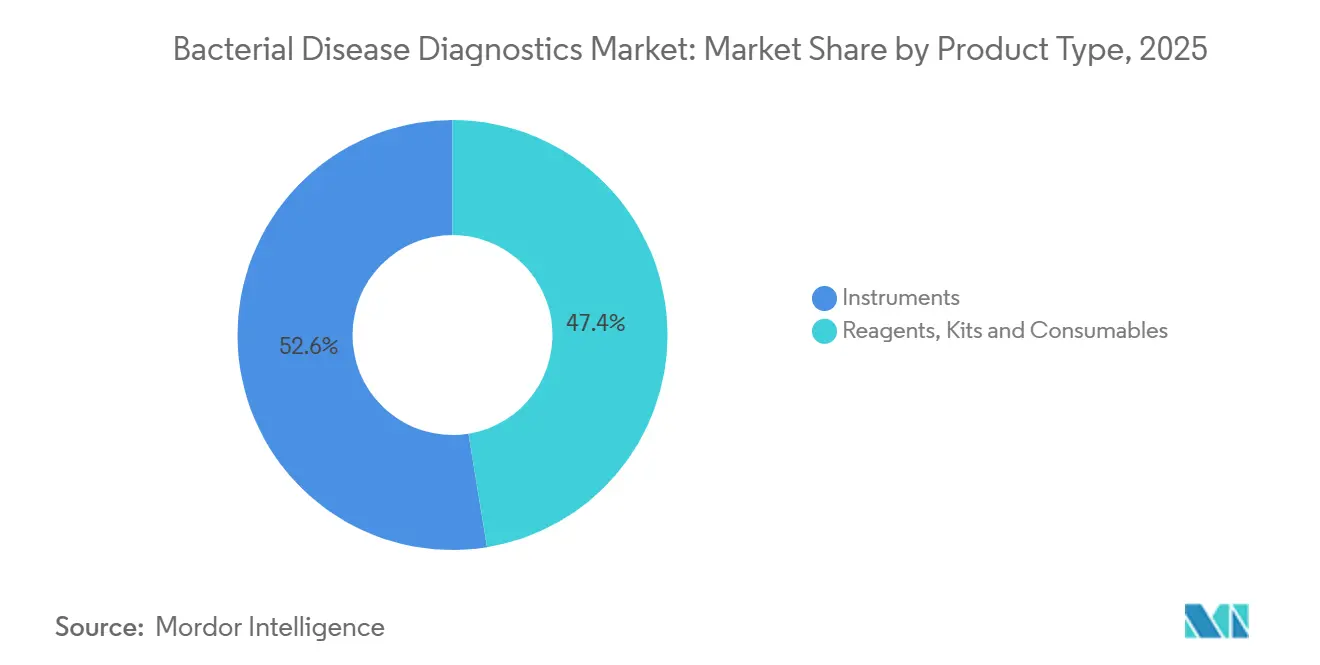
Reagent Demand Expands Alongside Established Instrument BasesInstruments held 52.56% of the bacterial disease diagnostics market share in 2025. This segment includes automated blood culture systems, molecular analyzers, MALDI-TOF mass spectrometers, and near-patient devices. Its large share reflects the high value of capital equipment and the role of installed systems in hospital laboratories. Instrument placements also support recurring demand, as laboratories often use proprietary or validated reagent workflows.
Automated blood culture platforms remain central to many bacteriology laboratories because they support the initial detection of bloodstream infections. MALDI-TOF systems have reduced the time required for species-level identification in high-volume laboratories and can provide species identification from a processed colony in around 38 minutes at a cost of USD 0.50 per test in some laboratory settings. Reagents, kits, and consumables are forecast to grow at a 9.15% CAGR through 2031. Molecular assay kits, antimicrobial susceptibility testing panels, immunoassay products, lateral-flow consumables, and culture media remain key components of this segment.


By Technology:
PCR Retains Scale While Rapid Methods Gain Wider UsePCR and real-time PCR accounted for 37.56% of the bacterial disease diagnostics market share in 2025. This position reflects broad clinical validation, established reimbursement practices, and a wide range of available assays. Laboratories use PCR across respiratory, gastrointestinal, bloodstream, and sexually transmitted bacterial infections. Automated molecular platforms can process multiple samples while maintaining standardized workflows for core laboratories.
Conventional microbiology remains important for routine testing, culture confirmation, and antimicrobial susceptibility assessment. MALDI-TOF, immunodiagnostics, and isothermal amplification continue to address distinct diagnostic needs. Rapid point-of-care technology is forecast to grow at an 8.80% CAGR through 2031. Rapid PCR, isothermal amplification, and CRISPR-based approaches are enabling bacterial detection closer to the patient.
By Sample Type:
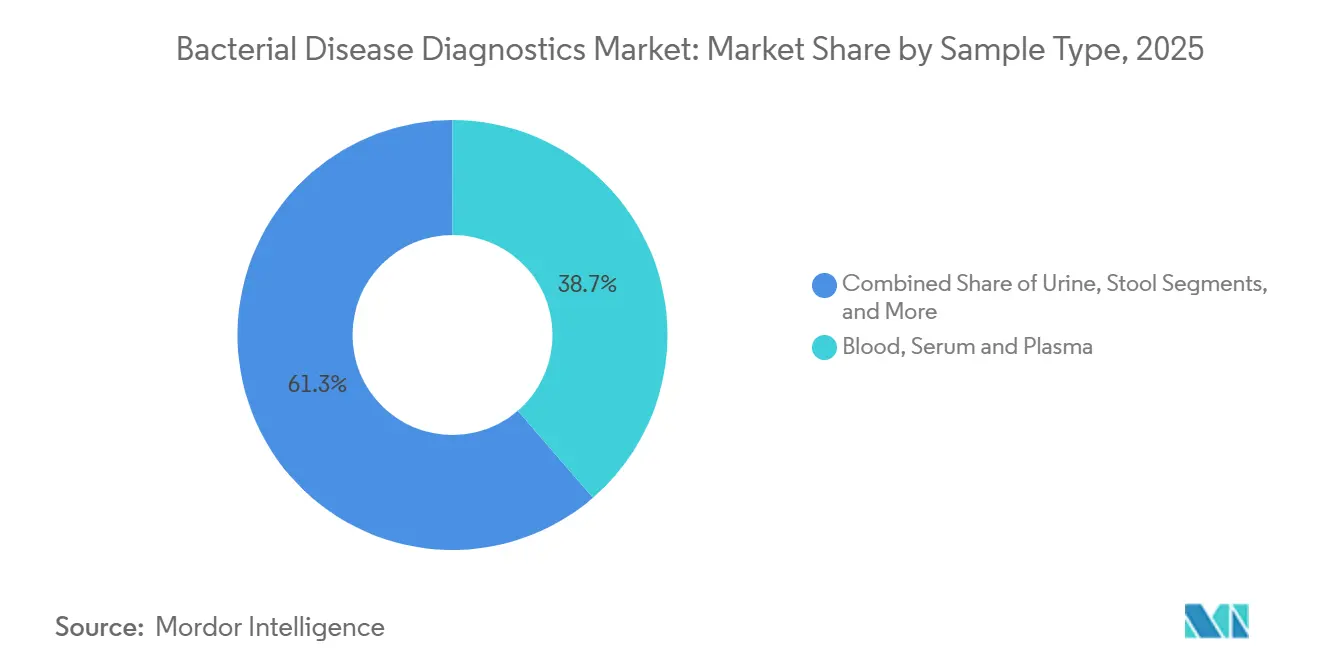
Blood Supports Current Volume While Respiratory Samples Grow FasterBlood, serum, and plasma accounted for 38.66% of the bacterial disease diagnostics market share in 2025. Blood cultures remain the standard starting point for suspected bacteremia and sepsis. The high clinical risk associated with bloodstream infections supports the use of rapid molecular testing from positive blood culture bottles. This sample type connects routine culture workflows with newer syndromic panels and antimicrobial resistance testing.
Urine remains another major sample category because urinary tract infections represent a large volume of bacterial diagnoses. Stool samples also support meaningful demand through gastrointestinal pathogen panels. Sputum and other respiratory samples are projected to grow at a 10.45% CAGR through 2031. Broader use of respiratory panels for community-acquired pneumonia and healthcare-associated bacterial pneumonia supports this growth.

By Disease and Clinical Application:
Respiratory Testing Leads While Sepsis Testing Advances FasterRespiratory bacterial diseases held 32.88% of the bacterial disease diagnostics market share in 2025. Community-acquired pneumonia, tuberculosis, whooping cough, and healthcare-associated bacterial pneumonia support the large size of this application area. Respiratory infections can be difficult to assess because symptoms may overlap with viral disease and mixed infections. Tertiary hospitals and reference laboratories are increasingly using multiplex PCR panels to support faster differentiation.
Gastrointestinal bacterial diseases and urinary tract infections also make substantial contributions to testing volumes. Sexually transmitted bacterial infections and skin, soft tissue, and wound infections remain smaller but clinically important applications. Bloodstream infections and sepsis are projected to grow at a 9.56% CAGR through 2031. Hospitals are expanding sepsis protocols across intensive care settings to improve the speed of treatment decisions.
By End User:
Hospitals Retain Scale While Reference Laboratories ExpandHospitals and ambulatory surgical centers accounted for 55.45% of the bacterial disease diagnostics market share in 2025. High inpatient testing volumes and the need for same-day clinical decisions support their leading position. Hospital laboratories commonly operate blood culture incubators, molecular analyzers, and MALDI-TOF systems. These facilities also generate recurring demand for reagents, calibrators, and maintenance services over the life of an instrument.
Academic and research institutes represent a smaller end-user category with specific requirements for surveillance and research testing. Pharmaceutical and biotechnology companies also use bacterial testing tools in antimicrobial susceptibility studies and microbiome-related clinical research. Diagnostic and reference laboratories are forecast to grow at a 9.95% CAGR through 2031. Complex testing, such as metagenomics and comprehensive bloodstream infection panels, can require bioinformatics expertise and high sample throughput.
Geography Analysis
North America Bacterial Disease Diagnostics Market
North America held 42.44% of the bacterial disease diagnostics market share in 2025, supported by established reimbursement systems, widespread automated microbiology platforms, and active regulatory clearances. The United States drove much of the regional demand, as integrated delivery networks supported large laboratory purchasing programs. FDA-cleared tests expanded automated gastrointestinal and other bacterial assay availability for US laboratories. Hologic received FDA clearance for automated molecular tests for gastroenteritis pathogens in 2025, while BD received FDA 510(k) clearance and CE-IVDR certification for high-throughput enteric bacterial panels on its BD COR system in 2025.
Europe Bacterial Disease Diagnostics Market
Europe remained a key regional center for laboratory modernization and molecular diagnostic development. Germany, France, the United Kingdom, and Italy supported much of the region’s advanced laboratory infrastructure. The EU In Vitro Diagnostic Regulation increased evidence requirements for products sold in European markets, favoring larger manufacturers with the capacity to fund complex, multi-site clinical validation studies. Sequentia Biotech received CE-IVD certification under IVDR for its MICK Clinical gastrointestinal pathogen diagnostic platform in April 2026, while Central and Eastern European markets increased investment in laboratory modernization.
APAC, MEA and South America Bacterial Disease Diagnostics Market
Asia-Pacific is forecast to grow at a CAGR of 10.88% through 2031, making it the fastest-growing region in the bacterial disease diagnostics market. China, India, Japan, South Korea, and Australia supported regional demand, although adoption drivers varied by country. China increased molecular testing procurement in tertiary hospitals, while India integrated more point-of-care sepsis testing and outsourced complex bacteriology testing to reference laboratories. Japan and South Korea maintained mature laboratory environments, while the Middle East and Africa and South America expanded through hospital investment, public procurement, and antimicrobial resistance surveillance initiatives.

Competitive Landscape
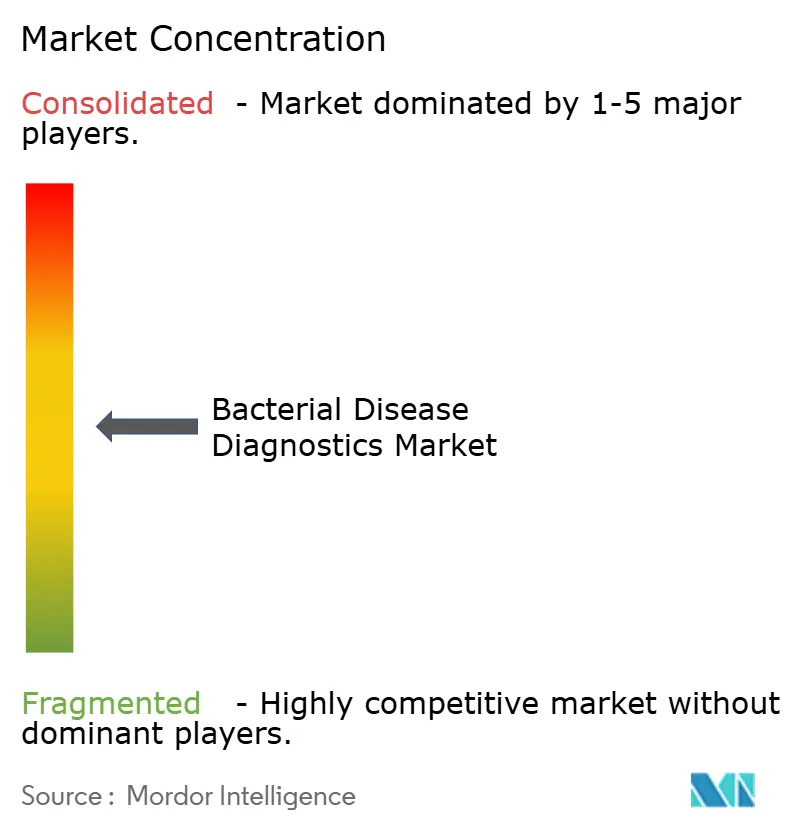
The bacterial disease diagnostics market includes large multinational diagnostics companies and specialized molecular testing providers. bioMérieux, Becton Dickinson, Roche, Thermo Fisher Scientific through Cepheid, QIAGEN, and Bruker hold significant positions in advanced instruments and reagent menus. Competition increasingly centers on test menu availability, automation, clinical software, and turnaround time, rather than instrument hardware alone. Companies with broad panels for bloodstream infection and respiratory testing can generate recurring demand through installed instrument bases, while newer specialists target specific technology gaps.
Roche expanded its sexual health testing portfolio in July 2026 after receiving FDA 510(k) clearance for the cobas BV/CV assay. The assay supports concurrent molecular testing for bacterial vaginosis and vulvovaginal candidiasis from a single sample on cobas 6800 and 8800 systems. Cepheid received CE-IVDR marking for its Xpert GI Panel in May 2026, enabling the detection of 11 gastrointestinal pathogens from one stool sample in around 74 minutes. These developments show how leading companies are expanding existing platforms into additional disease applications and increasing instrument utilization.
Smaller companies are pursuing focused positions in rapid antimicrobial susceptibility testing, culture-independent detection, and sequencing-based pathogen identification. Accelerate Diagnostics focuses on rapid phenotypic antimicrobial susceptibility testing from positive blood cultures. Karius applies cell-free DNA sequencing to culture-independent pathogen detection, while Oxford Nanopore Technologies is advancing long-read sequencing for clinical microbiology. Bruker remains a leading provider in MALDI-TOF, although competitors are working to improve comparable performance.
Bacterial Disease Diagnostics Industry Leaders
Abbott Laboratories
Danaher Corporation
Thermo Fisher Scientific Inc.
Siemens Healthineers AG
bioMérieux SA
- *Disclaimer: Major Players sorted in no particular order
Bacterial Disease Diagnostics Market Companies Covered in this Report
- Abbott Laboratories
- Accelerate Diagnostics, Inc.
- Agilent Technologies
- Beckton Dickinson
- bioMérieux
- Bio-Rad Laboratories
- Bruker
- Danaher
- DiaSorin
- Roche
- Roche
- Hologic
- Karius, Inc.
- Oxford Nanopore Technologies plc
- QIAGEN
- QuidelOrtho
- Revvity, Inc.
- Seegene
- Siemens Healthineers
- Sysmex
- T2 Biosystems, Inc.
- Thermo Fisher Scientific
- Waters Corporation

Recent Industry Developments in Bacterial Disease Diagnostics Market
- July 2026: Roche secured FDA 510(k) clearance for the cobas BV/CV assay, enabling simultaneous molecular testing for bacterial vaginosis and vulvovaginal candidiasis from a single sample.
- May 2026: Cepheid obtained CE-IVDR marking for the Xpert GI Panel, which detected 11 key gastrointestinal pathogens from a single stool sample in about 74 minutes.
- April 2026: Sequentia Biotech received CE-IVD certification under IVDR for MICK Clinical, supporting gastrointestinal bacterial pathogen screening using next-generation sequencing data.
- March 2026: Abbott completed the acquisition of Exact Sciences, adding liquid biopsy platform capabilities to its diagnostics infrastructure.
- February 2026: BD completed the combination of its Biosciences and Diagnostic Solutions business with Waters Corporation while retaining core infectious disease diagnostic activities.


Global Bacterial Disease Diagnostics Market Report Scope
As per the scope of the report, bacterial disease diagnostics is the process of identifying specific disease-causing bacteria in patient samples. This process uses laboratory tests, microscope views, and genetic tools to find the exact germ causing an infection.
The bacterial disease diagnostics market is segmented by product type, technology, sample type, disease and clinical application, end user, and geography. By product type, the market includes instruments and reagents, kits, and consumables. The instruments segment includes automated blood culture systems, automated ID and AST systems, molecular diagnostic analyzers, MALDI-TOF mass spectrometers, and point-of-care and near-patient analyzers. The reagents, kits, and consumables segment includes culture media and blood culture bottles, molecular assay kits and panels, AST panels and discs, sample preparation and extraction reagents, and immunoassay and lateral-flow consumables. By technology, the market is segmented into conventional microbiology, PCR and real-time PCR, isothermal nucleic acid amplification, NGS and nanopore sequencing, MALDI-TOF mass spectrometry, immunodiagnostics, rapid point-of-care technology, and others. By sample type, the market is categorized into blood, serum, and plasma; urine; sputum and other respiratory samples; stool; and others. By disease and clinical application, the market is segmented into respiratory bacterial diseases, gastrointestinal bacterial diseases, urinary tract infections, sexually transmitted bacterial infections, bloodstream infections and sepsis, skin, soft-tissue, and wound infections, and others. By end user, the market is segmented into hospitals and ambulatory surgical centers, diagnostic laboratories and reference laboratories, academic and research institutes, pharmaceutical and biotechnology companies, and others. By geography, the market is analyzed across North America, Europe, Asia-Pacific, the Middle East and Africa, and South America. The report also covers the estimated market sizes and trends for 17 countries across major regions globally. The report offers the market sizes and forecasts in terms of value (USD) for the above segments.
| Instruments | Automated Blood Culture Systems |
| Automated ID and AST Systems | |
| Molecular Diagnostic Analyzers | |
| MALDI-TOF Mass Spectrometers | |
| Point-of-Care and Near-Patient Analyzers | |
| Reagents, Kits and Consumables | Culture Media and Blood Culture Bottles |
| Molecular Assay Kits and Panels | |
| AST Panels and Discs | |
| Sample Preparation and Extraction Reagents | |
| Immunoassay and Lateral-Flow Consumables |
| Conventional Microbiology |
| PCR and Real-Time PCR |
| Isothermal Nucleic Acid Amplification |
| NGS and Nanopore Sequencing |
| MALDI-TOF Mass Spectrometry |
| Immunodiagnostics |
| Rapid Point-of-care Technology |
| Others |
| Blood, Serum and Plasma |
| Urine |
| Sputum and Other Respiratory Samples |
| Stool |
| Others |
| Respiratory Bacterial Diseases |
| Gastrointestinal Bacterial Diseases |
| Urinary Tract Infections |
| Sexually Transmitted Bacterial Infections |
| Bloodstream Infections and Sepsis |
| Skin, Soft-Tissue and Wound Infections |
| Others |
| Hospitals and Ambulatory Surgical Centers |
| Diagnostic Laboratories and Reference Laboratories |
| Academic and Research Institutes |
| Pharmaceutical and Biotechnology Companies |
| Others |
| North America | United States |
| Canada | |
| Mexico | |
| Europe | Germany |
| United Kingdom | |
| France | |
| Italy | |
| Spain | |
| Rest of Europe | |
| Asia-Pacific | China |
| India | |
| Japan | |
| Australia | |
| South Korea | |
| Rest of Asia-Pacific | |
| Middle East and Africa | GCC |
| South Africa | |
| Rest of Middle East and Africa | |
| South America | Brazil |
| Argentina | |
| Rest of South America |
| By Product Type | Instruments | Automated Blood Culture Systems |
| Automated ID and AST Systems | ||
| Molecular Diagnostic Analyzers | ||
| MALDI-TOF Mass Spectrometers | ||
| Point-of-Care and Near-Patient Analyzers | ||
| Reagents, Kits and Consumables | Culture Media and Blood Culture Bottles | |
| Molecular Assay Kits and Panels | ||
| AST Panels and Discs | ||
| Sample Preparation and Extraction Reagents | ||
| Immunoassay and Lateral-Flow Consumables | ||
| By Technology | Conventional Microbiology | |
| PCR and Real-Time PCR | ||
| Isothermal Nucleic Acid Amplification | ||
| NGS and Nanopore Sequencing | ||
| MALDI-TOF Mass Spectrometry | ||
| Immunodiagnostics | ||
| Rapid Point-of-care Technology | ||
| Others | ||
| By Sample Type | Blood, Serum and Plasma | |
| Urine | ||
| Sputum and Other Respiratory Samples | ||
| Stool | ||
| Others | ||
| By Disease and Clinical Application | Respiratory Bacterial Diseases | |
| Gastrointestinal Bacterial Diseases | ||
| Urinary Tract Infections | ||
| Sexually Transmitted Bacterial Infections | ||
| Bloodstream Infections and Sepsis | ||
| Skin, Soft-Tissue and Wound Infections | ||
| Others | ||
| By End User | Hospitals and Ambulatory Surgical Centers | |
| Diagnostic Laboratories and Reference Laboratories | ||
| Academic and Research Institutes | ||
| Pharmaceutical and Biotechnology Companies | ||
| Others | ||
| By Geography | North America | United States |
| Canada | ||
| Mexico | ||
| Europe | Germany | |
| United Kingdom | ||
| France | ||
| Italy | ||
| Spain | ||
| Rest of Europe | ||
| Asia-Pacific | China | |
| India | ||
| Japan | ||
| Australia | ||
| South Korea | ||
| Rest of Asia-Pacific | ||
| Middle East and Africa | GCC | |
| South Africa | ||
| Rest of Middle East and Africa | ||
| South America | Brazil | |
| Argentina | ||
| Rest of South America | ||


Key Questions Answered in the Report
What is the projected value of bacterial disease diagnostics by 2031?
The bacterial disease diagnostics market is projected to reach USD 5.88 billion by 2031, growing at a 7.70% CAGR from 2026.
What is driving growth in bacterial testing?
Antimicrobial resistance, faster sepsis decisions, multiplex testing, and wider use of point-of-care systems are supporting demand.
Which product segment leads bacterial disease diagnostics?
Instruments led with a 52.56% share in 2025, supported by hospital investments in automated blood culture, molecular, and MALDI-TOF platforms.
Which technology is growing fastest for bacterial testing?
Rapid point-of-care technology is forecast to grow at an 8.80% CAGR through 2031 as testing moves closer to emergency and critical care settings.
Why are bloodstream infection tests becoming more important?
Bloodstream infections and sepsis are forecast to grow at a 9.56% CAGR because clinicians need faster pathogen and resistance information for urgent treatment decisions.
Which region is growing fastest in bacterial disease diagnostics?
Asia-Pacific is forecast to grow at a 10.88% CAGR through 2031, supported by expanding intensive care infrastructure, sepsis programs, and molecular laboratory investment.
Page last updated on:


 Your data is secure and never sold or shared.


