
Baby Stroller Market Size and Share
Market Overview
| Study Period | 2021 - 2031 |
|---|---|
| Market Size (2026) | USD 3.71 Billion |
| Market Size (2031) | USD 4.79 Billion |
| Growth Rate (2026 - 2031) | 5.21 % |
| Fastest Growing Market | Asia-Pacific |
| Largest Market | Asia-Pacific |
| Market Concentration | Low |
Major Players
*Disclaimer: Major Players sorted in no particular order Image © Mordor Intelligence. Reuse requires attribution under CC BY 4.0. |
|
Baby Stroller Market Analysis by Mordor Intelligence
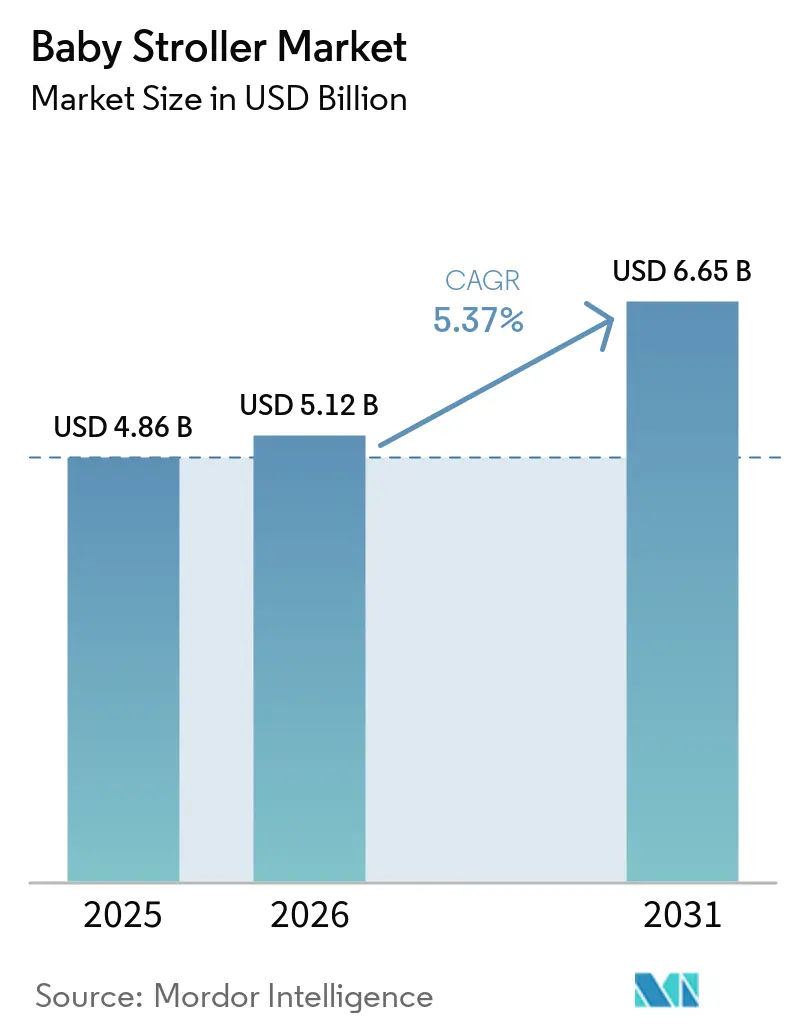
The baby stroller market size is expected to grow from USD 3.54 billion in 2025 to USD 3.71 billion in 2026 and reach USD 4.79 billion by 2031 at a 5.21% CAGR over 2026-2031. Parents are increasingly spending their higher disposable incomes on premium strollers that offer advanced features, viewing them as essential tools for convenience rather than optional purchases. In urban areas, dual-income families prefer strollers with modular designs that can adapt as their child grows, providing long-term value. At the same time, declining birth rates in developed countries are pushing manufacturers to focus on higher-priced strollers with features like smart connectivity, eco-friendly materials, and extended warranties. Rising urbanization is driving demand for compact strollers that fold easily and are suitable for public transportation. Stricter global safety standards are extending product development timelines but also creating opportunities for brands that can deliver improved safety features. The market remains moderately consolidated.
Key Report Takeaways
- By product type, strollers held 72.02% of the global baby stroller market share in 2025, while travel systems are forecast to grow at a 6.32% CAGR through 2031.
- By seat type, single-seat models held 90.46% of the global baby stroller market share in 2025, while multi/double strollers are forecast to grow at an 8.39% CAGR through 2031.
- By activity, standard/everyday strollers held 68.40% of the global baby stroller market share in 2025, while all-terrain strollers are forecast to grow at a 6.75% CAGR through 2031.
- By end use, infant strollers held 55.58% of the global baby stroller market share in 2025, while toddler strollers are forecast to grow at a 5.76% CAGR through 2031.
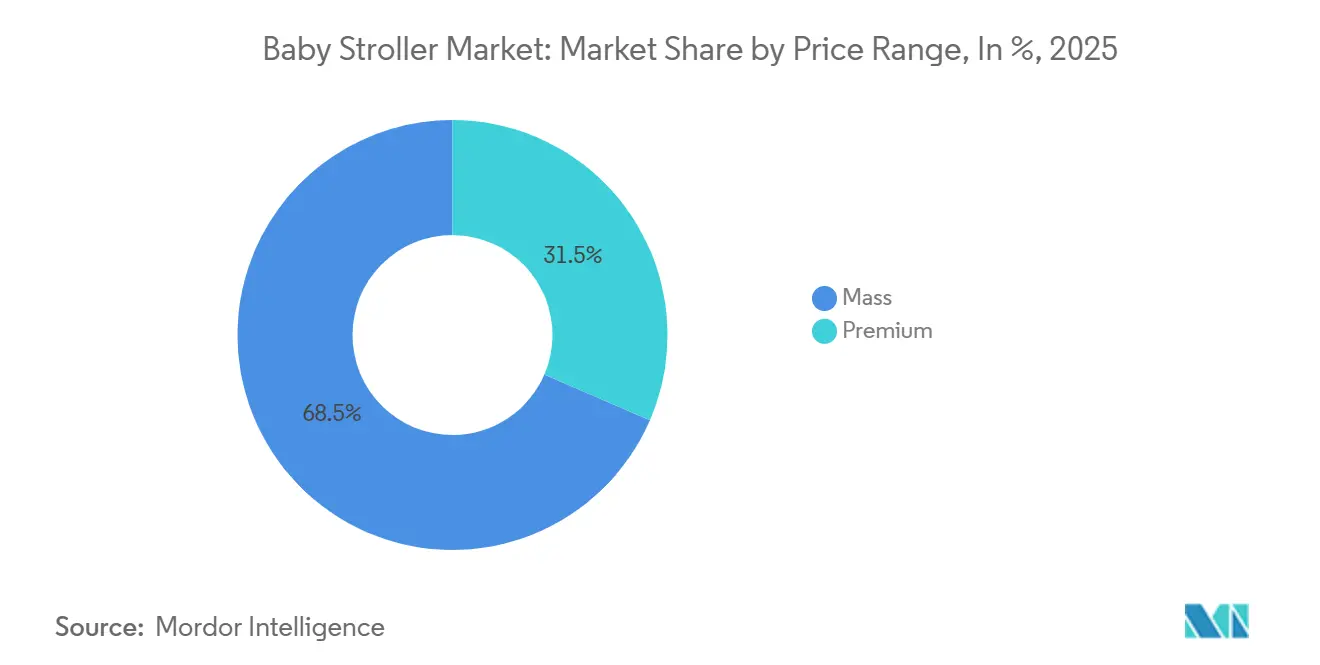
- By price range, mass-tier products held 65.73% of the global baby stroller market share in 2025, while premium products are forecast to grow at a 6.36% CAGR through 2031.
- By distribution channel, offline retail stores held 69.90% of the global baby stroller market share in 2025, while online retail stores are forecast to grow at a 6.40% CAGR through 2031.
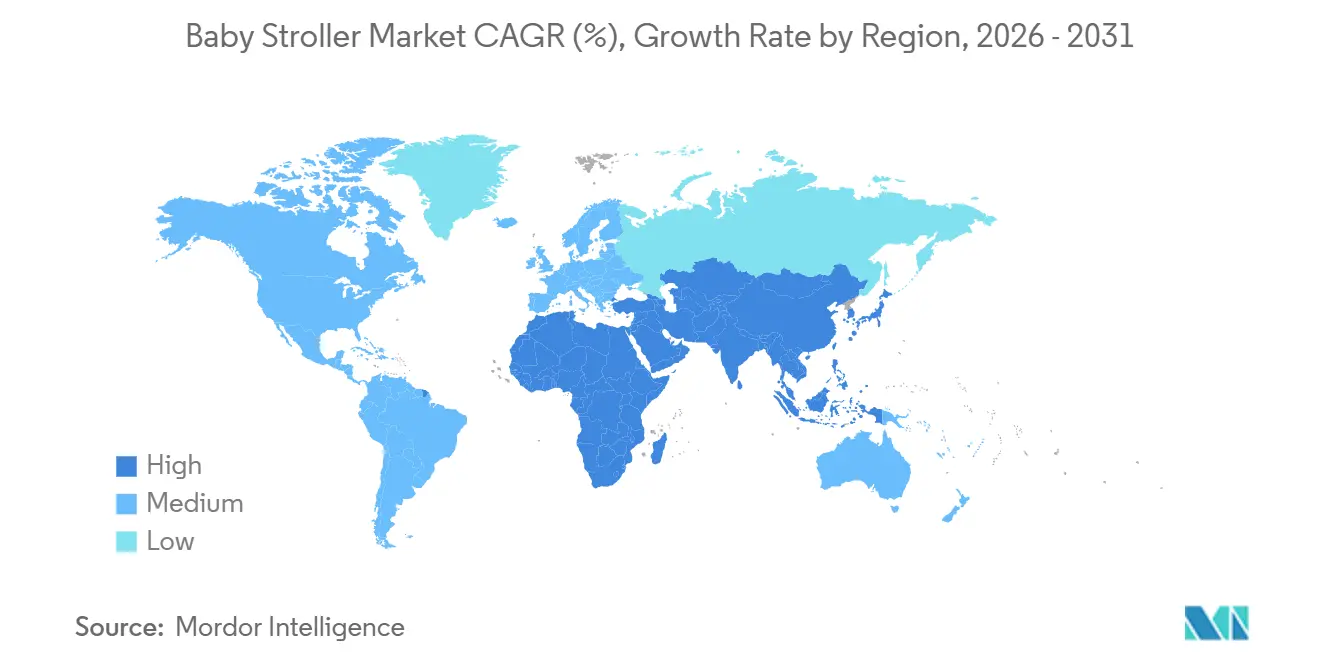
- By geography, Asia-Pacific held the largest share of the global baby stroller market at 34.76% in 2025 and is also the fastest-growing region, with a 6.21% CAGR through 2031.
Note: Market size and forecast figures in this report are generated using Mordor Intelligence’s proprietary estimation framework, updated with the latest available data and insights as of 2026.
Global Baby Stroller Market Trends and Insights
Drivers Impact Analysis*
| Driver | (~) % Impact on CAGR Forecast | Geographic Relevance | Impact Timeline |
|---|---|---|---|
| Increasing parental focus on child safety and comfort | +1.2% | Global, with heightened emphasis in North America and Europe | Medium term (2-4 years) |
| Growth in dual-income households is encouraging parents to invest in convenient mobility solutions | +0.9% | North America, Europe, Asia-Pacific urban centers | Medium term (2-4 years) |
| Rising influence of social media and parenting influencers | +0.6% | North America, Europe, emerging in Asia-Pacific | Short term (≤ 2 years) |
| Product innovation, including modular travel systems and convertible designs | +0.8% | Global, strongest in North America and Europe | Short term (≤ 2 years) |
| Growth of e-commerce and online baby-product retail | +1.3% | Global, led by North America and Europe | Long term (≥ 4 years) |
| Demand for sustainable and eco-friendly baby products | +1.1% | Global, particularly North America, Europe, and Asia-Pacific urban areas | Long term (≥ 4 years) |
| Source: Mordor Intelligence | |||
Increasing parental focus on child safety and comfort
The baby stroller market is growing steadily, driven by the fact that approximately 25% of the global population falls within the 0-14 age group in 2024, according to the World Bank[1]Source: World Bank, "Population Ages 0-14 (% of Total Population)", worldbank.org. This demographic highlights the ongoing demand for safe and reliable child mobility products. In response to increasing regulatory oversight, such as stricter safety standards enforced by the United States Consumer Product Safety Commission, manufacturers are focusing on improving product quality to meet compliance requirements and reduce the risk of recalls. In Europe, updated EN 1888 standards, which emphasize durability and safety, along with certifications from the Juvenile Products Manufacturers Association for high-performing models, have raised the bar for safety expectations. These developments are pushing brands to innovate by incorporating stronger stroller frames, advanced suspension systems for smoother rides, and transparent testing processes.
Growth in dual-income households is encouraging parents to invest in convenient mobility solutions
The increasing number of households with both parents working is significantly driving the global baby stroller market. In the United States, nearly 49.6% of married-couple families had both spouses employed as of May 2025, according to the Bureau of Labor Statistics[2]Source: Bureau of Labor Statistics, "Both Spouses Employed in About Half of All Married-Couple Families", bls.gov. With both parents juggling work and family responsibilities, there is a growing need for strollers that are easy to use, portable, and save time. Features such as lightweight designs, compact structures, and one-handed folding mechanisms are becoming highly desirable. These strollers help parents manage their busy schedules, whether they are commuting, running errands, or caring for their children. As a result, manufacturers are focusing on creating strollers that are not only durable but also multifunctional, catering to the needs of families with fast-paced lifestyles.
Rising influence of social media and parenting influencers
The growing role of social media and parenting influencers is significantly shaping the global baby stroller market. With 71% of the global population using the internet in 2024, as reported by the World Bank, online platforms have become a key source for parents to discover and choose products[3]Source: World Bank, "Individuals Using the Internet (% of Population)", data.worldbank.org. Social media platforms like Instagram and TikTok allow parents to see product reviews, unboxing videos, and comparisons, which can quickly shape their opinions of brands. Many companies are now collaborating with parenting influencers and smaller content creators to connect with their audiences in more relatable ways and boost sales. As online discussions grow, maintaining high product quality and responding quickly to customer feedback have become essential for brands to build trust and stay competitive.
Product innovation, including modular travel systems and convertible designs
Innovation in modular travel systems is playing a key role in driving the growth of the global baby stroller market. For example, in June 2025, Baby Jogger introduced its City Turn Convertible Car Seat in Canada, showcasing how brands are expanding modular features into related product categories. These systems combine strollers with other components like convertible car seats, bassinets, and ride-along accessories, making travel more convenient for parents by offering flexible and adaptable configurations. Larger manufacturers benefit from economies of scale, as they can spread development and production costs across these integrated components, giving them a competitive advantage. This trend not only simplifies parenting routines but also encourages more consumers to adopt these systems, pushing the industry to innovate further and set higher standards for functionality and convenience.
Restraints Impact Analysis*
| Restraint | (~) % Impact on CAGR Forecast | Geographic Relevance | Impact Timeline |
|---|---|---|---|
| High prices of premium and multifunctional strollers | -0.7% | Global, most acute in North America and Europe | Medium term (2-4 years) |
| Stringent child safety regulations | -0.5% | Global, with supply-chain concentration in Asia-Pacific | Short term (≤ 2 years) |
| Availability of low-cost substitutes such as baby carriers, slings, and traditional prams | -0.6% | Global, strongest in Asia-Pacific and emerging markets | Long term (≥ 4 years) |
| Product recalls and safety concerns | -0.4% | Global, regulatory pressure highest in North America and Europe | Medium term (2-4 years) |
| Source: Mordor Intelligence | |||
High prices of premium and multifunctional strollers
The high cost of premium multifunctional strollers is a significant challenge in the global baby stroller market. Brands like Silver Cross price models such as the Cove at a premium to reflect advanced features and patented designs. However, these high prices make such strollers unaffordable for many consumers, limiting their appeal to wealthier families. While some parents see these strollers as a long-term investment due to their durability and multifunctionality, rising inflation and tighter household budgets have made many families more cautious about spending. As a result, a growing number of consumers are opting for mid-range strollers that provide similar features at more reasonable prices. This trend is particularly evident in emerging markets and among cost-conscious buyers, where affordability plays a crucial role in purchasing decisions.
Availability of low-cost substitutes such as baby carriers, slings, and traditional prams
The availability of affordable baby carriers and slings is a significant challenge for the global baby stroller market. These carriers, which are often much cheaper than strollers, provide hands-free mobility and are highly convenient, especially in crowded urban areas. Parents frequently use them during an infant’s early months as they are lightweight, compact, and easy to carry. Their portability makes them ideal for short trips and for use on public transportation. To address this competition, stroller manufacturers are focusing on adding unique features that carriers cannot offer. These include spacious under-seat storage, fully reclining seats for naps, and compatibility with car seats. Additionally, some strollers are designed to grow with the child, offering extended usability. However, to maintain demand, manufacturers need to educate parents about the long-term benefits and versatility of strollers, emphasizing their value beyond the infant stage rather than competing solely on price.
*Our forecasts treat driver/restraint impacts as directional, not additive. The impact forecasts reflect baseline growth, mix effects, and variable interactions.
Segment Analysis
By Product Type: Travel Systems Reshape Revenue Mix
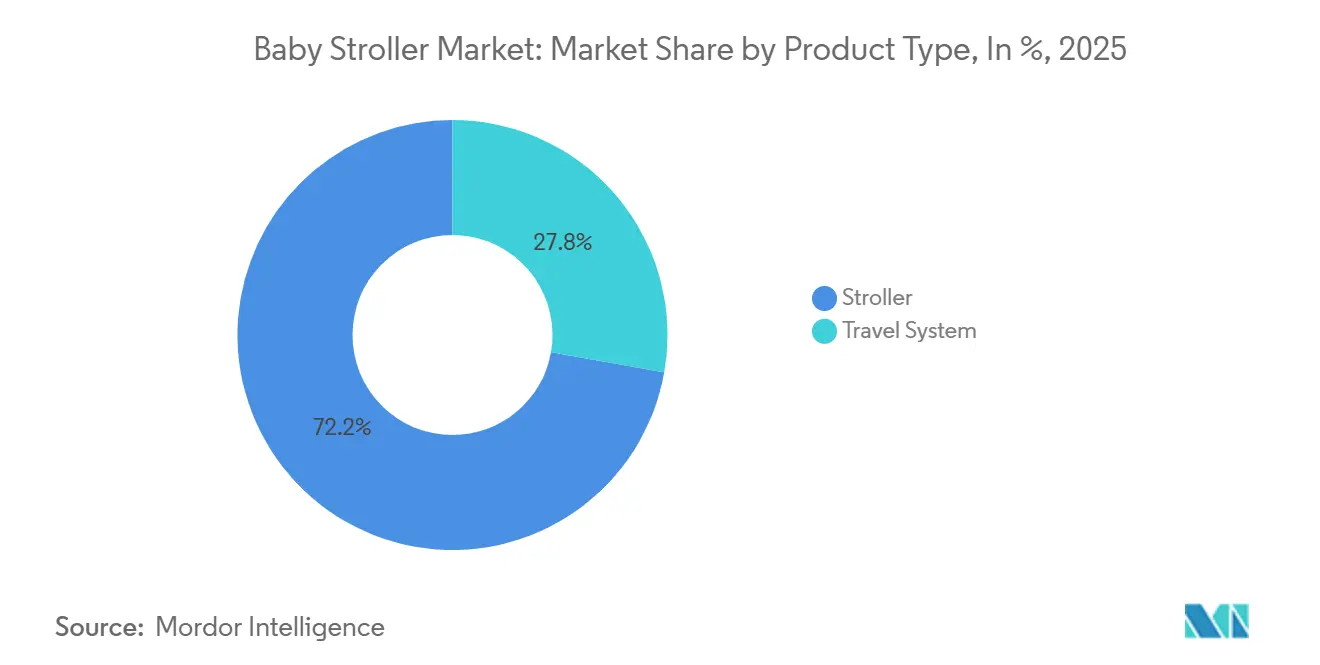
Conventional strollers held the largest share of the baby stroller market, at 72.02% in 2025, supported by their wide availability, familiar designs, and presence across multiple price points. Standard pushchairs, lightweight umbrella strollers, and full-size models continue to attract parents seeking practical and reliable first purchases. Their versatility, ease of use, and suitability for daily mobility across homes, neighborhoods, parks, and retail environments further strengthen demand. The segment also benefits from strong retail visibility and broad consumer acceptance across both developed and emerging markets.
Travel systems are expected to be the fastest-growing segment, registering a CAGR of 6.32% from 2026 to 2031, driven by their convenience and integrated stroller-car-seat functionality. Parents increasingly prefer bundled solutions that reduce the need to purchase separate components and simplify child mobility during travel. These systems appeal to families seeking safe, compatible, and easy-to-use products for transitions between cars and outdoor movement. Product innovations and new launches, such as Britax’s Phases travel system introduced in February 2026, are further supporting segment growth.


By Seat: Double Strollers Gain as Family Structures Diversify
Single-seat strollers accounted for the largest share of the global baby stroller market, at 90.46% in 2025, supported by their strong fit for first-child purchases and families with smaller household sizes. Parents favor these models for their compact structure, ease of handling, and suitability for daily use across homes, sidewalks, retail spaces, and public transportation. Their practical design also makes them easier to fold, store, and transport, which is particularly important for urban consumers. As a result, single-seat strollers continue to be the preferred entry-level purchase for most families during the initial stage of stroller ownership.
Multi and double strollers are expected to be the fastest-growing segment, registering a CAGR of 8.39% through 2031, driven by rising demand from families with twins or children close in age. These products allow parents to accommodate more than one child in a single stroller, improving convenience during travel, shopping, and everyday mobility. Manufacturers are also introducing more compact, foldable, and modular designs to address concerns related to weight, storage, and maneuverability. Their growing adoption reflects parents’ preference for practical and cost-efficient solutions that support the needs of expanding families.
By Activity: Jogging Strollers Outpace Everyday Use
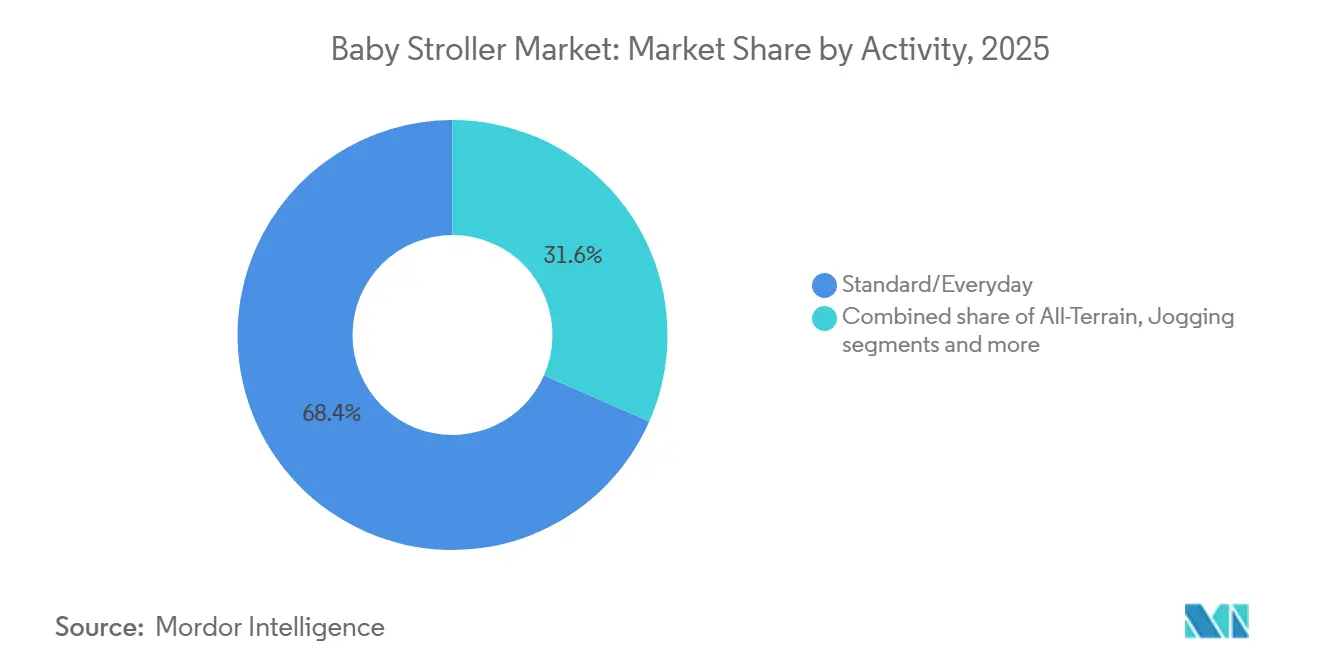
Standard and everyday strollers held the largest share of the global baby stroller market, at 68.40% in 2025, supported by their practicality for routine mobility and use on ordinary urban surfaces. Parents prefer these models for daily activities such as neighborhood walks, shopping trips, and short commutes, as they offer a balanced mix of convenience, comfort, and affordability. Their straightforward designs make them easier to fold, store, and maneuver, particularly in compact living spaces and crowded city environments. As a result, standard and everyday strollers continue to attract broad adoption across different income groups and family structures.
All-terrain strollers are expected to be the fastest-growing segment, registering a CAGR of 6.75% through 2031. All-terrain strollers deliver improved performance on uneven surfaces, including gravel, grass, dirt paths, cobblestones, parks, trails, and poorly maintained sidewalks. Their defining features include large wheels, pneumatic or air-filled tires, suspension systems, reinforced frames, and higher ground clearance. For example, Thule's Urban Glide 3 features 16-inch air-filled tires, suspension, an adjustable handlebar, and a twist hand brake while maintaining a compact one-hand fold. This combination demonstrates how all-terrain strollers increasingly integrate outdoor performance with everyday usability. The growing preference for active family lifestyles is a key market driver. Parents increasingly seek to continue walking, hiking, and spending time outdoors after having children, rather than relying solely on conventional urban mobility solutions. The category also benefits from the broader relevance of the “all-terrain” positioning among non-athletic parents.

By End User: Toddler Segment Outgrows Infant Category
Infant products accounted for the largest share of the global baby stroller market, at 55.58% in 2025, supported by strong demand from parents purchasing strollers before or shortly after childbirth. This segment benefits from the need for specialized features that support newborn safety, comfort, and convenience during the early months. Parents continue to prioritize lie-flat seating, neonatal harness systems, and bassinet compatibility when selecting infant strollers. These functional requirements, along with early purchase cycles, continue to strengthen the segment’s leading position in the market.
Toddler-focused products are expected to register the fastest growth, with a CAGR of 5.76% through 2031, driven by rising demand for strollers that remain useful beyond the infant stage. Parents increasingly seek adaptable models that can accommodate growing children while offering comfort, durability, and ease of use. Manufacturers are responding with flexible designs, adjustable seating, and features that extend product life across multiple growth stages. This emphasis on longer usability and better value for money is encouraging wider adoption of toddler-focused strollers.
By Price Range: Premium Growth Outpaces Mass Despite Smaller Base
Mass-tier products held the largest share of the global baby stroller market, at 65.73% in 2025, supported by their affordability, practical functionality, and broad availability across retail channels. These products appeal to a wide range of income groups, especially in high-volume emerging markets where value-driven purchasing remains strong. Standard single-seat models with essential features continue to dominate this tier due to their competitive pricing and ease of use. As parents seek reliable and cost-effective mobility solutions, mass-tier strollers continue to account for the highest market share.
Premium products are expected to be the fastest-growing segment, registering a CAGR of 6.36% through 2031, driven by delayed parenthood, rising dual-income households, and higher spending on quality childcare products. Consumers increasingly prefer strollers with advanced safety systems, improved comfort, compact folding mechanisms, and durable materials. Sustainability features, stylish designs, and multifunctional formats are also strengthening demand in this segment. As parents place greater emphasis on convenience, long-term usability, and product differentiation, premium strollers are expected to record strong growth during the forecast period.
By Distribution Channel: Online Retail Disrupts Traditional Retail Hierarchy
Offline stores held the largest share of the global baby stroller market, at 69.90% in 2025, as many parents preferred to evaluate products in person before making a purchase. Physical retail formats allow consumers to assess stroller weight, folding mechanisms, maneuverability, seating comfort, and overall build quality. In-store staff also help buyers compare safety features, product suitability, and compatible accessories. This hands-on purchase experience remains important for high-value childcare products, supporting the continued dominance of offline stores.
Online retail is expected to be the fastest-growing distribution channel, registering a CAGR of 6.40% through 2031, supported by wider product availability and greater shopping convenience. E-commerce platforms enable parents to compare prices, review product specifications, access customer feedback, and evaluate multiple brands in one place. Detailed product videos, demonstrations, and personalized recommendations are improving consumer confidence in online purchases. As digital adoption increases, online channels are expected to gain a stronger role in baby stroller sales.
Geography Analysis
In 2025, Asia-Pacific accounted for the largest share of the baby stroller market, at 34.76%, and is also the fastest-growing region, with a CAGR of 6.21% through 2031. Urbanization, rising disposable incomes, and changing parental preferences are driving demand across the region. China is witnessing stronger demand for premium childcare products, supported by an expanding base of quality-conscious consumers and increasing preference for safe, comfortable, and technologically advanced strollers. India continues to contribute high-volume demand for affordable, compact, lightweight, and modular strollers, while wider retail access, expanding e-commerce, and a growing middle-class consumer base further support regional growth.
Europe represents a major and mature market for baby strollers. The region's strong position is supported by stringent safety regulations, high consumer awareness, established childcare product manufacturers, and strong demand for premium products. Parents across Europe increasingly prioritize safety, durability, comfort, quality, and advanced engineering when selecting baby strollers, supporting demand for premium, multifunctional, lightweight, modular, and travel-system products. Countries such as Germany, the United Kingdom, France, Italy, and the Netherlands contribute significantly to regional demand through established specialty retailers, modern retail networks, and strong e-commerce penetration.
North America, South America, and the Middle East and Africa collectively represent important growth markets for baby strollers. North America is characterized by strong demand for premium, multifunctional, lightweight, travel-system, and all-terrain strollers, as parents place greater emphasis on safety, comfort, convenience, durability, and advanced features. South America, particularly Brazil, is supported by growing modern retail and e-commerce penetration, with parents increasingly seeking affordable, compact, and durable products. Meanwhile, the Middle East and Africa is witnessing growing demand for branded and premium childcare products, particularly in the United Arab Emirates and Saudi Arabia, where parents increasingly prioritize safety, quality, comfort, and advanced functionality.

Competitive Landscape
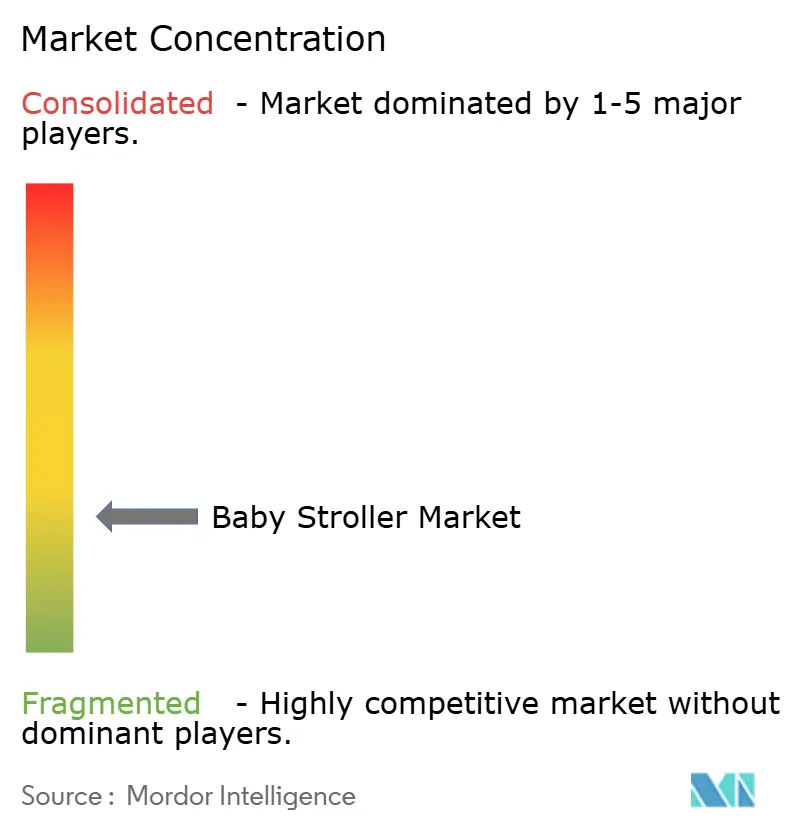
The global baby stroller market remains highly fragmented, with companies such as Cybex (Goodbaby), Newell Brands Inc., and Artsana (Chicco) competing with numerous regional and specialized brands. Leading players rely on broad product portfolios, strong brand recognition, established distribution networks, and premium positioning to strengthen their market presence. However, the large number of brands operating across different price points and regions limits the dominance of any single company. This competitive structure encourages players to continuously improve product design, functionality, safety, and value propositions to retain consumer interest.
Competition is increasingly driven by direct-to-consumer channels, e-commerce platforms, digital marketing, and continuous product innovation. Companies are using influencer partnerships, parenting communities, social media campaigns, and online reviews to engage parents and influence purchase decisions. Product development efforts are focusing on enhanced safety features, recognized certifications, lightweight frames, compact folding mechanisms, and better maneuverability for urban use. Clear product communication, transparent specifications, and compliance with stringent safety standards are becoming critical for building trust among consumers.
Emerging players are expanding the market with rental and subscription-based stroller models that appeal to urban parents seeking flexible and cost-effective options. Premium brands are integrating smart features, app connectivity, modular designs, and advanced convenience functions to differentiate their offerings. Sustainability is also gaining importance, with companies investing in refurbishment, resale platforms, recyclable materials, and eco-friendly product initiatives. Overall, competition remains intense as established and emerging players differentiate through innovation, pricing, safety, convenience, digital engagement, and sustainability.
Baby Stroller Industry Leaders
-
Artsana (Chicco)
-
Newell Brands Inc
-
Brevi Milano
-
Dorel Industries (Graco, Maxi-Cosi, Quinny)
-
Cybex (Goodbaby)
- *Disclaimer: Major Players sorted in no particular order

Recent Industry Developments
- June 2026: Artsana Group recapitalization secured: 258 million euro capital strengthening as part of a 673 million euro relaunch plan plus 415 million euro bank credit facility. The funding supports product innovation and international expansion in response to birth-rate headwinds and as the company repositions beyond-baby offerings. It also improves liquidity to support premium stroller growth and broader brand reach.
- May 2026: Artsana Group finalized 673 million euro industrial relaunch plan: capital strengthening and bank facilities. The plan directly supports the stroller and related baby products strategy. It backs near-term investment in product development and global expansion capacity, signaling a turnaround in market positioning.
- February 2026: Newell Brands (Graco division) launched Graco SnugRide Turn and Slide Rotating Infant Car Seat integrated with Modes Nest Stroller travel system. This integration ties directly into the stroller travel-system category. The move strengthens the Graco/Modes offering and can shift competitive dynamics in the premium travel-system segment.


Research Methodology Framework and Report Scope
Market Definition and Coverage
For this report, the baby stroller market covers child transport strollers purchased for infants and toddlers, counted as retail value sales across offline and online channels, and captured in USD for all major regions.
Scope exclusions: This sizing excludes car seats, baby carriers, high chairs, and aftermarket accessories sold separately from the stroller.
Segmentation Overview
-
By Product Type
- Stroller
- Travel System
-
By Seat
- Multi/Double
- Single
-
By Activity
- Standard/Everyday
- All-Terrain
- Jogging
- Others
-
By End User
- Infants
- Toddlers
-
By Price Range
- Mass
- Premium
-
By Distribution Channel
- Offline Retail Stores
- Online Retail Stores
-
By Geography
-
North America
- United States
- Canada
- Mexico
- Rest of North America
-
Europe
- United Kingdom
- Germany
- France
- Italy
- Spain
- Russia
- Netherlands
- Sweden
- Poland
- Belgium
- Rest of Europe
-
Asia-Pacific
- China
- Japan
- India
- South Korea
- Australia
- New Zealand
- Thailand
- Singapore
- Indonesia
- Rest of Asia-Pacific
-
South America
- Brazil
- Argentina
- Colombia
- Chile
- Rest of South America
-
Middle East and Africa
- United Arab Emirates
- Saudi Arabia
- South Africa
- Nigeria
- Egypt
- Morocco
- Turkey
- Rest of Middle East and Africa
-
North America
Data Sources, Market Sizing, and Validation
Desk Research
We started by building a base picture of demand and supply using public and official sources that help anchor the model to real-world signals. Useful inputs came from sources such as UN Comtrade for trade flows, the US Consumer Product Safety Commission recall database for stroller safety events, Eurostat for consumer and trade context in Europe, and World Bank indicators for income and urbanization trends.
To translate these signals into a market model, we also reviewed company annual reports, investor presentations, product catalogs, and reputable press coverage to understand product positioning, pricing tiers, and channel expansion. Patent databases and an import-export shipment-level database were referenced in a limited way to validate product innovation intensity and shipment patterns where public data was not detailed enough. This list is illustrative only, and many other sources were used for data collection, cross-checks, and clarification during analysis.
Primary Interviews and Surveys
To tighten assumptions that cannot be fully observed in public datasets, we used expert interviews and structured surveys across manufacturers, distributors, retailers, and category specialists. Coverage was balanced across APAC, EMEA, and the Americas so channel mix, pricing progression, and product replacement cycles could be validated and adjusted for local buying behavior.
Distribution of primary research fieldwork respondents
| Company type | Respondent position | Region |
|---|---|---|
| Top tier: 27% | CXOs: 18% | APAC: 41% |
| Mid tier: 54% | Functional/Unit leaders: 34% | EMEA: 34% |
| Smaller Players: 19% | Managers: 48% | Americas: 25% |
Market-Sizing & Forecasting
Our core sizing logic uses a top-down build where birth cohorts and urban household formation are converted into a stroller demand pool through adoption and replacement assumptions, which are then priced using region-specific average selling prices and channel splits. To keep the totals realistic, results are corroborated with selective bottom-up approximations such as sampled price points by product class, retailer assortment checks, and supplier revenue sanity checks where disclosures allow.
Key inputs used in the model include live births and age cohort counts (infants and toddlers), urbanization and commuting intensity (which influences compact stroller preference), safety standard and recall activity (which affects replacement and product redesign cycles), online versus offline share movement, and premium versus mass price mix. When bottom-up visibility is incomplete, gaps are handled by using proxy indicators like import penetration, distribution footprint, and observed price ladders, and then tested again with primary feedback.
For forecasting, scenario analysis was applied around variables that change unevenly by region, including birth rate direction, premiumization pace, and e-commerce expansion, and those scenarios were tuned with expert consensus from interviews. Outputs were finally normalized so volume and value move together in a way that matches typical stroller replacement timing and the expected pace of price inflation.
Data Validation & Update Cycle
We validate outputs by comparing model results with independent signals such as trade trends, pricing snapshots in key channels, and shifts in premium share that are visible in product launches and retailer mixes. Variance checks are run for sudden jumps in ASP, unit demand, or regional shares, and when a variance cannot be explained, analysts re-check assumptions and, if needed, reconnect with interviewees to confirm what changed.
Before sign-off, the numbers go through multi-step internal reviews so definitions, conversions, and arithmetic are consistent across regions and years. Reports are refreshed annually, and interim updates are made when material events occur, such as major safety actions or sharp changes in freight and sourcing economics. Right before delivery, a fresh review pass is completed so clients receive the most up-to-date view available.
Mordor Intelligence's Baby Stroller Market Size Compared Against Other Published Estimates
Published market sizes for baby strollers can look far apart because the boundary of what counts as a stroller sale is not consistent, and because price and channel assumptions vary by publisher. Differences also come from the chosen base year, whether units are modeled alongside value, and how quickly assumptions are refreshed when safety rules, freight, or premium mix shifts.
The table points to a spread that is mainly driven by scope and pricing mechanics, not by math alone. Some estimates bundle prams, travel systems, or adjacent juvenile gear, while others assume faster premium ASP expansion without validating it with retail price ladders and channel mix checks, and then convert currencies using a single point-in-time rate.
Benchmark comparison
| Source | Market Size | Gaps in Research Methodology |
|---|---|---|
| Mordor Intelligence | USD 5.12 B (2026) | |
| Global Consultancy A | USD 4.80 B (2026) | Uses a narrower counted demand pool by leaning more on trade-based supply proxies and applying conservative adoption and replacement rates, which can understate unit volumes in high-urban markets. |
| Trade Journal B | USD 21.20 B (2023) | Appears to use a broader definition that likely folds in multiple juvenile mobility categories and applies blended pricing without separating stroller-only value from higher-priced travel systems. |
The table shows that the biggest gap is explained by what is included and how price is carried forward, and in Mordor Intelligence's model the value is tied to stroller-only purchases for infants and toddlers with ASPs adjusted by region and channel. With that clarity, decision-makers can trace the total back to observable inputs like births, adoption, replacement cycles, and price ladders, and then test sensitivity in a repeatable way.


Key Questions Answered in the Report
What is the expected value of the baby stroller market in 2031?
It is forecast to reach USD 4.79 billion by 2031, growing at a 5.21% CAGR from 2026 to 2031.
Which stroller product category is growing fastest?
Travel systems are forecast to be the fastest-growing product type, with a 6.32% CAGR through 2031.
Why are premium stroller products growing faster than mass-tier products?
Premium products are forecast to grow at a 6.36% CAGR through 2031, as parents increasingly prioritize safety, comfort, durability, convenience, advanced features, and multifunctionality in baby strollers.
Which sales channel is expected to grow fastest for baby strollers?
Online retail stores are expected to grow at a 6.40% CAGR through 2031, supported by increasing e-commerce penetration, wider product availability, convenient price comparison, and growing consumer preference for online shopping.
Page last updated on:


 Your data is secure and never sold or shared.


