
Autoimmune Treatment Market Size and Share
Market Overview
| Study Period | 2020 - 2031 |
|---|---|
| Market Size (2026) | USD 83.91 Billion |
| Market Size (2031) | USD 108.07 Billion |
| Growth Rate (2026 - 2031) | 5.19 % |
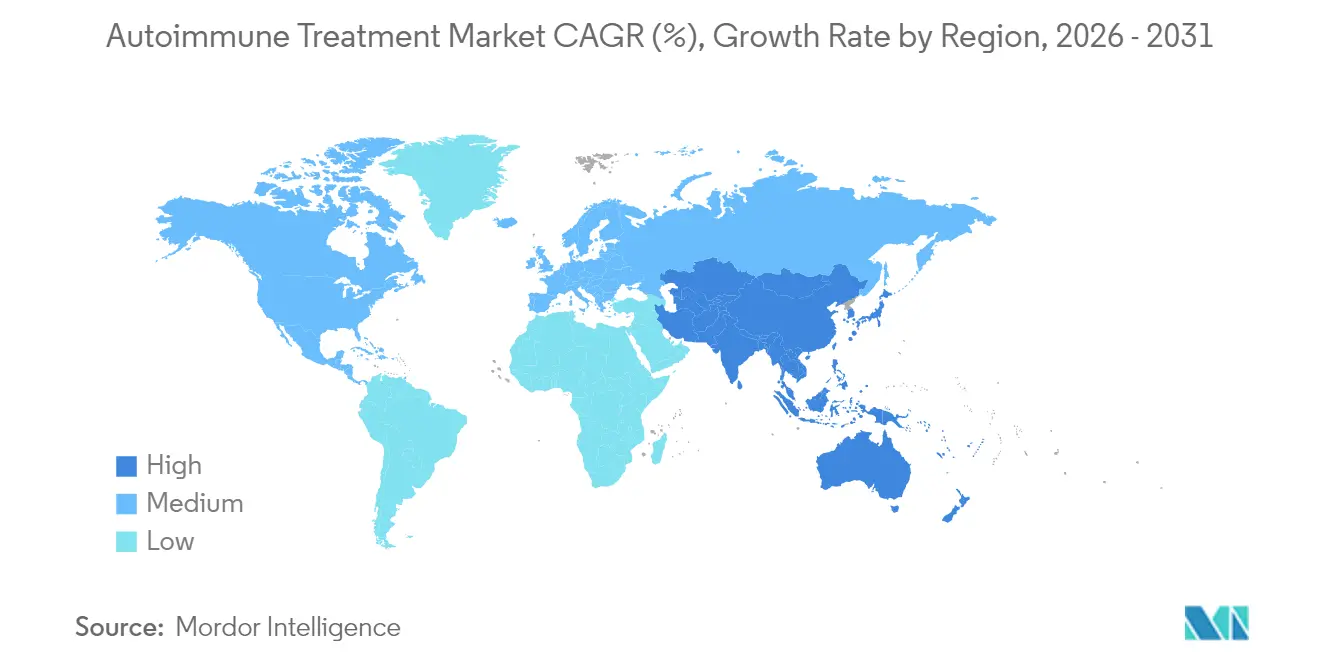
| Fastest Growing Market | Asia Pacific |
| Largest Market | North America |
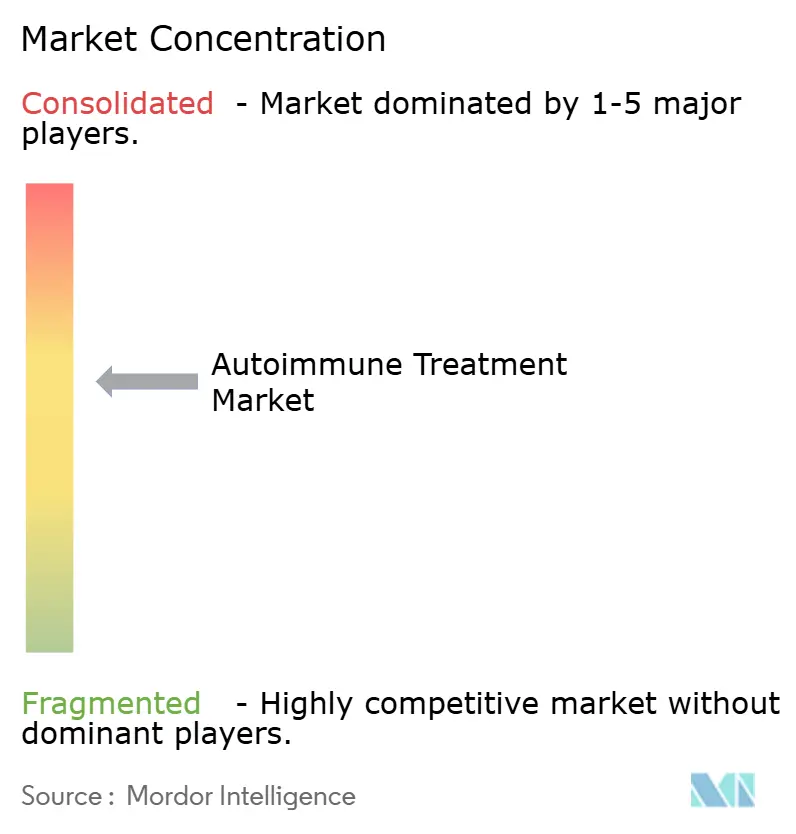
| Market Concentration | Medium |
Major Players *Disclaimer: Major Players sorted in no particular order Image © Mordor Intelligence. Reuse requires attribution under CC BY 4.0. | |
Autoimmune Treatment Market Analysis by Mordor Intelligence
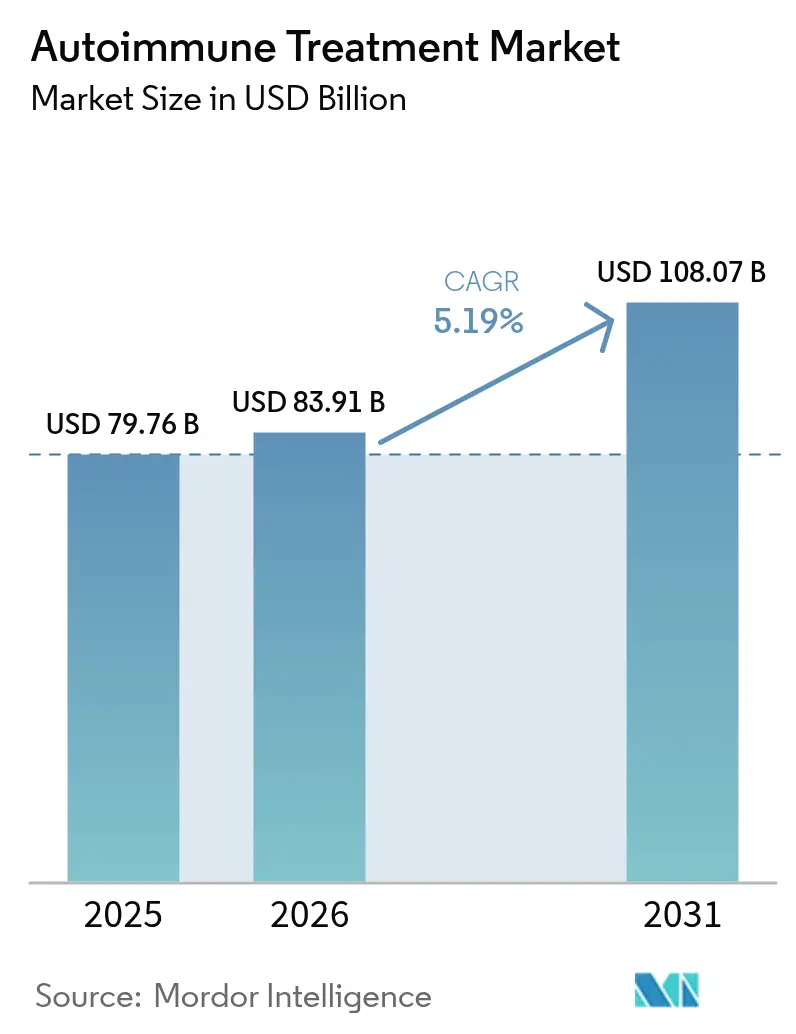
The autoimmune treatment market size is expected to grow from USD 79.76 billion in 2025 to USD 83.91 billion in 2026 and is forecast to reach USD 108.07 billion by 2031 at 5.19% CAGR over 2026-2031. The rising early-onset incidence, rapid uptake of biosimilars, and accelerated approvals of cell-based therapies are shifting the treatment model from broad immunosuppression to precision intervention. Breakthrough CAR-T applications in lupus and multiple sclerosis, combined with payer acceptance of outcome-based pricing, signal a reset in value perception across the autoimmune treatment market. At the same time, digital therapeutics enhance adherence and reduce relapse rates, adding a behavioral dimension to disease management. Regional dynamics remain pronounced, with North America accounting for the largest revenue pool, while the Asia-Pacific region delivers the fastest incremental growth, driven by expanding specialty-care infrastructure.
Key Report Takeaways
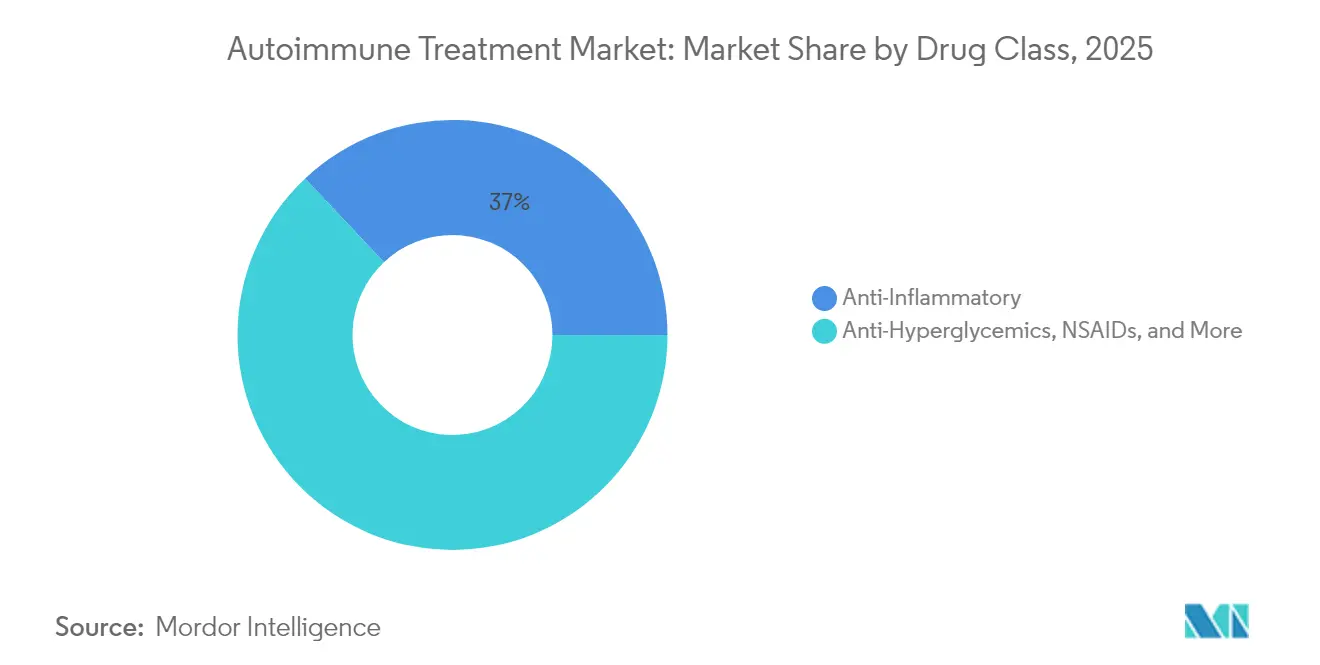
- By treatment type, anti-inflammatory agents held a 37.02% market share in the autoimmune treatment market in 2025, within the overall drug class segment; interferons were projected to have the highest CAGR at 8.69% through 2031.
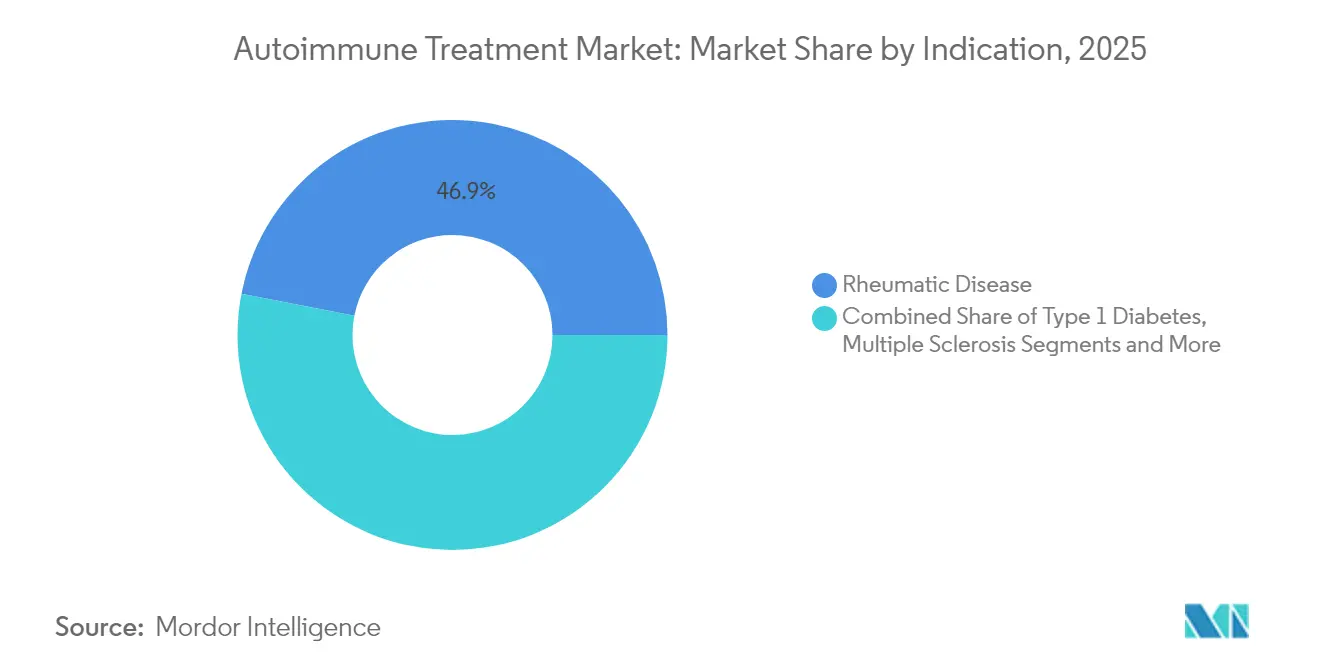
- By indication, rheumatic diseases led the autoimmune treatment market, accounting for a 46.92% share of the market size in 2025. In contrast, inflammatory bowel disease is forecast to expand at an 8.12% CAGR through 2031.
- By geography, North America contributed 42.35% of the 2025 revenue, while the Asia-Pacific region is expected to advance at an 8.46% CAGR over the forecast period.
Note: Market size and forecast figures in this report are generated using Mordor Intelligence’s proprietary estimation framework, updated with the latest available data and insights as of 2026.
Market Trends and Insights
Drivers Impact Analysis of Autoimmune Treatment Market*
| Driver | (~) % Impact on CAGR Forecast | Geographic Relevance | Impact Timeline |
|---|---|---|---|
| Age-Standardised Rise In Early-Onset Autoimmune Incidence | +1.2% | Global, with highest impact in North America & Europe | Medium term (2-4 years) |
| Biosimilar Wave Lowering Therapy Cost-Barriers | +0.8% | Global, with accelerated adoption in Asia-Pacific & emerging markets | Short term (≤ 2 years) |
| Oral Biologics Achieving Phase III Read-Outs | +0.6% | North America & EU core markets, expanding to APAC | Medium term (2-4 years) |
| Digital-Therapeutic-Plus-Drug Adherence Programs | +0.4% | North America & Europe leading, gradual APAC adoption | Long term (≥ 4 years) |
| Bispecific Antibody Approvals For Multi-Pathway Control | +0.3% | Global, with regulatory leadership in US & EU | Medium term (2-4 years) |
| Source: Mordor Intelligence | |||
Age-standardised rise in early-onset autoimmune incidence
Incidence among individuals aged 15-39 has climbed across rheumatoid arthritis, inflammatory bowel disease, and multiple sclerosis, extending lifetime therapy needs and magnifying the long-run value of safer chronic regimens[1]. Screening programs now target adolescents, while payers prioritise treatments with proven durability. Manufacturers positioned with low-toxicity mechanisms gain larger cumulative revenue because patients initiate therapy earlier. The trend enlarges the addressable population for next-generation biologics and cell therapies, pushing the autoimmune treatment market toward higher long-term volumes.
Biosimilar wave lowering therapy cost-barriers
Adalimumab biosimilars seized 85% of dispensed volume within 18 months of launch, yielding projected system savings of USD 38.4 billion through 2025. Savings free payer budgets for novel assets such as bispecific antibodies or CAR-T constructs. Originators respond with value-added formulations and service packages, raising competitive intensity. Emerging markets that once relied on steroids are now integrating advanced biologics, thereby widening the global penetration of the autoimmune treatment market.
Oral biologics achieving Phase III read-outs
JAK inhibitors and other oral formats deliver injectable-level efficacy minus administration burden. AbbVie’s upadacitinib secured a giant cell arteritis label expansion in 2024, while Pfizer readies next-generation oral candidates for lupus and dermatomyositis[2]. Oral delivery supports sequential or combination regimens that were unworkable with parenteral dosing. Payers support adoption because reduced infusion costs offset higher drug spend, tightening alignment between clinical and economic value.
Digital-therapeutic-plus-drug adherence programs
AI-guided mobile platforms record symptoms, schedule dosing reminders, and connect patients with pharmacists, cutting avoidable flares and hospitalisations. Retail pharmacy layouts now feature digital-health kiosks next to specialty products, reflecting an ecosystem shift. Data generated by apps feed back into real-world evidence dossiers, accelerating reimbursement for newer agents. Over the forecast horizon, digital adjuncts evolve from optional add-ons to embedded elements of standard care across the autoimmune treatment market.
Restraints Impact Analysis of Autoimmune Treatment Market*
| Restraint | (~) % Impact on CAGR Forecast | Geographic Relevance | Impact Timeline |
|---|---|---|---|
| Payer Budget Fatigue Amid Oncology Biologic Spend | -0.7% | North America & Europe primarily, spreading to developed APAC markets | Short term (≤ 2 years) |
| Slow Guideline Updates For Novel MOAs In Emerging Markets | -0.5% | Emerging markets in APAC, Latin America, and MEA | Medium term (2-4 years) |
| Biomanufacturing Capacity Crunch For Cell-Based Therapies | -0.3% | Global, with acute impact in regions with limited CDMO infrastructure | Long term (≥ 4 years) |
| Source: Mordor Intelligence | |||
Payer budget fatigue amid oncology biologic spend
Median oncology CAR-T invoice prices exceed USD 400,000 per course, diverting funds from chronic autoimmune lines[3]. The US and EU formularies are tightening prior-authorization criteria for high-cost biologics, introducing step-therapy hurdles that slow uptake. Manufacturers counter with outcomes-based rebates, but near-term volume can lag forecasts, shaving growth from the autoimmune treatment market.
Slow guideline updates for novel MOAs in emerging markets
Regulators in China and Brazil accelerate approvals, yet clinical practice committees often take two to three years to embed new mechanisms into local protocols, delaying broad prescribing. This gap prolongs use of conventional immunosuppressants even when superior options exist. Firms invest in physician-training roadshows and local data generation, but the lag still curbs addressable demand.
*Our forecasts treat driver/restraint impacts as directional, not additive. The impact forecasts reflect baseline growth, mix effects, and variable interactions.
Autoimmune Treatment Market Segment Analysis
By Drug Class:
entrenched anti-inflammatories versus surging interferonsAnti-inflammatory modalities, including TNF blockers, IL-6 antagonists, and JAK inhibitors, accounted for 37.02% of the 2025 global sales. Their broad efficacy across joint, skin, and bowel inflammation cements first-line placement. Fixed-dose subcutaneous pens and once-daily oral tablets reinforce adherence, protecting incumbents from immediate biosimilar cannibalisation. Interferons, however, register an 8.69% CAGR through 2031, driven by novel pegylated and oral formulations entering dermatomyositis and lupus pipelines. New-generation interferons exhibit improved tolerability, extending real-world persistence. The autoimmune treatment market size for interferon-based regimens is expected to climb to USD 9.74 billion by 2031, mirroring label expansions.
Concurrently, bispecific antibodies are emerging as dual-pathway suppressors, attracting blockbuster valuations; Merck paid USD 700 million for Curon’s B-cell depleter, CN201, in 2024. Pipeline diversity now includes tolerogenic cell therapies aimed at resetting immune balance instead of chronic suppression. First-in-class candidates in Type 1 diabetes aim to preserve beta-cell function, introducing a preventative approach within the autoimmune treatment market. Although early-stage, these modalities could reshape drug-class mix beyond the forecast window.

By Indication:
rheumatic strength meets IBD momentumThe autoimmune treatment market allocates 46.92% of 2025 revenue to rheumatic disorders such as rheumatoid and psoriatic arthritis, supported by clear diagnostic criteria and long clinical experience. Disease-modifying antirheumatic drugs, TNF-α inhibitors, and JAK inhibitors sustain joint integrity, making rheumatology a predictable revenue pillar. Yet inflammatory bowel disease grows at an 8.12% CAGR through 2031, outpacing all other indications as biologics and novel gut-targeted small molecules gain traction. Positive long-term remission data and expanded reimbursement widen clinical adoption. The autoimmune treatment market size for IBD is projected to reach USD 23.41 billion by 2031, reflecting sustained double-digit uptake in Asia-Pacific urban centres. CAR-T investigations in refractory systemic lupus add a breakthrough narrative, as Adicet Bio’s ADI-100 won FDA Fast Track in February 2025. Emerging sub-segments such as autoimmune hepatitis and myasthenia gravis remain niche, yet they underscore the continuous broadening of the autoimmune treatment market.
A parallel shift emerges in multiple sclerosis, where high-efficacy B-cell depleters prolong relapse-free intervals. Although legacy interferon regimens persist, payer preference tilts toward agents with MRI-confirmed neuroprotection. Advanced imaging and blood-based biomarkers refine cohort selection, creating a foundation for precision dosing. These trends collectively stabilise overall indication diversity, cushioning revenue even when single lines face biosimilar erosion. As a result, the autoimmune treatment market sustains balanced exposure across high-volume and high-growth conditions.
Geography Analysis
North America Autoimmune Treatment Market
North America delivered 42.35% of global revenue in 2025, supported by rapid diffusion of innovative modes of action, favourable reimbursement, and a dense clinical-trial ecosystem. The region’s flexible accelerated-approval frameworks placed nine autoimmune biologics on the market in the past two years, cementing first-mover advantage. Breakthrough CAR-T programs progress swiftly under FDA Fast Track designations, catalysing investor capital toward next-wave immunomodulation. Digital-health reimbursement parity laws encourage co-prescription of behaviour-change apps, reinforcing medication adherence and lowering relapse-associated costs.
Europe Autoimmune Treatment Market
Europe maintains balanced growth as price-volume agreements offset rising treatment intensity. The European Medicines Agency’s PRIME pathway shortens approval timelines for high-need assets such as bispecific antibodies, yet national health systems still impose budget caps that lengthen access negotiations. Biosimilar penetration tempers spending, freeing capacity for advanced options. Cross-country consortiums now aggregate demand for niche autoimmune indications, enhancing negotiating leverage and smoothing supply continuity.
APAC Autoimmune Treatment Market
Asia-Pacific stands out with an 8.46% CAGR through 2031, driven by demographic expansion, urbanisation, and regulatory harmonisation. China’s volume-based procurement slashes biologic prices, yet adds clauses for originators to supply real-world data, fostering evidence-led adoption. Japan’s early implementation of cell-processing standards underpins regional CAR-T trials beyond oncology. India and South-East Asia progress slower due to reimbursement fragmentation, but public-private partnerships invest in biologic manufacturing parks that promise local supply resilience. By 2031 the autoimmune treatment market in Asia-Pacific is forecast to reach USD 30.12 billion, providing a vital counterweight to mature regions.
South America and MEA Autoimmune Treatment Market
South America and the Middle East & Africa contribute smaller revenue, yet steady health-budget growth and guideline modernisation improve uptake of biosimilars and select originator biologics. Strategies that bundle drug supply with physician-training modules accelerate diffusion in these price-sensitive settings. As a result, the global autoimmune treatment market achieves broader geographic balance, lowering dependence on single-region performance.
Competitive Landscape
Industry structure remains moderately concentrated. AbbVie, Pfizer, Johnson & Johnson, and other major players commanded significant revenue in 2024, while mid-cap innovators supplied differentiated pipelines, keeping competitive pressure intact. Over USD 15 billion in autoimmune-focused M&A closed between 2024 and 2025, underscoring a premium on first-in-class assets. Sanofi’s USD 1.9 billion purchase of Dren Bio’s CD20-targeting bispecific brought a dual-mechanism contender into late-stage lupus evaluation.
Platform convergence defines strategy; major firms embed machine-learning platforms to predict responder sub-groups, pruning attrition risk. Merck’s alliance network links academic cell-therapy labs with contract development and manufacturing organisations (CDMOs) to offset capacity bottlenecks for autologous products. Strategic rationale centres on assembling “toolbox” capabilities—ranging from nanoparticle delivery to synthetic biology switches—that support modular expansion across multiple autoimmune diseases. Smaller disruptors such as Kyverna and Cabaletta Bio focus on allogeneic CAR-T approaches that target chronic indications with single-dose curative intent.
Competitive differentiation increasingly involves service layers. Pfizer bundles adherence apps and pharmacogenomic testing with late-stage agents, aiming to reduce time-to-response variance. AbbVie pilots value-based contracts pegging rebates to sustained DAS-28 remission in rheumatoid arthritis, aligning economic incentives with functional outcomes. As biosimilars widen, originators cultivate brand stickiness via nurse-hotline access, at-home infusion services, and digital dashboards for physicians. Such holistic offerings shape the autoimmune treatment market beyond molecule-centric competition and reinforce moderate but stable concentration.
Autoimmune Treatment Industry Leaders
-
Pfizer Inc.
-
AbbVie Inc
-
Amgen Inc
-
Johnson & Johnson (Janssen)
-
Eli Lilly & Co.
- *Disclaimer: Major Players sorted in no particular order
Autoimmune Treatment Market Companies Covered in this Report
- Abbvie
- Amgen
- Johnson & Johnson
- Eli Lilly and Company
- Pfizer
- Roche
- AstraZeneca
- Bristol-Myers Squibb
- Lupin
- GlaxoSmithKline
- Novartis Inc
- Sanofi
- Biocon
- CSL Behring
- Grifols
- Takeda Pharmaceuticals
- UCB
- Regeneron
- Incyte
- Horizon Therapeutics
- Zimmer Biomet
- Stryker
- Smiths Group
- Medtronic
- New?Med Instruments
Market Opportunities and Future Outlook
Opportunity is increasingly concentrated in precision immunology, where payers and clinicians are moving beyond broad immunosuppression toward targeted B-cell, FcRn, and advanced modalities for refractory disease. Recent regulatory actions underscore the whitespace: the US FDA approved Genentech's Gazyva (obinutuzumab) for active lupus nephritis in October 2025, and Johnson & Johnson's IMAAVY (nipocalimab-aahu) gained US FDA approval for generalized myasthenia gravis in April 2025, alongside an EMA authorization for Imaavy in November 2025. Together, these approvals expand addressable pools in high-unmet-need neuromuscular and renal autoimmune segments and increase competition around differentiated mechanisms, dosing convenience, and service layers such as adherence programs.
Portfolio build-outs and pipeline de-risking activity also suggest where investment is concentrating. AbbVie’s June 2026 agreement to acquire Apogee Therapeutics for USD 10.9 billion highlights the premium on next-generation immunology biologics in large, entrenched indications, including inflammatory dermatology and asthma, where differentiation can come from durability and dosing interval. In parallel, the biosimilar wave referenced in the market context, such as rapid adalimumab biosimilar uptake, continues to create budget headroom that supports adoption of newer modalities. Manufacturing and access frictions for cell-based therapies remain a practical constraint and execution focus for developers pursuing CAR-T and other cell therapies in autoimmune disease.
Recent Industry Developments in Autoimmune Treatment Market
- June 2026: AbbVie announced a definitive agreement to acquire Apogee Therapeutics for USD 10.9 billion, expanding its immunology portfolio in inflammatory and immunological diseases such as atopic dermatitis and asthma. The transaction adds differentiated biologic candidates and strengthens AbbVie's competitive positioning as large-cap pharma uses M&A to secure next-wave immunology assets.
- December 2025: Amgen received US FDA approval for UPLIZNA (inebilizumab-cdon) for adults with generalized myasthenia gravis. The approval broadens UPLIZNA's autoimmune footprint and increases competitive intensity in gMG alongside FcRn blockers and other targeted approaches.
- June 2024: argenx received US FDA approval for VYVGART Hytrulo (efgartigimod alfa and hyaluronidase-qvfc) for adult patients with chronic inflammatory demyelinating polyneuropathy (CIDP). The decision extends the FcRn class into an additional neurology indication and reinforces the shift toward mechanism-driven therapies in complex, specialty-managed autoimmune conditions.
Autoimmune Treatment Market Report Scope and Research Methodology
Market Definition and Coverage
This market covers the revenues generated from prescription therapies used to treat autoimmune diseases, covering biologics, small molecules, and newer advanced therapies as they are used in routine clinical practice. Demand is sized from treated patients and the therapy mix, then valued using region-specific pricing.
Scope exclusions: Diagnostic tests, medical devices, and over-the-counter pain relief products that are not part of prescription autoimmune therapy are excluded.
Segments Covered in This Report
- By Treatment Type
- Drug Class
- Anti-Inflammatory
- Anti-Hyperglycemics
- NSAIDs
- Interferons
- Other Drugs
- Surgery
- Joint Replacement (Arthroplasty)
- Arthrodesis (Joint Fusion)
- Tendon Reconstruction
- Drug Class
- By Indication
- Rheumatic Disease
- Proctocolectomy / Colectomy
- Type 1 Diabetes
- Thyroidectomy
- Multiple Sclerosis
- Others
- Inflammatory Bowel Disease
- Other Indications
- Rheumatic Disease
- Geography
- North America
- United States
- Canada
- Mexico
- Europe
- Germany
- United Kingdom
- France
- Italy
- Spain
- Rest of Europe
- Asia-Pacific
- China
- Japan
- India
- South Korea
- Australia
- Rest of Asia-Pacific
- Middle East and Africa
- GCC
- South Africa
- Rest of Middle East and Africa
- South America
- Brazil
- Argentina
- Rest of South America
- North America
Data Sources, Market Sizing, and Validation
Desk Research
Desk work starts by building a clean map of disease burden and treated population, because patient pools are what drive therapy demand. We reference public sources such as the World Health Organization, the US CDC, the European Commission public health pages, and national health statistics agencies for prevalence, demographics, and health access indicators.
We then layer in therapy usage signals from sources such as US FDA labels and approvals databases, the European Medicines Agency public assessment reports, and peer-reviewed journals for dosing norms, treatment lines, and persistence patterns. For pricing and company context, we use public filings and investor presentations, along with reputable press coverage. Where needed, we also consult paid subscriptions for company financials and intelligence and for patent databases when pipeline timing needs to be cross-checked. The desk sources listed here are illustrative, and additional public references were also used during the work to collect, verify, and clarify data points.
Primary Interviews and Surveys
Primary work focuses on areas where secondary sources can differ, including real-world treatment sequencing, uptake of newer therapies, and how discounting varies across channels. We spoke with clinicians, payer and pharmacy stakeholders, distributors, and manufacturer-side roles across major regions so assumptions on treated share, dosing, and price levels could be checked and adjusted before the final totals were calculated.
Distribution of primary research fieldwork respondents
| Company type | Respondent position | Region |
|---|---|---|
| Top tier: 29% | CXOs: 20% | APAC: 47% |
| Mid tier: 51% | Functional/Unit leaders: 20% | EMEA: 29% |
| Smaller Players: 20% | Managers: 60% | Americas: 24% |
Market-Sizing & Forecasting
Sizing begins with a top-down build that reconstructs the demand pool from disease prevalence, diagnosed share, treated share, and the mix of therapy classes by indication. That pool is then valued using annual therapy cost by region. We also run selective bottom-up checks, where sampled brand revenues, channel observations, and typical patient volumes are used to see if totals fall in a realistic range.
Key model inputs include prevalence and diagnosis rates for major autoimmune conditions, treatment rates by disease severity, split of biologics versus small molecules, dosing and persistence assumptions (including switching and discontinuation), and net price progression by region after common rebates and tender effects. When indication-level or country-level data is thin, we fill gaps using proxy markets with similar access and guideline patterns, then recheck implied per-patient spending to keep the output from drifting.
For forecasting, scenario analysis is used to reflect what changes most in this area, including new approvals, biosimilar entry timing, and payer tightening or easing on access. These scenario paths are anchored to primary inputs on uptake curves and price erosion, and they are reviewed against public regulatory calendars and clinical guideline updates.
Data Validation & Update Cycle
Validation is carried out through repeated variance checks across the model, comparing totals with independent signals such as therapy-class share trends, public pricing references, and the expected direction of treated patient growth. If a large mismatch appears, the analyst traces it back to the specific driver, then rechecks the source logic and, where needed, reconnects with a relevant respondent if the gap is material.
Before sign-off, at least one independent review is performed to confirm the scope boundary, the math, and the reasonableness of per-patient spending by region. Reports are refreshed annually, with interim updates triggered when major events occur, such as a new approval, a major safety warning, or a large biosimilar launch, followed by a final pre-delivery pass so clients receive the latest view.
Mordor Intelligence's Autoimmune Treatment Market Size Versus Other Published Estimates
Published market values for autoimmune treatment do not always match because the included therapy basket and the timing assumptions differ, even when titles look similar. Differences also come from how net pricing is handled, which year exchange rates are applied, and whether demand is based on treated patients versus broader health spending proxies.
A common gap in this market is whether estimates treat only prescription autoimmune therapies or also fold in devices, diagnostics, and supportive care that sit around treatment delivery. Another driver is refresh timing, since newer biologics, biosimilars, and price erosion can shift net revenue quickly. This is why currency timing and the ASP update step matter, especially in multi-region rollups, which is handled with an annual refresh cycle and current-year FX checks in the Mordor Intelligence model.
Benchmark comparison
| Source | Market Size | Gaps in Research Methodology |
|---|---|---|
| Mordor Intelligence | USD 79.76 B (2025) | |
| Global Research Publisher A | USD 176.60 B (2025) | This figure appears to use a wider scope that can include diagnostic and monitoring equipment alongside drugs, which increases the addressable revenue base beyond prescription therapy sales. |
| Industry Report House B | USD 8.63 B (2025) | This estimate likely applies a narrower interpretation and may group only selected immunosuppressive services or limited therapy types, which can exclude large biologic revenue pools that are central to many autoimmune indications. |
The spread in values mostly comes from scope boundaries and from how quickly pricing and currency assumptions are refreshed. When the model is anchored on treated patients and updated net prices, and then cross-checked against realistic class shares, the resulting number is easier to trace and repeat for decision making.
Key Questions Answered in the Report
What is the current size of the autoimmune treatment market?
The market generated USD 83.91 billion in 2026 and is projected to reach USD 108.07 billion by 2031.
Which indication is growing fastest within autoimmune therapeutics?
Inflammatory bowel disease leads with an expected 8.12% CAGR through 2031, surpassing growth in rheumatic and neurologic conditions.
How are biosimilars affecting market growth?
Biosimilar penetration, exemplified by adalimumab copies capturing 85% of prescriptions, frees up payer budgets and accelerates access to innovative treatments.
What role do CAR-T therapies play in autoimmune diseases?
CAR-T constructs, such as Adicet Bio’s ADI-100, have entered clinical trials for systemic lupus erythematosus and multiple sclerosis, offering potential remission in refractory cases.
Which region is expected to contribute most to future growth?
Asia-Pacific is set to post an 8.46% CAGR to 2031, driven by healthcare infrastructure upgrades and streamlined regulatory pathways.