
Autoimmune Drugs Market Size and Share
Market Overview
| Study Period | 2020 - 2031 |
|---|---|
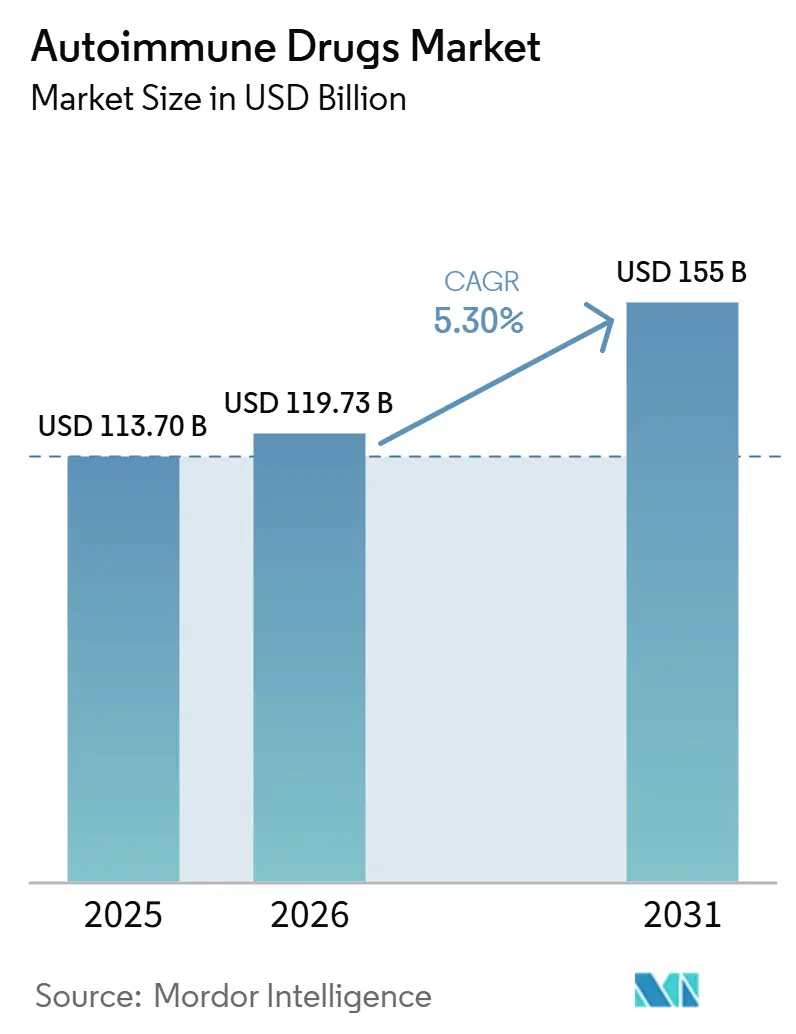
| Market Size (2026) | USD 119.73 Billion |
| Market Size (2031) | USD 155 Billion |
| Growth Rate (2026 - 2031) | 5.30 % |
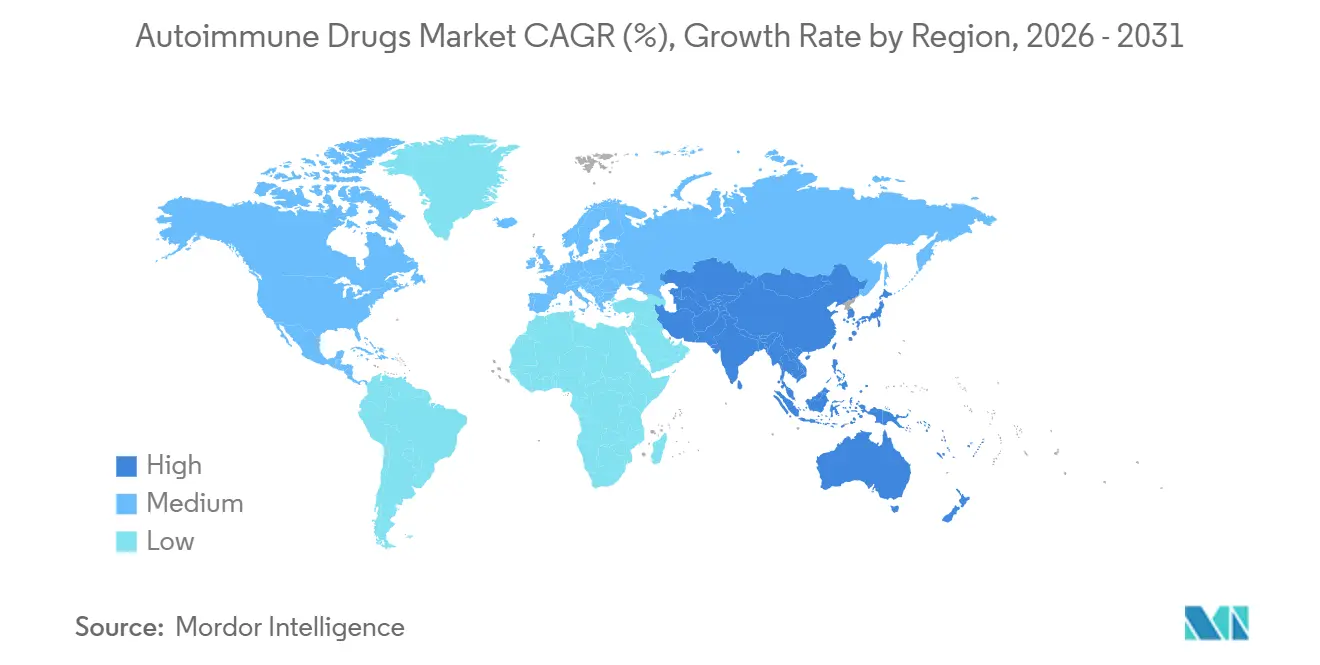
| Fastest Growing Market | Asia-Pacific |
| Largest Market | North America |
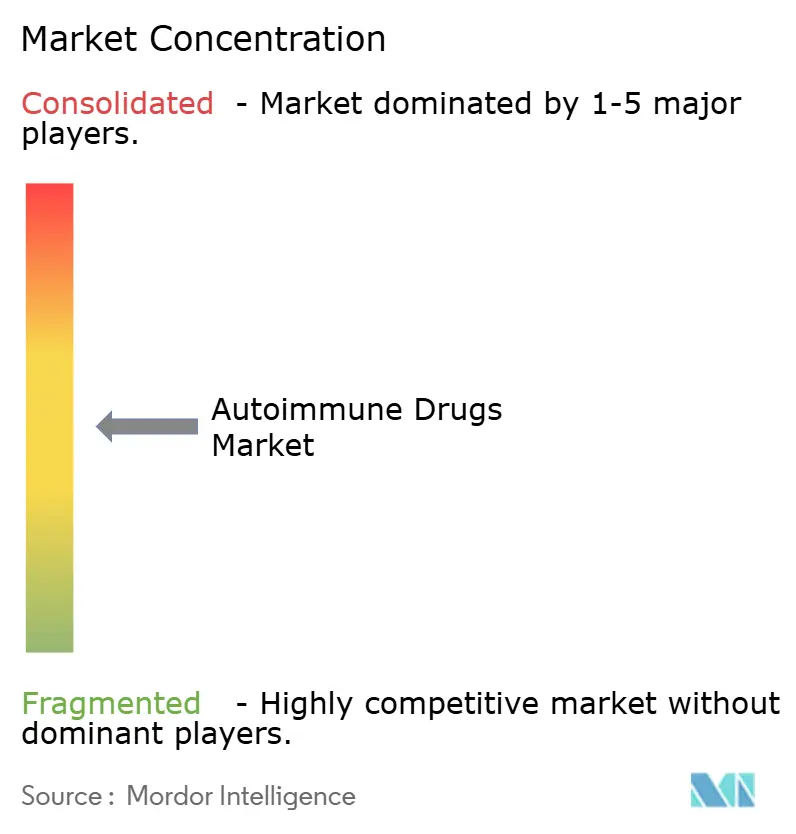
| Market Concentration | Medium |
Major Players *Disclaimer: Major Players sorted in no particular order Image © Mordor Intelligence. Reuse requires attribution under CC BY 4.0. | |
Autoimmune Drugs Market Analysis by Mordor Intelligence
The Autoimmune Drugs Market size is projected to expand from USD 113.70 billion in 2025 and USD 119.73 billion in 2026 to USD 155 billion by 2031, registering a CAGR of 5.30% between 2026 to 2031.
Demand is supported by a growing diagnosed patient population, earlier treatment initiation, and continued development of targeted therapies. Better diagnostic tools and more integrated care pathways are bringing patients into treatment earlier, often when sustained therapy can have greater value. Large manufacturers are extending established brands into new indications and age groups to protect revenue as older biologics face biosimilar competition. The autoimmune drugs market also faces uneven reimbursement, safety-monitoring requirements, and price pressure in mature treatment classes, which will continue to shape access and product selection.
Key Report Takeaways
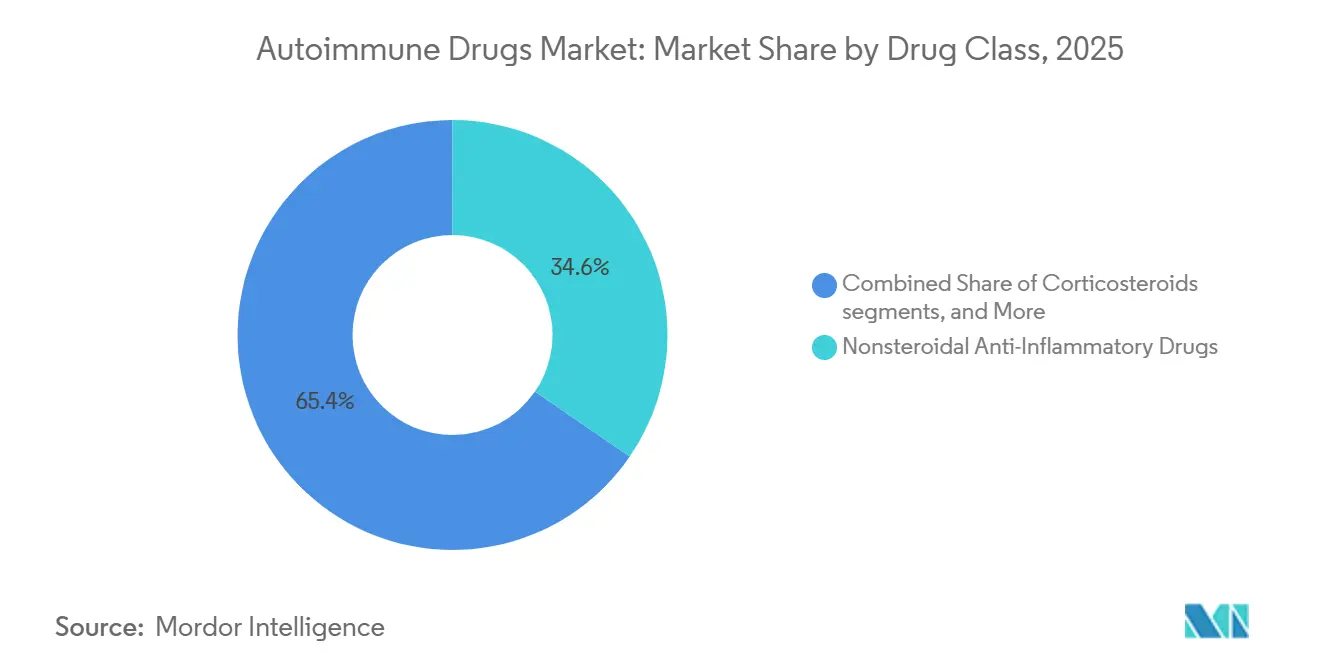
- By drug class, NSAIDs held 34.56% of the autoimmune drugs market share in 2025, while corticosteroids are projected to grow at a 9.15% CAGR through 2031.
- By disease indication, rheumatoid arthritis accounted for 46.93% of global revenue in 2025, while multiple sclerosis is projected to expand at an 8.80% CAGR through 2031.
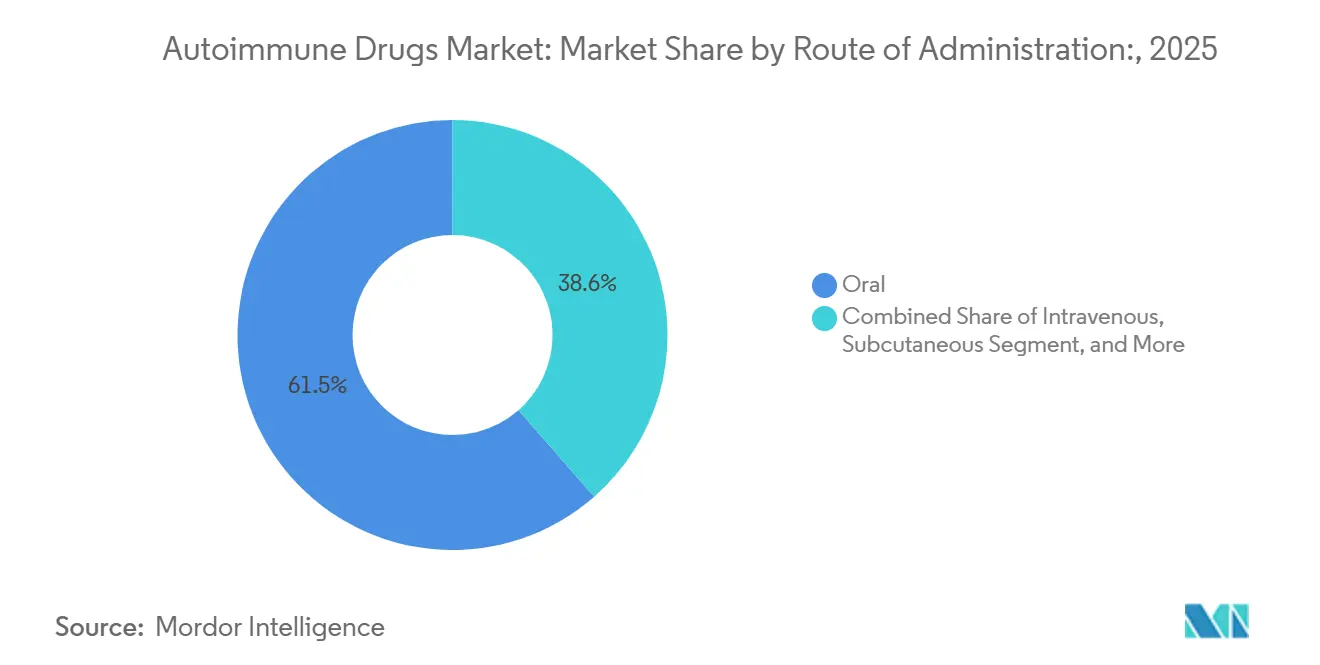
- By route of administration, oral products held 61.45% share in 2025, while intravenous delivery is projected to grow at a 7.45% CAGR through 2031.
- By formulation, tablets and capsules held 45.78% share in 2025, while prefilled syringes are projected to grow at an 8.56% CAGR through 2031.
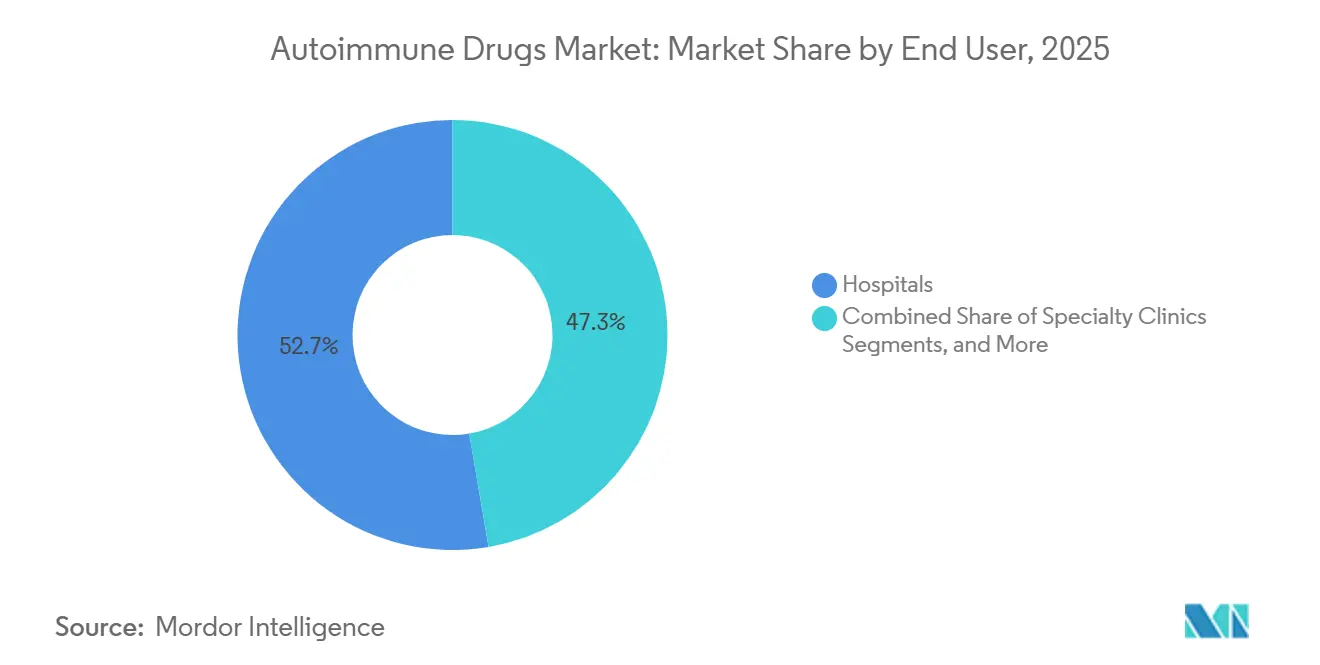
- By end user, hospitals accounted for 52.67% share in 2025, while the adolescent patient cohort is projected to grow at an 8.55% CAGR through 2031.
- By geography, North America held 38.67% share in 2025, while Asia-Pacific is projected to grow at a 9.58% CAGR through 2031.
Note: Market size and forecast figures in this report are generated using Mordor Intelligence’s proprietary estimation framework, updated with the latest available data and insights as of January 2026.
Market Trends and Insights
Drivers Impact Analysis of Autoimmune Drugs Market*
| DRIVER | (~) % IMPACT ON CAGR FORECAST | GEOGRAPHIC RELEVANCE | IMPACT TIMELINE |
|---|---|---|---|
| Rising prevalence and earlier diagnosis of autoimmune diseases | +1.8% | Global, with acute effects in North America and Western Europe | Long term (≥ 4 years) |
| Expansion of biologic and targeted synthetic therapies | +1.5% | North America and Europe, with growth in Asia-Pacific and selected Middle East and Africa markets | Medium term (2-4 years) |
| Increasing treatment adoption in emerging markets | +1.0% | Asia-Pacific, with spillover to Middle East and Africa and South America | Long term (≥ 4 years) |
| Expansion of indications for established immunology products | +0.8% | North America and Europe, with accelerating Asia-Pacific adoption | Short term (≤ 2 years) |
| Precision immunology through biomarker and patient stratification | +0.5% | North America and Europe, with clinical trial activity in Asia-Pacific | Medium term (2-4 years) |
| Growth of self-administration and home-based treatment | +0.4% | North America, with growing adoption in Western Europe | Short term (≤ 2 years) |
| Source: Mordor Intelligence | |||
Rising Prevalence and Earlier Diagnosis of Autoimmune Diseases
Earlier patient identification supports the autoimmune drugs market, driven by improved biomarker panels, point-of-care serology tests, and integrated electronic health records. A 2024 analysis using Global Burden of Disease 2024 data found rising incidence trends for rheumatoid arthritis, multiple sclerosis, and type 1 diabetes among people aged 15-39 years from 1990 to 2024, with prevalence projected to continue rising through 2032.[1] A 2025 study across six major U.S. health systems identified more than 15 million Americans diagnosed with at least one of 105 autoimmune conditions, and 34% of diagnosed patients had more than one autoimmune condition. Earlier diagnosis in primary care supports timely treatment before severe complications, favoring therapies that address multiple inflammatory conditions or adapt to changing patient care needs.
Expansion of Biologic and Targeted Synthetic Therapies
Biologic and targeted synthetic therapies remain key value drivers in the autoimmune drugs market, especially for patients not adequately controlled with conventional treatment. Emerging approaches include BTK inhibitors for multiple sclerosis, FcRn inhibitors for IgG-mediated conditions, and later-stage cell therapies for severe autoimmune diseases. These programs are shifting competition beyond established TNF and IL-12/23 mechanisms toward specialized pathways. Generic tofacitinib tablets launched in the United States in June 2026, increasing price pressure on an earlier oral targeted therapy and making differentiated clinical profiles, convenient administration, broader labels, biomarker-led patient selection, and self-administered formats more important.
Increasing Treatment Adoption in Emerging Markets
Expanding biologics production and clinical development capacity in Asia-Pacific is supporting the autoimmune drugs market. India’s biotechnology sector increased from USD 10 billion in 2014 to USD 130 billion in 2024, strengthening the country’s manufacturing and clinical research base. China’s National Medical Products Administration introduced a 30-day investigational new drug fast-track process in 2025, shortening entry timelines for domestic and multinational development programs. Broader manufacturing capacity, regulatory cooperation, and multi-country approvals can improve access to biologics and biosimilars and help South Korean and Indian producers serve multiple markets with the same portfolio.
Expansion of Indications for Established Immunology Products
Label expansion remains a practical strategy for established immunology products to extend their role across disease areas and patient groups. AbbVie’s Rinvoq received its ninth U.S. approval for giant cell arteritis in 2025, and the company filed for non-segmental vitiligo, with an FDA decision expected in the fourth quarter of 2026. Johnson & Johnson received FDA approval for Stelara in pediatric Crohn’s disease for patients aged 2 years and older in April 2026. Sanofi and Regeneron received FDA approval for Dupixent in children aged 2-11 years with chronic spontaneous urticaria in April 2026, creating new treatment options while supporting branded therapy relevance as biosimilars compete in older adult indications.
Restraints Impact Analysis of Autoimmune Drugs Market*
| RESTRAINT | (~) % IMPACT ON CAGR FORECAST | GEOGRAPHIC RELEVANCE | IMPACT TIMELINE |
|---|---|---|---|
| High cost of biologic development and long clinical timelines | -0.9% | Global, with the strongest effect in markets without public research and development support | Long term (≥ 4 years) |
| Biosimilar competition and loss of exclusivity | -0.8% | North America and Europe, with later pressure in Asia-Pacific and Middle East and Africa | Short term (≤ 2 years) |
| Fragmented diagnosis and delayed referral across autoimmune diseases | -1.5% | Global, particularly acute in Asia-Pacific and South America | Long term (≥ 4 years) |
| Long-term safety, immunogenicity, and treatment-persistence concerns | -1.2% | North America and Western Europe | Medium term (2-4 years) |
| Source: Mordor Intelligence | |||
High Cost of Biologic Development and Long Clinical Timelines
Developing a new biologic requires lengthy clinical programs, complex trial designs, and extensive safety monitoring. These requirements become more demanding when sponsors study narrowly defined patient groups or use adaptive trial designs. Sanofi’s tolebrutinib was not approved by the FDA for non-relapsing secondary progressive multiple sclerosis in December 2025, despite positive HERCULES Phase 3 results, due to concerns over severe drug-induced liver injury. The European Commission approved the medicine as Cenrifki in June 2026 for the same condition, highlighting regulatory variation across markets and increasing the financial risk of parallel global development programs.
Biosimilar Competition and Loss of Exclusivity
Biosimilars are shifting revenue from originator biologics to lower-cost alternatives, particularly in established TNF inhibitor classes. In May 2026, the FDA approved IMMGOLIS and IMMGOLIS INTRI, the first biosimilars to Simponi and Simponi Aria. Infliximab biosimilars controlled 51% of market volume, indicating that mature classes can transition rapidly once several alternatives become available. Price competition can expand treatment access but reduce revenue growth for originators and suppliers, while interchangeability and biosimilar development requirements continue to create meaningful costs for smaller entrants.
*Our forecasts treat driver/restraint impacts as directional, not additive. The impact forecasts reflect baseline growth, mix effects, and variable interactions.
Autoimmune Drugs Market Segment Analysis
By Drug Class:
NSAIDs Retain Broad Use While Corticosteroids Gain New RolesNSAIDs held 34.56% of segment revenue in 2025, supported by broad use across rheumatoid arthritis, ankylosing spondylitis, lupus, and psoriatic arthritis. Their affordability and familiar safety profile support routine prescribing, although they do not modify the underlying disease course. Conventional synthetic DMARDs, including methotrexate and hydroxychloroquine, remain key first-line options for rheumatoid arthritis, especially in markets where reimbursement limits or out-of-pocket costs restrict biologic access. Biologic DMARDs and targeted synthetic DMARDs contribute significant value, with U.S. annual prices ranging from USD 15,000 to USD 60,000 per patient, while interferons retain an established role in multiple sclerosis.
Corticosteroids recorded the highest projected growth rate among drug classes, at a 9.15% CAGR from 2026 to 2031. Their use is expanding in induction combinations, bridging strategies, and regimens that require low-dose support while a biologic takes effect. European guidance increasingly treats dosing as a precision decision rather than applying broad avoidance. Immunosuppressants, intravenous immunoglobulin, FcRn inhibitors, S1P receptor modulators, and pipeline agents targeting APRIL, BAFF, and complement pathways continue to broaden the autoimmune drugs market beyond conventional inflammatory control.

By Disease Indication:
Rheumatoid Arthritis Leads While Multiple Sclerosis Expands FastestRheumatoid arthritis accounted for 46.93% of indication revenue in 2025, driven by a large patient base, high treatment intensity, and frequent use of combination therapy. Conventional DMARDs, biologics, and targeted therapies each support treatment as disease severity or response changes. Psoriatic arthritis, psoriasis, and atopic dermatitis form a large treatment cluster, where IL-17, IL-23, and IL-4/13 therapies compete for prescriber preference. Inflammatory bowel disease remains a high-spend area, with Crohn’s disease and ulcerative colitis supporting demand for agents such as vedolizumab and risankizumab, while ankylosing spondylitis, axial spondyloarthritis, and other indications remain stable contributors.
Multiple sclerosis is forecast to grow at an 8.80% CAGR from 2026 to 2031, the fastest rate among disease indications. The European Commission approved Sanofi’s Cenrifki in June 2026 for secondary progressive multiple sclerosis without relapses, adding a new option for smoldering neuroinflammation. This development could shift prescribing toward CNS-penetrant BTK inhibitors and away from older first-line therapies for relevant patients. The U.S. launch of Tyruko, the first natalizumab biosimilar, in November 2025 increased competitive pressure in multiple sclerosis, while FDA approval of Benlysta autoinjector for pediatric lupus nephritis patients aged 5 years and older in June 2025 broadened access in an underpenetrated indication.
By Route of Administration:
Oral Products Lead While Intravenous Delivery Serves Complex DiseaseOral products held 61.45% of the autoimmune drugs market size in 2025, supported by high prescription volumes for NSAIDs, conventional DMARDs, JAK inhibitors, and S1P receptor modulators. Methotrexate, hydroxychloroquine, and leflunomide remain widely used oral treatments across several autoimmune conditions. Oral administration is important in maintenance treatment, where patients need familiar and convenient regimens. AbbVie reported USD 8.304 billion in 2025 revenue for Rinvoq, while the launch of generic tofacitinib in June 2026 added price competition in the oral targeted category.
Intravenous delivery is forecast to grow at a 7.45% CAGR from 2026 to 2031. It remains important for severe lupus nephritis, neuromyelitis optica, multiple sclerosis, and complex rheumatoid arthritis, where clinical supervision supports adherence and monitoring. Ambulatory infusion centers and home infusion programs are expanding the settings for intravenous biologic delivery. FDA guidance on home infusion safety and CMS reimbursement policy remain important factors shaping adoption, as the autoimmune drugs market benefits from closer-to-home access without compromising monitoring.
By Formulation:
Tablets and Capsules Lead While Prefilled Syringes ExpandTablets and capsules held a 45.78% share of the autoimmune drugs market in 2025 because orally administered NSAIDs, conventional DMARDs, and small-molecule therapies remain widely prescribed. These formats support patient familiarity and long-term maintenance treatment. Vials and ampoules remain important in hospital pharmacies, particularly for compounding and individualized dosing. Oral solutions, suspensions, and auto-injector pens address pediatric, older-patient, localized, and self-administration needs.
Prefilled syringes are forecast to grow at an 8.56% CAGR from 2026 to 2031. The biologic and biosimilar pipeline increasingly favors subcutaneous self-administration to support adherence and lower administration costs. AbbVie received FDA approval in June 2026 for a 55 mg prefilled syringe for Skyrizi, designed for weight-based pediatric dosing in patients under 40 kg. Auto-injector pens are also being refined for patient comfort, needle concealment, and connected adherence support, helping preserve patient and provider preference where biosimilar alternatives are available.
By End User:
Hospitals Lead While Adolescent Care Gains MomentumHospitals accounted for a 52.67% share of the autoimmune drugs market in 2025. They remain the main sites for intravenous biologic initiation, complex induction regimens, and care for patients with severe or multi-system disease. Formulary committee decisions strongly influence access to new biologics across large purchasing networks. Specialty clinics, ambulatory infusion centers, physician offices, and home healthcare settings are gaining relevance as ongoing monitoring and self-injected therapies expand.
The adolescent patient cohort aged 12-17 years is forecast to grow at an 8.55% CAGR from 2026 to 2031. Pediatric label expansions between 2025 and 2026 included Tremfya for pediatric psoriasis and psoriatic arthritis, Yuflyma for adolescent hidradenitis suppurativa, and Cosentyx for patients aged 12 years and older with hidradenitis suppurativa. Skyrizi was approved for pediatric psoriatic disease in June 2026, and Tzield received accelerated FDA approval for children aged 8-17 years with stage 3 type 1 diabetes in June 2026. These actions are increasing the need for pediatric specialist capacity, payer coverage, and patient support services, while Pediatric Research Equity Act requirements encourage evidence development for younger populations.
Geography Analysis
North America Autoimmune Drugs Market
North America held 38.67% of regional revenue in 2025, supported by high treatment rates, broad biologic reimbursement, and strong immunology research activity. The United States remained a key center of biosimilar-led price disruption. Ustekinumab biosimilars reached a 42% U.S. share in the first quarter of 2026, while infliximab biosimilars controlled 51% of market volume. These shifts lowered originator pricing pressure and expanded patient access, while Canada’s formulary expansions and Mexico’s hospital modernization supported regional demand.
Europe Autoimmune Drugs Market
AbbVie expected Skyrizi and Rinvoq to generate USD 34.5 billion in combined revenue in 2026, within total company sales guidance of USD 67 billion. Europe was the second-largest regional contributor, with Germany, the United Kingdom, France, Italy, and Spain accounting for much of the region’s autoimmune therapy revenue. The European Commission’s approval of Cenrifki in June 2026 indicated continued regulatory support for therapies addressing progressive neurological autoimmune disease. German reference-pricing processes reduced launch-year pricing leverage for newer biologics, while higher-income Central and Eastern European markets increased biologic use.
APAC, MEA and South America Autoimmune Drugs Market
Asia-Pacific is forecast to grow at a 9.58% CAGR from 2026 to 2031, making it the fastest-growing regional part of the autoimmune drugs market. Manufacturing capacity, clinical infrastructure, and biosimilar development expanded across China, India, and South Korea. India’s biotechnology expansion supported its role as a biosimilar exporter and clinical trial destination. Middle East and Africa and South America remained smaller contributors, although Gulf countries, Brazil, and Argentina increased specialty-care investment and public procurement for autoimmune treatment.
Competitive Landscape
The autoimmune drugs market is moderately consolidated at the originator level, with AbbVie, Johnson & Johnson, Novartis, Amgen, Sanofi and Regeneron, Bristol Myers Squibb, and Pfizer accounting for a significant share of high-value biologic revenue. Biosimilar competition is expanding as South Korean, Indian, and European manufacturers enter major treatment categories. Leading companies are defending established brands through indication expansion, targeted acquisitions, and patient-support services. AbbVie reported USD 30.406 billion in 2025 revenue from its combined Skyrizi and Rinvoq immunology franchise, including USD 17.562 billion from Skyrizi. These results highlight the value of building multiple indications around a single therapy platform. Competitive dynamics vary by drug class, as mature TNF and IL-23 products face more immediate biosimilar pressure than newer mechanisms.
Johnson & Johnson expanded its FcRn presence through its earlier acquisition of Momenta and the development of nipocalimab, approved as Imaavy. FcRn-targeted therapy has increased interest in treatments for IgG-mediated autoimmune conditions. Sanofi’s Cenrifki approval in Europe gave the company a differentiated BTK inhibitor option in secondary progressive multiple sclerosis. Imviva Biotech received FDA investigational new drug clearance in June 2026 for CTA313, an allogeneic CD19/BCMA CAR-T therapy for B-cell-mediated autoimmune diseases. AbelZeta Pharma received EMA PRIME designation for C-CAR168 in refractory systemic lupus erythematosus and lupus nephritis in July 2026. These programs reflected the industry’s focus on developing options for refractory disease, where current biologics may not provide durable control.
Biosimilar developers, including Celltrion, Samsung Bioepis, Biocon, and Dr. Reddy’s Laboratories, are using interchangeability pathways and specialty-pharmacy partnerships to build volume in the United States and Europe. Their role is strongest in categories where multiple manufacturers can support the required development, supply, and distribution investments. Digital tools and connected auto-injectors are helping branded biologics support adherence and maintain formulary relevance.
Autoimmune Drugs Industry Leaders
-
AbbVie Inc.
-
F. Hoffmann-La Roche Ltd
-
Johnson & Johnson
-
Novartis AG
-
Pfizer Inc.
- *Disclaimer: Major Players sorted in no particular order
Autoimmune Drugs Market Companies Covered in this Report
- Abbvie
- Amgen
- argenx SE
- AstraZeneca
- Biogen
- Bristol-Myers Squibb
- Eli Lilly and Company
- Roche
- GlaxoSmithKline
- Incyte
- Johnson & Johnson
- Merck
- Novartis
- Organon
- Pfizer
- Regeneron Pharmaceuticals
- Sanofi
- Takeda Pharmaceuticals
- Teva Pharmaceutical Industries
- UCB
Recent Industry Developments in Autoimmune Drugs Market
- July 2026: AbelZeta Pharma received EMA PRIME designation for C-CAR168, an autologous anti-CD20/BCMA bispecific CAR-T therapy for refractory systemic lupus erythematosus, including lupus nephritis.
- June 2026: Sanofi’s Cenrifki, or tolebrutinib, received European Commission approval for secondary progressive multiple sclerosis without relapses in the prior two years.
- June 2026: AbbVie received FDA approval for Skyrizi in patients aged 6 years and older with moderate-to-severe plaque psoriasis or active psoriatic arthritis.
- June 2026: Eli Lilly received FDA approval for an Ebglyss maintenance dosing regimen every eight weeks for atopic dermatitis in adults and children aged 12 years and older.
- June 2026: Breckenridge Pharmaceutical launched generic tofacitinib tablets in the United States for rheumatoid arthritis, psoriatic arthritis, ankylosing spondylitis, and ulcerative colitis.
- June 2026: Imviva Biotech received FDA investigational new drug clearance for CTA313, an allogeneic CD19/BCMA CAR-T cell therapy for B-cell-mediated autoimmune diseases.
Global Autoimmune Drugs Market Report Scope
As per the scope of the report, autoimmune drugs are prescription medications used to calm an overactive immune system. They stop the body from mistakenly attacking its own healthy cells and tissues. These treatments help reduce swelling, ease pain, and prevent permanent organ or tissue damage.
The autoimmune drugs market is segmented by drug class, disease indication, route of administration, formulation, end user, and geography. By drug class, the market includes conventional synthetic DMARDs, biologic DMARDs, targeted synthetic DMARDs, corticosteroids, nonsteroidal anti-inflammatory drugs, immunosuppressants, interferons, intravenous immunoglobulin, and other drug classes. By disease indication, the market is segmented into rheumatoid arthritis, psoriatic arthritis, ankylosing spondylitis and axial spondyloarthritis, systemic lupus erythematosus, lupus nephritis, inflammatory bowel disease, Crohn’s disease, ulcerative colitis, multiple sclerosis, psoriasis, atopic dermatitis, and other disease indications. By route of administration, the market is segmented into oral, intravenous, subcutaneous, intramuscular, topical, and other routes of administration. By formulation, the market includes prefilled syringes, auto-injector pens, vials and ampoules, tablets and capsules, oral solutions and suspensions, and other formulations. By end user, the market is segmented into hospitals, specialty clinics, physician offices, ambulatory infusion centers, home healthcare and home infusion, and other end users. By geography, the market is analyzed across North America, Europe, Asia-Pacific, the Middle East and Africa, and South America. The report also covers the estimated market sizes and trends for 17 countries across major regions globally. The report offers the market sizes and forecasts in terms of value (USD) for the above segments.
| Conventional Synthetic DMARDs | Biologic DMARDs |
| Targeted Synthetic DMARDs | |
| Corticosteroids | |
| Nonsteroidal Anti-Inflammatory Drugs | |
| Immunosuppressants | |
| Interferons | |
| Intravenous Immunoglobulin | |
| Other Drug Classes |
| Rheumatoid Arthritis |
| Psoriatic Arthritis |
| Ankylosing Spondylitis and Axial Spondyloarthritis |
| Systemic Lupus Erythematosus |
| Lupus Nephritis |
| Inflammatory Bowel Disease |
| Crohn's Disease |
| Ulcerative Colitis |
| Multiple Sclerosis |
| Psoriasis |
| Atopic Dermatitis |
| Others |
| Oral |
| Intravenous |
| Subcutaneous |
| Intramuscular |
| Topical |
| Others |
| Prefilled Syringes |
| Auto-Injector Pens |
| Vials and Ampoules |
| Tablets and Capsules |
| Oral Solutions and Suspensions |
| Others |
| Hospitals |
| Specialty Clinics |
| Physician Offices |
| Ambulatory Infusion Centers |
| Home Healthcare and Home Infusion |
| Others |
| North America | United States |
| Canada | |
| Mexico | |
| Europe | Germany |
| United Kingdom | |
| France | |
| Italy | |
| Spain | |
| Rest of Europe | |
| Asia-Pacific | China |
| India | |
| Japan | |
| Australia | |
| South Korea | |
| Rest of Asia-Pacific | |
| Middle East and Africa | GCC |
| South Africa | |
| Rest of Middle East and Africa | |
| South America | Brazil |
| Argentina | |
| Rest of South America |
| By Drug Class | Conventional Synthetic DMARDs | Biologic DMARDs |
| Targeted Synthetic DMARDs | ||
| Corticosteroids | ||
| Nonsteroidal Anti-Inflammatory Drugs | ||
| Immunosuppressants | ||
| Interferons | ||
| Intravenous Immunoglobulin | ||
| Other Drug Classes | ||
| By Disease Indication | Rheumatoid Arthritis | |
| Psoriatic Arthritis | ||
| Ankylosing Spondylitis and Axial Spondyloarthritis | ||
| Systemic Lupus Erythematosus | ||
| Lupus Nephritis | ||
| Inflammatory Bowel Disease | ||
| Crohn's Disease | ||
| Ulcerative Colitis | ||
| Multiple Sclerosis | ||
| Psoriasis | ||
| Atopic Dermatitis | ||
| Others | ||
| By Route of Administration | Oral | |
| Intravenous | ||
| Subcutaneous | ||
| Intramuscular | ||
| Topical | ||
| Others | ||
| By Formulation | Prefilled Syringes | |
| Auto-Injector Pens | ||
| Vials and Ampoules | ||
| Tablets and Capsules | ||
| Oral Solutions and Suspensions | ||
| Others | ||
| By End User | Hospitals | |
| Specialty Clinics | ||
| Physician Offices | ||
| Ambulatory Infusion Centers | ||
| Home Healthcare and Home Infusion | ||
| Others | ||
| By Geography | North America | United States |
| Canada | ||
| Mexico | ||
| Europe | Germany | |
| United Kingdom | ||
| France | ||
| Italy | ||
| Spain | ||
| Rest of Europe | ||
| Asia-Pacific | China | |
| India | ||
| Japan | ||
| Australia | ||
| South Korea | ||
| Rest of Asia-Pacific | ||
| Middle East and Africa | GCC | |
| South Africa | ||
| Rest of Middle East and Africa | ||
| South America | Brazil | |
| Argentina | ||
| Rest of South America | ||
Key Questions Answered in the Report
What is the projected value of autoimmune drugs in 2031?
The autoimmune drugs market is projected to reach USD 155.00 billion by 2031, rising from USD 119.73 billion in 2026 at a 5.30% CAGR. Growth reflects earlier diagnosis, targeted therapies, and broader product labels.
Which drug class held the largest share in 2025?
NSAIDs led drug classes with 34.56% share in 2025. Their broad use, affordability, and established role as foundational or adjunctive treatment support continued demand across several autoimmune conditions.
Which autoimmune disease indication is growing fastest?
Multiple sclerosis is forecast to grow at an 8.80% CAGR through 2031. New treatment approaches, including CNS-penetrant BTK inhibitors, are supporting activity in progressive neurological disease.
Why are biosimilars important for autoimmune treatment?
Biosimilars can expand treatment access and reduce originator pricing, especially in mature TNF inhibitor categories. They also shift competition toward supply reliability, distribution, and patient-support services.
Which delivery route is expected to grow fastest?
Intravenous delivery is forecast to grow at a 7.45% CAGR through 2031 because it remains important for complex and severe disease. Ambulatory and home infusion settings may widen access for appropriate patients.
Which region is forecast to grow fastest through 2031?
Asia-Pacific is forecast to grow at a 9.58% CAGR through 2031. Biologics manufacturing, clinical infrastructure, and biosimilar development in China, India, and South Korea are supporting this expansion.