
Autism Spectrum Disorders Treatment Market Size and Share
Market Overview
| Study Period | 2020 - 2031 |
|---|---|
| Market Size (2026) | USD 2.46 Billion |
| Market Size (2031) | USD 3.18 Billion |
| Growth Rate (2026 - 2031) | 5.22 % |
| Fastest Growing Market | Asia-Pacific |
| Largest Market | North America |
| Market Concentration | Low |
Major Players *Disclaimer: Major Players sorted in no particular order Image © Mordor Intelligence. Reuse requires attribution under CC BY 4.0. | |
Autism Spectrum Disorders Treatment Market Analysis by Mordor Intelligence
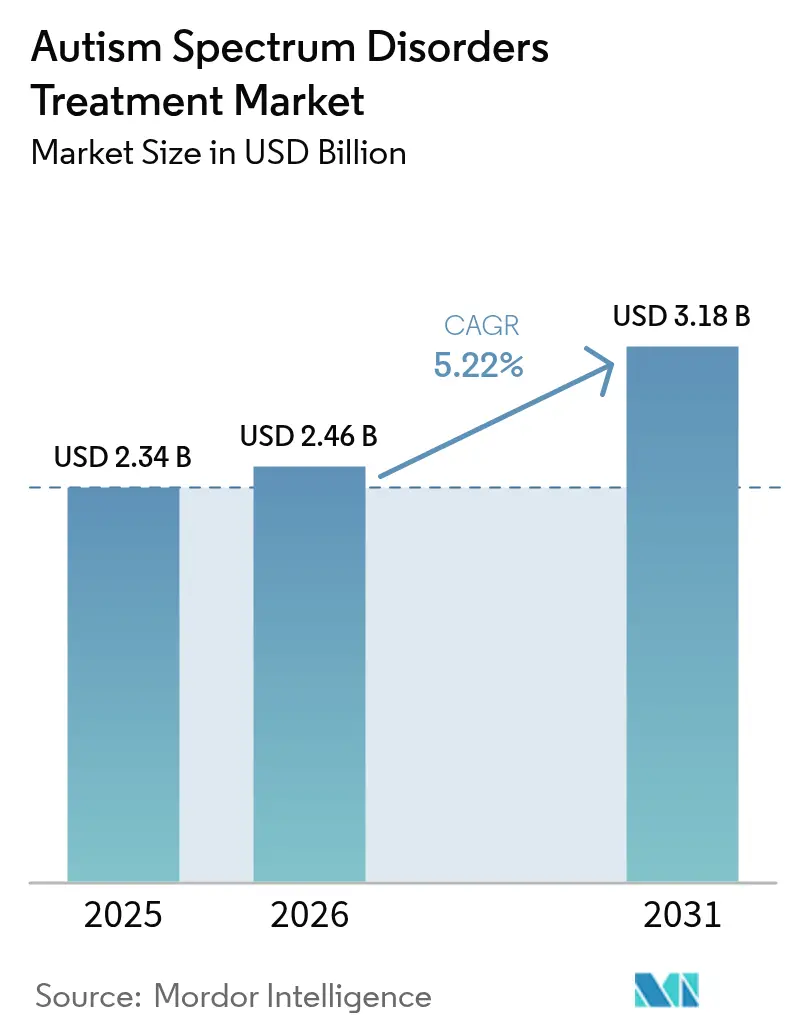
The Autism Spectrum Disorders Treatment market size is expected to grow from USD 2.34 billion in 2025 to USD 2.46 billion in 2026 and is forecast to reach USD 3.18 billion by 2031 at 5.22% CAGR over 2026-2031. Rapid uptake of cannabinoid-based medicines, growing use of FDA-cleared digital diagnostics and broader reimbursement for software-as-a-medical-device tools are redirecting investment from symptomatic control toward mechanism-based intervention. Precision medicine strategies built on biomarker discovery now complement genetic testing services, expanding the addressable patient base while improving therapy-matching accuracy. In parallel, regulators in Japan and China are opening expedited pathways for botanical drugs, shifting growth momentum eastward. Competitive dynamics remain fragmented because smaller innovators leverage microbiome, endocannabinoid and neuropeptide science to sidestep incumbent antipsychotic positions, yet incumbents still anchor hospital-based prescribing patterns through deep payer relationships.
Key Report Takeaways
- By drug class, antipsychotic medicines led with 41.10% Autism Spectrum Disorder treatment market share in 2025, while cannabinoid therapies are forecast to compound at 8.38% through 2031.
- By ASD type, Autistic Disorder accounted for 53.20% share in 2025, while Rett Syndrome treatments are set to rise at an 7.88% CAGR to 2031.
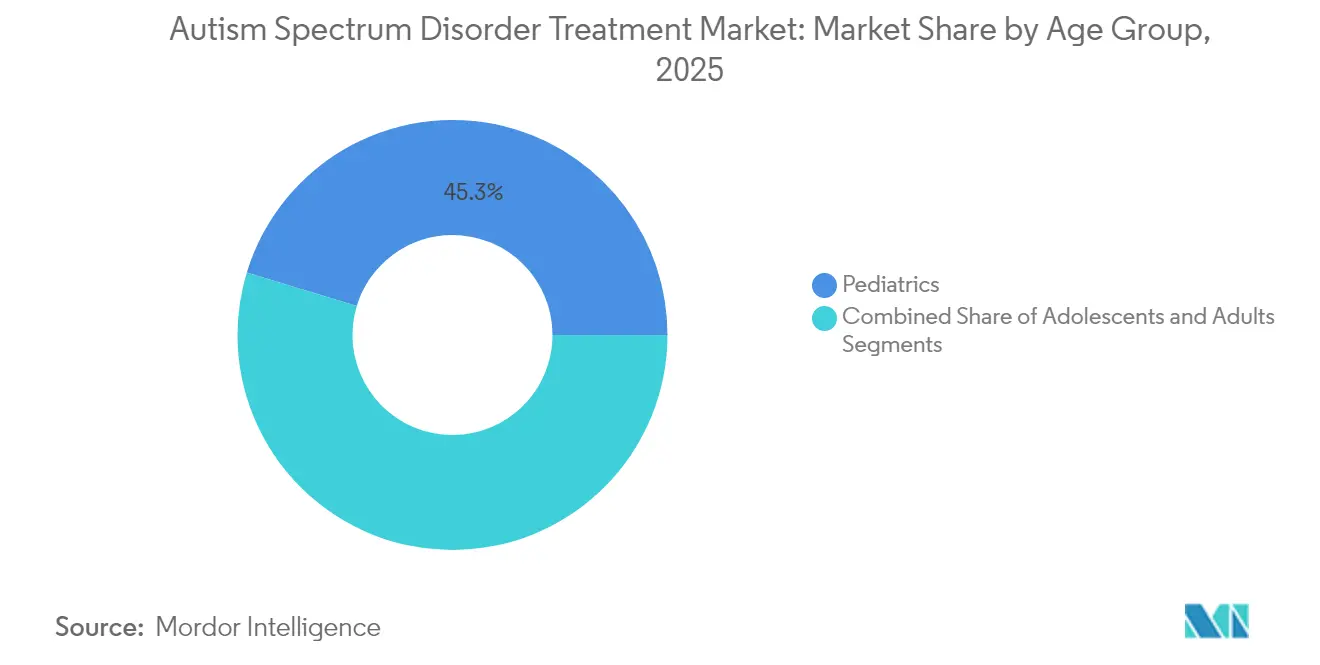
- By age group, the pediatric segment held 45.30% share of the Autism Spectrum Disorder treatment market size in 2025; adult therapies are expanding at an 8.55% CAGR to 2031.
- By distribution channel, hospital pharmacies captured 59.95% of the Autism Spectrum Disorder treatment market size in 2025; online pharmacies are advancing at a 8.62% CAGR through 2031.
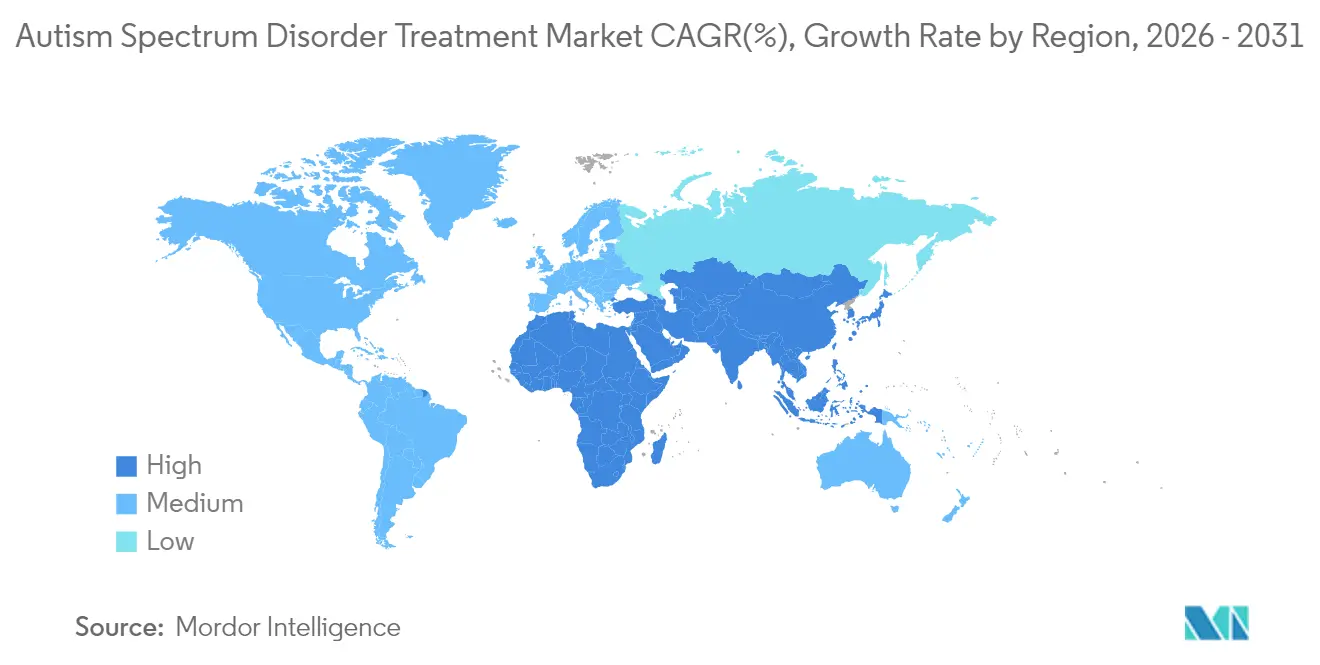
- By geography, North America commanded 45.70% revenue in 2025, whereas Asia-Pacific is projected to post a 7.55% CAGR by 2031.
Note: Market size and forecast figures in this report are generated using Mordor Intelligence’s proprietary estimation framework, updated with the latest available data and insights as of 2026.
Market Trends and Insights
Drivers Impact Analysis of Autism Spectrum Disorders Treatment Market*
| Driver | (~) % Impact on CAGR Forecast | Geographic Relevance | Impact Timeline |
|---|---|---|---|
| High burden of Autism Spectrum Disorders | +1.2% | Global; highest in North America and Europe | Long term (≥ 4 years) |
| Growing awareness & early diagnosis programs | +1.0% | Global; accelerated gains in APAC and emerging markets | Medium term (2-4 years) |
| Expanding reimbursement for ASD therapies | +0.8% | North America & EU core; spill-over to APAC | Short term (≤ 2 years) |
| Robust late-stage pipeline of novel drugs | +1.1% | Global; regulatory leadership in US and EU | Medium term (2-4 years) |
| Advances in diagnostic tools & digital apps | +0.6% | North America & EU; early adoption in urban APAC | Short term (≤ 2 years) |
| Private-sector funding for rare ASD sub-types | +0.4% | Global; concentrated in biotech hubs | Long term (≥ 4 years) |
| Source: Mordor Intelligence | |||
High Burden of Autism Spectrum Disorders (ASD)
Escalating prevalence—now 1 in 36 children—adds load to health systems that still rely on labor-intensive behavioral care, prompting families to seek pharmacologic relief when aggression threatens safety.[1] Lifetime economic burden has been pegged at USD 7 trillion by 2029, reflecting medical costs plus lost productivity. Pharma pipelines still focus on pediatric needs, yet rising diagnoses among young adults are widening the untreated population, validating the adult segment’s 8.92% CAGR outlook.[2] Medication remains common; two-thirds of autistic adolescents receive psychotropics, underscoring unmet demand for safer, more targeted drugs.
Growing Awareness & Early Diagnosis Initiatives Coupled with Government Funding
The NIMH allocates USD 47 billion for neuroscience, and HRSA adds USD 5 million for autism programs, reinforcing national priorities.[3]Multistage screening networks are improving detection among underserved groups, while FDA-designated tools like StrandDx ASD promise prediction at birth with 80-90% accuracy. Earlier identification lengthens treatment horizons, supporting recurring revenue models for therapy developers.
Expanding Reimbursement Coverage for ASD Therapies
Highmark now reimburses Cognoa’s Canvas Dx without prior authorization, signaling payer openness to digital diagnostics. TRICARE’s Autism Care Demonstration covers Applied Behavior Analysis, and state Medicaid plan s integrate autism services into managed care, reducing emergency department use while attracting private-equity capital into scalable clinic chains. Coverage for cannabis-based drugs and software therapeutics shortens the commercialization runway for innovators.
Robust Late-stage Pipeline of Novel Therapeutics
Phase 2 success for Yamo’s L1-79 delivered a 7.94-point social-function gain, de-risking catecholamine modulation strategies. DeFloria’s multi-cannabinoid AJA001 secured IND clearance, opening FDA’s first botanical path in autism. Microbiome agent AB-2004 met Phase 2b endpoints, and vasopressin plus oxytocin analogs show functional gains, diversifying therapeutic targets and diluting development risk.[4]
Restraints Impact Analysis of Autism Spectrum Disorders Treatment Market*
| Restraint | (~) % Impact on CAGR Forecast | Geographic Relevance | Impact Timeline |
|---|---|---|---|
| High cost of long-term pharmacologic care | -0.9% | Global; highest in emerging markets | Long term (≥ 4 years) |
| Stringent regulatory hurdles | -0.7% | Global; most intense in US and EU | Medium term (2-4 years) |
| Limited efficacy & side effects of current drugs | -0.6% | Global; strongly felt in pediatric settings | Medium term (2-4 years) |
| Data-privacy limits on pooled genomics | -0.3% | North America & EU core; spill-over to APAC | Short term (≤ 2 years) |
| Source: Mordor Intelligence | |||
High Cost of Long-term Pharmacologic Management
Lifelong drug regimens accumulate costs that deter uptake, especially where payer budgets remain tight. Metabolic monitoring for antipsychotics adds testing fees and clinician visits, and adherence gaps drive relapse episodes that require expensive interventions. Polypharmacy exposes patients to additive side-effect risks; roughly 30% of individuals take two or more agents, adding complexity and financial load.
Stringent Regulatory Hurdles & Limited Surrogate Endpoints
The FDA demands improvement in core social communication, not just irritability, thus elongating trials that depend on behavioral scales with subjective rater variability. Botanical candidates must show pharmaceutical-grade consistency, increasing manufacturing costs. Lack of international harmonization further multiplies approval timelines.
*Our forecasts treat driver/restraint impacts as directional, not additive. The impact forecasts reflect baseline growth, mix effects, and variable interactions.
Autism Spectrum Disorders Treatment Market Segment Analysis
By Drug Class:
Cannabinoids Challenge Antipsychotic DominanceAntipsychotics retained 41.10% Autism Spectrum Disorder treatment market share in 2025, anchored by risperidone and aripiprazole approvals for irritability. Their growth is moderating due to metabolic risks, while cannabinoid therapeutics record an 8.38% CAGR as FDA acceptance of botanical dossiers widens. Antidepressants and SSRIs remain stable for anxiety comorbidity, and stimulants such as methylphenidate gain favor for overlapping ADHD. Hormone-based approaches advance via oxytocin and vasopressin analogs, and microbiome modulators show Phase 2 success. Evolving evidence prompts neurologists to shift anticonvulsant use toward lower teratogenic agents.
The Autism Spectrum Disorder treatment market size for cannabinoid drugs could climb markedly if AJA001 and HOPE-1 secure approval, though rigorous lot consistency testing remains a gatekeeper. Antipsychotic incumbents are deploying long-acting injectables to defend share, yet patient and caregiver sentiment is gravitating toward therapies that treat social deficits, setting the stage for category disruption over the forecast window.


By ASD Type:
Rett Syndrome Drives Precision Medicine AdoptionAutistic Disorder stood at 53.20% of revenue in 2025, reflecting diagnostic prevalence. Rett Syndrome, a rare but well-defined genetic variant, is growing fastest at 7.88% CAGR, riding trofinetide’s first-in-class approval. Market access teams are educating clinicians on syndrome-specific eligibility, shifting perceptions from broad-spectrum prescriptions to genotype-guided options.
The Autism Spectrum Disorder treatment market size attached to Rett Syndrome therapies will expand further as Canada’s Priority Review and potential EU filings widen geographic reach. Success of DAYBUE also motivates investors to fund programs for Phelan McDermid and Fragile X, signaling momentum toward tailored molecules that can command premium pricing.
By Age Group:
Adult Market Emerges from Diagnostic ShadowAdults represented the fastest-growing cohort at 8.55% CAGR, even though pediatrics still holds 45.30% of revenue. Greater awareness and refined diagnostic criteria uncover cases in people aged 18+, while Medicaid prepares for rising service demand. Treatment protocols now integrate mood and attention comorbidity drugs, emphasizing holistic care.
The Autism Spectrum Disorder treatment market size attached to adult pharmacotherapy is expected to keep expanding as longitudinal studies show economic benefits from treating anxiety and ADHD in adulthood. Pharmaceutical marketers are reshaping outreach, using digital channels that resonate with self-advocating adult communities.
By Distribution Channel:
Digital Transformation Accelerates AccessHospital pharmacies controlled 59.95% of 2025 sales, owing to complex case management. Online outlets, however, enjoy a 8.62% CAGR, driven by telehealth integration and payer acceptance of mail-order fulfillment. Specialty pharmacies deliver value in cannabinoid temperature-controlled shipping and microbiome capsule counseling.
Knowledge gaps among community pharmacists highlight training needs; only 43.3% understand core autism symptoms, spurring niche platforms that bundle education with e-dispensing. Digital therapeutics such as Canvas Dx bypass traditional channels altogether, foreshadowing hybrid care models where apps and pills are co-prescribed.
Geography Analysis
North America Autism Spectrum Disorders Treatment Market
North America held 45.70% of 2025 revenue as FDA approvals, broad insurance coverage and early digital tool adoption support therapy demand. The US leads clinical-trial volume, and Canada’s fast-track processes for Rett Syndrome drugs indicate regulatory alignment. Mexico is climbing as diagnosis rates improve alongside private insurance penetration.
Europe Autism Spectrum Disorders Treatment Market
Europe exhibits stable expansion. EMA harmonization eases multi-country launches, and Germany’s Digital Health Applications pathway reimburses software therapeutics. France and Italy sustain antipsychotic volume, while the UK funds community autism hubs that incorporate pharmacologic and behavioral care.
APAC Autism Spectrum Disorders Treatment Market
Asia-Pacific posts the strongest growth at 7.55% CAGR. Japan is updating its Pharmaceuticals and Medical Devices Act to smooth botanical approvals, and China’s Hainan pilot zone permits conditional imports of unapproved drugs for urgent needs, accelerating cannabinoid access. India’s expanding telemedicine footprint supports online pharmacy uptake, although reimbursement lags.
South America and MEA Autism Spectrum Disorders Treatment Market
Middle East & Africa remains nascent but benefits from Gulf states’ employment of universal health-coverage programs that include pediatric neurodevelopmental services. South America records steady gains, with Brazil’s ANVISA fast-tracking certain cannabis formulations and Argentina increasing public funding for early screening.
Regulatory Landscape
Regulation for autism spectrum disorder (ASD) pharmacotherapy remains cautious for core symptoms. Major agencies generally limit labeled indications to associated symptoms (for example, irritability), and require validated, clinically meaningful outcome measures for heterogeneous patient populations. The European Medicines Agency (EMA) has issued specific clinical development guidance for ASD programs that emphasizes clearly defined target populations and robust, randomized trial designs using validated instruments, which keeps reproducible endpoints and longer safety follow-up central for a lifelong condition.
In the United States, FDA activity in 2026 showed both pathway and constraint for subset-driven approaches. In March 2026, the FDA approved GSK's Wellcovorin (leucovorin calcium) for cerebral folate deficiency in patients with a confirmed FOLR1 gene variant, highlighting a route for genetically defined neurodevelopmental subgroups rather than broad ASD claims. Safety oversight continues to shape prescribing and development choices; in June 2026, EMA's PRAC maintained precautionary measures for valproate, keeping teratogenic and neurodevelopmental risk management prominent in treatment selection and trial risk-benefit discussions.
Value Chain Analysis
The ASD treatment value chain covers discovery in academic neuroscience and specialist biotechs, translational validation through patient stratification (genetics, biomarkers, and emerging digital phenotyping), and clinical development under regulators that seek durable, clinically interpretable functional outcomes. Because ASD is heterogeneous and endpoints can depend on rater assessments, sponsors rely heavily on specialized CROs and sites with ASD assessment expertise, alongside precompetitive collaborations to standardize instruments and recruit relevant subpopulations. Companion diagnostic and testing services increasingly determine access for rare genetic and metabolic subsets.
Downstream, manufacturing and commercialization vary by modality. Conventional small molecules use established API and finished-dose networks, while botanical/cannabinoid programs add batch consistency requirements and controlled-substance handling. Digital health components also introduce software lifecycle management and payer contracting as parallel rails to drug distribution. Recent ecosystem moves reflect consolidation and partnering across the chain, including XTL Biopharmaceuticals' binding agreement to acquire 85% of NeuroNOS (January 2026) to bring nitric-oxide modulation assets into a broader development platform, and Bristol-Myers Squibb posting a Phase 3 trial record (NCT07285798) for KarXT plus KarX-EC in ASD irritability with an estimated September 2026 start, which underscores how registries and large sponsors factor into late-stage execution.
Competitive Landscape
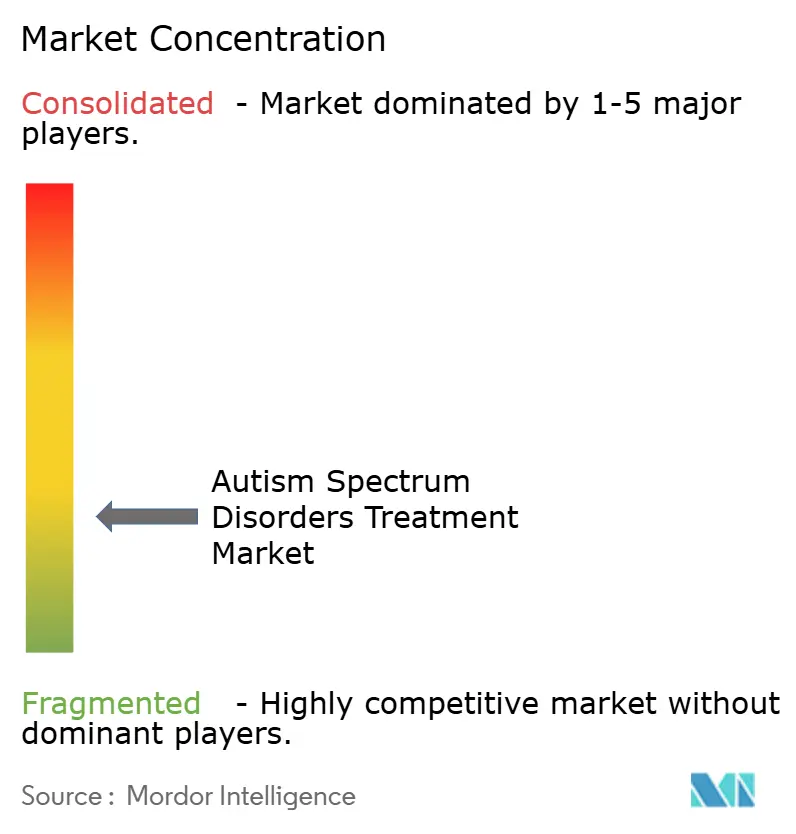
Competition is fragmented. No firm controls more than a low-double-digit share, and therapeutic diversity keeps switching costs low for clinicians. Incumbents such as Otsuka and Roche defend antipsychotic franchises yet invest in next-gen programs like balovaptan to address social communication. Smaller biotechs pursue differentiated paths: Axial targets the microbiome, DeFloria crafts botanical multi-cannabinoid blends, and MindMed explores R-(-)-MDMA, illustrating willingness to tackle previously stigmatized compounds.
Digital enablers also influence rivalry. Cognoa partners with payers to tie AI-based diagnosis directly to drug pathways, while LinusBio offers epigenetic tests that may inform dosing. Private-equity consolidation of clinic networks boosts purchasing clout, pressuring manufacturers on pricing but also offering large-scale data for real-world evidence generation.
Strategic collaborations grow: Yamo Pharmaceuticals pairs with contract research organizations to accelerate Phase 3, and Acadia teams with patient-advocacy groups to educate caregivers, supporting rapid uptake. The field’s low concentration leaves room for platform companies that can integrate genetic screening, digital monitoring and targeted pharmacology into unified care models.
Autism Spectrum Disorders Treatment Industry Leaders
-
PaxMedica
-
Otsuka Pharmaceutical Co., Ltd.
-
F. Hoffmann-La Roche Ltd
-
Jazz Pharma
-
Johnson & Johnson
- *Disclaimer: Major Players sorted in no particular order
Autism Spectrum Disorders Treatment Market Companies Covered in this Report
- QIAGEN
- PaxMedica Inc.
- Yamo Pharmaceuticals LLC
- Otsuka
- Roche
- Curemark LLC
- Zynerba Pharmaceuticals Inc.
- Axial Therapeutics
- STALICLA SA
- Johnson & Johnson
- Jazz Pharma
- Eli Lilly and Company
- Pfizer
- NeuroNOS
- DeFloria, Inc.,
- Jaguar Gene Therapy
- Anavex Life Sciences Corp.
Read Analysis of Autism Spectrum Disorders Treatment Companies
Market Opportunities and Future Outlook
White space remains where existing pharmacologic options do not address core ASD social-communication challenges at scale. That gap supports subset-based programs that can meet regulatory evidentiary thresholds through genetic or metabolic definitions and more objective endpoints. The March 2026 FDA approval of Wellcovorin for cerebral folate deficiency in patients with confirmed FOLR1 variants, even without an ASD-wide label, supports a commercialization pathway for narrowly defined neurodevelopmental populations that overlap with autistic features and can be reached through testing-led identification and specialist prescribing.
Investment also continues to cluster around associated symptoms, particularly irritability, where large-trial designs and measurable functional outcomes are easier to operationalize. Intra-Cellular Therapies has initiated a Phase 3 trial of lumateperone for irritability associated with autism (NCT06690398, initiated November 2024), and Bristol-Myers Squibb has listed a Phase 3 interventional program for KarXT and KarX-EC in children and adolescents with ASD irritability with an estimated September 2026 start (NCT07285798). In parallel, non-dilutive funding is widening the translational funnel; SPARK NS announced a 2026 cohort of nine academic projects eligible for up to USD 18 million in milestone-based funding (February 2026), supporting earlier proof-of-concept that can later be licensed by biopharma and linked with precision diagnostics and real-world evidence.
Recent Industry Developments in Autism Spectrum Disorders Treatment Market
- March 2026: The FDA approved GSK's Wellcovorin (leucovorin calcium) for cerebral folate deficiency in patients with a confirmed FOLR1 gene variant. Although the label is not for ASD broadly, it reinforces a regulatory and commercial route for genetically defined neurodevelopmental subsets that can be identified through testing-driven pathways.
- January 2025: PaxMedica reported receiving a Notification to Grant Patent Right in China for an intranasal suramin formulation covering methods for treating neurodevelopmental disorders such as autism. The allowance strengthens intellectual property around alternative delivery for anti-purinergic approaches and supports future partnering and commercialization planning in Asia.
- May 2024: Roche completed a Phase 2, 12-week randomized, double-blind, placebo-controlled study (NCT04299464) evaluating RO7017773 (alogabat) in 104 participants aged 15 to 45 years with ASD. Trial results inform subsequent development decisions in a fragmented competitive landscape.
Autism Spectrum Disorders Treatment Market Report Scope and Research Methodology
Market Definition and Coverage
For this study, the market covers spending tied to treating autism spectrum disorder through prescription medicines and structured evidence-based interventions delivered by trained professionals across care settings.
Scope exclusions: We exclude nutritional supplements, standalone screening services, and informal alternative therapies that are not supported by peer-reviewed clinical evidence.
Segments Covered in This Report
- By Drug Class
- Antipsychotic Drugs
- SSRIs / Antidepressants
- Stimulants
- Hormone Therapies
- Anticonvulsants
- Cannabinoid-based Therapies
- Microbiome Modulators
- Other Drug Classes
- By ASD Type
- Autistic Disorder
- Asperger Syndrome
- PDD-NOS
- Rett Syndrome
- Childhood Disintegrative Disorder
- Other Types
- By Age Group
- Pediatrics (2–12 yrs)
- Adolescents (13–17 yrs)
- Adults (18+ yrs)
- By Distribution Channel
- Hospital Pharmacies
- Retail & Drug Stores
- Specialty Pharmacies
- Online Pharmacies
- By Geography
- North America
- United States
- Canada
- Mexico
- Europe
- Germany
- United Kingdom
- France
- Italy
- Spain
- Russia
- Rest of Europe
- Asia-Pacific
- China
- Japan
- India
- Australia
- South Korea
- Rest of Asia-Pacific
- Middle East & Africa
- GCC
- South Africa
- Rest of Middle East & Africa
- South America
- Brazil
- Argentina
- Rest of South America
- North America
Data Sources, Market Sizing, and Validation
Desk Research
We start by mapping how ASD treatment is delivered and paid for, since the mix of therapy and medicines varies by country and care setting. Public sources are used to anchor the demand pool and care pathways, including CDC ASD prevalence updates, NIH and NLM clinical literature, FDA drug and digital health clearances, and WHO health system indicators.
To ground the commercial side, we also review company annual reports, investor presentations, and reputable press coverage that point to therapy capacity expansion, new product launches, and reimbursement changes. Where needed, we use paid subscription access for company financials and intelligence, along with a patent database to track pipeline movement in key mechanisms. The desk research sources listed here are illustrative only, and other public and paid references were used to collect, cross-check, and clarify inputs.
Primary Interviews and Surveys
We validate the treatment mix and pricing through expert interviews and surveys with prescribers, therapy providers, payers, and industry participants that support ASD care delivery. For a global market, feedback is gathered across APAC, EMEA, and the Americas so regional differences in diagnosis rates, therapy intensity, and reimbursement rules can be reflected in assumptions.
Distribution of primary research fieldwork respondents
| Company type | Respondent position | Region |
|---|---|---|
| Top tier: 37% | CXOs: 21% | APAC: 42% |
| Mid tier: 42% | Functional/Unit leaders: 24% | EMEA: 33% |
| Smaller Players: 21% | Managers: 55% | Americas: 25% |
Market-Sizing & Forecasting
Sizing is built using a top-down approach where epidemiology and diagnosis signals are converted into a treated cohort, and then translated into spending using care-path assumptions. In practice, the model uses inputs such as ASD prevalence and diagnosis rates, the share of patients receiving structured therapy, average therapy hours and program duration, medicine utilization for symptom management, and country-level reimbursement and out-of-pocket splits.
Those totals are then checked using selective bottom-up approximations, including sampled provider pricing, channel checks on typical therapy packages, and limited roll-ups of known service capacity in major countries. When bottom-up inputs are missing for smaller countries, we use proxy ratios based on healthcare spend per capita, diagnosis intensity, and payer coverage, and we adjust based on what local experts confirm. Forecasts are produced using scenario analysis, with key drivers updated each year for changes in diagnosis awareness, therapy workforce availability, coverage expansion, and the pace of new product adoption.
Data Validation & Update Cycle
Outputs are triangulated against independent signals, including reported prevalence trends, regulatory approvals, payer policy shifts, and observed therapy pricing ranges in major markets. Any sharp jumps are flagged and reviewed, and assumptions are revisited through follow-up calls when the variance cannot be explained by a clear event.
Before final sign-off, the model and logic are reviewed in multiple analyst steps so calculations, currency handling, and country roll-ups stay consistent. Reports are refreshed annually, and interim updates are made when material events occur, such as a major reimbursement change or a meaningful regulatory approval. Right before delivery, we do a fresh check of key inputs so clients receive the most current view available.
Mordor Intelligence's Autism Spectrum Disorders Treatment Market Sizing Compared With Other Published Estimates
Published ASD treatment market values often do not match because the boundaries of what counts as treatment are set differently, and the years used for sizing are not always aligned. Differences also come from how therapy intensity is assumed, how drug uptake is modeled, and how currencies and inflation are handled across countries.
Prevalence-based treated-cohort checks, FDA clearance tracking for relevant therapies and digital tools, and cross-country reimbursement comparisons are the evidence points that keep Mordor Intelligence's estimate tied to actual care delivery rather than broad wellness or screening spend. In addition, some publications blend diagnosis and screening services into the total, or they widen the scope to include adjacent neurodevelopmental conditions, which can lift the reported number quickly.
Benchmark comparison
| Source | Market Size | Gaps in Research Methodology |
|---|---|---|
| Mordor Intelligence | USD 2.46 B (2026) | |
| Industry Wire A | USD 2.89 B (2024) | Uses an earlier base year and a narrower therapeutic framing in parts of the method, and the treatment mix assumptions are not clearly separated between structured therapy services and medication spend by country. |
| Newswire Brief B | USD 7.41 B (2023) | Applies a wider service scope that can include broad behavioral and communication program spend with less transparent intensity assumptions, which tends to raise totals versus a treated-cohort and reimbursed-care build. |
Overall, the spread is largely explained by scope width, base-year choice, and how therapy hours and reimbursement are translated into spend. By keeping inputs traceable to diagnosis signals, care pathways, and realistic pricing checks, the resulting number stays easier to reproduce and update when market conditions change.
Key Questions Answered in the Report
What is the current size of the Autism Spectrum Disorder market?
The Autism Spectrum Disorder market size stands at USD 2.46 billion in 2026 and is projected to grow to USD 3.18 billion by 2031 at a 5.22% CAGR.
Which region is the fastest-growing in Autism Spectrum Disorder therapies?
Asia-Pacific shows the highest growth, with a projected 7.55% CAGR through 2031 as China and Japan streamline approvals for novel treatments.
Which drug class is expanding most rapidly?
Cannabinoid-based therapies are advancing at an 8.38% CAGR, challenging antipsychotic dominance as botanical regulatory frameworks mature.
Why is the adult segment gaining prominence?
Delayed diagnoses and better awareness are uncovering unmet needs among adults, driving an 8.55% CAGR for therapies focused on individuals aged 18 and older.
How are digital tools affecting autism care?
FDA-cleared diagnostics like Canvas Dx shorten time to diagnosis, while AI-enabled monitoring apps guide medication adjustments, improving treatment precision.
What drives investment into rare autism sub-types?
Successful approval of trofinetide for Rett Syndrome proves that genotype-specific drugs can secure premium pricing and fast regulatory review, attracting private-sector funding for similar precision-medicine programs.