
Australia Self-Monitoring Blood Glucose Market Size and Share
Market Overview
| Study Period | 2021 - 2032 |
|---|---|
| Forecast Data Period | 2027 - 2032 |
| Base Year Market Size (2026) | USD 219.99 Million |
| Market Size (2027) | USD 232.09 Million |
| Market Size (2032) | USD 303.33 Million |
| Growth Rate (2027 - 2032) | 5.50 % |
| Market Concentration | Medium |
Major Players *Disclaimer: Major Players sorted in no particular order Image © Mordor Intelligence. Reuse requires attribution under CC BY 4.0. | |
Australia Self-Monitoring Blood Glucose Market Analysis by Mordor Intelligence
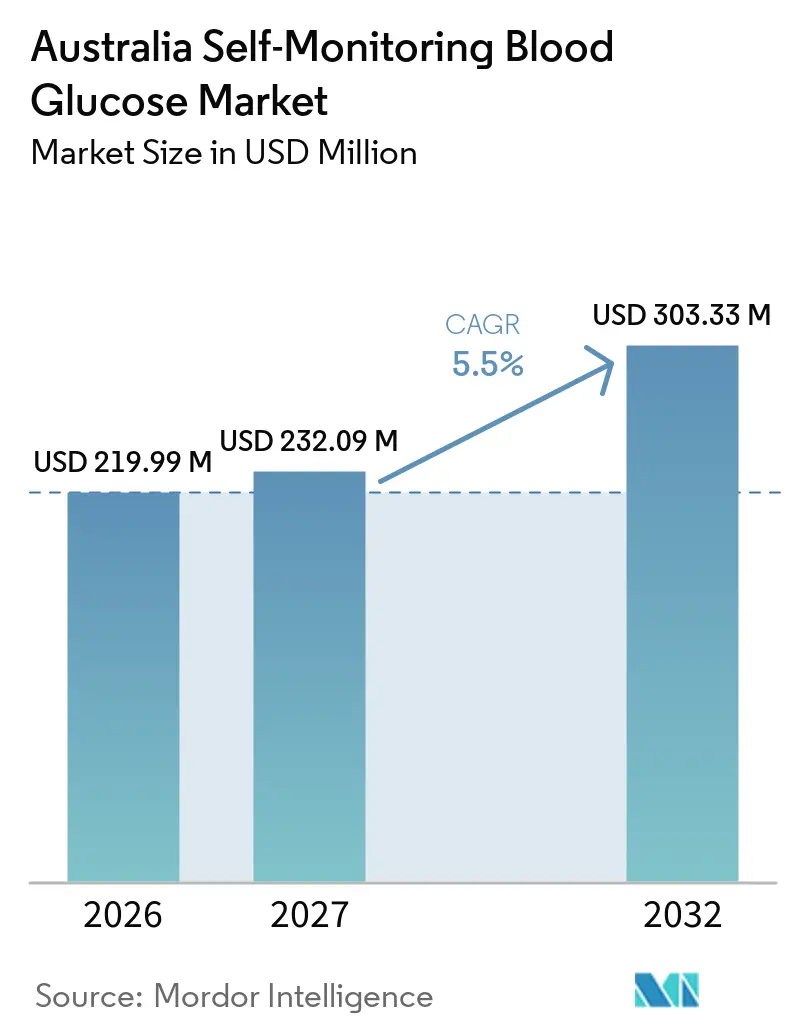
The Australia Self-Monitoring Blood Glucose Market size was valued at USD 219.99 million in 2026 and is estimated to grow from USD 232.09 million in 2027 to reach USD 303.33 million by 2032, at a CAGR of 5.5% during the forecast period (2027-2032).
During the COVID-19 pandemic, patients with diabetes were at higher risk for hospitalizations and complications due to hyper- or hypoglycemia, metabolic comorbidities, and more severe illness from SARS-CoV-2 infection. According to the Australian Bureau of Statistics, COVID-19 data from January 2020 to March 2022, pre-existing chronic conditions such as diabetes were reported on death certificates for 3,600 (73%) of the 4,900 deaths due to COVID-19. Diabetes was a pre-existing condition in 20% of the 3,600 deaths. Maintaining euglycemia was important to decrease morbidity and mortality in the hospital setting. According to experts, inpatient use of diabetes technology in patients with proper institutional protocols was safe and improved inpatient glycemic outcomes and played a vital role in managing hypoglycemia and hyperglycemia in hospitalized patients.
Continued elevation in blood glucose levels in diabetes patients can contribute to progressive complications such as renal, nerve, and ocular damage. The measurement of blood glucose helps determine the effectiveness of blood glucose metabolism and guides in achieving optimal glucose control within the body. Over time the readings provide the patient and their health professionals with the information required to determine the best management strategy for diabetes. Appropriate and timely blood glucose monitoring allows the successful management of out-of-range blood glucose levels, minimizing diabetic-related health complications.
Technological advancements in blood glucose meters, including cellular-connected devices that automatically upload SMBG data to secure cloud-based databases, allow for improved sharing and monitoring of SMBG data. Real-time monitoring of SMBG data presents opportunities to provide timely support to patients responsive to abnormal SMBG recordings. Such advantages can provide patients with poorly controlled T2D additional support needed to improve critical outcomes, thereby enhancing the market prospects in future years.
Note: Market numbers in this report are based on Mordor Intelligence's proprietary estimation framework, which combines nine months of actuals with Q4 projections for base year 2026.
Australia Self-Monitoring Blood Glucose Market Trends and Insights
Rising Diabetes Prevalence in Australia
According to Diabetes Australia, diabetes is the fastest-growing chronic condition in Australia, increasing faster than other chronic diseases such as heart disease and cancer.
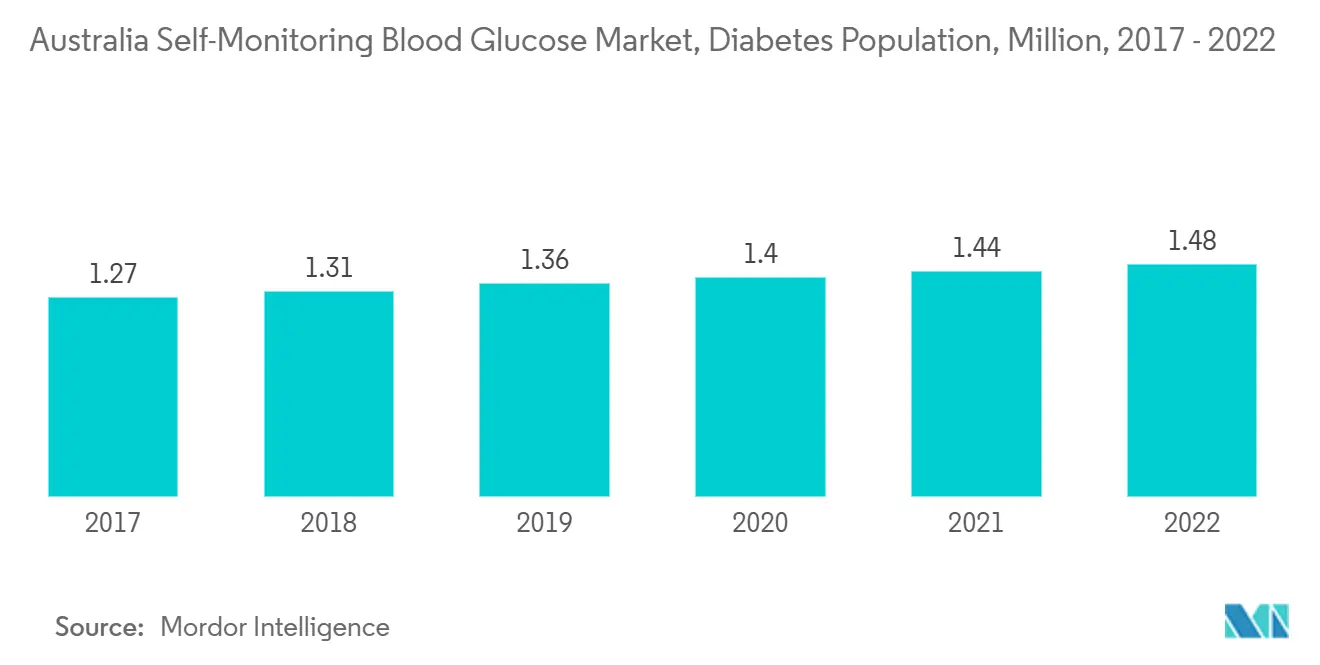
Currently, almost 1.9 million Australians have diabetes, including all types of diagnosed diabetes (almost 1.5 million known and registered) and undiagnosed type 2 diabetes (up to 500,000 estimated). Around 1.2 million people are hospitalized with diabetes-related conditions every year. Aboriginal and Torres Strait Islander Australians are three times more likely to develop type 2 diabetes than non-Indigenous Australians, 4.3 times more likely to be hospitalized with type 2 diabetes, and four times as likely to die.
Various evidence suggests that diabetes can be successfully managed, especially when detected early. Multifactorial intervention, including control of blood glucose, blood pressure, and lipids, can reduce the range of diabetes-related microvascular and macrovascular complications and premature mortality. The Australian National Diabetes Strategy 2021-2030 considers current approaches to diabetes services and care; the role of governments and the diabetes sector; ensures current efforts and investments align with identified needs; maximizes the efficient use of health care resources; and articulates a vision for preventing, detecting and managing diabetes.
The Australian government has an important role in maintaining access to affordable, high-quality medicines, devices, and services to support people with diabetes in self-management and treatment. It supports people with diabetes through the National Diabetes Services Scheme, the Pharmaceutical Benefits Scheme, the Insulin Pump Program, and Medicare and other funding. State and territory governments also have an important role in preventing and treating diabetes. All levels of government share responsibility for health services in Australia and have a responsibility to ensure that systems work together to produce the best options for people, regardless of their geographic location.
Therefore, the studied market is anticipated to grow over the analysis period due to rising prevalence and the factors above.
The Test Strips Segment held the highest market share in the current year
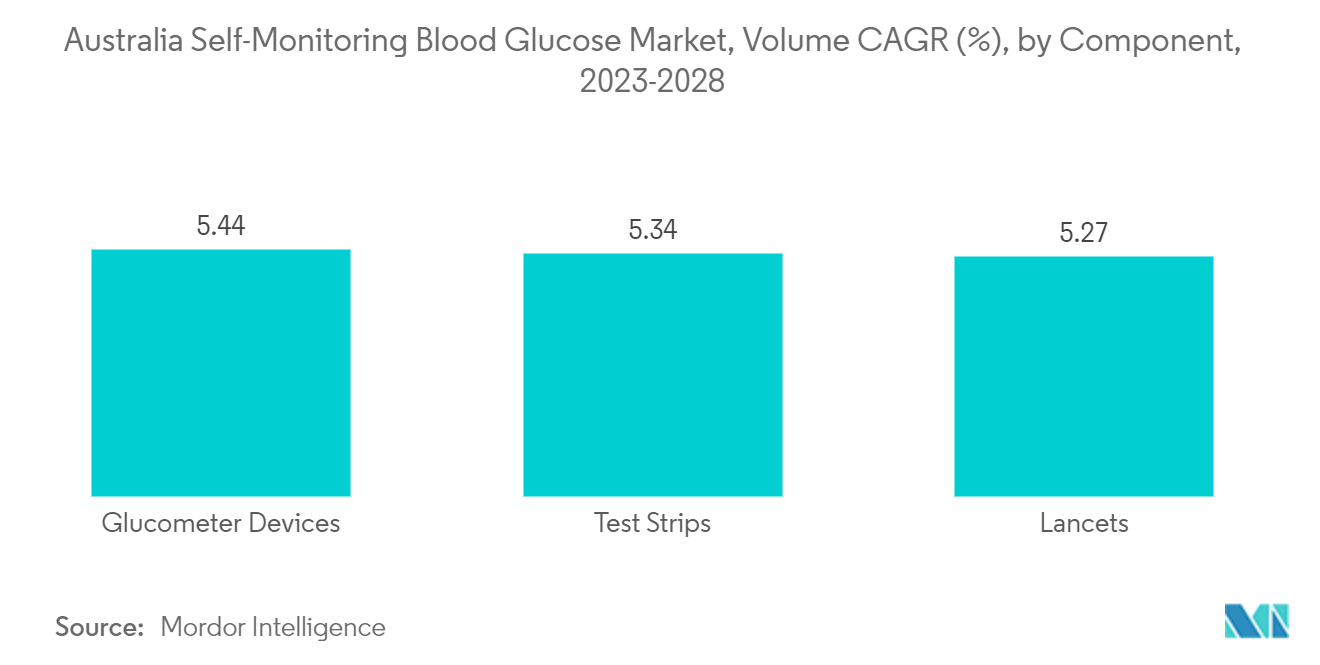
The Test Strips Segment recorded a market share of about 72% in the current year.
Blood glucose test strips are small disposable strips and are a key component of blood glucose testing. When blood is placed onto the test strip, it reacts with a chemical called glucose oxidase producing gluconic acid from the glucose in the blood. At the other end of the test strip, the meter transfers a current to the test strip. The test strip has electric terminals which allow the meter to measure the current between the terminals. The current between the terminals changes depending on the level of gluconic acid produced. The blood glucose meter then uses an algorithm to work out the blood glucose level based on the difference in current.
Australia’s self-monitoring market benefits from the recurring consumption of test strips, which generates a more predictable replacement cycle than glucose meters. As meters typically have longer usable lives, manufacturers and suppliers can capture recurring revenue through consumables and compatible strip ecosystems.
The National Diabetes Services Scheme (NDSS) helps people with diabetes to understand and manage their life with diabetes. It provides timely, reliable, and affordable access to diabetes support services and products. The NDSS provides subsidized access to syringes and needles, blood glucose test strips, CGMs, and other products for the management of diabetes. In July 2021, Australian scientists from the University of Newcastle in Australia developed a non-invasive strip that checks glucose levels via saliva; such innovations are expected to drive the market over the forecast period.
Competitive Landscape
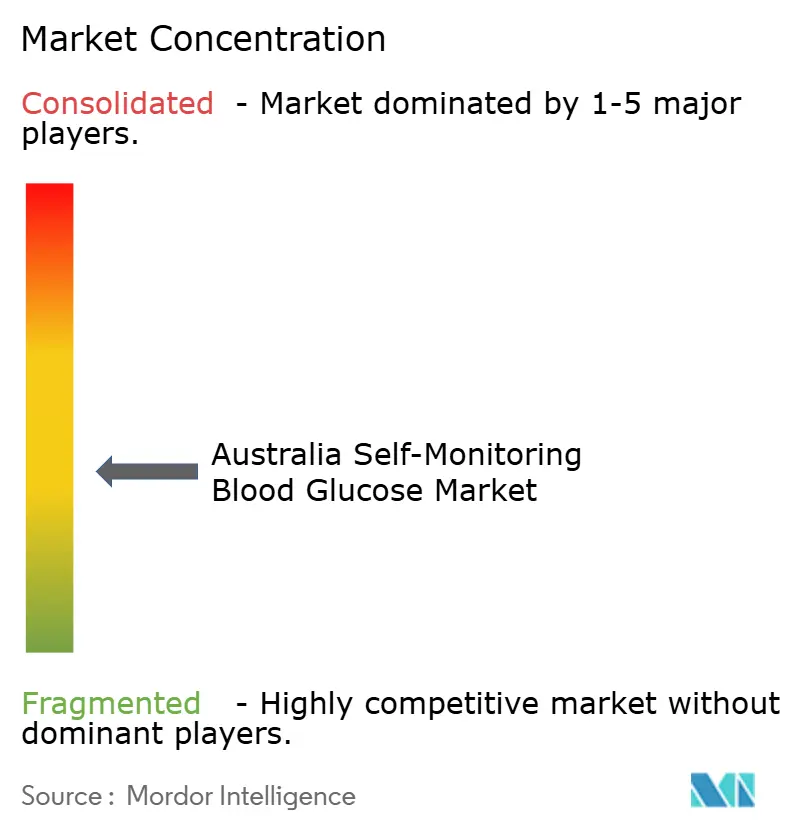
The Australia Self-Monitoring Blood Glucose Market is moderately fragmented, with few significant and other generic players. Manufacturers like Abbott, LifeScan, F. Hoffmann-La Roche AG, and Ascensia occupy a major share.
Australia Self-Monitoring Blood Glucose Industry Leaders
-
Roche Diabetes Care
-
Abbott Diabetes Care
-
LifeScan
-
Arkray, Inc.
-
Ascensia Diabetes Care
- *Disclaimer: Major Players sorted in no particular order
Recent Industry Developments
- January 2023: LifeScan announced that the peer-reviewed Journal of Diabetes Science and Technology published Improved Glycemic Control Using a Bluetooth Connected Blood Glucose Meter and a Mobile Diabetes App: Real-World Evidence From Over 144,000 People With Diabetes, detailing results from a retrospective analysis of real-world data from over 144,000 people with diabetes - one of the largest combined blood glucose meter and mobile diabetes app datasets ever published.
- February 2022: Zurich Australia launched an Australian-first pilot of a new mobile health app that enables life insurance customers with diabetes to monitor their blood sugar levels and self-manage their diabetes. Pops is a first-of-its-kind integrated health management system with a simple glucose meter attached to a smartphone. Paired with the Pops app and AI health coach, it wirelessly records blood sugar results, making it one of the most discreet and easy-to-use diabetes self-management tools available.
Australia Self-Monitoring Blood Glucose Market Report Scope
Self-monitoring of blood glucose is used by diabetic patients to measure their blood sugar level using a glucometer, test strips, and lancets. Based on the readings, patients can adjust or check the effect of their treatment. The Australia Self-Monitoring Blood Glucose Market is segmented into Components (Glucometer Devices, Test Strips, Lancets). The Australia Self-Monitoring Blood Glucose Market is segmented into components (Glucometer Devices, Test Strips, Lancets). The report offers the value (in USD million) and volume (in Units million) for the above segments.
| Glucometer Devices |
| Test Strips |
| Lancets |
| Component (Value and Volume, 2017 - 2028) | Glucometer Devices |
| Test Strips | |
| Lancets |
Key Questions Answered in the Report
How big is the Australia Self-Monitoring Blood Glucose Market is expected to grow by 2032?
The Australia Self-Monitoring Blood Glucose Market size is expected to reach USD 303.33 million by 2032.
What is the current Australia Self-Monitoring Blood Glucose Market size?
In 2026, the Australia Self-Monitoring Blood Glucose Market size reached USD 219.99 Mn.
Who are the key players in Australia Self-Monitoring Blood Glucose Market?
Roche Diabetes Care, Abbott Diabetes Care, LifeScan, Arkray, Inc. and Ascensia Diabetes Care are the major companies operating in the Australia Self-Monitoring Blood Glucose Market.
Which component is expanding fastest?
Glucometer devices are growing at the fastest pace, driven by broader reimbursement coverage and declining prices.