
Market Overview
| Study Period | 2021 - 2031 |
|---|---|
| Forecast Data Period | 2026 - 2031 |
| Base Year Market Size (2025) | USD 160.23 Million |
| Market Size (2026) | USD 171.43 Million |
| Market Size (2031) | USD 239.87 Million |
| Growth Rate (2026 - 2031) | 6.99 % |
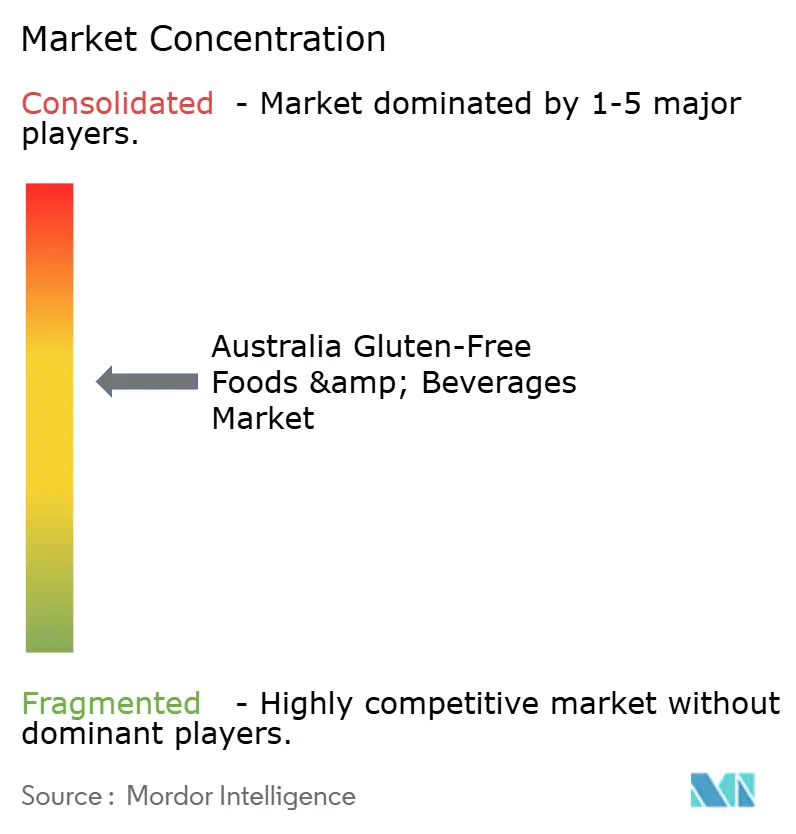
| Market Concentration | Medium |
Major Players *Disclaimer: Major Players sorted in no particular order Image © Mordor Intelligence. Reuse requires attribution under CC BY 4.0. | |
Australia Gluten-Free Foods And Beverages Market Analysis by Mordor Intelligence
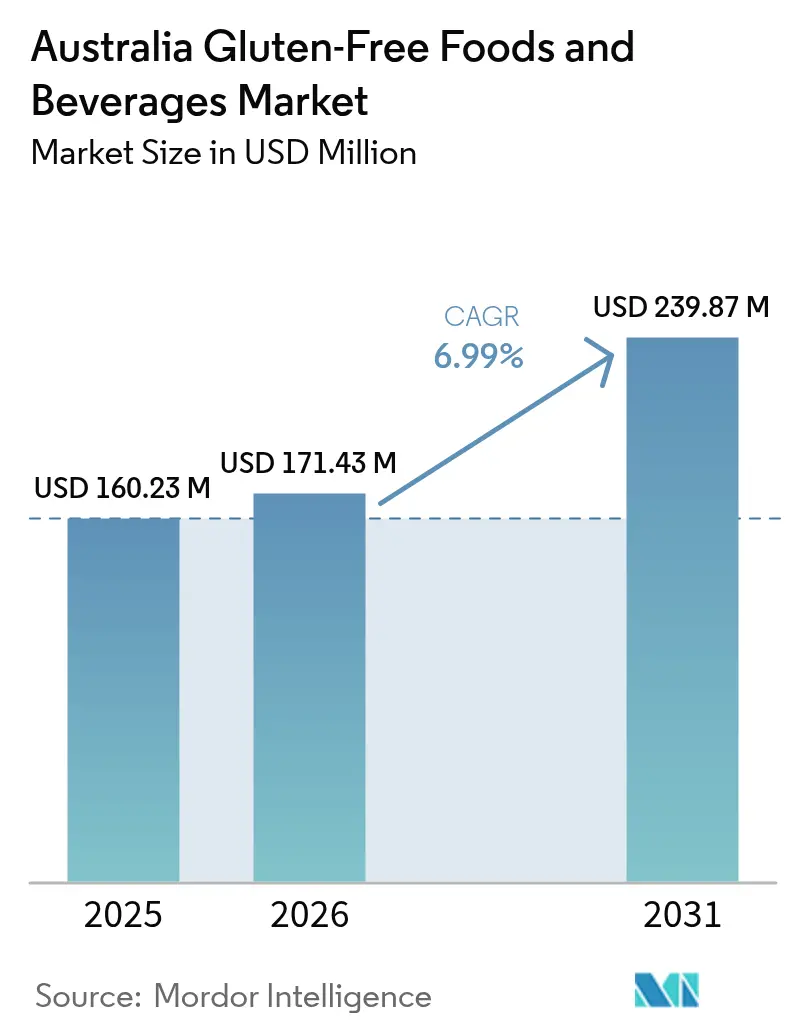
The Australian gluten-free foods and beverages market size in 2026 is estimated at USD 171.43 million, growing from 2025 value of USD 160.23 million with 2031 projections showing USD 239.87 million, growing at 6.99% CAGR over 2026-2031. This growth stems from increasing health awareness, higher diagnosis rates of celiac disease and gluten intolerance, and a growing consumer segment choosing gluten-free diets for health and wellness reasons. Product innovation focuses on improving taste, texture, and nutritional value, enhancing the appeal of gluten-free options. Manufacturers utilize both local and international ingredients, building on Australia's expertise in plant-based materials and strict food safety standards to create premium products with added benefits such as fiber, protein, and probiotics. Consumer education and marketing initiatives have expanded the market beyond medical necessity to include health-conscious consumers. The market's expansion into regional areas and e-commerce platforms has improved product accessibility. While the industry faces challenges, including higher production costs and supply chain issues, continued advances in ingredients, packaging technology, and regulatory compliance support its growth and market position.
Key Report Takeaways
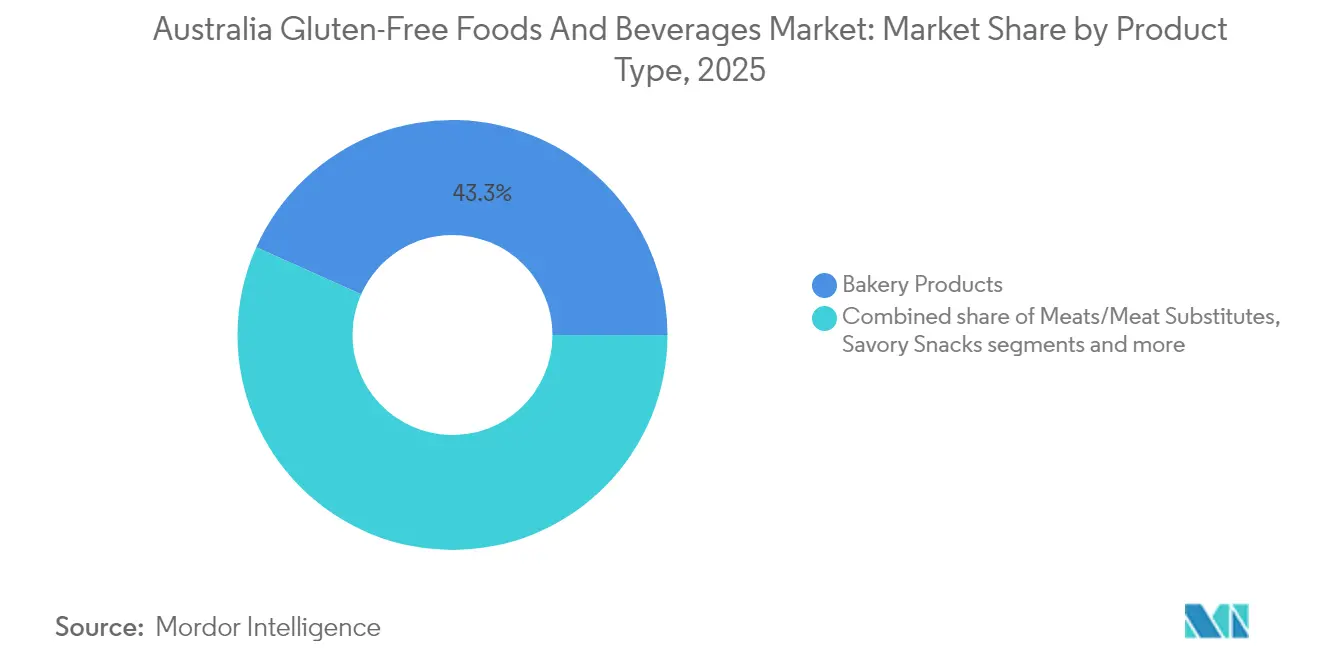
- By product type, bakery products led with 43.30% revenue share in 2025, while beverages are projected to expand at an 7.96% CAGR through 2031, underscoring a pivot toward functional drinks that complement core meal occasions.
- By packaging type, plastic packaging held 50.62% share of the Australian gluten-free foods and beverages market size in 2025 and is advancing at a 7.58% CAGR through 2031 as recyclability upgrades offset sustainability pushback.
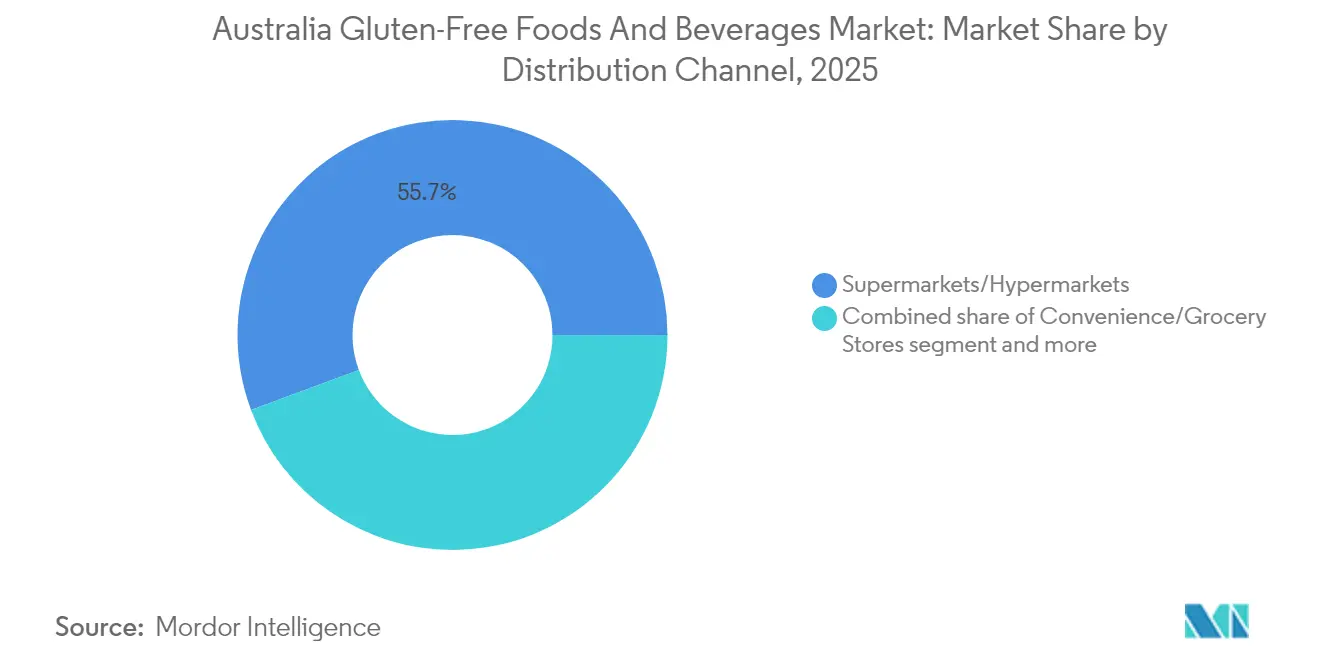
- By distribution channel, supermarkets and hypermarkets accounted for 55.68% share of the Australian gluten-free foods and beverages market size in 2025, while online retail stores are registering the fastest expansion with a 8.74% CAGR to 2031, boosted by pandemic-era digital habits.
Note: Market size and forecast figures in this report are generated using Mordor Intelligence’s proprietary estimation framework, updated with the latest available data and insights as of 2026.
Market Trends and Insights
Drivers Impact Analysis of Australia Gluten-Free Foods And Beverages Market*
| Driver | (~) % Impact on CAGR Forecast | Geographic Relevance | Impact Timeline |
|---|---|---|---|
| Rising prevalence of celiac disease and gluten intolerance | +1.8% | National, with higher concentrations in urban centers | Medium term (2-4 years) |
| Expansion in product innovation | +1.2% | National, led by NSW and Victoria manufacturing hubs | Short term (≤ 2 years) |
| Health consciousness and wellness trends | +1.0% | National, with premium segments in major cities | Long term (≥ 4 years) |
| Enhanced labelling regulations and certification schemes | +0.8% | National, FSANZ compliance requirements | Medium term (2-4 years) |
| Clean label and ingredient transparency trends | +0.7% | National, consumer-driven demand | Long term (≥ 4 years) |
| Expansion into mainstream food categories | +0.9% | National, retail channel expansion | Medium term (2-4 years) |
| Source: Mordor Intelligence | |||
Rising Prevalence of Celiac Disease and Gluten Intolerance
The increasing prevalence of celiac disease and gluten intolerance drives growth in the Australian gluten-free foods and beverages market. Celiac disease, an autoimmune disorder triggered by gluten consumption, remains underdiagnosed in Australia. According to Coeliac Australia, during Coeliac Awareness Week 2025, approximately 80% of Australians with celiac disease are undiagnosed [1]. This high rate of underdiagnosis indicates many individuals experiencing symptoms are either unaware of their condition or seeking diagnosis, leading to increased demand for gluten-free products. As strict gluten avoidance is the only effective treatment for celiac disease, the consumption of gluten-free foods and beverages continues to rise. Additionally, non-celiac gluten sensitivity expands the consumer base for gluten-free products. The growing recognition of gluten-related disorders has prompted manufacturers and retailers to expand their gluten-free product offerings and improve availability to meet the needs of patients and health-conscious consumers.
Expansion in Product Innovation
The Australian gluten-free foods and beverages market is experiencing growth due to significant product innovation. Manufacturers are increasing their research and development investments to enhance the quality, taste, texture, and nutritional value of gluten-free products. These improvements address traditional consumer concerns about the dryness and density of gluten-free alternatives. The incorporation of alternative flours, including almond, coconut, quinoa, and sorghum, has resulted in more nutritious and palatable products. Modern food processing technologies enable the production of gluten-free baked goods, snacks, and pasta that closely resemble traditional gluten-containing products, increasing consumer acceptance. The University of Adelaide's research on Australian Plantago demonstrates the country's innovation capabilities in gluten-free ingredients. This research aims to replace imported psyllium husk, a common binding agent in gluten-free products. The development of Australian Plantago reduces import dependence while creating intellectual property advantages by utilizing domestic agricultural resources. This initiative showcases Australia's scientific and manufacturing capabilities in developing proprietary gluten-free formulations using local ingredients.
Health Consciousness and Wellness Trends
Health consciousness and wellness trends drive the growth of Australia's gluten-free foods and beverages market. Consumer attitudes toward food are shifting from basic sustenance to proactive health management, with increased focus on preventive nutrition, clean-label ingredients, and functional food consumption. Individuals seek foods that align with current health research, using dietary choices to enhance immunity, improve digestion, and reduce the risk of chronic conditions. Demographic changes, particularly the growing proportion of older Australians, strengthen these health-focused consumption patterns. According to the Australian Bureau of Statistics, as of 2024, people aged 55 years and over represent 26% of Australia's population, compared to 34% in certain regions [2]. This aging population seeks specialized dietary products that support disease prevention, chronic condition management, and overall health. Their demand extends beyond gluten avoidance to holistic nutrition solutions that address age-related needs, including digestive comfort, cardiovascular health, and bone density. In response, food and beverage manufacturers are developing gluten-free products that offer broader functional benefits by incorporating ingredients and formulations that support health and longevity.
Enhanced Labelling Regulations and Certification Schemes
Labelling regulations and certification schemes drive growth and consumer trust in the Australian gluten-free foods and beverages market. Strict labelling requirements enhance transparency and safety, minimizing the risk of gluten exposure for individuals with celiac disease or gluten intolerance. As gluten-free diets become more common, consumers require accurate information about ingredients and manufacturing processes. Certification schemes and labelling standards help consumers make informed decisions while strengthening the credibility of compliant brands. Food Standards Australia New Zealand stipulates that foods labeled gluten-free must not contain detectable gluten, while products with low gluten claims must contain less than 200 parts per million of gluten. These standards exceed many international requirements, ensuring higher safety levels for sensitive individuals. The regulations require all potential allergens, including gluten-containing grains, to be displayed in bold font and clearly listed on packaging for easy consumer identification.
Restraints Impact Analysis of Australia Gluten-Free Foods And Beverages Market*
| Restraint | (~) % Impact on CAGR Forecast | Geographic Relevance | Impact Timeline |
|---|---|---|---|
| High cost of gluten-free products | -1.5% | National, with greater impact on price-sensitive segments | Short term (≤ 2 years) |
| Supply chain constraints for gluten-free raw materials | -1.2% | National, with regional variations in ingredient availability | Medium term (2-4 years) |
| Competition from alternative diets | -0.8% | Urban centers, health-conscious demographics | Long term (≥ 4 years) |
| Taste and texture challenges | -0.7% | National, consumer acceptance barriers | Medium term (2-4 years) |
| Source: Mordor Intelligence | |||
High Cost of Gluten-Free Products
The high cost of gluten-free products remains a significant constraint in the Australian gluten-free foods and beverages market. The price difference stems from multiple factors, including the cost of specialized raw ingredients, strict quality control measures to prevent cross-contamination, and lower production volumes compared to traditional wheat-based products. Manufacturers must invest in separate production facilities, implement thorough cleaning protocols, obtain third-party certifications, and manage higher ingredient import costs. These costs particularly affect consumers in rural and remote areas, where limited product availability and additional shipping expenses increase retail prices. Small and medium-sized manufacturers struggle with profitability due to increasing costs in ingredients, insurance, employee training, compliance requirements, and inventory waste management. Despite growing demand, consumers express concerns about the high prices of gluten-free products. The industry continues to focus on supply chain optimization, production scaling, and ingredient innovation to reduce costs and improve accessibility for Australian consumers who require or prefer gluten-free options.
Supply Chain Constraints for Gluten-Free Raw Materials
Supply chain constraints for gluten-free raw materials limit the growth of the Australian gluten-free foods and beverages market. The production of certified gluten-free foods requires strict segregation of raw materials throughout the supply chain to prevent cross-contamination, making the process logistically complex and expensive. Manufacturers face challenges in sourcing adequate quantities of gluten-free grains such as rice, corn, sorghum, buckwheat, quinoa, and millet due to seasonal harvest variations, limited domestic cultivation, and dependence on imports for specialty ingredients like psyllium husk and specific gluten-free flours. The situation is further complicated by increasing global demand for gluten-free ingredients, international trade disruptions, and weather-related impacts on crop yields. The industry requires close coordination between manufacturers, certified growers, and specialized logistics providers to maintain allergen-safe handling protocols throughout the process. Small and emerging brands particularly struggle to secure consistent supplies of high-quality, locally grown gluten-free raw materials, leading to increased reliance on global markets with higher transportation costs and geopolitical risks. These supply chain difficulties result in higher retail prices and occasional product shortages for consumers.
*Our forecasts treat driver/restraint impacts as directional, not additive. The impact forecasts reflect baseline growth, mix effects, and variable interactions.
Australia Gluten-Free Foods And Beverages Market Segment Analysis
Segment 1
The bakery products segment dominates the Australian gluten-free foods and beverages market with a 43.30% market share in 2025. This dominance stems from the fundamental role of baked goods in daily diets, particularly for consumers with celiac disease or gluten intolerance. The segment continues to grow through product innovation, as demonstrated by the March 2024 partnership between The Hallway and Sydney-based Wholegreen Bakery. Their launch of the Cardboard Cake, a coeliac-approved bakery product containing butterscotch, coffee, cocoa powder, pastry, caramel, and brown rice flour, represents the industry's commitment to developing gluten-free options that maintain taste and texture quality.
While bakery products lead the market, the beverages segment is experiencing the fastest growth, with a projected CAGR of 7.96% through 2031. This growth reflects increasing consumer demand for gluten-free beverages among health-conscious individuals who seek safe options beyond traditional food items. The segment's expansion indicates a shift in consumer preferences, as gluten-free considerations extend to daily beverage choices. Savory snacks present growth opportunities as manufacturers develop gluten-free alternatives to conventional products using alternative grain technologies and innovative flavoring methods. The sauces, dressings, and seasonings category offers potential for high margins with simpler manufacturing processes, though it requires careful selection of gluten-free thickeners and flavor enhancers.

By Packaging Type:
Sustainability Pressures Challenge Plastic LeadershipThe plastic packaging segment holds a 50.62% market share in the Australian gluten-free foods and beverages market in 2025. This dominance stems from plastic's functional advantages in preserving gluten-free products. These products require specific protection against texture degradation and moisture-related issues, which plastic packaging effectively provides through superior moisture barrier properties and shelf stability. The cost-efficiency of plastic packaging compared to alternatives enables manufacturers to maintain competitive pricing while meeting quality standards. These characteristics are essential in the gluten-free market segment, where consumers demand product integrity and protection from gluten contamination.
Paper packaging is experiencing rapid growth in the gluten-free food and beverages packaging market, with a projected CAGR of 7.58% through 2031. This growth reflects increasing demand for sustainable packaging alternatives. Consumer environmental awareness and stricter regulations on plastic waste reduction have prompted brands to adopt paper-based solutions that offer biodegradability and recyclability. Innovations in paper and paperboard packaging provide enhanced protective features while meeting consumer preferences for environmentally responsible options. The growth of paper packaging demonstrates the market's evolution toward diverse and sustainable packaging solutions while maintaining necessary product protection standards.
By Distribution Channel:
Online Growth Challenges Traditional Retail DominanceSupermarkets and hypermarkets hold a 55.68% market share in the Australian gluten-free foods and beverages market in 2025. Their market dominance stems from extensive reach, well-established distribution networks, and comprehensive consumer accessibility. Major chains like Coles and Woolworths offer strategically positioned dedicated sections for gluten-free products, significantly enhancing the shopping experience. These retailers strengthen their market position through exceptional convenience and deep-rooted consumer trust, while systematically expanding their gluten-free product range to serve both medical requirements and evolving lifestyle choices.
Online retail stores represent the fastest-growing distribution channel for gluten-free foods and beverages in Australia, with a projected CAGR of 8.74% through 2031. This growth trajectory is underpinned by Australia's high internet penetration rate, which stood at 97.1% in 2023 according to the International Telecommunication Union (ITU) . This near-universal internet access facilitates widespread consumer adoption of online shopping, allowing easy access to a diverse range of gluten-free products that may not always be available in traditional retail outlets. Advanced digital marketing strategies and increasing social media influence significantly boost consumer awareness of gluten-free options, accelerating online sales growth. The powerful combination of robust digital infrastructure and rapidly evolving consumer preferences firmly establishes online retail as a transformative market growth driver.
Geography Analysis
Australia's gluten-free foods and beverages market concentrates primarily in New South Wales and Victoria's urban centers. These states dominate consumption due to their high population density, higher disposable incomes, and increased health awareness among consumers. Sydney and Melbourne serve as key innovation centers for premium gluten-free products. The multicultural populations in these cities, with their diverse dietary needs, increase the demand for specialized gluten-free options. The well-developed retail infrastructure in these regions enables broad product availability and consumer awareness.
Queensland's market expansion stems from its population growth and tourism industry. The state's health-focused resorts and hospitality sector drive gluten-free food demand as dietary requirements become essential for visitors. Regional areas across Australia face distribution limitations due to lower population density and fewer specialty retail outlets. The Northern Territory and Tasmania, while smaller markets, maintain their position through health tourism and premium product offerings.
Western Australia's position as the world's largest sweet lupin producer strengthens its role in gluten-free ingredient supply for domestic manufacturing and exports. South Australia contributes through its established food manufacturing base and research in plant-based ingredients, supporting product development and commercialization.
Regulatory Landscape
Gluten-free foods and beverages sold in Australia are regulated under the Australia New Zealand Food Standards Code administered by Food Standards Australia New Zealand (FSANZ). Under the Code, a product making a gluten-free claim must contain no detectable gluten and must not contain oats or oat products, or malted ingredients from gluten-containing cereals. A low gluten claim is permitted only when gluten content is no more than 20 mg per 100 g of food.
Allergen declarations are a central compliance requirement for gluten-free positioning because gluten-containing cereals must be declared as allergens. The updated allergen labelling requirements (including the prescribed declarations and summary statement format under Standard 1.2.3 and Schedule 9) applied to food available for sale after 25 February 2026. This change tightened execution requirements for packaging and increased the compliance burden for products transitioning from older label stock.
Value Chain Analysis
The value chain starts with sourcing certified gluten-free inputs (for example, rice, corn, sorghum, buckwheat, quinoa, and millet), followed by milling and formulation using binders and texture systems that replicate wheat functionality. Processing also reflects segregation needs under the Food Standards Code, which requires products labelled gluten-free to contain no detectable gluten and prohibits oats or oat products from being labelled gluten-free. This raises the need for tightly controlled ingredient validation and supplier documentation.
Manufacturing and co-manufacturing capacity with full allergen segregation is a key constraint and differentiator, which drives investment into dedicated facilities and validated cleaning and verification regimes. One example of specialized capacity is Arnott's dedicated gluten-free bakery in Marleston, South Australia (supporting items such as Tim Tam Gluten Free and Jatz Gluten Free), alongside Not A Trace's dedicated gluten-free and nut-free facility in Melbourne. Distribution is led by supermarkets and hypermarkets (with major chains such as Coles and Woolworths) and is increasingly complemented by online retail, where brands can broaden assortment and improve access for regional consumers while managing cold-chain and shelf-life requirements through packaging and fulfillment partners.
Competitive Landscape
The Australian gluten-free foods and beverages market has a moderately fragmented structure, comprising multinational corporations, domestic specialists, and niche players. The Sanitarium Health and Wellbeing Company, General Mills, Inc., and Arnott's Group dominate traditional categories like bakery, snacks, and beverages. New market entrants focus on premium products and specific consumer segments, including organic, plant-based, and gluten-free offerings with functional benefits. This market structure promotes innovation and product diversity, allowing smaller companies to establish specialized niches while pushing established manufacturers to update their product lines.
Technology adoption serves as a competitive advantage in the Australian gluten-free market. Manufacturers use precision agriculture technologies to source high-quality gluten-free ingredients efficiently while maintaining strict standards. Advanced packaging technologies improve product shelf life and safety, particularly important for maintaining the texture and freshness of gluten-free items. Digital marketing platforms enable direct consumer communication and education about gluten-free products and lifestyles. These digital channels support product discovery and provide transparent information to consumers, creating opportunities for brand growth and customer retention.
Export market development offers significant opportunities for Australian manufacturers, supported by the country's strong food safety standards and access to unique gluten-free ingredients like lupin and quinoa. Australian producers can expand into international markets with premium, clean-label products marketed as safe and nutritious alternatives. The combination of quality ingredients, established food safety practices, and innovative products provides competitive advantages in both domestic and international markets, supporting market expansion.
Australia Gluten-Free Foods And Beverages Industry Leaders
-
The Sanitarium Health and Wellbeing Company
-
General Mills, Inc.
-
Dr. Schar AG
-
Arnott's Group
-
Bob’s Red Mill Natural Foods
- *Disclaimer: Major Players sorted in no particular order
Australia Gluten-Free Foods And Beverages Market Companies Covered in this Report
- The Sanitarium Health and Wellbeing Company
- General Mills, Inc.
- Dr. Schar AG
- Arnott's Group
- Monster Health Food Co.
- Bob's Red Mill Natural Foods
- Noumi Ltd (Freedom Foods)
- Genius Foods Ltd
- Lifestyle Bakery
- SalDoce Fine Foods
- GF Precinct
- Venerdi Ltd
- Two Bays Brewing Co.
- Wholegreen Bakery
- Shire Gluten Free
- Nod? Pty Ltd
- Health Lab
- Padstow Foodservice
- Kez's Kitchen
- Kellogg Company
Read Analysis of Australia Gluten-Free Foods And Beverages Companies
Market Opportunities and Future Outlook
Mainstreaming of gluten-free versions of iconic products is expanding the addressable consumer base beyond medically necessary diets, supported by national listings at major retailers. A 2026 example is Mondelēz International bringing OREO Gluten Free to Australia with nationwide availability at large supermarket chains, which reinforces gluten-free as a core innovation lane for large branded snacks. It also creates room for adjacent gluten-free sweet biscuits, bars, and better-for-you indulgence formats.
Process and pilot-scale infrastructure is another opportunity area, especially for smaller manufacturers facing the cost of segregation and verification. The Central Coast Food Manufacturing Innovation Hub opening in Ourimbah, New South Wales (with AUD 17.14 million in federal funding) provides shared manufacturing and development infrastructure that can support gluten-free reformulation, allergen-control process validation, and small-batch scaling. Ingredient and labelling constraints around oats under the Food Standards Code keep demand centered on alternative grains and on traceable, contamination-controlled oat supply chains for products that choose compliant positioning without a gluten-free claim. This points to whitespace for domestic ingredient programs that reduce reliance on imported specialty inputs such as psyllium alternatives and specific gluten-free flour blends.
Recent Industry Developments in Australia Gluten-Free Foods And Beverages Market
- June 2026: Mondelēz International launched OREO Gluten Free Original cookies in Australia, with nationwide distribution through major retailers including Woolworths and Coles. The launch signals increasing multinational commitment to gluten-free versions of flagship snack brands, raising competitive intensity in mainstream biscuit and sweet-snack aisles.
- April 2025: Arnott's Group announced a national gluten-free range expansion, including Gluten-Free Jatz and Gluten-Free Barbecue Shapes. The move broadened gluten-free coverage across core savory-snack formats and strengthened the company's positioning in everyday family snack occasions.
- October 2024: Warburtons expanded its gluten-free bakery portfolio in Australia by introducing gluten-free items at Coles supermarkets nationwide, including Tiger Bloomer Loaf, Super Soft Brioche Sliced Rolls, Super Soft White Sliced Rolls, and Crumpets. Wider national distribution of packaged gluten-free bakery products increased shelf visibility and improved access for shoppers relying on supermarket channels.
Australia Gluten-Free Foods And Beverages Market Report Scope and Research Methodology
Market Definition and Coverage
This market covers the value of gluten-free packaged foods and beverages sold in Australia, where products are formulated and labeled to avoid gluten ingredients and cross-contact risks. Demand is split between medical need (for example, celiac-related consumption) and lifestyle choices.
Scope exclusions: We exclude naturally gluten-free fresh staples that are not positioned, labeled, or marketed as gluten-free packaged food and beverage offerings.
Segments Covered in This Report
- By Product Type
- Bakery Products
- Meats/Meat Substitutes
- Dairy/Dairy Substitutes
- Savory Snacks
- Beverages
- Sauces, Dressings, and Seasonings
- Other Product Types
- By Packaging Type
- Paper
- Plastic
- Metal
- Others
- By Distribution Channel
- Supermarkets/Hypermarkets
- Convenience/Grocery Stores
- Online Retail Stores
- Other Distribution Channels
Data Sources, Market Sizing, and Validation
Desk Research
Our desk research starts with public reference points that explain demand drivers and compliance signals, and then it is converted into usable sizing inputs. Sources used include, for example, Food Standards Australia New Zealand labeling guidance, Australian Bureau of Statistics consumer spending series, Department of Agriculture, Fisheries and Forestry food and beverage updates, Australian Customs and import-export statistics, and peer reviewed nutrition and gastroenterology publications on celiac prevalence and diagnosis.
After that, we review company annual reports, investor decks, retailer announcements, and reputable press coverage to understand product launches, channel shifts, and pricing direction in a practical way. In parallel, we use paid subscriptions for company financials and intelligence, news and financials, and shipment-level import-export records where they help confirm trade flows and category movements. The desk research sources listed here are illustrative, and we also relied on additional public and paid references for data collection, validation, and clarification.
Primary Interviews and Surveys
Primary work is used to pressure-test the desk assumptions and to fill gaps on how gluten-free products are priced, promoted, and moved through supermarkets, specialty retail, and online channels in Australia. We spoke with a mix of manufacturers, ingredient suppliers, distributors, retailers, and category specialists so adoption drivers, channel mix, and realistic price ladders could be confirmed before finalizing the model.
Distribution of primary research fieldwork respondents
| Company type | Respondent position |
|---|---|
| Top tier: 36% | CXOs: 14% |
| Mid tier: 46% | Functional/Unit leaders: 36% |
| Smaller Players: 18% | Managers: 50% |
Market-Sizing & Forecasting
Sizing is built using top-down category reconstruction, where packaged food and beverage totals are narrowed to gluten-free demand pools using indicators that can be checked each year. The model is then corroborated with selective bottom-up approximations, such as sampled brand and private label price points multiplied by observed volume ranges by channel, and adjustments are made when the two views show a clear gap.
Key inputs used to keep the model grounded include the share of gluten-free labeled shelf space in major channels, diagnosis and awareness signals that influence medical-driven demand, new product launch cadence, relative price premiums versus standard equivalents, and channel mix shifts toward online and specialty stores. When subcategory data is incomplete, we use controlled proxies, such as adjacent category growth and retailer assortment changes, and then re-check the implied totals with interview feedback.
For forecasting, scenario analysis is applied around a base case path, with growth rates guided by expected label compliance, price premium normalization, and the pace of product innovation. This keeps the forward view explainable and reduces the risk that a single-variable assumption would overstate growth when household budgets tighten.
Data Validation & Update Cycle
Outputs are validated through several checks so that the final number is consistent with real market signals and not just model math. We compare the implied gluten-free value shares against channel observations, trade movement signals for relevant ingredients and products, and price premium ranges. Any unusual variances are reviewed and either corrected or documented.
Before sign-off, a second analyst review is completed to confirm definitions, unit consistency, and year-on-year logic. When interview feedback indicates a material change, we re-contact sources to confirm what shifted and whether it is temporary or structural. Reports are refreshed annually, and interim updates are made when major events materially impact pricing, demand, or availability, followed by a final pre-delivery pass so clients receive the latest updated view.
Mordor Intelligence's Australia Gluten Free Foods Beverages Market Size Compared With Other Published Estimates
Published market sizes for gluten-free foods and beverages in Australia can vary a lot, even when the topic name looks identical. Differences usually come from what is counted as gluten-free, whether beverages and foodservice are included, and how prices and channels are treated in the base year.
By tracking category-level channel mix and price premium ranges, Mordor Intelligence keeps the total tied to packaged gluten-free foods and beverages sold in Australia, while some estimates expand into broader gluten-free products, different labeling thresholds, or wider retail and foodservice boundaries.
Benchmark comparison
| Source | Market Size | Gaps in Research Methodology |
|---|---|---|
| Mordor Intelligence | USD 171.43 M (2026) | |
| Global Consultancy A | USD 1.05 B (2024) | Uses a broader value pool and a different base year, and the published total appears to aggregate gluten-free foods and beverages with wider gluten-free product coverage and looser channel boundary assumptions. |
| Trade Journal B | USD 342.40 M (2023) | Tracks gluten-free products with a separate time window and regional cuts, and the earlier base year plus different price and scope treatment can compress or expand the packaged-food-only component versus this study. |
The spread in the table mainly reflects scope and timing choices, not just different math. When the product boundary is kept to labeled gluten-free packaged foods and beverages and the pricing and channel mix are re-checked with local market participants, the result stays traceable to inputs that can be repeated and updated year after year.
Key Questions Answered in the Report
How large is the Australia gluten free foods beverages market in 2026?
It is valued at USD 171.43 million and is forecast to rise to USD 239.87 million by 2031.
What drives demand beyond diagnosed celiac patients?
Broader wellness adoption, personalized nutrition apps, and preventive health trends expand consumption to non-celiac shoppers.
Which product line is growing the fastest?
Beverages, especially plant-based milks and functional drinks, are advancing at an 7.96% CAGR through 2031.
How significant is online retail for gluten-free products?
Online sales are rising at a 8.74% CAGR as consumers embrace digital grocery and subscription services.