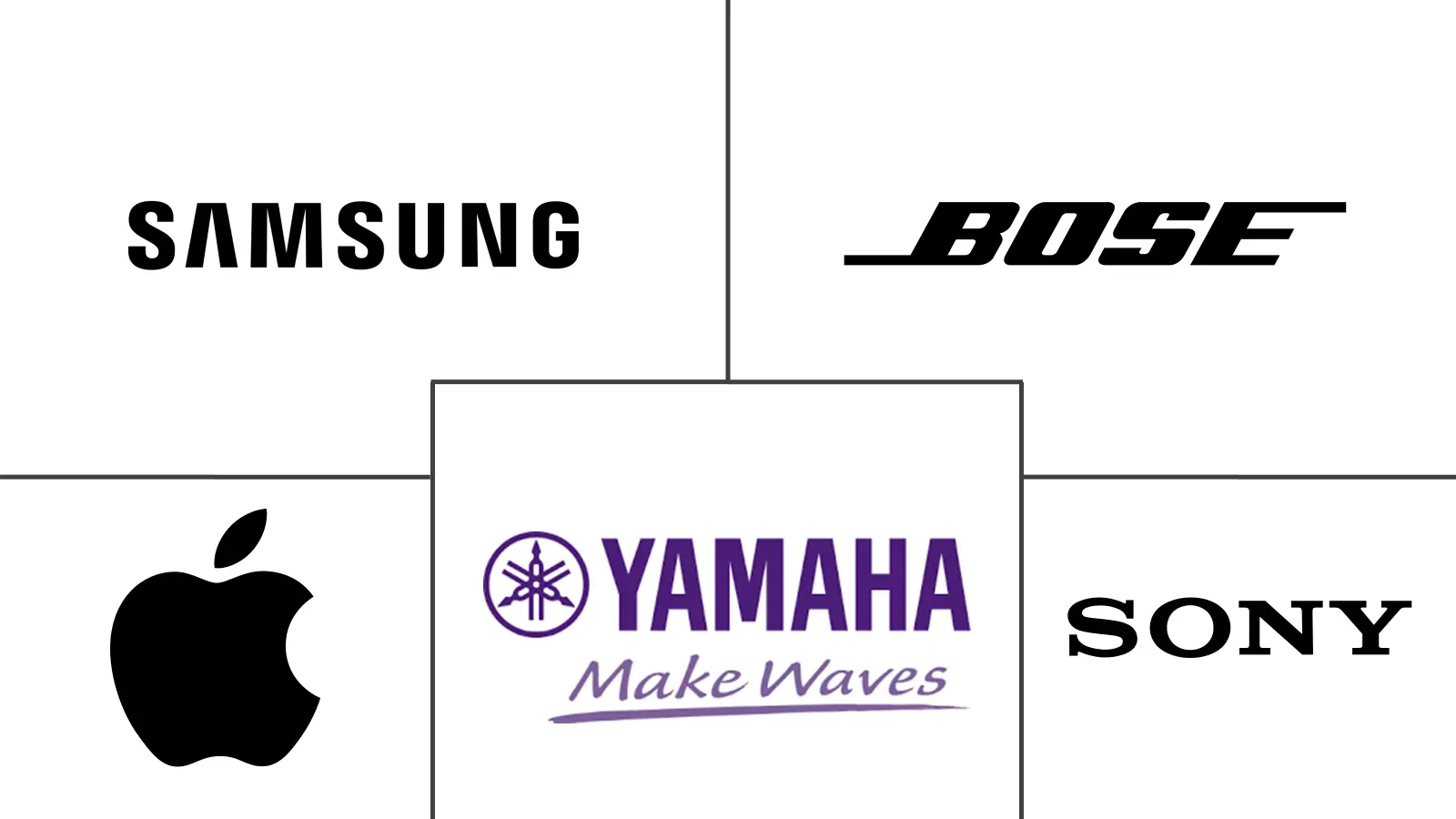
Top 5 Audio Equipment Companies


Sony Group Corporation
Samsung Electronics Co., Ltd.
Bose Corporation
Yamaha Corporation
Apple Inc.
Source: Mordor Intelligence
Audio Equipment Companies Matrix by Mordor Intelligence
Our comprehensive proprietary performance metrics of key Audio Equipment players beyond traditional revenue and ranking measures
The top tier list often favors broad consumer visibility and high volume categories, while the MI Matrix also rewards operational readiness inside specific product lines and buyer segments. Presence, reliability in channel delivery, and demonstrable product refresh since 2023 can move positions even when total company size is larger elsewhere. Capability indicators that matter here include certified wireless and network interoperability, installed base in venues and vehicles, and the ability to support multi year service and firmware updates. Buyers frequently need clear guidance on wireless microphone frequency planning, because local RF rules can change and congestion is rising. Many teams also ask how to balance noise canceling performance with battery life, repairability, and app stability when selecting premium headphones. This MI Matrix from Mordor Intelligence is better for supplier and rival evaluation than sales tables alone, because it connects footprint and execution signals to real purchasing risk.
MI Competitive Matrix for Audio Equipment
The MI Matrix benchmarks top Audio Equipment Companies on dual axes of Impact and Execution Scale.
Analysis of Audio Equipment Companies and Quadrants in the MI Competitive Matrix
Comprehensive positioning breakdown
Yamaha Corporation
Yamaha's 2025 move to bring Steinberg branded audio interfaces under the Yamaha name shows a creator focused shift that simplifies bundling across mixers and entry recording setups. The company, a leading producer in professional audio, can benefit if content creation keeps pulling entry buyers into upgrade cycles. Stricter e-waste and repair expectations could reward Yamaha's longer support windows, yet they also raise spare parts and compliance costs. If streaming led music discovery slows, school and institutional demand could cushion volumes. The main execution risk is component volatility in amplifiers and transducers, which can delay channel replenishment.
Sony Group Corporation
Sony's 2025 expansion of its ULT POWER SOUND speaker range reinforces portable and party formats as product cadence remains central. The firm, a major brand, can translate entertainment ties into differentiated tuning and ecosystem pairing across TV and audio. Sustainability rules and packaging limits are becoming a quiet advantage when the design is already optimized for lower material use. If tariffs rise further, Sony may lean harder on premium mix and software features to protect margins. A key risk is saturation in premium noise canceling, which can pressure pricing without clear feature separation.
Samsung Electronics Co., Ltd. (Harman, JBL, AKG)
Automotive and venue audio breadth is a strategic anchor, and Harman's planned acquisition of ZF's ADAS unit signals deeper commitment to in vehicle platforms that often bundle premium sound. Samsung, a major player, can also pull demand through stadium and venue upgrades, as seen in Harman's NASCAR technology partnership using JBL and Crown solutions. If OEM programs accelerate, Samsung can push tighter hardware and software integration across cabins and consumer devices. The main risk is regulatory delay and integration distraction from large deals, which can slow product execution in fast moving wireless categories.
Bose Corporation
Bose defends its premium listening position through iterative upgrades, including the QuietComfort Ultra line refresh and ongoing algorithm work for adaptive noise control. The brand, a leading name, benefits when buyers value comfort, consistent tuning, and simple setup more than spec sheets. Right to repair pressure could raise design and service costs, yet it may also reinforce Bose's trust advantage if handled well. If airline and commuting patterns soften, Bose can lean on home audio attach and TV dialogue clarity as offsets. The operational risk is reliance on flawless firmware, since app issues can trigger returns quickly.
Beats Electronics LLC (Apple Inc.)
Beats extends fashion plus performance positioning, with the 2024 Beats Solo 4 update emphasizing improved acoustics and longer battery life. The label, a major brand under Apple, can scale quickly when platform pairing and retail reach reduce buyer friction. Packaging and material standards are tightening, which tends to favor firms that already control accessory design at scale. If premium headphone upgrades slow, portable speakers like the updated Beats Pill can still support brand visibility across entry price points. The core risk is dependence on ecosystem pull, which can limit penetration in Android-heavy regions.


Frequently Asked Questions
How should I choose a wireless microphone system for touring use?
Start with legal frequency bands for every country on the route, then plan coordination and backup channels. Prefer systems with strong scanning tools, clear RF accessories, and dependable service support.
What matters most when selecting noise canceling headphones for travel?
Prioritize comfort over long sessions, stable noise canceling in real cabins, and predictable battery life with the features you will actually use. Also check return policies, spare pad availability, and update history for the companion app.
How do I pick the right mixer for live events versus studio work?
Live use favors fast setup, rugged connectors, and simple monitor control. Studio use rewards quiet preamps, stable drivers, and routing that fits your interface and monitoring needs.
What should venues look for in installed audio and audio over IP systems?
Confirm the system works cleanly with the building network and has straightforward monitoring for faults. Choose vendors that provide clear configuration tools, training content, and long term firmware support.
How do tightening repair and recycling expectations affect purchasing?
They increase the value of replaceable wear parts, published service pathways, and longer software support. Over a multi year lifecycle, these factors can reduce downtime and total replacement spend.
What is changing fastest in automotive audio programs?
Cabins are becoming more software defined, which increases the importance of audio processing roadmaps and validation for long OEM cycles. Efficient amplification and smarter tuning can matter as much as speaker count in EV platforms.


Methodology
Research approach and analytical framework
We used public company investor materials, filings, and official press rooms where available. We supplemented with named outlet coverage for launches, partnerships, and facility signals. Private firms were scored using observable product activity, channel moves, and documented deployments. When data was limited, we triangulated using multiple credible sources focused on in scope activity.
Global availability across retail, integrators, and OEM programs reduces project and replenishment risk.
Recognition helps win premium placements in headphones, soundbars, and venue installs where trust is decisive.
Higher in scope volume supports pricing, channel leverage, and sustained firmware and service investment.
Sites, tooling, and support capacity drive on time delivery for touring seasons and commercial buildouts.
Post 2023 launches in wireless, AI audio, and networked systems show staying power as standards evolve.
In scope strength supports warranty, recalls, and multi year channel commitments when demand softens.