
Atherosclerosis Drugs Market Size and Share
Market Overview
| Study Period | 2020 - 2031 |
|---|---|
| Market Size (2026) | USD 35.43 Billion |
| Market Size (2031) | USD 41.08 Billion |
| Growth Rate (2026 - 2031) | 3.01 % |
| Fastest Growing Market | Asia Pacific |
| Largest Market | North America |
| Market Concentration | Medium |
Major Players *Disclaimer: Major Players sorted in no particular order Image © Mordor Intelligence. Reuse requires attribution under CC BY 4.0. | |
Atherosclerosis Drugs Market Analysis by Mordor Intelligence
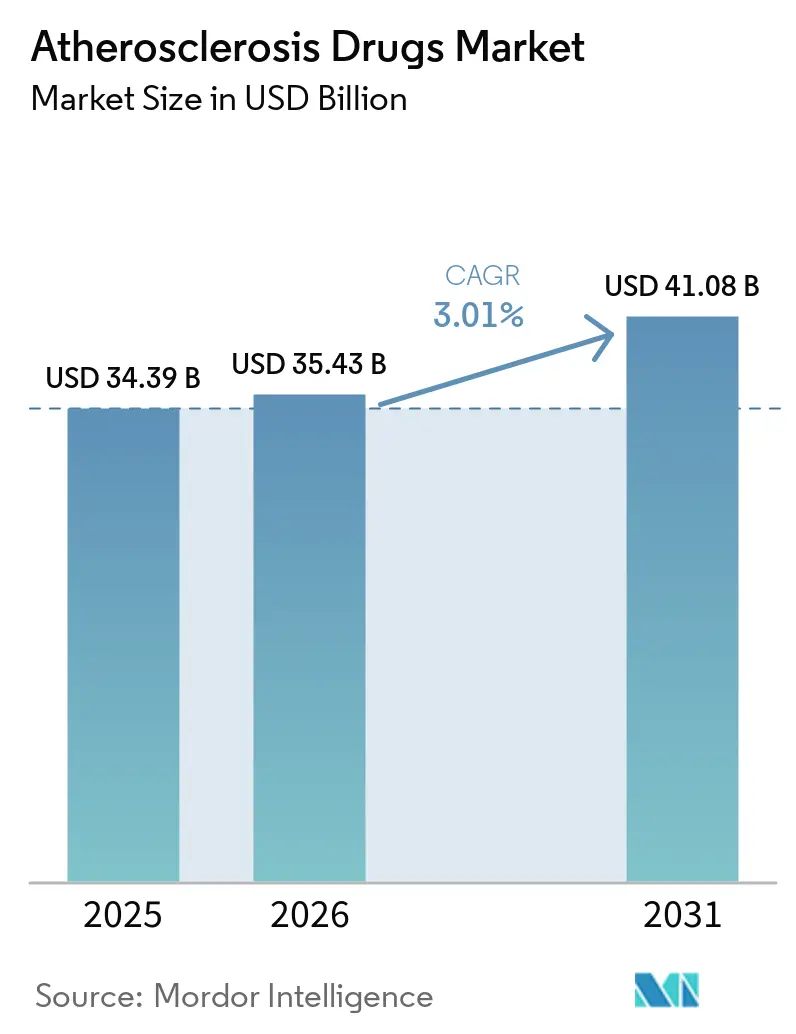
The Atherosclerosis Drugs Market size was valued at USD 34.39 billion in 2025 and estimated to grow from USD 35.43 billion in 2026 to reach USD 41.08 billion by 2031, at a CAGR of 3.01% during the forecast period (2026-2031).
This measured pace reflects a maturing landscape in which generic statins lose exclusivity even as RNA-based therapeutics and gene-editing programs create new premium niches. Demand growth is anchored in the widening prevalence of atherosclerotic cardiovascular disease (ASCVD), the adoption of combination lipid-lowering regimens, and expanding reimbursement for precision biologics. Pipeline velocity has accelerated since 2024, with the first wave of small-interfering RNA (siRNA) and antisense oligonucleotide (ASO) agents demonstrating durable LDL-C and Lp(a) reductions. At the same time, price scrutiny in mature markets and affordability gaps in emerging economies temper headline expansion, directing volume toward cost-effective generics while leaving room for high-value therapies aimed at residual-risk populations. Digitally enabled adherence tools and hospital-based care pathways increasingly influence therapeutic choice and channel mix, reinforcing the clinical role of multidisciplinary cardiometabolic teams.
Key Report Takeaways
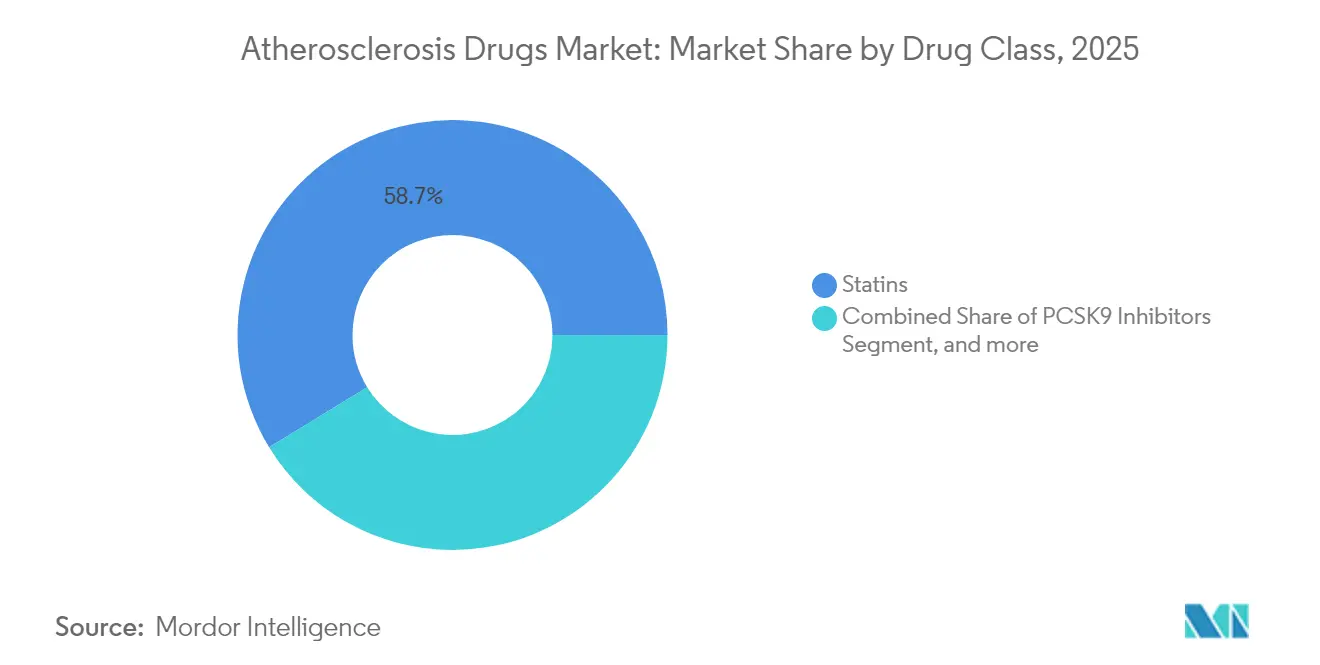
- By drug class, statins led with 58.74% of atherosclerosis drugs market share in 2025, while PCSK9 inhibitors are projected to expand at a 5.18% CAGR through 2031.
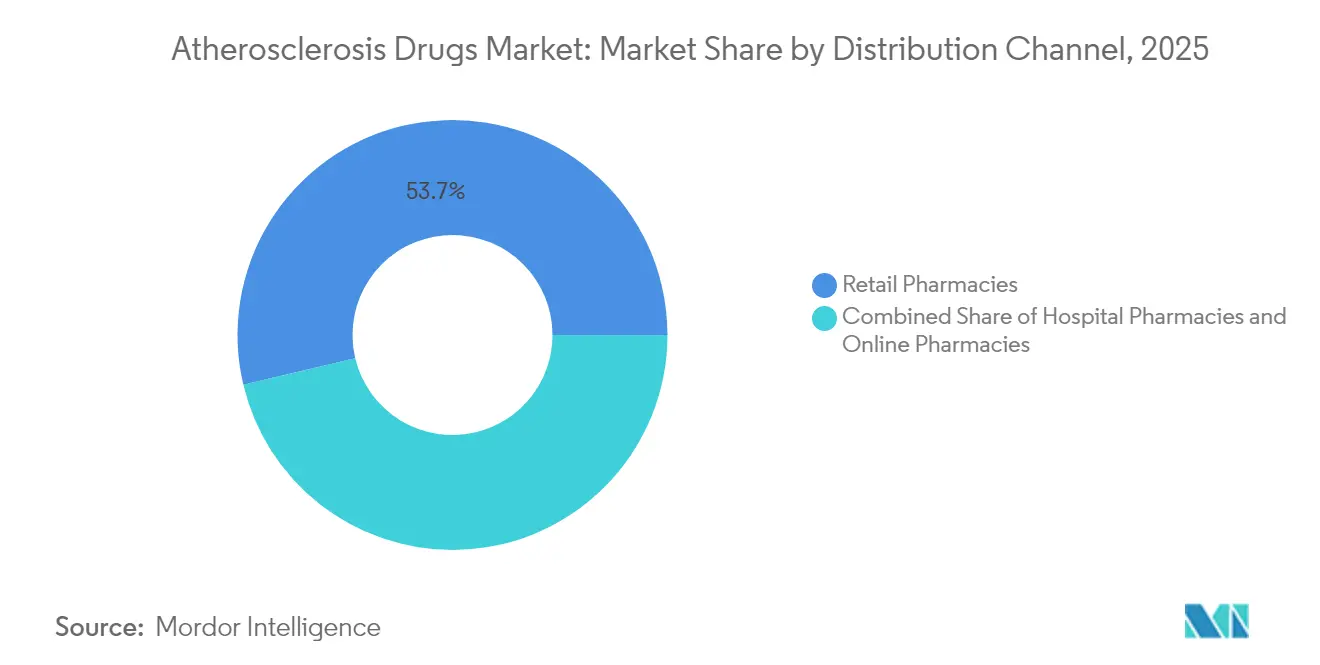
- By distribution channel, hospital pharmacies held 46.28% of the atherosclerosis drugs market share in 2025; online pharmacies record the highest projected CAGR at 6.52% to 2031.
- By geography, North America accounted for 38.12% revenue share of the atherosclerosis drugs market in 2025, whereas Asia is set to progress at a 6.07% CAGR to 2031.
Note: Market size and forecast figures in this report are generated using Mordor Intelligence’s proprietary estimation framework, updated with the latest available data and insights as of 2026.
Global Atherosclerosis Drugs Market Trends and Insights
Drivers Impact Analysis*
| Driver | (~) % Impact on CAGR Forecast | Geographic Relevance | Impact Timeline |
|---|---|---|---|
| Rising Prevalence of CVD & Aging Population | +0.8% | Global, with highest impact in North America & Europe | Long term (≥ 4 years) |
| Guideline-Driven Uptake of Statins & PCSK9 Inhibitors | +0.6% | North America & EU, expanding to APAC | Medium term (2-4 years) |
| Higher Healthcare Spending & Drug Accessibility | +0.5% | APAC core, spill-over to MEA | Medium term (2-4 years) |
| Awareness Campaigns & Lipid-Screening Programs | +0.3% | Global, with early gains in developed markets | Short term (≤ 2 years) |
| RNA-Based Lipid-Lowering Therapies Pipeline Surge | +0.4% | North America & EU initially, global expansion | Long term (≥ 4 years) |
| Polygenic Risk Scoring Enabling Early Intervention | +0.2% | North America & EU, selective APAC markets | Long term (≥ 4 years) |
| Source: Mordor Intelligence | |||
Rising Prevalence of CVD & Aging Population
Global life expectancy gains, urban sedentary lifestyles, and metabolic comorbidities combine to keep ASCVD the top cause of mortality worldwide. Low- and middle-income regions now account for 80% of cardiovascular deaths, creating structurally high unmet need for lipid-modifying therapies that are both affordable and scalable.[1] The dual burden of diabetes and obesity escalates plaque formation and shifts onset to younger adults, extending lifetime drug exposure. Prevalence trends underpin sustained unit growth across the atherosclerosis drugs market, even as therapeutic intensity increases in elderly cohorts with polypharmacy constraints. Long-acting injectables and six-monthly siRNA regimens address adherence gaps common in chronic disease management, while fixed-dose oral combinations simplify treatment for primary-care settings in resource-constrained geographies.
Guideline-Driven Uptake of Statins & PCSK9 Inhibitors
The 2025 ACC/AHA guideline mandates high-intensity statins for acute coronary syndrome and advocates non-statin add-ons once LDL-C remains ≥70 mg/dL despite therapy.[2] Parallel European and International Lipid Expert Panel positions promote earlier dual-therapy initiation, broadening the eligible pool for PCSK9 inhibitors beyond historic statin-intolerant niches. Real-world registries demonstrate cardiovascular event reduction proportional to achieved LDL-C levels, reinforcing guideline influence on prescribing as payers reward goal attainment. Harmonized targets build a common language across regions, yet implementation still hinges on local reimbursement rules, physician familiarity, and health-technology-assessment outcomes.
Higher Healthcare Spending & Drug Accessibility
Asia-Pacific posted the largest cardiovascular drug outlay in 2024 on the back of fast-growing middle-class populations and universal-health-coverage rollouts. Government industrial policy, such as India’s Production Linked Incentive scheme, widens local manufacturing, lowers end-user prices, and drives generic penetration that anchors entry-level segments. Multinationals employ tiered pricing and regional joint ventures to defend premium brands while seeding long-term loyalty through patient-assistance programs. Private insurance expansion in urban China and Southeast Asia adds payor variety and increases uptake of novel biologics, especially in tertiary-care hospitals where cardiometabolic clinics operate at scale.
Awareness Campaigns & Lipid-Screening Programs
National cholesterol education initiatives and workplace screening bolster early disease detection, particularly in OECD markets where the relationship between LDL-C and cardiovascular risk is well publicized. Screening coverage jump-starts prescription cascades, augments statin volumes, and accelerates adoption of combination regimens among high-risk cohorts. Innovative campaign formats range from mobile clinics in rural India to AI-enabled patient stratification in United States integrated-delivery networks, narrowing treatment gaps and buoying atherosclerosis drugs market penetration.
Restraints Impact Analysis*
| Restraint | (~) % Impact on CAGR Forecast | Geographic Relevance | Impact Timeline |
|---|---|---|---|
| Generic Erosion Post-Patent Expiry of Statins | -0.7% | Global, with highest impact in developed markets | Short term (≤ 2 years) |
| Poor Long-Term Adherence due to Side-Effects | -0.5% | Global, particularly affecting statin therapies | Medium term (2-4 years) |
| High Cost of Biologics in Low-Income Regions | -0.3% | APAC, MEA, and South America | Medium term (2-4 years) |
| Payer Push-Back on LDL-C Surrogate Endpoints | -0.2% | North America & EU, expanding globally | Long term (≥ 4 years) |
| Source: Mordor Intelligence | |||
Generic Erosion Post-Patent Expiry of Statins
Loss of exclusivity for atorvastatin and rosuvastatin demonstrated rapid price declines of more than 80% within 18 months of generic launch. Forthcoming expiries rivaroxaban in May 2025 and sacubitril/valsartan mid-2025 extend contractionary effects, squeezing brand revenues and shifting payer formularies toward lowest-cost options. Manufacturers pursue lifecycle-management tactics such as fixed-dose combinations and novel delivery forms in an effort to delay share attrition, yet these pivots rarely offset the steep volume shift to multisource products. While generics preserve therapy accessibility, they also compress overall atherosclerosis drugs market value in regions where statins dominate total prescriptions.
Poor Long-Term Adherence Due to Side-Effects
Statin-associated muscle symptoms occur in 5-30% of treated patients, but blinded crossover studies suggest true intolerance closer to 6-10%.[3] Fear of adverse reactions, medication fatigue, and polypharmacy discourage persistence, with discontinuation linked to 37% higher cardiovascular-event risk. Genetic screening for SLCO1B1 variants aids risk prediction yet remains under-utilized in routine practice. Second-line agents such as ezetimibe or bempedoic acid mitigate intolerance but entail additional cost and pill burden, complicating wide adoption in resource-constrained markets. The behavioral component of adherence thus remains a structural drag on sustained LDL-C lowering and, by extension, on the revenue trajectory of the atherosclerosis drugs market.
*Our forecasts treat driver/restraint impacts as directional, not additive. The impact forecasts reflect baseline growth, mix effects, and variable interactions.
Segment Analysis
Segment 1
Statins anchored 58.74% of the atherosclerosis drugs market share in 2025, owing to well-established efficacy, low cost, and broad guideline endorsement. The volume uplift they provide keeps the atherosclerosis drugs market size substantial despite headline price compression. PCSK9 inhibitors are forecast to deliver a 5.18% CAGR through 2031 on expanded indications for very high-risk patients and on payer acceptance of outcome-based contracting. Sales acceleration is also aided by maturing real-world evidence confirming 50-60% incremental LDL-C reductions on top of statins, translating into fewer cardiac events. Oral ATP-citrate lyase (ACL) inhibitors such as bempedoic acid attract statin-intolerant populations that previously lacked convenient alternatives, nudging prescription volumes higher in primary-care settings.
Pipeline momentum intensifies around RNA-based modalities: inclisiran solidifies a semi-annual dosing archetype, while ASOs targeting lipoprotein(a) line up for first global submissions in 2026. These additions enlarge the high-value biologic cohort and diversify the mechanism risk, offsetting some revenue lost to statin generics. Meanwhile, anti-inflammatory therapies like low-dose colchicine and monoclonal antibodies against IL-1β offer adjunctive pathways for risk reduction, hinting at multi-modal regimens that will expand the addressable pool. Collectively, innovation lengthens the premium tail of the atherosclerosis drugs market even as unit growth in legacy categories flattens.

By Distribution Channel: Digital Transformation Accelerates
Hospital pharmacies captured 46.28% revenue share in 2025 because acute coronary syndrome management, complex dual therapies, and specialty biologic handling require clinically integrated environments. Integrated cardiology clinics leverage on-site pharmacies to synchronize discharge prescriptions, minimizing early discontinuation and readmission risk. As a result, the atherosclerosis drugs market size linked to inpatient pathways remains robust. Retail pharmacies still move large statin volumes but confront tighter margins and staffing shortages that limit expansion into value-added services.
Online pharmacies, though accounting for a modest baseline, are projected to outpace all other channels at a 6.52% CAGR to 2031. Behavioral surveys reveal convenience and stock availability as primary purchase drivers, particularly among younger, tech-savvy chronic-disease cohorts. Digital-first players weave telehealth consultations, AI medication reminders, and next-day delivery into seamless care journeys, making them credible competitors for maintenance therapy refills. Traditional pharmacy chains respond with omnichannel offerings, repurposing brick-and-mortar outlets for clinical services while migrating fulfillment online. This evolution redistributes revenue streams inside the atherosclerosis drugs market and nudges manufacturers to redesign patient-support programs for digital touchpoints.
Geography Analysis
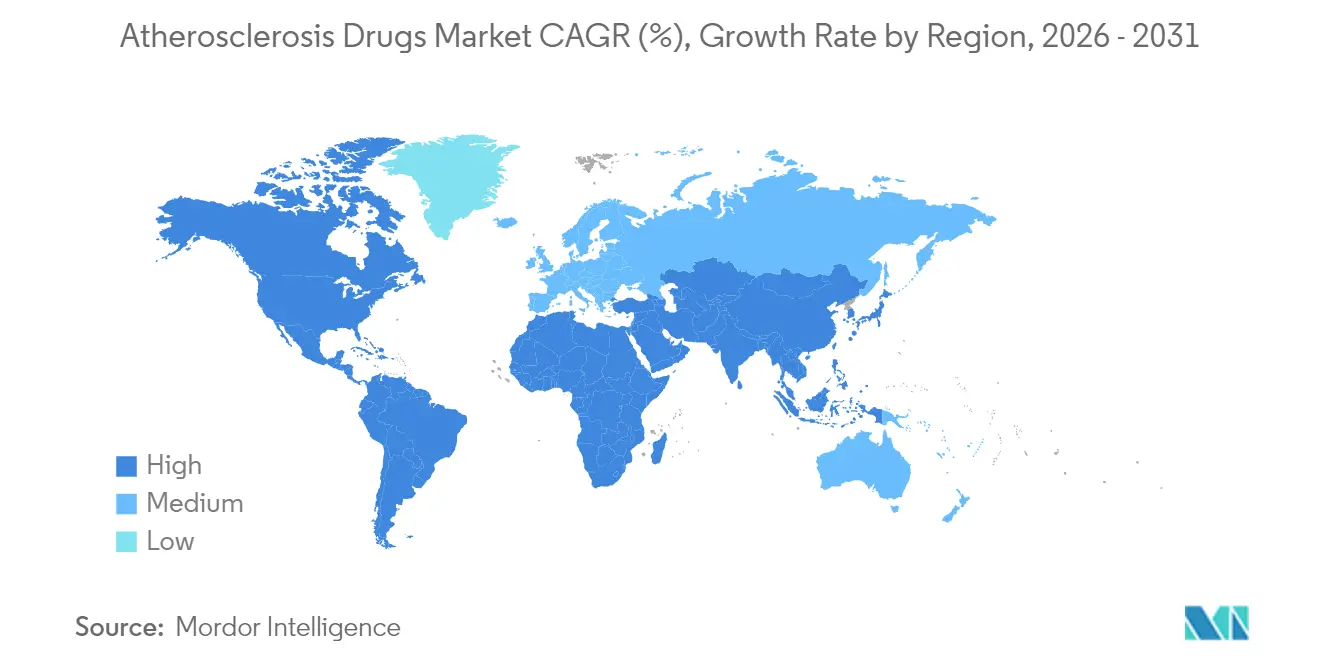
North America retained 38.12% of 2025 sales, sustained by guideline adoption, payer coverage for premium biologics, and a deep clinical-trial ecosystem that keeps innovation cycles short. The region benefits from FDA breakthrough designations that bring first-in-class treatments like CRISPR-based VERVE-102 to market ahead of other jurisdictions. Nevertheless, Medicare price negotiations and state-level importation initiatives heighten price elasticity, prompting strategic contracting and outcome-based deals. Digital adoption is high: remote lipid monitoring, prescription apps, and AI adherence coaching reinforce the value of combination regimens and help protect premium segments within the atherosclerosis drugs market.
Asia-Pacific is the fastest-growing region, with a 6.07% CAGR to 2031. Universal health coverage expansion, urbanization, and dietary westernization drive ASCVD prevalence, while local biosimilar PCSK9 launches improve affordability. India amplifies generic exports and internal demand, leveraging its PLI scheme to scale low-cost supply. Japan’s regulatory reforms incentivize multinational trial investment, though its rapidly aging population strains insurance budgets. Collectively, regional heterogeneity requires nuanced pricing and localization strategies but presents the single largest volume upside for the atherosclerosis drugs market.
Europe registers steady expansion supported by harmonized EMA guidelines and widespread public-health screening programs. Health-technology-assessment bodies impose stringent cost-effectiveness thresholds, fostering uptake of fixed-dose combinations and generics where outcome parity is demonstrated. Eastern European markets gain share as infrastructure improves, offering a growth relay as Western budgets tighten. Middle East & Africa and South America remain nascent but attractive in the long term. Cardiovascular disease awareness is rising, and private insurance penetration is widening in Gulf Cooperation Council states and Brazil, yet public-sector budgets lag, limiting the immediate uptake of high-cost biologics. Nonetheless, partnership models with government import agencies and local distributors lay the groundwork for future expansion of the atherosclerosis drugs market.
Regulatory Landscape
Regulatory requirements for atherosclerosis drugs span mature small molecules (statins, antiplatelets) and newer biologics and RNA modalities, with approval and lifecycle management anchored in agencies such as the US FDA and the European Medicines Agency (EMA). In the EU, the EMA Variations framework became applicable in January 2025, tightening procedural timelines and standardizing how marketing authorizations are updated based on new clinical evidence and manufacturing changes. This is relevant for established lipid therapies managing label expansions and change control.
Across regions, quality and CMC expectations remain aligned with International Council for Harmonisation (ICH) guidance, including ICH Q8 (pharmaceutical development) and ICH Q10 (pharmaceutical quality system). These provisions support Quality by Design and risk-based controls as products scale globally. Recent EU regulatory actions also show continued use of variation pathways for rare lipid disorders, including the EMA CHMP positive opinion in March 2026 to extend Lojuxta (lomitapide) to pediatric patients aged 5 years and older with homozygous familial hypercholesterolemia, HoFH. In May 2026, the EMA CHMP issued a positive opinion for Colchicine Agepha Pharma for secondary prevention of atherothrombotic events in stable coronary disease, reinforcing a regulatory environment that accommodates both label extensions and novel mechanisms when evidence supports clinical benefit.
Competitive Landscape
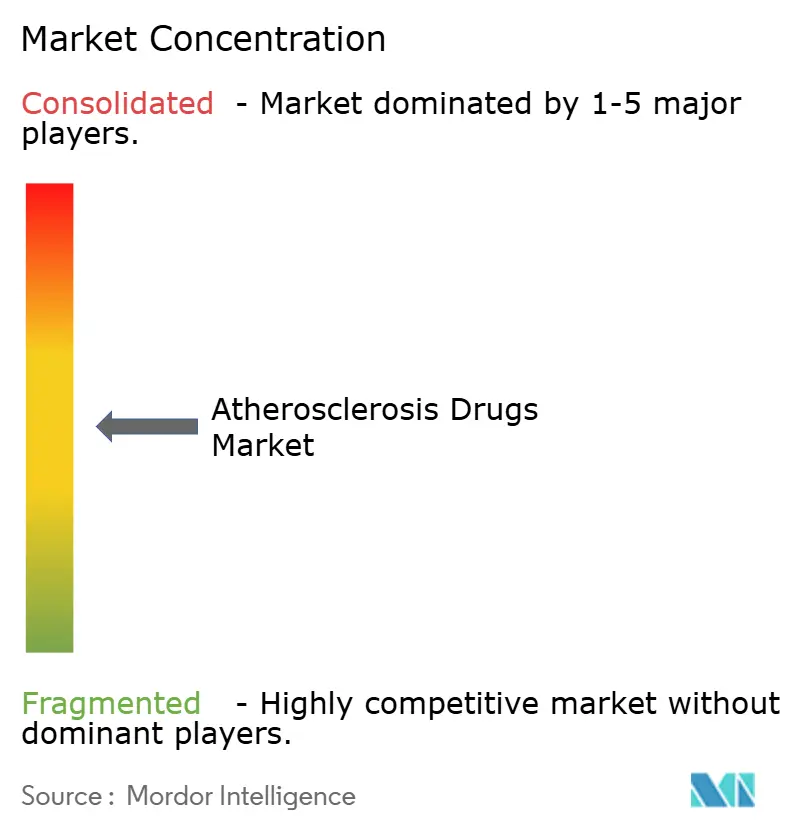
Market concentration is moderate. Five global incumbents, Pfizer, Amgen, Novartis, Sanofi, and AstraZeneca, control the majority of premium biologics, while scores of generics makers dominate legacy statins. Consolidation continues: Eli Lilly’s USD 1.3 billion acquisition of Verve Therapeutics brings in vivo base-editing capacity aimed at single-shot LDL-C lowering, and Novo Nordisk’s EUR 1.02 billion purchase of Cardior Pharmaceuticals adds RNA-based myocardial-remodeling assets via direct company disclosure filings. Such deals pivot portfolios toward gene silencing, inflammatory modulation, and combinatorial mechanisms, bolstering differentiation as statin revenue compresses.
Technology integration emerges as a core differentiator. AI models accelerate target discovery and in-silico lead optimization, trimming preclinical timelines by up to 18 months according to company investor presentations. Companion-diagnostic development—especially genotype panels for statin intolerance and polygenic risk—creates stickier franchise ecosystems, aligning with precision-medicine reimbursement pathways. Digital therapeutic adjuncts, such as smartphone lipid-tracking apps, stabilize real-world adherence rates and generate actionable data for risk-share contracts.
Smaller biotechnology entrants attack white-space indications like elevated lipoprotein(a) and residual inflammatory risk. LIB Therapeutics posts positive phase 3 data on lerodalcibep, a small-dose monthly PCSK9 fusion protein that challenges established monoclonal-antibody incumbents. NewAmsterdam Pharma’s obicetrapib revives interest in CETP inhibition with high-density lipoprotein elevation coupled to LDL-C lowering. Competitive intensity therefore spans both price competition in commoditized statins and value competition in RNA- and gene-editing frontiers, keeping barriers to entry high yet dynamic within the atherosclerosis drugs market.
Atherosclerosis Drugs Industry Leaders
-
Pfizer Inc.
-
AstraZeneca
-
Merck & Co., Inc.
-
Amgen Inc.
-
Regeneron Pharmaceuticals, Inc.
- *Disclaimer: Major Players sorted in no particular order
Market Opportunities and Future Outlook
White space within the atherosclerosis drugs market increasingly centers on residual-risk populations that remain above LDL-C targets or carry non-LDL risk drivers despite widespread statin use (statins held 58.74% share in 2025). Competitive efforts to make lipid intensification more convenient create opportunities for oral and long-acting options that can be layered onto standard of care and delivered through cardiometabolic clinics and hospital pharmacies (46.28% share in 2025). Clinical-stage and regulatory momentum around oral PCSK9 programs and durable RNA-based lipid lowering also supports differentiated contracting and adherence-linked service models, consistent with the report’s emphasis on digitally enabled adherence tools influencing therapy choice.
Expansion into underserved and specialty subsegments offers additional headroom, particularly in genetically driven severe dyslipidemias and secondary prevention settings where regulators are updating labels. In 2026, Chiesi secured regulatory expansion for lomitapide in pediatric HoFH through the US (JUXTAPID pediatric approval) and EU pathways (Lojuxta CHMP positive opinion for pediatric use). The EMA CHMP also issued a positive opinion for Colchicine Agepha Pharma for secondary prevention in stable coronary disease, indicating continued openness to broadened indications and risk-reduction strategies beyond LDL-C alone. Pipeline competition around Lipoprotein(a) is also gaining visibility, with named large-cap sponsors (Novartis, Amgen, and Eli Lilly) highlighted in 2026 reporting as advancing Lp(a) programs aimed at preventing heart attacks, reinforcing an opportunity set for first-in-class therapies that target endpoints not fully addressed by today’s statin-centric regimens.
Recent Industry Developments
- March 2026: Merck announced Phase 3 CORALreef AddOn results showing its investigational oral PCSK9 inhibitor enlicitide decanoate achieved statistically significant LDL-C reductions versus guideline-recommended oral non-statin therapies in patients with ASCVD or at risk for ASCVD. The update adds momentum to the competitive race to shift lipid lowering from injectables toward oral regimens that can improve persistence in chronic therapy and broaden prescribing in primary care.
- October 2025: Amgen reported that the Phase 3 VESALIUS-CV trial of Repatha (evolocumab) met its dual primary endpoints by significantly reducing the risk of major adverse cardiovascular events in high-risk patients without prior heart attack or stroke. The data broaden the evidence base for PCSK9 inhibition in primary prevention-type populations and support payer and guideline discussions around earlier intensification beyond statins.
- October 2024: AstraZeneca entered an exclusive license agreement with CSPC Pharmaceutical Group Ltd to advance YS2302018, an oral Lipoprotein(a) disruptor for lipid-lowering therapy. This deal added an oral Lp(a) program to AstraZeneca’s cardiovascular pipeline and reflects escalating investment in therapies addressing residual risk not fully captured by LDL-C reduction alone.
Research Methodology Framework and Report Scope
Market Definition and Coverage
The market is defined as the value of prescription drug therapies used to prevent, slow, or manage atherosclerosis by reducing lipid-driven plaque build up and related thrombotic risk, as captured through sales via hospital, retail, and online pharmacy channels.
Scope exclusions: This sizing excludes surgical and device procedures (such as stents), diagnostics, and non-prescription supplements unless they are regulated and sold as drug therapies.
Segmentation Overview
- By Drug Class
- Statins
- PCSK9 Inhibitors
- Bempedoic-acid & ACL inhibitors
- Antiplatelet Agents
- Omega-3 Fatty-acid Derivatives
- RNA-based Therapies (ASO & siRNA)
- Others
- By Distribution Channel
- Retail Pharmacies
- Hospital Pharmacies
- Online Pharmacies
- By Geography
- North America
- United States
- Canada
- Mexico
- Europe
- Germany
- United Kingdom
- France
- Italy
- Spain
- Rest of Europe
- Asia-Pacific
- China
- Japan
- India
- Australia
- South Korea
- Rest of Asia-Pacific
- Middle East & Africa
- GCC
- South Africa
- Rest of Middle East & Africa
- South America
- Brazil
- Argentina
- Rest of South America
- North America
Data Sources, Market Sizing, and Validation
Desk Research
Desk research starts by building the disease and treatment context for atherosclerosis, then converting that into a measurable demand pool by geography. Public health sources such as the World Health Organization, the US Centers for Disease Control and Prevention, and the Global Burden of Disease study are used to understand prevalence, mortality, and risk-factor trends that influence the treated population over time.
We also refer to sources such as the US FDA and EMA for labels and safety updates, national reimbursement and formulary references where available, and peer-reviewed cardiology journals for guideline shifts and therapy positioning. Company annual reports, investor presentations, and reputed press coverage help confirm product mix signals, patent expiries, and generic entry timing. A paid company financials and intelligence subscription is used to normalize reported revenue lines and reconcile regional splits. The desk sources listed here are illustrative and not exhaustive, and many other references were used for collection, cross-checking, and clarification.
Primary Interviews and Surveys
Primary work focused on validating how treatment intensity changes by risk group and how newer therapies are adopted in real practice, where desk sources can be thin. We spoke with a mix of prescribers, payers, distributors, and industry roles across APAC, EMEA, and the Americas, so assumptions on pricing, access, and switching behavior could be pressure-tested before totals were finalized.
Distribution of primary research fieldwork respondents
| Company type | Respondent position | Region |
|---|---|---|
| Top tier: 29% | CXOs: 12% | APAC: 46% |
| Mid tier: 50% | Functional/Unit leaders: 30% | EMEA: 33% |
| Smaller Players: 21% | Managers: 58% | Americas: 21% |
Market-Sizing & Forecasting
Sizing is built using a top-down and bottom-up flow, where epidemiology and treatment rates are translated into an addressable treated cohort, then connected to therapy mix and average annual therapy cost to reconstruct value by region. To keep the model practical, we used inputs such as diagnosed and treated ASCVD population, lipid guideline thresholds that influence intensity, expected share of injectable versus oral therapies, generic penetration and patent expiry timing, and country-level pricing and reimbursement direction.
After that, selective bottom-up checks are run using sampled revenue signals and volume proxies (for example, channel feedback on class-level uptake and typical patient-year costs) so gaps caused by limited public disclosure can be identified and adjusted. Forecasts rely mainly on scenario analysis, where adoption curves for newer classes are aligned to expert views on payer access, adherence, and competitive substitution, and then blended into a base case.
Data Validation & Update Cycle
Validation is done through triangulation across independent signals, and outliers are investigated before figures are approved. We compare outputs against broad cardiovascular drug spending direction, therapy class growth patterns, and known timing of policy or label changes, and then recheck the drivers when the model produces unusual step changes.
A multi-step review is followed, where assumptions are challenged internally and then re-confirmed with select external contacts if variance remains. Reports are refreshed each year, and interim updates are added when material events occur, such as major guideline revisions, large patent expiries, or meaningful price moves. Before delivery, a fresh pass is completed so clients receive the latest updated view.
Mordor Intelligence's Atherosclerosis Drugs Market Size Versus Other Published Estimates
Published market sizes for atherosclerosis drugs can look far apart even when the growth rates sound similar, because the counting rules are not consistent across sources. Differences usually come from what is treated as atherosclerosis-specific drug spend versus broader cardiovascular therapy spend, and from how pricing and generic erosion are handled year by year.
The key gap drivers here tend to be whether non-atherosclerosis cardiovascular medications are included, how injectables are priced across countries when list prices and net prices diverge, and whether volumes are anchored to treated ASCVD cohorts or to broader dyslipidemia pools. Refresh timing also matters, since major patent expiries and reimbursement adjustments can change the run-rate quickly.
Benchmark comparison
| Source | Market Size | Gaps in Research Methodology |
|---|---|---|
| Mordor Intelligence | USD 34.39 B (2025) | |
| Global Consultancy A | USD 17.60 B (2025) | This figure appears to be built on a narrower therapy basket and may exclude some commonly used lipid lowering and antiplatelet drug categories, which reduces total spend even if patient trends are similar. |
| Industry Publisher B | USD 19.11 B (2025) | The estimate looks more conservative on pricing and uptake, and it likely applies faster generic erosion and slower penetration for newer drug classes, which lowers the 2025 value versus models that keep therapy intensity aligned to guideline based practice. |
The spread in the table is largely explained by which drug classes are counted for atherosclerosis management and by how quickly price erosion is applied after patent expiries and payer actions, a step that is rechecked using class level uptake and access feedback in Mordor Intelligence.
Key Questions Answered in the Report
What is the current atherosclerosis drugs market size and projected growth?
The atherosclerosis drugs market size stands at USD 35.43 billion in 2026 and is forecast to reach USD 41.08 billion by 2031, translating to a 3.01% CAGR.
Which drug class dominates the atherosclerosis drugs market?
Statins maintained leadership with 58.74% atherosclerosis drugs market share in 2025 because of broad guideline endorsement and low cost.
What is the fastest-growing segment within the atherosclerosis drugs market?
PCSK9 inhibitors are projected to grow at a 5.18% CAGR through 2031, driven by expanded high-risk indications and improved payer access.
Which region is expected to post the highest growth in the atherosclerosis drugs market?
Asia-Pacific is forecast to grow at 6.07% CAGR between 2026 and 2031 due to rising cardiovascular disease prevalence and improving healthcare access.
How is digital transformation influencing distribution channels?
Online pharmacies are the fastest-growing channel at a 6.52% CAGR to 2031, supported by telehealth integration, AI-driven adherence tools, and consumer preference for home delivery.
What emerging therapies could reshape the atherosclerosis drugs industry?
RNA-based siRNA and ASO agents targeting LDL-C and lipoprotein(a), along with gene-editing programs such as base editing, hold potential to deliver disease-modifying benefits and extend premium market segments within the next five years.