Market Overview
| Study Period | 2018 - 2031 |
|---|---|
| Forecast Data Period | 2026 - 2031 |
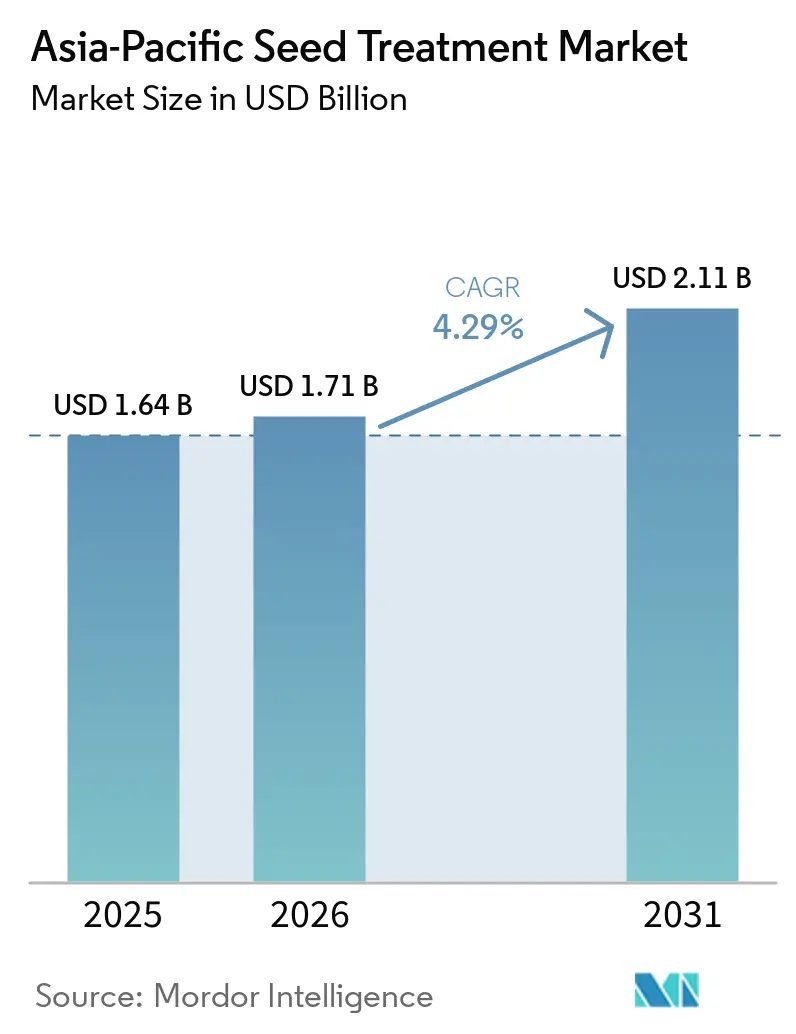
| Base Year Market Size (2025) | USD 1.64 Billion |
| Market Size (2026) | USD 1.71 Billion |
| Market Size (2031) | USD 2.11 Billion |
| Growth Rate (2026 - 2031) | 4.29 % |
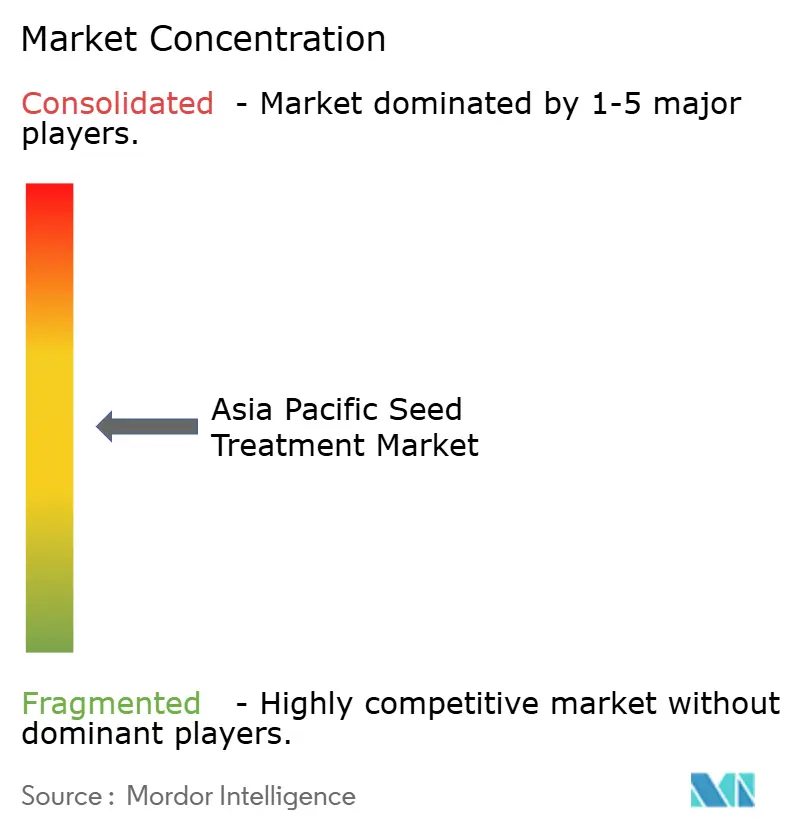
| Market Concentration | Medium |
Major Players *Disclaimer: Major Players sorted in no particular order Image © Mordor Intelligence. Reuse requires attribution under CC BY 4.0. | |
Asia-Pacific Seed Treatment Market Analysis by Mordor Intelligence
The Asia-Pacific seed treatment market size was valued at USD 1.64 billion in 2025 and is forecast to grow from USD 1.71 billion in 2026 to USD 2.11 billion by 2031, at a 4.29% CAGR from 2026 to 2031. Market growth is supported by government initiatives promoting seed treatment, rising resistance in major pest complexes, and increasing adoption of combination formulations integrating insecticidal and fungicidal modes of action. Low-dose systemic coatings, using active ingredients such as thiamethoxam and clothianidin at 30-50% of foliar application rates, provide season-long protection while reducing total pesticide load per hectare by up to 60%. Strategic alliances among multinational manufacturers and local formulators advance the technology pipeline, while digital analytics embedded into crop protection prescriptions create upselling potential.
Key Report Takeaways
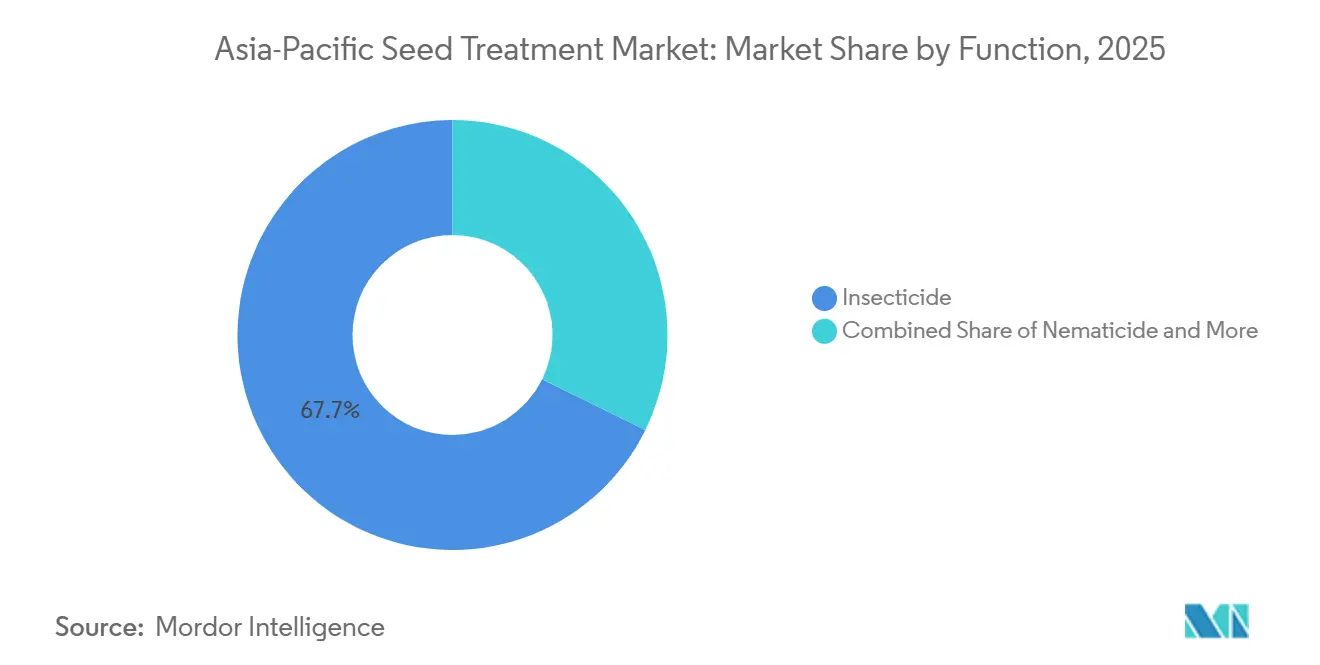
- By function, insecticide accounted for 67.7% of the Asia-Pacific seed treatment market share in 2025 and is forecast to grow at a CAGR of 4.4% from 2026 to 2031.
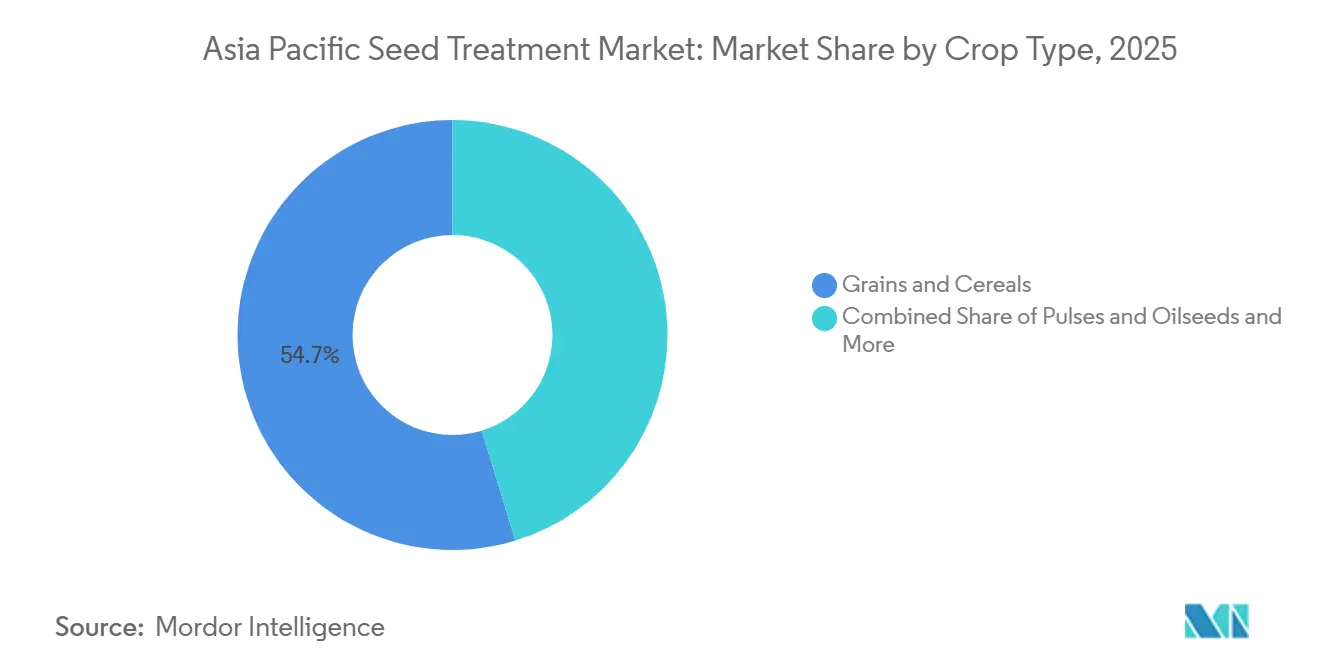
- By crop type, grains and cereals accounted for 54.7% of the Asia-Pacific seed treatment market size in 2025, while fruits and vegetables are forecast to grow at a CAGR of 4.5% from 2026 to 2031.
- By geography, China accounted for 29.1% of the market share in 2025 and is forecast to grow at a CAGR of 5.2% from 2026 to 2031.
Note: Market size and forecast figures in this report are generated using Mordor Intelligence’s proprietary estimation framework, updated with the latest available data and insights as of 2026.
Market Trends and Insights
Drivers Impact Analysis of Asia-Pacific Seed Treatment Market*
| Driver | (~) % Impact on CAGR Forecast | Geographic Relevance | Impact Timeline | |
|---|---|---|---|---|
| Intensifying Pest Resistance Pressures on High-Value Horticulture | +0.8% | Southeast Asia and India | Medium term (2-4 years) | |
| Government Push for 100% Seed-Treatment Coverage in India's Kharif Season | +0.6% | India and South Asia | Short term (≤ 2 years) | |
| Rise Of Combination Insecticide-Fungicide Formulations Tailored to Tropical Climates | +0.7% | Thailand, Vietnam, and Indonesia | Medium term (2-4 years) | |
| Rapid Adoption of Low-Dose Systemic Insecticide Seed Coatings to Manage Pyrethroid-Resistant Pests | +0.9% | Asia-Pacific-wide | Medium term (2-4 years) | |
| Precision Planting Equipment Adoption Enabling Higher-Margin Seed-Applied Inputs | +0.5% | China and Australia | Long term (≥ 4 years) | |
| Corporate Pacts to Embed Digital Analytics in Seed-Care Prescriptions | +0.4% | Japan, Australia, and China | Long term (≥ 4 years) | |
| Source: Mordor Intelligence | ||||
Intensifying Pest Resistance Pressures on High-Value Horticulture
Escalating resistance among key insects in tomato, pepper, and melon crops forces growers to demand multi-mode seed protection packages. Studies in Thailand and Vietnam record a 40% rise in pyrethroid resistance since 2022. Combination seed treatments that merge synthetic actives gain favor, cutting early-season loss by 18% and supporting premium crop pricing in export markets. Government extension services now bundle resistance-management guidelines with subsidized seed kits. Manufacturers capitalize by fast-tracking novel chemistries into the Asia-Pacific seed treatment market, thereby strengthening brand differentiation. This sustains demand for integrated seed treatment solutions as growers seek longer-lasting protection against resistant pest populations. It also creates opportunities for manufacturers to expand combination products and resistance-management solutions for high-value horticultural crops.
Government Push for 100% Seed-Treatment Coverage in India's Kharif Season
India’s agriculture ministry earmarked INR 192 billion (USD 2.3 billion) to convert all subsidized Kharif seed supplies to treated status by 2026.[1] The program spans rice, cotton, and sugarcane, representing 65% of India’s Kharif acreage. Pilot districts in Punjab delivered 23% yield gains and 31% pest-loss reductions. Mandatory seed certification now embeds treatment compliance, elevating baseline demand across the Asia-Pacific seed treatment market. Implementation hurdles, skill gaps among rural agents, and inconsistent cold-chain links spur private firms to co-invest in last-mile logistics. The policy strengthens institutional demand for treated seeds and encourages wider adoption of seed treatment among commercial and smallholder growers. This also supports opportunities for manufacturers to expand treated-seed supply, distribution networks, and technical support across key Kharif crops.
Rise of Combination Insecticide-Fungicide Formulations Tailored to Tropical Climates
High humidity and monsoon volatility accelerate pathogen and pest cycles. Syngenta invested significantly in Singapore to tailor dual-active films that remain stable under high temperatures. Similar investments by BASF in Malaysia have shortened registration timelines under ASEAN mutual recognition pacts, thereby boosting the adoption of combination products in Southeast Asia. Growers appreciate the simplified one-pass coating and notable cost savings per hectare, cementing the Asia-Pacific seed treatment market’s tilt toward premium tropical formulations. This supports continued uptake of combination seed treatments across tropical markets, while encouraging manufacturers to develop formulations suited to local climate and pest pressures.
Rapid Adoption of Low-Dose Systemic Insecticide Seed Coatings to Manage Pyrethroid-Resistant Pests
The proliferation of pyrethroid-resistant pest populations across the Asia-Pacific is driving accelerated adoption of low-dose systemic insecticide seed coatings, which deliver targeted protection while minimizing environmental exposure and preserving beneficial insect populations. This technology shift addresses the critical challenge of pyrethroid resistance in key pests such as bollworm in cotton and aphids in vegetable crops, where traditional foliar applications have lost efficacy due to widespread resistance development. Low-dose systemic coatings, utilizing active ingredients such as thiamethoxam and clothianidin at 30-50% reduced rates compared to foliar applications, provide season-long protection while reducing total pesticide load per hectare by up to 60%. This supports wider adoption of systemic seed coatings as growers seek targeted pest protection with lower pesticide application rates.
Restraints Impact Analysis of Asia-Pacific Seed Treatment Market*
| Restraint | (~) % Impact on CAGR Forecast | Geographic Relevance | Impact Timeline |
|---|---|---|---|
| Fragmented Smallholder Base Restricting Per-Hectare Spend | -0.9% | India and Southeast Asia | Short term (≤ 2 years) |
| Regulatory Withdrawal of Neonicotinoids in Japan and Australia | -0.6% | Japan and Australia | Medium term (2-4 years) |
| Cold-Chain Gaps Shortening Microbial Coating Shelf-Life | -0.4% | Tropical rural zones | Medium term (2-4 years) |
| Volatile Active-Ingredient Prices for Cypermethrin and Abamectin | -0.7% | Region-wide price-sensitive markets | Short term (≤ 2 years) |
| Source: Mordor Intelligence | |||
Fragmented Smallholder Base Restricting Per-Hectare Spend
Average farm sizes remain under 2 hectares across much of Asia, limiting disposable income for seed treatments to under 3% of total input costs.[2] Cooperative purchasing schemes and microfinance lines address the affordability gap, but administrative frictions and repayment risk slow penetration. Firms pilot pay-at-harvest models, yet scale remains elusive. Consequently, the Asia-Pacific seed treatment market experiences uneven uptake, particularly in remote districts with limited market access. These constraints limit smallholder growers' ability to adopt seed treatments consistently, particularly in fragmented and underserved agricultural markets. This leaves manufacturers reliant on financing, cooperative purchasing, and localized distribution models to improve market penetration.
Regulatory Withdrawal of Neonicotinoids in Japan and Australia
Japan’s phased ban on clothianidin and thiamethoxam seed uses, coupled with Australia’s ongoing review, forces reformulation across 17 flagship brands.[3] Replacement chemistries cost up to 32% more and require additional validation trials, eroding short-term margins. Distributors brace for supply gaps in early 2026. These changes temper near-term growth for the Asia-Pacific seed treatment market until compliant alternatives scale. Higher reformulation costs and longer validation requirements can delay the introduction of compliant alternatives and increase supply pressures. This may constrain the availability and affordability of seed treatment products in affected markets.
*Our forecasts treat driver/restraint impacts as directional, not additive. The impact forecasts reflect baseline growth, mix effects, and variable interactions.
Asia-Pacific Seed Treatment Market Segment Analysis
By Function:
Insecticide Leads and is Growing FastestInsecticide accounted for 67.7% of the Asia-Pacific seed treatment market in 2025 and is forecast to grow at a CAGR of 4.4% from 2026 to 2031, reflecting both the persistent pest pressures across Asia-Pacific's diverse agricultural systems and the segment's rapid technological evolution in response to resistance challenges. The segment's dominance is increasingly driven by innovation in low-dose systemic coatings that address widespread pyrethroid resistance, with manufacturers developing precision application technologies that reduce active ingredient usage by 30-50% while maintaining season-long efficacy. This technological shift is particularly pronounced in cotton and vegetable production systems, where traditional foliar applications have lost effectiveness, creating premium market opportunities for companies that can deliver resistance management solutions through seed-applied technologies.
Fungicide treatments capture the second-largest functional segment, driven by monsoon-related disease pressures in rice production systems and the increasing prevalence of fungal pathogens in high-value horticultural crops across Southeast Asia's humid tropical climates. The fungicide segment benefits from combination formulations that integrate multiple modes of action, addressing both early-season soil-borne diseases and emerging foliar pathogens that threaten crop establishment and yield potential. Nematicide applications represent a specialized but growing segment, particularly in high-value crops such as tomatoes and ornamental plants where soil-borne nematodes cause significant economic losses, with market expansion driven by improved application technologies and enhanced active ingredient stability in tropical soil conditions. Regulatory compliance frameworks, particularly ISO 14001 environmental management standards and national pesticide registration requirements, are influencing product development across all functional segments toward lower-impact formulations that maintain efficacy while reducing environmental footprint and meeting export market requirements.

By Crop Type:
Grains and Cereals Accounted for the Largest Share, while Fruits and Vegetables are Growing FastestGrains and cereals accounted for 54.7% of market share in 2025, reflecting the region's rice-wheat production systems, which require comprehensive seed protection against diverse pest complexes. Fruits and vegetables are forecast to grow at a CAGR of 4.5% from 2026 to 2031, driven by export market expansion and premium-quality requirements. The grains segment benefits from government support programs and mechanized application systems that enable cost-effective deployment of seed treatment across large acreages. Commercial crops, including cotton and sugarcane, maintain steady growth, supported by the adoption of integrated pest management, while pulses and oilseeds represent emerging opportunities as dietary preferences shift toward protein-rich crops.
The fruits and vegetables segment's acceleration reflects rising consumer quality expectations and export-market compliance requirements, with seed treatments becoming essential to meet international phytosanitary standards. Turf and ornamental applications, while smaller in volume, command premium pricing due to aesthetic quality requirements and specialized formulation needs. Regulatory frameworks such as GLOBALG.A.P. certification are driving seed treatment adoption in export-oriented fruit and vegetable production, creating sustainable growth opportunities for specialized formulations.
Geography Analysis
China Seed Treatment Market
China accounted for 29.1% of the Asia-Pacific seed treatment market in 2025 and is forecast to grow at a CAGR of 5.2% from 2026 to 2031, reflecting the country's agricultural modernization initiatives and scale advantages in seed treatment deployment across its 165 million hectares of cultivated land. China's market leadership reflects both scale and sophistication, with the country's agricultural modernization program driving adoption of precision seed treatment technologies and digital application monitoring systems across large-scale farming operations. The government's commitment to food security and sustainable agriculture has resulted in increased investment in seed treatment infrastructure, with state-owned enterprises partnering with international companies to develop locally-adapted formulations. Regional growth patterns show accelerating adoption in northeastern provinces where mechanized farming enables efficient seed treatment deployment, while southern regions focus on specialty crop applications that command premium pricing.
India Seed Treatment Market
India's market expansion is driven by increasing farmer awareness of seed treatment benefits, growing adoption of modern agricultural practices, and the country's diverse agro-climatic conditions. These varied conditions create opportunities for specialized seed treatment formulations, ranging from rice-focused treatments in eastern states to cotton and sugarcane applications in western regions, supported by region-specific crop protection requirements and changing cultivation practices.
APAC and Oceania Seed Treatment Market
Southeast Asian markets, particularly Thailand, Vietnam, and Indonesia, are supported by export-oriented agriculture and technology adoption initiatives. Thailand's Board of Investment has approved USD 1.2 billion in agricultural technology investments, including seed treatment facilities, while Vietnam's agricultural modernization program targets 40% increase in seed treatment coverage by 2027. Australia and Japan represent mature markets characterized by premium product adoption and stringent regulatory compliance, with both countries implementing advanced resistance management protocols that drive demand for innovative seed treatment solutions. Regulatory frameworks such as Australia's APVMA registration system and Japan's Food Safety Commission standards ensure high product quality while creating barriers to entry that benefit established players with comprehensive regulatory expertise.
Competitive Landscape
The Asia-Pacific seed treatment market was moderately concentrated in 2025, with competition shaped by established multinational companies and regional specialists. Market dynamics favor companies with comprehensive product portfolios and strong regulatory capabilities, as diverse national registration requirements create barriers to entry for smaller players.
Strategic differentiation increasingly centers on chemical solutions and precision application technologies, with leading companies investing heavily in R&D partnerships and local manufacturing capabilities to serve diverse regional needs. Competition intensity has escalated through strategic partnerships and technology licensing agreements, exemplified by Syngenta's collaboration with Intrinsyx Bio for endophyte-based formulations and BASF's alliance with Chinese partners for localized product development.
White-space opportunities exist in chemical seed treatments and precision application systems, where established players face competition from specialized biotechnology companies and agricultural technology startups that can move quickly to address emerging market needs. Technology deployment for competitive advantage includes digital application monitoring, predictive analytics for pest pressure forecasting, and customized formulation development that addresses specific regional pest complexes and regulatory requirements. Regulatory compliance and national pesticide registration requirements create market entry barriers that favor companies with established regulatory capabilities.
Asia-Pacific Seed Treatment Industry Leaders
-
BASF SE
-
Bayer AG
-
Corteva Agriscience
-
Syngenta Group
-
UPL Limited
- *Disclaimer: Major Players sorted in no particular order
Asia-Pacific Seed Treatment Market Companies Covered in this Report
- Syngenta Group
- Bayer AG
- BASF SE
- Corteva Agriscience
- Sumitomo Chemical Co., Ltd.
- UPL Limited
- Novozymes A/S
- FMC Corporation
- Nufarm Ltd
- Crystal Crop Protection Ltd
- PI Industries Ltd
- Albaugh LLC
- Associated British Foods plc
- Certis Belchim BV (Mitsui & Co., Ltd.)
- Koppert B.V.
Recent Industry Developments in Asia-Pacific Seed Treatment Market
- July 2025: UPL, through Advanta Seeds International Mauritius, acquired Wuhan Advanta Seeds Company Limited in China. This strategic move marks UPL’s entry into the Chinese seed market and strengthens its presence in Asia. The move enhances UPL’s capabilities in seed treatment and distribution, supporting its growth in the Asia-Pacific seed market.
- May 2025: BASF’s agriculture unit plans to expand into Asia and the global seed market as it prepares for a public listing. The move aims to tap into high-growth regions and strengthen its position in crop protection and seed treatment technologies.
- March 2025: Syngenta Australia introduced VICTRATO, a seed treatment for wheat and barley designed to combat Fusarium crown rot, a disease responsible for substantial yield losses. Utilizing TYMIRIUM technology, it safeguards roots and shoots from early-stage infections. Following more than 300 trials conducted across Australia, VICTRATO provides growers with enhanced crop health, improved grain quality, and greater assurance when planting in high-risk areas.
Asia-Pacific Seed Treatment Market Report Scope
The Asia-Pacific Seed Treatment Market is Segmented by Function (Fungicide, Insecticide, and Nematicide), by Crop Type (Commercial Crops, Fruits and Vegetables, Grains and Cereals, Pulses and Oilseeds, and Turf and Ornamental), and by Geography (Australia, China, India, Indonesia, Japan, Myanmar, Pakistan, Philippines, Thailand, and More). The market forecasts are provided in terms of value (USD) and volume (metric tons).
Segmentation Overview
By Function
| Fungicide |
| Insecticide |
| Nematicide |
By Crop Type
| Commercial Crops |
| Fruits and Vegetables |
| Grains and Cereals |
| Pulses and Oilseeds |
| Turf and Ornamental |
By Geography
| Australia |
| China |
| India |
| Indonesia |
| Japan |
| Myanmar |
| Pakistan |
| Philippines |
| Thailand |
| Vietnam |
| Rest of Asia-Pacific |
| By Function | Fungicide |
| Insecticide | |
| Nematicide | |
| By Crop Type | Commercial Crops |
| Fruits and Vegetables | |
| Grains and Cereals | |
| Pulses and Oilseeds | |
| Turf and Ornamental | |
| By Geography | Australia |
| China | |
| India | |
| Indonesia | |
| Japan | |
| Myanmar | |
| Pakistan | |
| Philippines | |
| Thailand | |
| Vietnam | |
| Rest of Asia-Pacific |
Market Definition
- Function - Insecticides, fungicides, and nematicides are the crop protection chemicals used to treat seeds or seedlings.
- Application Mode - Seed treatment is a method of applying crop protection chemicals to the seeds before sowing or the seedlings before transplanting to the main field.
- Crop Type - This represents the consumption of crop protection chemicals by Cereals, Pulses, Oilseeds, Fruits, Vegetables, Turf, and Ornamental crops.
| Keyword | Definition |
|---|---|
| IWM | Integrated weed management (IWM) is an approach to incorporate multiple weed control techniques throughout the growing season to give producers the best opportunity to control problematic weeds. |
| Host | Hosts are the plants that form relationships with beneficial microorganisms and help them colonize. |
| Pathogen | A disease-causing organism. |
| Herbigation | Herbigation is an effective method of applying herbicides through irrigation systems. |
| Maximum residue levels (MRL) | Maximum Residue Limit (MRL) is the maximum allowed limit of pesticide residue in food or feed obtained from plants and animals. |
| IoT | The Internet of Things (IoT) is a network of interconnected devices that connect and exchange data with other IoT devices and the cloud. |
| Herbicide-tolerant varieties (HTVs) | Herbicide-tolerant varieties are plant species that have been genetically engineered to be resistant to herbicides used on crops. |
| Chemigation | Chemigation is a method of applying pesticides to crops through an irrigation system. |
| Crop Protection | Crop protection is a method of protecting crop yields from different pests, including insects, weeds, plant diseases, and others that cause damage to agricultural crops. |
| Seed Treatment | Seed treatment helps to disinfect seeds or seedlings from seed-borne or soil-borne pests. Crop protection chemicals, such as fungicides, insecticides, or nematicides, are commonly used for seed treatment. |
| Fumigation | Fumigation is the application of crop protection chemicals in gaseous form to control pests. |
| Bait | A bait is a food or other material used to lure a pest and kill it through various methods, including poisoning. |
| Contact Fungicide | Contact pesticides prevent crop contamination and combat fungal pathogens. They act on pests (fungi) only when they come in contact with the pests. |
| Systemic Fungicide | A systemic fungicide is a compound taken up by a plant and then translocated within the plant, thus protecting the plant from attack by pathogens. |
| Mass Drug Administration (MDA) | Mass drug administration is the strategy to control or eliminate many neglected tropical diseases. |
| Mollusks | Mollusks are pests that feed on crops, causing crop damage and yield loss. Mollusks include octopi, squid, snails, and slugs. |
| Pre-emergence Herbicide | Preemergence herbicides are a form of chemical weed control that prevents germinated weed seedlings from becoming established. |
| Post-emergence Herbicide | Postemergence herbicides are applied to the agricultural field to control weeds after emergence (germination) of seeds or seedlings. |
| Active Ingredients | Active ingredients are the chemicals in pesticide products that kill, control, or repel pests. |
| United States Department of Agriculture (USDA) | The Department of Agriculture provides leadership on food, agriculture, natural resources, and related issues. |
| Weed Science Society of America (WSSA) | The WSSA, a non-profit professional society, promotes research, education, and extension outreach activities related to weeds. |
| Suspension concentrate | Suspension concentrate (SC) is one of the formulations of crop protection chemicals with solid active ingredients dispersed in water. |
| Wettable powder | A wettable powder (WP) is a powder formulation that forms a suspension when mixed with water prior to spraying. |
| Emulsifiable concentrate | Emulsifiable concentrate (EC) is a concentrated liquid formulation of pesticide that needs to be diluted with water to create a spray solution. |
| Plant-parasitic nematodes | Parasitic Nematodes feed on the roots of crops, causing damage to the roots. These damages allow for easy plant infestation by soil-borne pathogens, which results in crop or yield loss. |
| Australian Weeds Strategy (AWS) | The Australian Weeds Strategy, owned by the Environment and Invasives Committee, provides national guidance on weed management. |
| Weed Science Society of Japan (WSSJ) | WSSJ aims to contribute to the prevention of weed damage and the utilization of weed value by providing the chance for research presentation and information exchange. |
Research Methodology
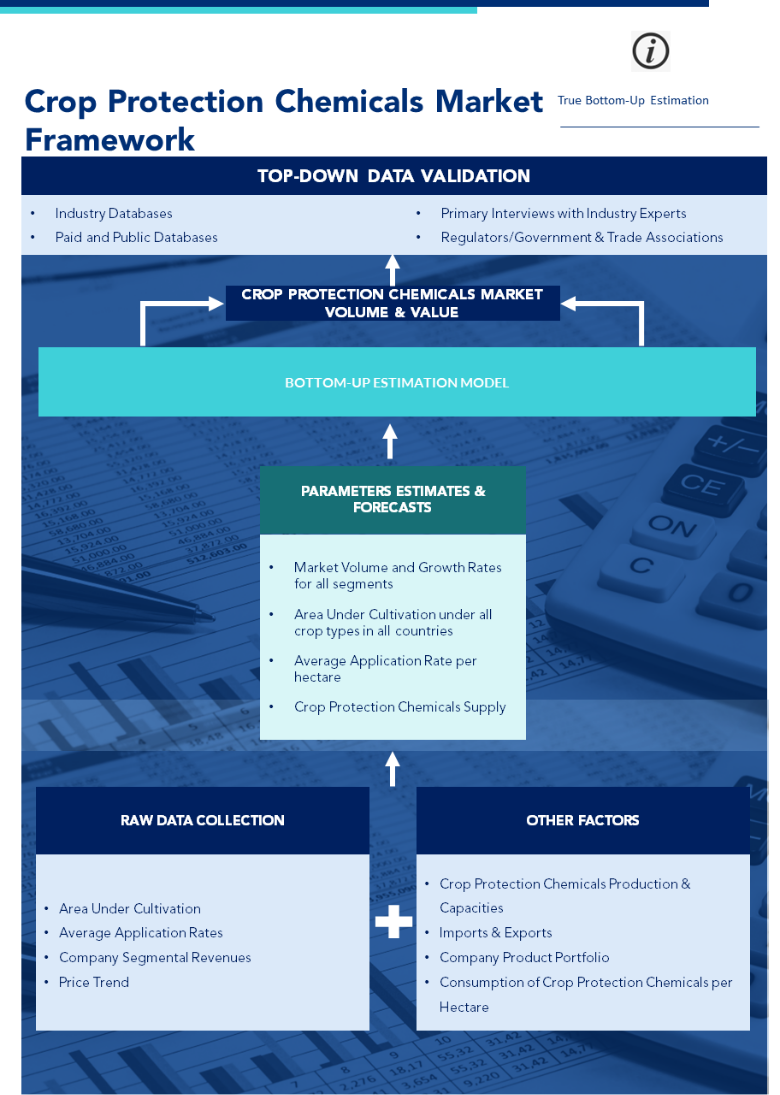
Mordor Intelligence follows a four-step methodology in all our reports.
- Step-1: Identify Key Variables: In order to build a robust forecasting methodology, the variables and factors identified in Step-1 are tested against available historical market numbers. Through an iterative process, the variables required for market forecast are set and the model is built on the basis of these variables.
- Step-2: Build a Market Model: Market-size estimations for the forecast years are in nominal terms. Inflation is not a part of the pricing, and the average selling price (ASP) is kept constant throughout the forecast period.
- Step-3: Validate and Finalize: In this important step, all market numbers, variables and analyst calls are validated through an extensive network of primary research experts from the market studied. The respondents are selected across levels and functions to generate a holistic picture of the market studied.
- Step-4: Research Outputs: Syndicated Reports, Custom Consulting Assignments, Databases & Subscription Platforms