
Market Overview
| Study Period | 2021 - 2031 |
|---|---|
| Forecast Data Period | 2026 - 2031 |
| Base Year Market Size (2025) | USD 64.54 Billion |
| Market Size (2026) | USD 69.78 Billion |
| Market Size (2031) | USD 103.09 Billion |
| Growth Rate (2026 - 2031) | 8.12 % |
| Market Concentration | Medium |
Major Players *Disclaimer: Major Players sorted in no particular order Image © Mordor Intelligence. Reuse requires attribution under CC BY 4.0. | |
Asia-Pacific Fruits And Vegetables Ingredients Market Analysis by Mordor Intelligence
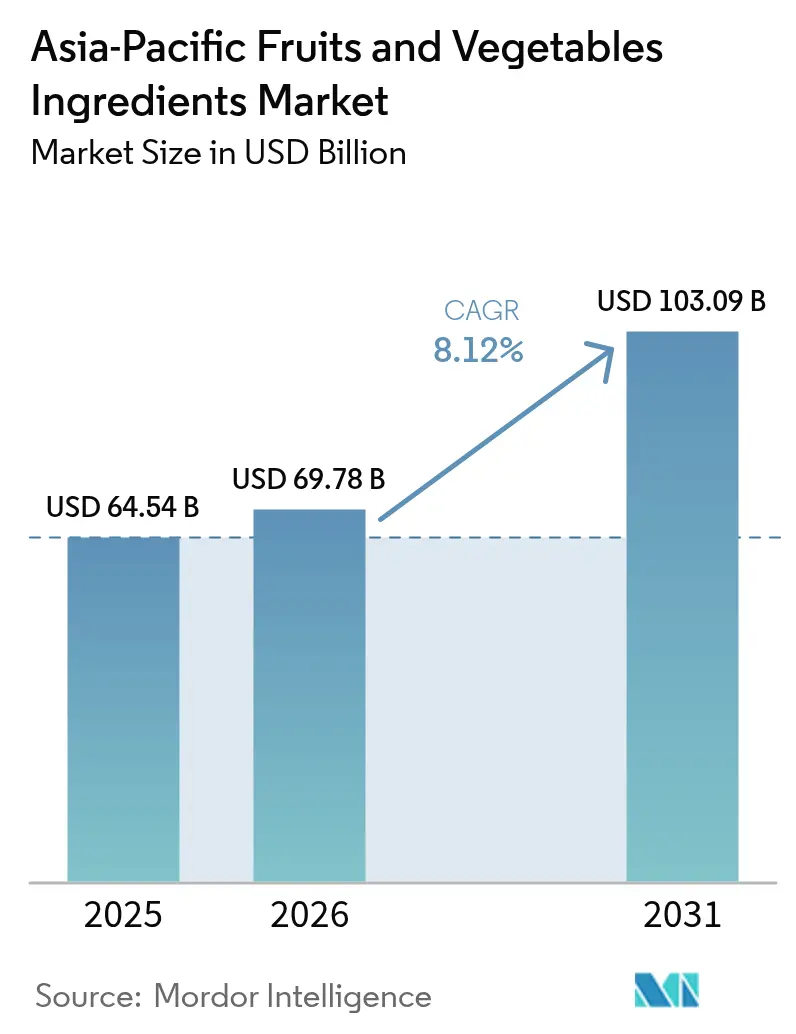
The Asia-Pacific fruits and vegetables ingredients market size is expected to grow from USD 64.54 million in 2025 to USD 69.78 million in 2026 and is forecast to reach USD 103.09 million by 2031 at 8.12% CAGR over 2026-2031. Ingredient buyers are shifting their focus from synthetic additives to recognizable fruit and vegetable derivatives in response to tightening regulations and growing consumer demand for cleaner labels. Thailand’s Phase 4 sugar-tax escalation in April 2025 and Indonesia’s draft Nutri-Level rules are forcing beverage makers to reformulate with mango, pineapple, and berry concentrates that help curb added sugars while maintaining taste. Trade blocs, such as the Regional Comprehensive Economic Partnership, are lowering tariffs on processed foods, thereby widening export avenues for Chinese and ASEAN processors that bundle fruits and vegetables into value-added products. At the consumer level, 70% of shoppers now scrutinize ingredient lists, and 58% are willing to accept a price premium for shorter, natural formulations, signaling sustained demand momentum for cleaner ingredient solutions.
Key Report Takeaways
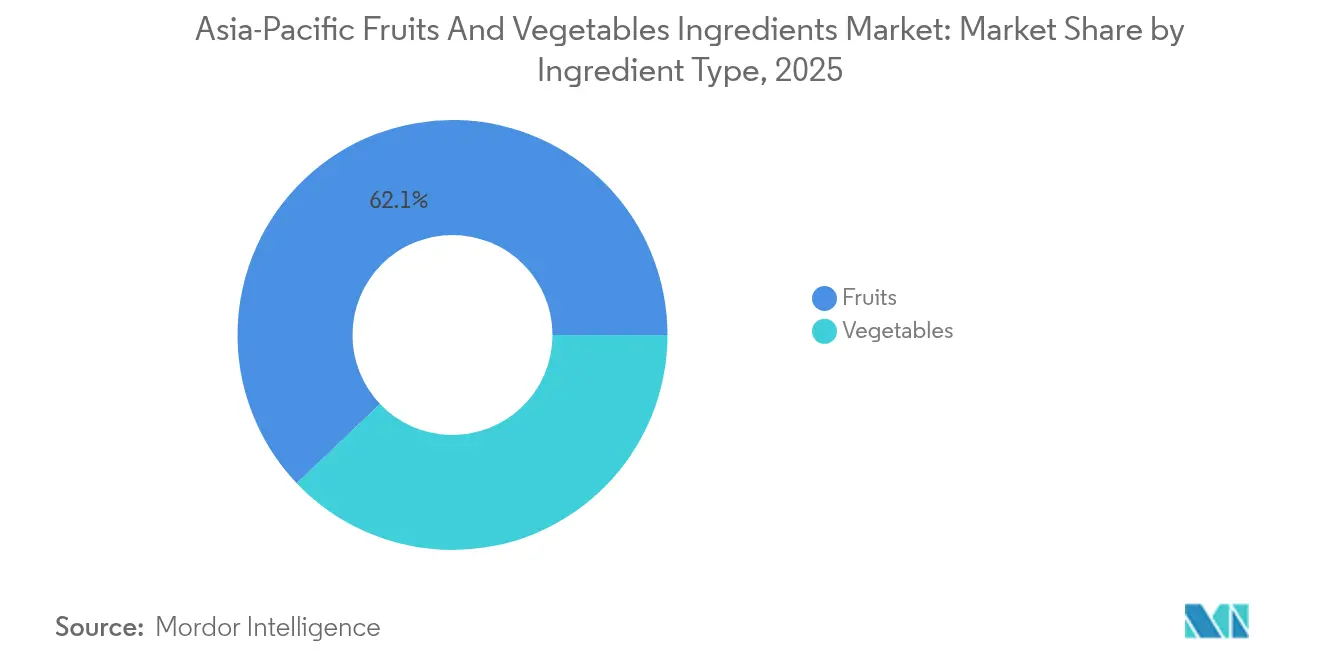
- By ingredient type, fruit derivatives led with a 62.10% Asia-Pacific fruits and vegetables ingredients market share in 2025, while vegetable ingredients are advancing at a 9.05% CAGR through 2031.
- By form, concentrates held 40.78% of the Asia-Pacific fruits and vegetables ingredients market size in 2025, whereas NFC juices are projected to climb at a 10.18% CAGR to 2031.
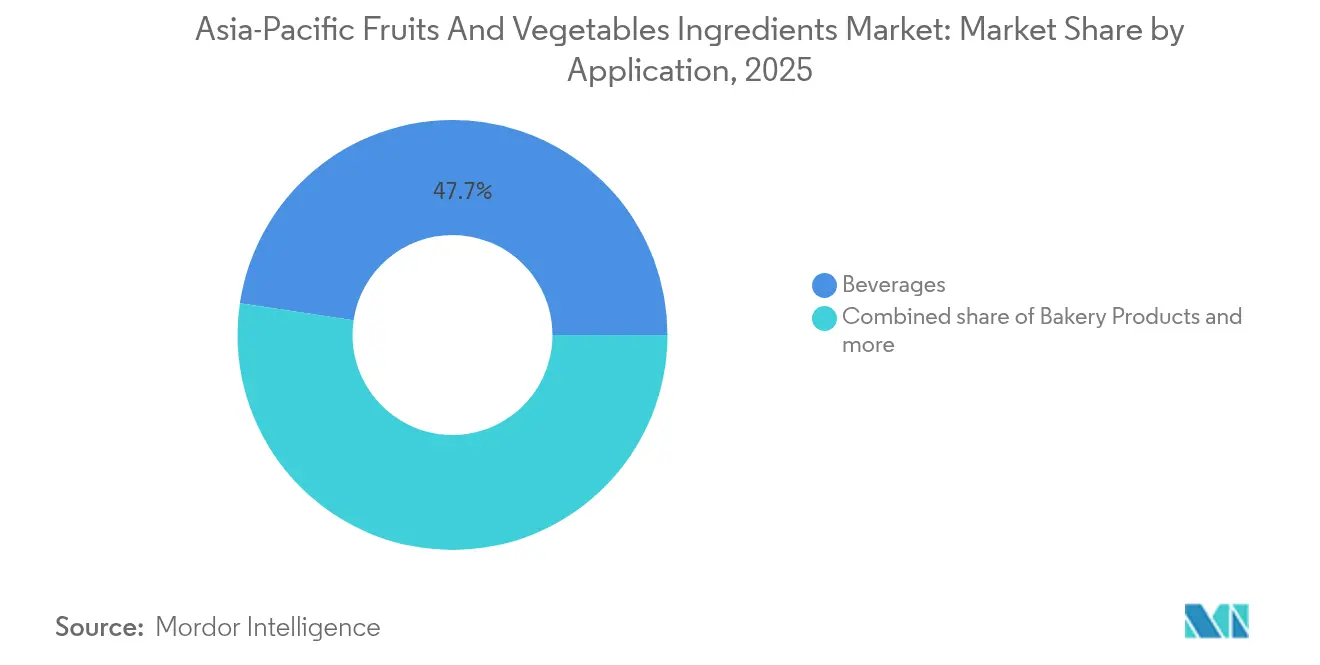
- By application, beverages accounted for 47.65% of demand in 2025, but ready-to-eat formats are expanding at a 10.43% CAGR over the forecast window.
- China controlled 53.10% of the regional value in 2025; however, India is set to grow at a 9.62% CAGR, driven by cold-chain subsidies and production incentives.
Note: Market size and forecast figures in this report are generated using Mordor Intelligence’s proprietary estimation framework, updated with the latest available data and insights as of 2026.
Asia-Pacific Fruits And Vegetables Ingredients Market Trends and Insights
Drivers Impact Analysis*
| Driver | (~) % Impact on CAGR Forecast | Geographic Relevance | Impact Timeline |
|---|---|---|---|
| Rising demand for clean-label and natural ingredients in packaged foods | +1.8% | Global, with peak intensity in China, Thailand, Indonesia, Singapore | Medium term (2-4 years) |
| Growing adoption of fruit-based sugar-replacers by beverage formulators | +1.5% | ASEAN core (Thailand, Indonesia, Vietnam), spill-over to India, Australia | Short term (≤ 2 years) |
| Functional-food launches featuring super-fruit phytonutrients | +1.2% | Japan, South Korea, urban China, Singapore | Medium term (2-4 years) |
| Growth of plant-based and vegan foods | +1.4% | China, India, Australia, urban Southeast Asia | Long term (≥ 4 years) |
| Surge of processed food exports from China and ASEAN | +1.1% | China (Shandong, Shaanxi), Thailand, Vietnam, Indonesia | Medium term (2-4 years) |
| Cold-chain subsidies by APAC governments | +0.9% | India (PMKSY program), China (national logistics plan), Vietnam, Indonesia | Long term (≥ 4 years) |
| Source: Mordor Intelligence | |||
Rising Demand for Clean-Label and Natural Ingredients in Packaged Foods
Regulatory pressure and rising consumer awareness are driving packaged-food makers to replace synthetic additives with fruit- and vegetable-based ingredients. Indonesia’s 2024 draft Nutri-Level labeling requires front-of-pack warnings for high sugar, salt, or saturated fat, prompting reformulation with natural sweeteners and colorants, such as dragon fruit and beetroot, according to BPOM[1]. Thailand’s Phase 4 sugar tax (effective April 2025) and Singapore’s 2024 Nutri-Grade labeling similarly encourage manufacturers to shift toward fruit concentrates and monk fruit extracts, while Vietnam introduces a new tax on sweetened beverages[2]. Consumer trends support this shift: Cargill’s 2025 APAC survey reveals that 58% are willing to pay more for recognizable, natural ingredients, and over 70% actively check labels. Global influences, such as the U.S. FDA’s updated “healthy” claim rules, effective as of 2028, are also shaping Asia-Pacific ingredient strategies and increasing the value of clean-label offerings.
Growing Adoption of Fruit-Based Sugar-Replacers by Beverage Formulators
Beverage makers are increasingly replacing refined sucrose with fruit-derived sweeteners to meet sugar tax regulations and tap into the premiumization trend, thereby boosting demand for concentrates, NFC juices, and powdered fruit extracts. Thailand’s April 2025 sugar tax hike targets drinks with more than 10 g/100 ml. The 2018–2023 reformulations saw producers reduce the average sugar content by 18% using blends of cane sugar, monk fruit, stevia, and fruit concentrates, according to the Thai FDA. Innovations like NutraEx Food’s July 2024 BI-Sugar, which combines L-arabinose with sucrose and stevia to reduce glycemic response while maintaining sweetness, exemplify technical advances. Meanwhile, Samyang Corporation’s September 2024 KRW 140 billion specialty plant in Ulsan, South Korea, now produces 13,000 tons per year of allulose, a rare low-calorie sugar gaining traction in APAC beverages. Rising fiscal penalties and consumer demand for “no artificial sweeteners” labels are expected to expand the fruit-based sugar-replacer market by roughly 1.5 percentage points of CAGR through 2030.
Functional-Food Launches Featuring Super-Fruit Phytonutrients
Functional-food brands in the Asia-Pacific region are increasingly utilizing exotic fruit extracts, rich in polyphenols, anthocyanins, and carotenoids, to support immunity, gut health, and cognitive performance, driving demand for freeze-dried powders and concentrated phytonutrients. Thailand’s FDA updated its health-claim guidelines in July 2024, streamlining approval for botanicals like butterfly pea, dragon fruit, and mangosteen. Meanwhile, the WHO’s 2024 safety evaluation of butterfly pea flower extract bolsters cross-border trade and regulatory acceptance in markets such as Japan, South Korea, and Australia[3]. Nurasa opened its 3,840 m² Food Tech Innovation Centre in Singapore in April 2024, featuring precision-fermentation labs and bioreactors. The centre collaborates with A*STAR and ScaleUpBio to develop low-sugar, gut-friendly products that leverage fruit-derived prebiotics and polyphenols. Similarly, Kagome’s January 2025 strategy shift from a “tomato company” to a “vegetable company” highlights the move toward functional products using diverse fruit and vegetable phytonutrients. According to the Asian Food and Beverage Alliance, the APAC fortification market is growing at over 18% CAGR (2022–2027), with super-fruit ingredients serving as both functional actives and clean-label marketing assets.
Growth of Plant-Based and Vegan Foods
The plant-based meat, dairy, and snack sectors are growing rapidly across urban Asia, with fruit and vegetable ingredients being used to enhance texture, flavor, and nutrition. In November 2024, Nourish Ingredients partnered with China’s Cabio Biotech to produce Tastilux, a precision-fermentation fat derived from Mortierella alpina, upcycling fruit and vegetable by-products to achieve a meaty aroma at a sub-1% inclusion rate, targeting China’s plant-based meat market in 2025. Similarly, Kinoko-Tech’s October 2024 agreement with Metaphor Foods will scale up fungi-mycelium protein production in Australia, with plans to expand to Malaysia, Singapore, Indonesia, and New Zealand, utilizing legumes and grains to enhance protein and fiber content while maintaining taste. Other launches, including Thammasat University’s GreenTein mung-bean protein drink and Yeo’s immunity-focused soy milk, demonstrate that plant-based formats are going mainstream. Rising health awareness, environmental concerns, and improved taste profiles are adding approximately 1.4 percentage points to the market's CAGR, with long-term growth expected as distribution and pricing approach parity with animal-based products.
Restraints Impact Analysis*
| Restraint | (~) % Impact on CAGR Forecast | Geographic Relevance | Impact Timeline |
|---|---|---|---|
| Raw-material price volatility due to climate and pests | -0.8% | Philippines, Thailand, India, Vietnam, Indonesia | Short term (≤ 2 years) |
| Competition from synthetic substitutes | -0.6% | Global, with higher intensity in cost-sensitive segments (confectionery, bakery) | Medium term (2-4 years) |
| High CAPEX for aseptic and freeze-drying lines | -0.7% | China, India, Thailand, Indonesia, Malaysia | Medium term (2-4 years) |
| Complex multi-country regulatory approvals | -0.5% | ASEAN, China, India, Japan, South Korea, Australia | Long term (≥ 4 years) |
| Source: Mordor Intelligence | |||
Raw-Material Price Volatility Due to Climate and Pests
Extreme weather and pest outbreaks are disrupting fruit and vegetable harvests across the Asia-Pacific region, resulting in supply shortages, price spikes, and increased processing costs. In 2024, typhoons and heavy rains in the Philippines damaged leafy greens, tomatoes, and root crops, driving up local prices by 30–50%. Meanwhile, droughts in northern Thailand reduced mango and longan yields, forcing processors to source from India and Pakistan at higher costs, according to the FAO. China’s apple regions in Shaanxi and Shandong also faced lower-than-expected harvests due to temperature extremes and irregular rainfall. Pest pressures, including fruit flies and aphids, further reduce yields and increase post-harvest sorting costs by 12–18%. The FAO Food Price Index showed month-to-month swings of over 10% for tropical fruits and 8% for processed vegetables, complicating long-term contracts. This volatility is expected to reduce short-term market CAGR by 0.8 percentage points, with relief anticipated as climate-resilient crops and better irrigation systems are introduced.
Competition from Synthetic Substitutes
Synthetic flavors, colors, and sweeteners remain popular in price-sensitive markets, such as confectionery, bakery, and mass-market beverages, due to their lower costs and stable supply. For instance, synthetic vanillin costs about 10% of natural vanilla, while synthetic beta-carotene offers a more stable color under heat, extending shelf life. Despite rising demand for clean labels, manufacturers in India, Indonesia, and the Philippines continue to use synthetics to keep retail prices below USD 1, which is crucial for high-volume traditional trade. APAC regulations generally permit GRAS-status synthetics, and inconsistent enforcement results in reduced penalties. With natural ingredient prices expected to remain volatile in 2024–2025, synthetic substitutes are likely to remain attractive, limiting market CAGR by around 0.6 percentage points. However, tighter labeling and sugar tax rules in Thailand, Indonesia, and Singapore are gradually encouraging the use of natural alternatives.
*Our forecasts treat driver/restraint impacts as directional, not additive. The impact forecasts reflect baseline growth, mix effects, and variable interactions.
Segment Analysis
By Ingredient Type: Vegetables Outpace Fruits Despite Smaller Base
Vegetable ingredients are projected to grow at the fastest rate, with a 9.05% CAGR from 2026 to 2031, despite fruits holding a 62.10% share in 2025. The rise of plant-based and functional foods is driving demand for vegetable-derived proteins, fibers, and phytonutrients in meat alternatives, dairy substitutes, and fortified snacks. Kagome’s January 2025 pivot from a “tomato company” to a “vegetable company” highlights opportunities to expand beyond pastes and purees into freeze-dried powders, concentrated extracts, and fermented derivatives. Carrots, beets, and tomatoes dominate volumes, with beetroot powder replacing synthetic Red 40 and carmine in plant-based burgers and dairy-free yogurts. Meanwhile, pumpkins and butternuts add natural texture and mild sweetness to bakery and confectionery applications.
Fruits remain the largest ingredient segment due to their entrenched use in beverages, confectionery, and bakery products, with apples, oranges, pineapples, mangoes, and bananas providing both flavor and functional benefits, such as pectin and natural acidity. Berries, including strawberries, blueberries, and raspberries, are the fastest-growing fruit segment, driven by the health benefits of anthocyanins and their positioning as superfoods in functional beverages and dairy products. Exotic fruits like kiwi cater to premium niches in Japan, South Korea, and urban China. Regional launches, such as I.P. Natural Products’ May 2024 Ivy-brand tamarind and plum juices in Thailand packaged in SIG XSlimBloc cartons, showcase on-the-go commercialization of local flavors. Vegetable ingredients also benefit from simpler regulatory approval under FSSAI and ASEAN frameworks, while novel fruit extracts often require toxicology dossiers, influencing innovation and market strategy.

By Form: NFC Juices Surge on Premiumization
NFC (not-from-concentrate) juices are expected to grow at the fastest rate among form segments, with a 10.18% CAGR from 2026 to 2031, despite concentrates holding a 40.78% share in 2025. Premiumization is driving this trend, with consumers in Japan, South Korea, Australia, and urban China willing to pay 30–50% more for minimally processed juices that preserve delicate aromatics and heat-sensitive vitamins. NFC production relies on cold-chain logistics, and subsidies for refrigerated transport in India, China, and Vietnam are reducing costs that previously limited adoption to luxury brands. Concentrates remain key for cost-sensitive beverages, confectionery fillings, and bakery glazes, while pastes and purees, led by tomato and mango, serve the dairy, ready-to-eat meals, and sauce markets.
Powders are gaining traction in functional foods and dietary supplements, delivering concentrated phytonutrients and fiber in compact sachets, capsules, and ready-to-mix beverages. Ingredion’s September 2024 APAC launch of FIBERTEX CF 500 and CF 100 citrus fiber, derived from upcycled peel, highlights advances in powder functionality, providing texturizing, gelling, and viscosifying properties that can replace starches, hydrocolloids, and eggs across multiple applications. Consumer research shows 87% of APAC buyers accept citrus fiber on labels, while 79% globally prefer recognizable ingredients, supporting clean-label positioning. Pieces and slices target premium bakery, confectionery, and ready-to-eat meals for visual and textural appeal. Processing innovations such as aseptic packaging and freeze-drying are shaping form segmentation, enabling broader NFC distribution and new powder applications in e-commerce and export markets.
By Application: RTE Products Lead Growth
Ready-to-eat (RTE) products are projected to grow at the fastest rate among applications, with a 10.43% CAGR from 2026 to 2031, despite beverages accounting for 47.65% of 2025 sales. Urban Asia’s rising dual-income households, e-commerce growth, and demand for convenient, nutritious options are driving RTE meals, snack bars, and meal kits. Fruit and vegetable ingredients provide flavor, texture, and nutrition, with freeze-dried vegetables, fruit purees, and concentrated extracts enabling the creation of shelf-stable, clean-label products. Examples include Wantian’s October 2024 partnership with Hin Sang to open 100 health soup chain stores and co-develop premium herbal-green ingredient gift sets, and Cremer Sustainable Foods and Lim Kee’s April 2024 launches of plant-based RTE items like chilli crab pau, black pepper chicken, and laksa in Singapore.
Beverages remain the largest segment, with fruit concentrates, NFC juices, and vegetable extracts used in soft drinks, functional beverages, dairy products, and plant-based milks. Soups and sauces rely on tomato paste, carrot puree, and beetroot concentrate for color, viscosity, and umami. Meanwhile, dairy products incorporate fruit purees and vegetable fibers to enhance texture and support clean-label claims, such as in yogurt, ice cream, and cheese analogs. Confectionery and bakery use fruit pieces, pastes, and powders for fillings and toppings, with berries and tropical fruits driving premium innovation. Distribution channels increasingly shape application trends: e-commerce and modern trade favor convenient, transparent RTE formats, whereas traditional trade emphasizes beverages and confectionery with longer shelf life and lower price points.
Geography Analysis
China dominated the Asia-Pacific fruit and vegetable ingredient market in 2025, accounting for 53.10% of regional revenue, supported by vertically integrated processing clusters in Shandong and Shaanxi that supplied apple concentrate, tomato paste, and vegetable powders for both domestic and export markets. Scale advantages, such as Haisheng Juice’s large apple concentrate facility, and government-backed export zones under the RCEP, underpin this dominance. Strategic investments highlight the importance of local production. Samyang Foods’ December 2024 KRW 64.7 billion (USD 45.18 million) China plant will serve Southeast Asia and Malaysia to address projected domestic shortfalls. Meanwhile, Thai Wah’s April 2025 joint venture with Fuji Nihon in Thailand leverages ASEAN trade benefits and Japanese starch expertise. China’s updated 2024 cold-chain logistics plan further strengthens temperature-controlled warehousing and last-mile delivery, enabling processors to source from remote regions like Xinjiang, Gansu, and Yunnan.
India is expected to grow at the fastest rate, with a 9.62% CAGR from 2026 to 2031, driven by the Ministry of Food Processing Industries’ Production Linked Incentive scheme and cold-chain subsidies under the Pradhan Mantri Kisan Sampada Yojana. Key expansions include Jain Irrigation Systems’ mango puree and concentrate capacity, OB Holdings’ RM 30.5 million (USD 7 million) Serendah factory in Malaysia for fortified foods (production starting H1 2026), and Yenher Holdings’ September 2024 joint venture with Denmark’s Fermentationexperts to produce 25,000 t/year of plant proteins via fermentation for Vietnam, Indonesia, the Philippines, and Taiwan starting Q4 2025.
High-value markets like Japan, South Korea, and Australia emphasize clean-label, traceability, and functional benefits, supporting premium pricing. Kagome’s January 2024 acquisition of a 70% stake in California’s Ingomar Packing strengthens tomato processing for Japan, while Samyang’s September 2024 allulose plant in Ulsan (13,000 t/year) targets Japan, Southeast Asia, and Australia/New Zealand amid growing demand for low-calorie sweeteners. Kinoko-Tech’s October 2024 partnership with Metaphor Foods to produce fungi-based products in Australia, expanding into Malaysia, Singapore, Indonesia, and New Zealand from 2025, illustrates the region’s role as an innovation hub. Rapid urbanization, rising disposable incomes, and modern trade growth across Thailand, Indonesia, Singapore, and the broader APAC region continue to drive demand for fruit and vegetable ingredients in beverages, RTE meals, and functional foods, supported by Corbion’s July 2024 expanded distribution in Thailand and Kalsec’s June 2024 Singapore finishing and distribution center.
Regulatory Landscape
Regulatory oversight for fruit and vegetable ingredients in Asia-Pacific is tightening around additive permissions, labeling, and sugar-reduction levers that affect concentrates, purees, powders, and functional extracts. In ASEAN, the processed-food additives framework continues to converge through the ASEAN Prepared Foodstuff Product Working Group (PFPWG), which in November 2024 adopted updated maximum use levels for certain additive uses (including applications relevant to candied fruit and fruit fillings), pushing multi-country formulation alignment for regional brands.
China is also maintaining a stringent pre-market gate for new ingredients and additive varieties under the "Three-New Foods" pathway via the National Health Commission (NHC), with GB 2760-2024 released in February 2024 updating the National Food Safety Standard for food additive use. Australia and New Zealand regulate novel foods through the bi-national Food Standards Code administered by FSANZ, while Singapore requires pre-market safety assessment for novel foods and novel food ingredients under the Singapore Food Agency framework (updated guidance issued March 2025). For suppliers introducing new fruit- and vegetable-derived actives, this makes dossier readiness and cross-border substantiation a practical constraint across the region.
Value Chain Analysis
The value chain starts with contracted farming and aggregation of seasonal fruit and vegetable feedstocks (mango, pineapple, apple, tomato, beetroot, carrot), then moves through primary processing such as washing, grading, and pulping. Concentration, drying (spray or freeze), aseptic packing, and blending into customer-ready systems follow, supporting beverage, dairy, bakery, and RTE applications. Thailand and Indonesia anchor tropical concentrates, India is a key supplier of mango derivatives, and higher-end functional processing (fermentation, enzymatic processing, membrane filtration) concentrates in Japan, South Korea, and Singapore, where technical capabilities and application labs support premium formulations.
Key value-chain friction points include feedstock volatility driven by weather and pests, energy-intensive processing steps (aseptic and drying), and cold-chain constraints for NFC juices and quality-sensitive purees. Limited refrigerated container availability at hubs such as Laem Chabang (Thailand) and Tanjung Priok (Indonesia), along with documentation lead times for certifications that can extend shipments by roughly 2 to 4 weeks, can affect exporter service levels. As buyers push for traceability and compliance across multiple jurisdictions, processors are increasingly leaning on batch-level tracking and third-party certifications to support access to modern trade and cross-border channels within trade frameworks such as RCEP.
Competitive Landscape
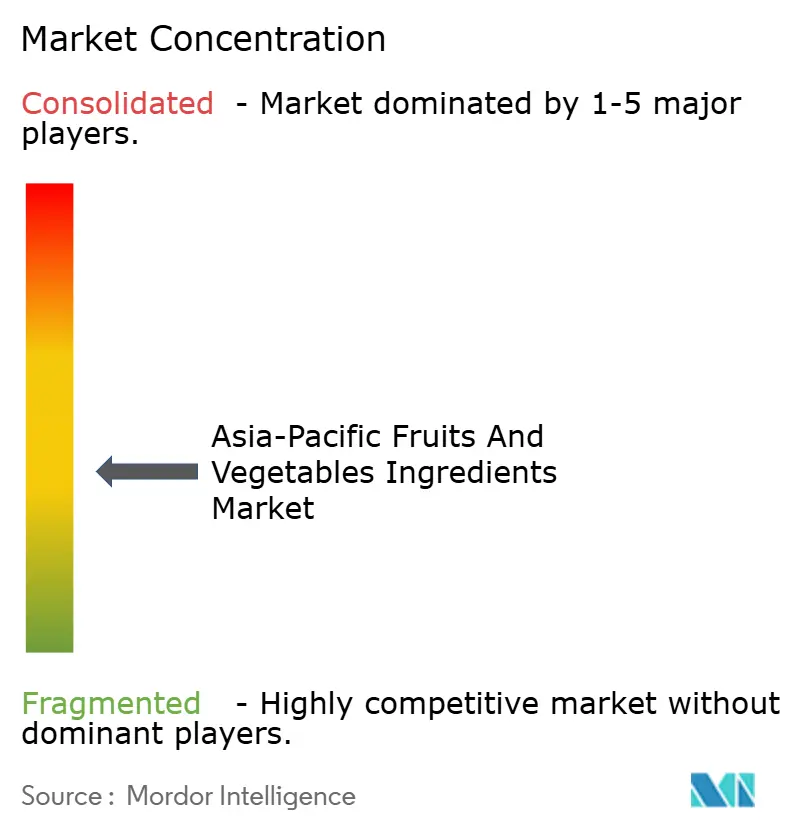
The Asia-Pacific fruit and vegetable ingredients market is moderately fragmented, with supplier networks offering opportunities for regional specialists to capture niche segments through proximity to raw material sources and customized formulations. Major players, Archer Daniels Midland, Cargill, Döhler, AGRANA, and Kerry Group, drive pricing and innovation but with differing strategies: ADM focuses on backward integration into oilseeds and grains, Cargill cross-sells fruit-based sugar replacers via its global sweetener portfolio, Döhler provides turnkey flavor and color systems for beverage and dairy clients, AGRANA specializes in fruit preparations for yogurt and ice cream, and Kerry leverages its taste-and-nutrition platform for plant-based and functional foods. Smaller vertically integrated processors like Haisheng Juice in China, Jain Irrigation in India, and Kagome in Japan reduce supply-chain risk and respond quickly to customer needs.
Givaudan’s October 2024 groundbreaking of a CHF 50 million Indonesia facility, operational by H1 2026, with solar power, recycled water, and rainwater harvesting, highlights the capital intensity required to compete at scale and meet ESG requirements[4]. White-space opportunities lie in upcycled ingredients, precision fermentation, and culturally resonant, locally sourced flavors. Ingredion’s September 2024 launch of citrus fiber from upcycled peel illustrates cost-effective, clean-label alternatives to synthetic hydrocolloids, while Nourish Ingredients’ November 2024 partnership with Cabio Biotech to produce Tastilux, a precision-fermentation fat from Mortierella alpina, shows how biotechnology can deliver meaty aroma at sub-1% inclusion rates.
Disruptors such as Kinoko-Tech’s fungi-mycelium platform produce protein-rich, zero-waste ingredients with lower carbon footprints, and dsm-firmenich’s September 2024 FutureBites Food Design Studio in Singapore accelerates plant-based innovation in collaboration with NUS and A*STAR. Technology adoption varies across the region: multinationals deploy automation, AI-driven quality control, and blockchain traceability, while mid-tier processors in India, Thailand, and Vietnam rely on semi-automated lines and manual sorting. This performance gap is expected to widen unless government Production-Linked Incentive schemes and joint ventures accelerate technology transfer, shaping the competitive landscape for APAC fruit and vegetable ingredient suppliers.
Asia-Pacific Fruits And Vegetables Ingredients Industry Leaders
-
Archer Daniels Midland Company
-
AGRANA Beteiligungs-AG
-
Döhler GmbH
-
Kerry Group plc
-
Cargill, Incorporated
- *Disclaimer: Major Players sorted in no particular order
Market Opportunities and Future Outlook
Opportunities are centered on clean-label reformulation and premiumization in beverages and convenient foods, where fruit and vegetable ingredients replace synthetic colors and flavors and contribute to added-sugar reduction while aligning with front-of-pack nutrition systems and sugar-tax responses. Thailand's Phase 4 sugar-tax escalation (April 2025) and Singapore's Nutri-Grade labeling are already pushing beverage reformulation toward fruit concentrates and extracts, while Indonesia's draft Nutri-Level labeling has increased interest in recognizable fruit and vegetable derivatives for sweetness and color, including beetroot and dragon fruit. This policy-driven shift widens whitespace for suppliers that can provide application support, stable supply, and compliant claims substantiation across multiple markets.
A second opportunity area involves regionalizing processing and formulation capacity in Southeast Asia to reduce lead times and support customized powders and savory-sweet blends for RTE and snack applications. Givaudan's inauguration of its CHF 50 million production facility in Cikarang, Indonesia (July 2026) indicates continued investment into local powder production and customer proximity. At the same time, adjacent functional and nutraceutical demand is pulling on concentrated phytonutrients and fruit-and-vegetable-based actives, supported by infrastructure and innovation platforms such as Singapore's Nurasa Food Tech Innovation Centre (opened April 2024) and corporate portfolio shifts such as Kagome's move toward broader vegetable-based functional offerings (January 2025).
Recent Industry Developments
- July 2026: Givaudan inaugurated its new CHF 50 million production facility in Cikarang, Indonesia, adding local capacity for savory, sweet, and snack powder solutions. The site improves regional supply responsiveness for powder-form fruit and vegetable-adjacent ingredient systems used in beverages, RTE, and snack applications. It also raises the competitive bar for local and regional blenders on quality systems and scale economics.
- April 2025: Thai Wah Public Company and Fuji Nihon Corporation finalized Thai Wah Fuji Nihon Company Limited, a joint venture focused on tapioca starch products with novel functionalities for food applications. The joint venture supports formulation toolkits that commonly sit alongside fruit and vegetable ingredients in beverages, dairy, and RTE systems where texture and stability are key. It also strengthens regional sourcing resilience by deepening ASEAN-based ingredient production collaboration.
- October 2024: Givaudan Taste and Wellbeing broke ground on a CHF 50 million production facility in Cikarang, Indonesia, with a 24,000-square-meter footprint for savory, sweet, snack powders, and infant nutrition solutions. The project accelerated localization of ingredient-system manufacturing in Southeast Asia and aligned capacity additions with faster turnaround requirements from multinational and local food and beverage customers. Its timeline into operations in H1 2026 supported earlier customer qualification and portfolio planning for regional powder formats.
Research Methodology Framework and Report Scope
Market Definition and Coverage
This market covers ingredient products made from fruits and vegetables that are sold to food and beverage manufacturers across Asia-Pacific, typically in forms such as concentrates, pastes or purees, NFC juices, and pieces or powders.
Scope exclusions: This sizing does not count fresh whole produce sold for direct consumption, nor does it count synthetic flavors and colors that are not derived from fruit or vegetable inputs.
Segmentation Overview
- By Ingredient Type
- Fruits
- Apple
- Orange
- Pineapple
- Mango
- Banana
- Kiwi
- Berries
- Other Fruits
- Vegetables
- Carrots
- Beetroots
- Tomato
- Butternuts
- Pumpkins
- Other Vegetables
- Fruits
- By Form
- Concentrates
- Pastes and Purees
- Pieces and Slices
- Powders
- NFC Juices
- Others
- By Application
- Beverages
- Confectionery Products
- Bakery Products
- Soups and Sauces
- Dairy Products
- RTE Products
- Others
- By Geography
- China
- India
- Japan
- Australia
- South Korea
- Indonesia
- Thailand
- Singapore
- Rest of Asia-Pacific
Data Sources, Market Sizing, and Validation
Desk Research
Desk work starts with building a clean fact base on the Asia-Pacific region and on processed fruit and vegetable supply chains. We reviewed public sources such as FAOSTAT, national agriculture and food processing ministries in major APAC countries, UN Comtrade trade statistics, Codex Alimentarius standards, and selected peer-reviewed food science journals that describe ingredient forms and processing yields.
This is then supplemented using company annual reports, investor presentations, and reputable press coverage to map product form trends and application pull in beverages, bakery, confectionery, dairy, soups, sauces, and ready-to-eat foods. Alongside that, we used approved paid subscriptions for company financials and intelligence, and for shipment-level import and export checks, to pressure-test country mixes and price realization. The sources named here are illustrative only, and other public references were also used to collect data, validate assumptions, and clarify open questions.
Primary Interviews and Surveys
Primary work was used to confirm how ingredient forms are defined and traded across APAC, and to validate typical conversion ratios and pricing differences between concentrates, purees, NFC juices, and powders. We spoke with a mix of ingredient suppliers, distributors, and large food and beverage users across key Asia-Pacific countries, so our assumptions could be tested against real procurement behavior rather than published statistics alone.
Distribution of primary research fieldwork respondents
| Company type | Respondent position |
|---|---|
| Top tier: 35% | CXOs: 13% |
| Mid tier: 51% | Functional/Unit leaders: 39% |
| Smaller Players: 14% | Managers: 48% |
Market-Sizing & Forecasting
For the core model, a top-down build was done by reconstructing the addressable ingredient demand pool by application, then translating processed fruit and vegetable availability into ingredient-form output using typical yields and trade flows. We corroborate this with selective bottom-up approximations, such as sampled supplier revenue splits by form, channel checks in major countries, and ASP times volume checks for higher-usage applications.
Inputs that materially move the numbers include processed fruit and vegetable output trends, import and export volumes for concentrates and purees, average price ranges by ingredient form, packaged food and beverage production growth in Asia-Pacific, and the pace of clean-label reformulation in major categories. When a country-level series is thin, gaps are handled using proxy indicators such as neighboring market trade patterns, followed by validation of conversion factors through expert discussions.
Forecasting uses scenario analysis supported by exponential smoothing on core demand drivers, then adjustments are applied based on expert views on harvest volatility, capacity additions, and expected pricing normalization. The final outlook is kept consistent with annual planning cycles used by ingredient suppliers and their customers.
Data Validation & Update Cycle
Outputs are checked against independent signals like trade values, processed output statistics, and packaged food category growth, and any large variance is investigated before sign-off. If a country shows an abnormal jump, assumptions on yields, price points, and application penetration are rechecked, and follow-up calls are triggered when the gap cannot be explained by public data.
A multi-step internal review is run so unit logic, currency conversions, and aggregation rules stay consistent across countries and product forms. Reports are refreshed annually, and interim updates are made when material events occur such as policy changes, large capacity moves, or sustained price shocks. Before delivery, we do a final pass so clients receive the most current view available at that time.
Mordor Intelligence's Asia Pacific Fruit and Vegetable Ingredient Market Size Compared With Other Published Estimates
It is normal to see different market values published for fruit and vegetable ingredients because each publisher sets its own scope and pricing logic, and update timing can vary. The spread usually comes from what is counted as an ingredient (form definitions), which end-use industries are included, and whether the number is built from demand signals or from a broad supply value.
Some published figures expand the basket to include adjacent natural additives like extracts and natural colors, and they may also mix in nutraceutical usage that is harder to track through food manufacturing demand. For Mordor Intelligence, the count is limited to defined fruit and vegetable ingredient forms sold into food and beverage applications in Asia-Pacific, and the totals are kept aligned using trade and yield checks with an annual refresh cadence.
Benchmark comparison
| Source | Market Size | Gaps in Research Methodology |
|---|---|---|
| Mordor Intelligence | USD 64.54 B (2025) | |
| Regional Consultancy A | USD 41.50 B (2024) | Uses an earlier base year and appears to apply a narrower captured demand pool, which can undercount cross-border trade and higher-value forms like NFC juices and specialized powders when country splits are not fully reconciled. |
| Industry Publisher B | USD 72.40 B (2026) | Starts from a forward year and includes a wider ingredient basket (such as extracts and natural colors) plus broader end-use coverage, which can lift the total beyond core food and beverage ingredient forms. |
The table shows that timing and scope are the two biggest reasons estimates do not line up. When the product forms, applications, and year are kept consistent, the remaining differences typically come from how prices are normalized across countries and how trade and yield factors are validated, which is why we keep those checks explicit and repeatable.
Key Questions Answered in the Report
How large is the Asia-Pacific fruits and vegetables ingredients market in 2026?
It stands at USD 69.78 million and is on track for USD 103.09 million by 2031 at an 8.12% CAGR.
Which ingredient type is growing fastest?
Vegetable ingredients are rising at 9.05% as plant-based meat and dairy makers demand natural colors and fibers.
Why are NFC juices gaining popularity?
Cold-pressed positioning, government cold-chain subsidies, and willingness to pay for freshness are propelling NFC juices at a 10.18% CAGR.
Which country offers the strongest growth outlook?
India leads with a 9.62% CAGR, supported by Production Linked Incentives and expanded cold-chain infrastructure.
What is a key restraint for new entrants?
High upfront costs for aseptic and freeze-drying lines, often exceeding USD 10 million, limit entry for mid-sized processors.