
Market Overview
| Study Period | 2021 - 2031 |
|---|---|
| Forecast Data Period | 2026 - 2031 |
| Base Year Market Size (2025) | USD 20.85 Billion |
| Market Size (2026) | USD 22.57 Billion |
| Market Size (2031) | USD 33.58 Billion |
| Growth Rate (2026 - 2031) | 8.25 % |
| Market Concentration | Medium |
Major Players *Disclaimer: Major Players sorted in no particular order Image © Mordor Intelligence. Reuse requires attribution under CC BY 4.0. | |
Asia-Pacific Fermented Ingredients Market Analysis by Mordor Intelligence
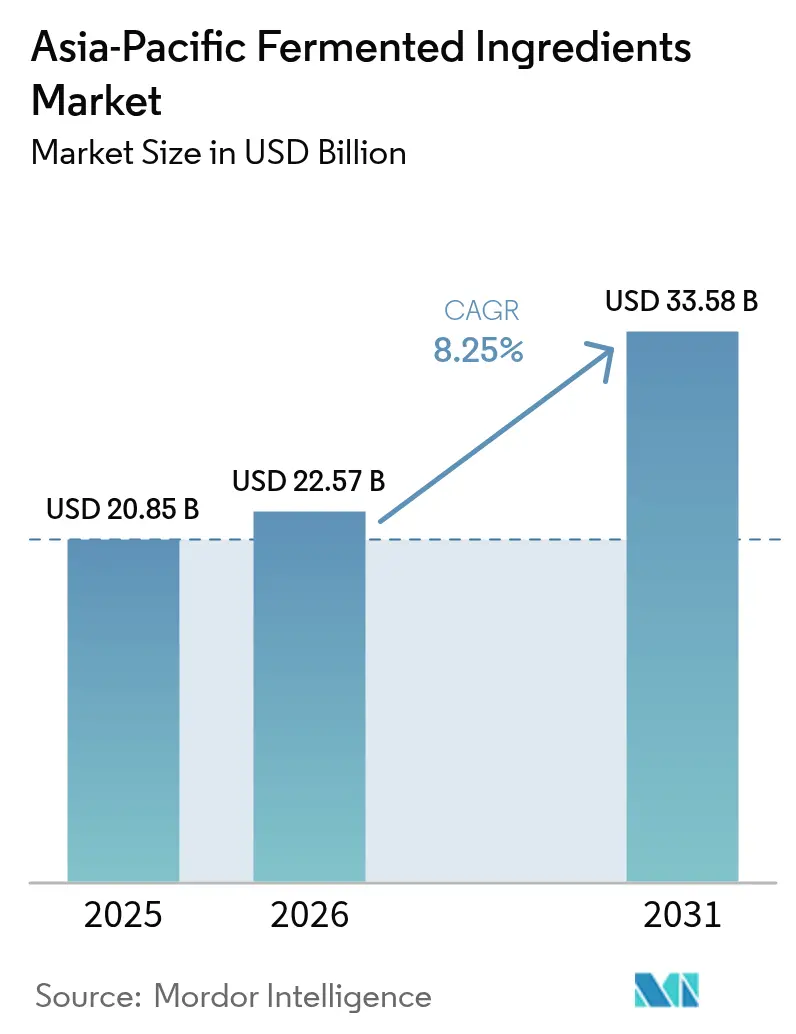
The Asia-Pacific fermented ingredients market size is expected to grow from USD 20.85 billion in 2025 to USD 22.57 billion in 2026 and is forecast to reach USD 33.58 billion by 2031 at 8.25% CAGR over 2026-2031. Cost-efficient amino acid production in coastal China, rising probiotic awareness among urban consumers in India and China, and expanding enzyme adoption by beverage makers collectively sustain this momentum. Manufacturers are retrofitting their plants with continuous bioreactors to reduce energy consumption, while governments in China, India, and the ASEAN bloc are actively subsidizing fermentation parks to attract investment. Regional feedstock advantages, such as corn steep liquor in China, sugarcane molasses in India, and cassava bagasse in Thailand, shield producers from commodity-price volatility and support their long-term pricing power. At the same time, premium niches such as post-biotics and fermented plant proteins enable innovators to capture double-digit margins, thereby balancing the sector’s reliance on volume-driven amino acids.
Key Report Takeaways
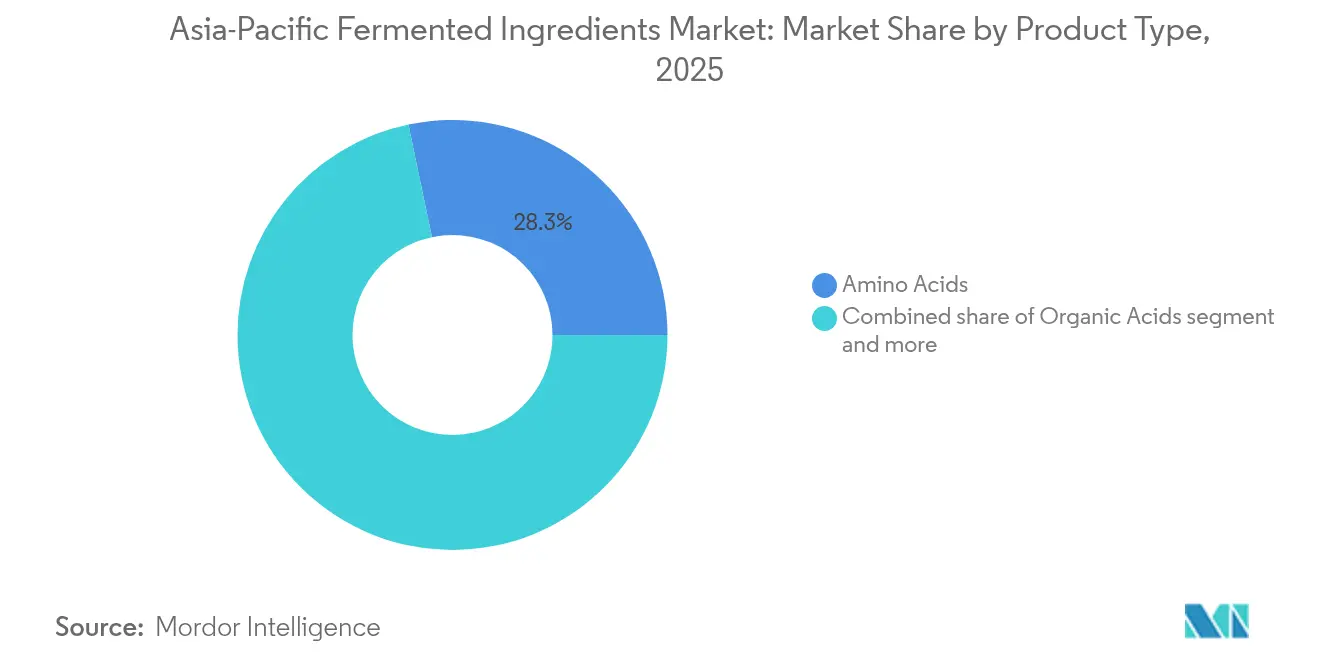
- By product type, amino acids led with a 28.29% share of the Asia-Pacific fermented ingredients market in 2025, whereas probiotics and post-biotics are expanding at a 9.05% CAGR through 2031.
- By form, dry ingredients captured 58.21% of the Asia-Pacific fermented ingredients market share in 2025; liquid formats are expected to record the fastest CAGR of 8.62% to 2031.
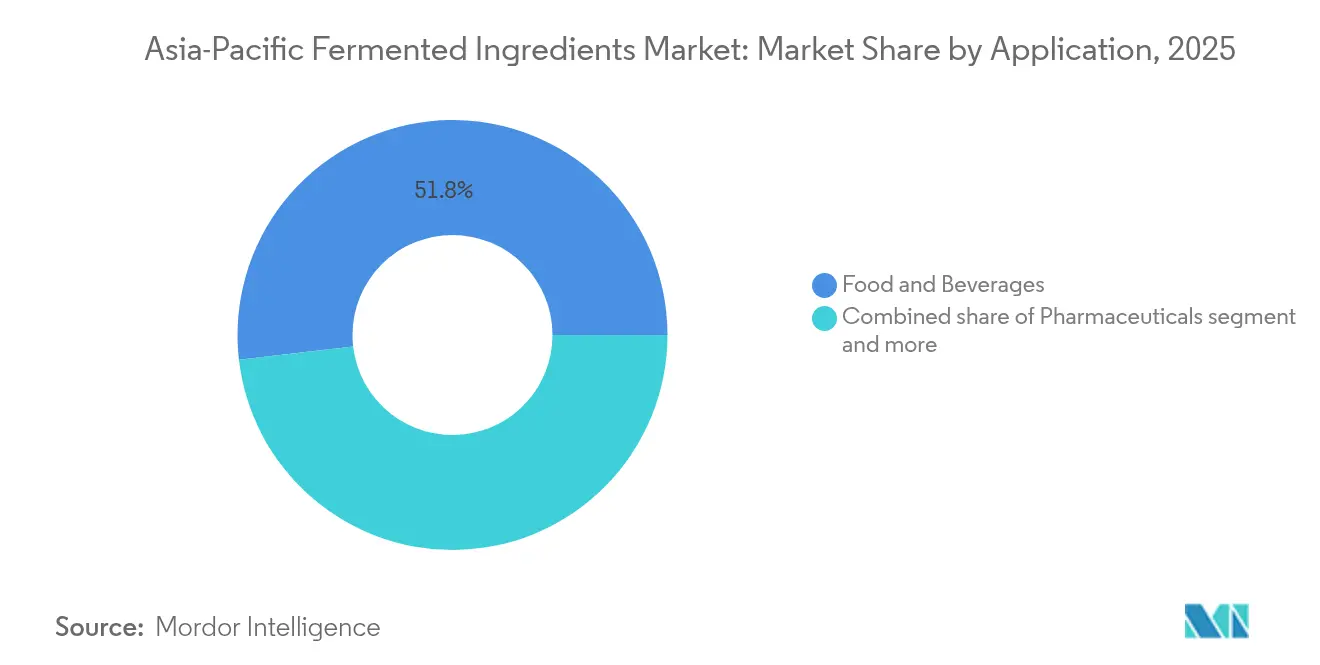
- By application, food and beverages accounted for 51.84% of the Asia-Pacific fermented ingredients market size in 2025, while pharmaceuticals grew at a 10.05% CAGR over the forecast horizon.
- By geography, China held 48.12% of the Asia-Pacific fermented ingredients market in 2025; India is the fastest-growing country at a 9.42% CAGR through 2031.
Note: Market size and forecast figures in this report are generated using Mordor Intelligence’s proprietary estimation framework, updated with the latest available data and insights as of 2026.
Asia-Pacific Fermented Ingredients Market Trends and Insights
Drivers Impact Analysis*
| Driver | (~) % Impact on CAGR Forecast | Geographic Relevance | Impact Timeline |
|---|---|---|---|
| Advances in fermentation technology and ingredient innovation | +1.8% | Japan, South Korea, China biotech hubs | Medium term (2-4 years) |
| China and India gut-health boom fuels probiotics demand | +1.5% | Tier-1 and tier-2 Chinese cities, urban India | Short term (≤ 2 years) |
| Regenerative-ag feedstocks unlock low-cost carbon inputs | +0.9% | China rice provinces, Indian sugarcane belt, Thai cassava areas | Long term (≥ 4 years) |
| Growing demand for clean-label, natural, less-processed ingredients | +1.3% | Japan, Australia, South Korea, China | Medium term (2-4 years) |
| ASEAN halal-certified facilities drive export-grade amino acids | +0.7% | Malaysia, Indonesia | Medium term (2-4 years) |
| Popularity of fermented drinks and functional beverages | +1.1% | China, Japan, South Korea, India, Australia | Short term (≤ 2 years) |
| Source: Mordor Intelligence | |||
Advances in Fermentation Technology and Ingredient Innovation
Continuous bioreactors, AI-driven strain selection, and inline sensors are compressing cycle times and pushing yields higher across the fermentation industry. Ajinomoto reports a 12% reduction in L-glutamate fermentation time, boosting asset utilization and lowering unit costs, while Japan’s Ministry of Economy, Trade, and Industry has allocated JPY 15 billion in 2024 to accelerate next-generation bioreactor development[1]. Chinese leaders Fufeng and Meihua are upgrading legacy lines with real-time pH and dissolved-oxygen control systems, cutting energy consumption per ton by up to 18%. These technology advances not only shrink greenhouse-gas footprints but also free capacity for higher-value specialty ingredients. Downstream, emerging metabolic pathways now enable commercial production of rare vitamins, aroma molecules, and functional actives, expanding revenue opportunities in pharmaceutical and cosmetic applications.
China and India Gut-Health Boom Fuels Probiotics Demand
Post-pandemic wellness habits continue to drive demand for probiotic supplements, with India’s imports and domestic output projected to reach USD 1.8 billion in 2024, amid booming e-commerce and rising disposable incomes, according to the Press Information Bureau. China’s probiotic ingredient sales jumped 22% in 2024, with tier-1 cities contributing 60% of volumes[2]. Regulators are tightening quality controls: China’s National Health Commission introduced strain-specific CFU thresholds in early 2024, while India’s FSSAI followed with draft norms requiring third-party verification. These higher standards concentrate market power among suppliers with clinically validated strains and reliable cold-chain capabilities, lifting average selling prices and intensifying consolidation. Urban, health-conscious consumers remain the core growth engine, driving the segment’s robust 9.33% CAGR and reinforcing the shift of probiotics from a niche supplement to a mainstream preventive health product.
Regenerative-Ag Feedstocks Unlock Low-Cost Carbon Inputs
Rice husk hydrolysate can substitute up to 40% of glucose in amino acid fermentation, reducing raw material costs by approximately 15% without compromising yield, according to a 2024 Journal of Cleaner Production study. Thailand now channels more than 2 million tons of cassava bagasse into fermenters under circular-economy incentives, while sugar mills in Maharashtra secure multi-year molasses contracts that stabilize input costs amid commodity volatility[3]. These agricultural residues also shrink Scope 3 emissions. DuPont reported a 25% regional reduction after transitioning to by-product feedstocks. Broadening the feedstock base, therefore, enhances both cost resilience and sustainability credentials across Asia-Pacific’s fermentation industry.
Growing Demand for Clean-Label, Natural, and Less-Processed Ingredients
As of 2024, 68% of Asia-Pacific consumers were willing to pay a premium for naturally fermented products, up from 54% in 2022, according to a Cargill survey. Japan’s revised Food Labeling Act mandated disclosure of production methods, prompting manufacturers to switch to fermentation-derived acids and flavors. Corbion experienced a 30% increase in lactic acid orders from regional beverage brands in 2024, underscoring the impact of label transparency on purchasing decisions. In Australia, retailers pledged to phase out synthetic preservatives by 2026, further expanding the addressable market. This clean-label momentum underpinned steady premiumization across food, beverage, and personal-care categories in the region.
Restraints Impact Analysis*
| Restraint | (~) % Impact on CAGR Forecast | Geographic Relevance | Impact Timeline |
|---|---|---|---|
| High production costs due to specialized fermentation processes | -0.8% | Japan, Australia, smaller ASEAN markets | Short term (≤ 2 years) |
| Stringent regulatory requirements for food safety and labeling | -0.5% | China, India, Japan, South Korea | Medium term (2-4 years) |
| Short shelf life of certain fermented products requires cold chain logistics | -0.6% | India, Southeast Asia | Short term (≤ 2 years) |
| Risk of microbial contamination and quality-control challenges | -0.4% | APAC-wide | Medium term (2-4 years) |
| Source: Mordor Intelligence | |||
Stringent Regulatory Requirements for Food Safety and Labeling
China’s National Medical Products Administration required multi-year toxicology data for novel fermentation-derived compounds, potentially delaying product launches by up to two years. India’s FSSAI mandated third-party probiotic CFU testing, adding USD 5,000-10,000 to annual SKU costs. Japan has enforced batch-wise certificates of analysis for pharmaceutical-grade amino acids, which has strained smaller exporters, according to the Ministry of Health, Labor and Welfare. This regulatory heterogeneity increased compliance budgets and favored incumbents with dedicated regulatory teams.
Short Shelf Life of Certain Fermented Products Requires Cold Chain Logistics
An International Institute of Refrigeration survey found that up to 40% of probiotic shipments in India exceeded 8 °C during last-mile delivery, reducing product viability and prompting returns[4]. Tropical humidity in Indonesia and the Philippines further increased cold-chain costs, adding roughly 15-20% to landed prices. Manufacturers invested in freeze-drying and microencapsulation to extend shelf stability, but these processes added USD 2-4 per kilogram, pushing prices beyond the reach of value-oriented brands.
*Our forecasts treat driver/restraint impacts as directional, not additive. The impact forecasts reflect baseline growth, mix effects, and variable interactions.
Segment Analysis
By Product Type: Amino Acids Anchor Volume, Probiotics Lead Growth
Amino acids accounted for 28.29% of the Asia-Pacific fermented ingredients market in 2025, driven by strong demand for feed-grade lysine and threonine from China’s livestock sector. Food-grade glutamate production in Shandong and Jiangsu remained essential for regional savory formulations. Probiotics and post-biotics are projected to grow at a 9.05% CAGR through 2031, as heat-stable strains allow bakery and snack manufacturers to make gut-health claims without refrigeration. Organic acids, led by citric and lactic acids, continue to support beverage acidulation and meat preservation, while polylactic acid is gaining traction in sustainable packaging. Fermented vitamins, such as B12, enable pharmaceutical companies to meet purity targets with a reduced environmental impact.
Market demand is shifting from commodity bulk products toward specialty, high-margin offerings. Chr. Hansen’s heat-tolerant Bifidobacterium facilitates probiotic bread launches in Japan, while DSM-Firmenich and BASF operate riboflavin fermenters in coastal China to leverage integrated corn-processing hubs. NatureWorks expanded its Thai PLA facility by 25,000 tons in 2024 to meet the sustainability pledges of its brand owners. Enzymes for detergents and starch processing are growing steadily in the mid-teens, as bio-based alternatives replace petrochemical catalysts, while antibiotics, although a mature segment, maintain stable volumes through semi-synthetic upgrades for hospital formularies.

By Form: Dry Dominates Logistics, Liquid Gains in Ready-to-Use Applications
Dry formats accounted for 58.21% of the Asia-Pacific fermented ingredients market in 2025, driven by longer shelf life and lower freight costs. Powdered amino acids and spray-dried probiotics integrate seamlessly into feed and bakery production lines, particularly in India, where cold-chain gaps remain a challenge. Liquid fermentates, however, are projected to grow at an 8.62% CAGR through 2031, as beverage and pharmaceutical processors value the dosing convenience and sterility of ready-to-use enzyme blends. Angel Yeast’s liquid yeast extract for plant-based meat exemplifies this trend, avoiding flavor losses associated with spray-drying.
Regional infrastructure also shapes form preference. Japan’s dense refrigerated logistics support the rapid distribution of liquid enzymes to breweries, while Vietnam’s aquaculture sector adopts Evonik’s semi-liquid amino-acid paste, combining stability with ease of mixing. Regulatory purity standards further influence choices; China’s updated GB codes are easier to meet with crystalline powders than viscous concentrates. Hybrid pastes and granules are emerging as compromise formats, reflecting converging needs for handling efficiency and storage stability.
By Application: Food and Beverages Lead, Pharmaceuticals Surge
Food and beverages accounted for 51.84% of the Asia-Pacific fermented ingredients market in 2025, covering dairy cultures, bakery improvers, beverage acidulants, and meat preservatives. Pharmaceuticals registered the fastest growth, with a 10.05% CAGR, as biosynthetic vitamins, infusion-grade amino acids, and antibiotic intermediates increasingly replaced traditional chemical routes. India’s USD 2 billion Production-Linked Incentive scheme lowered capital expenditure barriers, spurring the construction of new fermentation-based bulk drug plants, according to the Press Information Bureau, Government of India.
Within the food sector, probiotic yogurt and kefir dominated the Chinese dairy aisles, while enzymes enhanced the softness and shelf life of bread across Japanese chains. Citric acid remained prevalent in carbonated soft drinks, while lactic acid gained share in functional beverages marketed for gut health. Feed-grade amino acids benefited from China’s hog herd recovery, boosting lysine tonnage by approximately 8% in 2024, according to the U.S. Foreign Agricultural Service. Personal-care formulators increasingly adopted fermented hyaluronic acid and amino-acid surfactants, leveraging the growth of K-beauty exports. Industrial applications, from bio-polymers to pulp-bleaching enzymes, grew steadily as circular-economy mandates in Japan and South Korea encouraged the use of renewable inputs.
Geography Analysis
China accounted for 48.12% of the Asia-Pacific fermented ingredients market revenue in 2025, driven by the development of integrated fermentation parks in Shandong, Jiangsu, and Hebei. Large-scale corn processing provides low-cost substrates, while the 14th Five-Year Biotechnology Plan allocated CNY 50 billion to synthetic-biology research and development, according to the National Development and Reform Commission. Oversupply in commodity amino acids has compressed margins, encouraging producers to shift toward specialty post-biotics, fermented plant proteins, and precision-fermented aromas. Environmental regulations are tightening, with 2024 wastewater standards prompting smaller plants to merge or exit, while retrofits with continuous bioreactors help offset rising compliance costs.
India, growing at a 9.42% CAGR, is expanding fermentation capacity for pharmaceutical-grade amino acids and probiotic supplements. The Production-Linked Incentive scheme covers up to 20% of capital expenditure, attracting USD 800 million in committed investments by mid-2024, according to the Press Information Bureau. E-commerce platforms are democratizing access to supplements, although cold-chain gaps in tier-2 cities continue to drive demand for shelf-stable dry powders. Sugarcane molasses contracts in Maharashtra stabilize inputs, while state governments in Rajasthan and Maharashtra support commercialization of fermented beverages such as kanji and sol kadhi.
Japan and South Korea supply advanced bioreactors, inline sensors, and engineered enzymes, exporting both technology and high-purity ingredients. Japan’s fermentation equipment exports rose 18% in 2024, according to JETRO. Domestic demand emphasizes clean-label and functional products, with convenience stores stocking probiotic drinks and cosmetics brands adopting fermented hyaluronic acid.
Australia occupies a premium segment, with dairy and beverage companies paying double-digit premiums for non-GMO, traceable inputs. The rest of Asia-Pacific, including Thailand, Vietnam, Malaysia, and Indonesia, leverages cost advantages and halal certifications to target Middle Eastern buyers, with Thailand’s cassava feedstock boosting organic-acid exports and Malaysia and Indonesia earning halal premiums for amino acids despite longer audit cycles.
Regulatory Landscape
Regulation for fermented ingredients in Asia-Pacific is shaped by pre-market approvals for novel foods and ingredient claims, plus additive and processing-aid listings that differ by country. In Australia and New Zealand, the Food Standards Australia New Zealand (FSANZ) Food Standards Code provides a defined pathway for enzyme and fermentation-derived processing aids, with January 2026 variations listing multiple fermentation-derived enzymes in Schedule 18 (including aminopeptidase from Trichoderma reesei and phospholipase C from Bacillus licheniformis). In Southeast Asia, the ASEAN Secretariat strengthened regional reference points in April 2025 by releasing Annex 1 of the ASEAN Maximum Use Levels of Food Additives, supporting more consistent additive use levels across member markets.
Compliance burdens remain uneven across the region, favoring suppliers that can compile strong dossiers, provide traceability, and maintain robust quality systems. Singapore Food Agency (SFA) requires pre-market safety assessment for novel foods and novel food ingredients under the Sale of Food Act, which reinforces documentation requirements for newer fermented actives (including post-biotics and precision-fermented components). India continues to tighten rules for probiotic and nutraceutical compliance via FSSAI mechanisms (including digital application workflows), while Taiwan maintains mandatory registration and permitting through its food-additive and related-products system, adding administrative steps for importers and regional brand owners.
Value Chain Analysis
The value chain begins with carbohydrate feedstocks (corn and other starch streams in China, molasses in India, and cassava derivatives in parts of Southeast Asia), then moves to upstream enzymes, microbial strains, nutrients, and utilities that determine fermentation yields and cost per kilogram. Integrated substrate clusters around major fermentation parks in coastal China (notably Shandong, Hebei, and Jiangsu) support high-volume amino acids and organic acids, while Japan and South Korea supply advanced bioreactors, inline sensors, and high-purity process know-how that support specialty products.
Midstream manufacturing covers both commodity-scale producers and specialty formulators. Companies such as Angel Yeast (yeast extracts and related proteins), CJ BIO (amino acids and nucleotides), Fufeng Group (amino acids and yeast derivatives), and Jiangsu Yiming Biological Technology (enzymes and food enhancers) supply food and feed customers, while emerging specialists such as bereum commercialize post-biotics. Downstream, technical application and customer enablement increasingly sit with regional centers and direct engagement with processors, alongside distributor networks serving beverage, bakery, dairy, pharma, and personal care accounts where shelf-life constraints and local labeling rules shape the preferred format (dry vs liquid) and packaging requirements.
Competitive Landscape
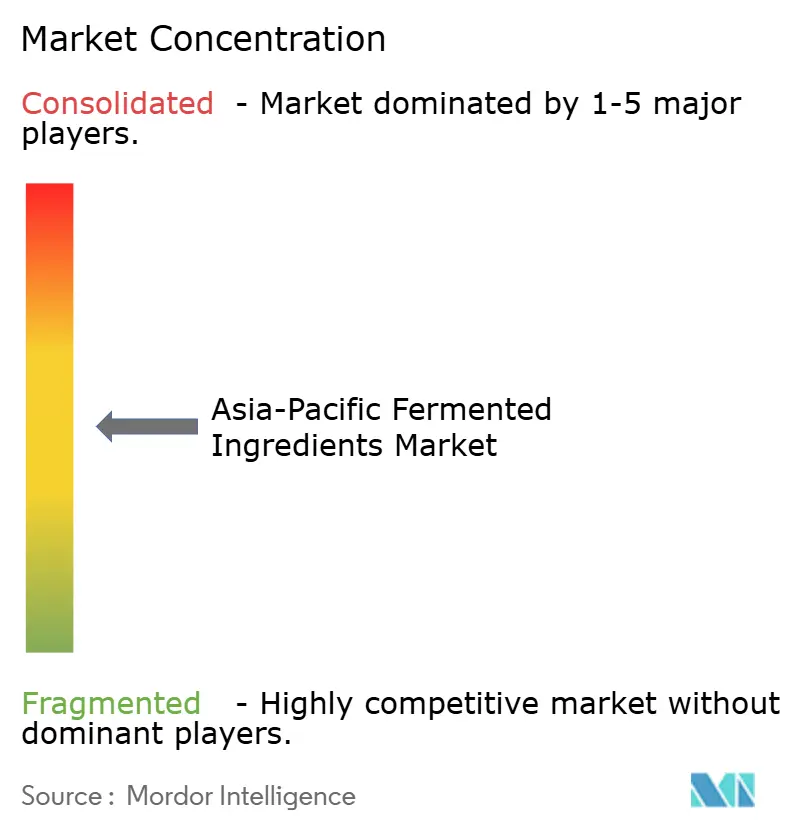
The Asia-Pacific fermented ingredients market remains moderately concentrated. The top five suppliers, Ajinomoto, Angel Yeast, Fufeng, Cargill, and Kyowa Hakko, command meaningful volume but leave space for regional specialists and biotech startups. Ajinomoto’s 2024 purchase of a Thai cassava mill secures feedstock and lowers upstream risk, while Angel Yeast invests in proprietary strains tailored for plant-based meat. Chinese firms compete fiercely on scale in feed-grade lysine, but specialty categories, such as post-biotics, reward expertise in regulation and formulation support.
Patent trends highlight divergent priorities: Chinese entities filed 52% of regional fermentation patents in 2024, primarily focusing on strain optimization, whereas Japanese and South Korean filers emphasized enzyme engineering, according to the World Intellectual Property Organization (WIPO). Continuous fermentation and AI process control are standard in Japan, yet scarce in emerging ASEAN plants. Sustainability differentiates suppliers to multinationals under net-zero mandates; DuPont increased its use of agricultural residue to 35% of its Asia-Pacific feedstock in 2024. Meanwhile, Perfect Day licenses precision-fermented whey technology to Asian partners, signaling cross-border collaboration in alternative proteins.
Regional consolidation may accelerate as smaller facilities struggle with ISO 22000 compliance and wastewater upgrades. CJ CheilJedang’s 60% stake in a Vietnamese enzyme plant exemplifies opportunistic acquisition aimed at supply-chain synergies. Fufeng’s USD 200 million xanthan-gum project in Inner Mongolia bundles wastewater recycling to meet stricter discharge norms. Innovation centers, such as DuPont’s Singapore hub, channel R&D into fermented dairy analogs and flavor enhancers, illustrating how incumbents seek differentiated growth lanes beyond bulk amino acids.
Asia-Pacific Fermented Ingredients Industry Leaders
-
Ajinomoto Co., Inc.
-
Angel Yeast Co., Ltd.
-
Fufeng Group Ltd.
-
Cargill, Inc.
-
Kyowa Hakko Bio Co., Ltd.
- *Disclaimer: Major Players sorted in no particular order
Market Opportunities and Future Outlook
A key opportunity is localizing fermentation capacity and application support in Southeast Asia and India, driven by cold-chain constraints, feedstock availability, and the need for market-specific formulation. Examples include the September 2024 joint venture between European Protein and Malaysia-based Yenher Holdings Berhad to establish two fermentation plants in Malaysia for high-value feed ingredients, and the May 2026 financing round by StrainX Bioworks (USD 13 million) to scale precision fermentation capacity in India from a 10,000-liter base with modular expansion plans. These moves point to demand for tolling, regional co-manufacturing, and ingredient customization across animal nutrition, functional beverages, and shelf-stable gut-health formats.
Portfolio premiumization is another growth lane as suppliers move beyond bulk amino acids into higher-value enzymes, clinically supported probiotics and post-biotics, fermented plant proteins, and precision-fermented functional proteins. In April 2026, Novonesis signed an agreement to acquire a fermentation production facility in Rayong, Thailand (from Meihua, for about USD 50 million), underscoring customer demand for dedicated regional biomanufacturing assets and a route to shorter lead times and more responsive local regulatory handling. At the same time, regulatory actions such as FSANZ additions to the processing-aid schedule in January 2026 and ASEAN’s April 2025 additive-use-levels reference support standardized specifications and cross-border product registrations, favoring suppliers that can provide complete safety dossiers, strain documentation, and batch-level quality data.
Recent Industry Developments
- July 2026: Angel Yeast started operating a new high-purity yeast protein production line with 11,000 tons of annual capacity. The start-up adds regional supply depth for fermentation-derived proteins used in nutrition and functional food formulations and increases competitive pressure on alternative protein ingredients that depend on imported concentrates.
- March 2025: Ajinomoto Co., Inc. announced a USD 150 million expansion of its amino acid fermentation facility in Jiangsu, China, adding 30,000 tons of annual capacity for feed-grade lysine and threonine and incorporating continuous fermentation and renewable energy integration. The project links scale expansion with lower carbon intensity per ton, supporting cost competitiveness in volume-driven amino acids while creating capacity flexibility for higher-value fermentation outputs.
- December 2024: Novozymes A/S partnered with Biocon Limited to co-develop fermentation-derived enzymes for pharmaceutical applications and committed a joint USD 25 million investment in a pilot fermentation facility in Bangalore. The pilot footprint strengthens regional development-to-scale pathways for pharma enzymes and biosynthetic routes, reinforcing India’s role as a manufacturing base for higher-purity fermented ingredients.
Research Methodology Framework and Report Scope
Market Definition and Coverage
This market covers fermented ingredients sold into Asia Pacific end users, where microorganisms are used to produce or convert inputs into functional ingredients used in food, feed, pharmaceuticals, and industrial uses, reported in value terms.
Scope exclusions: Excludes finished fermented foods and beverages sold for direct consumption, along with upstream fermentation feedstocks that are not sold as ingredients.
Segmentation Overview
- By Product Type
- Amino Acids
- Organic Acids
- Polymers
- Vitamins
- Industrial Enzymes
- Antibiotics
- Probiotics & Post-biotics
- Others
- By Form
- Dry
- Liquid
- By Application
- Food and Beverages
- Dairy
- Bakery and Confectionery
- Beverages
- Meat and Fish Products
- Others
- Animal Feed
- Pharmaceutical
- Personal Care and Cosmetics
- Industrial Use (Bio-polymer, Bio-fuel, Paper)
- Food and Beverages
- By Geography
- China
- India
- Japan
- Australia
- South Korea
- Rest of Asia-Pacific
Data Sources, Market Sizing, and Validation
Desk Research
Desk work starts by building a clean fact base on production, trade, and consumption signals that influence fermented ingredient demand in Asia Pacific. We lean on public sources such as FAOSTAT for crop and livestock indicators, UN Comtrade for trade flows linked to fermentation based inputs and outputs, and national statistics agencies for food processing and industrial output series.
To make assumptions practical, we also review sources such as Codex Alimentarius and food safety regulator updates in key countries, plus peer reviewed journals covering fermentation yields and application trends. Company annual reports, investor decks, and credible press are used to understand capacity additions, pricing direction, and application mix shifts. Where needed, paid subscriptions for company financials, patent databases, and shipment-level import and export datasets are used to cross-check directional signals and limit single-source bias. This desk source list is illustrative rather than exhaustive.
Primary Interviews and Surveys
Primary inputs are gathered through expert interviews and structured surveys with ingredient suppliers, distributors, and large end users across food and beverage, animal nutrition, and pharma related demand. For this regional view, discussions are balanced across major production and consumption hubs in APAC, and the interviews are used to confirm pricing logic, utilization direction, and realistic adoption rates for key fermented ingredient groups.
Distribution of primary research fieldwork respondents
| Company type | Respondent position |
|---|---|
| Top tier: 34% | CXOs: 14% |
| Mid tier: 52% | Functional/Unit leaders: 37% |
| Smaller Players: 14% | Managers: 49% |
Market-Sizing & Forecasting
Sizing uses a top-down build where food, feed, and industrial demand pools are reconstructed using regional output indicators and trade signals, and then converted into ingredient value using penetration assumptions and typical price bands. Key inputs include fermentation capacity additions and utilization direction, average selling price movement by ingredient class, shifts in feed and food processing volumes, regulatory approvals that affect use in foods and supplements, and import reliance versus local production by country.
Once the total is formed, we corroborate it with selective bottom-up approximations, such as supplier revenue sampling, channel checks, and a simple volume times ASP sanity check for major ingredient groups. Gaps are handled by applying conservative ranges for smaller applications and then tightening them using interview feedback, before the final totals are locked.
Forecasting is run through scenario analysis supported by a simple multivariate regression view, where demand is tied to variables like packaged food output, livestock production, and industrial manufacturing activity. Assumptions are then adjusted based on what primary respondents expect for pricing, capacity ramps, and substitution trends over the forecast window.
Data Validation & Update Cycle
Outputs are validated through several checks so the numbers stay consistent with real market signals. The model is compared against independent indicators such as country trade balances, announced capacity changes, and major end use production trends, and then outliers are investigated before sign-off.
A multi-step internal review is followed, and re-contacts are triggered when pricing, utilization, or policy signals move outside the expected range. Reports are refreshed annually, and interim updates are made when material events occur, with a final pre-delivery sweep so clients receive the latest view.
Mordor Intelligence's Asia Pacific Fermented Ingredient Market Estimate Compared With Other Published Estimates
Published market sizes for fermented ingredients in Asia Pacific can differ even when the topic name looks the same, because the counted products, selling-price point, and end-use coverage are not always aligned. Differences also come from how firms treat imports versus local production, and whether the forecast uses a steady trend line or a more event-driven scenario.
A frequent gap driver is whether finished fermented foods and beverages are mixed into the number, and in Mordor Intelligence's approach they are not counted unless they are sold as ferment-derived ingredients into industrial, food, feed, or pharma formulations, which keeps the demand pool tied to ingredient sales rather than consumer product revenue.
Benchmark comparison
| Source | Market Size | Gaps in Research Methodology |
|---|---|---|
| Mordor Intelligence | USD 20.85 B (2025) | |
| Industry Data Publisher A | USD 30.00 B (2026) | Uses a manufacturer and importer selling-price basis and a broader ingredient definition, which can lift totals if more fermentation-derived industrial inputs and adjacent categories are included. |
| Regional Consultancy B | USD 22.57 B (2026) | Anchors the series one year later and may apply a different price normalization and currency timing, which can shift the stated total even when the product list is similar. |
Looking across the numbers, the spread is mainly explained by scope and pricing point, followed by base-year timing. By keeping the counted universe focused on ingredient sales and then checking it against trade, capacity, and end-use activity, the estimate stays traceable to clear variables and repeatable steps.
Key Questions Answered in the Report
What is the current value of the Asia-Pacific fermented ingredients market?
The Asia-Pacific fermented ingredients market size is USD 22.57 billion in 2026.
How fast is demand for probiotics growing in the region?
Probiotics and post-biotics are advancing at a robust 9.05% CAGR through 2031, outpacing every other product segment.
Which application consumes the most fermented ingredients today?
Food and beverages lead, absorbing 51.84% of regional revenue in 2025 thanks to dairy cultures, bakery enzymes, and beverage acidulants.
Why is India the fastest-rising geography for fermented ingredients?
Government incentives for fermentation-based bulk drugs and growing urban probiotic consumption drive India’s 9.42% CAGR.
What key technology trend is reshaping production economics?
Continuous fermentation paired with AI-driven strain optimization is cutting batch times, boosting yields, and lowering carbon intensity.