
Market Overview
| Study Period | 2021 - 2031 |
|---|---|
| Forecast Data Period | 2026 - 2031 |
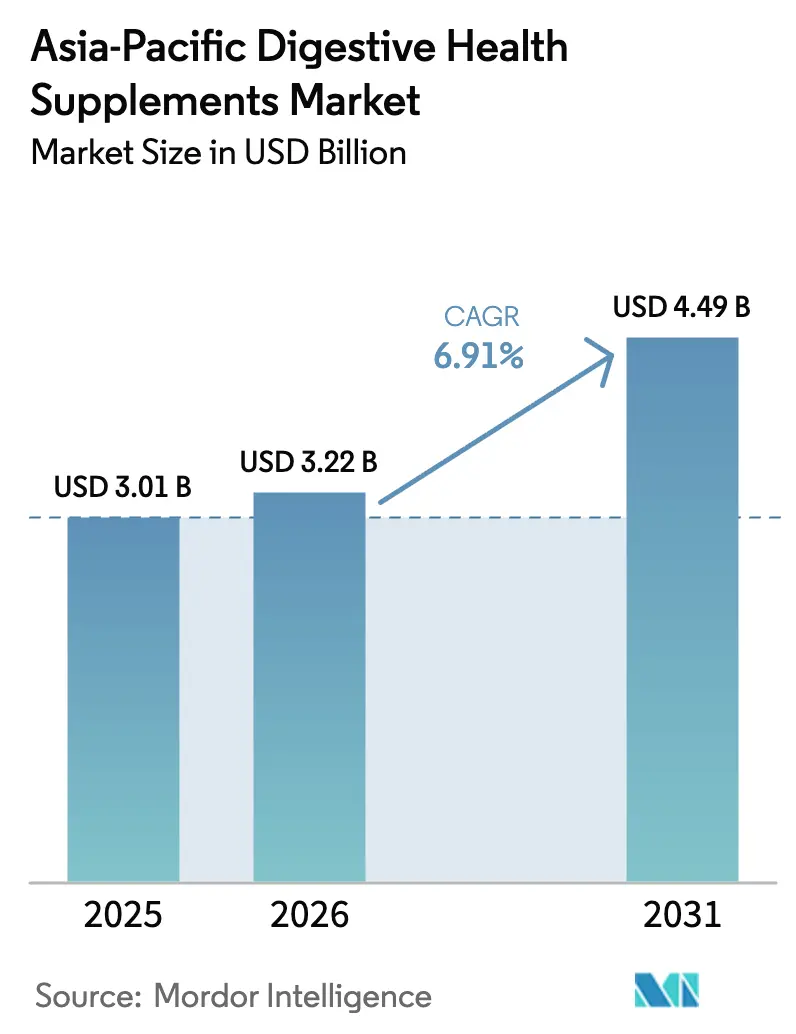
| Base Year Market Size (2025) | USD 3.01 Billion |
| Market Size (2026) | USD 3.22 Billion |
| Market Size (2031) | USD 4.49 Billion |
| Growth Rate (2026 - 2031) | 6.91 % |
| Market Concentration | Medium |
Major Players *Disclaimer: Major Players sorted in no particular order Image © Mordor Intelligence. Reuse requires attribution under CC BY 4.0. | |
Asia-Pacific Digestive Health Supplements Market Analysis by Mordor Intelligence
The Asia-Pacific digestive health supplements market size was valued at USD 3.01 billion in 2025 and estimated to grow from USD 3.22 billion in 2026 to reach USD 4.49 billion by 2031, at a CAGR of 6.91% during the forecast period (2026-2031). The market growth is primarily influenced by the region's increasing emphasis on preventive healthcare measures, as consumers become more health-conscious and proactive about their well-being. The rising incidence of digestive disorders, coupled with a deeper understanding among consumers about how gut health influences immunity, mental well-being, and metabolic functions, has created substantial market opportunities. This trend is particularly evident in urban populations, where modern lifestyle factors have contributed to an increase in digestive health issues, resulting in sustained consumer demand for traditional probiotic supplements and innovative microbiome-modulating products. The market's expansion is further supported by improved healthcare infrastructure, rising disposable incomes, and greater accessibility to health information through digital platforms.
Key Report Takeaways
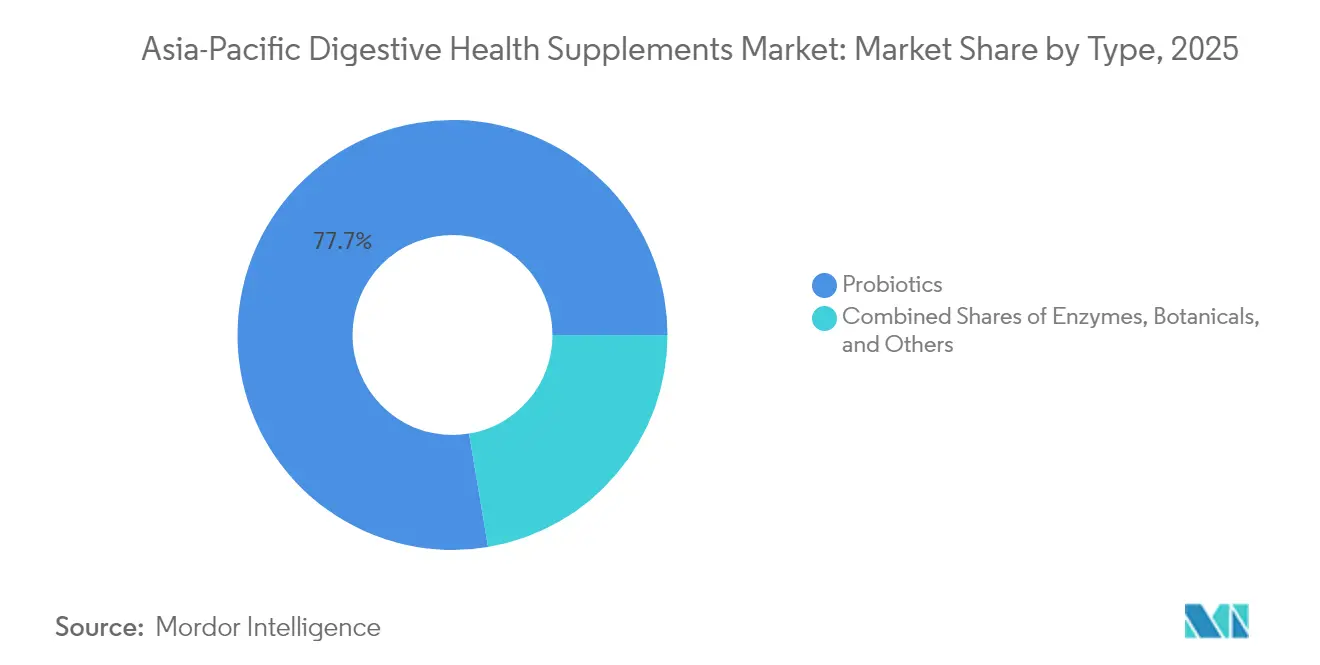
- By type, probiotics accounted for 77.65% of the Asia-Pacific digestive health supplements market share in 2025, prebiotics are projected to expand at an 8.04% CAGR to 2031.
- By form, capsules and softgels held 46.58% revenue share in 2025, gummies and chewables are advancing at a 7.74% CAGR through 2031.
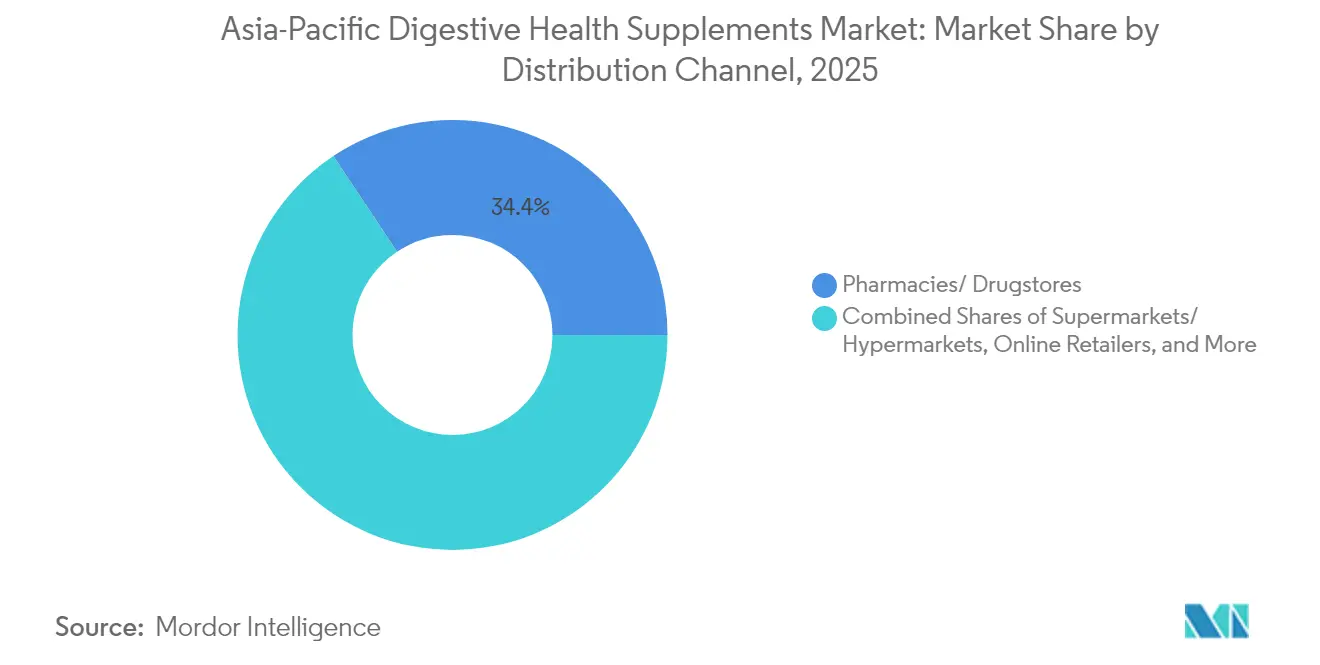
- By distribution channel, pharmacies and drugstores led with 34.35% revenue share in 2025; online retailers are forecast to record an 7.88% CAGR to 2031.
- By geography, Japan commanded 26.92% share of the Asia-Pacific digestive health supplements market size in 2025, while India is registering the highest projected CAGR at 8.11% through 2031.
Note: Market size and forecast figures in this report are generated using Mordor Intelligence’s proprietary estimation framework, updated with the latest available data and insights as of 2026.
Asia-Pacific Digestive Health Supplements Market Trends and Insights
Drivers Impact Analysis*
| Driver | (~) % Impact on CAGR Forecast | Geographic Relevance | Impact Timeline |
|---|---|---|---|
| Rising prevalence of digestive disorders prompting demand for supplements | +1.2% | APAC core, with highest impact in China, India, Japan | Medium term (2-4 years) |
| Increasing focus on preventive healthcare and natural health solutions | +1.0% | Global, with early adoption in Japan, Australia, Singapore | Long term (≥ 4 years) |
| Fueling fitness and sports nutrition trends promoting digestive health | +0.8% | Urban centers across APAC, particularly South Korea, Taiwan | Short term (≤ 2 years) |
| Growing demand for organic and plant-based digestive supplements | +0.7% | Japan, Australia, urban China and India | Medium term (2-4 years) |
| Expansion of dairy-free and allergen-free supplement options | +0.5% | Japan, South Korea, Australia with spillover to Southeast Asia | Medium term (2-4 years) |
| Greater penetration of e-commerce and online distribution channels | +0.9% | China, India, Southeast Asia with rapid digital adoption | Short term (≤ 2 years) |
| Source: Mordor Intelligence | |||
Rising Prevalence of Digestive Disorders Prompting Demand for Supplements
The rising prevalence of digestive diseases across Asia has generated sustained demand for therapeutic supplements, with the region experiencing a substantial burden from digestive conditions. This health trend stems from urbanization-related dietary changes, increased stress levels affecting gut function, and growing cases of inflammatory bowel conditions that traditional medications do not fully address. The aging populations in Japan, South Korea, and Singapore have increased the need for therapies that support digestive enzyme production and maintain microbiome balance. Research validating the effectiveness of specific probiotic strains like Bifidobacterium longum ES1 in treating irritable bowel syndrome has encouraged both medical professionals to recommend and patients to use these supplements. Healthcare systems, particularly in markets with developed infrastructure, are increasingly incorporating digestive health supplements into standard treatment protocols, shifting from treating symptoms to preventing digestive issues.
Increasing Focus on Preventive Healthcare and Natural Health Solutions
The increasing health consciousness among consumers has fundamentally shifted their preferences toward preventive supplementation, as evidenced by the substantial growth in online health supplement sales across China. This transformation extends beyond immediate immune support, with consumers adopting holistic wellness approaches and recognizing gut health as a cornerstone of overall well-being. In response to this trend, governments in China and India have implemented programs that effectively bridge traditional medicine with modern nutraceuticals while maintaining stringent safety regulations. The market has evolved to meet these changing consumer needs by introducing personalized nutrition offerings, as demonstrated by Calbee's innovative approach of providing microbiota-based granola recommendations. This shift in consumer behavior reflects a growing willingness to invest in preventive healthcare products, particularly when companies can validate health improvements through concrete measures such as biomarker measurements and systematic symptom tracking.
Fueling Fitness and Sports Nutrition Trends Promoting Digestive Health
The convergence of athletic performance optimization and gut health research has created premium market segments with higher profit margins and customer retention. In June 2025, Wecare Probiotics' Weizmannia coagulans BC99 received the Ingredient of the Year award in Sports Nutrition for enhancing protein absorption. Research shows that athletes with diverse gut microbiota exhibit better endurance and recovery times, increasing adoption among professional athletes and fitness enthusiasts. Sports nutrition provides an entry point for digestive health supplements to reach younger consumers, who typically focus on gut health only after experiencing digestive problems. In South Korea, partnerships between supplement manufacturers and fitness influencers are expanding market penetration beyond traditional health-conscious consumers. The premium pricing in sports nutrition enables companies to invest in advanced delivery systems and clinically validated formulations, creating product differentiation in the competitive market.
Growing Demand for Organic and Plant-Based Digestive Supplements
The plant-based supplement market continues to undergo significant transformation through innovative product formulations, exemplified by Nomura Dairy Products' strategic introduction of plant-based probiotic carrot juice in Japan's traditionally dairy-centric probiotic market. This evolution is further driven by increasing consumer awareness regarding the impact of agricultural chemicals on gut microbiome diversity and overall health outcomes, resulting in a stronger preference for organic formulations. The market's expansion is supported by regulatory bodies approving plant-based probiotic strains, particularly those derived from traditional fermented foods like Chinese sauerkraut, which maintains cultural connections while broadening ingredient options. Environmental consciousness, especially prevalent among younger consumer demographics, has created a notable shift toward supplements with minimal ecological footprints, providing competitive advantages to companies that implement and showcase sustainable sourcing and manufacturing practices. The premium pricing structure associated with organic certification not only presents opportunities for enhanced profit margins but also aligns with consumer values regarding personal health and environmental responsibility.
Restraints Impact Analysis*
| Restraint | (~) % Impact on CAGR Forecast | Geographic Relevance | Impact Timeline |
|---|---|---|---|
| Regulatory complexities and inconsistent policies | -0.8% | APAC-wide, particularly affecting cross-border trade | Long term (≥ 4 years) |
| Stability and shelf-life issues affecting probiotic product viability | -0.6% | Tropical climates in Southeast Asia, India | Medium term (2-4 years) |
| Taste and palatability challenges affecting consumer adherence | -0.4% | Consumer-sensitive markets like Japan, South Korea | Short term (≤ 2 years) |
| Storage and refrigeration requirements limiting distribution | -0.5% | Infrastructure-limited regions in Southeast Asia, rural India | Medium term (2-4 years) |
| Source: Mordor Intelligence | |||
Regulatory Complexities and Inconsistent Policies
The regulatory landscape across Asia-Pacific presents significant barriers to market expansion, as each jurisdiction maintains distinct approval processes, health claim requirements, and quality standards. These variations increase compliance costs and cause market entry delays. For example, Indonesia's registration requirements demand detailed scientific evidence for each probiotic strain, creating challenges for smaller companies while established multinationals benefit from their regulatory expertise. The absence of mutual recognition agreements between major markets requires companies to duplicate clinical studies and regulatory submissions, which increases development costs and constrains innovation investment. Regulatory updates in 2025 across multiple APAC jurisdictions have introduced additional compliance requirements that existing market participants must address while maintaining product availability. This regulatory environment particularly affects novel probiotic strains and innovative delivery formats without established precedents, creating market entry challenges for new products.
Stability and Shelf-Life Issues Affecting Probiotic Product Viability
The probiotic industry encounters significant technical challenges in tropical climates that affect product viability and consumer trust. Manufacturers must maintain specific viable cell counts to ensure optimal health benefits, but moisture exposure during production and storage creates substantial risks. In Southeast Asia and rural India, limited cold chain infrastructure restricts the distribution of temperature-sensitive formulations. While solutions such as desiccant-lined bottles and advanced packaging technologies can preserve stability without refrigeration, these increase production costs and reduce product accessibility in price-sensitive markets. Companies developing heat-stable probiotic strains, particularly spore-forming Bacillus strains, gain competitive advantages in challenging distribution environments. The industry faces ongoing quality control issues in maintaining viable cell counts throughout the supply chain, which can result in regulatory compliance problems and liability risks affecting brand reputation and market position. These challenges require manufacturers to balance product stability with market accessibility while maintaining stringent quality standards to ensure consumer safety and satisfaction.
*Our forecasts treat driver/restraint impacts as directional, not additive. The impact forecasts reflect baseline growth, mix effects, and variable interactions.
Segment Analysis
By Type: Probiotics Dominate While Prebiotics Accelerate
The microbiome supplement market demonstrates clear consumer preferences, with probiotics maintaining a substantial 77.65% market share in 2025. This dominance reflects years of consumer familiarity and robust scientific validation. In contrast, prebiotics have emerged as the market's growth driver, achieving an 8.04% CAGR through 2031, as consumers develop a more sophisticated understanding of microbiome optimization strategies.
The probiotic segment's market leadership builds on decades of research that validates strain-specific benefits for digestive health, immunity, and metabolic function. Major industry players, such as Morinaga Milk, are capitalizing on this trend by developing proprietary strains like Bifidobacterium longum subsp. infantis M-63 for specialized infant nutrition products in China. Within the broader market, enzymes maintain consistent demand for targeted digestive support applications, while botanicals benefit from increasing integration with traditional medicine practices. The "Others" category encompasses innovative postbiotic formulations and synbiotic combinations, representing the latest developments in microbiome science and product development.

By Form: Traditional Formats Lead Innovation Wave
The probiotic supplement market demonstrates a significant consumer inclination toward capsules and softgels, which currently maintain a substantial 46.58% market share in 2025. This strong market position reflects consumers' trust in these traditional delivery formats, primarily due to their reliability in providing precise, measured doses for daily supplementation. The market landscape is experiencing a notable transformation as gummies and chewables gain increasing acceptance among consumers, with projections indicating a robust growth rate of 7.74% CAGR through 2031. This shift in consumer preferences underscores a broader market trend where supplement users actively seek more enjoyable and convenient ways to incorporate probiotics into their daily routines, effectively addressing historical challenges with supplement compliance.
In the current market environment, capsules maintain their leadership position by offering superior protective qualities for sensitive probiotic strains against environmental degradation, while simultaneously providing controlled release mechanisms that enhance survival rates in the gastrointestinal tract. The World Health Organization's data highlighting over 1.7 billion annual cases of enteric diseases, coupled with an increasing prevalence of inflammatory conditions in developed regions, emphasizes the importance of effective probiotic delivery systems . While traditional tablets continue to offer manufacturers considerable production cost advantages, market dynamics indicate a clear shift toward more user-friendly alternatives. The market has evolved to accommodate diverse consumer needs through specialized delivery formats, with powders and granules serving specific segments such as infant nutrition and individualized dosing requirements. Additionally, the introduction of innovative delivery systems through functional foods and beverages represents an expanding market category that directly responds to modern consumers' lifestyle preferences and nutritional requirements.
By Distribution Channel: Digital Transformation Accelerates
Pharmacies and drugstores hold a dominant 34.35% market share in the distribution landscape in 2025. Their market leadership is attributed to established relationships with healthcare professionals who recommend products to patients, and consumer trust in medical retail environments. The online retail segment is experiencing the fastest growth, with a projected CAGR of 7.88% through 2031. This growth is driven by consumer preference for home delivery, competitive pricing, and wide product selections on digital platforms. India's expanding e-commerce market, supported by increased digital payment adoption, growing internet penetration, and rising online shopping preferences, provides favorable conditions for dietary supplement sales, including digestive health products .
Traditional pharmacy channels continue to maintain their strong position through consistent healthcare provider endorsements and consumer confidence in product quality, particularly crucial for digestive health supplements. Supermarkets and hypermarkets serve the mass market effectively but face increasing pressure on profit margins due to fierce online competition. Specialty and health stores have carved out their niche by offering premium products supported by expert consultation and carefully curated selections. The "Other Distribution Channels" category encompasses various sales approaches, including direct-to-consumer models and institutional sales channels, providing additional market penetration opportunities.
Geography Analysis
The Japanese market commands a significant 26.92% share of the Asia-Pacific digestive health supplements market in 2025, establishing itself as the regional leader. The country's well-structured FOSHU system provides companies with a clear pathway to make scientifically validated health claims. Japanese consumers have developed a sophisticated understanding of functional foods and probiotic benefits, supported by extensive clinical research and government-led preventive healthcare initiatives. The market's quality standards have been further enhanced by recent government regulations that mandate additional documentation for probiotic functional foods. This leadership position is exemplified by the strategic partnership between Kirin Holdings and Blackmores in March 2025, which introduced LC-Plasma powder to the Taiwan market.
India has emerged as the most dynamic market in the region, projecting an impressive 8.11% CAGR through 2031. This rapid growth stems from increasing middle-class purchasing power and supportive government policies for nutraceutical manufacturing under the FSSAI framework. The market's potential is underscored by the April 2024 joint venture between Nestlé India and Dr. Reddy's Laboratories, combining global expertise with local market knowledge. The FSSAI's comprehensive framework, which establishes clear standards for composition and labeling of health supplements, has created a robust foundation for market growth while ensuring consumer protection.
Other regional markets, including Australia, South Korea, Indonesia, Thailand, and Singapore, continue to develop with their distinct characteristics and opportunities. The ASEAN region's progress in regulatory harmonization for dietary supplements is creating more accessible market entry pathways while maintaining quality standards. China presents a particularly interesting market dynamic, with its post-1990 generation driving demand for innovative product formats and digital purchasing channels. Additionally, China's aging demographic, with 22% of the population aged 60 and above in 2024, represents a substantial consumer base for targeted nutritional products .
Regulatory Landscape
Asia-Pacific regulation for digestive health supplements remains fragmented across food, complementary medicine, and quasi-drug frameworks, which shapes health claims, strain acceptance, and go-to-market timelines. India operates under FSSAI health supplement and nutraceutical rules, while Japan provides structured routes for functional positioning through CAA systems, including Foods with Function Claims and FOSHU, which require substantiation and prescribed notification processes (including time-bound filings for certain functional materials).
China continues to manage health food registrations and evaluations through SAMR, with updates to claim and evaluation guidance prompting re-registration and additional compliance work for brands selling across multiple provinces and channels. Regional harmonization efforts are progressing, but they do not remove country-by-country obligations. ASEAN health supplement guidelines and the ASEAN ACCSQ TMHSPWG workstream provide common approaches for safety substantiation, labeling, and technical dossiers, supporting manufacturers that distribute across Southeast Asia, although import registration, acceptable claims, and documentation demands still vary by market. Australia maintains a distinct complementary medicines regime overseen by the TGA, including ingredient permissions and mandatory warning statements for certain higher-risk ingredients, which reinforces the need for localized regulatory strategy alongside regional portfolio planning.
Value Chain Analysis
The value chain spans strain and botanical sourcing (and associated documentation), ingredient manufacturing, including fermentation for probiotic cultures, formulation and finishing (capsules and softgels, gummies and chewables, powders), quality testing, packaging, and multi-channel distribution through pharmacies and drugstores, modern trade, and online retailers. A key technical step in digestive health supplements is strain-level and stability verification for probiotics and synbiotics, which increases demand for in-house or partner analytical laboratory capacity to generate shelf-life and viability data that align with market-specific requirements.
Logistics and packaging decisions materially influence cost and reach, particularly for live-culture products where cold-chain handling and temperature excursions can affect CFU delivery and label compliance. In several Asia-Pacific routes-to-market, cold-chain needs for certain probiotic formats add meaningful overhead to finished goods economics (often cited as an additional 15-25% versus ambient-stable products), pushing manufacturers toward spore-forming or heat-stable strains and protective packaging, such as desiccant-lined bottles, to support wider distribution in tropical climates. On the commercialization side, multinational brands including Abbott, Amway, Herbalife Nutrition, Bayer, and GNC frequently rely on localized regulatory and distribution partners to manage import registrations, language-compliant labeling, and channel access across diverse national timelines.
Competitive Landscape
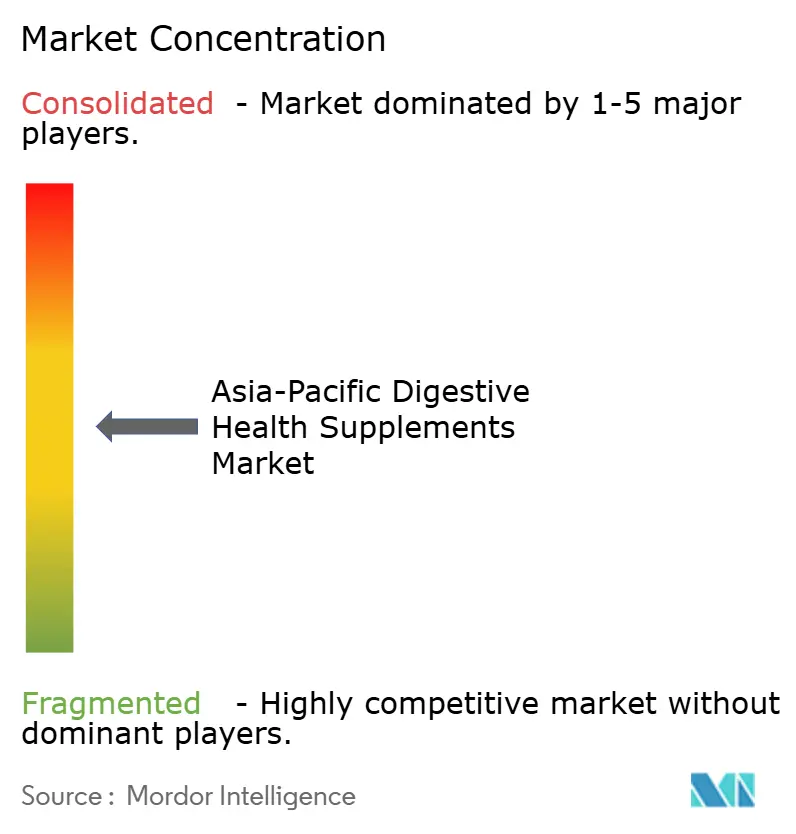
The Asia-Pacific digestive health supplements market demonstrates moderate fragmentation, which has opened doors for both established multinational corporations and specialized regional players. These companies are actively pursuing market share through distinct market positioning and forming strategic partnerships within the industry. Established companies maintain their competitive edge by leveraging their extensive regulatory expertise, robust clinical validation processes, and well-developed distribution infrastructure. In contrast, newer market entrants are carving their niche by introducing innovative delivery systems, implementing personalized nutrition approaches, and developing direct-to-consumer business models.
Companies like Cell Biotech exemplify successful market leadership through their impressive 12-year dominance in Korean probiotic exports and systematic global expansion initiatives. Industry participants are making substantial investments in advanced packaging solutions, comprehensive microbiome analysis capabilities, and innovative product formats. These investments serve as key differentiators, enabling companies to establish unique market positions and command premium pricing in increasingly competitive market environments.
The market presents significant opportunities in previously underserved segments, particularly in pediatric applications, sports nutrition crossover products, and specialized formulations targeting metabolic health and cognitive function enhancement. Strategic acquisitions in the biotechnology sector, illustrated by Danone's strategic purchase of The Akkermansia Company for its specialized pasteurized Akkermansia muciniphila MucT strain, demonstrate the industry's commitment to advancing probiotic development. Regulatory frameworks established by FSSAI, MFDS, and other APAC regulatory bodies create substantial entry barriers, naturally favoring companies with established regulatory affairs capabilities and robust clinical research infrastructure. The market also offers unique opportunities for companies that can successfully bridge traditional medicine practices with modern biotechnology, particularly in regions where traditional medicine holds cultural significance. This integration of traditional and modern approaches enables companies to develop scientifically validated formulations while respecting established cultural health practices.
Asia-Pacific Digestive Health Supplements Industry Leaders
-
Abbott Laboratories
-
Amway
-
Herbalife Nutrition Ltd.
-
Bayer AG
-
GNC Holdings LLC
- *Disclaimer: Major Players sorted in no particular order
Market Opportunities and Future Outlook
Opportunities are concentrated around formats and claims pathways that reduce friction in consumer adoption and compliance while remaining within country-specific rules. Japan, which held 26.92% share in 2025, illustrates how structured functional food frameworks (CAA pathways such as FOSHU and Foods with Function Claims) support premiumization for clinically substantiated digestive benefits, while also raising expectations for documentation and stability evidence. India, supported by the FSSAI framework and expanding modern trade and e-commerce reach, remains a primary arena for scaled rollouts, reinforced by localized manufacturing and portfolio-building initiatives such as the April 2024 Nestle India and Dr. Reddy's Laboratories joint venture.
Product whitespace also shows up in personalized and condition-adjacent digestive propositions that combine microbiome science with convenience-led delivery. Examples in the market include microbiota-informed personalization concepts (such as Calbee's microbiota-based recommendations) and cross-category formulations that link gut support with broader wellness goals, including sports nutrition and healthy aging, alongside plant-based and allergen-aware options that fit urban consumer preferences. In Southeast Asia, ASEAN guideline work through TMHSPWG provides an on-ramp for companies that can standardize dossiers and labeling across multiple markets. At the same time, cold-chain and shelf-life constraints for some live-culture probiotics create space for shelf-stable strains, improved encapsulation, and packaging innovations that broaden reach beyond major metros and pharmacy-heavy distribution.
Recent Industry Developments
- June 2026: Bayer India combines probiotics and antacid in a single offering to address gut health and acidity market. The move strengthens Bayer’s position in integrated digestive health solutions in India.
- June 2026: Bayer announces MuscleBlaze G NiIB product spotlight within its probiotic portfolio, highlighting a pasteurized probiotic product. This expands Bayer’s proximity to microbiome based products via the MuscleBlaze ecosystem and could bolster its gut health portfolio in APAC.
- May 2026: Abbott launched Ensure Strength Pro in India, a protein and nutrient dense supplement supporting multiple health areas. The launch bolsters Abbott’s consumer facing gut and overall health positioning and may influence premium segment dynamics.
Research Methodology Framework and Report Scope
Market Definition and Coverage
For this study, the market covers retail and online sales of digestive health supplements consumed to support gut comfort and digestion, measured in value across Asia-Pacific.
Scope exclusions: This sizing excludes prescription drugs and OTC gastrointestinal medicines that are not positioned or sold as dietary supplements.
Segmentation Overview
- By Type
- Prebiotics
- Probiotics
- Enzymes
- Botanicals
- Others
- By Form
- Capsules and Softgels
- Tablets
- Gummies and Chewables
- Powders and Granules
- Others
- By Distribution Channel
- Supermarkets/ Hypermarkets
- Pharmacies/ Drugstores
- Online Retailers
- Other Distribution Channels
- By Geography
- China
- India
- Japan
- Australia
- Indonesia
- South Korea
- Thailand
- Singapore
- Rest of Asia-Pacific
Data Sources, Market Sizing, and Validation
Desk Research
We start by building a clean fact base on digestive health and supplement demand signals across Asia-Pacific, then align it to how products are sold through pharmacies, modern trade, and e-commerce. We use public sources to sanity-check demand direction, labeling rules, and the pace of category expansion in large markets.
Examples of non-paywalled inputs used include government health statistics and nutrition surveys (for example, health ministries and national statistical offices), Codex Alimentarius guidance and selected national supplement regulations, WHO references on digestive disease and risk factors, and trade and customs datasets that indicate ingredient and finished-product flows. To turn these signals into a market model, we also review company filings and investor presentations, association releases, and reputable press coverage, then fill gaps using paid subscriptions for company financials, news and financials, patent lookups, and shipment-level import and export checks where relevant. This desk research list is illustrative only, and we referenced many other sources for data collection, validation, and clarification.
Primary Interviews and Surveys
Primary work is used to pressure test what we saw in public data, especially how consumers and channels treat probiotics, prebiotics, enzymes, and botanicals within the digestive positioning. We spoke with a mix of brand and distribution stakeholders, ingredient-side experts, and retail and pharmacy informed respondents across key Asia-Pacific markets, and the input was used to confirm price bands, channel mix, and which claims and formats actually translate into volume.
Distribution of primary research fieldwork respondents
| Company type | Respondent position |
|---|---|
| Top tier: 30% | CXOs: 12% |
| Mid tier: 48% | Functional/Unit leaders: 29% |
| Smaller Players: 22% | Managers: 59% |
Market-Sizing & Forecasting
Sizing is first reconstructed using a top-down approach. We begin with the demand pool for digestive-positioned supplements in Asia-Pacific, then split it by product type and sales channel using observed mix patterns. After building the demand pool, we corroborate results with selective bottom-up approximations, such as sampled price by pack size by format, channel checks on velocity direction, and roll-ups for a limited set of visible brands to validate and adjust totals.
In the model, a few practical inputs do most of the work, then get refined through interviews. These include the share of digestive positioning inside supplement baskets, the split across probiotics, prebiotics, enzymes, and botanicals, average selling price progression by format (capsules, tablets, gummies, and powders), pharmacy versus online channel growth, and changes in consumer usage frequency linked to health awareness and aging. Forecasts are built using scenario analysis. We stress test base case assumptions for pricing and penetration against interview consensus and recent channel momentum, then roll them into yearly growth rates. Where coverage is uneven for smaller markets, gaps are handled through proxy indicators like population, urbanization, and channel maturity, followed by a final sense check from local experts.
Data Validation & Update Cycle
We run several checks before finalizing the numbers so the model stays aligned with real-world signals. Outputs are compared against independent indicators like category import patterns where applicable, pricing bands observed across channels, and the expected relationship between format mix and value growth. Any anomalies are reviewed and corrected.
A multi-step internal review is performed, where assumptions are rechecked and calculations are repeated by a second analyst before sign-off. If a variance cannot be explained cleanly, we re-contact respondents to confirm the input and the direction of change. Reports are refreshed annually, with interim updates when a material event changes pricing, regulation, or channel structure, and then a final pre-delivery pass is completed so clients receive the latest view.
Mordor Intelligence's Asia Pacific Digestive Health Supplements Market Size Measured Against Other Published Estimates
Published market values for digestive health supplements in Asia-Pacific can vary widely because publishers do not always count the same product set, the same channel revenues, or the same timing for currency conversion and pricing. Differences also show up when some studies rely heavily on a single category and then apply that growth rate to the broader digestive space.
Some external figures include adjacent wellness supplement spending and broader functional nutrition items that are not bought mainly for digestive outcomes. In Mordor Intelligence, the total is counted only when products are positioned as digestive health supplements, and the value is validated through format-level ASP checks and channel mix confirmation before forecasting is applied.
Benchmark comparison
| Source | Market Size | Gaps in Research Methodology |
|---|---|---|
| Mordor Intelligence | USD 3.01 B (2025) | |
| Industry Publisher A | USD 7.20 B (2025) | This estimate appears to use a wider basket that includes additional digestive-positioned nutrition and adjacent wellness supplement revenues, which inflates the addressable value beyond supplement-only digestive positioning. |
| Industry Association B | USD 3.70 B (2023) | This figure is specific to probiotic supplements retail sales, so it can sit above or below a digestive-supplement total depending on whether non-probiotic digestive products are included and how regional country coverage is defined. |
Overall, the spread is mainly explained by category breadth and by whether a single sub-category, like probiotics, is used as a shortcut for the wider digestive space. By keeping the scope tied to digestive-positioned supplements and then checking pricing and channel structure, the results stay easier to trace back to clear inputs and repeatable steps for year-to-year updates.
Key Questions Answered in the Report
How large is the Asia-Pacific digestive health supplements market in 2026?
The Asia-Pacific digestive health supplements market size reached USD 3.22 billion in 2026 and is projected to grow at a 6.91% CAGR to 2031.
Which country currently leads sales?
Japan holds the largest share at 26.92% in 2025, supported by FOSHU-backed health claims and an aging population.
What is the fastest-growing product type?
Prebiotics are expanding at an 8.04% CAGR as consumers seek ingredients that nourish existing gut microbes.
Why are gummies gaining popularity?
Gummies deliver pleasant taste, maintain viable probiotic counts without refrigeration, and therefore improve adherence, helping them post a 7.74% CAGR through 2031.
Which sales channel is rising the quickest?
Online retailers are projected to register an 7.88% CAGR owing to convenience, broader assortment, and personalized purchasing experiences.