
Market Overview
| Study Period | 2020 - 2031 |
|---|---|
| Forecast Data Period | 2026 - 2031 |
| Base Year Market Size (2025) | USD 2.18 Billion |
| Market Size (2026) | USD 2.42 Billion |
| Market Size (2031) | USD 4.08 Billion |
| Growth Rate (2026 - 2031) | 11.02 % |
| Market Concentration | Medium |
Major Players *Disclaimer: Major Players sorted in no particular order Image © Mordor Intelligence. Reuse requires attribution under CC BY 4.0. | |
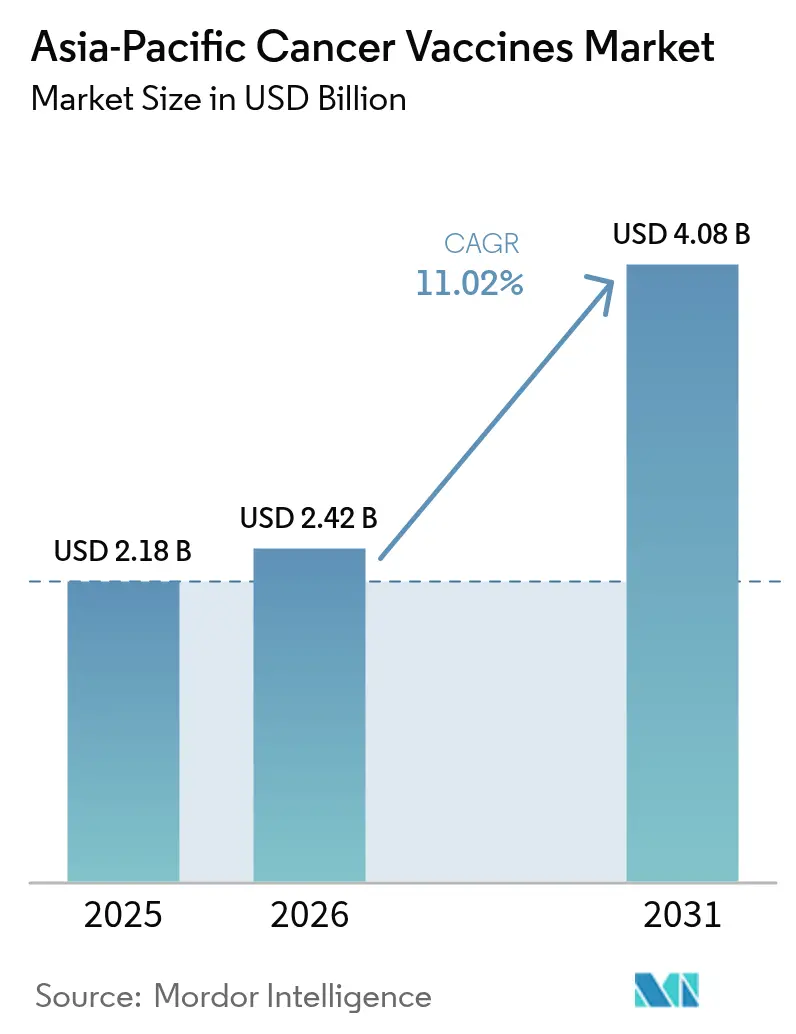
Asia-Pacific Cancer Vaccines Market Analysis by Mordor Intelligence
The Asia-Pacific cancer vaccines market size is expected to grow from USD 2.18 billion in 2025 to USD 2.42 billion in 2026 and is forecast to reach USD 4.08 billion by 2031 at 11.02% CAGR over 2026-2031. Sustained growth rests on the region’s escalating cancer burden, policy-backed HPV immunisation roll-outs, and rapid breakthroughs in personalised mRNA–neoantigen platforms. Governments prioritise cervical-cancer prevention, while investors funnel capital into biotech clusters that shorten clinical timelines for new therapeutic vaccines. Contract development and manufacturing organisations (CDMOs) in China, India, and South Korea add capacity for viral-vector and mRNA production, flattening supply-chain risk and lowering unit costs. Intensifying competition from immune checkpoint inhibitors, CAR-T therapies, and emerging combination regimens tempers the speed of therapeutic uptake, yet economic analyses still favour vaccination over treatment for many tumour types. Together, these factors underpin double-digit annual expansion of the Asia-Pacific cancer vaccines market.
Key Report Takeaways
- By technology, recombinant vaccines led with 47.85% revenue share in 2025; mRNA/neoantigen platforms are projected to grow at a 11.92% CAGR to 2031.
- By treatment method, preventive products dominated with 90.75% of the Asia-Pacific cancer vaccines market share in 2025, while therapeutic formulations are forecast to expand at a 12.05% CAGR through 2031.
- By cancer type, cervical-cancer-focused HPV vaccines accounted for 71.65% of 2025 revenue; melanoma vaccines are the fastest-growing segment, advancing at a 12.11% CAGR to 2031.
- By delivery route, the intramuscular segment captured 65.60% of sales in 2025; intravenous administration is poised for 12.20% CAGR expansion to 2031.
- By geography, China commanded 29.10% of the Asia-Pacific cancer vaccines market size in 2025, whereas India is projected to post the highest regional CAGR of 12.24% between 2026 and 2031.
Note: Market size and forecast figures in this report are generated using Mordor Intelligence’s proprietary estimation framework, updated with the latest available data and insights as of 2026.
Market Trends and Insights
Drivers Impact Analysis of Asia-Pacific Cancer Vaccines Market*
| Driver | (~) % Impact on CAGR Forecast | Geographic Relevance | Impact Timeline |
|---|---|---|---|
| Growing burden of cancer across APAC | +2.8% | China, India, regional urban hubs | Long term (≥ 4 years) |
| HPV-vaccination national roll-outs | +2.1% | China, Japan, India, Australia | Medium term (2-4 years) |
| Shift toward personalised neo-antigen vaccine platforms | +1.9% | China, Japan, Singapore | Medium term (2-4 years) |
| Rapid scale-up of regional CDMO capacity for mRNA/viral-vector vaccines | +1.6% | China, India, South Korea | Short term (≤ 2 years) |
| Government price support for locally made HPV vaccines | +1.4% | China, India, Indonesia | Medium term (2-4 years) |
| Oncology-focused venture funding surge into biotech clusters | +1.2% | Singapore, China, Japan | Short term (≤ 2 years) |
| Source: Mordor Intelligence | |||
Growing Burden of Cancer Across APAC Drives Market Expansion
Asia-Pacific now shoulders 60% of global cancer cases, a figure driven by urbanisation, dietary shifts, and rapid population ageing. China reports 4.57 million new diagnoses annually, while cervical cancer incidence in India exceeds 23 per 100,000 women in several states. Region-specific malignancies—nasopharyngeal, hepatocellular, and gastric cancers—raise unique prevention needs. Economic modelling shows that vaccination can cut cervical cancer incidence by 20-76% across Vietnam, Thailand, and Indonesia, making prophylaxis more cost-effective than treatment. These dynamics sustain long-term demand for both preventive and therapeutic cancer vaccines.
HPV-Vaccination National Roll-Outs Accelerate Market Penetration
China’s Healthy China 2030 agenda places HPV immunisation at the centre of women’s-health policy, even though coverage among girls aged 9-14 stands at just 2.24% [1]. Japan reversed its decade-long suspension of proactive HPV recommendations, Australia already tops 90% coverage, and Indonesia’s campaigns show 54-82% declines in HPV-related disease. Incremental cost-effectiveness ratios range from USD 166 to USD 450 per QALY in Mongolia, Indonesia, and Thailand, giving finance ministries confidence to fund large-scale procurement. Predictable demand volumes allow suppliers to negotiate long-term contracts and ramp regional output.
Shift Toward Personalised Neo-Antigen Vaccine Platforms
Chinese innovators have propelled the transition from broad-spectrum to patient-specific vaccines. Likang Life Sciences’ LK-101 and Everest Medicines’ EVM16 harness AI algorithms to select tumour-exclusive epitopes and encode them into mRNA constructs [2]. Projected six-dose regimens cost below CNY 100,000 (USD 13,800), undercutting comparable Western therapies by 99% without sacrificing response rates. Personalisation also aligns with HLA-A 11:01 prevalence in up to 60% of Asian populations, supporting robust immunogenicity [3]. Rapid design-to-manufacture cycles shorten development timelines from months to weeks, reinforcing Asia-Pacific leadership in precision oncology.
Rapid Scale-Up of Regional CDMO Capacity for mRNA/Viral-Vector Vaccines
Takara Bio and Thermo Fisher’s new facility utilises DynaDrive single-use bioreactors to deliver clinical and commercial runs of viral vectors under GMP. Overall biologics capacity in China reached 4.7 million L in 2025, with India contributing 941,000 L across vaccine platforms. StemiRNA Therapeutics now operates lines capable of 100 million doses annually, funded by nearly USD 200 million in equity rounds. Singapore and South Korea invest in full-stack mRNA ecosystems, lowering import reliance and creating alternative supply corridors for ultra-cold-chain products.
Restraints Impact Analysis of Asia-Pacific Cancer Vaccines Market*
| Restraint | (~) % Impact on CAGR Forecast | Geographic Relevance | Impact Timeline |
|---|---|---|---|
| Competition from immune-checkpoint inhibitors & CAR-T therapies | -1.8% | Japan, Australia, urban China | Medium term (2-4 years) |
| Low adult-immunisation acceptance in Southeast Asia | -1.5% | Indonesia, Thailand, Philippines, Vietnam | Long term (≥ 4 years) |
| Supply-chain fragility for ultra-cold-chain mRNA vaccines | -1.2% | Infrastructure-limited areas | Short term (≤ 2 years) |
| Heightened regulatory scrutiny after safety-signal incidents | -0.9% | Japan, South Korea, Singapore | Medium term (2-4 years) |
| Source: Mordor Intelligence | |||
Competition from Immune-Checkpoint Inhibitors & CAR-T Therapies
PD-1/PD-L1 inhibitors could generate USD 4 billion in China by 2025, with domestic firms moving beyond lung and liver cancer into broader solid-tumour pipelines. Claudin18.2 CAR-T protocols report 38.8% objective response and 91.8% disease-control rates in early-phase gastrointestinal trials. Acceptable safety profiles—96.1% of adverse events graded mild or moderate—bolster clinician confidence and may divert patients from vaccine based therapeutics. Combination regimens such as efti plus pembrolizumab post 32.8% response versus 26.7% for monotherapy, further crowding the immuno-oncology landscape.
Low Adult-Immunisation Acceptance in Several Southeast-Asian Nations
Cultural conservatism, religious beliefs, and misinformation lower vaccine intent among adults. Surveys show high uptake when HPV shots are free, but willingness falls once co-payment is introduced. Community-led communication, home-visit outreach, and faith-based advocacy have improved completion rates, yet hesitancy persists among older cohorts. ASEAN nations confront an added hurdle: an ageing population expected to reach 1.3 billion over 65 by 2050. Without targeted public-health campaigns, low adult uptake could slow therapeutic vaccine roll-outs despite clear cost-effectiveness.
*Our forecasts treat driver/restraint impacts as directional, not additive. The impact forecasts reflect baseline growth, mix effects, and variable interactions.
Asia-Pacific Cancer Vaccines Market Segment Analysis
By Technology:
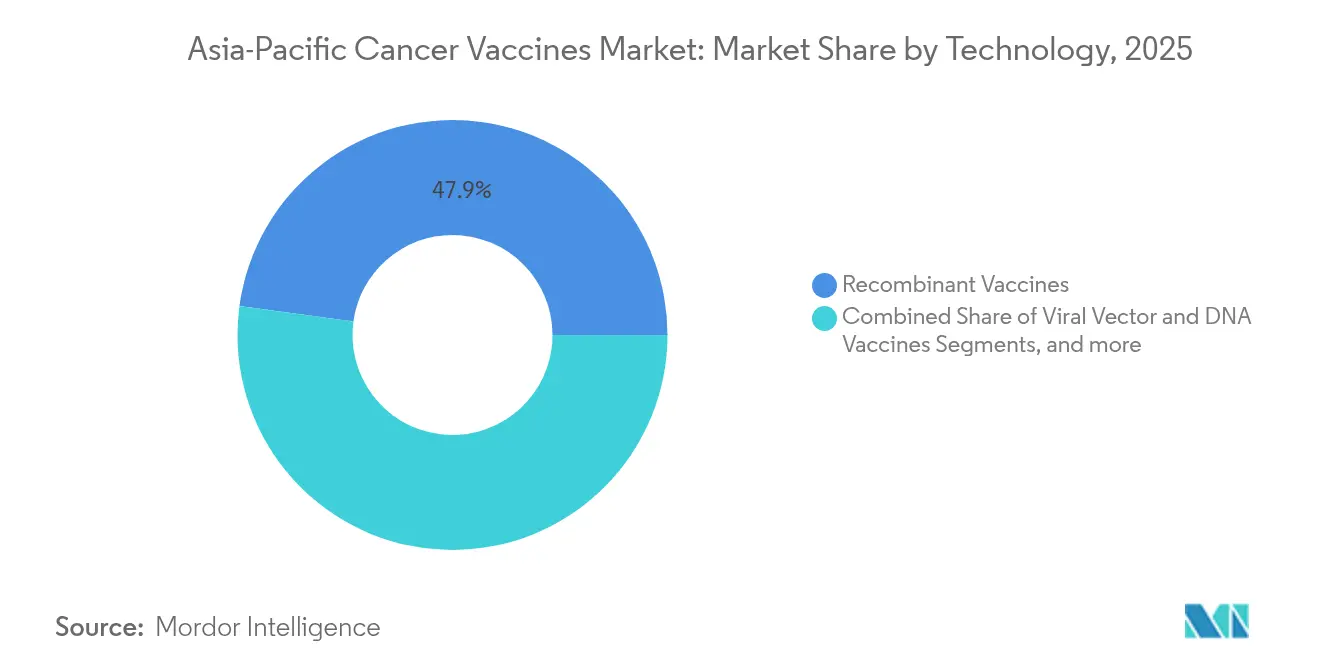
mRNA Platforms Challenge Recombinant Vaccine DominanceRecombinant products held 47.85% of 2025 revenue, anchoring the Asia-Pacific cancer vaccines market with proven safety records and well-established GMP lines. The mRNA/neoantigen class is set to rise at 11.92% CAGR, reshaping the competitive grid as cost-efficient Chinese playersrapidly commercialise personalised candidates. Viral-vector and DNA modalities post stable mid-single-digit trajectories, serving as bridges between legacy constructs and next-generation therapies. Whole-cell and dendritic-cell vaccines remain niche, yet they retain clinical relevance for advanced solid tumours that require multi-antigen responses.
The mRNA upswing is powered by AI-driven target discovery and flexible production cycles that compress sequence-to-clinic timelines. Likang Life Sciences’ LK-101 and StemiRNA’s lipid-polyplex system illustrate cost-engineering advantages, enabling six-dose regimens at one-hundredth of prevailing Western prices. Regional CDMO build-outs further widen the gap by eliminating transcontinental freight and customs delays. As a result, mRNA lines are forecast to absorb a sizeable share of future approvals, particularly in cancers with high mutational loads such as melanoma and lung adenocarcinoma.

By Treatment Method:
Therapeutic Vaccines Gain Momentum Despite Preventive DominancePreventive formulations controlled 90.75% of 2025 revenue, reflecting government-funded HPV programmes and broad public-health messaging. Therapeutic candidates, however, are tracking a 12.05% CAGR on rising demand for patient-specific regimens that augment checkpoint inhibitors. The Asia-Pacific cancer vaccines market size for therapeutic injections is projected to expand from USD 221.6 million in 2026 to roughly USD 391.4 million by 2031, underscoring the shift toward integrated care pathways.
Economic models continue to favour prophylaxis, with HPV programmes costing below USD 450 per QALY in multiple low- and middle-income settings. Yet second-line data for agents like BVAC-C, which delivered 19.2% objective response and 53.8% disease control in refractory cervical cancer, validate therapeutic relevance. As neoantigen selection tools mature, therapeutic cycles are expected to integrate seamlessly with standard chemoradiation, redefining downstream revenue pools.
By Cancer Type:
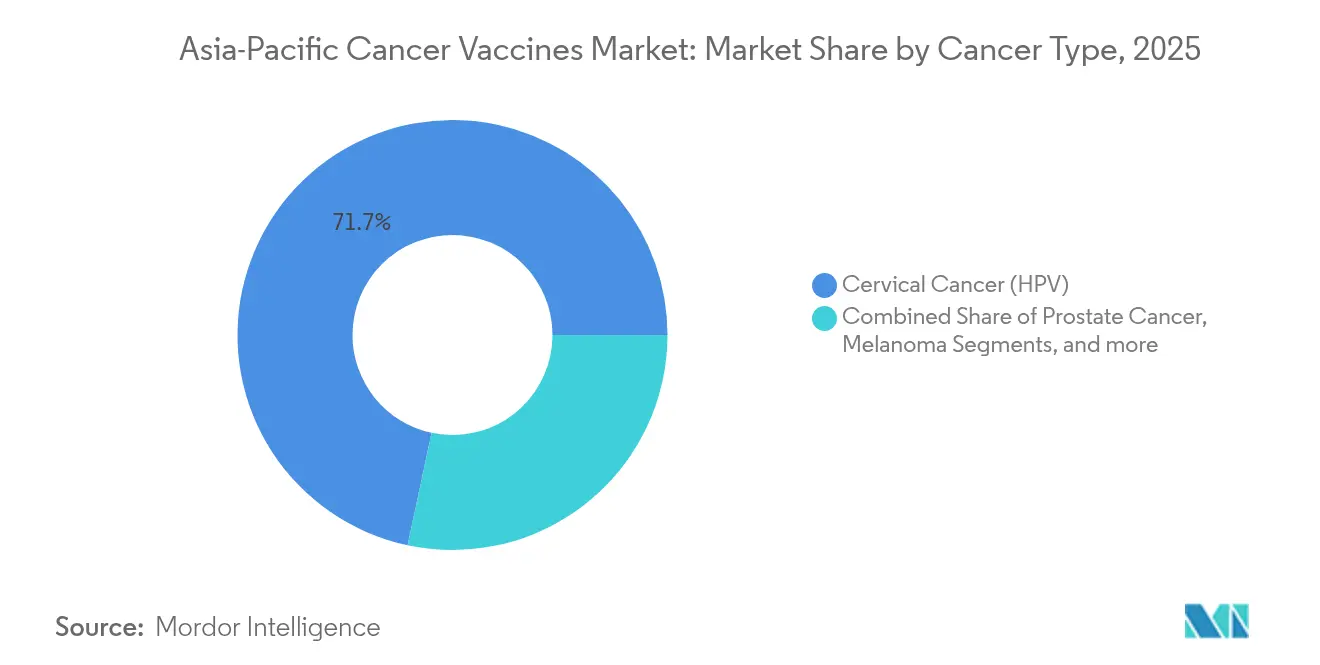
Melanoma Vaccines Accelerate Beyond HPV ApplicationsHPV-driven cervical-cancer prevention generated 71.65% of 2025 volume, due to widescale adolescent immunisation in China, Australia, and Japan. Melanoma candidates, boosted by combination trials pairing mRNA vaccines with pembrolizumab, are slated for a 12.11% CAGR through 2031. The Asia-Pacific cancer vaccines market share for melanoma solutions is forecast to double by 2031 as KRAS- and NRAS-targeted regimens move into pivotal studies.
Japan’s modelled adoption of 9-valent HPV immunisers could avert over 43,000 deaths across a century, illustrating the lasting footprint of prophylaxis. Meanwhile, KRAS G12V mRNA constructs have shown clinical benefit in heavily pretreated patients, positioning melanoma as the template for personalised approaches in other solid tumours. Prostate and hepatocellular indications follow closely, drawing on peptide-based candidates such as GPC3 that cut one-year recurrence by 15% in early investigators’ analyses.
By Delivery Route:
Intravenous Administration Emerges for Therapeutic ApplicationsIntramuscular shots captured 65.60% of 2025 demand thanks to legacy HPV programme logistics and healthcare-worker familiarity. Intravenous infusions will rise fastest at 12.20% CAGR, expanding the Asia-Pacific cancer vaccines market size for systemic delivery significantly. Intradermal and subcutaneous modes find limited yet strategic footholds where dose-sparing or home-based care is essential.
Intravenous administration offers direct biodistribution for complex therapeutics that require rapid lymphatic engagement. Early-phase melanoma trials demonstrate potent CD8+ T-cell expansion with IV mRNA dosing, reinforcing adoption for personalised vaccines. Intramuscular formulations remain standard for prophylaxis; indeed, L2-based multivalent HPV constructs delivered via lipid-nanoparticle IM injection outperformed traditional adjuvanted comparators on neutralising-antibody breadth.
Geography Analysis
China Cancer Vaccines Market
China accounted for 29.10% of the Asia-Pacific cancer vaccines market in 2025, translating to roughly USD 634 million in annual revenue. Scale stems from 89 registered vaccine trials, six approved oncology immunisers, and a deep CDMO base that buffers global supply shocks. National procurement frameworks and provincial subsidy schemes keep recombinant-HPV prices below USD 110 per course, maintaining high adolescent uptake despite urban-rural disparities.
India Cancer Vaccines Market
India is the fastest-growing market, pacing a 12.24% CAGR to 2031 on the back of universal cervical-cancer immunisation readiness. The Serum Institute’s indigenous HPV shot widens access through sub-USD 5 ex-factory pricing that meets government tender requirements. Clinical-trial incentives, a large treatment-naïve cohort, and English-speaking investigators attract multinationals seeking operational cost savings up to 30% versus Western counterparts.
APAC Cancer Vaccines Market
Japan commands mid-teens share with stringent regulatory oversight and renewed HPV programme endorsement. Government subsidies now back full-course vaccination for girls aged 12-16, reversing a years-long coverage slump. South Korea leverages innovation clusters outside Seoul to trial mRNA constructs, while Australia enjoys the region’s highest prophylactic coverage above 90%, reflecting decades of school-based delivery success.
ASEAN Cancer Vaccines Market
Across emerging ASEAN economies, variable adult-immunisation acceptance creates a patchwork of demand patterns. Malaysia’s pilot HPV programme posts 85% completion among schoolgirls, yet adult catch-up remains below 20%. Vietnam and Thailand see marked incidence reductions where sub-national pilots integrate electronic-health-record tracking. Infrastructure limitations—for example, unreliable ultra-cold storage in rural archipelagos—pose a near-term headwind to mRNA penetration but also justify investment in thermostable formulations.
Regulatory Landscape
Cancer vaccines in Asia-Pacific operate under country-specific vaccine and biologics frameworks, so regulatory planning and evidence generation tend to vary by market. Japan is a key reference point for preventive oncology immunization decisions, with PMDA publishing review deliberations in September 2025 related to expanding the use of 9-valent HPV vaccines for additional cancer-linked indications (such as anal cancer and related lesions). On the policy side, Japan's Cabinet approved the 3rd Healthcare Policy in February 2025, reinforcing a multi-year direction for drug development and regulatory innovation that also shapes expectations for novel immunotherapies and combination regimens.
Across emerging markets, governments are also using public programs to accelerate clinical development and local capability building for next-generation modalities. In April 2026, Vietnam's Ministry of Health announced collaboration with international partners to participate in clinical trials for mRNA-based cancer treatment vaccines, indicating a more active role in cross-border development. Australia also provides a structured environment for personalized mRNA trials, with a February 2026 multi-site pediatric study (PaedNEO-VAX) supported by government funding and industry-academic partnerships, which highlights how trial governance, GMP readiness, and cold-chain compliance factor into market entry.
Competitive Landscape
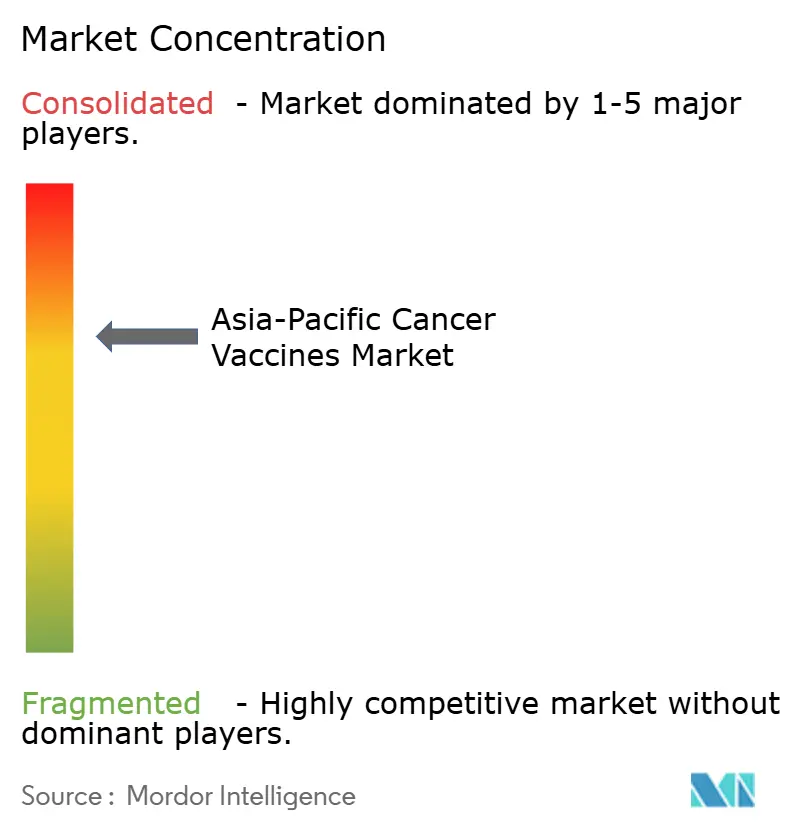
The market exhibits moderately consolidated concentration, with multinational incumbents holding entrenched HPV franchises while regional specialists race ahead in personalised therapeutics. Merck’s Gardasil and GSK’s Cervarix dominate prophylaxis tenders, supported by extensive safety data and supply continuity. Pfizer advances BNT122 in colorectal cancer under its BioNTech alliance, signalling a shift toward therapeutic expansion.
Chinese firms leverage cost and speed advantages. Likang Life Sciences targets first-to-market status for LK-101, the nation’s inaugural personalised neoantigen vaccine, while Everest Medicines’ EVM16 integrates AI epitope prediction for solid tumours. StemiRNA’s 100-million-dose annual capacity underpins strategic partnerships with domestic hospitals to embed vaccine manufacturing within provincial oncology centres.
Japanese innovators such as NEC adopt bioinformatics suites for epitope selection, pairing with Takara Bio’s viral-vector line to cut tech-transfer timelines. South Korean CDMOs focus on GMP-grade lipid-nanoparticle production, closing a critical raw-material gap. Competitive tactics increasingly blend joint ventures, AI collaborations, and government co-funding, signalling that scale and informatics prowess will decide long-term winners in the Asia-Pacific cancer vaccines market.
Asia-Pacific Cancer Vaccines Industry Leaders
-
Glaxosmithkline Plc
-
Bristol-Myers Squibb
-
Sanofi
-
Eli Lilly
-
AstraZeneca Plc
- *Disclaimer: Major Players sorted in no particular order
Asia-Pacific Cancer Vaccines Market Companies Covered in this Report
- Astellas Pharma
- AstraZeneca
- BioNTech
- Bristol-Myers Squibb
- CanSino BIO
- Daiichi Sankyo Co. Ltd.
- Eli Lilly and Company
- Genexine Inc.
- GlaxoSmithKline
- Imugene Ltd.
- Kanghong Pharmaceutical
- Merck
- Moderna
- Ono Pharmaceutical Co. Ltd.
- Pfizer
- Sanofi
- Serum Institute of India Pvt Ltd.
- Shenzhen Baiyi Bio-Pharma
- Takara Bio
- Vaccitech Plc
- Likang Life Sciences
Market Opportunities and Future Outlook
Therapeutic vaccines form the most visible whitespace beyond the preventive HPV-dominated revenue base, especially where developers combine individualized constructs with checkpoint inhibitors to fit established oncology pathways. Recent clinical activity reflects this direction: West China Hospital initiated recruitment in January 2026 for a study pairing an intranasal recombinant adenovirus vaccine (WSK-IM05) with tislelizumab in a neoadjuvant setting for HPV-positive oropharyngeal squamous cell carcinoma, and Guangdong Provincial People's Hospital began a January 2025 trial assessing a personalized mRNA neoantigen vaccine with adebrelimab in resected NSCLC. These programs point to demand for platform and CDMO support that can sustain rapid design-to-manufacture cycles, run companion diagnostics workflows, and provide hospital-integrated logistics for adjuvant and perioperative settings.
Government-backed translation and localized trial networks also create entry points across Southeast Asia, where adult immunization acceptance remains uneven but national institutions are increasingly anchoring development. Thailand began human trials in June 2026 via a collaboration between the Government Pharmaceutical Organisation (GPO), Chulalongkorn University, and Seqker Biosciences for personalized cancer vaccines targeting breast, gastric, and colorectal cancers, demonstrating a pathway that ties domestic production, procurement alignment, and clinical adoption together. At the same time, ongoing updates and guidance activity from regulators such as China's NMPA provide sponsors a route to standardize submissions for emerging biologics and personalized modalities, supporting multi-center trial expansion and earlier engagement on CMC and pharmacovigilance requirements.
Recent Industry Developments in Asia-Pacific Cancer Vaccines Market
- July 2026: Innovent Biologics and Eli Lilly and Co. entered a distribution and promotion agreement for Verzenios (abemaciclib) in mainland China. Wider availability of established oncology therapies can shift how therapeutic cancer vaccines are positioned in treatment sequencing and highlights the need for combination-ready development in the region.
- August 2025: India expands access to oncology therapies through accelerated procurement and reimbursement frameworks, enabling broader uptake across major tertiary centers. This increases market access points and changes how vaccine developers plan hospital logistics and payer engagement in APAC.
- August 2024: WestGene Biopharma secured dual IND approvals from China's NMPA and the US FDA for its mRNA therapeutic cancer vaccine WGc-043, enabling parallel Phase 1 programs. The cross-jurisdiction pathway supports international-grade clinical and CMC planning for Asia-originated mRNA therapeutic candidates, and it raises the bar for programs seeking to move beyond domestic trials.
Asia-Pacific Cancer Vaccines Market Report Scope and Research Methodology
Market Definition and Coverage
For this study, the market covers revenues generated from preventive and therapeutic cancer vaccines sold across Asia-Pacific. We count finished vaccine products supplied to healthcare providers and immunization programs.
Scope exclusions: Cell-based adoptive immunotherapies (such as CAR-T or TCR-T) and non-oncology vaccines are not counted in this market sizing.
Segments Covered in This Report
- By Technology
- Recombinant Vaccines
- Viral Vector & DNA Vaccines
- mRNA/Neoantigen Personalised Vaccines
- Whole-cell & Dendritic Cell Vaccines
- Other Technologies
- By Treatment Method
- Preventive Vaccines
- Therapeutic Vaccines
- By Cancer Type
- Cervical Cancer (HPV)
- Prostate Cancer
- Melanoma
- Other Cancers
- By Delivery Route
- Intramuscular
- Intradermal / Sub-cutaneous
- Intravenous
- By Geography
- China
- Japan
- India
- South Korea
- Australia
- Rest of Asia-Pacific
Data Sources, Market Sizing, and Validation
Desk Research
Desk work started with public health and epidemiology signals, so we could anchor demand pools for vaccine-relevant cancers in each country. Sources used include WHO and IARC cancer statistics, World Bank health indicators, national health ministry immunization schedules, and regulator portals that publish product approvals and safety updates.
We then mapped supply and pricing context using materials such as company annual reports and investor decks, peer-reviewed oncology and immunology journals, association websites, and credible press coverage of launches and trial progress. Where useful, we referenced a paid subscription for company financials and a paid patent database to confirm pipeline direction and ownership signals. We also checked an import-export shipment-level database selectively to sanity-test cross-border supply flows. The sources listed here are illustrative only, and many other public documents were also used to fill gaps, validate assumptions, and clarify inconsistencies.
Primary Interviews and Surveys
We consult public health, procurement, medical affairs, commercial planning, and regulatory professionals across Asia-Pacific. Their interviews and survey responses help test secondary evidence, fill gaps on private demand and therapeutic uptake, and adjust price, access, approval, and adoption assumptions. We then use these findings to triangulate the model and final analysis.
Distribution of primary research fieldwork respondents
| Company type | Respondent position |
|---|---|
| Top tier: 29% | CXOs: 14% |
| Mid tier: 46% | Functional/Unit leaders: 31% |
| Smaller Players: 25% | Managers: 55% |
Market-Sizing & Forecasting
Sizing was built using a top-down demand reconstruction. We translated country-level cancer burden and immunization coverage patterns into vaccine-eligible populations, then converted volumes into value using typical dosing and price bands. After that, we checked the outputs against selective bottom-up approximations, including sampled price per dose times estimated treated volumes in priority indications, plus channel checks from distributors. Totals were adjusted when implied utilization looked unrealistic.
Key inputs used in the model included cervical cancer screening and HPV vaccination coverage, cancer incidence trends for vaccine-relevant indications, share of patients treated in large oncology centers versus broader hospital networks, typical dosing schedules by vaccine type (preventive versus therapeutic), local currency to USD conversion timing, and the pace of regulatory approvals and new launches. When data was missing for smaller APAC markets, assumptions were bridged using proxy countries with similar coverage and spending profiles, followed by expert review to avoid overstating uptake.
Forecasting relied on scenario analysis supported by simple regression checks at the country level, using variables such as healthcare spending growth, vaccination program expansion, and expected approvals to shape the adoption curve. To keep the forecast reproducible, we kept the drivers explicit and stress-tested optimistic versus conservative uptake paths before settling on the final trajectory.
Data Validation & Update Cycle
Validation was done through triangulation across independent signals. We also looked for mismatches like value growth that implied implausible dose growth or sudden price jumps without a known policy change. Outliers were reviewed in multiple steps, including analyst peer checks and a second pass on the key assumptions that drive the biggest share of the total.
If a major variance was found, respondents were re-contacted to confirm whether it came from timing shifts in procurement, reimbursement changes, or new approvals. The report is refreshed annually, and interim updates are made when material events occur. After that, a final pre-delivery review is completed so clients receive the latest view.
Mordor Intelligence's Asia Pacific Cancer Vaccines Market Size Compared Against Other Published Estimates
Published market numbers for cancer vaccines in Asia-Pacific can differ even when the titles sound similar, because groups do not always count the same products, years, or pricing conventions. Differences also show up when one estimate leans on a faster adoption curve for therapeutic vaccines, while another stays closer to current immunization coverage and observed uptake.
The largest gap drivers here are usually whether preventive and therapeutic vaccines are both included, how pipeline and newly approved products are treated in the base year, and whether values are reported in local currency then converted using a single-year rate versus blended timing. Some estimates also start from a global total and assign APAC share using broad splits, which can miss country-specific program rollouts and price corridors. This explains part of the spread, a modeling choice applied by Mordor Intelligence.
Benchmark comparison
| Source | Market Size | Gaps in Research Methodology |
|---|---|---|
| Mordor Intelligence | USD 2.18 B (2025) | |
| Global Research Publisher A | USD 1.30 B (2024) | Uses an earlier base year and appears to apply broader APAC averages for pricing and adoption, which can undercount near-term expansion in immunization coverage and recent approvals. |
| Healthcare Analytics B | USD 2.39 B (2025) | Technology scope is narrower in its published cut, which can shift value depending on how recombinant and other platforms are grouped and priced across countries. |
Across the three figures, the spread mainly comes from base-year choice, inclusion rules (preventive plus therapeutic versus narrower technology cuts), and how APAC pricing and uptake are translated into USD. By keeping the input drivers visible and then checking them against real-world adoption signals, the sizing steps stay traceable and easier to replicate when assumptions need to be updated.
Key Questions Answered in the Report
What is the current size of the Asia-Pacific cancer vaccines market?
The market stands at USD 2.42 billion in 2026 and is projected to hit USD 4.08 billion by 2031, reflecting an 11.02% CAGR.
Which technology segment is expanding fastest?
MRNA/neoantigen platforms are the most rapidly growing, with a 11.92% CAGR forecast through 2031.
Why does India show the highest growth rate?
India benefits from national HPV immunisation readiness, low-cost domestic manufacturing, and a rising oncology clinical-trial ecosystem, driving a 12.24% CAGR.
How dominant are preventive vaccines today?
Preventive formulations, led by HPV shots, accounted for 90.75% of market revenue in 2025.
What restrains wider adult immunisation uptake in Southeast Asia?
Cultural conservatism, limited awareness, and infrastructural hurdles continue to curb adult vaccination rates, particularly for therapeutic cancer vaccines.