
Market Overview
| Study Period | 2020 - 2032 |
|---|---|
| Forecast Data Period | 2027 - 2032 |
| Base Year Market Size (2026) | USD 725.40 Million |
| Market Size (2027) | USD 762.40 Million |
| Market Size (2032) | USD 977.67 Million |
| Growth Rate (2027 - 2032) | 5.10 % |
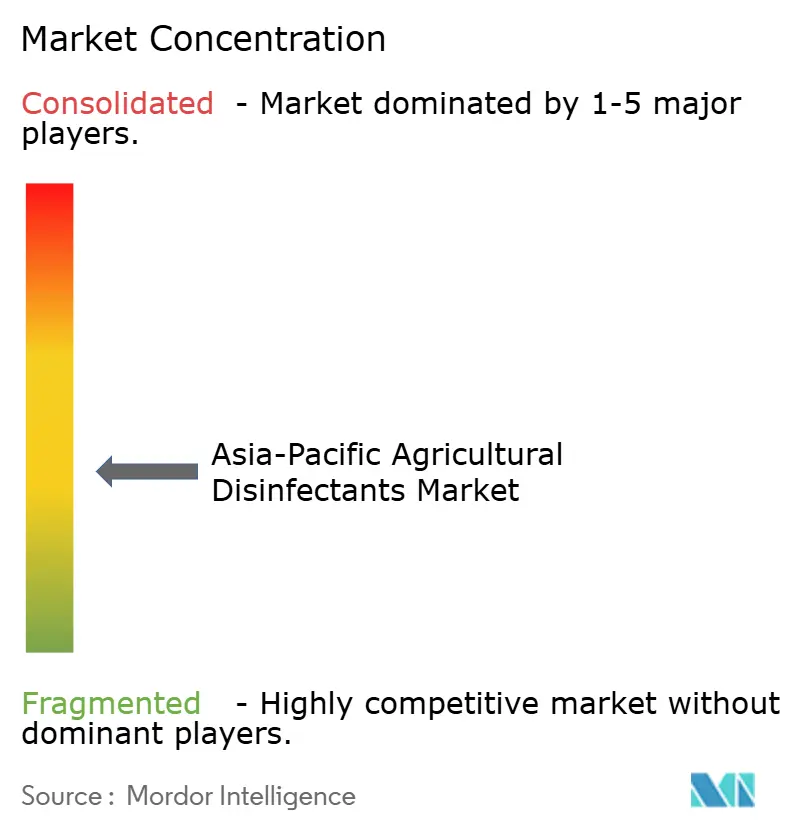
| Market Concentration | Medium |
Major Players *Disclaimer: Major Players sorted in no particular order Image © Mordor Intelligence. Reuse requires attribution under CC BY 4.0. | |
Asia-Pacific Agricultural Disinfectants Market Analysis by Mordor Intelligence
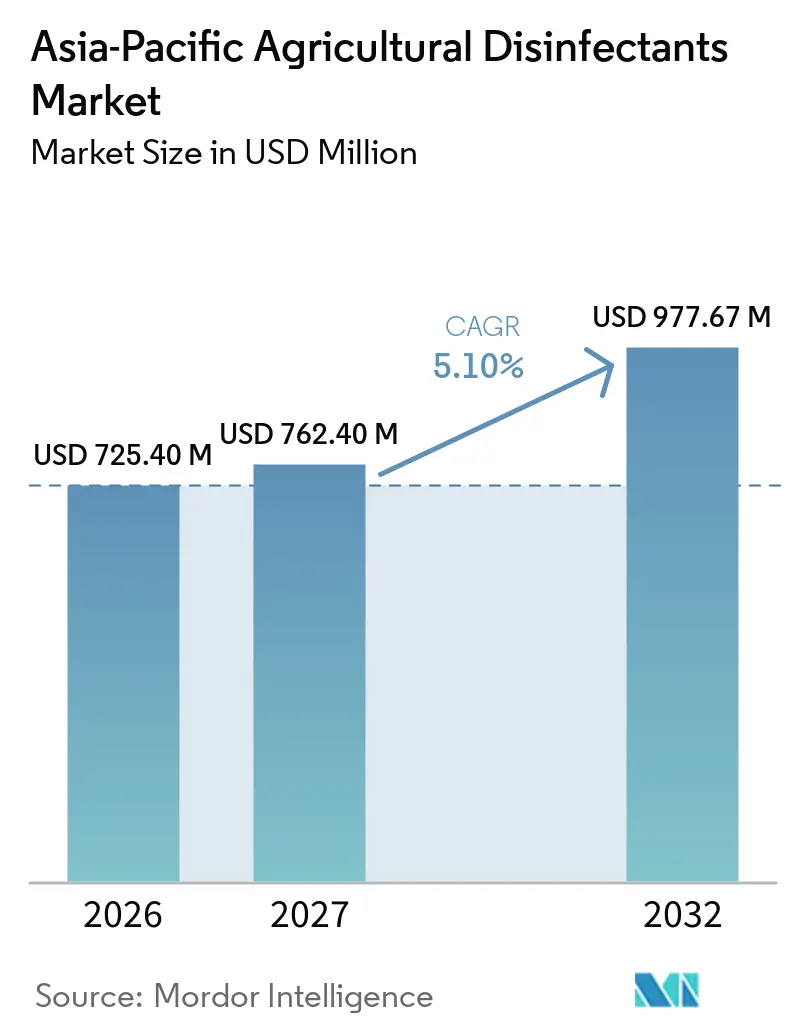
The Asia-Pacific agricultural disinfectants market size was valued at USD 725.40 million in 2026 and is forecast to grow from USD 762.40 million in 2027 to USD 977.67 million by 2032, at a CAGR of 5.10% from 2027 to 2032.
Agricultural disinfectants play a vital role in maintaining hygiene in farming environments and preventing disease spread among crops and livestock. The Asia-Pacific region, characterized by diverse farming practices and rapid industrialization, represents a significant market for these products.
The region's extensive agricultural operations and varied farming systems necessitate substantial use of agricultural disinfectants. Asia-Pacific encompasses major agricultural nations, including China, India, Japan, Australia, and Indonesia. According to 2023 World Bank data, India holds the second position globally with 156.1 million hectares of arable land, while China ranks fourth with 119.5 million hectares. The scale of these agricultural lands increases disease risks, prompting widespread adoption of agricultural disinfectants to protect the health and productivity of agricultural systems. The growth in protected cultivation practices has also increased the demand for agricultural disinfectants in the Asia-Pacific region.
The expansion of livestock farms and increased livestock production has intensified focus on sanitization, driving agricultural disinfectant demand. The Agricultural and Processed Food Products Export Development Authority reports that India produced approximately 43% of global buffalo meat in 2021. Maintaining this production level requires livestock facilities to implement strict cleaning and disinfection protocols. These requirements demonstrate the increasing importance of agricultural disinfectants in the region's livestock sector.
Note: Market numbers in this report are based on Mordor Intelligence's proprietary estimation framework, which combines nine months of actuals with Q4 projections for base year 2026.
Asia-Pacific Agricultural Disinfectants Market Trends and Insights
Liquid Disinfectants Hold a Significant Position
Liquid disinfectants maintain a prominent position in the Asia-Pacific agricultural disinfectant market due to their effectiveness and versatility across agricultural applications. These disinfectants offer simple application methods for various surfaces, including equipment, machinery, floors, walls, and water systems through spraying, mopping, or irrigation systems. The ability to adjust concentrations through dilution enables farmers to adapt the products for different agricultural requirements.
The intensification of crop production to address the region's growing food demands has increased disease and pest risks. Higher-density farming operations create conditions that facilitate pathogen spread, including fungi, bacteria, and viruses. Liquid disinfectants serve as essential tools in preventing disease transmission and safeguarding crop health and agricultural yields.
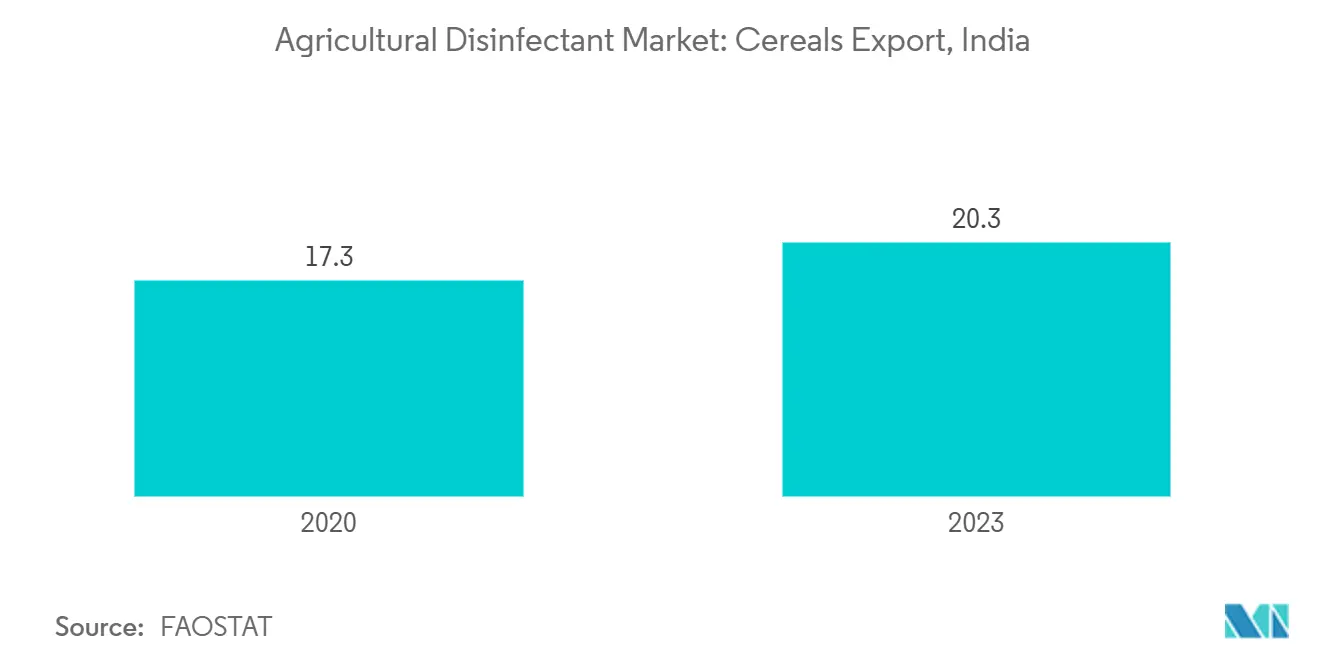
Major agricultural exporters in the Asia-Pacific region, including China, India, and Thailand, rely on liquid disinfectants to meet international food safety requirements. India's cereal exports increased from 17.3 million metric tons in 2020 to 20.3 million metric tons in 2023, according to FAOSTAT. To maintain export market access and comply with global food safety regulations, farmers use liquid disinfectants to eliminate harmful pathogens. Regional regulatory authorities enforce strict hygiene standards, requiring the disinfection of tools, machinery, storage facilities, and fields to prevent contamination and maintain compliance.
China Dominates the Market
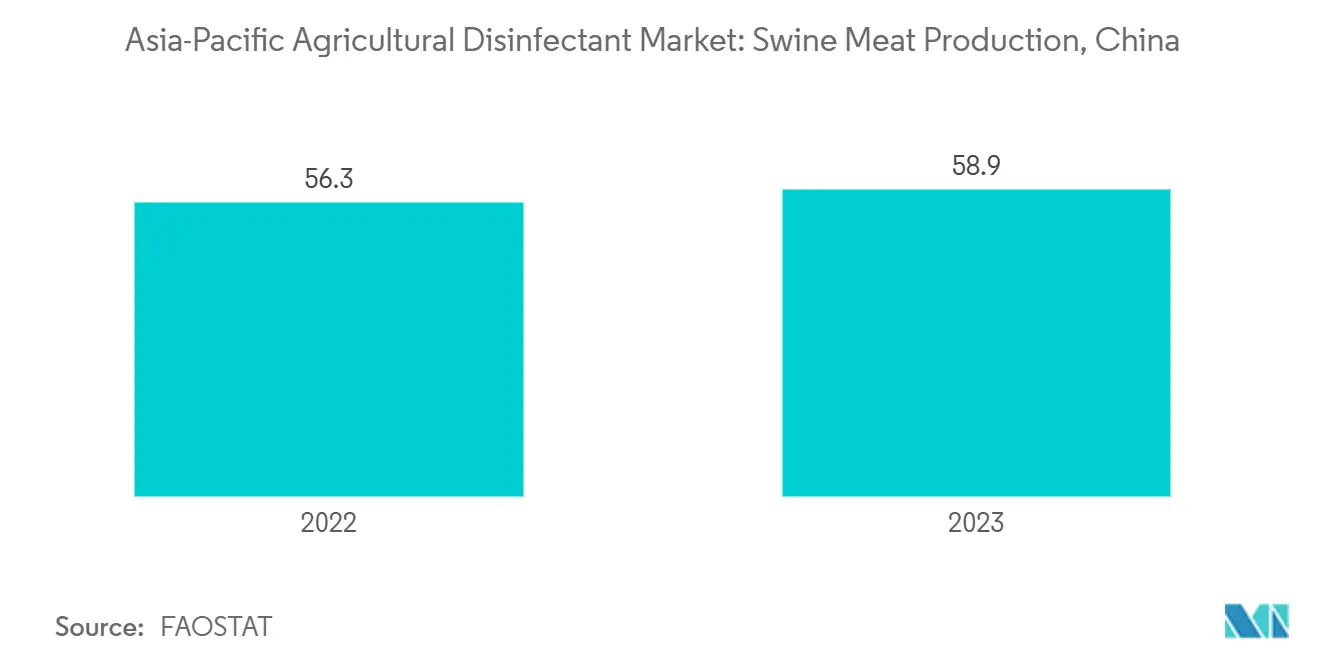
China dominates the Asia-Pacific agricultural disinfectant market due to its extensive agricultural sector, supportive government policies, and expanding food production and export industry. As the world's largest producer of rice, wheat, and corn, along with significant production of fruits, vegetables, and livestock, China's agricultural operations create substantial demand for disinfectants. According to FAOSTAT, China's swine meat production increased from 56.3 million metric tons in 2022 to 58.9 million metric tons in 2023. The country's agricultural scale necessitates agricultural disinfectants to maintain hygiene and prevent disease outbreaks in both crop farming and animal husbandry. The diverse agricultural landscape, spanning various climatic zones and farming practices, requires different types of disinfectant products, including liquid disinfectants, fumigants, and water sanitizers for disease control across farming systems.
The ongoing urbanization in China has accelerated the shift toward industrialized and large-scale farming operations. These modern agricultural facilities require disinfectants to maintain clean and controlled environments for crop production and livestock management. Additionally, the expansion of greenhouse farming, driven by limited land availability, increases the demand for disinfectants to protect crops from pathogens and pests in controlled environments.
China is one of the world's largest exporters of agricultural products, including rice, vegetables, fruit, and meat. According to FAOSTAT, China's fruit exports increased from 5.7 million metric tons in 2022 to 5.8 million metric tons in 2023. To meet international food safety standards, China has increased its use of agricultural disinfectants, ensuring its agricultural products are free from harmful pathogens and diseases. This approach has helped maintain access to international markets.
Competitive Landscape
The Asia-Pacific agricultural disinfectant market is moderately fragmented, with numerous regional and local players. There is also a significant presence of companies offering disinfectants for multiple operations beyond agriculture. Companies operating in the market are focusing on product innovation, strategic partnerships, and business expansion to strengthen their market positions. Nufarm Limited, Fink TEC GmbH, Zoetis Inc., Shijiazhuang Jiuding Animal Pharmaceutical Co., Ltd., and Neogen Corporation are major players involved in strategic moves, such as mergers and acquisitions, joint ventures, and collaborations.
Asia-Pacific Agricultural Disinfectants Industry Leaders
-
Zoetis Inc.
-
Nufarm Limited
-
FINK TEC GmbH
-
Neogen Corporation
-
Shijiazhuang Jiuding Animal Pharmaceutical Co., Ltd.
- *Disclaimer: Major Players sorted in no particular order
Recent Industry Developments
- November 2025: LANXESS Biosecurity Solutions introduced TH4+, BioVX, Virkon H20, and Glutex GQ1 in the Indian market at the Poultry India Expo. TH4+ is a broad-spectrum liquid farm disinfectant, while BioVX is a broad-spectrum powder disinfectant. The products are intended to support farm hygiene, disease prevention, and biosecurity, strengthening the adoption of agricultural disinfectants in livestock farming.
- May 2025: Rosun Disinfection Pharmaceutical showcased its Potassium Bisulfate Disinfectant Powder at the China Animal Husbandry Expo in Qingdao. The disinfectant is used for drinking-water disinfection and livestock-housing sanitation, supporting pathogen control and biosecurity in animal production.
Asia-Pacific Agricultural Disinfectants Market Report Scope
Agricultural disinfectants are chemicals or solutions used to eliminate harmful microorganisms, including bacteria, viruses, fungi, and pathogens from agricultural environments. These disinfectants maintain hygiene in farms, greenhouses, and processing facilities to protect crops and livestock from diseases and ensure food safety. The Asia-Pacific Agricultural Disinfectants Market is segmented into Chemical Type (Quaternary Ammonium Chloride Salts, Hydrogen Dioxide and Peroxyacetic Acid, Hypochlorites and Halogens, and Other Chemical Types), Form (Powder and Liquid), End-Use (Livestock Farming and Crop Cultivation), Application (Surface, Aerial, and Water Sanitizing), and Geography (China, India, Australia and Rest of Asia-Pacific). The report offers the market sizes and forecasts in value (USD) for all the above segments.
By Chemical Type
| Quaternary Ammonium Chloride Salts |
| Hydrogen Dioxide and Peroxyacetic Acid |
| Hypochlorites and Halogens |
| Other Chemical Types |
By Form
| Liquid |
| Powder |
By Application
| Surface |
| Aerial |
| Water Sanitizing |
By End-Use
| Livestock Farming |
| Crop Cultivation |
By Geography
| China |
| India |
| Australia |
| Rest of Asia-Pacific |
| By Chemical Type | Quaternary Ammonium Chloride Salts |
| Hydrogen Dioxide and Peroxyacetic Acid | |
| Hypochlorites and Halogens | |
| Other Chemical Types | |
| By Form | Liquid |
| Powder | |
| By Application | Surface |
| Aerial | |
| Water Sanitizing | |
| By End-Use | Livestock Farming |
| Crop Cultivation | |
| By Geography | China |
| India | |
| Australia | |
| Rest of Asia-Pacific |
Key Questions Answered in the Report
What is the forecasted size of the Asia-Pacific agricultural disinfectants market?
The Asia-Pacific agricultural disinfectants market is forecast to reach USD 977.67 million by 2032.
What is the current size of the Asia-Pacific agricultural disinfectants market?
The Asia-Pacific agricultural disinfectants market was valued at USD 725.40 million in 2026.
Who are the key players in the Asia-Pacific agricultural disinfectants market?
Zoetis Inc., Nufarm Limited, FINK TEC GmbH, Neogen Corporation, and Shijiazhuang Jiuding Animal Pharmaceutical Co., Ltd. are the major companies operating in the Asia-Pacific agricultural disinfectants market.
What are the major factors driving the Asia-Pacific agricultural disinfectants market?
The market is driven by increasing demand for food safety, rising awareness of disease prevention, and advancements in disinfectant technologies.