
Artificial Intelligence In Ultrasound Imaging Market Size and Share
Market Overview
| Study Period | 2020 - 2031 |
|---|---|
| Market Size (2026) | USD 2.33 Billion |
| Market Size (2031) | USD 9.27 Billion |
| Growth Rate (2026 - 2031) | 31.81 % |
| Fastest Growing Market | Asia-Pacific |
| Largest Market | North America |
| Market Concentration | Medium |
Major Players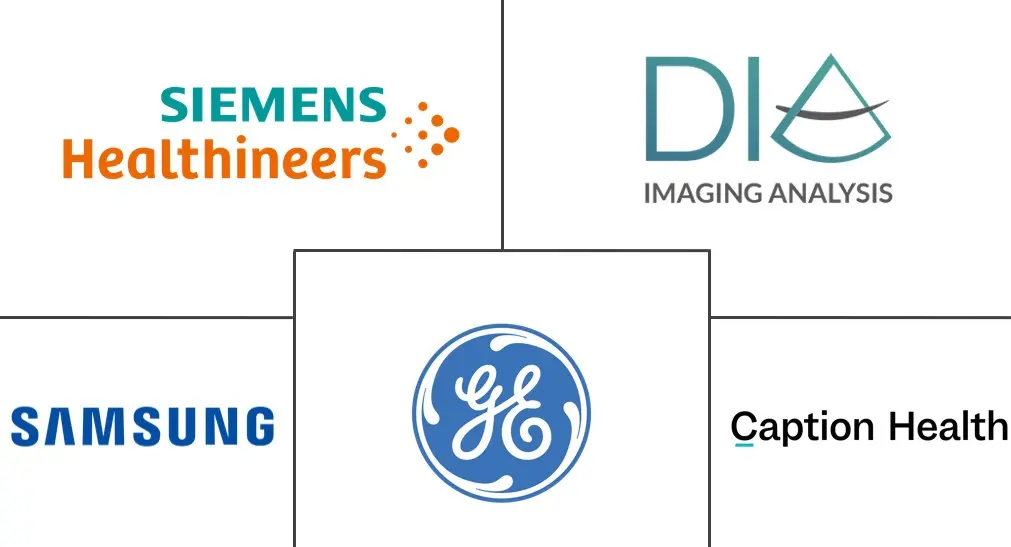 *Disclaimer: Major Players sorted in no particular order Image © Mordor Intelligence. Reuse requires attribution under CC BY 4.0. | |
Artificial Intelligence In Ultrasound Imaging Market Analysis by Mordor Intelligence
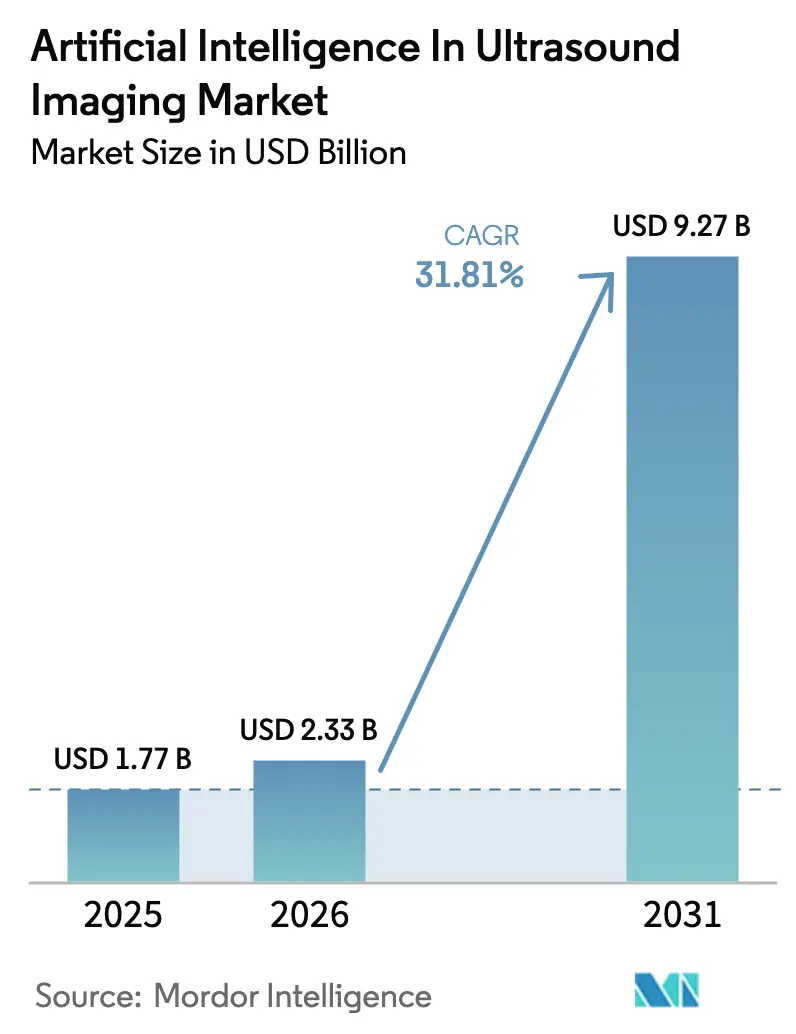
The AI in ultrasound imaging market size in 2026 is estimated at USD 2.33 billion, growing from 2025 value of USD 1.77 billion with 2031 projections showing USD 9.27 billion, growing at 31.81% CAGR over 2026-2031. Software-defined algorithms are rapidly replacing operator-dependent scanning, and reimbursement codes for AI-enabled echocardiography are accelerating enterprise adoption. Continuous miniaturization makes portable probes viable in primary care, while regulatory clarity from the FDA and Europe’s AI Act has shortened commercialization cycles. Strategic acquisitions by major device vendors signal an industry pivot toward full-stack AI platforms that link acquisition, interpretation, and reporting in a single workflow. In parallel, point-of-care ultrasound (POCUS) and wearable patches expand the addressable base, helping healthcare systems mitigate radiologist shortages and improve diagnostic consistency.
Key Report Takeaways
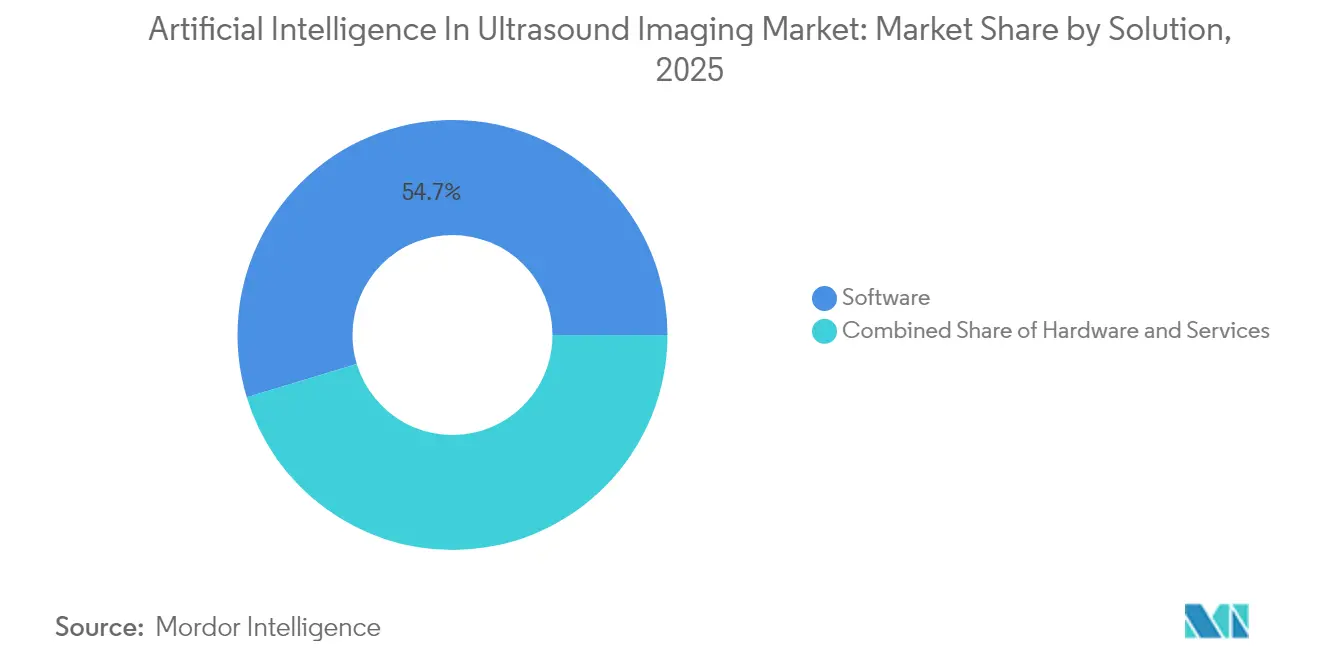
- By solution, software held 54.67% of the AI in ultrasound imaging market share in 2025, whereas services are projected to grow at 33.18% CAGR through 2031.
- By technology, machine learning led with 42.74% revenue share in 2025; context-aware computing is forecast to expand at 33.05% CAGR to 2031.
- By device type, handheld and probe-based systems captured 35.22% revenue in 2025; wearable and patch devices are set to rise at 33.29% CAGR through 2031.
- By imaging mode, 2-D retained 36.58% share in 2025, while volumetric imaging is poised for 33.64% CAGR to 2031.
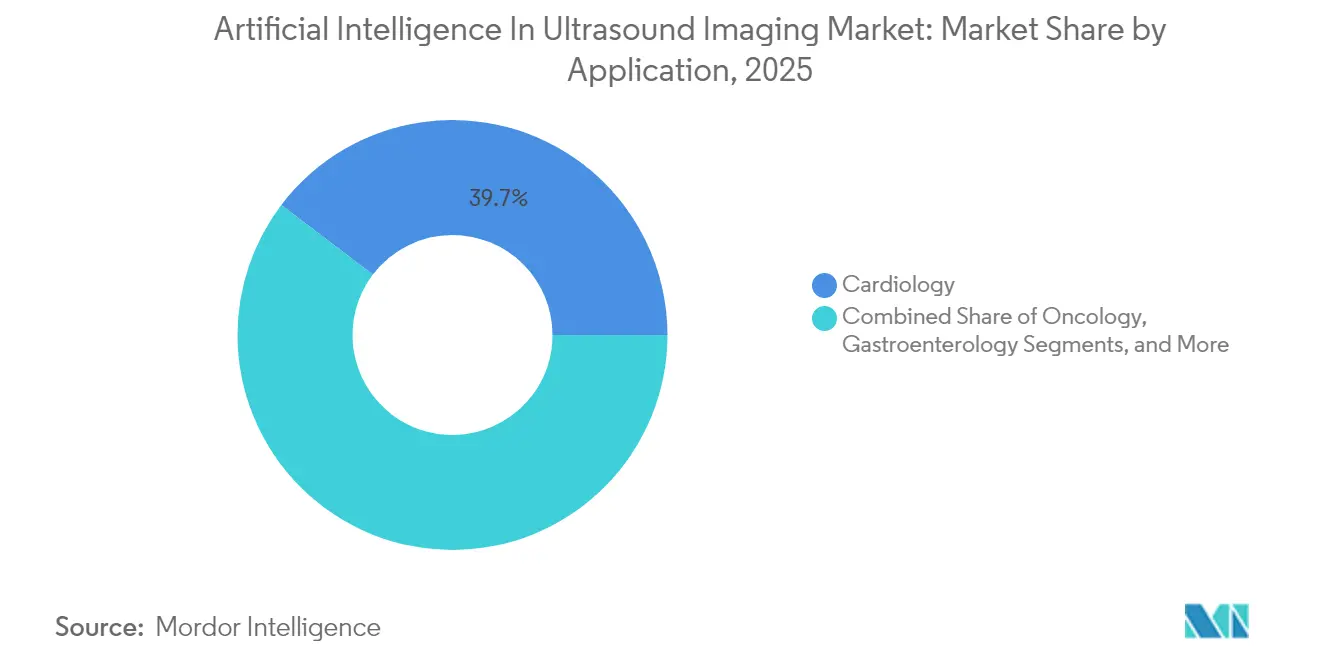
- By application, cardiology accounted for 39.66% of the AI in ultrasound imaging market size in 2025; obstetrics and gynecology will accelerate at 33.12% CAGR through 2031.
- By geography, North America dominated with 47.62% share in 2025; Asia-Pacific will grow fastest at 33.74% CAGR between 2026 and 2031.
Note: Market size and forecast figures in this report are generated using Mordor Intelligence’s proprietary estimation framework, updated with the latest available data and insights as of 2026.
Market Trends and Insights
Drivers Impact Analysis of Artificial Intelligence In Ultrasound Imaging Market*
| Driver | (~) % Impact on CAGR Forecast | Geographic Relevance | Impact Timeline |
|---|---|---|---|
| Rise in chronic diseases & aging population | +8.2% | Global, with concentration in North America & Europe | Long term (≥ 4 years) |
| Radiologist workload pressures & staffing shortages | +7.8% | Global, acute in North America & Western Europe | Medium term (2-4 years) |
| Government incentives & funding for AI health tech | +6.1% | APAC core, spill-over to MEA and Latin America | Medium term (2-4 years) |
| Rapid POCUS adoption with integrated AI | +5.3% | Global, early gains in ambulatory settings | Short term (≤ 2 years) |
| CMS reimbursement codes for AI echocardiography software | + 2.9% | United States, potential expansion to Canada | Short term (≤ 2 years) |
| Cloud-native AI platforms enabling tele-ultrasound in LMICs | +2.8% | Sub-Saharan Africa, Southeast Asia, Latin America | Long term (≥ 4 years) |
| Source: Mordor Intelligence | |||
Rise in Chronic Diseases & Aging Population
Cardiovascular conditions remain the leading global cause of mortality, while diabetes prevalence is climbing in developing economies [1]World Health Organization, “Cardiovascular Diseases (CVDs),” who.int. These demographics create permanent demand for imaging that can be performed outside tertiary centers. AI-guided ultrasound lets non-specialists conduct diagnostic-grade scans, multiplying capacity without a proportional increase in radiologists. Chronic-disease pathways benefit because longitudinal monitoring becomes feasible at the bedside, improving adherence to value-based-care metrics and generating recurring software revenue for vendors.
Radiologist Workload Pressures & Staffing Shortages
Imaging volumes outstrip workforce growth. The American College of Radiology cites persistent staffing gaps across rural and urban hospitals [2]American College of Radiology, “Imaging Workforce Trends,” acr.org. Sonographers are retiring at 60.8 years on average, earlier than the general labor forc. AI reduces interpretation time by automating measurements and triaging normal studies, freeing experts for complex tasks. Emergency departments benefit first, where delays directly affect outcomes.
Government Incentives & Funding for AI Health Tech
The U.S. Department of Health and Human Services 2025 Strategic Plan prioritizes democratizing AI tools across underserved region. China, India, and South Korea have earmarked multi-year grants for ultrasound AI to bolster maternal and cardiac programs. Europe’s AI Act provides predictable approval pathways, encouraging cross-border commercialization [3]European Commission, “Proposal for a Regulation Laying Down Harmonised Rules on AI,” eur-lex.europa.eu. Grants often bundle staff training, smoothing implementation.
Rapid POCUS Adoption with Integrated AI
WONCA Europe endorses POCUS as a first-line diagnostic tool when augmented by AI guidance; clinicians report higher confidence and patient acceptability. Portable scanners save 21% versus legacy imaging workflows, and AI further trims operator training timelines. Portability unlocks home health, ambulance, and remote-clinic use cases, widening the AI in ultrasound imaging market.
Restraints Impact Analysis of Artificial Intelligence In Ultrasound Imaging Market*
| Restraint | (~) % Impact on CAGR Forecast | Geographic Relevance | Impact Timeline |
|---|---|---|---|
| High procurement & maintenance costs | -4.7% | Global, acute in price-sensitive emerging markets | Medium term (2-4 years) |
| Mounting data-privacy and cybersecurity concerns | -3.2% | Global, stringent in EU & North America | Long term (≥ 4 years) |
| Clinician skepticism & training gaps | -2.8% | Global, pronounced in traditional healthcare systems | Medium term (2-4 years) |
| Regulatory ambiguity for AI-guided home ultrasound | -1.9% | North America & Europe, emerging in APAC | Long term (≥ 4 years) |
| Source: Mordor Intelligence | |||
High Procurement & Maintenance Costs
Budget constraints remain the top adoption barrier, particularly for independent clinics. Department heads cite funding gaps despite proven efficacy. Total cost of ownership spans cloud compute fees, license renewals, and staff training. Nonetheless, cross-modality platforms show 451% five-year ROI once scaled across CT, MRI, and ultrasound, and vendors now offer subscription or outcome-linked pricing to soften upfront hits.
Mounting Data-Privacy and Cybersecurity Concerns
FDA bulletins have flagged exploitable vulnerabilities in connected ultrasound gear. HIPAA compliance grows tougher when images transit multiple jurisdictions, demanding sophisticated governance. Privacy-preserving analytics—homomorphic encryption and federated learning—are emerging but add complexity. Procurement teams now mandate robust security audits before signing AI contracts.
*Our forecasts treat driver/restraint impacts as directional, not additive. The impact forecasts reflect baseline growth, mix effects, and variable interactions.
Artificial Intelligence In Ultrasound Imaging Market Segment Analysis
By Solution:
Software Dominance Drives InnovationSoftware accounted for 54.67% of the AI in ultrasound imaging market share in 2025. Vendors focus on interoperable algorithms that sit on legacy probes, minimizing capital expenditure. The services line, growing at 33.18% CAGR, reflects rising demand for workflow integration, user training, and algorithm-performance optimization. Health systems seek proof that deployment improves throughput and revenue capture, shifting negotiations toward outcome-based contracts. Meanwhile, hardware makers embed on-device AI accelerators to reduce latency, yet buyers still gravitate to software-first stacks that remain brand-agnostic.
Over the forecast horizon, the AI in ultrasound imaging market will see layered platform ecosystems. Market leaders have opened software development kits that let third parties release specialty plug-ins. Butterfly Network’s Garden AI program exemplifies this move, encouraging cardiovascular, obstetric, and liver-disease modules on a single handheld chassis. Services revenue rises in parallel because each algorithm iteration requires continuous validation, reporting, and clinician retraining.


By Technology:
Machine Learning Leads, Context-Aware Computing SurgesMachine-learning models held 42.74% revenue in 2025 thanks to proven gains in automated ejection-fraction measurement and nodule detection. Context-aware computing, projected to grow 33.05% CAGR, builds on this foundation by interpreting ambient data such as patient vitals and provider workflow, then tailoring real-time cues. Natural-language processing adds dictation and auto-reporting, reducing paperwork load, while advanced computer vision handles 3-D reconstructions in labor-intensive specialties.
Context-aware engines resonate strongly in emergency rooms where triage speed is critical. AI cues adapt to trauma protocols, highlighting free fluid in the abdomen during FAST exams. Such specificity pushes adoption deeper into critical-care pathways and expands the overall AI in ultrasound imaging market. Vendors combining multiple modalities—vision, NLP, and signal processing—create high switching costs, an essential moat as more entrants crowd the space.
By Device Type:
Handheld Dominance, Wearable InnovationHandheld probes contributed 35.22% revenue in 2025 as clinicians valued flexibility and lower price points. Enhanced with semiconductor-on-chip designs, new robes function for eight hours on a single charge, supporting rural rounds. Wearables, forecast to grow 33.29% CAGR, turn ultrasound into a continuous-monitoring modality. MIT researchers recently demonstrated a patch that performs automated breast exams, potentially shifting screening into the home.
Hospitals still rely on cart systems for high-resolution studies; however, hybrid laptop units are cannibalizing mid-range carts as departments standardize on multipurpose fleets. Vendors now position wearables as adjuncts rather than replacements, enabling nocturnal cardiac or renal monitoring without nursing intervention. As reimbursement structures adapt, continuous acquisition could redefine how the AI in ultrasound imaging market size is measured, shifting from capital sales to subscription analytics.
By Imaging Mode:
2-D Foundation, Volumetric Growth2-D mode retained 36.58% share in 2025 because automation of diameter measurements and grayscale categorization yields immediate efficiency. The volumetric segment, with a 33.64% CAGR outlook, benefits from AI that aligns, reconstructs, and color-codes voxels in real time. Siemens Healthineers’ real-time 3-D shear-wave package has cut liver-fibrosis exam times by 48% during pilot programs.
Color-flow Doppler and elastography also accelerate, powered by AI that suppresses artefacts and quantifies stiffness more reliably than manual techniques. Contrast-enhanced ultrasound gains traction as algorithms predict optimum bolus timing, maximizing diagnostic yield without escalating dose. The AI in ultrasound imaging market thus shifts toward higher-complexity modes once thought niche, broadening the value proposition beyond routine scans.
By Application:
Cardiology Leadership, Obstetrics AccelerationCardiology commanded 39.66% of the 2025 revenue base. Automated strain analysis and quantification of diastolic function underpin clear clinical utility in heart-failure management. Obstetrics and gynecology, set for 33.12% CAGR, relies on AI to flag structural anomalies and monitor growth curves. Samsung Medison’s newly integrated Sonio algorithms detect 165 fetal malformations and generate instant reports, trimming scan duration by 30%.
Gastroenterology sees momentum as AI improves liver steatosis scoring, while musculoskeletal practices adopt guided needle-placement tools. Oncology teams employ AI for tumor volumetry, feeding response data straight into treatment-planning systems. As subspecialty modules proliferate, the AI in ultrasound imaging market turns into a mosaic of micro-workflows, each contributing incremental volume and reinforcing platform stickiness.
By End User:
Hospital Dominance, Ambulatory ExpansionHospitals delivered 58.12% of revenue in 2025, leveraging enterprise PACS and analytics dashboards. Ambulatory clinics and urgent-care chains will post 33.48% CAGR because handheld AI probes let primary-care physicians rule out serious pathology on the spot. The University of Rochester Medical Center rolled out 862 devices across internal medicine, cardiology, and emergency services, boosting charge capture 116% in the first year.
Diagnostic imaging centers integrate AI to standardize reports across multi-site franchises, while home-care agencies pilot remote sonography with cloud-linked AI supervision. As aging populations prefer in-home services, payer policies continue to evolve, further enlarging the AI in ultrasound imaging market size for community-centric providers.
Geography Analysis
North America Artificial Intelligence in Ultrasound Imaging Market
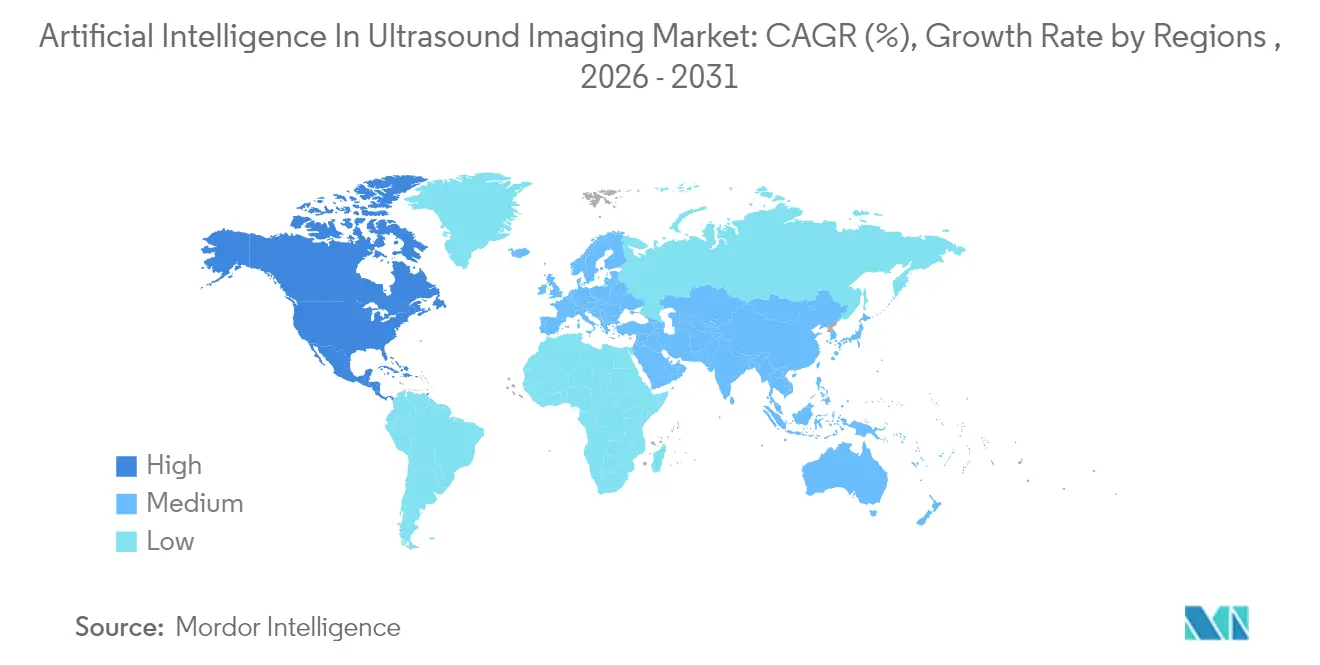
North America retained 47.62% share in 2025, bolstered by CMS reimbursement for AI echocardiography and a streamlined FDA approval framework. Leading health systems bundle AI ultrasound into cardiovascular centers of excellence, emphasizing outcome-based purchasing. Venture capital flows remain strong, but workforce shortages sustain the need for automation, thereby reinforcing future capital spending.
APAC Artificial Intelligence in Ultrasound Imaging Market
Asia-Pacific is the fastest-growing block with a 33.74% CAGR outlook. China’s Healthy China 2030 plan and India’s Ayushman Bharat initiative earmark funds for maternal-fetal diagnostics, while South Korea offers R&D tax credits for local AI developers. Cross-border partnerships, such as UltraSight’s alliance with SELVAS Healthcare to distribute cardiac AI throughout Southeast Asia, exemplify go-to-market tactics that marry international algorithms with local channel expertise.
Europe Artificial Intelligence in Ultrasound Imaging Market
Europe pursues measured expansion rooted in ethical governance. The AI Act’s risk-classification scheme compels vendors to document datasets and bias-mitigation efforts, but it also gives health systems confidence to procure at scale. Germany and the Nordic countries champion national ultrasound registries that feed back into AI model retraining, forming a virtuous cycle of quality assurance. Collectively, these trends consolidate the AI in ultrasound imaging market across advanced and emerging economies alike.

Regulatory Landscape
Regulation for AI-enabled ultrasound covers device approvals, lifecycle change management, and data governance. In the United States, the FDA has moved toward clearer pathways for iterative model updates through Predetermined Change Control Plans (PCCPs), including final PCCP guidance issued on December 3, 2024 and follow-on implementation recommendations released on August 18, 2025. On June 17, 2026, the FDA classified radiological machine learning-based quantitative imaging software with PCCP into Class II under 21 CFR 892.2055, reinforcing a scalable route for software updates without repeated premarket submissions when changes stay within an approved plan.
In Europe, obligations are tightening alongside harmonized AI governance. Draft provisions released by the European Commission on June 1, 2026 included a proposal that portable ultrasound devices sold in the EU from January 2027 and classified Class IIa and above must include CE-certified AI-assisted diagnostic modules, raising the compliance bar for handheld and point-of-care platforms. In Asia, China’s NMPA has published multiple technical review guides for AI-enabled medical devices in radiology and imaging by 2025, including expectations around patient-data de-identification, which affects cross-border dataset strategy and postmarket monitoring design.
Value Chain Analysis
The value chain for AI in ultrasound imaging connects ultrasound OEMs (cart, compact, handheld, and emerging wearable platforms), transducer and semiconductor supply, AI model development and validation, regulatory and quality management, and systems integration (PACS, EHR, reporting). Clinical deployment then feeds into ongoing performance management, including monitoring, updates, cybersecurity, and user training. Major device manufacturers such as GE HealthCare, Siemens Healthineers, and Samsung Medison increasingly position themselves as orchestrators of a full-stack workflow that bundles acquisition, AI-assisted guidance and quantification, and reporting, while specialized software developers contribute niche algorithms that expand applications across cardiology, OB-GYN, and other specialties.
Ecosystem consolidation and platformization are also changing how value is captured across the chain. A representative move is Samsung Medison’s May 2024 acquisition of French AI ultrasound startup Sonio (USD 92.7 million), which brought algorithm capability closer to the OEM layer and supports tighter integration with installed hardware fleets. At the same time, stakeholders are operationalizing Good Machine Learning Practice (GMLP) and adaptive software architectures supported by PCCP-style frameworks, shifting competition toward continuous validation, update governance, and multi-vendor generalization rather than one-off algorithm releases.
Competitive Landscape
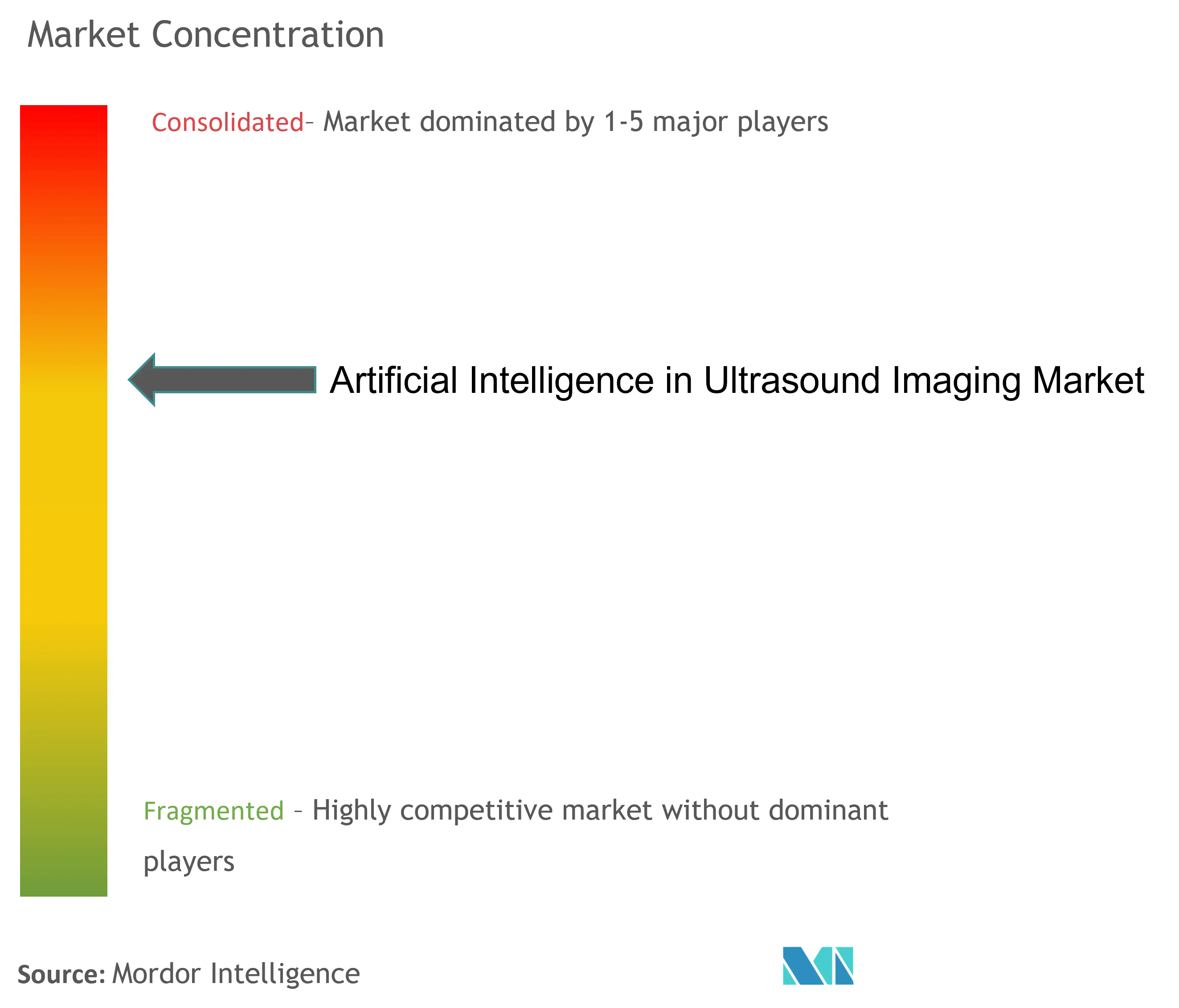
The competitive field is moderately fragmented but tilting toward consolidation. Legacy vendors—GE HealthCare, Siemens Healthineers, Philips, and Samsung Medison—control distribution networks and are snapping up niche algorithm firms to close capability gaps. GE HealthCare’s USD 53 million buyout of Intelligent Ultrasound added real-time needle-tracking to its maternal-fetal line.
Pure-plays such as Butterfly Network and Exo employ semiconductor-on-chip designs that lower cost and move AI inference to the probe, enabling offline use. Exo’s purchase of Medo.ai deepened its musculoskeletal and abdominal libraries, while Butterfly’s USD 76 million financing round funds global expansion of its subscription model. In wearables, academic spin-offs partner with contract manufacturers to scale production, targeting oncology and nephrology tracking niches.
Competition increasingly centers on integration depth rather than isolated accuracy metrics. Health systems demand unified dashboards that feed billing codes directly into EHRs and prove quantifiable gains in throughput, diagnostic concordance, and patient outcomes. Vendors able to present longitudinal ROI evidence win multi-year enterprise contracts, tightening the moat around end-to-end ecosystems and propelling AI in ultrasound imaging market penetration.
Artificial Intelligence In Ultrasound Imaging Industry Leaders
Siemens Healthcare GmbH
Samsung
General Electric Company
DiA Imaging Analysis
Caption Health
- *Disclaimer: Major Players sorted in no particular order
Artificial Intelligence In Ultrasound Imaging Market Companies Covered in this Report
- Siemens Healthineers
- GE Healthcare
- Koninklijke Philips
- Samsung Group
- Butterfly Network Inc.
- Qure.ai
- DiA Imaging Analysis
- Exo Imaging (Medo)
- Caption Health (GE)
- EchoNous Inc.
- Clarius Mobile Health
- Ultromics
- Sonio
- Viz.ai
- Aidoc
- RapidAI
- Riverain Technologies
- DeepSight Technology
- DESKi
- Ultrasound AI Inc.
- EchoPixel
Read Analysis of Artificial Intelligence In Ultrasound Imaging Companies

Market Opportunities and Future Outlook
A key whitespace remains in scaling AI-guided acquisition beyond expert sonographers, particularly for point-of-care and resource-limited environments where access and training are still binding constraints. Evidence from clinical evaluations cited in recent literature indicates that AI-assisted acquisition platforms can guide novice users and reduce time to diagnosis in non-inferiority settings, supporting use cases where standardized scans are needed without extensive operator experience. Vendors can therefore package onboarding, workflow integration, and ongoing monitoring services alongside software licenses, especially as health systems standardize deployments across departments and sites.
Clinical research and enterprise workflow automation also offer a monetization pathway, since automated ultrasound quantification can support consistent endpoints for multi-site trials and reduce dependence on centralized expert readers in cardiac and pulmonary studies. Regulatory mechanisms that formalize controlled model updates, such as the FDA’s PCCP framework and the June 2026 Class II classification for radiological ML quantitative imaging software with PCCP, allow more frequent algorithm iteration under defined change plans. In parallel, EU draft provisions published in June 2026 that propose AI module requirements for certain portable ultrasound devices from January 2027 lift demand for compliant, CE-ready AI packages, which is pushing vendors to invest in traceable datasets, bias mitigation documentation, and cybersecurity-by-design as commercial differentiators.
Recent Industry Developments in Artificial Intelligence In Ultrasound Imaging Market
- March 2026: Samsung Medison unveiled One Platform ultrasound brand and V4 system at KIMES 2026 in Seoul. The launch expands AI-enabled workflow across platforms and strengthens cross-device AI orchestration to support enterprise adoption and multi-department interoperability.
- March 2026: GE HealthCare FDA 510(k) clearance for Vivid Pioneer cardiovascular ultrasound system (K251169). Regulatory approval enables AI-enabled cardiac imaging in enterprise settings. It strengthens GE's presence in AI-assisted cardiovascular workflows and supports bundled platform offerings.
- February 2026: Samsung Medison Global launch of V4 and EVO Q10 ultrasound systems at WHX Dubai 2026. New AI-enabled system introductions target enterprise ultrasound. The rollout reinstates Samsung’s AI-enabled portfolio expansion and supports competitive positioning in mid-to-high-end markets.


Artificial Intelligence In Ultrasound Imaging Market Report Scope and Research Methodology
Market Definition and Coverage
For this methodology, the market includes revenues generated from artificial intelligence used in ultrasound imaging workflows, covering AI-enabled hardware, software, and related services that support image acquisition, analysis, and reporting across clinical settings.
Scope exclusions: We exclude non-ultrasound AI imaging tools and general hospital IT that is not directly tied to ultrasound image generation or interpretation.
Segments Covered in This Report
- By Solution
- Hardware
- Software
- Services
- By Technology
- Machine Learning
- Natural Language Processing
- Computer Vision
- Context-Aware Computing
- Other Technologies
- By Device Type
- Cart / Trolley-based
- Compact / Laptop
- Handheld / Probe-based
- Wearable & Patch Ultrasound
- By Imaging Mode
- 2-D
- Doppler & Color Flow
- 3-D / 4-D & Volumetric
- Elastography
- Contrast-Enhanced Ultrasound
- By Application
- Cardiology (Echocardiography)
- Obstetrics & Gynecology
- Gastroenterology / Hepatology
- Musculoskeletal & Sports Medicine
- Oncology
- Other Applications
- By End User
- Hospitals
- Diagnostic Imaging Centers
- Ambulatory & Physician Clinics
- Point-of-Care Settings (ICU, ED)
- Home-care Ecosystem
- By Geography
- North America
- United States
- Canada
- Mexico
- Europe
- Germany
- United Kingdom
- France
- Italy
- Spain
- Rest of Europe
- Asia-Pacific
- China
- Japan
- India
- South Korea
- Australia
- Rest of Asia-Pacific
- Middle East
- GCC
- South Africa
- Rest of Middle East
- South America
- Brazil
- Argentina
- Rest of South America
- North America
Data Sources, Market Sizing, and Validation
Desk Research
Desk research starts by building a fact base around ultrasound procedure use, imaging capacity, and the pace of AI approvals and adoption. Public sources such as the US FDA device databases, the US Centers for Medicare and Medicaid Services (for coding and reimbursement context), OECD health statistics, and World Health Organization health data help set demand anchors and system-level constraints.
We also review peer reviewed clinical literature on AI-assisted ultrasound performance, along with professional society publications (such as radiology and ultrasound associations) that signal practice shifts and guidelines. Company annual reports, earnings materials, and reputable press are used to understand product positioning, partnership patterns, and the direction of recurring software revenue. In a few cases, we also use paid subscriptions for company financials and patent databases to confirm filing trends and technology focus. The desk sources listed here are illustrative only, and many other public documents and data tables were also used for cross-checking and clarification.
Primary Interviews and Surveys
Primary work is used to test how AI is being purchased and deployed in ultrasound, and to pressure-check assumptions on attach rates, pricing structure (license, subscription, usage), and the share of scans that realistically touch AI features. We interview a mix of clinical users, procurement or operations leaders, and product or commercialization experts across major regions, and then use their input to reconcile differences seen in secondary signals and to finalize the sizing logic.
Distribution of primary research fieldwork respondents
| Company type | Respondent position | Region |
|---|---|---|
| Top tier: 37% | CXOs: 18% | APAC: 47% |
| Mid tier: 41% | Functional/Unit leaders: 32% | EMEA: 35% |
| Smaller Players: 22% | Managers: 50% | Americas: 18% |
Market-Sizing & Forecasting
The core model starts from a top-down demand pool built from ultrasound usage and equipment footprint indicators, then translated into an AI-addressable revenue stream using penetration and monetization assumptions. In practice, we tie the revenue build to variables such as the installed base of ultrasound systems by care setting, growth in point-of-care ultrasound use, the share of exams where AI guidance or automated measurements are applied, typical software subscription terms, and service revenue linked to integration and training.
Once the first pass is created, selective bottom-up checks are used to keep totals realistic, including sampled price points for AI modules, channel feedback on attach rates, and supplier-side signals on how often AI is bundled versus sold as an add-on. Where line-item inputs are missing for smaller geographies, the gaps are filled using proxy indicators like healthcare spend trends, imaging utilization patterns, and regulatory clearance timing, and then re-tested through expert feedback.
For forecasting, we use scenario analysis supported by a simple multivariate regression lens on the drivers that most directly move adoption, such as ultrasound procedure growth, staffing constraints, and policy or reimbursement momentum. The final forecasts are adjusted only after the assumptions show consistent behavior across regions and do not break the logic of price by volume over time.
Data Validation & Update Cycle
Outputs are validated through triangulation across independent signals, followed by checks for extreme growth steps, unrealistic price curves, and region totals that do not align with known ultrasound usage patterns. Our team re-reads the model with a second analyst, and any large variance against interview expectations triggers re-contact or additional clarification so the assumption is not left unresolved.
The report is refreshed annually, and interim updates are completed when material events occur, such as new regulatory actions, major pricing moves, or meaningful shifts in clinical adoption. Before delivery, a final review pass is done so that the latest public data points and recent expert feedback are reflected in the numbers clients receive.
Mordor Intelligence's Ultrasound Imaging Artificial Intelligence Market Size Compared Against Other Published Estimates
Published market sizes for AI in ultrasound imaging often differ because groups count different revenue pools and apply different adoption pacing assumptions. The same term can mean interpretation software to one publisher, but a full workflow stack to another, and those choices change totals quickly.
Some published figures fold in broader AI-enabled ultrasound ecosystem revenue, including adjacent device revenues that are not always tied to AI value capture. In Mordor Intelligence sizing, we count only AI-attributable revenues across ultrasound-specific hardware, software, and services, and we cross-check the adoption curve against installed base signals and interview-tested attach rates before extending the forecast.
Benchmark comparison
| Source | Market Size | Gaps in Research Methodology |
|---|---|---|
| Mordor Intelligence | USD 2.33 B (2026) | |
| Trade Journal A | USD 1.95 B (2024) | Uses an earlier base year and a narrower definition that reads closer to AI software and interpretation tools, which can undercount services and AI-enabled hardware value capture. |
| Industry Publisher B | USD 3.11 B (2025) | Leans toward a broader solution scope and more aggressive penetration assumptions, and it can also blend currency timing and pricing uplift without consistent validation against ultrasound system footprint. |
Taken together, the spread is mostly explained by what gets counted as AI revenue and how quickly adoption is assumed to expand across routine scanning. By keeping inputs tied to observable ultrasound activity and by re-checking pricing and attach-rate assumptions through interviews, we end up with a market size that is easier to trace back to repeatable steps.


Key Questions Answered in the Report
What is the current Artificial Intelligence In Ultrasound Imaging Market size?
The Artificial Intelligence In Ultrasound Imaging Market is projected to register a CAGR of 31.81% during the forecast period (2026-2031)
Who are the key players in Artificial Intelligence In Ultrasound Imaging Market?
Siemens Healthcare GmbH, Samsung, General Electric Company, DiA Imaging Analysis and Caption Health are the major companies operating in the Artificial Intelligence In Ultrasound Imaging Market.
Which is the fastest growing region in Artificial Intelligence In Ultrasound Imaging Market?
Asia-Pacific is the fastest-growing region, projected to expand at 33.74% CAGR through 2031.
Which region has the biggest share in Artificial Intelligence In Ultrasound Imaging Market?
In 2025, the North America accounts for the largest market share in Artificial Intelligence In Ultrasound Imaging Market.
Which solution type leads the AI in ultrasound imaging market?
Software solutions lead, holding 54.67% of AI in ultrasound imaging market share in 2025.
Page last updated on:


 Your data is secure and never sold or shared.


