
Artificial Blood Vessels Market Size and Share
Market Overview
| Study Period | 2020 - 2031 |
|---|---|
| Market Size (2026) | USD 3.45 Billion |
| Market Size (2031) | USD 4.68 Billion |
| Growth Rate (2026 - 2031) | 6.25 % |
| Fastest Growing Market | Asia Pacific |
| Largest Market | North America |
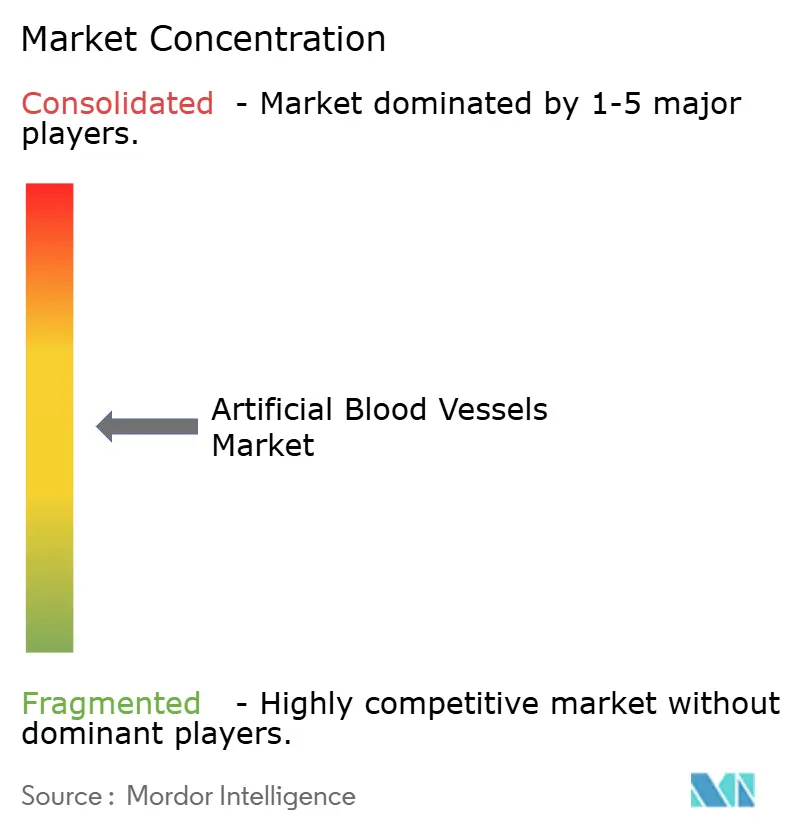
| Market Concentration | Medium |
Major Players *Disclaimer: Major Players sorted in no particular order Image © Mordor Intelligence. Reuse requires attribution under CC BY 4.0. | |
Artificial Blood Vessels Market Analysis by Mordor Intelligence
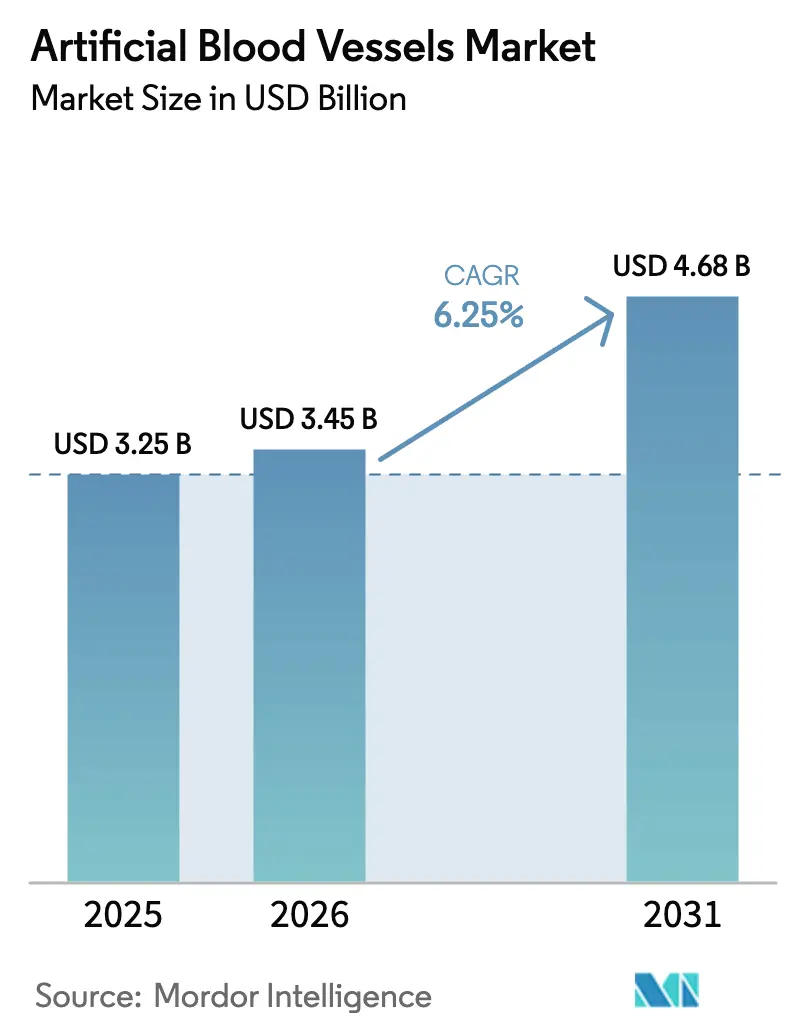
The Artificial Blood Vessels Market size was valued at USD 3.25 billion in 2025 and is estimated to grow from USD 3.45 billion in 2026 to reach USD 4.68 billion by 2031, at a CAGR of 6.25% during the forecast period (2026-2031).
This mid-single-digit trajectory is shaped by three structural forces: rising global cardiovascular and peripheral artery disease incidence, regulatory validation of bioengineered conduits that challenge long-standing polyethylene terephthalate and expanded polytetrafluoroethylene grafts, and defense-funded innovation that is seeding shelf-stable trauma devices for civilian use. Humacyte’s December 2024 FDA clearance of SYMVESS, the first acellular tissue-engineered vessel for extremity trauma, signaled a regulatory inflection point that is accelerating investment in bacterial nanocellulose scaffolds, smart-sensor hybrids, and 3-D-printed patient-specific geometries. Concurrently, the 2024 ACC/AHA peripheral artery disease guideline reaffirmed surgical autogenous vein as the preferred infra-inguinal bypass option, a stance that tempers synthetic graft uptake even as thoracic endovascular aortic repair fuels demand for large-diameter stent-graft systems[1].
Key Report Takeaways
- By application, aortic disease led with 42.56% revenue share in 2025. Traumatic vascular injury is forecast to expand at an 11.25% CAGR to 2031, the fastest among all indications.
- By Polymer Type, Polyethylene terephthalate retained 36.53% of the Artificial Blood Vessels market share in 2025, while bacterial nanocellulose is advancing at a 12.85% CAGR through 2031.
- By End User, Hospitals accounted for a 55.63% slice of the Artificial Blood Vessels market size in 2025; military and emergency trauma centers are growing at a 10.87% CAGR.
- By Device Type, Smart sensor-enabled grafts posted the fastest device-level growth at 13.7% CAGR between 2026 and 2031.
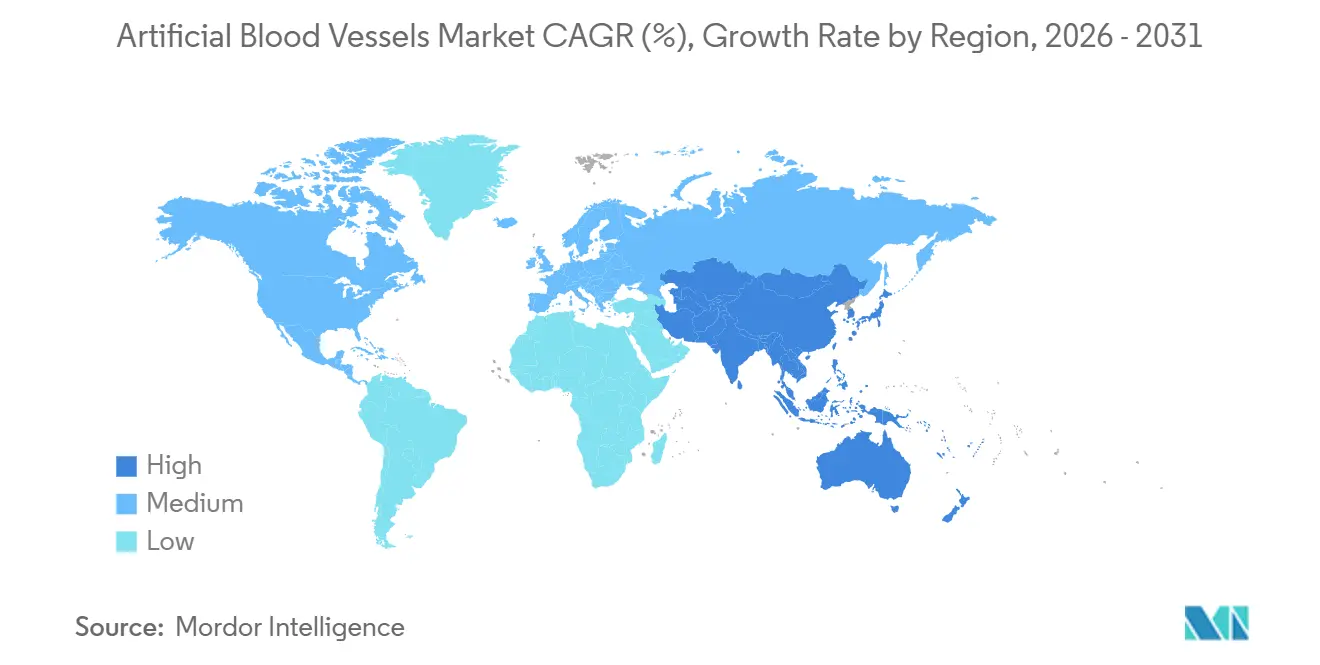
- By geography, North America commanded 42.13% sales in 2025, while Asia-Pacific is projected to deliver a 10.51% CAGR to 2031.
Note: Market size and forecast figures in this report are generated using Mordor Intelligence’s proprietary estimation framework, updated with the latest available data and insights as of January 2026.
Market Trends and Insights
Drivers Impact Analysis of Artificial Blood Vessels Market*
| Driver | (~) % Impact on CAGR Forecast | Geographic Relevance | Impact Timeline |
|---|---|---|---|
| Rising prevalence of cardiovascular & peripheral artery diseases | +1.8% | Global; acute in Asia-Pacific and aging North America & Europe | Long term (≥ 4 years) |
| Growing adoption of minimally-invasive endovascular procedures | +1.3% | North America & Europe lead; Asia-Pacific accelerating | Medium term (2-4 years) |
| Advances in biomaterials & tissue-engineered graft platforms | +1.5% | North America & EU for approvals; China for scale-up | Medium term (2-4 years) |
| Expansion of the global hemodialysis population | +1.2% | North America, Europe, Japan; emerging China & India | Long term (≥ 4 years) |
| 3-D printing and digital-twin personalization | +0.9% | North America & EU early adoption; Asia-Pacific manufacturing | Medium term (2-4 years) |
| Defense-funded trauma programs | +0.6% | U.S. DoD, NATO partners, Asia-Pacific militaries | Short term (≤ 2 years) |
| Source: Mordor Intelligence | |||
Rising Prevalence of Cardiovascular & Peripheral Artery Disease
Peripheral artery disease affected 113 million people worldwide in 2025, including 6.5 million U.S. patients, and prevalence doubles with each decade of life after age 50. The aging demographic profiles of Japan, Germany, and South Korea therefore anchor long-term demand for durable vascular conduits. While supervised exercise therapy now precedes many interventions per the 2024 guideline, patients who progress to revascularization often present with advanced disease that mandates a reliable graft when autogenous vein is unavailable. Consequently, the Artificial Blood Vessels market benefits from a smaller yet higher-acuity treatment pool.
Advances in Biomaterials & Tissue-Engineered Graft Platforms
SYMVESS achieved 67% primary patency at 30 days and became the first tissue-engineered graft cleared in the United States in December 2024. The milestone validated two decades of extracellular-matrix research and is compressing review cycles for follow-on platforms. Bacterial nanocellulose synthesized by Komagataeibacter xylinus replicates collagen’s nanofibrillar structure, surpasses 200 MPa tensile strength, and promotes endothelial adhesion, positioning it as the fastest-growing polymer in the Artificial Blood Vessels market. China’s TEDA Bioprinting recorded 95% cell viability in 10 cm patient-specific grafts in 2024 and begins clinical trials in 2025.
Expansion of the Global Hemodialysis Population
USRDS noted that 80% of U.S. dialysis patients initiate treatment with a catheter, and 38.9% of fistulas fail to mature, sustaining demand for prosthetic arteriovenous grafts. Although KDOQI favors fistula-first strategies, elderly cohorts with calcified vessels rely on predictable polytetrafluoroethylene conduits that mature in 2–4 weeks. Japan’s ≥ 65 population share of 28% amplifies this need, and antimicrobial-coated bioengineered grafts are gaining traction in infection-prone dialysis settings.
3-D Printing & Digital-Twin Personalization of Patient-Specific Grafts
TEDA’s 2024 bioprinting breakthrough allows conduits to match the diameter, curvature, and branch geometry captured on CT angiography, mitigating compliance mismatch and turbulence that accelerate failure in conventional off-the-shelf grafts. DARPA is exploring similar technology for battlefield trauma, reinforcing the near-term defense influence on the Artificial Blood Vessels market. Before wider adoption, multicenter randomized trials must validate computational fluid-dynamic simulations and shelf-life claims.
Restraints Impact Analysis of Artificial Blood Vessels Market*
| Restraint | (~) % Impact on CAGR Forecast | Geographic Relevance | Impact Timeline |
|---|---|---|---|
| High procedure and device costs | -1.1% | Global; acute in India, Indonesia, MENA, South America | Short term (≤ 2 years) |
| Stringent multi-jurisdictional regulatory pathways | -0.8% | FDA, MDR, PMDA, NMPA oversight | Medium term (2-4 years) |
| Drug-eluting stent alternatives | -0.7% | North America & Europe; emerging Asia-Pacific metros | Medium term (2-4 years) |
| PTFE & PET supply-chain disruptions | -0.4% | North America & Europe production hubs | Short term (≤ 2 years) |
| Source: Mordor Intelligence | |||
High Procedure and Device Costs
Medicare’s 2025 ambulatory payment range of USD 5,702–17,957 per vascular code does not fully offset total episode-of-care costs, which include premium graft pricing, radiology, anesthesia, and surveillance[2]. BEST-CLI showed 32% fewer major limb events with autogenous vein, reinforcing payer skepticism toward synthetic grafts in infra-inguinal disease. Outside high-income markets, out-of-pocket expenditure above 40% in India and Indonesia narrows the addressable base for bioengineered products.
Stringent Multi-Jurisdictional Regulatory Pathways
Class III vascular devices face 3–5-year FDA premarket reviews, detailed quality-system audits, and manufacturing inspections. Europe’s Medical Device Regulation heightens clinical-evidence requirements, and Japan’s PMDA imposes bridging studies that delay Asia-Pacific launches. These hurdles raise capital needs for emerging players and favor incumbents with legacy dossiers, stretching time to revenue for tissue-engineered platforms in the Artificial Blood Vessels market.
*Our forecasts treat driver/restraint impacts as directional, not additive. The impact forecasts reflect baseline growth, mix effects, and variable interactions.
Artificial Blood Vessels Market Segment Analysis
By Application:
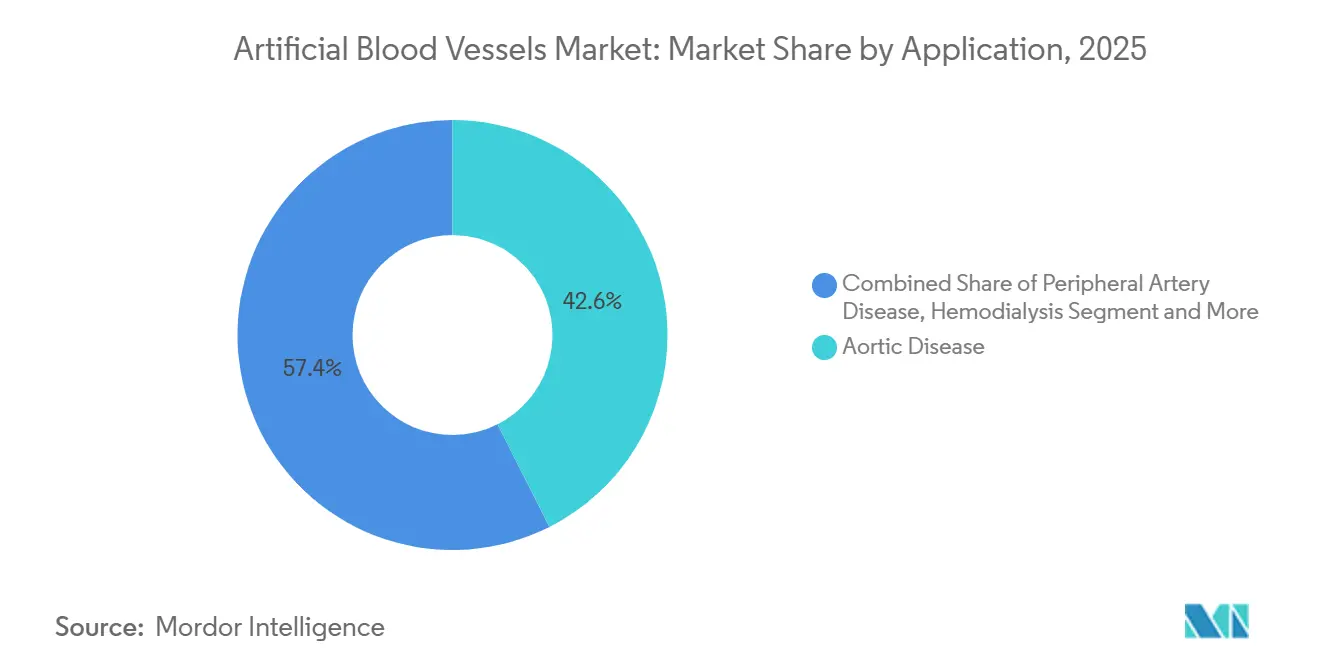
Trauma Outpaces Chronic IndicationsTraumatic vascular injury drove an 11.25% CAGR outlook from 2026 to 2031, fueled by military procurement and level-1 trauma centers prioritizing shelf-stable grafts that bypass vein harvesting delays. SYMVESS’s 67% primary patency and 9% amputation rate in extremity trauma demonstrate outcome parity with legacy synthetics while cutting operative time. Aortic disease, by contrast, retained 42.56% of the Artificial Blood Vessels market share in 2025 behind the ascendancy of thoracic endovascular repair, which now handles 81% of abdominal aneurysm cases in the United States. Open surgical volumes are falling, yet each hybrid stent-graft incorporates polyethylene terephthalate or polytetrafluoroethylene fabric, sustaining material demand. Peripheral artery disease applications encounter guideline-driven headwinds favoring autogenous vein, whereas dialysis vascular access remains resilient due to fistula maturation failure rates that exceed 38%[3].

By Polymer Type:
Nanocellulose Rises, PET Defends ShareBacterial nanocellulose is on track for a 12.85% CAGR through 2031, propelled by mechanical compliance mirroring collagen and superior cell adhesion that reduces intimal hyperplasia risk. Polyethylene terephthalate kept a 36.53% foothold in 2025 as woven and knitted PET grafts remain the standard for large-diameter aortic repairs, especially in Europe where surgeons value burst strength and kink resistance. Expanded polytetrafluoroethylene continues to dominate small- and medium-diameter bypasses, augmented by heparin-bonded surfaces like PROPATEN that lengthen patency. Hybrid composite polymers are emerging in complex arch repairs, combining polytetrafluoroethylene luminal surfaces with PET structural meshes to balance compliance and radial strength.
By End User:
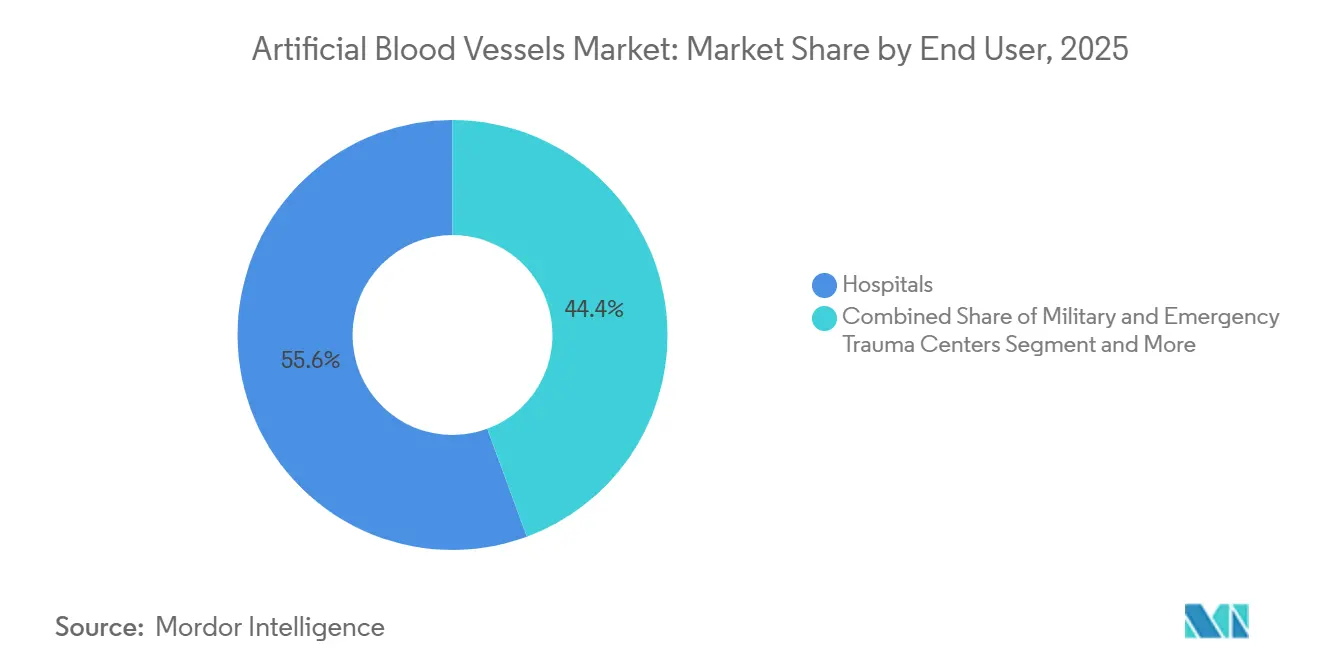
Defense Medicine as Growth EngineMilitary and emergency trauma centers will grow at a 10.87% CAGR as the U.S. DoD, NATO allies, and selected Asia-Pacific militaries adopt acellular grafts for forward surgery and damage-control scenarios. Hospitals still preserved 55.63% of the Artificial Blood Vessels market size in 2025, underwritten by Medicare reimbursement and their central role in aneurysm repair, dialysis access, and complex limb salvage. Ambulatory surgical centers are drawing less complex peripheral bypasses, and cardiac catheterization labs are broadening endovascular services, but trauma and aortic surgery keep the inpatient channel dominant.
By Device Type:
Sensors Enable Predictive MonitoringSmart sensor-enabled grafts will advance at 13.7% CAGR to 2031, integrating microelectromechanical systems that transmit real-time pressure and flow data to clinicians’ dashboards, facilitating pre-symptomatic thrombosis interventions. Synthetic vascular grafts still commanded 46.53% market share in 2025 due to entrenched clinical familiarity. Bioengineered acellular vessels now have an FDA-validated pathway, while drug-eluting grafts with paclitaxel or sirolimus coatings are entering peripheral segments where patency deficits persist.
Geography Analysis
North America Artificial Blood Vessels Market
North America retained 42.13% of global revenues in 2025 amid substantial Medicare reimbursement, yet vein-first clinical guidance and the competitively successful BEST-CLI study curb infra-inguinal prosthetic usage. Still, 6.5 million U.S. peripheral artery disease patients and a surge in thoracic endovascular repairs sustain baseline demand. Canadian and Mexican uptake trails, but Humacyte’s SYMVESS approval sets a precedent that is catalyzing U.S. investigational device submissions for follow-on tissue-engineered grafts.
APAC Artificial Blood Vessels Market
Asia-Pacific is projected to post the fastest 10.51% CAGR, leveraging high cardiovascular disease prevalence in China and India. However, healthcare spending patterns marked by > 40% out-of-pocket outlays in several markets dampen uptake of premium bioengineered products. China’s TEDA Bioprinting is positioning to export patient-specific conduits, while Japan and South Korea apply fast-track approvals for locally manufactured grafts to meet dialysis and peripheral artery disease demand. Australia’s universal insurance and South Korea’s single-payer system support rapid adoption of endovascular techniques and associated grafts.
EMEA and LATAM Artificial Blood Vessels Market
Europe’s growth lags North America and Asia-Pacific but benefits from a mature vascular surgery infrastructure. The 2025 European Society of Vascular Surgery consensus reported 7.3% in-hospital mortality and 5.0% stroke during arch TEVAR, prompting iterative design upgrades in stent-graft geometry and delivery systems. Germany, France, and the United Kingdom remain volume anchors; Spain and Italy contribute smaller but steady demand. MDR compliance presents cost and time-to-market challenges that favor incumbents, yet CE-first strategies, as executed by PECA Labs with its growth-accommodating exGraft, remain attractive for U.S. start-ups. Latin America and the Middle East & Africa are nascent, with Dubai and Riyadh tertiary centers importing high-end grafts, while Brazil favors cost-effective synthetics in its public system.
Regulatory Landscape
Artificial blood vessels span multiple regulatory tracks depending on intended use, diameter, and risk profile. In the United States, vascular prostheses are overseen by the FDA under cardiovascular prosthetic device classifications, with many vascular graft products cleared via the 510(k) pathway, while higher-risk implants proceed through Premarket Approval (PMA). Manufacturers must also comply with Quality System Regulation requirements under 21 CFR Part 820. The December 2024 FDA approval of Humacyte's SYMVESS for urgent extremity arterial repair when autologous vein is not feasible highlighted a modern precedent for acellular tissue-engineered vessels in trauma care.
Across global markets, compliance to internationally recognized performance and test requirements remains a common anchor for both submissions and procurement. ISO 7198:2016 is a key consensus standard covering tubular vascular grafts and vascular patches, including nomenclature, design attributes, and evaluation requirements, and it is frequently used to support technical evidence in regulatory dossiers. Post-market surveillance requirements also shape supplier responsibilities, with FDA lifecycle databases capturing safety actions such as recalls (for example, a Vascutek, Ltd. recall entry recorded in March 2026), reinforcing the need for traceability, manufacturing controls, and vigilance systems for both established PET/ePTFE grafts and newer bioengineered conduits.
Competitive Landscape
The Artificial Blood Vessels market is moderately fragmented: Medtronic, Terumo and others guard polytetrafluoroethylene and polyethylene terephthalate positions through incremental surface and drug-delivery upgrades, while bioengineered entrants Humacyte and Xeltis pursue acellular and resorbable strategies that promise superior compliance and long-term remodeling. Gore’s PROPATEN heparin-bonded graft and VIABAHN stent-graft capitalize on antithrombotic technology to differentiate in peripheral bypass and iliac repair niches. Terumo’s USD 30 million Puerto Rico expansion announced in February 2024 underscores its commitment to vascular access ancillaries that complement graft portfolios. Humacyte’s SYMVESS established a regulatory template that accelerates acellular vessel adoption and pressures incumbents to license or build in-house tissue-engineering capacity.
White-space innovation focuses on smart sensor-enabled grafts that detect early hemodynamic anomalies, with prototypes embedding telemetry chips within graft walls that interface with cloud dashboards. PECA Labs’ exGraft secured CE Mark in March 2024 for pediatric use, addressing the unmet need of growth-accommodating conduits that obviate serial reoperations. Start-ups such as InnAVasc Medical and Vascudyne are targeting dialysis access with antimicrobial coatings and extracellular-matrix scaffolds, respectively. Regulatory hurdles remain high, but the SYMVESS precedent lowers perceived risk for investors and shortens expected approval timelines. Incumbents’ scale, distribution, and surveillance datasets provide competitive ballast, yet a moderate consolidation wave is likely as digital health and biomaterial capabilities converge.
Artificial Blood Vessels Industry Leaders
-
B. Braun Melsungen
-
Terumo Medical Corporation
-
Medtronic
-
Cook Medical Incorporated
-
Becton, Dickinson and Company
- *Disclaimer: Major Players sorted in no particular order
Artificial Blood Vessels Market Companies Covered in this Report
- B. Braun
- Beckton Dickinson
- Boston Scientific
- Cardinal Health
- Cook Group
- CryoLife Inc. (Artivion)
- Endologix LLC
- Getinge AB (Maquet)
- Humacyte
- InnAVasc Medical Inc.
- Japan Lifeline Co., Ltd.
- JOTEC
- LeMaitre Vascular
- Medtronic
- Suokang Medical (Shanghai)
- Techshot Inc.
- Terumo Medical Corp.
- Vascudyne Inc.
- W. L. Gore & Associates
- Xeltis AG
Market Opportunities and Future Outlook
A near-term opportunity sits in applications where autologous vein is unavailable or impractical, creating demand for off-the-shelf conduits with faster readiness and more predictable handling in trauma and dialysis settings. Regulatory and commercialization signals have strengthened the investment case for bioengineered and resorbable platforms. Humacyte's SYMVESS received FDA approval in December 2024 for extremity arterial injury when vein graft is infeasible, and in March 2026 the company submitted a Marketing Authorization Application to the Israel Ministry of Health to extend the pathway for international market access. In hemodialysis access, April 2026 EU CE marking for Xeltis' bioabsorbable vascular access graft (aXess) based on 12-month pivotal trial data adds a further proof point that regenerative and remodeling concepts are moving from development into regulated clinical use.
White-space remains most visible in small-diameter graft performance (below 6 mm), where conventional synthetics face thrombosis and restenosis challenges and where clinical demand is amplified by peripheral artery disease and dialysis access needs. Academic and translational work is concentrating on regenerative, off-the-shelf graft constructs (for example, reinforced biotubes and electrospun nanofibrous scaffolds) and enabling methods such as ex vivo endothelialization, dynamic perfusion conditioning, and 3D bioprinting for anatomical fit. On the established-device side, continued opportunity also exists in complex endovascular aortic repair, where differentiation comes through delivery systems, geometry, and graft fabrics. Advanced aortic systems receiving PMA-level validation can accelerate hospital adoption and competitive repositioning in the aortic disease segment, which already accounts for the largest share of revenue.
Recent Industry Developments in Artificial Blood Vessels Market
- May 2026: Artivion completed the acquisition of Endospan Ltd. for an upfront net purchase price of about USD 131.3 million. Bringing Endospan's aortic arch endovascular technology under Artivion strengthens its position in complex aortic repair and tightens the link between device ownership and commercialization execution.
- April 2026: Humacyte amended its distribution agreement with Fresenius Medical Care to realign ex-U.S. commercial rights for Symvess, giving Humacyte exclusive rights to distribute the product outside the United States. The move supports more direct control of the international channel strategy and can simplify expansion planning for an FDA-approved acellular tissue-engineered vessel.
- December 2024: The FDA approved Humacyte's SYMVESS, an acellular tissue-engineered vessel, for urgent extremity arterial repair when autologous vein graft is not feasible. This approval established a first-in-class regulatory benchmark for bioengineered vascular conduits and raised the competitive bar beyond conventional PET and ePTFE grafts in trauma care.
Artificial Blood Vessels Market Report Scope and Research Methodology
Market Definition and Coverage
This market covers the revenues generated from artificial blood vessels that are implanted or used as vascular grafts to replace, bypass, or repair damaged blood vessels in surgical and interventional procedures across major geographies.
Scope exclusions: It excludes drug sales, diagnostic tests, and non-implant consumables that do not function as an artificial vessel or graft.
Segments Covered in This Report
- By Application
- Aortic Disease
- Peripheral Artery Disease
- Hemodialysis
- Coronary Artery Bypass Grafting
- Traumatic Vascular Injury
- Pediatric Congenital Vessel Repair
- By Polymer Type
- Polydioxanone
- Polyurethane
- Polyethylene Terephthalate
- Expanded PTFE
- Biosynthetic / Tissue-Engineered
- Bacterial Nanocellulose
- Hybrid Composite Polymers
- By End User
- Hospitals
- Ambulatory Surgical Centers
- Cardiac Catheterization Laboratories
- Specialty Vascular Clinics
- Military & Emergency Trauma Centers
- By Device Type
- Synthetic Vascular Grafts
- Bioengineered Acellular Vessels
- Drug-Eluting Vascular Grafts
- Smart Sensor-Enabled Grafts
- By Geography
- North America
- United States
- Canada
- Mexico
- Europe
- Germany
- United Kingdom
- France
- Italy
- Spain
- Rest of Europe
- Asia-Pacific
- China
- India
- Japan
- Australia
- South Korea
- Rest of Asia-Pacific
- Middle East and Africa
- GCC
- South Africa
- Rest of Middle East and Africa
- South America
- Brazil
- Argentina
- Rest of South America
- North America
Data Sources, Market Sizing, and Validation
Desk Research
Desk research was first used to build the basic demand and procedure map that sits under the model, since artificial blood vessels are strongly tied to surgery volumes and clinical adoption patterns. We reviewed public sources such as the US FDA device databases, the US CDC, the WHO, and OECD health statistics to understand cardiovascular disease burden, dialysis prevalence, and procedure activity signals by country.
To sharpen assumptions around product availability and price direction, we also used peer-reviewed clinical journals, hospital and payer publications, trade association websites, and public company filings and investor presentations. For consistency checks in market structure and manufacturer footprints, paid subscriptions for company financials and intelligence and a patent database were referenced where needed. The desk sources named above are illustrative only, and other public documents and datasets were also used for collection, validation, and clarification.
Primary Interviews and Surveys
Primary work was done to pressure-test procedure mix, graft selection behavior, and typical price ranges across applications like bypass, hemodialysis access, and aortic repair, since these points can vary by hospital type and reimbursement setting. Interviews and surveys were carried out with manufacturers, distributors, clinicians, and procurement stakeholders across APAC, EMEA, and the Americas. The respondent input was then used to close data gaps and to confirm the final sizing and trend assumptions.
Distribution of primary research fieldwork respondents
| Company type | Respondent position | Region |
|---|---|---|
| Top tier: 30% | CXOs: 14% | APAC: 47% |
| Mid tier: 55% | Functional/Unit leaders: 34% | EMEA: 32% |
| Smaller Players: 15% | Managers: 52% | Americas: 21% |
Market-Sizing & Forecasting
Sizing was built using a top-down and bottom-up approach, where procedure and patient pools are translated into device demand and then valued using realistic average selling prices. The top-down path starts from key demand anchors, such as dialysis access needs, cardiovascular bypass and vascular reconstruction procedure volumes, and country-level treatment capacity, which are then converted into graft units using usage rates and replacement patterns.
Next, selective bottom-up approximations were used to corroborate totals, mainly through supplier revenue splits, product mix checks by application, and sampled price bands across regions. Where a single source looked overstated, the model was adjusted. Inputs that were actively tracked include dialysis patient trends, PAD and aortic disease intervention volumes, hospital and ASC share shifts, graft material preference changes (ePTFE versus PET and newer biosynthetic options), and regional pricing differences driven by procurement cycles and currency timing.
For forecasting, we relied mainly on scenario analysis supported by expert views on procedure growth and adoption speed, and then translated those scenarios into yearly demand and value paths. Where bottom-up information was incomplete for smaller markets, gaps were handled by using proxy procedure ratios from comparable countries, followed by re-validating the resulting per capita spend with interview feedback.
Data Validation & Update Cycle
Model outputs were cross-checked against independent signals such as procedure growth rates, reported capacity expansions, and observed pricing direction, and then reviewed for outliers at the country and application level. When a variance looked too large to explain, assumptions were revisited and follow-up calls were triggered to confirm whether the driver was a scope issue, a timing mismatch, or a real market shift.
Before sign-off, the work goes through multi-step analyst review so calculation logic, unit conversions, and regional roll-ups are consistent and traceable. Reports are refreshed annually, with interim updates when material events occur, and a final pre-delivery check is completed so the published view reflects the latest available data.
Mordor Intelligence's Artificial Blood Vessels Market Size Compared With Other Published Estimates
Published market numbers for artificial blood vessels often do not match because each study makes its own choices on what to count, which years to anchor on, and how quickly newer graft types are assumed to scale. Even when the same name is used, the underlying model can be built on different procedure pools, price logic, and regional coverage.
The main gap comes from whether the value is limited to implantable vascular graft products used in surgical repair and bypass, or whether adjacent vascular implants and broader cardiovascular repair devices are added, which can lift totals quickly. Timing also matters, since some publishers use earlier base years and then apply long horizon growth rates, while others update assumed ASP progression and currency conversion timing more frequently, and then back-test against procedure signals. This step is used in Mordor Intelligence to keep the 2026 value tied to realistic utilization.
Benchmark comparison
| Source | Market Size | Gaps in Research Methodology |
|---|---|---|
| Mordor Intelligence | USD 3.45 B (2026) | |
| Industry Publisher A | USD 1.70 B (2026) | Uses a narrower product grouping focused on selected vascular graft categories and applies more conservative pricing bands, which reduces the implied value per procedure in several regions. |
| Research Portal B | USD 2.35 B (2025) | Anchors on an earlier year and treats the next year as a predicted value, and its growth path appears to rely more on long-range CAGR application with fewer visible checks against procedure mix and regional utilization shifts. |
Across the three figures, most of the spread can be traced back to scope choices and year anchoring, followed by how pricing and utilization are converted into value. By keeping the build-up tied to procedure-driven demand pools and then confirming the totals with supplier and price band checks, the estimate stays easier to reproduce and explain when clients need to test assumptions.
Key Questions Answered in the Report
How large is the Artificial Blood Vessels market in 2026?
The market stands at USD 3.45 billion, expanding toward USD 4.68 billion by 2031 at a 6.25% CAGR.
Which application contributes the most revenue?
Aortic disease accounts for 42.55% of global sales in 2025, supported by the dominance of endovascular aortic repair.
What is the fastest-growing application area?
Traumatic vascular injury shows an 11.25% CAGR outlook through 2031, driven by military and civilian trauma adoption.
Which polymer segment is gaining the quickest traction?
Bacterial nanocellulose leads with a projected 12.85% CAGR through 2031 due to superior biocompatibility and compliance.
Why is Asia-Pacific growing faster than other regions?
High cardiovascular disease prevalence, rising procedure volumes in China and India, and emerging local manufacturing propel a 10.51% CAGR despite spending constraints.
How are smart sensor-enabled grafts changing post-operative care?
Embedded microelectromechanical sensors provide real-time flow and pressure data, enabling early thrombosis detection and preventive intervention.