
Market Overview
| Study Period | 2020 - 2031 |
|---|---|
| Forecast Data Period | 2026 - 2031 |
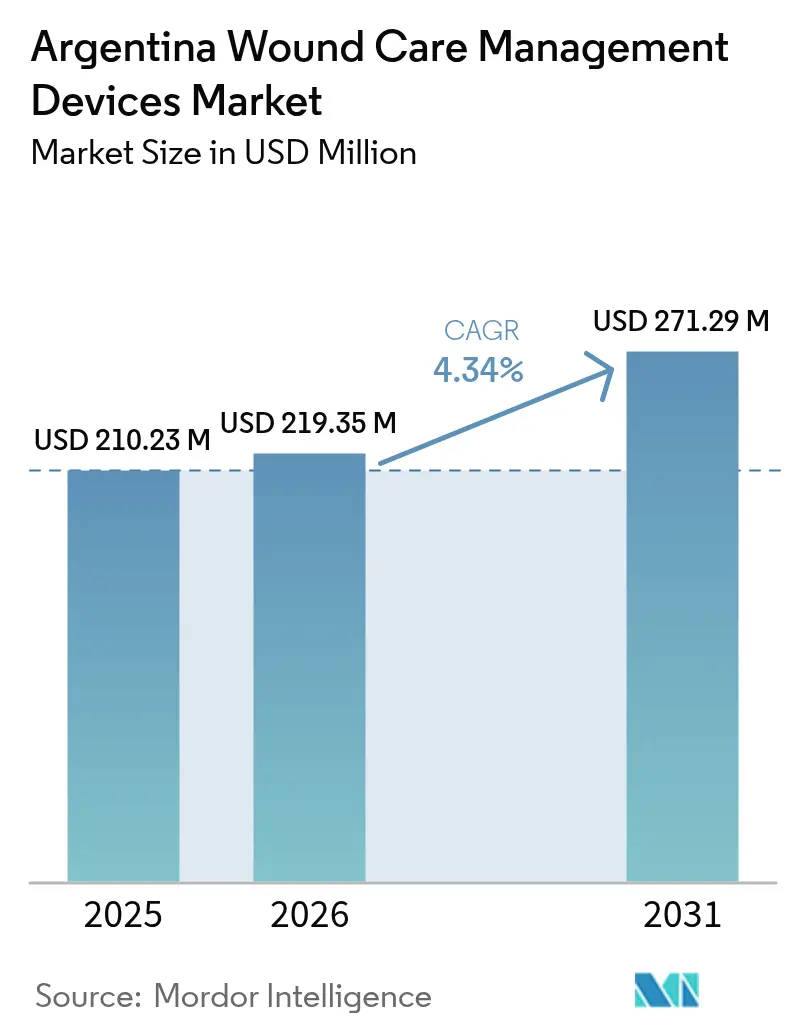
| Base Year Market Size (2025) | USD 210.23 Million |
| Market Size (2026) | USD 219.35 Million |
| Market Size (2031) | USD 271.29 Million |
| Growth Rate (2026 - 2031) | 4.34 % |
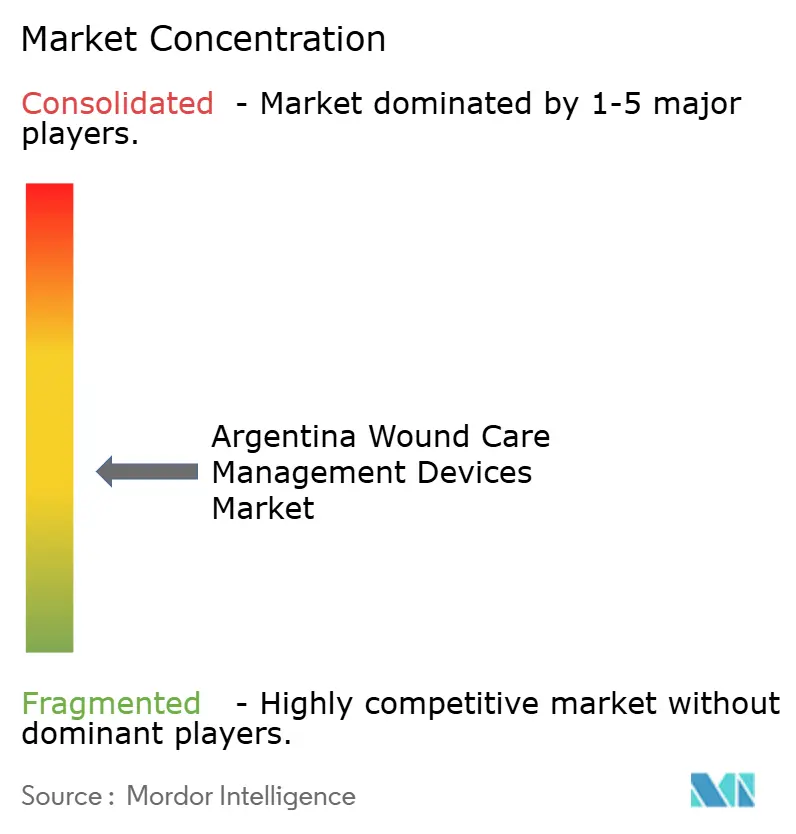
| Market Concentration | Medium |
Major Players *Disclaimer: Major Players sorted in no particular order Image © Mordor Intelligence. Reuse requires attribution under CC BY 4.0. | |
Argentina Wound Care Management Devices Market Analysis by Mordor Intelligence
The Argentina wound care management devices market size was valued at USD 210.23 million in 2025 and estimated to grow from USD 219.35 million in 2026 to reach USD 271.29 million by 2031, at a CAGR of 4.34% during the forecast period (2026-2031). Argentina is Latin America’s fourth-largest pharmaceutical destination, and close to 80% of its medical devices are imported, so currency swings and global supply dynamics heavily influence pricing and product availability. Demand climbs because 12.4% of the 45.7 million residents are now aged 65 years or older [1], while the national diabetes prevalence rose, sharply lifting the need for sophisticated wound therapies. Government health expenditure at 6.51% of GDP in 2021 signals sustained public backing for hospital upgrades and reimbursement of essential wound care. Meanwhile, ANMAT’s EU-style four-class risk framework keeps product quality high but lengthens market-entry timelines, compelling foreign suppliers to work closely with local distributors. Currency volatility—Argentina’s inflation exceeded 200% in 2024—adds another layer of complexity but also encourages hospitals to adopt inventory-light models that favor advanced dressings with proven cost-benefit profiles.
Key Report Takeaways
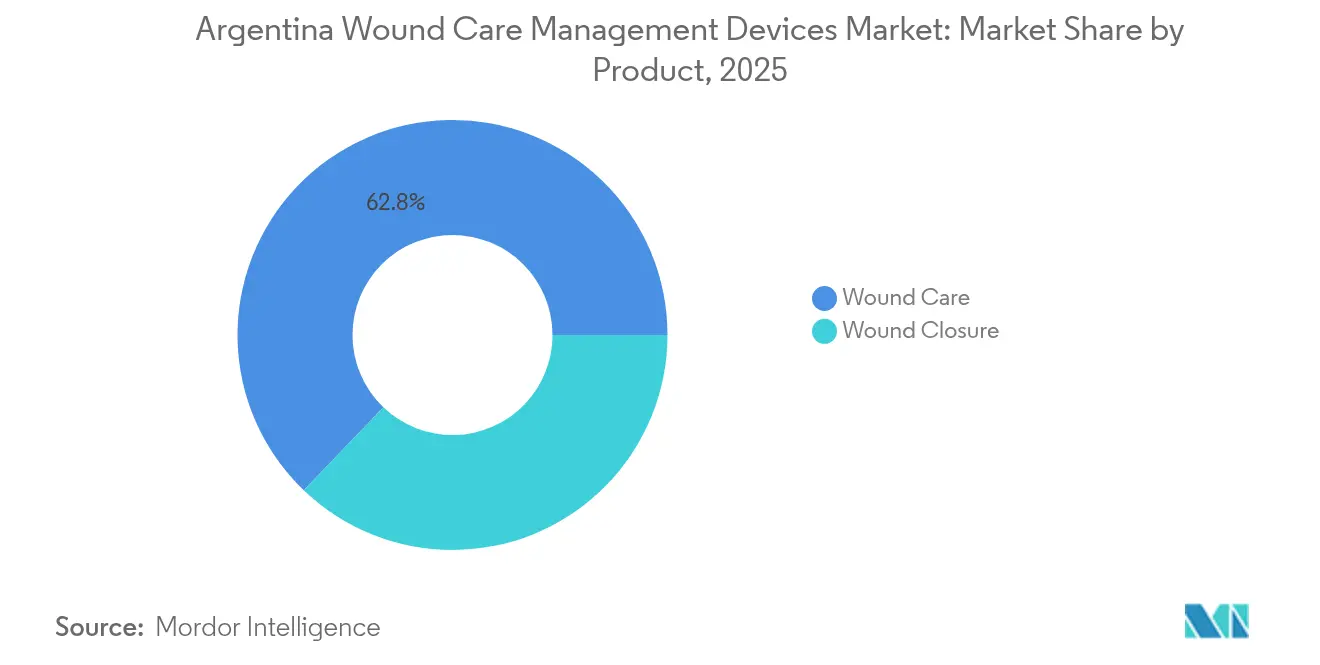
- By product category, Wound Care products led with 62.84% of Argentina wound care management devices market share in 2025, while Wound Closure is forecast to expand at a 5.05% CAGR through 2031.
- By wound type, Chronic Wounds held 58.35% share of the Argentina wound care management devices market size in 2025; Acute Wounds show the fastest growth at 5.18% CAGR to 2031.
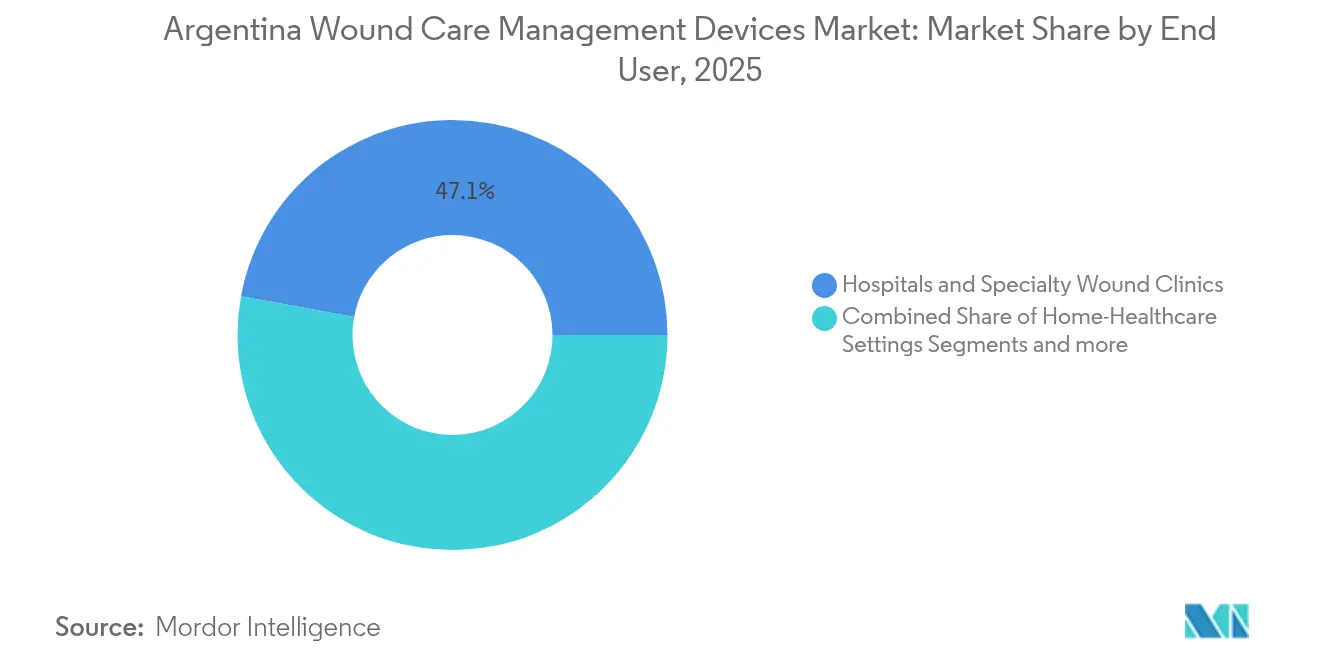
- By end user, Hospitals & Specialty Wound Clinics accounted for 47.12% of the Argentina wound care management devices market share in 2025, whereas Home-Healthcare Settings will grow at a 5.22% CAGR.
- By mode of purchase, Institutional Procurement commanded 65.02% share of the Argentina wound care management devices market size in 2025, while the Retail/OTC channel is projected to rise at a 5.12% CAGR.
Note: Market size and forecast figures in this report are generated using Mordor Intelligence’s proprietary estimation framework, updated with the latest available data and insights as of 2026.
Argentina Wound Care Management Devices Market Trends and Insights
Drivers Impact Analysis*
| Driver | (~) % Impact on CAGR Forecast | Geographic Relevance | Impact Timeline |
|---|---|---|---|
| Rise in chronic wounds & diabetic ulcers | +1.2% | National, highest in Buenos Aires, Córdoba, Santa Fe | Medium term (2-4 years) |
| Rising geriatric population | +0.9% | National, higher in large urban centers | Long term (≥ 4 years) |
| Growing surgical procedure volume | +0.8% | National, centered on tertiary hospitals in metros | Short term (≤ 2 years) |
| Expansion of advanced home-care solutions | +0.7% | Urban first, spreading to suburbs | Medium term (2-4 years) |
| Rising health spending & infrastructure | +0.6% | National, with emphasis on underserved provinces | Long term (≥ 4 years) |
| Provincial tele-medicine reimbursement (NPWT) | +0.3% | Early adopters in Buenos Aires province | Short term (≤ 2 years) |
| Source: Mordor Intelligence | |||
Rise in Chronic Wounds & Diabetic Ulcers
Argentina’s diabetes prevalence jump keeps advanced wound devices in steady demand. A 2024 national manual on pressure-injury prevention standardizes care, reducing inter-hospital practice gaps and clarifying device specifications. Multidisciplinary guidelines highlight evidence-based dressings, driving hospitals to procure products whose clinical dossiers match protocol thresholds. Because diabetic ulcers often require multi-layered intervention, clinics now bundle negative-pressure systems with antimicrobial foams, ensuring continuity from debridement through closure. Consistent national protocols also help distributors plan inventory, trimming procurement delays tied to Argentina’s split public, social-security and private payor landscape [2].
Rising Geriatric Population
People aged 65 years and above now represent 12.4% of residents, meaning more chronic wounds, slower tissue regeneration and higher comorbidity loads. Expansion of the Sumar Program to 20 million beneficiaries introduces explicit wound-care packages, funneling older patients into reimbursed pathways instead of out-of-pocket purchases. Senior-focused clinic upgrades—including bariatric beds and mobile NPWT pumps—raise demand for durable devices able to survive multi-patient use cycles. Infusion of public funds into geriatric wards anchors long-term growth because even in economic downturns the government protects elder-care budgets; device makers therefore align product roadmaps to gerontology protocols.
Growing Surgical Procedure Volume
A 2024 survey of 232 hospitals revealed stark capacity gaps between city centers and peripheral regions, yet both segments report rising elective and trauma surgeries. Complex procedures need advanced closure products—cyanoacrylate adhesives, antimicrobial sutures and novel absorbable meshes—that accelerate recovery and minimize infection risk. Public–private integration initiatives encourage single formularies for suture kits, reducing duplication and standardizing consumption volumes. As economic recovery improves patient ability to pay co-pays, the caseload for orthopedics and cardiovascular surgery rises, feeding demand for specialty closure devices and post-operative dressings.
Expansion of Advanced Home-Care Wound Solutions
Evidence from international studies shows that chronic wound patients heal effectively under supervised home programs, where nurse visits and tele-monitoring trim hospital stays. Argentina mirrors this shift: payors reimburse portable NPWT sets that log exudate volume and upload data to cloud dashboards. Pharmacy chains market silver-foam dressings in consumer packs, which families can reorder online, spurring retail throughput. Device makers simplify instructions with QR codes that launch Spanish video guides, boosting adherence and lowering follow-up costs for insurers. Home-care momentum creates fresh shelf space for compact pumps, smart bandages and enzymatic debriders.
Restraints Impact Analysis*
| Restraint | (~) % Impact on CAGR Forecast | Geographic Relevance | Impact Timeline |
|---|---|---|---|
| High cost of advanced wound products | -0.8% | Nation-wide, worst in public hospitals | Medium term (2-4 years) |
| Stringent reimbursement ceilings | -0.6% | Varies by payor subsector | Short term (≤ 2 years) |
| Scarce private insurance coverage | -0.4% | Urban pockets with higher private uptake | Medium term (2-4 years) |
| Peso-linked import-price volatility | -0.9% | Nation-wide, hits all import-dependent devices | Short term (≤ 2 years) |
| Source: Mordor Intelligence | |||
High Cost of Advanced Wound Care Products
A 2024 antitrust probe revealed collusion among prepaid insurers, lifting procedure prices by more than 140% in six months and forcing regulators to cap future hikes at inflation rates. Simultaneously, real health-care spending fell 35% after budget cuts, squeezing hospital procurement lines and delaying upgrades from gauze to active dressings. Currency-driven inflation pushes importers to re-price monthly, so public facilities often postpone buying foam or NPWT kits until tariff-free windows open. Clinician brain-drain further erodes adoption, as surgeons relocating abroad diminish local expertise in advanced closure protocols.
Peso-Linked Import-Price Volatility
Relying on imports for around four-fifths of supply makes the Argentina wound care management devices market highly sensitive to peso swings. Inflation hit 224% in 2024, forcing suppliers to quote short-validity prices, which complicates tender planning and leaves stockouts when bids expire. Hospitals use spot-rate hedges but still face 10-20% cost jumps between purchase order and delivery. The World Bank notes that macro-volatility deters private capital investments in health tech, so start-ups struggle to fund local assembly lines [3]. Devices with high-end electronic components suffer most, as suppliers pay for imports in USD but collect reimbursements in pesos months later, eroding margins.
*Our forecasts treat driver/restraint impacts as directional, not additive. The impact forecasts reflect baseline growth, mix effects, and variable interactions.
Segment Analysis
By Product: Wound Care Dominance Drives Market Expansion
The Argentina wound care management devices market size for Wound Care products accounted for 62.84% of revenue. Traditional gauze and tape dominate volume because they fit tight budgets; however, advanced dressings—hydrofibers, alginates and silver foams—gain traction where outcome-based procurement models reward faster healing. Negative-pressure wound therapy (NPWT) systems record double-digit unit growth as clinical trials confirm lower infection rates and shorter stays. Smith & Nephew’s global Q1 2025 report cited 3.8% underlying growth in Advanced Wound Management, validating local interest in premium devices.
Wound Closure, although smaller, leads with a 5.05% CAGR; cyanoacrylate tissue sealants and antibacterial sutures find ready buyers in trauma centers handling rising roadway injuries. Single-use NPWT canisters also appeal to outpatient surgery units that desire zero-maintenance gear. Growing tele-monitoring integration pushes suppliers to embed sensors in dressings, adding data-analytics value yet keeping disposables within standard reimbursement thresholds. Argentina’s push toward pressure-injury prevention protocols ties hospitals to evidence-backed product lists, creating predictable reorder cycles for advanced dressings.

By Wound Type: Chronic Wounds Shape Treatment Paradigms
Chronic lesions captured 58.35% of 2025 revenue, reflecting the nation’s aging profile and diabetes burden. Diabetic foot ulcers remain the dominant subsegment, often presenting late and requiring multilayer interventions. Pressure ulcers follow, prompting long-term demand for breathable foam and silicone border dressings that minimize shear. Venous leg ulcers show uptake of compression-compatible dressings that maintain moisture without slippage.
Conversely, Acute Wounds post a faster 5.18% CAGR as surgical volumes rebound after pandemic delays. Hospitals standardize antimicrobial sutures for orthopedic repairs and deploy film dressings in minimally invasive procedures, accelerating turnover of single-patient kits. Burns and other trauma wounds spur interest in collagen matrices and bio-engineered skin substitutes, especially after AVITA Medical’s Cohealyx launch in 2025. Standardization of chronic-wound codes in payer formularies now steers clinics toward devices that document measurable closure outcomes, further professionalizing purchasing decisions.
By End User: Home Healthcare Emerges as Growth Catalyst
Hospitals & Specialty Wound Clinics generated 47.12% of revenue in 2025, mainly because complex cases still arrive at tertiary facilities. Nonetheless, the home-healthcare subsegment is forecast to expand at 5.22% CAGR, outpacing all other settings. Payors see cost savings when nurse-led home rounds substitute for inpatient beds, so they reimburse portable NPWT pumps and antimicrobial wraps delivered directly to patients.
Tele-consult follow-ups cut travel for rural seniors, letting specialists in Buenos Aires review wounds via smartphone images. Long-term care facilities remain steady because frail elders require daily dressing changes; these centers favor silicones that lift without tearing fragile skin. Hospitals form partnerships with home-care agencies, shipping patients home with ready-packed dressing kits and digital instructions, reducing readmission risk and cementing demand for consumer-friendly packaging.
By Mode of Purchase: Institutional Procurement Drives Market Structure
Institutional buying held 65.02% share in 2025 as public hospitals, social-security entities, and large private chains pool volumes to win bulk discounts. E-tender platforms increasingly demand CE-, FDA- or ANMAT-approved dossiers and local service plans, so authorized distributors enjoy a compliance moat.
Argentina wound care management devices market size in institutional channels is forecast to reach USD 176.8 million by 2031. Retail and OTC outlets—pharmacy chains, online marketplaces and grocery-attached drugstores—post a 5.12% CAGR, buoyed by consumer migration toward self-care for minor lacerations and diabetes-related skin maintenance. Pharmacies stock convenient all-in-one kits that bundle foam pads with saline sprays, while e-commerce sites offer next-day delivery even to provincial towns. Hybrid “click-and-collect” services allow patients to redeem digital reimbursement vouchers issued by insurers, blending institutional funding with retail logistics.
Geography Analysis
Metropolitan Buenos Aires, Córdoba and Santa Fe provinces anchor demand because they host the bulk of tertiary hospitals, specialized wound clinics and higher-income patients. These areas import sophisticated NPWT pumps and smart dressings faster, thanks to better reimbursement flows and shorter supply chains. In contrast, northwest and Patagonian provinces prioritize essential supplies and rely on tele-dermatology to access specialists, a practice that boosts uptake of camera-enabled bandages.
Provincial budgets are uneven: Entre Ríos’ 2025 plan targets expanded health allocations, whereas resource-tight Chaco leans on national grants for device purchases. Diabetes prevalence sits above the national mean in urbanized belts, aligning advanced dressing sales with city pharmacies; yet rural zones record more trauma wounds from agriculture and transport mishaps, sustaining gauze and suture volume.
Inflation and freight surcharges create notable price gaps between port-proximate and interior regions. Importers stage bulk stock in Buenos Aires warehouses, then forward small loads inland when peso volatility recedes, which occasionally triggers shortages up-country. ANMAT’s single registration system applies nation-wide, but on-the-ground inspections lag in distant provinces, allowing grey-market dressings to surface. The 2024 national manual on pressure-injury prevention aims to cut these disparities by mandating standardized protocols and approved product rosters for all provinces. Home-care growth is most visible in suburban belts around big cities where broadband coverage supports video consults; as 4G expands, similar models should reach Patagonia and the northwest within four years.
Regulatory Landscape
Argentina regulates wound care management devices under ANMAT (Administracion Nacional de Medicamentos, Alimentos y Tecnologia Medica), using a four-class, risk-based framework aligned with Mercosur technical regulations. Manufacturers and importers must manage product registration, compliant labeling and instructions for use, and quality documentation. Foreign OEMs operate through a local authorized representative and a local technical director that supports the registration holder.
Recent regulatory changes have aimed to reduce friction for high-volume, lower-risk imports while maintaining tighter control for higher-risk products. From August 6, 2025, ANMAT Disposicion 4446/25 removed the need for pre-authorization on each individual import transaction for Class I and II devices, shifting routine imports toward declaration-based processes on ANMAT digital systems (including THEMIS). Separately, Disposicion 2978/2026 (effective June 1, 2026) changed import fee mechanics to a percentage of declared FOB value, which updates cost structure for importers in a market where close to 80% of medical devices are imported.
Competitive Landscape
The Argentina wound care management devices market hosts a mix of global brands—Smith & Nephew, ConvaTec, Medtronic—and local distributors that secure ANMAT clearances and after-sales service. No single player exceeds 25% share, yielding moderate concentration. Smith & Nephew’s 2025 trade update showed global advanced-wound revenue of USD 1.24 billion, aided by acquisitions such as Osiris for skin substitutes, evidence of continued pipeline investment.
ConvaTec delivered 6.7% organic lift in its 2024 wound division, proof that innovation in silicone foams and hydro-fiber dressings resonates even in cost-pressured markets. Start-ups such as Biomiq tout nano-hydrogel PureGel for antimicrobial action, hunting niches in infection-prone diabetic ulcers.
Currency gyrations intensify rivalry: foreign OEMs hedge in USD, while local distributors quote in pesos, so contract terms now include adjustment clauses pegged to monthly inflation. Hospitals compare lifecycle costs instead of sticker prices, rewarding suppliers that bundle clinician training and remote analytics. Regulatory probes into pricing practices make transparent tender documentation a competitive differentiator. Meanwhile, tele-medicine ready devices create a moat; smart bandages like iCares, which transmit pH and temperature data, promise lower rehospitalization rates and draw interest from both public insurers and private prepaid plans. With device imports still near 80% of supply, firms that localize final assembly may skirt some tariffs and gain speed-to-market benefits.
Argentina Wound Care Management Devices Industry Leaders
-
Medtronic PLC
-
Smith & Nephew
-
ConvaTec Group PLC
-
Coloplast
-
Solventum
- *Disclaimer: Major Players sorted in no particular order
Market Opportunities and Future Outlook
The clearest whitespace in Argentina is the combination of high import dependence (near 80% of medical devices) and procurement sensitivity to administrative and landed-cost variability. This creates an opening for suppliers that can keep core wound consumables available and package compliance in a consistent, tender-ready format. ANMATs August 2025 simplification for Class I and II imports (Disposicion 4446/25) supports faster replenishment of routine dressings and related consumables, while the June 2026 shift to an FOB-percentage import fee model (Disposicion 2978/2026) alters the sourcing and contracting economics for imported wound-care lines.
On the demand side, program-led purchasing and care-standardization initiatives continue to formalize product specifications and reorder behavior, which favors vendors that can align dossiers, training, and outcomes documentation to institutional pathways. The Ministry of Healths 2024 manual on pressure-injury prevention standardizes care expectations, and the expansion of the Sumar Program to 20 million beneficiaries increases the importance of reimbursed wound-care packages. Alongside early-province adoption of telemedicine-linked home care and portable NPWT reimbursement, these anchors support further pull for connected wound monitoring, home-friendly NPWT kits, and advanced dressings delivered through distributor networks that can meet ANMAT requirements and tender documentation standards.
Recent Industry Developments
- June 2026: ANMAT implemented Disposicion 2978/2026, shifting import tariff calculations to a percentage of declared FOB value for regulated products, affecting many medical device imports. For a market where roughly four-fifths of devices are imported, the change reshapes landed-cost planning and tender pricing for wound dressings and device kits. The update also raises the importance of distributors that can manage compliant declarations and documentation at scale.
- September 2025: Medtronic supported a five-day training program in Buenos Aires for distributor teams focused on Surgical Innovations, including wound-closure technologies and stapling. The effort strengthens local capability for product selection and correct use in hospital workflows, supporting conversion from basic consumables to standardized closure solutions. It also reinforces the distributor-led go-to-market model that dominates wound care access in Argentina.
- February 2025: ANMAT issued Disposicion 1117/2025 restricting the use and commercialization of specific lots of Smith & Nephew arthroscopic devices tied to registration-status issues. While not a wound dressing action, it highlighted operational risk from gaps in regulatory documentation and traceability for multinational portfolios sold through local channels. The enforcement climate increases the value of robust post-market controls and registration stewardship for companies supplying hospital procedure-related wound management products.
Research Methodology Framework and Report Scope
Market Definition and Coverage
This market covers the value of wound care management devices sold and used in Argentina to prevent, close, manage, and heal acute and chronic wounds across care settings.
Scope exclusions: We exclude basic home first-aid items like adhesive strips and other purely cosmetic skin-care products that are not used as medical wound care devices.
Segmentation Overview
- By Product
- Wound Care
- Dressings
- Traditional Gauze & Tape Dressings
- Advanced Dressings
- Wound-Care Devices
- Negative Pressure Wound Therapy (NPWT)
- Oxygen & Hyperbaric Systems
- Electrical Stimulation Devices
- Other Wound Care Devices
- Other Wound Care Products
- Dressings
- Wound Closure
- Sutures
- Surgical Staplers
- Tissue Adhesives, Strips, Sealants & Glues
- Wound Care
- By Wound Type
- Chronic Wounds
- Diabetic Foot Ulcer
- Pressure Ulcer
- Venous Leg Ulcer
- Other Chronic Wounds
- Acute Wounds
- Surgical/Traumatic Wounds
- Burns
- Other Acute Wounds
- Chronic Wounds
- By End User
- Hospitals & Specialty Wound Clinics
- Long-term Care Facilities
- Home-Healthcare Settings
- By Mode of Purchase
- Institutional Procurement
- Retail / OTC Channel
Data Sources, Market Sizing, and Validation
Desk Research
Desk research was used to set the market boundary, build the demand context, and pressure-test early assumptions before interviews were started. We relied on public sources such as Argentina Ministry of Health publications, INDEC demographic and health statistics, PAHO and WHO indicators, and customs and tariff data to understand medical device import dependence and pricing sensitivity.
To convert these signals into usable inputs, company annual reports and investor presentations were reviewed for product mix clues and channel footprints, followed by checks against reputable medical journals and clinical guideline publications on chronic wound care patterns. Where it helped close a data gap, paid subscriptions for company financials and intelligence, patent databases, and shipment-level import and export records were used to standardize definitions and timelines. The desk sources listed here are illustrative only, and many other public references were reviewed for data collection, validation, and clarification.
Primary Interviews and Surveys
Primary work focused on validating pricing logic, product adoption behavior, and procurement realities across Argentina, since these wound care management devices are often imported and currency movement can change real selling prices quickly. We spoke with a mix of manufacturers, distributors, hospital and clinic buyers, and wound care practitioners, which then helped us confirm treatment patterns for chronic versus acute wounds and filter desk assumptions that did not fit observed buying behavior in-market.
Distribution of primary research fieldwork respondents
| Company type | Respondent position |
|---|---|
| Top tier: 39% | CXOs: 13% |
| Mid tier: 42% | Functional/Unit leaders: 38% |
| Smaller Players: 19% | Managers: 49% |
Market-Sizing & Forecasting
The core sizing starts from a top-down demand pool build, where the treated wound cohort and care delivery intensity are translated into device consumption, and then converted into value using realistic price bands. For Argentina, inputs that matter include the chronic wound share (with diabetes and aging as key drivers), surgical procedure volumes as a proxy for acute wounds, hospital and clinic purchasing mix versus retail access, import reliance that influences availability, and the shift toward advanced dressings and negative pressure systems in complex cases.
Those totals are then checked with selective bottom-up approximations, such as sampling typical device volumes per facility type and applying observed average selling prices by product class, followed by distributor and channel checks to see whether implied volumes are plausible. Where a bottom-up line item was thin, we filled gaps by using adjacent product ratios and then re-validating the ratios with interview feedback.
For forecasting, scenario analysis was used because pricing and purchasing can change quickly with inflation, reimbursement and tender behavior, and currency movement. Growth was projected by linking demand drivers (treated patient base and procedure activity) with adoption curves for advanced therapies, and then cross-checking the direction and pace with field inputs from buyers and clinicians.
Data Validation & Update Cycle
Validation is done through triangulation across demand signals, price bands, and channel feedback, and then by reviewing whether year-to-year movements match realistic clinical adoption and procurement cycles in Argentina. Outliers are flagged early, and the model is reworked or the respondent is re-contacted when a variance cannot be explained by a clear event like a price reset, import disruption, or guideline shift.
Before sign-off, an independent analyst reviews assumptions, unit logic, and conversion steps so that calculation errors and definition drift do not slip through. Reports are refreshed annually, with interim updates when material events occur, and a final pre-delivery review is completed so clients receive the latest updated view.
Mordor Intelligence's Argentina Wound Care Management Devices Market Size Compared With Other Published Estimates
Different published market sizes for Argentina wound care devices can vary even when the topic looks identical, because the boundary around what counts as a device and what counts as basic first-aid is not always drawn the same way. Results can also shift when the price year, currency conversion timing, and the treatment of imported product inflation are handled differently.
A refresh-led gap is common in this market, since imported device prices can move within a year and older average selling price assumptions can quickly go stale. By anchoring the currency timing and checking ASP ranges with recent channel feedback before each refresh, Mordor Intelligence keeps the 2025 value tied to what hospitals, clinics, and distributors were actually seeing in the market window.
Benchmark comparison
| Source | Market Size | Gaps in Research Methodology |
|---|---|---|
| Mordor Intelligence | USD 210.23 M (2025) | |
| Industry Intelligence A | USD 122.45 M (2024) | Uses an earlier base year and a narrower value capture that can miss newer price resets and newer adoption of higher-value advanced therapies, thereby pulling the total down versus a 2025-priced view. |
| Global Consultancy B | USD 410.00 M (2024) | Appears to use a broader wound care management scope that can fold in adjacent categories beyond devices, and the aggressive growth curve suggests less restraint on ASP progression and scope controls. |
The spread across the three figures is mainly explained by scope boundaries and how quickly pricing assumptions are refreshed in an import-heavy market. When the definition stays device-specific and the price year is kept consistent, the resulting market size becomes easier to trace back to clear demand drivers and repeatable calculation steps.
Key Questions Answered in the Report
What is the current value of the Argentina wound care management devices market?
It stands at USD 219.35 million in 2026 and is forecast to reach USD 271.29 million by 2031.
Which product segment leads revenue?
Wound Care products hold 62.84% of the Argentina wound care management devices market share as of 2025.
How fast is home-healthcare demand growing?
Home-Healthcare Settings record the highest end-user CAGR at 5.22% through 2031.
Why does currency volatility matter for suppliers?
Roughly 80% of devices are imported, so peso swings immediately affect landed costs and tender viability.
What regulatory body oversees medical devices in Argentina?
ANMAT administers a four-class risk framework similar to EU norms, governing safety, efficacy and market access.
Which wound type shows the quickest future growth?
Acute Wounds are projected to grow at a 5.18% CAGR, benefiting from rising surgical volumes and trauma care upgrades.