
Market Overview
| Study Period | 2021 - 2031 |
|---|---|
| Forecast Data Period | 2026 - 2031 |
| Base Year Market Size (2025) | USD 65.54 Million |
| Market Size (2026) | USD 68.11 Million |
| Market Size (2031) | USD 82.53 Million |
| Growth Rate (2026 - 2031) | 3.92 % |
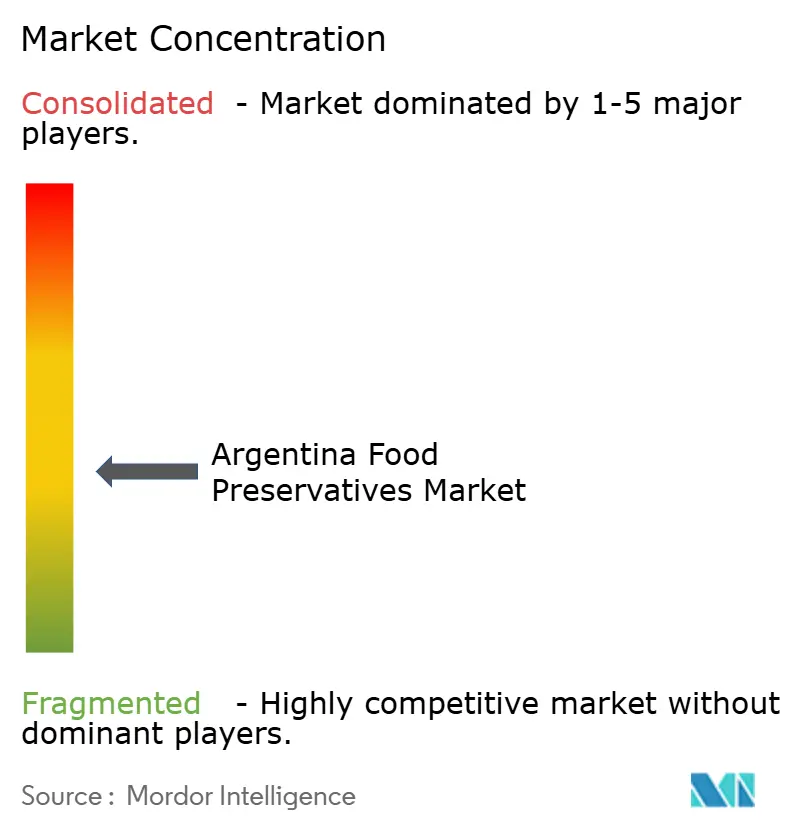
| Market Concentration | Medium |
Major Players *Disclaimer: Major Players sorted in no particular order Image © Mordor Intelligence. Reuse requires attribution under CC BY 4.0. | |
Argentina Food Preservatives Market Analysis by Mordor Intelligence
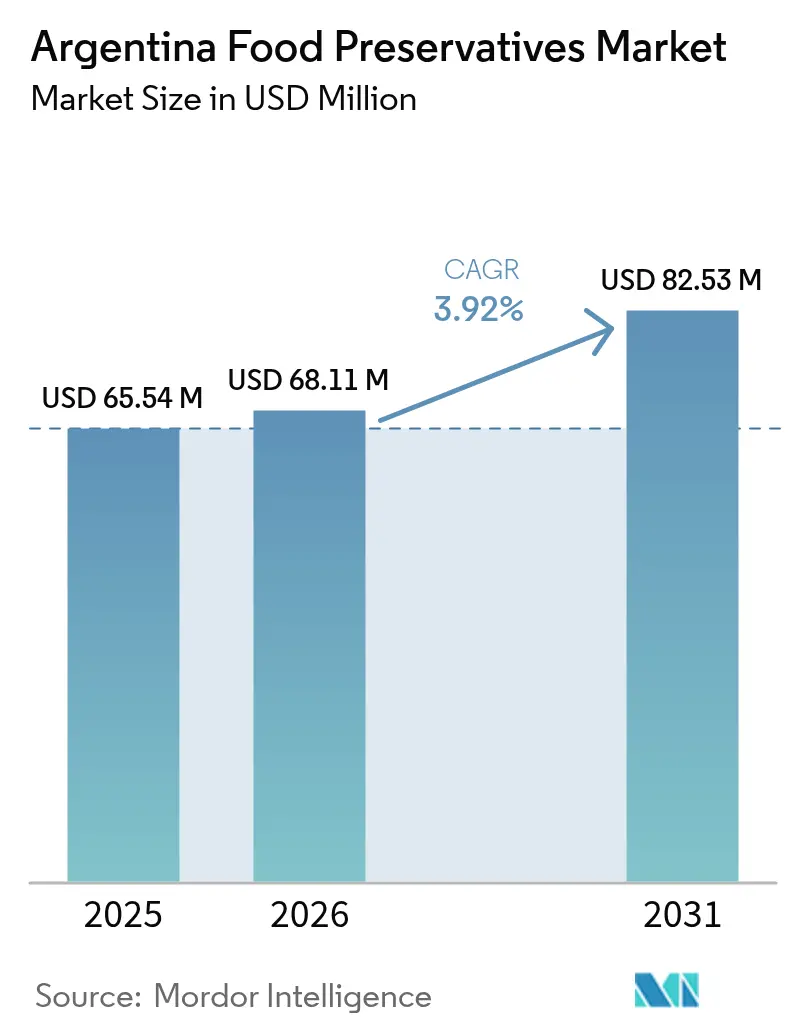
The Argentina food preservatives market size was valued at USD 65.54 million in 2025 and estimated to grow from USD 68.11 million in 2026 to reach USD 82.53 million by 2031, at a CAGR of 3.92% during the forecast period (2026-2031).The market's growth is primarily driven by the increasing demand for processed and convenience foods, which require longer shelf lives to meet consumer needs. Rising urbanization, changing dietary patterns, and the growing working population in Argentina are further fueling the demand for packaged and ready-to-eat food products, thereby boosting the need for food preservatives. Additionally, heightened awareness regarding food safety and quality among consumers is encouraging manufacturers to adopt advanced preservation techniques and develop innovative preservative solutions. The market is also witnessing a shift toward natural and clean-label preservatives, driven by consumer preferences for healthier and minimally processed food options. Regulatory frameworks and stringent food safety standards in Argentina are influencing the adoption of preservatives that comply with safety and quality guidelines.
Key Report Takeaways
- By product type, synthetic preservatives led with 65.78% of the Argentina food preservatives market share in 2025, while natural alternatives post the fastest growth at a 6.05% CAGR through 2031.
- By function, antimicrobials commanded 51.85% revenue in 2025; antioxidants are forecast to grow at 5.34% CAGR to 2031.
- By form, dry/granular variants accounted for 58.76% of the Argentina food preservatives market size in 2025; liquid formulations are expanding at a 6.08% CAGR.
- By application, meat and poultry represented 30.74% of demand in 2025, whereas ready meals are projected to rise at a 6.01% CAGR through 2031.
Note: Market size and forecast figures in this report are generated using Mordor Intelligence’s proprietary estimation framework, updated with the latest available data and insights as of 2026.
Argentina Food Preservatives Market Trends and Insights
Drivers Impact Analysis*
| Driver | (~) % Impact on CAGR Forecast | Geographic Relevance | Impact Timeline |
|---|---|---|---|
| Consumer inclination towards clean-label ingredients | +0.8% | National, with early adoption in Buenos Aires and Córdoba | Medium term (2-4 years) |
| Demand for packaged foods fuels preservative consumption | +1.2% | National, concentrated in urban centers | Short term (≤ 2 years) |
| Increasing adoption of natural food preservatives | +0.9% | National, led by premium food manufacturers | Medium term (2-4 years) |
| Use of antimicrobials in animal-based packaged products | +0.7% | National, focused on meat processing regions | Short term (≤ 2 years) |
| Urbanization and changing lifestyle patterns | +0.6% | Buenos Aires, Córdoba, Rosario metropolitan areas | Long term (≥ 4 years) |
| Technological advancements in food preservation methods | +0.5% | National, with early adoption in industrial zones | Long term (≥ 4 years) |
| Source: Mordor Intelligence | |||
Consumer inclination towards clean-label ingredients
In Argentina, heightened health awareness and regulatory backing for natural alternatives are reshaping the landscape of food preservatives, serving as a significant driver for the market. Consumers are increasingly prioritizing transparency in ingredient labeling, pushing manufacturers to adopt clean-label practices. In December 2024, ANMAT approved Monk Fruit Extract as a natural sweetener, signaling its alignment with the clean-label trend and encouraging the use of natural preservatives. Furthermore, the agency's modifications to front-labeling mandate a clearer distinction between natural and added nutrients, compelling producers to innovate and meet these regulatory standards. Urban Argentine consumers, even amidst economic challenges, are showing a growing willingness to pay a premium for products boasting verified natural preservation methods.
Demand for packaged foods fuels preservative consumption
Urbanization and evolving work-life dynamics are fueling Argentina's surge in packaged food consumption. According to World Bank Data, Argentina's urbanization rate reached 93% in 2024 [1]. As consumers lean towards smaller, more frequent purchases, there's a heightened demand for products with extended shelf lives. This is especially evident in ready meals and convenience foods, where preservatives are paramount. Meanwhile, private-label brands are carving out a larger slice of the nonperishable food market. This shift presents a golden opportunity for preservative suppliers, especially those offering cost-effective solutions that uphold quality standards. The e-commerce boom in Argentina further underscores this trend. Online food sales, with their need for longer distribution chains, emphasize the importance of product stability. Adding to the dynamics, According to the United States Department of Agriculture, the Argentine government has slashed export taxes on agricultural commodities, a move set to last until June 2025 [2]. This reduction is poised to decrease raw material costs for food processors, potentially widening their margins for premium preservation technologies.
Increasing adoption of natural food preservatives
In Argentina, a swift pivot towards natural preservation methods is underway, buoyed by regulatory shifts and tech advancements in extraction and formulation. Regulatory changes are encouraging the adoption of safer and more sustainable preservation techniques, while technological innovations are enhancing the efficiency and scalability of these methods. Research from CONICET highlights lactic acid bacteria strains' prowess as biopreservatives, effectively countering Listeria monocytogenes in ground beef. This development provides food manufacturers with a scientifically-backed and reliable alternative to synthetic antimicrobials, addressing both safety and consumer demand for natural solutions. Meanwhile, plant-based antioxidants are emerging as favored clean-label solutions, aligning with the growing consumer preference for transparency and natural ingredients in food products. Companies like 3A Biotech are zeroing in on natural preservative production tailored for the Argentine market, leveraging their expertise to meet the specific needs of local manufacturers.
Use of antimicrobials in animal-based packaged products
Argentina's meat processing industry is increasingly adopting sophisticated antimicrobial preservation systems, driven by export requirements and domestic food safety standards. The country's shift from beef to pork consumption, noted in industry reports, is creating new preservation challenges as pork products require different antimicrobial approaches compared to traditional beef processing. SENASA's Resolution 1039/2024 incorporating insect-derived products into food regulations reflects the agency's proactive approach to emerging protein sources, which will require specialized antimicrobial preservation methods. According to Frontiers, Ozone treatment technology is gaining acceptance as an environmentally friendly antimicrobial method for meat products, offering effective pathogen reduction without chemical residues [3]. The integration of natural marinades with antimicrobial properties is becoming more sophisticated, with research showing effectiveness in preventing harmful compound formation while extending shelf life.
Restraints Impact Analysis*
| Restraint | (~) % Impact on CAGR Forecast | Geographic Relevance | Impact Timeline |
|---|---|---|---|
| Stringent regulations constrain growth | -0.4% | National, with stricter enforcement in export-oriented facilities | Short term (≤ 2 years) |
| High production costs limit natural preservative growth | -0.3% | National, particularly affecting small-medium manufacturers | Medium term (2-4 years) |
| Rising health concerns drive shift away from chemical preservatives | -0.5% | National, concentrated in urban consumer markets | Medium term (2-4 years) |
| Limited research and development infrastructure | -0.2% | National, with gaps in provincial research capabilities | Long term (≥ 4 years) |
| Source: Mordor Intelligence | |||
Stringent regulations constrain growth in food preservative market
Argentina's regulatory landscape is evolving, presenting both opportunities and challenges for food preservative manufacturers. ANMAT and SENASA are tightening their oversight mechanisms. The National Food Control System mandates uniform procedures across all production facilities. Registration is compulsory in both the National Foodstuff Registry (RNPA) and the National Registry of Establishments (RNE). SENASA's Resolution 816 introduces enhanced inspection protocols, requiring thorough audits of production facilities and their traceability systems. This has led to heightened compliance costs for preservative manufacturers. Furthermore, SENASA holds the authority to suspend imports deemed health risks, adding a layer of uncertainty for international suppliers, especially those with innovative preservation technologies. While these regulations bolster food safety, they also pose challenges for smaller manufacturers, who may struggle with the extensive compliance documentation and testing protocols required.
High production costs limit natural preservative market growth
In Argentina, the production of natural preservatives faces significant challenges due to high raw material costs and the complexity of processing methods. These obstacles hinder market growth, even as consumer demand for natural and clean-label products continues to rise. Natural extraction methods, which are essential for producing these preservatives, require 3-5 times more energy compared to synthetic alternatives. This higher energy demand increases production costs, while yield rates remain inconsistent, largely influenced by the seasonal quality and availability of raw materials. Currency fluctuations further exacerbate the situation, as many technologies used in natural preservative production depend on imported equipment and specialized processing aids, making the production process more expensive and less predictable. Additionally, the absence of economies of scale in this sector places smaller manufacturers at a disadvantage. They struggle to compete on price with larger players and synthetic alternatives, which benefit from lower production costs. This pricing challenge significantly limits the penetration of natural preservatives in price-sensitive market segments, where synthetic options continue to dominate due to their cost efficiency.
*Our forecasts treat driver/restraint impacts as directional, not additive. The impact forecasts reflect baseline growth, mix effects, and variable interactions.
Segment Analysis
By Product Type: Synthetic Dominance Faces Natural Disruption
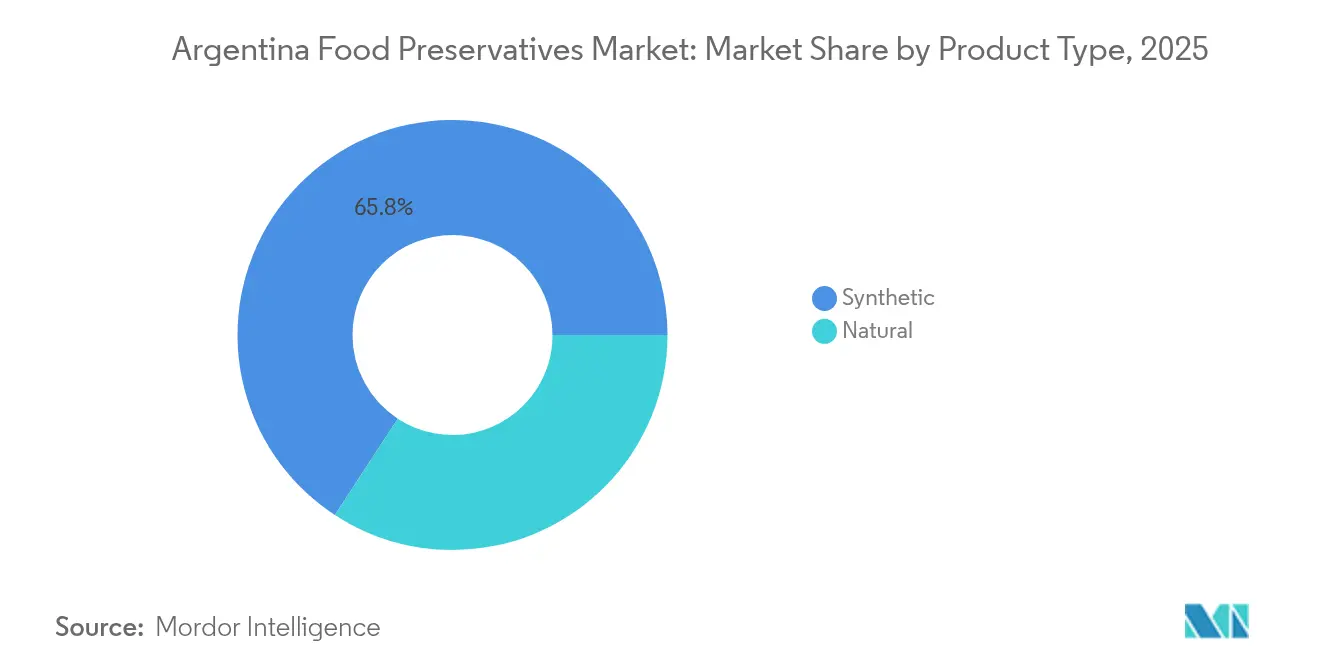
In 2025, synthetic preservatives dominate the market, holding a 65.78% market share. Their widespread adoption is attributed to their established cost advantages and proven efficacy in preserving food products. These preservatives are particularly favored in Argentina's price-sensitive food sector, where affordability and reliability are critical factors. Synthetic preservatives also benefit from extensive research and development, ensuring consistent performance and longer shelf life for food products, which further solidifies their position in the market.
On the other hand, natural preservatives are emerging as the fastest-growing segment, with a projected CAGR of 6.05% through 2031. This growth is driven by increasing regulatory support and a significant shift in consumer preferences toward clean-label and organic products. Consumers are becoming more health-conscious and are actively seeking food products with minimal artificial additives, which has boosted the demand for natural alternatives. Additionally, advancements in natural preservation technologies and the growing availability of plant-based and bio-derived preservatives are further propelling this segment's expansion in the market.

By Function: Antimicrobials Lead While Antioxidants Accelerate
In 2025, antimicrobials dominate the functional segment, accounting for 51.85%, underscoring their pivotal role in ensuring food safety and prolonging shelf life across Argentina's varied food processing industries. The widespread use of antimicrobials is driven by the need to prevent microbial contamination, which is a significant concern in the food processing sector. These preservatives are particularly crucial in meat, dairy, and bakery products, where spoilage risks are higher due to the perishable nature of the ingredients.
Antioxidants, witnessing a 5.34% CAGR growth through 2031, are propelled by heightened awareness of oxidative damage in processed foods and a consumer push for products boasting extended nutritional stability. These preservatives play a vital role in preventing rancidity and maintaining the sensory attributes of food products, such as flavor, color, and texture. The increasing preference for clean-label and natural food products has also led to a rise in the use of natural antioxidants, such as tocopherols and ascorbic acid, in the market.
By Form: Dry Formulations Dominate Despite Liquid Growth
Dry and granular preservatives dominated the market with a 58.76% market share in 2025. Their popularity stems from several advantages, including superior storage stability, which ensures a longer shelf life for products. Additionally, these preservatives offer lower transportation costs due to their lightweight and compact nature, making them cost-effective for manufacturers. Their compatibility with existing food processing systems further enhances their appeal, as they can be easily incorporated without requiring significant modifications to production lines.
Liquid formulations, however, are gaining traction and are projected to grow at a faster rate, with a 6.08% CAGR through 2031. This growth is primarily driven by their improved dispersion characteristics, which allow for uniform distribution in food products. Liquid preservatives also offer enhanced functionality in specific applications, such as beverages and dairy products, where their liquid form ensures better integration and effectiveness.
By Application: Meat Processing Leads While Ready Meals Surge
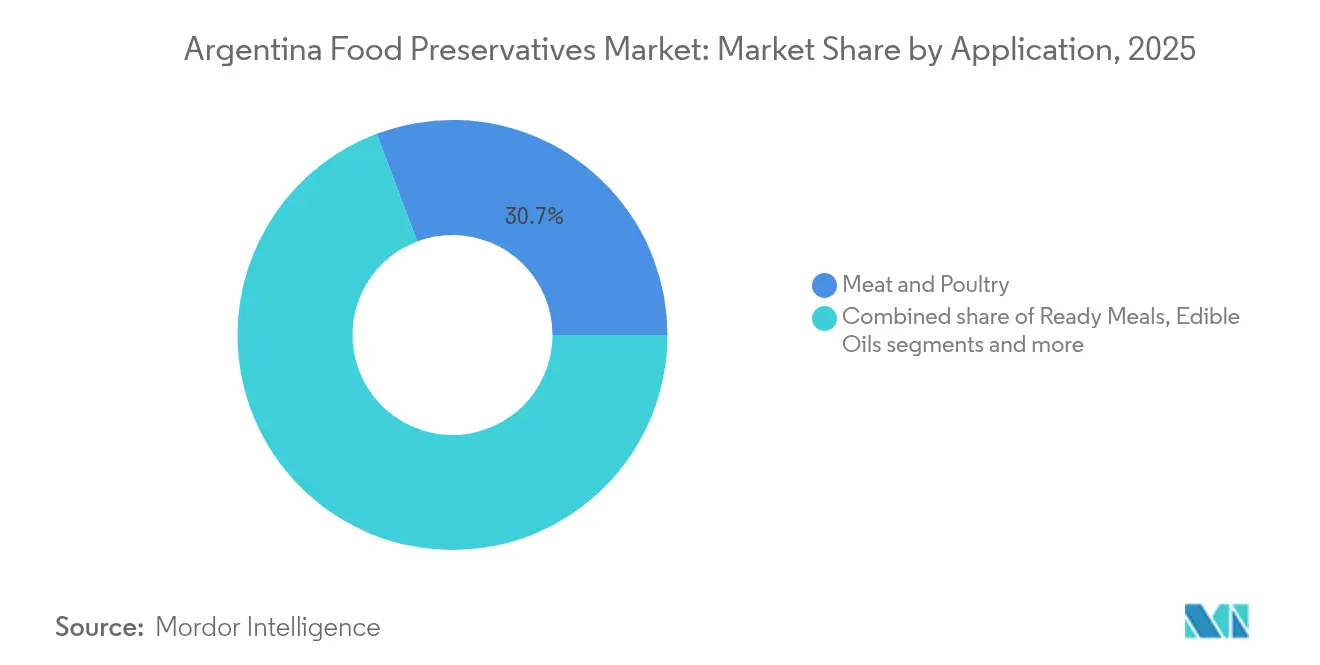
In 2025, meat and poultry processing accounts for 30.74% of application demand in the market. This significant share highlights Argentina's strong position in global protein markets, driven by its robust meat production and export capabilities. Preservation plays a critical role in this segment, ensuring product quality, extending shelf life, and maintaining safety standards. The demand for preservatives in meat and poultry processing is further fueled by the growing need to meet both domestic consumption and international export requirements, where stringent quality standards are enforced.
Ready meals represent the fastest-growing application segment in the market, with a projected CAGR of 6.01% through 2031. This growth is primarily attributed to increasing urbanization and shifting consumer preferences toward convenience foods. As more consumers adopt busy lifestyles, the demand for ready-to-eat and easy-to-prepare meals has surged, driving the need for effective preservation solutions to maintain freshness and extend shelf life. The segment's rapid expansion reflects the evolving food consumption patterns in Argentina, aligning with global trends favoring convenience and time-saving meal options.
Geography Analysis
The geography of Argentina's food preservatives market reveals distinct regional dynamics influenced by industrial concentration, agricultural production, and consumer demographics. The Buenos Aires metropolitan area stands out as the dominant region in terms of market demand. This dominance is attributed to its high concentration of food processing facilities and a large urban consumer base that drives the need for processed and preserved food products. The region's strategic location near major ports facilitates efficient import of raw materials and export of finished goods, further strengthening its position.
The provinces of Córdoba and Santa Fe form the second-largest consumption cluster within the market. These regions benefit from their well-established agricultural processing infrastructure, which supports the production of food products requiring preservatives. The growing urban populations in these provinces are increasingly demanding convenience foods with extended shelf life, further driving the adoption of food preservatives. The combination of agricultural strength and urbanization positions Córdoba and Santa Fe as significant contributors to the market's growth, complementing the dominance of Buenos Aires.
Emerging trends in the market highlight the importance of natural preservatives, particularly in the provinces of Mendoza and San Juan. These regions are gaining prominence due to their focus on natural preservation solutions, such as grape-derived antioxidants. This trend has been bolstered by Alvinesa's acquisition of local producer Dervinsa, which has enhanced the production and availability of natural preservatives in the area. Additionally, regional growth patterns reflect Argentina's economic recovery, with industrial zones adopting advanced preservation technologies at a faster pace than rural areas.
Regulatory Landscape
Argentina regulates preservatives primarily through the Codigo Alimentario Argentino (CAA), aligned with MERCOSUR additive standards and administered through ANMAT (via INAL) for most processed foods and beverages, while SENASA oversees foods and ingredients tied to products of animal origin. The Comisión Nacional de Alimentos (CONAL) acts as the technical advisory body proposing CAA updates, which is material for preservative suppliers because the market follows a positive-list approach: additives and their technical specifications must be incorporated into the CAA before use.
Recent CAA updates reinforce active oversight of additives and related safety limits. In 2024, Resolution 12/2024 updated additive specifications (including calcium propionate, INS 282, in Article 1398), and in April 2025 ANMAT announced further amendments to the CAA covering mycotoxins, food additives, and cider. Compliance also hinges on mandatory registrations (RNPA for products and RNE for establishments) and adherence to labeling rules that require declaration of additives by functional class and name/INS number, increasing documentation and testing demands for manufacturers and importers.
Value Chain Analysis
The Argentina food preservatives value chain starts with feedstocks and functional inputs, with petrochemical-derived intermediates supporting synthetic preservatives and agricultural or byproduct streams underpinning natural antioxidants and biopreservatives. This is followed by formulation and manufacturing through local blenders and multinational ingredient suppliers, then distribution to food processors across meat and poultry, bakery, ready meals, sauces, and edible oils. A key structural feature is the compliance gate embedded into commercialization: preservatives and coadjuvants must be approved and registered under the CAA framework, with pathways routed through INAL/ANMAT for most processed foods and through SENASA for products and establishments tied to animal-origin supply chains.
Downstream conversion and demand concentrate in major processing hubs, notably Buenos Aires and the Cordoba-Santa Fe corridor, while innovation and reformulation increasingly connect suppliers with public and private technical ecosystems, including CONICET work on lactic acid bacteria biopreservation and local natural-ingredient initiatives. The CAA positive-list mechanism and periodic joint updates by ANMAT and agriculture authorities shape time-to-market and portfolio choices, with 2026 joint resolutions incorporating new substances into the CAA (including coating-related substances and specific INS-listed copolymers). This keeps regulatory update cycles as a practical lever for ingredient launches and reformulation programs.
Competitive Landscape
The Argentine food preservatives market demonstrates moderate fragmentation and is characterized by the presence of both multinational corporations and specialized local players. Global companies such as Kerry Group plc, BASF SE, Ingredion Incorporated, and Archer Daniels Midland Company leverage their extensive Research and Development capabilities and diverse product portfolios to cater to multiple food sectors. These multinational players benefit from their ability to innovate and scale, offering a wide range of solutions that meet the evolving demands of the food industry. On the other hand, regional players focus on specialized offerings and capitalize on their in-depth understanding of local market dynamics.
The competitive landscape reveals a clear bifurcation in strategic approaches. Established players are actively expanding their natural preservative portfolios through acquisitions and internal development initiatives. These companies aim to strengthen their market position by addressing the increasing demand for sustainable and natural food preservation methods. Meanwhile, emerging biotechnology firms are targeting niche applications with novel preservation technologies.
A notable example of innovation in the market is Bioblends, a company that has developed gas-based bio-conservatives designed to extend food shelf life without the use of synthetic chemicals. This breakthrough highlights how technological advancements are driving the development of specialized preservation solutions. Such innovations not only address consumer demand for natural and sustainable products but also open up white-space opportunities for companies to differentiate themselves in the competitive landscape.
Argentina Food Preservatives Industry Leaders
-
Kerry Group plc
-
Cargill, Incorporated
-
BASF SE
-
Ingredion Incorporated
-
Archer Daniels Midland Company
- *Disclaimer: Major Players sorted in no particular order
Market Opportunities and Future Outlook
Opportunities in Argentina increasingly sit at the intersection of clean-label reformulation and the formal CAA approval pathway. The market shows visible whitespace for bio-based and fermentation-derived antimicrobials and antioxidants that can be positioned as alternatives to conventional chemical preservatives, particularly in high-volume categories such as bakery, meat products, and ready meals where shelf-life stability is critical. A concrete signal of commercialization momentum is BioBlends, an Argentine startup reported in March 2026 as developing biology-derived bio-preservatives for bread using bioinformatics and proprietary bacterial strain databases, reflecting active local product development aimed at replacing conventional additives.
Regulatory system touchpoints also create a defined route for suppliers that can navigate registrations and dossier requirements. Additive commercialization requires approvals managed via ANMAT/INAL or SENASA depending on product scope, and registration certificates have defined validity periods, notably 5 years for products of animal origin and 1 year for vegetal origin in the referenced approval framework, favoring suppliers with sustained regulatory support and customer-facing technical service. Public technical assistance and documentation from INTI on food additives also supports reformulation projects targeting natural preservation, reduced label complexity, and export-aligned specifications under the MERCOSUR-harmonized CAA system.
Recent Industry Developments
- May 2026: Argentina updated the Codigo Alimentario Argentino (CAA) through ANMAT and agriculture authority joint resolutions that incorporated new substances related to food-contact applications (including packaging coatings) and also incorporated Monk Fruit extract as a permitted sweetener in the CAA following a request by Merisant Argentina SRL. These updates matter for preservative and ingredient suppliers because they signal an active CAA update cycle and provide clearer regulatory footing for reformulation programs connected to clean-label positioning.
- July 2025: Alvinesa Natural Ingredients acquired Argentine producer Dervinsa (alongside Chilean Industrias Vinicas), expanding grape-derived ingredient capacity relevant to natural antioxidant and preservation solutions. The move strengthens local access to wine and grape byproduct streams and supports scale-up of natural preservative inputs in provinces such as Mendoza and San Juan.
- November 2024: Tate and Lyle completed its acquisition of CP Kelco, creating a larger specialty food and beverage solutions platform with stronger capabilities in natural ingredient technologies. For Argentina, the combination expands the set of natural and functionality-led solutions available to local processors that are responding to clean-label and shelf-life demands.
Research Methodology Framework and Report Scope
Market Definition and Coverage
For this study, the market covers the value of food preservative ingredients sold for use in Argentina across packaged and processed food and beverage manufacturing, counted at the point of sale into the local market.
Scope exclusions: We exclude vitamins, flavors, colors, and sweeteners that are not used for preservation, as well as in-house compounding margins that are not priced as preservative ingredients.
Segmentation Overview
- By Product Type
- Synthetic
- Natural
- By Function
- Antimicrobial
- Antioxidants
- By Form
- Dry/Granular
- Liquid
- By Application
- Bakery and Confectionery
- Meat and Poultry
- Ready Meals
- Sweet and Savory Snacks
- Sauces and Dressings
- Edible Oils
- Other Applications
Data Sources, Market Sizing, and Validation
Desk Research
Desk research was used to set the market boundary, build the demand context, and create a clean input sheet before interviews began. We relied on public and official references such as national statistics releases on food manufacturing output and prices, customs import and export data for relevant preservative chemicals, food safety and labeling guidance from regulators, and materials from industry associations tied to bakery, meat processing, and beverages.
Along with these, we reviewed company filings and investor presentations for ingredient and additives commentary, plus reputable press and technical articles to understand adoption shifts toward natural preservation. Where needed, paid subscription sources covering company financials, and another covering shipment-level trade flows, were used to cross-check supplier exposure and import intensity. The desk sources mentioned above are illustrative, and many other references were also used for data collection, validation, and research clarification.
Primary Interviews and Surveys
Primary work focused on validating pricing, usage rates, and substitution patterns by application, since preservatives are often bought as part of broader ingredient baskets. We spoke with stakeholders across ingredient suppliers, distributors, and food manufacturers, then pressure-tested assumptions around synthetic versus natural mixes, the functional split (antimicrobial versus antioxidant), and form factors (dry versus liquid) to close gaps left by desk inputs.
Distribution of primary research fieldwork respondents
| Company type | Respondent position |
|---|---|
| Top tier: 33% | CXOs: 22% |
| Mid tier: 45% | Functional/Unit leaders: 24% |
| Smaller Players: 22% | Managers: 54% |
Market-Sizing & Forecasting
Sizing starts with a top-down reconstruction of preservative demand from Argentina packaged food production trends, trade flows for key preservative inputs, and application-level usage logic, which is then translated into value using observed price bands. To keep the total realistic, we corroborated results with selective bottom-up checks such as sampled supplier revenue exposure, channel checks with distributors, and volume by average selling price (ASP) approximations for common preservative groups.
Key model inputs include processed food output growth, the split of demand across bakery and confectionery, meat and poultry, ready meals, sauces and dressings, and edible oils, plus the observed shift toward natural alternatives in certain categories. We also tracked functional mix (antimicrobial versus antioxidant), form mix (dry versus liquid), and an Argentina-specific pricing path that reflects FX movement and local pass-through timing rather than a single global inflation rate. Forecasting is built using scenario analysis around food production growth and preservative intensity, and the scenarios are calibrated using the consensus ranges shared by primary respondents. When bottom-up visibility is weaker for smaller applications, we bridge gaps by applying conservative penetration and usage-rate assumptions and then re-test totals against the broader demand pool.
Data Validation & Update Cycle
Validation is done through triangulation across independent signals, so the market total is checked against food processing output direction, import intensity movements, and price trend plausibility before being finalized. Outliers are flagged early, and assumptions are reworked when the model implies unrealistic preservative intensity changes within a single application.
Before sign-off, the work goes through multi-step analyst review, followed by targeted re-contacts with industry participants when variances remain unexplained. Reports are refreshed annually, and interim updates are triggered when there are material shifts in currency, regulation, or food manufacturing activity. Right before delivery, we run a final freshness pass to ensure the market size and key assumptions reflect the latest available signals.
Mordor Intelligence's Argentina Food Preservatives Market Market Size Measured Against Other Published Estimates
Published market sizes for Argentina food preservatives can look far apart, even when they sound like they cover the same topic. Most of the gap usually comes from different timing of currency conversion, how ASP changes are carried through the forecast years, and whether older base-year values are still being used.
Here, price points are aligned to the base-year window and then re-checked during validation calls, followed by applying the same FX timing across historical and forecast years so comparisons stay consistent, a refresh-led step used by Mordor Intelligence.
Benchmark comparison
| Source | Market Size | Gaps in Research Methodology |
|---|---|---|
| Mordor Intelligence | USD 65.54 M (2025) | |
| Industry Data Publisher A | USD 34.88 M (2023) | Uses an earlier base year and a shorter refresh window, so FX timing and later price resets are not fully reflected when values are compared to a 2025 base. |
| Independent Research Portal B | USD 3.63 B (2022) | The magnitude suggests a much wider scope boundary, likely folding in broader food ingredients or additives beyond preservatives, and the year reference is older which can amplify currency and ASP differences. |
Taken together, the spread is mainly explained by scope boundaries and year alignment, followed by how prices are updated as conditions change. By keeping the scope tied to preservative ingredients and by enforcing consistent FX and ASP timing checks, the estimate stays traceable to clear demand drivers that can be reviewed and repeated.
Key Questions Answered in the Report
What is the current size of the Argentina food preservatives market?
The market stands at USD 68.11 million in 2026 and is projected to grow to USD 82.53 million by 2031, reflecting a 3.92% CAGR.
Which preservative type dominates sales in Argentina?
Synthetic preservatives currently account for 65.78% of total revenue, though natural alternatives record the fastest growth.
Which application segment is expanding most rapidly?
Ready meals show the highest forecast growth at a 6.01% CAGR as urban households increasingly favor convenience foods.
How will new regulations affect preservative suppliers?
Decree 35/2025 and ANMAT’s labeling reforms accelerate approvals for natural ingredients while tightening documentation standards, rewarding companies with strong regulatory capabilities.