
Antimicrobial Textile Market Size and Share
Market Overview
| Study Period | 2021 - 2031 |
|---|---|
| Market Size (2026) | USD 14.29 Billion |
| Market Size (2031) | USD 17.25 Billion |
| Growth Rate (2026 - 2031) | 3.84 % |
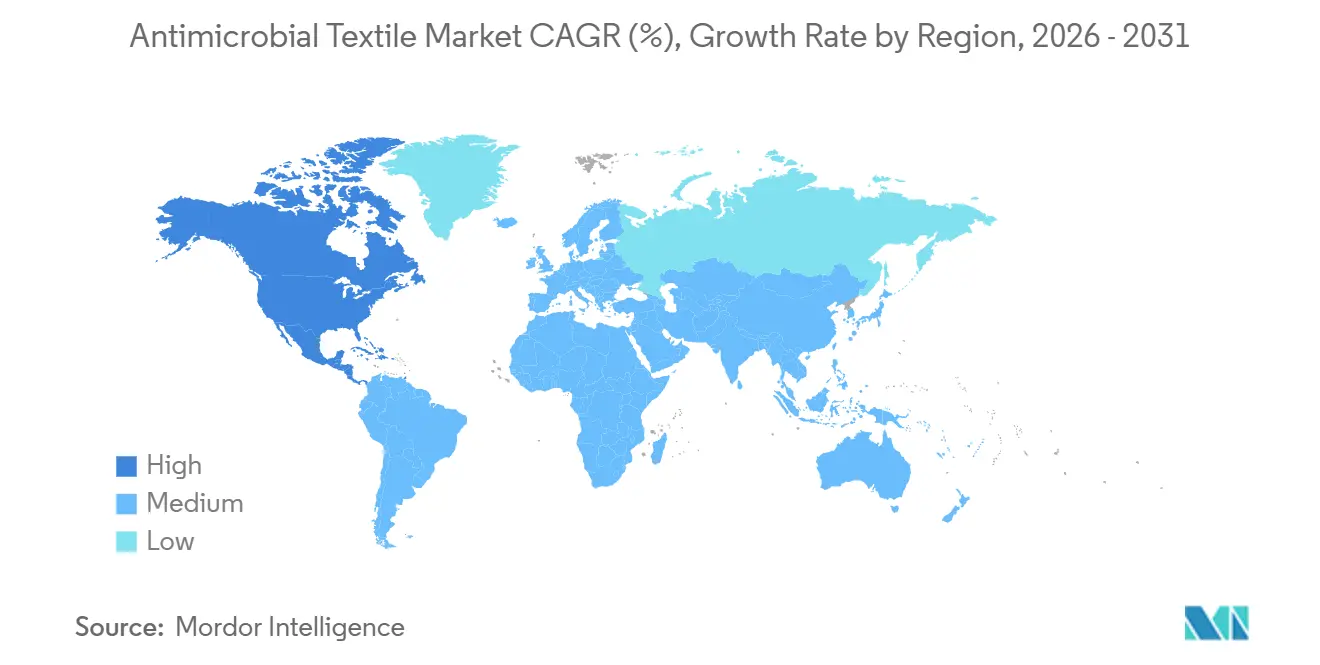
| Fastest Growing Market | North America |
| Largest Market | Europe |
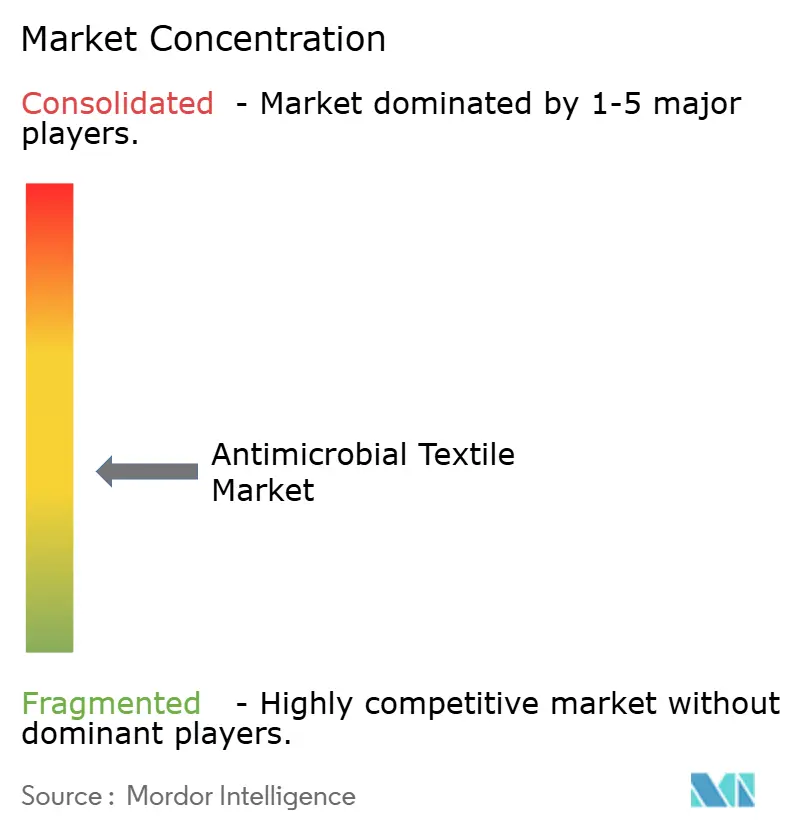
| Market Concentration | Medium |
Major Players *Disclaimer: Major Players sorted in no particular order Image © Mordor Intelligence. Reuse requires attribution under CC BY 4.0. | |

Antimicrobial Textile Market Analysis by Mordor Intelligence
The Antimicrobial Textile Market size is estimated at USD 14.29 billion in 2026, and is expected to reach USD 17.25 billion by 2031, at a CAGR of 3.84% during the forecast period (2026-2031). Demand is shifting from opportunistic hygiene add-ons toward mandated infection-control solutions in healthcare, public transit, and shared-mobility interiors, where regulators now require verified microbial-reduction data rather than generic “antimicrobial” claims. Continued enforcement of REACH Annex XVII in Europe boosts adoption of durably bonded chemistries that remain effective after industrial laundering, while North American transit authorities retrofit upholstery in line with CDC soft-surface guidelines, lifting regional growth prospects. Medical textiles retain a clear volume lead, yet premium sportswear brands are expanding silver-ion polyamide deployments in moisture-wicking layers to control odor without hindering recyclability. Heightened regulatory scrutiny of nanoparticle discharge and silver-price swings continues to redirect R&D toward recyclable masterbatch systems and biopolymer actives.
Key Report Takeaways
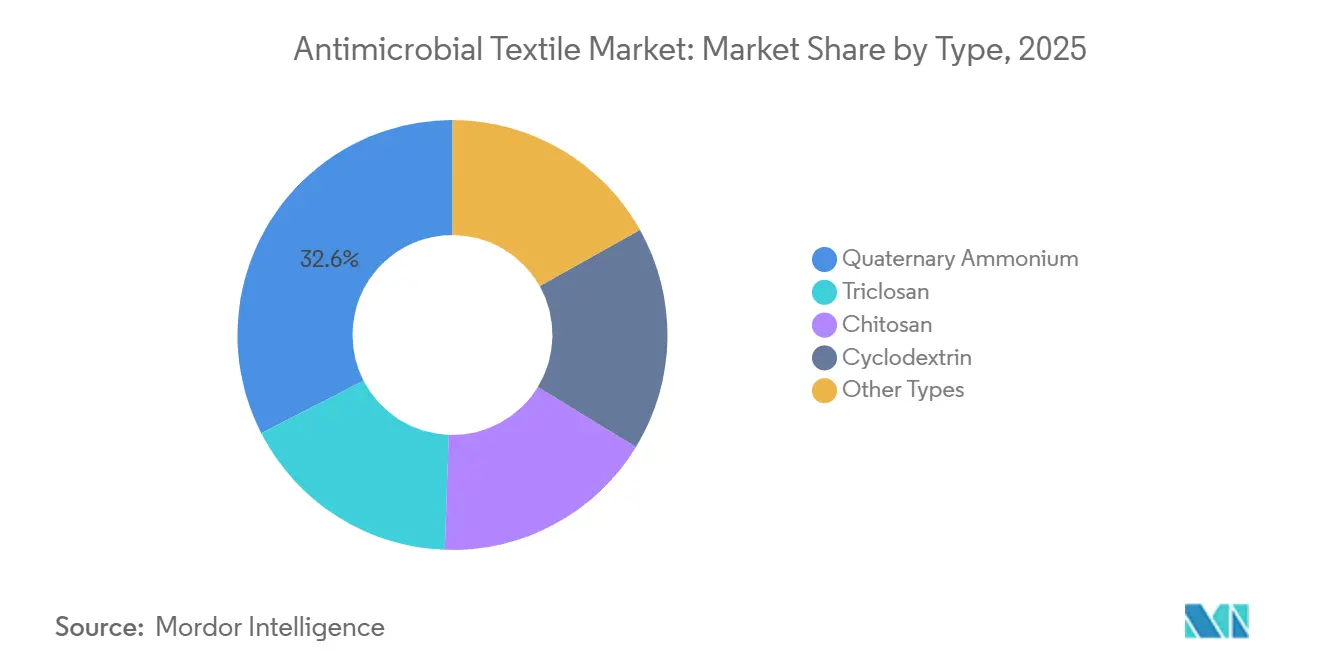
- By type, quaternary ammonium captured 32.56% of antimicrobial textile market share in 2025, while chitosan is forecast to record a 5.81% CAGR through 2031.
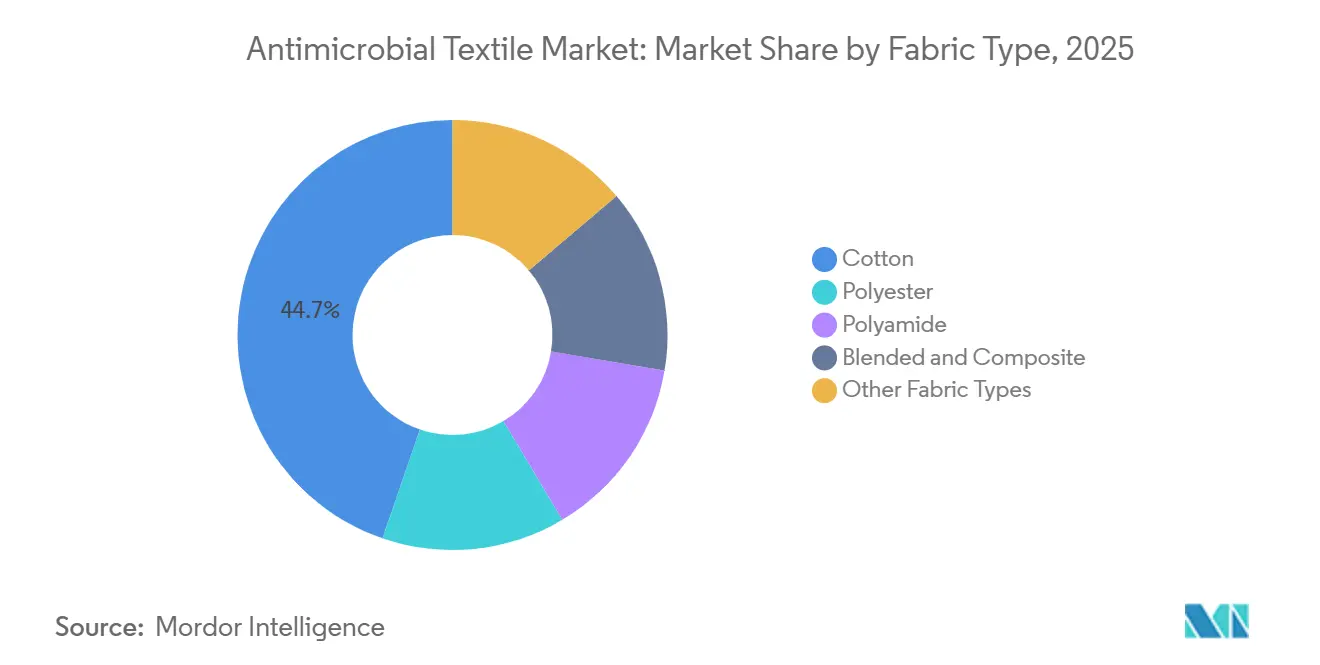
- By fabric type, cotton accounted for 44.71% of antimicrobial textile market share in 2025, whereas polyamide is projected to expand at a 5.94% CAGR to 2031.
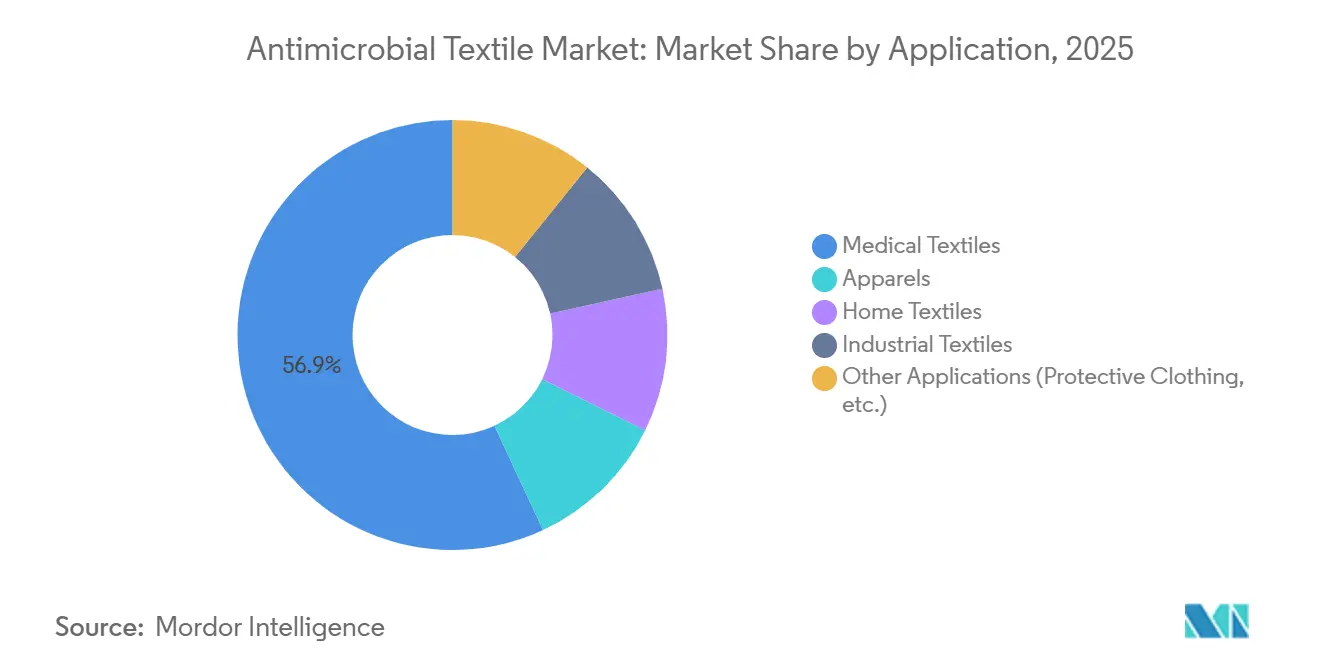
- By application, medical textiles held 56.92% of antimicrobial textile market share in 2025, while other applications are expected to grow at a 5.06% CAGR to 2031.
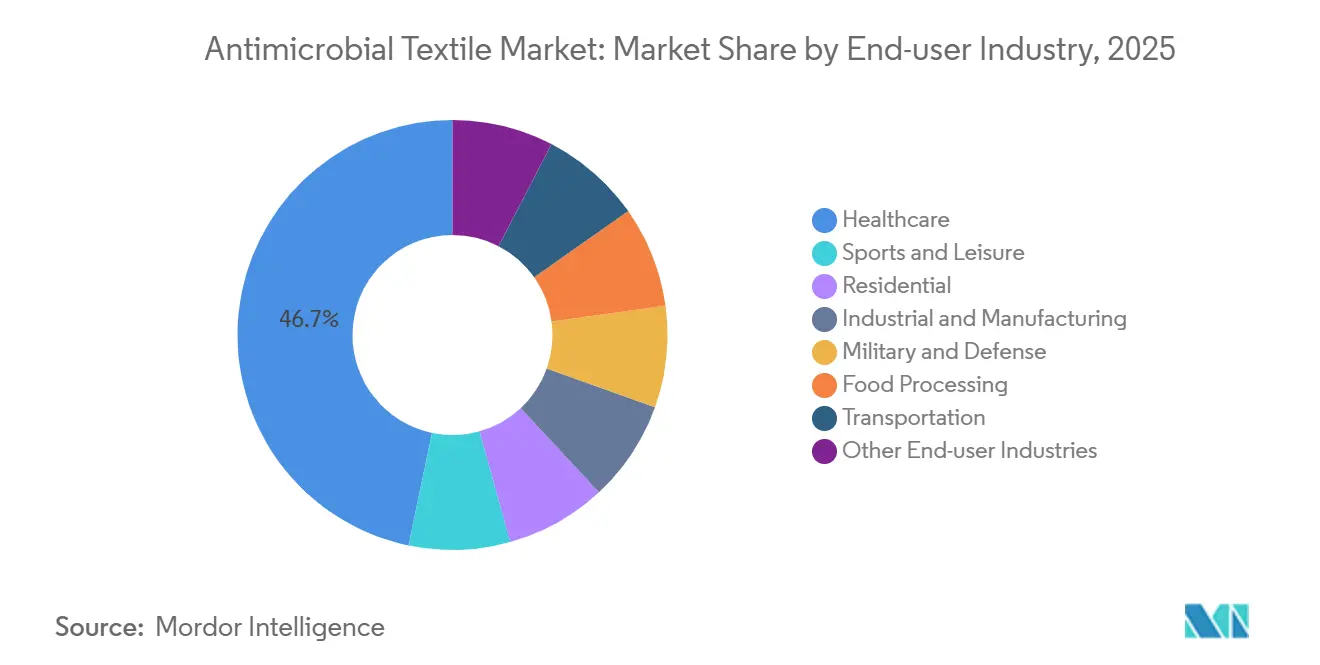
- By end-user industry, healthcare represented 46.71% of antimicrobial textile market share in 2025, while sports and leisure is poised for a 5.98% CAGR on the back of athleisure upgrades.
- By geography, Europe generated 35.01% of antimicrobial textile market share in 2025, while North America is predicted to advance at a 4.77% CAGR through 2031.
Note: Market size and forecast figures in this report are generated using Mordor Intelligence’s proprietary estimation framework, updated with the latest available data and insights as of January 2026.
Market Trends and Insights
Drivers Impact Analysis of Antimicrobial Textile Market*
| Driver | (~) % Impact on CAGR Forecast | Geographic Relevance | Impact Timeline |
|---|---|---|---|
| Healthcare-Associated Infection (HAI) Prevention Mandates | +1.2% | Global, with early enforcement in EU and North America | Medium term (2-4 years) |
| Athletic-Odor Management Demand in Premium Sportswear | +0.9% | North America, Europe, APAC urban centers | Short term (≤2 years) |
| Smart-Wearables Using Antimicrobial Sensor Fabrics | +0.6% | North America, Japan, South Korea | Long term (≥4 years) |
| Public Transport and Shared-Mobility Upholstery Hygiene Upgrades | +0.7% | North America, Europe, APAC megacities | Medium term (2-4 years) |
| Recycling-Ready Silver-Ion Masterbatch Adoption | +0.5% | Europe, North America | Long term (≥4 years) |
| Source: Mordor Intelligence | |||
Healthcare-Associated Infection Prevention Mandates
ISO 20743 now underpins hospital tenders, obliging suppliers to verify log-3 bacterial‐reduction performance against Staphylococcus aureus and Klebsiella pneumoniae, the pathogens driving 42% of 2024 bloodstream infections in the CDC network[1]Centers for Disease Control and Prevention, “NHSN CLABSI Surveillance Report 2024,” cdc.gov . Procurement teams favor mills that maintain in-house AATCC 100 and ASTM E2149 capability, shrinking opportunities for job‐dyers dependent on external certification. The U.K. NHS mandated 71 °C, 3-minute thermal disinfection in 2025, a practice that degrades topical quats yet leaves silver-bonded polyamide intact, prompting a pivot to inherently antimicrobial synthetics in drapes and gowns. Comparable durability requirements entered Japan’s JIS L 1902, driving consolidation around masterbatch solutions. Similar stringency now applies to ISO 13629-2 cleanroom garments and FDA 510(k) wound dressings, reinforcing demand for proven, wash-resilient fabrics.
Athletic-Odor Management Demand in Premium Sportswear
Nike’s February 2025 Aero-FIT base layers introduced silver-polymer masterbatch in recycled polyester, addressing the USD 12 billion performance-apparel segment where malodor accounts for 23% of returns. A Textile Research Journal study found untreated polyester emitted 4.7 times more methanethiol than wool, yet matched wool once dosed with 0.8 wt% silver ion. Adidas, Under Armour, and Lululemon have since specified antimicrobial polyamide in compression zones, extending garment life and reducing wash frequency. Fulgar’s Q-SKIN polyamide retains 94% efficacy after 100 household washes, meeting OEKO-TEX Class I safety limits. Brands also lean on REACH Annex XVII entry 72, which caps silver release at 0.1 mg/kg per wash, guiding chemistry selection.
Smart-Wearables Using Antimicrobial Sensor Fabrics
Conductive yarns in glucose-monitoring patches and ECG tees need antimicrobial coatings to prevent biofilm that can raise electrode impedance by up to 40% within 72 hours. MIT and ETH Zurich trials showed graphene oxide layers on silver-plated polyamide kept impedance below 50 ohms after simulated 14-day wear. Medtronic invested USD 15 million in a European consortium to commercialize such fabrics for remote patient monitoring in 2024. Japan’s NEDO is funding JPY 2.3 billion to develop washable antimicrobial e-textiles aiming for ISO 13485 certification by 2027. Regulatory ambiguity persists: EU MDR classifies antimicrobial sensor fabrics as Class IIa when infection-prevention claims are made, while U.S. FDA routes them through 510(k) predicates.
Public Transport and Shared-Mobility Upholstery Hygiene Upgrades
EPA’s 2023 guidance on soft-surface disinfection in high-traffic environments pushed U.S. transit agencies to require fabrics that log-3-reduce bacteria within 24 hours. New York’s MTA awarded a USD 47 million contract in August 2024 for quaternary-treated polyurethane-coated polyester seat covers meeting AATCC 100 performance. Transport for London retrofitted 1,200 buses in Q1 2025 using BioCote silver-additive covers compatible with U.K. flame-retardant rules. Singapore’s LTA now mandates ISO 22196 reports for rail upholstery procured after January 2025. Airbus likewise selected antimicrobial seat fabrics for A350 retrofits delivering from 2026 to Gulf carriers.
Restraints Impact Analysis of Antimicrobial Textile Market*
| Restraint | (~) % Impact on CAGR Forecast | Geographic Relevance | Impact Timeline |
|---|---|---|---|
| Tightening Nanoparticle Discharge Restrictions (EU REACH, US EPA) | -0.8% | Europe, North America | Short term (≤2 years) |
| Premium Cost Delta vs. Untreated Textiles | -0.5% | Global, acute in price-sensitive ASEAN and South America | Medium term (2-4 years) |
| Silver Price Volatility and Supply-Chain Concentration | -0.3% | Global | Short term (≤2 years) |
| Source: Mordor Intelligence | |||
Tightening Nanoparticle Discharge Restrictions (EU REACH, US EPA)
ECHA placed nano-silver on its SVHC Candidate List in March 2024, forcing importers of articles with more than 0.1 wt% nano-silver to submit Article 7 notices and pay dossier fees ranging from EUR 50,000 to EUR 150,000[2]European Chemicals Agency, “SVHC Candidate List March 2024,” echa.europa.eu . The move has already reduced European antimicrobial-finish formulators from 47 to 29 between 2022 and 2025. In parallel, the U.S. TSCA Section 8(a) nanomaterial rule, active January 2025, mandates production-volume and exposure reports for sub-100 nm silver particles with penalties up to USD 50,000 per day. Because polymer-bound silver is exempt, mills are racing to install twin-screw lines for masterbatch integration, extending development cycles by a year or more.
Premium Cost Delta Vs. Untreated Textiles
Silver-ion masterbatch can cost USD 8–12/kg against USD 1.80/kg for virgin PET, translating to a 22–35% price premium at the fabric level, a hurdle in price-sensitive home-textile markets. Large mills above 5,000 tpa capacity cut the premium to 15–18% through scaling, yet small converters in ASEAN and South America face 40–50% penalties. Indonesia’s Ministry of Industry found only 3.2% of domestic home textiles used antimicrobial treatments in 2024 owing to affordability gaps. Consumer habits also matter; regions that favor hot-water washing see slower payback from low-temperature optimized antimicrobial fabrics.
*Our forecasts treat driver/restraint impacts as directional, not additive. The impact forecasts reflect baseline growth, mix effects, and variable interactions.
Antimicrobial Textile Market Segment Analysis
By Type:
Quaternary Ammonium Dominates, Chitosan AcceleratesQuaternary ammonium held 32.56% of 2025 antimicrobial textile market share, reflecting its broad-spectrum activity and favorable economics in workwear and hospitality linen. Yet California’s Safer Consumer Products list now flags benzalkonium chlorides, adding compliance costs that erode its advantage. Triclosan persists only in niche surgical scrubs after FDA bans on OTC antiseptics. Chitosan is forecast to grow at a 5.81% CAGR, benefiting from GRAS status under FDA 21 CFR 184 and biocompatibility that eases ISO 10993 cytotoxicity hurdles. Studies in Carbohydrate Polymers confirm log-3 reductions at 1 wt% loading, competitive with silver at a fraction of the material cost.
Durability expectations amplify these shifts. EPA FIFRA registration requires public-health claims for quats, yet chitosan marketed for odor control can bypass pesticide status, allowing quicker commercialization. Hybrid formulations blending chitosan with low-dose silver aim to balance cost, safety, and wash resistance. Meanwhile, copper and zinc pyrithione fill specialist gaps in diabetic socks and mildew-resistant outdoor gear.


By Fabric Type:
Cotton Leads, Polyamide SurgesCotton kept 44.71% of 2025 volume, driven by home-textile and hospital-linen comfort requirements, but its topical finishes lose efficacy after 30–40 industrial washes, raising lifecycle costs. Polyamide, forecast to grow at 5.94%, integrates silver ions during melt-spinning, locking them within the polymer matrix and retaining 94% activity after 100 domestic washes, thus commanding a premium in compression hosiery and surgical garments.
Blends such as 65/35 polyester–cotton meet NFPA 1999 EMS garment codes and provide a midway option where comfort and durability must coexist. Aramid and modacrylic variants serve flame-retardant military uses, with Milliken enlarging capacity via its January 2025 Two Rivers acquisition to supply Artemis mission garments. Across all fabrics, ISO 6330 wash-test compliance and REACH Annex XVII silver-release caps govern chemistry choices.
By Application:
Medical Textiles Anchor Demand, Protective Clothing GainsMedical textiles secured 56.92% of 2025 revenue as hospital gowns, drapes, and wound dressings must meet ISO 13629-2 and AATCC 100 benchmarks. The NHS thermal-laundering update accelerates polyamide adoption by guaranteeing performance after 50 industrial cycles. Apparel follows but at modest growth because casualwear buyers rarely absorb full premiums outside high-end sportswear. Home-textile uptake remains selective yet grows in hospitality; Marriott’s 2024 pilot saw a 19% linen-replacement reduction after adopting antimicrobial duvet covers.
Protective clothing, grouped under “other applications,” are set for a 5.06% CAGR. The U.S. DoD funds 14-day no-launder base layers under ASTM F1980, and food processors need antimicrobial garments to curb Listeria under FDA 21 CFR 110. Cleanroom wipes rated to ISO 14644 add another growth pocket in semiconductor fabs.
By End-user Industry:
Healthcare Leads, Sports and Leisure OutpaceHealthcare accounted for 46.71% of 2025 spending because hospitals target measurable infection reductions under ISO 20743 contracts. The CDC logged 16,730 CLABSI cases in 2024, reinforcing demand for antimicrobial patient wear and securement devices. Sports and leisure, however, will post a 5.98% CAGR: silver-ion polyamide in athleisure base layers lowers odor and extends garment life, aligning with consumer sustainability goals.
Residential penetration is concentrated in humid zones prone to mildew, while industrial clients in cleanrooms and conveyor systems seek longer service intervals. Military applications focus on extended-wear uniforms, and transit upholstery gains relevance as transport authorities adopt EPA soft-surface guidance.
Geography Analysis
Europe Antimicrobial Textile Market
Europe led the antimicrobial textile market with 35.01% of 2025 revenue, driven by stringent REACH Annex XVII controls that push mills toward masterbatch solutions, eliminating leachable nanoparticle finishes. Germany’s machinery suppliers, notably Oerlikon, enable in-line silver dosing, while the U.K. NHS laundry protocol favors polyamide surgical packs, lifting demand in Britain and Ireland. France’s ANSM requires MDR 2017/745 CE marking for antimicrobial dressings, consolidating the supplier base among vertically integrated firms. Italy’s Prato district is shifting into polyamide-cotton blends to mitigate finish degradation on traditional wool lines.
North America Antimicrobial Textile Market
North America is set to grow at a 4.77% CAGR through 2031 as TSCA rules encourage polymer-bound silver, prompting domestic spinning investments and reducing reliance on Asian imports subject to nanoparticle reporting. Health Canada harmonized its PMRA guidance with EPA FIFRA in late 2024, cutting registration delays for cross-border suppliers. Mexico’s maquiladoras supply antimicrobial workwear under USMCA origin rules, benefiting from proximity to U.S. clients.
APAC, South America and MEA Antimicrobial Textile Market
In Asia-Pacific, China’s GB/T 20944 revision aligns to ISO 20743, making exports smoother, while Japan’s 50-wash JIS L 1902 durability test favors Toray and Unitika masterbatches. South Korea’s MFDS fast-tracked chitosan wound dressings in 2025, and ASEAN’s regulatory patchwork slows uptake outside Thailand and Malaysia. South America and the Middle East and Africa remain nascent, though Brazil’s ANVISA instituted hospital antimicrobial-textile registration in 2024.

Value Chain Analysis
The antimicrobial textile value chain starts with active-agent supply (silver salts and polymer-bound silver masterbatches, quaternary ammonium compounds, zinc-based systems, and bio-based actives such as chitosan and plant-derived coatings), followed by formulation houses and finish-chemistry providers that tailor add-ons to end-use claims and wash-durability targets. Integration then moves to fiber producers (melt-spinning with embedded actives for polyamide and polyester) and to mills and finishers applying topical or pad-dry-cure finishes on cotton and blends, with validation performed against test methods referenced in tenders and labels (for example, ISO 20743, AATCC 100, ASTM E2149, ISO 22196). Downstream, distribution runs through textile converters, brand sourcing offices, and institutional procurement channels such as healthcare group purchasing organizations and transit authorities, where documentation for efficacy, skin safety, and release limits increasingly functions as a pass-fail gate.
Bottlenecks concentrate around (i) regulatory and claims substantiation, where EU Biocidal Products Regulation authorization timelines and US EPA FIFRA pathways can delay commercialization, and (ii) material and process constraints, where silver price volatility and limits on nanoparticle discharge push mills toward polymer-bound masterbatch routes that require extrusion capability and process know-how. Supply risk also rises when premium finishing and testing infrastructure is clustered in a few regions, prompting scale-up partnerships that connect chemistry innovators to large textile groups. Parx Materials announced a five-year strategic cooperation in January 2026 with Shanghai Textile Raw Materials Co., Ltd. (Orient International Group) to scale zinc-based antibacterial technology via fiber spinning, reflecting the shift from post-finish treatments toward in-fiber integration to improve durability and reduce leaching.
Competitive Landscape
The antimicrobial textile market is moderately concentrated. HeiQ Materials, Microban International, Polygiene, Sanitized, and Milliken together supplied an estimated 44% of additives in 2025, leaving space for regional specialists. To protect margins, leading firms pivot to licensing masterbatch technologies to fiber producers rather than selling finished fabric. HeiQ’s restructuring and 2024-2025 delisting underscore this shift, trimming direct consumer exposure to focus on B2B royalties. Indorama Ventures’ joint venture with Jiaren exemplifies vertical integration that captures recycling revenue and secures silver supply.
Regulatory acumen is a differentiator. Noble Biomaterials’ EPA-registered Ionic+ Botanical line sidesteps heavy-metal limits, offering formulators an alternative to silver subject to REACH and TSCA reporting. Smaller players lacking hedged silver contracts suffered when spot prices climbed 40% in 2024, triggering exits and reinforcing the position of vertically integrated giants like Toray and Indorama. ISO 13485 and OEKO-TEX certification have become de facto gatekeepers, directing buyers toward suppliers that can prove consistent quality and skin safety.
Technology roadmaps converge on circularity and safety. Masterbatch integration eliminates wastewater silver discharge, aligns with forthcoming ECHA wastewater norms, and facilitates end-of-life silver recovery. Chitosan suppliers exploit GRAS status to avoid pesticide registration and capture wound-care niches. Meanwhile, copper and zinc formulations address diabetic-care socks and mildew-prone outdoor gear but must navigate aquatic-toxicity scrutiny under EPA Copper Action Plan.
Antimicrobial Textile Industry Leaders
Polygiene Group AB
Sanitized AG
Microban International
HeiQ Materials AG
Milliken
- *Disclaimer: Major Players sorted in no particular order
Antimicrobial Textile Market Companies Covered in this Report
- 1888 Mills, LLC
- Ahlstrom
- BioCote Limited
- Birlacril
- HeiQ Materials AG
- Herculite
- Indorama Ventures Public Company Limited
- Microban International
- Milliken
- Noble Biomaterials
- Polygiene Group AB
- PurThread
- SANITIZED AG
- Sciessent LLC
- Toray Industries, Inc.
- UNITIKA LTD.

Market Opportunities and Future Outlook
Whitespace is opening around non-metal, non-biocidal, and non-leaching approaches that can sustain antimicrobial or anti-odor performance while meeting tighter scrutiny on claims, labeling, and emissions. Enforcement actions such as the French DGCCRF steps in May 2026 against misleading antibacterial and anti-odor claims highlight the value of suppliers that can support defensible test data and compliant labeling for consumer and institutional channels. On the technology side, launches such as Biocompatibility Innovation (BCI) introducing B-Kool in June 2026, positioned as a plant-based, non-biocidal adhesion-prevention finish, provide a practical path for brands and mills seeking alternatives to traditional silver-based or leaching biocides, especially where OEKO-TEX-oriented documentation is required by buyers.
A second opportunity track is scale-up and integration at the fiber stage for medical and high-wear applications that require performance after repeated laundering and controlled release profiles. Parx Materials January 2026 cooperation with Orient International to integrate a physical zinc-based antibacterial technology into spinning processes underscores buyer demand for embedded, durable solutions that simplify downstream finishing and wastewater management. In parallel, the research pipeline is expanding for bio-based and waste-derived actives (for example, spruce bark extract coatings reported in 2026 for activity against bacteria and enveloped viruses), creating partnering opportunities between additive developers, mills, and healthcare validation sites to translate lab efficacy into hospital-grade, wash-durable textiles within the report scope (finished fabrics and ready-made items with embedded actives).
Recent Industry Developments in Antimicrobial Textile Market
- March 2026: Polygiene Group AB released Polygiene OdorCrunch 2.0, positioned as a heavy-metal-free and PFAS-free odor absorption technology for textiles and tested to ISO 17299. The launch supports brand and mill reformulation programs that are moving away from metal-based odor and antimicrobial chemistries, while keeping performance claims tied to recognized test methods.
- January 2026: HeiQ Materials AG and Archroma announced a partnership to bring HeiQ antimicrobial and odor-control technologies through Archroma's global textile ecosystem. The move supports scale-up and go-to-market reach by linking a functional-finish specialist with a large chemical platform used by mills and brands across regions.
- October 2024: 1888 Mills, LLC partnered with FUZE Technologies to apply FUZE's F1 antimicrobial textile treatment, described as a chemical-free, water-based solution that permanently adheres without binders or surfactants. The collaboration broadened commercial options for mills targeting durability and simplified finishing recipes in institutional textiles and other high-wash applications.


Antimicrobial Textile Market Report Scope and Research Methodology
Market Definition and Coverage
For this study, the market covers textile fibers, yarns, fabrics, and finished textile products that have antimicrobial properties added during manufacturing through agents or treatments that reduce microbial growth during use.
Scope exclusions: It does not include standalone disinfectant chemicals, or one-time after-market sprays and fogging services applied after the textile product is already sold.
Segments Covered in This Report
- By Type
- Quaternary Ammonium
- Triclosan
- Chitosan
- Cyclodextrin
- Other Types
- By Fabric Type
- Cotton
- Polyester
- Polyamide
- Blended and Composite
- Other Fabric Types
- By Application
- Medical Textiles
- Apparels
- Home Textiles
- Industrial Textiles
- Other Applications (Protective Clothing, etc.)
- By End-user Industry
- Healthcare
- Sports and Leisure
- Residential
- Industrial and Manufacturing
- Military and Defense
- Food Processing
- Transportation
- Other End-user Industries
- By Geography
- Asia-Pacific
- China
- India
- Japan
- South Korea
- ASEAN Countries
- Rest of Asia-Pacific
- North America
- United States
- Canada
- Mexico
- Europe
- Germany
- United Kingdom
- France
- Italy
- Rest of Europe
- South America
- Brazil
- Argentina
- Rest of South America
- Middle-East and Africa
- Saudi Arabia
- South Africa
- Rest of Middle-East and Africa
- Asia-Pacific
Data Sources, Market Sizing, and Validation
Desk Research
Desk research was used to set the market boundary and to create the first set of assumptions that could be checked later in interviews. We relied on public sources such as US EPA and EU ECHA guidance on antimicrobial claims, CDC healthcare textile and hygiene references, UN Comtrade trade statistics for textile categories, and World Bank macro indicators for demand context. Where useful, we also reviewed patent databases and peer-reviewed journals to understand what active agents are being used and how durable performance is typically achieved in textiles.
To make the sizing model practical, we added supporting signals from annual reports, investor presentations, and trusted press coverage on textile demand, capacity additions, and raw material trends like silver and specialty chemicals. A paid subscription for company financials and a paid import and export shipment database were used selectively to sanity-check supplier scale and trade flows when public reporting was thin. The desk research sources listed here are illustrative, and additional public documents were also reviewed for data collection, validation, and clarification.
Primary Interviews and Surveys
Primary work focused on interviews and structured surveys with textile manufacturers, chemical and additive suppliers, converters, and downstream users such as healthcare laundries and brand sourcing teams. Because this is a global market, we collected demand and supply perspectives across APAC, EMEA, and the Americas so regional adoption patterns and pricing logic could be cross-checked, then adjusted assumptions where gaps remained.
Distribution of primary research fieldwork respondents
| Company type | Respondent position | Region |
|---|---|---|
| Top tier: 25% | CXOs: 16% | APAC: 37% |
| Mid tier: 55% | Functional/Unit leaders: 37% | EMEA: 36% |
| Smaller Players: 20% | Managers: 47% | Americas: 27% |
Market-Sizing & Forecasting
The market was modeled using a top-down build where textile demand indicators, along with trade and production signals, were used to reconstruct the addressable pool for antimicrobial-treated textiles, then split by realistic adoption rates across key applications. Once that total was formed, we corroborated it with selective bottom-up approximations such as sampled supplier revenue checks, channel feedback, and ASP times volume logic for representative product sets, followed by adjustments when the two views did not align.
Key inputs in the model included healthcare and medical textile consumption trends, the share of performance and technical textiles in overall textile output, usage mix by fabric types such as cotton and polyester, typical add-on pricing for antimicrobial finishes versus untreated textiles, and regional compliance patterns that influence adoption in hospitals and consumer products. Where volumes could not be directly observed, gaps were handled by using ranges from interview feedback, then anchored back to trade flows and production proxies so assumptions stayed realistic.
For forecasting, scenario analysis was used to reflect the impact of regulatory pressure on antimicrobial claims, infection-control spending cycles, and the pace of adoption in apparel and home textiles, and then scenario weights were refined based on expert consensus. Price progression was kept tied to input cost signals and expected mix shifts by application so the value forecast did not depend on a single aggressive pricing curve.
Data Validation & Update Cycle
Validation was done by comparing model outputs against independent signals such as textile trade direction, raw material pricing trends relevant to antimicrobial agents, and reported capacity or utilization discussions from the supply chain. Outliers were flagged, the underlying assumption was revisited, and respondents were re-contacted when a variance could not be explained through public information.
Before sign-off, the model and narrative underwent multi-step analyst reviews so math checks, scope checks, and year-on-year changes remained consistent. The report is refreshed annually, and interim updates are done when material events occur, such as major regulatory shifts or sudden raw material price spikes. Right before delivery, a final pass is completed so clients receive the latest updated view available at that time.
Mordor Intelligence's Antimicrobial Textile Market Size Measured Against Other Published Estimates
Published market sizes for antimicrobial textiles can differ even when the topic name is the same, because firms do not always count the same products, years, pricing basis, and adoption assumptions. Differences in how fabric-level treatment is separated from chemical sales, and how regions are converted into USD, can also shift the final number.
The table highlights that one set of estimates leans higher or lower mainly due to what gets counted as part of the textile value and how fast pricing and penetration are assumed to rise. The spread can widen further when studies use different base years, apply optimistic growth cases as their main view, or do not run enough cross-checks against trade and production signals.
Benchmark comparison
| Source | Market Size | Gaps in Research Methodology |
|---|---|---|
| Mordor Intelligence | USD 14.29 B (2026) | |
| Global Consultancy A | USD 12.40 B (2025) | Uses an earlier base year and a different segmentation boundary that can treat antimicrobial textiles closer to a narrower product set, which can reduce the counted value versus a finished-textile view. |
| Trade Publisher B | USD 14.15 B (2025) | Forecast window is shorter and growth is modeled at a faster pace, which can reflect a more aggressive adoption and pricing path without showing clear checks against textile trade and production indicators. |
The table shows a clear year and scope effect behind the spread, and in Mordor Intelligence's model the value is tied to antimicrobial-treated textile products (not standalone disinfectant chemicals or after-market spray services), which avoids mixing adjacent revenue pools. Once the scope is kept consistent, remaining differences usually come from adoption rate assumptions by application, how add-on pricing is applied, and how often inputs are refreshed and revalidated with industry calls.


Key Questions Answered in the Report
What is the antimicrobial textile market size in 2026?
The antimicrobial textile market size reached USD 14.29 billion in 2026 and is projected to hit USD 17.25 billion by 2031.
Which segment commands the highest antimicrobial textile market share?
Medical textiles led with 56.92% of 2025 revenue, reflecting stringent infection-control protocols in hospitals worldwide.
Which type is growing fastest?
Chitosan is forecast to expand at a 5.81% CAGR through 2031 thanks to favorable biocompatibility and regulatory status.
Why is polyamide gaining traction?
Polyamide fibers anchor silver ions within their matrix, retaining 94% antimicrobial activity after 100 washes, outperforming cotton finishes.
Page last updated on:


 Your data is secure and never sold or shared.


