
Anticoagulant Reversal Drugs Market Size and Share
Market Overview
| Study Period | 2020 - 2031 |
|---|---|
| Market Size (2026) | USD 1.69 Billion |
| Market Size (2031) | USD 2.98 Billion |
| Growth Rate (2026 - 2031) | 11.98 % |
| Fastest Growing Market | Asia Pacific |
| Largest Market | North America |
| Market Concentration | Medium |
Major Players *Disclaimer: Major Players sorted in no particular order Image © Mordor Intelligence. Reuse requires attribution under CC BY 4.0. | |
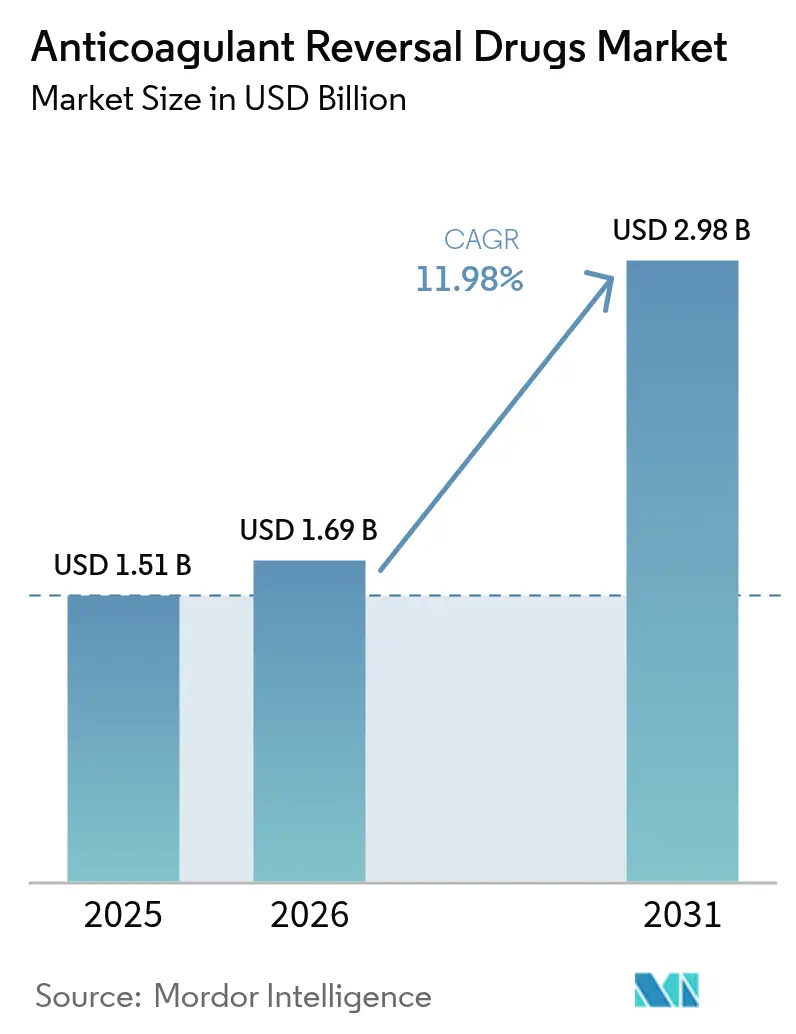
Anticoagulant Reversal Drugs Market Analysis by Mordor Intelligence
anticoagulant reversal drugs market size in 2026 is estimated at USD 1.69 billion, growing from 2025 value of USD 1.51 billion with 2031 projections showing USD 2.98 billion, growing at 11.98% CAGR over 2026-2031. Growth stems from greater adoption of direct oral anticoagulants (DOACs), an expanding elderly population, and faster regulatory approvals that shorten time-to-market for new reversal agents. Hospitals are widening DOAC-first protocols, which in turn heighten demand for rapid, specific reversal solutions. Rising use of AI-driven coagulation diagnostics is improving bleed detection and guiding earlier intervention, while on-shored plasma collection strengthens prothrombin complex concentrate (PCC) supply resilience. Competitive momentum intensified after Novartis secured abelacimab, a Factor XI inhibitor linked to 67% bleeding reduction compared with rivaroxaban, signalling a shift toward next-generation agents that could further reposition the anticoagulant reversal drugs market.
Key Report Takeaways
- By drug class, prothrombin complex concentrates led with 39.08% of anticoagulant reversal drugs market share in 2025, whereas recombinant decoy proteins are projected to expand at a 14.07% CAGR through 2031.
- By indication, life-threatening bleeding accounted for 46.93% of the anticoagulant reversal drugs market size in 2025, while elective surgery is advancing at a 13.61% CAGR toward 2031.
- By route of administration, intravenous products commanded 84.22% revenue in 2025; subcutaneous formulations record the highest 19.02% CAGR forecast.
- By end user, hospital pharmacies held 62.02% share in 2025, yet ambulatory surgery centers exhibit a 12.97% CAGR to 2031.
- By geography, North America captured 41.32% revenue in 2025; Asia-Pacific is the fastest-growing region at 14.24% CAGR over the outlook period.
Note: Market size and forecast figures in this report are generated using Mordor Intelligence’s proprietary estimation framework, updated with the latest available data and insights as of 2026.
Market Trends and Insights
Drivers Impact Analysis of Anticoagulant Reversal Drugs Market*
| Driver | (~) % Impact on CAGR Forecast | Geographic Relevance | Impact Timeline |
|---|---|---|---|
| Aging population & rising blood-borne disorders | +2.8% | Global; highest in North America & Europe | Long term (≥ 4 years) |
| Accelerated US FDA/EMA fast-track approvals | +1.9% | North America & Europe; spillover to Asia-Pacific | Medium term (2-4 years) |
| Hospital adoption of DOAC-first protocols | +2.1% | Global, led by developed markets | Medium term (2-4 years) |
| AI-driven coagulation diagnostics | +1.4% | Initially North America & Europe, expanding worldwide | Long term (≥ 4 years) |
| Supply-chain on-shoring of plasma-derived PCCs | +0.8% | North America & Europe | Short term (≤ 2 years) |
| Source: Mordor Intelligence | |||
Aging Population & Rising Prevalence of Blood-Borne Disorders
Growing life expectancy pushes atrial fibrillation prevalence to 9% among those over 80 years, increasing chronic exposure to anticoagulants and heightening reversal needs. Hospitals now embed geriatric-specific anticoagulation pathways that guarantee availability of multiple reversal options for elderly patients who often cycle through varied regimens. This demographic shift elevates the strategic value of stocking both broad-spectrum PCCs and targeted agents for DOAC-associated bleeds.
Accelerated US FDA/EMA Fast-Track Approvals
Regulators prioritize unmet urgency over traditional timelines; andexanet alfa advanced under accelerated approval, while MK-2060 gained Fast Track status in 2025, cutting typical development windows from 8–12 years to roughly 5–7 years. The European Medicines Agency now accepts surrogate endpoints and real-world evidence for life-saving reversal therapies, allowing firms with robust data packages to capture early-mover advantage.
Hospital Adoption of DOAC-First Protocols Driving Demand for Reversal Agents
Emergency departments report DOAC-related bleeds comprising 35–40% of anticoagulant hemorrhages, up from 15–20% five years earlier. As hospitals pivot to DOACs for predictable kinetics, formularies accept premium-priced antidotes such as andexanet alfa and idarucizumab despite cost gaps versus PCCs, especially in Level 1 trauma centers where rapid reversal affects outcomes.
AI-Driven Coagulation Diagnostics Enabling Earlier Reversal Intervention
Machine-learning models integrating anti-Factor Xa, thrombin generation, and platelet metrics now surpass conventional tools in detecting patients needing reversal, facilitating proactive antidote ordering directly from electronic health records. Such systems minimize treatment delays and guide dose accuracy, reducing wastage of high-priced agents while improving bleed control[1].
Restraints Impact Analysis of Anticoagulant Reversal Drugs Market*
| Restraint | (~) % Impact on CAGR Forecast | Geographic Relevance | Impact Timeline |
|---|---|---|---|
| High cost of novel agents | -2.3% | Global; pronounced in emerging markets | Medium term (2-4 years) |
| Thrombo-embolic risk & black-box warnings | -1.6% | Global; regulatory focus in North America & Europe | Long term (≥ 4 years) |
| Competition from point-of-care devices | -0.9% | Developed markets first, spreading globally | Long term (≥ 4 years) |
| Source: Mordor Intelligence | |||
High Cost of Novel Agents
Andexanet alfa costs USD 25,000–50,000 per treatment, a 10–25 fold premium over PCCs, prompting insurers to impose prior-authorization hurdles and emerging-market hospitals to restrict use. Economic models still debate net savings relative to reduced ICU stays, slowing adoption despite proven anti-Factor Xa reversal efficacy.
Thrombo-Embolic Risk & Black-Box Warnings
A 10.3% post-treatment thrombosis rate with andexanet alfa versus 5.6% in usual care underscores the therapeutic dilemma of trading bleed control for clot risk. Guidelines require intensive monitoring and may further narrow indications if future surveillance echoes early safety concerns[2].
*Our forecasts treat driver/restraint impacts as directional, not additive. The impact forecasts reflect baseline growth, mix effects, and variable interactions.
Anticoagulant Reversal Drugs Market Segment Analysis
By Drug Class:
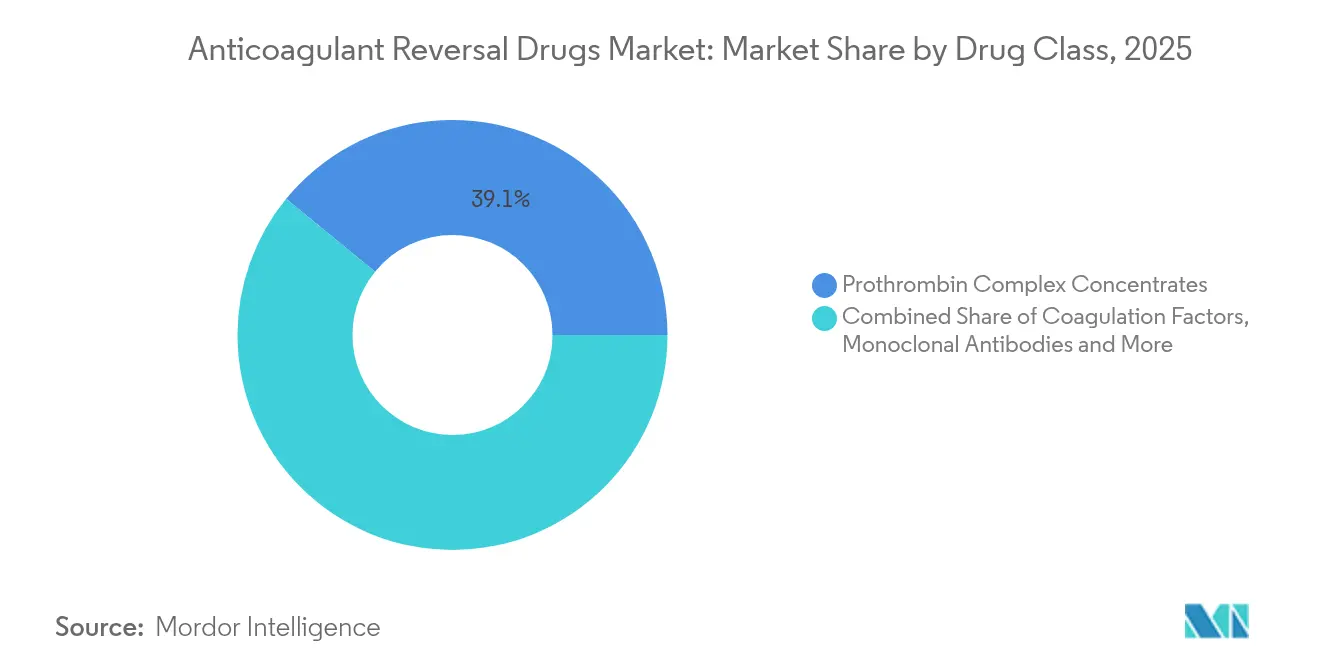
PCCs Anchor the Market While Decoy Proteins AccelerateProthrombin complex concentrates generated the largest revenue in 2025, holding 39.08% of anticoagulant reversal drugs market share, buoyed by decades of clinical familiarity and recent approval of Balfaxar that ensures diversified domestic supply. Hospitals value PCC versatility across warfarin and certain off-label DOAC emergencies, cementing a stable baseline within the anticoagulant reversal drugs market.
Recombinant decoy proteins such as andexanet alfa headline the fastest-growing cohort with a projected 14.07% CAGR through 2031. Their precise neutralization of Factor Xa inhibitors positions them as the contemporary standard for specific DOAC reversal, albeit at a high cost. Monoclonal antibodies could follow a similar trajectory once abelacimab concludes late-stage trials, potentially reshaping competitive hierarchies inside the anticoagulant reversal drugs market.

By Indication:
Life-Threatening Bleeds Dominate, Elective Surgery Gains TractionLife-threatening hemorrhage accounted for 46.93% of the anticoagulant reversal drugs market size in 2025, as rapid antidote access remains vital for intracranial, gastrointestinal, and trauma-related bleeds. Emergency clinicians prioritize agents with short onset and proven hemostatic efficacy, sustaining robust utilization across stroke centers and trauma networks.
Elective surgery posts the highest 13.61% CAGR, reflecting wider adoption of prophylactic reversal in planned cardiac or neurological procedures where anticoagulant continuation elevates bleed risk. Protocolized peri-operative management increases predictable demand and encourages manufacturers to explore longer-acting formulations suitable for scheduled care, thereby adding depth to the anticoagulant reversal drugs market.
By Route of Administration:
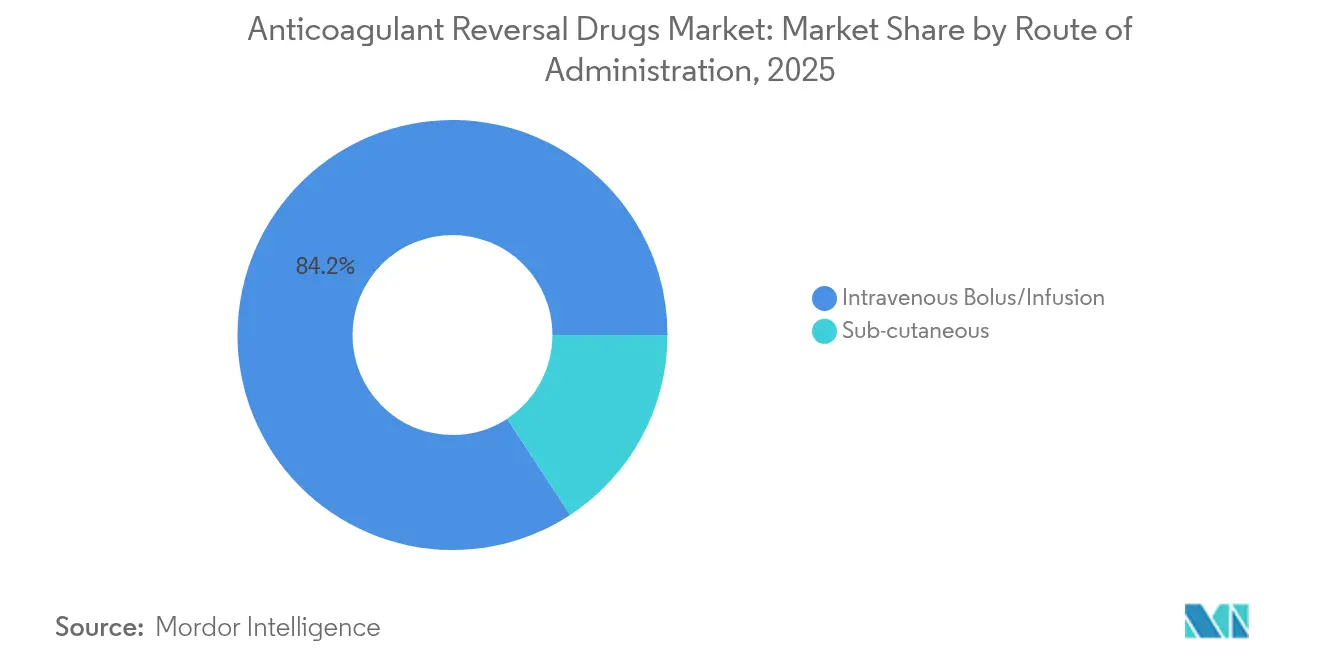
Intravenous Prevails, Subcutaneous Innovation EmergesIntravenous delivery remained dominant at 84.22% revenue in 2025, offering immediate bioavailability necessary for emergency scenarios. Combined with rapid coagulation assays, IV agents align with critical-care workflows, reinforcing market longevity of current formulations.
Subcutaneous routes, though nascent, are advancing at a 19.02% CAGR. Autoinjector designs and depot technologies aim to decentralize reversal into outpatient settings, supporting chronic anticoagulation management where delayed yet sustained reversal may suffice. These innovations could unlock new patient segments and diversify revenue streams inside the anticoagulant reversal drugs market.
By End User:
Hospital Pharmacies Steer Procurement, Ambulatory Centers RiseHospital pharmacies held 62.02% share in 2025, orchestrating formulary reviews, bulk contracting, and emergency distribution. Their central role in stewardship decisions makes them pivotal gatekeepers for any entrant aspiring to scale within the anticoagulant reversal drugs market.
Ambulatory surgery centers record a 12.97% CAGR, mirroring the shift toward outpatient orthopedics, cardiovascular implants, and minimally invasive procedures. As these facilities take on higher-acuity cases, they adopt reversal agents to mitigate peri-operative bleeds, gradually broadening the anticoagulant reversal drugs market beyond tertiary hospitals.
Geography Analysis
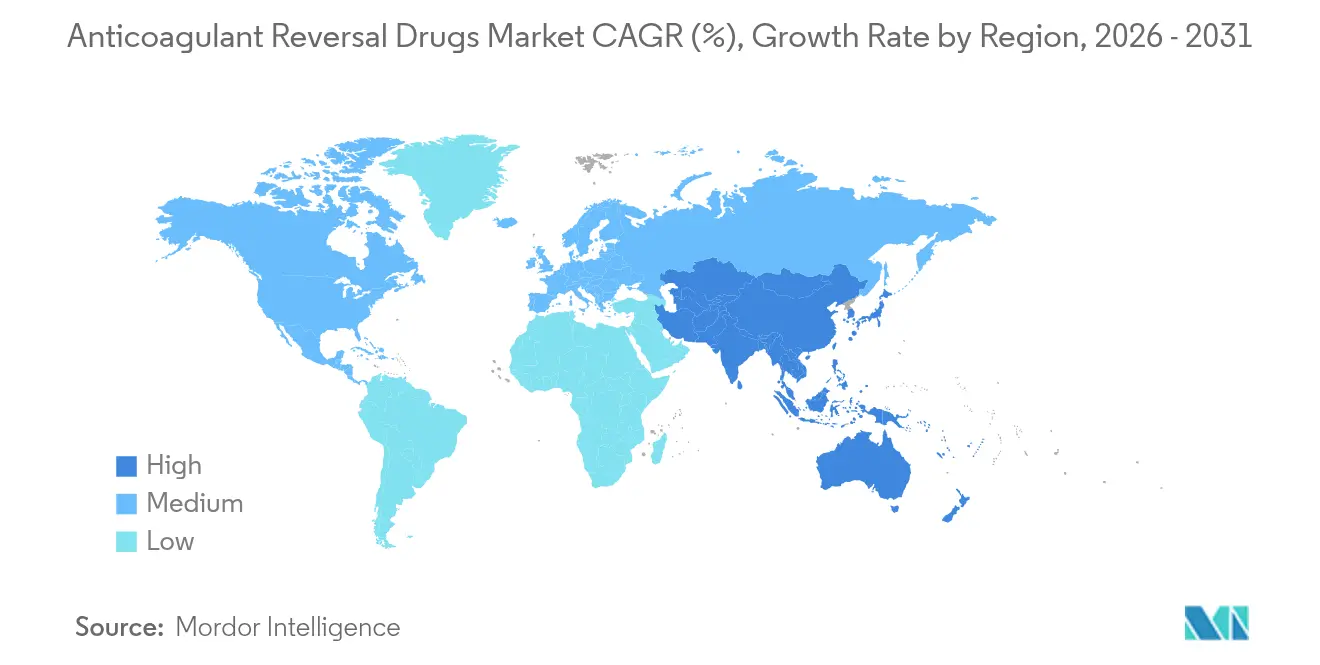
North America Anticoagulant Reversal Drugs Market
North America delivered 41.32% of global revenue in 2025, supported by FDA-guided protocols that favor specific reversal agents and strong reimbursement for premium-priced products. Level 1 trauma systems and comprehensive stroke networks uphold steady consumption, while Health Canada’s 2024 clearance of Ondexxya widened continental access.
APAC Anticoagulant Reversal Drugs Market
Asia-Pacific is projected to outpace all regions at 14.24% CAGR. Japan’s approval of Ondexxya, rising DOAC usage in China and India, and cardiovascular disease prevalence across urbanizing economies are converging forces expanding the anticoagulant reversal drugs market. National databases such as South Korea’s highlight major bleeding incidence that reinforces policy mandates for antidote availability.
EMEA Anticoagulant Reversal Drugs Market
Europe remains stable with coordinated EMA guidance and mature plasma supply chains backing PCC production. Germany, the United Kingdom, and France adopt cost-effectiveness metrics, compelling manufacturers to pair clinical evidence with economic value propositions. Middle East & Africa trail but represent white-space potential as tertiary-care capacity grows, albeit tempered by pricing constraints that currently limit widespread penetration of next-generation agents.
Competitive Landscape
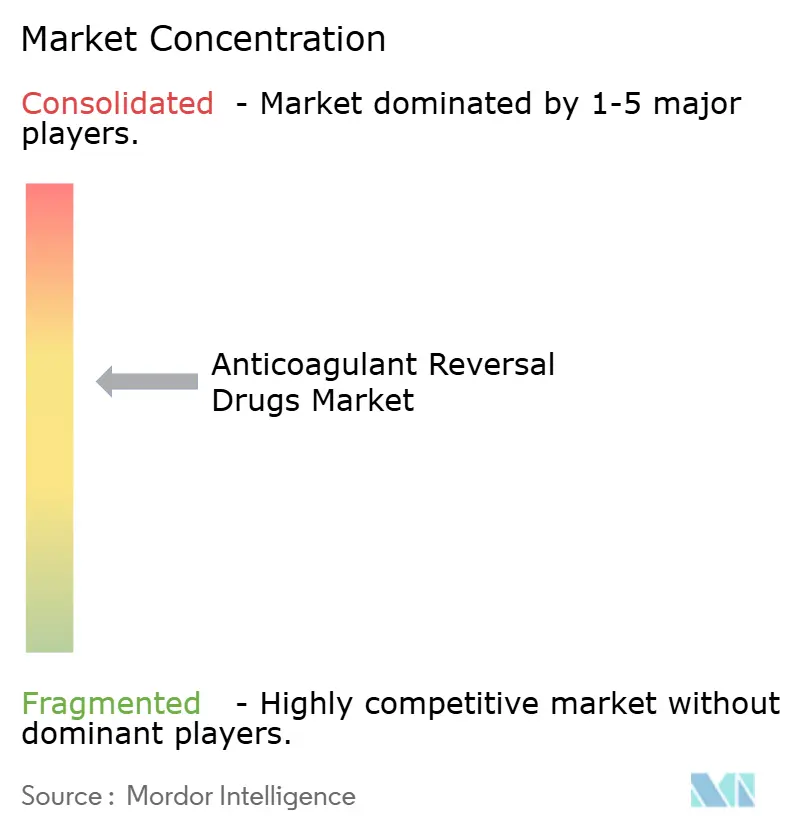
The anticoagulant reversal drugs market shows moderate concentration, with established firms—CSL Behring, Pfizer, and others—leveraging scale and regulatory acumen to protect PCC and decoy protein franchises. The February 2025 acquisition of Anthos Therapeutics by Novartis for USD 925 million marked a decisive entry into Factor XI inhibitor territory, reinforcing strategic emphasis on therapies that reduce bleeding risk and, by extension, reshape reversal demand curves.
Competitive advantage increasingly depends on mechanism specificity, safety differentiation, and real-world evidence that supports payer adoption. Andexanet alfa sustains share despite premium pricing because its targeted action on Factor Xa inhibitors aligns with hospital quality benchmarks. Meanwhile, PCC suppliers invest in supply-chain resilience and pricing flexibility to preserve incumbency against novel entrants.
Emerging battlegrounds include pediatric labeling, integrated diagnostic-therapeutic platforms, and combination agents capable of neutralizing multiple anticoagulant classes simultaneously. Partnerships with AI analytics firms aim to embed dosing algorithms into electronic records, transforming standalone products into service-oriented solutions that deepen clinical integration within the anticoagulant reversal drugs market.
Anticoagulant Reversal Drugs Industry Leaders
-
Pfizer Inc
-
Octapharma AG
-
CSL Behring Limited
-
Boehringer Ingelheim Pharma GmbH
-
AstraZeneca
- *Disclaimer: Major Players sorted in no particular order
Anticoagulant Reversal Drugs Market Companies Covered in this Report
- Alexion Pharmaceuticals Inc.
- CSL Behring
- Pfizer
- AstraZeneca
- Octapharma
- Boehringer Ingelheim
- Fresenius
- Bausch Health
- Amneal Pharmaceuticals
- Ferring Pharmaceuticals
- Baxter
- Johnson & Johnson
- Perosphere Pharma
- Nichi-Iko Pharma
- Grifols
- Sanquin Blood Supply Foundation
- Octava Pharma USA (Balfaxar)
Market Opportunities and Future Outlook
The U.S. commercial withdrawal of Andexxa (andexanet alfa) by AstraZeneca, effective December 22, 2025, alongside the FDA decision to not grant full approval after a Complete Response Letter in December 2024, creates near-term whitespace in factor Xa inhibitor reversal pathways where hospitals previously stocked a targeted antidote. In practice, it increases reliance on nonspecific options, particularly four-factor prothrombin complex concentrates (4F-PCCs), and puts more weight on evidence-backed protocols that balance hemostasis with thrombo-embolic risk. It also raises the bar for any next targeted or universal reversal entrant to show safety using clear clinical endpoints rather than surrogate-only data packages.
Opportunity clusters around two unmet needs visible in current care delivery: (i) broader-coverage reversal approaches that work across anticoagulant classes without the prothrombotic safety trade-offs highlighted in post-market scrutiny of andexanet alfa, and (ii) tighter integration of diagnostics and dosing decisions to reduce time-to-reversal and drug wastage for high-cost agents. Hospital adoption of AI-enabled coagulation decision support and expanded point-of-care coagulation or viscoelastic testing offers a practical way to standardize when to use PCCs versus specific agents, while supporting premium pricing for companies that pair reversal products with dosing algorithms and real-world evidence packages aligned to ED and trauma workflows.
Recent Industry Developments in Anticoagulant Reversal Drugs Market
- January 2026: Octapharma USA highlighted the publication of Phase III (LEX-209) results in JAMA Network Open supporting the efficacy and safety of Balfaxar for warfarin reversal. The additional peer-reviewed clinical data reinforces hospital and pharmacy confidence in PCC-based pathways as safety scrutiny intensifies for some targeted reversal approaches.
- December 2025: AstraZeneca ended U.S. commercial sales of Andexxa following a voluntary withdrawal request to the FDA amid concerns over fatal thromboembolic events. The change reshaped U.S. factor Xa inhibitor reversal access and led clinicians and formulary committees to reassess protocols that had relied on a specific antidote.
- January 2024: Octapharma USA announced commercial availability of Balfaxar in the United States for urgent reversal of acquired coagulation factor deficiency induced by vitamin K antagonist therapy. The availability expanded domestic PCC supply options for emergency and peri-operative reversal use, where rapid access and inventory reliability influence purchasing decisions.
Anticoagulant Reversal Drugs Market Report Scope and Research Methodology
Market Definition and Coverage
For this study, the anticoagulant reversal drugs market is defined as revenue generated from medicines used to reverse or neutralize anticoagulant effects in urgent clinical situations, mainly major bleeding events and pre-procedure reversal, across hospital and related care settings.
Scope exclusions: devices and procedures for bleeding control, routine blood transfusions, and general supportive care that are not reversal medicines are excluded.
Segments Covered in This Report
- By Drug Class
- Prothrombin Complex Concentrates
- Coagulation Factors
- Monoclonal Antibodies
- Recombinant Decoy Proteins
- Phytonadione
- Other Classes
- By Indication
- Life-threatening Bleeding
- Emergency Surgery
- Elective Surgery
- By Route of Administration
- Intravenous Bolus/Infusion
- Sub-cutaneous
- By End User
- Hospital Pharmacies
- Emergency Departments/Trauma Centers
- Retail Pharmacies
- Ambulatory Surgery Centers
- Geography
- North America
- United States
- Canada
- Mexico
- Europe
- Germany
- United Kingdom
- France
- Italy
- Spain
- Rest of Europe
- Asia-Pacific
- China
- Japan
- India
- South Korea
- Australia
- Rest of Asia-Pacific
- Middle East and Africa
- GCC
- South Africa
- Rest of Middle East and Africa
- South America
- Brazil
- Argentina
- Rest of South America
- North America
Data Sources, Market Sizing, and Validation
Desk Research
Desk research was used to set the clinical and policy context and to anchor the key demand drivers we later test in interviews. Public sources such as the World Health Organization, US CDC publications, FDA and EMA drug labels and approvals, and Eurostat health statistics help confirm disease-burden signals, prescribing shifts, and timing of product availability.
We also reviewed peer reviewed clinical literature on major bleeding rates and reversal use in emergency surgery pathways, along with hospital guideline summaries and reputable medical society publications where available. Company annual reports, investor presentations, and press releases were used to understand product positioning and broad pricing direction. Paid subscriptions for company financials and patent databases were referenced selectively to cross-check launches and life cycle events. These sources are illustrative and not exhaustive, and many other public references were used for data collection, validation, and clarification.
Primary Interviews and Surveys
Primary work focused on validating real-world use patterns for reversal agents, including how often major bleeding cases receive active reversal, what drives product choice in emergency departments and hospital pharmacies, and how protocols differ by region. We spoke with clinicians, hospital pharmacists, and distribution channel participants across the Americas, EMEA, and APAC to pressure test assumptions on treated patient pools, dosing practices, and price realization, then align the model with what is actually purchased and administered.
Distribution of primary research fieldwork respondents
| Company type | Respondent position | Region |
|---|---|---|
| Top tier: 35% | CXOs: 13% | APAC: 45% |
| Mid tier: 47% | Functional/Unit leaders: 41% | EMEA: 33% |
| Smaller Players: 18% | Managers: 46% | Americas: 22% |
Market-Sizing & Forecasting
Sizing was built using both top-down and bottom-up logic, starting from a demand pool tied to clinical need. A treated cohort build up was used where anticoagulated patient volumes were filtered through major bleeding incidence, emergency surgery rates, and the share of cases that receive active reversal, before converting that demand into value using region-level dosing and price assumptions.
To keep the model grounded, a few practical inputs were tracked and updated: adoption levels of direct oral anticoagulants versus older therapies, guideline-driven use of specific antidotes versus non-specific agents, typical dosing by indication, hospital procurement and formulary access, and the timing of new approvals that change protocol choices. Forecasts were produced using scenario analysis so that changes in bleeding management pathways and uptake speed could be reflected without forcing a single aggressive curve.
Selective bottom-up checks were then used to corroborate the totals, including sanity checks from supplier revenues, sampled average selling price progression by region, and channel checks on hospital pharmacy purchasing. When gaps appeared in smaller countries or emerging settings, ratios based on anticoagulant usage and hospital infrastructure indicators were applied, then rechecked with interviews.
Data Validation & Update Cycle
Model outputs were cross verified against independent signals, including approval timelines, therapy mix shifts, and the implied spend per treated reversal event, and then reviewed for outliers at region and country levels. When variances were large, assumptions were revisited, and follow-up calls were triggered to confirm whether the difference came from dosing practice, access limitations, or pricing.
Before numbers are finalized, the work goes through multiple analyst reviews that look for arithmetic consistency, unit alignment, and currency conversion timing. The narrative is also checked to ensure drivers match the quantified story. Reports are refreshed annually, and interim updates are made when material events occur, such as major label changes or significant pricing moves. A final pre-delivery pass is done so clients receive the latest view.
Mordor Intelligence's Anticoagulant Reversal Drugs Market Size Compared Against Other Published Estimates
Published market values for anticoagulant reversal drugs often differ because the counted products, the year used for currency conversion, and how prices are averaged across hospital and retail channels can vary from one study to another. Differences also appear when some estimates lean more on pipeline optimism, while others focus on confirmed utilization in emergency care.
In this study, refresh cadence and currency timing are handled carefully. Average selling prices are updated using recent procurement and dosing feedback, which keeps the 2026 estimate at USD 1.69 B aligned to current usage checks, a step emphasized by Mordor Intelligence.
Benchmark comparison
| Source | Market Size | Gaps in Research Methodology |
|---|---|---|
| Mordor Intelligence | USD 1.69 B (2026) | |
| Global Consultancy A | USD 1.38 B (2024) | Uses a 2024 base year and may apply blended pricing across product types without fully rechecking hospital level dose mix by indication, which can shift implied revenue per reversal event. |
| Industry Publisher B | USD 1.14 B (2025) | Leans on a conservative growth curve and a narrower realized price assumption in the base year, which can reduce the value total even when treated volumes are similar. |
Overall, the spread is mainly explained by base year selection, how quickly prices are assumed to move, and whether utilization is validated at the point of care. Our approach stays traceable to treated patient volumes, dosing, and channel pricing checks, which makes the final number easier to reproduce and defend in planning discussions.
Key Questions Answered in the Report
What is the current size of the anticoagulant reversal drugs market?
The anticoagulant reversal drugs market size stood at USD 1.69 billion in 2026 and is projected to reach USD 2.98 billion by 2031.
Which drug class leads global revenue?
Prothrombin complex concentrates held 39.08% of global revenue in 2025, making them the dominant drug class.
Which region is growing the fastest?
Asia-Pacific is forecast to grow at a 14.24% CAGR between 2026 and 2031, the quickest pace among all regions.
Why are costs a major restraint?
Novel agents such as andexanet alfa cost USD 25,000–50,000 per episode—up to 25 times more than PCCs—triggering strict payer controls and slowing adoption.
What impact did Novartis’ acquisition of Anthos Therapeutics have?
The USD 925 million purchase secured abelacimab, a Factor XI inhibitor that reduces bleeding by 67%, signalling a strategic pivot toward next-generation agents and intensifying competition.