
Anthrax Treatment Market Size and Share
Market Overview
| Study Period | 2020 - 2031 |
|---|---|
| Forecast Data Period | 2026 - 2031 |
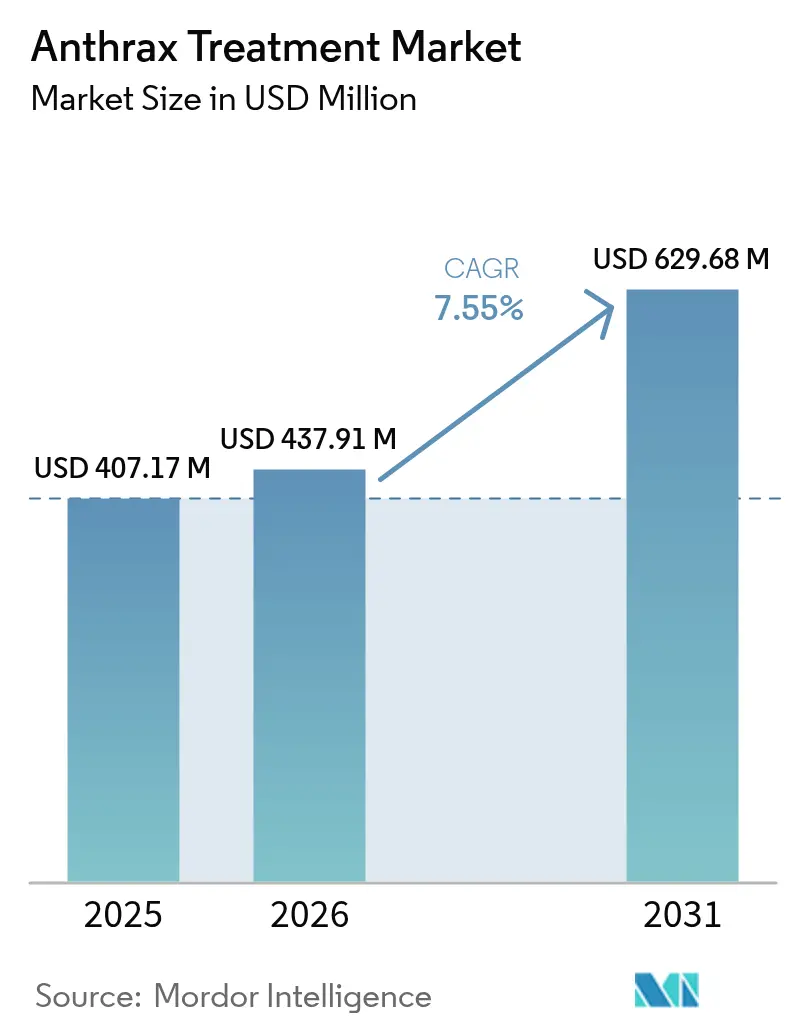
| Market Size (2026) | USD 437.91 Million |
| Market Size (2031) | USD 629.68 Million |
| Growth Rate (2026 - 2031) | 7.55 % |
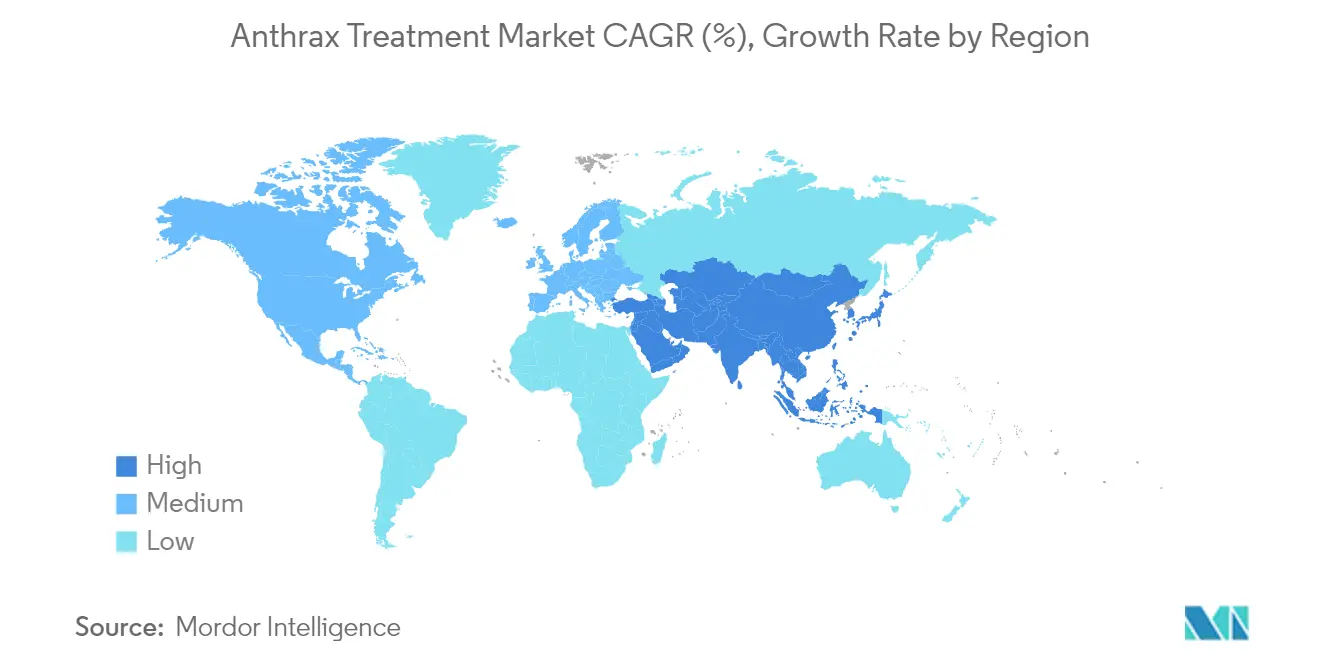
| Fastest Growing Market | Asia-Pacific |
| Largest Market | North America |
Major Players *Disclaimer: Major Players sorted in no particular order Image © Mordor Intelligence. Reuse requires attribution under CC BY 4.0. | |
Anthrax Treatment Market Analysis by Mordor Intelligence
The anthrax therapeutics market size is expected to grow from USD 407.17 million in 2025 to USD 437.91 million in 2026 and is forecast to reach USD 629.68 million by 2031 at 7.55% CAGR over 2026-2031. Momentum stems from sustained government biodefense budgets, accelerated regulatory pathways, and heightened security awareness that positions medical countermeasures as national assets rather than conventional pharmaceutical products. Project BioShield’s multi-year contracts, the Public Health Emergency Medical Countermeasures Enterprise’s mention need of USD 79.5 billion [1]funding for 2023-2027, and similar European and Asia-Pacific initiatives collectively anchor long-term demand. The anthrax therapeutics market benefits from next-generation vaccine approvals, maturing monoclonal-antibody platforms, and AI-enabled drug-repurposing pipelines that shorten discovery timelines while diversifying treatment modalities. Commercial profitability remains modest, yet predictable sovereign procurement and replenishment cycles provide contractors with revenue visibility that offsets the absence of broad civilian sales channels.
Key Report Takeaways
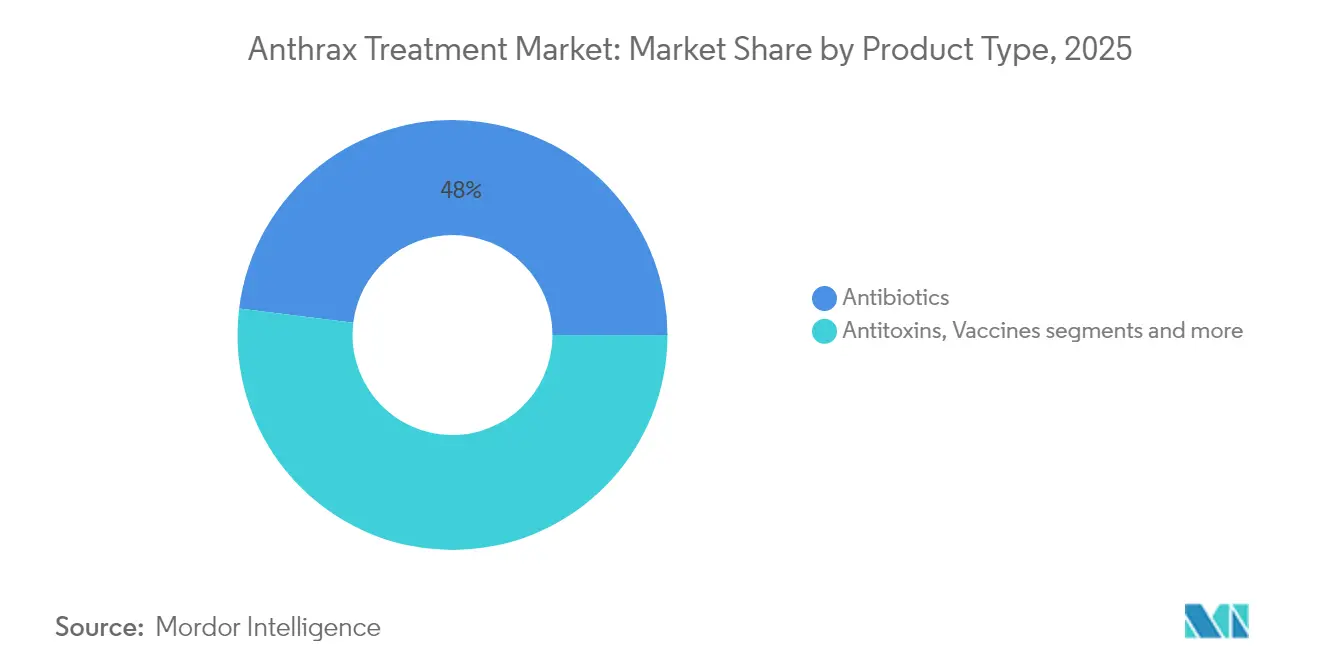
- By product type, antibiotics held 48.03% of the anthrax therapeutics market share in 2025, while antitoxins are projected to expand at an 8.28% CAGR to 2031.
- By route of administration, injectable formulations commanded 56.72% share of the anthrax therapeutics market size in 2025; oral formulations record the fastest CAGR at 8.39% through 2031.
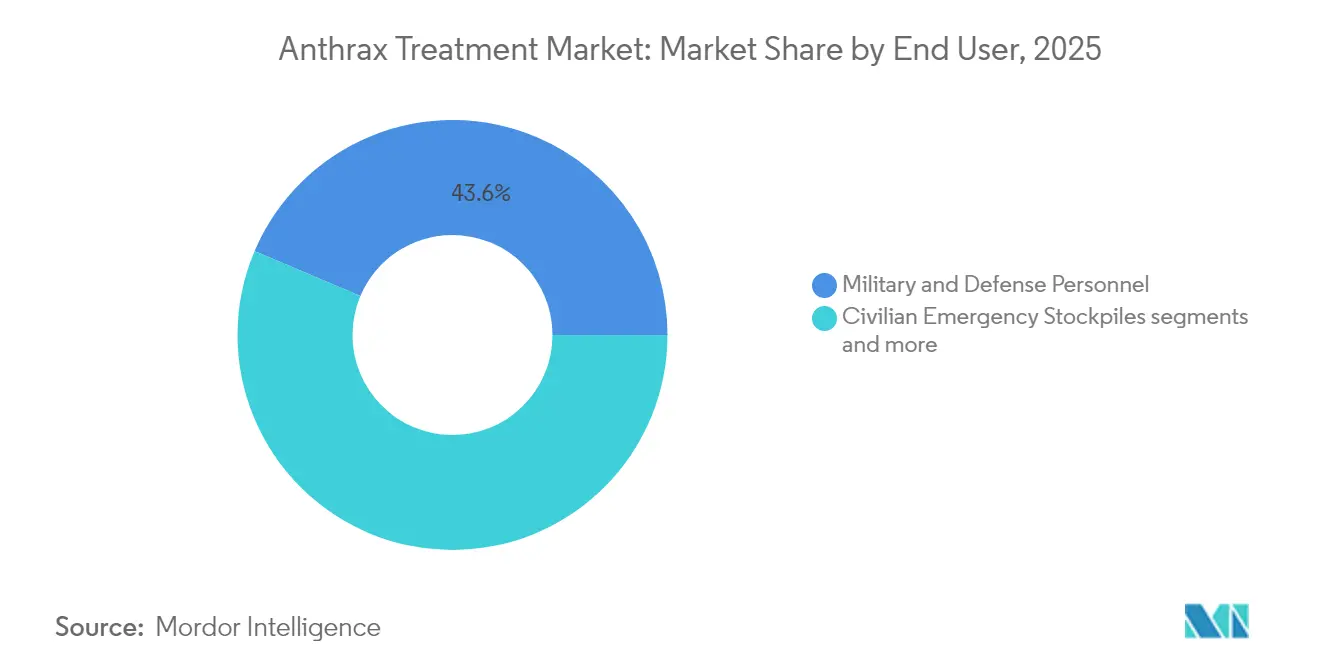
- By end user, military and defense personnel represented 43.61% of the anthrax therapeutics market size in 2025, whereas civilian emergency stockpiles are advancing at a 8.63% CAGR.
- By distribution channel, government procurement agencies controlled 64.78% revenue in 2025, with online pharmacies growing at 8.91% CAGR as digital access models emerge.
- By geography, North America led with 51.64% revenue share in 2025; Asia-Pacific is poised for a 9.02% CAGR during 2026-2031, the fastest among all regions.
Note: Market size and forecast figures in this report are generated using Mordor Intelligence’s proprietary estimation framework, updated with the latest available data and insights as of 2026.
Market Trends and Insights
Drivers Impact Analysis of Anthrax Treatment Market*
| Driver | (~) % Impact on CAGR Forecast | Geographic Relevance | Impact Timeline |
|---|---|---|---|
| Government biodefense funding & stockpiling programs | +2.1% | Global, concentrated in North America & APAC | Long term (≥ 4 years) |
| Rising bioterrorism threat & national security focus | +1.8% | Global, heightened in developed economies | Medium term (2-4 years) |
| Regulatory fast-track incentives for CBRN countermeasures | +1.2% | North America & EU, expanding to APAC | Short term (≤ 2 years) |
| Monoclonal-antibody platform scale efficiencies | +0.9% | Global, led by North America | Medium term (2-4 years) |
| AI-driven drug-repurposing pipelines for B. anthracis | +0.7% | North America & EU, emerging in APAC | Long term (≥ 4 years) |
| APAC defence alliances boosting joint procurement | +0.6% | APAC core, spill-over to allied nations | Medium term (2-4 years) |
| Source: Mordor Intelligence | |||
Government Biodefense Funding & Stockpiling Programs
Steady, multi-year public funding converts the anthrax therapeutics market into a quasi-sovereign procurement arena. BARDA’s replenishment contracts for NUZYRA and its USD 6.7 billion Strategic National Stockpile expansion demonstrate a move from episodic purchasing to life-cycle management that rewards manufacturers able to sustain surge capacity. NIH-funded development of novel agents such as epetraborole illustrates how public capital underwrites early-stage R&D, insulating companies from commercial demand risk. Similar frameworks in the European Union and Australia mirror this model, creating synchronized global demand that stabilizes manufacturing economics. The result is a predictable production pipeline that supports specialized facilities and a resilient supply chain, reinforcing long-run growth for the anthrax therapeutics market.
Rising Bioterrorism Threat & National Security Focus
Escalating geopolitical tensions elevate biological weapons from niche concerns to mainstream defense priorities. The Defense Threat Reduction Agency’s USD 12.2 million hazard-prediction program and NATO’s integrated CBRN preparedness exercises show how governments couple intelligence assessments with real procurement commitments. Security agencies demand therapies that remain stable, deployable, and effective in austere environments, encouraging formulation research that stretches beyond traditional hospital settings. These operational requirements, framed within military doctrine, ensure that funding remains insulated from economic downturns and electoral cycles. Consequently, the anthrax therapeutics market gains a durable revenue base tied to national security rather than discretionary healthcare spending.
Regulatory Fast-Track Incentives for CBRN Countermeasures
The FDA’s Priority Review Voucher scheme and Animal Rule approvals compress timelines and lower development risk for countermeasures, offering tangible strategic advantages to firms fluent in these pathways[2]. Recent draft guidance extending fast-track principles to diagnostics fosters concurrent therapeutic–diagnostic development, a trend likely to streamline future anthrax product launches. In Europe, parallel mechanisms at the EMA give manufacturers dual submission opportunities, encouraging global rollout strategies. Speed-to-approval translates into earlier revenue realization, enhancing the attractiveness of the anthrax therapeutics market for specialty biotech companies and large contractors alike.
Monoclonal-Antibody Platform Scale Efficiencies
Advances in upstream processing and single-use bioreactors drive down batch costs, repositioning antibodies from boutique treatments to scalable countermeasures. Raxibacumab, Obiltoxaximab, and Anthrasil exemplify diverse manufacturing approaches—recombinant expression, hybridoma technology, and human plasma purification—that collectively reduce supply-chain risk by avoiding single-source dependence. Emerging computational discovery platforms shorten candidate screening cycles, creating a virtuous loop of faster iterations and lower cost per molecule. Government stockpile guarantees provide the volume commitments needed to exploit these scale effects, reinforcing the long-term competitiveness of antibody suppliers within the anthrax therapeutics market.
Restraints Impact Analysis of Anthrax Treatment Market*
| Restraint | (~) % Impact on CAGR Forecast | Geographic Relevance | Impact Timeline |
|---|---|---|---|
| Limited commercial profitability discouraging private R&D | -1.4% | Global, most acute in emerging markets | Long term (≥ 4 years) |
| Escalating antimicrobial resistance reducing antibiotic utility | -1.1% | Global, accelerating in tropical regions | Medium term (2-4 years) |
| Cold-chain gaps for antitoxin/vaccine deployment | -0.8% | Tropical regions, LMIC focus | Short term (≤ 2 years) |
| Public skepticism over emergency-use authorizations | -0.6% | Developed economies, social media amplified | Short term (≤ 2 years) |
| Source: Mordor Intelligence | |||
Limited Commercial Profitability Discouraging Private R&D
Revenue for anthrax therapeutics hinges on batch purchases that follow stockpile replenishment calendars rather than continuous market pull. Emergent BioSolutions’ 71% revenue swing between Q4 2023 and Q4 2024 underscores how contract timing creates financial volatility that pure-play biotech investors often avoid. For small-molecule antibiotics, development costs can exceed USD 100 million, yet the total accessible anthrax therapeutics market size is constrained by government allocations, capping upside returns. This structural dynamic narrows the field of active developers, slows pipeline diversification, and elevates supply-chain concentration risk over the forecast horizon.
Escalating Antimicrobial Resistance Reducing Antibiotic Utility
Laboratory evidence of B. anthracis resistance to ciprofloxacin and the superior efficacy of doxycycline, levofloxacin, and moxifloxacin in meningitis models highlight the fragility of current stockpiled antibiotics. Combination-therapy studies in murine models show resistance can emerge under experimental conditions, raising concerns about intentionally engineered resistant strains. Novel agents such as teixobactin demonstrate no detectable resistance, but commercialization timelines extend beyond current procurement cycles. Resistance trajectories accelerate the shift toward antitoxins and combination regimens, yet they also add urgency to stewardship and surveillance measures that could temper market expansion if resistance outpaces therapeutic innovation.
*Our forecasts treat driver/restraint impacts as directional, not additive. The impact forecasts reflect baseline growth, mix effects, and variable interactions.
Anthrax Treatment Market Segment Analysis
By Product Type:
Antitoxins Gain Momentum Amid Antibiotic RelianceThe anthrax therapeutics market size for antibiotics stood highest in 2025 thanks to their long-established role in post-exposure prophylaxis and treatment regimens. Stockpile managers favor ciprofloxacin and doxycycline for cost-efficiency, but efficacy debates and resistance trends stimulate portfolio diversification. Antitoxins, while holding a smaller revenue base, exhibit the strongest growth owing to their toxin-neutralizing capacity independent of bacterial resistance. Raxibacumab and Obiltoxaximab are standard inclusions in U.S. Strategic National Stockpile planning, while Anthrasil contributes plasma-derived diversity that mitigates single-source vulnerability. UPMC’s 2025 breakthrough extending therapeutic windows beyond the historical “point of no return” promises to widen clinical applicability. Computational repurposing has flagged several small-molecule inhibitors of edema and lethal factors, suggesting future adjunct therapies that may further reshape the anthrax therapeutics market.
Government contracts increasingly package antibiotics and antitoxins together, acknowledging the complementary roles each class plays in multi-phase response protocols. The anthrax therapeutics market share for antitoxins thus benefits from policy shifts rather than pure clinical demand. Vaccines remain primarily preventive for pre-exposure settings such as military deployments, yet South Korea’s recombinant platform approval could broaden indications toward civilian prophylaxis. Adjunctive therapies addressing coagulopathies and systemic inflammation still command modest revenue but provide critical value in severe cases, reinforcing the holistic treatment paradigm that now defines the anthrax therapeutics market.

By Route of Administration:
Oral Formulations Advance Logistic ReadinessInjectable formats dominate stockpiles due to rapid systemic availability, especially for severe inhalational anthrax where time-to-treatment is decisive. Raxibacumab and Obiltoxaximab remain intravenous only, anchoring this preference. Nonetheless, oral antibiotics are gaining favor for post-exposure prophylaxis campaigns where mass distribution is required within narrow windows. Preclinical studies confirm therapeutic efficacy when dosing commences within 24 hours of exposure, validating the logistical appeal of tablets in field conditions. Updated CDC guidelines recommend oral doxycycline or levofloxacin for 60-day prophylaxis courses, aligning policy with evolving evidence.
Temperature stability trials for capsule formulations mirror vaccine thermostability research, seeking to eliminate cold-chain dependence that constrains tropical deployments. Adoption of strip-packaged antibiotics suitable for parachute or drone delivery hints at future innovations that meld pharmaceutical design with defense logistics. Other routes, including inhalational powder formulations under investigation, could eventually complement current options, yet regulatory familiarity with oral and injectable pathways means these two will continue shaping the anthrax therapeutics market over the forecast horizon.
By End User:
Civilian Preparedness Becomes a Core Growth EngineMilitary personnel have long anchored demand, propelled by occupational exposure scenarios and established vaccination mandates. However, lessons from COVID-19 catalyzed a policy rethink that extends biodefense responsibility to civilian public-health systems. The Strategic National Stockpile now earmarks broader civilian accessibility, and Australia’s Medical Countermeasures Initiative mirrors this shift with consortium models that link defense, healthcare, and academic stakeholders. Hospitals and specialty clinics integrate anthrax countermeasures into broader infectious-disease protocols, enhancing readiness through staff training and inventory management.
Civilian stockpiles grow fastest as municipal and regional agencies secure dedicated caches for critical infrastructure workers and first responders. Communication strategies developed under the Public Readiness and Emergency Preparedness Act protect pharmacies and community clinics dispensing countermeasures, fostering private-sector participation. This democratization of preparedness underpins sustained, diversified demand that enlarges the anthrax therapeutics market beyond its traditional defense niche.
By Distribution Channel:
Online Platforms Introduce Digital FlexibilityGovernment procurement agencies remain the primary revenue conduit, mediating bulk orders, quality assurance, and security vetting. Yet telehealth expansion and pandemic-era digital habits propel online pharmacy platforms that can deliver oral antibiotics to exposed populations under Emergency Use Authorization. FDA guidance clarifies labeling and handling requirements, reducing compliance risk for e-pharmacies. Temperature-controlled fulfillment centers equipped with smart sensors ensure cold-chain integrity for sensitive biologics, further legitimizing online channels.
Hospital pharmacies serve as operational staging hubs where injectable antitoxins are stored for rapid deployment. Retail pharmacies capture marginal but notable demand from travelers to endemic regions and laboratory workers. Growth in digital distribution tightens delivery timelines and broadens geographic reach, injecting competitive dynamics that could eventually moderate government price leverage within the anthrax therapeutics market.
Geography Analysis
North America Anthrax Treatment Market
North America dominated the anthrax therapeutics market in 2025, accounting for 51.64% revenue on the back of the world’s largest biodefense outlays and streamlined FDA approval processes. BARDA’s multi-year contracts underpin local manufacturing capacity, while Project BioShield’s predictable replenishment cycles stabilize supplier cash flows. Canada and Mexico contribute incremental demand through trilateral defense cooperation and shared supply-chain logistics, ensuring regional resilience against supply disruptions.
Europe Anthrax Treatment Market
Europe ranks second in revenue, though fragmentation among national procurement strategies dilutes buying power relative to the United States. EU-level initiatives led by the Health Security Committee are gradually harmonizing stockpile specifications and exploring joint purchasing akin to pandemic vaccine models. NATO exercises reinforce cross-border interoperability, prompting member states to update procurement roadmaps that could lift regional demand during 2026-2030. Regulatory alignment with EMA accelerates dual filing strategies, making Europe an attractive supplementary market for U.S.-approved anthrax countermeasures.
APAC Anthrax Treatment Market
Asia-Pacific is the fastest growing geography, set for a 9.02% CAGR driven by South Korea’s 2025 recombinant vaccine approval, Japan’s QUAD-aligned biodefense investments, and Australia’s expanding Medical Countermeasures Initiative. Defense alliances translate into coordinated procurement, with bulk buys favoring next-generation platforms that promise broader strain coverage and improved thermostability. China and India signal rising interest, evidenced by pilot projects in indigenous vaccine development and BSL-4 research center expansion, although opaque regulatory systems temper near-term revenue prospects. Collectively, these trends propel regional momentum that could raise Asia-Pacific’s anthrax therapeutics market share to rival Europe by 2031.
Regulatory Landscape
Anthrax countermeasures are governed through biodefense-specific pathways that permit approval even when human efficacy trials are not feasible. In the United States, the FDA applies the Animal Rule framework (21 CFR 601 Subpart H) for relevant biologics and indications. CDC clinical guidance (updated in 2023) also supports recommended regimens covering antibiotics (eg, doxycycline, ciprofloxacin, levofloxacin) and licensed antitoxins used for systemic disease management.
Procurement-linked compliance obligations influence how products maintain availability for labels and stockpiles. For example, BARDA and Project BioShield contracts include delivery, quality, and post-marketing obligations that interact with FDA lifecycle management, as reflected in a November 2025 FDA approval of a BLA supplement for Emergent BioSolutions BioThrax under the Animal Rule framework. Contracting for antitoxins also reinforces regulatory scrutiny around manufacturing controls and traceability, highlighted by BARDA awards such as the May 2024 contract for Elusys Therapeutics (Anthim, obiltoxaximab) with performance extending through 2028.
Value Chain Analysis
The value chain follows a government-driven model where biodefense agencies de-risk R&D and advanced development, then support validated manufacturing in high-compliance facilities for insertion into national stockpiles and military channels. In the United States, HHS (ASPR/BARDA) and DoD organizations, including JPEO-CBRND, serve as dominant buyers and program integrators. They translate requirements into IDIQ and sole-source arrangements that shape production scheduling, quality release, and inventory rotation for vaccines and antitoxins.
Upstream inputs include active pharmaceutical ingredients for antibiotics and complex biologics supply (cell culture, plasma-derived inputs, single-use systems, and cold-chain materials) for antitoxins and vaccines. Manufacturing and fill-finish are concentrated among security-cleared, regulator-inspected sites, including Emergent BioSolutions' key U.S. infrastructure for BioThrax and CYFENDUS (with facilities in Lansing, Michigan) that support contract-driven surge and replenishment. Downstream, distribution emphasizes controlled storage and deployment readiness, with government procurement agencies and designated depots acting as primary nodes before last-mile dispensing via hospitals, public health channels, and broader pharmacy networks for oral antibiotics during emergencies.
Competitive Landscape
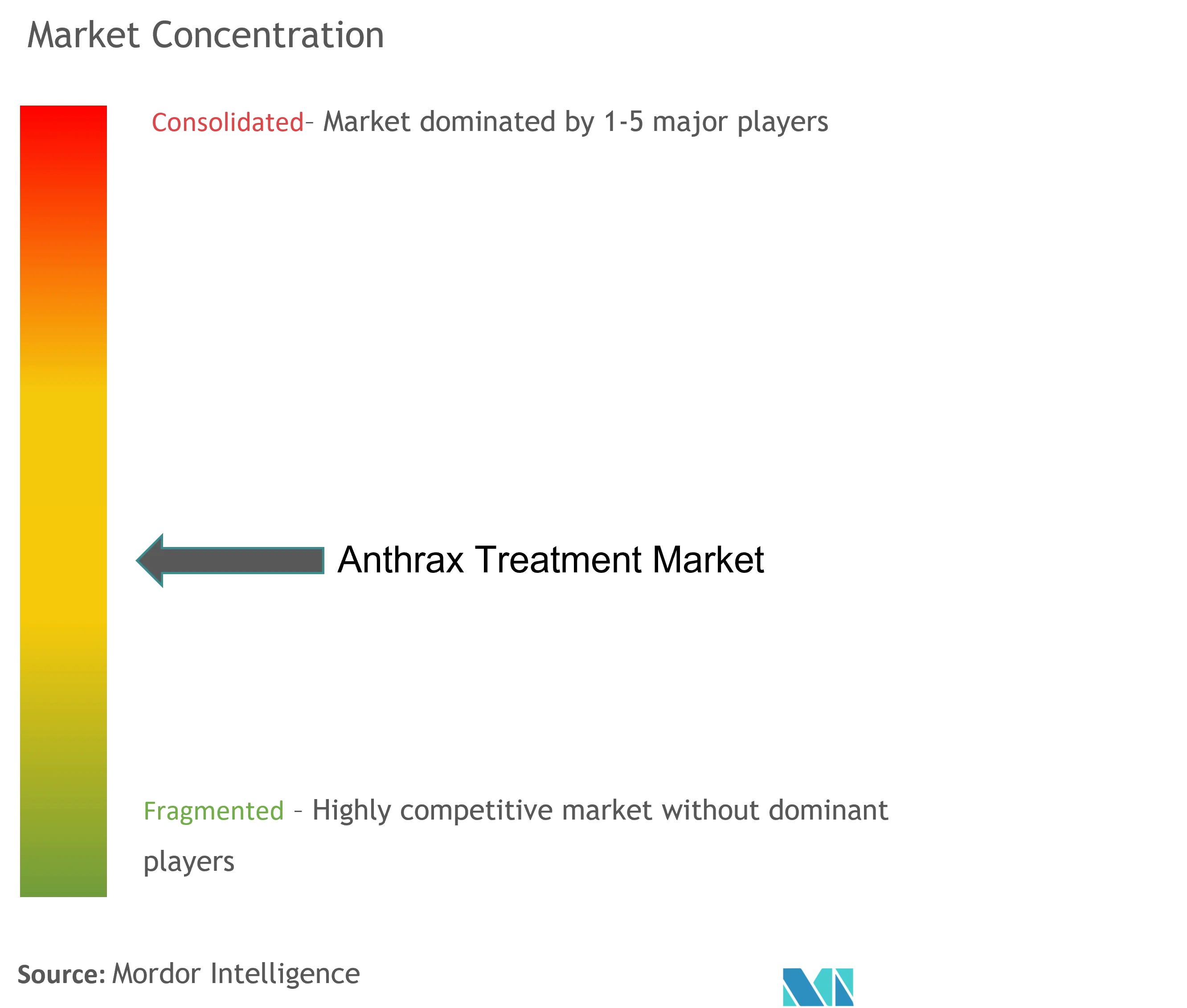
The anthrax therapeutics market is highly concentrated, shaped by a handful of government-vetted suppliers with vertically integrated capabilities. Emergent BioSolutions anchors the field through its BioThrax vaccine, Raxibacumab antitoxin, and specialized manufacturing facilities that meet rigorous security standards. Bavarian Nordic pivots from oncology into infectious-disease countermeasures, leveraging its viral-vector expertise to diversify revenue and secure UNICEF and U.S. government contracts.
Paratek Pharmaceuticals capitalizes on BARDA’s NUZYRA purchases, illustrating how small-molecule innovators can integrate into stockpile ecosystems despite limited commercial demand. GC Biopharma’s recombinant vaccine success positions Asian manufacturers for greater global influence, introducing competitive price pressures and technology alternatives. Academic–industry consortia, such as Northeastern University’s teixobactin program, inject pipeline novelty that could disrupt incumbent antibiotic portfolios.
Strategic moves revolve around supply-agreement renewals, platform licensing, and co-development alliances that spread R&D cost while satisfying multi-jurisdictional regulatory requirements. AI-driven discovery partnerships emerge as differentiators, with machine-learning models screening lethal-factor inhibitors faster than traditional wet-lab approaches. Collectively, these tactics reinforce formidable entry barriers that protect incumbents yet leave windows for technology-rich entrants capable of meeting exacting security and quality criteria.
Anthrax Treatment Industry Leaders
-
Pfizer Inc.
-
Emergent
-
Nighthawk Biosciences, Inc. (Elusys Therapeutics Inc.)
-
Almirall, LLC
-
Paratek Pharmaceuticals, Inc.
- *Disclaimer: Major Players sorted in no particular order
Anthrax Treatment Market Companies Covered in this Report
- Emergent Bio Solutions
- GlaxoSmithKline (GSK)
- Elusys Therapeutics
- Altimmune
- Soligenix
- Bavarian Nordic
- Pfizer
- Roche
- DynPort Vaccine Company
- SIGA Technologies
- Tonix Pharmaceuticals
- AN2 Therapeutics
- GC Biopharma
- Emergent Product Development (Raxibacumab)
Market Opportunities and Future Outlook
One opportunity is lifecycle procurement expansion based on validated performance data under biodefense contracts, especially for products that can add or strengthen inhalational anthrax indications under the FDA Animal Rule. In February 2026, Paratek Pharmaceuticals reported positive top-line data from two NUZYRA therapeutic efficacy studies in inhalation anthrax. That result triggered additional procurement under its BARDA Project BioShield contract, reinforcing the value of well-instrumented non-human primate efficacy packages and manufacturing readiness aligned to federal requirements.
Another opportunity is portfolio optimization and redundancy building across vaccines, antitoxins, and antibiotics for stockpile use. This is supported by repeat ordering behavior and an established list of FDA-recognized countermeasures (BioThrax, CYFENDUS, Anthrasil, Anthim, raxibacumab, and key antibiotics including ciprofloxacin, doxycycline, and levofloxacin). In January 2026, Emergent BioSolutions received a delivery order valued at up to USD 21.5 million to supply BioThrax in 2026, illustrating continued replenishment demand and the advantage held by suppliers that can meet U.S.-based security, quality, and onshoring expectations embedded in BARDA and DoD procurement frameworks.
Recent Industry Developments in Anthrax Treatment Market
- February 2026: Paratek Pharmaceuticals reported positive top-line results from two NUZYRA therapeutic efficacy studies in inhalation anthrax, which triggered additional procurement under its BARDA Project BioShield contract. The update strengthens the role of Animal Rule-style efficacy packages in unlocking follow-on purchases and reinforces antibiotics as a core stockpile category alongside antitoxins and vaccines.
- April 2025: South Korea approved a recombinant anthrax vaccine developed by GC Biopharma. The approval adds a new vaccine platform reference point in Asia-Pacific and supports diversification beyond legacy anthrax vaccine technologies used in long-running government programs.
- July 2024: Emergent BioSolutions received more than USD 250 million in contract modifications from HHS ASPR covering four medical countermeasure products, including funding tied to CYFENDUS. The scale of modifications highlights multi-product procurement strategies that bundle vaccines and other countermeasures, tightening supplier positioning around manufacturing continuity and delivery performance.
Anthrax Treatment Market Report Scope and Research Methodology
Market Definition and Coverage
The market is defined as the revenue generated from therapies used to prevent or treat human anthrax, including products used in post exposure management and hospital based care, across the countries covered in the study.
Scope exclusions: Veterinary only anthrax products and standalone diagnostic test kits are excluded from this market sizing.
Segments Covered in This Report
- By Product Type
- Antibiotics
- Antitoxins
- Vaccines
- Adjunctive & Supportive Therapies
- By Route of Administration
- Oral
- Injectable
- Others
- By End User
- Military & Defense Personnel
- Civilian Emergency Stockpiles
- Hospitals & Specialty Clinics
- By Distribution Channel
- Government Procurement Agencies
- Hospital Pharmacies
- Retail & Online Pharmacies
- By Geography
- North America
- United States
- Canada
- Mexico
- Europe
- Germany
- United Kingdom
- France
- Italy
- Spain
- Rest of Europe
- Asia-Pacific
- China
- India
- Japan
- South Korea
- Australia
- Rest of Asia-Pacific
- South America
- Brazil
- Argentina
- Rest of South America
- Middle East and Africa
- GCC
- South Africa
- Rest of Middle East and Africa
- North America
Data Sources, Market Sizing, and Validation
Desk Research
We started by mapping the anthrax countermeasure landscape so the model stays tied to what is actually procured and used in practice. Public sources were used to set the outer guardrails, such as CDC guidance on anthrax exposure management, FDA approvals and labeling for relevant therapeutics, WHO reference materials on anthrax, and government procurement and preparedness documents where available.
To avoid building assumptions in isolation, we also reviewed sources such as national stockpile and public health emergency planning releases, peer reviewed papers on anthrax treatment protocols, and trade and customs statistics where shipments of relevant finished products can be observed at a high level. Company filings and investor presentations were used to understand product availability and supply constraints, and a paid subscription for company financials, patent lookups, and shipment level import export signals was used selectively when public trails were thin. These sources were used as illustrative inputs, and many other public references were used for cross checks, data collection, and clarification.
Primary Interviews and Surveys
Primary work was used to pressure test the desk assumptions that drive value, especially around stockpiling cycles, typical ordering channels, and what gets counted as treatment versus broader biodefense spending. We spoke with a mix of clinicians, hospital pharmacy and procurement stakeholders, public sector preparedness contacts, and supply side experts across Americas, EMEA, and APAC so regional procurement patterns and adoption timing could be compared and then normalized.
Distribution of primary research fieldwork respondents
| Company type | Respondent position | Region |
|---|---|---|
| Top tier: 27% | CXOs: 13% | APAC: 46% |
| Mid tier: 58% | Functional/Unit leaders: 43% | EMEA: 31% |
| Smaller Players: 15% | Managers: 44% | Americas: 23% |
Market-Sizing & Forecasting
For sizing, a top down approach was used where national preparedness budgets, stockpile replenishment cycles, and observable procurement signals were translated into an addressable treatment spend pool by year. Once the demand pool was built, it was split using practical usage logic, such as the expected share of post exposure prophylaxis courses versus acute treatment episodes, and the mix of antibiotics, antitoxins, and supportive adjunct use in hospital settings.
To keep the totals realistic, we corroborated the outcome with selective bottom up approximations, including sampled price per course or dose multiplied by likely volumes for key demand channels, followed by quick supplier and channel checks from interviews. Inputs that mattered most included reported anthrax exposure management guidance, stockpile rotation timelines, emergency procurement frequency, treatment regimen duration assumptions, and observed price movement for relevant therapeutics where public information existed. Forecasting was run using scenario analysis, where the base case was guided by expert views on procurement timing and policy continuity, and then adjusted for event driven surges and normalization. When bottom up signals were incomplete in smaller countries, conservative gap fills were applied using proxy ratios from similar procurement systems, and then rechecked with primary feedback.
Data Validation & Update Cycle
We ran multiple checks so the final numbers do not rely on one data stream. Model outputs were compared against independent signals, including procurement announcements, approval and labeling changes that affect addressable use, and directional trends seen in channel discussions.
Outliers were reviewed at country and regional level, and assumptions were reworked when the implied per course spending or growth rate looked inconsistent with known purchasing behavior. Before sign off, the estimates go through an internal review step so calculation logic and unit conversions are rechecked. The report is refreshed annually, and if a material event occurs (for example, a major procurement action or policy change), the assumptions are revisited and the model is updated. Right before delivery, a final pass is done so clients receive the most current view available.
Mordor Intelligence's Anthrax Treatment Market Size Versus Other Published Estimates
Published market values for anthrax treatment can look far apart because each publisher draws the line differently on what counts as treatment revenue, and because the timing of stockpile buys can distort single year snapshots. Differences also come from the year used as a starting point, how price per course is assumed to move, and whether currency conversion is done using annual averages or a single point in time.
The main gap comes from whether broad biodefense and preparedness spending is folded into the total, and Mordor Intelligence counts only therapy revenues tied to human anthrax management (including post exposure use and hospital channel demand) rather than wider program budgets that may never translate into treatment purchasing. Some published estimates also apply generalized health care growth rates without checking stockpile rotation and replenishment patterns, which can flatten the sharp ups and downs that practitioners report. Scope can vary when adjacent items like diagnostic kits or veterinary products are included, which changes the numerator even if the disease burden is unchanged.
Benchmark comparison
| Source | Market Size | Gaps in Research Methodology |
|---|---|---|
| Mordor Intelligence | USD 0.44 B (2026) | |
| Global Publisher A | USD 0.41 B (2024) | Uses a different base year and time window, and the estimate is presented around drug class totals that may not fully reflect government stockpile timing and country level procurement cycles. |
| Industry Research Group B | USD 3.59 B (2024) | Appears to apply a much wider spend pool that likely includes broader biodefense or preparedness allocations, which inflates the value beyond treatment specific purchasing tied to anthrax therapy courses. |
The table shows that the spread is mostly explained by scope and timing, not by small math differences. Once the counted revenue is restricted to treatment use cases and the procurement cycle is treated as lumpy rather than smooth, the market value becomes easier to trace back to clear demand signals and repeatable assumptions.
Key Questions Answered in the Report
What is the current Anthrax Treatment Market size?
The Anthrax Treatment Market was valued at USD 437.91 million in 2026 and is projected to reach USD 629.68 million by 2031.
Which region leads the anthrax therapeutics market?
North America holds 51.64% of revenue in 2025, supported by the world’s largest biodefense budget and mature regulatory pathways.
What product segment is growing fastest?
Antitoxins are expanding at an 8.28% CAGR over 2026-2031, outpacing antibiotics due to their resistance-independent mode of action.
Why are oral formulations becoming important?
Oral antibiotics enable rapid, large-scale post-exposure prophylaxis without the logistical constraints of injectable administration.
How is antimicrobial resistance affecting anthrax treatment?
Evolving resistance to ciprofloxacin is shifting procurement toward doxycycline, levofloxacin, and novel agents like teixobactin.