
Ankylosing Spondylitis Treatment Market Size and Share
Market Overview
| Study Period | 2020 - 2031 |
|---|---|
| Market Size (2026) | USD 7.67 Billion |
| Market Size (2031) | USD 10.93 Billion |
| Growth Rate (2026 - 2031) | 7.32 % |
| Fastest Growing Market | Asia-Pacific |
| Largest Market | North America |
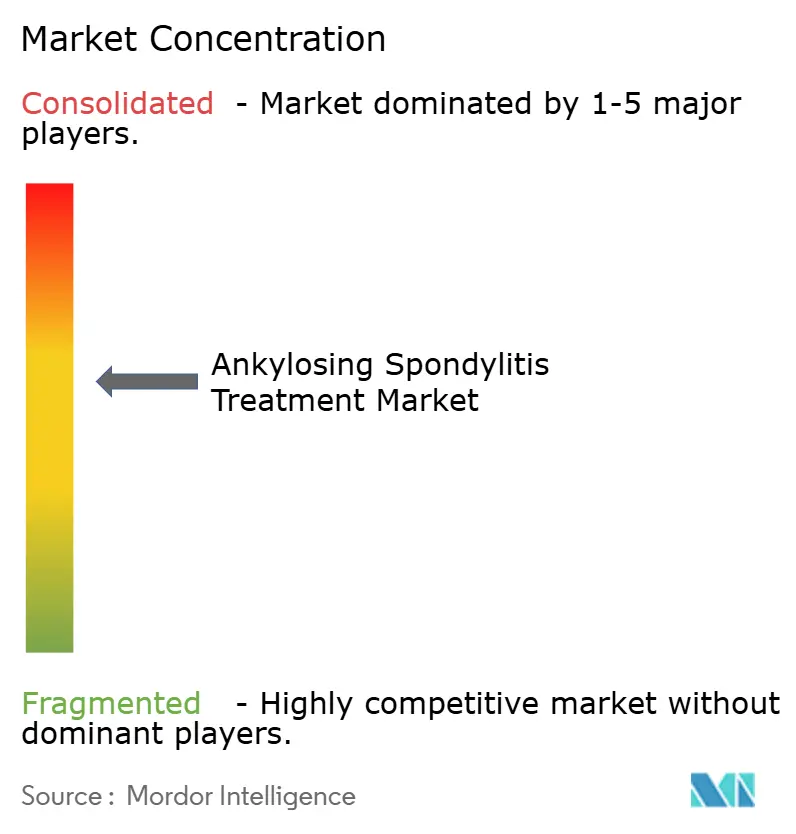
| Market Concentration | Medium |
Major Players *Disclaimer: Major Players sorted in no particular order Image © Mordor Intelligence. Reuse requires attribution under CC BY 4.0. | |
Ankylosing Spondylitis Treatment Market Analysis by Mordor Intelligence
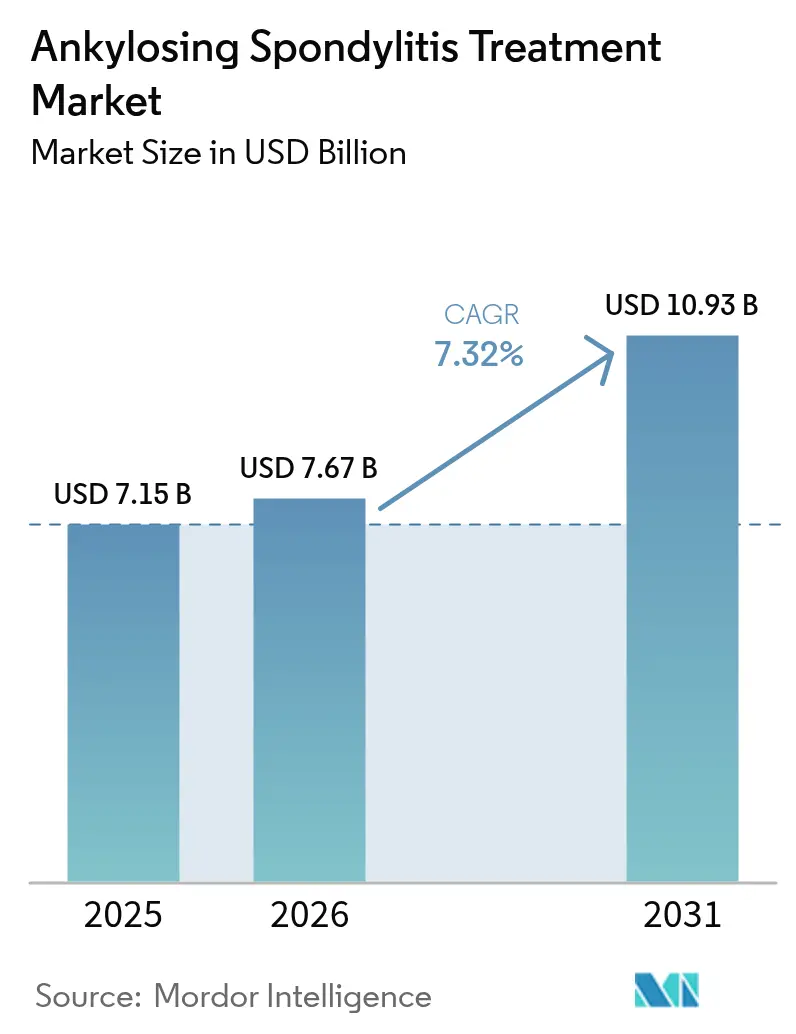
The ankylosing spondylitis treatment Market size was valued at USD 7.15 billion in 2025 and estimated to grow from USD 7.67 billion in 2026 to reach USD 10.93 billion by 2031, at a CAGR of 7.32% during the forecast period (2026-2031). Wider recognition of axial spondyloarthritis as a distinct disease, faster MRI-based diagnosis aided by artificial intelligence, expanding reimbursement for advanced biologics and biosimilars, and a steady stream of dual-target cytokine inhibitors are collectively sustaining growth momentum. Broader payer coverage is narrowing the affordability gap for originator biologics, while algorithm-driven treat-to-target strategies are boosting therapy-switch rates, thereby enlarging the addressable ankylosing spondylitis treatment market. The rapid entry of oral JAK inhibitors brings a non-injectable option into mainstream practice, and heightened competition among biosimilars is accelerating price resets in mature regions. Meanwhile, Asia Pacific’s hospital build-out and growing specialist density are reshaping global demand patterns.
Key Report Takeaways
- By drug class, TNF inhibitors held 53.68% of ankylosing spondylitis treatment market share in 2025, while NSAIDs are projected to expand at an 8.79% CAGR through 2031.
- By route of administration, subcutaneous delivery led with 58.92% revenue share in 2025; oral formulations are forecast to grow at a 8.99% CAGR to 2031.
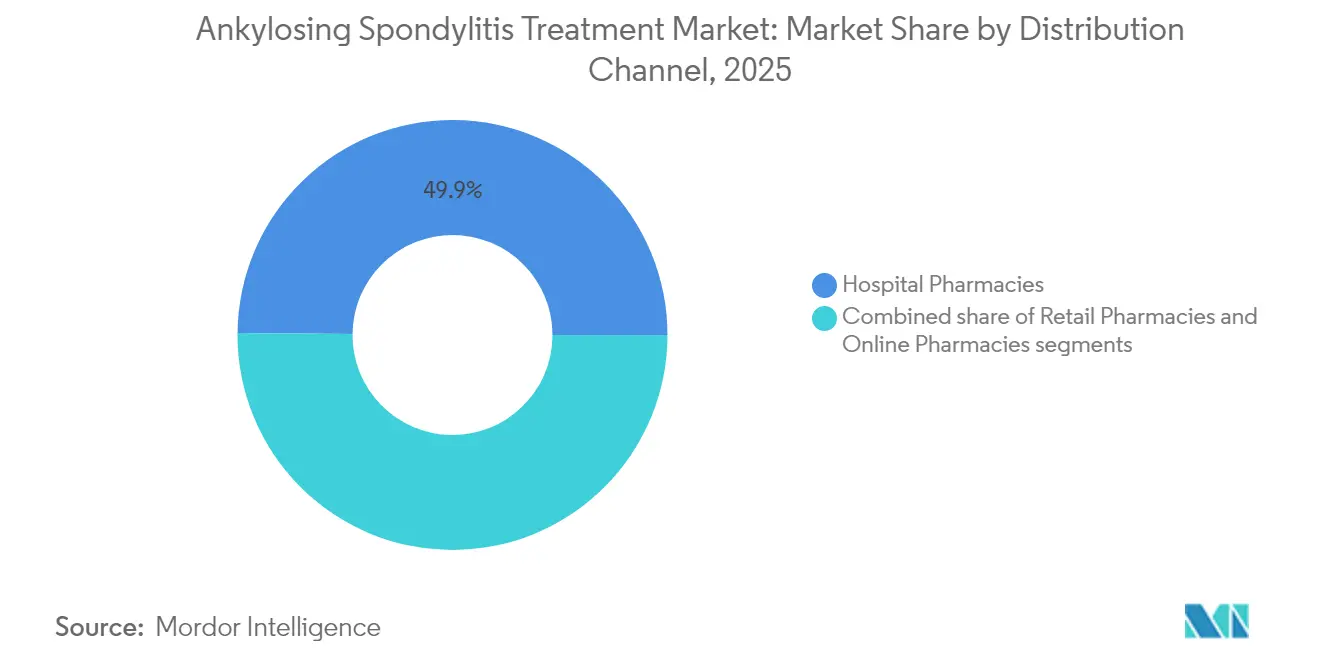
- By distribution channel, hospital pharmacies accounted for 49.85% of the ankylosing spondylitis treatment market size in 2025, whereas online pharmacies are rising at an 8.52% CAGR through 2031.
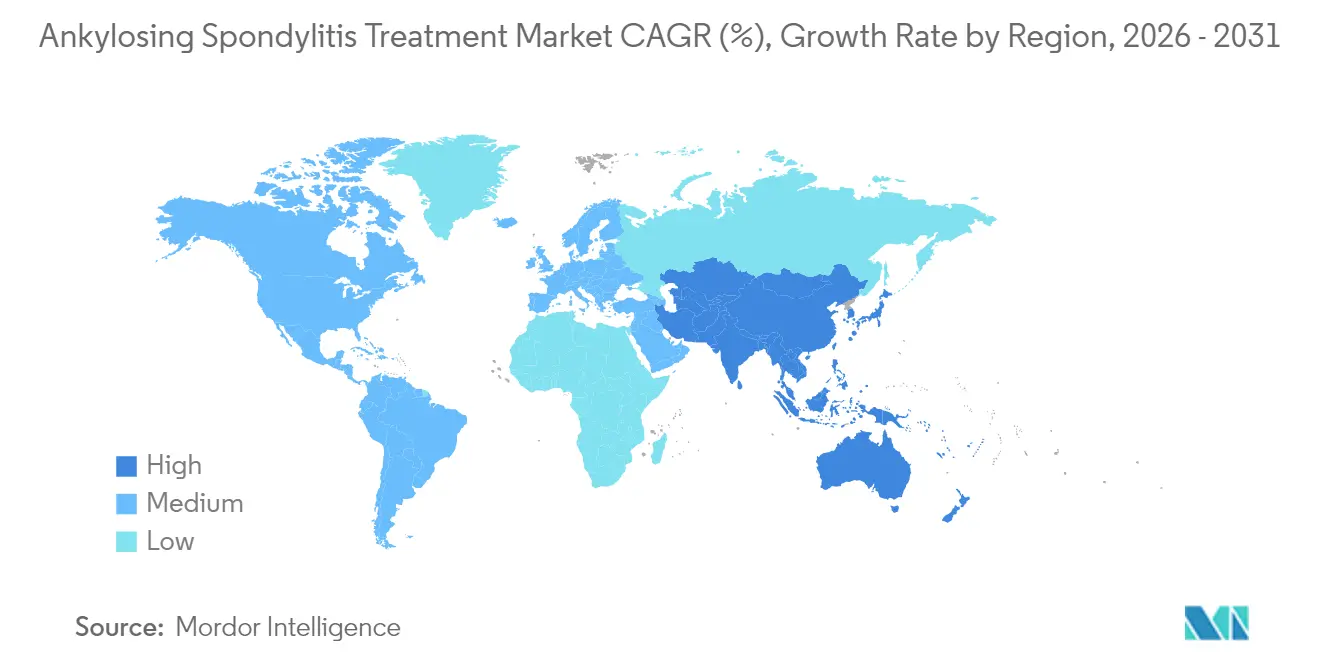
- By geography, North America commanded 40.78% revenue in 2025, but Asia Pacific is set to record the fastest 9.03% CAGR between 2026-2031.
Note: Market size and forecast figures in this report are generated using Mordor Intelligence’s proprietary estimation framework, updated with the latest available data and insights as of 2026.
Market Trends and Insights
Drivers Impact Analysis of Ankylosing Spondylitis Treatment Market*
| Driver | (~) % Impact on CAGR Forecast | Geographic Relevance | Impact Timeline |
|---|---|---|---|
| Growing global prevalence & earlier diagnosis | +1.2% | Global, with highest impact in Asia Pacific and emerging markets | Medium term (2-4 years) |
| Expanding reimbursement coverage for biologics & biosimilars | +1.8% | North America & Europe, expanding to Latin America | Short term (≤ 2 years) |
| Oral JAK-inhibitors improving patient adherence | +0.9% | Global, with early adoption in developed markets | Medium term (2-4 years) |
| AI-enabled MRI scoring speeding clinical trial timelines | +0.7% | Global, concentrated in research-intensive regions | Long term (≥ 4 years) |
| Treat-to-target guidelines accelerating therapy switches | +1.1% | North America & Europe, gradual adoption in APAC | Short term (≤ 2 years) |
| Emerging dual-IL-17/23 biologics with superior radiographic control | +1.3% | Global, with premium pricing in developed markets | Medium term (2-4 years) |
| Source: Mordor Intelligence | |||
Growing Global Prevalence & Earlier Diagnosis
Consensus criteria for “early axial spondyloarthritis” let clinicians intervene before structural damage becomes irreversible, adding previously uncounted patients to the ankylosing spondylitis treatment market.[1] Ethnic-specific HLA-B27 subtypes identified in East Asian cohorts refine risk stratification and enable targeted screening. National registries in China and India are reporting higher case ascertainment as rheumatology capacity increases, magnifying demand for both first-line NSAIDs and advanced biologics. These combined shifts are expected to keep new patient starts on an upward curve through the medium term.
Expanding Reimbursement Coverage for Biologics & Biosimilars
Pharmacy benefit managers in the United States now privilege low-priced adalimumab and ustekinumab biosimilars, with several plans offering USD 0 co-pay switching incentives. Parallel moves in the European Union have lifted biosimilar uptake above 70% in certain markets, compressing net prices and broadening access. Latin American payers are adopting tiered formularies that admit two or more biosimilars per molecule, creating multi-supplier competition. Cost savings redirected toward dual IL-17 inhibitors and JAK inhibitors are enlarging the overall ankylosing spondylitis treatment market rather than merely cannibalizing existing spends. Faster market penetration of biosimilars is therefore amplifying volume growth, even as average selling prices soften.
Oral JAK-Inhibitors Improving Patient Adherence
Once-daily upadacitinib and twice-daily tofacitinib ease injection fatigue, helping sustain adherence in younger, professionally active patients. Five-year safety monitoring shows no excess overall malignancy risk versus biologic DMARDs, though vigilance for non-melanoma skin cancer remains prudent. Mechanistic breadth across multiple cytokines offers a therapeutic alternative for patients unresponsive to TNF- or IL-17-targeted agents. Early real-world evidence indicates a measurable decline in outpatient visits linked to easier oral dosing, further incentivizing payers to add JAK inhibitors to preferred tiers.
AI-Enabled MRI Scoring Speeding Clinical Trial Timelines
Machine-learning-based Berlin scoring attains 67% concordance with expert radiologists, while newer convolutional models reach AUC values of 0.96 in test datasets. Automating image reads cuts both subjectivity and labor costs, enabling smaller protocols with higher statistical power. Sponsors report that AI-enhanced endpoints have reduced imaging-related timelines by roughly six months in recent phase III programs. Regulators in the United States and Europe have begun accepting algorithm-supported readouts as secondary efficacy measures, signaling future mainstream adoption. These gains make drug development more attractive in niche inflammatory indications, indirectly expanding the therapeutic toolkit available to the ankylosing spondylitis treatment market.
Restraints Impact Analysis of Ankylosing Spondylitis Treatment Market*
| Restraint | (~) % Impact on CAGR Forecast | Geographic Relevance | Impact Timeline |
|---|---|---|---|
| High cost & price-inflation of originator biologics | -1.4% | Global, with highest impact in emerging markets | Short term (≤ 2 years) |
| Safety warnings for JAK inhibitors & long-term immunosuppression | -0.8% | Global, with regulatory focus in North America & Europe | Medium term (2-4 years) |
| Inter-changeability scepticism slowing biosimilar uptake | -0.6% | North America & Europe, less impact in emerging markets | Short term (≤ 2 years) |
| Cold-chain logistics gaps in emerging markets | -0.9% | Asia Pacific, Latin America, Middle East & Africa | Long term (≥ 4 years) |
| Source: Mordor Intelligence | |||
High Cost of Originator Biologics
List prices for established TNF inhibitors continue to test payer budgets, prompting stricter prior authorization and step-therapy mandates. Although the U.S. Inflation Reduction Act promises relief for Medicare beneficiaries, commercial plans still negotiate rebates on a product-by-product basis. Insurers increasingly channel patients toward preferred biosimilars, but uptake remains slower in regions lacking automatic pharmacy-level substitution. In emerging economies, limited public financing forces many patients to defer biologic initiation, restricting the potential universe for the ankylosing spondylitis treatment market until broader subsidy schemes materialize.
Safety Warnings for JAK Inhibitors & Long-Term Immunosuppression
Post-marketing surveillance has highlighted cardiovascular and thrombotic events, triggering boxed warnings and targeted risk-evaluation strategies. Nevertheless, pooled real-world data from over 53,000 initiations reveal no significant rise in overall cancer rates versus biologics, except for a marginal uptick in non-melanoma skin cancers.[2] Physicians now tailor JAK inhibitor use to younger, lower-risk profiles and employ periodic dermatologic screening. Regulatory agencies continue to refine labeling, which keeps a perceptual cloud over the class and slows its share-of-wallet expansion.
*Our forecasts treat driver/restraint impacts as directional, not additive. The impact forecasts reflect baseline growth, mix effects, and variable interactions.
Ankylosing Spondylitis Treatment Market Segment Analysis
By Drug Class:
Biosimilar Headwinds Meet NSAID ResurgenceTNF inhibitors retained 53.68% ankylosing spondylitis treatment market share in 2025, supported by two-decade clinical familiarity and extensive payer coverage. However, erosive price competition from eight approved adalimumab biosimilars and the expanding footprint of infliximab-dyyb are moderating revenue growth. IL-17 blockers, led by secukinumab and ixekizumab, are enlarging their patient base in biologic-naïve cohorts who value rapid entheseal pain relief. Meanwhile, dual-target bimekizumab is expected to capture early switchers by demonstrating superior radiographic control. JAK inhibitors are carving a niche among patients with prior biologic failure, offering oral convenience and broader cytokine coverage.
NSAIDs are rebounding, registering an 8.79% CAGR to 2031—the highest among all classes—after long-term cohort data confirmed that continuous celecoxib therapy retards spinal damage progression. This evidence has reinstated selective COX-2 inhibitors as quasi–disease-modifying agents rather than mere analgesics. Combined with individualized exercise regimens, etoricoxib has delivered meaningful functional gains, further broadening its uptake. Novel candidates such as anti-GM-CSF antibodies and nanomedicine formulations remain experimental but highlight the innovation pipeline poised to feed future growth in the ankylosing spondylitis treatment market.


By Route of Administration:
Oral Surge Challenges Injectable DominanceSubcutaneous formulations delivered 58.92% of 2025 revenue, reflecting patient self-administration convenience and the broadest commercial portfolio, including adalimumab, secukinumab, and newly launched bimekizumab. Prefilled starter kits and connected autoinjectors are improving dosing accuracy and adherence tracking. However, oral delivery is projected to be the fastest-growing route at a 8.99% CAGR, catalyzed by JAK inhibitor enthusiasm and payer acceptance of tablet-based chronic therapies. Clinical equivalence to biologics in ASAS40 response, combined with easier supply chain logistics, underpins this ascent.
Intravenous infusions, once the mainstay for infliximab, now serve a more specialized subset—patients experiencing injection-site reactions or needing high-dose induction. Hospitals and stand-alone infusion centers are optimizing chair time and adopting biosimilar infliximab to retain volume. Market momentum nonetheless favors modalities that minimize facility dependence, prompting manufacturers to re-engineer IV-only molecules into high-concentration subcutaneous or oral versions. Route flexibility is thus becoming a competitive differentiator in the ankylosing spondylitis treatment market.
By Distribution Channel:
Specialty Digital Models Gain GroundHospital pharmacies captured 49.85% of overall revenue in 2025, underpinned by integrated infusion services and in-house rheumatology consults. They remain indispensable for biologic initiation, safety monitoring, and adverse-event management. Retail chains hold stable share by dispensing NSAIDs and oral small molecules but continue to cede high-complexity biologics to specialized arms.
Online and specialty pharmacies are on track for an 8.52% CAGR through 2031. Improved cold-chain orchestration, insurer-aligned copay assistance, and doorstep nurse training are boosting acceptance, particularly among working-age patients seeking discretion and convenience. Digital refill reminders and adherence analytics further differentiate these providers. As reimbursement frameworks evolve toward home-based care, e-pharmacy platforms are poised to unlock incremental value across the ankylosing spondylitis treatment market.
Geography Analysis
North America Ankylosing Spondylitis Treatment Market
North America’s 40.78% contribution in 2025 underscores its role as the innovation nucleus for advanced therapeutics and digital management tools. Early FDA approvals for dual IL-17 agents and rapid biosimilar turnover exemplify a dynamic yet price-sensitive environment. Major payers now embed performance guarantees into contracts, while remote monitoring apps gain traction among high-deductible health plan enrollees. Differences in Medicare Part D formularies create state-level access disparities, influencing switching patterns and overall utilization.
APAC Ankylosing Spondylitis Treatment Market
Asia Pacific is forecast to deliver the highest 9.03% CAGR through 2031, anchored by China’s 0.26% disease prevalence and distinctive HLA-B27 landscape that makes 88.8% of diagnosed patients genetically predisposed. Rising middle-class insurance coverage, government-funded biosimilar programs, and an expanding network of rheumatology clinics are accelerating first-line biologic uptake. South Korea and Japan continue to operate mature reimbursement models, whereas India’s tiered hospital accreditation system is gradually unlocking infliximab and adalimumab access beyond metropolitan centers. Across Southeast Asia, tele-consult services are shortening wait times and bolstering guideline adoption.
Europe Ankylosing Spondylitis Treatment Market
Europe maintains a steady revenue base, aided by the region’s leadership in biosimilar policy and real-world evidence generation. Germany’s national cohort studies inform global dosing optimization, while the United Kingdom’s value-based pricing scheme incentivizes measurable functional improvements. Nationalized health systems leverage pooled purchasing power to secure attractive tender prices, promoting broad access yet compressing manufacturer margins. Central and Eastern European countries are narrowing the gap through EU structural funds dedicated to rheumatology infrastructure, paving the way for more uniform penetration of the ankylosing spondylitis treatment market.
Regulatory Landscape
Regulatory pathways for ankylosing spondylitis therapies are increasingly shaped by cross-market approvals and labeling updates for IL-17 inhibitors. In the United States, the FDA approved BIMZELX (bimekizumab-bkzx) in 2024 for active ankylosing spondylitis and non-radiographic axial spondyloarthritis, expanding the IL-17 class footprint and informing clinical sequencing. In Europe, centralized decisions via the European Commission and EMA continue to broaden options, with EC authorizations for Gobivaz in late 2025 and Gotenfia in early 2026 for severe active ankylosing spondylitis.
In China, the NMPA accepted Crusekitug (QX002N) for active AS in March 2026, signaling domestic IL-17 assets moving toward formal review and increasing competitive dynamics within the IL-17 segment.
Competitive Landscape
The market sits at a moderate consolidation level. AbbVie’s shift from Humira to the Rinvoq-Skyrizi duo signals a calibrated hedge against biosimilar erosion, while Novartis leverages patient-support programs to cement secukinumab loyalty. UCB’s bimekizumab roll-out across radiographic and non-radiographic indications introduces dual-target innovation and pushes rivals to broaden pipeline strategies.
Biosimilar specialists such as Samsung Bioepis and Celltrion are scaling capacity to undercut originator brands, aided by full interchangeability designations that simplify pharmacy substitution. Their aggressive rebate deals with U.S. payers demonstrate the growing financial leverage of follow-on biologics. Simultaneously, pipeline entrants like Bio-Thera’s BAT1406 and Biocad’s BCD-180 illustrate China- and Russia-based developers’ ambitions to cross-license into Western markets upon clinical validation, intensifying price competition in the ankylosing spondylitis treatment market.
Technology partnerships are becoming pivotal. Imaging-AI vendors collaborate with pharmaceutical sponsors to integrate automated MRI scoring into pivotal trials, shaving development costs and timelines. Digital therapeutics companies offer adherence dashboards that link patient-reported pain scores with refill behavior, creating new data streams for value-based pay arrangements. Over the forecast horizon, competitive advantage will hinge on the ability to pair differentiated mechanisms with wrap-around services that tangibly improve long-term spinal outcomes.
Ankylosing Spondylitis Treatment Industry Leaders
-
Novartis AG
-
AbbVie Inc.
-
Amgen Inc.
-
Boehringer Ingelheim International GmbH
-
UCB S.A.
- *Disclaimer: Major Players sorted in no particular order
Ankylosing Spondylitis Treatment Market Companies Covered in this Report
- Abbvie
- Novartis
- UCB
- Amgen
- Pfizer
- Eli Lilly and Company
- Johnson & Johnson (Inc. Janssen)
- Boehringer Ingelheim
- Celltrion Healthcare
- Merck
- Gilead Sciences
- Sanofi
- Samsung Bioepis
- Sun Pharma Industries Ltd.
- Takeda Pharmaceutical Co.
- Reliance Life Sciences
Market Opportunities and Future Outlook
The current landscape creates opportunities to expand access and differentiation within the IL-17 and next generation immunology segments, especially where switching from TNF inhibitors is common and payers are recalibrating prices through biosimilar dynamics. China approvals and filings expand the addressable set; the NMPA accepted NDA activity around IL-17 agents such as gumokimab (AK111) in 2026, underscoring an active in-country expansion channel through approvals, licensing, and partnerships.
Beyond cytokine inhibition, the treatment toolkit is widening toward targeted synthetic and precision immune approaches for inadequate responders and for patients showing structural progression. This aligns with treat-to-target patterns and the increasing emphasis on longitudinal monitoring, where outcomes drive therapy selection.
Recent Industry Developments in Ankylosing Spondylitis Treatment Market
- July 2026: Shanghai Junshi Biosciences and Fosun Wanbang Pharma Group sign a licensing collaboration for roconkibart (JS005), an anti-IL-17A monoclonal antibody, covering development, registration, manufacturing, and commercialization in Greater China. The agreement combines an innovator pipeline asset with an established commercial platform, supporting regional market entry and reinforcing Greater China as an active IL-17 arena.
- March 2026: Qyuns Therapeutics announced that the NMPA accepted the New Drug Application for Crusekitug (QX002N), an anti-IL-17A monoclonal antibody, for active ankylosing spondylitis in adults. NDA acceptance moves another domestic biologic into formal review, adding to the near-term set of potential competitors to imported originators and biosimilars. The step highlights how China approvals and filings are expanding the competitive set within the IL-17 class.
- September 2024: UCB secured U.S. FDA approval for BIMZELX (bimekizumab-bkzx) for adults with active ankylosing spondylitis, alongside non-radiographic axial spondyloarthritis. The approval expands IL-17 therapeutic choices in a major reimbursed market and reinforces UCB's rheumatology franchise position versus entrenched TNF inhibitors. It also increases switching and sequencing options for clinicians managing patients with inadequate response to earlier biologics.
Ankylosing Spondylitis Treatment Market Report Scope and Research Methodology
Market Definition and Coverage
This market covers the value of prescription drug treatments used to manage ankylosing spondylitis, including medicines used to reduce inflammation, slow disease activity, and relieve symptoms across typical care settings.
Scope exclusions: Non-drug services (such as physical therapy), surgeries, and medical devices are excluded.
Segments Covered in This Report
- By Drug Class
- NSAIDs
- TNF Inhibitors
- IL-17 Inhibitors
- JAK Inhibitors
- Biosimilars
- Others
- By Route of Administration
- Oral
- Sub-cutaneous
- Intravenous
- By Distribution Channel
- Hospital Pharmacies
- Retail Pharmacies
- Online Pharmacies
- By Geography
- North America
- United States
- Canada
- Mexico
- Europe
- Germany
- United Kingdom
- France
- Italy
- Spain
- Rest of Europe
- Asia Pacific
- China
- Japan
- India
- South Korea
- Australia
- Rest of Asia Pacific
- Middle East and Africa
- GCC
- South Africa
- Rest of Middle East and Africa
- South America
- Brazil
- Argentina
- Rest of South America
- North America
Data Sources, Market Sizing, and Validation
Desk Research
Desk research begins by clarifying the treated patient pool and how treatment usually progresses from first-line symptom control to advanced therapies. We reviewed public clinical and epidemiology references, then aligned them to real-world prescribing patterns, which vary by region and access.
Commonly used public sources include guidance and data from organizations such as the CDC, the NIH and NLM (for clinical literature), the WHO, and the World Bank for country health and macro indicators. We also referenced peer-reviewed rheumatology journals, reimbursement and formulary policy notes that are publicly available, and company filings such as annual reports and investor presentations for therapy-level revenue discussion. Where helpful, our analysts used paid subscriptions for company financials and intelligence, news and financials, and patent databases to track pipeline timing and loss of exclusivity effects. This list is illustrative only, and other public sources were also used for data collection, validation, and clarification.
Primary Interviews and Surveys
Primary research was used to pressure test the treated share, switching triggers, and the biologic versus targeted oral mix across moderate and severe patients. We also confirmed how access and pricing move by country. We spoke with rheumatologists, hospital and specialty pharmacy stakeholders, and commercial roles across manufacturers and distributors, which helped close gaps left by public data and supported assumption checks before finalizing the model.
Distribution of primary research fieldwork respondents
| Company type | Respondent position | Region |
|---|---|---|
| Top tier: 35% | CXOs: 14% | APAC: 42% |
| Mid tier: 50% | Functional/Unit leaders: 31% | EMEA: 36% |
| Smaller Players: 15% | Managers: 55% | Americas: 22% |
Market-Sizing & Forecasting
We sized the market using top-down logic, where epidemiology and diagnosis rates translate into a treated cohort, then map to therapy mix and typical annual cost by line of therapy. Because utilization differs by setting, we split prescriptions into key care channels and rolled them up to regional totals.
Model inputs included ankylosing spondylitis prevalence, the share diagnosed (including MRI-driven diagnosis trends), the proportion treated with advanced therapies, the split between TNF inhibitors and IL-17 pathway drugs, and expected biosimilar penetration that affects average selling prices. As a cross-check, we ran selective bottom-up approximations using sampled price per patient per year multiplied by treated volume, then adjusted totals when channel checks and expert feedback suggested under or over counting. Where country-level data was thin, we used proxy markets with similar access and applied conservative adjustment factors discussed in interviews.
For forecasting, we used scenario analysis because uptake and pricing can shift quickly when reimbursement changes and biosimilar launches occur. Assumptions on growth in diagnosed patients, switching patterns, and price erosion were reviewed with experts, then applied consistently across regions so year-to-year movement remains explainable.
Data Validation & Update Cycle
We validated outputs against independent signals, such as broader immunology biologics trends, public revenue commentary by therapy class, and visible approval and label expansion timelines. When a region showed an unusual jump, we traced the driver back to a specific input (treated share, therapy mix, or pricing), then reworked and rechecked the outputs.
Before sign-off, the model and assumptions go through a multi-step analyst review so calculations, units, and currency conversions stay consistent. Reports are refreshed annually, and interim updates are done when material events occur, including major approvals, safety changes, or meaningful reimbursement shifts. Right before delivery, an analyst performs a final pass so clients receive the latest updated view.
Mordor Intelligence's Ankylosing Spondylitis Treatment Market Sizing Compared With Other Published Estimates
Published numbers for this market often differ because groups do not count the same drug scope, and they apply different views on pricing erosion from biosimilars and the pace of switching to newer targeted options. Differences in the year used, exchange rates, and what is considered treated and billable can also change the final value.
The main gap comes from whether non-drug care and broader axial spondyloarthritis categories are bundled into the total. Mordor Intelligence counts prescription pharmacotherapies for ankylosing spondylitis and excludes surgery, devices, and physical therapy services to keep the value tied to drug spend signals.
Benchmark comparison
| Source | Market Size | Gaps in Research Methodology |
|---|---|---|
| Mordor Intelligence | USD 7.67 B (2026) | |
| Trade Journal A | USD 4.60 B (2025) | Uses an earlier base year and appears to apply narrower coverage of advanced biologics and targeted agents in several regions, which can undercount treated moderate to severe patients where access is expanding. |
| Regional Consultancy B | USD 5.62 B (2025) | Likely mixes pricing and volume assumptions without clearly separating biosimilar price erosion by molecule, and may not align therapy mix to line of therapy adoption, which can shift totals upward or downward depending on the case. |
The spread in values is mainly explained by scope choices and how pricing and uptake are handled across drug classes and regions. By keeping assumptions traceable to the treated cohort, therapy mix, and realistic price progression, our estimate stays easier to reproduce and to update when access or clinical practice changes.
Key Questions Answered in the Report
What technology is shortening the diagnostic journey for axial spondyloarthritis?
AI-enhanced MRI scoring tools now detect sacroiliac inflammation with laboratory-grade sensitivity, enabling clinicians to confirm disease years earlier than traditional image readings.
How are payer strategies influencing drug choice in ankylosing spondylitis?
Large pharmacy benefit managers increasingly give first-line preference to low-priced biosimilars and bundle them with zero-copay incentives, accelerating patient switches from originator biologics.
Why are selective COX-2 inhibitors regaining prominence despite widespread biologic use?
Long-term cohort evidence shows continuous celecoxib or etoricoxib therapy can slow spinal radiographic progression, recasting certain NSAIDs as disease-modifying rather than purely symptomatic options.
What distinguishes dual IL-17A/IL-17F inhibitors such as bimekizumab from earlier biologics?
By simultaneously blocking two closely related cytokines, these agents achieve deeper suppression of entheseal inflammation, translating into faster clinical responses and improved radiographic outcomes.
How is artificial intelligence transforming clinical trials for new ankylosing spondylitis drugs?
Machine-learning algorithms deliver consistent, automated scoring of spinal and sacroiliac MRIs, allowing sponsors to run smaller trials with clearer endpoints and reduced reader variability.
Which distribution trend is most improving convenience for chronic therapy users?
Specialty e-pharmacies that integrate cold-chain logistics, remote nurse training, and digital refill reminders are rapidly displacing hospital pick-ups, boosting adherence for self-injectable and oral treatments.