
Angioplasty Balloons Market Size and Share
Market Overview
| Study Period | 2020 - 2031 |
|---|---|
| Market Size (2026) | USD 2.91 Billion |
| Market Size (2031) | USD 3.47 Billion |
| Growth Rate (2026 - 2031) | 3.57 % |
| Fastest Growing Market | Asia Pacific |
| Largest Market | North America |
| Market Concentration | Medium |
Major Players *Disclaimer: Major Players sorted in no particular order Image © Mordor Intelligence. Reuse requires attribution under CC BY 4.0. | |
Angioplasty Balloons Market Analysis by Mordor Intelligence
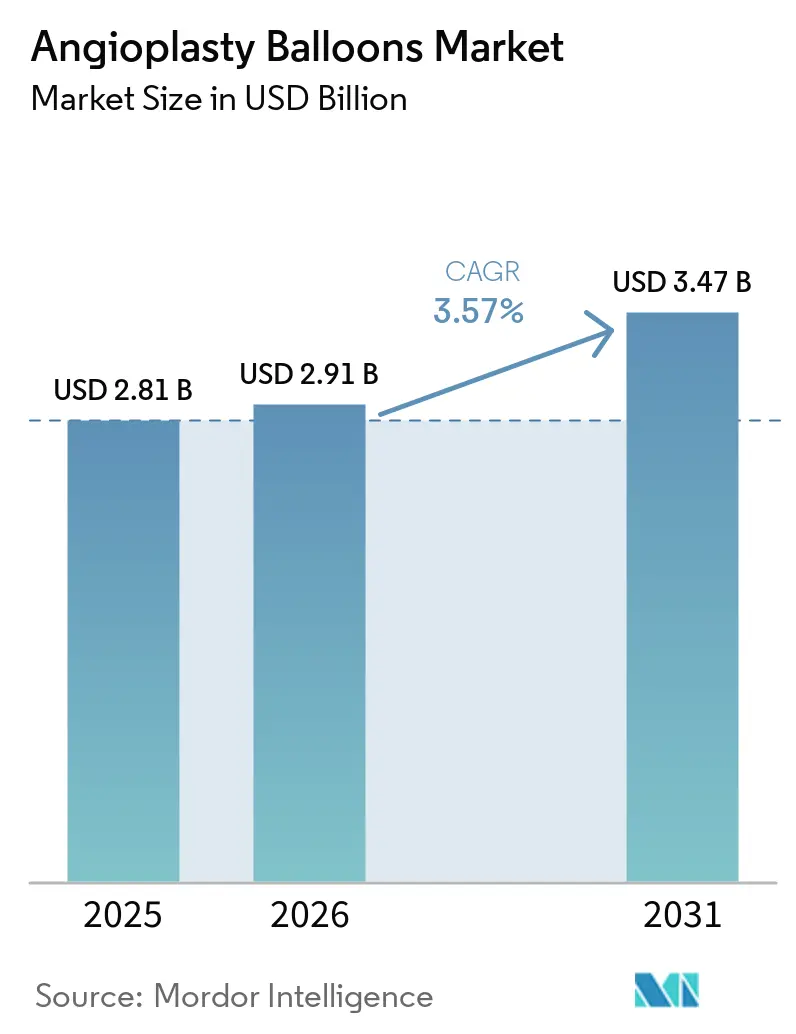
The angioplasty balloons market size is expected to grow from USD 2.81 billion in 2025 to USD 2.91 billion in 2026 and is forecast to reach USD 3.47 billion by 2031 at 3.57% CAGR over 2026-2031. This outlook confirms that the angioplasty balloons market continues to mature in a cardiovascular care environment where device sophistication must counterbalance modest procedure growth in developed regions. Demand remains firmly rooted in a large and aging cardiovascular patient pool—127.9 million Americans aged 20 and older live with heart disease today, and coronary artery disease prevalence remains close to 4.6%–4.9%. Growing clinician preference for minimally invasive percutaneous coronary intervention (PCI) sustains core procedure volumes, while recent approvals for drug-coated balloons (DCBs) validate a “leave-nothing-behind” treatment strategy that reduces reliance on permanent metallic implants. Normal balloons still dominate routine PCI, yet specialized scoring and drug technologies are gaining share as lesion complexity rises and pay-for-performance models reward durable outcomes.
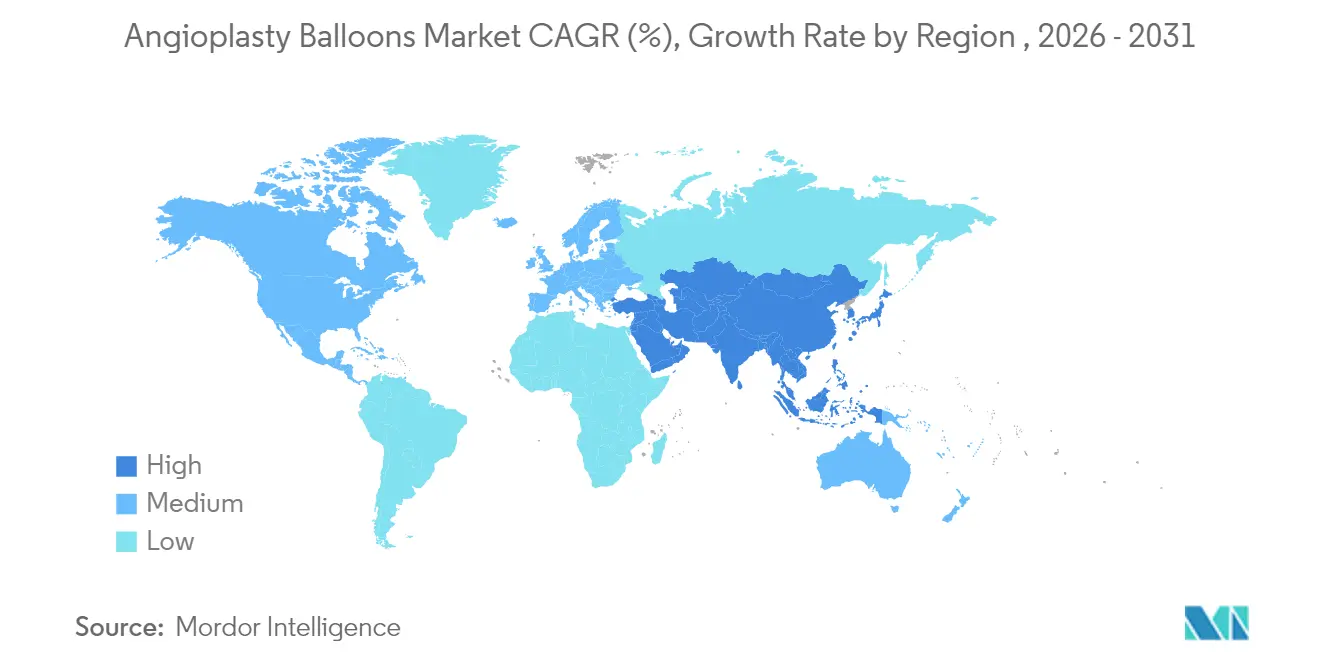
Key competitive and regional shifts underpin medium-term upside. North America retains the largest regional position with 39.68% of the angioplasty balloons market in 2024 thanks to advanced infrastructure and reimbursement that now covers PCI in ambulatory surgical centers (ASCs). Asia-Pacific is the fastest-growing territory, expanding at 4.45% CAGR, supported by rapid procedure adoption amid demographic aging and investments in cath-lab capacity. At the care-delivery level, angioplasty balloons market growth tilts toward outpatient centers; ASC-based PCI volumes climbed from 0.01 to 0.87 per 10,000 Medicare beneficiaries between 2018 and 2022. Meanwhile, Boston Scientific’s 2024 FDA clearance for the AGENT coronary DCB, which cut target-lesion revascularization risk by 50% versus plain balloons, signals a decisive regulatory green light for drug-coated platforms.
Key Report Takeaways
- By product type, normal balloons led with 41.02% of angioplasty balloons market share in 2025, while scoring balloons are forecast to register the highest 4.26% CAGR through 2031.
- By application, coronary angioplasty accounted for 56.30% of the angioplasty balloons market size in 2025; peripheral angioplasty is projected to expand at 4.05% CAGR to 2031.
- By end user, hospitals held 70.65% revenue share of the angioplasty balloons market in 2025, whereas ambulatory surgical centers are on track for the fastest 4.58% CAGR to 2031.
- By region, North America captured 39.25% angioplasty balloons market share in 2025; Asia-Pacific is expected to post the quickest 4.45% CAGR over the forecast horizon.
- Boston Scientific, Abbott, Medtronic, and Teleflex collectively exceeded 54.62% of 2025 global angioplasty balloons market share, reflecting continued consolidation around premium technology portfolios.
Note: Market size and forecast figures in this report are generated using Mordor Intelligence’s proprietary estimation framework, updated with the latest available data and insights as of 2026.
Market Trends and Insights
Drivers Impact Analysis of Angioplasty Balloons Market*
| Driver | (~) % Impact on CAGR Forecast | Geographic Relevance | Impact Timeline |
|---|---|---|---|
| Rising cardiovascular disease prevalence | +0.9% | Global, strongest in North America & Europe | Long term (≥ 4 years) |
| Shift toward minimally invasive PCI & technology advances | +0.8% | North America & Europe, spreading to Asia-Pacific | Medium term (2-4 years) |
| Expanding geriatric PAD pool in emerging economies | +0.6% | Asia-Pacific core, spill-over to Latin America | Long term (≥ 4 years) |
| Breakthroughs in bio-resorbable and ultra-high-pressure polymers | +0.5% | Global innovation hubs | Medium term (2-4 years) |
| Normal-pressure balloons remain hospital workhorse | +0.3% | Global, Strongest in price-sensitive market | Medium term (2-4 years) |
| Migration of angioplasty to outpatient cath-lab settings | +0.1% | Global | Long term (≥ 4 years) |
| Source: Mordor Intelligence | |||
Rising Cardiovascular Disease Prevalence
The number of adults living with clinical cardiovascular disease is projected to top 45 million in the United States alone by 2050. Hypertension, diabetes, and obesity rates all continue to climb, reinforcing a long-run need for catheter-based revascularization. Although coronary mortality dropped markedly between 2000 and 2020, it has plateaued in recent years, keeping demand for balloon angioplasty stable. Hospitalizations linked to heart disease cost USD 108 billion in 2021, and forecasts point to USD 131.3 billion by 2030, highlighting the economic imperative for cost-effective minimally invasive solutions[1].
Shift toward Minimally-invasive PCI & Technology Advances
Clinical practice now favors percutaneous catheter approaches that shorten recovery and curb facility costs. Standardized endpoints for coronary DCB trials released in 2025 have legitimized drug-coated balloons, which posted 17.9% target-lesion failure at 1 year versus 28.6% with plain balloons. Intravascular lithotripsy is gaining momentum, using acoustic pressure waves inside the balloon to fracture calcium and improve luminal gain. These technologies collectively strengthen the angioplasty balloons market outlook by enhancing outcomes without leaving permanent metal behind[2].
Expanding Geriatric PAD Pool in Emerging Economies
Peripheral artery disease (PAD) incidence is climbing sharply in many Asian and Latin American populations as life expectancy rises and Western lifestyle risk factors spread. Longer balloon lengths, dedicated drug coatings, and deliverability improvements have made femoropopliteal and below-the-knee interventions more practical in resource-constrained settings. Five-year data from the IN.PACT Global Study showed 69.4% freedom from clinically driven target-lesion revascularization for DCBs in femoropopliteal disease, bolstering adoption in these high-volume markets.
Breakthroughs in Bio-resorbable & Ultra-high-pressure Polymers
Material science continues to redefine performance. Abbott’s Esprit BTK Everolimus-Eluting Resorbable Scaffold gained FDA approval in 2024, demonstrating a viable dissolving device for critical limb ischemia. Separately, ultra-high-pressure balloons such as OPN NC now withstand inflation pressures above 40 atm, enabling treatment of heavily calcified lesions that once required surgery. Drug-delivery innovations, including nano-encapsulated sirolimus, promise safer and more durable antirestenotic effects[3].
Restraints Impact Analysis of Angioplasty Balloons Market*
| Restraint | (~) % Impact on CAGR Forecast | Geographic Relevance | Impact Timeline |
|---|---|---|---|
| High procedure and device cost compared with stenting bundles | -0.7% | Global, most acute in price-sensitive markets | Short term (≤ 2 years) |
| Regulatory scrutiny over paclitaxel DCB safety signals | -0.5% | North America & Europe, cascading worldwide | Medium term (2-4 years) |
| Supply-chain tightness for high-grade nylon & PET films | -0.2% | Global | Medium term (2-4 years) |
| Periprocedural complications (recoil, restenosis) | -0.1% | Global | Medium term (2-4 years) |
| Source: Mordor Intelligence | |||
High Procedure & Device Cost versus Stenting Bundles
Healthcare payers remain cautious when balloon-only strategies appear more expensive than bundled stent packages that include follow-up imaging and medication plans. Despite Medicare approval, ASCs still perform only 1.8% of outpatient PCIs in the United States, signaling persistent economic hesitation. Premium pricing on drug-coated balloons tightens purchasing decisions, especially where supply-chain inflation has lifted input costs to 20% of device revenues.
Regulatory Scrutiny on Paclitaxel DCB Safety Signals
Although the FDA lifted restrictions, lingering concern regarding late mortality in paclitaxel-based DCBs slows adoption. Labels for leading paclitaxel platforms include explicit warnings mandating patient discussions, and post-market surveillance obligations raise compliance costs. These uncertainties are driving interest in sirolimus-coated alternatives and in next-generation trial designs that more clearly delineate mortality risk[4].
*Our forecasts treat driver/restraint impacts as directional, not additive. The impact forecasts reflect baseline growth, mix effects, and variable interactions.
Angioplasty Balloons Market Segment Analysis
By Product Type:
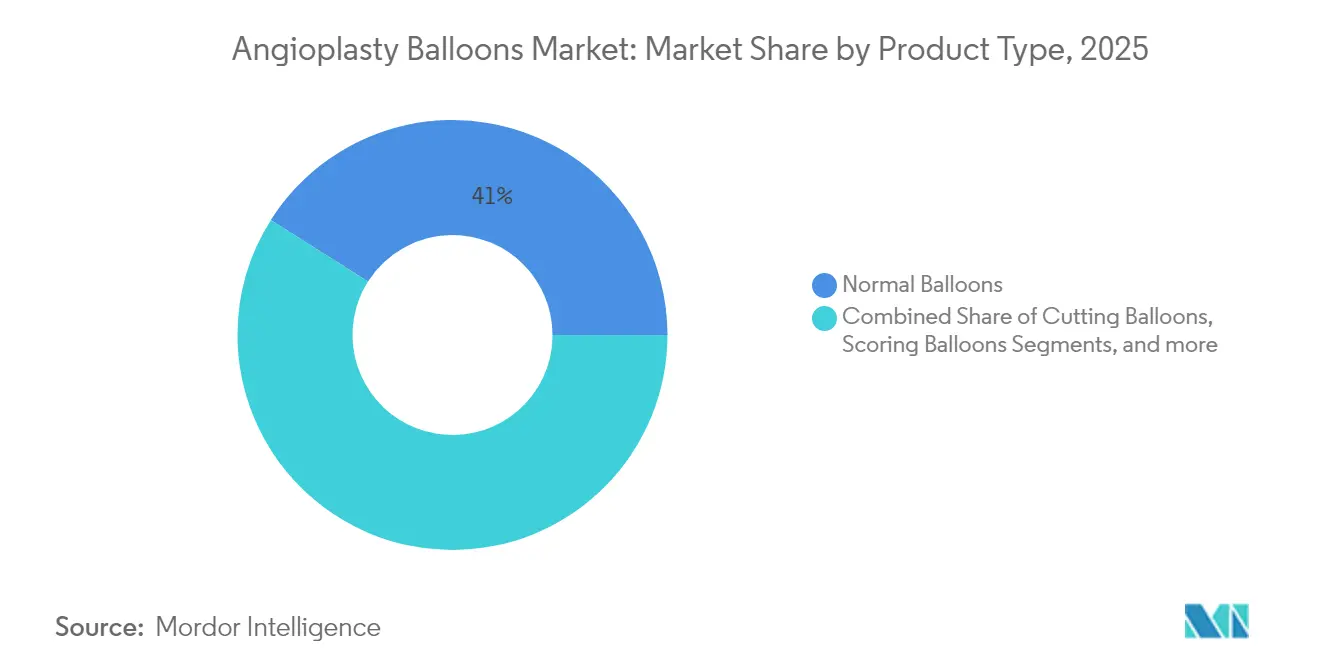
Scoring Balloons Drive Specialized GrowthScoring balloons held the fastest growth trajectory at 4.26% CAGR through 2031, a pace that reflects their role in plaque-modification strategies for calcified or fibrotic lesions. The angioplasty balloons market size for scoring systems is rising as studies such as Naviscore’s first-in-man series reported 94% procedural success in moderate-to-severe calcification. Normal balloons still dominate everyday PCI with 41.02% 2025 share because they remain indispensable for routine pre- and post-dilation steps.
Drug-coated balloons gained decisive momentum after Boston Scientific’s AGENT approval, which showed a 50% reduction in repeat revascularization compared with conventional angioplasty. Cutting balloons preserve a niche for in-stent restenosis and small-vessel work, with meta-analysis indicating a 33% reduction in target-lesion revascularization risk. Ultra-high-pressure variants, now exceeding 40 atm, extend percutaneous treatment to hard fibro-calcific plaques, expanding the angioplasty balloons market both procedurally and technologically.

By Application:
Peripheral Angioplasty Accelerates GrowthPeripheral interventions are forecast to post 4.05% CAGR to 2031, reflecting surging PAD prevalence amid aging demographics and lifestyle changes. Freedom-from-revascularization rates of 69.4% at 5 years for drug-coated balloons validate durability in the femoropopliteal segment, anchoring demand outside the coronary arena. Coronary angioplasty still delivered 56.30% of 2025 revenue and remains the most common procedure; however, secondary prevention initiatives and optimized medical therapy cap its growth.
Emerging tools, including dissolving scaffolds for below-the-knee disease, further broaden therapeutic reach. Intravascular lithotripsy integration with long peripheral balloons improves luminal expansion in diffuse calcified lesions. The peripheral trend diversifies the angioplasty balloons market, helping balance plateauing coronary volumes and giving manufacturers new avenues for innovation.
By End User:
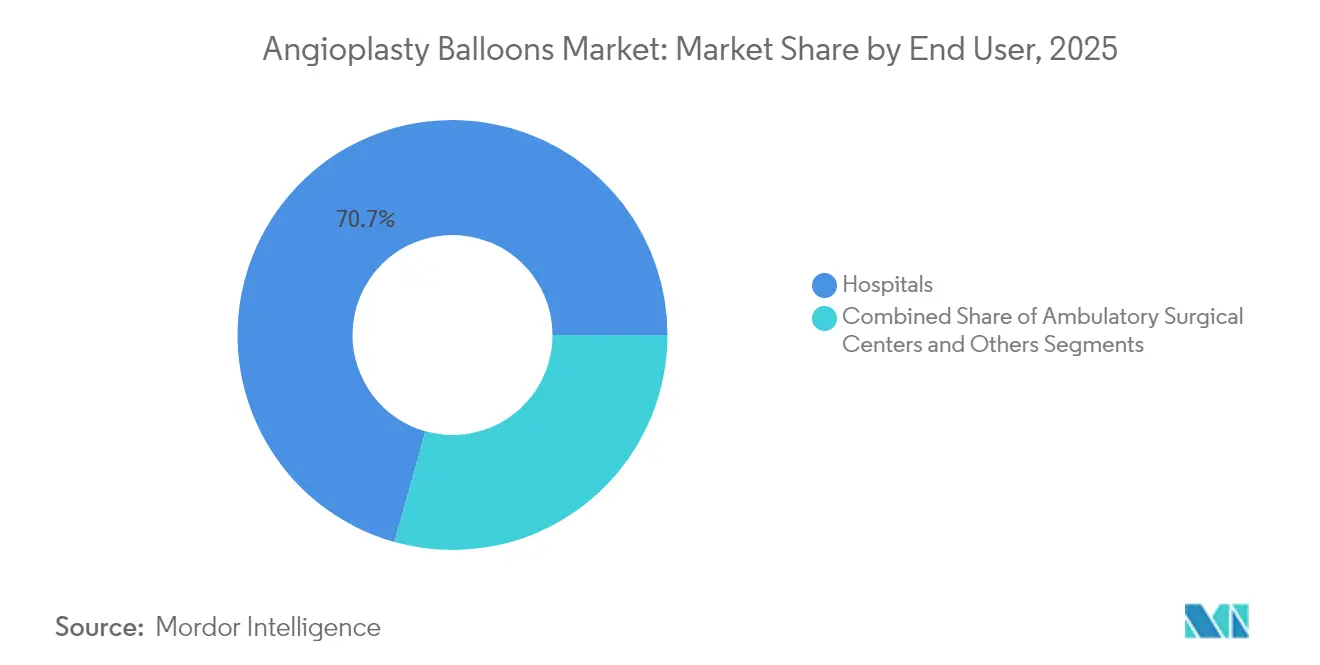
Ambulatory Centers Reshape Care DeliveryHospitals retained 70.65% of global revenue in 2025 because of comprehensive cardiac services and readiness for complex or emergent cases. Still, the angioplasty balloons market is experiencing a pronounced site-of-care shift. Ambulatory surgical centers are on a 4.58% CAGR trajectory through 2031 because Medicare now reimburses PCI outside hospital walls. Recent claims data confirm that ASC PCI volume, while still small, is accelerating quickly.
Cost efficiency and patient-experience gains serve as key ASC advantages, although stringent patient-selection protocols remain essential. New ASC-only C codes for diagnostic catheterization and PCI elevate reimbursement predictability, nudging cardiology groups to develop freestanding labs. Quality-outcome benchmarks and standardized discharge criteria will further support outpatient expansion, sustaining angioplasty balloons market growth in this setting.
Geography Analysis
North America Angioplasty Balloons Market
North America led with 39.25% angioplasty balloons market share in 2025, supported by broad insurance coverage, established cath-lab networks, and early adoption of premium devices. The region’s regulatory environment favors innovation, evidenced by the 2024 clearance of the AGENT coronary DCB. CMS policy changes permitting ASC-based PCI have begun to reshape volume distribution, yet hospitals keep the bulk of complex procedures. Persistent supply-chain turbulence has forced local manufacturers to absorb double-digit logistics and raw-material inflation, heightening focus on digital inventory control. Consolidation remained active, highlighted by Teleflex’s EUR 760 million acquisition of BIOTRONIK’s vascular unit, which enriched its drug-coated balloon and stent offerings.
APAC Angioplasty Balloons Market
Asia-Pacific registers the swiftest expansion at 4.45% CAGR. Population aging, urbanization, and infrastructure build-out are unlocking cath-lab demand. Government moves to harmonize device approvals and encourage domestic manufacturing continue to reduce time-to-market for new balloons. Regional clinical guidelines now recommend DCBs for small-vessel disease and in-stent restenosis, aligning therapy choices with global standards. Growth, however, is tempered by price sensitivity, which pushes buyers toward cost-effective platforms and accelerates local production of basic balloons even as demand for high-end scoring and drug-coated variants climbs.
Europe Angioplasty Balloons Market
Europe delivers steady but measured gains as economic pressures constrain premium device uptake in some public-health systems. The Medical Device Regulation (MDR) framework, while rigorous, provides clarity that helped Terumo secure CE marks for several vascular-closure solutions in 2024, sustaining procedural ecosystems. Cordis’s SELUTION SLR sirolimus-eluting balloon posted 81.5% three-year patency in Japan and 91.1% freedom from target-lesion revascularization in European trials, reinforcing drug-coated platforms. Clinical collaboration through groups such as the Drug-Coated Balloon Academic Research Consortium promotes evidence-based adoption across the continent, maintaining Europe’s role as a bellwether market for next-generation balloons.
Regulatory Landscape
Angioplasty balloons are regulated as medical devices in most jurisdictions, while drug-coated balloons (DCBs) add drug-device combination requirements that raise clinical and quality thresholds. In the United States, the FDA product classification for percutaneous transluminal coronary angioplasty (PTCA) balloon catheters and DCBs drives premarket expectations, and combination-product manufacturers must comply with 21 CFR Part 4, aligning device QSR with drug CGMP controls. FDA also maintains active safety communications for paclitaxel-coated balloons and stents used in peripheral arterial disease, keeping labeling, physician-patient discussion, and post-market monitoring central for paclitaxel DCB platforms.
In Europe, Regulation (EU) 2017/745 (MDR) governs device approval and ongoing compliance. Drug-eluting balloons require robust clinical evaluation (including CER expectations under Annex XIV) and notified-body oversight. Consensus standards and test methods shape submissions and comparability, including FDA-recognized coating characterization for DCBs (ASTM F3320-18) and international standards such as ISO 12417-1:2024 for cardiovascular vascular device-drug combination products. This standards-driven environment increases the burden of demonstrating coating integrity, drug dose uniformity, and manufacturing change control across regions.
Value Chain Analysis
The angioplasty balloon value chain starts with upstream inputs, including medical-grade polymers (such as nylon and PET used for balloon and catheter components), radiopaque markers, and specialty hypotube or shaft materials. For drug-coated balloons, the chain expands to include GMP-grade active pharmaceutical ingredients (commonly paclitaxel or emerging sirolimus approaches) and excipients, as well as proprietary coating consumables and process know-how. Core manufacturing spans extrusion and balloon forming, surface preparation, coating application with controlled drug or excipient ratios, and drying or curing, followed by catheter assembly and packaging. Terminal sterilization, often ethylene oxide, and final release testing complete the manufacturing flow.
Downstream, products move through OEM direct sales and distributors to hospitals and ambulatory surgical centers, with procedure adoption influenced by clinical evidence and reimbursement policies. Key friction points include constrained availability of validated EtO sterilization capacity, limited sources of GMP-certified drug substance for DCBs, and the need to revalidate coating performance when suppliers or processes change. These constraints increase the strategic value of vertical integration and supplier qualification, particularly for DCB platforms where coating uniformity and change control can affect regulatory timelines and continuity of supply.
Competitive Landscape
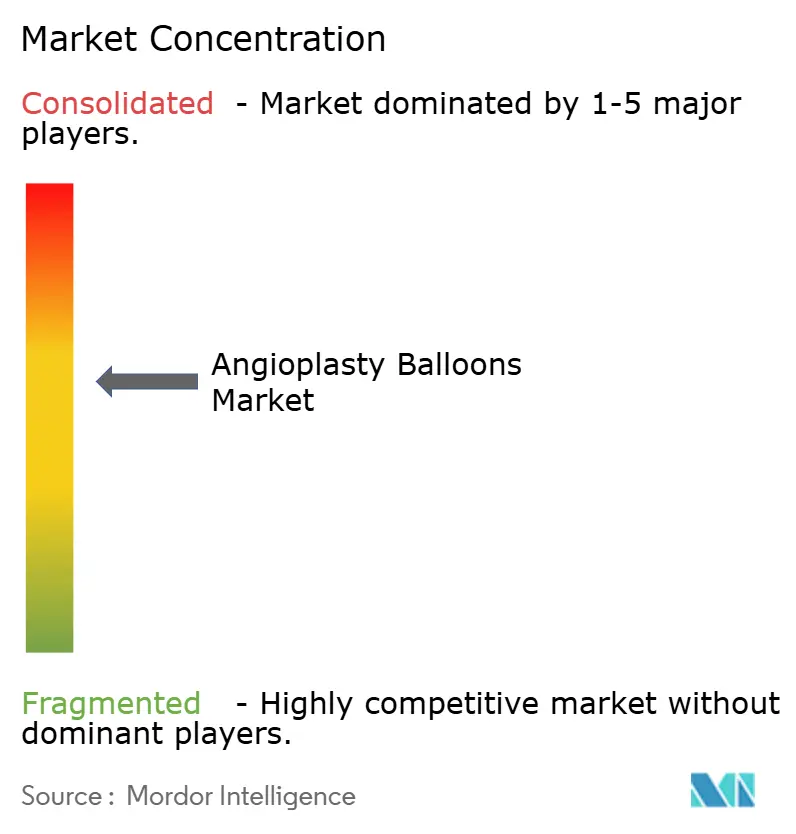
The angioplasty balloons market displays moderate concentration as diversified device companies reinforce portfolios via targeted mergers while smaller innovators carve out high-performance niches. Boston Scientific’s USD 664 million purchase of Bolt Medical gave it proprietary lithotripsy balloon capability, complementing its AGENT DCB and deepening its plaque-modification arsenal. Teleflex invested EUR 760 million to buy BIOTRONIK’s vascular intervention franchise, broadening access to drug-eluting technology and strengthening its structural-heart cross-selling strategy. Johnson & Johnson followed with a USD 1.1 billion move for V-Wave, signaling that large players see value in specialized cardiovascular platforms.
Technology differentiation centers on coating science, burst pressure engineering, and material innovation. Boston Scientific leverages its TransPax platform to deliver paclitaxel more predictably, achieving 50% lower revascularization versus plain balloons in in-stent restenosis. Abbott focuses on bio-resorbable constructs that dissolve after drug delivery, solving long-term metal-implant drawbacks. Cordis drives sirolimus-based balloons that aim to mitigate paclitaxel safety debate. Medtronic’s Prevail DCB pivotal trial, approved in October 2024, will compare head-to-head with AGENT across 65 centers, underscoring the premium suppliers place on randomized evidence.
Operational resilience has become a competitive theme as geopolitics and raw-material costs lift supply-chain exposure. Leading manufacturers are investing in additive manufacturing, real-time inventory analytics, and smart extrusion lines to safeguard production. Smaller entrants focus on single-use specialty balloons and regional distribution alliances, often licensing coating or polymer IP to larger firms. The overall competitive narrative points to a mix of consolidation among giants and agile innovation among specialists, jointly propelling the angioplasty balloons market forward.
Angioplasty Balloons Industry Leaders
-
Medtronic
-
Boston Scientific Corporation
-
Terumo Corporation
-
BIOTRONIK
-
Terumo Corporation
- *Disclaimer: Major Players sorted in no particular order
Angioplasty Balloons Market Companies Covered in this Report
- Abbott Laboratories
- AngioDynamics
- Beckton Dickinson
- BIOTRONIK
- Boston Scientific
- B. Braun
- Cook Group
- Terumo Corp.
- INFINITY Angioplasty Balloon
- Johnson & Johnson
- Koninklijke Philips
- Medtronic
- Merit Medical Systems
- Integer Holdings Corp.
- Shockwave Medical Inc.
- Teleflex
- Cardionovum
- Biosensors International
- LEPU Medical Technology
Market Opportunities and Future Outlook
Technology whitespace is opening around non-paclitaxel drug delivery and longer-term durability signals, supported by clinical and regulatory sensitivity to paclitaxel risk-benefit communication. In 2026, multiple sirolimus-coated balloon data disclosures, including Concept Medical presentations for MagicTouch in peripheral artery disease and longer-term comparative durability readouts, along with Cordis commercial action (SELUTION SLR PTA launch in Japan supported by multi-year patency data), point to active momentum behind sirolimus approaches across peripheral interventions. This creates room for suppliers with scalable coating processes, repeatable drug-dose uniformity, and clinical programs that demonstrate low reintervention rates in complex PAD segments.
Operationally, manufacturing change control and supply resilience remain actionable opportunity areas, since DCBs depend on qualified drug supply, coating process stability, and validated sterilization capacity. Recent FDA-reviewed manufacturing updates, including site and supplier changes recorded through PMA supplements, show that supply chain decisions are increasingly tied to regulatory maintenance as well as cost. Companies that can regionalize production, qualify alternate critical suppliers without performance drift, and support outpatient site-of-care shifts with consistent availability and training can compete more effectively as procedure settings diversify.
Recent Industry Developments in Angioplasty Balloons Market
- March 2026: Terumo Corporation received FDA 510(k) clearance (K252295) for its Ryurei coronary angioplasty balloon catheter. The clearance strengthens Terumo's coronary balloon portfolio in the United States and supports broader participation in routine and complex PCI workflows where hospitals and expanding outpatient centers prioritize consistent device availability.
- October 2025: Terumo Corporation entered a USD 30 million strategic agreement with Orchestra BioMed that included a right of first refusal for the Virtue Sirolimus AngioInfusion Balloon and an investment in preferred stock. The structure gives Terumo a tighter option on a differentiated sirolimus balloon approach while sharing development risk, aligning with industry movement toward drug-coated and drug-delivery-enabled balloon platforms.
- March 2024: Boston Scientific received FDA approval for the AGENT drug-coated balloon for treatment of coronary in-stent restenosis. The approval expanded the U.S. addressable market for coronary DCB therapy and reinforced the leave-nothing-behind treatment pathway, increasing competitive pressure for comparable drug-coated and lesion-preparation balloon technologies.
Angioplasty Balloons Market Report Scope and Research Methodology
Market Definition and Coverage
For this study, the angioplasty balloons market covers catheter-based balloon devices used to dilate narrowed blood vessels during coronary or peripheral angioplasty, measured as device revenue in USD across major regions.
Scope exclusions: The sizing excludes balloon inflation devices, guidewires, vascular stents, and procedure or post-dilation service revenues.
Segments Covered in This Report
- By Product Type
- Normal Balloons
- Cutting Balloons
- Scoring Balloons
- Drug-Eluting Balloons
- By Application
- Coronary Angioplasty
- Peripheral Angioplasty
- By End User
- Hospitals
- Ambulatory Surgical Centers
- Others
- Geography
- North America
- United States
- Canada
- Mexico
- Europe
- Germany
- United Kingdom
- France
- Italy
- Spain
- Rest of Europe
- Asia-Pacific
- China
- Japan
- India
- South Korea
- Australia
- Rest of Asia-Pacific
- Middle East and Africa
- GCC
- Turkey
- South Africa
- Rest of Middle East and Africa
- South America
- Brazil
- Argentina
- Rest of South America
- North America
Data Sources, Market Sizing, and Validation
Desk Research
Desk research is used to set the guardrails of the model, then filled in with expert checks. We mainly rely on public healthcare and trade sources to understand procedure trends, patient demand signals, and the policy context that shapes device uptake. Illustrative sources include CDC and NIH, OECD health statistics, WHO cardiovascular disease updates, and FDA device databases and safety communications, which help anchor assumptions around utilization and technology use.
On the supply and commercialization side, we also review company annual reports, investor presentations, regulatory filings, and medical journals that discuss angioplasty approaches and outcomes, including drug-coated balloons in relevant indications. Where needed, we use paid subscriptions for company financials and intelligence, patent databases, and shipment-level import and export data to verify manufacturer footprints and pricing direction. These desk sources are not exhaustive, and other public references were also used for data collection, cross-checking, and clarification.
Primary Interviews and Surveys
Primary interviews were used to pressure-test device scope, demand mix, and pricing assumptions that desk sources do not fully explain. We spoke with manufacturers, distributors, cath lab staff, and procurement stakeholders across APAC, EMEA, and the Americas, so regional differences in procedure settings and product preference could be reflected in the final view.
Distribution of primary research fieldwork respondents
| Company type | Respondent position | Region |
|---|---|---|
| Top tier: 39% | CXOs: 14% | APAC: 46% |
| Mid tier: 47% | Functional/Unit leaders: 26% | EMEA: 31% |
| Smaller Players: 14% | Managers: 60% | Americas: 23% |
Market-Sizing & Forecasting
Sizing starts with a top-down build where procedure volumes and treated-patient pools are reconstructed by region, then translated into balloon demand using usage per procedure and mix by coronary versus peripheral cases. Once that demand pool is formed, the value is calculated using region-specific average selling price bands and product mix assumptions across normal, cutting, scoring, and drug-eluting balloons.
To keep the totals realistic, we run selective bottom-up checks, such as supplier roll-ups from publicly visible revenue disclosures, channel checks on typical selling prices, and sampled ASP-times-volume sanity tests by application. Key inputs used in the model include angioplasty and related intervention volumes, the share of coronary versus peripheral angioplasty, adoption share of drug-coated balloons where clinically used, replacement and stocking patterns in hospitals and ambulatory centers, and inflation-adjusted pricing movement by region. If a country lacks a clean data series, we bridge it using proxy indicators like hospital capacity and procedure intensity, then re-check the output with interview feedback.
Forecasting uses scenario analysis supported by expert consensus on the direction of procedure growth, guideline influence, and product mix shifts. The scenarios mainly flex adoption speed for drug-coated balloons, ASP progression, and regional procedure growth, which are then rolled into a single expected case for the final forecast.
Data Validation & Update Cycle
Validation is done in layers so the final numbers are not driven by one data source or one assumption. Outputs are checked against independent signals like procedure growth expectations, regional device demand patterns, and plausibility of ASP and mix movement, and then outliers are flagged for rework. Before sign-off, a second analyst reviews the logic, calculations, and the consistency of assumptions across geographies and applications.
The report is refreshed annually, and interim updates are made when material events occur, such as major regulatory actions, notable reimbursement shifts, or clinically meaningful evidence changes that can alter adoption. Right before delivery, we do a fresh pass to confirm that the market numbers and narrative reflect the latest available public information and expert inputs.
Mordor Intelligence's Angioplasty Balloons Market Size Measured Against Other Published Estimates
Published market values for angioplasty balloons often differ because the counted product set is not always the same, and because procedure-to-device conversion assumptions vary by source. Variance can also show up when one estimate is anchored to a single year snapshot, while another mixes an older base-year with forward-looking adoption expectations.
The table shows a spread that is mainly explained by what gets included around adjacent catheter components and how drug-eluting balloon value is treated across coronary and peripheral procedures. In Mordor Intelligence's model, only the angioplasty balloon device revenue is counted, including normal, cutting, scoring, and drug-eluting balloons, while inflation devices, guidewires, vascular stents, and service revenues are kept out. That boundary can pull totals away from broader catheter or procedure-spend interpretations.
Benchmark comparison
| Source | Market Size | Gaps in Research Methodology |
|---|---|---|
| Mordor Intelligence | USD 2.91 B (2026) | |
| Industry Publisher A | USD 2.71 B (2024) | Uses a 2024 base with a shorter forecast window, and it can understate later-year value if product-mix shifts, like drug-coated balloon uptake, are modeled conservatively or not refreshed with recent procedure mix changes. |
| Research Publisher B | USD 2.63 B (2024) | Relies on a 2024 baseline and may apply different procedure-to-device conversion rates by region, especially for peripheral cases, which can change unit demand and the implied ASP-mix outcome. |
Taken together, the comparison suggests that most of the variance comes from scope boundaries and from how procedure growth and product mix are translated into revenue. By keeping inputs tied to observable procedure signals, realistic usage assumptions, and clearly stated inclusions and exclusions, the final estimate stays traceable and repeatable across regions and forecast years.
Key Questions Answered in the Report
What is the current angioplasty balloons market size and expected growth?
The angioplasty balloons market size is USD 2.91 billion in 2026 and is forecast to reach USD 3.47 billion by 2031 at a 3.57% CAGR.
Which region leads the angioplasty balloons market?
North America holds the lead with 39.25% market share in 2025, supported by broad reimbursement and early technology adoption.
Why are drug-coated balloons gaining attention?
FDA-approved drug-coated balloons such as AGENT reduce repeat revascularization by 50% versus plain balloons, supporting a leave-nothing-behind strategy.
How fast is the ambulatory surgical center segment growing?
ASC-based PCI is projected to register a 4.58% CAGR through 2031 as reimbursement and patient-experience benefits shift procedures out of hospitals.
What are the main restraints facing the angioplasty balloons market?
High device costs relative to bundled stent strategies and ongoing regulatory scrutiny of paclitaxel safety remain the chief adoption barriers.
Which product type is expanding the quickest?
Scoring balloons lead growth at 4.26% CAGR because they improve plaque modification in complex calcified lesions.