
Global Angiographic Catheters Market Size and Share
Market Overview
| Study Period | 2020 - 2031 |
|---|---|
| Market Size (2026) | USD 1.58 Billion |
| Market Size (2031) | USD 2.24 Billion |
| Growth Rate (2026 - 2031) | 7.28 % |
| Fastest Growing Market | Asia Pacific |
| Largest Market | North America |
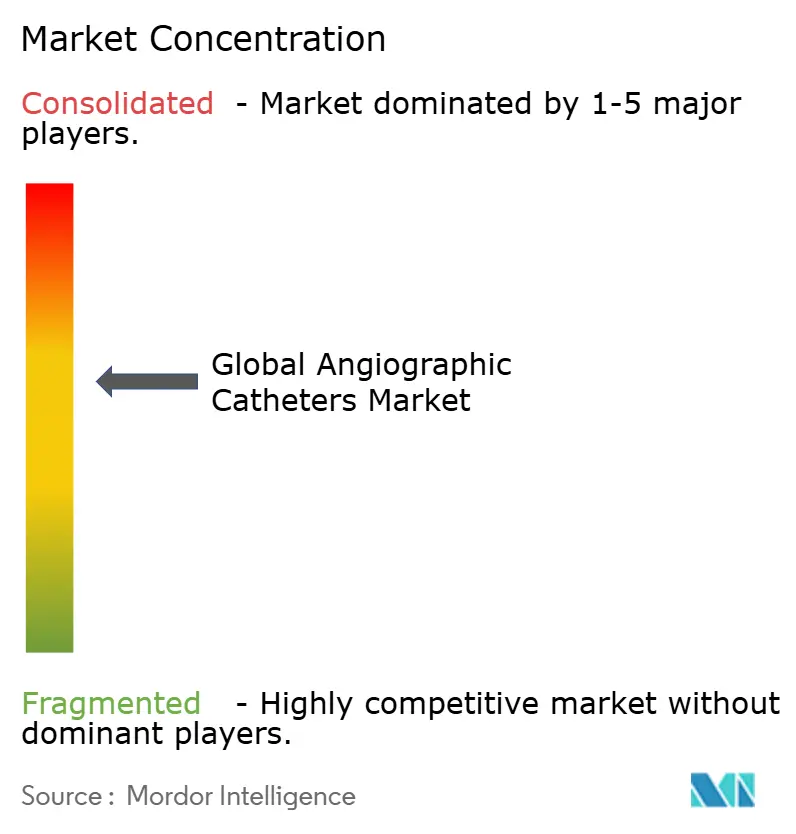
| Market Concentration | Medium |
Major Players *Disclaimer: Major Players sorted in no particular order Image © Mordor Intelligence. Reuse requires attribution under CC BY 4.0. | |
Global Angiographic Catheters Market Analysis by Mordor Intelligence
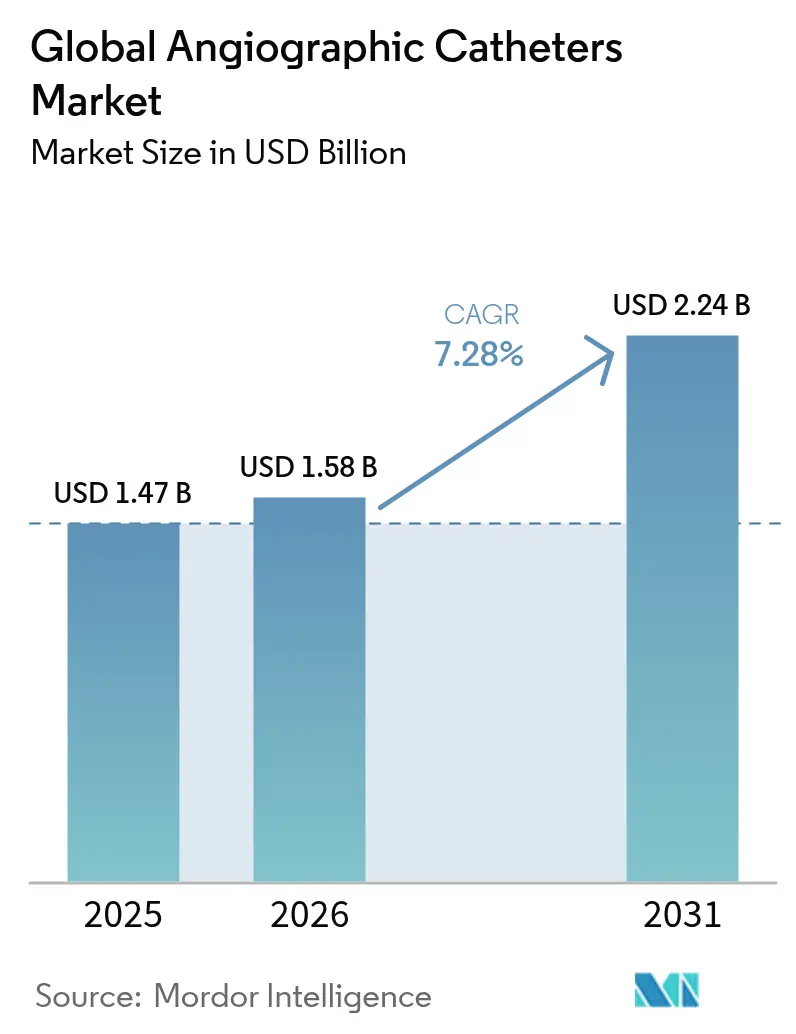
The angiographic catheter market size was valued at USD 1.47 billion in 2025 and estimated to grow from USD 1.58 billion in 2026 to reach USD 2.24 billion by 2031, at a CAGR of 7.28% during the forecast period (2026-2031). This growth reflects rising cardiovascular disease (CVD) prevalence, rapid device innovation, and the continued migration of percutaneous procedures to outpatient settings. An aging population with complex comorbidities drives steady procedural volume, while reimbursement reforms encourage hospitals and ambulatory sites to adopt minimally invasive solutions that shorten stays and lower overall costs. Material science breakthroughs—particularly Nylon & Pebax blends—improve torque control and kink resistance, enabling complex interventions through smaller access points. Strategic acquisitions such as Boston Scientific’s purchase of Silk Road Medical and Teleflex’s buyout of BIOTRONIK’s vascular unit signal that scale and technological breadth remain decisive competitive levers. Conversely, expanding use of intravascular imaging is beginning to reduce purely angiography-guided runs, creating a long-term usage headwind for basic catheters.
Key Report Takeaways
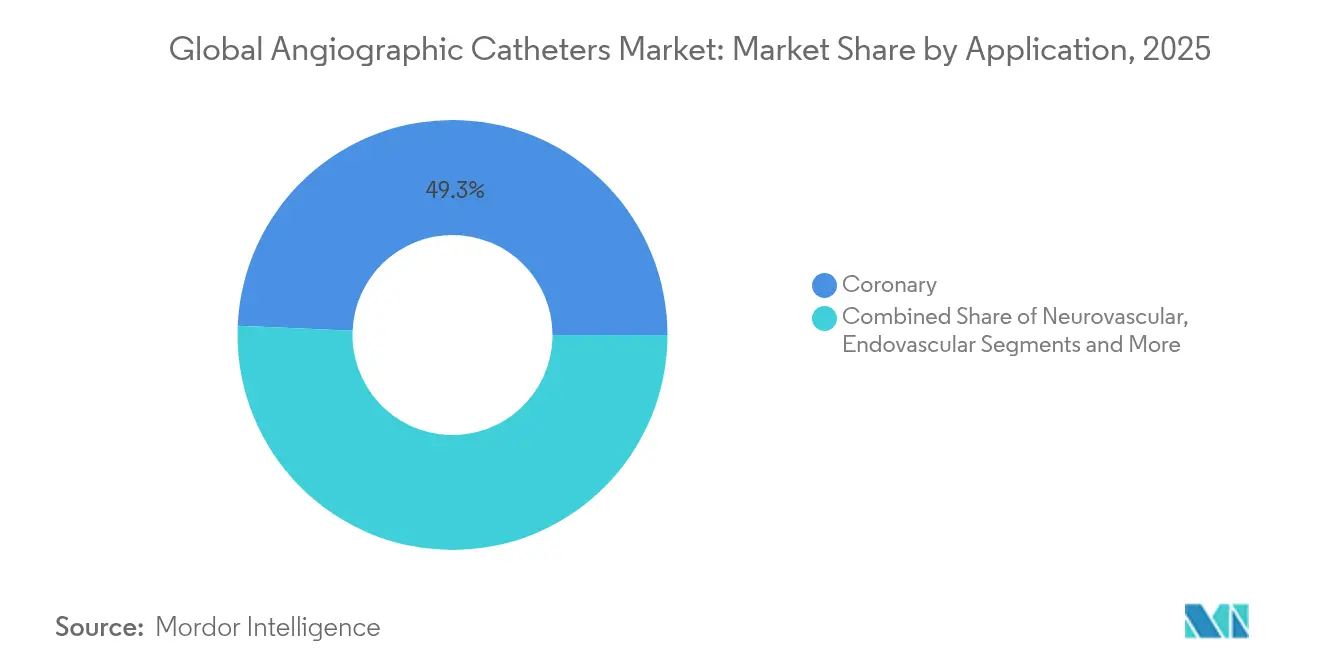
- By application, coronary procedures held 49.32% of angiographic catheter market share in 2025; neurovascular applications are projected to expand at a 7.96% CAGR through 2031.
- By end-user, hospitals accounted for 64.78% of the angiographic catheter market size in 2025, whereas ambulatory surgical centers (ASCs) are poised for the fastest growth at an 8.15% CAGR to 2031.
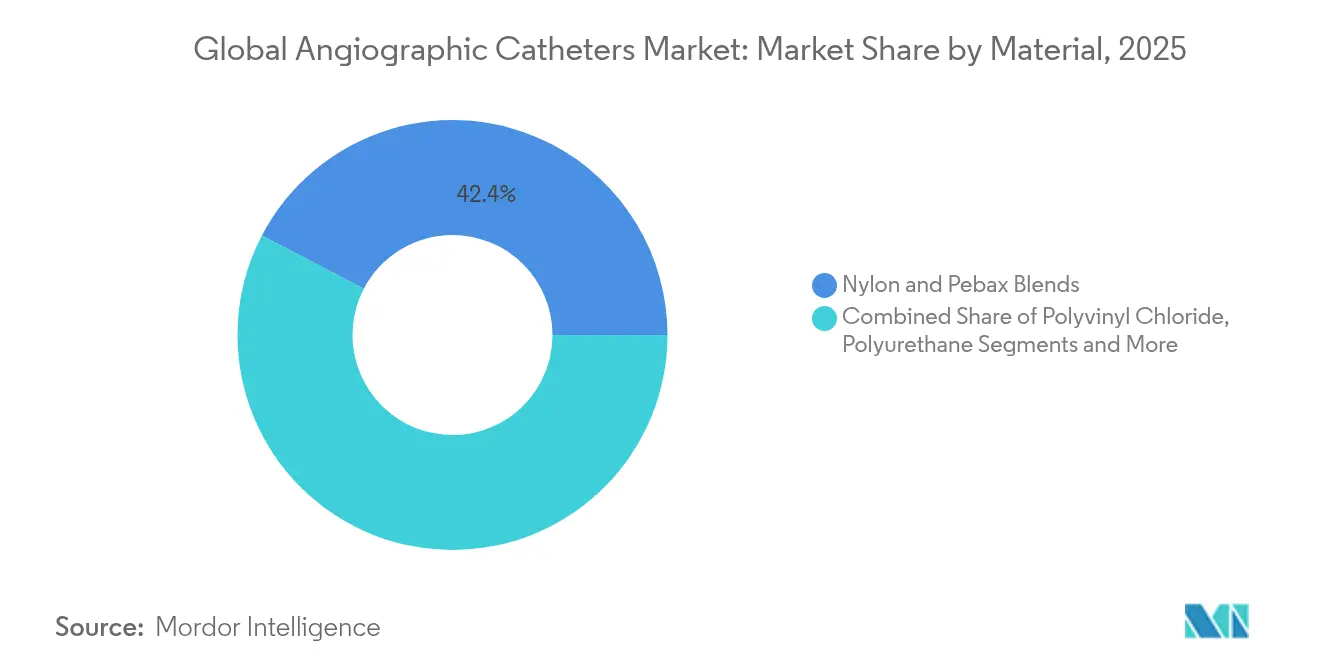
- By material, Nylon & Pebax blends dominated with a 42.35% share of the angiographic catheter market in 2025; polyurethane lines are forecast to rise at a 7.74% CAGR.
- By coating type, non-coated products retained 54.62% revenue share in 2025, while hydrophilic-coated lines are advancing at an 8.33% CAGR through 2031.
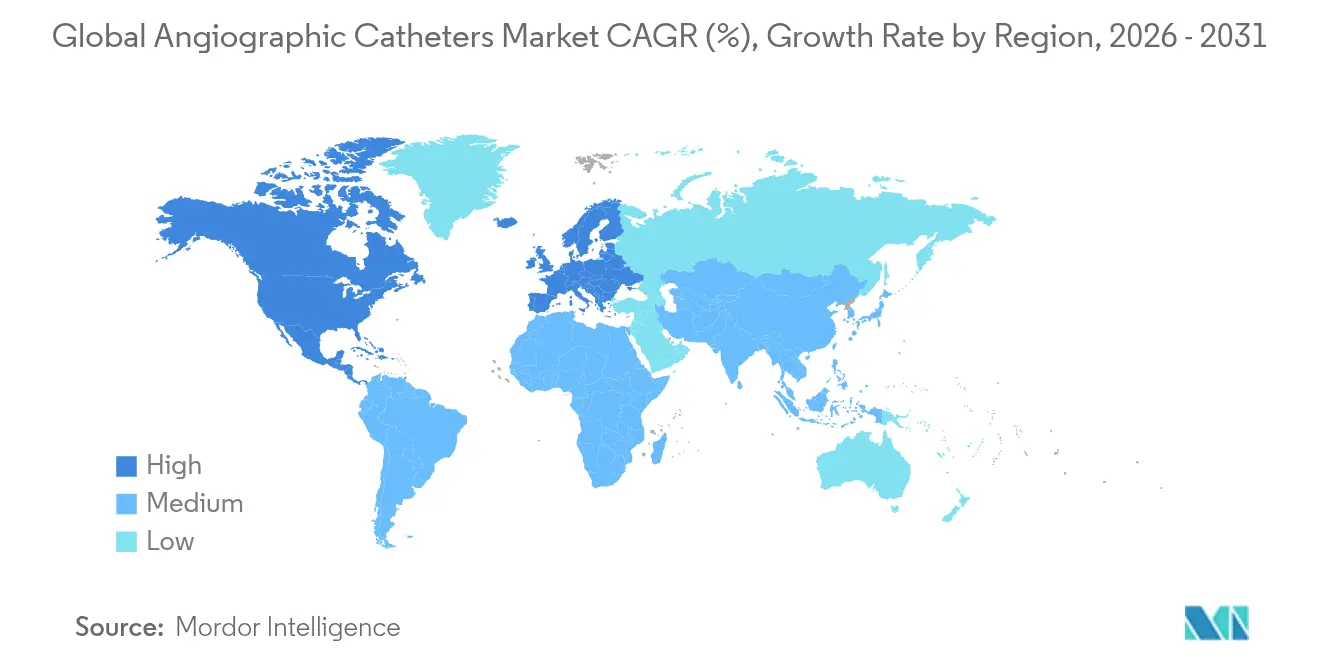
- By geography, North America commanded 42.18% of 2025 revenue; Asia-Pacific is the fastest-growing region at an 8.62% CAGR through 2031.
Note: Market size and forecast figures in this report are generated using Mordor Intelligence’s proprietary estimation framework, updated with the latest available data and insights as of 2026.
Global Angiographic Catheters Market Trends and Insights
Drivers Impact Analysis*
| Driver | (~) % Impact on CAGR Forecast | Geographic Relevance | Impact Timeline |
|---|---|---|---|
| Rising incidence of cardiovascular diseases | +1.8% | Global, highest in North America & Europe | Long term (≥ 4 years) |
| Growing geriatric population prone to CVD | +1.2% | Global, concentrated in developed markets | Long term (≥ 4 years) |
| Demand for minimally invasive procedures | +1.5% | Global, led by North America & Asia-Pacific | Medium term (2-4 years) |
| Expansion of ambulatory cath-labs in EMS | +1.0% | North America & Europe, emerging in Asia-Pacific | Medium term (2-4 years) |
| AI-enabled 3-D road-mapping integration | +0.8% | North America & Europe, selective Asia-Pacific adoption | Short term (≤ 2 years) |
| Ultra-low-profile polymer blends for radial access | +0.5% | Global, fastest adoption in Asia-Pacific | Short term (≤ 2 years) |
| Source: Mordor Intelligence | |||
Rising Incidence Of Cardiovascular Diseases
Ischemic heart disease remained the leading cause of CVD deaths in 2024, claiming 20.5 million lives and shifting therapeutic focus toward earlier diagnosis and less-invasive care [1]. Emerging economies experience the steepest climb as dietary and lifestyle risk factors converge with urbanization. Procedural volumes therefore rise in tandem, especially where governments invest in catheterization capacity. Private-equity groups viewed this demand as durable, acquiring 41 cardiology practices comprising 342 sites between 2021 and 2023 to build regional networks that capture steady referral streams. These trends collectively sustain healthy growth in the angiographic catheter market.
Growing Geriatric Population Prone To CVD
Older adults present higher rates of multivessel stenosis, calcified lesions, and frailty, each necessitating specialized catheter platforms that balance pushability with vessel safety. Vascular stiffening complicates device navigation, prompting manufacturers to refine shaft stiffness gradients and tip flexibility. Minimally invasive access translates to shorter recovery times—an outcome prized by physicians managing elderly patients with multiple comorbidities. Global cardiac surgery benchmarking suggests an unmet need of 61.6 catheter-based or surgical cardiac procedures per 100,000 population in low- and middle-income countries, implying vast room for catheter expansion as life expectancy rises [2].
Demand For Minimally-Invasive Procedures
Radial access has reduced major bleeding by more than 70% versus femoral techniques, making wrist-based entry the new default for uncomplicated PCI. Hospitals increasingly discharge same day, lowering costs and freeing beds. Continuous AI integration, such as automated FFR estimation, provides real-time hemodynamic insights through standard angiograms, further streamlining workflows. The ECLIPSE trial reported a 26% reduction in target-vessel failure when intravascular imaging guided stent placement, reinforcing precision benefits over conventional angiography. Together these factors accelerate adoption of sophisticated catheters capable of delivering complex therapies through ever-smaller lumens.
Expansion Of Ambulatory Cath-Labs In EMS
Medicare’s 2020 policy to cover basic PCI in ASCs spurred facility growth; ASC sites billing for PCI climbed from 30 in 2019 to 65 in 2023. Yet ASCs still handle only 1.8% of outpatient PCI volume, signaling substantial headroom for shift from hospitals. Dedicated cath-lab workflows allow higher daily case throughput, while new ASC-only reimbursement codes add up to USD 2,321 per peripheral vascular case, strengthening their economic rationale. As social-vulnerability mapping shows, many new centers locate in underserved U.S. counties, broadening geographic access and sustaining the angiographic catheter market trajectory.
Restraints Impact Analysis*
| Restraint | (~) % Impact on CAGR Forecast | Geographic Relevance | Impact Timeline |
|---|---|---|---|
| High cost of angiographic procedures | -0.9% | Global, most pronounced in emerging markets | Medium term (2-4 years) |
| Catheter-related complications & recalls | -0.6% | Global, regulatory scrutiny highest in developed markets | Short term (≤ 2 years) |
| Reimbursement uncertainties in emerging markets | -0.8% | Latin America, Middle East, Africa, parts of Asia-Pacific | Long term (≥ 4 years) |
| Intravascular imaging reducing stand-alone angiography | -1.2% | North America & Europe, expanding to Asia-Pacific | Medium term (2-4 years) |
| Source: Mordor Intelligence | |||
High Cost Of Angiographic Procedures
Device prices, facility fees, and post-acute care combine to make angiography among the costliest routine hospital procedures, a reality magnified in cash-pay and publicly funded systems. The USD 156 billion U.S. device market demonstrates that navigating complex reimbursement channels remains resource-intensive for manufacturers [3]. Cost-effectiveness studies increasingly favor pharmacologic or preventive options for borderline lesions, potentially dampening catheter usage when payers tighten thresholds. Utilization-management programs that mandate prior authorization now span most U.S. insurers, adding administrative lag that can defer non-urgent cases.
Intravascular Imaging Reducing Stand-Alone Angiography Usage
Meta-analyses show intravascular ultrasound lowers mortality (HR 0.59) and stent thrombosis (HR 0.58) relative to angiography-only guidance. As IVUS and OCT systems gain reimbursement, operators reduce contrast injections and radiation exposure by substituting image-based lesion sizing. While up-front imaging capital costs are high, procedural efficiency gains increasingly justify purchase. Hybrid catheters that combine imaging and delivery lumens represent an adaptive play for incumbents, preserving relevance within a changing diagnostic landscape.
*Our forecasts treat driver/restraint impacts as directional, not additive. The impact forecasts reflect baseline growth, mix effects, and variable interactions.
Segment Analysis
By Application: Coronary Dominance Drives Innovation
The coronary segment accounted for 49.32% of the angiographic catheter market share in 2025 and remains the bedrock of vendor revenue. Despite mature protocols, ongoing material and coating enhancements keep demand steady, with the angiographic catheter market size for coronary work projected to rise in parallel with stable 7%-plus CAGR. Neurovascular catheters, by contrast, show an 7.96% CAGR as mechanical thrombectomy becomes front-line for large-vessel stroke. Ultra-trackable distal access catheters and aspiration platforms such as SOFIA Flow 88 optimize clot retrieval success rates, pushing neurovascular penetration higher.
Endovascular and peripheral interventions form a sizable mid-tier, where devices like intravascular lithotripsy catheters treat heavily calcified lesions. The “Others” category, renal denervation, structural heart, and hybrid platforms, remains small yet lucrative. Medtronic’s Symplicity Spyral won transitional pass-through status in 2025, unlocking incremental reimbursement and placing hypertension therapy firmly within the angiographic catheter market.

By End-User: Hospital Dominance Faces ASC Challenge
Hospitals retained 64.78% of 2025 revenue, largely because they manage complex and emergent cases requiring surgical back-up or ICU care. The angiographic catheter market size attributable to hospitals should still climb but at a slower rate than ASCs. Outpatient centers enjoy lean staffing models and dedicated rooms, translating to shorter turnaround and improved patient throughput. Growth momentum is further reinforced by private-equity consolidation of cardiology groups that establish in-house ASCs to capture downstream device margins.
Specialty clinics and office-based labs occupy a niche for diagnostic angiography and simple interventions, relying on shared staff with nearby hospitals. Their appeal lies in lower facility fees and community proximity, though capital requirements limit expansion pace. Mobile cath-lab units and hybrid ORs round out the landscape, offering flexible solutions for underserved regions or combined surgical-interventional cases.
By Material: Advanced Polymers Lead Innovation
Nylon & Pebax blends represented 42.35% of 2025 revenue because they deliver the optimal trio of pushability, torque control, and kink resistance necessary for tight lesion navigation. Polyurethane lines, advancing at a 7.74% CAGR, capitalize on new biocompatible additives that lower thrombogenicity and support drug-eluting applications. PVC remains the workhorse for cost-sensitive markets; surface engineering such as hyperbranched polylysine coatings dramatically improves hydrophilicity without changing base resin economics.
Regulators increasingly scrutinize coating integrity. China’s YY/T 1898-2024 standard for hydrophilic layer adhesion forces manufacturers to validate durability under simulated use. Global suppliers respond with long-life heparin-network coatings that preserve anti-thrombotic performance up to 30 days. Smart polymers incorporating shape-memory nitinol and bio-resorbable backbones also enter limited use, foreshadowing next-generation hybrid constructs.
By Coating Type: Hydrophilic Growth Accelerates
Uncoated catheters maintained 54.62% revenue in 2025, driven by lower price points and established clinician comfort. Nevertheless, hydrophilic-coated products are gaining fastest at 8.33% CAGR because they diminish insertion force and improve trackability across tortuous vasculature. University-developed technologies extend surface wetness duration, mitigating “dry-out” risks during lengthy neurovascular procedures. Coatings are also becoming multifunctional: Terumo funded antimicrobial layers that release silver ions slowly, targeting infection control without compromising lubricity.
Regulatory agencies now demand quantitative friction and durability metrics, compelling suppliers to adopt robust test protocols. Over the forecast period, suppliers are expected to launch smart coatings capable of on-demand drug release or pH-responsive swelling, enhancing therapeutic value beyond mechanical delivery.
Geography Analysis
North America captured 42.18% revenue in 2025, underpinned by broad insurance coverage, national clinical guidelines, and high procedural density. Transitional pass-through payments for break-through devices shorten payback cycles, incentivizing hospitals to upgrade inventories. The U.S. alone holds 40% of global device sales and exerts outsized influence on material and coating standards. Consolidation among cardiology practices has accelerated, bringing ASC development to both urban and underserved rural counties, thereby preserving volume growth in the angiographic catheter market.
Asia-Pacific logs the highest CAGR at 8.62%. China streamlined device reviews, approving 12,213 new registrations in 2023, including 61 classified as innovative, which sharply cuts time-to-market. Government push under Healthy China 2030 and rising CVD incidence create dual demand and policy tailwinds. Japan and South Korea contribute through export-oriented manufacturing, while India’s 2025 marketing code elevates ethical promotion standards, giving multinational brands clearer compliance guidance.
Europe offers steady but slower gains. The Medical Device Regulation unifies market entry, and Germany’s updated OPS coding ensures reimbursement alignment for novel procedures. France’s 2025 add-on payment policy widens access to specialty catheters once superiority is proven. Post-Brexit, the UK maintains a distinct yet harmonized pathway that still recognizes much of the Continental clinical evidence file, limiting duplicative trials.
The Middle East & Africa and South America collectively present high-single-digit growth potential but face structural hurdles. In North Africa, ischemic heart disease ranks among leading DALY drivers, yet public funding gaps and brain drain hinder cath-lab expansion. Opportunities lie in public-private partnerships and regional manufacturing of base-grade catheters. In Latin America, Brazil spearheads adoption through hybrid cardiac centers in tertiary hospitals, while Argentina and Colombia steadily update reimbursement lists, albeit with currency volatility risks.
Regulatory Landscape
Angiographic catheters are regulated as sterile, single-use intravascular devices, with market access commonly routed through the US FDA 510(k) pathway and supported by recognized consensus standards covering design verification, biocompatibility, and sterilization. In the United States, FDA guidance on intravascular catheters, wires, and delivery systems with lubricious coatings has raised expectations for coating-related labeling and performance evidence, while active post-market enforcement remains a practical constraint as recalls and safety alerts address manufacturing and design nonconformance.
In Europe, manufacturers operate under EU Regulation 2017/745 (MDR), including transitional provisions introduced by (EU) 2023/607 that extend certain compliance timelines into 2026-2028 based on device status and classification. This approach depends on maintaining appropriate Notified Body coverage and technical documentation. Harmonized technical expectations also track updates to the ISO 10555 family for sterile, single-use intravascular catheters, along with evolving test methods for durability and integrity, which is increasingly relevant for hydrophilic-coated products and other advanced surface technologies.
Value Chain Analysis
The angiographic catheter value chain starts with upstream raw-material and component suppliers that provide specialty polymers (including Nylon, Pebax, polyurethane, and PTFE liners), radiopaque materials for marker bands, and metal reinforcements (such as stainless steel or nitinol used in braiding) that determine torque, pushability, and kink resistance. Converters and compounders, precision extrusion tooling providers, and coating-chemistry vendors support midstream manufacturing needs, while sterilization service providers (with ethylene oxide as a dominant modality) and packaging suppliers help maintain sterility assurance and shelf-life.
Midstream manufacturing centers on multi-layer co-extrusion, braid or coil reinforcement, tip forming, hydrophilic coating application, hub and strain-relief assembly, and final inspection aligned with ISO 13485 quality systems and relevant FDA-recognized standards. Downstream, distribution flows through direct hospital and group purchasing channels, specialty distributors, and tender-driven public systems. Reliability in fill rates and traceability has become more important because catheter recalls and coating performance issues can lead to rapid product substitution. OEM and contract manufacturers complement branded players by offering design-for-manufacture, validated processes, and regionalized production footprints that help manage cost and compliance complexity.
Competitive Landscape
Global leadership rests with diversified multinationals holding broad, technologically differentiated portfolios. Boston Scientific’s USD 1.26 billion Silk Road Medical acquisition broadens its stroke-prevention suite and complements lithotripsy know-how acquired via Bolt Medical, enabling cross-segment synergies. Teleflex’s EUR 760 million purchase of BIOTRONIK’s vascular division similarly boosts access to drug-coated balloons and scaffold technologies, creating a one-stop shop for peripheral interventions.
Medium-tier players pursue focused innovation: Shockwave Medical’s intravascular lithotripsy catheters open heavily calcified lesions while preserving vessel integrity, making the firm a takeover candidate. Penumbra expands neurovascular reach with aspiration platforms that integrate AI-based clot characterization software. Start-ups rise in robotics and autonomous navigation, using machine-learning algorithms to compute optimal catheter paths in real time.
Quality, however, remains a market gatekeeper. Boston Scientific recalled over 1 million units in 2024 after identifying potential separation at proximal hubs, exemplifying the reputational and financial risks of manufacturing lapses. Providers increasingly demand supplier uptime guarantees, spurring investment in inline vision inspection and predictive maintenance. Collectively these dynamics yield a moderately consolidated environment in which the top five vendors hold about 55% share, while regional specialists fill high-growth niches.
Global Angiographic Catheters Industry Leaders
-
AngioDynamics
-
Cook Medical
-
Medtronic
-
Merit Medical Systems, Inc.
-
Terumo Interventional Systems
- *Disclaimer: Major Players sorted in no particular order
Market Opportunities and Future Outlook
Opportunity is most concentrated in catheter platforms designed for complex anatomy and higher-acuity use cases where performance differentiation is measurable, including calcified coronary disease and advanced neurovascular access. In 2026, Johnson and Johnson expanded its coronary calcium-modification offering with the global launch of the Shockwave C2 Aero Coronary IVL Catheter. Boston Scientific also reported that its FRACTURE IDE trial for the SEISMIQ 4CE Coronary IVL catheter met primary safety and effectiveness endpoints in a 420-patient study, reinforcing the market shift toward evidence-backed, premium catheter technologies rather than commodity diagnostic lines.
A second opportunity sits in next-generation torque and trackability improvements that support radial access workflows and distal navigation, where product iteration cycles remain active and clinically visible. Reflow Medical announced a US launch of the Cora Flex and Cora Force torqueable microcatheters in April 2026 for complex coronary interventions, and Johnson and Johnson broadened neurointerventional stroke tools in February 2026 with US launches of CEREGLIDE aspiration catheters and the INNERGLIDE delivery aid. In parallel, workflow-oriented adjuncts, including closed-circuit injector approaches for cerebral angiography, point to demand for more standardized, lower-waste procedures. That supports catheter systems optimized for controlled injections, reduced contrast usage, and consistent handling in high-throughput labs.
Recent Industry Developments
- April 2026: Cook Medical issued a customer notification recommending removal and quarantine of specific sizing catheter product lines (Centimeter, Aurous Centimeter, and Beacon Tip Centimeter) due to a risk of marker band cracking or breakage. The action increased scrutiny on component integrity and radiopaque marker durability, which can affect purchasing decisions and accelerate qualification of alternate suppliers for affected labs.
- May 2025: Cook Medical initiated a recall of Beacon Tip 5.0 Fr angiographic catheters after reports of tip separation, and the FDA subsequently designated the action as a Class I recall. The event reinforced how quality-system execution and complaint trending can rapidly affect availability in routine coronary and peripheral diagnostic workflows.
- May 2024: Merit Medical Systems, Inc. received US FDA 510(k) clearance for the Impress Angiographic Catheter (K233268). The clearance expanded Merit Medicals options in cardiovascular diagnostic devices and supported competitive positioning in hospitals and outpatient labs that prefer cleared, standardized catheter platforms.
Research Methodology Framework and Report Scope
Market Definition and Coverage
This market covers revenue generated from angiographic catheters used to access blood vessels during angiography and related minimally invasive procedures, where the catheter helps deliver contrast, guide imaging, or support catheter based navigation.
Scope exclusions: Devices such as guidewires, stent grafts, balloons, contrast media, and capital imaging systems are not counted unless bundled and priced as part of the angiographic catheter itself.
Segmentation Overview
- By Application
- Coronary
- Endovascular / Peripheral
- Neurovascular
- Others
- By End-user
- Hospitals
- Ambulatory Surgical Centres
- Specialty Clinics
- Others
- By Material
- Polyurethane
- Polyvinyl Chloride
- Nylon & Pebax Blends
- Others
- By Coating Type
- Hydrophilic
- Non-coated
- By Geography
- North America
- United States
- Canada
- Mexico
- Europe
- Germany
- United Kingdom
- France
- Italy
- Spain
- Rest of Europe
- Asia-Pacific
- China
- Japan
- India
- Australia
- South Korea
- Rest of Asia-Pacific
- Middle East & Africa
- GCC
- South Africa
- Rest of Middle East & Africa
- South America
- Brazil
- Argentina
- Rest of South America
- North America
Data Sources, Market Sizing, and Validation
Desk Research
We start by building a clear fact base on procedure volumes, care settings, and medical device pricing patterns, and then use it to frame assumptions that can be tested in primary calls. Public sources used for anchoring include the US FDA device databases, the US Centers for Medicare and Medicaid Services payment and utilization files, and the US CDC/NCHS cardiovascular statistics.
To broaden the global view, we also refer to sources such as OECD health statistics, WHO health expenditure indicators, and selected peer reviewed clinical journals that discuss angiography access pathways and catheter use trends. Company annual reports, investor presentations, and reputable press coverage help interpret product mix shifts and channel dynamics, and patent databases are used to sanity check innovation themes and material changes. The sources listed here are illustrative, and many other public references were used for data collection, cross checks, and clarification.
Primary Interviews and Surveys
Next, we validate the demand pool and pricing logic through expert interviews and structured surveys with hospital cath lab users, ambulatory surgical center buyers, distributors, and device manufacturing teams. Inputs are checked across major geographies so that regional reimbursement pressure, outpatient migration, and material preferences are reflected, and unclear points are re tested until the assumptions match day to day purchasing behavior.
Distribution of primary research fieldwork respondents
| Company type | Respondent position | Region |
|---|---|---|
| Top tier: 28% | CXOs: 12% | APAC: 39% |
| Mid tier: 58% | Functional/Unit leaders: 39% | EMEA: 35% |
| Smaller Players: 14% | Managers: 49% | Americas: 26% |
Market-Sizing & Forecasting
Our sizing starts with a top down build where procedure and access pathway indicators are translated into catheter demand, and then filtered through usage rates for coronary and peripheral angiography, shift toward outpatient sites, and typical replacement and wastage patterns. Once the demand pool is shaped, average selling prices are applied with adjustments for catheter type, coating preference, and material mix (for example, hydrophilic versus non coated and nylon or Pebax blends).
To keep the totals grounded, results are corroborated using selective bottom-up approximations, such as a supplier and distributor revenue roll up in sampled countries, channel checks on tender and list pricing movement, and a volume times price cross check using procedure count ranges. When bottom-up signals are missing for smaller markets, proxy indicators are used, including health expenditure trends, cath lab density, and import patterns, to fill gaps. The implied per procedure spend is then compared back to expert feedback.
For forecasting, scenario analysis is used around the key drivers that matter most here, including cardiovascular disease burden, growth in interventional volumes, outpatient penetration, and price erosion or premiumization tied to coating and material upgrades. Assumptions are tightened using consensus ranges gathered from primary respondents, and the final curve is reviewed so year to year changes remain explainable and traceable.
Data Validation & Update Cycle
Before numbers are finalized, we triangulate the model against independent signals such as procedure growth, reimbursement changes, and expected product mix, and then run variance checks across regions to flag outliers that do not match the clinical and purchasing context. If an anomaly appears, the relevant assumptions are reopened and, where needed, respondents are re contacted for clarification.
A multi step internal review is completed, where a second analyst checks calculations, units, and conversions, followed by a final sense check on drivers and implied pricing. The report is refreshed annually, and interim updates are triggered when material events occur, such as major regulatory changes, notable acquisitions, or sharp shifts in hospital purchasing behavior. Right before delivery, a fresh pass is done so the view reflects the latest available data.
Mordor Intelligence's Angiographic Catheters Market Size Compared With Other Published Estimates
Published numbers for angiographic catheters can vary even when they appear to describe the same market, because the inputs and scope choices are not consistent across publishers. Differences usually come from what is counted as an angiographic catheter versus adjacent interventional tools, the base year used, and how procedure growth and pricing are carried into the forecast.
In practice, the biggest gaps tend to come from whether interventional catheters and bundled lab consumables are included, how outpatient migration is treated in utilization rates, and whether ASP changes are modeled as a flat trend or tied to coating and material mix shifts. Currency conversion timing and the update cadence also matter, since medtech pricing and procedure volumes can move in short cycles in some countries.
Benchmark comparison
| Source | Market Size | Gaps in Research Methodology |
|---|---|---|
| Mordor Intelligence | USD 1.58 B (2026) | |
| Global Publisher A | USD 1.43 B (2024) | Uses an earlier base year and a different demand build that can lean more on reported revenues, which may not fully normalize for procedure mix and site of care shifts across regions. |
| Industry Publisher B | USD 1.61 B (2025) | May include a wider device bundle by mixing diagnostic and interventional catheter definitions and applying broad ASP progressions that are less sensitive to coating and material mix changes. |
The spread in the table is largely explained by base year timing and how closely the demand pool is tied to procedure indicators and product mix, which is why catheter-only revenue is kept separate from adjacent tools and then reviewed against outpatient utilization signals in the approach used by Mordor Intelligence.
Key Questions Answered in the Report
What is the current Global Angiographic Catheters Market size?
The angiographic catheter market was worth USD 1.58 billion in 2026 and is set to reach USD 2.24 billion by 2031.
Which application segment leads the angiographic catheter market?
Coronary procedures lead, commanding 49.32% market share in 2025, supported by well-established clinical protocols.
Which is the fastest growing region in Global Angiographic Catheters Market?
Asia Pacific is estimated to grow at the highest CAGR over the forecast period (2026-2031).
Which material occupies the largest share of catheter construction?
Nylon & Pebax blends hold 42.35% share because they combine torque strength with flexibility critical for complex anatomy.