
Anal Fistula Treatment Market Size and Share
Market Overview
| Study Period | 2020 - 2031 |
|---|---|
| Forecast Data Period | 2026 - 2031 |
| Historical Data Period | 2020 - 2024 |
| Growth Rate | 3.75 % |
| Fastest Growing Market | Asia-Pacific |
| Largest Market | North America |
| Market Concentration | Low |
Major Players *Disclaimer: Major Players sorted in no particular order Image © Mordor Intelligence. Reuse requires attribution under CC BY 4.0. | |
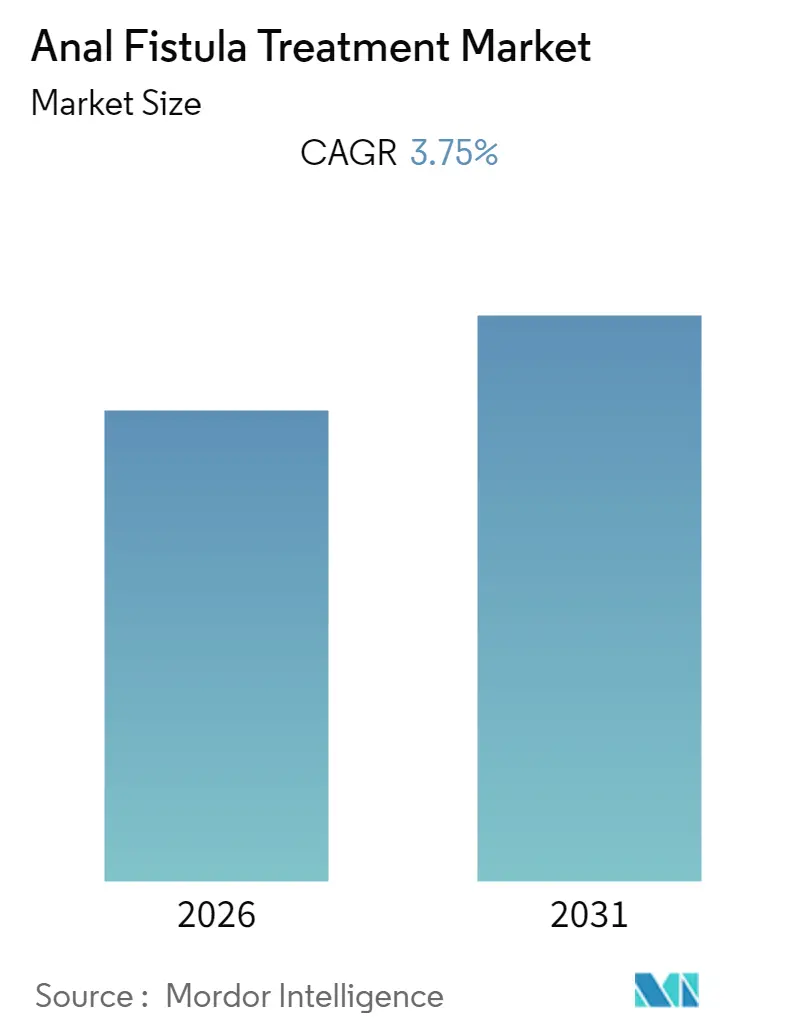
Anal Fistula Treatment Market Analysis by Mordor Intelligence
The Anal Fistula Treatment Market size is expected to register a CAGR of 3.75% during the forecast period.
COVID-19 had a significant impact on the anal fistula treatment market. For instance, as per the article published in 2021 under the title 'Insights into the management of anorectal disease in the coronavirus 2019 disease era', during the COVID-19 pandemic, there was a delay in the treatment of anal fistula, which caused an uncomfortable situation for patients. In such cases, outpatient exploration with proctoscopy, and seton placement, were alternative options based on a previous study in Crohn's disease patients. Furthermore, as per the blog published in 2021 under the title 'Anal Fissure Cases On The Rise In Covid Era; Treatment is Must!', other than antibiotics, patients overdosing on vitamin, zinc tablets and herbal tonics exacerbated the symptoms of an existing fissure in the long run. Patients with no history of anal fissures also show symptoms of the condition due to these medications during COVID-19. According to the same source, the occurrence of anal fissures had been reported in patients who had previously received COVID-19 treatment. Hence, considering the above-mentioned factors, COVID-19 had a notable impact on the anal fistula treatment market.
The anal fistula treatment market is anticipated to show rapid growth due to the rising cases of inflammatory bowel diseases such as Crohn's disease and ulcerative colitis, the launch of new products, and growing demand for non-surgical methods such as fibrin glue injection, adipose-derived stem cells therapy. For instance, the research, which was carried out by scientists at the University of Nottingham and funded by Crohn's & Colitis UK and Coeliac UK in 2022 showed that the prevalence of Crohn's and Colitis in the United Kingdom (UK) population is far higher than previously thought. The same study reported that 1 in every 123 people in the UK have either Crohn's disease or ulcerative colitis. This amounts to a total of nearly half a million people in the UK living with inflammatory bowel disease (IBD). Therefore, although inflammatory bowel disease is not that common, it still impacts a significant amount of people in the UK.
In addition, there is a rise in demand for safe and effective treatment with no chance of recurrence and fewer side effects which is propelling the key industry players to introduce advanced drugs and devices. Additionally, the technological advancement in anal fistula treatment is boosting market growth. For instance, as per the article published in 2021 under the title 'Advances in the Treatment of Anal Fistula: A Mini-Review of Recent Five-Year Clinical Studies', several combined drainage Seton procedures (pulling Seton, electric-acoustic stimulation (EAS)-sparing Seton after rerouting, and rerouting Seton around the EAS combined with mucosal advancement flap) and LIFT-plug are considered viable therapy for complex anal fistulas. Such advancements in the field of anal fistula treatment are anticipated to boost market growth.
Hence, as per the factors mentioned above, the anal fistula treatment market is likely to witness growth over the forecast period. However, the high cost associated with the anal fistula treatment and lack of awareness regarding the anal fistula treatment restrain the market growth.
Note: Market size and forecast figures in this report are generated using Mordor Intelligence’s proprietary estimation framework, updated with the latest available data and insights as of 2026.
Global Anal Fistula Treatment Market Trends and Insights
Surgical Segment is Expected to Dominate the Anal Fistula Treatment Market During the Forecast Period
The surgical treatment for an anal fistula is found to be associated with low recurrence rates, minimal incontinence, and good quality of life. The best option is found to depend on the position of the fistula and whether it is a single channel or branches off in different directions. Surgical procedures include fistulotomy, bioprosthetic plugs, advancement flap procedures, seton techniques, and new techniques such as LIFT and FiLaC therapy. The most common type of surgery for anal fistulas is a fistulotomy.
The surgical segment is found to dominate the anal fistula treatment market due to the increasing incidences of fistula-induced infections, and the rise in demand for safe and effective treatment. For instance, as per the article published in 2021 under the title 'Anal Fistula: Contemporary View of Complex Problem', surgery like fistulotomy has a success rate of more than 90%. As per the same source, medical therapy in combination with surgical solutions is anticipated to significantly reduce the severity of the disease and even hope to eradicate it. Since patients having anal fistula are suggested to go for surgeries to eradicate the problem, the adoption of the surgery segment is likely to increase over the forecast.
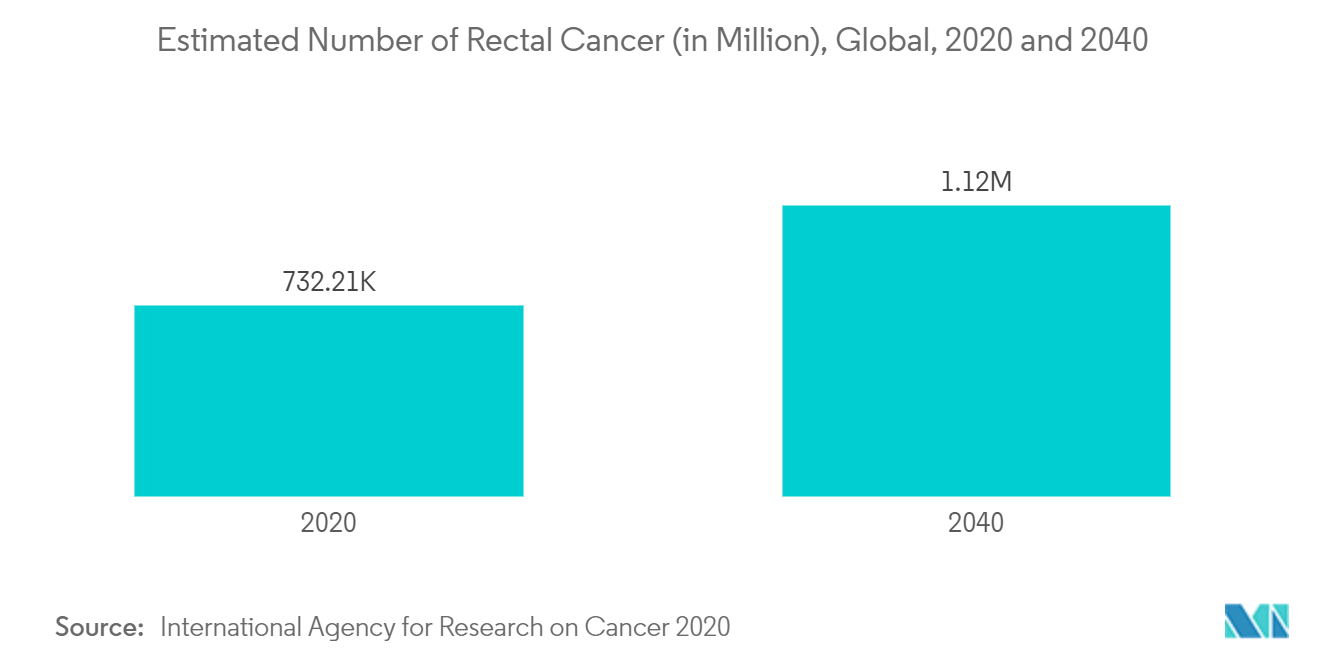
Moreover, as per the 2021 update from Cancer.Net, an anal fistula is likely to increase the risk of developing anal/rectal cancer. As per the article published in 2022 under the title 'Anal fistula metastasis of rectal cancer after neoadjuvant therapy: a case report', the study showed the importance of anorectal physical examination before, during, or after neoadjuvant therapy for rectal cancer, because implantation metastasis to the anal fistula is likely to occur any time during treatment. Since the population with the anal fistula along with the risk of rectal cancer is likely to adopt the surgical treatment, the market is expected to grow over the forecast period.
North America is Expected to Dominate the Anal Fistula Treatment Market During the Forecast Period
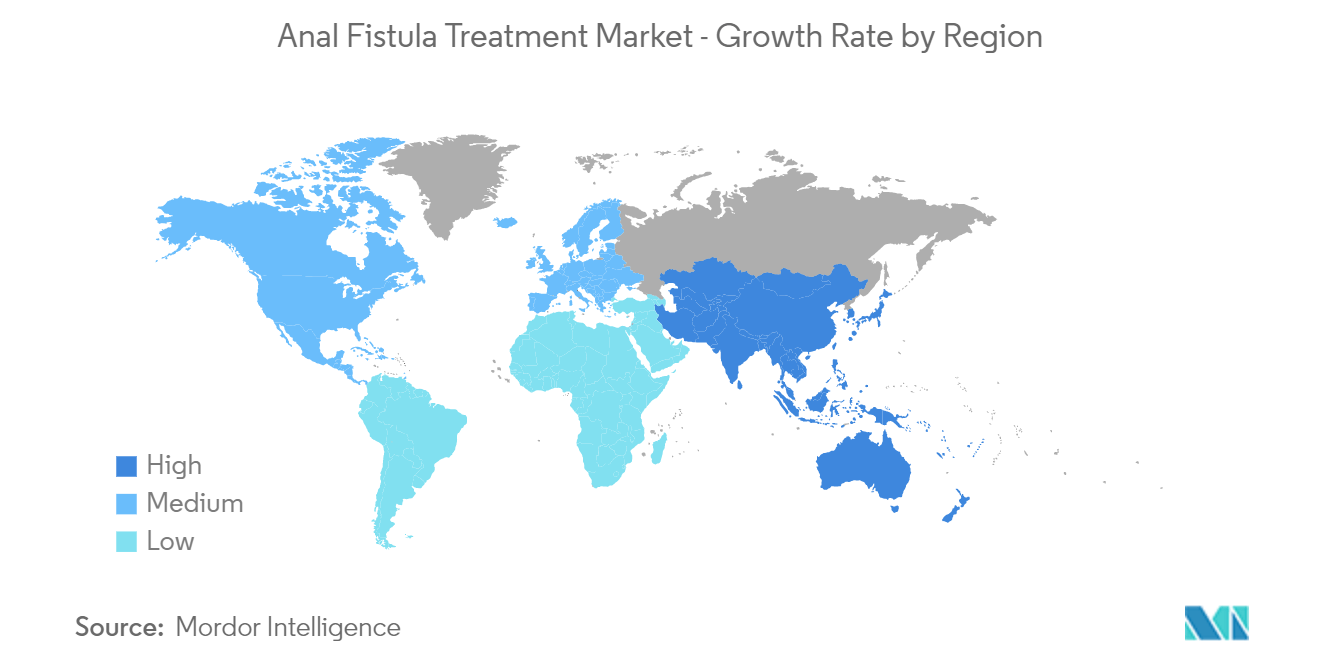
North America is likely to be dominating the anal fistula treatment market due to a large patient population with inflammatory bowel diseases, early adoption of new technologies, and high healthcare expenditure by the public and private sectors in the studied region. For instance, as per the Mayo Clinic 2022 report, Mayo Clinic surgeons have extensive experience with anal fistulas, treating more than 1,000 people every year in America.
Furthermore, the advancements in the field of the anal fistula treatment market in the studied region are likely to boost the market growth over the forecast period. For instance, in 2021, California-based Ossium Health collaborated with a researcher from Cleveland Clinic for conducting a clinical trial under the title 'Study of Ossium Mesenchymal Stem Cells for the Treatment of Pouch Fistulas in the Setting of Crohn's Disease', the goal of the study is to investigate the safety and feasibility of using Ossium vertebral Bone Marrow-Derived Mesenchymal Stem Cells (vBM-MSC) to treat people with an ileal pouch-anal anastomosis (IPAA) who develop a fistula in the setting of Crohn's disease of the pouch. Furthermore, in 2020 the same research institution conducted a clinical trial under the title ' Study of Mesenchymal Stem Cells for the Treatment of Ileal Pouch Fistula's in Participants With Crohn's Disease (IPAAF)', the purpose of this study is to evaluate the safety and efficacy of using allogeneic bone marrow-derived mesenchymal stem cells to treat people who have a peri-pouch fistula related to a clinical diagnosis of Crohn's disease of the pouch. Hence, increased research and development in the field of anal fistula are likely to boost market growth over the forecast period.
Furthermore, the presence of competitors, awareness regarding GI diseases, product launches, and acquisitions boosts the market growth in the studied region. For instance, Cross Valley Health & Medicine celebrates National Colorectal Cancer Awareness Month each March. Each year, healthcare providers take this month to provide their patients with extra education about diseases of the colon and rectum. People become more aware of diseases in the rectum as a result of such awareness initiatives by the government and this is likely to promote market growth over the forecast period.
Competitive Landscape
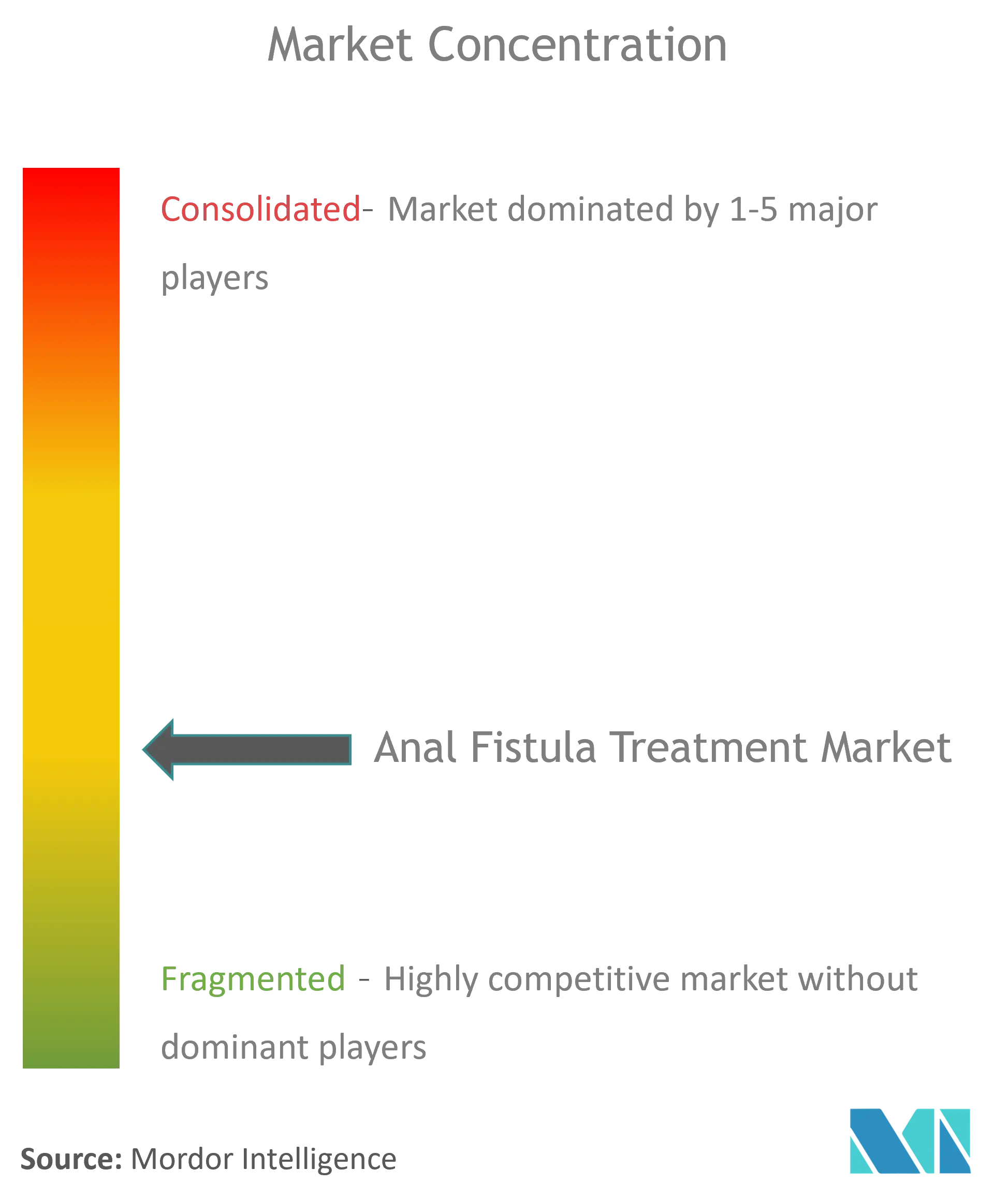
The anal fistula treatment market is fragmented in nature due to the presence of several companies operating globally as well as regionally. The presence of a considerable number of companies is found significantly contributing to market growth. Market players are actively participating in new product launches, collaboration, and development to expand their market share. Key players in the anal fistula treatment market are Cook Group (Cook Medical), KARL STORZ SE & Co. KG, Medtronic plc, Biolitec AG, and others.
Anal Fistula Treatment Industry Leaders
-
Medtronic plc
-
KARL STORZ SE & Co. KG
-
Biolitec AG
-
Surtex Instruments Limited
-
Cook Group (Cook Medical)
- *Disclaimer: Major Players sorted in no particular order
Market Opportunities and Future Outlook
Opportunities are forming around sphincter-preserving and standardized minimally invasive approaches, supported by growing procedural guidance and post-market device pathways. In January 2026, updated Egyptian Health Council guidance for anorectal abscess and fistula management referenced laser and endoscopic closure techniques under specified conditions, while discouraging routine plug use. This reinforces demand for techniques with clearer patient-selection criteria and long-term outcomes.
A second pocket of whitespace centers on Crohn's-associated complex perianal fistulas, where medical therapy and regenerative approaches are being actively evaluated alongside surgery. Real-world and clinical-study activity around biologics and cell-based strategies (for example, the ongoing expansion of medical options referenced in Crohn's-related fistulizing disease research) supports hospital and specialty-center interest in multidisciplinary care models that link gastroenterology, colorectal surgery, imaging, and outpatient procedure suites. Emerging enabling tools such as AI-assisted preoperative imaging and intraoperative planning (highlighted in 2026 academic work on AI applications in anal fistula management) create room for workflow solutions that improve tract mapping and decision-making for complex cases, even as multicenter validation and long-term continence and recurrence datasets remain key adoption requirements.
Recent Industry Developments
- June 2026: Medtronic and KARL STORZ announced a strategic collaboration to expand access to integrated ENT surgical solutions in the United States, combining Medtronic navigation with KARL STORZ endoscopic visualization. While not anal-fistula specific, the partnership reinforces integrated, workflow-oriented platform strategies that can influence capital purchasing and standardization across surgical service lines. It also highlights how visualization and data-enabled workflows are becoming a lever for procedure adoption and training.
- June 2025: Biolitec reported that the FiLaC Recommendation Development Group (RDG) published 25 standardized recommendations for the FiLaC (Fistula-tract Laser Closure) procedure. Clearer procedural recommendations support clinical consistency for laser-based, sphincter-preserving fistula management and can lower adoption friction for hospitals and ambulatory surgical centers. The standardization effort also supports supplier positioning around device-protocol bundles rather than standalone equipment.
- July 2024: Signum Surgical received US FDA De Novo clearance (DEN240007) for the BioHealx Anal Fistula Device, an absorbable implant intended to close internal openings in transsphincteric fistulas. The De Novo pathway established a dedicated regulatory category for this type of implant, expanding commercial options beyond traditional plugs and seton-based workflows. Clearance supports broader clinician evaluation and procurement pathways, including post-market data generation tied to recurrence and continence outcomes.
Research Methodology Framework and Report Scope
Market Definition and Coverage
For this study, the market includes revenues generated from treating anal fistula in clinical settings, covering procedure-based care and adjunct therapies used to close or manage the fistula tract across inpatient and outpatient sites.
Scope exclusions: diagnostic tests and routine follow up visits without an active treatment intervention are excluded from the market value.
Segmentation Overview
- By Treatment Type
- Surgical
- Non Surgical
- By Application
- Intersphincteric Fistula
- Transsphincteric Fistula
- Suprasphincteric Fistula
- Others
- By End User
- Hospitals
- Ambulatory Surgical Centers
- Others
- Geography
- North America
- United States
- Canada
- Mexico
- Europe
- Germany
- United Kingdom
- France
- Italy
- Spain
- Rest of Europe
- Asia-Pacific
- China
- Japan
- India
- Australia
- South Korea
- Rest of Asia-Pacific
- Middle East and Africa
- GCC
- South Africa
- Rest of Middle East and Africa
- South America
- Brazil
- Argentina
- Rest of South America
- North America
Data Sources, Market Sizing, and Validation
Desk Research
Desk research starts with mapping the anal fistula disease and care pathway basics, so the later model steps use the right patient pool and treatment flow. We typically reference non paywalled sources such as the World Health Organization for health system context, the US CDC for related risk factor signals, and national health ministries for procedure and hospital activity indicators where available.
Next, we align treatment patterns and outcomes using sources such as PubMed indexed clinical journals, professional colorectal surgery society guidance, and publicly available reimbursement and coding references (for example, national payment schedules). Company annual reports, investor decks, and credible medical news are then used to verify product positioning and adoption timing. These examples are not exhaustive, and other public sources were also reviewed for data collection, validation, and clarification.
Primary Interviews and Surveys
Primary discussions were run with a mix of clinicians involved in fistula care, hospital procurement and surgery center administrators, and supporting industry experts who track utilization and pricing. Since this is a global market, the checks were balanced across major regions so assumptions on procedure mix, setting shift, and pricing levels could be corrected before finalizing the model.
Distribution of primary research fieldwork respondents
| Company type | Respondent position | Region |
|---|---|---|
| Top tier: 37% | CXOs: 14% | APAC: 45% |
| Mid tier: 45% | Functional/Unit leaders: 34% | EMEA: 34% |
| Smaller Players: 18% | Managers: 52% | Americas: 21% |
Market-Sizing & Forecasting
Sizing is built using a top down demand pool, where prevalence and treated population are translated into expected procedure volumes by fistula type and care setting, then valued using typical pricing and reimbursement ranges. To keep totals realistic, we cross check with selective bottom up approximations such as sampled procedure volumes by facility type and a reasoned ASP times volume build for common interventions.
Key inputs include estimated treated patient counts, share of surgical versus non surgical management, procedure mix across fistulotomy and sphincter sparing approaches, average length of stay trends for inpatient cases, and region level pricing or reimbursement benchmarks. Where country level data is thin, gaps are handled by using proxy markets with similar care access, then adjusting with expert feedback on adoption and affordability.
For forecasting, we rely on scenario analysis supported by simple time series smoothing of the main drivers, then align the forward path to what experts expect for setting shift toward ambulatory centers and gradual pricing changes. Assumptions are kept visible so updates can be made quickly when guidelines or reimbursement change.
Data Validation & Update Cycle
Outputs are validated through multiple checks so the final number is not driven by a single data point. We compare implied procedure volumes and spend per treated patient against independent signals like hospital activity indicators, published clinical utilization discussions, and payer pricing references, then investigate any large variances before sign off.
A second analyst review is completed to confirm calculations, currency handling, and year alignment. Reports are refreshed annually, and interim updates are triggered when there are material events such as major guideline changes, reimbursement revisions, or meaningful shifts in treatment adoption. Right before delivery, a final pass is done so clients receive the latest updated view.
Mordor Intelligence's Anal Fistula Treatment Market Size Compared With Other Published Estimates
Published market sizes for anal fistula treatment can look different across sources, even when they discuss the same disease area, because the counted revenue streams and the timing of the base year often vary. Differences also come from how each model converts patient pools into procedures, and how pricing is applied across hospital and ambulatory settings.
The table shows a spread that is mainly explained by scope and valuation choices, where some estimates fold in broader wound care products and post procedure consumables, or apply a single blended price that does not reflect country level reimbursement variation. The table points to the scope gap, and in Mordor Intelligence's model the value is tied to treated case volumes by fistula type and setting, with procedure level pricing checks used to avoid over counting adjacent care items.
Benchmark comparison
| Source | Market Size | Gaps in Research Methodology |
|---|---|---|
| Mordor Intelligence | USD 0.00 B (2024) | |
| Global Research Publisher A | USD 0.70 B (2024) | Uses a broad definition that mentions advanced wound care products and pharmacological therapy add ons, which can widen the spend base beyond active fistula closure procedures. |
| Healthcare Analytics Publisher B | USD 0.76 B (2022) | Uses an older base year and a single point market value, and the approach can over smooth pricing by applying a blended global ASP without explicit reimbursement and setting level checks. |
Overall, the comparison suggests that tighter treatment boundaries and explicit volume to price logic are what drive more consistent sizing. When procedure volumes, care setting mix, and region level pricing are kept traceable, the estimate becomes easier to reconcile and update as clinical practice and reimbursement shift.
Key Questions Answered in the Report
What is the current Anal Fistula Treatment Market size?
The Anal Fistula Treatment Market is projected to register a CAGR of 3.75% during the forecast period (2026-2031)
Who are the key players in Anal Fistula Treatment Market?
Medtronic plc, KARL STORZ SE & Co. KG, Biolitec AG, Surtex Instruments Limited and Cook Group (Cook Medical) are the major companies operating in the Anal Fistula Treatment Market.
Which is the fastest growing region in Anal Fistula Treatment Market?
Asia-Pacific is estimated to grow at the highest CAGR over the forecast period (2026-2031).
Which region has the biggest share in Anal Fistula Treatment Market?
In 2025, the North America accounts for the largest market share in Anal Fistula Treatment Market.
What years does this Anal Fistula Treatment Market cover?
The report covers the Anal Fistula Treatment Market historical market size for years: 2019, 2020, 2021, 2022, 2023 and 2024. The report also forecasts the Anal Fistula Treatment Market size for years: 2026, 2027, 2028, 2029, 2030 and 2031.