
Aluminum Hydroxide Market Size and Share
Market Overview
| Study Period | 2021 - 2031 |
|---|---|
| Market Volume (2026) | 2.01 Million tons |
| Market Volume (2031) | 2.55 Million tons |
| Growth Rate (2026 - 2031) | 4.88 % |
| Fastest Growing Market | Asia Pacific |
| Largest Market | Asia Pacific |
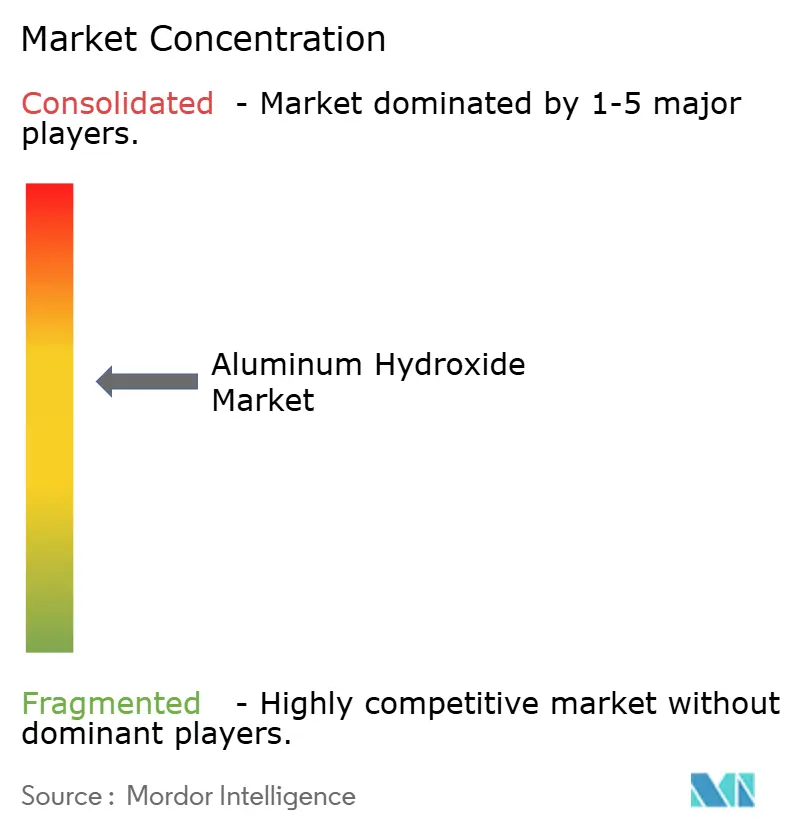
| Market Concentration | Medium |
Major Players *Disclaimer: Major Players sorted in no particular order Image © Mordor Intelligence. Reuse requires attribution under CC BY 4.0. | |
Aluminum Hydroxide Market Analysis by Mordor Intelligence
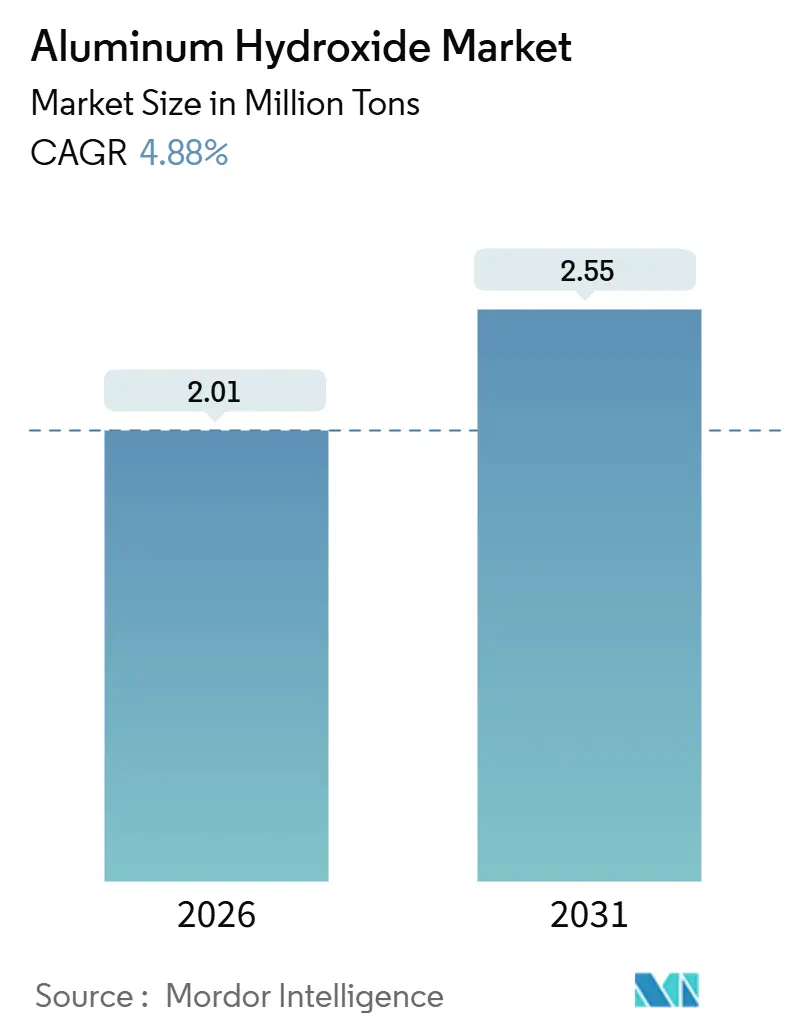
The Aluminum Hydroxide Market size is estimated at 2.01 million tons in 2026, and is expected to reach 2.55 million tons by 2031, at a CAGR of 4.88% during the forecast period (2026-2031). The aluminum hydroxide market is anchored by its twin roles as a halogen-free flame retardant in polyolefin cable compounds and as an active pharmaceutical antacid ingredient. Industrial-grade volumes dominate because fire-safety rules in electric-vehicle battery enclosures and building cables favor mineral flame-retardant systems over brominated chemistries, whereas pharmaceutical demand, though smaller, yields higher margins on the back of aging populations in Japan, Germany, and the United States. Accelerated urban water projects in India and Southeast Asia are further supporting coagulant usage that begins with aluminum hydroxide feedstock. Simultaneously, solid-surface countertops with high filler loadings and lithium-ion battery separator coatings that require nano-scale grades are widening the application field of the aluminum hydroxide market.
Key Report Takeaways
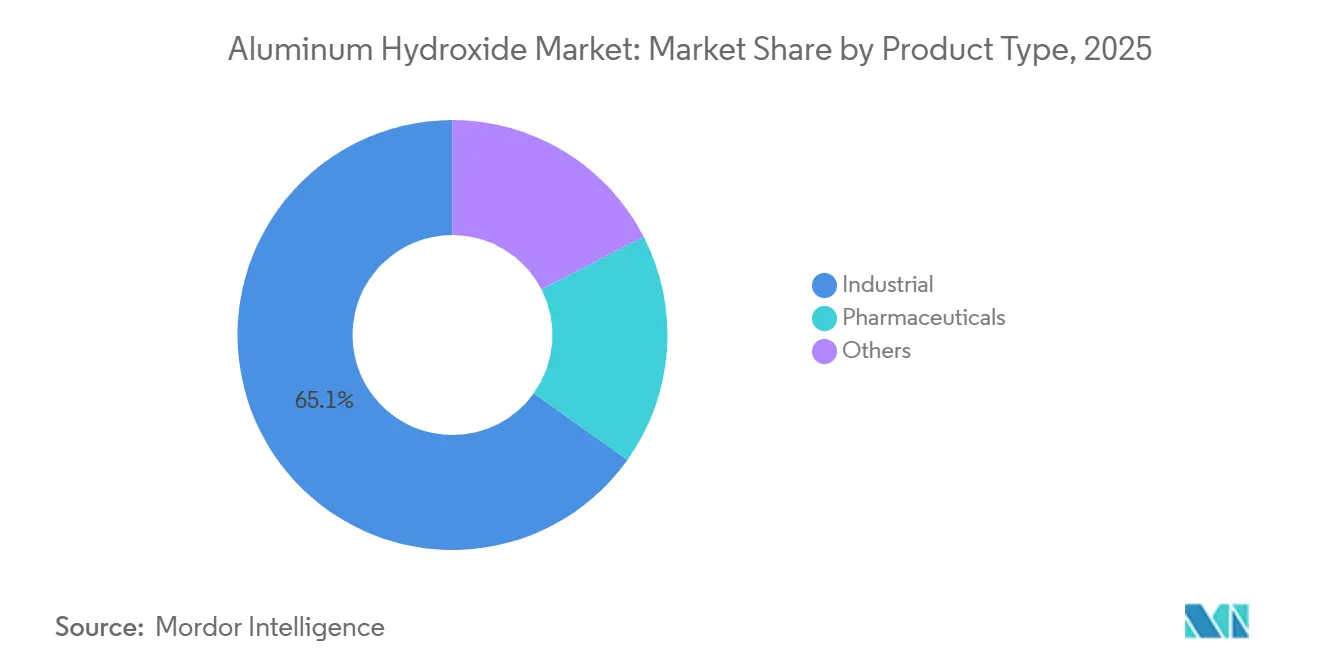
- By product type, industrial grade commanded 65.12% of the aluminum hydroxide market share in 2025 and is forecast to expand at a 5.11% CAGR to 2031.
- By application, flame-retardant and smoke-suppressant uses held 40.26% of volume in 2025; antacid formulations are advancing at a 5.02% CAGR through 2031.
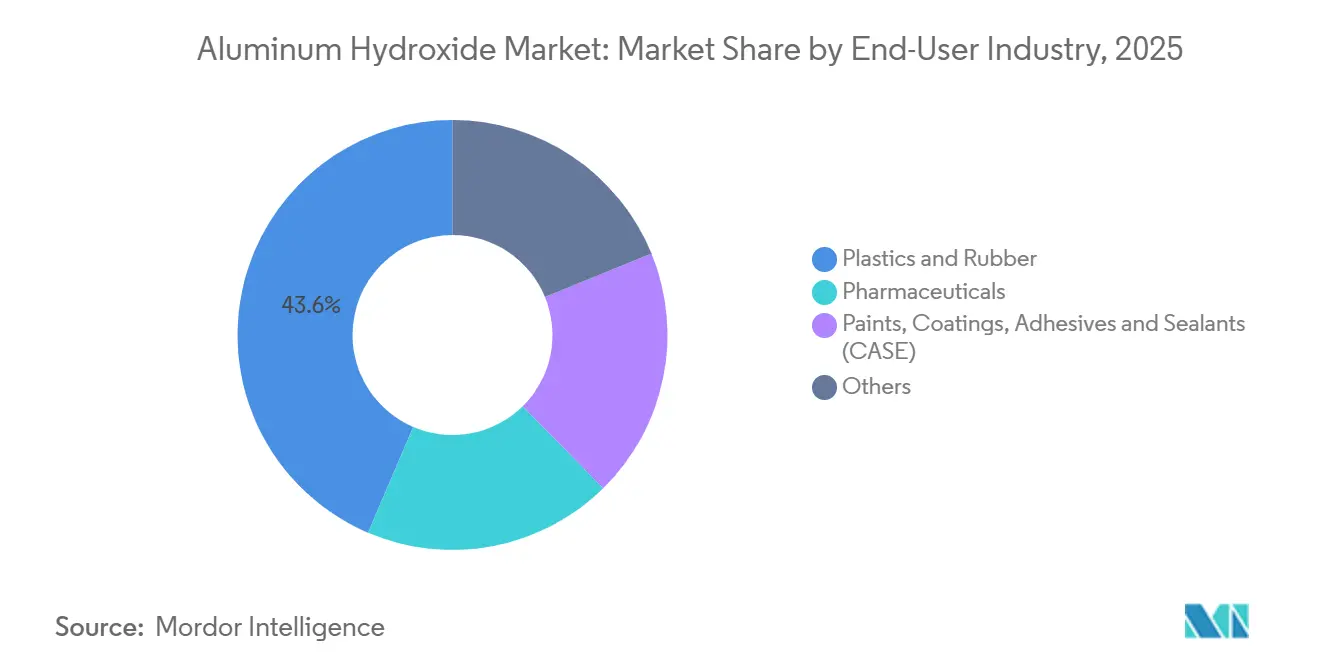
- By end-user industry, plastics and rubber captured 43.56% of the aluminum hydroxide market size in 2025 and are progressing at a 5.14% CAGR to 2031.
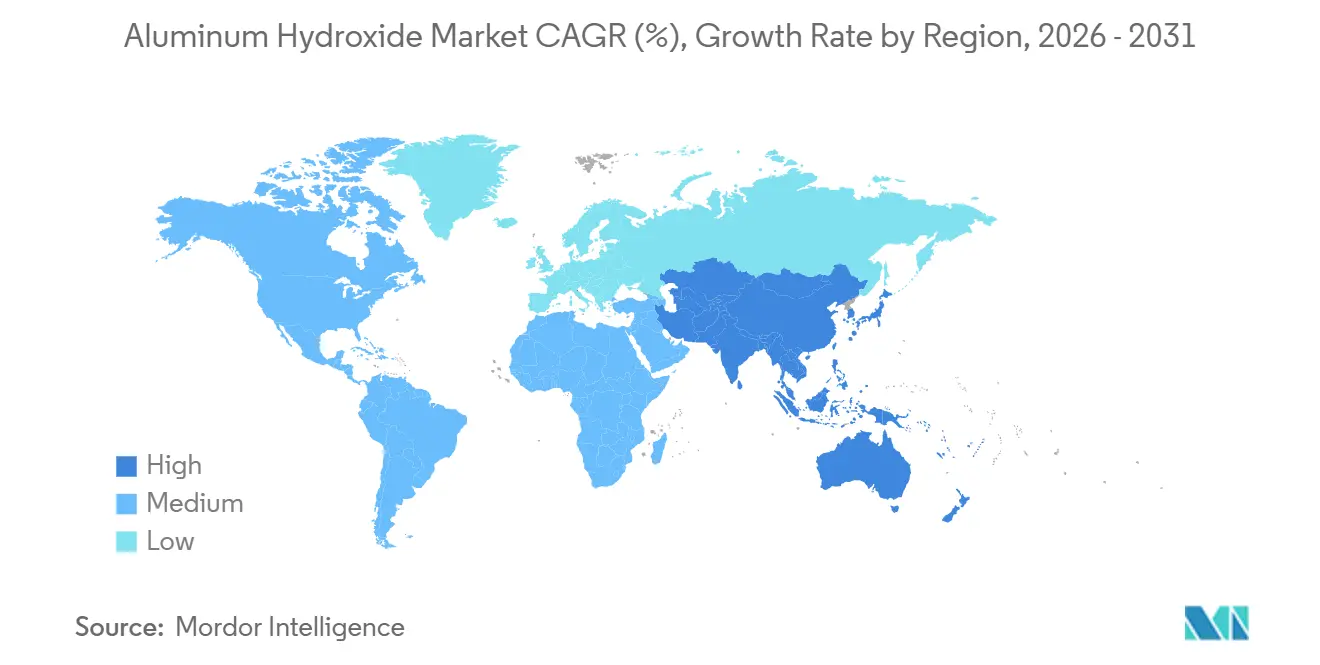
- By geography, Asia-Pacific represented 54.22% of global volume in 2025 and is projected to post a 5.23% CAGR through 2031.
Note: Market size and forecast figures in this report are generated using Mordor Intelligence’s proprietary estimation framework, updated with the latest available data and insights as of January 2026.
Global Aluminum Hydroxide Market Trends and Insights
Drivers Impact Analysis*
| Drivers | (~) % Impact on CAGR Forecast | Geographic Relevance | Impact Timeline |
|---|---|---|---|
| Fire-safety regulations driving ATH in polyolefin cable compounds | +1.2% | Global, especially EU and North America | Medium term (2 - 4 years) |
| Halogen-free flame-retardant demand in EV battery enclosures | +1.0% | China, India, South Korea; spill-over to North America | Short term (≤ 2 years) |
| Rising OTC antacid consumption in aging economies | +0.6% | North America, Europe, Japan | Long term (≥ 4 years) |
| Rapid adoption of ATH in solid-surface countertops | +0.4% | North America, Europe, Middle East | Medium term (2 - 4 years) |
| Water-treatment infrastructure expansion in emerging nations | +0.8% | India, Southeast Asia, Middle East and Africa | Long term (≥ 4 years) |
| Source: Mordor Intelligence | |||
Fire-Safety Regulations Driving ATH in Polyolefin Cable Compounds
Stricter fire-safety regulations, including the EU's Construction Products Regulation EN 50575 and UL 94 V-0, are driving a transition from brominated additives to aluminum trihydrate fillers. Teknor Apex's Halguard low-smoke cable formulations have secured halogen-free certification under UL 2885, underscoring the rising demand for mineral solutions. Launched in April 2025, Benvic's Linkflex HF series, designed for data-center sheathing, boasts enhanced oil resistance. In transit and tunnel installations, aluminum hydroxide's endothermic water release at 180 °C proves beneficial, diluting combustible gases and cooling substrates. While compounders are pushing filler loadings for Class B flame ratings, the resulting high viscosity necessitates twin-screw extruders - a costly investment for smaller players in South America. With tightening standards, the aluminum hydroxide market is poised for steady growth in the global wire-and-cable sector [1].
Halogen-Free Flame-Retardant Demand in EV Battery Enclosures
Demand for aluminum hydroxide-filled sheet-molding compounds is surging, driven by UNECE R-100 and proprietary OEM tests that simulate thermal runaway. Hindalco underscored the volume potential by delivering aluminum battery casings to Mahindra Electric. While premium European models prioritize glass-fiber SMCs infused with aluminum hydroxide for underbody shields - valuing dimensional stability up to 150 °C despite a mass penalty over bare aluminum - Huber's Martinal grades, treated with silane, mitigate moisture uptake. This preservation of mechanical properties post-humidity aging aligns with the eight-year warranties mandated for EVs. In Asia, the aluminum hydroxide market is further buoyed as Chinese cell manufacturers, by co-locating module assembly with vehicle plants, secure local supplies.[2].
Rising OTC Antacid Consumption in Aging Economies
The FDA’s OTC Monograph M001 allows elemental aluminum per antacid tablet. Japan’s 65+ cohort hit a significant percentage in 2024, fueling gastroesophageal reflux cases. Pharmaceutical-grade aluminum hydroxide meets USP heavy-metal limits and commands a premium over industrial material. Tablets retailing for a 30-day course in India still undercut proton-pump inhibitors by two-thirds, supporting steady consumption. Safety agencies cap daily aluminum intake; thus, formulators often blend with magnesium hydroxide to offset constipation risks without breaching intake limits.
Rapid Adoption of ATH in Solid-Surface Countertops
In 2024, U.S. remodeling spending saw a resurgence, driving up the demand for vanity tops. Meanwhile, hospitality projects in the Middle East are opting for thermoformable, non-porous cladding. Solid-surface composites, utilizing aluminum trihydrate, not only achieve the UL 94 V-0 standard but also offer a seamless aesthetic appeal. Surface-treated 5-µm grades from Sibelco are enhancing the industry, as they reduce resin viscosity and elevate polishing standards, enabling fabricators to attain a Class A gloss finish. While engineered quartz commands a dominant share of the countertop volume, solid surfaces carve out a niche in the healthcare sector, where joint-free installations and chemical resistance are non-negotiable. As a result, specialty grades are propelling the aluminum hydroxide market, particularly in lucrative construction applications.
Restraints Impact Analysis*
| Restraints | (~) % Impact on CAGR Forecast | Geographic Relevance | Impact Timeline |
|---|---|---|---|
| Bauxite-supply volatility | -0.9% | Global, acute in Europe and North America | Short term (≤ 2 years) |
| Health concerns on chronic aluminum intake | -0.5% | North America, Europe, Japan | Long term (≥ 4 years) |
| High energy cost of precipitated ATH output | -0.7% | Europe, secondary in North America | Medium term (2 - 4 years) |
| Source: Mordor Intelligence | |||
Bauxite-Supply Volatility
In 2023, Guinea exported bauxite, setting its sights on increased exports by 2025. However, port congestion at Kamsar, coupled with monsoon disruptions, has hampered export consistency. This unpredictability has nudged Chinese buyers to pivot towards Australia, even if it means shouldering higher costs. In 2024, spot bauxite prices fluctuated. This volatility has put pressure on European aluminum hydroxide producers, who are bound by annual downstream contracts. Meanwhile, Rio Tinto's 2024 revival of its Gove refinery bolsters supply for Western smelters. Yet, the refinery grapples with elevated energy and labor expenses. As a result, the aluminum hydroxide market finds itself vulnerable to raw material shocks, leading to pronounced price fluctuations.
Health Concerns on Chronic Aluminum Intake
ATSDR has established a conservative oral minimal risk level, a stance echoed by WHO with its weekly tolerable intake. In Europe, some utilities have reduced alum dosing and switched to ferric coagulants to minimize residuals. Meanwhile, consumer advocacy groups are advocating for aluminum labeling on over-the-counter antacids, posing a reputational challenge for pharmacy brands. This heightened scrutiny in the aluminum hydroxide market might dampen long-term growth in established regions, despite a boost in near-term volumes driven by aging demographics.
*Our forecasts treat driver/restraint impacts as directional, not additive. The impact forecasts reflect baseline growth, mix effects, and variable interactions.
Segment Analysis
By Product Type: Industrial Grade Anchors Volume Growth
Industrial grade represented 65.12% of volume in 2025, owing to cost-effective flame retardancy in plastics and rubber. This slice of the aluminum hydroxide market is forecast to rise at 5.11% through 2031 as cable makers swap brominated additives for mineral fillers. Converters can now balance mechanical strength with flame performance, thanks to Huber's Martinal range, which spans from 1 to 80 µm. While smaller in size, the pharmaceutical-grade variant commands a price premium. This is due to USP's stringent limit on heavy metals, ensuring the purity essential for antacid tablets and vaccine adjuvants. Specialty nano-scale grades, measuring below 200 nm, are being utilized for lithium-ion separator coatings. In a bid to boost its financials, Sumitomo's NXA series is targeting a revenue increase in FY 2025. Meanwhile, reclaimed aluminum hydroxide, sourced from refinery waste, is making waves in Europe, aligning with the region's circular-economy aspirations.
Industrial demand is on the rise, driven by the need for halogen-free cable compounds to achieve filler loading for UL 94 V-0 compliance. Additionally, fine grades are enhancing opacity in cast-polymer countertops, and stearate-treated particles are improving flow in powder paints. The pharmaceutical sector is witnessing steady growth, as an aging population increasingly opts for OTC remedies over pricier proton-pump inhibitors. The stringent ultra-high-purity requirements are narrowing the supplier pool, thereby bolstering profit margins. While specialty segments present lucrative opportunities, they remain niche. For instance, nano grades are commanding a higher price compared to standard industrial material, yet their volumes are modest in the broader aluminum hydroxide market.

By Application: Flame Retardancy Leads, Antacids Accelerate
Flame-retardant uses delivered 40.26% of volume in 2025, primarily due to high loadings in cable jacketing and thermoplastic elastomers. Given that a single kilometer of low-voltage cable can absorb aluminum hydroxide, it's evident that construction activities play a pivotal role in shaping the aluminum hydroxide market. Tests are steering compounders towards aluminum hydroxide, favoring it over brominated flame retardants, which are known to emit corrosive gases. While aluminum hydroxide's brightness and refractive index make it a preferred choice for fillers and pigments in paints and engineered stones, competition from titanium dioxide ensures pricing remains disciplined.
Antacid formulations, despite modest tonnage, post the fastest 5.02% growth. Each tablet contains elemental aluminum and retails in bulk packs, ensuring visibility in the pharmaceutical sector. Water-treatment chemicals utilize a similar precursor chemistry: aluminum hydroxide's reaction with sulfuric acid produces aluminum sulfate, establishing a direct link between municipal budgets and the aluminum hydroxide market. While catalysts and other niches, such as alumina precursors for refinery FCC units, are influenced by global oil throughput, they tend to be stable yet slow-moving.
By End-User Industry: Plastics and Rubber Dominate
Plastics and rubber captured 43.56% of 2025 demand and are growing at the fastest rate of 5.14% because automakers and builders prefer halogen-free systems that meet UL 94 and EN 50575. To manage thermal events, EV battery shields now incorporate aluminum hydroxide into glass-fiber SMCs. In a nod to the multi-sector reliance on the aluminum hydroxide market, rubber conveyor belts used in underground mines have added filler to meet MSHA flame criteria. While pharmaceutical buyers represent only a small fraction of the overall volume, their stringent GMP requirements bolster price resilience, preventing commoditization.
Paints, coatings, adhesives, and sealants employ aluminum hydroxide as an intumescent additive in fire doors and structural steel primers, competing with expandable graphite and ammonium polyphosphate on cost-performance grounds. Paper coatings and specialty ceramics share a niche canvas, reflecting digitalization’s drag on printing grades. Nevertheless, the breadth of end-use keeps the aluminum hydroxide market diversified across economic cycles.
Geography Analysis
Asia-Pacific accounted for 54.22% of volume in 2025 and is set to post a 5.23% CAGR to 2031. In 2023, China imported bauxite, fueling its low-cost alumina plants. This strategic move allowed China to export aluminum hydroxide at prices lower than its European counterparts. Meanwhile, India's ambitious Jal Jeevan Mission, which is setting up rural water plants, is heavily reliant on aluminum sulfate, ensuring a steady demand for its precursor. In Japan, a significant portion of the population is seniors who drive consistent antacid consumption. At the same time, South Korea's leading battery manufacturers are opting for nano-grade aluminum hydroxide in their separators, citing its thermal stability benefits.
North America commands a significant share of the aluminum hydroxide market. While Huber and Martin Marietta capitalize on short lead times, they grapple with energy cost surges. Europe faces constraints due to power costs. This has led Nabaltec to contemplate shifting capacities to clusters in the gas-abundant Middle East. South America and the combined regions of the Middle East and Africa account for a smaller share of the market volume. While Brazil's automotive components and Saudi Arabia's hospitality projects drive growth, both regions still find themselves as net importers, hindered by limited alumina refining capabilities.
Regulatory Landscape
Regulation in the aluminum hydroxide market is shaped by downstream safety and purity requirements across construction fire performance, chemicals compliance, and food and pharma-linked specifications. In the EU, building-cable reaction-to-fire rules under EN 50575 (within the Construction Products Regulation framework) reinforce demand for halogen-free mineral flame-retardant systems in wire and cable compounds, while REACH registration and substance dossiers maintained by ECHA set compliance expectations for producers and importers.
For food and ingestible-adjacent use cases, regulatory tightening is evident in recent amendments and transition timelines. In Canada, Health Canada modified the Lists of Permitted Food Additives for certain aluminum-containing additives in October 2025, with compliance dates extending to January 1, 2028 for reformulated products. In the EU, Commission Regulations (EU) 2026/189 and 2026/196 entered into force on February 18, 2026, introducing technical amendments to Regulation (EC) No 1333/2008 that update purity specifications and usage categories for food additives, raising the importance of trace-impurity control and supplier documentation for high-purity applications.
Value Chain Analysis
Aluminum hydroxide supply begins with bauxite mining and alumina refining, where aluminum hydroxide is precipitated as an intermediate in the Bayer process. Upstream constraints and inputs include caustic soda availability, energy costs, and residue management (red mud) obligations, which affect plant siting, permitting, and operating costs, especially for producers serving Europe where energy economics can be tighter.
Downstream, aluminum hydroxide producers and processors differentiate through particle-size control, surface treatment (for moisture resistance and polymer compatibility), and purification steps that support pharmaceutical-grade, fine, and specialty grades used in flame-retardant and electronics-linked applications. Sales typically combine direct engagement with large compounders and formulators (wire and cable, SMC, OTC antacids, water-treatment chemical makers) with regional distribution networks for smaller-volume and specialty buyers. In January 2026, Almatis named STOCKMEIER Chemicals as an official distribution partner for the United Kingdom, Scandinavia, and Central and Eastern Europe, reflecting the role of local logistics and stocking points in shortening lead times and stabilizing supply for industrial and specialty customers.
Competitive Landscape
The aluminum hydroxide market is moderately consolidated. Strategies revolve around upstream bauxite ownership, downstream masterbatch compounding, and regional diversification to offset energy and logistics risk. Technological differentiation includes surface coatings that reduce water absorption in polymer matrices and particle-size control that tailors rheology. ISO 9001 and ISO 14001 certification have become table stakes for automotive and pharmaceutical supply, yet REACH compliance costs give non-EU producers an advantage. Reclaimed aluminum hydroxide is emerging, but the lack of consistent quality standards limits penetration. Overall, regional energy economics and environmental regulation form the key battlegrounds in the aluminum hydroxide market.
Aluminum Hydroxide Industry Leaders
-
Huber Engineered Materials
-
Almatis
-
Nabaltec AG
-
Hindalco Industries Ltd
-
Alteo
- *Disclaimer: Major Players sorted in no particular order
Market Opportunities and Future Outlook
White-space is most apparent in premium segments where specification intensity is rising faster than commoditized industrial volumes. Thermal-runaway testing regimes for EV battery enclosure and underbody protection systems (for example, UNECE R-100 aligned requirements) are pulling demand toward surface-treated ATH grades that manage moisture uptake and help preserve mechanical properties in glass-fiber SMC and polymer compounds. At the same time, nano-scale and fine-particle grades used in lithium-ion separator coatings and high-gloss solid-surface applications expand the specialty mix, keeping pressure on particle engineering capabilities and consistent quality at scale.
Qualification pathways are also tightening the value case for suppliers that can document low-impurity material. In Canada, transition timelines run to January 1, 2028 for reformulated products after Health Canada modified permitted uses of certain aluminum-based food additives in October 2025. In the EU, Commission Regulations (EU) 2026/189 and 2026/196 entered into force on February 18, 2026, updating food additive purity specifications and categories under Regulation (EC) No 1333/2008, which lifts the importance of traceability for high-purity sourcing. For industrial-grade production, India notified tighter emission standards for primary aluminium industries under the Environment (Protection) Fifth Amendment Rules, 2025 (with compliance required by July 2027), reinforcing process and precipitation-route improvements for integrated alumina and hydroxide producers.
Recent Industry Developments
- June 2026: Almatis secured major refinancing that doubled its credit facility and extended maturity to 2033. The longer-dated funding supports balance sheet flexibility for capacity, logistics, and processing upgrades across alumina hydrate and related specialty alumina supply chains.
- November 2025: Almatis began construction of its Huangdao calcined alumina plant in the Qingdao Economic Development Zone, China, targeting a doubling of regional production capacity. The build-out is positioned to support faster supply to technical ceramics and EV-linked value chains, while increasing competitive pressure on imported specialty alumina and hydrate-linked materials in Asia.
- May 2025: The acquisition of The R.J. Marshall Company's alumina trihydrate assets was completed by J.M. Huber Corporation, expanding its flame-retardant portfolio. This expands Huber's ability to serve wire and cable and polymer compound customers.
Research Methodology Framework and Report Scope
Market Definition and Coverage
For this report, the market is defined as global demand for aluminum hydroxide (aluminum trihydrate) supplied as powder or slurry and used in flame-retardant filler systems, water-treatment chemistry, catalyst-related uses, and pharmaceutical antacid applications. Market size is captured in volume (tons) for consistency across regions.
Scope exclusions: We exclude recycled alumina residues and downstream calcined alumina derivatives that are not sold as aluminum hydroxide.
Segmentation Overview
- By Product Type
- Industrial
- Pharmaceuticals
- Others (Specialty Nano Grade and Reclaimed / Recycled Grade)
- By Application
- Flame-Retardant and Smoke-Suppressant
- Filler and Pigment
- Antacid
- Water-Treatment Chemicals
- Catalyst and Others
- By End-User Industry
- Plastics and Rubber
- Pharmaceuticals
- Paints, Coatings, Adhesives and Sealants (CASE)
- Others (Paper and Others)
- By Geography
- Asia-Pacific
- China
- India
- Japan
- South Korea
- Rest of Asia-Pacific
- North America
- United States
- Canada
- Mexico
- Europe
- Germany
- United Kingdom
- France
- Italy
- Rest of Europe
- South America
- Brazil
- Argentina
- Rest of South America
- Middle-East and Africa
- Saudi Arabia
- South Africa
- Rest of Middle-East and Africa
- Asia-Pacific
Data Sources, Market Sizing, and Validation
Desk Research
Desk work starts by mapping where aluminum hydroxide is produced and where it gets consumed, then checking end uses that anchor demand, with particular focus on plastics and rubber flame-retardant applications and water treatment. Public sources reviewed include USGS mineral and alumina related statistics, UN Comtrade trade flows, EPA and other government chemical and water quality references, and peer reviewed chemistry and materials journals for property and application context.
To make the model usable at a country and regional level, we also reviewed company filings, investor presentations, technical brochures, association websites, and reputable press coverage to track capacity changes and application shifts. In cases where public data is thin, paid subscription sources for company financial intelligence, patent lookups, and shipment-level import and export checks were used selectively to sanity check directional moves. These desk sources are not exhaustive, and additional public and paid references were used for data collection, validation, and research clarification.
Primary Interviews and Surveys
Primary work was used to turn the desk view into a workable market model by validating grade mix, typical use rates in flame-retardant formulations, regional pricing behavior, and the timing of capacity utilization changes. We spoke with stakeholders across the value chain, including producers, distributors, formulators, and large end users, and compared feedback across APAC, EMEA, and the Americas to reduce single-market bias.
Distribution of primary research fieldwork respondents
| Company type | Respondent position | Region |
|---|---|---|
| Top tier: 38% | CXOs: 21% | APAC: 39% |
| Mid tier: 40% | Functional/Unit leaders: 39% | EMEA: 37% |
| Smaller Players: 22% | Managers: 40% | Americas: 24% |
Market-Sizing & Forecasting
Sizing was built using a top-down and bottom-up sequence where alumina hydrate supply, trade direction, and key end-use demand pools were reconstructed by region, and then converted into aluminum hydroxide consumption using application-level use rates. After forming regional totals, we corroborated them with selective bottom-up checks, such as sampling supplier volumes in major consuming countries, reviewing distributor channel signals, and validating implied volumes per end-use cluster before finalizing totals.
The model uses practical inputs that can be rechecked each year, including alumina and hydrate operating rates, import and export balances for aluminum hydroxide, flame-retardant filler loading rates in plastics and rubber, water-treatment chemical demand indicators, and shifts between industrial and pharma grades. For forecasting, scenario analysis was used because the market is sensitive to regulation-led flame-retardant adoption and plant utilization cycles, and the scenarios were tied back to expert consensus on capacity additions, demand growth in construction and electronics, and likely price behavior. Where bottom-up signals were missing for smaller countries, gaps were handled through regional proxies that were adjusted using trade intensity and downstream manufacturing concentration.
Data Validation & Update Cycle
Totals were checked through triangulation across independent signals, including trade-derived volumes, capacity and utilization logic, and end-use demand indicators, followed by variance checks at the country and regional level. When an outlier appeared, assumptions were revisited and, if needed, follow-up questions were sent back to respondents to confirm whether the variance came from temporary supply constraints, grade shifts, or reporting timing.
Before sign-off, the model goes through a multi-step analyst review so the calculation logic, unit conversions, and assumptions remain consistent across regions. The dataset is refreshed annually, and interim updates are made when material events occur, such as major plant disruptions, new capacity, or notable demand shocks. Right before delivery, a final review pass is completed so clients receive the latest updated view.
Mordor Intelligence's Aluminum Hydroxide Market Size Versus Other Published Estimates
Published estimates for aluminum hydroxide often look far apart because the market can be expressed in tons or in USD value, and the conversion depends heavily on grade mix plus the timing of currency and pricing assumptions. The spread also grows when some studies treat aluminum hydroxide as a broad alumina hydrate bucket, while others keep it limited to specific commercial forms and end uses.
Key gap drivers usually come down to how often pricing is refreshed, whether the model uses spot-like pricing or contract-like pricing in industrial grades, and how trade flows are netted against domestic supply. Because aluminum hydroxide is used as both a performance filler and a chemical input, small differences in assumed loading rates and the share going into water treatment can change totals meaningfully. With month-aligned currency conversion, periodic price refresh checks by grade, and cross-checking implied prices against trade unit values, Mordor Intelligence keeps the total tied to real shipped volume captured in the model.
Benchmark comparison
| Source | Market Size | Gaps in Research Methodology |
|---|---|---|
| Mordor Intelligence | USD 2.01 M (2026) | |
| Industry Data Platform A | USD 12.05 B (2024) | Uses a value-based market definition, and the total can shift if a wider alumina hydrate basket is included or if the grade mix is priced using broader regional averages that are not aligned to the same timing window. |
| Global Publisher B | USD 4.26 B (2024) | Represents sales value with a narrower revenue capture, and the split by type and application can exclude parts of industrial filler demand or treat powder and slurry conversions differently across regions. |
The table shows that unit choice and price handling explain most of the differences, not just the growth rate. When the scope stays consistent and the refresh steps are clear, buyers can reconcile the market size back to trade signals, capacity context, and end-use demand drivers.
Key Questions Answered in the Report
What is the current volume of the aluminum hydroxide market?
Global demand reached 2.01 million tons in 2026 and is forecast to grow to 2.55 million tons by 2031, registering a CAGR of 4.88%.
Which product grade dominates consumption?
Industrial grade held 65.12% of the 2025 volume due to widespread flame-retardant use in plastics and rubber.
Which application segment is growing fastest?
Antacid formulations are expanding at a 5.02% CAGR as aging populations drive OTC demand.
Why does Asia-Pacific lead regional demand?
Competitive feedstock costs, large cable and construction sectors, and India’s water-infrastructure build-out push Asia-Pacific to 54.22% of global volume.
What are the key growth restraints?
Bauxite-supply volatility, high European energy costs, and health concerns over chronic aluminum exposure restrain long-term expansion.