
Alopecia Treatment (Hair Loss) Market Size and Share
Market Overview
| Study Period | 2020 - 2031 |
|---|---|
| Market Size (2026) | USD 3.87 Billion |
| Market Size (2031) | USD 5.05 Billion |
| Growth Rate (2026 - 2031) | 5.46 % |
| Fastest Growing Market | Asia Pacific |
| Largest Market | North America |
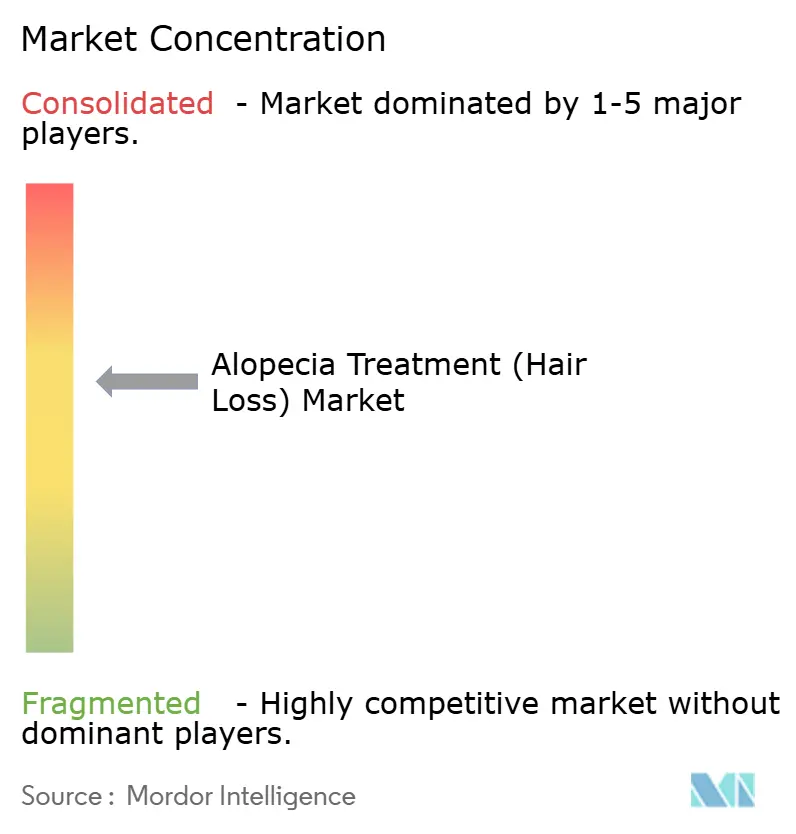
| Market Concentration | Medium |
Major Players *Disclaimer: Major Players sorted in no particular order Image © Mordor Intelligence. Reuse requires attribution under CC BY 4.0. | |
Alopecia Treatment (Hair Loss) Market Analysis by Mordor Intelligence
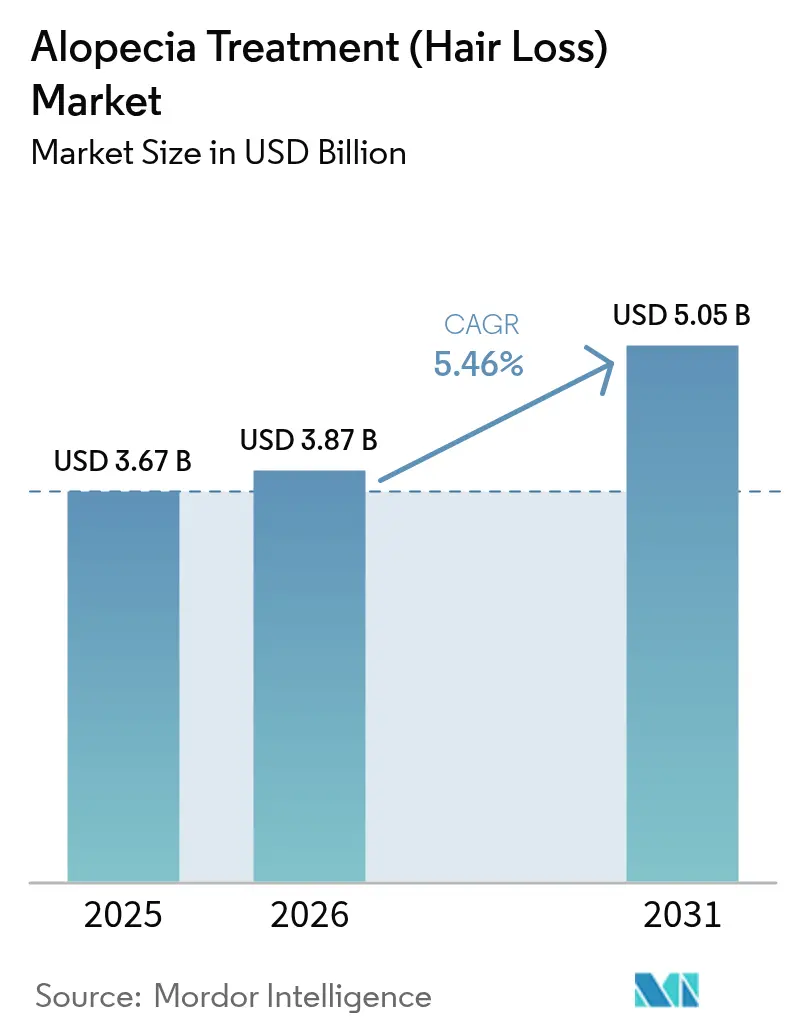
The alopecia treatment market size was valued at USD 3.67 billion in 2025 and estimated to grow from USD 3.87 billion in 2026 to reach USD 5.05 billion by 2031, at a CAGR of 5.46% during the forecast period (2026-2031). This expansion reflects growing clinical adoption of precision immunomodulation, regenerative medicine, and home-use devices that move care beyond the historic minoxidil-finasteride paradigm. Three oral JAK inhibitors now hold regulatory approval for severe alopecia areata, opening a therapeutic avenue for roughly 700,000 previously underserved U.S. patients[1]. Venture-backed start-ups have also introduced mitochondrial metabolism modulators and intradermal biologics that target follicular stem-cell pathways. Digital health ties these innovations together: AI-guided scalp imaging, tele-consultations, and e-pharmacy fulfillment shorten diagnostic cycles and improve adherence, particularly among younger consumers.
Key Report Takeaways
- By disease type, androgenic alopecia accounted for 36.62% of alopecia treatment market share in 2025, while alopecia totalis is projected to expand at a 7.12% CAGR through 2031.
- By gender, male patients represented 62.14% of the 2025 alopecia treatment market; the female segment is forecast to grow at 6.62% CAGR to 2031.
- By route of administration, topical products held 44.12% share of the alopecia treatment market size in 2025, whereas injectables are set to record the fastest 7.18% CAGR over the forecast horizon.
- By distribution channel, retail pharmacies led with 47.95% revenue share in 2025; online pharmacies are poised for an 7.76% CAGR to 2031.
- By end user, hospitals led with 41.21% revenue share in 2025; diagnostic laboratory are poised for an 8.05% CAGR to 2031.
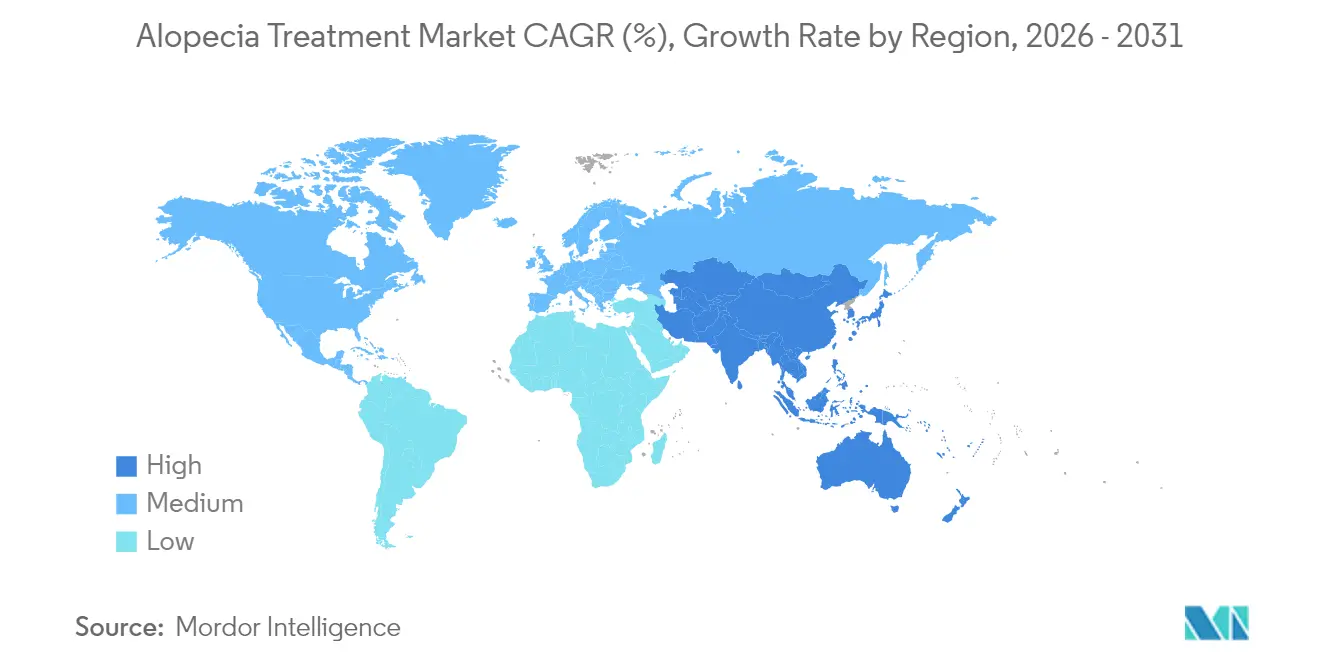
- By geography, North America commanded 41.88% of 2025 revenue, but Asia-Pacific is advancing at a 6.32% CAGR on the back of China’s large patient pool and faster approvals.
Note: Market size and forecast figures in this report are generated using Mordor Intelligence’s proprietary estimation framework, updated with the latest available data and insights as of 2026.
Market Trends and Insights
Drivers Impact Analysis of Alopecia Treatment (Hair Loss) Market*
| Driver | (~) % Impact on CAGR Forecast | Geographic Relevance | Impact Timeline |
|---|---|---|---|
| Increasing prevalence of alopecia | +1.0% | Global; highest patient growth in Asia-Pacific & North America | Long term (≥ 4 years) |
| Surge in Rx approvals of JAK-inhibitors & novel topicals | +1.2% | Global; early adoption in North America & EU | Medium term (2-4 years) |
| AI-driven personalised diagnostics & treatment planning | +0.8% | North America & Asia-Pacific core; spill-over to EU | Long term (≥ 4 years) |
| Rise of regenerative therapies (PRP, stem-cells, exosomes) | +0.7% | Global; premium uptake in developed markets | Medium term (2-4 years) |
| Rapid uptake of low-level-laser & at-home devices | +0.5% | North America & EU; expanding to Asia-Pacific | Short term (≤ 2 years) |
| Growing male grooming & tele-dermatology adoption | +0.4% | North America & Europe core; spreading to Asia-Pacific | Short term (≤ 2 years) |
| Source: Mordor Intelligence | |||
Surge In Rx Approvals of JAK Inhibitors & Novel Topicals
Successive approvals of baricitinib, ritlecitinib, and deutuxolitinib have reset therapeutic expectations for autoimmune alopecia. Pivotal trials showed that 30% of adults achieved at least 80% scalp hair coverage within 24 weeks, a milestone unreachable with corticosteroids or topical immunotherapy. Patent coverage through 2034–2041 protects first movers and encourages additional indications such as cicatricial alopecia. Reimbursement frameworks in the United States, Canada, and major EU states now recognize severe alopecia areata as a medical—not cosmetic—condition, improving access and expanding the alopecia treatment market. Manufacturers project that oral JAK inhibitors could capture 15-20% of the severe alopecia segment within five years.
AI-Driven Personalised Diagnostics & Treatment Planning
AI-enabled scalp-image analysis replaces subjective grading with pixel-level quantification. In a 470,000-image training set, an FDA-listed platform produced 77.7% better hair-growth outcomes by matching patients to optimal regimens and tracking compliance[2]. Clinics integrate these tools with genetic and hormonal panels, creating curated protocols that cut costly trial-and-error cycles. Venture investments exceeding USD 50 million highlight confidence that algorithmic decision support will become standard within three years, particularly in tele-dermatology networks that serve rural areas.
Rise of Regenerative Therapies (PRP, Stem-Cells, Exosomes)
Platelet-rich plasma (PRP) injections have gained momentum after randomized trials demonstrated superior follicular density compared with growth-factor mesotherapy. Autologous platelet fibrin further reduces inflammatory signaling, lowering relapse risk without systemic immunosuppression. Emerging exosome formulations and stem-cell-conditioned media offer higher growth-factor payloads, though regulatory agencies require stringent cell-handling controls. Session pricing of USD 500–1,500 positions PRP as a premium cash-pay option in developed economies, broadening the alopecia treatment market where drug therapy fails or is contraindicated.
Rapid Uptake of Low-Level-Laser and At-Home Devices
FDA-cleared laser caps and LED helmets deliver photobiomodulation that stimulates dermal papilla cells and microcirculation, yielding non-drug regrowth benefits. Unit prices between USD 500 and USD 3,000 are competitive with one year of branded oral therapy. Direct-to-consumer campaigns partner with tele-medicine providers that bundle prescriptions and devices, enhancing multi-modal adherence. Because light therapy has no systemic side-effect profile, dermatologists increasingly recommend it as a bridge or maintenance option, reinforcing growth of the alopecia treatment market.
Restraints Impact Analysis of Alopecia Treatment (Hair Loss) Market*
| Restraints Impact Analysis | (~) % Impact on CAGR Forecast | Geographic Relevance | Impact Timeline |
|---|---|---|---|
| Patent cliff for minoxidil/finasteride brands | −0.5% | Global; revenue pressure in mature markets | Short term (≤ 2 years) |
| Adverse-event concerns (sexual, systemic, immune) | −0.9% | Global; heightened scrutiny in North America & EU | Short term (≤ 2 years) |
| High procedure cost & limited insurance coverage | −0.6% | Global; acute impact in emerging markets | Medium term (2-4 years) |
| Counterfeit & unregulated online products | −0.4% | Global; pronounced in emerging markets & unregulated e-commerce | Short term (≤ 2 years) |
| Source: Mordor Intelligence | |||
Adverse-Event Concerns (Sexual, Systemic, Immune)
The FDA recorded 32 adverse-event reports tied to compounded topical finasteride, including persistent erectile dysfunction and mood disorders, prompting warning letters and heightened pharmacy oversight. Oral JAK inhibitors carry boxed warnings for infections and cardiovascular risks, leading some clinicians to favor topical or injectable alternatives in lower-risk populations. These safety profiles increase counseling time and may delay initiation, tempering growth in the alopecia treatment market.
High Procedure Cost & Limited Insurance Coverage
Annual out-of-pocket spending for alopecia areata can reach USD 2,685, while branded JAK inhibitors approach USD 50,000 before discounts, placing advanced care out of reach for many patients[3]. Payers often classify androgenic alopecia as cosmetic, denying claims for regenerative treatments and devices. Emerging markets face sharper affordability gaps, which slow uptake despite high disease prevalence.
*Our forecasts treat driver/restraint impacts as directional, not additive. The impact forecasts reflect baseline growth, mix effects, and variable interactions.
Alopecia Treatment (Hair Loss) Market Segment Analysis
By Disease Type:
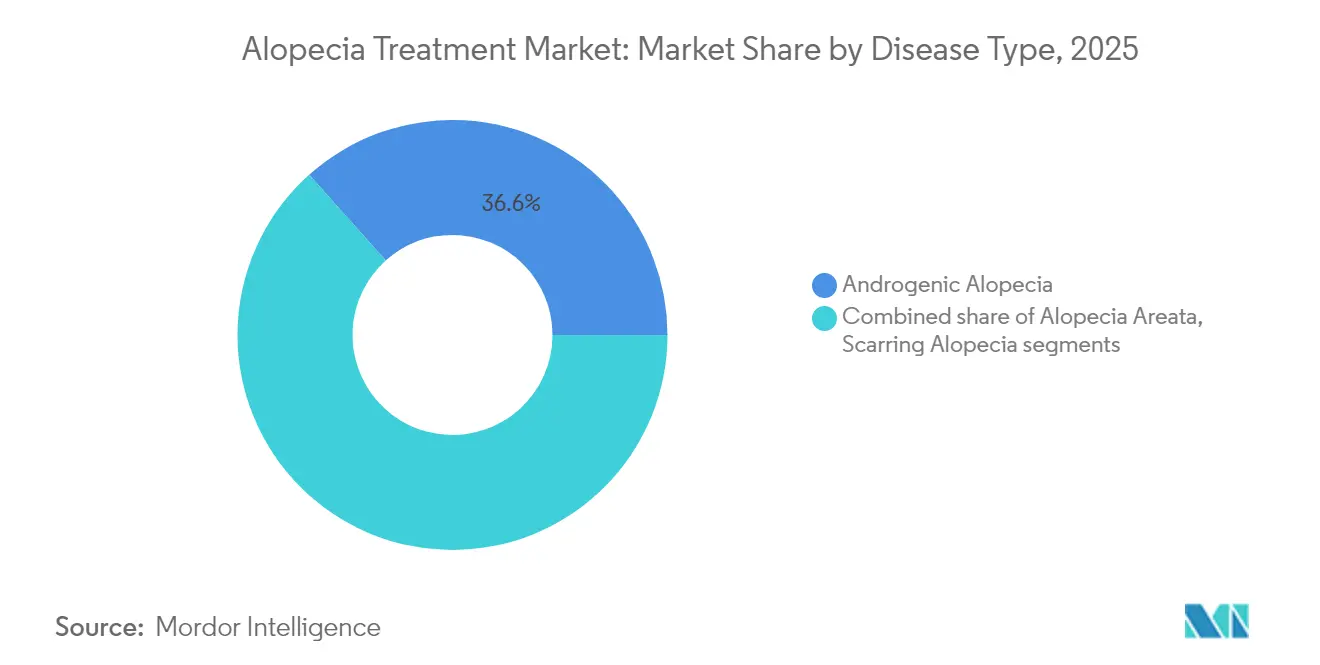
Androgenic Alopecia Dominance Faces Autoimmune InnovationAndrogenic alopecia maintained 36.62% of alopecia treatment market share in 2025, anchored by lifelong prevalence and the availability of low-cost minoxidil and generic finasteride. The alopecia treatment market size for this segment is set to expand steadily as legacy products remain first-line therapy. Yet disruption is imminent. Pelage Pharmaceuticals’ PP405 increased non-vellus hair counts sixfold in early trials by targeting mitochondrial pyruvate carriers, attracting USD 14 million from strategic investors. Alopecia totalis, benefiting from the same JAK class that revolutionized alopecia areata care, is pacing a 7.12% CAGR and could narrow the revenue gap by 2031. Pipeline reviews list more than 100 candidates against androgenic alopecia alone, signifying a shift toward mechanism-specific interventions.
Second-order effects include greater segmentation of autoimmune subtypes. Clinicians now stratify patients by interferon signature and cytokine dominance rather than surface presentation, tailoring immunomodulators accordingly. Traction alopecia—once addressed only by counseling and topical steroids—gains new interest as device-based offloading and regenerative adjuncts show promise in trials. Collectively, these trends point to an alopecia treatment market that will be defined by precision phenotyping and multi-modal combinations.

By Gender:
Male Market Leadership Challenged by Female Segment AccelerationMale consumers accounted for 62.14% of 2025 revenue owing to higher clinical prevalence and established cultural acceptance of treatment. However, women represent the fastest-growing cohort at 6.62% CAGR. AI-guided pattern recognition reveals diffuse, vertex-sparing presentations typical of female pattern hair loss, driving earlier diagnosis. Clinical data from deutuxolitinib showed stronger response rates in women under 50, prompting gender-specific dosing studies [clinicaltrials.gov]. As safety profiles improve, topical micro-encapsulated formulas avoid systemic exposure, overcoming historical teratogenicity concerns.
Tele-dermatology also narrows access gaps: discreet e-commerce kits deliver prescriptions, supplements, and low-level-laser devices to the doorstep, reducing stigma that once deterred female patients. Influencer-led education campaigns elevate hair loss from cosmetic worry to treatable medical condition, pushing the alopecia treatment market toward gender parity.
By Route of Administration:
Topical Dominance Challenged by Injectable InnovationTopicals retained 44.12% of 2025 revenue because of convenience and OTC availability. Nonetheless, injectables are on track for a 7.18% CAGR, propelled by PRP, advanced platelet fibrin, and investigational biologics such as AMP-303. This subsegment benefited from deeper follicular penetration and longer dosing intervals, answering adherence problems found in daily topical routines. The alopecia treatment market size for injectables will rise as clinicians bundle in-office sessions with at-home maintenance, creating hybrid revenue streams.
Orals remain vital for systemic autoimmune cases, yet safety monitoring burdens and black-box warnings limit broader use. Device-assisted topical delivery methods like microneedle patches blur category lines, offering near-injectable bioavailability without needles. Regulators see these localized systems as risk-reducing, fostering expedited pathways that will further diversify the alopecia treatment market.
By Distribution Channel:
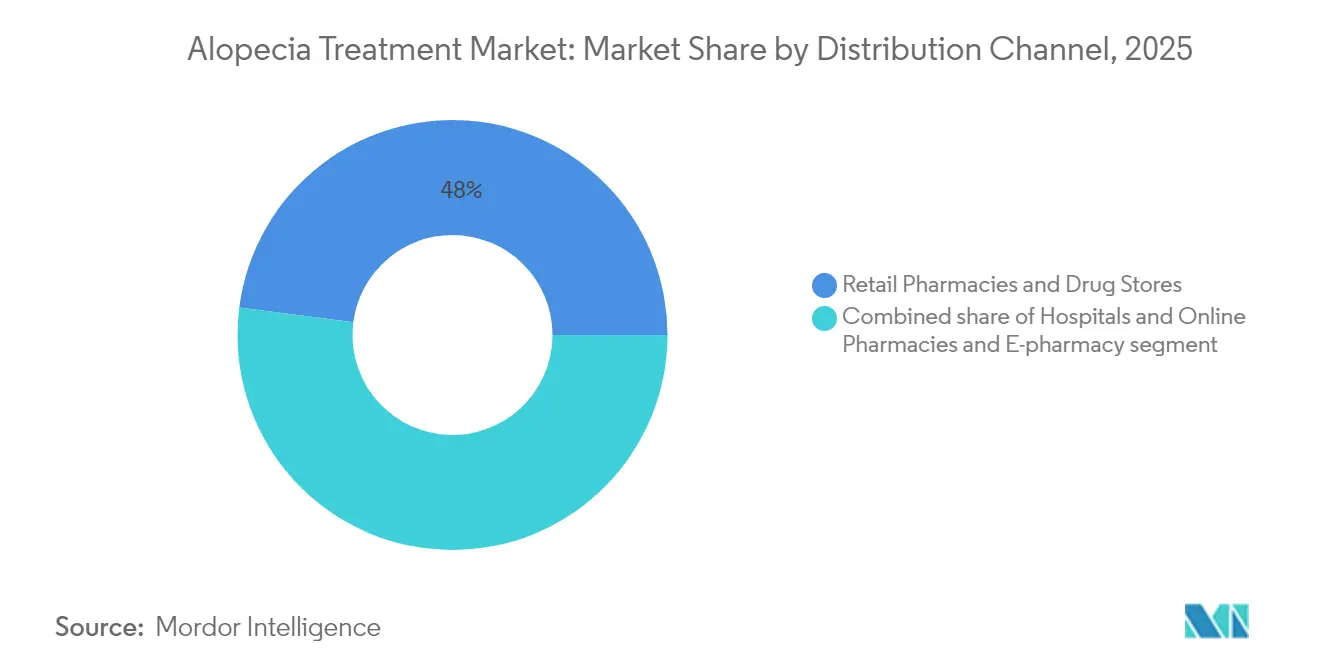
Retail Pharmacy Strength Meets Online DisruptionRetail outlets captured 47.95% of 2025 sales through insurance integration and pharmacist counseling, but online channels will post an 7.76% CAGR as unified tele-medicine portals cover consult, script, and fulfillment in one visit. Patients value discreet packaging and subscription pricing that lowers monthly costs. Digital-first firms use AI chat-bots to monitor side effects and renew prescriptions, supporting adherence and data capture that feed real-world evidence dashboards.
Hospital pharmacies focus on severe alopecia areata cases needing specialist monitoring. They stock JAK inhibitors and compounded formulas under risk-evaluation protocols. Yet their share will erode as cloud-based monitoring technologies allow community providers to handle complex regimens remotely. The evolving ecosystem forces incumbents to enhance e-commerce capabilities or partner with digital start-ups, reshaping revenue allocation within the alopecia treatment market.
By End-User:
Clinic Dominance Shifts Toward Homecare EmpowermentDermatology and aesthetic clinics generated 39.68% of 2025 income thanks to advanced diagnostics and procedural offerings. High-margin regenerative injections, hair-transplant surgeries, and compounded therapies keep clinics central. However, homecare devices are expanding at 7.52% CAGR, led by FDA-cleared laser helmets that deliver medical-grade photobiomodulation without regular office visits. The alopecia treatment market size flowing through home settings grows each quarter as insurers pilot remote-monitoring reimbursements.
Clinics respond by offering blended packages: a six-month PRP series paired with loaned laser caps and AI progress apps. This hybrid care delivers outcome continuity while protecting professional revenue. As at-home platforms integrate trichoscopy via smartphone attachments, follow-up visits become virtual, broadening reach and reinforcing the alopecia treatment market as a continuum rather than a place.
Geography Analysis
North America Alopecia Treatment (Hair Loss) Market
North America held 41.88% of 2025 revenue because FDA breakthrough designations accelerated three oral JAK inhibitor approvals within two years. Coverage determinations now classify severe alopecia areata as a reimbursable inflammatory disorder, easing patient cost burdens. Robust venture funding, exemplified by Pelage Pharmaceuticals’ USD 14 million infusion, supports a vibrant pipeline. Cross-border care remains common: U.S. residents travel to Mexico for lower-cost transplant surgery, while Canadian patients purchase compounded topicals from U.S. tele-pharmacies, tightening regional integration inside the alopecia treatment market.
APAC Alopecia Treatment (Hair Loss) Market
Asia-Pacific delivers the fastest 6.32% CAGR, anchored by China’s 250 million hair-loss population and rising middle-class healthcare spending. Kintor Pharmaceutical’s proxalutamide topical advanced into late-stage review, reflecting China’s push to localize innovation. Japan fast-tracked ritlecitinib in 2023 for intractable cases, while South Korea drives device leadership with domestic laser-cap manufacturing. Indian generics reduce systemic therapy costs, making once-premium treatments accessible to a broader cohort. As regulatory convergence improves, cross-licensing will help global brands enter local formularies.
Europe Alopecia Treatment (Hair Loss) Market
Europe sustains moderate growth through centralized EMA reviews that balance safety with innovation [ema.europa.eu]. National health systems reimburse partial costs after rigorous cost-effectiveness appraisals, producing predictable but slower uptake. Germany and the United Kingdom host academic-industry clusters that pioneer stem-cell and exosome research. Southern European countries see stronger demand for cosmetic surgery tourism, although economic constraints limit adoption of high-priced biologics, keeping the alopecia treatment market stratified by income.
Regulatory Landscape
Regulation in alopecia treatments remains bifurcated between rigorously reviewed prescription pharmacotherapies and broader controls aimed at compounding and distribution channels. In the United States, the FDA has established a clear pathway for severe alopecia areata, with multiple oral JAK inhibitors already approved. Sun Pharmaceutical Industries obtained FDA approval for LEQSELVI (deuruxolitinib) in July 2024 for adults with severe alopecia areata. In 2026, AbbVie advanced the next major filing wave by submitting an FDA application (April 2026) for upadacitinib (RINVOQ) for adults and adolescents with severe alopecia areata, reinforcing regulator focus on autoimmune hair-loss indications rather than cosmetic-pattern hair loss.
In Europe, the EMA and national agencies are expanding labeled access while tightening class-wide safety governance for JAK inhibitors. The EMA CHMP issued a positive opinion in February 2026 to extend Olumiant (baricitinib) to severe alopecia areata in patients aged 12 years and older. In June 2026, the CHMP issued a positive opinion for upadacitinib in severe alopecia areata for adults and adolescents (12+). The UK MHRA also approved deuruxolitinib (Leqselvi) in March 2026 via its International Recognition Procedure, illustrating faster reliance pathways for high-need dermatology indications. NICE has recommended ritlecitinib (Litfulo) within the NHS framework for severe alopecia areata in people aged 12+ (2024), linking regulatory status directly to reimbursement access in the UK.
Competitive Landscape
The alopecia treatment market exhibits moderate fragmentation with acquisitive momentum. Sun Pharma captured deuruxolitinib by acquiring Concert Pharmaceuticals for USD 576.0 million in 2023, instantly challenging Pfizer and Eli Lilly in the JAK space [sunpharma.com]. Aclaris Therapeutics licensed dermatology rights while retaining systemic indications, illustrating collaborative risk sharing. Device makers like Capillus and HairMax bypass prescription pathways through direct-to-consumer marketing and subscription financing, appealing to price-sensitive segments.
Future competition hinges on data integration. Platforms that couple prescription products with AI diagnostics and longitudinal outcome tracking differentiate on evidence rather than molecule alone. Intellectual-property moats widen as innovative delivery systems—microneedle arrays, hydrogel patches, and exosome carriers—secure patents beyond core actives. Consolidation is expected among tele-health operators seeking scale economies in pharmacy fulfillment and specialist staffing. Companies that demonstrate durable efficacy while managing safety signals will secure formulary preference and insurance backing, reinforcing leadership within the alopecia treatment market.
Alopecia Treatment (Hair Loss) Industry Leaders
-
Johnson & Johnson
-
Cipla Inc.
-
Merck & Co. Inc.
-
Pfizer Inc.
-
Eli Lilly and Company
- *Disclaimer: Major Players sorted in no particular order
Alopecia Treatment (Hair Loss) Market Companies Covered in this Report
- Aclaris Therapeutics
- Cipla
- Concert Pharmaceuticals
- Daiichi Sankyo
- GlaxoSmithKline
- HCell
- Johnson & Johnson
- Merck
- Sun Pharmaceuticals Industries
- Pfizer
- Eli Lilly and Company
- Dr. Reddy’s Laboratories
- Histogen Inc.
- Taisho Pharmaceutical Holdings
- Follica Inc.
- Sol-Gel Technologies
- Cosmo Pharmaceuticals
- Intas Pharmaceuticals
- Capillus LLC
- Bosley Inc.
- Abbvie
Market Opportunities and Future Outlook
Label expansion into adolescents (12+) creates commercial and clinical whitespace in severe alopecia areata, where therapy access has historically been constrained by off-label use and payer skepticism. The EMA CHMP positive opinion in February 2026 for Olumiant (baricitinib) to include severe alopecia areata in patients aged 12+ and the June 2026 positive CHMP opinion for AbbVie’s upadacitinib in the same indication point to intensifying competition around formally sanctioned use in younger populations. In parallel, AbbVie’s April 2026 FDA submission for upadacitinib in severe alopecia areata indicates that major immunology franchises are treating alopecia as an on-label extension opportunity, while also supporting real-world evidence generation and formulary negotiations as products move from early-adopter dermatology centers into broader specialist prescribing.
Safety governance around the JAK inhibitor class is also shaping near-term opportunity areas within the scoped market (prescription and OTC pharmacotherapies). The EMA PRAC discussion in July 2026 to update Litfulo (ritlecitinib) product information with safety warnings consistent with other JAK inhibitors underscores the need for differentiated risk-benefit positioning and for alternatives that reduce systemic exposure. This supports opportunities for companies pursuing non-JAK mechanisms and for delivery approaches designed to localize effect, including topical innovation, micro-encapsulated delivery, and other locally acting pharmacotherapies, alongside evidence packages that help payers classify severe alopecia areata as a medically managed inflammatory condition rather than a cosmetic concern.
Recent Industry Developments in Alopecia Treatment (Hair Loss) Market
- June 2026: AbbVie announced it received a positive CHMP opinion in the European Union recommending authorization of upadacitinib (RINVOQ) for adults and adolescents (12 years and older) with severe alopecia areata. The opinion expands the competitive JAK inhibitor set in Europe and raises the importance of differentiated safety monitoring and payer positioning as additional systemic options approach EU authorization.
- March 2025: Eli Lilly reported Phase 3 BRAVE-AA-PEDS results showing clinically meaningful hair regrowth outcomes in adolescents (12 to under 18) with severe alopecia areata treated with once-daily baricitinib. The data reinforced adolescent-focused development as a route to expand addressable, labeled demand beyond adult-only treatment paradigms.
- December 2024: Pfizer announced LITFULO (ritlecitinib) became available in Singapore following Health Sciences Authority approval for adults and adolescents (12+) with severe alopecia areata. The commercial availability in an Asia-Pacific market highlights multi-regional rollout strategies for JAK inhibitors and supports broader prescriber familiarity with systemic autoimmune alopecia pharmacotherapy.
Alopecia Treatment (Hair Loss) Market Report Scope and Research Methodology
Market Definition and Coverage
This market covers drug based treatment options used to manage clinically diagnosed alopecia and hair loss, including prescription and OTC therapies delivered through topical or systemic routes across major regions.
Scope exclusions: surgical hair restoration, cosmetic hair-care products, laser caps/devices, and nutraceutical supplements are excluded from this sizing.
Segments Covered in This Report
- By Disease Type
- Androgenic Alopecia
- Alopecia Areata
- Scarring (Cicatricial) Alopecia
- Traction Alopecia
- Alopecia Totalis
- By Gender
- Male
- Female
- By Route of Administration
- Oral
- Topical
- Injectable
- By Distribution Channel
- Hospitals
- Retail Pharmacies & Drug Stores
- Online Pharmacies & E-pharmacy Platforms
- By End-User
- Dermatology & Aesthetic Clinics
- Homecare Settings
- Geography
- North America
- United States
- Canada
- Mexico
- Europe
- Germany
- United Kingdom
- France
- Italy
- Spain
- Rest of Europe
- Asia-Pacific
- China
- Japan
- India
- Australia
- South Korea
- Rest of Asia-Pacific
- Middle East & Africa
- GCC
- South Africa
- Rest of Middle East & Africa
- South America
- Brazil
- Argentina
- Rest of South America
- North America
Data Sources, Market Sizing, and Validation
Desk Research
Desk work starts with mapping the demand pool and treatment pathway, so we can separate medically treated hair loss from general grooming spend. For the epidemiology layer, we use public sources such as WHO, CDC, and NIH publications. For therapy details, we rely on FDA drug databases and label updates to track approved indications and route of administration.
To ground the commercial side, we review national health expenditure tables and customs and trade statistics for relevant pharmaceutical categories, and we use peer-reviewed dermatology journals that discuss treatment adoption and outcomes. Annual reports, earnings decks, and product press releases help cross-check therapy mix changes and region level commentary. We also review company financials and intelligence subscriptions to maintain a consistent revenue history for relevant participants. This desk source list is illustrative only, and other public and paid references were used for collection, validation, and clarification.
Primary Interviews and Surveys
Primary work is used to test what we built from desk findings, especially around prescription share vs OTC share, switching behavior, and typical treatment duration by indication. We speak with a mix of manufacturers, distributors, dermatology focused clinicians, and pharmacy or channel stakeholders across the Americas, EMEA, and APAC, so assumptions can be adjusted when local practice patterns differ.
Distribution of primary research fieldwork respondents
| Company type | Respondent position | Region |
|---|---|---|
| Top tier: 37% | CXOs: 13% | APAC: 41% |
| Mid tier: 46% | Functional/Unit leaders: 30% | EMEA: 33% |
| Smaller Players: 17% | Managers: 57% | Americas: 26% |
Market-Sizing & Forecasting
Sizing begins with a top-down build where the treated alopecia population is reconstructed by region, and then linked to therapy utilization by route of administration and typical annualized treatment cost. The model uses practical inputs such as diagnosed prevalence by indication, dermatologist visit rates and prescription propensity, therapy adherence and discontinuation patterns, and the mix shift between topical and systemic regimens. When OTC spend is relevant, we keep it tied to therapy specific demand signals rather than broad hair-care categories.
After the first totals are built, they are corroborated through selective bottom-up checks such as sampled price per pack multiplied by estimated patient volumes. We also run supplier and channel checks on the share of prescriptions and refills. When gaps show up, they are handled by using proxy indicators (for example, similar dermatology drug classes in markets with limited reporting) and then validated again through follow-up expert inputs. Forecasts are produced using scenario analysis supported by expert consensus on diagnosis rates, access to dermatology care, and expected uptake of newer systemic options, followed by sensitivity checks on pricing and adherence.
Data Validation & Update Cycle
Outputs are validated by comparing them with independent signals such as therapy class growth, prescription trend direction, and region level healthcare spending patterns that are visible in public data. Outliers are flagged, assumptions are revisited, and any large variance triggers targeted re-checks with sources closest to that part of the value chain before the model is signed off.
The report is refreshed annually, with interim updates made when material events occur, such as a meaningful label change, reimbursement shift, or a major therapy launch that changes adoption. Before delivery, a final pass is done to ensure the latest public updates and primary feedback are reflected in the numbers clients receive.
Mordor Intelligence's Alopecia Treatment Hair Loss Market Size Compared Against Other Published Estimates
Published market values for alopecia treatment can be far apart because companies do not always count the same items, and they also use different year cutoffs and demand indicators. In practice, the biggest differences usually come from what gets counted as treatment versus what gets treated as a related consumer or service spend.
Hair transplant procedures sit outside Mordor Intelligence's scope in this report, and that single exclusion often explains why some published totals are materially higher. The spread also widens when one estimate includes laser devices, supplements, or broad hair-care products, or when pricing is projected using aggressive growth assumptions without re-checking therapy duration, refill behavior, and currency conversion timing by region.
Benchmark comparison
| Source | Market Size | Gaps in Research Methodology |
|---|---|---|
| Mordor Intelligence | USD 3.87 B (2026) | |
| Global Consultancy A | USD 10.76 B (2026) | Often includes revenues from consultations, diagnosis, hair restoration procedures, and laser therapy devices, which expands the spend base beyond drug therapies. The definition can also blend hair growth shampoos and other adjacent product categories into the same total. |
| Industry Publisher B | USD 4.14 B (2024) | Typically uses a wider treatment basket that may include devices, herbal or natural remedies, and transplant services, which lifts the starting market value. Year alignment and a higher growth case for newer modalities can further widen the gap versus a drug-only treatment scope. |
Taken together, the table shows that the main driver of variation is not the math, it is the spending boundary and the year used for the headline value. By keeping the model traceable to diagnosed patients, therapy utilization, and observable pricing, we can explain each adjustment step and keep the final number repeatable when assumptions are updated.
Key Questions Answered in the Report
How big is the alopecia treatment market today?
The alopecia treatment market stood at USD 3.87 billion in 2026 and is forecast to reach USD 5.05 billion by 2031 at a 5.46% CAGR.
Which disease segment grows the fastest through 2031?
Alopecia totalis is the fastest-growing disease segment, registering a 7.12% CAGR over the forecast period.
Why are JAK inhibitors considered game changers?
Three FDA-approved JAK inhibitors can restore 80% or more scalp coverage in about one-third of severe alopecia areata patients, surpassing historical response rates from steroids.
What role does AI play in hair-loss management?
AI scalp-image analysis personalizes therapy selection and tracks progress, improving hair-growth outcomes by nearly 78% in controlled studies and expanding remote-care options.
Which region is expanding the quickest?
Asia-Pacific leads growth at a 6.32% CAGR, fueled by China’s large patient base, faster regulatory approvals, and local manufacturing that lowers therapy costs.
Are at-home laser devices effective?
FDA-cleared low-level-laser helmets improve cellular activity and microcirculation, offering a non-drug option that complements pharmacologic or regenerative treatments.