
Alcohol Prep Pads Market Size and Share
Market Overview
| Study Period | 2020 - 2031 |
|---|---|
| Market Size (2026) | USD 1.05 Billion |
| Market Size (2031) | USD 1.41 Billion |
| Growth Rate (2026 - 2031) | 6.20 % |
| Fastest Growing Market | Asia-Pacific |
| Largest Market | North America |
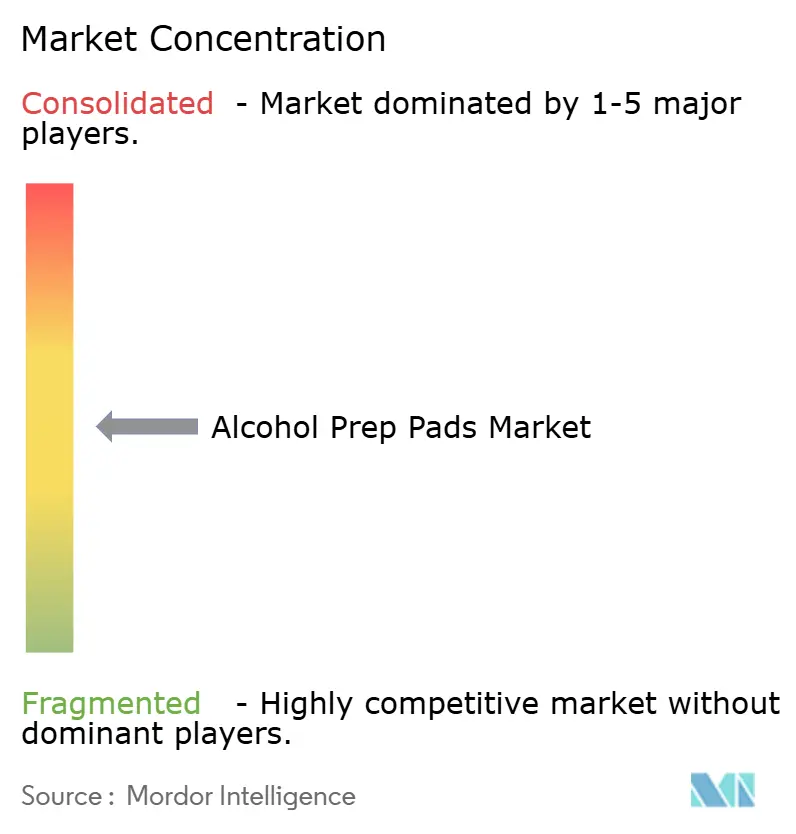
| Market Concentration | Medium |
Major Players *Disclaimer: Major Players sorted in no particular order Image © Mordor Intelligence. Reuse requires attribution under CC BY 4.0. | |
Alcohol Prep Pads Market Analysis by Mordor Intelligence
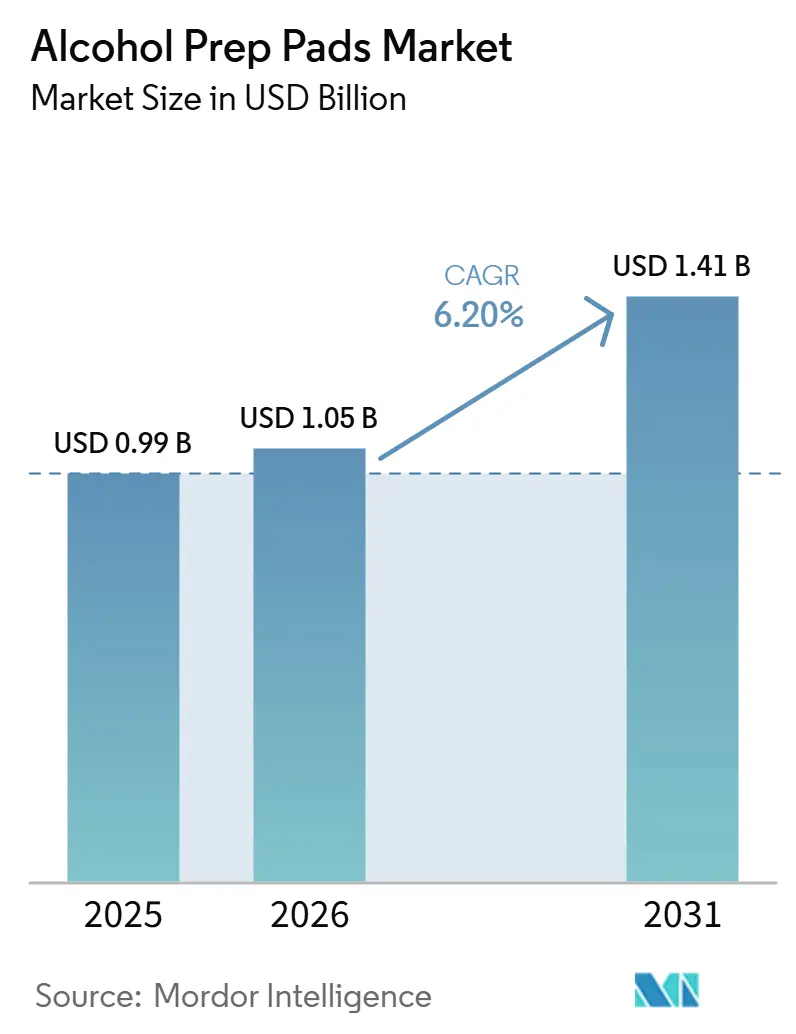
The Alcohol Prep Pads Market size is expected to grow from USD 0.99 billion in 2025 to USD 1.05 billion in 2026 and is forecast to reach USD 1.41 billion by 2031 at 6.20% CAGR over 2026-2031.
Routine injections, venipuncture, infusion, and surgical care support demand, as skin preparation remains a standard clinical requirement. Chronic therapies administered through injections drive repeat purchases across hospitals, outpatient facilities, pharmacies, and home-care settings. The shift of procedures to ambulatory surgical centers (ASCs) expands the number of care locations requiring compliant, individually packaged products. Recent contamination and subpotency recalls have increased scrutiny of manufacturing controls, lot documentation, and supplier qualification. These factors favor suppliers with dependable distribution and clear quality records across the alcohol prep pads market.
Key Report Takeaways
- By sterility, sterile pads held 65.45% of the alcohol prep pads market share in 2025 and are projected to grow at a 7.15% CAGR through 2031.
- By active ingredient, isopropyl alcohol held 86.56% of the 2025 value, while ethyl alcohol is projected to grow at an 8.80% CAGR through 2031.
- By application, medical applications accounted for 38.66% of the alcohol prep pads market share in 2025, while surgical prep is projected to grow at a 7.45% CAGR through 2031.
- By end user, hospitals and clinics held 45.78% of 2025 value, while ASCs are projected to record an 8.56% CAGR through 2031.
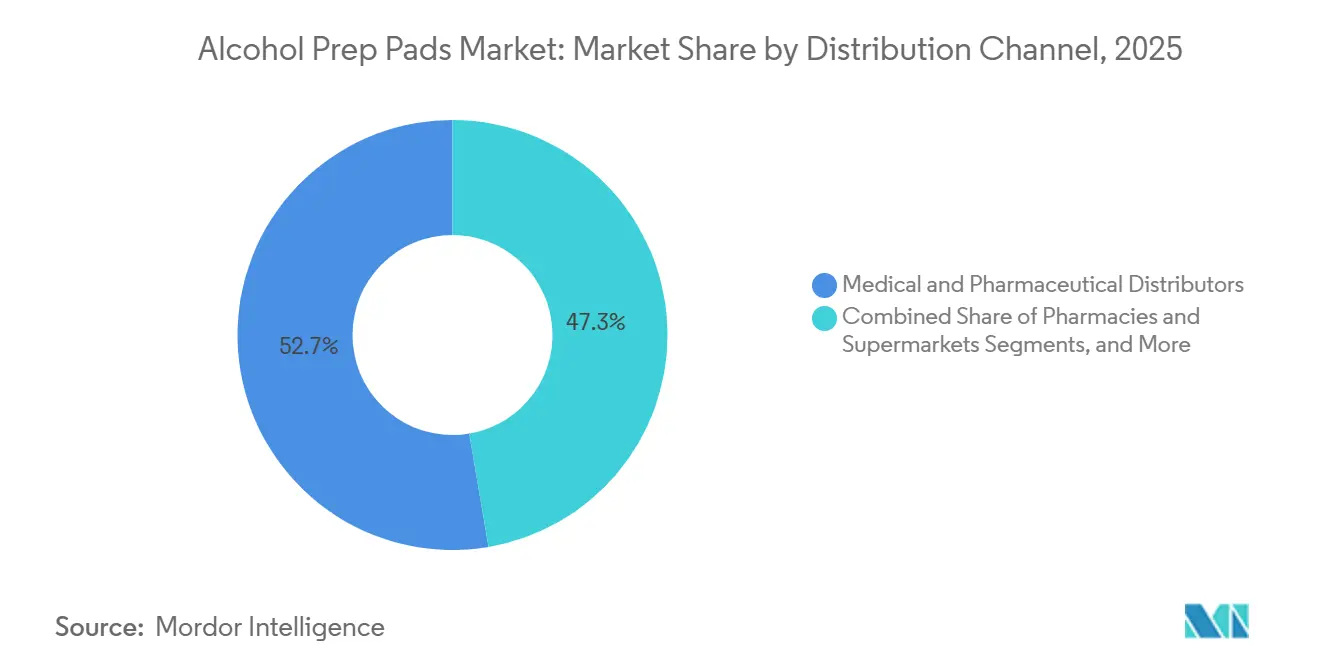
- By distribution channel, medical and pharmaceutical distributors accounted for 52.67% of 2025 value, while pharmacies and supermarkets are forecast to expand at a 9.55% CAGR through 2031.
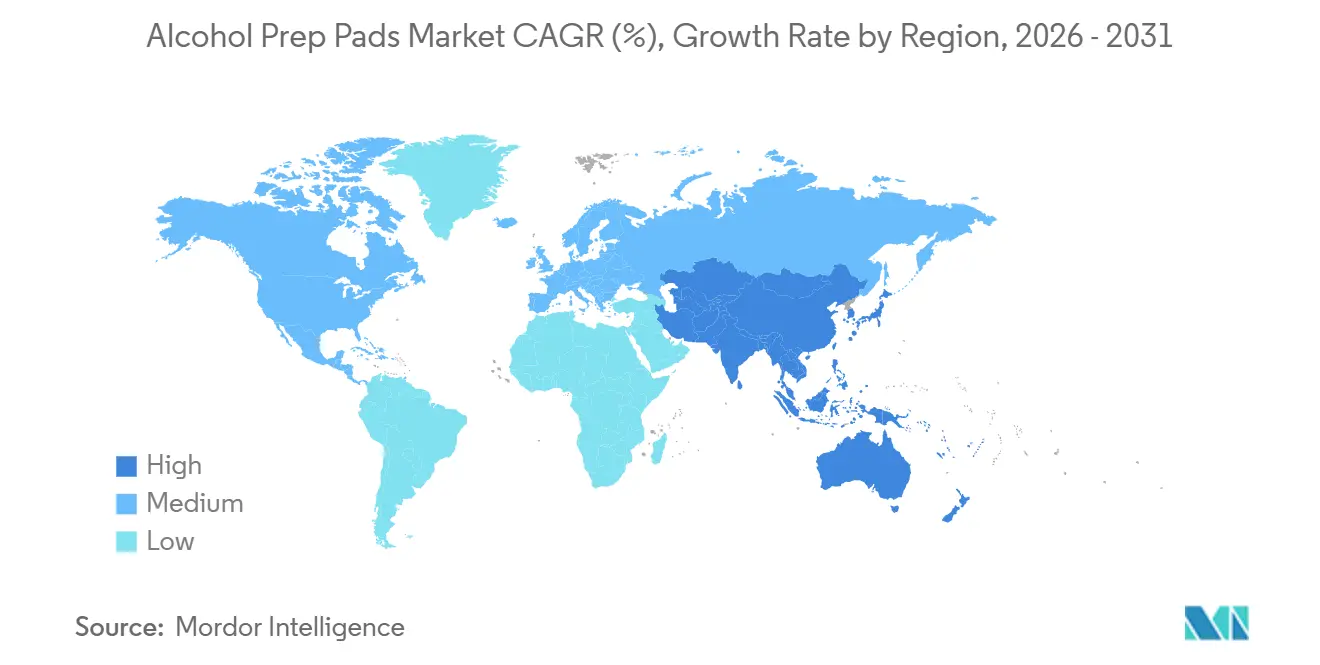
- By geography, North America held 40.77% of the segment in 2025, while Asia-Pacific is projected to grow at a 8.80% CAGR through 2031.
Note: Market size and forecast figures in this report are generated using Mordor Intelligence’s proprietary estimation framework, updated with the latest available data and insights as of January 2026.
Market Trends and Insights
Drivers Impact Analysis of Alcohol Prep Pads Market*
| DRIVER | (~) % IMPACT ON CAGR FORECAST | GEOGRAPHIC RELEVANCE | IMPACT TIMELINE |
|---|---|---|---|
| Injection volumes and ambulatory infection control | +1.6% | Global, with strong relevance in North America and Europe | Long term (≥ 4 years) |
| Self-administration and retail access | +1.1% | Global, with early gains in North America, Europe, and APAC | Medium term (2-4 years) |
| Individually packaged ready-to-use supplies | +0.6% | North America and APAC | Short term (≤ 2 years) |
| Traceable low-contamination skin-prep supplies | +0.5% | North America, Europe, and Japan | Long term (≥ 4 years) |
| Retail and e-commerce access to low-unit-price medical consumables | +1.1% | Global, with early gains in North America, Europe, and APAC | Medium term (2-4 years) |
| Qualification demand for traceable, low-contamination skin-prep supplies | +0.6% | North America and APAC | Short term (≤ 2 years) |
| Source: Mordor Intelligence | |||
Growing Injection and Venipuncture Volumes
Injection and venipuncture activity provides a stable foundation for the alcohol prep pads market, as most procedures require skin preparation before needle access. The World Health Organization estimates that more than 16 billion injections are administered worldwide each year, with 90% delivered for curative care.[1]U.S. Food and Drug Administration, “Cardinal Health Issues Voluntary Nationwide Recall of Webcol Large Alcohol Prep Pad,” U.S. Food and Drug Administration, fda.gov Chronic diabetes treatment, biologic therapies, and other subcutaneous medicines extend this requirement beyond acute care settings. Hospitals, laboratories, infusion centers, and home-care patients use prep pads in repeated care routines, supporting recurring consumption and supplier opportunities across institutional and consumer-facing channels.
Infection-Prevention Compliance in Ambulatory Care
Ambulatory care providers require reliable skin-preparation supplies as procedure volumes shift outside inpatient hospitals. Infection-prevention expectations apply to injection, intravenous access, and surgical preparation workflows in these settings. The United Kingdom Health Security Agency directed NHS providers to use sterile products for intravascular device care after a 2025 Burkholderia stabilis outbreak linked to non-sterile wipes.[2]UK Health Security Agency and NHS Supply Chain, “Potential Contamination of Non-Sterile Alcohol-Free Skin Cleansing Wipes with Burkholderia spp: Measures to Reduce Patient Risk,” NHS Supply Chain, supplychain.nhs.uk This directive highlights the growing focus on sterility, packaging, and price, supporting demand for clinical-grade products across the alcohol prep pads market.
Expansion of Self-Administration and Home-Based Care
Home-based injectable therapy changes where patients purchase and use alcohol prep pads. Patients managing insulin, biologics, and other injected medicines can buy these products through pharmacies and online channels rather than institutional supply systems. The American Diabetes Association reported that diabetes care costs in the United States exceeded USD 412 billion annually, demonstrating the scale of ongoing disease management.[3]American Diabetes Association, “The Cost of Diabetes,” American Diabetes Association, diabetes.org Regular self-administration can generate repeat demand for small, individually packed supplies with clear instructions, practical packaging, and dependable availability.
Retail and E-Commerce Access to Low-Unit-Price Medical Consumables
Retail and e-commerce channels make alcohol prep pads more accessible to patients who manage care at home. Subscription replenishment and routine pharmacy purchases can support repeat sales for products used alongside chronic therapies. Consumer channels favor visible branding, accessible pack sizes, and reliable availability while helping manufacturers reach customers beyond large hospital contracts. However, online and retail distribution can increase price comparison and make generic alternatives easier to find, requiring suppliers to balance convenience, quality, and branding.
Restraints Impact Analysis of Alcohol Prep Pads Market*
| RESTRAINT | (~) % IMPACT ON CAGR FORECAST | GEOGRAPHIC RELEVANCE | IMPACT TIMELINE |
|---|---|---|---|
| Commodity pricing, private labels, and input-cost volatility | -0.4% | Global, with heightened pressure in APAC, Europe, and MEA | Long term (≥ 4 years) |
| Recall exposure and variation in skin-antisepsis practices | -0.2% | North America and Europe | Short term (≤ 2 years) |
| Microbial contamination and recall exposure | -0.9% | Global, with the strongest effect in markets without public research and development support | Long term (≥ 4 years) |
| Clinical variation in whether skin antisepsis is required | -0.8% | North America and Europe, with later pressure in Asia-Pacific and Middle East and Africa | Short term (≤ 2 years) |
| Source: Mordor Intelligence | |||
Commodity-Like Pricing and Private-Label Substitution
Standard 2-ply isopropyl alcohol pads face pricing pressure as buyers often view them as comparable supplies. Group purchasing contracts prioritize unit cost, especially for high-volume institutional orders, while private-label products offer retailers and distributors alternatives to established brands. Contract manufacturing capacity in Asian medical consumables clusters intensifies price competition across standard specifications. Input-cost fluctuations for isopropyl alcohol and nonwoven materials can constrain margins under fixed-price contracts, making scale, production control, and differentiated quality documentation important in the alcohol prep pads market.
Alcohol and Nonwoven Input-Cost Volatility
Isopropyl alcohol and spunlace nonwoven fabric are key inputs for alcohol prep pads, and their costs can fluctuate with petroleum-linked feedstocks, freight rates, and international supply conditions. Manufacturers with fixed-price supply agreements can face margin pressure when raw material costs rise before contract prices are adjusted. Dependence on cross-border supply chains can expose buyers to currency and transport fluctuations. Companies may respond with longer procurement agreements, multiple suppliers, or tighter inventory planning, while cost volatility can slow investment in lower-margin product lines within the alcohol prep pads market.
*Our forecasts treat driver/restraint impacts as directional, not additive. The impact forecasts reflect baseline growth, mix effects, and variable interactions.
Alcohol Prep Pads Market Segment Analysis
By Sterility:
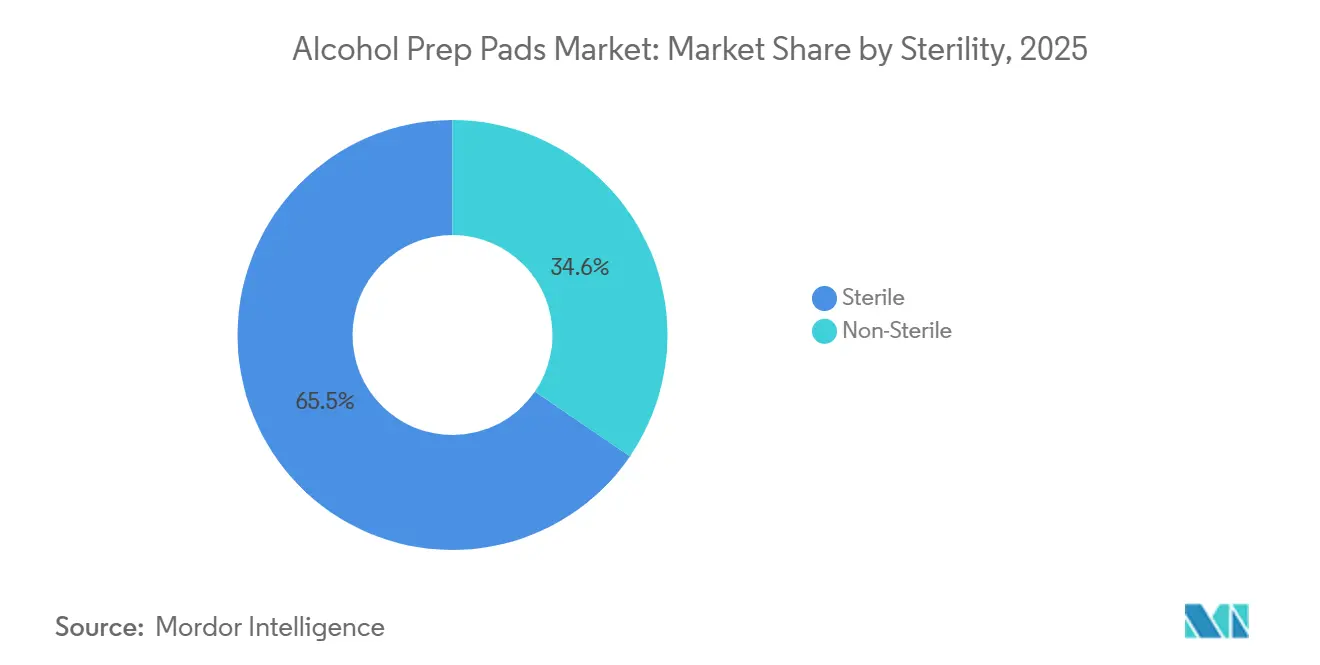
Sterile Products Gain Preference as Safety Requirements Shape ProcurementSterile pads held 65.45% of the alcohol prep pads market share in 2025 and are forecast to grow at a 7.15% CAGR through 2031. The category benefits from clinical requirements for products used around invasive devices and sensitive patient groups. The UK Health Security Agency issued a National Patient Safety Alert in February 2025 after an outbreak linked to non-sterile wipes. The alert directed NHS providers to use sterile products for intravascular device care, reinforcing sterility as a key factor in hospital procurement.
The March 2026 Cardinal Health recall showed that sterile-product supply still required strict control over manufacturing and packaging. Hospitals may assess both the sterile claim and the supplier’s ability to document lot quality. Non-sterile pads remain relevant for general cleaning, consumer first aid, and lower-acuity tasks. However, stronger patient-safety priorities continue to support sterile formats in the alcohol prep pads market.


By Active Ingredient:
Isopropyl Alcohol Remains Established While Ethyl Alcohol Adds a Specialized OptionIsopropyl alcohol commanded 86.56% of active-ingredient value in 2025, reflecting its established use in injection and venipuncture workflows. A 2024 study found that 70% isopropyl alcohol-impregnated products reduced microbial colonization of needleless connectors in pediatric oncology patients. Rapid evaporation, clinical familiarity, and recognition in institutional specifications support its use across hospitals and consumer first-aid products. This familiarity helps standardize purchasing across large health systems.
Ethyl alcohol pads are forecast to grow at an 8.80% CAGR through 2031, making them the fastest-growing active-ingredient category. Their growth is linked to demand in regulated healthcare and pharmaceutical environments that use distinct alcohol formulations. European pharmaceutical settings and Japanese product approval pathways can support specialized demand for ethanol-based antiseptic products. Suppliers with both formulations can address varied regulatory and clinical preferences.
By Application:
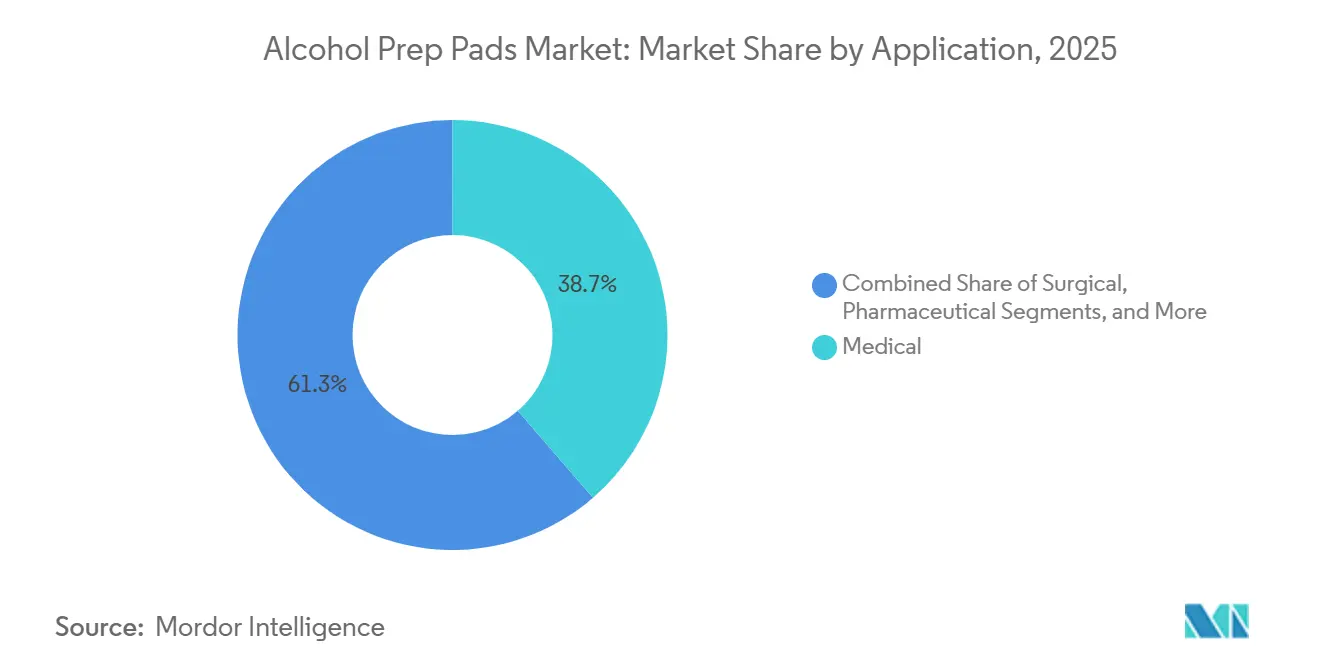
Surgical Preparation Advances with Outpatient Procedure ActivityMedical applications held 38.66% of the alcohol prep pads market size in 2025, supported by routine diagnostics, infusions, injections, and clinical examinations. These applications use high volumes of individually wrapped pads across hospitals, clinics, and blood-collection settings. Surgical preparation is forecast to grow at a 7.45% CAGR through 2031 as more procedures move to outpatient facilities, including ASCs. This shift increases the importance of product quality and clinical consistency.
Pharmaceutical applications use prep products in controlled production and clean-room settings. These buyers may prioritize material quality, product documentation, and packaging integrity over the lowest unit price. Other applications include consumer first aid and industrial hygiene, which broaden demand beyond formal clinical care. Routine medical use and expanding surgical activity continue to support demand across application environments.

By End User:
Hospitals Remain the Core Buyer While ASCs Expand FasterHospitals and clinics accounted for 45.78% of alcohol prep pads market value in 2025 due to high procedure volumes and strict infection-prevention routines. Their purchasing is frequently managed through distributors and group purchasing arrangements. These organizations value dependable supply, standardized product specifications, and clear quality documentation. Broad use across diagnostics, medication administration, infusion services, and inpatient care maintains their central role.
ASCs are forecast to grow at an 8.56% CAGR through 2031, the fastest rate among end-user groups. Their growth reflects the wider movement of procedures into lower-cost outpatient settings. Each facility needs products for injection, intravenous access, procedural preparation, and recovery workflows. Suppliers serving both hospital systems and distributed outpatient networks are better placed to capture these end-user needs.
By Distribution Channel:
Institutional Distributors Lead While Pharmacies and Supermarkets Grow FastestMedical and pharmaceutical distributors held 52.67% of 2025 value, maintaining their role as the largest distribution channel. Their contracts allow hospitals and clinics to purchase prep pads with a wider range of medical consumables. This approach simplifies purchasing, inventory management, and delivery for institutional customers. Their scale gives them strong influence over branded, private-label, and contract-manufactured product selections.
Pharmacies and supermarkets are projected to grow at a 9.55% CAGR through 2031, the highest rate among distribution channels. Home-based treatment creates a need for supplies that patients can buy conveniently with other therapy items. E-commerce provides another route for repeat purchases and subscriptions. The growing mix of distributors, retail outlets, online sellers, and direct contracts requires suppliers to manage distinct pricing and packaging needs.
Geography Analysis
North America Alcohol Prep Pads Market
North America held 40.77% of the alcohol prep pads market share in 2025, supported by a strong network of hospitals, clinics, and ASCs. The United States generated substantial demand across injection, infusion, diagnostic, and surgical workflows. FDA oversight of over-the-counter antiseptic products emphasized active ingredient concentration, labeling, and product quality. The 2026 recall of Cardinal Health Webcol pads reinforced the need for robust supplier quality control. Group purchasing organizations influenced hospital procurement and set high supplier requirements, while Canada and Mexico added demand through provincial healthcare systems, private clinics, and broader healthcare access.
APAC Alcohol Prep Pads Market
Asia-Pacific is forecast to grow at a 7.88% CAGR through 2031, making it the fastest-growing regional part of the alcohol prep pads market. China and India support demand through expanding outpatient infrastructure and rising domestic production capacity. China’s manufacturing clusters also support private-label and export supply, increasing price competition. India’s developing hospital network creates demand beyond major cities, while Japan, South Korea, and Australia support demand for quality-compliant and premium institutional products.
EMEA and South America Alcohol Prep Pads Market
Europe has demand supported by antiseptic protocols and established public healthcare systems in Germany, the United Kingdom, and France. The UK safety alert on non-sterile wipes strengthened procurement preferences for sterile products used in intravascular device care. Compliance requirements benefit suppliers with registered formulations and credible quality systems. The Middle East and Africa have demand linked to hospital expansion programs in Gulf Cooperation Council countries, while South America offers longer-term potential as public health investment develops, although economic conditions can affect institutional purchasing.

Competitive Landscape
The alcohol prep pads market has a moderately concentrated institutional tier and a fragmented manufacturing base. Large healthcare suppliers serve institutional customers through hospital contracts, distributor networks, and compliance capabilities. Cardinal Health offers Webcol products, while Medline Industries markets CURAD products through broad healthcare distribution networks. Becton Dickinson, B. Braun SE, Nipro Corporation, and Robinson Healthcare Ltd also compete through established healthcare relationships and regional capabilities. Smaller manufacturers and private-label suppliers compete aggressively in standard isopropyl alcohol products, creating strong price pressure for products without a clear quality or channel advantage.
Quality assurance is becoming increasingly important in the alcohol prep pads market. Cardinal Health issued a voluntary nationwide recall of Webcol Large Alcohol Prep Pads in March 2026 after identifying microbial contamination. The FDA later classified the action as a Class I recall. This incident increased the importance of lot traceability, validated manufacturing, and reliable packaging controls. Suppliers that can document these capabilities may strengthen their position with hospital procurement teams, while the UK safety alert has also supported sterile-product requirements for intravascular device care.
Companies also compete through product design and channel coverage. Ethanol-specific formulations support targeted offerings for European pharmaceutical and regulated healthcare settings, while skin-conditioning products address patients requiring repeated injections. One-handed packaging improves usability in home-care settings. PDI Healthcare and GAMA Healthcare differentiate through broader infection-prevention product bundles and related clinical-use products, while established distributors use existing customer access to maintain a strong position in hospital procurement.
Alcohol Prep Pads Industry Leaders
Becton, Dickinson and Company
Cardinal Health, Inc.
McKesson Corporation
Medline Industries, LP
Dynarex Corporation
- *Disclaimer: Major Players sorted in no particular order
Alcohol Prep Pads Market Companies Covered in this Report
- AdvaCare
- Avantor
- B. Braun
- Baxter
- Beckton Dickinson
- Cardinal Health
- Diamond Wipes International, Inc.
- DUKAL Corporation
- Dynarex
- GAMA Healthcare Ltd.
- Henry Schein
- Mckesson
- Medline Industries
- Medtronic
- Nipro
- PDI Healthcare, Inc.
- Robinson Healthcare Ltd.
- Shanghai Yinjing Medical Supplies Co., Ltd.
- Thermo Fisher Scientific
- Unomedical a/s

Recent Industry Developments in Alcohol Prep Pads Market
- July 2026: The FDA issued an early alert on specific BD ChloraPrep applicator lots in Medline convenience kits due to potential sterility breaches, prompting Medline to remove affected kits from points of use and highlighting third-party kit assembly risks.
- March 2026: Cardinal Health issued a voluntary nationwide Class I recall of Webcol Large Alcohol Prep Pads with 70% IPA due to Paenibacillus phoenicis contamination across select lots distributed in the United States, Puerto Rico, and Japan.
- February 2025: The UK Health Security Agency and the MHRA issued National Patient Safety Alert NatPSA/2025/002 after a Burkholderia stabilis outbreak linked to non-sterile wipes, requiring NHS providers to use sterile products for intravascular device care.


Global Alcohol Prep Pads Market Report Scope
As per the scope of the report, alcohol prep pads are small, sterile, disposable wipes saturated with a 70% solution of isopropyl or ethyl alcohol. They function as topical antiseptics to clean and disinfect the skin prior to injections, blood draws, or finger-prick glucose tests, helping to prevent harmful bacteria from entering the body.
The alcohol prep pads market is segmented by sterility, active ingredient, application, end user, distribution channel, and geography. By sterility, the market includes sterile and non-sterile. By active ingredient, the market is segmented into isopropyl alcohol, ethyl alcohol, and others. By application, the market is categorized into medical, surgical, pharmaceutical, and others. By end user, the market is segmented into hospitals and clinics, ambulatory surgical centers, diagnostic and blood collection centers, and others. By distribution channel, the market is segmented into direct institutional procurement, medical and pharmaceutical distributors, pharmacies and supermarkets, e-commerce, and others. By geography, the market is analyzed across North America, Europe, Asia-Pacific, the Middle East and Africa, and South America. The report also covers the estimated market sizes and trends for 17 countries across major regions globally. The report offers the market sizes and forecasts in terms of value (USD) for the above segments.
| Sterile |
| Non-Sterile |
| Isopropyl Alcohol |
| Ethyl Alcohol |
| Others |
| Medical |
| Surgical |
| Pharmaceutical |
| others |
| Hospitals and Clinics |
| Ambulatory Surgical Centers |
| Diagnostic and Blood-Collection Centers |
| Others |
| Direct Institutional Procurement |
| Medical and Pharmaceutical Distributors |
| Pharmacies and Supermarkets |
| E-Commerce |
| Others |
| North America | United States |
| Canada | |
| Mexico | |
| Europe | Germany |
| United Kingdom | |
| France | |
| Italy | |
| Spain | |
| Rest of Europe | |
| Asia-Pacific | China |
| India | |
| Japan | |
| Australia | |
| South Korea | |
| Rest of Asia-Pacific | |
| Middle East and Africa | GCC |
| South Africa | |
| Rest of Middle East and Africa | |
| South America | Brazil |
| Argentina | |
| Rest of South America |
| By Sterility | Sterile | |
| Non-Sterile | ||
| By Active Ingredient | Isopropyl Alcohol | |
| Ethyl Alcohol | ||
| Others | ||
| By Application | Medical | |
| Surgical | ||
| Pharmaceutical | ||
| others | ||
| By End User | Hospitals and Clinics | |
| Ambulatory Surgical Centers | ||
| Diagnostic and Blood-Collection Centers | ||
| Others | ||
| By Distribution Channel | Direct Institutional Procurement | |
| Medical and Pharmaceutical Distributors | ||
| Pharmacies and Supermarkets | ||
| E-Commerce | ||
| Others | ||
| By Geography | North America | United States |
| Canada | ||
| Mexico | ||
| Europe | Germany | |
| United Kingdom | ||
| France | ||
| Italy | ||
| Spain | ||
| Rest of Europe | ||
| Asia-Pacific | China | |
| India | ||
| Japan | ||
| Australia | ||
| South Korea | ||
| Rest of Asia-Pacific | ||
| Middle East and Africa | GCC | |
| South Africa | ||
| Rest of Middle East and Africa | ||
| South America | Brazil | |
| Argentina | ||
| Rest of South America | ||


Key Questions Answered in the Report
What is the projected value of the alcohol prep pads market by 2031?
The alcohol prep pads market is projected to reach USD 1.41 billion by 2031, from USD 1.05 billion in 2026, at a CAGR of 6.20%.
Which alcohol prep pad type has the largest share?
Sterile pads held 65.45% of 2025 value and are forecast to grow at a 7.15% CAGR through 2031.
Which active ingredient is growing fastest in alcohol prep pads?
Ethyl alcohol pads are forecast to grow at an 8.80% CAGR through 2031, while isopropyl alcohol held 86.56% of 2025 value.
Why are ambulatory surgical centers important for demand?
ASCs are forecast to grow at an 8.56% CAGR through 2031 and require products for injection, intravenous access, and procedural preparation.
Which distribution channel is expanding fastest?
Pharmacies and supermarkets are projected to grow at a 9.55% CAGR through 2031 as home-based therapy increases retail demand.
What are the main quality risks for alcohol prep pad suppliers?
Microbial contamination, subpotent active ingredients, inadequate packaging, and incomplete lot traceability can lead to recalls and tighter procurement requirements.
Page last updated on:


 Your data is secure and never sold or shared.


