
Alagille Syndrome Treatment Market Size and Share
Market Overview
| Study Period | 2020 - 2031 |
|---|---|
| Market Size (2026) | USD 0.95 Billion |
| Market Size (2031) | USD 1.41 Billion |
| Growth Rate (2026 - 2031) | 8.22 % |
| Fastest Growing Market | Asia-Pacific |
| Largest Market | North America |
| Market Concentration | Medium |
Major Players *Disclaimer: Major Players sorted in no particular order Image © Mordor Intelligence. Reuse requires attribution under CC BY 4.0. | |
Alagille Syndrome Treatment Market Analysis by Mordor Intelligence
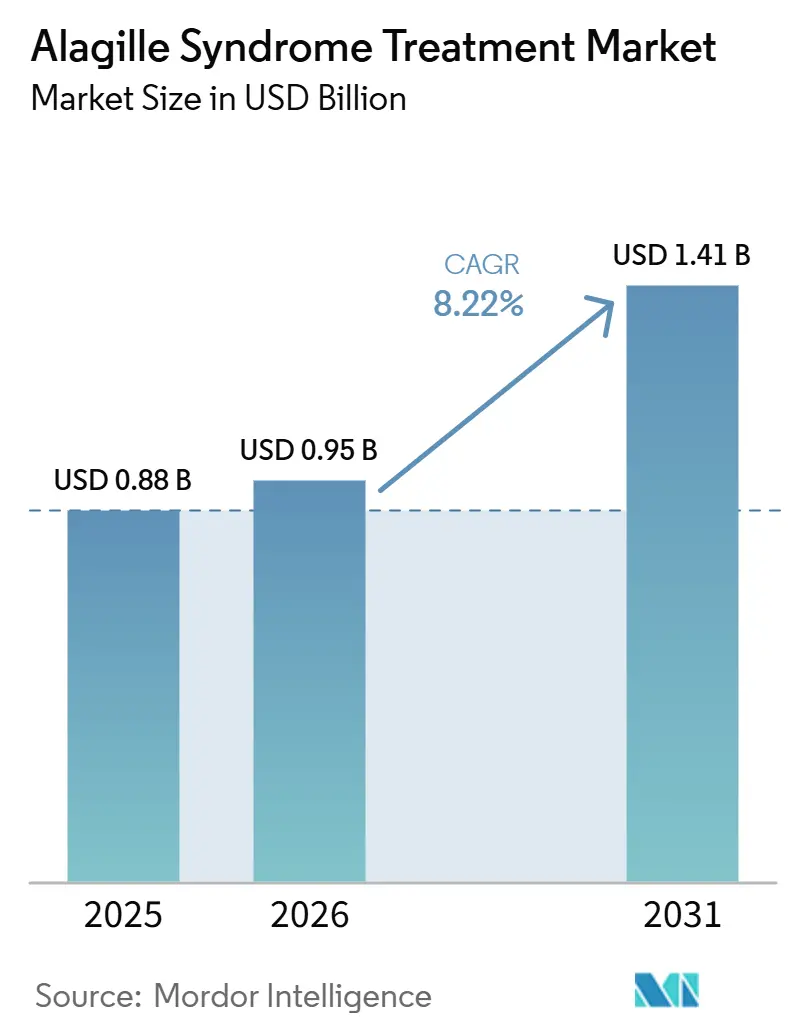
The Alagille Syndrome Treatment Market size is projected to expand from USD 0.88 billion in 2025 and USD 0.95 billion in 2026 to USD 1.41 billion by 2031, registering a CAGR of 8.22% between 2026 to 2031.
The Alagille syndrome treatment market is being shaped by the commercialization of ileal bile acid transporter (IBAT) inhibitors and the recognition of cholestatic pruritus as a treatment endpoint supporting reimbursement decisions. Maralixibat and odevixibat have expanded treatment options in several countries, while formulation changes and age-based label expansions can help bring patients into care earlier. Wider use of next-generation sequencing is identifying more patients with JAG1- and NOTCH2-associated disease, expanding the potential pool for specialist treatment. However, limited diagnosed patient numbers, lengthy reimbursement processes, and treatment discontinuation risks continue to limit uptake.
Key Report Takeaways
- By treatment modality, pharmacological therapy held 61.24% of the Alagille syndrome treatment market share in 2025, while surgical intervention is projected to grow at a 9.15% CAGR through 2031.
- By drug class and active ingredient, ileal bile acid transporter inhibitors accounted for 38.55% of the segment in 2025, while maralixibat is projected to grow at a 10.80% CAGR through 2031.
- By route of administration, oral formulations held 81.45% of the segment in 2025, while injectable and parenteral therapy are projected to grow at a 7.45% CAGR through 2031.
- By patient age group, children aged 1 to 11 years held 65.00% of the segment in 2025, while adolescents aged 12 to 17 years are projected to grow at an 8.56% CAGR through 2031.
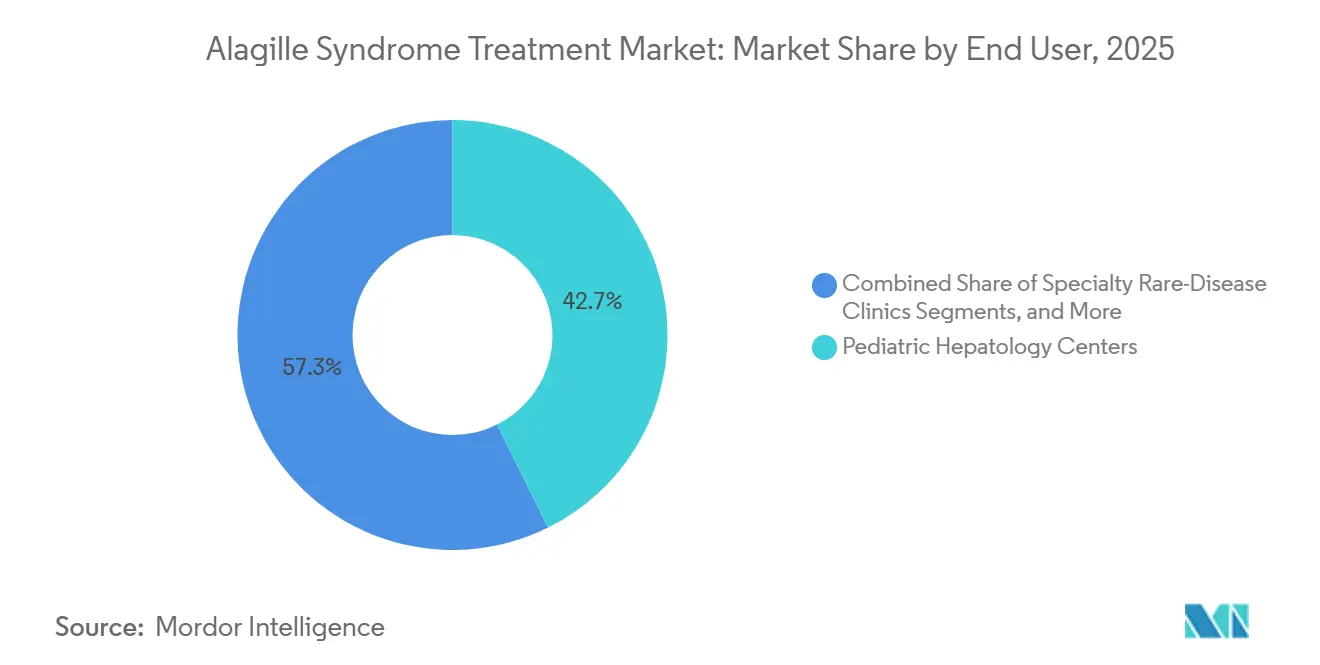
- By end user, pediatric hepatology centers held 42.67% of the segment in 2025, while specialty genetic clinics are projected to grow at a 10.55% CAGR through 2031.
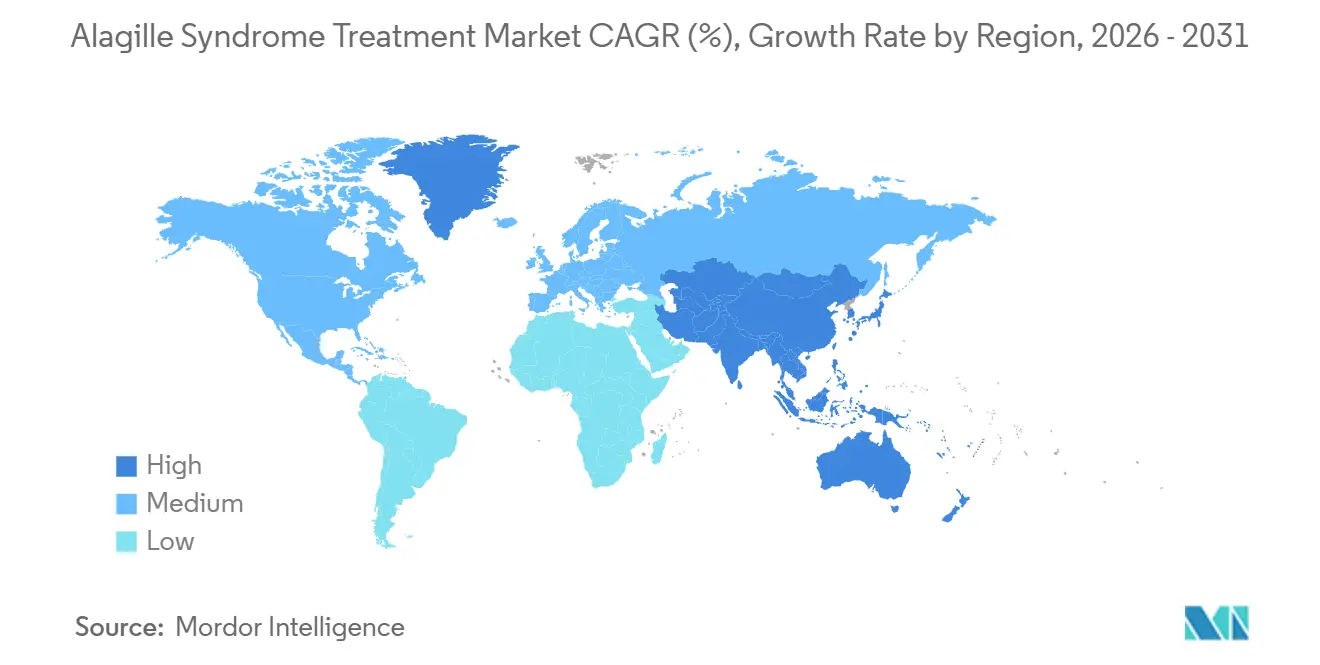
- By geography, North America held 38.67% of the segment in 2025, while Asia-Pacific is projected to grow at a 9.58% CAGR through 2031.
Note: Market size and forecast figures in this report are generated using Mordor Intelligence’s proprietary estimation framework, updated with the latest available data and insights as of January 2026.
Market Trends and Insights
Drivers Impact Analysis of Alagille Syndrome Treatment Market*
| DRIVER | (~) % IMPACT ON CAGR FORECAST | GEOGRAPHIC RELEVANCE | IMPACT TIMELINE |
|---|---|---|---|
| Expansion of approved IBAT inhibitor use across pediatric age groups | +2.1% | Global, led by North America and Europe | Short term (≤ 2 years) |
| Regulatory recognition of cholestatic pruritus as a treatable endpoint | +1.4% | Global, with early gains in North America, EU, and Japan | Short term (≤ 2 years) |
| Increasing genetic diagnosis of JAG1 and notch2-associated disease | +1.0% | Global, accelerating in Asia-Pacific and South America | Medium term (2-4 years) |
| Expansion of specialized pediatric liver-care networks | +0.8% | Asia-Pacific core, with spillover to Middle East and Africa | Medium term (2-4 years) |
| Drug-formulation requirements created by rapid weight and feeding changes in infants | +0.5% | Global | Medium term (2-4 years) |
| Patient-reported itch and sleep outcomes becoming reimbursement evidence | +0.6% | North America and EU, with early signals in Japan and Canada | Short term (≤ 2 years) |
| Source: Mordor Intelligence | |||
Sequential IBAT Inhibitor Label Expansions Add New Patient Cohorts With Each Regulatory Cycle
The expansion of maralixibat and odevixibat approvals to younger patient groups remained a direct demand driver for the Alagille syndrome treatment market. The U.S. Food and Drug Administration approved a Livmarli tablet formulation in April 2025 for patients weighing at least 25 kg, allowing eligible adolescents to transition from a liquid medicine to a once-daily tablet.[1] In Europe, odevixibat received conditional approval in September 2024 for patients aged 6 months and older, covering a younger group than the U.S. indication described in the supplied research.
PRO-Based Endpoint Validation Transforms Payer Evidence Requirements for Cholestatic Pruritus Treatment
Cholestatic pruritus has shifted from a symptom managed in routine care to an endpoint that clinical studies can measure. ItchRO(Obs) and PRUCISION are observer-reported tools used to record itch-related effects in children, and the Phase 3 ASSERT trial reported a mean pruritus score improvement of -0.88 with odevixibat, with p=0.0012. This evidence supported the regulatory approvals described in the source material and gave payers a clearer basis for assessing clinical benefit. The MERGE study recorded a clinically meaningful ItchRO(Obs) change from baseline of -2.14 at year 7 for maralixibat, strengthening reimbursement evidence with long-term patient-reported outcomes.[2]
NGS-Driven Diagnostic Expansion Reveals A Larger, Previously Invisible Patient Population
Multi-gene next-generation sequencing panels are becoming more relevant in neonatal and pediatric hepatology. The supplied research cited an incidence estimate of 1 in 30,000 live births, compared with an earlier estimate of 1 in 70,000 live births, reflecting improved identification rather than a change in disease biology. A 2026 Human Genetics publication described cell-based assays that classified some JAG1 and NOTCH2 missense variants previously listed as variants of uncertain significance, providing a clearer path to genetic confirmation for unresolved diagnoses.[3]
Growing Pediatric Liver-Center Networks Directly Determine Treatment Uptake In Each Market
Alagille syndrome care requires input from hepatology, cardiology, ophthalmology, and genetics, making specialized pediatric liver centers central to advanced treatment adoption. The ASSERT trial recruited patients from 32 sites across North America, Europe, the Middle East, and Asia-Pacific, showing the concentration of relevant institutional capacity. Established specialist networks allow physicians to diagnose patients, prescribe treatment, monitor nutrition, and coordinate referrals within defined care pathways, while limited networks can delay access and reduce treatment uptake after regulatory approval.
Restraints Impact Analysis of Alagille Syndrome Treatment Market*
| RESTRAINT | (~) % IMPACT ON CAGR FORECAST | GEOGRAPHIC RELEVANCE | IMPACT TIMELINE |
| Ultra-rare patient pool and limited diagnosis rates | -2.2% | Global | Long term (≥ 4 years) |
| High per-patient treatment cost and reimbursement friction | -1.9% | North America and EU, significant in Asia-Pacific and Middle East and Africa | Medium term (2-4 years) |
| Treatment discontinuation risk from diarrhea, abdominal pain, and vitamin deficiency | -0.8% | Global | Short term (≤ 2 years) |
| Multisystem disease complexity complicating attribution of treatment benefit | -0.7% | Global | Long term (≥ 4 years) |
| Source: Mordor Intelligence | |||
Ultra-Rare Patient Numbers Cap Volume Growth Independent Of Pricing And Geography
Even with improved diagnosis, the globally diagnosed patient population remains in the low thousands, creating a structural limit on volume growth in the Alagille syndrome treatment market. The GALA cohort included 952 patients and reported a median serum bile acid level of 147 μmol/L at onset, indicating that some patients reach specialist care only after substantial cholestasis has developed. The supplied research also states that 5-7% of JAG1 pathogenic variants are structural deletions that require chromosomal microarray analysis, which is not available in all community settings.
High Therapy Costs And Multi-Layer Reimbursement Processes Delay Patient Access In Key Markets
Approved IBAT inhibitors carry annual per-patient costs in the six-figure USD range, creating access barriers even in countries with established rare-disease coverage. In Canada, maralixibat reimbursement negotiations concluded in June 2025, nearly 14 months after a conditional recommendation in April 2024, showing that favorable clinical decisions do not always translate into immediate access. Smaller European markets may also face uncertainty where post-authorization evidence requirements remain in place, while manufacturers pursue broader coverage in the Alagille syndrome treatment market.
*Our forecasts treat driver/restraint impacts as directional, not additive. The impact forecasts reflect baseline growth, mix effects, and variable interactions.
Alagille Syndrome Treatment Market Segment Analysis
By Treatment Modality:
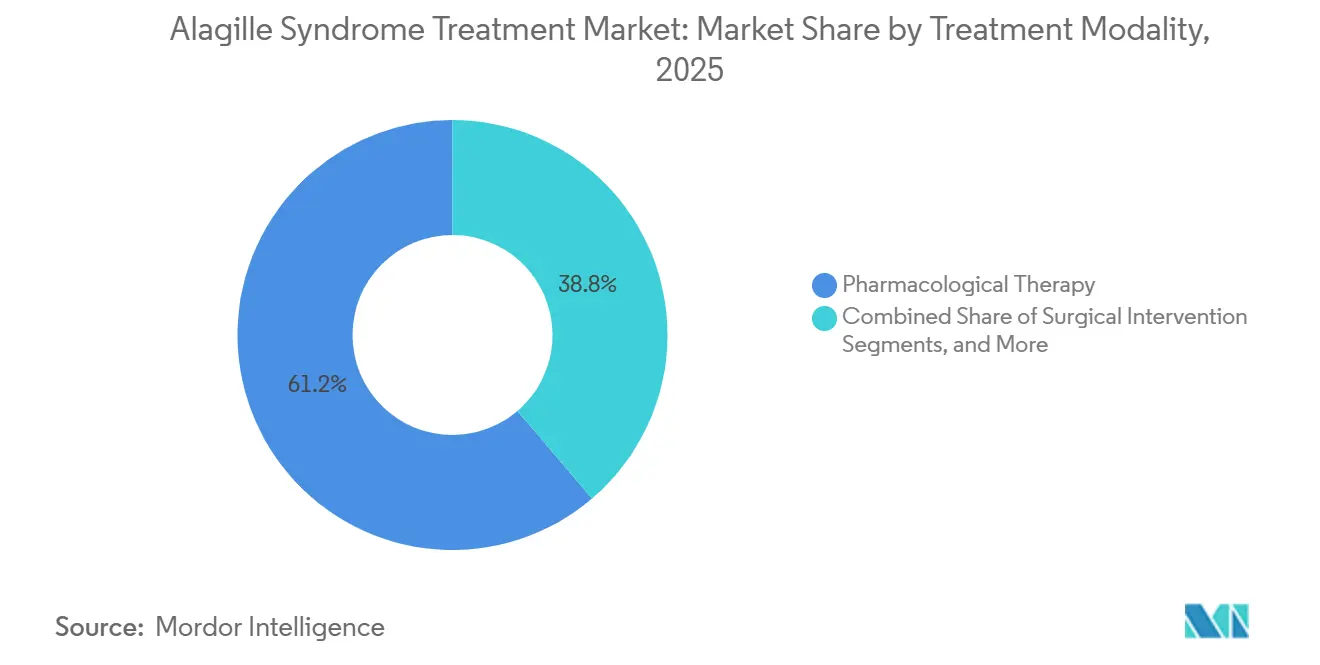
Pharmacological Therapy Remains The Largest Treatment ApproachPharmacological therapy held 61.24% of the Alagille syndrome treatment market share within the treatment modality segment in 2025. Targeted IBAT inhibitors and established supportive medicines supported this leading position. Ursodeoxycholic acid, bile acid sequestrants, antipruritic agents, and fat-soluble vitamin formulations remained part of routine care, while IBAT inhibitors added a higher-value targeted option for eligible patients with cholestatic pruritus.
Surgical intervention is forecast to grow at a CAGR of 9.15% from 2026 to 2031, reflecting more patients reaching transplantation thresholds as treated cohorts age. The supplied research states that 20-30% of patients ultimately require liver transplantation for conditions including intractable pruritus and progressive liver dysfunction. Supportive care, transplant preparation, and post-transplant management continue to address advanced disease needs and reinforce the role of multidisciplinary centers.

By Drug Class And Active Ingredient:
IBAT Inhibitors Lead, While Maralixibat Has The Highest Growth RateIleal bile acid transporter inhibitors accounted for 38.55% of the Alagille syndrome treatment market size within the drug class and active ingredient segment in 2025. This position reflected orphan pricing, recent approvals, and the lack of another high-value targeted agent described in the supplied research. Maralixibat and odevixibat remained the principal medicines in this class, with differences in approved age range, formulation, and distribution arrangements influencing prescribing decisions.
Maralixibat is forecast to grow at a CAGR of 10.80% from 2026 to 2031. Its growth is linked to approvals across more than 40 countries, the June 2025 tablet launch, and completed enrollment of the Phase 3 EXPAND study in March 2026. Topline data are expected in the fourth quarter of 2026, and the study could support a label extension to biliary atresia, while supportive therapies remain relevant where IBAT inhibitors are not reimbursed.
By Route Of Administration:
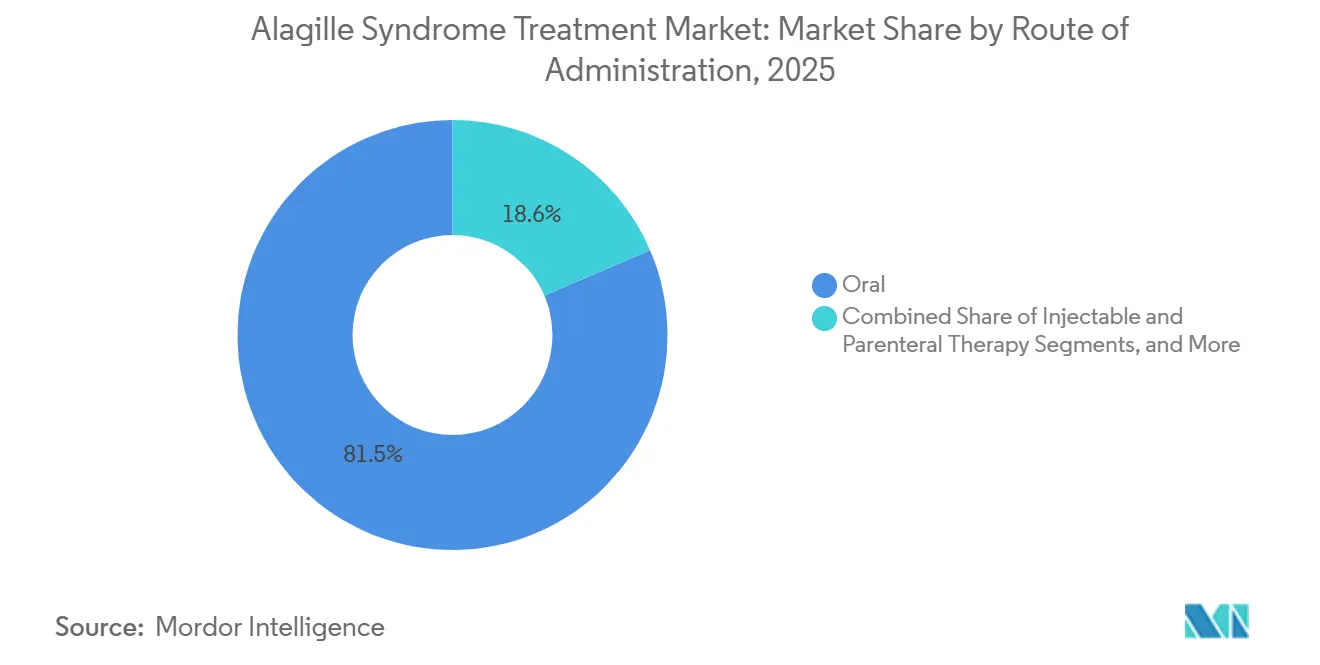
Oral Therapy Dominates, With Parenteral Care Rising Alongside Surgical NeedsOral formulations held 81.45% of the route of administration segment in 2025. Both approved IBAT inhibitors are minimally absorbed oral therapies, enabling home administration and reducing the need for clinic visits linked to parenteral delivery. The April 2025 U.S. approval of Livmarli tablets added a second oral dosage form for patients weighing at least 25 kg, while liquid therapy remained necessary for younger patients.
Injectable and parenteral therapy is forecast to grow at a CAGR of 7.45% from 2026 to 2031. This growth is tied to higher procedural intensity among patients progressing toward transplantation. Pre-transplant and post-transplant care may involve intravenous immunosuppressants, parenteral nutrition, and intravenous antibiotics, supporting spending across the broader Alagille syndrome treatment pathway.
By Patient Age Group:
Children Aged 1 To 11 Years Are The Largest Group, While Adolescents Grow FasterChildren aged 1 to 11 years held 65.00% of the patient age group segment in 2025. Alagille syndrome commonly presents during infancy and early childhood, creating strong demand for pharmacological treatment and nutritional monitoring. The GALA cohort reported median serum bile acids of 147 μmol/L and marked elevation in the first 2 years of life, placing early childhood at the center of specialist care.
Adolescents aged 12 to 17 years are forecast to grow at a CAGR of 8.56% from 2026 to 2031. Maralixibat studies in patients aged 16 years and older reported significant reductions in serum bile acids and pruritus scores. The tablet formulation for patients weighing at least 25 kg, along with seven-year MERGE data showing a height z-score improvement of +0.7 at year 7, supports treatment continuity through adolescence.
By End User:
Pediatric Hepatology Centers Lead, While Genetic Clinics Expand QuicklyPediatric hepatology centers held 42.67% of the end-user segment in 2025. These centers remained the primary settings for prescribing and monitoring IBAT inhibitor therapy, including monitoring for fat-soluble vitamin deficiency and liver injury markers. They also coordinated referrals to cardiology, ophthalmology, genetics, and transplant services, reflecting the multidisciplinary nature of Alagille syndrome care.
Specialty genetic clinics are forecast to grow at a CAGR of 10.55% from 2026 to 2031. This growth reflects the increasing role of genetic confirmation in diagnosis and family counseling. A 2026 study described functional methods for classifying some previously unresolved JAG1 and NOTCH2 variants, supporting more confirmed findings and stronger links from testing to specialist treatment pathways.
Geography Analysis
North America Alagille Syndrome Treatment Market
North America held 38.67% of the Alagille syndrome treatment market share in 2025, making it the largest regional segment. U.S. orphan drug designations and the Breakthrough Therapy Designation for maralixibat supported earlier use than in many other countries. Mirum reported U.S. LIVMARLI net product sales of USD 244.7 million in 2025, up 69% year over year.
North America and Europe Alagille Syndrome Treatment Market
Canada expanded its treatment setting during 2025 after odevixibat approval and the conclusion of maralixibat reimbursement negotiations, while Mexico’s less developed rare-disease insurance framework limited near-term use outside urban tertiary centers. Europe is the second-largest geography in the supplied research, with Germany, the United Kingdom, and France forming the main country markets. The 2025 European authorization of LIVMARLI tablets and the 2024 conditional approval of odevixibat created a two-IBAT-inhibitor setting, although national assessment processes differ across countries and can create uneven access.
APAC Alagille Syndrome Treatment Market
Asia-Pacific is forecast to grow at a 9.58% CAGR from 2026 to 2031, the fastest regional rate in the supplied estimates. The region is a key growth area for the Alagille syndrome treatment market. Japan approved maralixibat in March 2025, and China expanded its label to patients aged 3 months and older in May 2024. CANbridge and Baheal Medical formed a partnership in August 2025 covering mainland China, Hong Kong, and Macau, while Australia’s PBAC completed an odevixibat review in March 2026.
Competitive Landscape
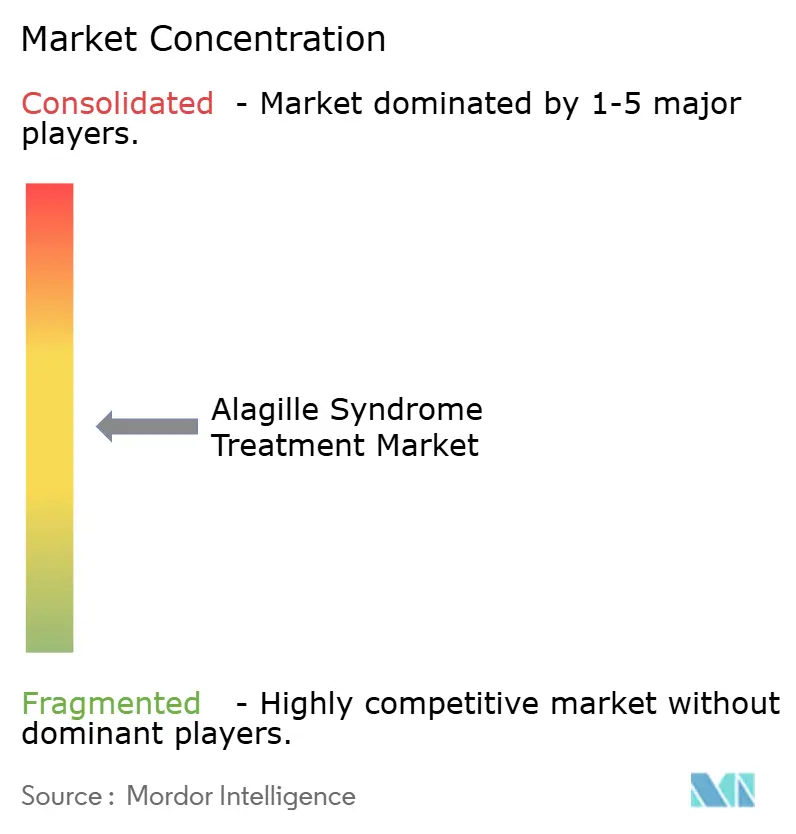
The Alagille syndrome treatment market is moderately concentrated among innovators in the high-value IBAT inhibitor category and fragmented among suppliers of supportive generic medicines. Maralixibat and odevixibat form a functional duopoly in the targeted treatment category. Maralixibat is available in liquid and tablet forms, while odevixibat is available as capsules and sprinkle pellets. The supplied draft identified a U.S.-approved minimum age of 3 months for maralixibat and 12 months for odevixibat.
Generic ursodeoxycholic acid, cholestyramine, and vitamin products support patients without access to targeted agents. Mirum reported LIVMARLI net product sales of USD 360.0 million in 2025, representing 69% year-over-year growth, and provided 2026 net product sales guidance of USD 630 million to USD 650 million. The company completed enrollment in its Phase 3 EXPAND study in March 2026, with topline data expected in the fourth quarter of 2026. Ipsen is supporting real-world evidence generation for odevixibat through its registry-based study.
Both companies focus on evidence generation and broader adoption rather than price-led competition. Orphan exclusivity periods further strengthen their clinical and regulatory positions. CANbridge adds a regional competitive dimension through commercialization activity in China and surrounding markets, and its August 2025 equity partnership with Baheal Medical included a share subscription of HKD 100 million and appointed Baheal’s subsidiary as the exclusive CSO for mainland China, Hong Kong, and Macau. The supplied analysis identified gene therapy, adult Alagille syndrome, and post-transplant protocols as areas with limited current development, while smaller specialty companies may consider new oral delivery methods for neonates rather than directly challenging the established IBAT mechanism.
Alagille Syndrome Treatment Industry Leaders
-
Mirum Pharmaceuticals, Inc.
-
Ipsen Pharma
-
Pfizer Inc.
-
Sanofi
-
Takeda Pharmaceutical Company Limited
- *Disclaimer: Major Players sorted in no particular order
Alagille Syndrome Treatment Market Companies Covered in this Report
- Abbvie
- Alfasigma S.p.A.
- CANbridge Pharmaceuticals, Inc.
- Digestive Care, Inc.
- GlaxoSmithKline
- Glenmark Pharmaceuticals
- Ipsen
- Laboratoires CTRS
- Leadiant Biosciences, Inc.
- Mirum Pharmaceuticals, Inc.
- Novartis
- Pfizer
- Sanofi
- Strides Pharma Science
- Takeda Pharmaceuticals
- Teva Pharmaceutical Industries
- Zydus Lifesciences Limited
Recent Industry Developments in Alagille Syndrome Treatment Market
- March 2026: Mirum Pharmaceuticals completed enrollment in the Phase 3 EXPAND study of LIVMARLI, or maralixibat, for cholestatic pruritus in patients aged 6 months and older with rare cholestatic liver diseases.
- February 2026: Australia’s Pharmaceutical Benefits Advisory Committee completed its review of odevixibat for Alagille syndrome, with a favorable outcome potentially supporting reimbursement in Australia.
- September 2025: Health Canada approved Bylvay, or odevixibat, for cholestatic pruritus in patients aged 12 months and older with Alagille syndrome, creating a two-IBAT-inhibitor setting in Canada.
- August 2025: CANbridge Pharmaceuticals entered an equity partnership with Baheal Medical, including a HKD 100 million share subscription and exclusive CSO appointment for key China markets.
- April 2025: The U.S. Food and Drug Administration approved a tablet formulation of LIVMARLI for cholestatic pruritus in Alagille syndrome and progressive familial intrahepatic cholestasis.
Global Alagille Syndrome Treatment Market Report Scope
As per the scope of the report, Alagille syndrome is a rare genetic disorder that causes narrowed, malformed, or missing bile ducts, leading to bile buildup in the liver. There is no cure, so treatment focuses on managing symptoms, improving bile flow, aiding nutrition, and treating heart or liver failure.
The Alagille syndrome treatment market is segmented by treatment modality, drug class and active ingredient, route of administration, patient age group, end user, and geography. By treatment modality, the market includes pharmacological therapy, surgical intervention, supportive and nutritional care, and liver transplant preparation and post-transplant care. By drug class and active ingredient, the market is segmented into ileal bile acid transporter inhibitors, maralixibat, odevixibat, ursodeoxycholic acid, bile acid sequestrants, cholestyramine, colesevelam, rifampicin, naltrexone, sertraline, fat-soluble vitamin formulations, and other supportive medicines. By route of administration, the market is segmented into oral, injectable and parenteral therapy, and other routes of administration. By patient age group, the market is categorized into infants younger than 12 months, children aged 1 to 11 years, adolescents aged 12 to 17 years, and adults aged 18 years and older. By end user, the market is segmented into pediatric hepatology centers, specialty rare disease clinics, tertiary hospitals, liver transplant centers, specialty genetic clinics, and home-based treatment and monitoring. By geography, the market is analyzed across North America, Europe, Asia-Pacific, the Middle East and Africa, and South America. The report also covers the estimated market sizes and trends for 17 countries across major regions globally. The report offers the market sizes and forecasts in terms of value (USD) for the above segments.
Segmentation Overview
| Pharmacological Therapy |
| Surgical Intervention |
| Supportive and Nutritional Care |
| Liver-Transplant Preparation and Post-Transplant Care |
| Ileal Bile Acid Transporter Inhibitors |
| Maralixibat |
| Odevixibat |
| Ursodeoxycholic Acid |
| Bile Acid Sequestrants |
| Cholestyramine |
| Colesevelam |
| Rifampicin |
| Naltrexone |
| Sertraline |
| Fat-Soluble Vitamin Formulations |
| Other Supportive Medicines |
| Oral |
| Injectable and Parenteral Therapy |
| Other Routes of Administration |
| Infants Younger Than 12 Months |
| Children Aged 1 to 11 Years |
| Adolescents Aged 12 to 17 Years |
| Adults Aged 18 Years and Older |
| Pediatric Hepatology Centers |
| Specialty Rare-Disease Clinics |
| Tertiary Hospitals |
| Liver-Transplant Centers |
| Specialty Genetic Clinics |
| Home-Based Treatment and Monitoring |
| North America | United States |
| Canada | |
| Mexico | |
| Europe | Germany |
| United Kingdom | |
| France | |
| Italy | |
| Spain | |
| Rest of Europe | |
| Asia-Pacific | China |
| India | |
| Japan | |
| Australia | |
| South Korea | |
| Rest of Asia-Pacific | |
| Middle East and Africa | GCC |
| South Africa | |
| Rest of Middle East and Africa | |
| South America | Brazil |
| Argentina | |
| Rest of South America |
| By Treatment Modality | Pharmacological Therapy | |
| Surgical Intervention | ||
| Supportive and Nutritional Care | ||
| Liver-Transplant Preparation and Post-Transplant Care | ||
| By Drug Class and Active Ingredient | Ileal Bile Acid Transporter Inhibitors | |
| Maralixibat | ||
| Odevixibat | ||
| Ursodeoxycholic Acid | ||
| Bile Acid Sequestrants | ||
| Cholestyramine | ||
| Colesevelam | ||
| Rifampicin | ||
| Naltrexone | ||
| Sertraline | ||
| Fat-Soluble Vitamin Formulations | ||
| Other Supportive Medicines | ||
| By Route of Administration | Oral | |
| Injectable and Parenteral Therapy | ||
| Other Routes of Administration | ||
| By Patient Age Group | Infants Younger Than 12 Months | |
| Children Aged 1 to 11 Years | ||
| Adolescents Aged 12 to 17 Years | ||
| Adults Aged 18 Years and Older | ||
| By End User | Pediatric Hepatology Centers | |
| Specialty Rare-Disease Clinics | ||
| Tertiary Hospitals | ||
| Liver-Transplant Centers | ||
| Specialty Genetic Clinics | ||
| Home-Based Treatment and Monitoring | ||
| By Geography | North America | United States |
| Canada | ||
| Mexico | ||
| Europe | Germany | |
| United Kingdom | ||
| France | ||
| Italy | ||
| Spain | ||
| Rest of Europe | ||
| Asia-Pacific | China | |
| India | ||
| Japan | ||
| Australia | ||
| South Korea | ||
| Rest of Asia-Pacific | ||
| Middle East and Africa | GCC | |
| South Africa | ||
| Rest of Middle East and Africa | ||
| South America | Brazil | |
| Argentina | ||
| Rest of South America | ||
Key Questions Answered in the Report
What is the projected value of Alagille syndrome treatment by 2031?
The Alagille syndrome treatment market is estimated to reach USD 1.41 billion by 2031, from USD 0.95 billion in 2026, at a CAGR of 6.50%.
Which treatment modality had the largest share in 2025?
Pharmacological therapy held the largest share at 61.24% in 2025, supported by targeted IBAT inhibitors and supportive medicines.
Which medicine is expected to grow fastest through 2031?
Maralixibat is the fastest-growing active ingredient, with a forecast CAGR of 10.80% from 2026 to 2031.
Why are genetic clinics becoming more important for Alagille syndrome care?
Greater use of JAG1 and NOTCH2 testing can improve diagnostic confirmation and channel patients into specialist care. Specialty genetic clinics are forecast to grow at a 10.55% CAGR.
Which region is forecast to grow fastest through 2031?
Asia-Pacific is forecast to grow at a 9.58% CAGR, supported by developments in Japan, China, and Australia. The Alagille syndrome treatment market is expected to gain from these developments.
What factors can limit treatment uptake?
Small diagnosed patient numbers, high treatment costs, reimbursement delays, and adverse effects such as diarrhea, abdominal pain, and vitamin deficiency can limit access and continued use.