
Airway Stent/Lung Stent Market Size and Share
Market Overview
| Study Period | 2020 - 2031 |
|---|---|
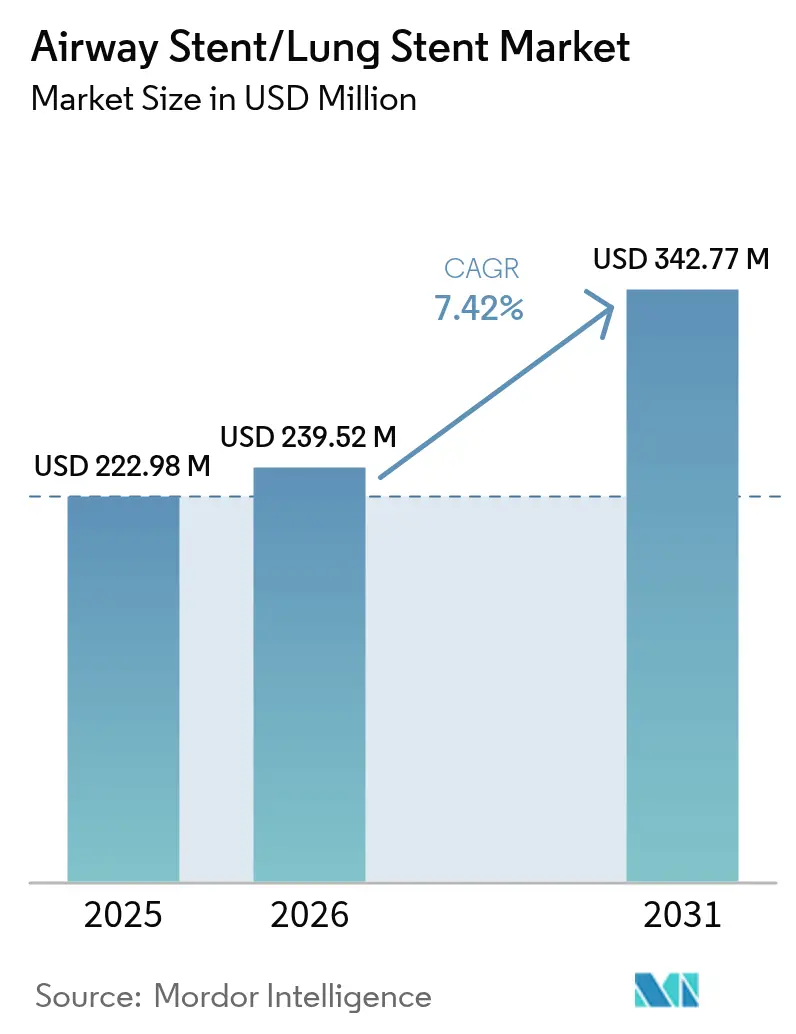
| Market Size (2026) | USD 239.52 Million |
| Market Size (2031) | USD 342.77 Million |
| Growth Rate (2026 - 2031) | 7.42 % |
| Fastest Growing Market | Asia Pacific |
| Largest Market | North America |
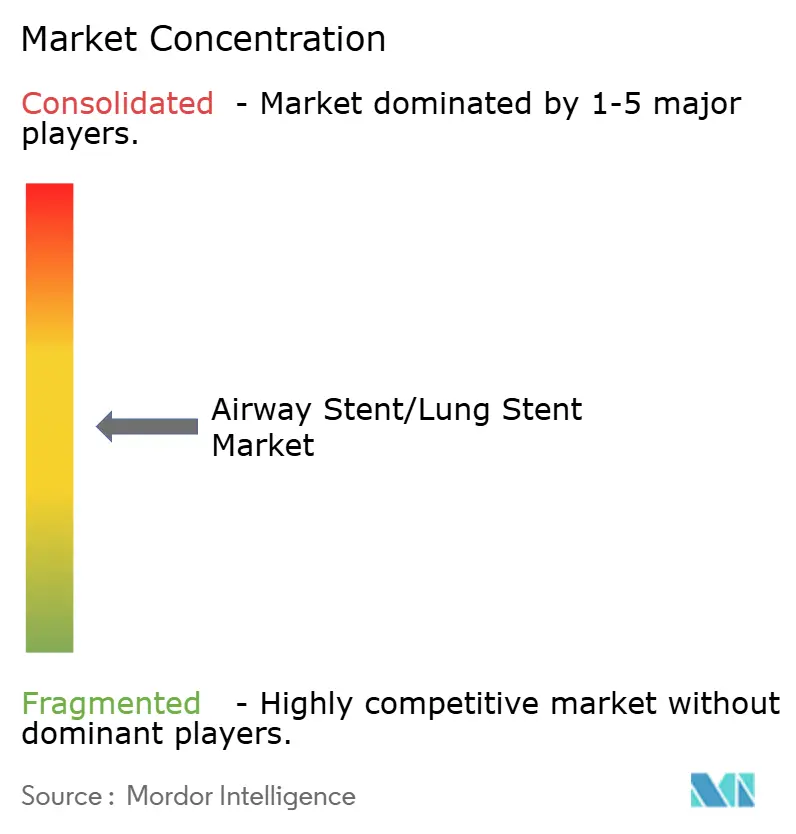
| Market Concentration | Medium |
Major Players *Disclaimer: Major Players sorted in no particular order Image © Mordor Intelligence. Reuse requires attribution under CC BY 4.0. | |
Airway Stent/Lung Stent Market Analysis by Mordor Intelligence
The airway stent/lung stent market size was valued at USD 222.98 million in 2025 and estimated to grow from USD 239.52 million in 2026 to reach USD 342.77 million by 2031, at a CAGR of 7.42% during the forecast period (2026-2031). Demand is fueled by rapid developments in device design, including 3D-printed patient-specific implants, biodegradable polymers that dissolve once the airway has healed, and drug-eluting coatings that inhibit granulation tissue formation. North America remains the anchor of global revenue, thanks to its mature reimbursement frameworks and early adoption of robotic bronchoscopy. In contrast, the Asia-Pacific region leads growth, driven by rising incidence of COPD and lung cancer, broader health insurance coverage, and government investments in tertiary respiratory care centers. Material-level innovation accelerates product turnover as hospitals and specialty clinics transition from durable metals to resorbable polymers, which eliminate the need for removal surgeries. At the same time, competition intensifies as incumbents such as Boston Scientific and Cook Group defend their share against start-ups focused on custom bioresorbable devices and AI-guided placement platforms. Regulatory convergence, notably the United States' Quality System Regulation revisions effective in 2026, is set to smooth cross-border approvals and hasten the diffusion of technology.
Key Report Takeaways
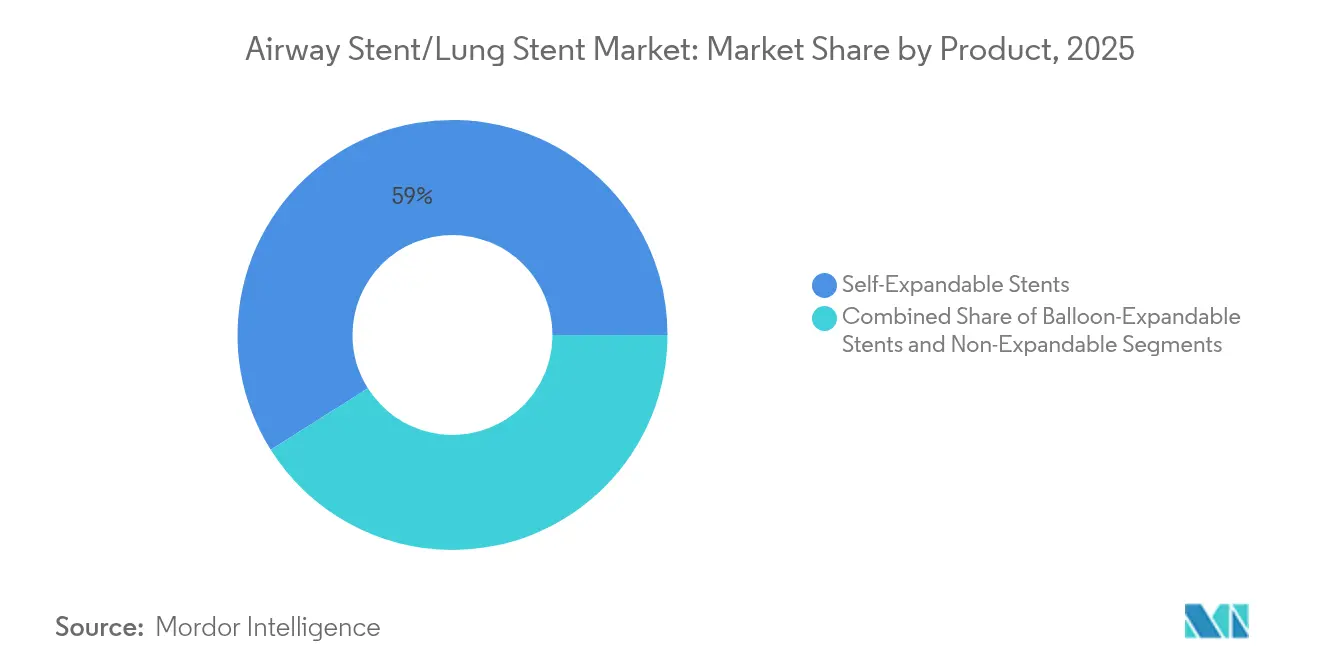
- By product category, self-expandable stents held a 58.96% revenue share in 2025, while non-expandable and customized 3D-printed devices are projected to post the fastest growth rate of 8.78% through 2031.
- By material, metal frameworks accounted for 50.83% of the airway stent/lung stent market size in 2025; bioresorbable polymers are projected to grow at a 9.07% CAGR between 2026 and 2031.
- By type, tracheobronchial designs accounted for 65.52% of the revenue share in 2025, whereas Y-shaped carinal models are forecasted to advance at an 8.66% CAGR through 2031.
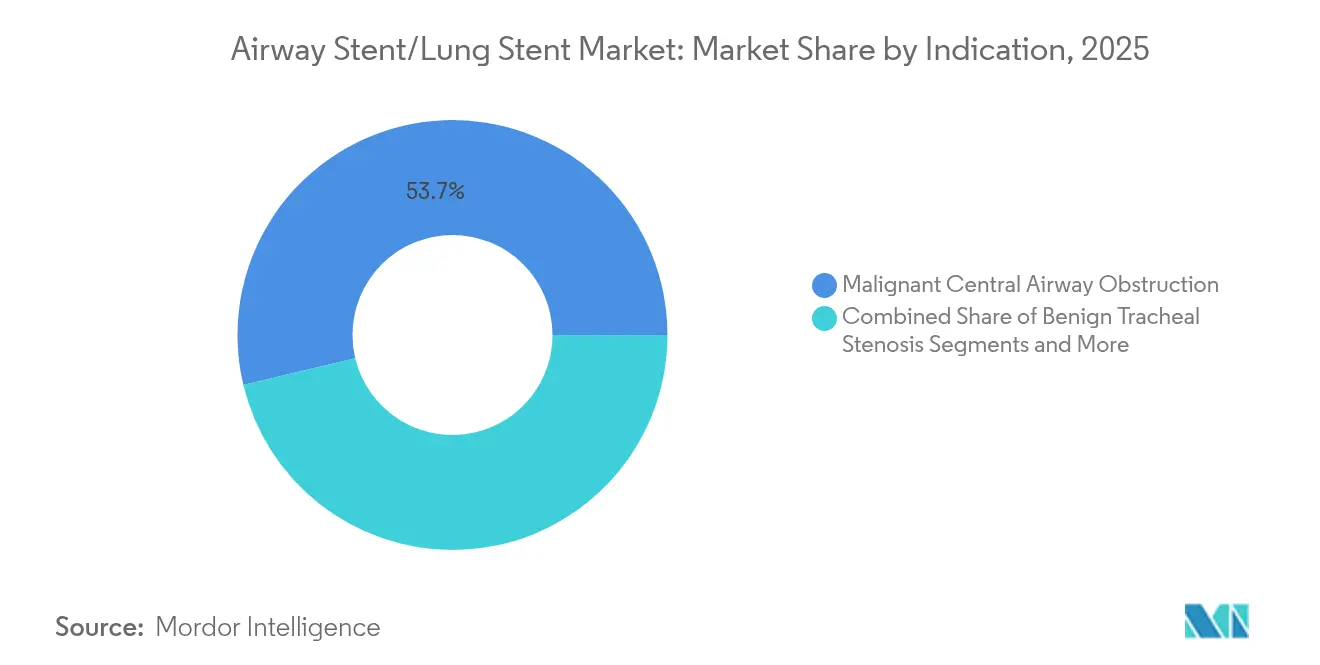
- By indication, malignant central airway obstruction accounted for 53.73% of the airway stent/lung stent market size in 2025, and post-lung-transplant complications are expected to register the highest CAGR of 9.32% through 2031.
- By end user, hospitals led with 66.22% revenue share in 2025; specialty pulmonology clinics are anticipated to record a 10.06% CAGR over the forecast period.
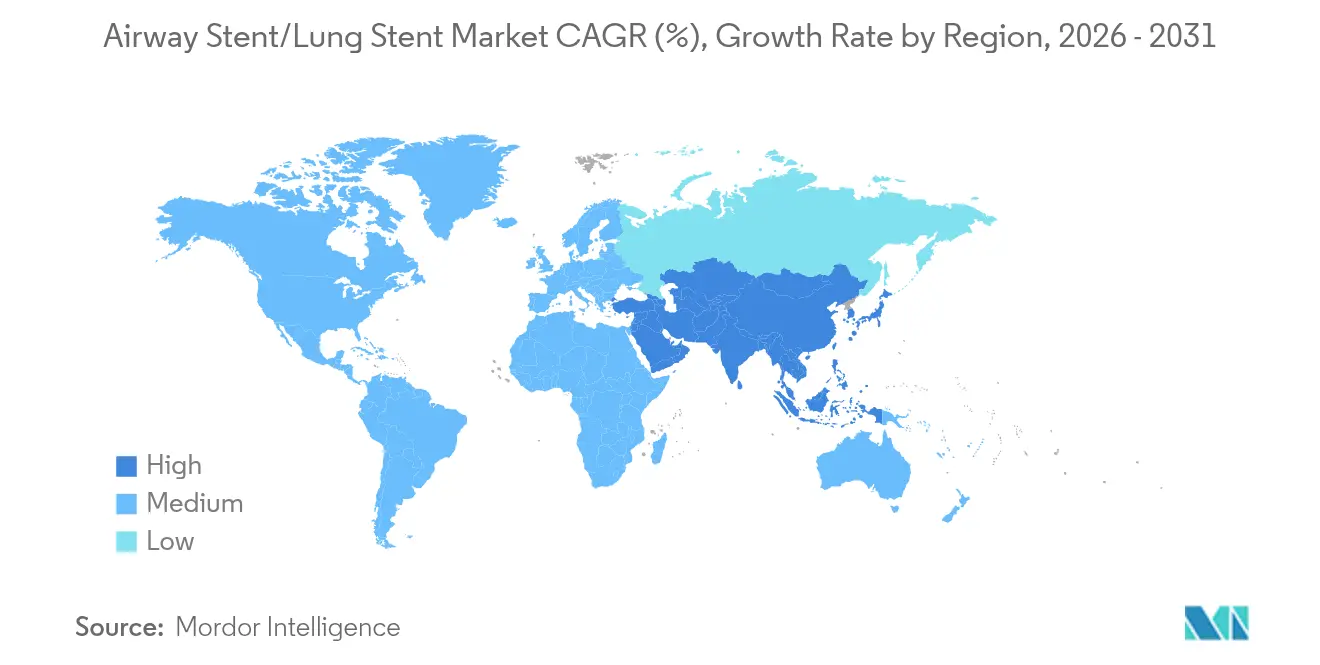
- By geography, North America dominated the airway stent/lung stent market with a 38.45% market share in 2025, while the Asia-Pacific region is projected to expand at the fastest CAGR of 9.2% up to 2031.
Note: Market size and forecast figures in this report are generated using Mordor Intelligence’s proprietary estimation framework, updated with the latest available data and insights as of 2026.
Market Trends and Insights
Drivers Impact Analysis of Airway Stent/Lung Stent Market*
| Driver | (~) % Impact on CAGR Forecast | Geographic Relevance | Impact Timeline |
|---|---|---|---|
| Rising Prevalence Of Lung & Chronic Respiratory Disorders | +1.8% | Global, with highest impact in APAC and emerging markets | Long term (≥ 4 years) |
| Growing Preference For Minimally Invasive Procedures | +1.5% | North America & EU, expanding to APAC | Medium term (2-4 years) |
| Rapid Material Innovation: 3D-Printed & Drug-Eluting Bioresorbable Stents | +1.2% | Global, led by North America and Europe | Medium term (2-4 years) |
| Benefits Associated with Usage of Pulmonary Stents | +0.9% | Global | Short term (≤ 2 years) |
| Emergence Of Fully Biodegradable Stents and Innovative Stents | +1.0% | North America & EU, with spillover to APAC | Long term (≥ 4 years) |
| Robotic Bronchoscopy Enabling Precise Stent Placement | +0.8% | North America, EU, and select APAC markets | Medium term (2-4 years) |
| Source: Mordor Intelligence | |||
Rising Prevalence of Lung and Chronic Respiratory Disorders
Respiratory Research reported 213.39 million COPD cases in 2024, reflecting better diagnostics and longer survival that in turn keep interventional demand high.[1] Lung-cancer-related airway obstruction frequently requires palliative stents that restore patency and improve breathing comfort. Smoking, which still drives 34.8% of COPD disability-adjusted life-years, and ambient particulate pollution at 22.2% sustain a large patient pipeline. Aging populations amplify case volumes in developed economies, whereas India alone tallied 37.8 million COPD cases, underscoring opportunity in fast-growing Asia-Pacific markets.[2]
Growing Preference for Minimally Invasive Procedures
High-frequency jet ventilation using silicone catheters achieved 84% procedural success in 2024 with median operating times of 35 minutes and no postoperative complications, strengthening the clinical case for bronchoscopic stenting over open surgery.[3]Hospitals embrace outpatient protocols to contain costs and accelerate recovery, while cone-beam CT and digital tomosynthesis sharpen placement accuracy. Robotic bronchoscopy systems deliver diagnostic yields of 88-94% for peripheral lesions, further easing physician adoption.
Rapid Material Innovation in 3D-Printed and Drug-Eluting Bioresorbable Stents
The United States FDA cleared Peytant Solutions’ covered stent system under the De Novo pathway in 2024, signaling regulatory openness to next-generation platforms.[4] Michigan Medicine launched a 35-patient infant trial for 3D-printed bioresorbable devices in March 2025, advancing personalized implants that dissolve after airway remodeling. Iron-based bioresorbable scaffolds showed 95.4% absorption within three years while keeping structural integrity during healing in EuroIntervention’s first-in-human study.
Benefits Linked to Pulmonary Stent Usage
Airway stenting delivers immediate dyspnea relief and improves functional scores according to Journal of Bronchology & Interventional Pulmonology findings. In lung-transplant patients, Y-shaped carinal stents cut intervention frequency from 15.6 to 4.8 procedures and extended treatment intervals up to 85.8 days, reducing hospital utilization. The reversibility of silicone devices affords safety margins over permanent surgery and keeps infection rates comparatively low.
Restraints Impact Analysis of Airway Stent/Lung Stent Market*
| Restraint | (~) % Impact on CAGR Forecast | Geographic Relevance | Impact Timeline |
|---|---|---|---|
| Availability Of Alternative Interventions | -0.8% | Global, with higher impact in developed markets | Medium term (2-4 years) |
| Device-Related Complications | -1.1% | Global | Short term (≤ 2 years) |
| Reimbursement Gaps For Customized & Biodegradable Stents | -0.6% | North America & EU primarily | Medium term (2-4 years) |
| Regulatory Ambiguity For Patient-Specific 3D-Printed Devices | -0.4% | Global, led by regulatory-stringent markets | Long term (≥ 4 years) |
| Source: Mordor Intelligence | |||
Availability of Alternative Interventions
Balloon dilation solves many benign strictures with 88.9% efficacy and leaves no implant behind, while surgical reconstruction offers definitive cures for localized stenosis in fit patients. Techniques such as laser, cryotherapy, and argon plasma coagulation recanalize blocked airways quickly, and Montgomery T-tubes provide another removable option in post-tracheotomy stenosis.
Device-Related Complications
Migration, granulation, and fracture remain leading concerns, with metallic devices often requiring complex extraction that carries bleeding and perforation risks. Up to 75% granulation incidence imposes repeated bronchoscopies, and infection risk escalates in immunocompromised patients. Long-term Mayo Clinic data showed a 22-month average before complications necessitated metallic-stent removal.
*Our forecasts treat driver/restraint impacts as directional, not additive. The impact forecasts reflect baseline growth, mix effects, and variable interactions.
Airway Stent/Lung Stent Market Segment Analysis
By Product:
Self-Expandable Dominance Drives InnovationSelf-expandable devices accounted for 58.96% of 2025 revenue, confirming their versatility in treating both benign and malignant obstructions. These stents expand gently after deployment and maintain steady radial force, helping physicians manage variable airway diameters. Balloon-expandable units are designed for scenarios that require precise sizing, such as pediatric tracheal narrowing. Non-expandable and 3D-printed custom designs are projected to achieve an 8.78% CAGR through 2031. The shift toward personalized implants reflects a growing awareness that geometric differences necessitate tailored solutions. AnatomikModeling and Toulouse University Hospital executed one of the earliest custom placements in 2016 and have since demonstrated improved migration profiles in validation studies. Michigan Medicine’s 2025 infant trial marks a new frontier in resorbable, bespoke devices.
Self-expandable devices are reliable in collapse-prone segments, yet physicians increasingly prescribe custom-printed stents for airways distorted by tumors or postsurgical changes. This trend aligns with hospital investment in point-of-care 3D-printing labs that compress turnaround times and lower logistic costs. As these centers mature, non-expandable personalized units will claim a larger slice of the airway stent/lung stent market, even as self-expandable lines remain workhorse solutions for general obstruction.

By Material:
Metal Leadership Faces Polymer ChallengeMetal frameworks remain the default in rapidly progressing tumors due to their high radial strength and radiopaque profiles, which facilitate imaging follow-up. They captured 50.83% of 2025 sales. Yet, biodegradable polymers are the fastest risers, with a 9.07% CAGR through 2031, as clinicians prize temporary support without the burden of removal surgery. Silicone options remain popular in benign diseases because they are less prone to infection and can be easily extracted. Composite designs that combine metal skeletons with polymer linings aim to achieve the best of both worlds, incorporating drug-eluting layers to mitigate granulation.
In adult trials, polydioxanone devices demonstrated 89.7% clinical effectiveness and subsequently resorbed, thereby freeing the airway from foreign material. Iron-scaffold data revealed 95.4% absorption within three years with no loss of mechanical stability. Surface laser texturing promoted endothelial growth while reducing smooth-muscle proliferation by approximately 75%, which can lower the risk of restenosis. As price gaps narrow, polymer adoption will accelerate, shrinking metal’s share of the airway stent/lung stent market.
By Type:
Tracheobronchial Stents Lead Specialized ApplicationsTracheobronchial models delivered 65.52% of 2025 revenue due to their broad utility in both central airways. Y-shaped carinal stents, though with a smaller base, are expanding briskly at an 8.66% CAGR, driven by transplant-associated bifurcation complications. Laryngeal devices cover niche indications where upper-airway patency is threatened after trauma or oncologic resections.
The clinical benefit of Y-stents in lung transplant recipients is notable; secondary carina placements reduce repeat procedures by two-thirds while tripling the time between interventions. Angulated designs targeting post-tuberculosis bronchostenosis highlight how geometry-specific engineering enhances dwell time and reduces migration. As surgical volumes rise and transplant survival extends, the need for complex bifurcation devices will grow in the airway stent/lung stent market.
By Indication:
Malignant Obstruction Drives Core DemandLung-cancer-related obstruction made up 53.73% of 2025 sales, and the palliative benefit of restoring airflow remains central to demand. Post-transplant complications, although smaller, constitute the fastest-growing indication at 9.32% CAGR, fueled by expanding transplant programs and lengthening graft survival. Benign tracheal stenosis maintains a stable user base that is increasingly opting for resorbable stents. Tracheoesophageal fistulas need covered models that isolate the airway from the digestive tract.
Standardized grading from the International Society for Heart and Lung Transplantation aids uniform decision-making and builds a stable case volume for interventional pulmonologists. In esophageal carcinoma with airway involvement, median survival stretches to 97 days post-stenting, underscoring life-quality gains even in late-stage disease.
By End User:
Hospitals Dominate While Specialty Clinics SurgeHospitals retained a 66.22% share in 2025, supported by intensive care units and on-call thoracic surgery teams for emergencies. However, specialty pulmonology clinics are expected to experience a 10.06% CAGR to 2031, driven by the adoption of outpatient bronchoscopy and robotic platforms that reduce procedure times. Ambulatory surgical centers win business with transparent pricing and same-day discharge policies.
A scoping review on intensive-care pulmonology confirms stent placement as a critical option for mechanically ventilated patients with central obstruction. Jet-ventilation success rates of 84% show that specialized centers can achieve high efficiency. As payers push care into lower-cost settings, clinics that can combine advanced imaging, custom printing, and robotic guidance will capture an incremental share of the airway stent/lung stent market volume.
Geography Analysis
North America Airway Stent/Lung Stent Market
North America generated 38.45% of revenue in 2025, underpinned by advanced reimbursement policies and rapid adoption of precision placement technologies. The FDA’s 2024 De Novo clearance for Peytant’s stent system demonstrates a supportive regulatory climate. The forthcoming Quality System Regulation alignment with ISO standards by 2026 will streamline manufacturing compliance and help innovative devices reach hospitals more quickly. Robotic bronchoscopy diagnostic yields of up to 94% solidify the region’s leadership in technology-driven care. While Medicare covers core interventional pulmonology codes, payment gaps persist for customized implants, tempering near-term adoption of 3D-printed solutions.
APAC Airway Stent/Lung Stent Market
The Asia-Pacific region is the growth engine, with a 9.2% CAGR projected to 2031. COPD prevalence, 37.8 million cases in India alone, aligns with high urban air-pollution exposure and smoking rates. China’s hospital build-out and a rising middle class are expanding the treated population, despite a 22% decline in medtech investment in 2024 amid tighter capital markets. Japan’s so-called device-lag underscores approval delays, but recent harmonization initiatives aim to shorten the time to market. Together, these dynamics create a sizable addressable base for the airway stent/lung stent market.
Europe Airway Stent/Lung Stent Market
Europe offers steady expansion supported by universal healthcare and a strong evidence culture. AnatomikModeling’s collaboration with Toulouse University Hospital showcases the continent’s prowess in custom 3D stents. Multi-center biodegradable trials report 89.7% effectiveness, keeping Europe at the forefront of resorbable research [bmcpulmmed.biomedcentral.com]. The Medical Device Regulation establishes uniform safety benchmarks that facilitate cross-border device adoption, although cost pressures necessitate demonstrable value before large-scale deployment.
Regulatory Landscape
Airway stents are regulated as moderate-to-high risk implantable devices, with requirements shaped by material (metal, silicone, hybrid, bioresorbable polymers) and any drug-eluting or coated functionality. In the United States, tracheal/airway stents commonly follow Class II controls under 21 CFR 878.3720 and are frequently cleared via the 510(k) pathway, while novel platforms can proceed through FDA pathways such as De Novo, as seen with Peytant Solutions covered stent system clearance in 2024.
In Europe, airway stents fall under the Medical Device Regulation (EU) 2017/745 with conformity assessment through Notified Bodies, and manufacturers must meet Annex I General Safety and Performance Requirements. Products that integrate a drug constituent face added combination-product coordination, including interaction with EMA structures that address device constituents for combination products. Across regions, biological safety and risk management expectations commonly reference ISO 10993-1 for biocompatibility evaluation, which raises the documentation bar for newer materials and patient-specific designs where long-term contact and individualized geometry complicate test strategies.
Value Chain Analysis
The value chain starts with specialty raw materials, including nitinol and other alloys for self-expanding frames, medical-grade silicone, and emerging bioresorbable polymers. It then moves through precision conversion (laser cutting, electropolishing, braiding, and molding/extrusion), followed by coating for covered or drug-eluting variants, and ends with sterilization and packaging. Clinical distribution typically runs through hospitals, interventional pulmonology centers, and specialty clinics.
Quality and regulatory documentation are built into the manufacturing workflow, with design controls, biocompatibility files, and performance testing acting as gating items for market access, particularly for covered and drug-device combination designs. Supply continuity and customization logistics create friction points as well. Lead times and single-source dependencies for specific implant-grade silicone formulations and validated biocompatibility packages can constrain output, while patient-specific and 3D-printed workflows add steps such as imaging-to-CAD conversion, physician sign-off, and lot-specific verification. On the commercial side, distribution often relies on direct sales and specialized procedural channels, and procurement is shifting toward system-level contracting and bundled purchasing that favors suppliers able to provide broad stent portfolios (metal, silicone, hybrid) alongside procedural support for bronchoscopic placement.
Competitive Landscape
The airway stent/lung stent market is moderately fragmented. Boston Scientific leverages its Ultraflex line to maintain surgeon loyalty through proven performance and broad support services. Cook Group partnered with Getinge to expand the distribution of covered vascular stents, a strategy that may be applied to airway products. Taewoong Medical and other mid-sized Asian manufacturers compete on price and export reach, although stringent regulations in North America and Europe pose entry hurdles. Future differentiation is tilting toward resorbable polymers, drug-eluting coatings, and AI-assisted placement tools that reduce complication rates.
Regulatory evolution remains a competitive lever. The United States Quality System Regulation overhaul will harmonize design-control documentation with ISO 13485, reducing redundant audits for global manufacturers. Firms that invest early in system upgrades will gain smoother paths to global clearances, while those that lag behind risk extended review cycles. Partnering with hospital-based 3D printing labs could grant incumbents faster access to custom device revenue streams. Meanwhile, emerging players bet on dissolving scaffolds and shape-memory alloys to leapfrog metal incumbents and capture share among physicians wary of permanent implants.
Airway Stent/Lung Stent Industry Leaders
-
Boston Scientific Corporation
-
Taewoong Medical Co., Ltd.
-
Cook Group
-
Micro-Tech (Nanjing) Co., Ltd.
-
Merit Medical Systems, Inc.
- *Disclaimer: Major Players sorted in no particular order
Airway Stent/Lung Stent Market Companies Covered in this Report
- Boston Scientific
- Taewoong Medical Co. Ltd.
- Micro-Tech (Nanjing) Co. Ltd.
- Merit Medical Systems
- Cook Group
- Endo-Flex
- Efer Endoscopy
- Bess Medizintechnik
- Standard Sci Tech
- E. Benson Hood Laboratories
- Novatech
- M.I. Tech Co. Ltd.
- A.B. Polyp Co. Ltd.
- Stening SRL
- Hyundai Medical Co. Ltd.
- Bentley Innomed GmbH
- Olympus
- Medtronic
Market Opportunities and Future Outlook
White space appears most clearly tied to reducing complications and improving removability, especially in benign stenosis management where restenosis and granulation drive repeat bronchoscopies, and in post-lung-transplant airway complications that can require complex geometries such as Y-shaped carinal designs. Active innovation is also visible in clinical pipeline updates, including Michigan Medicine opening a 35-patient infant trial in March 2025 for 3D-printed bioresorbable airway devices, which supports momentum around patient-specific, dissolving scaffolds that aim to avoid removal procedures.
Next-generation platforms create additional room for differentiation across both product and placement workflows. FDA clearance activity supports continued iteration through established pathways, including the 2024 De Novo clearance for Peytant Solutions and a June 2026 510(k) clearance for VisionAir Solutions (VisionAir Enhanced Stock Stent, under 21 CFR 878.3720), pointing to continued regulatory throughput for new and improved airway stent systems. At the same time, 2026 R&D coverage on drug-eluting and bioresorbable constructs, including coated and multifunctional coverings aimed at anti-inflammatory or anti-fibrotic effects, highlights an opportunity for manufacturers that pair airway stents with controlled-release coatings and validated biocompatibility, while aligning offerings to outpatient bronchoscopy growth in specialty pulmonology clinics.
Recent Industry Developments in Airway Stent/Lung Stent Market
- June 2026: VisionAir Solutions received FDA 510(k) clearance (K261541) for the VisionAir Enhanced Stock Stent under 21 CFR 878.3720. The clearance expands the set of commercially available airway stent options that can be adopted without De Novo-level timelines, supporting faster contracting and conversion at hospitals and specialty pulmonology clinics.
- March 2025: Michigan Medicine opened a multi-site clinical trial of 3D-printed bioresorbable airway devices for infants with tracheobronchomalacia after years of expanded-access use. Moving from compassionate use into structured trial execution strengthens the evidence base for patient-specific resorbable implants and can accelerate broader clinical protocols for customized airway stenting.
- October 2024: Peytant Solutions received FDA De Novo clearance for the forAMStent tracheobronchial covered system. This action established a regulatory precedent for a newer covered-airway-stent platform, helping define expectations for performance and safety data that subsequent innovators and predicate-based submissions can reference.
Airway Stent/Lung Stent Market Report Scope and Research Methodology
Market Definition and Coverage
This market covers the value of airway and lung stents used to keep the trachea or bronchi open and restore airflow in patients with airway narrowing or blockage, across hospital and ambulatory care use. It includes commonly used materials like metal, silicone, hybrid designs, and patient-specific 3D printed stents.
Scope exclusions: Devices intended for vascular, biliary, gastrointestinal, or urinary tract stenting are excluded from this market sizing.
Segments Covered in This Report
- By Product
- Self-Expandable Stents
- Balloon-Expandable Stents
- Non-Expandable / Customized 3D-Printed Stents
- By Material
- Metal
- Silicone
- Hybrid (Covered / Composite)
- Bioresorbable Polymers
- By Type
- Tracheobronchial Stents
- Laryngeal Stents
- Y-Shaped Carinal Stents
- By Indication
- Malignant Central Airway Obstruction
- Benign Tracheal Stenosis
- Post-Lung-Transplant Airway Complications
- Tracheoesophageal Fistula
- By End User
- Hospitals
- Ambulatory Surgical Centers
- Specialty Pulmonology Clinics
- By Geography
- North America
- United States
- Canada
- Mexico
- Europe
- Germany
- United Kingdom
- France
- Italy
- Spain
- Rest of Europe
- Asia-Pacific
- China
- Japan
- India
- Australia
- South Korea
- Rest of Asia-Pacific
- Middle East and Africa
- GCC
- South Africa
- Rest of Middle East and Africa
- South America
- Brazil
- Argentina
- Rest of South America
- North America
Data Sources, Market Sizing, and Validation
Desk Research
Desk research was used to set the clinical and regulatory context and to anchor key demand signals that influence stent usage. We reviewed public sources such as the World Health Organization for respiratory disease burden, the US CDC for population health indicators, and the OECD for health system utilization trends that influence procedure access.
To keep assumptions grounded, we also used sources such as the US FDA device databases for approvals and safety notes, clinical trial registries for pipeline activity, and peer-reviewed journals for treatment pathways and typical stent selection patterns. Alongside these, we reviewed company filings, investor presentations, reputable medical society publications, and press coverage for product launches and regional expansion cues. Where needed, paid subscriptions for company financials and patent databases were used to cross-check timelines and technology intensity. These examples are illustrative, and many other public and paid sources were also consulted for collection, cross-checks, and clarification.
Primary Interviews and Surveys
Primary work focused on validating how often airway stents are used, what drives material choice, and how pricing moves by region and care setting. We spoke with a balanced mix of device makers, distributors, interventional pulmonology-aligned clinicians, and procurement contacts across APAC, EMEA, and the Americas, to close gaps from desk research and test assumptions against real ordering behavior.
Distribution of primary research fieldwork respondents
| Company type | Respondent position | Region |
|---|---|---|
| Top tier: 37% | CXOs: 19% | APAC: 46% |
| Mid tier: 43% | Functional/Unit leaders: 24% | EMEA: 29% |
| Smaller Players: 20% | Managers: 57% | Americas: 25% |
Market-Sizing & Forecasting
Sizing starts with a top-down demand pool build that links airway obstruction care to stent-eligible procedure volumes, and then converts that into value using region-specific pricing logic. Because procedure data is not always directly labeled as stenting, proxy signals were used first, and the main estimate arrives after those signals are filtered through clinical adoption rates.
Key inputs used in the model include bronchoscopy and interventional pulmonology procedure volumes, the split between benign and malignant obstruction treated with stents, average stents used per case, the mix of metal versus silicone and hybrid usage, and average selling price ranges by region and care setting. In parallel, selective bottom-up checks were run using supplier and channel feedback, sampled price points, and volume reasonableness tests to adjust totals when the top-down result looked too high or too low.
For forecasting, we used scenario analysis supported by a simple multivariate regression view, where procedure growth, aging population trends, access to specialty care, and product upgrade cycles were the main drivers. When country-level data was missing, regional benchmarks were applied with conservative adoption ramps, followed by another round of expert validation so the gaps did not overstate demand.
Data Validation & Update Cycle
Outputs were checked against independent signals such as reported respiratory procedure activity, regulatory milestones, and observed pricing bands from procurement conversations. When a country or region showed a sharp jump, the drivers were re-checked and outliers were reviewed in a second analyst pass before numbers were finalized.
The report is refreshed annually, and interim updates are triggered when there are material events such as major approvals, safety actions, or step changes in reimbursement access. Before delivery, a final review is completed to ensure the latest public information and primary feedback are reflected in the model assumptions.
Mordor Intelligence's Airway Stent Lung Stent Market Size Measured Against Other Published Estimates
Published market numbers for airway and lung stents can look far apart, even when they appear to measure the same thing. This usually happens because the included devices differ, the base year is not aligned, and the demand proxy used for procedures and pricing is not consistent across studies.
Biliary, ureteral, and other non-pulmonary stents sit outside Mordor Intelligence's scope, which removes adjacent device revenue that some broader stent studies may quietly blend in. Differences also come from how procedure volumes are reconstructed, how many stents per case are assumed for complex obstructions, and whether ASP changes are modeled as flat pricing or as a mix shift toward newer designs that carry a premium.
Benchmark comparison
| Source | Market Size | Gaps in Research Methodology |
|---|---|---|
| Mordor Intelligence | USD 239.52 M (2026) | |
| Global Consultancy A | USD 262.59 M (2026) | Uses a broader airway stents lens without clearly separating adjacent non-pulmonary stents in all regions, and applies a higher near term pricing uplift that can raise the 2026 value. |
| Industry Research Group B | USD 87.83 M (2024) | Uses an earlier base year and a narrower captured revenue pool, which can occur when only a subset of settings or reported sales channels are counted, making the starting market appear smaller. |
Overall, the spread is mostly explained by what gets counted as an airway stent market item, which year anchors the model, and how procedure demand is converted into dollars through pricing and mix. Our approach stays traceable to clear clinical usage rates and realistic pricing bands, which makes the estimate easier to reproduce and re-check when new evidence shows up.
Key Questions Answered in the Report
What is the current size of the airway stent/lung stent market?
The airway stent/lung stent market is valued at USD 239.52 million in 2026 and is projected to hit USD 342.77 million by 2031.
Which product type holds the largest share?
Self-expandable designs led with 58.96% revenue share in 2025, reflecting their adaptability across airway anatomies.
Which region is expanding the fastest?
Asia-Pacific shows a 9.2% CAGR through 2031 due to rising COPD and lung-cancer incidence alongside improving healthcare access.
Why are biodegradable stents gaining traction?
They provide temporary support and then dissolve, avoiding removal surgery and reducing long-term complications.
How will regulatory changes affect the market?
The 2026 alignment of United States Quality System Regulation with international standards should streamline approvals and hasten global rollout of new technologies.
What is the main restraint the market faces?
Device-related complications, especially migration and granulation tissue, remain the top challenge and can require repeated interventions.