
Agricultural Packaging Market Size and Share
Market Overview
| Study Period | 2020 - 2031 |
|---|---|
| Market Size (2026) | USD 5.76 Billion |
| Market Size (2031) | USD 7.36 Billion |
| Growth Rate (2026 - 2031) | 5.03 % |
| Fastest Growing Market | Europe |
| Largest Market | Asia Pacific |
| Market Concentration | Low |
Major Players *Disclaimer: Major Players sorted in no particular order Image © Mordor Intelligence. Reuse requires attribution under CC BY 4.0. | |
Agricultural Packaging Market Analysis by Mordor Intelligence
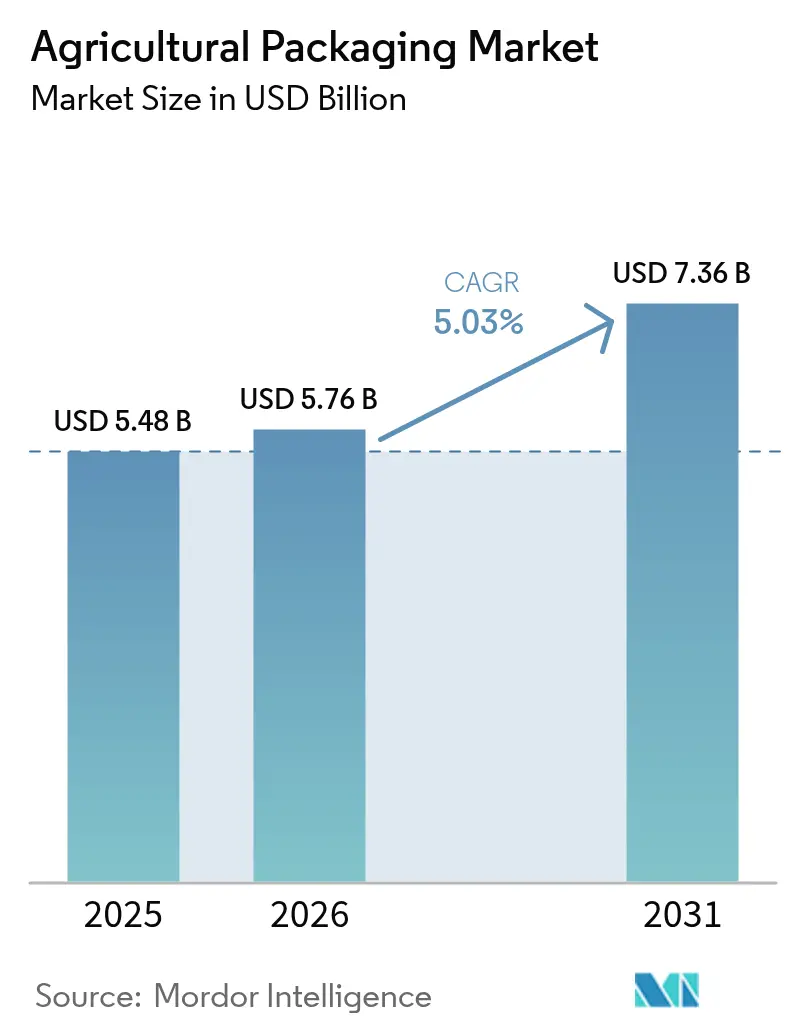
The agricultural packaging market size in 2026 is estimated at USD 5.76 billion, growing from 2025 value of USD 5.48 billion with 2031 projections showing USD 7.36 billion, growing at 5.03% CAGR over 2026-2031. This steady climb demonstrates the sector’s resilience as regulators demand recyclability, recycled-content thresholds, and lower carbon footprints. Asia-Pacific’s export-oriented agribusiness, Europe’s aggressive sustainability targets, and North America’s traceability mandates jointly stimulate material innovation and format redesign across the agricultural packaging market. Plastic continues to dominate volumes, yet biodegradable films and molded-fiber formats accelerate on the back of the European Union’s Packaging and Packaging Waste Regulation (PPWR) and California’s compostable-labeling law. Meanwhile, bulk-handling mechanisation in China, India, and Brazil propels mid- to large-capacity flexible intermediate bulk containers (FIBC), whereas precision farming in the United States and Western Europe lifts demand for smaller, application-specific packs. Raw-material cost swings and extended-producer-responsibility (EPR) fees temper profitability, but consolidation among converters and resin suppliers is creating scale economies that offset part of the inflationary pressure.
Key Report Takeaways
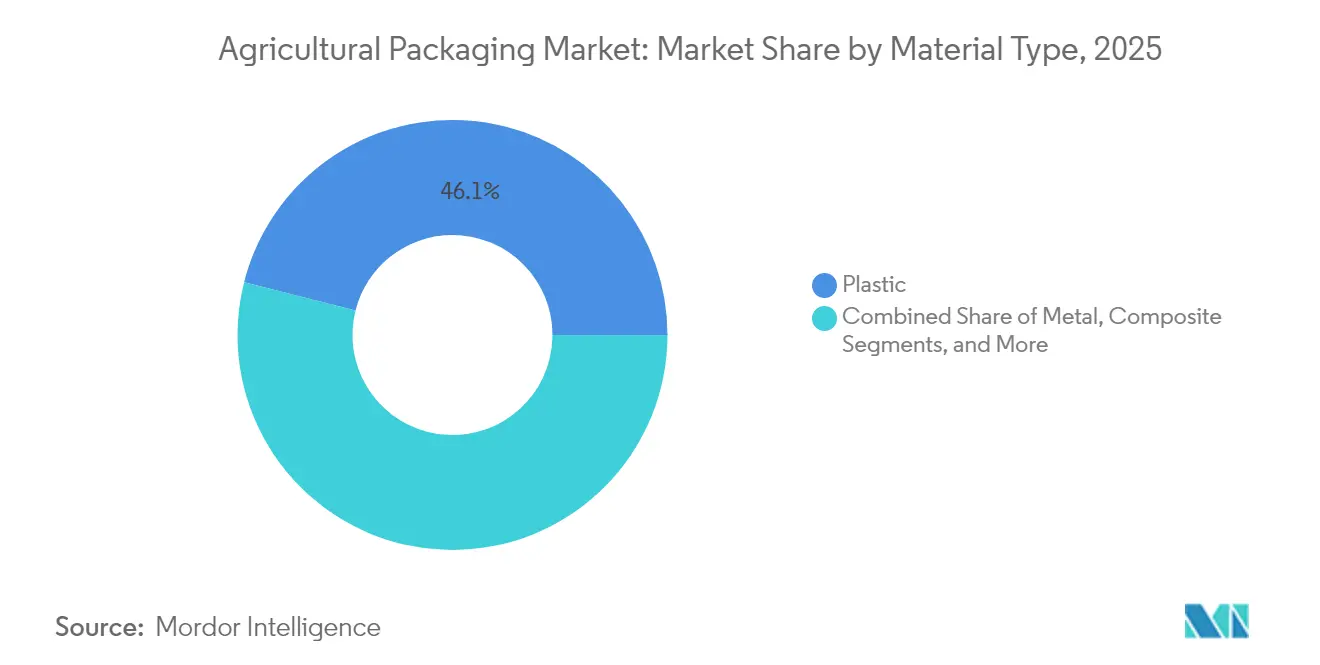
- By material type, plastic held 46.05% of agricultural packaging market share in 2025, while biodegradable films are projected to expand at an 8.01% CAGR through 2031.
- By application, fertilizers led with 38.02% revenue share in 2025; crop protection biologics are set to grow at a 7.45% CAGR to 2031.
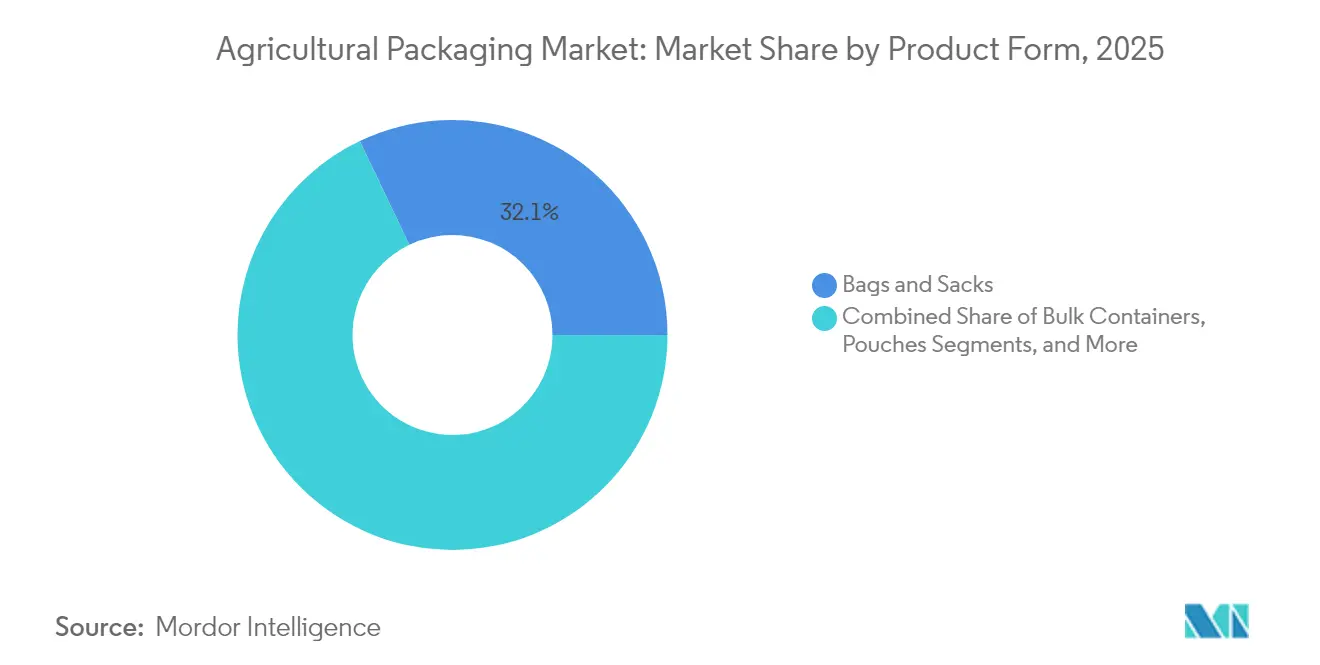
- By product form, bags and sacks captured 32.10% of the agricultural packaging market size in 2025, whereas pouches exhibit the fastest 8.55% CAGR.
- By capacity range, 26-100 kg / 21-200 L packs controlled 43.80% share in 2025; ≤25 kg / ≤20 L formats are forecast to register a 8.62% CAGR.
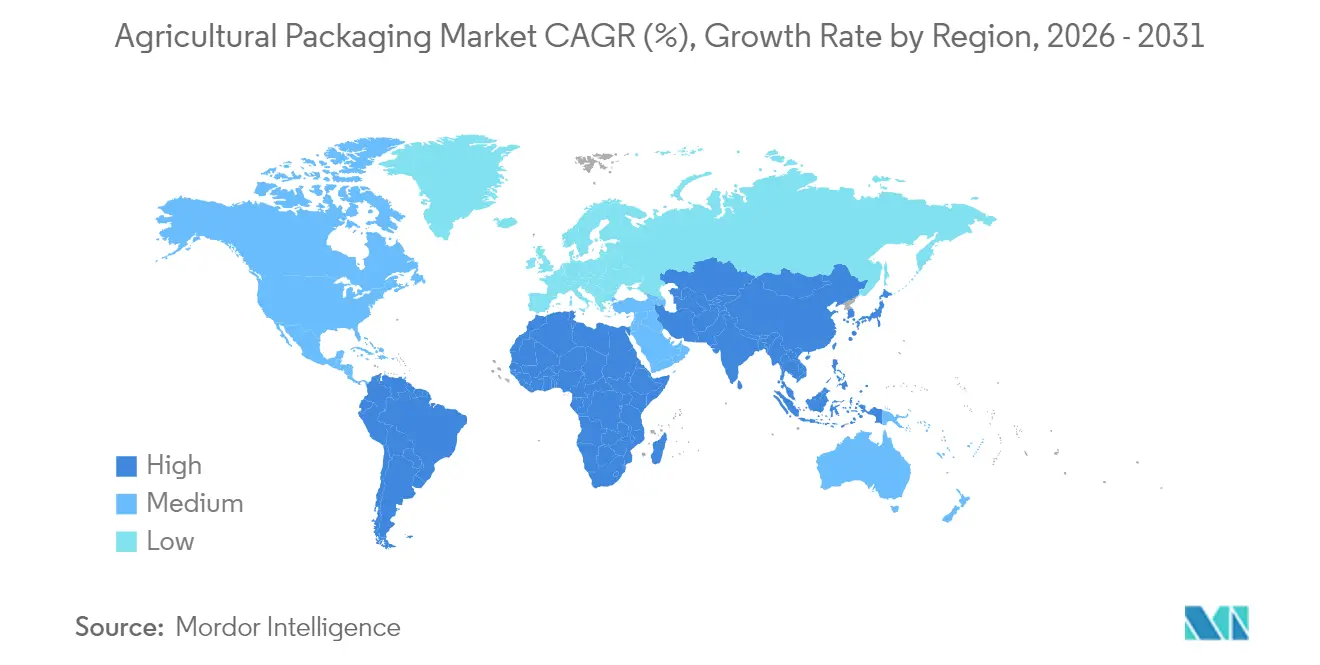
- By geography, Asia-Pacific dominated with a 39.85% agricultural packaging market share in 2025, while Europe is predicted to post the strongest 7.86% CAGR through 2031.
Note: Market size and forecast figures in this report are generated using Mordor Intelligence’s proprietary estimation framework, updated with the latest available data and insights as of 2026.
Market Trends and Insights
Drivers Impact Analysis of Agricultural Packaging Market*
| Driver | (~) % Impact on CAGR Forecast | Geographic Relevance | Impact Timeline |
|---|---|---|---|
| Growing demand for agro-chemicals | +1.2% | Global, with concentration in Asia-Pacific and North America | Medium term (2-4 years) |
| Sustainability-driven material innovations | +0.9% | Europe and North America leading, expanding to Asia-Pacific | Long term (≥ 4 years) |
| Expansion of cross-border agri-produce trade | +0.8% | Global, particularly US-China-EU trade corridors | Medium term (2-4 years) |
| Mechanisation and bulk handling adoption | +0.7% | Asia-Pacific core, spill-over to Latin America and Africa | Long term (≥ 4 years) |
| Smart / QR-enabled traceability packaging | +0.5% | North America & EU, early adoption in developed Asia-Pacific | Short term (≤ 2 years) |
| Source: Mordor Intelligence | |||
Growing Demand for Agro-Chemicals
Global pesticide and fertilizer consumption keeps rising as nations pursue higher yields. India’s regulators cleared 416 new crop-protection products in H1 2024, spanning legacy insecticides and novel actives, thereby boosting packaging volumes. China’s four-decade transition into the world’s largest pesticide exporter demands standardized pack formats that comply with multiple destination-market rules. In the United States, anti-dumping probes on 2,4-D imports from Asia reshape domestic filling plans, while Philippine authorities’ seizure of counterfeit chemicals underscores the role of tamper-evident packaging in brand protection pna.gov.ph. Driven by food-security programs and precision-application equipment, the agricultural packaging market welcomes higher-barrier laminates and smaller dose-specific pouches that reduce spillage and worker exposure.
Sustainability-Driven Material Innovations
The EU’s PPWR obliges all packs to be recyclable by 2030 and fixes recycled-content quotas of 30% for PET by that date, rising to 50% by 2040. Mondi’s paper-based Advantage Kraft Mulch replaces black PE mulch film, signalling material substitution momentum in field applications. Academic work on hemp-hurd molded fiber and lignin-based nanocomposites shows that bio-derived substrates can deliver moisture resistance and UV shielding comparable to petroleum-based films. Greif’s EnviroRAP paperboard and Lactips’ edible-film patents add further evidence that sustainable materials are moving from pilot to commercial scale. As EPR fees penalise unrecyclable formats, converters accelerate R&D spend on bio-resins, mono-material laminates, and water-based barriers.
Expansion of Cross-Border Agri-Produce Trade
USDA foresees United States agricultural exports touching USD 169.5 billion in FY 2025, with horticulture alone contributing USD 41.5 billion.[1]USDA, “Outlook for U.S. Agricultural Trade,” downloads.usda.library.cornell.edu Pallet and bag suppliers must now satisfy ISPM-15 fumigation rules for over 100 destination markets. China’s new customs declaration regulation, effective May 2025, tightens paperwork accuracy, raising demand for QR-coded labels that expedite clearance. Australia is similarly integrating food-safety data into its Biosecurity Import Conditions platform from June 2025 onward. These measures collectively lift requirements for rugged packs, extended shelf-life linings, and multi-language regulatory markings across the agricultural packaging market.
Mechanisation and Bulk-Handling Adoption
Asia-Pacific growers are adopting FIBC and silage tubes to match the scale of automated seeding and fertilizing machinery. The region’s returnable transport packaging value is projected to swell by USD 1.40 billion between 2023 and 2028, clocking an 8.87% CAGR. Brazil’s Packem SA recently ordered USD 1.29 million of FIBC from India, illustrating cross-continental sourcing opportunities. RKW’s seven-layer Hytibag silage film extends forage shelf life, while screw-conveyor separators under development support dust-free bulk loading. As mechanised fleets spread from China to sub-Saharan Africa, farmers demand lighter, more ergonomic sacks and spouts that dovetail with automated dispensing rigs.
Restraints Impact Analysis of Agricultural Packaging Market*
| Restraint | (~) % Impact on CAGR Forecast | Geographic Relevance | Impact Timeline |
|---|---|---|---|
| Regulatory pressure on plastics and VOCs | -0.8% | Europe and North America leading, expanding globally | Medium term (2-4 years) |
| Raw-material price volatility | -1.1% | Global, with acute impact in emerging markets | Short term (≤ 2 years) |
| Counterfeit ag-inputs raising compliance cost | -0.4% | Asia-Pacific and developing markets, spill-over to global trade | Medium term (2-4 years) |
| Source: Mordor Intelligence | |||
Regulatory Pressure on Plastics and VOCs
The PPWR bans per- and polyfluoroalkyl substances above threshold limits in food-contact packs, eliminating numerous fluoropolymer coatings used on fertilizer bags. California’s SB 343 will prohibit “chasing-arrows” symbols on packs that fail recyclability tests after October 2026, while SB 54 compels a 25% plastic reduction by 2032. Oregon’s EPR law demands granular reporting of packaging weights from April 2025, raising administrative overhead for small converters. Studies reveal that current composting facilities cannot separate bio-bags from conventional plastics effectively, complicating claims of commercial compostability. Collectively, these statutes force design changes that may elevate costs and slow material changeovers in the agricultural packaging market.
Raw-Material Price Volatility
World Bank data point to a 4% decline in agricultural commodity indices for 2025, but gas-linked nitrogen fertilizer prices remain high, squeezing farm input budgets and influencing order volumes for bulk sacks. Mondi’s first-half 2024 EBITDA slipped 17% year on year as pulp and resin prices gyrated. Adverse weather lifted cocoa, olive, and coffee prices in 2024, altering crop-mix forecasts and hence related packaging demand patterns. Possible tariff hikes on fertilizer imports threaten additional cost pass-through, prompting growers to delay replenishment or switch to cheaper inputs, which depresses packaging sales volumes. The premium that still attaches to certified compostable films widens the affordability gap versus polyethylene during inflationary spikes.
*Our forecasts treat driver/restraint impacts as directional, not additive. The impact forecasts reflect baseline growth, mix effects, and variable interactions.
Agricultural Packaging Market Segment Analysis
By Material Type:
Plastic Dominance Faces Biodegradable DisruptionPlastic accounted for 46.05% of the agricultural packaging market share in 2025, thanks to its durability, lightweight, and ingrained supply chains. High-density polyethylene drums and polypropylene woven sacks dominate fertilizer and pesticide applications because they resist puncture and chemicals. Yet the agricultural packaging market is experiencing a rapid pivot toward biodegradable films, the fastest-growing sub-segment at an 8.01% CAGR through 2031. European regulations imposing 30% recycled content on PET by 2030 push converters to blend post-consumer resin or switch materials entirely.Producers such as Mondi and Greif commercialize paper-based mulch and 100% recycled paperboard liners, respectively, offering comparable performance while easing EPR liabilities.
The competitive intensity is rising as academic breakthroughs in hemp-fiber molded substrates and lignin-bionanocomposites promise moisture, oxygen, and UV performance formerly exclusive to polymer laminates. Composite multilayers maintain a niche in high-value seeds and micro-nutrient sachets, although recyclability concerns and layer-separation costs keep their growth modest. Metal pails serve ultra-volatile herbicides, but volumes are stable rather than expanding. Overall, sustainability imperatives are redefining raw-material procurement, tooling investments, and brand-owner messaging across the agricultural packaging market.


By Application:
Fertilizers Lead While Biologics AccelerateFertilizers generated 38.02% of 2025 revenue, securing the largest slice of the agricultural packaging market size through their essential role in maximizing yields. Bags, FIBC, and laminated sacks dominate because granulated nutrients require abrasion-resistant structures. Conversely, crop-protection biologics, while starting from a smaller base, hold the highest 7.45% CAGR as growers adopt microbial inoculants and biostimulants to meet residue-limit regulations. These live organisms demand chilled, oxygen-barrier pouches or rigid bottles that preserve viability, driving innovation in cold-chain compatible formats.
Traditional synthetic pesticides continue to command large tonnage, yet their growth moderates under stricter toxicity norms. Seed-trait packaging seeks improved dust retention and precise dispensing holes to safeguard genetic performance. Governments are investing directly in packaging R&D; USDA earmarked USD 10 million for a Sustainable Packaging Innovation Lab focused on produce exporters, reflecting growing recognition of packaging as a trade enabler. Authenticity safeguards such as color-shift inks and tamper rings are proliferating to combat counterfeit agricultural inputs in developing markets.
By Product Form:
Traditional Bags Compete with Innovative PouchesBags and sacks held 32.10% of agricultural packaging market share in 2025 owing to proven cost, fill speeds, and global manufacturing footprints. Woven PP sacks with BOPP laminations remain the default for fertilizers and livestock feed. However, stand-up and spouted pouches are the fastest-rising form at an 8.55% CAGR, capturing volumes from smallholder-oriented crop-protection packs and specialty nutrient concentrates. FLtècnics’ AutoSplicer technology lifts pouch-line efficiency by 10%, narrowing the cost gap to bags.
Rigid HDPE and PET containers target high-value liquids where precise dosing reduces waste; Pactiv Evergreen’s SmartPour rigid eliminates inner liners while adding resealability. Bulk drums and IBCs continue to support industrial-scale fertilizer dissolving stations, benefitting from mechanisation trends. Caps, closures, and liners are evolving toward tethered designs to meet forthcoming EU loose-cap bans, adding another compliance layer for fillers and molders within the agricultural packaging market.
By Capacity Range:
Mid-Range Dominance with Small-Package GrowthPacks in the 26-100 kg / 21-200 L bracket commanded 43.80% of 2025 revenue, mirroring the operational sweet-spot of medium-scale farms and cooperatives. These formats fit manual handling limits yet deliver freight efficiencies on pallets and in containers. Smaller packs (≤25 kg / ≤20 L) are projected to post a 8.62% CAGR, the highest within the segmentation, as precision sprayers, drone delivery systems, and micro-dosing protocols demand exact quantities and easier lifting. The agricultural packaging market size for these small formats is rising fastest in North America and Europe where labour regulations and ageing farm workforces favor reduced-weight sacks.
Large bulk (>100 kg) FIBC and silage tubes cater to mechanised mega-farms in Brazil, Australia, and parts of China. RKW’s seven-layer silobag supports controlled-atmosphere grain storage, illustrating technology transfer from food to agri-input packaging. Academic prototypes such as screw-conveyor integrated packs indicate future convergence between packaging and dispensing hardware. Legislated weight caps in Europe may further nudge the market toward lighter, ergonomically friendly formats over the forecast horizon.
Geography Analysis
APAC Agricultural Packaging Market
Asia-Pacific anchored 39.85% of agricultural packaging market share in 2025, propelled by China’s transformation into the world’s largest pesticide exporter and India’s fertilizer-intensification drive. Rapid mechanisation, expanding e-commerce channels for seeds and garden products, and governmental food-security priorities keep the regional outlook robust. Vietnam’s paper-packaging sales illustrate the spill-over effect, forecast to reach USD 3.5 billion by 2026 on a 9.73% yearly climb. As Asia’s share of global agri-chemicals balloons, converters increase local resin recycling and invest in solvent-free lamination lines to meet downstream brand requirements.
Europe Agricultural Packaging Market
Europe is on track to log the fastest 7.86% CAGR through 2031, buoyed by stringent circular-economy legislation and affluent consumers willing to pay for certified-sustainable agricultural produce. The PPWR alone compels systematic redesign of pack structures, opening space for molded-fiber trays, mono-material films, and smart labels that capture provenance data. Additionally, EU Green Deal subsidies encourage on-farm biomass conversion into packaging feedstock, shortening supply chains.
North America, LATAM and MEA Agricultural Packaging Market
North America maintains healthy demand on the back of export-oriented grain and horticulture segments. USDA forecasts highlight record outbound shipments that rely on moisture-barrier liners and QR-coded pallet tags to comply with ISPM-15 wood-treatment and traceability rules. The Middle East and Africa, while smaller today, show accelerating import-substitution programs and aquaculture expansion that will require both flexible and rigid packs suited to arid climates. Latin America benefits from Brazilian mechanisation and bio-fertilizer adoption, issuing new opportunities for producers specialising in high-barrier multilayer bags.

Regulatory Landscape
Agricultural packaging is being reshaped by region-specific rules that affect material selection, labeling, and pack formats. In the European Union, the Packaging and Packaging Waste Regulation (EU) 2025/40 entered into force on February 11, 2025 and becomes applicable from August 12, 2026. The change introduces tighter waste-prevention provisions and harmonized requirements that influence design-for-recycling, space efficiency, and labeling across agricultural produce and input packaging.
Beyond packaging-waste rules, food-contact and product stewardship requirements are tightening. The European Commission adopted a 2026 restriction on bisphenol A (BPA) in food contact materials, with transitional provisions including deadlines in mid-2026. This is driving substitution and requalification work for liners, coatings, and barrier layers used in fresh-produce packs. In China, GB/T 46685-2025 (issued October 31, 2025) sets technical guidelines for packaging fresh edible agricultural products, with implementation starting May 1, 2026. The update raises baseline expectations for pack performance and information. In India, an amendment to the Fertiliser (Control) Order, 1985 standardizes pack sizes for biofertilizers effective April 1, 2026. In the United States, the FDA Food Traceability Rule under FSMA Section 204 remains a key driver for traceability-oriented packaging systems, with compliance timing linked to federal enforcement directives aligning to 2028.
Competitive Landscape
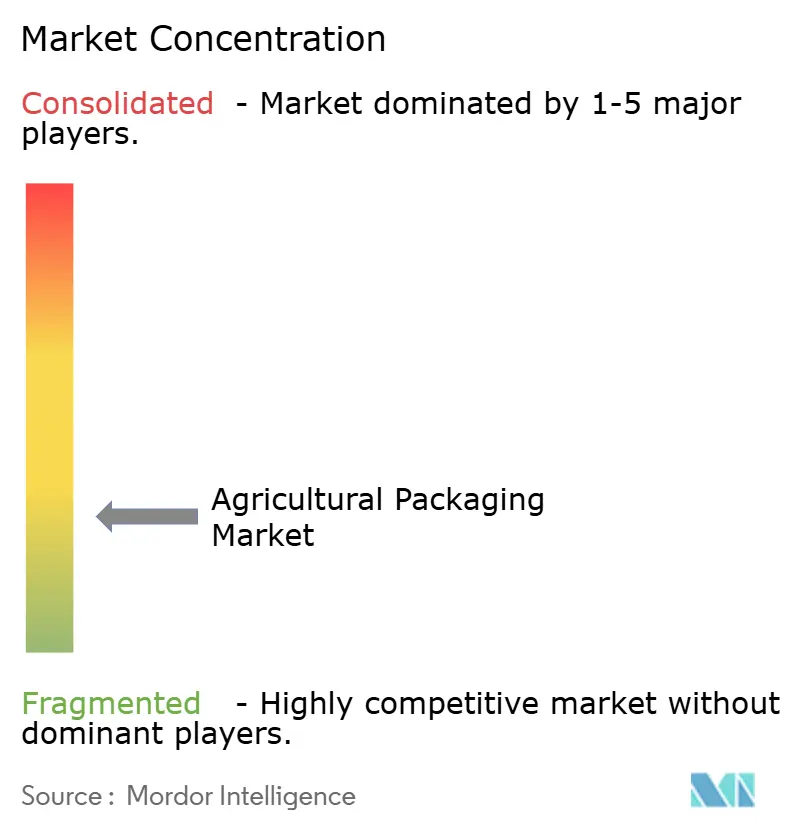
The agricultural packaging market is moderately fragmented, with a mix of global conglomerates and specialist regional firms. Mondi, Amcor, Sonoco, Berry Global, and Greif leverage global resin procurement, multi-continent plant networks, and in-house design centres to lock in long-term contracts with crop-chem majors. Regional contenders such as LC Packaging, NNZ Group, and Bulkcorp International defend market share via quick turnaround times and tailored FIBC specifications.
Strategic consolidation intensified in 2024. Sonoco acquired Eviosys for EUR 2.41 billion and divested its Thermoformed and Flexibles Packaging unit to TOPPAN for USD 1.8 billion, sharpening its consumer-packaging focus.[3]Sonoco Products Company, “Sonoco Completes Acquisition of Eviosys,” investor.sonoco.comIn January 2025, Amcor and Berry Global unveiled an all-stock merger that will create a USD 24 billion revenue entity, pledging USD 180 million annually to R&D in recyclable and compostable formats. Such combinations aim to pool intellectual property, harmonise extrusion assets, and strengthen bargaining power with petrochemical suppliers.
Technology is a key competitive lever. Kwik Lok’s QR-code closures and Trustwell’s blockchain tie-ups illustrate how digital traceability adds value beyond the physical pack. Patent filings around edible, starch-based films and cellulose-nanocrystal coatings reflect an arms race to secure defensible niches in eco-friendly substrates. Meanwhile, capital expenditure on automation—such as robotic palletizers and inline auto-splicing—reduces unit costs and enhances consistency, allowing mid-sized converters to compete on both price and sustainability credentials. Supply-chain resilience, especially around recycled resin sourcing, now factors as highly into customer tenders as historical pricing.
Agricultural Packaging Industry Leaders
Sonoco Products Company
Mondi Group
Greif Inc.
Pactiv LLC
Amcor PLC
- *Disclaimer: Major Players sorted in no particular order
Agricultural Packaging Market Companies Covered in this Report
- Amcor plc
- Mondi Group
- Greif Inc.
- LC Packaging International
- NNZ Group
- Sonoco Products
- ProAmpac LLC
- BAG Corporation
- FlexPack FIBC
- Smurfit WestRock
- Silgan Holdings
- Bischof + Klein
- RKW Group
- NPP Group
- Western Packaging
- Pactiv Evergreen
- Anderson Packaging
- Bulk Lift International
- Mega Pack

Market Opportunities and Future Outlook
Regulatory-driven redesign and trade-led traceability needs are creating whitespace for suppliers that can meet compliance requirements while lowering total delivered cost. With the EU PPWR becoming applicable from August 12, 2026, demand is accelerating for recyclable structures and clearer, harmonized labeling, creating room for mono-material films, fiber-based alternatives, and upgraded barrier solutions for fertilizers, seeds, and fresh-produce applications. At the same time, pack standardization initiatives such as India’s April 2026 biofertilizer pack-size norms under the Fertiliser (Control) Order are pushing manufacturers toward scalable, repeatable SKUs and higher-throughput packaging lines that reduce variability across regions and channels.
Export logistics and supply-chain localization are also influencing packaging format choices and capacity planning. In Africa, horticulture-focused capacity is expanding, supported by Shri Krishana Overseas PLC (SKL), which is investing about USD 1 million in a new Kenya facility to raise horticulture packaging output from about 3,000 to 22,000 tonnes annually. This supports faster lead times for export-oriented growers. In Southeast Asia, government-backed infrastructure is emerging to help smaller producers meet labeling and presentation requirements. The Philippines Department of Trade and Industry (DTI) launched the PHP 150 million FSUU MIRACLE packaging, labeling, and printing facility in Caraga in July 2026 to support MSMEs, particularly in agriculture-linked value chains. Design innovation is also targeting loss reduction and freight efficiency, including cube-based carton concepts rolled out commercially in India (Q-Bic) to reduce shipping empty space, and moisture-management FIBC designs introduced for sensitive produce to address spoilage and rejection risks in high-value horticulture trade lanes.
Recent Industry Developments in Agricultural Packaging Market
- April 2026: Mondi opened a new paper bags plant in Pittsburgh, Pennsylvania, adding reported annual capacity of about 300 million paper bags. The site strengthens Mondi’s North American supply footprint for fiber-based packaging, supporting customers shifting toward paper formats alongside tightening sustainability and recyclability requirements.
- April 2025: Sonoco completed the sale of its Thermoformed and Flexibles Packaging business to TOPPAN Holdings for about USD 1.8 billion. The divestiture reshaped Sonoco’s portfolio toward other packaging substrates and end markets, influencing competitive dynamics and capital allocation across packaging formats used in agriculture-adjacent applications.
- June 2024: Mondi partnered with traceless to develop a bio-circular coating solution derived from agricultural by-products for paper packaging. The collaboration highlights active R&D into barrier coatings that can replace conventional plastic layers, a key constraint for making fiber-based agricultural packaging perform in moisture- and grease-challenging use cases.


Agricultural Packaging Market Report Scope and Research Methodology
Market Definition and Coverage
For this study, the agricultural packaging market covers packaging used to store, transport, and apply farm inputs, mainly for fertilizers, pesticides, seeds, and related crop protection products, across flexible and rigid formats.
Scope exclusions: We exclude packaging used purely for fresh produce retailing, secondary shipping-only cartons used outside agricultural input distribution, and non-packaging farm consumables such as applicators or equipment parts.
Segments Covered in This Report
- By Material Type
- Plastic
- Paper and Paperboard
- Metal
- Composite
- Biodegradable Films
- By Application
- Pesticides
- Fertilizers
- Seeds and Traits
- Crop Protection Biologics
- By Product Form
- Bags and Sacks
- Bulk Containers (FIBC, Drums, IBC)
- Pouches
- Rigid Containers (Cans, Bottles)
- Caps, Lids and Liners
- By Capacity Range
- ≤25 kg / ≤20 L
- 26 – 100 kg/ 21 – 200 L
- More than 100 kg/ 200 L (Bulk)
- By Geography
- North America
- United States
- Canada
- Mexico
- Europe
- Germany
- United Kingdom
- France
- Italy
- Spain
- Russia
- Rest of Europe
- Asia-Pacific
- China
- India
- Japan
- South Korea
- Australia and New Zealand
- Rest of Asia-Pacific
- Middle East and Africa
- Middle East
- United Arab Emirates
- Saudi Arabia
- Turkey
- Rest of Middle East
- Africa
- South Africa
- Nigeria
- Egypt
- Rest of Africa
- Middle East
- North America
Data Sources, Market Sizing, and Validation
Desk Research
Desk research was used to set the boundary of what counts as agricultural packaging and to collect the standard data series that explain demand and price movement. We relied on public sources such as FAOSTAT, USDA, Eurostat, and UN Comtrade, along with packaging and plastics association publications and peer-reviewed papers on multilayer films and recyclability.
We also reviewed company annual reports, investor presentations, and press releases to understand product mix, regional exposure, and any announced capacity additions or closures. A paid company financials and intelligence subscription helped standardize revenue splits, and an import and export shipment level database was used selectively to cross-check traded volumes for resin, films, and packaging articles where classification allowed. These desk sources are not exhaustive, and many other documents were referred to for data collection, validation, and research clarification.
Primary Interviews and Surveys
Primary work was done through expert interviews and structured surveys with packaging converters, material suppliers, distributors, and agriculture input brand teams, followed by discussions with trade bodies and logistics focused contacts. Our team used these inputs to validate the mix of formats (bags, sacks, bulk containers, pouches, and rigid containers), typical order sizes, and pricing behavior by region, and then to sanity check adoption of recyclable structures and biodegradable films across APAC, EMEA, and the Americas.
Distribution of primary research fieldwork respondents
| Company type | Respondent position | Region |
|---|---|---|
| Top tier: 26% | CXOs: 19% | APAC: 47% |
| Mid tier: 55% | Functional/Unit leaders: 40% | EMEA: 30% |
| Smaller Players: 19% | Managers: 41% | Americas: 23% |
Market-Sizing & Forecasting
The core model uses a top-down and bottom-up approach, where agricultural input demand pools are rebuilt by region from crop area and production trends and then translated into packaging needs through application intensity and pack size norms. We start by mapping demand indicators such as fertilizer consumption, pesticide and biologics usage, seed treatment penetration, and the share of bulk versus small packs used in distribution.
Pricing is handled using a practical ASP ladder by material and format, which is informed by resin and paper price cycles, lightweighting trends, and the shift toward higher barrier structures for safety and compliance. Bottom-up checks are then run through sampled converter revenues, channel checks on volumes for bags, sacks, drums, and IBC, and observed price bands from interviews, which helps adjust totals when public data is thin.
For forecasting, we used scenario analysis supported by simple regression relationships between agricultural input volumes, planted area, and packaging intensity, then adjusted it using interview consensus on regulation timing, recycled content targets, and substitution away from certain materials. Where direct volume data could not be obtained for a sub-format, we filled gaps using proxy ratios from similar countries, and then revalidated the split with regional experts before finalizing the totals.
Data Validation & Update Cycle
Outputs are validated through triangulation across independent signals, including agriculture input volumes, packaging material price movement, trade flows, and converter capacity announcements, before the final values are signed off. We run variance checks at the region and format level, and when a number looks out of line, the assumption behind it is reopened and cross-checked through a second source or a follow-up interview.
A multi step internal review is followed, where another analyst checks math logic, boundary conditions, and year on year growth patterns to catch anomalies early. Reports are refreshed annually, and interim updates are done when material events occur, such as sharp resin price changes, regulatory shifts, or major capacity expansions. Before delivery, a final pass is completed so clients receive the latest updated view based on newly available data.
Mordor Intelligence's Agricultural Packaging Market Size Measured Against Other Published Estimates
Published market values for agricultural packaging can look far apart because each publisher draws the market line in a slightly different place, and then picks its own mix of price and volume assumptions. Timing also matters, since raw material costs swing quickly and some estimates do not get refreshed close to the release date.
By tracking format level demand drivers and refreshing key price inputs at the material level, Mordor Intelligence keeps the 2026 total tied to fertilizers, pesticides, seeds, and biologics packaging demand, instead of blending in adjacent produce packaging spend. Differences also come from whether bulk containers (such as IBC and drums) are fully counted, how biodegradable films are treated, and whether currency conversion uses an average year rate or a single point rate.
Benchmark comparison
| Source | Market Size | Gaps in Research Methodology |
|---|---|---|
| Mordor Intelligence | USD 5.76 B (2026) | |
| Industry Newsletter A | USD 7.64 B (2023) | This estimate is anchored to an earlier base year and appears to use a wider definition of agriculture packaging that can blend input packaging with broader farm and food related packaging, and it also does not clearly state how bulk packs and biologics packaging are counted. |
| Regional Consultancy B | USD 10.30 B (2026) | The higher value likely includes adjacent packaging demand beyond agricultural inputs, and it may assume a more aggressive ASP progression across plastic and composite structures without showing checks against resin and paper price cycles. |
The table shows that most of the spread can be explained by scope boundary choices and how pricing is carried forward across years. When the market is kept limited to input packaging formats and then checked against agriculture consumption signals and realistic material linked ASP ranges, the final number stays easier to trace and repeat.


Key Questions Answered in the Report
What is the current agricultural packaging market size?
The agricultural packaging market size stood at USD 5.76 billion in 2026 and is forecast to hit USD 7.36 billion by 2031.
Which region leads the agricultural packaging market?
Asia-Pacific held 39.85% of 2025 revenue, driven by China’s pesticide exports and India’s fertilizer growth.
Which material segment is expanding fastest?
Biodegradable films post the quickest 8.01% CAGR as regulations favour recyclable and compostable formats.
How are sustainability regulations affecting packaging choices?
EU and US laws mandate recyclability and recycled content, pushing converters toward paper-based, mono-material, and bio-resin solutions.
Which application shows the strongest growth?
Crop-protection biologics packaging will grow at 7.45% CAGR, reflecting farmers’ shift toward eco-friendly pest management.
What impact will the Amcor-Berry Global merger have?
The combined entity’s USD 180 million annual R&D budget is expected to accelerate innovation in recyclable and compostable agricultural packs.
Page last updated on:


 Your data is secure and never sold or shared.


