
Market Overview
| Study Period | 2021 - 2031 |
|---|---|
| Market Size (2026) | USD 648.72 Million |
| Market Size (2031) | USD 958.15 Million |
| Growth Rate (2026 - 2031) | 8.12 % |
| Fastest Growing Market | Asia Pacific |
| Largest Market | North America |
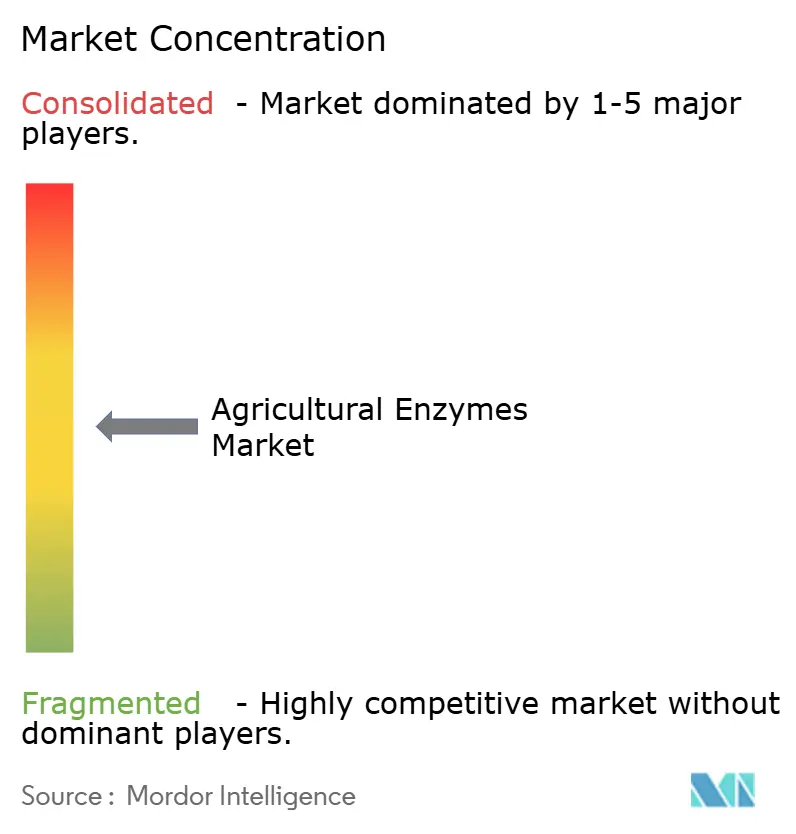
| Market Concentration | Medium |
Major Players *Disclaimer: Major Players sorted in no particular order Image © Mordor Intelligence. Reuse requires attribution under CC BY 4.0. | |
Agricultural Enzymes Market Analysis by Mordor Intelligence
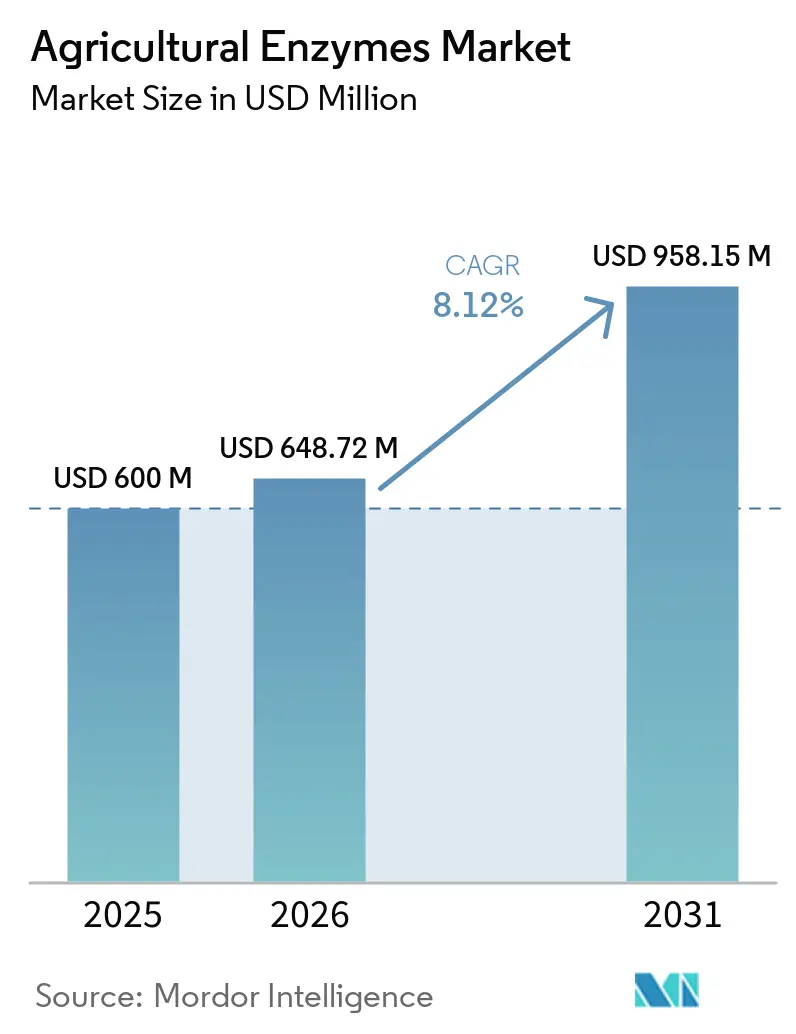
The Agricultural Enzymes Market size was valued at USD 600 million in 2025 and estimated to grow from USD 648.72 million in 2026 to reach USD 958.15 million by 2031, at a CAGR of 8.12% during the forecast period (2026-2031). This growth reflects the tightening of regulations on synthetic chemicals, a greater consumer appetite for residue-free food, and steady advances in enzyme formulation and delivery technologies. Commercial growers in mature markets are replacing a share of conventional inputs with enzyme-based biologicals, while smallholders in Asia-Pacific are moving toward yield-boosting biologicals supported by targeted subsidy programs. Parallel advances in precision fermentation and AI-driven protein design are reducing product-development cycles, while long-term carbon-credit programs are generating new revenue streams for farmers who deploy regenerative enzyme solutions. Competitive intensity is rising as agrochemical majors strengthen biological portfolios through partnerships and acquisitions, and specialized biotechnology firms race to commercialize next-generation multi-enzyme cocktails.
Key Report Takeaways
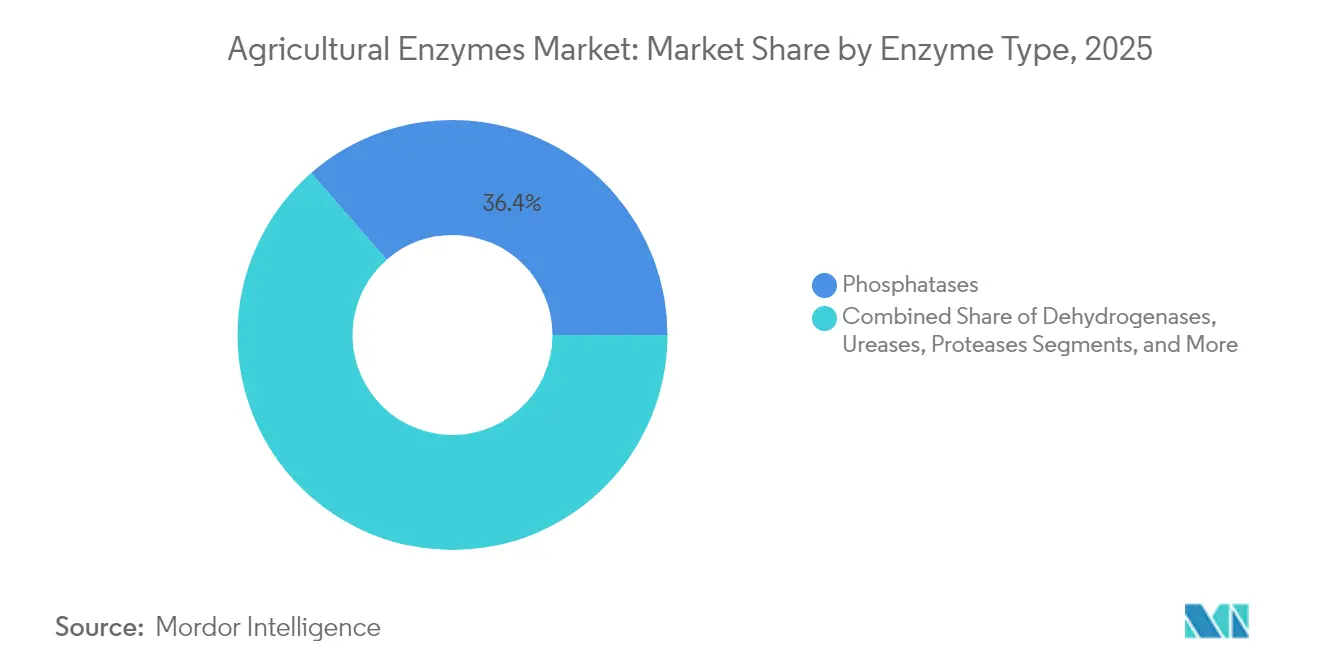
- By enzyme type, phosphatases led with 36.42% agricultural enzymes market share in 2025, while cellulases are forecast to advance at a 13.05% CAGR to 2031.
- By formulation, liquid products accounted for 45.55% of the agricultural enzymes market size in 2025; granular formats are projected to grow at 11.72% CAGR through 2031.
- By application, fertility enhancement commanded 40.35% of the agricultural enzymes market size in 2025, whereas crop protection is set to expand at an 11.32% CAGR between 2026-2031.
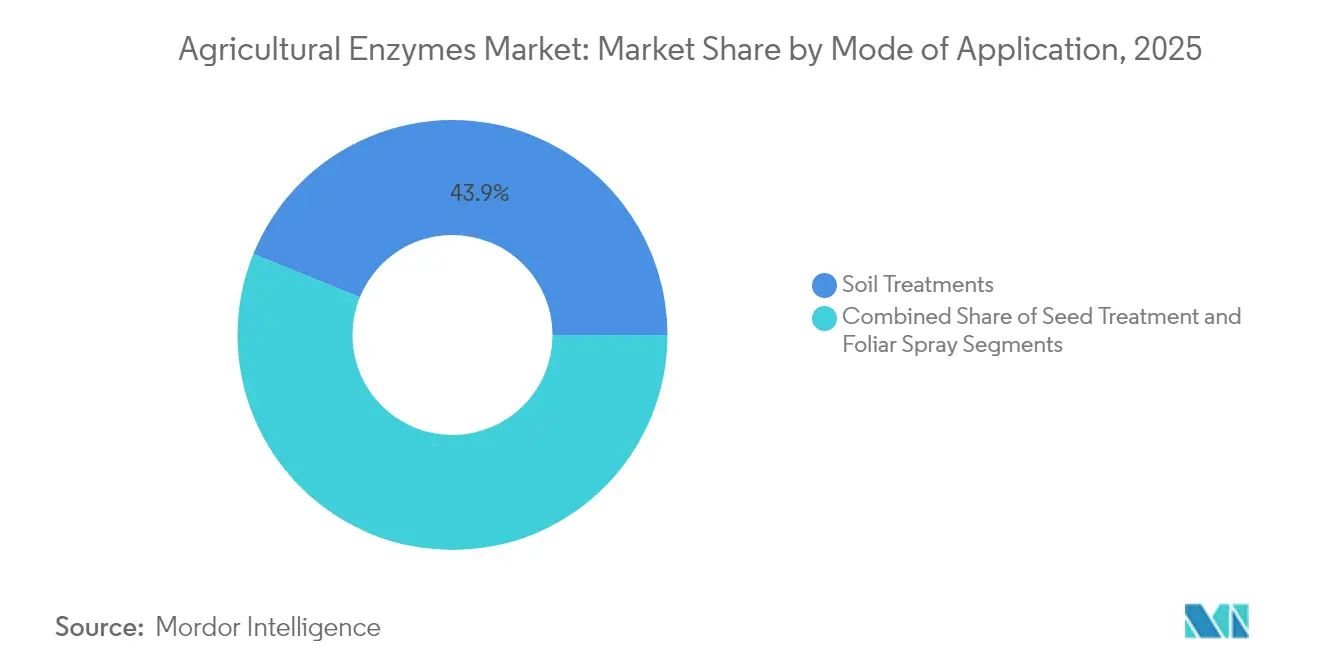
- By mode of application, soil treatments held 43.86% agricultural enzymes market share in 2025, while seed treatments are anticipated to post a 10.24% CAGR to 2031.
- By crop type, cereals and grains secured 39.15% of the agricultural enzymes market size in 2025; fruits and vegetables represent the fastest-growing crop segment at a 10.18% CAGR.
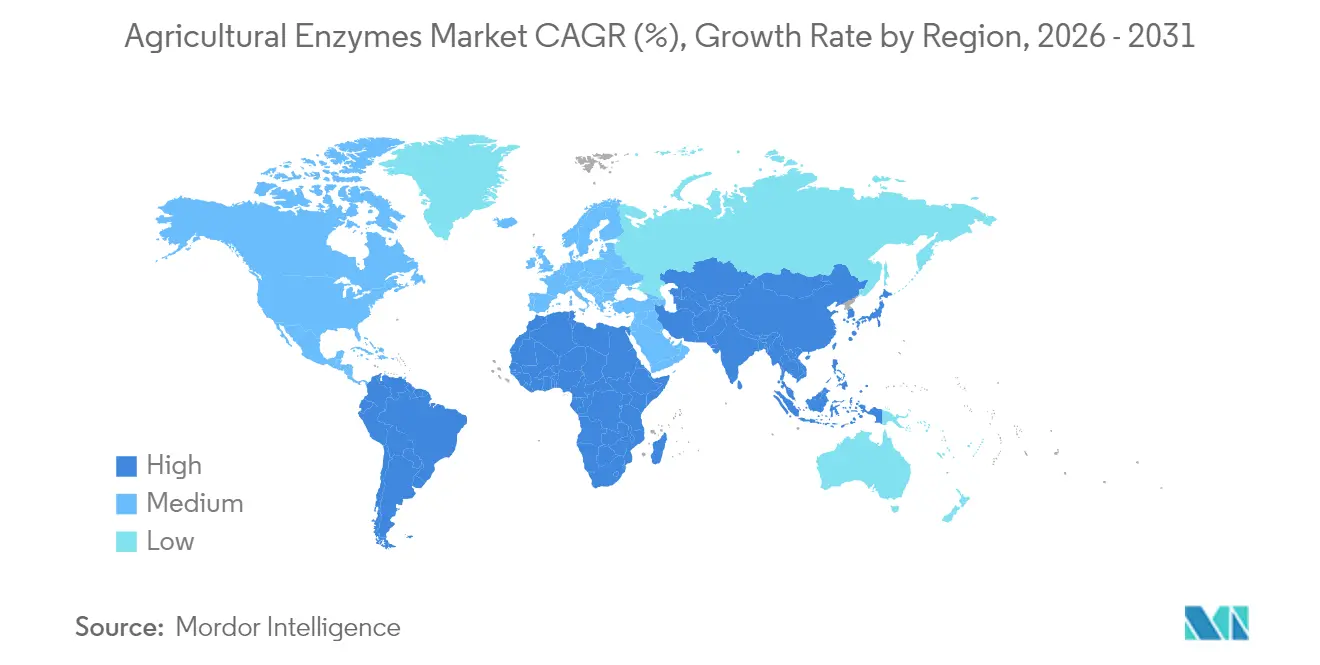
- By geography, North America dominated with roughly 34.62% agricultural enzymes market share in 2025, whereas Asia-Pacific is projected to register a 9.56% CAGR through 2031.
Note: Market size and forecast figures in this report are generated using Mordor Intelligence’s proprietary estimation framework, updated with the latest available data and insights as of 2026.
Market Trends and Insights
Drivers Impact Analysis of Agricultural Enzymes Market*
| Driver | (~) % Impact on CAGR Forecast | Geographic Relevance | Impact Timeline |
|---|---|---|---|
| Organic and residue-free food demand | +1.8% | Global, concentrated in North America and EU | Medium term (2-4 years) |
| Biological input adoption surge | +2.1% | Global, led by Asia-Pacific and Brazil | Short term (≤ 2 years) |
| Intensified Research and Development, and product innovation | +1.4% | North America and EU core, spill-over to Asia-Pacific | Long term (≥ 4 years) |
| Seed-coating micro-dose delivery | +0.9% | North America and Brazil, expanding to Asia-Pacific | Medium term (2-4 years) |
| Regenerative-ag carbon-credit programs | +1.2% | North America and EU, pilot programs in Asia-Pacific | Long term (≥ 4 years) |
| On-farm enzyme fermentation units | +0.6% | Developed markets initially, scaling to emerging regions | Long term (≥ 4 years) |
| Source: Mordor Intelligence | |||
Organic and Residue-free Food Demand
Global spending on organic produce is climbing as retailers tighten residue thresholds, and the EU Farm to Fork Strategy mandates a 50% cut in chemical pesticide use by 2030. Farmers gain 20–30% price premiums in certified organic channels, offsetting the transition costs of adopting enzymes that mobilize nutrients without chemical residues. Enzyme-embedded programs help close yield gaps in organic systems by enhancing phosphorus and nitrogen availability, fortifying plant defense pathways, and improving soil microbiome balance. Commercial orchard operators in Spain reported a 9% yield uplift after switching from phosphate fertilizers to a blended phosphatase-urease granule in 2024, demonstrating clear economic returns. Similar outcomes are now driving uptake in greenhouse vegetables across Canada, where liquid cellulase blends shorten crop cycles by improving biomass breakdown between rotations.
Biological Input Adoption Surge
Brazil has adopted biological crop-protection solutions on a significant portion of its cultivated land, surpassing adoption rates in the European Union and the United States. Mounting resistance to synthetic herbicides and fungicides is accelerating the search for new modes of action, positioning agricultural enzymes as synergistic companions to biocontrol microbes. Row-crop growers in Mato Grosso logged a 4.6% corn-on-corn yield gain in the 2024/25 season after integrating a seed-treatment cocktail containing lipase and mannanase enzymes. Similar momentum is unfolding in India, where state-level subsidy programs cover up to 30% of enzyme input costs, catalyzing smallholder adoption and fueling double-digit market growth.
Intensified Research and Development, and Product Innovation
The discovery of the CelOCE cellulase in 2025 highlights advancements in enzyme engineering and medical enzyme technology, enhancing glucose release from residues for improved applications. Venture funding is reflecting this trend Arzeda secured USD 38 million in October 2024 to enhance generative AI protein design for improved enzyme performance. Precision fermentation platforms are lowering production costs, and encapsulation technologies now protect enzymes against ultraviolet degradation in the field. These advances enable custom formulations tailored to crop stage, soil pH, and climate, expanding addressable acres for the agricultural enzymes market.
Seed-coating Micro-dose Delivery
Micro-dose seed-coating systems position enzymes directly on the seed surface, synchronizing activation with germination. Meristem’s HOPPER THROTTLE MAXSTAX Soybean, introduced for the 2025 United States season, integrates multiple inputs, including lipase and mannanase, into a single pass, simplifying the application process. Trials in Iowa demonstrated notable yield improvements compared to untreated checks. Similar micro-dose platforms are being developed for sorghum and wheat, and research on nano-DAP seed coatings in India has shown significant yield enhancements in sunflower, underscoring the technology’s adaptability.
Restraints Impact Analysis of Agricultural Enzymes Market*
| Restraint | (~) % Impact on CAGR Forecast | Geographic Relevance | Impact Timeline |
|---|---|---|---|
| Fragmented regulatory approvals | -1.1% | Global, especially EU and emerging markets | Short term (≤ 2 years) |
| Soil and climate-based performance variability | -0.8% | Tropical and semi-arid regions | Medium term (2-4 years) |
| Cold-chain gaps in tropical regions | -1.3% | Asia-Pacific, Africa, South America | Medium term (2-4 years) |
| Invisible short-term Return on Investment vs chemicals | -0.7% | Global, pronounced in price-sensitive markets | Short term (≤ 2 years) |
| Source: Mordor Intelligence | |||
Fragmented Regulatory Approvals
Biological input developers still navigate divergent approval timelines, with the EU requiring multiple dossiers depending on product classification. The new United States Unified Website for Biotechnology Regulation improves domestic transparency, yet global harmonization remains distant.[1]Delays add 18–24 months to average commercialization cycles, inflating compliance costs and prompting some firms to prioritize fewer, high-value markets. Smaller innovators struggle most, often partnering with larger agrochemical companies for regulatory support, which can limit independent go-to-market strategies.
Cold-chain Gaps in Tropical Regions
Liquid enzymes typically demand refrigerated storage, but cold-chain shortfalls reach 80% in India’s dairy sector and 90% in fisheries, reflecting broader infrastructure gaps.[2]Up to 25% of agricultural produce is lost annually in similar markets, underscoring logistical constraints for temperature-sensitive inputs. Solar-powered micro cold-stores and water-dispersible granules are emerging solutions, yet implementation costs and financing hurdles remain. These conditions favor granular enzyme formats that tolerate ambient distribution, shaping product-development priorities for companies targeting tropical climates.
*Our forecasts treat driver/restraint impacts as directional, not additive. The impact forecasts reflect baseline growth, mix effects, and variable interactions.
Agricultural Enzymes Market Segment Analysis
By Enzyme Type:
Phosphatases Lead, Cellulases AcceleratePhosphatases captured 36.42% of the agricultural enzymes market in 2025 by unlocking immobilized soil phosphorus that otherwise reaches 80% of applied fertilizer. As fertilizer prices remain volatile, demand for phosphorus-mobilizing solutions stays strong across cereals and oilseeds. The agricultural enzymes market size for phosphatases is, therefore, set to maintain a dominant revenue position through 2031. Cellulases, propelled by CelOCE and related innovations, top the growth chart at a 13.05% CAGR. These enzymes deconstruct crop residues, releasing sugars that fuel beneficial microbes and improve soil structure. Ureases, lyases, and proteases round out the portfolio, with cocktail products increasingly combining complementary activities to match complex field conditions.
The shift toward multi-enzyme blends is pronounced in high-value horticulture, where growers demand precise nutrient mobilization and stress-response enhancement in one pass. Start-ups are developing on-farm fermentation kits that allow growers to brew fresh cellulase-rich mixes, avoiding shelf-life concerns and reducing costs. Larger players integrate phosphatase-urease synergies to improve nitrogen use efficiency and mitigate volatilization in paddy fields, reflecting a broadening solution set within the agricultural enzymes market.

By Formulation:
Liquid Dominance Meets Granular InnovationLiquid products retained 45.55% of the agricultural enzymes market size in 2025, primarily due to their compatibility with existing spraying equipment and efficient foliar absorption. Yet logistics costs and cold-chain dependency are steering product managers toward more temperature-tolerant technologies. Granular products, advancing at 11.72% CAGR, now embed “bioreactor-in-a-granule” architectures that stabilize enzymes for up to 24 months while enabling timed release after soil contact.
Powder formulations occupy a cost-efficient middle ground, but require dedicated mixing equipment. Hybrid water-dispersible granules blur these lines, providing liquid-like convenience with granular durability. Expect competitive differentiation to hinge on formulation versatility, particularly for companies pursuing growth in the Asia-Pacific and African tropics where cold-chain gaps persist.
By Application:
Fertility Enhancement Anchors GrowthFertility enhancement held 40.35% of the agricultural enzymes market size in 2025, reflecting the universal need to stretch every kilogram of fertilizer. Enzyme programs that mobilize locked nutrients and improve microbial cycling cut input bills and advance sustainability metrics. The segment further benefits from government-linked carbon-credit schemes that reward measurable emissions reductions tied to nutrient-use efficiency.
Crop protection, rising at 11.32% CAGR, leverages enzymes for novel modes of action against pests and pathogens. Lipase-based biofungicides are already demonstrating double-digit yield gains in citrus groves, while chitinase-fortified bacterial consortia suppress soil-borne diseases in greenhouse tomato. Over the next five years, formulations that combine fertility and protection attributes are anticipated to command premium pricing and broaden the agricultural enzymes market.
By Mode of Application:
Soil Treatment Foundation, Seed Treatment MomentumSoil treatments formed the backbone with 43.86% agricultural enzymes market share in 2025, aligning neatly with regenerative farming practices that emphasize microbial health and organic matter turnover. Conservation-till systems in the US Corn Belt show a 0.4 percentage jump in soil organic carbon after two seasons of phosphatase-urease applications.
Seed treatments deliver the fastest momentum, clocking a 10.24% CAGR. By packaging enzymes in micro-doses, companies ensure activation occurs close to germination, avoid foliar re-entry intervals, and reduce application labor. Foliar sprays remain essential for high-value crops requiring rapid, in-season adjustments, while root-drip injectables are preferred in arid orchards where water efficiency is critical.
By Crop Type:
Cereals Foundation, Fruits and Vegetables ExpansionCereals and grains dominated with a 39.15% market share in 2025, driven by scale efficiencies across corn, wheat, and rice. Their established distribution networks, alongside integrated pest-management protocols, create a ready channel for enzyme add-ons. The rapid adoption of fertility programs in Brazilian soy and the United States corn underscores sustained demand.
Fruits and vegetables post the briskest growth at 10.18% CAGR, buoyed by higher price realization for residue-free produce. European greenhouse operators deploy cellulase-laced drip systems to accelerate root turnover and decrease disease cycles. Oilseeds and pulses benefit from enzyme-enhanced nitrogen fixation, while turf and ornamentals, though niche, secure premium margins through aesthetic performance.
Geography Analysis
North America Agricultural Enzymes Market
North America, holding about 34.62% of the agricultural enzymes market in 2025, benefits from robust distribution infrastructure and rapid regulatory clearance for biological inputs. Canadian growers planted 11.8 million hectare of genetically engineered crops last season, creating a receptive environment for complementary enzyme programs. The United States biostimulant segment is equally vibrant, with enzyme‐infused foliar sprays gaining traction among almond and tomato producers.
APAC Agricultural Enzymes Market
Asia-Pacific is the fastest-growing region, on track for a 9.56% CAGR through 2031. India’s BioAgri segment reached USD 12.4 billion in 2023, and state subsidies now cover up to 30% of enzyme costs, accelerating adoption among smallholders. Cold-chain gaps remain a material hurdle, 80% of the required capacity is still absent across India’s dairy sector, prompting manufacturers to emphasize granular products. China’s land-transfer reforms encourage larger farm units, improving the business case for enzyme technologies that can be applied at scale.
EMEA and South America Agricultural Enzymes Market
Europe retains a strong foothold due to stringent pesticide-reduction goals under the Green Deal. Biocontrol active substances climbed from 120 in 2011 to almost 220 in 2022, doubling revenue to EUR 1.549 billion (1.784 billion) in that period. South America, led by Brazil’s trail-blazing 60% biological adoption, remains a mature yet expanding arena, particularly for enzyme-enhanced seed treatments in soy and corn. The Middle East and Africa show emerging promise, though growth hinges on regulatory clarity and cold-chain investment, with South Africa and the Gulf states spearheading early adoption.
Regulatory Landscape
Agricultural enzyme products face separate regulatory routes across fertilising/biostimulant use and plant protection, with claim language and product positioning shaping dossier requirements and time to market. In the European Union, the EU Fertilising Products Regulation (EU) 2019/1009 provides an entry point for certain enzyme-containing functions, including inhibitors used to shape nutrient release, while developers pursuing crop-protection claims can still run into multi-dossier requirements based on classification and member-state expectations.
Recent EU changes also altered compliance mechanics for parts of the biological input value proposition connected to fertilising products. Commission Delegated Regulation (EU) 2025/1421 (applicable from 30 December 2025) updated conformity assessment procedures under the fertilising products framework, reducing audit frequency to once per year for specific recovered-material pathways and lowering recurring compliance burden for eligible products. In the United States, EPA oversight under FIFRA continues to depend on the claims, such as plant regulator or pesticidal claims versus biostimulant positioning, and the Plant Biostimulant Act of 2025 (S.1907, introduced in the 119th Congress) points to continuing efforts to standardize a federal definition for plant biostimulants.
Competitive Landscape
The agricultural enzymes market maintains moderate fragmentation, with increasing consolidation as major agrochemical companies pursue biological growth opportunities. Novenesis Group, Elemental Enzymes, and Infinita Biotech Pvt. Ltd. are the major companies that are partnering with Chemical companies to expand their products. In May 2025, UPL established an exclusive agreement with Elemental Enzymes for the Brazilian market, with plans to replicate this model globally by 2027.
Technology development remains a key competitive factor. Arzeda's USD 38 million funding in 2024 supports AI-enabled protein design to develop enzyme variants with enhanced field stress resistance. AgroSpheres secured USD 37 million for developing nanocarrier technology that improves enzyme stability on leaf surfaces. Marrone Bio Innovations' patent applications demonstrate specific progress, with their water-dispersible granules showing 15% higher field efficacy than liquid formulations in high-humidity conditions.
The market presents growth potential in crop-specific enzyme solutions and localized production methods. Companies are testing containerized fermentation systems for on-site enzyme blend production, reducing transportation costs and enabling customization based on soil analysis. Market success depends on demonstrating scientific validity and providing a clear return on investment evidence that meets farmer requirements.
Agricultural Enzymes Industry Leaders
-
Elemental Enzymes
-
Infinita Biotech Pvt. Ltd
-
Enzyme Solutions Inc.
-
Bioworks Inc.
-
Novenesis Group
- *Disclaimer: Major Players sorted in no particular order
Agricultural Enzymes Market Companies Covered in this Report
- Novenesis Group
- Elemental Enzymes
- Enzyme Solutions Inc.
- Bioworks Inc.
- Infinita Biotech Pvt. Ltd.
- Biocatalysts Ltd
- Enzyme Development Corporation
- American Vanguard Corp.
- DSM-Firmenich AG
- Orffa
- GreenLight Biosciences
Market Opportunities and Future Outlook
Commercialization is broadening beyond soil-fertility positioning into higher-value crop protection and specialty-crop use cases, where growers are more willing to pay for differentiated performance and simpler programs. Brazil stands out as a proof point, with Elemental Enzymes and UPL announcing the commercial launch of Strakor, a peptide-based biological solution for Huanglongbing (citrus greening), described as the first registered product for this application in the country. This registration-backed specialty-crop deployment supports adjacent whitespace for enzyme and peptide technologies that integrate with IPM programs, particularly for partners that can handle local approval and distribution.
Biological actives are also seeing buildouts in manufacturing and R&D that improve supply reliability and expand formulation options, which supports wider enzyme adoption. BASF commissioned a new fermentation BioHub in Ludwigshafen in May 2026 for biological and biotechnology-based crop protection products, and IPL Biologicals opened a third manufacturing facility in Vadodara, India (Rs 200 crore investment), increasing annual capacity to 7,000 kilolitres. At the same time, Syngenta announced a USD 130 million BioSTaR agricultural bioscience research center at Jealott Hill, UK (July 2026), integrating AI and advanced molecular research, aligning with the move toward engineered enzymes and multi-activity biological formulations targeted at field-stress tolerance and more consistent performance across climates.
Recent Industry Developments in Agricultural Enzymes Market
- June 2026: Elemental Enzymes and UPL announced the commercial launch of Strakor in Brazil, positioned as a peptide-based biological solution for citrus greening (HLB) and described as the first and only registered solution for this application in the country. The launch reinforces biological crop-protection portfolios in a high-value specialty segment and reflects a shift from field validation toward scaled commercialization through established distribution.
- May 2025: UPL established an exclusive agreement with Elemental Enzymes for the Brazilian market. The deal tightened channel access for enzyme-based biologicals in a key adoption geography and formalized a route to scale technologies through a larger crop-protection platform.
- July 2024: ADAMA Australia and Elemental Enzymes announced a partnership to license and introduce a new biological fungicide for broadacre crops (including cereals and canola) and turf. Targeting the 2026 winter cropping season, the arrangement expands the pathway for enzyme-enabled biological disease control into large-acre programs where product handling and fit with existing agronomy packages support adoption.
Agricultural Enzymes Market Report Scope and Research Methodology
Market Definition and Coverage
For this study, the agricultural enzymes market covers enzymes sold for use in crop production to improve nutrient availability, plant growth, and crop protection through soil, seed, or foliar application.
Scope exclusions: It does not count enzymes used only in livestock feed, industrial processing, or biofuel manufacturing.
Segments Covered in This Report
- By Enzyme Type
- Phosphatases
- Dehydrogenases
- Ureases
- Proteases
- Lyases
- Cellulases
- Other Enzyme Types
- By Formulation
- Liquid
- Powder
- Granular
- By Application
- Crop Protection
- Fertility Enhancement
- Plant Growth Regulation
- By Mode of Application
- Seed Treatment
- Foliar Spray
- Soil Treatment
- By Crop Type
- Cereals and Grains
- Oilseeds and Pulses
- Fruits and Vegetables
- Turf and Ornamentals
- Other Crops
- By Geography
- North America
- United States
- Canada
- Mexico
- Rest of North America
- Europe
- Germany
- United Kingdom
- France
- Italy
- Spain
- Russia
- Rest of Europe
- Asia-Pacific
- China
- Japan
- India
- Australia
- Rest of Asia-Pacific
- South America
- Brazil
- Argentina
- Rest of South America
- Middle East
- Saudi Arabia
- United Arab Emirates
- Turkey
- Rest of Middle East
- Africa
- South Africa
- Kenya
- Rest of Africa
- North America
Data Sources, Market Sizing, and Validation
Desk Research
Desk research was used to set the market boundaries, map the value chain, and build an initial set of volume and price assumptions by region. We relied on public and official sources such as the USDA, FAOSTAT, Eurostat, and the World Bank for crop area, yield, and fertilizer use indicators that influence enzyme adoption.
To make the model practical, we also reviewed patent databases, customs and trade statistics, peer-reviewed agronomy journals, and association or regulator sites that describe bio-inputs and labeling rules. These inputs were cross-checked with company filings, investor presentations, and trusted media coverage to understand product positioning and route to market. A paid company financials and intelligence subscription was used selectively to standardize revenue references across comparable product lines. This list is illustrative only, and other sources were also used to collect data, validate assumptions, and clarify open questions.
Primary Interviews and Surveys
Primary work was completed through expert interviews and structured surveys with enzyme suppliers, formulators, distributors, agronomists, and large farm operators across major consuming regions. We used these conversations to confirm use rates, typical pricing behavior, and how adoption varies by crop and soil needs, then adjusted the desk-based assumptions where gaps were identified.
Distribution of primary research fieldwork respondents
| Company type | Respondent position | Region |
|---|---|---|
| Top tier: 31% | CXOs: 13% | APAC: 44% |
| Mid tier: 50% | Functional/Unit leaders: 34% | EMEA: 34% |
| Smaller Players: 19% | Managers: 53% | Americas: 22% |
Market-Sizing & Forecasting
Sizing was built using a top-down approach, where crop area and input intensity indicators were used to reconstruct the realistic demand pool for enzyme-based agricultural applications by region, and then converted into value using typical application rates and average selling prices. The totals were corroborated with selective bottom-up approximations such as supplier revenue benchmarks, channel checks, and sampled price per hectare multiplied by treated area, which helped correct any overstatement from early adoption assumptions.
Key inputs used in the model included crop acreage patterns for grains, oilseeds, and fruits and vegetables, soil health and nutrient use trends, penetration of biological inputs in crop programs, product form mix (liquid versus powder or granules), and observed price ranges by application. For forecasting, scenario analysis was used to reflect how regulation, sustainability targets, and biological adoption cycles can speed up or slow down uptake, and expert feedback was used to keep scenario paths realistic. Where bottom-up references were incomplete, gaps were handled by using regional proxy crops and conservative adoption bands, followed by rechecks with interviewees before finalizing.
Data Validation & Update Cycle
Outputs were validated by comparing the final market totals against independent signals such as biological input adoption commentary, crop protection and soil amendment spend direction, and trade movement for enzyme-related preparations. Outliers were flagged and investigated, and the model was reviewed in multiple steps so assumptions, conversions, and currency handling remained consistent before sign off.
The study is refreshed annually, and interim updates are made when material events occur, such as policy changes, major capacity additions, or sharp raw material moves that impact pricing. Before delivery, a final analyst pass is completed so the published view reflects the latest available information.
Mordor Intelligence's Agricultural Enzymes Market Size Measured Against Other Published Estimates
Published market values for agricultural enzymes can differ more than expected because firms do not always count the same product scope, they use different adoption ramps, and they may apply different price and currency timing.
The main gap comes from what is treated as crop-applied agricultural enzymes versus adjacent enzyme uses, and Mordor Intelligence counts only enzymes sold for crop production use (soil, seed, or foliar) and leaves out enzymes meant only for feed or industrial processing, which can shift the reported total even in the same year.
Benchmark comparison
| Source | Market Size | Gaps in Research Methodology |
|---|---|---|
| Mordor Intelligence | USD 648.72 M (2026) | |
| Global Consultancy A | USD 660.00 M (2025) | Uses a 2025 base year and does not clearly separate crop-applied enzymes from broader biological or input bundles, which can lift the starting value and change the growth path. |
| Industry Association B | USD 371.00 M (2024) | Anchors sizing on reported output or shipment volumes and applies broad average pricing, which can undercount higher value applications and miss formulation and channel level price differences. |
The comparison shows that year selection and what gets counted as an agricultural enzyme sale are the biggest drivers of spread, followed by how prices are averaged across crops and regions. By keeping the scope tied to crop-use cases and by checking adoption and pricing assumptions with field feedback, the final number stays traceable to clear variables and repeatable steps.
Key Questions Answered in the Report
What is the current size of the agricultural enzymes market?
The agricultural enzymes market stands at USD 648.72 million in 2026 and is forecast to reach USD 958.15 million by 2031, implying an 8.12% CAGR.
Which enzyme type holds the largest share today?
Phosphatases lead with 36.42% agricultural enzymes market share in 2025, owing to their pivotal role in unlocking soil phosphorus for crops.
Which region is growing the fastest?
Asia-Pacific is the fastest-growing region, projected to post a 9.56% CAGR through 2031, propelled by smallholder adoption programs and supportive government subsidies.
How are enzymes used in crop protection?
Enzyme-based bio fungicides and seed treatments deliver novel modes of action that complement microbial biocontrols, driving an 11.32% CAGR for the crop-protection application segment through 2031.