
Agoraphobia Treatment Market Size and Share
Market Overview
| Study Period | 2020 - 2031 |
|---|---|
| Market Size (2026) | USD 2.51 Billion |
| Market Size (2031) | USD 3.58 Billion |
| Growth Rate (2026 - 2031) | 7.35 % |
| Fastest Growing Market | Asia-Pacific |
| Largest Market | North America |
| Market Concentration | Medium |
Major Players *Disclaimer: Major Players sorted in no particular order Image © Mordor Intelligence. Reuse requires attribution under CC BY 4.0. | |
Agoraphobia Treatment Market Analysis by Mordor Intelligence
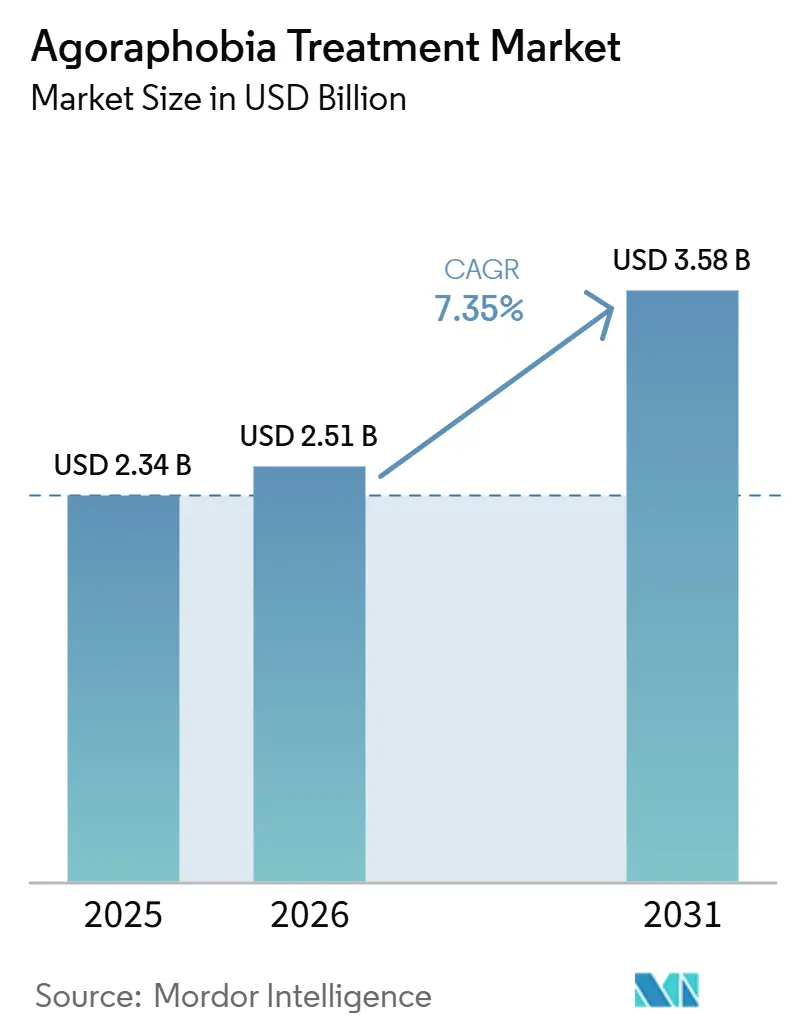
The Agoraphobia Treatment Market size is expected to increase from USD 2.34 billion in 2025 to USD 2.51 billion in 2026 and reach USD 3.58 billion by 2031, growing at a CAGR of 7.35% over 2026-2031.
Rising diagnosis rates, broader use of guideline-backed medicines, and digital psychotherapy expanded access for people whose symptoms may prevent clinic visits. More than 1 billion people worldwide were living with mental health conditions in 2025, with anxiety and depressive disorders accounting for more than two-thirds of these conditions. The 2026 Global Burden of Disease analysis estimated 1.17 billion prevalent mental disorder cases in 2023, a 95.5% increase from 1990, while anxiety disorders were among the conditions with the sharpest increase in age-standardized prevalence. Agoraphobia has a 12-month prevalence of 1.7% and a lifetime prevalence of 2.6%; however, fewer than 1 in 4 people with anxiety disorders receive treatment worldwide, making the agoraphobia treatment market more dependent on screening, referral, reimbursement, and delivery models than on rising disease incidence.
Key Report Takeaways
- By treatment modality, pharmacotherapy held 52.66% of the Agoraphobia treatment market share in 2025, while combination and adjunctive treatment is projected to grow at an 8.15% CAGR through 2031.
- By pharmacotherapy class, SSRIs accounted for 58.76% of revenue in 2025, while SNRIs are projected to grow at a 9.80% CAGR through 2031.
- By route of administration, oral therapies held 84.34% of revenue in 2025, while intranasal therapies are projected to grow at a 10.45% CAGR through 2031.
- By care setting, outpatient psychiatric clinics accounted for 82.34% of revenue in 2025, while hospitals and specialty mental-health centers are projected to grow at a 10.56% CAGR through 2031.
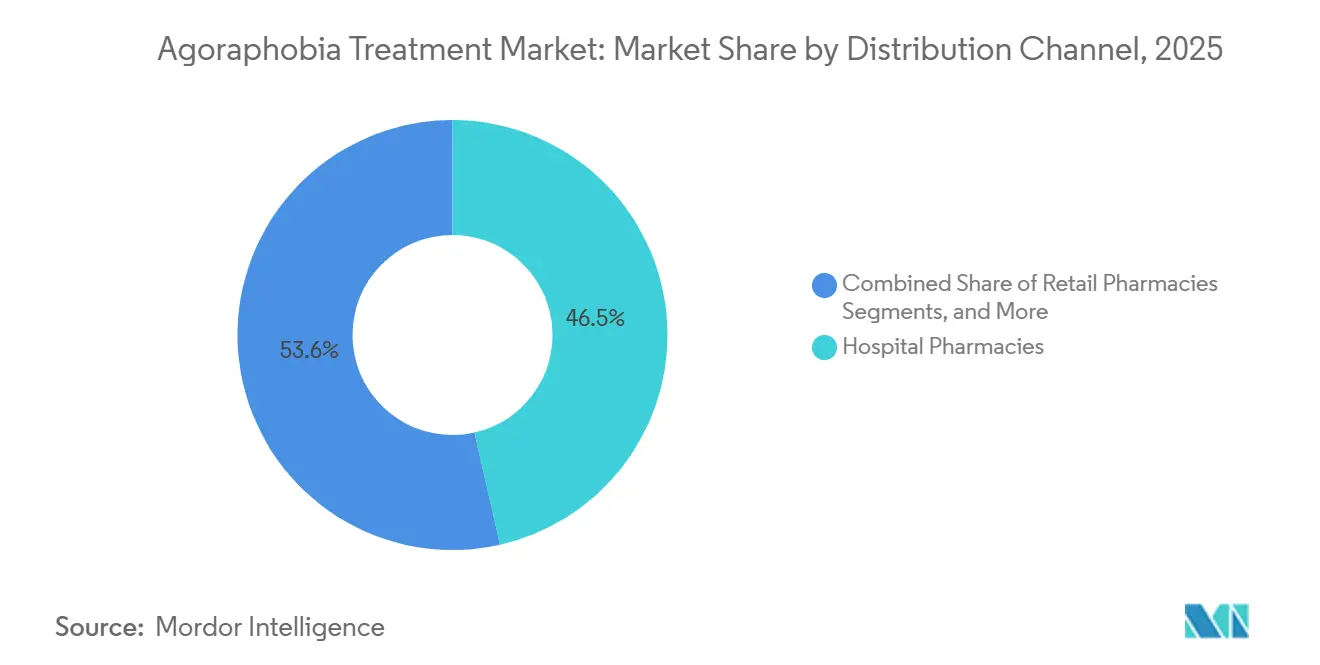
- By distribution channel, hospital pharmacies held 46.45% of revenue in 2025, while direct-to-patient digital channels are projected to grow at a 9.56% CAGR through 2031.
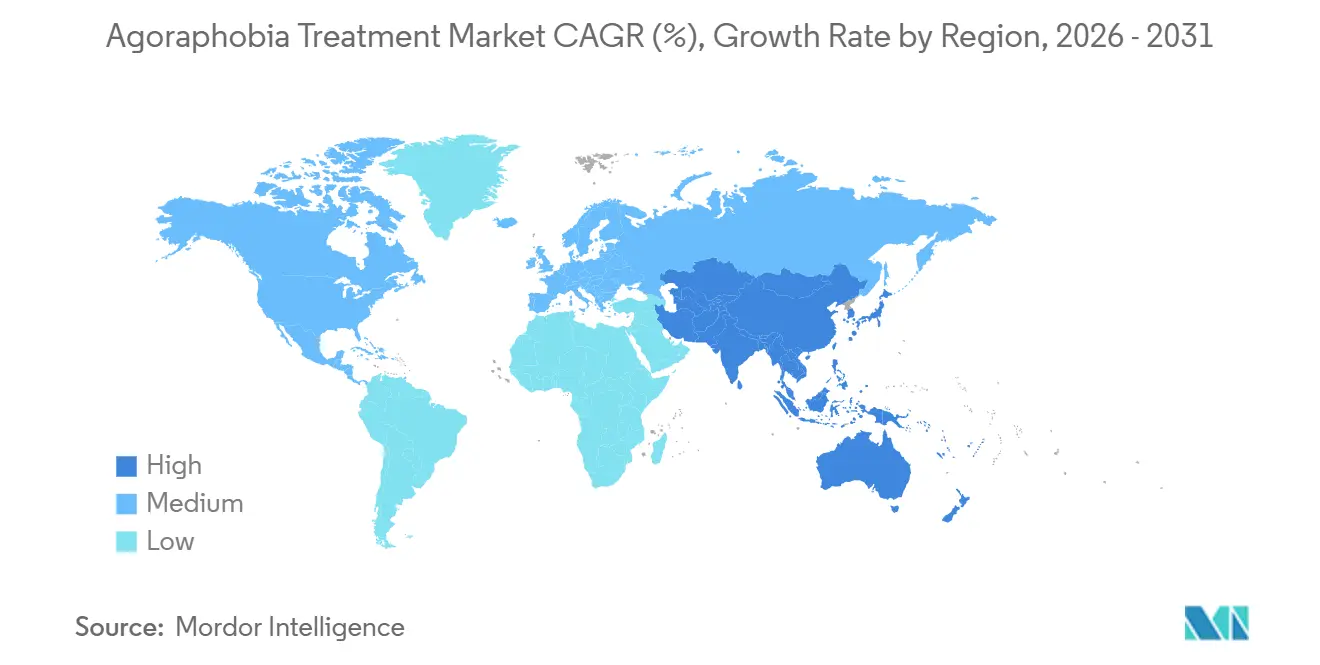
- By geography, North America held 40.45% of revenue in 2025, while Asia-Pacific is projected to grow at an 8.58% CAGR through 2031.
Note: Market size and forecast figures in this report are generated using Mordor Intelligence’s proprietary estimation framework, updated with the latest available data and insights as of January 2026.
Market Trends and Insights
Drivers Impact Analysis of Agoraphobia Treatment Market*
| DRIVER | (~) % IMPACT ON CAGR FORECAST | GEOGRAPHIC RELEVANCE | IMPACT TIMELINE |
|---|---|---|---|
| Increasing diagnosis and treatment-seeking for agoraphobia and panic disorder | +1.5% | Global, with stronger gains in North America and Western Europe | Short term (≤ 2 years) |
| Greater awareness, screening, and earlier intervention | +0.6% | North America and Europe, with emerging adoption in Asia-Pacific | Medium term (2-4 years) |
| Guideline-supported adoption of CBT, exposure therapy, and SSRIs | +1.8% | Global, with strong relevance in Europe and North America | Medium term (2-4 years) |
| Digital CBT, telepsychiatry, and virtual reality exposure delivery | +1.4% | North America, Germany, and emerging Asia-Pacific markets | Medium term (2-4 years) |
| Homebound patient demand for care outside traditional clinics | +0.7% | Global, especially among patients with severe mobility limitations | Medium term (2-4 years) |
| Stepped-care outcomes tracking and personalized exposure pathways | +0.5% | North America and Europe, with limited adoption in Asia-Pacific | Long term (≥ 4 years) |
| Source: Mordor Intelligence | |||
Increasing Diagnosis and Treatment-Seeking for Agoraphobia and Panic Disorder
The global burden of anxiety disorders has increased faster than many care systems can absorb. The 2026 Global Burden of Disease analysis reported 1.17 billion prevalent mental disorder cases in 2023, 95.5% higher than the 1990 count.[1] The World Health Organization estimates that 4.4% of the global population lives with an anxiety disorder, while only 1 in 4 affected people receive treatment.[2] In the United States, panic disorder affects 2.7% of adults in a given year and 4.7% over their lifetime. China announced a 2025-2027 plan to expand outpatient mental and sleep disorder services across prefecture-level cities. The Agoraphobia treatment market benefits when health systems identify people with existing symptoms and route them into formal treatment, rather than from changes in disease prevalence.
Guideline-Supported Adoption of CBT, Exposure Therapy, and SSRIs
Clinical guidelines support cognitive behavioral therapy, exposure therapy, SSRIs, and SNRIs for panic disorder with agoraphobia. The WFSBP guideline identifies SSRIs and SNRIs as first-line pharmacological options and cognitive behavioral therapy as the first-line psychotherapy. Germany’s DGPPN guidance recommends citalopram, escitalopram, paroxetine, sertraline, and venlafaxine as first-line options for panic disorder and agoraphobia. A 2025 review of Brazilian Psychiatric Association guidance identified high-grade evidence for SSRIs and SNRIs, while tricyclic antidepressants had moderate evidence due to adverse-event concerns.[3] These aligned recommendations support more consistent prescribing, strengthen the role of pharmacotherapy alongside psychotherapy, and shift treatment patterns away from long-term benzodiazepine use toward established SSRI and SNRI therapies within the Agoraphobia treatment market.
Digital CBT, Telepsychiatry, and Virtual Reality Exposure Delivery
Digital delivery can reduce a key access barrier in agoraphobia care, making it increasingly important to the Agoraphobia treatment market. Germany’s digital health framework includes 5 reimbursable digital therapeutics for panic disorder and agoraphobia when prescribed through statutory insurance. In the United States, the 2025 CMS Physician Fee Schedule introduced reimbursement codes for FDA-cleared digital mental health treatments, creating a payment route for clinician-supervised digital care.[4] Freespira received FDA 510(k) clearance in May 2025 for use in adolescents aged 13-17, and its reported clinical data showed a 54% mean reduction in panic disorder symptom severity and a 45% remission rate within 28 days. A 2025 Hong Kong trial of adapted gameChange found significant reductions in agoraphobic avoidance symptoms in a nonclinical population, while a 2025 meta-analysis found that therapist-guided digital cognitive behavioral therapy performed comparably with face-to-face therapy and unguided programs produced weaker results.
Homebound Patient Demand for Care Delivered Outside Traditional Clinics
Agoraphobia can prevent people from seeking in-person care because the disorder involves avoidance of places perceived as difficult to leave. A 2025 pilot trial found that a blended mobile and virtual reality intervention for panic disorder and agoraphobia produced stronger remission results at 6-week follow-up than a stress-education control and showed that providers could deliver a fully remote approach without direct in-person therapist contact. Freespira launched its FST5 device in February 2026 with integrated sensor and display functions, Wi-Fi and cellular connectivity, and a hospital-grade NDIR CO₂ module. This model combines capnometry-guided respiratory intervention with video coaching at home. Home-based options could reach patients who are underrepresented in clinical registries and less likely to attend outpatient visits in the Agoraphobia treatment market.
Restraints Impact Analysis of Agoraphobia Treatment Market*
| RESTRAINT | (~) % IMPACT ON CAGR FORECAST | GEOGRAPHIC RELEVANCE | IMPACT TIMELINE |
|---|---|---|---|
| Mental-health stigma and delayed presentation | -0.8% | Global, with particular relevance in Asia-Pacific | Long term (≥ 4 years) |
| Limited access, reimbursement gaps, and out-of-pocket burden | -0.9% | Asia-Pacific, Middle East and Africa, South America, and rural areas in North America and Europe | Medium term (2-4 years) |
| Shortage of therapists trained in graded exposure | -0.5% | Global, especially rural and lower-income areas | Long term (≥ 4 years) |
| Diagnostic heterogeneity and treatment-revenue attribution | -0.4% | Global | Medium term (2-4 years) |
| Source: Mordor Intelligence | |||
Mental-Health Stigma and Delayed Presentation
Stigma delays when many people seek mental health care. In Japan, insurance-covered cognitive behavioral therapy reached only 0.14% of the country’s 6.03 million psychiatric patients in fiscal year 2024. The same study identified a 375-fold difference in utilization between the highest-performing and lowest-performing prefectures. These figures show that insurance coverage alone does not ensure broad use of psychotherapy.
Limited Access, Reimbursement Gaps, and Out-of-Pocket Burden
Payment systems remain uneven across geographies and care settings. Japan recorded 38,045 insurance-covered cognitive behavioral therapy claims for 8,299 patients in fiscal year 2023, down 9.9% from fiscal year 2015, despite wider coverage for anxiety-related conditions. A typical course of cognitive behavioral therapy in North America can require 12-20 sessions, and uncovered session costs of USD 100-300 can discourage adoption. China established a regional digital therapeutics reimbursement policy in Hainan in 2025, but national Basic Medical Insurance coverage for digital therapeutics was not available in the supplied research. People with lower incomes, social isolation, and limited mobility often have the greatest clinical need and the least favorable coverage. These gaps limit the Agoraphobia treatment market’s ability to convert clinical need into paid treatment.
*Our forecasts treat driver/restraint impacts as directional, not additive. The impact forecasts reflect baseline growth, mix effects, and variable interactions.
Agoraphobia Treatment Market Segment Analysis
By Treatment Modality:
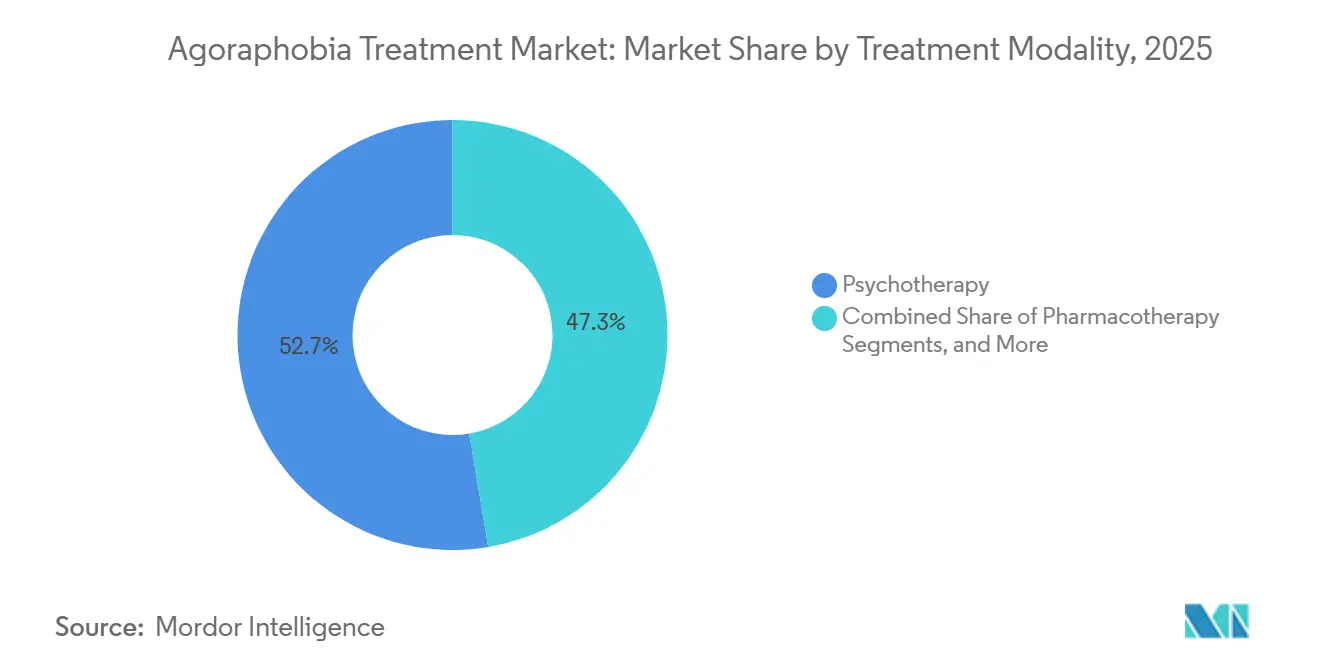
Pharmacotherapy Retains the Largest Revenue Base While Combination Care ExpandsPharmacotherapy is expected to account for 52.66% of revenue in 2025, making it the largest component of the agoraphobia treatment market share. This leadership reflects strong evidence supporting SSRIs and SNRIs as scalable first-line options for panic disorder with agoraphobia. Combination and adjunctive treatment is forecast to grow at an 8.15% CAGR through 2031. WFSBP guidance places cognitive behavioral therapy alongside first-line drug treatments for anxiety disorders, while German clinical guidance supports SSRI and SNRI use for panic disorder and agoraphobia.
Digital treatment formats can improve access for patients who cannot receive in-person psychotherapy. A 2025 review found that therapist-guided digital cognitive behavioral therapy delivered significant effects in panic disorder and agoraphobia, with stronger adherence than unguided programs. This supports care models that combine clinician oversight, pharmacotherapy for symptom stabilization, and exposure-based therapy to address avoidance patterns. Reimbursement for digital services can support broader adoption in routine care.

By Pharmacotherapy Class:
SSRIs Lead While SNRIs Gain Use in Resistant PresentationsSSRIs are expected to account for 58.76% of pharmacotherapy revenue in 2025 and remain widely used for panic disorder with agoraphobia due to established regulatory approvals and clinical guideline support. SNRIs are forecast to grow at a 9.80% CAGR through 2031. Clinicians use venlafaxine and duloxetine when patients do not achieve adequate results with SSRIs or present with mixed anxiety and depressive symptoms. The WFSBP guideline supports SNRIs as first-line pharmacological options for anxiety disorders, and German guidance identifies venlafaxine as a first-line treatment option.
Tricyclic antidepressants and benzodiazepines play a smaller role because safety concerns can limit use. The 2024 Brazilian guideline review gave SSRIs and SNRIs high evidence ratings, while tricyclic antidepressants received moderate ratings due to adverse-event risks. A 2025 review found that the FDA approved only two new anxiety-disorder medicines from 2008 through 2024, keeping established drug classes central to the agoraphobia treatment market. Buspirone, hydroxyzine, and pregabalin remain adjunctive options for patients who cannot tolerate antidepressants or receive treatment in primary care.
By Route of Administration:
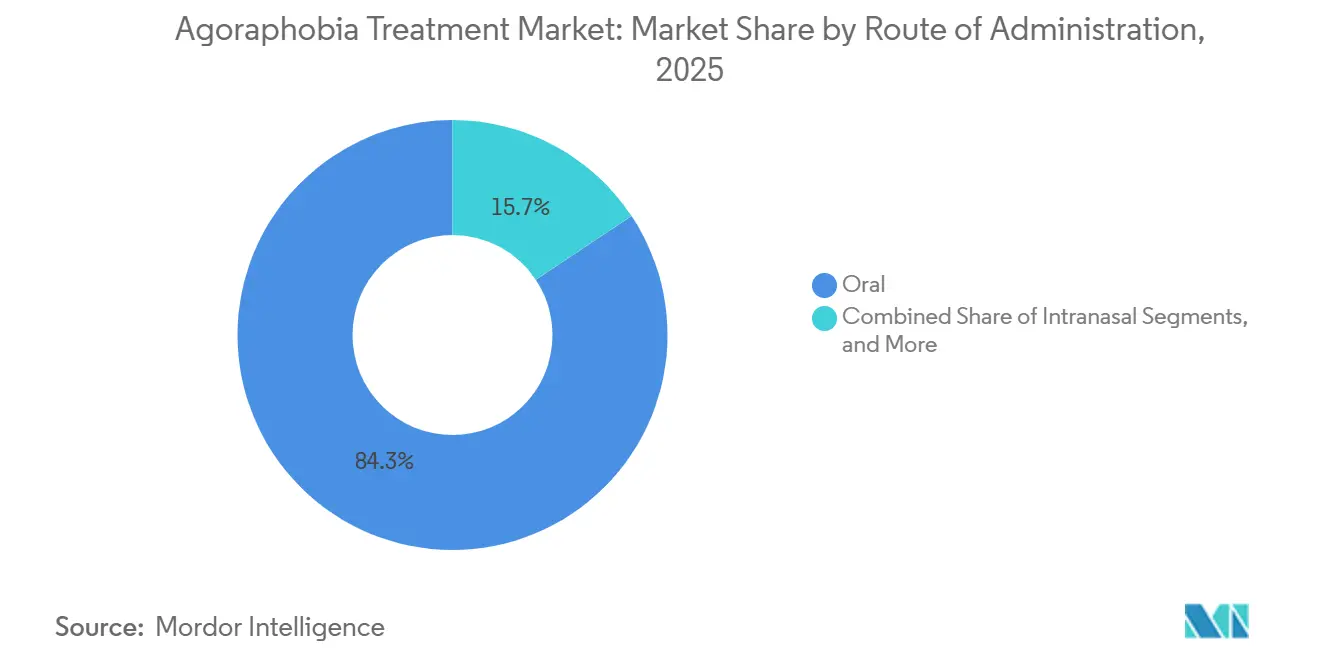
Oral Therapies Dominate While Intranasal Delivery DevelopsOral treatments are expected to account for 84.34% of revenue in the agoraphobia treatment market in 2025, supported by generic SSRIs and SNRIs and the convenience of daily self-administration. Intranasal therapies are forecast to expand at a 10.45% CAGR through 2031. Johnson & Johnson received FDA approval in January 2025 for SPRAVATO as stand-alone monotherapy for adults with major depressive disorder who had not responded adequately to at least two oral antidepressants. Although the indication applies to depression, the approval created a regulatory and commercial reference point for intranasal psychiatric therapies.
Eli Lilly announced an agreement in July 2026 to acquire AtaiBeckley for USD 2.8 billion upfront, with up to USD 1.0 billion in contingent milestone payments. The pipeline included BPL-003, an intranasal synthetic 5-MeO-DMT candidate in Phase 3 for treatment-resistant depression with FDA Breakthrough Therapy Designation. Other routes, including transdermal and injectable formats, are used mainly when oral treatment is impractical or rapid stabilization is required. Freespira represents a non-drug, home-based option outside conventional drug-route categories.
By Care Setting:
Outpatient Clinics Lead While Specialist Centers Manage Complex CasesOutpatient psychiatric clinics are expected to account for 84.34% of care-setting revenue in 2025. These clinics manage most diagnoses, prescriptions, and outpatient cognitive behavioral therapy services. Hospitals and specialty mental-health centers are forecast to grow at a 10.56% CAGR through 2031. Their growth reflects rising demand for managing treatment-resistant, adolescent, and severely impaired cases that require multidisciplinary care or stabilization.
Digital and virtual providers are emerging as care settings as payment systems begin recognizing digital mental health services. Germany’s digital health framework supports prescribed digital tools for panic disorder and agoraphobia. Academic centers continue to test new protocols, including the VRExpo study at Johannes Gutenberg University Mainz, which began recruitment in May 2025 and has a primary completion target of August 2026. Japan’s insurance-covered cognitive behavioral therapy reached only 8,299 patients in fiscal year 2023, creating a role for virtual services, primary care, and specialist facilities.
By Distribution Channel:
Hospital Pharmacies Lead While Digital Channels GrowHospital pharmacies are expected to account for 46.45% of distribution revenue in 2025. They play a key role in initiating acute-phase pharmacotherapy, managing specialty medicines, and dispensing treatments with restricted distribution requirements. Direct-to-patient digital channels are forecast to grow at a 9.56% CAGR through 2031. Prescription digital therapeutics can be activated after clinician authorization without a conventional pharmacy dispensing step.
Specialty pharmacies serve complex prescriptions that require prior authorization, patient support, or adherence monitoring. Otsuka Pharmaceutical and Click Therapeutics launched Rejoyn in Great Britain in June 2025 through select NHS Trusts. Rejoyn is a prescription-only cognitive behavioral therapy digital therapeutic for depressive disorder, and its launch showed how direct digital delivery can bypass physical dispensing for eligible digital products. Wider payer coverage could increase the use of similar distribution structures in the agoraphobia treatment market.
Geography Analysis
North America Agoraphobia Treatment Market
North America held 40.45% of global revenue in 2025, the largest regional revenue share. The United States supported regional demand through higher diagnosis rates, private coverage for medicines and outpatient psychotherapy, and FDA regulatory activity. The National Institute of Mental Health reported that 2.7% of U.S. adults had panic disorder in the past year. CMS reimbursement changes in 2025 improved the payment pathway for FDA-cleared digital mental health treatments. Canada and Mexico contributed revenue, although specialist shortages and public-system wait times left unmet need, while the regional system combined branded medicines, generics, digital services, and growing interest in intranasal psychiatric delivery.
Europe Agoraphobia Treatment Market
Europe is the second-largest regional contributor, led by Germany, the United Kingdom, France, Italy, and Spain. Germany has a developed framework for evidence-based pharmacotherapy and reimbursed digital care for panic disorder and agoraphobia. The United Kingdom’s NICE guideline identifies SSRIs as the preferred pharmacological option for panic disorder with or without agoraphobia and supports cognitive behavioral therapy. France updated its standards for serious anxiety disorders in January 2025 and maintained eligibility criteria for SSRI and SNRI reimbursement. Spain, Italy, and other European markets are supported by awareness programs, public investment in mental health care, and a clearer pathway for prescribed digital services in the Agoraphobia treatment market.
APAC, MEA and South America Agoraphobia Treatment Market
Asia-Pacific is forecast to grow at an 8.58% CAGR through 2031, the fastest regional rate in the Agoraphobia treatment market. Efforts to address underdiagnosis, expand mental health infrastructure, and improve access to generic SSRIs and SNRIs support growth. Japan allocated 8.8% of its health budget to mental health in the supplied research, but insurance-covered cognitive behavioral therapy reached only 0.14% of 6.03 million psychiatric patients in fiscal year 2023. Australia’s Pharmaceutical Benefits Scheme subsidizes SSRIs and SNRIs, while South Korea’s digital therapeutics reimbursement framework was still developing through mid-2026. The Middle East and Africa and South America remained smaller markets due to workforce, insurance, and stigma-related barriers.
Competitive Landscape
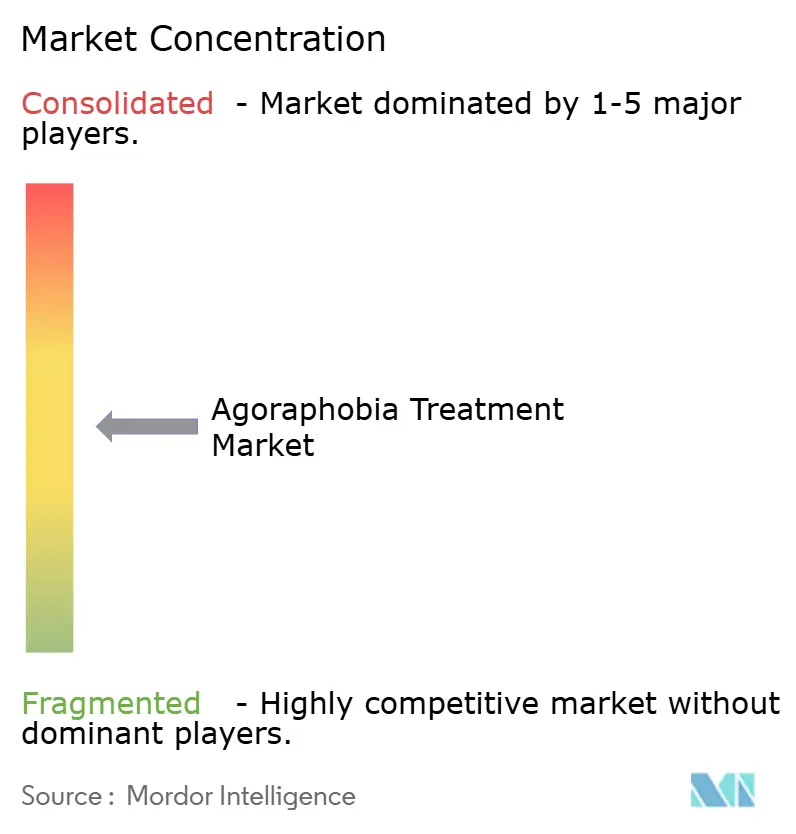
The agoraphobia treatment market is moderately fragmented, with originator pharmaceutical companies, generic manufacturers, and prescription digital therapeutic developers competing across treatment modalities. Pfizer, GSK, Lundbeck, Eli Lilly, and Johnson & Johnson compete through portfolio breadth, formulary access, and prescriber relationships. Pfizer’s relevant portfolio includes venlafaxine, alprazolam, and sertraline, while GSK offers paroxetine products. Lundbeck markets escitalopram and vortioxetine, Eli Lilly markets duloxetine, and Johnson & Johnson markets esketamine.
Digital care for homebound patients and new options for treatment-resistant conditions created opportunities for differentiated products. Freespira’s FST5 is an FDA-cleared, medication-free, home-based prescription device for panic disorder and PTSD. Otsuka and Click Therapeutics launched Rejoyn in Great Britain in June 2025, demonstrating prescription digital therapeutic commercialization through public health channels.
A 2025 review found that only two new anxiety-disorder medicines received FDA approval between 2008 and 2024. The limited pace of new approvals left a significant role for established SSRI and SNRI classes while creating opportunities for companies that demonstrate value in patients who do not respond to existing treatments. Competitive success depends on clinical evidence, reimbursement, convenience, and integration into clinical workflows. Generic suppliers remain relevant through scale, while digital developers require payer coverage and clinician adoption. No single company dominates the agoraphobia treatment market.
Agoraphobia Treatment Industry Leaders
-
Eli Lilly and Company
-
GlaxoSmithKline plc
-
Novartis AG
-
Pfizer Inc.
-
AstraZeneca PLC
- *Disclaimer: Major Players sorted in no particular order
Agoraphobia Treatment Market Companies Covered in this Report
- Abbvie
- AstraZeneca
- Aurobindo Pharma
- Bristol-Myers Squibb
- Dr. Reddy’s Laboratories
- Eli Lilly and Company
- Freespira, Inc.
- GlaxoSmithKline
- H. Lundbeck
- Hikma Pharmaceuticals
- Johnson & Johnson
- Limbix Health, Inc.
- Lupin
- Neurocrine Biosciences
- Novartis
- Otsuka
- Pfizer
- Sun Pharmaceuticals Industries
- Takeda Pharmaceuticals
- Teva Pharmaceutical Industries
- Viatris
- Zydus Lifesciences Limited
Recent Industry Developments in Agoraphobia Treatment Market
- July 2026: Eli Lilly and Company entered a definitive agreement to acquire AtaiBeckley Inc. for USD 2.8 billion upfront and up to USD 1.0 billion in milestone payments, adding Phase 3 BPL-003, Phase 2b VLS-01, and Phase 2 EMP-01 to its pipeline.
- June 2026: Otsuka Pharmaceutical reported positive topline Phase 3b results for centanafadine XR 280 mg in adults with ADHD and comorbid anxiety, with the PDUFA target action date set for July 24, 2026.
- January 2025: Johnson & Johnson received FDA approval for SPRAVATO, esketamine CIII nasal spray, as a stand-alone monotherapy for adults with major depressive disorder who had inadequate response to at least two oral antidepressants.
Global Agoraphobia Treatment Market Report Scope
As per the scope of the report, agoraphobia is an anxiety disorder marked by an intense fear of being trapped, helpless, or embarrassed in situations where escape might be hard, such as open spaces, crowds, or public transit. Treatment typically combines talk therapy and medication to reduce symptoms and restore daily function.
The agoraphobia treatment market is segmented by treatment modality, pharmacotherapy class, route of administration, care setting, distribution channel, and geography. By treatment modality, the market is segmented into psychotherapy, pharmacotherapy, and combination and adjunctive treatment. By pharmacotherapy class, the market includes selective serotonin reuptake inhibitors, serotonin-norepinephrine reuptake inhibitors, tricyclic antidepressants, benzodiazepines, and other anti-anxiety medicines. By route of administration, the market is segmented into oral, intranasal, and other routes of administration. By care setting, the market is categorized into outpatient psychiatric clinics, hospitals and specialty mental-health centers, primary care practices, digital and virtual care providers, and academic and research institutes. By distribution channel, the market is segmented into hospital pharmacies, retail pharmacies, specialty pharmacies, and direct-to-patient digital channels. By geography, the market is analyzed across North America, Europe, Asia-Pacific, the Middle East and Africa, and South America. The report also covers the estimated market sizes and trends for 17 countries across major regions globally. The report offers the market sizes and forecasts in terms of value (USD) for the above segments.
| Psychotherapy |
| Pharmacotherapy |
| Combination and Adjunctive Treatment |
| Selective Serotonin Reuptake Inhibitors |
| Serotonin-Norepinephrine Reuptake Inhibitors |
| Tricyclic Antidepressants |
| Benzodiazepines |
| Other Anti-Anxiety Medicines |
| Oral |
| Intranasal |
| Other Routes of Administration |
| Outpatient Psychiatric Clinics |
| Hospitals and Specialty Mental-Health Centers |
| Primary-Care Practices |
| Digital and Virtual Care Providers |
| Academic and Research Institutes |
| Hospital Pharmacies |
| Retail Pharmacies |
| Specialty Pharmacies |
| Direct-to-Patient Digital Channels |
| North America | United States |
| Canada | |
| Mexico | |
| Europe | Germany |
| United Kingdom | |
| France | |
| Italy | |
| Spain | |
| Rest of Europe | |
| Asia-Pacific | China |
| India | |
| Japan | |
| Australia | |
| South Korea | |
| Rest of Asia-Pacific | |
| Middle East and Africa | GCC |
| South Africa | |
| Rest of Middle East and Africa | |
| South America | Brazil |
| Argentina | |
| Rest of South America |
| By Treatment Modality | Psychotherapy | |
| Pharmacotherapy | ||
| Combination and Adjunctive Treatment | ||
| By Pharmacotherapy Class | Selective Serotonin Reuptake Inhibitors | |
| Serotonin-Norepinephrine Reuptake Inhibitors | ||
| Tricyclic Antidepressants | ||
| Benzodiazepines | ||
| Other Anti-Anxiety Medicines | ||
| By Route of Administration | Oral | |
| Intranasal | ||
| Other Routes of Administration | ||
| By Care Setting | Outpatient Psychiatric Clinics | |
| Hospitals and Specialty Mental-Health Centers | ||
| Primary-Care Practices | ||
| Digital and Virtual Care Providers | ||
| Academic and Research Institutes | ||
| By Distribution Channel | Hospital Pharmacies | |
| Retail Pharmacies | ||
| Specialty Pharmacies | ||
| Direct-to-Patient Digital Channels | ||
| By Geography | North America | United States |
| Canada | ||
| Mexico | ||
| Europe | Germany | |
| United Kingdom | ||
| France | ||
| Italy | ||
| Spain | ||
| Rest of Europe | ||
| Asia-Pacific | China | |
| India | ||
| Japan | ||
| Australia | ||
| South Korea | ||
| Rest of Asia-Pacific | ||
| Middle East and Africa | GCC | |
| South Africa | ||
| Rest of Middle East and Africa | ||
| South America | Brazil | |
| Argentina | ||
| Rest of South America | ||
Key Questions Answered in the Report
What is the projected value of agoraphobia treatment by 2031?
The agoraphobia treatment sector is forecast to reach USD 3.58 billion by 2031, from USD 2.51 billion in 2026, at a CAGR of 7.35%.
Which treatment approach holds the largest revenue share?
Pharmacotherapy held 52.66% of revenue in 2025, supported by the established use of SSRIs and SNRIs.
Which therapy approach is expanding fastest?
Combination and Adjunctive Treatment is forecast to grow at an 8.15% CAGR through 2031.
Why are digital therapies important for agoraphobia care?
Digital cognitive behavioral therapy and virtual care can serve patients who struggle to travel to clinics because of avoidance symptoms.
Which region is growing fastest for agoraphobia treatment?
Asia-Pacific is forecast to expand at an 8.58% CAGR through 2031, supported by infrastructure investment and underdiagnosis correction.
What limits access to agoraphobia treatment?
Stigma, uneven reimbursement, out-of-pocket therapy costs, and shortages of trained therapists continue to limit treatment uptake.